
Analysis
Gulf States Turn to Private Deals in $10bn Wartime Borrowing Spree: Abu Dhabi, Qatar and Kuwait Sidestep Public Markets

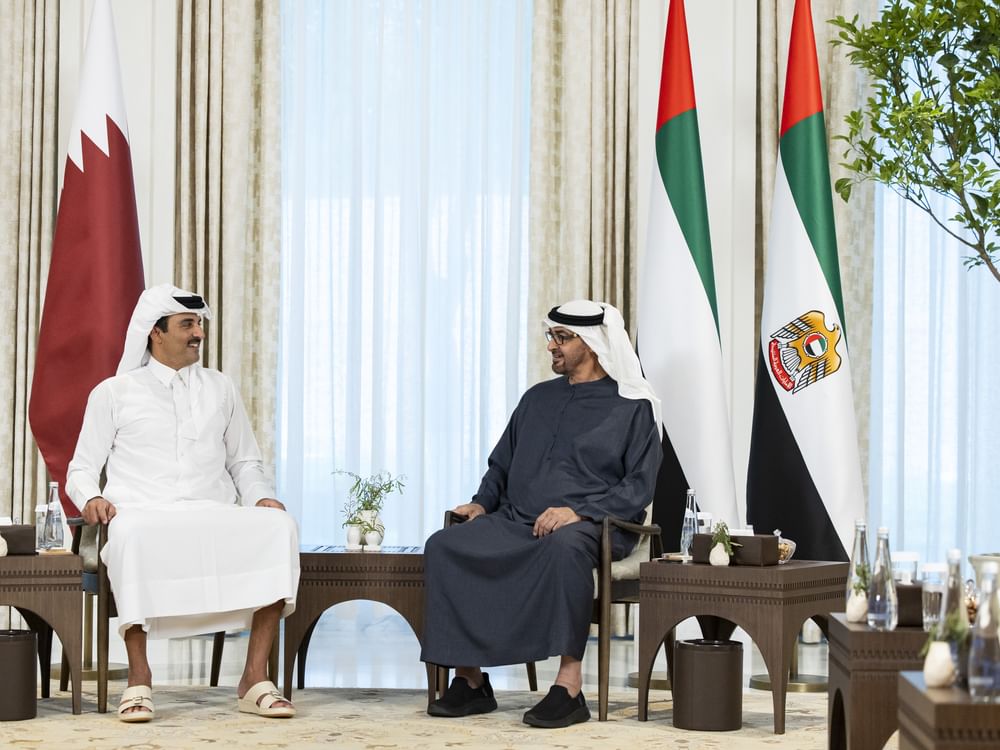
As missiles rain down on Gulf infrastructure and the Strait of Hormuz sits effectively closed to commercial traffic, the region’s sovereigns are doing what elite borrowers have always done when the crowd turns hostile: they are going around it.
The Quiet $10 Billion Rush Behind Closed Doors
In my two decades covering Gulf capital markets, I have never seen anything quite like the past six weeks. While the world’s financial press has been fixated on oil prices, ceasefire negotiations, and the Pentagon’s deployment of paratroopers to the region, something equally consequential has been happening in the quieter corridors of high finance — a discreet, accelerating rush by the Gulf’s most creditworthy sovereigns to raise cash through private bond placements that bypass the volatility, disclosure requirements, and brutal new-issue premiums of public markets entirely.
Abu Dhabi and Qatar have placed billions of dollars through private bond sales in recent weeks amid the market volatility caused by the war in Iran. The UAE capital raised $500 million by reopening a 2034 bond, a day after tapping the same bond and a separate 2029 issue for $2 billion, with the private deals arranged by Standard Chartered. Bloomberg Qatar, meanwhile, placed approximately $3 billion through a JPMorgan-led private transaction, with Qatar National Bank adding a further $1.75 billion in its own placement. Kuwait, whose petroleum chief has been the region’s most publicly anguished voice on the economic carnage, has now joined the discreet borrowing spree. By the second week of April 2026, total Gulf private bond sales were approaching $10 billion — a figure that would be remarkable in normal times and is staggering in these.
The question is not whether this borrowing was necessary. It plainly was. The question is what it tells us about the durability of Gulf sovereign credit, the architecture of global debt markets under geopolitical stress, and the hidden costs that Gulf finance ministries will be quietly paying for years.
When Public Markets Become Uninhabitable
To understand why Abu Dhabi, Qatar, and Kuwait have gone private, you need to understand what has happened to public bond markets since the escalation of the Iran conflict in late February 2026. The war — triggered by a coordinated wave of U.S.-Israeli airstrikes against Iran on February 28 — immediately shattered the benign issuance environment that had characterized the opening months of the year. Through January and February, Gulf hard currency debt issuance had been on track for a banner year, with $44 billion of bonds and sukuk placed in just two months, backed by strong appetite for investment-grade regional paper and average spreads of roughly 130 basis points.
That window slammed shut almost overnight. War-premium volatility pushed new-issue spreads to levels that made public issuance prohibitively expensive. Bankers working the region privately describe new-issue premiums of 10 to 30 basis points on private deals — painful, but manageable. In a public roadshow environment, with investor sentiment fractured and bid lists shortened by redemptions, those premiums would likely be double that, with no guarantee of a fully covered book. For sovereigns accustomed to issuing into oversubscribed order books, the optics of a partially-covered public deal would be worse than no deal at all.
Private placements solve that problem neatly. A sovereign finance ministry, working through a single mandated bank — Standard Chartered for Abu Dhabi, JPMorgan for Qatar — approaches a curated list of anchor investors directly. Price discovery happens off-screen. There is no public roadshow, no visible order book, no Bloomberg headline ticking the bid-to-cover ratio in real time. The deal closes, the cash arrives, and the sovereign moves on. The elegance of the mechanism is precisely its invisibility.
The Economic Damage: A Region Under Siege
To appreciate the urgency behind these transactions, consider the scale of economic devastation that has unfolded since hostilities began. Unlike previous crises, Gulf wealth funds are confronting a shock that is not driven by lower oil prices or a global credit crunch: the region itself is under attack and, because of Iran’s effective closure of the Strait of Hormuz, much of its oil wealth is trapped. Semafor
The numbers are breathtaking. The closure of the Strait of Hormuz, through which the bulk of Persian Gulf oil and gas is exported, along with an estimated $25 billion in damage wrought by Iranian rockets and drones on gas and oil infrastructure, is triggering the worst economic crisis in the Gulf region in decades. The IMF reports that the economies of Qatar, the UAE, Bahrain, and Kuwait will contract in 2026 to the tune of several tens of billions of dollars, while the entire Middle East’s projected economic growth will drop from 3.6% pre-war to 1.1%. CSMonitor.com
London-based Capital Economics is even more stark: Qatar’s GDP is forecast to shrink by 13% this year, the UAE’s by 8%, and Saudi Arabia’s by 6.6%. Tourism revenues — a central pillar of Gulf economic diversification strategies — have collapsed. The World Bank now expects Gulf growth to slow to 1.3% this year, from 4.4% in 2025, while Gulf officials estimate tourism losses of as much as $32 billion. The Kuwaiti and Qatari economies are expected to contract by more than 5%. Semafor
The human dimension should not be lost in the data. Kuwait was producing about 2.6 million barrels per day prior to the war, and it will take months for oil production in the Gulf to reach full capacity, as Kuwait and its neighbors have shut oil wells. CNBC Refineries have been hit. Tanker traffic has collapsed. Airport operations, once the envy of the aviation world, are running at severely diminished capacity across Dubai, Abu Dhabi, and Doha. For states that had spent a decade magnificently diversifying away from oil-dependency, the war has brutally reasserted just how much that diversification still relied on unimpeded energy exports flowing through 21 miles of contested water.
Strategic Sophistication or Hidden Vulnerability?
It would be easy — and lazy — to read the Gulf’s private placement spree purely as a sign of distress. That reading is incomplete. There is genuine strategic sophistication at work.
By moving to private markets, Abu Dhabi, Qatar, and Kuwait are preserving their public market credentials for when conditions normalize. A sovereign that hits the public market in wartime — paying wide, getting a patchy book, and enduring negative price action — can damage its benchmark bonds for years. A sovereign that quietly finances itself through discreet private channels, then returns to public markets with a clean slate once the ceasefire holds, emerges with its pricing power intact. The short-term cost — those 10-30bp premiums — is the price of protecting a far more valuable long-term asset: investor perception.
The choice of mandated arrangers is also telling. Standard Chartered’s deep Gulf franchise and its relationships with Asian sovereign wealth funds and central bank reserve managers make it the natural choice for Abu Dhabi’s discreet taps. JPMorgan’s dominance in the institutional U.S. fixed-income universe gives Qatar access to the deep-pocketed insurance companies and pension funds that can absorb large, private chunks of paper without flinching. These are not panicked phone calls to emergency lenders. They are disciplined transactions executed by well-staffed finance ministries that have war-gamed exactly this scenario.
And yet — and this is the part that should trouble investors and policymakers — there are real risks accumulating beneath the surface of this apparent calm.
The Hidden Costs of Going Dark
Private placements are structurally less transparent than public bond issuance. There is no prospectus, no regulatory filing, no roadshow presentation available to the broader market. The terms — exact spread, investor composition, covenant structure — are known only to the parties involved. For sovereigns that have spent years cultivating retail and institutional investor bases through transparent, well-documented public deals, a prolonged shift toward private channels could gradually erode the depth of that investor base. Relationships built on annual public roadshows atrophy when the roadshows stop coming.
There is also the question of cost aggregation. Each individual private placement, at 10-30bp over what a public deal might achieve in benign conditions, appears manageable. But consider: if Gulf sovereigns collectively place $10 billion privately at even a 15bp premium over hypothetical public pricing, the additional annual interest burden approaches $150 million. Over a five-year bond tenor, that is $750 million — real money, even for sovereigns with trillion-dollar sovereign wealth fund cushions.
Speaking of those cushions: they are being stretched. Saudi Arabia’s Public Investment Fund, Abu Dhabi-based Mubadala, and Qatar Investment Authority combined for almost $25 billion in new investments in Q1 2026 — a pace that, without war, would portend a banner year for state investors. But the pace of overseas investment will likely slow if the war drags on. Some funds — such as Abu Dhabi Investment Authority and Kuwait Investment Authority — may be used to support government budgets and slow investments in private markets. Semafor
This is the quiet fiscal tension that most commentary is missing. Gulf sovereign wealth funds — collectively worth some $5 trillion today, on a trajectory toward $18 trillion by 2050 — have historically been the region’s most powerful argument for long-term financial resilience. They are now being called upon to serve a dual function: continue generating returns abroad while standing ready to backstop domestic fiscal shortfalls. That is not an impossible ask. But it is a more difficult one than the funds have faced before, and it carries a real opportunity cost for the global portfolio mandates they have spent years refining.
What This Means for Global Finance and the Petrodollar System
The Gulf’s wartime borrowing spree is not happening in a vacuum. It intersects with several longer-term structural shifts in global finance that the Iran conflict is now forcibly accelerating.
The most significant is the continued erosion — quiet, incremental, but unmistakable — of the petrodollar architecture. The 2026 conflict has amplified discussions around non-dollar oil settlements, with reports of tankers potentially passing through the Strait of Hormuz when transactions use the yuan. KuCoin Private bond deals arranged through London-based banks and placed with a globally diversified investor base — rather than publicly issued in dollars under U.S.-regulated market frameworks — fit into this broader pattern of Gulf capital quietly seeking multiple anchors.
For investors, the implications are nuanced. Those who have been allocated chunks of Abu Dhabi’s or Qatar’s private placements are sitting on paper that is illiquid, opaque, and priced at a premium — but also backed by sovereigns with extraordinary balance sheets, real assets, and powerful geopolitical incentives to honor their obligations in full. The risk-reward calculus favors the patient, long-term institutional holder over the trading desk. For emerging market fund managers monitoring the region’s public bond curves, the near-term question is simpler: when do public markets reopen, and what will the first public deal after the war reveal about how much these private transactions have truly cost?
GlobalCapital has noted that the Iran war could permanently reshape the ultra-competitive Gulf capital markets landscape — a market where, before February 2026, sovereigns like Abu Dhabi and Qatar commanded among the tightest spreads of any emerging market issuer on the planet. The structural damage to that premium pricing reputation depends almost entirely on how long the conflict continues and how credible the eventual fiscal recovery story proves to be.
The Longer View: Resilience With Asterisks
It would be wrong to conclude that the Gulf’s wartime pivot to private markets represents a fundamental breakdown of sovereign creditworthiness. The region’s fiscal buffers, institutional quality, and strategic geopolitical relationships with both Western and Eastern creditors remain formidable. Abu Dhabi’s ability to move $2.5 billion in forty-eight hours through a single mandated bank, without a public roadshow and without visible market disruption, is itself a testament to how deeply its credit is embedded in the portfolios of the world’s most sophisticated institutional investors.
But resilience is not the same as immunity. The Gulf is currently running a multi-front stress test that no amount of pre-war financial modeling fully anticipated: oil revenues disrupted, tourism collapsed, airspace restricted, shipping hazardous, and borrowing costs elevated. The private placement spree is an intelligent, well-executed response to an extraordinarily difficult environment. It is not, however, a free lunch.
Finance ministers in Abu Dhabi, Doha, and Kuwait City are writing checks today — in the form of elevated private deal premiums, potential SWF drawdowns, and deferred public market activity — that their successors will be cashing for years. The bills, when they come due, will be payable in the currency of transparency and public market credibility that these sovereigns have spent a decade carefully accumulating.
The real test of Gulf sovereign finance will not be whether Abu Dhabi and Qatar can close private deals in wartime. They have just proved, emphatically, that they can. The test will be how cleanly they can return to public markets, at what spread, and with what story — and whether the world’s capital markets ultimately conclude that the Iran conflict was a crisis these states navigated, rather than a turning point from which they never fully recovered.
As of mid-April 2026, the answer to that question is still being written — one quiet private placement at a time.
Have Gulf sovereigns made the right call by going private — or are they incurring hidden costs that will haunt them when markets reopen? Share your analysis and follow the debate.
Discover more from The Economy
Subscribe to get the latest posts sent to your email.



Key Takeaways
- Rolex’s secondary market rose approximately 7.9% year-over-year as of 2026 (per WatchCharts data) — trailing Patek Philippe (+16.2%) and Tudor (+11.4%) but still outperforming Audemars Piguet (+3.4%).
- Rolex raised U.S. retail prices 4–9% in January 2026 (steel models ~5.6%, gold models ~8.7%), narrowing the historical gap between retail and pre-owned pricing.
- Not every model appreciates: steel sports references (Submariner, GMT-Master II, Daytona) have held value far better than two-tone or widely available dress references like the standard Datejust.
- The Lady-Datejust posted the sharpest 2026 gain among tracked collections — up 22.73%, from roughly $9,269 to $11,376 — driven by demand for smaller, “everyday luxury” watches.
- Gold’s rise past $2,400/oz has directly lifted the investment case for Rolex’s precious-metal references (Day-Date, Sky-Dweller, Yacht-Master).
The Model-by-Model Picture
| Category | 2026 Trend |
|---|---|
| Lady-Datejust | +22.73% (strongest performer among tracked collections) |
| Steel sports models (Submariner, GMT-Master II) | Held value well; corrected from 2022 peak but stabilized above retail |
| Daytona | Corrected from highs above $50,000 to the mid-$30,000s; still among the most sought-after references |
| Two-tone/widely available Datejust | Flat to negative — “holds value” is an overstatement for this category |
| Gold references (Day-Date, Sky-Dweller) | Lifted by gold’s rise above $2,400/oz |
Why the “Rolex Always Appreciates” Myth Is Fading
The pandemic-era boom pushed some references — the Daytona above all — to speculative highs disconnected from historical norms. Since the March 2022 peak, steel sports models have compressed meaningfully, and dealers who bought inventory near the top have in some cases faced 20–40% markdowns on liquidation. The lesson for 2026 buyers: Rolex as a category is not a monolith. Value retention depends heavily on specific reference, condition, and whether the piece comes with box and papers (“full set”).
What’s Actually Driving 2026 Strength
- Retail price increases raise the floor. When a new Submariner retails at $10,050 (up from $9,500), a pre-owned example at $11,000–$12,000 suddenly represents a smaller premium — narrowing the gap without secondary prices actually moving.
- Supply discipline remains Rolex’s core lever. The brand has never confirmed production numbers, and secondary-market premiums remain entirely a function of Rolex’s own manufacturing decisions — a risk factor as much as a support.
- Certified Pre-Owned rollout. Rolex’s now fully rolled-out CPO program has changed how buyers transact in the used market, adding a layer of brand-verified legitimacy that supports pricing.
The Case for Rolex as a Portfolio Diversifier
Financial advisors increasingly frame luxury watches not as a replacement for equities or bonds, but as a tangible, historically low-correlation diversifier — one that carries its own risks (illiquidity, condition-dependent pricing, no yield) but has demonstrated multi-decade resilience for specific references.
Is Rolex a good investment in 2026?
It depends heavily on the specific reference. Steel sports models like the Submariner and Daytona have held or grown in value; two-tone and widely available dress models generally have not. Overall, Rolex’s secondary market rose about 7.9% year-over-year in 2026, trailing Patek Philippe but ahead of Audemars Piguet.
Discover more from The Economy
Subscribe to get the latest posts sent to your email.

Navigating Mortgage and Loan Refinancing in a High-Yield Environment
Global public debt crossing critical thresholds has kept central bank policies volatile, resulting in fluctuating US Treasury yields throughout 2026. For homeowners and commercial property holders burdened by previous high-interest borrowing cycles, finding optimal refinance windows has become a high-stakes financial puzzle. Stalled disinflation and stubborn employment numbers mean rate cuts are incremental, requiring borrowers to act with precision.
Timing your mortgage or commercial loan refinance in this environment requires a deep understanding of yield curve movements and lender risk appetites.
Decoding 2026 Refinance Dynamics
The 10-Year Treasury Yield Benchmark
Mortgage rates continue to track closely with the 10-year US Treasury yield. When macroeconomic anxiety spikes debt issuance, yields rise, tightening consumer borrowing capacity. Savvy borrowers monitor weekly Treasury auctions to lock in rates during brief dip windows.
Hybrid ARMs and Alternative Structures
With fixed rates remaining elevated, 7/1 and 10/1 adjustable-rate mortgages (ARMs) have surged in popularity. These products offer lower initial monthly payments, giving borrowers breathing room until central bank easing cycles fully materialize.
| Loan Product | Current Rate Range | Best For | Key Risk Factor |
| 30-Year Fixed Mortgage | 6.2% – 6.8% | Long-term predictability | Higher initial monthly outlay |
| 7/1 Hybrid ARM | 5.5% – 5.9% | Short-term ownership / flipping | Rate reset risk after year 7 |
| Commercial Refinance | 7.0% – 8.2% | Corporate asset restructuring | Strict DSCR lender covenants |
Actionable Steps for Successful Refinancing
To maximize your chances of securing favorable refinance terms in a volatile market, follow a disciplined preparation strategy.
Boost Your Credit Score Immediately: Lenders in 2026 are applying stringent credit tiering; a 20-point increase can drop your APR by a crucial quarter-point.
Shop Regional Credit Unions: Smaller financial institutions often offer portfolio loans with more flexible underwriting than major national banks.
Calculate the Break-Even Point: Ensure your total closing costs are recouped through monthly savings within 24 months of closing.
“Market Strategist View: Refinancing in 2026 is an exercise in opportunistic timing. Borrowers must maintain immaculate financial profiles ready to strike the moment Treasury yields dip.”
Mastering the complexities of today’s debt environment ensures you can successfully lower your debt service costs and protect your long-term financial stability.
Discover more from The Economy
Subscribe to get the latest posts sent to your email.

The days of pulling generic auto insurance quotes based purely on your zip code and age are officially over. In 2026, insurance comparison engines are powered entirely by generative AI and real-time telematics. These platforms digest thousands of live data points—ranging from your driving smoothness via connected vehicle sensors to real-time traffic congestion patterns—to generate hyper-personalized premiums instantly.
For consumers, this evolution represents both a massive opportunity for savings and a hidden trap for penalty pricing. Understanding how AI algorithms evaluate risk is essential for anyone looking to lower their monthly auto insurance premiums.
How AI Comparison Engines Evaluate Your Risk Profile
Behavioral Telematics and Connected Cars
Modern cars stream performance data directly to insurance aggregators. Generative AI models analyze braking sharpness, acceleration curves, cornering G-forces, and phone distraction metrics. Drivers who maintain smooth, defensive habits are rewarded with dynamic rate cuts of up to 40% compared to traditional rating tiers.
Predictive Traffic and Weather Modeling
AI tools now cross-reference your daily commute route with predictive weather and accident probability models. If your standard parking location or driving corridor has a statistically higher incidence of uninsured motorist claims, your quotes will reflect that hyper-local risk assessment.
| Comparison Factor | Traditional Rating Model | 2026 Generative AI Model | Impact on Premium |
| Mileage & Usage | Annual estimated odometer reading | GPS tracking & live trip duration | High (up to 35% savings) |
| Driving Behavior | MVR driving record & accidents | Real-time braking, speed, & G-force | Critical (determines tier) |
| Vehicle Tech | Make, model, and safety rating | ADAS calibration & repair cost data | Moderate |
Strategies to Lower Your AI-Driven Insurance Quote
To outsmart the algorithm and secure the lowest possible premium in 2026, drivers must proactively manage their digital footprint on insurance platforms.
Opt-In for Telematics Trial Periods: Many insurers offer immediate 15% discounts just for installing their driving app; let it track safe habits for 30 days to lock in permanent savings.
Scrub Unverified Public Records: Ensure your motor vehicle report is free of clerical errors that AI risk models misinterpret as reckless behavior.
Compare AI Aggregators: Use platforms that integrate multi-carrier API feeds rather than single-brand comparison sites to find the best risk-adjusted rate.
“Industry Note: AI-driven pricing rewards transparency and precision. Drivers who actively manage their telematics data consistently out-save those relying on legacy quote calculators.”
Embracing AI comparison tools allows savvy policyholders to customize coverage limits precisely to their driving habits, eliminating wasted premium spend while ensuring robust protection.
Discover more from The Economy
Subscribe to get the latest posts sent to your email.

Can Global Tourism Survive Geopolitical Shocks?

Global Maritime Hegemony: How China Secured Over 81% of All New Shipbuilding Orders

The Coming Battle Over AI, Jobs and Wages

Why Developing Economies Face a Sharper Inflation Problem

The New Geography of Trade: Are Supply Chains Coming Home?

Is AI Saving Global Growth or Creating the Next Bubble?

Global Banking Trends 2026: Digital Banks, AI and Compliance

Gold vs US Dollar vs Bitcoin in 2026: Inflation Hedge Compared

How Global Interest Rates Affect Savings, Loans and Investments

How to Invest During High Inflation: A Global Guide

Best Global Stocks to Watch in 2026: Four Sectors to Research

Pakistan’s 2027 Growth Strategy: Exports, AI, Energy and Jobs

Pakistan Economy FY2027: IMF Reform, Debt and Recovery Outlook

Global Interest Rates 2027: Risks for Pakistan’s Rupee and Debt

Crude Oil & Petroleum Market Analysis: OPEC+ Decisions and Price Forecasts

World’s Largest Economies: Ranking the Top Global Powers

Silver Price Today: Why the Xi-Trump AI Standoff Is Fueling a Safe-Haven Rally

Algorithmic Dogfights: Why the U.S. and China Must Establish Rules of Engagement for Autonomous Air Power

Top US Convenience Store Chains: Store Counts, EV Charging, and Sales Trends

SpaceX IPO 2026: History’s Biggest Stock Debut?

Who Is Shivon Zilis? The Neuralink Executive at the Center of the Musk–OpenAI Trial

Corporate America Faces a New Debt Test as US Borrowing Costs Surge

Global Economic Outlook 2026: 7 Forces Reshaping Markets, Trade and Business

Business Insurance: What Coverage You Actually Need and What It Costs in 2026

Social Security Extra $90 Deposit: Who Qualifies for the October 2026 Medicare Rebate?

US 10-Year Yield Hits 5.24%: What the Historic Bond Market Sell off Means for Mortgages and Investors

Gold Falls 3.7% as Yields Surge: Is Gold Still a Safe Haven in 2026?

Stock Market Today: Dow, S&P 500, and Nasdaq Retreat as Treasury Yields
-

 Markets & Finance10 months ago
Top 15 Stocks for Investment in 2026 in PSX: Your Complete Guide to Pakistan’s Best Investment Opportunities
-

 Analysis8 months ago
Johor’s Investment Boom: The Hidden Costs Behind Malaysia’s Most Ambitious Economic Surge
-

 Analysis8 months ago
Top 10 Stocks for Investment in PSX for Quick Returns in 2026
-

 Banks9 months ago
Best Investments in Pakistan 2026: Top 10 Low-Price Shares and Long-Term Picks for the PSX
-

 Analysis9 months ago
Brazil’s Rare Earth Race: US, EU, and China Compete for Critical Minerals as Tensions Rise
-

 Investment9 months ago
Top 10 Mutual Fund Managers in Pakistan for Investment in 2026: A Comprehensive Guide for Optimal Returns
-

 Global Economy10 months ago
15 Most Lucrative Sectors for Investment in Pakistan: A 2025 Data-Driven Analysis
-

 Global Economy10 months ago
Pakistan’s Export Goldmine: 10 Game-Changing Markets Where Pakistani Businesses Are Winning Big in 2025