
Rea Estate
Gen X Millennials Real Estate Inheritance: $124T Wealth Transfer


Baby boomers control $19T in real estate. Discover how Gen X and Millennials will inherit unprecedented wealth and whether they’re prepared for the great wealth transfer ahead.
The $124 Trillion Question Nobody’s Asking
Picture this: Your parents hand you the keys to a $2 million waterfront property in Naples, Florida. Along with it comes a complex portfolio of real estate investments, tax implications you’ve never studied, and decisions that could either preserve or evaporate generations of accumulated wealth within a decade. Are you ready?
Most people aren’t. And that’s the uncomfortable truth sitting at the heart of the largest wealth transfer in human history.
Over the next decade, roughly 1.2 million individuals with net worths of $5 million or more will pass down more than $38 trillion globally, according to research from Coldwell Banker Global Luxury. But zoom out to the full 25-year horizon, and the numbers become almost incomprehensible: $124 trillion in assets will change hands through 2048, with $105 trillion flowing to heirs and $18 trillion designated for charitable causes, per wealth management firm Cerulli Associates.
Featured Snippet Answer: The great wealth transfer in real estate refers to the $124 trillion in assets—including approximately $19 trillion in property holdings—that baby boomers will pass to younger generations through 2048, representing the largest intergenerational wealth shift in history and fundamentally reshaping luxury real estate markets.
At the center of this seismic shift sits real estate—the single largest asset class in most affluent portfolios. Baby boomers currently own nearly $19 trillion in U.S. real estate wealth, representing roughly 41% of all property nationwide despite comprising less than 20% of the population. This isn’t just money changing hands. It’s an entire economic order being rewritten, one inheritance at a time.
Yet here’s what keeps me up at night as someone who’s spent two decades analyzing political economy and wealth dynamics: two-thirds of Gen Z adults report they’re not confident in their understanding of personal finance, and even among their slightly older millennial counterparts, financial literacy rates remain alarmingly low. We’re watching the greatest wealth transfer in history unfold while the recipients are woefully unprepared to manage it.

The Unprecedented Scale: How We Got Here
To understand the magnitude of what’s coming, we need to grasp how baby boomers accumulated this staggering real estate fortune in the first place. This wasn’t luck—it was timing, policy, and compounding advantage working in concert over five decades.
The boomer generation benefited from what economists call a “perfect storm” of wealth accumulation conditions. They entered their prime earning years during the post-war economic expansion, purchased homes when median prices were 2-3 times annual household income (compared to 5-7 times today), and rode an unprecedented wave of property appreciation that saw U.S. home prices surge 47% in just the last five years alone.
But the real wealth multiplier came from policy decisions. Mortgage interest deductions, favorable capital gains treatment on primary residences, and historically low interest rates—particularly the sub-4% mortgages many boomers locked in during the 2010s—created a systematic wealth-building machine that younger generations simply cannot replicate.
According to Federal Reserve data analyzed by Self Financial, boomers hold 51.7% of the nation’s total wealth, with real estate comprising 22.7% of their net worth. Generation X trails with 29.4% of real estate holdings valued at approximately $14 trillion, while millennials own just 20.4%—roughly $10 trillion worth of property, or less than two-thirds of what boomers owned at the same age.
The geographic concentration tells an even more interesting story. Florida dominates the landscape of boomer wealth concentration, claiming five of the top ten metros where retirees hold the most real estate equity. In North Port-Bradenton alone, homeowners aged 65 and older hold $97 billion in property value, representing more than half of all homeowners in that metro area. Naples-Marco Island follows with $70 billion, and Cape Coral adds another $62 billion to Florida’s real estate empire.
This concentration isn’t accidental. It reflects deliberate lifestyle arbitrage—warm weather, no state income tax, purpose-built retirement communities—combined with decades of appreciation in markets that became increasingly desirable. These properties aren’t just homes; they’re multi-million-dollar assets that will soon change hands, whether through inheritance, sale, or some combination of both.
Political Economy Analysis: The Wealth Transfer as a Defining Moment
From a political economy perspective, this wealth transfer represents far more than a private family matter multiplied across millions of households. It’s a stress test for American capitalism, a potential inflection point for wealth inequality, and a policy challenge that Washington is woefully unprepared to address.
Let’s start with the tax dimension, because nothing reveals political priorities quite like tax policy. The federal estate tax exemption—the amount you can transfer tax-free at death—has become a political football with profound implications. Under recent legislation signed in July 2025, the exemption will increase to $15 million per person in 2026, with adjustments for inflation in future years. This represents a significant win for wealthy families and creates a substantial planning opportunity.
But here’s the political economic reality that few people discuss openly: Only about 0.1% of estates will ever pay federal estate taxes under these thresholds. The 40% federal rate applies only after you’ve exhausted your exemption, and with proper planning—trusts, gifting strategies, valuation discounts—even ultra-wealthy families can significantly reduce their exposure.
What does this mean? It means the great wealth transfer will largely proceed without the “progressive taxation” drag that many assume exists. Generational wealth will compound, not disperse. The gap between those inheriting substantial assets and those inheriting nothing will widen dramatically.
Consider the numbers: Millennials are set to inherit $46 trillion, more than any other demographic, by 2048. But this wealth is not evenly distributed. A small percentage of millennials—those whose parents or grandparents own substantial real estate and financial assets—will receive life-changing inheritances. The majority will receive little to nothing.
This bifurcation has profound political implications. We’re creating two Americas: one where young professionals inherit real estate portfolios that instantly catapult them into wealth they could never accumulate through earnings alone, and another where individuals struggle to afford their first home despite advanced degrees and solid careers.
The policy response has been remarkably muted. While politicians debate marginal tax rates on ordinary income, the real wealth transfer—through appreciated real estate, stepped-up basis at death, and sophisticated trust structures—proceeds largely untouched. Some proposals have suggested limiting stepped-up basis or imposing stricter rules on grantor trusts, but these have gained little traction in a political environment reluctant to appear “anti-family.”
From my vantage point as a political economy analyst, this represents a fundamental mismatch between rhetoric and reality. We debate wealth inequality while facilitating the largest tax-advantaged wealth transfer in history. We worry about social mobility while creating structural advantages that compound across generations.
The National Association of Realtors reports that baby boomers now account for 42% of all home buyers, up from 38% just a year ago for millennials. Half of older boomers and 40% of younger boomers are purchasing homes entirely with cash. This isn’t a generation preparing to downsize and release housing inventory—it’s a generation continuing to accumulate and control assets, extending their economic dominance even as biological succession looms.
The international dimension adds another layer of complexity. Dubai’s prime real estate market is projected to grow 5% in 2025, while Paris real estate is experiencing a renaissance with prices projected to rise 2.5% as U.K. and U.S. buyers capitalize on currency advantages. Wealthy Americans are diversifying globally, meaning some of this inherited wealth will flow out of U.S. markets entirely, seeking tax optimization and lifestyle advantages abroad.
The Real Estate Component: Why Property is Central to This Transfer
Real estate occupies a unique position in this wealth transfer, and understanding why requires appreciating its distinctive characteristics as an asset class.
First, real estate represents the largest single asset for most affluent households. Unlike stocks that can be easily divided, or cash that can be quickly spent, real estate comes with emotional attachments, practical complexities, and significant transaction costs. When someone inherits a family home in Santa Rosa with $54 billion held by retirees in that metro, they’re not just receiving a financial asset—they’re inheriting decisions about family legacy, property management, potential sale, and tax planning.
Second, real estate benefits from what I call “politically protected appreciation.” Through zoning restrictions, NIMBY (Not In My Backyard) policies, and limited new construction in desirable markets, existing property owners have essentially weaponized local government to restrict supply and drive up values. Luxury home inventory has reached a two-year high, up 40.4% for single-family and 42.6% for attached properties since last year, but this increase still pales in comparison to demand, particularly in prime coastal markets.
The luxury real estate market is experiencing its own evolution. According to Coldwell Banker’s mid-year analysis, median sold prices for single-family luxury homes rose 1.8% year-over-year and 8.0% over 2023, while attached homes saw an 8.4% year-over-year gain and a 16.5% jump compared to 2023. Despite economic uncertainty, quality properties in prime locations continue commanding premium prices.
But here’s what makes this transfer particularly interesting from a market dynamics perspective: buyer composition is shifting dramatically. Coldwell Banker research shows that 43% of surveyed Luxury Property Specialists report a rise in Millennial and Gen Z purchases, while 29% report stable or growing Gen X activity. These younger buyers are arriving earlier than anticipated—some through early inheritances, others through the “giving while living” trend, and still others through equity gains from earlier property purchases.
Regional patterns reveal strategic considerations driving this market. Florida’s dominance isn’t just about weather—it’s about tax strategy. States with no income tax and favorable estate planning environments are seeing concentrated wealth accumulation. The Villages, where 78% of homeowners are 65 and up, represents the highest concentration of senior homeownership in the country, yet median home prices remain relatively modest at $369,900 compared to coastal alternatives.
California presents a different narrative entirely. Despite high taxes and cost of living, Santa Rosa-Petaluma shows retirees holding $54 billion in real estate wealth, drawn by wine country lifestyle, cultural amenities, and proximity to San Francisco. Barnstable Town on Cape Cod demonstrates another pattern: $34 billion in boomer-owned real estate with median prices near $900,000, where coastal charm and New England heritage command premium valuations despite seasonal limitations.
The attached luxury market—condominiums and townhomes—tells a more nuanced story. Sales have softened slightly compared to single-family estates, reflecting rate sensitivity among buyers and fewer new listings. Yet this segment may become increasingly important as aging boomers eventually downsize, potentially flooding markets with high-end condos in urban centers and resort communities.
Current data shows total owner-occupied real estate valued at $47.9 trillion nationwide, with home equity reaching $34.5 trillion at the beginning of 2025. Boomers control roughly half of this equity pie, representing unprecedented stored wealth that will eventually transfer.
Preparation Strategies: How Affluent Families Are Navigating Succession
The sophisticated approach wealthy families are taking to prepare for this transfer reveals both innovation and persistent challenges. I’ve observed three distinct preparation tiers emerging in the luxury market.
Tier One: Formal Estate Planning with Multi-Generational Strategy
At the highest wealth levels—families with $30 million-plus net worth—comprehensive planning is standard. These families engage teams including estate attorneys, tax advisors, family office professionals, and wealth psychologists to create detailed succession frameworks.
Strategic approaches include spousal lifetime access trusts (SLATs), intentionally defective grantor trusts (IDGTs), and dynasty trusts designed to preserve wealth across multiple generations. These structures allow assets to grow outside the taxable estate while maintaining some degree of family control and access.
The annual gifting strategy has become particularly important. Individuals can gift up to $19,000 per recipient annually without using any estate tax exemption, creating a simple but powerful wealth transfer mechanism. A couple with three children and six grandchildren could transfer $342,000 annually ($19,000 × 18 gifts) without touching their lifetime exemption—that’s $3.42 million over ten years.
For real estate specifically, families are employing family limited partnerships (FLPs) and qualified personal residence trusts (QPRTs) to transfer property at discounted valuations. A parent might contribute a $5 million vacation home to an FLP, claim valuation discounts of 30-40% due to lack of marketability and minority interest, then gift limited partnership interests to children. The IRS challenges some of these structures, but properly structured FLPs remain effective tools.
Tier Two: Professional Guidance with Selective Implementation
Families in the $5-30 million range typically engage estate attorneys and financial advisors but implement strategies more selectively. They focus on high-impact moves: updating wills and trusts, titling property appropriately, establishing irrevocable life insurance trusts (ILITs) to provide liquidity for estate taxes or equalization among heirs.
According to data, only 42% of boomers have full estate plans in place, a shockingly low figure given the wealth at stake. Even among those who do have plans, many are outdated, failing to account for recent tax law changes or family circumstances like divorce, remarriage, or estrangement.
Question: What is the great wealth transfer in real estate?
The great wealth transfer refers to the $124 trillion in assets baby boomers will pass to younger generations through 2048, including approximately $19 trillion in U.S. real estate holdings. This represents the largest intergenerational wealth shift in history, with 1.2 million individuals worth $5 million or more transferring $38 trillion in the next decade alone, fundamentally reshaping luxury property markets worldwide.
Real estate succession planning in this tier often involves practical considerations. Should we transfer the beachfront property now or wait? How do we handle a rental property portfolio with three children who have different risk tolerances? What happens to the family farm when nobody wants to farm?
One innovative approach gaining traction: “inheritance dry runs” where parents give adult children smaller amounts (perhaps $50,000-100,000) to invest independently, observing how they handle it before larger transfers occur. This reveals financial maturity—or lack thereof—while stakes remain manageable.
Tier Three: Minimal Planning, Maximum Risk
Perhaps most concerning, many affluent families engage in minimal succession planning, assuming everything will “work itself out.” Research shows that 52% of boomers do not plan to leave an inheritance, believing they will spend it all, while one-third haven’t discussed inheritance plans with their children.
This lack of communication creates fertile ground for family conflict. When real estate represents 25-40% of net worth and carries emotional significance—”This is where we summered for forty years”—the absence of clear succession plans becomes explosive. Adult children discover competing assumptions about who gets what, often only after parents are incapacitated or deceased.
The tax consequences can be severe. Without proper planning, estates face unnecessary taxation, properties sell in fire sales to cover bills, and family members sue each other over interpretation of vague will provisions. Experts warn that 70% of wealthy families lose their wealth by the second generation, often due to poor planning and family conflict rather than market losses.
Generational Readiness Gap: Are Gen X and Millennials Prepared?
This is where reality collides with optimism in painful ways. The short answer is: No, most are not prepared. But the longer answer reveals why and what we can do about it.
Research from Seismic shows that only 26% of Gen Z feel well-prepared for major financial changes, while two-thirds lack confidence in their personal finance understanding. While Gen Z is younger and will inherit later, their millenni al siblings don’t fare dramatically better.
The financial literacy gap is staggering. Fewer than 30% of millennials correctly answer basic questions about interest rates, inflation, and risk diversification, according to global financial capability surveys. This isn’t about intelligence—it’s about education and experience. Traditional schooling fails to incorporate practical financial education, and many young adults reach their 30s never having discussed money meaningfully with parents or mentors.
When it comes to real estate specifically, the knowledge gaps become acute. How many millennials understand:
- Step-up in basis and its tax implications?
- Property tax reassessment upon inheritance?
- The difference between qualified personal residence and investment property treatment?
- When to sell versus hold rental properties?
- How to evaluate whether inherited real estate fits their portfolio?
The answer, in most cases, is very few.
Cultural factors compound these challenges. Many families treat money as taboo, avoiding discussions about inheritance, estate plans, or financial values. Parents fear appearing presumptuous or creating entitlement; adult children worry about seeming greedy or opportunistic. This silence persists even as $124 trillion waits in the wings.
Interestingly, both baby boomers and Gen X agree that younger generations aren’t ready: 42% of boomers and 45% of Gen X believe younger people are unprepared to handle inherited wealth responsibly. Yet these same older generations often fail to provide education, mentorship, or gradual responsibility to build competence.
There’s also a values mismatch that creates tension. Millennials prioritize sustainability, impact investing, and ESG (Environmental, Social, Governance) factors, while their parents focused on total return and wealth preservation. When a millennial inherits a portfolio including fossil fuel royalties or factory farm investments, value conflicts emerge alongside financial decisions.
The geographic dimension matters too. Millennials account for 60% of global cryptocurrency users and are 7% more likely to be interested in investments than average consumers—but they’re also the generation living furthest from homeownership. They understand digital assets but lack experience with real estate fundamentals.
Yet there are positive signals. Approximately 74% of U.S. teens express keen interest in learning more about financial topics, and millennials are 33% more likely than average internet users to manage budgets as part of their jobs. When given access to education and tools, younger generations demonstrate eagerness to learn.
The challenge isn’t capability—it’s preparation and timing. We’re approaching the largest wealth transfer in history with recipients who lack experience managing wealth of this magnitude.
Market Ripple Effects: How This Transfer Will Reshape Luxury Real Estate
The wealth transfer isn’t a future event—it’s already reshaping markets in real time, creating opportunities and dislocations that will intensify over the next decade.
The Inventory Question
Conventional wisdom suggested a “silver tsunami” would flood markets with housing inventory as boomers downsized or passed away. Reality has proven more complex. Many boomers are aging in place, with some even buying additional properties, as NAR data shows them regaining the top spot as the largest buyer cohort.
Yet inventory dynamics are shifting. Luxury home inventory has reached two-year highs, suggesting that some high-end property holders are beginning to list. This creates interesting dynamics: more choice for buyers, but also more competition for sellers who must differentiate quality properties from others.
The Cash Buyer Phenomenon
Perhaps the most striking market shift is the surge in all-cash offers. According to Coldwell Banker’s research, 96% of luxury agents report cash offers are holding steady or increasing in 2025. Over half have seen substantial increases in cash purchases during just the first five months of 2025.
What’s driving this? Two factors converge. First, elevated interest rates make mortgage costs significant even for wealthy buyers. Jason Waugh, president of Coldwell Banker Affiliates, explains: “Cash provides leverage, speed, and security. Why absorb borrowing costs if you have the cash to close?”
Second, many buyers represent first-generation wealth transfer—adult children receiving early inheritances or tapping home equity from previous properties to move up. They’re deploying inherited capital or liquidating other inherited assets into real estate, viewing property as a stable wealth preservation vehicle.
Market Bifurcation
A clear divide is emerging between ultra-wealthy buyers ($30 million-plus net worth) and affluent-but-not-ultra-rich buyers ($1-5 million). Coldwell Banker surveys show that ultra-wealthy buyers remain active and pursue second, third, even fourth homes, while lower-tier luxury buyers act more cautiously, seeking deals, delaying decisions, or targeting renovation projects.
This split creates two parallel luxury markets operating under different rules. Top-tier properties in prime locations with exceptional quality sell quickly, often above asking price. Secondary luxury—nice homes in good areas but without that ineffable “wow” factor—sits longer and requires price reductions.
Geographic Rebalancing
Remote work flexibility is enabling lifestyle-first location decisions, allowing people to prioritize quality of life over proximity to employment. This benefits markets like Prescott, Arizona, where retirees hold $27 billion across nearly 58% of homeowners age 65-plus, with median prices around $669,000—offering better value than coastal alternatives.
International markets are seeing American wealth flow outward. Dubai prime real estate is growing 5% annually, Paris is experiencing a renaissance with 2.5% price growth, while Portugal and Spain gain traction among buyers seeking affordability and investment potential. Some inherited wealth will deploy globally, diversifying both for returns and tax optimization.
The Everyday Millionaire Effect
Rising home equity has created what UBS calls “Everyday Millionaires”—individuals who’ve crossed the million-dollar net worth threshold primarily through home appreciation rather than high incomes. These move-up buyers are entering luxury markets for the first time, changing buyer composition and expectations.
These buyers want move-in ready properties with smart home technology, sustainability features, and indoor-outdoor living spaces. They’re less interested in project homes requiring extensive renovation. Properties with spa bathrooms, chef-style kitchens, and seamless outdoor integration are driving current market interest.
Investment Mindset Evolution
Sixty-eight percent of luxury specialists report clients are maintaining or increasing real estate investments in 2025, viewing property as a hard asset that preserves wealth during stock market volatility. Real estate’s historically low correlation with equities makes it an attractive diversification tool, particularly for wealth-transfer recipients managing newly inherited portfolios.
But younger generations bring different investment philosophies. Millennials invest in gold at rates 20% higher than any other consumer group and dominate cryptocurrency adoption. They may view real estate differently than their parents—as one asset class among many, not necessarily the bedrock of wealth preservation.
Expert Opinion & Conclusion: Navigating the Decade of Transfer
After decades analyzing wealth dynamics, political economy, and real estate markets, I’ve reached several conclusions about this historic transfer.
First, the wealth transfer is inevitable but its impact is not predetermined. Whether this moment becomes a catalyst for broader prosperity or accelerates inequality depends on choices made by families, policymakers, and institutions over the next ten years.
Second, preparation is everything. Families who engage in open communication, provide financial education, and implement sophisticated succession planning will see wealth compound across generations. Those who avoid difficult conversations and wing it will likely join the 70% of wealthy families who lose their fortunes by the second generation.
Third, real estate will remain central but evolve. The $19 trillion in boomer-owned property won’t simply replicate in the hands of heirs. Some will sell, converting real estate to diversified portfolios. Others will leverage properties differently, possibly through syndication, fractional ownership, or new models we haven’t yet imagined. The dominance of single-family homes in wealth storage may give way to more diversified approaches.
Fourth, policy intervention seems unlikely but necessary. The political will to meaningfully address intergenerational wealth transfer appears absent. Recent legislation increased estate tax exemptions to $15 million per person, making the system even more favorable to wealth preservation. Without changes to step-up in basis, estate taxation, or transfer mechanisms, inequality will widen as inheritance becomes the primary determinant of lifetime wealth.
Fifth, financial literacy is the great equalizer—if we act now. The 74% of teenagers wanting to learn about finance represent hope. If we can meet this demand with quality education—in schools, workplaces, and families—we can create a generation capable of managing inherited wealth responsibly.
For luxury homeowners preparing to transfer wealth: Start conversations now. Bring adult children into estate planning discussions. Provide smaller inheritances during your lifetime to test readiness. Engage professional advisors. Create opportunities for children to manage property, make investment decisions, and learn from mistakes while you’re available to guide.
For Gen X and millennials expecting to inherit: Educate yourself about real estate, tax planning, and wealth management. Ask questions even when uncomfortable. Understand not just what you might inherit, but your parents’ wishes, values, and hopes for how assets should be used. Consider that refusing to discuss these topics doesn’t make you noble—it makes you unprepared.
For policymakers: The current trajectory concentrates wealth, reduces mobility, and creates a permanent economic aristocracy. While politically difficult, addressing step-up in basis, implementing progressive transfer taxes, and expanding first-generation homeownership programs would create a more equitable system.
The next decade will be unlike any we’ve experienced. Nearly 12,000 people will turn 65 each day through 2025, accelerating the transfer. Millennials will inherit $46 trillion by 2048, fundamentally altering their economic position. The luxury real estate market will transform as new buyers with new values and priorities reshape demand.
This is more than statistics and tax strategies. It’s about whether America remains a place where hard work and talent determine success, or becomes a hereditary wealth society where birth determines destiny. The great wealth transfer will test whether we’re equal opportunity capitalists or simply excellent at pretending.
The keys to those million-dollar properties are about to change hands. The question isn’t just who gets them—it’s what they’ll do with them, and what kind of society we’ll build in the process.
The transfer is coming. Ready or not.
Key Statistics
- $124 trillion – Total wealth transferring through 2048 globally
- $19 trillion – Baby boomer-owned U.S. real estate value
- $46 trillion – Amount millennials will inherit by 2048
- 41% – Percentage of all U.S. real estate owned by baby boomers
- 96% – Luxury agents reporting stable or increased cash offers
- 26% – Gen Z adults feeling well-prepared for financial changes
- 42% – Baby boomers with complete estate plans in place
Sources Referenced:
- Coldwell Banker Global Luxury Mid-Year Report 2025
- Fortune: The $124 Trillion Great Wealth Transfer
- Federal Reserve Flow of Funds Data
- Cerulli Associates Wealth Transfer Report
- National Association of Realtors Generational Trends Report 2025
- Institute for Luxury Home Marketing
- Plante Moran Estate Planning Update
- Citizens Bank Wealth Transfer Planning Guide
- CPA Practice Advisor: Gen Z Financial Preparedness
- Merrill Lynch: Great Wealth Transfer Impact Research
- GlobalWebIndex Financial Literacy by Generation
Discover more from The Economy
Subscribe to get the latest posts sent to your email.


Analysis
Southeast Asia Private Equity Confronts 43% Value Decline in 2025: A Turning Point in Regional Capital Markets

The champagne that flowed freely through Singapore’s financial district just a year ago has given way to something more sobering: a recognition that Southeast Asia’s private equity landscape is undergoing its most significant recalibration in a decade. According to EY’s Southeast Asia Private Equity Pulse 2025 year-end report, deal value across the region plummeted 43% year-on-year to US$9.1 billion, spread across 59 transactions—a stark retreat from the US$16 billion deployed across 67 deals in 2024.
This isn’t merely a statistical blip. It represents a fundamental shift in how institutional capital views one of the world’s most dynamic emerging markets, driven by an confluence of geopolitical uncertainty, valuation discipline, and a sobering reassessment of exit pathways that has rippled from Hong Kong boardrooms to Jakarta trading floors.
The Anatomy of a Downturn: Megadeals Disappear, Average Sizes Contract
The most telling indicator lies not in the headline number, but in the composition of deals. Southeast Asia witnessed just four megadeals exceeding US$1 billion in 2025, half the eight recorded in 2024. Consequently, the average deal size contracted to US$267 million from US$356 million—a 25% decline that signals investors’ preference for calculated bets over transformational plays.
Luke Pais, EY-Parthenon Asia-Pacific Private Equity Leader, captured the prevailing sentiment succinctly: “Amid geopolitical and macroeconomic uncertainties, deal activity and exits are expected to slow over the next few quarters.” This caution reflects broader Asia-Pacific trends, where Bain & Company’s 2025 regional analysis indicates that while deal value across the wider region increased modestly, Southeast Asia’s trajectory diverged sharply from India’s double-digit growth and Japan’s steady buyout pipeline.
The narrative becomes more nuanced when examining quarterly fluctuations. Q1 2025 opened with unexpected strength—deal value surging 5.5 times year-on-year to US$2 billion across 14 transactions, primarily driven by two large-ticket investments contributing 77% of total value. Yet this momentum proved fleeting. Q2 witnessed deal value plummet to US$1 billion across 22 deals as megadeals evaporated, while Q3 recovered to US$2.5 billion—again propelled by outsized transactions rather than broad-based activity.
Singapore’s Dominance and Sectoral Realignment
Geography tells its own story. Singapore commandeered approximately 74% of regional deal value in 2025, cementing its position as Southeast Asia’s undisputed private equity hub. This concentration reflects not just the city-state’s regulatory sophistication and connectivity, but also the infrastructure and digital transformation investments that have become magnets for institutional capital.

Sector dynamics reveal where conviction remains strongest. Infrastructure and energy transactions accounted for 53% of investments, as general partners gravitated toward policy-supported, scalable platforms—particularly data centers and telecommunications towers responding to the region’s insatiable digital appetite. According to Deloitte’s Asia Pacific Private Equity 2025 Almanac, consumer goods, technology, media, and telecommunications (TMT), and healthcare remained key drivers, though valuation compression forced investors to recalibrate their underwriting assumptions.
Real estate, once a darling of regional allocators, captured just 11% of deal value—a precipitous fall reflecting both valuation concerns and persistent questions about commercial property fundamentals in a hybrid work environment. Meanwhile, ESG-linked themes continued their ascent, with renewable energy and sustainability-focused platforms attracting capital from investors increasingly mindful of regulatory tailwinds and consumer preference shifts.
The Exit Conundrum: A Market Searching for Liquidity
Perhaps most concerning for limited partners awaiting distributions is the exit landscape. PE-backed exits totaled just US$4.4 billion across 33 deals in 2025, down 47% from the previous year. This liquidity drought mirrors a global phenomenon—KPMG’s Q4 2025 Pulse of Private Equity notes the Asia-Pacific region suffered from a continued mismatch between capital flowing into private markets and money returning to investors, exacerbated by the region’s underdeveloped secondary market infrastructure.
IPO windows remained stubbornly shut across most Southeast Asian exchanges in 2025. Secondary transactions gained traction as sponsors sought alternative monetization routes, with Navis Capital among the firms pivoting toward secondaries driven by rising liquidity requirements. Yet these represented tactical responses rather than systemic solutions, leaving aging portfolios—some dating to 2018-2019 vintages—stuck in limbo.
The median Distribution to Paid-In (DPI) capital for recent fund vintages has declined markedly compared to earlier cohorts, creating what Herbert Smith Freehills Kramer’s fourth-quarter analysis characterizes as “a growing pool of privately held assets accumulating over several vintages.” This dynamic has intensified LP pressure on general partners to demonstrate exit readiness, fundamentally reshaping how deals are underwritten from inception.
Geopolitical Headwinds and the Tariff Shadow
No discussion of Southeast Asia’s private equity market in 2025 is complete without acknowledging the geopolitical elephant in the room. The Trump administration’s “Liberation Day” tariffs, implemented in early 2025, sent shockwaves through export-oriented economies, though exemptions on key categories like semiconductors, electronics, and pharmaceuticals mitigated the worst-case scenarios.
Yet uncertainty itself became a transaction cost. As PineBridge Investments’ 2026 Asia Equity Outlook observes, Liberation Day tariffs unexpectedly singled out certain economies with elevated effective rates, though the impact on Southeast Asia was comparatively muted given beneficiary status under the “China+1” supply chain diversification strategy. Still, the potential for policy volatility—particularly around US-China relations—kept many institutional allocators on the sidelines.
The one-year trade truce between Washington and Beijing announced in late 2025 has injected cautious optimism into 2026 planning, but investors remain acutely aware that structural tensions persist. This has accelerated a pivot toward domestic consumption-oriented assets—healthcare facilities, financial services, education infrastructure—insulated from export dynamics.
The 2026 Inflection Point: Value Creation Trumps Multiple Expansion
Looking forward, industry leaders anticipate a market characterized by operational rigor rather than financial engineering. With interest rates having normalized across most Southeast Asian central banks following aggressive monetary easing in 2025, the easy returns generated by multiple expansion during the zero-rate era have evaporated. According to Partners Group’s Private Markets Outlook 2026, the emphasis has shifted decisively toward control investments that allow sponsors to actively steer companies through uncertainty, complemented by thematic exposure to structural trends like demographic shifts and digital adoption.
Mid-market deals are expected to dominate 2026 activity. The US$100-500 million sweet spot offers sufficient scale for operational transformation while avoiding the valuation friction and competitive intensity that plague billion-dollar auctions. Sector focus will likely crystallize around digital infrastructure (data centers, fiber networks, towers), healthcare (hospitals, diagnostic chains, specialized clinics), and financial inclusion platforms capitalizing on Southeast Asia’s underbanked population.
Fundraising dynamics also merit attention. While 2025 saw only one Southeast Asia-focused fund close during Q3 (raising US$500 million), several vehicles with regional exposure reported interim closures by August. The power balance in fundraising is shifting from Western institutional LPs toward Asian private wealth and family offices, particularly in Singapore, Hong Kong, and Dubai, where advisers report clients lifting PE allocations from low single-digits into the 10-15% range.
Strategic Imperatives for an Uncertain Decade
The private equity firms that will thrive in Southeast Asia’s next chapter are already adapting their playbooks. Portfolio company support has intensified, with general partners helping evaluate tariff exposure, manufacturing footprints, and currency hedges. Due diligence has become more rigorous, with stress-testing across multiple macroeconomic scenarios standard practice.
Notably, multinationals are increasingly partnering with private equity to accelerate growth in regional operations—the recent Starbucks and Burger King joint ventures signal a template that could proliferate in 2026. These hybrid structures offer brands local expertise and patient capital while providing sponsors access to established platforms with proven unit economics.
The bifurcation between top-quartile and median performers is widening. As Bain & Company’s research indicates, investors continue migrating toward quality funds with demonstrated performance, pushing average fund sizes to US$174 million—up 28% year-on-year and 17% above the five-year average. This flight to quality will likely intensify as aging portfolios force some sponsors to crystallize losses or accept suboptimal exit multiples.
The Verdict: Resetting, Not Retreating
Southeast Asia’s 43% private equity value decline in 2025 represents recalibration, not capitulation. The region’s underlying fundamentals—4.7% GDP growth, rising consumption, digital adoption, and supply chain realignment—remain compelling. What’s changed is the market’s appreciation for complexity.
The era of indiscriminate capital deployment fueled by cheap leverage and multiple expansion has ended. What emerges is a more surgical approach: smaller checks, operational focus, domestic orientation, and exit planning embedded from day one. For investors with conviction and operational capabilities, this reset creates opportunities to acquire quality assets at rational valuations—precisely the conditions from which the next vintage of superior returns will emerge.
As February 2026 unfolds, the question isn’t whether Southeast Asia’s private equity market will recover, but rather what shape that recovery will take. Early indicators—stabilizing geopolitical tensions, monetary easing reaching terminal rates, a pipeline of interim fund closures—suggest the building blocks are assembling. Whether 2026 delivers on this cautious optimism will depend on factors both local and global, measurable and unpredictable—the very essence of emerging market investing.
Discover more from The Economy
Subscribe to get the latest posts sent to your email.
Analysis
Tokyo’s Soaring Property Prices: Supply Constraints as a Double-Edged Sword Under PM Sanae Takaichi’s Watch
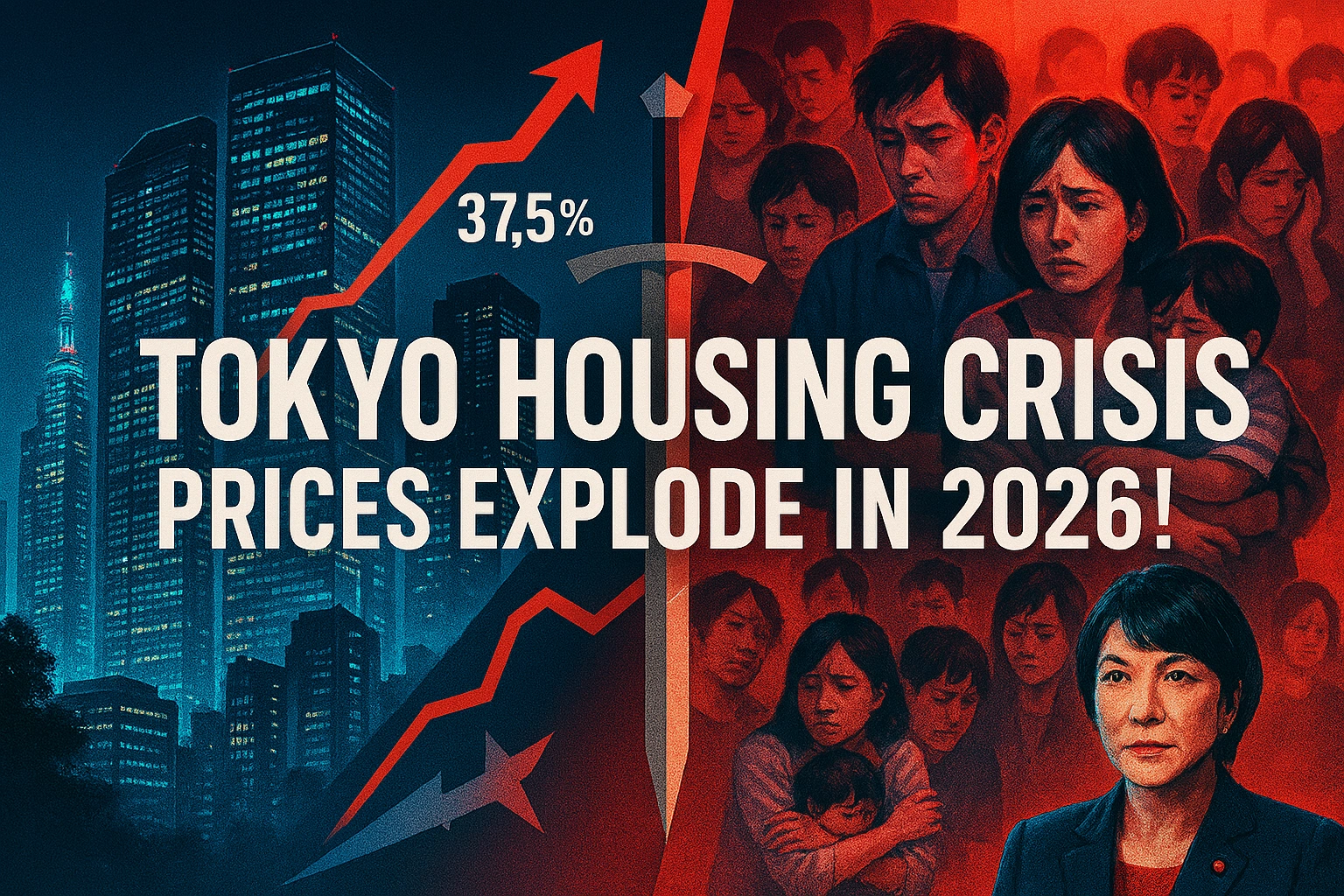
A landslide electoral victory has empowered Japan’s first female Prime Minister to reshape immigration and housing policy—but her agenda may deepen the affordability crisis gripping Asia’s megacities
Two days after Japan’s historic February 8 election, Tokyo’s real estate brokers are fielding anxious calls from foreign buyers wondering if their property dreams are about to evaporate. Prime Minister Sanae Takaichi’s landslide victory—securing 316 of 465 seats in the Diet, the largest mandate since World War II—has crystallized a political pivot with profound implications for one of Asia’s most overheated housing markets. Her campaign promises of stricter immigration controls and tougher requirements for foreign property owners are colliding with an uncomfortable economic reality: Tokyo’s property prices averaged ¥91.8 million ($597,810) in 2025, a 17% surge that reflects not foreign speculation, but a structural crisis decades in the making.
The newly empowered Prime Minister faces a dilemma that echoes across Asia’s booming capitals, from Seoul to Sydney. Housing affordability has become a political lightning rod, and the instinct to blame foreign buyers is politically expedient. Yet the data tells a different story—one where supply constraints, demographic shifts, and domestic demand dynamics are the true architects of this affordability catastrophe.
The Anatomy of Tokyo’s Price Explosion
Walk through Tokyo’s Minato ward on a Tuesday morning and the construction cranes tell only half the story. Despite the skyline’s perpetual evolution, Tokyo’s new condominium supply in 2025 plunged to its lowest level since 1973. This supply drought, combined with surging construction costs and a labor shortage that has contractors competing ferociously for workers, has created a perfect inflationary storm.
The numbers are staggering. In March 2025, the average price of new apartments in Greater Tokyo hit ¥104.85 million, representing a 37.5% year-over-year increase—only the second time in history that monthly averages exceeded ¥100 million. In Tokyo’s central 23 wards, prices soared even higher, reaching ¥136.1 million, a 21.8% jump from 2024. The six core municipalities—Chiyoda, Chūō, Minato, Shinjuku, Shibuya, and Bunkyō—saw the average new condominium price rocket to ¥195 million.
Even the used apartment market, traditionally more stable, experienced unprecedented turbulence. Used apartments in Tokyo’s 23 wards posted a 28.3% year-over-year increase in April 2025, the highest growth rate since data collection began. Property analysts project that Tokyo property prices will continue to increase by 5-6% annually in 2026, representing a slight deceleration from 2025’s blistering pace but still far outstripping wage growth.
“Developers are focusing on central locations where they can sell luxury condos and justify the pricing,” Zoe Ward, CEO of brokerage Japan Property Central, explains. “A lot of their inputs will be construction costs and land pricing.” This concentration on high-margin luxury developments has created a bifurcated market where the wealthy secure prime real estate while middle-class Japanese families are increasingly priced out of ownership in their own capital.
Takaichi’s Conservative Mandate and the Immigration Scapegoat
Takaichi’s electoral triumph on February 8 was built partly on promises to address what she frames as “anxiety and a sense of unfairness” about foreigners in Japan. During her campaign, she pledged tougher immigration policies, including stricter requirements for foreign property owners and caps on foreign residents. Her coalition agreement with the Japan Innovation Party includes formulating a “population strategy” by the end of fiscal year 2026, complete with numerical targets for accepting foreigners.
Within days of taking office in October 2025, Takaichi established a ministerial meeting on foreign policy and created a new cabinet position—minister of “a society of well-ordered and harmonious coexistence with foreign nationals”—headed by Economic Security Minister Kimi Onoda. The government has already announced that starting in fiscal year 2026, foreign nationals will be required to declare their nationality when purchasing property, with copies of passports or residence cards submitted to authorities.
The political calculus is clear. Japan’s property prices have become a flashpoint for public frustration, and immigration provides a convenient target. Takaichi’s rhetoric taps into genuine anxieties—real wages have stagnated while housing costs have skyrocketed—but directs blame toward a demographic that represents just 3% of Japan’s population and accounts for roughly 27% of property transactions nationwide (and 20-40% of new apartments in central Tokyo, according to Mitsubishi UFJ Trust & Banking Corp).
Yet here’s the uncomfortable truth the data reveals: foreign buyers aren’t driving Tokyo’s affordability crisis. They’re beneficiaries of it.
The Real Culprits: Supply Shortages and Structural Dysfunction
Tokyo’s housing crisis is fundamentally a supply story. New condominium supply in the Tokyo metropolitan area declined 4.5% in 2025 to just 21,968 units—the lowest point in more than half a century. Meanwhile, demand remains robust. Net migration continues to favor Tokyo and the capital region as young professionals flee provincial cities for better opportunities. Household formation rates, driven by younger workers and an increasing number of single-person households, continue to outpace new construction.
The weak yen has certainly attracted foreign capital—the currency’s depreciation has increased the costs of imported raw materials while making Japanese assets cheaper for international buyers. But foreign investment is flowing into a market already constrained by:
Labor shortages: Japan’s construction industry faces a severe demographic crunch, with an aging workforce and insufficient young workers entering the trades. This scarcity drives up labor costs and slows project timelines.
Rising construction costs: Beyond labor, material costs have surged. New buildings must meet stricter energy efficiency standards to qualify for tax incentives, further inflating development expenses.
Regulatory complexity: Land use regulations and planning processes remain byzantine, delaying projects and limiting density in areas where demand is highest.
Investor behavior: With ultra-low interest rates (the Bank of Japan only recently raised its policy rate to 0.75%, still historically modest), Japanese investors and homeowners have reinvested massive capital gains back into the housing market, widening the gap for first-time buyers.
The residential property price index in the Tokyo Metropolitan Area rose 8.14% year-over-year in January 2025—but when adjusted for inflation, growth was a more modest 3.95%. Nationally, residential prices increased 10.7% in 2025. These aren’t speculative bubbles driven by foreign money; they’re the inevitable consequence of structural undersupply meeting persistent demand.
Asia’s Affordability Crisis: A Regional Epidemic
Tokyo is not an outlier. Across the Asia-Pacific region, major cities are grappling with parallel crises that expose the limits of blaming foreign investment for homegrown policy failures.
In Seoul, apartment prices rose roughly 8.7% in 2025—the fastest annual gain in nearly two decades, according to Korea Real Estate Board data. Prime districts like Songpa-gu, Yongsan-gu, and Seocho-gu posted monthly gains above 2% in late 2025. Seoul homes now average 1.4 billion KRW while the national average sits near 470 million KRW, making Seoul roughly three times pricier than the rest of South Korea. The city’s unique jeonse rental system—where tenants pay lump-sum deposits of 50-80% of property value—is pushing more renters toward outright purchases, further inflaming demand.
Seoul’s affordability crisis shares Tokyo’s structural DNA: supply constraints driven by limited land availability, high construction costs, and regulatory hurdles. Foreign investors now account for a significant portion of Seoul’s premium real estate market, but as with Tokyo, they’re capitalizing on—not creating—the supply-demand imbalance.
Further south, Australia presents perhaps the starkest illustration of housing dysfunction. Over the past five years, median advertised rents rose approximately 48% for both houses and units, with the strongest increases in Hobart (64%), Adelaide (57%), and Perth (50%). Australian home values climbed 47.3% since March 2020, adding about $280,000 to the median dwelling value, while median annual household income increased just 15%. Tenants now dedicate a record 33.4% of their income to rent.
The Australian case exposes the futility of immigration scapegoating. Despite foreign buyer restrictions implemented in recent years, supply shortages persist. The National Housing Supply and Affordability Council projects that 938,000 new dwellings will be built over the five-year Housing Accord period—a shortfall of 262,000 dwellings relative to the 1.2 million target. Labor shortages, high material costs, and financing constraints continue to weigh on new supply.
The Double-Edged Sword of Supply Constraints
Supply constraints function as a double-edged sword in Tokyo’s housing market. On one edge, limited new construction protects existing property owners’ equity, creating a politically powerful constituency that benefits from scarcity. Homeowners who purchased properties years ago have seen valuations soar—wealth accumulation that reinforces the LDP’s traditional base.
On the other edge, this same scarcity devastates affordability for younger Japanese, first-time buyers, and middle-class families. The price-to-income ratio has stretched to unsustainable levels. In Tokyo’s eastern suburbs, it would take an average wage earner 35 years to save a 20% deposit for a median-priced house. Even clearing that hurdle, servicing the mortgage would consume one-and-a-half times their income.
Takaichi’s immigration restrictions, even if fully implemented, won’t resolve this fundamental tension. Requiring foreign buyers to declare nationality and submit documentation may provide political theater, but it does nothing to address the core problem: Japan isn’t building enough housing where people want to live.
The government’s own data shows a cumulative shortfall of approximately 600,000 housing starts over the past four years due to delays in permits and construction. Seoul’s apartment move-in volume in 2026 is projected to fall to 16,412 units, a 48% drop from 2025. These supply crunches dwarf any impact from foreign investment flows.
What Takaichi’s Government Should Actually Do
If the new Prime Minister is serious about addressing Tokyo’s housing affordability crisis—and the cost-of-living pressures that animated her electoral mandate—her government must confront the structural impediments to supply expansion. Political expedience will tempt her toward performative restrictions on foreign buyers, but meaningful reform requires harder choices:
1. Streamline Planning and Zoning: Tokyo’s land use regulations must be modernized to allow greater density near transit hubs and employment centers. The current system protects low-density neighborhoods at the expense of housing abundance.
2. Invest in Construction Capacity: Address labor shortages through vocational training programs, immigration pathways for skilled construction workers (yes, immigration can be part of the solution), and productivity improvements through technology adoption.
3. Reduce Development Costs: Review energy efficiency mandates and other regulatory requirements that, while well-intentioned, inflate construction costs without proportionate benefits. Standardize processes to reduce complexity.
4. Public Housing Expansion: Increase government investment in public and social housing to provide affordable options for low- and middle-income families. This addresses demand pressure without relying solely on market mechanisms.
5. Tax Incentives for Developers: Offer targeted tax breaks for developers who build affordable housing units, particularly in high-demand areas currently dominated by luxury developments.
6. Transparency on Foreign Investment: Rather than restricting foreign capital outright, implement comprehensive data collection to understand its actual impact. Evidence-based policy requires understanding the problem’s true scale.
7. Address the Weak Yen Strategically: The weak yen makes Japanese assets attractive to foreign buyers but also inflates construction costs through expensive imports. Coordinated monetary policy that stabilizes the currency could ease both dynamics.
The Cost of Political Convenience
Takaichi’s electoral success demonstrates the political potency of immigration skepticism in an era of economic anxiety. Her pledge to “stand firm” against foreigners resonates with voters struggling to afford housing in their own capital. But scapegoating immigration for Japan real estate supply constraints—and by extension, Tokyo property prices 2026 projections—risks squandering Japan’s best chance at securing the workforce it needs for economic vitality.
Japan’s demographic crisis is severe. The working-age population is shrinking, birth rates remain stubbornly low, and without immigration, labor shortages will only intensify. The construction sector—already constrained—will face even greater challenges replacing aging workers. Takaichi’s administration created a ministerial post for “harmonious coexistence with foreign nationals” while simultaneously pursuing policies that frame foreigners as threats. This contradiction epitomizes the challenge: Japan needs foreign labor and capital, but political expediency demands treating both as problems to be managed rather than assets to be cultivated.
The data from Seoul and Australia reinforces a sobering lesson: restricting foreign investment doesn’t automatically increase housing affordability. What it does is provide political cover for avoiding harder structural reforms. Seoul implemented various restrictions on foreign land purchases, yet prices in prime districts continue surging. Australia tightened foreign buyer rules, yet the housing shortage persists and rents have climbed 48% in five years.
A Regional Reckoning
Tokyo’s crisis is a microcosm of a broader Asian and global phenomenon. Cities worldwide face similar pressures: rapid urbanization concentrating demand in limited geographic areas, construction industries struggling with labor and cost constraints, and political systems that find restricting foreign investment easier than confronting NIMBYism and regulatory dysfunction.
The Asia-Pacific commercial real estate market, as CBRE’s 2025 outlook notes, will see “steady growth, split performance” reflecting these divergent dynamics. Tokyo, Seoul, and Australian cities will continue experiencing rental and price growth driven by supply constraints, while secondary markets struggle with oversupply and demographic headwinds.
For Tokyo specifically, the forecast is clear: absent meaningful supply-side reforms, property prices will continue rising 5-6% annually through 2026 and beyond, with luxury properties potentially seeing 6-7% growth. The contract rate for new condominiums remains robust at 68.8% in Tokyo’s 23 wards, indicating that despite high prices, demand persists among those who can afford it—a self-reinforcing dynamic that further marginalizes middle-class aspirations.
Conclusion: The Path Forward
Sanae Takaichi’s historic electoral mandate gives her the political capital to pursue transformative reforms. Her landslide victory, fueled by “Sanamania” among young voters and conservatives disillusioned with previous LDP leadership, provides a rare opportunity to tackle Japan’s structural challenges head-on.
The question is whether she will spend that capital on performative restrictions that provide political satisfaction but economic dysfunction, or on the harder work of actually increasing Tokyo’s housing supply. The latter requires confronting powerful constituencies—existing homeowners who benefit from scarcity, construction companies comfortable with the status quo, local governments protective of low-density neighborhoods, and NIMBYs who oppose any development near them.
Japan’s demographic trajectory—declining population, shrinking workforce, aging society—leaves little room for error. The nation cannot afford to alienate foreign capital and foreign workers while simultaneously failing to build enough housing for its own citizens. Affordable housing Japan immigration policy must recognize this dual imperative: Japan needs both foreign contributions and domestic supply expansion.
Tokyo property prices 2026 will continue their upward march unless fundamental reforms materialize. The supply constraints that drive this crisis are double-edged precisely because solving them requires political courage—the willingness to prioritize long-term housing abundance over short-term electoral advantage.
Prime Minister Takaichi has demonstrated political acumen and charisma. She’s built an unlikely coalition, connected with young voters through social media, and positioned herself as a decisive leader willing to make bold moves. Now she must decide: will she channel that boldness toward the structural reforms Japan desperately needs, or will she take the politically convenient path of blaming foreigners for a crisis rooted in decades of policy failure?
Asia’s housing affordability epidemic—from Tokyo to Seoul to Sydney—awaits her answer. The region’s other leaders are watching closely, because Tokyo’s choices will either illuminate a path forward or demonstrate, once again, how political convenience trumps economic rationality in the housing policy arena.
The February 8 election results are two days old. The real test of Takaichi’s premiership begins now.
Discover more from The Economy
Subscribe to get the latest posts sent to your email.
-

 Markets & Finance2 months ago
Top 15 Stocks for Investment in 2026 in PSX: Your Complete Guide to Pakistan’s Best Investment Opportunities
-

 Analysis4 weeks ago
Brazil’s Rare Earth Race: US, EU, and China Compete for Critical Minerals as Tensions Rise
-

 Investment2 months ago
Top 10 Mutual Fund Managers in Pakistan for Investment in 2026: A Comprehensive Guide for Optimal Returns
-

 Banks2 months ago
Best Investments in Pakistan 2026: Top 10 Low-Price Shares and Long-Term Picks for the PSX
-

 Asia2 months ago
China’s 50% Domestic Equipment Rule: The Semiconductor Mandate Reshaping Global Tech
-

 Global Economy2 months ago
What the U.S. Attack on Venezuela Could Mean for Oil and Canadian Crude Exports: The Economic Impact
-

 Global Economy2 months ago
Pakistan’s Export Goldmine: 10 Game-Changing Markets Where Pakistani Businesses Are Winning Big in 2025
-

 Global Economy2 months ago
15 Most Lucrative Sectors for Investment in Pakistan: A 2025 Data-Driven Analysis
Pingback: Florida braces for a historic generational wealth transfer - caa | Capital Analytics Associates