
Oil Markets
China-Russia Energy Ties: Deeper Than the Pipeline That Won’t Close

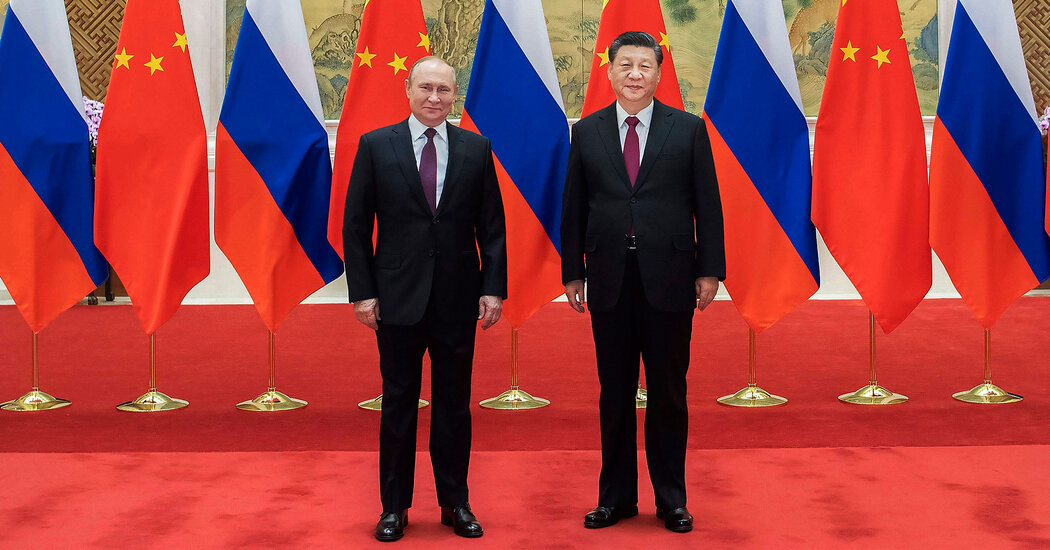
On May 20, 2026, Vladimir Putin walked into Beijing’s Great Hall of the People barely a week after Donald Trump had vacated the same ceremonial backdrop. Xi Jinping offered the full treatment — 40-plus cooperation agreements, declarations of ties at “the highest level in history,” and a joint statement that, in its careful diplomatic language, rejected Washington’s vision of global order. What the pageantry could not conceal was the one detail that told the real story: Russia’s most urgent ask — a binding final deal on the Power of Siberia 2 gas pipeline — came away unsigned. Kremlin spokesman Dmitry Peskov described the outcome as an “understanding” on basic parameters with “a few nuances” still to be resolved. In diplomatic language, that means negotiations continue.
That gap matters. It is the most precise measure available of where China-Russia energy ties actually stand.
A Partnership Built on Crisis, Not Strategy
The relationship spent four years defying Western predictions of its own limits. Russia’s full-scale invasion of Ukraine in February 2022 triggered the most sweeping sanctions package assembled since the Cold War. Moscow’s response was to pivot east with extraordinary speed, and Beijing — careful never to call it a rescue — absorbed the flows. Bilateral trade between the two countries reached around $228 billion in 2025, with Xi Jinping describing energy trade as a “stabilising pillar” of the relationship. That figure masks a telling detail: two-way trade was down 6.5% from a record in 2024, marking the first decline in five years — a drop driven overwhelmingly by falling global oil prices compressing the dollar value of largely stable physical volumes. The structural sinews held. The headline did not. ABC NewsJapan Today
China-Russia energy ties are now the load-bearing infrastructure of Moscow’s wartime economy, and the numbers confirm it on both sides of the ledger. Russia’s energy giant Gazprom supplies natural gas to China through the 3,000-kilometre Power of Siberia 1 pipeline under a 30-year, $400 billion deal launched in 2019. In 2025, exports jumped by around a quarter to 38.8 billion cubic metres, exceeding the pipeline’s planned annual capacity of 38 bcm. On oil, the picture is more striking still: China’s imports from Russia stood at 2.01 million barrels per day in 2025, representing 20% of China’s total imported oil by volume — and Russian presidential aide Yury Ushakov confirmed that exports surged a further 35% in the first quarter of 2026 to 31 million tons. MarketScreenerAsharq Al-Awsat
Those are not the numbers of a contingency arrangement. They are the architecture of dependency — carefully, if asymmetrically, constructed.
The shift in settlement currency reinforces how deep the rewiring has gone. By late 2025, more than 95% of bilateral trade settlements were conducted in rubles and yuan, a structural achievement that few Western analysts expected Russia to accomplish so rapidly after 2022. The dollar has effectively been excised from the world’s largest bilateral energy corridor. That alone constitutes a geopolitical fact that outlasts any single pipeline negotiation. Russiaspivottoasia
The Power of Siberia 2: Moscow Needs It More Than Beijing Does
How much energy does China import from Russia? In 2025, Russia supplied China with roughly 2.01 million barrels of oil per day — 20% of total Chinese crude imports — plus 38.8 billion cubic metres of pipeline gas and growing volumes of LNG. Russia is China’s largest pipeline gas supplier and its third-largest LNG source after Australia and Qatar. The relationship is large, but for China, not irreplaceable.
That asymmetry is precisely why Putin left Beijing without a breakthrough on the Power of Siberia 2 pipeline, in what analysts described as a setback for Moscow that revealed the evolving geometry of a partnership increasingly tilting in Beijing’s favour. CNBC
The proposed pipeline tells the story in steel and cubic metres. The planned 2,600-kilometre route would carry 50 billion cubic metres of gas annually from Russia’s Yamal fields to China via Mongolia — enough to roughly double the volumes now moving through Power of Siberia 1. For Moscow, it would replace the European market Gazprom has effectively lost: Russia’s gas exports to Europe have substantially shrunk following the 2022 invasion, with Gazprom seeing shipments reportedly plunge 44% to their lowest level in decades. For Beijing, the calculus is different entirely. CNBCRFE/RL
China doesn’t need Power of Siberia 2 on Russia’s schedule. It needs it on its own terms — price, take-or-pay obligations, and strategic exposure all remain open questions. Analysts note that for China, the pipeline increases the share of Russia in total gas supply, a concentration risk Beijing has so far been reluctant to formalise. Michael Feller, chief strategist at Geopolitical Strategy, put the dilemma plainly: “A deal would signal not just trust, but a decision that co-dependency is safer than the alternative. For the rest of the world, it would make the Sino-Russian relationship harder to unpick.” Al JazeeraCNBC
Gazprom and China National Petroleum Corporation signed a “legally binding memorandum” in September 2025. It was not a binding final agreement. The gap between those two things is where China’s leverage lives.
The Institutional Rewiring No One Is Talking About
Will the Power of Siberia 2 pipeline ever be built? Almost certainly — but on a timeline Beijing controls. The deeper story of China-Russia energy ties is not the pipeline negotiations. It is the quiet institutional transformation happening beneath them: shadow fleet logistics, Arctic LNG defiance, and the Yulong refinery case study.
In August 2025, China accepted a shipment from Russia’s Arctic LNG 2 liquefaction plant — a facility owned by Novatek that has been under US sanctions since November 2023, and whose exports had effectively been blocked as potential buyers stayed away to avoid secondary sanctions. China’s decision to receive that cargo was not an accident. Michal Meidan, head of China Energy Research at the Oxford Institute for Energy Studies, called it unambiguous: “The message is: China is no longer even pretending to comply with US sanctions or care about what the West thinks.” KinacentrumAl Jazeera
The Shandong Yulong refinery case makes the structural point even more sharply. This 400,000-barrel-per-day facility has become exclusively dependent on Russian crude following Western sanctions imposed in mid-2025 targeting Rosneft and Lukoil, which effectively closed the refinery off from Western and most Middle Eastern suppliers. During December 2025 and January 2026, Yulong imported an average of 240,000 barrels per day from Russia. These are not spot purchases. They are permanent structural dependencies created by the precise mechanism Western policymakers deployed to punish Russia. Discovery Alert
In February 2026, Russia formally ratified additional cooperation arrangements related to the Yamal LNG project, further strengthening long-term coordination in Arctic LNG development. The hydrogen dimension is newer still: Russia offers feedstock for blue hydrogen production; China contributes electrolyzer manufacturing and fuel-cell expertise. The energy axis is widening, sector by sector, even as the flagship pipeline project stalls. CGTN
Two-way trade rose 16.1% in the first four months of 2026 compared to the same period in 2025. Whatever the summit produced on paper, the volumes tell a different story.
The Limits That Western Analysts Often Miss — and One Beijing Cannot Ignore
The counterargument deserves honest treatment, and it is not trivial. China-Russia energy ties carry structural vulnerabilities that neither capital discusses openly.
The payment architecture, for all its yuan-and-ruble symbolism, remains operationally fragile. Chinese banks have grown reluctant to process yuan transactions with Russia, leading to significant payment delays; some major financial institutions, including Ping An Bank and Bank of Ningbo, stopped accepting Russian payments entirely, with approved transaction processing times stretching to 18 days. The reason is not ideological. It is the threat of US secondary sanctions — a tool that, even when wielded selectively, disciplines the behaviour of institutions that need access to dollar clearing far more than they need any individual Russian contract. Second Line of Defense
That tension will not disappear after Power of Siberia 2 is settled, if it ever is. China’s oil consumption is projected to peak around 2027 as electric vehicle adoption accelerates and GDP growth moderates. In the following years, Chinese demand will be sustained primarily by petrochemicals rather than transport fuel — a shift that changes what kind of Russian crude China wants, and how much of it. Kinacentrum
The critics who argue that China is “propping up” Russia miss something important: Beijing is extracting significant economic concessions for doing so. Russian crude has traded at a persistent discount to Brent — a discount that Chinese refiners, not Russian producers, capture. The relationship is less a geopolitical alliance and more a structured commercial arrangement in which one party happens to need the other considerably more than it lets on.
Energy partnerships built under duress tend to be renegotiated the moment that duress eases. That is precisely what Moscow fears most about any Ukraine ceasefire: not the military outcome, but the economic one.
What Comes Next for the World’s Most Consequential Energy Corridor
The May 2026 Beijing summit produced a paradox worth sitting with. Russia and China signed more than 40 agreements, declared ties “unyielding,” and pledged alignment on everything from artificial intelligence to nuclear cooperation. Yet the single project Moscow has staked its long-term energy future on — Power of Siberia 2 — remains, as it has for a decade, a negotiation rather than a construction project.
That is not a failure of friendship. It is a reflection of how the relationship actually functions. China doesn’t need to sign Power of Siberia 2 to maintain its leverage over Russia. In fact, not signing it is how that leverage is maintained. Each passing quarter in which Moscow’s European revenues remain suppressed and its Asian alternatives remain dependent on Chinese approval is a quarter in which Beijing extracts better terms, lower prices, and more infrastructure equity from a partner that has nowhere else to go.
The West’s deepest miscalculation, four years on, was assuming that sanctions would weaken the China-Russia energy axis. Instead, they institutionalised it — creating physical infrastructure, settled legal frameworks, and corporate dependencies that will outlast any political settlement in Ukraine.
The pipeline that won’t close is the relationship itself.
Discover more from The Economy
Subscribe to get the latest posts sent to your email.


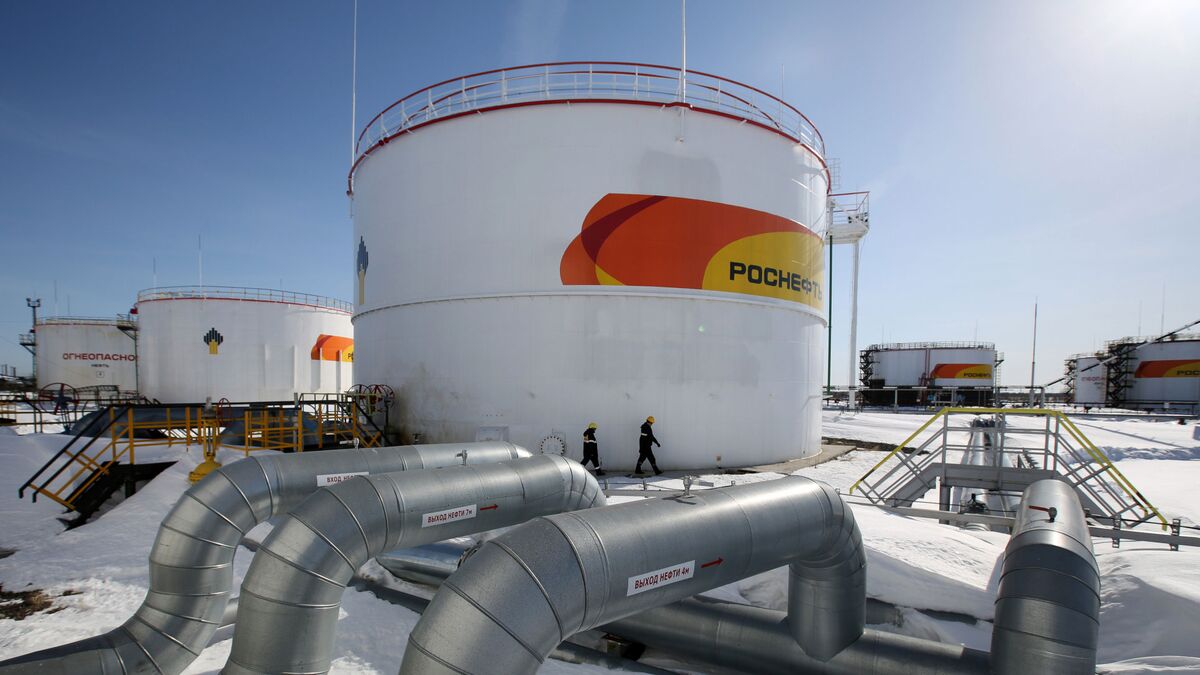
An unexpected shift in US sanctions policy has given Asian energy buyers a potentially important reprieve. It has also opened fresh questions about how importers should balance cheap fuel, diplomatic relationships and the risk that trading rules may change again.
On October 17, Reuters reported that President Donald Trump had issued an order waiving important Russia-related sanctions and tariffs before planned measures took effect. A subsequent Reuters account identified India as a significant beneficiary, given its role as a major Russian oil customer. The move reduces one category of immediate concern; it does not guarantee unlimited imports free of every restriction.
Why buyers in Asia care
Asia’s refineries compete for crude on price, quality, transport economics and availability. A sanction or tariff threat adds uncertainty to contracts even before it is implemented. Trading banks, insurers and shipowners may become more cautious; buyers may diversify supply or ask for discounts to compensate for risks.
A waiver can therefore matter before a single new tanker sails. It may improve the feasibility of existing contracts and ease pressure for rapid, expensive substitution. Still, the benefit depends on the precise terms of the waiver, the identity of the buyer and seller, the bank handling payment and the practical shipping route.
India is the immediate test case
India’s refining industry has cultivated access to discounted Russian crude, but its policymakers also value the trading relationship with Washington. The reported waiver potentially reduces friction between energy security and trade negotiations. Reuters’ October 19 analysis connected the decision to hopes for progress on a broader US–India trade deal.
Yet it would be a mistake to treat the waiver as permanent diplomatic alignment. Policy decisions may be reviewed, challenged or narrowed. India’s future purchases will still depend on relative crude prices and refinery requirements, not diplomatic headlines alone.
Why oil did not simply collapse
Market reports described some easing after the policy decision, but Middle East disruption and threats to physical energy infrastructure remained important. A Reuters oil-market report cautioned that implementation uncertainty limited confidence in sustained additional supply.
More Russian barrels accessible on paper may fail to solve problems caused by damaged refining equipment, disrupted shipping lanes or unusually tight diesel stocks elsewhere. Crude oil is also not a homogeneous product. Refineries are configured for specific blends; changing the input can increase costs or reduce efficiency.
Winners and losers are not obvious
| Stakeholder | Potential benefit | Important caveat |
|---|---|---|
| Indian refiners | Access to competitive crude | Compliance and financing |
| Other Asian importers | Some relief from global supply pressure | Eligibility differs by transaction |
| Tanker operators | More potential freight business | Insurance and security costs |
| Oil exporters competing with Russia | Demand can shift away | Overall prices and volumes still uncertain |
| Asian consumers | Possible easing in fuels | Taxes, FX and local distribution affect pump prices |
Smaller importers should not assume a waiver affecting one set of transactions automatically provides legal cover for every Russian energy purchase. Compliance teams must examine operative legal documents, not rely on a news summary as advice.
The geopolitical trade-off
Critics argue that relaxing pressure on Russia can weaken coercive leverage relating to the war in Ukraine. Supporters of relief emphasise the cost of energy scarcity and the need to stabilise prices. These perspectives reflect a genuine policy trade-off: reducing immediate energy stress may conflict with broader sanctions objectives.
A rigorous regional article should distinguish the economic effects of the waiver from an endorsement of its foreign-policy rationale. It should also avoid forecasting specific oil-price declines from a change whose practical effects are still being assessed.
What to watch in November
Importers and analysts should monitor official US rules, commercial purchase announcements, actual tanker arrivals, refinery throughput and the spread between competing crude grades. Other developments—including renewed conflict around Hormuz—could easily overwhelm the marginal supply effect of the waiver.
The paperwork behind a cheap barrel
A tanker purchase is not simply a quoted price multiplied by volume. The buyer must consider contract origin, payment route, shipping ownership, insurance, discharge location, refinery compatibility and applicable legal restrictions. Even when particular sanctions measures are waived, businesses should confirm whether related banking or export controls remain relevant to the proposed transaction.
The economic gain from a discounted crude grade also depends on refining yields. A barrel that produces a lower share of the products a refinery needs may be less valuable than a seemingly more expensive alternative. Freight routes, demurrage and quality specifications can erase an advertised discount. That is why refinery-level economics matter more than a headline claim that Russian oil is ‘cheap’.
Asian policymakers also need to distinguish short-term energy security from strategic dependence. Diversification across suppliers, fuels and transport routes generally provides resilience when a major trading partner or shipping corridor is disrupted. An importer that shifts too much procurement to one politically sensitive source may exchange today’s cheaper invoices for tomorrow’s concentrated risk.
A practical follow-up story should compare actual arrival data and refinery purchases after the waiver. Only then can readers distinguish a change in legal permission from a change in physical supply.
Are all Russian sanctions now removed?
No. Reporting describes waivers of specified measures. The exact surviving restrictions and compliance obligations must be checked against current official documents.
Will Indian petrol immediately become cheaper?
Not necessarily. Crude prices, refining margins, taxes and distribution costs intervene.
Does the waiver solve Asia’s energy security problem?
No. It can ease one bottleneck while leaving transport, geopolitical and market vulnerabilities intact.
For Asian buyers, the opportunity is flexibility—not certainty. The sensible response is to diversify procurement and understand the legal terms before betting a fuel strategy on a political announcement.
Discover more from The Economy
Subscribe to get the latest posts sent to your email.
Markets & Finance
Asia Markets Weekly: How Oil, US Yields and the Fed Reach Tokyo, Kuala Lumpur and Karachi
The global market’s biggest stories can look deceptively American: a Federal Reserve decision, a Treasury yield and a Wall Street earnings call. Yet the cost of these events is often felt most sharply across Asia, where energy import dependence, divergent monetary policies and unequal access to technology investment create different winners and losers.
The next scheduled Federal Reserve policy decision is October 28, according to its official calendar. The US 10-year Treasury yield was around 5.00% by October 23, down from higher levels earlier in the month. Oil was still elevated, while the IMF’s latest global outlook sees world growth slowing to 3.1% in 2026. These common shocks will not produce uniform Asian market returns.
Tokyo: currency moves complicate the equity story
Japan’s multinational exporters can be sensitive to yen movements because overseas revenue must be translated back into local currency, while domestic consumers and importers face different pressures when the yen weakens. The effect is not one-directional: a weaker currency may support export competitiveness but raise fuel and food import costs.
Investors should distinguish a broad index rally driven by a few large manufacturers or technology names from improving profits across the economy. Japanese government-bond yields and domestic monetary policy also matter. A US rate move may change yen-dollar incentives, but it does not dictate Japanese policy.
Kuala Lumpur: energy exposure is mixed
Malaysia’s place in the global energy system is different from that of a pure importer. Some businesses benefit from upstream prices, while manufacturers, transport operators and households can face higher costs. Currency and fiscal effects depend on domestic subsidy design, trade receipts and the balance between oil and gas revenues and imported refined products.
For equity investors, oil up should not be treated as a universal buy signal. Airlines, logistics companies, industrial users and energy-related firms can have opposing sensitivities. Malaysia’s electrical and electronics export exposure also links the country to the AI hardware cycle, but final demand and margins deserve scrutiny.
Karachi: the import bill dominates
Pakistan’s external vulnerability is sharper because energy prices can quickly affect dollar demand, local prices and business borrowing costs. The World Bank reported on October 22 that reforms and macro stabilisation had supported growth, but conflict-related pressures remained. Higher energy costs can erode these improvements even when the US equity market rises on technology earnings.
For the Pakistan Stock Exchange, sector analysis matters more than a generic Asian risk-on or risk-off label. Banks, energy firms, exporters, consumer businesses and highly leveraged industrial companies have distinct exposures to rates and exchange rates.
The regional transmission map
| Shock | Japan | Malaysia | Pakistan |
|---|---|---|---|
| US yields rise | Yen and valuation sensitivity | Funding costs, foreign flows | Dollar pressure and external borrowing context |
| Brent crude rises | Import cost pressure | Mixed effects across producers and users | Import bill, petrol and inflation pressure |
| AI investment accelerates | Capital goods and semiconductor ecosystem | Electronics supply chain opportunities | Selective digital services potential, energy constraints |
| Global demand softens | Exporters affected | Trade and tourism affected | Export and remittance channels |
These are transmission mechanisms, not guaranteed daily market movements. Political measures, domestic policies and company-specific developments can overwhelm them.
What to watch next week
The Fed’s statement and press conference will indicate how officials weigh inflation against growth. US technology earnings will test whether expensive AI infrastructure is translating into profitable demand. Oil-market shipping and security developments remain a separate source of risk that can upset even the strongest company results.
Investors should also check Asian market holidays, local economic releases and currency fixing times. Comparisons made across different trading-session cutoffs can create false narratives about which exchange responded first.
A sharper method than daily prediction
A regional investor can create a four-factor watchlist: oil, US yields, the dollar and domestic policy. For each market, identify companies with pricing power, foreign-currency debt, export income and energy-cost exposure. That framework is more durable than confident predictions about Monday’s opening index point.
How to read a cross-market comparison properly
A strong weekly comparison should fix each market’s closing date and reporting currency. If one exchange is closed for a holiday while another has traded through a major US event, their percentage changes cover different information sets. A reader can misinterpret this as one market being more resilient when the difference is mostly timing.
Currency conversion adds another complication. A stock index may gain in local currency but deliver a smaller return to an investor measuring wealth in dollars. This does not mean one series is incorrect; it means the investor’s benchmark is different. Analysts should label both local and dollar-adjusted comparisons and resist mixing them within a single ranking.
The regional supply-chain connection deserves the same precision. AI demand can benefit semiconductor and electrical-equipment producers, but the benefit is not evenly distributed across Tokyo and Kuala Lumpur, and it may have little immediate impact on a Pakistani small business facing higher power bills. A regional theme should identify channels rather than assume countries move together.
At the end of each weekly roundup, list the coming policy announcements and company results with local times. A reliable calendar may be more valuable to investors than an index-level prediction.
Will a Fed hike automatically trigger an Asian sell-off?
No. Expectations, positioning and the Fed’s message matter, alongside domestic fundamentals.
Which Asian markets benefit when oil rises?
The answer depends on the mix of producers, refiners, importers, subsidy arrangements and market valuations.
What is the most useful common comparison?
Compare earnings and cash-flow sensitivity to oil, currency and rates rather than comparing headline index changes alone.
The regional lesson: Asia is not one trade. From Tokyo to Kuala Lumpur to Karachi, the same global shock is filtered through a different currency, industrial structure and policy response.
Discover more from The Economy
Subscribe to get the latest posts sent to your email.
Markets & Finance
Oil Above $100: How Higher Crude Prices Reach Pakistan’s Rupee, Petrol and Imports
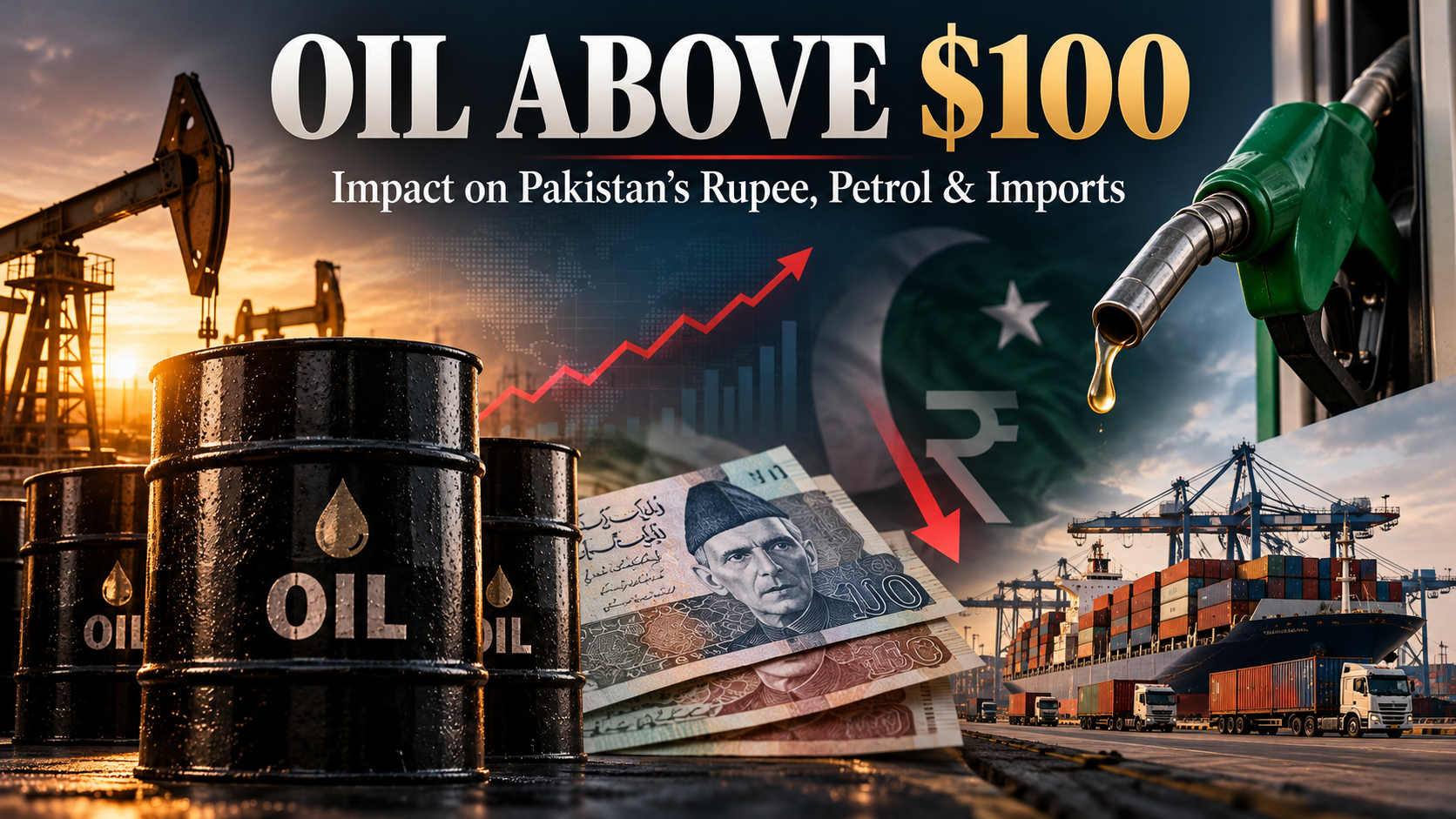
Pakistan does not need to be the centre of a Middle East conflict to feel its economic consequences. When crude oil moves above $100 a barrel, the effects travel through refinery orders, shipping invoices, the rupee and ultimately the household budget. The transmission is neither immediate nor identical across products—but it is difficult to escape.
The U.S. Energy Information Administration’s Brent price series provides the benchmark that importers and analysts watch. Market datasets tracking that series showed Brent around $115 on October 20, 2026, although dated spot assessments and actively traded futures contracts are different instruments. The point is not one precise tick: sustained triple-digit crude imposes an external bill on Pakistan.
The arithmetic of a more expensive barrel
A useful illustration is deliberately simple. If a country buys an additional one million barrels at a price $10 per barrel higher, its dollar cost rises by $10 million, before freight, insurance, refining margins or taxes. That is a scenario, not a claim about Pakistan’s daily purchase volume. Scale it to actual import quantities and the significance becomes clear.
The first effect is a higher energy invoice in foreign currency. Importers need more dollars to purchase the same physical amount of fuel. Other things equal, that can worsen the merchandise trade balance and increase pressure on foreign-exchange markets. Remittances, exports, financing inflows and central-bank reserves determine how much of that pressure actually reaches the rupee.
Why petrol prices do not move one-for-one with Brent
Consumers buy refined petroleum products, not barrels of Brent. Domestic pump prices depend on refined-product prices, the timing of cargo purchases, exchange-rate conversion, freight, distribution margins and the government’s pricing and taxation arrangements. A $10 rise in benchmark crude does not mechanically imply a fixed rupee increase per litre at the pump.
There are also lags. A retailer may still be selling inventory purchased earlier, while the next shipment is already being priced at higher international rates. High diesel costs can eventually raise the prices of freight-intensive groceries, building materials and agricultural products—even where households use little diesel directly.
The rupee: a second channel of inflation
A rising dollar oil bill can be compounded by exchange-rate weakness. For an importer, a barrel priced at $110 is more expensive in local currency if the rupee depreciates than if the currency remains stable. Conversely, strong remittances and adequate foreign exchange buffers can temper pass-through. The World Bank’s October 22 Pakistan Development Update notes that strong remittances have helped rebuild reserves, highlighting why the external account must be read as a whole.
This is why headlines predicting an exact rupee level purely from Brent are unreliable. Oil is a major driver, not the only one. Capital flows, the dollar’s international strength, policies governing fuel taxes and the duration of regional disruption all matter.
Which groups feel the squeeze first?
Transport operators, airlines, logistics providers and energy-intensive factories are exposed quickly, although their ability to pass costs to customers varies. Farmers face fuel and fertilizer pressures; exporters may lose competitiveness if higher electricity and freight bills are not offset by improved prices abroad. Households experience the shock through commuting, distribution-linked food costs and changing disposable income.
For the government, the consequences are ambiguous. Certain fuel-related tax receipts may respond differently from subsidy or relief spending. A policy that cushions consumers can protect demand but create fiscal trade-offs. Public discussion should quantify those choices rather than assume that every rupee of pump-price relief is costless.
A dashboard that tells more than the oil ticker
| Indicator | What it reveals | What it cannot tell you alone |
|---|---|---|
| Brent spot and futures | Benchmark crude conditions | Pakistan’s final landed fuel cost |
| Refined diesel/petrol benchmarks | Product-market tightness | Local tax and margin decisions |
| USD/PKR and SBP reserves | Capacity to meet dollar demand | The size of future financing flows |
| Import volumes and values | Whether higher bills reflect price or quantity | Household inflation immediately |
| Domestic CPI and transport fares | Consumer pass-through | The next central-bank rate decision |
The IMF’s October world outlook flags a particularly difficult outlook for energy-importing economies outside the technology investment boom. Pakistan’s challenge fits that description: it has to preserve growth while protecting external stability.
What can businesses and households do?
Businesses should stress-test cash flow against higher freight and energy costs rather than assume a quick reversal. Firms with dollar-denominated purchases should map invoice dates and currency exposures; any hedging decision requires professional assessment of cost and suitability. Households should compare real transport and utility expenses over time instead of trying to time oil futures.
A practical import-bill sensitivity calculation
Suppose a fuel importer expects to buy 500,000 barrels over the next delivery window. At $100 per barrel, the notional crude cost is $50 million; at $115 it is $57.5 million. The additional $7.5 million arises before shipping, insurance and refining differences. This illustrative calculation should never be represented as Pakistan’s national import volume, but it helps readers understand why changes that look modest on a chart can become material in large transactions.
An important second question is whether consumption changes when prices rise. Transport firms may consolidate routes, industrial plants may adjust production and households may reduce discretionary travel. These responses lower fuel demand somewhat but can also suppress growth. An apparent improvement in the import bill caused by weak industrial activity is not the same economic success as higher export earnings.
The transmission can also be uneven across provinces and occupations. A taxi driver who purchases fuel daily faces a different adjustment period from a manufacturing company with a multi-month supply contract. Consumers may experience cost increases even before the official next-price announcement when vendors begin adjusting delivery charges.
For a transparent newsroom dashboard, report separate series for global crude, refined products, USD/PKR and domestic pump prices. Putting them on one axis without units obscures rather than clarifies the story.
Will Brent above $100 automatically cause a balance-of-payments crisis?
No. The outcome depends on volumes, financing, reserve buffers, exports, remittances and policy responses.
Can Pakistan benefit from cheaper Russian or other discounted crude?
Potentially, but only if the delivered economics work after sanctions compliance, shipping, refining compatibility and payment constraints. A headline discount is not a complete landed-cost calculation.
The deeper story: expensive oil is an economy-wide import tax paid first in dollars and then, often, through the prices that businesses and families face.
Discover more from The Economy
Subscribe to get the latest posts sent to your email.

Lula Re-elected in 2026: What Changes for the Dollar, Brazilian Stocks, and Interest Rates?

Lula Wins Brazil’s 2026 Election: Five Economic Tests for 2027

SSI November 2026 Payment: Why Benefits Arrive October 30

Russia Sanctions Waiver: What Asian Oil Buyers Gain

Asia Markets Weekly: How Oil, US Yields and the Fed Reach Tokyo, Kuala Lumpur and Karachi

Gold Near $4,000: Buy, Hold or Wait? A Pakistan Tola Price Guide

US 10-Year Treasury Yield Near 5%: The Hidden Cost for Pakistani Investors

Fed Meeting on October 28: Hike or Hold—and Why Pakistan Investors Should Care

Can Pakistan Turn US–Iran Mediation Into an Economic Dividend?

Oil Above $100: How Higher Crude Prices Reach Pakistan’s Rupee, Petrol and Imports

SBP Interest Rate at 11.5%: What Will Decide Pakistan’s Next Policy Move?

The Global South: Debt, Climate Finance and Investment in 2026

Energy Security Is the New Economic Security

Can Global Tourism Survive Geopolitical Shocks?

Crude Oil & Petroleum Market Analysis: OPEC+ Decisions and Price Forecasts

Silver Price Today: Why the Xi-Trump AI Standoff Is Fueling a Safe-Haven Rally

Top US Convenience Store Chains: Store Counts, EV Charging, and Sales Trends

Algorithmic Dogfights: Why the U.S. and China Must Establish Rules of Engagement for Autonomous Air Power

Who Is Shivon Zilis? The Neuralink Executive at the Center of the Musk–OpenAI Trial

Social Security Extra $90 Deposit: Who Qualifies for the October 2026 Medicare Rebate?

Corporate America Faces a New Debt Test as US Borrowing Costs Surge

Gold Price Outlook 2026: The Forces Behind the Forecasts—and What Could Reverse Them

Global Economic Outlook 2026: 7 Forces Reshaping Markets, Trade and Business

Gold Falls 3.7% as Yields Surge: Is Gold Still a Safe Haven in 2026?

Stock Market Today: Dow, S&P 500, and Nasdaq Retreat as Treasury Yields

Anthropic Bans Sustained Abuse of Claude AI Under New Usage Policy Effective November 12, 2026

MAS Allocates S$1.45 Billion to Five Asset Managers in Third EQDP Batch: Total Deployment Reaches S$5.4 Billion

US 10-Year Yield Hits 5.24%: What the Historic Bond Market Sell off Means for Mortgages and Investors
-

 Markets & Finance10 months ago
Top 15 Stocks for Investment in 2026 in PSX: Your Complete Guide to Pakistan’s Best Investment Opportunities
-

 Analysis8 months ago
Johor’s Investment Boom: The Hidden Costs Behind Malaysia’s Most Ambitious Economic Surge
-

 Analysis8 months ago
Top 10 Stocks for Investment in PSX for Quick Returns in 2026
-

 Banks9 months ago
Best Investments in Pakistan 2026: Top 10 Low-Price Shares and Long-Term Picks for the PSX
-

 Analysis9 months ago
Brazil’s Rare Earth Race: US, EU, and China Compete for Critical Minerals as Tensions Rise
-

 Investment10 months ago
Top 10 Mutual Fund Managers in Pakistan for Investment in 2026: A Comprehensive Guide for Optimal Returns
-

 Global Economy10 months ago
15 Most Lucrative Sectors for Investment in Pakistan: A 2025 Data-Driven Analysis
-

 Global Economy10 months ago
Pakistan’s Export Goldmine: 10 Game-Changing Markets Where Pakistani Businesses Are Winning Big in 2025