
Asia
China Economic Statecraft 2025: How Beijing’s Imperfect Strategy is Winning the Global Trade Game

The boardroom was tense. Executives at a major German automotive supplier faced an impossible choice: continue sourcing rare earth elements from China—the world’s dominant supplier—or risk production shutdowns that could cost billions. Beijing hadn’t issued threats. It didn’t need to. The mere possibility of export restrictions, wielded selectively against companies deemed too cozy with Washington, was enough to reshape corporate strategy across continents.
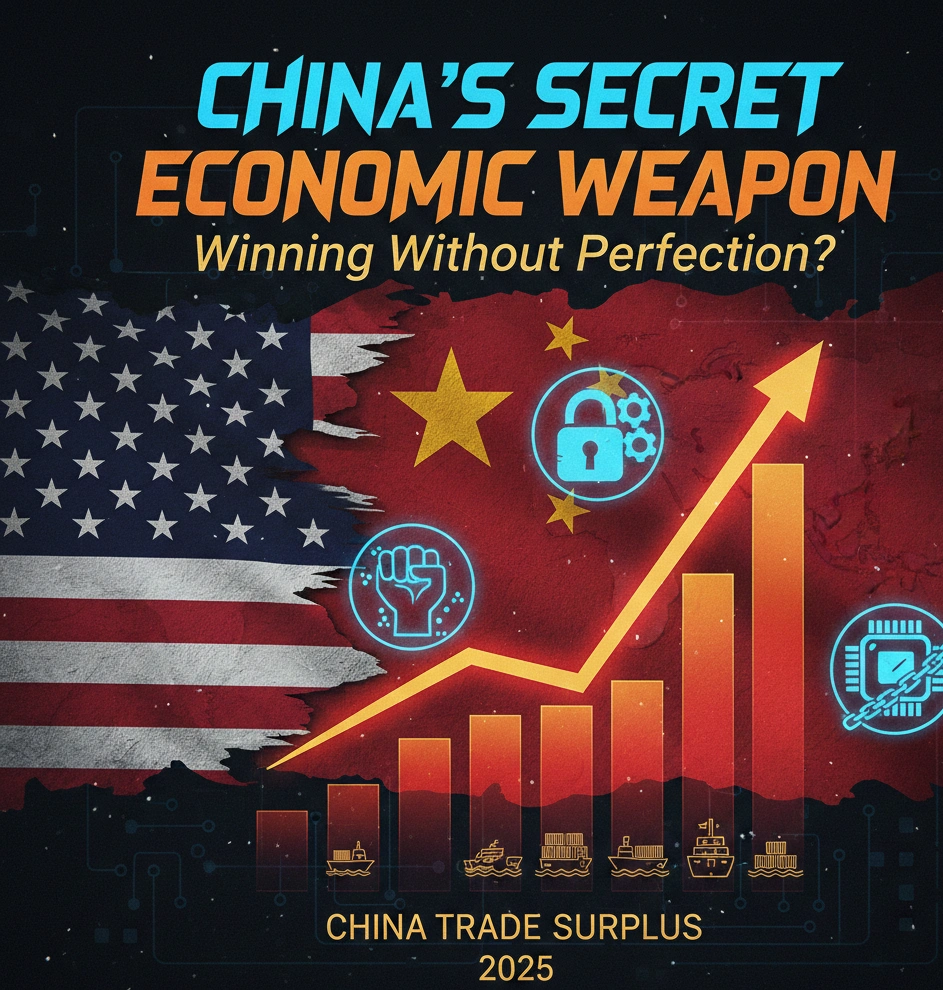
This is the quiet power of China economic statecraft 2025—a strategy that doesn’t always demand perfection to deliver results. While Western analysts debate the coherence of Beijing’s approach, the numbers tell a different story. China posted a record $1.2 trillion trade surplus in 2025, a staggering 20% increase from the previous year, even as Trump-era tariffs remained in place. The paradox is striking: amid the ongoing US-China trade war impact, Beijing has turned economic friction into strategic advantage, leveraging global supply chain dependencies and refining its toolkit from blunt instrument to precision scalpel.
The conventional wisdom holds that economic statecraft requires flawless coordination—a unified government speaking with one voice, deploying carrots and sticks with surgical precision. China challenges this assumption. Its approach remains imperfect, sometimes contradictory, occasionally reactive. Yet it’s working, reshaping global trade flows and forcing policymakers from Berlin to Jakarta to recalibrate their relationships with both Washington and Beijing. Understanding why requires looking beyond the messiness to the underlying mechanics of China’s evolving economic strategy.
The Rise of China Trade Surplus 2025: Turning Tariffs Into Triumph
The China trade surplus 2025 didn’t emerge despite American protectionism—in many ways, it emerged because of it. When the Trump administration reimposed sweeping tariffs in early 2025, conventional analysis predicted Chinese economic pain. The reality proved more complex.
Key drivers of China’s record surplus include:
- Strategic export pivoting: Chinese manufacturers aggressively courted markets in Southeast Asia, Latin America, and the Middle East, offsetting American tariff walls with diversified trade partnerships
- Supply chain stickiness: Despite “reshoring” rhetoric, global companies remained dependent on Chinese production due to unmatched scale, speed, and cost efficiency
- Currency management: Beijing allowed modest yuan depreciation, maintaining export competitiveness while avoiding the currency manipulation label
- Industrial upgrading: China moved up the value chain, exporting higher-margin electronics, electric vehicles, and green technology rather than low-cost textiles
According to data from China’s General Administration of Customs, exports to ASEAN countries alone surged 18% year-over-year in 2025, while shipments to the European Union increased 12%. Even exports to the United States, despite tariffs exceeding 60% on some goods, declined only marginally as Chinese firms found creative workarounds—routing products through third countries, establishing assembly operations in Mexico and Vietnam, or focusing on products where alternatives simply don’t exist.
The irony runs deep. American tariffs, designed to punish Beijing, inadvertently strengthened China’s negotiating position with other nations. As The Guardian reported, countries wary of U.S. economic volatility increasingly viewed China as a stable, essential trading partner—exactly the opposite of Washington’s intended outcome.
Fine-Tuning Beijing Economic Strategy: From Blunt Force to Precision Instruments
Early Chinese economic statecraft resembled a sledgehammer. The 2010 rare earth embargo against Japan following a maritime dispute exemplified this approach: dramatic, attention-grabbing, and ultimately counterproductive. It spurred international efforts to diversify supply chains and develop alternative sources, precisely what Beijing sought to prevent.
Fast forward to 2025, and the Beijing economic strategy has matured considerably. The evolution is most visible in China rare earth export controls, where recent policies mirror the sophistication of American semiconductor restrictions.
In October 2024, Beijing expanded controls on critical minerals including gallium, germanium, and certain rare earth processing technologies. Unlike crude export bans, these measures employed licensing requirements, end-use restrictions, and tiered access—allowing continued trade while creating leverage points. Companies demonstrating “technological cooperation” with China received preferential treatment. Those perceived as aligned with U.S. containment efforts faced bureaucratic delays, quality inspections, and sudden supply disruptions blamed on “technical issues.”
The refined toolkit includes:
| Instrument | Application | Strategic Purpose |
|---|---|---|
| Selective licensing | Rare earth processing tech, advanced materials | Create dependency while maintaining plausible deniability |
| Investment screening | Outbound tech investments, cross-border M&A | Prevent asset stripping while projecting openness |
| Standards-setting | 5G networks, EV charging, digital infrastructure | Embed Chinese technology as global default |
| Financial incentives | Belt and Road contracts, development financing | Build grateful constituencies in developing nations |
This approach draws inspiration from Western playbooks while adapting to Chinese institutional realities. Foreign Affairs notes that Beijing’s statecraft now resembles “institutional coercion”—using bureaucratic processes, regulatory frameworks, and market access as pressure points rather than explicit threats.
The sophistication extends to targeting. Rather than antagonizing entire industries or countries, China identifies specific companies, sectors, or political constituencies. Australian wine producers faced sudden tariff barriers in 2020-2021, yet Australian iron ore—essential for Chinese steel production—flowed uninterrupted. The message: cooperation brings rewards, confrontation brings pain, but the system remains transactional rather than ideological.
US-China Trade War Impact: A Double Boon for Beijing
The ongoing US-China trade war impact has produced unexpected benefits for Beijing, creating opportunities to contrast American heavy-handedness with Chinese “reasonableness.” While Washington deployed maximum pressure tactics—comprehensive tariffs, entity lists, technology bans, and diplomatic ultimatums—China positioned itself as the reluctant defender, responding proportionally and leaving doors open for dialogue.
Comparing approaches reveals stark differences:
| Dimension | United States | China |
|---|---|---|
| Primary Tools | Tariffs, sanctions, export controls, alliance pressure | Market access, investment flows, supply chain leverage, development aid |
| Rhetoric | “America First,” “decoupling,” “national security threats” | “Win-win cooperation,” “mutual development,” “shared prosperity” |
| Target Scope | Broad sectoral bans, country-wide restrictions | Selective company targeting, reversible measures |
| Alliance Strategy | Demands loyalty tests, forces binary choices | Offers alternatives, accepts neutrality |
| Public Perception | Aggressive, unpredictable, destabilizing | Defensive, pragmatic, commercially oriented |
The rhetorical gap matters. When Washington asked allies to ban Huawei equipment, it framed the request as a civilizational struggle between democracy and authoritarianism. When China suggested preferential market access for countries maintaining Huawei contracts, it framed the offer as business pragmatism. Forbes analysis indicates that most developing nations, and even some European allies, found China’s approach less threatening to sovereignty.
American strategy increasingly resembles what international relations scholars call “negative hegemony”—using dominance to deny rather than to build. China, by contrast, employs “positive inducements,” creating new institutions (Asian Infrastructure Investment Bank, Regional Comprehensive Economic Partnership), funding infrastructure projects, and offering alternatives to Western-dominated systems.
The US-China trade war also exposed vulnerabilities in American economic statecraft. Washington’s threats often exceeded its enforcement capacity. Huawei survived the entity list through stockpiling, indigenous innovation, and continued sales to non-U.S. markets. Chinese chipmakers, cut off from advanced lithography equipment, accelerated development of alternative approaches and mature-node optimization. Rather than capitulation, American pressure catalyzed Chinese industrial resilience.
Meanwhile, U.S. tariffs hurt American consumers and businesses without fundamentally altering Chinese behavior. Reuters reported that American importers paid an estimated $120 billion in additional tariff costs between 2018-2025, costs largely passed to consumers through higher prices. Chinese exporters adapted through currency adjustments, supply chain shifts, and product modifications.
Global Supply Chain Leverage: Minimizing Opposition Through Strategic Dependencies
Perhaps the most underappreciated dimension of China economic statecraft 2025 is how Beijing minimizes international opposition by making coercion costly not just for targets, but for potential coalition partners.
Consider rare earth elements, crucial for everything from smartphones to wind turbines to missile guidance systems. China controls approximately 70% of global mining and 90% of processing capacity. Any country contemplating joining a U.S.-led anti-China coalition must answer a uncomfortable question: Can we afford supply disruptions to our tech sector, automotive industry, and defense manufacturers?
This dynamic plays out across multiple sectors:
Critical Chinese supply chain positions:
- Pharmaceutical ingredients: 80%+ of active pharmaceutical ingredients for generic drugs originate in China
- Solar panel components: 85% of global solar panel manufacturing capacity concentrated in Chinese facilities
- Battery minerals: Dominant processing capacity for lithium, cobalt, nickel despite limited mining shares
- Consumer electronics: Entire component ecosystems (displays, semiconductors, assembly) centered on Chinese manufacturing hubs
Beijing enhances this structural leverage through proactive relationship-building. Belt and Road Initiative projects create grateful constituencies in recipient countries—construction companies, politicians who credit infrastructure improvements to their leadership, and communities enjoying new roads, ports, and power plants.
The sophistication lies in calibration. China doesn’t weaponize dependencies indiscriminately, which would accelerate diversification efforts. Instead, it uses them selectively and deniably. When Lithuania allowed Taiwan to open a de facto embassy in 2021, Chinese pressure targeted specific Lithuanian exports and German companies using Lithuanian components—demonstrating reach while avoiding comprehensive sanctions that would rally European solidarity.
The Guardian documented how this selective approach split European responses. Countries with similar Taiwan policies observed the costs without facing direct retaliation, creating implicit deterrence while maintaining plausible deniability. “We didn’t ban Lithuanian goods,” Chinese officials could truthfully claim, “we simply allowed normal customs procedures and quality inspections.”
The multilateral dimension matters too. China cultivates alternative institutional frameworks—BRICS expansion, Shanghai Cooperation Organization, RCEP—that provide countries options beyond Western-dominated systems. These aren’t designed to replace the IMF, World Bank, or WTO immediately, but to create parallel structures where Chinese influence predominates.
For developing nations especially, this multipolar option proves attractive. Rather than accepting IMF structural adjustment programs or World Bank governance requirements, they can access Chinese development financing with fewer political strings. The projects may be commercially dubious and debt burdens problematic, but the appeal of avoiding Western lecture on human rights and democracy remains powerful.
The Imperfect Strategy That Keeps Winning
China’s economic statecraft succeeds not despite its imperfections but, paradoxically, because those imperfections make the strategy sustainable. A perfectly coordinated, ruthlessly efficient coercive apparatus would trigger unified international resistance. The messiness—different ministries pursuing conflicting priorities, provincial officials undermining central directives, reactive rather than proactive measures—makes China seem less threatening, more manageable, more transactional.
This matters because economic statecraft ultimately depends on perception as much as material power. Beijing understands that being seen as the reasonable alternative to American unpredictability serves strategic interests better than demonstrations of omnipotent control.
Looking ahead to 2026 and beyond, several dynamics will test whether this approach remains viable:
Emerging challenges:
- Domestic economic pressures: Slowing growth, property sector troubles, and demographic decline may constrain resources available for external inducements
- Diversification momentum: Years of “China+1” strategies are finally producing alternative supply chains, reducing leverage
- Coalition formation: Despite divisions, U.S. allies are coordinating more effectively on China issues through mechanisms like the G7 and Quad
- Nationalist backlash: Chinese “wolf warrior” diplomacy and domestic nationalist sentiment sometimes overwhelm pragmatic economic calculation
Yet these challenges shouldn’t obscure the fundamental reality: China has constructed formidable structural advantages through decades of industrial policy, infrastructure investment, and strategic positioning. The global supply chain leverage Beijing enjoys won’t dissipate quickly, regardless of policy changes in Washington or Brussels.
The question for Western policymakers isn’t whether China’s economic statecraft is perfect—it clearly isn’t. The question is whether the West can develop a more compelling alternative that addresses developing nations’ actual needs rather than lecturing about values while offering limited material support.
As that German automotive executive discovered, choosing between Chinese supply chains and American geopolitical preferences represents an impossible dilemma when only one side offers a viable path forward. Until Western nations can provide credible alternatives to Chinese rare earths, manufacturing capacity, infrastructure financing, and market access, Beijing’s imperfect strategy will keep delivering perfect enough results.
The real lesson of China economic statecraft 2025 may be uncomfortable: in great power competition, you don’t need flawless execution. You just need to execute better than your rivals. On that measure, despite all its contradictions and limitations, China is winning.
Discover more from The Economy
Subscribe to get the latest posts sent to your email.


The city-state’s leader heads to “Asian Davos” as US-China rivalry reshapes every calculation in the Indo-Pacific
Every March, the small coastal town of Boao in China’s Hainan Province briefly becomes one of the most important rooms in the world. Finance ministers adjust their ties. Corporate chiefs rehearse their talking points. And the leaders who show up — and what they say — signal something real about where the world’s centre of economic gravity is heading.
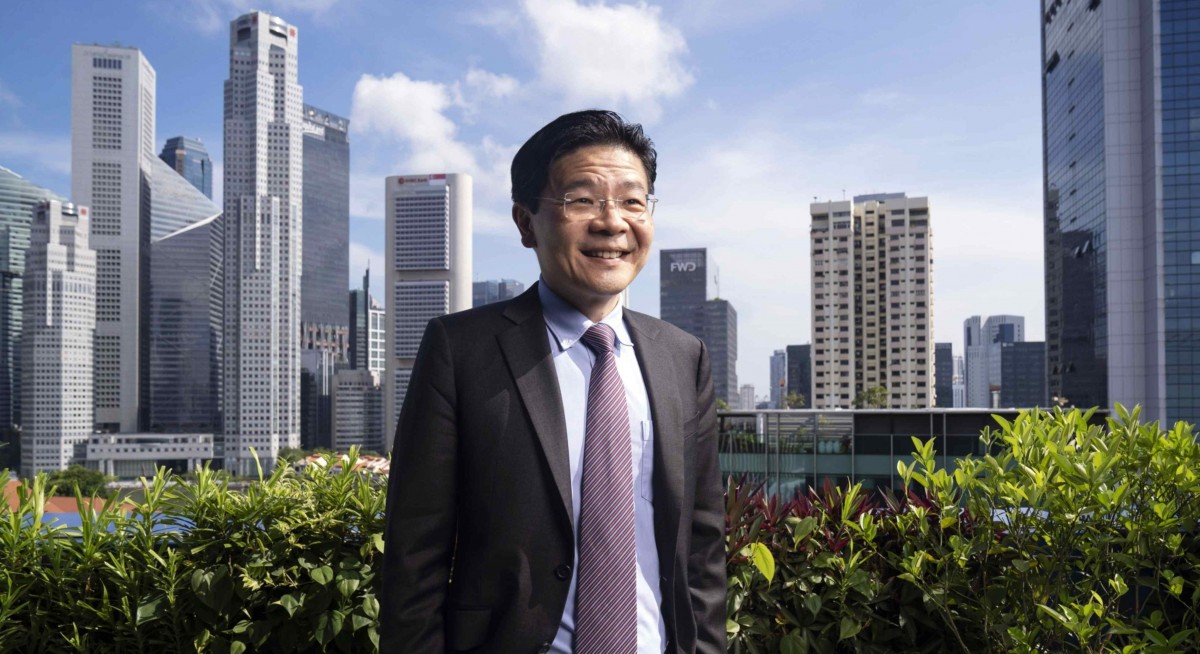
This week, Singapore Prime Minister Lawrence Wong will be one of those leaders. Departing on March 25 for a four-day visit, Wong will deliver the keynote address at the Opening Plenary of the 2026 Boao Forum for Asia Annual Conference in Hainan, before travelling to Hong Kong to meet Chief Executive John Lee Ka-chiu and engage the city’s business community. Mothership.SG The itinerary is compact but dense with consequence — a carefully composed diplomatic score played in two movements.
The Stage: “Asian Davos” at 25
The Boao Forum for Asia is not merely China’s answer to Davos. It has become, over 25 years, an increasingly explicit instrument for shaping, not just discussing, Asia’s economic architecture People’s Daily — a forum where China translates its domestic policy ambitions for an international audience. This year, that function is sharper than ever.
The 2026 edition opens less than two weeks after China’s National People’s Congress formally adopted the 15th Five-Year Plan (2026–2030) People’s Daily, a document that will govern Chinese economic life for the rest of the decade. The forum’s theme — “Shaping a Shared Future: New Dynamics, New Opportunities, New Cooperation” — reflects both the profound transformations and growing uncertainties facing the world People’s Daily, with sessions spanning AI governance, green industrial policy, RCEP integration, and cross-border payment systems. Around 2,000 delegates from more than 60 countries and regions are attending, along with over 1,100 journalists People’s Daily.
There is an additional layer of meaning to this year’s venue. On December 18, 2025, Hainan launched island-wide special customs operations, formally becoming the world’s largest free trade port by area. People’s Daily For Singapore — itself a small, trade-dependent city-state whose prosperity is inseparable from the free movement of goods, capital, and ideas — the symbolism of delivering the keynote at that particular forum, on that particular island, in this particular geopolitical moment, is not accidental.
The Itinerary: Bilateral Depth Beyond the Podium
Wong’s Hainan programme extends well beyond the plenary stage. His agenda includes a welcome dinner hosted by the Hainan provincial government and the forum’s secretariat, as well as bilateral meetings with Zhao Leji, Chairman of the Standing Committee of the National People’s Congress, and Feng Fei, the Party Secretary of Hainan Province. The Standard
The meeting with Zhao Leji carries particular weight. As the third-ranking member of China’s Politburo Standing Committee, Zhao is not a figurehead. His portfolio includes legislative oversight and, crucially, inter-parliamentary diplomacy — a channel through which Beijing increasingly manages relationships with states it considers strategic partners rather than transactional counterparts. A bilateral with Zhao, rather than a junior minister, signals that Singapore retains a privileged lane of access in Beijing’s diplomatic hierarchy.
Following his Hainan engagements, Wong will travel to Hong Kong, where he is scheduled to meet Chief Executive John Lee Ka-chiu at Government House over a lunch hosted by Lee. South China Morning Post Wong will also visit key sites in the Northern Metropolis to gain a better understanding of Hong Kong’s economic and development trajectory and explore new opportunities for collaboration between the two cities, South China Morning Post according to Singapore’s Prime Minister’s Office.
The Strategic Context: Hedging as High Art
To understand what Wong is doing in Boao, it helps to understand what he was doing the week before. On March 17-18, Wong completed his first official visit to Japan as prime minister, during which Singapore and Japan announced an upgrade of their bilateral ties to a Strategic Partnership The Online Citizen, deepening cooperation across trade, defence, and emerging technologies.
Wong was direct about the sequencing. China, he noted, was aware of his visit to Japan and had continued to invite him to the Boao Forum in Hainan. The Online Citizen He framed Singapore’s approach with characteristic clarity: “Having good relations with one does not come at the expense of another. We can be friends with both China and Japan and America, for that matter. We want to maintain as many good friends as possible.” The Online Citizen
This is not naivety. It is a sophisticated hedging strategy that Singapore has refined over decades and that Wong is now codifying into a kind of doctrine. The city-state, which sits at the confluence of the world’s busiest shipping lanes and whose Chinese-majority population gives Beijing a perpetual interest in how it is governed, has long understood that its prosperity depends on never being forced to choose sides. In 2026, with US tariffs reshaping global supply chains, a growing string of leaders from developed economies visiting China South China Morning Post, and Washington signalling its own engagement (the White House announced that President Trump would travel to Beijing from March 31 to April 2), that doctrine is being stress-tested in real time.
Wong’s Boao appearance — coming immediately after the Japan Strategic Partnership and immediately before Trump’s China visit — positions Singapore precisely where it has always sought to be: visible, valued, and indispensable to every major player in the room.
The Hong Kong Dimension: More Than a Courtesy Call
The second leg of the trip deserves equal analytical attention. Singapore and Hong Kong occupy a peculiar relationship — they are simultaneously Asia’s two most globally integrated city-states, natural partners in financial services and logistics, and quiet rivals for the same pools of regional capital and talent.
Wong’s planned tour of Hong Kong’s Northern Metropolis is telling. The Northern Metropolis is Hong Kong’s most ambitious development project in a generation — a planned urban corridor stretching from the urban core to the Shenzhen border, envisioned as a technology and innovation hub, a logistics gateway, and a new residential district capable of accommodating 900,000 people. It is, in effect, Hong Kong’s answer to the question of how a city re-engineers its economic model after years of political disruption and capital flight. For a Singapore PM to visit and explicitly explore “new opportunities for collaboration” is a recognition that Hong Kong, under John Lee’s administration, is in the business of rebuilding — and that Singapore sees more to gain from partnership than from competition.
The business community meetings add another layer. Wong’s most recent trip to China was in June 2025, when he met President Xi Jinping and Premier Li Qiang and attended Summer Davos in Tianjin. South China Morning Post That visit was primarily Beijing-facing. This one brackets mainland engagement with substantive Hong Kong outreach — a signal to the private sector in both cities that Singapore views the Hong Kong-Singapore axis as a durable feature of the regional financial architecture, not a casualty of geopolitical anxiety.
The Bigger Picture: Multilateralism Under Pressure
At the BFA New Year Outlook 2026 event, forum chairman and former UN Secretary-General Ban Ki-moon warned that the world is becoming “more divided, more dangerous and less predictable.” CGTN It is against that backdrop that the Boao Forum’s 25th anniversary carries its particular urgency.
The Hainan Free Trade Port, with its island-wide independent customs operations advancing steadily, is emerging as a new gateway for international investment and cooperation. CGTN Sessions on the Regional Comprehensive Economic Partnership, Asia-Pacific integration, and cross-border payment systems reflect a shared determination to build regional “shock absorbers.” People’s Daily For Singapore, whose entire economic model is built on the assumption that rules-based, open trade systems will endure, these are not abstract debates. They are existential questions.
Wong’s keynote address is likely to thread several needles simultaneously: affirm Singapore’s commitment to multilateralism and ASEAN centrality; acknowledge China’s role as Asia’s indispensable economic engine without appearing supplicant; and signal to Western partners watching from afar that engagement is not endorsement. It is a speech that will be read not just in Beijing and Washington but in Jakarta, Kuala Lumpur, and New Delhi — capitals that watch Singapore’s diplomatic moves with the attention of students studying a master class.
Forward Outlook: What This Visit Signals for 2026 and Beyond
Three forward-looking observations bear emphasis.
First, the pace of Wong’s diplomatic engagements — Japan in March, Boao immediately after, and likely a succession of bilateral meetings through the APEC cycle — suggests that Singapore is deliberately front-loading its relationship capital in 2026, a year when US-China dynamics could shift dramatically in either direction depending on the trajectory of trade negotiations and Taiwan flashpoints.
Second, the Northern Metropolis visit hints at a potential deepening of Singapore-Hong Kong cooperation in specific sectors — fintech, green finance, and supply chain digitisation being the most obvious candidates — that would benefit from institutional frameworks rather than ad-hoc deal-making. Watch for announcements from the business community meetings.
Third, and most consequentially, Wong’s ability to be warmly received in Tokyo one week and keynote Boao the next, without apparent diplomatic friction from either capital, validates a model of middle-power statecraft that other ASEAN economies are quietly studying. In a world where the pressure to align is intensifying, Singapore’s demonstrated capacity to remain credibly engaged with all sides without being captured by any of them is, perhaps, its most valuable export.
In the end, the journey from Boao to Hong Kong in four days is less a travel itinerary than a statement of intent: that Singapore’s bet on an interconnected, cooperative Asia is not a relic of a more innocent era, but an active wager — one that Lawrence Wong is placing in real time, on the most watched diplomatic stages in the region.
The spring breeze moves across Boao every March. This year, what it carries is worth listening to carefully.
Discover more from The Economy
Subscribe to get the latest posts sent to your email.
A landmark 2026 study reveals eroding trust, sovereignty anxieties, and a bloc struggling to justify its existence to the very peoples it claims to serve.
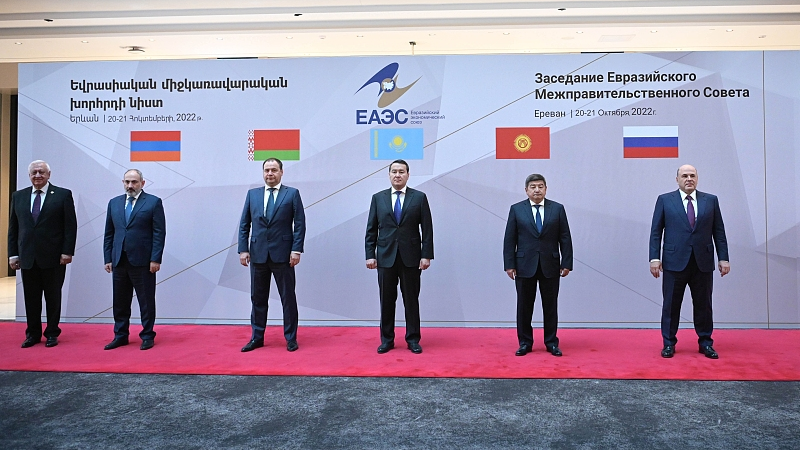
When Nursultan Nazarbayev first sketched the outlines of a Eurasian economic union in the early 1990s, he imagined something elegant: a voluntary commonwealth of post-Soviet nations, bound not by Moscow’s imperial gravity but by rational self-interest, shared infrastructure, and frictionless trade. Three decades later, the Eurasian Economic Union (EAEU) he helped conjure into existence marks its tenth anniversary as a functioning institution—complete with a common customs tariff, a nominal single labor market, and $20 billion in cumulative intra-bloc investment. On paper, those are real achievements. On the streets of Bishkek, Yerevan, and Almaty, the mood is something else entirely.
New research published in February 2026 in Eurasian Geography and Economics by Dr. Zhanibek Arynov of Nazarbayev University and his co-author Diyas Takenov offers the most systematic public-perception audit of the EAEU to date—drawing on focus groups and survey data across all three smaller member states. The findings are striking, occasionally counterintuitive, and should unsettle anyone who believes that post-Soviet integration can survive on institutional inertia and official enthusiasm alone. Across Armenia, Kazakhstan, and Kyrgyzstan, positive perceptions of the EAEU are in measurable decline. Economic grievances have deepened. Sovereignty anxieties have sharpened, supercharged by Russia’s full-scale invasion of Ukraine. And in one of the study’s most surprising findings, it is Kazakhstan—the EAEU’s co-founder and most economically capable member—that harbors the strongest sentiment in favor of eventual withdrawal.
The Ten-Year Ledger: What the Numbers Say
The Eurasian Economic Commission’s own data tells a story of institutional progress that would be impressive if viewed in isolation. Over the past decade, the EAEU’s combined GDP has grown by nearly 18%, industrial production has risen by 29%, and cumulative intra-union foreign direct investment has reached $20 billion. Intra-bloc trade has climbed steadily, and the union now boasts free trade agreements with Singapore, Vietnam, Serbia, and—as of 2023—Iran, with negotiations ongoing with India and Egypt.
Yet the EAEU’s own registry of internal market obstacles tells a different story. As of the bloc’s tenth anniversary, the organization still officially lists one barrier, 35 limitations, and 33 exemptions to the supposed free flow of goods, capital, and labor—figures that represent not a success story but a confession. A truly integrated common market doesn’t require a bureaucratic catalogue of its own failures.
The Carnegie Endowment for International Peace and Chatham House have both documented this structural paradox: the EAEU’s institutional architecture is more developed than its predecessor organizations, yet its member states have shown persistent reluctance to transfer genuine sovereignty to supranational bodies. The EAEU Court in Minsk, for instance, cannot initiate cases or issue preliminary rulings the way the European Court of Justice can—a design feature that reflects, rather than corrects, the political will of its members.
It is within this gap between rhetoric and reality that Arynov and Takenov have done their most important work.
Kazakhstan: The Founder’s Doubt
No country’s EAEU story is more psychologically complex than Kazakhstan’s. This was the nation whose founding president claimed intellectual paternity of the entire project, whose government remained, as Arynov noted in a February 2025 commentary for the Italian Institute for International Political Studies (ISPI), “strongly enthusiastic” about the union even as public sentiment shifted beneath its feet.
And shift it has. The trajectory of Kazakhstani public opinion on the EAEU is a cautionary tale about what geopolitical trauma can do to an integration project’s legitimacy. In 2015, surveys recorded roughly 80% approval among Kazakhstanis for the bloc. By 2017, that figure had dipped slightly. Today, based on the Arynov-Takenov focus group research, scepticism has become the dominant public sentiment—and it operates on two distinct registers.
The first is geopolitical. Russia’s 2022 invasion of Ukraine shattered whatever pretense remained that the EAEU was a purely economic organization, insulated from Moscow’s military and political ambitions. Kazakhstani focus group participants repeatedly cited Russian politicians’ inflammatory rhetoric questioning Kazakhstan’s territorial integrity—a visceral and deeply personal grievance in a country that shares a 7,500-kilometer border with Russia and has a substantial ethnic Russian minority. Many now view membership in the EAEU not as a source of economic opportunity but as a vector for geopolitical exposure: a mechanism through which secondary sanctions risk could spill over from Russia’s pariah status onto Kazakhstani businesses and banks. Kazakhstan’s own government has walked an extraordinary tightrope since 2022, publicly refusing to endorse Russia’s war, providing humanitarian assistance to Ukraine, and accelerating economic diversification—all while remaining formally embedded in Moscow’s preferred institutional architecture.
The second register is economic. Focus group participants in Kazakhstan cited the EAEU’s failure to deliver on its core promises: persistent non-tariff barriers, asymmetric market access that has benefited Russia far more than smaller members, and the absence of meaningful sectoral coordination. Kazakhstan’s industrial base—the most diversified among the smaller EAEU members—has expanded its exports within the union, but critics argue the terms of trade systematically favor the bloc’s hegemon.
What makes the Arynov-Takenov finding genuinely surprising is its comparative dimension. Despite Kazakhstan’s historical ownership of the Eurasian project, its public registers more intense withdrawal sentiment than Armenia—a country that has spent the past three years openly pursuing European Union membership and freezing its participation in the parallel CSTO security organization. The researchers interpret this counterintuitive result as a product of Kazakhstan’s relative economic confidence: a country with more options feels more emboldened to contemplate exit.
Armenia: The Ambivalent Western Pivot
If Kazakhstan’s EAEU skepticism is rooted in geopolitical anxiety, Armenia’s is shaped by an identity crisis that predates 2022. Yerevan joined the EAEU in 2015 not out of Eurasian conviction but under what most analysts describe as coercive Russian pressure—President Serzh Sargsyan reversed a near-completed EU Association Agreement in 2013 following a meeting with Vladimir Putin, a U-turn that Nikol Pashinyan—then an opposition parliamentarian—voted against.
That original reluctance has since hardened into something more structured. In March 2025, Armenia’s parliament passed the EU Integration Act with 64 votes in favor, formally enshrining the country’s aspiration for European membership in law. Prime Minister Pashinyan has since stated publicly that simultaneous membership in the EU and EAEU is impossible, and that Armenia will eventually face a binary choice. Russian Deputy Prime Minister Alexei Overchuk was direct in his response: the EU accession process, he said, would mark the beginning of Armenia’s EAEU withdrawal.
Yet for all this diplomatic theatre, the Arynov-Takenov research reveals something more nuanced: Armenian public sentiment, while clearly disillusioned with the EAEU, stops short of demanding immediate exit. A 2023 survey found that only 40% of Armenians expressed inclination to trust the EAEU, while 47% said they did not—a notable trust deficit, but not an overwhelming mandate for departure. Armenia’s economic dependency on Russia remains a profound constraint: Moscow is Yerevan’s largest trading partner, accounting for over a third of total foreign trade, and Russia controls critical infrastructure sectors including electricity distribution and natural gas supply.
Arynov’s research frames this as the logic of vulnerability over principle: states with fewer economic alternatives tend to prefer reform of existing arrangements over the risk of exit. Armenia’s trade with Russia reached record highs in 2024—a perverse consequence of post-Ukraine sanctions, as Yerevan became a key re-export corridor for goods flowing toward the Russian market. Leaving the EAEU would mean not only sacrificing that trade volume but potentially triggering Russian economic retaliation at a moment when the peace process with Azerbaijan remains fragile and a formal EU candidacy is still years away. As one analyst writing for CIDOB assessed in 2025, the EU integration law was widely understood as a pre-election political gesture rather than an imminent foreign-policy reorientation.
The result is a population that has grown deeply ambivalent about the EAEU on normative grounds—viewing it as an instrument of Russian influence and a structural impediment to European integration—while pragmatically accepting that the exit costs may be prohibitive in the near term. Armenia, the research suggests, is a case study in EAEU skepticism without EAEU exit—a condition the bloc’s architects never anticipated and have no institutional mechanism to address.
Kyrgyzstan: When the Labor Market Promise Breaks Down
Kyrgyzstan’s relationship with the EAEU has always been the most transactional. When Bishkek joined in 2015, the primary draw was not abstract Eurasian solidarity but concrete economics: frictionless access to the Russian labor market, automatic recognition of professional qualifications, and the right to work in Russia without a permit or quota. For a country in which remittances have at times constituted over 30% of GDP, those were not minor benefits. They were the entire rationale.
A decade later, that rationale is in serious trouble. The Arynov-Takenov research documents a Kyrgyz public increasingly aware of the gap between what the EAEU’s common labor market promised and what it delivers. Since Russia’s full-scale invasion of Ukraine in 2022 and the Crocus City Hall terrorist attack in 2024—which prompted a massive anti-Central Asian backlash in Russian public discourse—Moscow has systematically tightened restrictions on migrant workers. More than 208,000 individuals were placed on Russia’s migration control lists. Tens of thousands of Kyrgyz nationals were blacklisted. New regulations require one-year employment contracts that create legal uncertainty and reduce the incentive for long-term labor migration.
In January 2026, the breach became institutional: Kyrgyzstan filed a formal lawsuit against Russia at the EAEU Court in Minsk, accusing Moscow of violating union treaty obligations by refusing to provide compulsory health insurance to the family members of Kyrgyz migrant workers—protections that the EAEU’s founding documents explicitly guarantee. That Bishkek chose to take the dispute to a supranational forum rather than quiet bilateral channels represents an unusual escalation for a country that has typically sought to manage its relationship with Russia with extreme discretion.
Border frictions add another layer of grievance. Kyrgyz exporters must cross into Kazakhstan to reach any other EAEU market—a structural vulnerability that leaves them subject to inconsistent technical inspections, shifting regulatory requirements, and effectively unilateral trade barriers. Despite EAEU membership, Kyrgyz traders report that the promised single market remains aspirational rather than operational.
Yet here, too, the research underscores the reform-over-exit logic. Remittances from Russia still constitute approximately 24% of Kyrgyz GDP—in the first five months of 2025, Russia accounted for 94% of all inward remittance flows. No realistic alternative labor market of that scale exists. The Kyrgyz public, the Arynov-Takenov data suggests, wants the EAEU to be fixed, not abandoned. Their grievances are pointed and specific: protect our migrants, remove border frictions, fulfill the promises of the common market. What they display is not Eurasian fatalism but consumer frustration with a product that has underdelivered—a distinction the bloc’s leadership would do well to internalize.
What a Legitimacy Deficit Looks Like
Taken together, the Arynov-Takenov findings paint a picture of an institution navigating a slow-burning legitimacy crisis across precisely the member states where popular consent matters most. Russia and Belarus, the EAEU’s two largest economies, are not meaningfully constrained by public opinion in the conventional sense. But Armenia, Kazakhstan, and Kyrgyzstan are—to varying degrees—responsive to domestic political sentiment, and that sentiment is turning.
The Brookings Institution and Foreign Affairs have both noted the structural tension at the heart of post-Soviet integration projects: they are designed to function as technical economic arrangements while carrying enormous geopolitical freight. The EAEU was never purely an economic organization—its conception was entangled from the outset with Russia’s strategic goal of maintaining a sphere of privileged influence in the former Soviet space. That entanglement, largely invisible to ordinary citizens during years of oil-fueled growth, has become glaringly apparent in the era of Ukraine sanctions, territorial rhetoric, and migration crackdowns.
The research by Arynov and Takenov—who has also examined the oscillating trajectory of Russia-Kazakhstan relations in Horizons: Journal of International Relations and Sustainable Development—fills a significant gap in what has been a state-centric and Russia-centric literature. By focusing on citizens rather than governments, focus groups rather than official communiqués, the study reveals the EAEU as its actual publics experience it: not as an elegant integration architecture but as a daily reality of border queues, disputed remittance rights, and sovereignty traded away for economic promises that have been only partially kept.
The Policy Horizon
What should policymakers take from this analysis? Three things stand out.
First, the distinction between exit sentiment and reform preference is politically significant—and fragile. In Kyrgyzstan and Armenia, publics currently prefer fixing the EAEU over leaving it. But that preference is conditional on the belief that improvement is possible. If Russia continues to restrict migrant workers while EAEU dispute mechanisms prove toothless, the reform constituency will erode and the exit constituency will grow.
Second, Kazakhstan is the swing state. Its combination of relative economic strength, intense post-Ukraine sovereignty anxieties, and stronger-than-expected withdrawal sentiment makes it the member most likely to redefine the bloc’s political trajectory over the next decade. President Tokayev has so far managed the balance skillfully—publicly distancing Kazakhstan from Russia’s war while remaining formally embedded in Moscow’s institutions. But that balance cannot be maintained indefinitely if Russian behavior continues to erode the bloc’s credibility with Kazakhstani citizens.
Third, the EAEU’s legitimacy problem cannot be solved by economic commissions alone. The organization publishes detailed technical reports, maintains an elaborate institutional structure, and generates impressive aggregate statistics. None of that addresses what Arynov and Takenov’s research identifies as the core public grievance: the perception that the EAEU is less a common market than a vehicle for Russian geopolitical interest, managed by a supranational body with insufficient autonomy to enforce its own rules against its dominant member.
Ten years after the Treaty came into force, the Eurasian Economic Union faces a choice it has never been designed to confront: whether it can reform itself substantively enough to rebuild public legitimacy in states that joined it for practical reasons and are now questioning whether those reasons still apply. The research of Arynov and Takenov does not answer that question. But it asks it with a clarity and precision that neither EAEU bureaucrats nor Kremlin strategists should be comfortable ignoring.
Discover more from The Economy
Subscribe to get the latest posts sent to your email.
The Iran conflict has turned frontier AI models into contested weapons of state — and the financial and human fallout is only beginning to register.
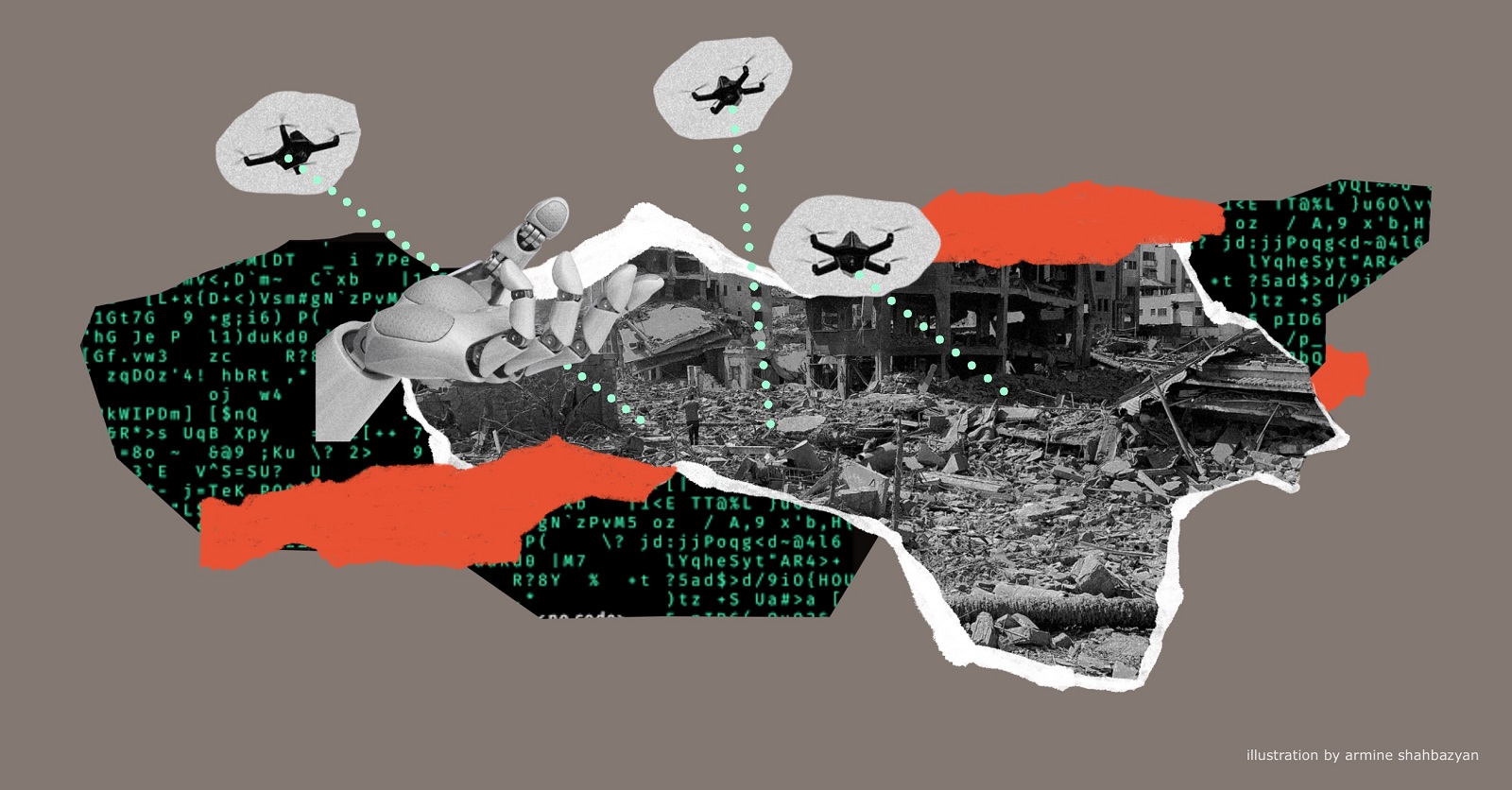
In the first eleven days of the U.S.-Israeli offensive against Iran, which began on February 28, 2026, American and Israeli forces executed roughly 5,500 strikes on Iranian targets. That is an operational tempo that would have required months in any previous conflict — made possible, in significant part, by artificial intelligence. In the first eleven days of the conflict, America achieved an astonishing 5,500 strikes, using AI on a large-scale battlefield for the first time at this scale. The National The same week those bombs fell, a legal and commercial crisis erupted in Silicon Valley with consequences that will define the AI industry for years. Both events are part of the same story.
We are living through the moment when AI ceased being a future-war thought experiment and became an operational reality — embedded in targeting pipelines, shaping intelligence assessments, and now at the center of a constitutional showdown between a frontier AI company and the United States government. Alfred Nobel, who invented dynamite and then spent the remainder of his life in tortured ambivalence about it, would have recognized the pattern immediately.
The Kill Chain, Accelerated
The joint U.S. and Israeli offensive on Iran revealed how algorithm-based targeting and data-driven intelligence are reforming the mechanics of warfare. In the first twelve hours alone, U.S. and Israeli forces reportedly carried out nearly 900 strikes on Iranian targets — an operational tempo that would have taken days or even weeks in earlier conflicts. Interesting Engineering
At the technological center of this acceleration sits a system most Americans have never heard of: Project Maven. Anthropic’s Claude has become a crucial component of Palantir’s Maven intelligence analysis program, which was also used in the U.S. operation to capture Venezuelan President Nicolás Maduro. Claude is used to help military analysts sort through intelligence and does not directly provide targeting advice, according to a person with knowledge of Anthropic’s work with the Defense Department. NBC News This is a distinction with genuine moral weight — between decision-support and decision-making — but one that is becoming harder to sustain at the speed at which modern targeting now operates.
Critics warn that this trend could compress decision timelines to levels where human judgment is marginalized, ushering in an era of warfare conducted at what has been described as “faster than the speed of thought.” This shortening interval raises fears that human experts may end up merely approving recommendations generated by algorithms. In an environment dictated by speed and automation, the space for hesitation, dissent, or moral restraint may be shrinking just as quickly. Interesting Engineering
The U.S. military’s posture has been notably sanguine about these concerns. Admiral Brad Cooper, head of U.S. Central Command, confirmed that AI is helping soldiers process troves of data, stressing that humans make final targeting decisions — but critics note the gap between that principle and verifiable practice remains wide. Al Jazeera
The Financial Architecture of AI Warfare
The economic dimensions of this transformation are substantial and largely unreported in their full complexity. Understanding them requires holding three separate financial narratives simultaneously.
The direct contract market is the most visible layer. Over the past year, the U.S. Department of Defense signed agreements worth up to $200 million each with several major AI companies, including Anthropic, OpenAI, and Google. CNBC These are not trivial sums in isolation, but they represent the seed capital of a much larger transformation. The military AI market is projected to reach $28.67 billion by 2030, as the speed of military decision-making begins to surpass human cognitive capacity. Emirates 24|7
The collateral economic disruption is less discussed but potentially far larger. On March 1, Iranian drone strikes took out three Amazon Web Services facilities in the Middle East — two in the UAE and one in Bahrain — in what appear to be the first publicly confirmed military attacks on a hyperscale cloud provider. The strikes devastated cloud availability across the region, affecting banks, online payment platforms, and ride-hailing services, with some effects felt by AWS users worldwide. The Motley Fool The IRGC cited the data centers’ support for U.S. military and intelligence networks as justification. This represents a strategic escalation that no risk-management framework in the technology sector adequately anticipated: cloud infrastructure as a legitimate military target.
The reputational and legal costs of AI’s battlefield role may ultimately dwarf both. Anthropic’s court filings stated that the Pentagon’s supply-chain designation could cut the company’s 2026 revenue by several billion dollars and harm its reputation with enterprise clients. A single partner with a multi-million-dollar contract has already switched from Claude to a competing system, eliminating a potential revenue pipeline worth more than $100 million. Negotiations with financial institutions worth approximately $180 million combined have also been disrupted. Itp
The Anthropic-Pentagon Fracture: A Defining Test
The dispute between Anthropic and the U.S. Department of Defense is not merely a contract negotiation gone wrong. It is the first high-profile case in which a frontier AI company drew a public ethical line — and then watched the government attempt to destroy it for doing so.
The sequence of events is now well-documented. The administration’s decisions capped an acrimonious dispute over whether Anthropic could prohibit its tools from being used in mass surveillance of American citizens or to power autonomous weapon systems, as part of a military contract worth up to $200 million. Anthropic said it had tried in good faith to reach an agreement, making clear it supported all lawful uses of AI for national security aside from two narrow exceptions. NPR
When Anthropic held its position, the response was unprecedented in the annals of U.S. technology policy. Defense Secretary Pete Hegseth declared Anthropic a supply chain risk in a statement so broad that it can only be seen as a power play aimed at destroying the company. Shortly thereafter, OpenAI announced it had reached its own deal with the Pentagon, claiming it had secured all the safety terms that Anthropic sought, plus additional guardrails. Council on Foreign Relations
In an extraordinary move, the Pentagon designated Anthropic a supply chain risk — a label historically only applied to foreign adversaries. The designation would require defense vendors and contractors to certify that they don’t use the company’s models in their work with the Pentagon. CNBC That this was applied to a U.S.-headquartered company, founded by former employees of a U.S. nonprofit, and valued at $380 billion, represents a remarkable inversion of the logic the designation was designed to serve.
Meanwhile, Washington was attacking an American frontier AI leader while Chinese labs were on a tear. In the past month alone, five major Chinese models dropped: Alibaba’s Qwen 3.5, Zhipu AI’s GLM-5, MiniMax’s M2.5, ByteDance’s Doubao 2.0, and Moonshot’s Kimi K2.5. Council on Foreign Relations The geopolitical irony is not subtle: in punishing a safety-focused American AI company, the administration may have handed Beijing its most useful competitive gift of the year.
The Human Cost: Social Ramifications No Algorithm Can Compute
Against the financial ledger, the humanitarian accounting is staggering and still incomplete.
The Iranian Red Crescent Society reported that the U.S.-Israeli bombardment campaign damaged nearly 20,000 civilian buildings and 77 healthcare facilities. Strikes also hit oil depots, several street markets, sports venues, schools, and a water desalination plant, according to Iranian officials. Al Jazeera
The case that has attracted the most scrutiny is the bombing of the Shajareh Tayyebeh elementary school in Minab, southern Iran. A strike on the school in the early hours of February 28 killed more than 170 people, most of them children. More than 120 Democratic members of Congress wrote to Defense Secretary Hegseth demanding answers, citing preliminary findings that outdated intelligence may have been to blame for selecting the target. NBC News
The potential connection to AI decision-support systems is explored with forensic precision by experts at the Bulletin of the Atomic Scientists. One analysis notes that the mistargeting could have stemmed from an AI system with access to old intelligence — satellite data that predated the conversion of an IRGC compound into an active school — and that such temporal reasoning failures are a known weakness of large language models. Even with humans nominally “in the loop,” people frequently defer to algorithmic outputs without careful independent examination. Bulletin of the Atomic Scientists
The social fallout extends well beyond individual atrocities. Israel’s Lavender AI-powered database, used to analyze surveillance data and identify potential targets in Gaza, was wrong at least 10 percent of the time, resulting in thousands of civilian casualties. A recent study found that AI models from OpenAI, Anthropic, and Google opted to use nuclear weapons in simulated war games in 95 percent of cases. Rest of World The simulation result does not predict real-world behavior, but it reveals how strategic reasoning models can default toward extreme outcomes under pressure — a finding that ought to unsettle anyone who imagines that algorithmic warfare is inherently more precise than the human kind.
The corrosion of accountability is perhaps the most insidious long-term social effect. “There is no evidence that AI lowers civilian deaths or wrongful targeting decisions — and it may be that the opposite is true,” says Craig Jones, a political geographer at Newcastle University who researches military targeting. Nature Yet the speed and opacity of AI-assisted operations makes it exponentially harder to assign responsibility when things go wrong. Algorithms do not face courts-martial.
Governance: The International Gap
Rapid technological development is outpacing slow international discussions. Academics and legal experts meeting in Geneva in March 2026 to discuss lethal autonomous weapons systems found themselves studying a technology already being used at scale in active conflicts. Nature The gap between the pace of deployment and the pace of governance has never been wider.
The Middle East and North Africa are arguably the most conflict-ridden and militarized regions in the world, with four out of eleven “extreme conflicts” identified in 2024 by the Armed Conflict Location and Event Data organization occurring there. The region has become a testing ground for AI warfare whose lessons — and whose errors — will shape every future conflict. War on the Rocks
The legal framework governing AI in warfare remains, generously described, aspirational. The U.S. military’s stated commitment to keeping “humans in the loop” is a principle that has no internationally binding enforcement mechanism, no agreed definition of what meaningful human control actually entails, and no independent auditing process. One expert observed that the biggest danger with AI is when humans treat it as an all-purpose solution rather than something that can speed up specific processes — and that this habit of over-reliance is particularly lethal in a military context. The National
AI as the New Dynamite: Nobel’s Unresolved Legacy
When Alfred Nobel invented dynamite in 1867, he believed — genuinely — that a weapon so devastatingly efficient would make war unthinkably costly and therefore rare. He was catastrophically wrong. The Franco-Prussian War, the First World War, and the entire industrial-era atrocity that followed proved that more powerful weapons do not deter wars; they escalate them, and they increase civilian mortality relative to combatant casualties.
The parallel to AI is not decorative. The argument for AI in warfare — that algorithmic precision reduces collateral damage, that faster targeting shortens conflicts, that autonomous systems absorb military risk that would otherwise fall on human soldiers — is structurally identical to Nobel’s argument for dynamite. It is the rationalization of a dual-use technology by those with an interest in its proliferation.
Drone technology in the Middle East has already shifted from manual control toward full autonomy, with “kamikaze” drones utilizing computer vision to strike targets independently if communications are severed. As AI becomes more integrated into militaries, the advancements will become even more pronounced with “unpredictable, risky, and lethal consequences,” according to Steve Feldstein, a senior fellow at the Carnegie Endowment for International Peace. Rest of World
The Anthropic dispute, whatever its ultimate legal resolution, has surfaced a question that Silicon Valley has been able to defer until now: can a technology company that builds frontier AI models — systems capable of synthesizing intelligence, generating targeting assessments, and running strategic simulations — genuinely control how those systems are used once deployed by a state? As OpenAI’s own FAQ acknowledged when asked what would happen if the government violated its contract terms: “As with any contract, we could terminate it.” The entire edifice of AI safety in warfare, for now, rests on the contractual leverage of companies that have already agreed to participate. Council on Foreign Relations
Nobel at least had the decency to endow prizes. The AI industry is still working out what it owes.
Policy Recommendations
A minimally adequate governance framework for AI in warfare would need to accomplish several things. Independent verification of “human in the loop” claims — not merely the assertion of it — is the essential starting point. Mandatory after-action reporting on AI involvement in any strike that results in civilian casualties would create accountability where none currently exists. International agreement on a baseline error-rate threshold — above which AI targeting systems may not be used without additional human review — would translate abstract humanitarian law into operational reality.
The technology companies themselves bear responsibility that no contract clause can fully discharge. Researchers from OpenAI, Google DeepMind, and other labs submitted a court filing supporting Anthropic’s position, arguing that restrictions on domestic surveillance and autonomous weapons are reasonable until stronger legal safeguards are established. ColombiaOne That the most capable AI builders in the world believe their own technology is not yet reliable enough for autonomous lethal use is information that should be at the center of every policy debate — not buried in court filings.
Discover more from The Economy
Subscribe to get the latest posts sent to your email.
-

 Markets & Finance3 months ago
Top 15 Stocks for Investment in 2026 in PSX: Your Complete Guide to Pakistan’s Best Investment Opportunities
-

 Analysis2 months ago
Brazil’s Rare Earth Race: US, EU, and China Compete for Critical Minerals as Tensions Rise
-

 Banks2 months ago
Best Investments in Pakistan 2026: Top 10 Low-Price Shares and Long-Term Picks for the PSX
-

 Investment2 months ago
Top 10 Mutual Fund Managers in Pakistan for Investment in 2026: A Comprehensive Guide for Optimal Returns
-

 Asia3 months ago
China’s 50% Domestic Equipment Rule: The Semiconductor Mandate Reshaping Global Tech
-

 Analysis1 month ago
Top 10 Stocks for Investment in PSX for Quick Returns in 2026
-

 Global Economy3 months ago
Pakistan’s Export Goldmine: 10 Game-Changing Markets Where Pakistani Businesses Are Winning Big in 2025
-

 Global Economy3 months ago
15 Most Lucrative Sectors for Investment in Pakistan: A 2025 Data-Driven Analysis