
ASEAN
Can Improving Corporate Governance Help Asian Markets Finally Challenge US Stock Market Exceptionalism in 2026?


The narrative looked unassailable twelve months ago. As 2025 dawned, the mantra of “US stock market exceptionalism” echoed through trading floors from Manhattan to Mayfair—superior returns underpinned by legal clarity, shareholder empowerment, deep liquid markets, and the innovation juggernaut of Silicon Valley. Yet as the calendar now flips to 2026, that certainty has fractured. The S&P 500 delivered a respectable 17.9% total return in 2025, impressive by historical standards but thoroughly eclipsed by emerging markets. The MSCI Emerging Markets Asia Index surged 32.11%, while international markets delivered a 29.2% gain that left American indices in the dust.
The question vexing asset allocators globally is whether this represents a temporary aberration or the early tremors of a tectonic shift—one powered not by macroeconomic tailwinds alone, but by something more structural: a quiet revolution in Asian corporate governance that is narrowing the longstanding institutional advantage of US markets.
The Crumbling Foundations of American Exceptionalism
For decades, US stock market exceptionalism rested on several bedrock principles: corporate transparency enforced by the SEC, robust minority shareholder protections, liquid capital markets that could absorb shocks, and a legal framework that treated property rights as sacrosanct. These advantages translated into a persistent valuation premium—the S&P 500 trades at a forward earnings yield of around 4.5%, compared to over 6.5% for Europe and 7.5% for emerging markets.
Yet the events of 2025 exposed vulnerabilities. President Trump’s April tariff announcement triggered the biggest one-day decline since the COVID-19 pandemic, shedding approximately $3.1 trillion in market value. While markets rebounded as tariffs were suspended and renegotiated, the volatility signaled something deeper: the weaponization of trade policy had introduced an unpredictable variable into what was supposedly the world’s most stable investment destination.

State Street Global Advisors identified several forces undermining American outperformance: fading fiscal stimulus, the conclusion of ultra-low interest rates, “America First” policies eroding trust in the US as a reliable global partner, and rising competition in innovation from China and Europe. Louis-Vincent Gave of Gavekal Research went further, declaring bluntly that 2025 marked the year the US-China trade war effectively ended—with China, having successfully de-Westernized its supply chains, emerging as the victor.
The dollar’s trajectory confirmed the sentiment shift. The US dollar index fell approximately 9.4% in 2025, its worst year since 2017, and analysts project a further decline in 2026 driven by expectations of lower interest rates and a broader shift away from the dollar’s role as an invincible reserve currency.
Asia’s Governance Renaissance: From Form to Substance
While US advantages atrophied, Asian markets embarked on an accelerating governance transformation that moved beyond box-ticking compliance toward genuine structural reform. The shift is most pronounced in the region’s three largest markets: Japan, South Korea, and India.
Japan: From Deflation to Shareholder Value
Japan’s corporate governance journey represents perhaps the most dramatic reversal. Long derided for cross-shareholdings, entrenched management, and capital inefficiency, Japanese companies have undergone a metamorphosis driven by regulatory pressure and investor activism.
The Financial Services Agency’s revised Stewardship Code (Version 3.0), released in June 2025, marked a philosophical pivot from prescriptive rules to principles-based frameworks that prioritize substance over form. The code emphasizes moving beyond “box-ticking” approaches, promoting collective engagement between institutional investors and companies, and improving transparency around beneficial ownership.
The Tokyo Stock Exchange’s March 2023 directive urging companies to implement “Management that is Conscious of Cost of Capital and Stock Price” has yielded tangible results. J.P. Morgan Asset Management reported a significant increase in share buybacks in 2024, with some companies officially committing to reduce balance sheet cash and return excess capital to shareholders. Japan’s three largest insurance companies pledged to entirely unwind their cross-shareholdings.
The results speak volumes. South Korea’s Kospi index soared almost 76% in 2025, posting its best year since 1999, while shareholder activism in Asia reached record highs, with 108 campaigns advanced in Japan alone—a 74% increase from 2018.
South Korea: Legislative Momentum and Minority Rights
South Korea demonstrated that political will can accelerate governance reform dramatically. In August 2025, the National Assembly passed amendments mandating cumulative voting for large listed companies with assets exceeding KRW 2 trillion and expanding audit committee independence requirements. These amendments, effective September 2026, override exclusion clauses that previously allowed companies to opt out of cumulative voting.
The reforms empower minority shareholders by allowing those holding at least 1% of voting shares to request cumulative voting six weeks before shareholder meetings without first amending articles of incorporation. Combined with earlier July 2025 legislation ending single-gender boards and requiring pre-AGM annual report disclosures, Korea has constructed a robust framework for minority shareholder protection that rivals developed markets.
Challenges remain. Asian Corporate Governance Association analysts note that implementation obstacles—including board size caps, shareholder meetings called on short notice, and defensive practices by some managements—may constrain practical impact. Yet the directional momentum is unmistakable, particularly when amplified by 78 public activist campaigns in 2024, a stark increase from just eight in 2019.
India: Judicial Evolution and Activism
India’s governance story combines legislative foundations with evolving judicial interpretation. The Companies Act 2013 established comprehensive frameworks for minority shareholder protection, including sections 241 and 244 addressing oppression and mismanagement. What has changed dramatically is enforcement and interpretation.
The National Company Law Appellate Tribunal (NCLAT) has expanded remedies available to minority shareholders, with recent rulings establishing structured buy-out mechanisms to resolve shareholder deadlocks. The landmark Escientia Life Sciences case in March 2025 demonstrated the tribunal’s willingness to propose definitive solutions rather than simply issuing directives for parties to negotiate.
Shareholder activism has surged, with minority shareholders defeating resolutions on executive remuneration hikes, related party transactions, and director reappointments at companies including KRBL Limited, Max Financial, and Sobha Realty. In September 2023, shareholders of Godfrey Phillips India rejected a related party transaction worth up to INR 1,000 crore.
India’s evolving governance framework now mandates that the top 500 listed companies have at least two female directors, promotes independent director oversight of audit and risk management, and strengthens disclosure requirements around related party transactions. The Securities and Exchange Board of India (SEBI) has imposed significant penalties for governance failures, including heavy fines and director disqualifications for related-party transaction manipulation at companies like E-Tech Solutions.
Valuation Gaps Create Compelling Entry Points
The divergence in valuations between US and Asian markets has widened to levels that make a purely quantitative case for reallocation. The S&P 500’s forward price-to-earnings multiple stands at approximately 24x, while the MSCI Emerging Markets Asia Index trades at 15.39x forward earnings. Measured against ten-year averages, J.P. Morgan research indicates that India’s relative P/E ratio versus the S&P 500 sits one standard deviation below its long-term mean.
Goldman Sachs Research predicts earnings from emerging market companies to grow 9% in 2025 and accelerate to 14% in 2026, compared with S&P 500 earnings growth forecasts of approximately 13-14% for 2026. The combination of lower valuations and comparable growth trajectories presents a risk-reward calculus increasingly favorable to Asian equities.
Currency dynamics amplify the attractiveness. With the US dollar projected to continue weakening amid Federal Reserve rate cuts and narrowing yield advantages, dollar-denominated returns from Asian markets should benefit from both local currency appreciation and equity gains. As Goldman Sachs strategists note, the dollar has recently behaved more like a cyclical currency—appreciating with economic growth and declining during slowdowns—rather than maintaining its traditional safe-haven status.
Persistent Challenges: The Governance Gap Remains Real
Acknowledging progress should not obscure enduring structural disadvantages that continue to favor US markets. The depth and liquidity of American capital markets remain unmatched. When volatility strikes, investors can enter and exit positions at scale with minimal price impact—a critical consideration for large institutional allocators constrained by daily redemption requirements.
Legal recourse in the United States, while imperfect, operates with greater predictability and speed than in most Asian jurisdictions. The class action mechanism, despite its flaws, provides a credible deterrent to management malfeasance. By contrast, the NCLAT in India faces backlogs, and enforcement remains inconsistent across different tribunal benches.
Family ownership and controlling shareholders—ubiquitous across Asian markets—create principal-principal agency conflicts that differ fundamentally from the principal-agent problems addressed by US governance frameworks. In markets where promoters control board composition and related party transactions remain common, minority shareholders face structural disadvantages that regulatory reform can only partially address.
Geopolitical risks, particularly around Taiwan and the South China Sea, introduce binary outcomes that have no parallel in developed markets. China’s economic slowdown and its implications for regional supply chains represent a systemic risk that governance reform cannot ameliorate. J.P. Morgan’s 2026 Asia Outlook notes that while Chinese earnings estimates have stabilized, domestic demand remains weak, with industrial overcapacity extending beyond traditional heavy industries into higher-end sectors.
2026 Outlook: Broadening Beyond Big Tech
Looking ahead, the investment case for Asian markets in 2026 rests on three pillars: earnings momentum, policy support, and the diffusion of AI-related capital expenditure beyond a narrow cohort of hyperscalers.
J.P. Morgan Private Bank forecasts Asian earnings growth to reaccelerate to 13-14% in both 2026 and 2027, compared with approximately 11% in 2025. The September 2025 earnings season witnessed 13% year-over-year earnings growth, 4% better than expectations at the reporting period’s outset. This fundamental improvement, combined with valuations at reasonable levels, supports a constructive outlook.
Monetary policy provides a tailwind as Asian central banks near the conclusion of their easing cycles, having implemented steady rate cuts throughout 2025. With interest rate cuts largely priced in, fiscal policy will play an increasingly important role in supporting growth. Taiwan’s semiconductor sector, Malaysia’s data center buildout, and Singapore’s position as a regional AI hub should benefit from continued global technology investment.
The democratization of AI returns represents perhaps the most significant medium-term catalyst. While 2025 witnessed remarkable concentration—with seven stocks accounting for 52% of the S&P 500’s total return—the diffusion of AI capabilities across sectors creates opportunities for companies outside the Magnificent Seven. Asian industrial companies, logistics providers, healthcare systems, and financial services firms implementing AI-driven efficiency gains should see margin expansion and earnings growth that current valuations fail to reflect.
Investment Implications: The Case for Deliberate Diversification
The question confronting investors is not whether to maintain US equity exposure—the innovation ecosystem, rule of law, and depth of capital markets ensure America’s continued relevance in global portfolios. Rather, the question is whether the traditional overweight to US equities (often 60-70% of global equity allocations) remains justified when Asian markets offer comparable earnings growth at substantially lower valuations, supported by accelerating governance reform.
Goldman Sachs Research forecasts global equities to return 11% over the next 12 months, with diversification across regions, styles, and sectors potentially boosting risk-adjusted returns. For the first time in years, investors who diversified across geographies in 2025 were rewarded, and strategists anticipate this trend continuing in 2026.
Tactical positioning could emphasize:
Quality over momentum: Focus on Asian companies demonstrating concrete governance improvements—independent directors, transparent capital allocation, minority shareholder engagement—rather than chasing market beta. Japan’s corporate transformations at companies reducing cross-shareholdings and Korea’s firms implementing cumulative voting deserve premiums.
Secular themes over cyclical bets: The AI infrastructure buildout, data center proliferation, and semiconductor supply chain realignment represent multi-year themes with clear Asian beneficiaries. Taiwan Semiconductor Manufacturing Company, Korean memory manufacturers, and Malaysian data center developers align with these irreversible technological shifts.
Active over passive: The dispersion within Asian markets—between reformers and laggards, between sectors benefiting from AI and those facing disruption—creates alpha opportunities that passive index strategies cannot capture. With stock correlations having fallen and governance quality diverging, manager selection matters more than market allocation.
The Verdict: Evolution, Not Revolution
US stock market exceptionalism is not ending in 2026; it is evolving. The American advantages of innovation capacity, entrepreneurial culture, and institutional depth remain formidable. Yet the gap has narrowed meaningfully, driven by governance reform in Asia that addresses long-standing concerns about shareholder rights, board independence, and capital allocation discipline.
The outperformance of Asian markets in 2025—with the MSCI Emerging Markets Asia Index surging 32% versus the S&P 500’s 18%—reflects both cyclical factors (dollar weakness, AI-related export demand, fiscal stimulus) and structural improvements (cumulative voting in Korea, stewardship code revisions in Japan, activist-driven change in India). Whether this performance persists depends on three variables: the continuation of governance reform momentum, the stability of the global macroeconomic backdrop, and the avoidance of geopolitical shocks that could derail investor confidence.
For 2026, the probability-weighted case favors selective increased allocation to Asian equities within diversified global portfolios. The valuation discount, governance tailwinds, and earnings growth trajectory create asymmetric risk-reward. American exceptionalism is not dead—but it now faces legitimate competition from markets that have spent two decades addressing their institutional shortcomings while the United States grapples with its own vulnerabilities around trade policy uncertainty, fiscal sustainability, and political polarization.
The investment world is moving toward a multipolar equilibrium where no single market enjoys uncontested superiority. That transition, accelerated by governance reform across Asia, represents the defining portfolio construction challenge of the decade ahead.
Suggested Meta Description (150 chars): Asian corporate governance reforms in Japan, Korea, and India challenge US stock market exceptionalism. 2026 outlook favors selective diversification.
Target Keywords:
- Primary: US stock market exceptionalism, American exceptionalism markets, US exceptionalism 2026
- Secondary: Asian corporate governance improvements, emerging markets challenging US dominance 2026, Asian stocks vs US stocks 2026 outlook, end of US market exceptionalism, Japan corporate governance reforms, Korea shareholder rights, India minority shareholders, MSCI Asia performance 2025
Sources Cited:
- First Trust Advisors – S&P 500 2025 Recap
- MSCI – Emerging Markets Asia Index
- CNN Business – International Markets 2025
- MoneyWeek – US Stock Market Exceptionalism
- ABC News – Stock Market 2025 Performance
- State Street Global Advisors – US Exceptionalism Analysis
- Gavekal Research via The Market NZZ – End of US Exceptionalism
- ACGA – Japan Stewardship Code 2025
- J.P. Morgan Asset Management – Japan Corporate Governance
- BusinessWire – Asian Shareholder Activism
- ACGA – Korea Governance Reforms
- ICLG – India Corporate Governance
- STA Law Firm – India Governance Trends 2025
- J.P. Morgan Private Bank – 2026 Asia Outlook
- Goldman Sachs Research – EM Stocks Forecast
- Goldman Sachs – S&P 500 2026 Outlook
- RBC Wealth Management – US Equity Returns 2025
- Goldman Sachs Research – Global Stocks 2026
Discover more from The Economy
Subscribe to get the latest posts sent to your email.



Singapore’s non-oil domestic exports rose 20.7% year-on-year in June 2026, driven by a 115.4% surge in integrated circuit shipments tied to AI demand, even as a separate and less-covered trade story unfolds next door: Malaysia-Indonesia bilateral trade is projected to grow 10% to US$29.3 billion in 2026, powered by expanding halal-sector cooperation.
The story most coverage is missing
Regional business press has extensively covered Singapore’s semiconductor export boom. What’s had far less coverage is the parallel, non-tech growth engine developing in the halal trade corridor between Malaysia and Indonesia — a structural, policy-driven trade relationship that is scaling steadily even as the AI trade headlines dominate attention.
Singapore: the AI supply chain’s export barometer
Singapore’s June non-oil domestic exports climbed 20.7% year-on-year, with integrated circuit exports jumping 115.4% and disk media products and personal computers rising 170.9% and 95.8% respectively — a direct read on how deeply the AI infrastructure buildout is flowing through the city-state’s electronics trade (VietnamPlus/VNA). Non-electronic exports told a different story, falling 2.9% in June after a 17.7% rise in May, mainly on weaker shipments of non-monetary gold, petrochemicals and food preparations — evidence the export strength is narrowly concentrated in the AI-linked segment rather than broad-based.
Singapore’s economic gravitational pull on its neighbours is intensifying too: a joint study by the Singapore Business Federation, Restaurant Association of Singapore and Singapore Retailers Association found Singaporean consumers are projected to spend an additional S$1.05 billion (roughly US$810 million) annually in Johor Bahru, just across the Malaysian border — a cross-border consumption pattern that is becoming a meaningful line item in regional retail planning (VietnamPlus/VNA).
The halal corridor: a steadier, policy-built growth story
While AI exports grab headlines, Malaysia’s bilateral trade with Indonesia is forecast to grow 10% to US$29.3 billion in 2026, according to Malaysia’s Chargé d’Affaires in Jakarta, Farzamie Sarkawi — up from US$26.61 billion in 2025, itself a 5.3% increase on the year before (BusinessToday Malaysia).
The driver is structural rather than cyclical: a halal Memorandum of Cooperation signed by the two countries in 2023 established mutual recognition of halal certification, easing product movement and market access across sectors. Sarkawi described the arrangement as delivering “positive progress” through knowledge exchange, training and improved market access for businesses in both countries (BusinessToday Malaysia). The ambition extends beyond the bilateral relationship: intra-D-8 trade — spanning the eight-nation Developing 8 bloc of Muslim-majority economies — currently runs between US$150 billion and US$160 billion annually, with a stated target of US$500 billion by 2030.
The macro backdrop: a region growing, unevenly
The Asian Development Bank’s July 2026 outlook shows Indonesia’s growth forecast holding steady at 5.2% for both 2026 and 2027, while Malaysia’s outlook is unchanged at 4.6% for 2026 and 4.5% for 2027 (ADB). Regional growth leadership, per McKinsey’s Q1 2026 review, sits with Indonesia, Singapore and Vietnam, while the Philippines lagged as domestic challenges weighed on activity (McKinsey).
Indonesia’s investment story has particular momentum: foreign direct investment grew for a second consecutive quarter, rising 8.1% to 249.9 trillion rupiah (roughly US$14.5 billion) in the first quarter of 2026, with Singapore remaining Indonesia’s largest single foreign investor at US$4.6 billion, ahead of China, Japan, Hong Kong and the United States (McKinsey). Realised investment for full-year 2025 reached a record Rp1,931.2 trillion (about US$120.7 billion), exceeding the government’s own target, driven by downstream industrial projects outside Java (BERNAMA).
Indonesia’s central bank has flagged currency management as an active watch item, signalling readiness to step up both onshore and offshore FX intervention to curb rupiah weakness and keep inflation within its 2026-2027 target band (McKinsey). Foreign investment in Indonesian government bonds has nonetheless rebounded, with net inflows of 17.7 trillion rupiah following outflows in the first quarter, alongside cumulative foreign holdings of 174 trillion rupiah in Bank Indonesia Rupiah Securities (BERNAMA).
Institutional context: Singapore’s coming ASEAN chairmanship
Adding a governance dimension to the economic picture, Singapore is set to take over the ASEAN chairmanship from the Philippines in 2027, with Prime Minister Lawrence Wong pledging a smooth transition — a leadership handover that will shape how the bloc coordinates trade and investment policy, including the halal-corridor and semiconductor-trade dynamics described above, through the second half of the decade (BERNAMA).
The bottom line
Southeast Asia’s 2026 growth story is not a single narrative but two distinct, converging tracks: a high-velocity, AI-linked export boom concentrated in Singapore’s electronics trade, and a steadier, policy-engineered halal-sector trade corridor between Malaysia and Indonesia that is quietly scaling toward a $500 billion bloc-wide target by 2030. Investors and policymakers tracking only the semiconductor headlines risk missing the second, structurally more durable growth engine sitting right alongside it.
Discover more from The Economy
Subscribe to get the latest posts sent to your email.

While global headlines chase the AI infrastructure story in the US and China, one of the most interesting AI capital-deployment stories on the planet is unfolding almost unnoticed across a 4-kilometre stretch of water between Singapore and Malaysia — and it’s worth understanding for anyone tracking where the next wave of Southeast Asian growth is actually landing.
What the JS-SEZ Actually Is
The Johor-Singapore Special Economic Zone, formally established on January 7, 2025, covers roughly 3,588 square kilometres across southern Johor state. It spans nine flagship areas and targets investment across eleven sectors, including manufacturing, logistics, financial services, the digital economy, tourism, education, healthcare, and the green economy (Forest City SFZ / Manila Times).
The core idea is simple, even if the execution is complex: Singapore contributes financial infrastructure, regulatory credibility, and capital markets access; Johor contributes roughly four times Singapore’s land area and a median monthly wage around one-seventh of Singapore’s, creating room for industrial-scale development that Singapore’s tiny footprint simply can’t accommodate (Trowers & Hamlins).
The Numbers That Show This Isn’t Just Another SEZ Announcement
Skeptics have plenty of reason to be cautious about grand cross-border economic zone announcements — Southeast Asia has seen plenty of ambitious blueprints fizzle. But the JS-SEZ’s investment figures suggest real capital is already moving, not just political goodwill.
The zone attracted $19 billion in approved investments in 2025, with more than 57% of cumulative approved projects already entering the implementation stage — not just paper commitments (VietnamPlus). That momentum continued into 2026, with $1.3 billion in new approved investments in the first quarter alone, and the Invest Malaysia Facilitation Centre Johor (IMFC-J) fielding 285 investment enquiries worth a combined $18.5 billion in just the first five months of the year.
Separately, Singapore’s Ministry of Trade and Industry confirmed Singapore-based companies have committed more than S$5.5 billion into Johor since the memorandum of understanding was signed (Forest City SFZ). On the Malaysian side, domestic and foreign investment into the region more than doubled from MYR 48.5 billion (roughly US$11.9 billion) in 2024 to MYR 110 billion (about US$27 billion) in 2025, with 70% of that total year’s investment specifically tied to JS-SEZ projects (Lundgreen’s Investor Insights).
The Real Story: Johor Is Becoming Singapore’s Data Centre Overflow Valve
Here’s the angle competitors are missing entirely: this isn’t primarily a manufacturing or logistics story. It’s a data centre story, and it’s happening precisely because Singapore has run out of room and water to support the AI infrastructure boom domestically.
Roughly 60% of Southeast Asia’s data centres are already concentrated in Johor (Lundgreen’s Investor Insights). That’s not a coincidence — Singapore enforces strict limits on new data centre expansion domestically, largely due to power and water constraints, pushing hyperscale demand across the border. Global players including Microsoft, ByteDance, and AirTrunk have already invested in Johor’s data centre buildout, and Johor also benefits from proximity to Singapore’s extensive submarine cable network — around 30 international cables carrying a combined 44.8 terabits per second of capacity (Trowers & Hamlins).
The economics are striking at a granular level: based on Johor State Data Centre Development planning guidelines, every MYR 1 billion (roughly US$250 million) invested in a data centre creates 400 to 600 jobs and adds MYR 500 million (about US$126 million) to Malaysia’s GDP (Lundgreen’s Investor Insights). With data centres, manufacturing, and energy topping the list of investor enquiries by sector, and China, Singapore, and South Korea ranking as the top three source countries for investment interest (Invest Johor), the zone is quietly positioning itself as a geopolitically neutral alternative for AI infrastructure at a moment when US-China tensions make data centre siting decisions increasingly political.
The Infrastructure Piece Everyone’s Watching: The RTS Link
The physical backbone tying this all together is the Johor Bahru-Singapore Rapid Transit System Link, a four-kilometre rail connection between Bukit Chagar and Woodlands North designed to carry up to 10,000 passengers per hour in each direction, cutting a commute that currently involves congested causeway traffic down to roughly five minutes (Forest City SFZ). It’s targeted to begin passenger service by the end of 2026 — a deadline that, if hit, would materially improve the shared-labour-market model underpinning the entire economic zone concept, where thousands of Malaysians already commute daily into Singapore.
What’s Genuinely Uncertain — and Why That Matters for Investors
This is where most boosterish coverage of the JS-SEZ falls short: it’s not risk-free, and the risks are structural rather than cosmetic.
No unified regulatory framework yet exists. The JS-SEZ falls under Malaysian jurisdiction, and substantive regimes — tax, labour law, compliance — remain entirely separate between the two countries. Current cross-border coordination focuses on facilitation rather than genuine legal integration, and the formal master plan and investment blueprint, originally targeted for the first quarter of 2026, has already been delayed (Trowers & Hamlins).
Implementation friction is real, not theoretical. Existing Singaporean businesses operating in Johor are reportedly receiving contrasting guidance from Malaysia’s federal and state governments on tax treatment — exactly the kind of bureaucratic inconsistency that can quietly erode investor confidence even as headline investment figures climb.
The minimum investment threshold favors large players over SMEs. Malaysia’s tax incentive package, administered through MIDA, requires a minimum capital investment of RM500 million (roughly US$126 million) to qualify — a bar high enough to exclude most small and mid-sized businesses from the zone’s most attractive incentives, concentrating benefits among multinationals and large regional players.
Water is the long-term constraint to watch. Data centres consume enormous volumes of water for cooling, and shifting that burden onto Johor — precisely because Singapore’s own water resources are limited — creates an environmental sustainability question that current green initiatives (stormwater reuse, greywater recycling, solar-powered facilities) are only beginning to address at scale.
What This Means for Businesses Weighing Entry
For companies evaluating the JS-SEZ as an expansion target, the practical playbook emerging from early movers suggests: treat Johor as a genuinely separate operating environment rather than “Singapore with cheaper rent,” budget for parallel legal review in both jurisdictions rather than assuming harmonized compliance, and prioritize sectors — data centres, advanced manufacturing, logistics — where the zone’s infrastructure investment is most mature, rather than betting on sectors still waiting on the delayed master plan for clarity.
The Bottom Line
The JS-SEZ has moved past the announcement-and-optimism phase that sinks most cross-border economic zones and into measurable capital deployment — $19 billion in approved 2025 investment with the majority already under implementation is a meaningful signal, not just a talking point. But the zone’s success now depends on execution details that don’t make for exciting headlines: harmonizing tax treatment, delivering the RTS Link on schedule, finalizing the long-delayed master plan, and managing the environmental trade-offs of becoming Southeast Asia’s default data centre overflow zone. Investors who track those unglamorous milestones will understand the JS-SEZ’s real trajectory long before the next round of splashy investment-forum press releases does.
Discover more from The Economy
Subscribe to get the latest posts sent to your email.
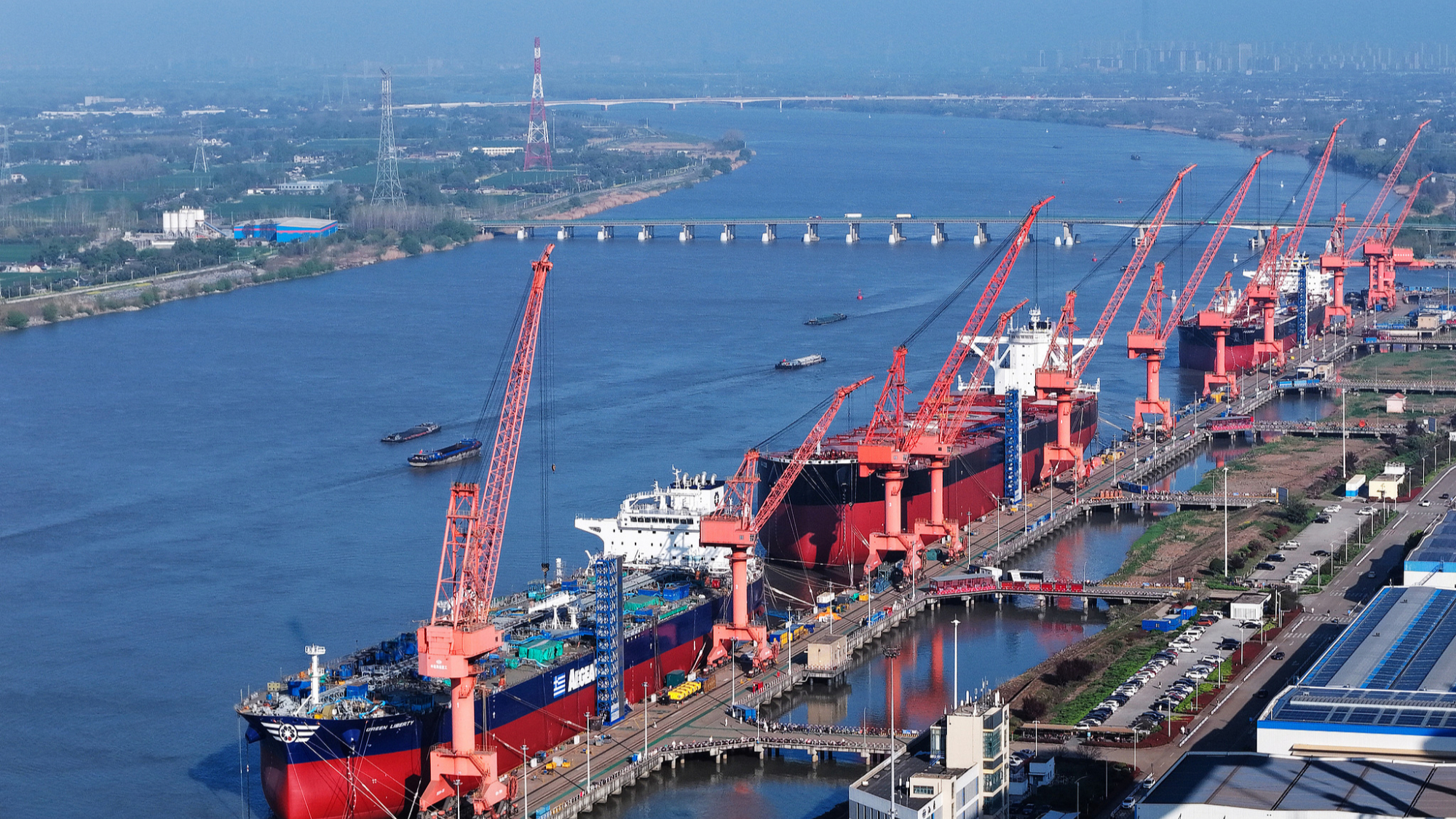
The ASEAN+3 region expanded 4.3% in 2025, outperforming expectations despite what regional economists describe as the most significant shift in global trade policy in decades, according to the AMRO ASEAN+3 Regional Economic Outlook 2026.
A Region Built on Firm Foundations
The ASEAN+3 Macroeconomic Research Office (AMRO) — whose membership spans the ten ASEAN states plus China, Hong Kong, Japan, and Korea — attributes the region’s resilience to firm domestic demand, robust export performance, sustained investment, and deepening intraregional trade linkages. The region enters 2026 with most economies retaining meaningful fiscal and monetary policy space, a buffer regional policymakers built deliberately following the shocks of the preceding decade.
Two Risks Now Dominate the Outlook
AMRO identifies the balance of risks as tilted firmly to the downside for the year ahead, driven by two distinct but interacting shocks. First, the Middle East conflict and the resulting disruption to energy supply through the Strait of Hormuz pose what AMRO calls a significant near-term threat to both regional growth and inflation. Second, shifting US trade policy continues to inject two-sided risk into technology demand and broader trade flows, with financial market volatility compounding the downside pressure from both channels simultaneously.
Semiconductors Anchor the Region’s Trade Position
Regional semiconductor exports remain a structural strength even amid the broader uncertainty. AMRO’s data tracks ASEAN-6 semiconductor exports — spanning Indonesia, Malaysia, the Philippines, Singapore, Thailand, and Vietnam — as a critical driver of regional trade resilience, reflecting the bloc’s entrenchment in global chip and electronics supply chains at a moment when demand for AI-related hardware remains exceptionally strong globally, per AMRO’s full 2026 report.
China’s Property Drag Still Ripples Outward
Even as China’s export engine benefits from AI-driven demand, AMRO notes that overall Chinese investment remained slightly softer in the period under review, with spending on clean energy and advanced manufacturing only partly offsetting a prolonged property-sector adjustment. Given the depth of intraregional trade linkages AMRO’s own research documents, continued softness in Chinese domestic investment carries spillover implications for supply chains and demand across the wider ASEAN+3 bloc, even as China’s headline export growth remains robust.
The Regional Growth Picture, Country by Country
Within the bloc, growth trajectories are diverging. Indonesia, Singapore, and Vietnam are leading regional growth momentum into 2026, while Malaysia and Thailand continue to expand at a steadier, more moderate pace, and the Philippines lags due to domestic structural challenges, according to McKinsey’s Southeast Asia quarterly economic review. The Asia House Annual Outlook separately forecasts overall Asian growth easing to 3.8% from 4.1% according to WTO estimates, reflecting softer global demand, a modest China slowdown, and the fading effect of earlier supply-chain frontloading, though the region is still expected to outperform the global growth average, per Asia House’s 2026 outlook.
Preserving Policy Flexibility Is the Central Challenge
AMRO frames the region’s central policy challenge for 2026 not as responding to any single shock, but as preserving the flexibility to respond to whichever shock materializes first — whether a further escalation in Middle East energy disruption, a sharper-than-expected US tariff or technology-policy shift, or a deeper Chinese property-sector adjustment than currently modeled. For businesses and investors across Singapore, Malaysia, Indonesia, and the wider bloc, that framing suggests 2026 will reward economies and companies that maintain optionality rather than committing early to any single scenario for how the region’s twin external shocks ultimately resolve.
Discover more from The Economy
Subscribe to get the latest posts sent to your email.

Pakistan Gulf Investment Outflows 2026: Peace Deal Stakes Explained

Canada Trade Diversification 2026: China, Indonesia, UAE Deals Explained

US Forced-Labour Tariffs on 60 Countries: The Hidden Trade Shock of 2026

Global Central Banks 2026: Fed, BoE and BoJ Decisions Could Reshape Markets

Gulf Capital Retreat From Pakistan 2026: UAE Loan Freeze & What It Means

Pakistan’s Most Reliable Export Is Its People: Remittances Hit $41.6 Billion, Overtaking Total Exports

Indonesia’s Confidence Problem: Record Investment, a Sinking Rupiah, and a Widening Credibility Gap

Down But Not Out: Inside the Slow Sinking of Russia’s War Economy

China’s Growth Slips to a Four-Year Low: Why Beijing Still Won’t Pull the Stimulus Trigger

The Johor-Singapore Corridor: How Malaysia Became Southeast Asia’s AI Infrastructure Powerhouse

Canada’s Economy ‘On Pause’: Inside the CUSMA Deadline That Passed Without a Deal

Dubai’s Millionaire Magnet: How the UAE Turned Middle East Turmoil Into a Capital Safe-Haven Boom

Britain’s Sixth Prime Minister in a Decade: What Starmer’s Exit Means for Gilts, Sterling and Your Portfolio

Anthropic Offers Up to $600,000 Salary for Critical IPO Role as AI Giant Prepares for Wall Street Debut

Carry Trade Unwind 2026: How the Yen’s Snapback Triggered a Global Margin Call

AI Bubble Warning 2026: Why BIS, IMF and Bank of England Fear a Market Crash

BRICS De‑Dollarization Strategy Takes Shape with $15 Billion Local‑Currency Push

The AI Super Bubble Is Ready to Burst

Russia Bans Diesel Exports 2026: Global Fuel Market Impact Explained

Strait of Hormuz Blockade 2026: Oil Prices Surge 9% as US-Iran Conflict Reignites

Private Credit Warning: Most BDCs Turn Unprofitable in 2026, Reuters Finds

Bitcoin $150k Milestone Achieved as US Sovereign Crypto Pivot Looms

IMF Cuts Pakistan Growth Forecast, Raises Inflation to 8.4%
Gulf Capital Retreat From Pakistan 2026: UAE Loan Freeze & What It Means

India Economic Rise 2026: How the Subcontinent Toppled Japan

Strait of Hormuz 2026: Why Markets Still Don’t Trust It’s Open

China Housing Market Turnaround: White‑List Model Stabilises Prices

Chipmakers Just Lost 6.7% in Two Days: Inside the Great AI Trade Rotation
-

 Markets & Finance7 months ago
Top 15 Stocks for Investment in 2026 in PSX: Your Complete Guide to Pakistan’s Best Investment Opportunities
-

 Analysis5 months ago
Johor’s Investment Boom: The Hidden Costs Behind Malaysia’s Most Ambitious Economic Surge
-

 Analysis5 months ago
Top 10 Stocks for Investment in PSX for Quick Returns in 2026
-

 Analysis6 months ago
Brazil’s Rare Earth Race: US, EU, and China Compete for Critical Minerals as Tensions Rise
-

 Banks6 months ago
Best Investments in Pakistan 2026: Top 10 Low-Price Shares and Long-Term Picks for the PSX
-

 Investment7 months ago
Top 10 Mutual Fund Managers in Pakistan for Investment in 2026: A Comprehensive Guide for Optimal Returns
-

 Global Economy7 months ago
15 Most Lucrative Sectors for Investment in Pakistan: A 2025 Data-Driven Analysis
-

 Global Economy7 months ago
Pakistan’s Export Goldmine: 10 Game-Changing Markets Where Pakistani Businesses Are Winning Big in 2025