
Analysis
Apple’s Vibe Coding Crackdown: Protecting Users or Choking the Next Software Revolution?

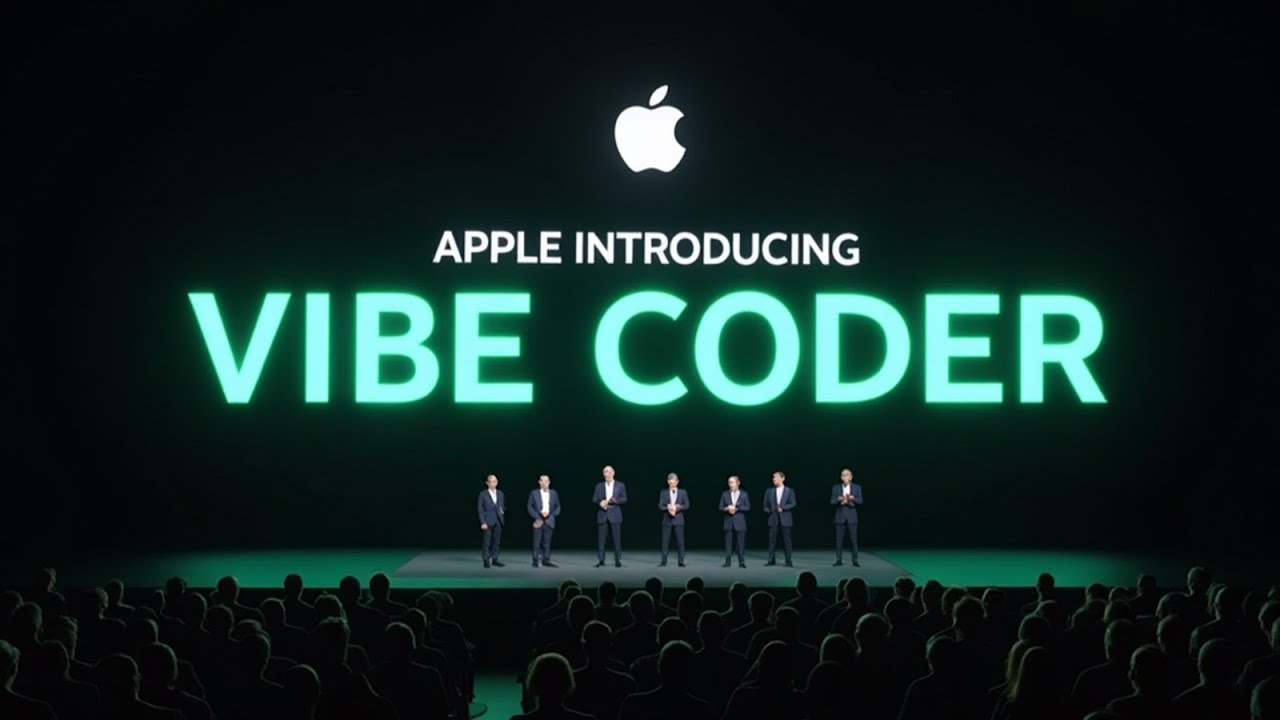
Dhruv Amin thought he had fixed it. For months, the co-founder of Anything—an AI app builder that lets users conjure mobile software from plain English—had been trapped in a bureaucratic purgatory that would make Kafka blush. Apple had blocked his updates since December. Then, on March 26, it pulled the app entirely. A brief, tantalizing reinstatement followed on April 3, only for Cupertino to yank it again, this time with a new edict: stop marketing yourself as an app maker. The whiplash would be almost comical if it weren’t so expensive. Anything, after all, is a company valued at $100 million, backed by serious venture capital, and responsible for helping publish thousands of apps that now live on Apple’s own platform.
Welcome to the Great Vibe Coding Crackdown of 2026—a collision between the democratization of software creation and the most powerful gatekeeper in digital capitalism.
The numbers alone tell you something seismic is happening. In the first quarter of 2026, App Store submissions surged 84% year-over-year to 235,800 new apps, the largest spike in a decade. According to data from Sensor Tower reported by The Information, the flood follows a 30% increase for all of 2025, reversing nearly a decade of declining submission volume. The culprit? “Vibe coding,” a term coined by OpenAI co-founder Andrej Karpathy in early 2025 to describe the practice of building software not by typing syntax, but by conversing with AI—describing what you want, steering the output, and “fully giving in to the vibes”. Tools like Replit, Vibecode, Lovable, and Cursor have turned non-programmers into publishers and turbocharged existing developers, generating a Cambrian explosion of software that has left Apple’s review infrastructure gasping for air.
But here is where the plot thickens. Just as this wave crested, Apple began slamming doors. In mid-March, the company blocked updates to Replit—the $9 billion coding platform—and Vibecode, citing a longstanding rule that might as well be the App Store’s atomic bomb: Guideline 2.5.2. The rule states that apps must be “self-contained” and may not “download, install, or execute code which introduces or changes features or functionality of the app”. On its face, this is a security measure. In practice, it is the regulatory noose that threatens to strangle an entire category of innovation.
The Security Theater—and the Business Reality
Apple’s official position is measured, almost lawyerly. The company insists it is not targeting vibe coding per se. “There are no specific rules against vibe coding,” a spokesperson told MacRumors, “but the apps have to adhere to longstanding guidelines”. The concern, Apple says, is that apps like Anything allow users to generate and execute code dynamically—code that never passed through Apple’s review process, code that could morph an innocent utility into a data-harvesting nightmare without Cupertino ever knowing. It is, in Apple’s telling, a matter of protecting the ecosystem’s integrity.
And let us be fair: they are not wrong about the risks. Apple rejected nearly 1.93 million app submissions in 2024 alone for quality and safety violations. The App Store’s value proposition has always been curation—a walled garden where malware is rare and trust is high. If any app can transform itself post-review via an AI prompt, the review process becomes little more than theater. Approval times have already ballooned from 24 hours to as many as 30 days under the submission crush, though Apple disputes this, claiming 90% of submissions are processed within 48 hours. When review teams are overwhelmed, the temptation to slam the door on dynamic execution is understandable.
Yet the enforcement reeks of selective amnesia. Safari executes JavaScript constantly. Apple’s own Shortcuts app runs arbitrary automation scripts. Swift Playgrounds—literally an Apple product—lets users write and run code on iOS devices. The distinction Apple draws is that vibe coding apps generate new applications, effectively turning one app into a platform for unreviewed software. But is that distinction about user safety, or about platform control?
Consider the timing. Apple has recently integrated AI coding assistants from OpenAI and Anthropic directly into Xcode, its proprietary development environment. It is perfectly happy for AI to help professional developers write code, so long as they remain inside Apple’s toolchain, paying Apple’s fees, and submitting to Apple’s review. But when a third-party app lets a teenager in Mumbai or a marketer in Minneapolis build and preview an iOS app without ever touching a Mac? That, apparently, crosses the line. As Forbes noted, vibe coding tools also facilitate web apps that bypass the App Store entirely—and Apple’s 30% commission along with it. The security rationale is real, but it is doing some very convenient double duty.
The Founders’ Dilemma
If you are a startup betting on the vibe coding revolution, the message from Cupertino is chilling. Replit, one of the most established names in the space, has seen its iOS app frozen since January, slipping from first to third in Apple’s free developer tools rankings because it cannot ship updates. Vibecode, which marketed itself as “the easiest way to create beautiful mobile apps,” has been forced to pivot to building websites and rebrand as a “learning-focused product”. Anything has been booted from the store twice, despite Amin submitting four technical rewrites in an attempt to comply with Apple’s opaque demands.
“I just think vibe coding is going to be so much bigger than Apple even realizes,” Amin told The Information. He is almost certainly correct. Cursor is now valued at $29.3 billion. Lovable raised $330 million at a $6.6 billion valuation after fiftyfold revenue growth in a year. These are not fringe experiments; they are the fastest-growing corners of enterprise software. And they are increasingly mobile-first. When Apple blocks the pipeline, it does not just inconvenience a few indie hackers. It alienates a generation of creators who expect to build on the devices they actually own.
Replit CEO Amjad Masad has been characteristically blunt, arguing that Apple’s guidelines have created an “unworkable position” for developer tools on iOS. The frustration is not merely about one app or one update. It is about the fundamental asymmetry of platform power. Apple writes the rules, interprets the rules, enforces the rules, and profits from the rules—all while competing with the very developers subject to them. In any other industry, we would call this a conflict of interest. In tech, we call it Tuesday.
Platform Power in the Age of Generative Software
This dispute is bigger than App Store submissions. It is a stress test for how incumbent platforms will manage the transition from static software to generative, AI-native applications. For two decades, the App Store operated on a simple premise: a developer writes code, compiles a binary, submits it for review, and ships a finished product. Vibe coding obliterates that linearity. The app is no longer a fixed artifact; it is a conversation, a prompt away from becoming something else entirely. Guideline 2.5.2 was written for a world of CDs and downloads, not for software that births software.
The antitrust implications are impossible to ignore. The European Union’s Digital Markets Act has already forced Apple to allow alternative app marketplaces in Europe, creating the surreal possibility that a vibe coding app blocked in the US could distribute freely in Frankfurt or Paris.
Regulators in Washington, already skeptical of Apple’s 30% “Apple Tax,” are watching closely. As PYMNTS reported, the crackdown “could invite regulatory scrutiny amid increased interest in cases of anticompetitive behavior among Big Tech firms”. When a platform uses vague safety rules to suppress tools that threaten its revenue model, antitrust lawyers tend to reach for their pens.
But the most profound shift may be cultural. Vibe coding represents something Apple should theoretically love: the expansion of creativity to billions of non-technical users. It is the ultimate expression of the “bicycle for the mind” ethos Steve Jobs once championed. Instead, Apple is treating it as a threat to be contained. The result? Innovation is already leaking toward more permissive ecosystems. Android has not applied equivalent restrictions. The open web—accessible through Safari, ironically—offers a complete bypass. If Apple persists, the next great software platform may simply never bother with native iOS at all.
The Wrong Side of History?
So where does this leave us? Is Apple the responsible steward of a secure ecosystem, or a nervous incumbent protecting its moat?
The honest answer is both—and that is what makes this story so vexing.
Apple’s security concerns are not fabricated. AI-generated code is notoriously brittle, riddled with unhandled edge cases, exposed API keys, and performance leaks. An App Store flooded with slapdash, AI-slop apps—many built by users who do not understand what they have created—could degrade trust and stability for everyone. There is a legitimate debate about whether users who “vibe code” a banking app or a health tracker should be allowed to distribute it without meaningful oversight. Platform responsibility is not a fiction invented by Apple’s lawyers; it is a real burden that grows heavier as platforms scale.
Yet Apple’s current approach is the policy equivalent of using a sledgehammer to perform surgery. The guideline is blunt. The enforcement is erratic—Anything’s yo-yo status suggests review teams are making it up as they go along. And the hypocrisy of allowing Xcode’s AI integrations while blocking Replit’s undermines any claim of principled neutrality. If the worry is truly about unreviewed code, why does Shortcuts get a pass? If the concern is malware, why not create a sandboxed tier for generative apps with enhanced telemetry and restricted permissions, rather than an outright ban?
What Apple seems unwilling to accept is that the genie is out of the bottle. You cannot regulate AI-generated software back into the era of floppy disks. The question is not whether vibe coding will transform software development—it already has—but whether Apple will adapt its garden walls to accommodate a new species of plant, or whether it will watch innovation bloom elsewhere.
A Fork in the Road
Looking ahead, I see three possible futures.
First, Apple could clarify and liberalize. It might introduce a new classification for “generative developer tools,” with stricter runtime sandboxing but explicit permission to operate. This would preserve security while acknowledging reality. It is the smart play, but it requires Cupertino to cede a measure of control, something it has historically resisted with religious fervor.
Second, regulation could force the issue. The EU’s alternative app stores are just the beginning. If US lawmakers conclude that Guideline 2.5.2 is being weaponized against competitors, we could see mandates for sideloading or third-party app stores that render Apple’s restrictions moot for a significant portion of the market. The platform would remain lucrative, but its monopoly on distribution would erode.
Third—and this is the one I suspect is most likely in the near term—the web wins by default. Vibe coding tools will increasingly bypass native iOS entirely, delivering sophisticated experiences through progressive web apps that run in Safari. Apple will retain its security blanket, but it will also watch the most exciting software innovation of the decade migrate to an open standard it does not control. That is a pyrrhic victory if ever there was one.
The irony is almost too perfect. Apple, the company that once promised to “think different,” is now clinging to a rulebook written for a different century. Guideline 2.5.2 is not evil; it is simply obsolete. In trying to protect users from the risks of AI-generated software, Apple risks protecting them from the benefits too—from the sheer, anarchic creativity of a world where anyone can build an app before lunch.
Amin and his peers are not asking for anarchy. They are asking for a clear, consistent path to compliance. They are asking Apple to recognize that vibe coding is not a loophole to be closed, but a paradigm to be managed. If Cupertino cannot make that intellectual leap, it will not stop the revolution. It will merely ensure that the revolution happens without it.
And in the platform economy, irrelevance is the only sin that truly cannot be forgiven.
Discover more from The Economy
Subscribe to get the latest posts sent to your email.



Key Takeaways
- Rolex’s secondary market rose approximately 7.9% year-over-year as of 2026 (per WatchCharts data) — trailing Patek Philippe (+16.2%) and Tudor (+11.4%) but still outperforming Audemars Piguet (+3.4%).
- Rolex raised U.S. retail prices 4–9% in January 2026 (steel models ~5.6%, gold models ~8.7%), narrowing the historical gap between retail and pre-owned pricing.
- Not every model appreciates: steel sports references (Submariner, GMT-Master II, Daytona) have held value far better than two-tone or widely available dress references like the standard Datejust.
- The Lady-Datejust posted the sharpest 2026 gain among tracked collections — up 22.73%, from roughly $9,269 to $11,376 — driven by demand for smaller, “everyday luxury” watches.
- Gold’s rise past $2,400/oz has directly lifted the investment case for Rolex’s precious-metal references (Day-Date, Sky-Dweller, Yacht-Master).
The Model-by-Model Picture
| Category | 2026 Trend |
|---|---|
| Lady-Datejust | +22.73% (strongest performer among tracked collections) |
| Steel sports models (Submariner, GMT-Master II) | Held value well; corrected from 2022 peak but stabilized above retail |
| Daytona | Corrected from highs above $50,000 to the mid-$30,000s; still among the most sought-after references |
| Two-tone/widely available Datejust | Flat to negative — “holds value” is an overstatement for this category |
| Gold references (Day-Date, Sky-Dweller) | Lifted by gold’s rise above $2,400/oz |
Why the “Rolex Always Appreciates” Myth Is Fading
The pandemic-era boom pushed some references — the Daytona above all — to speculative highs disconnected from historical norms. Since the March 2022 peak, steel sports models have compressed meaningfully, and dealers who bought inventory near the top have in some cases faced 20–40% markdowns on liquidation. The lesson for 2026 buyers: Rolex as a category is not a monolith. Value retention depends heavily on specific reference, condition, and whether the piece comes with box and papers (“full set”).
What’s Actually Driving 2026 Strength
- Retail price increases raise the floor. When a new Submariner retails at $10,050 (up from $9,500), a pre-owned example at $11,000–$12,000 suddenly represents a smaller premium — narrowing the gap without secondary prices actually moving.
- Supply discipline remains Rolex’s core lever. The brand has never confirmed production numbers, and secondary-market premiums remain entirely a function of Rolex’s own manufacturing decisions — a risk factor as much as a support.
- Certified Pre-Owned rollout. Rolex’s now fully rolled-out CPO program has changed how buyers transact in the used market, adding a layer of brand-verified legitimacy that supports pricing.
The Case for Rolex as a Portfolio Diversifier
Financial advisors increasingly frame luxury watches not as a replacement for equities or bonds, but as a tangible, historically low-correlation diversifier — one that carries its own risks (illiquidity, condition-dependent pricing, no yield) but has demonstrated multi-decade resilience for specific references.
Is Rolex a good investment in 2026?
It depends heavily on the specific reference. Steel sports models like the Submariner and Daytona have held or grown in value; two-tone and widely available dress models generally have not. Overall, Rolex’s secondary market rose about 7.9% year-over-year in 2026, trailing Patek Philippe but ahead of Audemars Piguet.
Discover more from The Economy
Subscribe to get the latest posts sent to your email.

Navigating Mortgage and Loan Refinancing in a High-Yield Environment
Global public debt crossing critical thresholds has kept central bank policies volatile, resulting in fluctuating US Treasury yields throughout 2026. For homeowners and commercial property holders burdened by previous high-interest borrowing cycles, finding optimal refinance windows has become a high-stakes financial puzzle. Stalled disinflation and stubborn employment numbers mean rate cuts are incremental, requiring borrowers to act with precision.
Timing your mortgage or commercial loan refinance in this environment requires a deep understanding of yield curve movements and lender risk appetites.
Decoding 2026 Refinance Dynamics
The 10-Year Treasury Yield Benchmark
Mortgage rates continue to track closely with the 10-year US Treasury yield. When macroeconomic anxiety spikes debt issuance, yields rise, tightening consumer borrowing capacity. Savvy borrowers monitor weekly Treasury auctions to lock in rates during brief dip windows.
Hybrid ARMs and Alternative Structures
With fixed rates remaining elevated, 7/1 and 10/1 adjustable-rate mortgages (ARMs) have surged in popularity. These products offer lower initial monthly payments, giving borrowers breathing room until central bank easing cycles fully materialize.
| Loan Product | Current Rate Range | Best For | Key Risk Factor |
| 30-Year Fixed Mortgage | 6.2% – 6.8% | Long-term predictability | Higher initial monthly outlay |
| 7/1 Hybrid ARM | 5.5% – 5.9% | Short-term ownership / flipping | Rate reset risk after year 7 |
| Commercial Refinance | 7.0% – 8.2% | Corporate asset restructuring | Strict DSCR lender covenants |
Actionable Steps for Successful Refinancing
To maximize your chances of securing favorable refinance terms in a volatile market, follow a disciplined preparation strategy.
Boost Your Credit Score Immediately: Lenders in 2026 are applying stringent credit tiering; a 20-point increase can drop your APR by a crucial quarter-point.
Shop Regional Credit Unions: Smaller financial institutions often offer portfolio loans with more flexible underwriting than major national banks.
Calculate the Break-Even Point: Ensure your total closing costs are recouped through monthly savings within 24 months of closing.
“Market Strategist View: Refinancing in 2026 is an exercise in opportunistic timing. Borrowers must maintain immaculate financial profiles ready to strike the moment Treasury yields dip.”
Mastering the complexities of today’s debt environment ensures you can successfully lower your debt service costs and protect your long-term financial stability.
Discover more from The Economy
Subscribe to get the latest posts sent to your email.

The days of pulling generic auto insurance quotes based purely on your zip code and age are officially over. In 2026, insurance comparison engines are powered entirely by generative AI and real-time telematics. These platforms digest thousands of live data points—ranging from your driving smoothness via connected vehicle sensors to real-time traffic congestion patterns—to generate hyper-personalized premiums instantly.
For consumers, this evolution represents both a massive opportunity for savings and a hidden trap for penalty pricing. Understanding how AI algorithms evaluate risk is essential for anyone looking to lower their monthly auto insurance premiums.
How AI Comparison Engines Evaluate Your Risk Profile
Behavioral Telematics and Connected Cars
Modern cars stream performance data directly to insurance aggregators. Generative AI models analyze braking sharpness, acceleration curves, cornering G-forces, and phone distraction metrics. Drivers who maintain smooth, defensive habits are rewarded with dynamic rate cuts of up to 40% compared to traditional rating tiers.
Predictive Traffic and Weather Modeling
AI tools now cross-reference your daily commute route with predictive weather and accident probability models. If your standard parking location or driving corridor has a statistically higher incidence of uninsured motorist claims, your quotes will reflect that hyper-local risk assessment.
| Comparison Factor | Traditional Rating Model | 2026 Generative AI Model | Impact on Premium |
| Mileage & Usage | Annual estimated odometer reading | GPS tracking & live trip duration | High (up to 35% savings) |
| Driving Behavior | MVR driving record & accidents | Real-time braking, speed, & G-force | Critical (determines tier) |
| Vehicle Tech | Make, model, and safety rating | ADAS calibration & repair cost data | Moderate |
Strategies to Lower Your AI-Driven Insurance Quote
To outsmart the algorithm and secure the lowest possible premium in 2026, drivers must proactively manage their digital footprint on insurance platforms.
Opt-In for Telematics Trial Periods: Many insurers offer immediate 15% discounts just for installing their driving app; let it track safe habits for 30 days to lock in permanent savings.
Scrub Unverified Public Records: Ensure your motor vehicle report is free of clerical errors that AI risk models misinterpret as reckless behavior.
Compare AI Aggregators: Use platforms that integrate multi-carrier API feeds rather than single-brand comparison sites to find the best risk-adjusted rate.
“Industry Note: AI-driven pricing rewards transparency and precision. Drivers who actively manage their telematics data consistently out-save those relying on legacy quote calculators.”
Embracing AI comparison tools allows savvy policyholders to customize coverage limits precisely to their driving habits, eliminating wasted premium spend while ensuring robust protection.
Discover more from The Economy
Subscribe to get the latest posts sent to your email.

Asian Stock Markets 2026: Japan, China, Pakistan & More

Mortgage Rates Today 2026: Full Rate Guide & Forecast

Beyond Paper Wealth: Unpacking Donald Trump’s Multibillion-Dollar Liquidity and Legal Crisis

Bitcoin & XRP 2026: Inside Crypto’s Institutional Era

Global Economy 2026: IMF Growth, AI Stocks & Market Risk

China’s Local Debt Race Against Time: Why Economists Demand Central Action Before the Deflation Window Closes

Money News: How to Protect Your Portfolio From Global Inflation

World Bank Projections: Emerging vs. Big Economies of Asia

IMF Reports 2026: What the Latest Data Means for the Global Economy

Singapore Stocks Outlook: A Safe Haven in the Asian Market?

China Stocks vs. Japan Stocks: Where Should You Invest in Late 2026?

VIX Index Explained: How to Trade Wall Street’s Fear Gauge Today

Commercial vs Residential Real Estate: Which Wins in 2026?

Presidential Stock Market Performance: How Trump’s Second Term Compares to History

Top 30 Stocks for Investment in PSX for Massive ROI in 2026

SpaceX Starship Flight 14: First Orbital Attempt & Starlink V3 Launch Explained

AI Chip Stocks 2026: The Best Semiconductor Investments Beyond Marvell

The 2026 Crypto Regulatory Shift: What It Means for Institutional Investors

Fidelity Investments Review 2026: SPAXX Yields & Zero-Fee Funds

Oil Prices Break $100 in 2026: Middle East Conflict & Energy Markets

Tween Back-to-School Trends 2026: What’s Driving the $85B Season

AI-Powered Training: The Next Multi-Billion Dollar Ecosystem in Fitness

BRICS+ Cross-Border Payments 2026: Interoperability Explained

10-Year Treasury Yield Hits 4.80%: What It Means for Rates & Portfolios

Shein Clothes Quality & Safety in 2026: What Lab Tests Show

MRVL Earnings 2026: Why Marvell Sank Despite Beating Estimates

China’s US$10.8 Billion Trade Shortcut: Why the Pinglu Canal Matters

Leveraging Viral AI & Climate Hashtags for Brand Growth on X
-

 Markets & Finance9 months ago
Top 15 Stocks for Investment in 2026 in PSX: Your Complete Guide to Pakistan’s Best Investment Opportunities
-

 Analysis7 months ago
Johor’s Investment Boom: The Hidden Costs Behind Malaysia’s Most Ambitious Economic Surge
-

 Analysis7 months ago
Top 10 Stocks for Investment in PSX for Quick Returns in 2026
-

 Analysis8 months ago
Brazil’s Rare Earth Race: US, EU, and China Compete for Critical Minerals as Tensions Rise
-

 Banks8 months ago
Best Investments in Pakistan 2026: Top 10 Low-Price Shares and Long-Term Picks for the PSX
-

 Investment8 months ago
Top 10 Mutual Fund Managers in Pakistan for Investment in 2026: A Comprehensive Guide for Optimal Returns
-

 Global Economy9 months ago
15 Most Lucrative Sectors for Investment in Pakistan: A 2025 Data-Driven Analysis
-

 Global Economy9 months ago
Pakistan’s Export Goldmine: 10 Game-Changing Markets Where Pakistani Businesses Are Winning Big in 2025