
Acquisitions
Anwar’s High-Stakes Gamble: The RM11 Billion Sunway-IJM Takeover Testing Malaysia’s Economic Divide

A blockbuster bid by billionaire Jeffrey Cheah’s Sunway Group to absorb construction giant IJM has ignited a ferocious debate about race, capital, and who really controls Malaysia’s economic future—just as the country edges toward a pivotal election cycle.
There are corporate deals, and then there are deals that hold up a mirror to an entire nation. The RM11 billion bid by Sunway Berhad for IJM Corporation is emphatically the latter. On the surface, it is a straightforward consolidation play in a sector long overdue for rationalisation. Dig a little deeper, and you find a collision of race politics, institutional shareholder power, and the ambitions of a prime minister still navigating the treacherous waters of multiracial governance.
When Sunway launched its takeover offer on January 12, 2026, valuing IJM at approximately RM11 billion—or around US$2.71 billion—the financial logic seemed sound. A combined entity would command a market capitalisation approaching RM50 billion, vaulting into the top ten on Bursa Malaysia and creating what proponents call a genuine national construction and property champion capable of competing regionally. But the weeks since have been anything but smooth, as bumiputera advocacy groups, opposition politicians, and state investment funds have raised uncomfortable questions about what this merger means for Malay economic ownership in a sector long considered strategically sensitive.
The Deal: What Is Actually on the Table
Sunway’s offer values each IJM share at roughly RM2.60, a premium of approximately 17 percent over IJM’s three-month volume-weighted average price prior to the announcement. IJM shareholders, many of whom have watched the stock languish for years amid rising input costs and a sluggish domestic construction pipeline, initially responded with cautious optimism. IJM’s share price surged past RM2.50 in the days following the announcement before settling into a holding pattern as political controversy deepened.
Sunway itself entered the year trading at a market capitalisation of roughly RM38 billion, buoyed by strong recurring income from its integrated townships and healthcare assets. The combined group would hold property, construction, infrastructure, and quarrying operations across Malaysia, India, the Middle East, and Australia—a conglomerate of genuine regional heft.
IJM also brings a balance sheet that makes the deal attractive beyond pure scale. With cash reserves exceeding RM2 billion and a healthy order book underpinned by ongoing infrastructure projects, it is not a distressed asset. That, paradoxically, has sharpened the controversy: critics ask why a profitable, bumiputera-linked institution should be absorbed into a group whose founder and controlling shareholder, Tan Sri Jeffrey Cheah, is an ethnic Chinese tycoon.
Jeffrey Cheah, Anwar Ibrahim, and the Racial Arithmetic
Few figures in Malaysian business carry the symbolic weight of Jeffrey Cheah. The founder of Sunway Group built his fortune from tin-mining wastelands in Selangor into one of the country’s most admired integrated townships, and has channelled hundreds of millions into education philanthropy through the Jeffrey Cheah Foundation. He is, by any measure, a Malaysian success story.
But success in Malaysia has always been read through a racial lens, and Cheah’s Chinese identity sits awkwardly against the backdrop of a deal that many bumiputera groups see as a dilution of Malay corporate ownership. IJM, while not a state-linked enterprise in the strictest sense, counts the Employees Provident Fund (EPF) and Permodalan Nasional Berhad (PNB)—two of the country’s largest state-backed institutional investors—among its most significant shareholders. Both funds carry an implicit mandate to protect and grow bumiputera wealth.
As reported by Bloomberg, the deal has drawn scrutiny precisely because it tests the limits of how far market logic can override the country’s affirmative ownership framework. PNB, which manages assets on behalf of bumiputera Malaysians, has not publicly declared its position. Its silence has been deafening.
For Prime Minister Anwar Ibrahim, the deal presents a political calculation of extraordinary delicacy. Anwar has staked much of his Madani economic agenda on attracting foreign investment, liberalising ownership rules, and projecting Malaysia as a modern, meritocratic economy. Approving a merger that creates a stronger, more competitive national champion aligns neatly with that narrative. But his political survival rests on a coalition that includes UMNO, whose grassroots remain deeply invested in the premise that bumiputera economic gains must be protected—sometimes at the expense of market efficiency.
UMNO Youth has been among the most vocal critics, with its leadership publicly questioning whether the government should allow what they characterise as a transfer of strategic assets from the bumiputera sphere to non-bumiputera control. The language has been incendiary in places, tapping into anxieties that predate the merger by decades but have found fresh urgency in an environment where Malay voter sentiment ahead of the 2026-2028 election cycle is increasingly volatile.
The Institutional Shareholders: EPF’s Quiet Power Play
Perhaps the most intriguing subplot involves the EPF. In the weeks following Sunway’s January announcement, market observers noted that the pension fund—which is the single largest institutional investor on Bursa Malaysia—had been quietly accumulating Sunway shares. As reported by The Edge Malaysia, EPF’s purchases were interpreted by some analysts as a signal that the fund was positioning itself to benefit from a deal it quietly endorses, while others read it as a hedge against the uncertainty a prolonged takeover battle creates.
The EPF’s dual role as a Sunway shareholder and an IJM shareholder creates an inherent tension. A higher offer price benefits its IJM position; a successful merger and subsequent re-rating of the combined entity would benefit its Sunway position. The fund’s leadership has maintained strict public silence, consistent with its fiduciary mandate, but the market is watching its every filing.
PNB presents a different profile. As the custodian of Amanah Saham Bumiputera (ASB) and related funds, it carries an explicitly race-conscious mandate that makes a straightforward commercial calculation more politically fraught. If PNB tenders its IJM shares to Sunway, it will face intense criticism from bumiputera advocacy groups regardless of the financial merit. If it withholds, it may be accused of undermining shareholder value for political reasons.
Regulatory Overhang: MACC and the Graft Question
Adding further turbulence, the Malaysian Anti-Corruption Commission (MACC) has been conducting investigations related to procurement irregularities in the construction sector—investigations that, while not directly targeted at either Sunway or IJM, have cast a shadow over the broader industry. Opposition politicians have not been slow to connect these investigations to the merger narrative, suggesting that a mega-consolidation could create opacity rather than accountability in public project awards.
These allegations remain unproven, and both Sunway and IJM have categorically denied any wrongdoing. But in the court of public opinion—particularly among Malay-majority voter blocs who are already sceptical of large Chinese-controlled conglomerates—the suggestion of graft, however tenuous, is politically potent.
The Financial Case: Why the Numbers Still Argue for Consolidation
Strip away the politics, and the economic logic for consolidation remains compelling.
Pre- and Post-Merger Snapshot (estimated, 2026):
| Metric | Sunway (standalone) | IJM (standalone) | Combined Entity (projected) |
|---|---|---|---|
| Market Cap | ~RM38 billion | ~RM11 billion | ~RM50 billion |
| Order Book | ~RM8 billion | ~RM12 billion | ~RM20 billion |
| Cash Reserves | ~RM3 billion | >RM2 billion | ~RM5+ billion |
| Bursa Ranking | Top 20 | Outside Top 20 | Top 10 |
| Regional Presence | MY, India, ME | MY, India, Australia | Significantly expanded |
Malaysia’s construction sector has been fragmented for too long. Dozens of mid-tier contractors compete for the same government contracts, undercutting margins and limiting investment in technology and sustainability. A combined Sunway-IJM entity would have the balance sheet to pursue large-scale infrastructure projects—including potential MRT extensions, Johor-Singapore Rapid Transit System works, and data centre construction—at a scale that smaller competitors cannot match.
As Reuters reported when the bid was announced, the merger is explicitly intended to create a “Malaysian building champion” capable of competing with regional giants from South Korea, Japan, and China that have long dominated Southeast Asian infrastructure. The argument is not merely financial; it is strategic.
Stakeholder Perspectives: A Divided Chorus
Institutional investors broadly favour the deal, citing synergy potential and the premium on offer. Foreign portfolio investors, in particular, have welcomed any signal that Malaysia is willing to allow market-driven consolidation over politically motivated intervention.
Bumiputera advocacy groups remain opposed, framing the merger as a symbolic retreat from the New Economic Policy’s goals of redistributive ownership. Their concern is less about Sunway’s competence than about the precedent: if EPF and PNB are seen to facilitate a transfer of a bumiputera-associated asset to a Chinese-controlled group, it emboldens similar deals in other sectors.
Industry executives, speaking privately, tend to regard the political opposition as short-sighted. One senior figure in the construction supply chain, speaking on condition of anonymity, described the fragmentation of the sector as “a luxury we can no longer afford” given the scale of infrastructure investment required to sustain Malaysia’s economic development targets.
Opposition politicians, from both the right and left flanks, have found unlikely common cause in scrutinising the deal—though for very different reasons. Perikatan Nasional has leaned into the bumiputera ownership argument; Parti Sosialis Malaysia has questioned the concentration of market power.
The Political Clock: 2026 and Beyond
The offer closes on April 6, 2026. That date matters enormously. Malaysia’s next general election is constitutionally due by 2028, but the political calendar is fluid; state elections and the underlying fragility of Anwar’s coalition mean that every major policy decision carries electoral freight.
A government that approves or tacitly facilitates this merger risks alienating a segment of the Malay electorate that sees bumiputera corporate ownership as non-negotiable. A government that blocks or delays it risks signalling to international capital that Malaysia remains a prisoner of ethnic economic politics—precisely the image Anwar has worked to overcome since taking office.
As Channel News Asia noted in its coverage, the controversy has exposed a fault line in Malaysia’s economic governance that no amount of Madani branding fully papers over: the tension between a market-oriented economic vision and the redistributive commitments baked into the country’s political DNA.
Three Scenarios for What Comes Next
Scenario One: The Deal Proceeds, Largely Intact. EPF and PNB tender their shares, the offer closes on schedule in April, and the combined entity lists as one of Bursa’s largest companies. Politically, Anwar absorbs short-term criticism from UMNO backbenchers but points to the resulting national champion as evidence of his economic competence. Markets respond positively.
Scenario Two: A Revised Offer with Bumiputera Conditions. Under pressure from state funds and the government, Sunway sweetens the deal—either by raising the offer price or by committing to structural conditions such as a minimum bumiputera board representation, a ring-fenced bumiputera vendor programme, or a stake reserved for PNB in the combined entity. This is the most politically elegant outcome, though it sets a precedent for race-conditioned M&A that will unsettle foreign investors.
Scenario Three: The Deal Collapses. State funds decline to tender, Sunway fails to achieve the thresholds required for compulsory acquisition, and IJM remains independent. The immediate market reaction would be negative for both stocks. More significantly, it would signal to the region that Malaysia’s affirmative ownership framework remains a structural constraint on market-driven consolidation—a message with long-term consequences for capital allocation.
The Bigger Picture
What makes the Sunway-IJM saga so revealing is not the deal itself but the anxieties it has brought to the surface. Malaysia’s economy has long operated on an implicit bargain: Chinese capital provides commercial dynamism; bumiputera institutions provide political legitimacy; and the government manages the intersection between the two. That bargain is under strain, not because any one actor has behaved badly, but because the world has changed around it.
Regional competition is intensifying. Infrastructure capital is flowing to markets with clearer rules. And a generation of Malaysian investors—bumiputera and otherwise—is increasingly asking whether the inherited framework serves their financial interests or merely their symbolic ones.
The answer Anwar and his government provide in the coming weeks, whether through action or studied inaction, will echo well beyond the construction sector. It will say something fundamental about whether Malaysia is prepared to let economic logic lead—and whether, in the year 2026, it can afford the luxury of letting politics decide.
The offer period for Sunway’s takeover bid for IJM Corporation closes April 6, 2026. Regulatory and shareholder decisions in the intervening weeks will determine whether Malaysia’s most politically charged corporate deal in years reshapes the country’s economic landscape—or exposes the limits of its reform ambitions.
Discover more from The Economy
Subscribe to get the latest posts sent to your email.



How a Hakodate-born credit company, backed by the world’s fifth-largest bank, is rewiring Southeast Asia’s most expensive car market — one 49% stake at a time
The view from the Sands Expo and Convention Centre — that cathedral of deal-making above Singapore’s glittering bay — has hosted IPO roadshows, sovereign wealth summits, and the occasional tech unicorn coronation. On April 7, 2026, it quietly added something more structurally significant to its portfolio: the formal signing of JACCS Co., Ltd.’s acquisition of a 49% stake in CarTimes Capital Pte. Ltd. (CTCA), the auto financing arm of CarTimes Automobile, itself a majority-owned subsidiary of CARSOME Group. The deal, valued at approximately ¥1.5 billion (S$12.1 million) for 1.519 million shares, is modest in dollar terms. In strategic terms, it is anything but.
The investment marks JACCS’s entry into its sixth ASEAN market, extending a regional partnership with CARSOME that was first established in Malaysia, and reflects the broader ambition of JACCS — supported by its capital and business alliance with Mitsubishi UFJ Financial Group — to build a pan-Southeast Asian auto lending footprint. Carsome Newsroom For those tracking Japan’s financial-sector pivot into Southeast Asia, this is less a press release moment and more a quiet checkpoint in an ongoing continental chess match. JACCS acquires CarTimes Capital not merely to enter one city-state’s car loan market. It enters to claim the final piece of a carefully assembled regional puzzle.
From Hakodate to the Hawker Belt: JACCS’s 70-Year Slow Burn
Established in 1954 in Hakodate, Japan, JACCS is a respected leader in the global consumer finance industry, with a significant footprint in ASEAN markets including Indonesia, the Philippines, Vietnam, and Cambodia. PwC To understand the audacity — and the patience — behind this week’s Singapore signing, you have to appreciate that JACCS is not a fintech start-up burning venture capital on growth metrics. It is a seven-decade-old institution with the measured instincts of a trust company and the balance sheet gravitas of its parent, MUFG.
With shareholders’ equity of approximately ¥230.4 billion as of March 31, 2024, and partnerships with over 20 automotive brands worldwide, JACCS brings institutional heft to every market it enters. Carlist Its ASEAN journey began in Vietnam in 2010 — a bet on a country before most Western lenders had memorized its provinces. Indonesia, the Philippines, and Cambodia followed. Each entry followed a similar playbook: strategic minority stakes, local ecosystem partners, and patience calibrated in decades rather than quarters.
Malaysia was the fifth market, announced in February 2025. The transaction agreements were signed in April 2025, with PwC Malaysia and PwC Japan acting as exclusive financial advisors to JACCS. PwC JACCS paid approximately ¥3.5 billion (around US$22.9 million) for its 49% stake in Carsome Capital Sdn. Bhd. Digital News Asia Singapore, announced in February 2026 and finalized today, is the sixth — and, by far, the most expensive and most scrutinized car market JACCS has ever entered.
Singapore’s COE Machine: The World’s Most Elaborate Car Tax and Why It Creates a Finance Bonanza
Anyone trying to understand the Singapore JACCS Singapore expansion must first wrestle with the Certificate of Entitlement — arguably the most consequential single policy instrument in global personal auto finance. Singapore’s COE system caps the total vehicle population, auctioning the right to own a car in biweekly tenders. The price is set entirely by market demand.
In 2025, the average COE price for Category A vehicles (cars with engines up to 1,600 cc) reached S$98,124, while Category B (larger vehicles) closed at S$116,670. Nexdigm This premium is paid on top of the car’s Open Market Value, plus a 100% Additional Registration Fee. The result is that a mid-range family saloon that retails for S$25,000 in Germany lands on Singapore roads at S$180,000 or more. Every single purchase requires financing. The loan is not a convenience — it is a structural necessity.
The Singapore automotive financing market was valued at US$12.8 billion in 2024 and is projected to reach US$18.6 billion by 2033, expanding at a CAGR of 3.9% during the forecast period. Astuteanalytica An alternative estimate, more bullish on near-term digital penetration, puts the market at approximately USD 10.25 billion in 2024 with a CAGR of 8% through 2030, driven by the increasing availability of financing options tailored to consumer needs. Nexdigm However you model the numbers, the structural demand is iron-clad: Singapore’s car finance market does not contract because car ownership sentiment wavers. It contracts only when the government restricts the supply of COE quota — and even then, loan balances on existing vehicles provide a durable revenue floor.
Total car loan balances reached S$10.2 billion in Q2 2024, reflecting deep credit utilization across the market. Used-car transaction volumes reached 102,140 transfers in 2024, marking a 7,064-unit increase year-on-year. Astuteanalytica This is precisely the territory — new cars, used cars, trade-ins — where CarTimes Capital operates, and where JACCS now has a stake.
The 49% Architecture: Control Without Ownership Risk
The symmetry between the Malaysia and Singapore deals is striking — and deliberate. In both cases, JACCS takes exactly 49%, leaving CARSOME in majority control. Carsome Group, the parent company of Carsome Capital, retains 51% ownership to continue as controlling shareholder, with the partnership designed to introduce tailored financial solutions emphasizing underserved segments. Free Malaysia Today
This architecture is textbook MUFG strategy. A majority stake would force JACCS to consolidate the entity onto its balance sheet, triggering Japanese regulatory capital requirements and forcing disclosure of non-performing loan metrics across jurisdictions. A 49% position generates economics and management influence — JACCS participates in governance — without the regulatory overhang of control. It also respects CARSOME’s local operational supremacy. Nobody knows Singapore’s second-hand car ecosystem better than CarTimes Automobile’s teams on the showroom floor.
Through this collaboration, JACCS will contribute their combined experience in sales finance and financial services to support the continued development of CTCA’s auto loan business, while CTCA provides auto financing solutions that support vehicle purchases and trade-in transactions, helping customers manage the high upfront costs associated with car ownership through structured financing options. TNGlobal
What JACCS brings, beyond capital, is a risk management playbook refined across seven decades and six ASEAN markets. The collaboration will facilitate knowledge transfer to strengthen financial sustainability, optimize risk assessments, and enhance credit governance — including AI-driven credit assessment tools to expand access to financing. Fintech News Malaysia In a market where a single loan can easily exceed S$150,000, the underwriting model matters enormously.
MUFG’s Quiet Blitz — and the Geopolitical Dimension Nobody’s Discussing
To frame MUFG JACCS ASEAN automotive finance as merely commercial would be to miss the strategic architecture sitting behind it. MUFG’s partnership with JACCS — which involved a third-party allotment of new JACCS shares to MUFG Bank as part of their capital and business alliance — is a deliberate mechanism for deploying Japanese banking capital into Southeast Asian consumer credit without MUFG itself taking on direct retail exposure.
It mirrors Tokyo’s broader “Do Next!” industrial policy, which prioritizes building durable offshore revenue streams for Japanese financial institutions as domestic demographics erode the home market. Japan’s working-age population is shrinking. The yen’s long-term structural pressures make yen-denominated domestic lending less attractive for international shareholders. The answer — and MUFG’s answer, specifically — is to turn Southeast Asia into a distributed engine of consumer credit growth, funded from Japan but underwritten with local knowledge.
Against this backdrop, JACCS’s six-market ASEAN network begins to look less like a series of opportunistic acquisitions and more like a deliberate regional platform. The Southeast Asia automotive financing market was valued at approximately USD 11.8 billion in 2024 and is projected to expand at a CAGR of 7.45% through 2033. UnivDatos For a company with ¥230 billion in shareholders’ equity seeking offshore growth, these numbers are not abstract. They are an addressable market of considerable scale — and JACCS is now embedded in its two most structurally sophisticated nodes: Malaysia and Singapore.
There is a competitive dimension here that deserves more attention than it typically receives in the business press. Chinese fintech platforms — emboldened by their success domestically and in markets like Indonesia — have set their sights on Singapore’s digital lending space. Grab Financial, backed by substantial US and regional capital, is aggressively competing in the consumer credit space. In this context, JACCS’s move is also a defensive one: securing a beachhead in Singapore’s used-car finance market before the platform players consolidate it.
What CARSOME Gets — and Why Eric Cheng’s Bet Is Paying Off
CARSOME’s co-founder and CEO Eric Cheng has consistently described the group’s ambition as creating Southeast Asia’s most integrated car commerce ecosystem: buy, sell, finance, insure. The JACCS partnership accelerates the financing leg of that vision in two directions simultaneously — institutional credibility and balance sheet depth.
For CarTimes Capital specifically, the immediate impact is access to JACCS’s global risk management infrastructure. The partnership is designed to combine JACCS’s longstanding expertise and international resources with CARSOME Capital’s ecosystem and local know-how, introducing tailored financing solutions with an emphasis on underserved segments. The Sun In Singapore’s context, “underserved” is a relative term — but it is real. Private-hire drivers, gig economy workers, and buyers of older used cars often find themselves priced out of DBS or OCBC’s loan books. JACCS’s alternative credit assessment methodology, honed in markets like Vietnam and Cambodia where formal credit bureaus barely exist, translates well to these edge cases.
The EV tailwind adds another dimension. By 2030, green car loans are projected to account for more than 50% of all new vehicle financing in Singapore, as lenders prioritize ESG-compliant portfolios, with electric vehicles expected to comprise 80% of the total vehicle stock by 2040. Nexdigm CTCA’s positioning within CarTimes Automobile — which handles both ICE and EV transactions — places JACCS at the intersection of this transition. Japanese financial institutions, many of which have developed green lending frameworks under MUFG’s ESG agenda, are well-placed to structure competitive EV loan products.
Risk Ledger: What Could Go Wrong
This column does not traffic in unbounded enthusiasm, so let us be honest about the risks embedded in Japanese auto finance Singapore expansion.
Currency mismatch is the first. The S$12.1 million investment is modest, but JACCS will book returns in Singapore dollars and report in yen. In a year when yen volatility has returned as a structural feature of currency markets, the FX hedging costs on Singapore-dollar denominated earnings can meaningfully compress IRR.
Competitive intensity is accelerating. Singapore’s auto finance market is marked by a dynamic interplay between established banks, agile non-bank financial companies, and rapidly growing digital challengers. Nexdigm DBS, OCBC, and UOB collectively hold over 83% of the lending market by volume. Carving out share in used-car finance requires either a price war — which destroys margins — or a genuine product differentiation story. JACCS’s AI-driven credit tools are compelling, but they need to be deployed at scale to matter.
Regulatory evolution presents a quieter risk. The Monetary Authority of Singapore enforces some of the tightest consumer lending rules in Asia, including strict loan-to-value ratios on vehicles (typically capped at 70% of OMV for cars below S$20,000 OMV, and 60% for cars above). Any tightening of these parameters — particularly in response to rising household debt — would directly compress CarTimes Capital’s addressable market.
COE cyclicality is the wild card. When COE premiums spike — as they did in 2023-2024 — some buyers defer purchase entirely. A structural moderation in premiums could paradoxically reduce loan sizes and, with them, interest income. The relationship between COE dynamics and finance penetration is non-linear and politically sensitive.
The Data Table: JACCS’s ASEAN Empire at a Glance
| Market | Entry Year | Partner | Stake | Focus |
|---|---|---|---|---|
| Vietnam | 2010 | Local partners | Majority | Consumer & auto credit |
| Indonesia | ~2015 | Local JVs | Majority | Multi-finance |
| Philippines | ~2016 | Local partners | Majority | Auto & consumer loans |
| Cambodia | ~2019 | Local partners | Majority | Consumer finance |
| Malaysia | April 2025 | Carsome Capital | 49% | Auto lending, used cars |
| Singapore | April 2026 | CarTimes Capital | 49% | Auto lending, COE market |
Forward View: Six Markets, One Platform, Unlimited Ambition
The CarTimes Capital acquisition 2026 is unlikely to be the last chapter in this story. Thailand — Southeast Asia’s auto manufacturing heartland, with a used-car finance market still dominated by bank and captive-finance duopolies — is the obvious next candidate. Myanmar, despite political turbulence, presents long-term optionality. Even within Singapore, a 49% stake in a growing financing arm becomes considerably more valuable if CARSOME proceeds toward any form of public listing or recapitalization.
The deeper story is about the architecture of trust that JACCS is building across six ASEAN jurisdictions. Each 49% stake is not just a financial position — it is a seat at the credit committee table, access to transaction-level data on hundreds of thousands of car buyers, and a blueprint for risk management that no amount of consultant reports can replicate. Over time, that data asset — the behavioral pattern of ASEAN car buyers across income quintiles, geographies, and vehicle types — becomes the most valuable thing JACCS owns in the region.
JACCS president Ryo Murakami has signaled explicitly that Malaysia was conceived as a starting point: “We believe CARSOME is an ideal partner for us with the potential to drive growth and transformation in the region, starting with Malaysia, and then to other Southeast Asian markets.” The Sun Singapore was always the sequel. The question is which market earns the third act.
For Singapore drivers — who already navigate one of the world’s most expensive car ownership regimes — the JACCS entry offers something quietly valuable: competitive pressure on a market long dominated by domestic banks with little incentive to innovate their loan products. If JACCS and CarTimes Capital make good on their promise to serve underserved borrowers with more sophisticated credit models, the real winner may not be MUFG’s earnings per share. It may be the private-hire driver in Tampines who finally gets a loan that fits his income pattern rather than a banker’s risk template.
From a Hakodate fish-market town in 1954 to the glass towers of Marina Bay in 2026 — JACCS has covered considerable ground. The signing today was quiet by Singapore’s standards, the ink barely dry on a ¥1.5 billion handshake in one of the world’s most theatrical convention venues. But in the longer arc of Japan-Southeast Asia financial integration, it marks something durable: a bet, placed with characteristic patience, that the region’s auto finance story has decades of chapters still unwritten.
JACCS (TSE: 8584) is listed on the Tokyo Stock Exchange. CARSOME Group is Southeast Asia’s largest integrated car e-commerce platform, operating across Malaysia, Indonesia, Thailand, and Singapore. CarTimes Capital Pte. Ltd. is the auto financing arm of CarTimes Automobile Pte. Ltd., a majority-owned CARSOME subsidiary in Singapore.
Discover more from The Economy
Subscribe to get the latest posts sent to your email.
Acquisitions
Sunway’s IJM Takeover Bid Lapses: Why the Collapse of Malaysia’s Would-Be RM50 Billion Construction Giant Matters
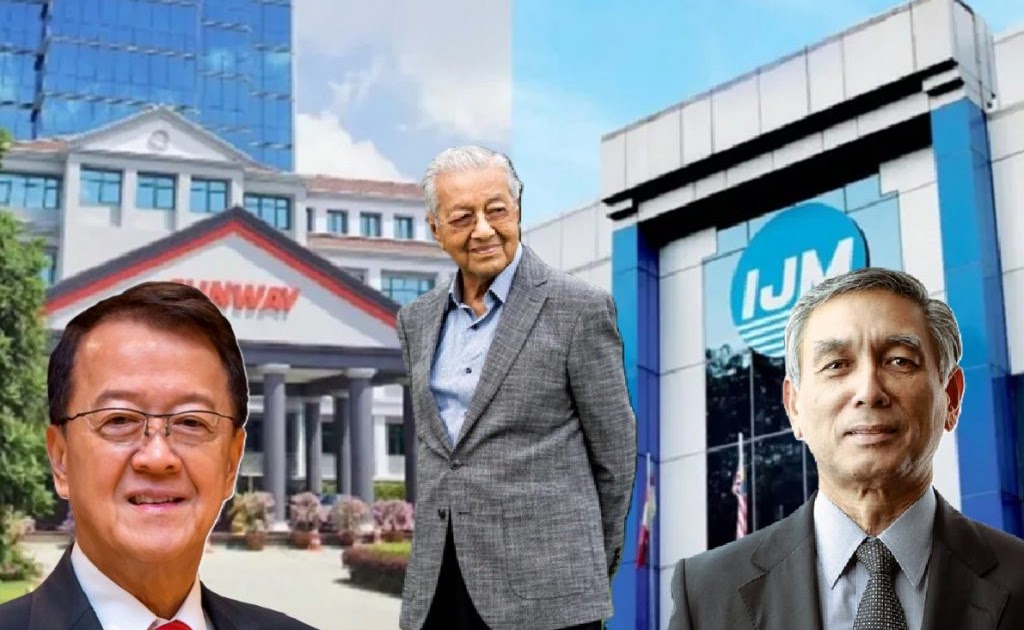
KEY TAKEAWAYS
- Sunway’s RM11 billion (~US$2.7 billion) voluntary takeover offer for IJM Corp lapsed on April 6, 2026, having secured only 33.43% of voting shares against a mandatory >50% threshold.
- Valuation was the core fault line: IJM’s board, advised by M&A Securities, pegged fair value at RM5.84–RM6.48 per share — nearly double Sunway’s offer of RM3.15.
- Institutional gatekeepers held the line: EPF (16.8% stake) and PNB (13.5%) both declined to accept, effectively killing the deal before it had momentum.
- The collapse is not a failure for Malaysian capital markets — it is, in fact, a signal of their maturation: independent advisers wielded real authority, and minority shareholders were heard.
- What happens next: Both companies now face a supercharged infrastructure and data-centre construction pipeline that rewards scale — and the question of consolidation in Malaysia’s construction sector has not gone away; it has merely been deferred.
The Deal That Wasn’t: A Merger Conceived in Ambition, Rejected on Valuation
Picture the scenario that Tan Sri Jeffrey Cheah presented to Kuala Lumpur’s investment community on January 12, 2026. Two of Malaysia’s most storied construction and property conglomerates — Sunway Bhd and IJM Corp Bhd — would merge into a single entity boasting roughly RM57.8 billion in combined assets, a pro-forma market capitalisation approaching RM45–50 billion, and the heft to compete not just regionally but across the infrastructure corridors of Asia. It was, by any measure, an ambitious vision: a Malaysian construction and property colossus that might finally stand shoulder to shoulder with Singapore’s Keppel, India’s L&T, or the Japanese mega-contractors that have long dominated international infrastructure procurement.
By 5 p.m. on April 6, 2026, the vision had evaporated. Maybank Investment Bank, acting as Sunway’s adviser and filing agent, confirmed in a tersely worded statement that the offer had “lapsed and ceased to be capable of further acceptance,” having secured valid acceptances representing only 33.43% of IJM’s total voting shares — a figure that fell more than 16 percentage points short of the mandatory 50%-plus threshold required under Malaysia’s takeover code. All tendered shares would be returned. The deal was dead.
Sunway, in its gracious post-mortem statement, said it “respected the decision of IJM shareholders and the outcome of the process.” Jeffrey Cheah, the billionaire philanthropist-developer who built Sunway City from a tin-mine wasteland, had already signalled weeks earlier that he would not chase the deal if the threshold was not met. A man who built a township on a moonscape has, it seems, learned to pick his battles. The question for investors, analysts, and Malaysia’s broader infrastructure ecosystem now is: what does this collapse actually mean — and for whom?
The Arithmetic of Rejection: Why the Numbers Never Really Added Up
The offer structure was, from the outset, the deal’s most vulnerable point. Sunway proposed RM3.15 per IJM share, comprising just 10% in cash (31.5 sen) with the remaining 90% paid in new Sunway shares at an implied price of RM5.65 per Sunway share. At first glance, it represented a premium to IJM’s pre-announcement trading price. But context is everything.
As reported by The Edge Malaysia, the independent adviser M&A Securities evaluated IJM’s intrinsic fair value at between RM5.84 and RM6.48 per share — a range that made Sunway’s RM3.15 look less like a premium and more like a discount dressed up in share-exchange arithmetic. The IJM board accepted this framing without hesitation, officially labelling the offer as “not fair and not reasonable” and recommending outright rejection. This was not boilerplate corporate politeness; it was a substantive finding that gave institutional shareholders the intellectual cover to do precisely what they ultimately did: hold their ground.
The cash component — a mere 10% — compounded the optics problem. In M&A transactions of this scale, particularly those involving large institutional shareholders who manage defined-benefit liabilities and have strict liquidity mandates, an offer weighted so heavily toward scrip requires an extraordinary conviction in the acquirer’s future share price. That conviction, apparently, was not forthcoming. Permodalan Nasional Bhd (PNB), IJM’s second-largest shareholder with a 13.5% stake, explicitly declined to tender its shares last month. The Employees Provident Fund (EPF), the biggest shareholder at 16.8%, followed the same logic in the same direction. When your two largest institutional holders together control more than 30% of the register and both say no, the arithmetic of a deal requiring 50%-plus becomes brutal.
This is a pattern that any student of Asian M&A knows intimately. Deals that rely on stock-heavy consideration succeed when the acquirer’s own shares are demonstrably undervalued, or when the combined synergy story is so compelling that target shareholders eagerly accept dilution in exchange for exposure to a larger, faster-growing entity. Neither condition was convincingly met here. Sunway’s shares have faced their own valuation pressures, and the synergy narrative — while coherent at a strategic level — lacked the specificity of quantum and timeline that sophisticated institutional investors demand before surrendering a liquid position for paper they did not ask for.
The PNB-EPF Factor: Institutional Investors Come of Age
Perhaps the most consequential — and underreported — dimension of the Sunway-IJM saga is what it reveals about the maturation of Malaysia’s institutional investor ecosystem. For decades, the standard critique of Bursa Malaysia was that government-linked investment companies (GLICs) such as EPF, PNB, Khazanah, and KWAP would follow political or quasi-political direction in their corporate governance decisions, acting more as passive custodians than active stewards of capital. The Sunway-IJM outcome suggests that narrative is overdue for revision.
PNB’s decision to publicly signal its non-acceptance was extraordinary in its clarity. EPF’s refusal to tender was, in effect, a declaration that its fiduciary duty to 8.1 million members superseded any top-down enthusiasm for corporate consolidation. Together, these two decisions constituted an act of institutional shareholder activism that would not be out of place on the register of a FTSE 100 company. As Bloomberg noted, this represented one of the biggest corporate merger failures in Malaysian history — and it was stopped not by regulators, not by political interference, but by investors who read the independent adviser’s report, compared it to Sunway’s offer price, and exercised a considered rejection.
This matters enormously for foreign investors who have historically discounted Malaysian equities partly on corporate governance grounds. The message from April 6 is unambiguous: minority shareholder rights in Malaysia have teeth. Independent advisers are not rubber stamps. And institutional shareholders, when presented with an offer their own analysis deems inadequate, will say no — publicly, firmly, and with lasting effect on their counterpart’s share price.
The Valuation Chasm: A Lesson in Emerging-Market M&A Mispricing
The gap between Sunway’s RM3.15 offer and M&A Securities’ RM5.84–RM6.48 fair value estimate is not a rounding error; it is a chasm. And it raises a question that deserves more analytical attention than it has received: how does a transaction advised by investment bankers of considerable standing arrive at an offer price that an independent evaluator deems so materially inadequate?
The answer likely lies in the structural tension inherent in takeovers of this type. Sunway’s offer was a conditional voluntary general offer (CVGO), meaning it required crossing the 50% threshold to proceed — and could not be waived. Unlike a scheme of arrangement, where 75% approval is needed but the deal can, if successful, compulsorily acquire remaining shares, a CVGO gives the offeror no path to squeeze out dissenters. This creates a strategic circularity: to win, you must convince a supermajority of shareholders to accept a price that the independent adviser has already labelled as unfair. It is, to borrow a phrase from game theory, an almost impossible equilibrium.
The comparison with regional M&A precedents is instructive. India’s infrastructure consolidation wave of 2018–2022, which saw Larsen & Toubro absorb Mindtree and other mid-caps, succeeded primarily because the acquirer’s scrip was itself on a bull run, making dilution acceptable. Singapore’s Keppel-Sembcorp merger dynamics of the same era involved extensive government coordination through Temasek — a mechanism not available to a listed private-sector bidder like Sunway. Malaysia’s own Gamuda, which has steadily accumulated its own infrastructure empire through organic order-book growth rather than transformative M&A, offers the most pertinent local lesson: in construction, execution and contract wins are a more durable moat than balance-sheet scale achieved through merger.
What Malaysia’s Infrastructure Boom Means for the Sector — With or Without This Merger
Here is the paradox at the heart of this story: the strategic rationale for a large, consolidated Malaysian construction and infrastructure player has never been more compelling, even as the vehicle for achieving it has just been voted down.
Hong Leong Investment Bank maintains an “overweight” rating on Malaysia’s construction sector, forecasting robust contract flows in 2026 anchored by infrastructure projects and hyperscale data-centre rollouts. The Johor-Singapore Special Economic Zone (JS-SEZ), backed by RM3.4 billion in Budget 2026 infrastructure funding, is entering its most intensive construction phase. The water treatment sector presents a parallel wave of large-scheme opportunities. MRT3 — the RM50-billion urban rail project — is expected to resume meaningful tender activity beyond 2026. And above all of this sits the data-centre boom: Malaysia’s data-centre construction market reached USD 3.71 billion in 2026 and is projected to hit USD 7.74 billion by 2031, at a 15.88% compound annual growth rate, driven by Singapore’s capacity constraints pushing hyperscale demand across the Johor causeway.
Over two-thirds of data-centre capacity currently under construction in Southeast Asia’s five main economies is committed to Malaysia, according to Asia Society Policy Institute. Microsoft, Google, Oracle, and Tencent are all building at scale. The Johor-Singapore corridor offers sub-2-millisecond latency to Singapore at land prices 40–60% lower than across the Strait — a cost arbitrage that is structurally durable, not cyclical.
Against this backdrop, both Sunway and IJM enter the post-merger landscape as well-capitalised, independently viable players with strong order books. Sunway’s shareholders voted 99.27% in favour of the proposed deal at its EGM — a remarkable endorsement of management’s vision, even if IJM’s shareholders disagreed on price. That internal consensus gives Sunway the mandate to pursue similar strategic ambitions through alternative means: organic investment, smaller bolt-on acquisitions, and targeted international expansion. IJM, meanwhile, enters the post-offer period with its independence intact, its management emboldened, and a pipeline that its CEO Datuk Lee Chun Fai has described with unmistakable confidence: “IJM has always been, and remains, a fundamentally strong company with a clear strategy and a resilient pipeline.”
The YTL Comparison: Patience and Positioning
Any analysis of Malaysian construction sector consolidation would be incomplete without reference to YTL Corporation, the conglomerate helmed by Tan Sri Francis Yeoh that has, over three decades, built a global infrastructure empire spanning power generation, water utilities, high-speed rail construction, and latterly, data centres through its landmark NVIDIA partnership for AI-ready campuses. YTL’s model — patient accumulation of regulated infrastructure assets with long-tenor cash flows — offers a template that neither Sunway nor IJM has quite replicated. The strategic insight embedded in YTL’s approach is that in infrastructure, the most durable value is not in construction execution per se, but in the ownership of assets that construction builds. The contractor’s margin is finite; the concession’s returns compound.
This is a strategic lens through which both Sunway and IJM would benefit from viewing their post-deal futures. Sunway already has significant exposure to healthcare, education, and property — diversified cash-flow streams that reduce its dependence on lumpy construction contracts. IJM holds infrastructure concession assets — toll roads, ports, and overseas construction operations — that, at the fair value suggested by M&A Securities, represent substantially more than the market currently ascribes to them. The rejection of Sunway’s offer was not merely a financial calculation; it was a statement that IJM’s concession portfolio and construction pipeline, viewed against the backdrop of Malaysia’s infrastructure supercycle, are worth waiting for.
Signals for Foreign Investors in Malaysian Equities
For the international investor community — pension funds in London, sovereign wealth allocators in Abu Dhabi, and hedge funds tracking Southeast Asian growth — the Sunway-IJM episode carries three distinct signals.
First, Malaysian corporate governance is more robust than its discount-to-NAV history implies. The independent adviser process worked as intended, and large institutional shareholders with fiduciary mandates exercised genuine independent judgment. This reduces the governance risk premium that many global allocators still attach to Bursa-listed equities.
Second, the construction and infrastructure sector remains one of Southeast Asia’s most structurally compelling investment themes for the remainder of this decade. The combination of MRT3, the JS-SEZ, the data-centre supercycle, and the East Coast Rail Link creates a pipeline of contract awards that will benefit the sector regardless of whether any given merger succeeds.
Third, and most subtly, the collapse of this deal is a pricing signal. If IJM’s independent advisers are correct that fair value sits between RM5.84 and RM6.48 per share, and if the stock closed at RM2.36 on April 6 — implying a market capitalisation of RM8.61 billion — then the current market price represents either a profound opportunity or a sobering reflection on the credibility of the fair value assessment itself. That tension will be the dominant narrative around IJM for the next twelve months.
What Happens Next: A Forward Look at Three Storylines
For Sunway: The group enters a phase of “disciplined pursuit of opportunities,” to use its own language. Organic growth in data-centre construction, healthcare infrastructure, and Johor-adjacent property development will likely dominate the capital allocation agenda. The 99.27% EGM endorsement from Sunway’s own shareholders gives management a strong internal mandate for bold strategic moves — but the next target, if there is one, will need to come with a more credible cash component and a more conservative gap between offer price and independent fair value. Watch for Sunway’s order-book progression through 2026 as the first real indicator of its standalone strategy’s velocity.
For IJM: The pressure is now entirely on execution. Having successfully defended its independence on the grounds that Sunway’s offer understated its value, IJM’s management must now demonstrate that the RM5.84–RM6.48 intrinsic value estimate is not a theoretical construct but a deliverable reality. The construction order book, concession assets, and overseas operations must produce the earnings trajectory that justifies the board’s confidence. Datuk Lee Chun Fai’s statement that IJM “moves forward with resolve” will be judged by quarterly results, not rhetoric.
For the sector: Malaysia’s construction and infrastructure landscape does not need a single RM50-billion champion to deliver its infrastructure ambitions — it needs a competitive ecosystem of well-capitalised, well-managed operators competing for the extraordinary pipeline of projects ahead. The JS-SEZ, the data-centre corridors of Johor and Cyberjaya, the water treatment schemes, and eventually MRT3 will together generate tens of billions in contract awards over the next decade. The question of consolidation is not dead; it is dormant. When it re-emerges — and it will — the lesson of April 6, 2026 will be clear: price it fairly, or do not price it at all.
Conclusion: A Defeat That Clarifies
In the short term, the collapse of the Sunway-IJM deal is a headline failure. A billion-dollar deal announced with fanfare, rejected with conviction, and withdrawn with grace. Markets will move on within days. But in the longer arc of Malaysian corporate history, this episode may come to be seen as a watershed moment — the transaction that demonstrated, conclusively, that Malaysian institutional investors can read a valuation report and act on it independently of any strategic narrative, no matter how eloquently assembled.
Jeffrey Cheah built Sunway City from a crater in the earth. He is not a man who mistakes a setback for a defeat. But the market has spoken, and its message is one he will have heard with characteristic clarity: if you want IJM, you will need to pay for it. And if the infrastructure supercycle that is now reshaping Southeast Asia is as powerful as every analysis suggests — and it is — then both Sunway and IJM, as independent operators in the most dynamic construction market in Asia, may yet find that they did not need each other after all.
The crater, as ever, is full of possibility.
Discover more from The Economy
Subscribe to get the latest posts sent to your email.
There is a particular kind of corporate ambition that does not announce itself. It assembles a small team. It watches. It waits for the moment when price and opportunity converge — and then it moves. That, according to a Financial Times exclusive published this morning, is precisely what Sumitomo Mitsui Financial Group is doing with Jefferies Financial Group.
SMFG, Japan’s second-largest banking group, has assembled a small internal team positioned to act should Jefferies’ share price present a compelling acquisition opportunity. Bloomberg Law The disclosure — sourced to people familiar with the matter — instantly rewired global markets. Jefferies shares surged more than 9% in U.S. pre-market trading, building on Monday’s close of $39.55, itself up 3.72% on the session. Frankfurt-listed shares had already jumped 6% immediately following the FT report. Investing.com SMFG’s own Tokyo-listed shares climbed in sympathy.
This is not a casual flirtation. It is the logical culmination of a five-year strategic partnership — one that has been methodically deepened, financially structured, and now, apparently, stress-tested for the eventuality of full ownership.
From Alliance to Ambition: The Anatomy of a Five-Year Courtship
The SMFG-Jefferies relationship began with a handshake, not a balance sheet. SMFG first initiated a formal collaboration with Jefferies in 2021, focused on cross-border mergers and acquisitions and leveraged finance. It took its first equity stake in 2023 and has raised it several times since. U.S. News & World Report
The strategic logic was never obscure: Jefferies, as a fiercely independent mid-market investment bank competing with Goldman Sachs and Morgan Stanley on advisory mandates, offered something SMBC could not manufacture internally — genuine Wall Street credibility, deep sponsor relationships across private equity, and a leveraged-finance franchise that punches far above its balance-sheet weight.
SMFG first bought nearly 5% of Jefferies in 2021. Then, in September 2025, Sumitomo Mitsui Banking Corp — the banking subsidiary of SMFG — raised its stake in Jefferies to up to 20% with a $912 million investment. Investing.com To be precise: the Japanese lender boosted its stake from 15% to 20% through a ¥135 billion investment, while deliberately keeping its voting interest below 5% GuruFocus — a structurally important distinction that has allowed SMFG to accumulate economic exposure without triggering the Bank Holding Company Act thresholds that would force a more formal regulatory review by the Federal Reserve.
That September 2025 announcement was accompanied by a sweeping expansion of the commercial partnership. The two groups agreed to combine their Japanese equities and equity capital markets businesses into a joint venture, expand joint coverage of larger private equity sponsors, and implement joint origination, underwriting, and execution of syndicated leveraged loans in EMEA. SMBC also agreed to provide Jefferies approximately $2.5 billion in new credit facilities to support leveraged lending in Europe, U.S. pre-IPO lending, and asset-backed securitization. sec
That Japanese equities joint venture — merging research, trading, and capital markets operations — was expected to formally launch in January 2027. GuruFocus The profit projections were explicit: SMFG estimated the Jefferies stake would contribute 50 billion yen to profit by its fifth year, with 10 billion yen expected to come from the equity joint venture alone. TradingView
This was not passive portfolio investment. It was infrastructure for a takeover — whether or not Tokyo ever intended to use it.
The Opportunity Window: Jefferies’ Annus Horribilis
The SMFG Jefferies takeover calculus has been fundamentally altered by one inconvenient reality: Jefferies has had a brutally difficult 18 months.
Jefferies’ stock has fallen more than 36% this year, following steep declines in 2025, when a unit linked to its asset management arm was embroiled in the bankruptcy of U.S. auto parts supplier First Brands. The Edge Malaysia The fallout extended beyond a single credit event. Jefferies has come under sharp scrutiny over its lending standards and risk appetite after the collapses of both British lender Market Financial Solutions and First Brands. The Edge Malaysia Investors have filed suit, alleging the bank misled markets about its risk management practices.
Jefferies currently carries a market capitalisation of approximately $8.17 billion, compared with SMFG’s market capitalisation of around $124 billion. The Edge Malaysia That ratio — roughly 15-to-1 — tells you almost everything about the feasibility of this deal. From a pure balance-sheet perspective, SMFG could write a cheque for Jefferies and barely register it as a rounding error. The question has never been financial capacity.
The question — always — has been price, governance, and will.
The Small Team With a Large Mandate
SMFG has assembled a small team to prepare for a potential move, should a drop in Jefferies’ share price create a sufficiently compelling entry point. Investing.com The existence of this team — quiet, deliberate, instructed to be ready — speaks volumes about how SMFG’s senior leadership is thinking about this relationship’s terminal state.
Any move by SMFG is not imminent, according to the people briefed on the matter. It is also uncertain whether Jefferies executives would be willing to sell at a depressed share price. MarketScreener That caveat matters enormously. Rich Handler, Jefferies’ long-serving CEO, has built his career around the bank’s independence. He turned down overtures before. The cultural friction between Tokyo’s consensus-driven keiretsu model — patient, hierarchical, relationship-first — and Jefferies’ New York swagger, deal-by-deal meritocracy, and fiercely guarded autonomy is not a detail. It is the central negotiating obstacle.
SMFG is prepared to put the acquisition plan on hold if market conditions or Jefferies management do not allow a full takeover. GuruFocus An SMFG spokesperson, when pressed by the FT, offered a reply that was diplomatic precisely because it said nothing: “Jefferies is our important partner. We decline to comment on hypothetical assumptions or rumors.” MarketScreener
That is not a denial. In the grammar of Japanese corporate communication, it is practically an acknowledgement.
Strategic Implications: What a Full Japan-US Investment Banking Merger Would Mean
A completed SMBC Jefferies possible buyout — should it materialise — would represent the most consequential cross-border M&A between a Japanese bank and a U.S. Wall Street institution since Mitsubishi UFJ Financial Group invested in Morgan Stanley in the depths of the 2008 financial crisis. The precedent is instructive.
Larger MUFG rival currently holds a 23.62% shareholding in Morgan Stanley, while third-ranked Mizuho Financial Group acquired U.S. M&A advisory Greenhill in 2023 U.S. News & World Report — demonstrating a clear generational strategy among Japanese megabanks to embed themselves permanently within the architecture of global capital markets.
A full SMFG acquisition of Jefferies would, however, go further than any of these. It would not be a passive stake or a boutique acquisition. It would mean absorbing an institution with roughly $8 billion in equity, several thousand employees, a prime brokerage franchise, leveraged-finance origination across New York, London, and Hong Kong, and a sponsor-coverage network that stretches across the largest private equity firms on earth.
For global leveraged-finance markets, the strategic implications are significant. As Travis Lundy, an analyst who publishes on Smartkarma, noted when the September 2025 stake was announced: “SMBC Nikko may be able to get more inbound M&A interest from U.S. financial firms where it may not have the trusted relationships in the U.S. that Jefferies does. More perhaps it gets SMBC a potentially much better seat at the table for providing LBO financing.” Wallstreetobserver Full ownership would convert that seat into the head of the table.
For SMFG’s securities arm, SMBC Nikko, the prize is equally clear: immediate access to Jefferies’ European sponsor coverage, its EMEA leveraged-loan distribution network, and its U.S. equity advisory franchise — capabilities that would take a decade to replicate organically, if replication were even possible.
The Regulatory and Valuation Hurdles
Elite readers should not mistake appetite for inevitability. The path from minority stake to full ownership in the United States is strewn with structural impediments.
Regulatory architecture: A full acquisition of Jefferies by SMFG would require approval from the Federal Reserve under the Bank Holding Company Act, the Committee on Foreign Investment in the United States (CFIUS), and potentially the SEC and FINRA. In the current U.S. political environment — where economic nationalism has become a bipartisan posture and scrutiny of foreign ownership of financial infrastructure has intensified — regulatory risk is non-trivial. Japanese buyers, historically, have fared better than Chinese bidders; but the regulatory environment of 2026 is not that of 2008.
Valuation gap: SMFG has been watching Jefferies trade down to approximately $39 a share from highs above $70. Even at current depressed levels, a full acquisition premium — typically 30–40% above market — would imply a takeover price in the range of $10.5–11 billion. Whether SMFG is willing to pay a meaningful premium for a franchise whose credit culture is under active litigation scrutiny is a question only Tokyo’s boardroom can answer.
Cultural integration risk: The deepest hazard in this deal has no number attached to it. Jefferies’ most valuable assets — its bankers, its trader relationships, its advisory franchise — are human capital. Wall Street talent, confronted with the prospect of being absorbed into a Japanese megabank’s corporate structure, may simply leave. Managing that attrition risk is the most important post-merger challenge any acquirer would face, and it is one for which the MUFG-Morgan Stanley experience offers only partial guidance.
Precedent, Geopolitics, and the Bigger Picture
Zoom out from the deal-specific mechanics, and what emerges is a structural story about the rebalancing of global finance. Japanese megabanks — flush with capital, largely insulated from the deposit-flight pressures that battered U.S. regional banks in 2023, and operating in a domestic market with limited organic growth — have been systematically deploying their fortress balance sheets into Western financial infrastructure.
The SMFG-Jefferies partnership sits within this broader geopolitical current: Japan’s quiet, methodical bid for investment-banking heft at a moment when U.S. and European banks are retrenching, restructuring, and pulling back from certain markets. For Tokyo’s policymakers and financial regulators, a fully owned U.S. investment bank with a global sponsor-coverage franchise is not merely a corporate asset. It is a projection of economic power.
As Japan’s stock market booms — with larger deal sizes, more global transactions, and increased capital flows from overseas — the alliance with Jefferies has been designed to allow SMFG’s securities arm, SMBC Nikko, to better meet issuer and investor demand TradingView in ways that a purely domestic Japanese franchise never could.
Outlook
SMFG will not overpay for Jefferies — not this week, not this quarter. The assembly of a readiness team is a signal of strategic intent, not a declaration of imminent action. Jefferies’ share price must fall further, or stabilize at a level that SMFG’s internal models can justify to its own shareholders.
But the direction of travel is unmistakable. What began as a 5% alliance stake in 2021 is now a 20% economic position, a $2.5 billion credit commitment, a forthcoming joint venture in Japanese equities, and a dedicated team waiting for the right moment. The infrastructure for a full Japan-US investment banking merger has been quietly, patiently constructed over five years.
The only question still open is timing — and whether Rich Handler’s independence reflex ultimately yields to the mathematics of a depressed stock price and a patient Japanese suitor with a $124 billion balance sheet and nowhere else it needs to be.
In Tokyo’s banking culture, patience is not weakness. It is strategy. SMFG has been playing this long game from the beginning. The board in Marunouchi can afford to wait. The question, increasingly, is whether Jefferies’ shareholders can afford for it to.
FAQ: SMFG Jefferies Takeover — What You Need to Know
Q1: What stake does SMFG currently hold in Jefferies? Through its banking subsidiary SMBC, SMFG holds approximately 20% of Jefferies on an economic basis, following a $912 million open-market purchase completed in September 2025. Crucially, its voting interest remains below 5%, structuring the position to stay below U.S. bank regulatory thresholds.
Q2: Why is SMFG exploring a full takeover of Jefferies now? Jefferies’ shares have fallen more than 36% in the period since SMFG’s last stake increase, largely due to credit losses tied to the bankruptcy of U.S. auto parts supplier First Brands and the collapse of British lender Market Financial Solutions. The decline has created a potential valuation window that SMFG’s internal team is monitoring.
Q3: What regulatory hurdles face a Sumitomo Mitsui Financial Group Jefferies acquisition? A full acquisition would require Federal Reserve approval under the Bank Holding Company Act, a CFIUS national-security review, and clearance from FINRA and the SEC. U.S. regulatory scrutiny of foreign ownership of systemically significant financial institutions has tightened considerably since 2020.
Q4: What is the SMBC Jefferies possible buyout worth? Jefferies’ current market capitalization stands at approximately $8.17 billion. A standard acquisition premium of 30–40% would imply a total deal value of roughly $10.5–11.5 billion — well within SMFG’s financial capacity, given its $124 billion market capitalization.
Q5: What does the SMFG-Jefferies deal mean for global leveraged finance and M&A markets? A completed Japan-US investment banking merger of this scale would reshape the mid-market sponsor coverage landscape globally. Combined, SMFG and Jefferies would control a formidable leveraged-lending and M&A advisory platform spanning New York, London, Tokyo, and Hong Kong — with particular strength in private-equity-backed transactions and cross-border Japan-US deal flow.
Discover more from The Economy
Subscribe to get the latest posts sent to your email.
-

 Markets & Finance3 months ago
Top 15 Stocks for Investment in 2026 in PSX: Your Complete Guide to Pakistan’s Best Investment Opportunities
-

 Analysis2 months ago
Brazil’s Rare Earth Race: US, EU, and China Compete for Critical Minerals as Tensions Rise
-

 Banks3 months ago
Best Investments in Pakistan 2026: Top 10 Low-Price Shares and Long-Term Picks for the PSX
-

 Investment3 months ago
Top 10 Mutual Fund Managers in Pakistan for Investment in 2026: A Comprehensive Guide for Optimal Returns
-

 Analysis2 months ago
Top 10 Stocks for Investment in PSX for Quick Returns in 2026
-

 Asia3 months ago
China’s 50% Domestic Equipment Rule: The Semiconductor Mandate Reshaping Global Tech
-

 Global Economy3 months ago
Pakistan’s Export Goldmine: 10 Game-Changing Markets Where Pakistani Businesses Are Winning Big in 2025
-

 Global Economy3 months ago
15 Most Lucrative Sectors for Investment in Pakistan: A 2025 Data-Driven Analysis