
Acquisitions
Sunway’s IJM Takeover Bid Lapses: Why the Collapse of Malaysia’s Would-Be RM50 Billion Construction Giant Matters

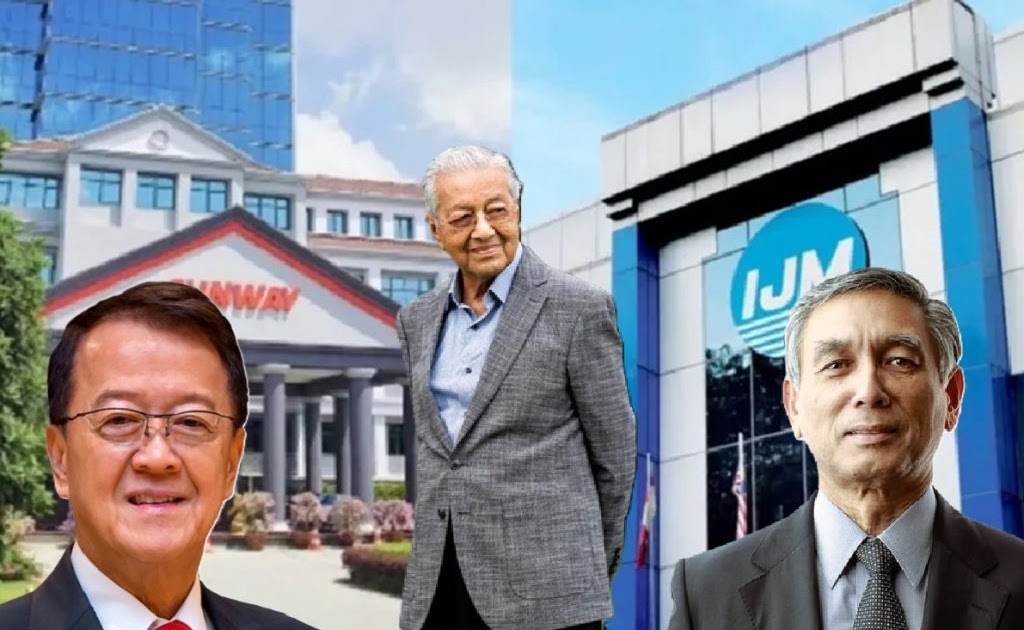
KEY TAKEAWAYS
- Sunway’s RM11 billion (~US$2.7 billion) voluntary takeover offer for IJM Corp lapsed on April 6, 2026, having secured only 33.43% of voting shares against a mandatory >50% threshold.
- Valuation was the core fault line: IJM’s board, advised by M&A Securities, pegged fair value at RM5.84–RM6.48 per share — nearly double Sunway’s offer of RM3.15.
- Institutional gatekeepers held the line: EPF (16.8% stake) and PNB (13.5%) both declined to accept, effectively killing the deal before it had momentum.
- The collapse is not a failure for Malaysian capital markets — it is, in fact, a signal of their maturation: independent advisers wielded real authority, and minority shareholders were heard.
- What happens next: Both companies now face a supercharged infrastructure and data-centre construction pipeline that rewards scale — and the question of consolidation in Malaysia’s construction sector has not gone away; it has merely been deferred.
The Deal That Wasn’t: A Merger Conceived in Ambition, Rejected on Valuation
Picture the scenario that Tan Sri Jeffrey Cheah presented to Kuala Lumpur’s investment community on January 12, 2026. Two of Malaysia’s most storied construction and property conglomerates — Sunway Bhd and IJM Corp Bhd — would merge into a single entity boasting roughly RM57.8 billion in combined assets, a pro-forma market capitalisation approaching RM45–50 billion, and the heft to compete not just regionally but across the infrastructure corridors of Asia. It was, by any measure, an ambitious vision: a Malaysian construction and property colossus that might finally stand shoulder to shoulder with Singapore’s Keppel, India’s L&T, or the Japanese mega-contractors that have long dominated international infrastructure procurement.
By 5 p.m. on April 6, 2026, the vision had evaporated. Maybank Investment Bank, acting as Sunway’s adviser and filing agent, confirmed in a tersely worded statement that the offer had “lapsed and ceased to be capable of further acceptance,” having secured valid acceptances representing only 33.43% of IJM’s total voting shares — a figure that fell more than 16 percentage points short of the mandatory 50%-plus threshold required under Malaysia’s takeover code. All tendered shares would be returned. The deal was dead.
Sunway, in its gracious post-mortem statement, said it “respected the decision of IJM shareholders and the outcome of the process.” Jeffrey Cheah, the billionaire philanthropist-developer who built Sunway City from a tin-mine wasteland, had already signalled weeks earlier that he would not chase the deal if the threshold was not met. A man who built a township on a moonscape has, it seems, learned to pick his battles. The question for investors, analysts, and Malaysia’s broader infrastructure ecosystem now is: what does this collapse actually mean — and for whom?
The Arithmetic of Rejection: Why the Numbers Never Really Added Up
The offer structure was, from the outset, the deal’s most vulnerable point. Sunway proposed RM3.15 per IJM share, comprising just 10% in cash (31.5 sen) with the remaining 90% paid in new Sunway shares at an implied price of RM5.65 per Sunway share. At first glance, it represented a premium to IJM’s pre-announcement trading price. But context is everything.
As reported by The Edge Malaysia, the independent adviser M&A Securities evaluated IJM’s intrinsic fair value at between RM5.84 and RM6.48 per share — a range that made Sunway’s RM3.15 look less like a premium and more like a discount dressed up in share-exchange arithmetic. The IJM board accepted this framing without hesitation, officially labelling the offer as “not fair and not reasonable” and recommending outright rejection. This was not boilerplate corporate politeness; it was a substantive finding that gave institutional shareholders the intellectual cover to do precisely what they ultimately did: hold their ground.
The cash component — a mere 10% — compounded the optics problem. In M&A transactions of this scale, particularly those involving large institutional shareholders who manage defined-benefit liabilities and have strict liquidity mandates, an offer weighted so heavily toward scrip requires an extraordinary conviction in the acquirer’s future share price. That conviction, apparently, was not forthcoming. Permodalan Nasional Bhd (PNB), IJM’s second-largest shareholder with a 13.5% stake, explicitly declined to tender its shares last month. The Employees Provident Fund (EPF), the biggest shareholder at 16.8%, followed the same logic in the same direction. When your two largest institutional holders together control more than 30% of the register and both say no, the arithmetic of a deal requiring 50%-plus becomes brutal.
This is a pattern that any student of Asian M&A knows intimately. Deals that rely on stock-heavy consideration succeed when the acquirer’s own shares are demonstrably undervalued, or when the combined synergy story is so compelling that target shareholders eagerly accept dilution in exchange for exposure to a larger, faster-growing entity. Neither condition was convincingly met here. Sunway’s shares have faced their own valuation pressures, and the synergy narrative — while coherent at a strategic level — lacked the specificity of quantum and timeline that sophisticated institutional investors demand before surrendering a liquid position for paper they did not ask for.
The PNB-EPF Factor: Institutional Investors Come of Age
Perhaps the most consequential — and underreported — dimension of the Sunway-IJM saga is what it reveals about the maturation of Malaysia’s institutional investor ecosystem. For decades, the standard critique of Bursa Malaysia was that government-linked investment companies (GLICs) such as EPF, PNB, Khazanah, and KWAP would follow political or quasi-political direction in their corporate governance decisions, acting more as passive custodians than active stewards of capital. The Sunway-IJM outcome suggests that narrative is overdue for revision.
PNB’s decision to publicly signal its non-acceptance was extraordinary in its clarity. EPF’s refusal to tender was, in effect, a declaration that its fiduciary duty to 8.1 million members superseded any top-down enthusiasm for corporate consolidation. Together, these two decisions constituted an act of institutional shareholder activism that would not be out of place on the register of a FTSE 100 company. As Bloomberg noted, this represented one of the biggest corporate merger failures in Malaysian history — and it was stopped not by regulators, not by political interference, but by investors who read the independent adviser’s report, compared it to Sunway’s offer price, and exercised a considered rejection.
This matters enormously for foreign investors who have historically discounted Malaysian equities partly on corporate governance grounds. The message from April 6 is unambiguous: minority shareholder rights in Malaysia have teeth. Independent advisers are not rubber stamps. And institutional shareholders, when presented with an offer their own analysis deems inadequate, will say no — publicly, firmly, and with lasting effect on their counterpart’s share price.
The Valuation Chasm: A Lesson in Emerging-Market M&A Mispricing
The gap between Sunway’s RM3.15 offer and M&A Securities’ RM5.84–RM6.48 fair value estimate is not a rounding error; it is a chasm. And it raises a question that deserves more analytical attention than it has received: how does a transaction advised by investment bankers of considerable standing arrive at an offer price that an independent evaluator deems so materially inadequate?
The answer likely lies in the structural tension inherent in takeovers of this type. Sunway’s offer was a conditional voluntary general offer (CVGO), meaning it required crossing the 50% threshold to proceed — and could not be waived. Unlike a scheme of arrangement, where 75% approval is needed but the deal can, if successful, compulsorily acquire remaining shares, a CVGO gives the offeror no path to squeeze out dissenters. This creates a strategic circularity: to win, you must convince a supermajority of shareholders to accept a price that the independent adviser has already labelled as unfair. It is, to borrow a phrase from game theory, an almost impossible equilibrium.
The comparison with regional M&A precedents is instructive. India’s infrastructure consolidation wave of 2018–2022, which saw Larsen & Toubro absorb Mindtree and other mid-caps, succeeded primarily because the acquirer’s scrip was itself on a bull run, making dilution acceptable. Singapore’s Keppel-Sembcorp merger dynamics of the same era involved extensive government coordination through Temasek — a mechanism not available to a listed private-sector bidder like Sunway. Malaysia’s own Gamuda, which has steadily accumulated its own infrastructure empire through organic order-book growth rather than transformative M&A, offers the most pertinent local lesson: in construction, execution and contract wins are a more durable moat than balance-sheet scale achieved through merger.
What Malaysia’s Infrastructure Boom Means for the Sector — With or Without This Merger
Here is the paradox at the heart of this story: the strategic rationale for a large, consolidated Malaysian construction and infrastructure player has never been more compelling, even as the vehicle for achieving it has just been voted down.
Hong Leong Investment Bank maintains an “overweight” rating on Malaysia’s construction sector, forecasting robust contract flows in 2026 anchored by infrastructure projects and hyperscale data-centre rollouts. The Johor-Singapore Special Economic Zone (JS-SEZ), backed by RM3.4 billion in Budget 2026 infrastructure funding, is entering its most intensive construction phase. The water treatment sector presents a parallel wave of large-scheme opportunities. MRT3 — the RM50-billion urban rail project — is expected to resume meaningful tender activity beyond 2026. And above all of this sits the data-centre boom: Malaysia’s data-centre construction market reached USD 3.71 billion in 2026 and is projected to hit USD 7.74 billion by 2031, at a 15.88% compound annual growth rate, driven by Singapore’s capacity constraints pushing hyperscale demand across the Johor causeway.
Over two-thirds of data-centre capacity currently under construction in Southeast Asia’s five main economies is committed to Malaysia, according to Asia Society Policy Institute. Microsoft, Google, Oracle, and Tencent are all building at scale. The Johor-Singapore corridor offers sub-2-millisecond latency to Singapore at land prices 40–60% lower than across the Strait — a cost arbitrage that is structurally durable, not cyclical.
Against this backdrop, both Sunway and IJM enter the post-merger landscape as well-capitalised, independently viable players with strong order books. Sunway’s shareholders voted 99.27% in favour of the proposed deal at its EGM — a remarkable endorsement of management’s vision, even if IJM’s shareholders disagreed on price. That internal consensus gives Sunway the mandate to pursue similar strategic ambitions through alternative means: organic investment, smaller bolt-on acquisitions, and targeted international expansion. IJM, meanwhile, enters the post-offer period with its independence intact, its management emboldened, and a pipeline that its CEO Datuk Lee Chun Fai has described with unmistakable confidence: “IJM has always been, and remains, a fundamentally strong company with a clear strategy and a resilient pipeline.”
The YTL Comparison: Patience and Positioning
Any analysis of Malaysian construction sector consolidation would be incomplete without reference to YTL Corporation, the conglomerate helmed by Tan Sri Francis Yeoh that has, over three decades, built a global infrastructure empire spanning power generation, water utilities, high-speed rail construction, and latterly, data centres through its landmark NVIDIA partnership for AI-ready campuses. YTL’s model — patient accumulation of regulated infrastructure assets with long-tenor cash flows — offers a template that neither Sunway nor IJM has quite replicated. The strategic insight embedded in YTL’s approach is that in infrastructure, the most durable value is not in construction execution per se, but in the ownership of assets that construction builds. The contractor’s margin is finite; the concession’s returns compound.
This is a strategic lens through which both Sunway and IJM would benefit from viewing their post-deal futures. Sunway already has significant exposure to healthcare, education, and property — diversified cash-flow streams that reduce its dependence on lumpy construction contracts. IJM holds infrastructure concession assets — toll roads, ports, and overseas construction operations — that, at the fair value suggested by M&A Securities, represent substantially more than the market currently ascribes to them. The rejection of Sunway’s offer was not merely a financial calculation; it was a statement that IJM’s concession portfolio and construction pipeline, viewed against the backdrop of Malaysia’s infrastructure supercycle, are worth waiting for.
Signals for Foreign Investors in Malaysian Equities
For the international investor community — pension funds in London, sovereign wealth allocators in Abu Dhabi, and hedge funds tracking Southeast Asian growth — the Sunway-IJM episode carries three distinct signals.
First, Malaysian corporate governance is more robust than its discount-to-NAV history implies. The independent adviser process worked as intended, and large institutional shareholders with fiduciary mandates exercised genuine independent judgment. This reduces the governance risk premium that many global allocators still attach to Bursa-listed equities.
Second, the construction and infrastructure sector remains one of Southeast Asia’s most structurally compelling investment themes for the remainder of this decade. The combination of MRT3, the JS-SEZ, the data-centre supercycle, and the East Coast Rail Link creates a pipeline of contract awards that will benefit the sector regardless of whether any given merger succeeds.
Third, and most subtly, the collapse of this deal is a pricing signal. If IJM’s independent advisers are correct that fair value sits between RM5.84 and RM6.48 per share, and if the stock closed at RM2.36 on April 6 — implying a market capitalisation of RM8.61 billion — then the current market price represents either a profound opportunity or a sobering reflection on the credibility of the fair value assessment itself. That tension will be the dominant narrative around IJM for the next twelve months.
What Happens Next: A Forward Look at Three Storylines
For Sunway: The group enters a phase of “disciplined pursuit of opportunities,” to use its own language. Organic growth in data-centre construction, healthcare infrastructure, and Johor-adjacent property development will likely dominate the capital allocation agenda. The 99.27% EGM endorsement from Sunway’s own shareholders gives management a strong internal mandate for bold strategic moves — but the next target, if there is one, will need to come with a more credible cash component and a more conservative gap between offer price and independent fair value. Watch for Sunway’s order-book progression through 2026 as the first real indicator of its standalone strategy’s velocity.
For IJM: The pressure is now entirely on execution. Having successfully defended its independence on the grounds that Sunway’s offer understated its value, IJM’s management must now demonstrate that the RM5.84–RM6.48 intrinsic value estimate is not a theoretical construct but a deliverable reality. The construction order book, concession assets, and overseas operations must produce the earnings trajectory that justifies the board’s confidence. Datuk Lee Chun Fai’s statement that IJM “moves forward with resolve” will be judged by quarterly results, not rhetoric.
For the sector: Malaysia’s construction and infrastructure landscape does not need a single RM50-billion champion to deliver its infrastructure ambitions — it needs a competitive ecosystem of well-capitalised, well-managed operators competing for the extraordinary pipeline of projects ahead. The JS-SEZ, the data-centre corridors of Johor and Cyberjaya, the water treatment schemes, and eventually MRT3 will together generate tens of billions in contract awards over the next decade. The question of consolidation is not dead; it is dormant. When it re-emerges — and it will — the lesson of April 6, 2026 will be clear: price it fairly, or do not price it at all.
Conclusion: A Defeat That Clarifies
In the short term, the collapse of the Sunway-IJM deal is a headline failure. A billion-dollar deal announced with fanfare, rejected with conviction, and withdrawn with grace. Markets will move on within days. But in the longer arc of Malaysian corporate history, this episode may come to be seen as a watershed moment — the transaction that demonstrated, conclusively, that Malaysian institutional investors can read a valuation report and act on it independently of any strategic narrative, no matter how eloquently assembled.
Jeffrey Cheah built Sunway City from a crater in the earth. He is not a man who mistakes a setback for a defeat. But the market has spoken, and its message is one he will have heard with characteristic clarity: if you want IJM, you will need to pay for it. And if the infrastructure supercycle that is now reshaping Southeast Asia is as powerful as every analysis suggests — and it is — then both Sunway and IJM, as independent operators in the most dynamic construction market in Asia, may yet find that they did not need each other after all.
The crater, as ever, is full of possibility.
Discover more from The Economy
Subscribe to get the latest posts sent to your email.



Hongkong Land’s Singapore Central Private Real Estate Fund completed the acquisition of Wheelock Place for approximately S$1.1 billion (roughly US$855–900 million) and, on 12 November 2026, renamed the prominent Orchard Road property Landmark Orchard. This is the first time the group has extended the Landmark brand beyond Hong Kong. The Straits Times
The 21-storey mixed-use building remains directly linked to Orchard MRT station and continues operating with existing office and retail tenants. The deal was the fund’s first acquisition since its February 2026 launch and advances Hongkong Land’s strategy of growing recurring income and its fund-management platform toward a target of roughly S$15 billion in assets under management. Channel NewsAsia
For Singapore’s commercial property market, the transaction confirms sustained institutional appetite for irreplaceable Orchard Road assets and signals long-term capital commitment to one of Asia’s premier retail and office corridors.
Table of Contents
- What Was the Acquisition Price and Deal Structure?
- Why Rename Wheelock Place to Landmark Orchard?
- What Are the Key Property Details and Location Advantages?
- How Does This Fit Hongkong Land’s Broader Strategy?
- What Does the Deal Mean for Orchard Road Tenants and the Precinct?
- What Enhancements and Capital Plans Are Expected?
- How Does the Transaction Compare with Recent Orchard Road Deals?
- Key Takeaways
- Frequently Asked Questions
What Was the Acquisition Price and Deal Structure?
The Singapore Central Private Real Estate Fund agreed in July 2026 to acquire Wheelock Place from an entity owned by Hong Kong-listed Wharf Real Estate Investment Company. The price of approximately S$1.1 billion aligned with an independent valuation. Completion took place around the end of August 2026, and the renaming became effective on 12 November 2026. The Straits Times
Allen & Gledhill advised the buyer, Lee & Lee represented the seller, and WongPartnership acted for the financing syndicate. The acquisition lifted the fund’s assets under management and was described as accretive to Hongkong Land’s underlying earnings. Hongkong Land maintains a majority equity stake in the fund and will earn additional management fees as the platform scales.
Why Rename Wheelock Place to Landmark Orchard?
Hongkong Land is deliberately exporting the Landmark identity that defines its flagship Central Hong Kong portfolio. Management stated that the name “Landmark Orchard” reflects a commitment to delivering a high-quality experience for tenants, visitors, and the surrounding community. The rebranding also creates regional brand consistency across the group’s premium commercial assets. Channel NewsAsia
Foo Pei Teng, Chief Executive of the fund, noted that this is the first use of the Landmark name outside Hong Kong and that the group intends to apply its long-term investment philosophy to the asset.
What Are the Key Property Details and Location Advantages?
Wheelock Place (now Landmark Orchard) comprises a 21-storey commercial tower and two basement levels with a total gross floor area of approximately 43,280 square metres. It offers office space, a retail podium, and car parking and enjoys direct underground connectivity to Orchard MRT station. The building sits at the strategic junction of Orchard Road, Scotts Road, and Paterson Road.
Originally opened in 1994 as Lane Crawford Place, it was later renamed Wheelock Place and has been a recognisable presence on Orchard Road for more than three decades. Its MRT linkage and central Orchard positioning provide strong footfall and accessibility advantages that institutional investors prize.
How Does This Fit Hongkong Land’s Broader Strategy?
The purchase advances two core objectives: expanding the third-party fund-management platform and increasing exposure to high-quality, recurring-income assets. The Singapore fund was established specifically to acquire rare institutional-grade properties. Completing a transaction of this scale within months of launch demonstrated both execution capability and limited-partner confidence. As assets under management move toward the S$15 billion target, Hongkong Land benefits from both co-investment returns and growing fee income.
The deal also extends the group’s Singapore footprint beyond the Marina Bay and CBD core into the Orchard Road belt, diversifying its local exposure.
What Does the Deal Mean for Orchard Road Tenants and the Precinct?
Existing office and retail tenants continue in occupation under the new name, so near-term operational disruption is minimal. Long-term institutional ownership by a well-capitalised player is generally viewed as positive for asset maintenance, tenant retention, and precinct quality. Over time, planned enhancements could improve the retail mix, common areas, and integration with the surrounding pedestrian and transit network, reinforcing Orchard Road’s competitiveness against other Asian shopping destinations.
What Enhancements and Capital Plans Are Expected?
Hongkong Land has not published a detailed capital-expenditure schedule. It has indicated that it will draw on extensive experience managing premium assets, including the ongoing multi-year transformation of its Hong Kong Landmark properties under the “Tomorrow’s CENTRAL” programme. Typical interventions for an asset of this type include selective retail reconfiguration, sustainability upgrades, improved vertical circulation, and stronger place-making around the MRT connection. Any major works are expected to be phased to limit tenant impact.
How Does the Transaction Compare with Recent Orchard Road Deals?
Prime Orchard Road assets trade infrequently. The S$1.1 billion price reflects both the property’s scale and its irreplaceable location. Comparable recent transactions in the precinct have also attracted long-term institutional capital, underscoring that global and regional investors continue to view Orchard Road as a core holding despite cyclical retail challenges. The Landmark rebranding adds a differentiating brand layer that few competing assets possess.
Transaction and Asset Snapshot
| Item | Detail |
|---|---|
| Purchase price | ≈ S$1.1 billion (US$855–900 million) |
| Buyer | Hongkong Land Singapore Central Private Real Estate Fund |
| Seller | Entity owned by Wharf Real Estate Investment Company |
| Completion | End-August 2026 |
| Renaming effective | 12 November 2026 |
| Gross floor area | ≈ 43,280 sq m |
| Key feature | Direct Orchard MRT connection |
| Fund AUM target | ≈ S$15 billion |
| Brand significance | First Landmark name use outside Hong Kong |
Key Takeaways
- Hongkong Land acquired Wheelock Place for approximately S$1.1 billion and renamed it Landmark Orchard.
- The transaction is the first acquisition of the Singapore Central Private Real Estate Fund.
- It marks the first extension of the Landmark brand beyond Hong Kong.
- Existing tenants remain in place; enhancements are planned over the medium term.
- The deal supports Hongkong Land’s dual goals of recurring-income growth and fund-management expansion.
- It reinforces institutional confidence in prime Orchard Road real estate.
Frequently Asked Questions
When did the name change take effect?
12 November 2026.
Do existing tenants have to move or renegotiate immediately?
No. Office and retail tenants continue operating under the new name.
Who sold the property?
An entity controlled by Wharf Real Estate Investment Company.
Is this Hongkong Land’s first Singapore asset?
No, but it is the fund’s first acquisition and the group’s first major Orchard Road holding under the new vehicle.
What is the fund’s assets-under-management target?
Approximately S$15 billion.
Will there be immediate large-scale renovations?
No detailed disruptive works have been announced; the emphasis is on continuity followed by phased enhancement.
How does the price compare with the independent valuation?
It was described as being in line with a recent independent valuation.
Conclusion
The conversion of Wheelock Place into Landmark Orchard is simultaneously a major real estate transaction and a strategic branding move for Hong Kong Land. For property, investment, and business audiences, the deal illustrates continued appetite for scarce Orchard Road assets and the expanding role of sponsored private funds in Singapore’s commercial market. Tenants and visitors should experience continuity in the near term, while the new ownership and landmark identity create a platform for gradual, quality-focused upgrades that can further strengthen one of the city’s most recognisable commercial addresses over the coming decade.
Discover more from The Economy
Subscribe to get the latest posts sent to your email.
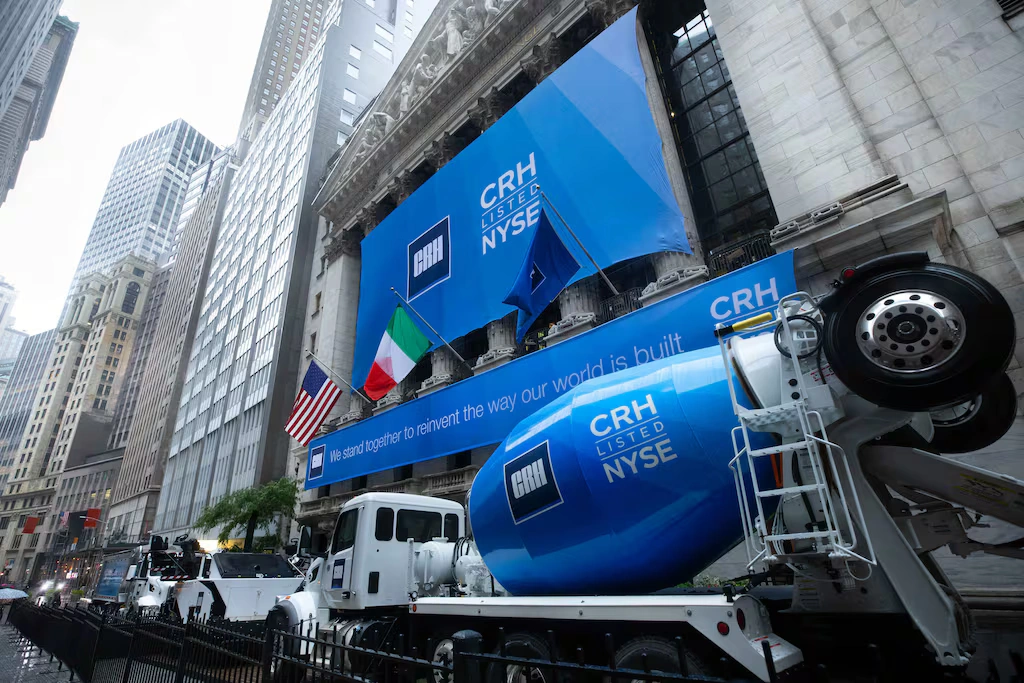
Irish-American building materials giant CRH is nearing its largest-ever acquisition with a deal to buy U.S. infrastructure products company Arcosa. We examine the strategic logic, market dynamics, and what this means for the global construction sector.
Key Takeaways
- CRH is nearing a deal to acquire Arcosa, which would be the company’s largest acquisition ever
- The deal signals continued consolidation in the global building materials and infrastructure products sector
- CRH’s U.S.-centric strategy, accelerated since its Nasdaq relisting in 2023, positions it to capture America’s multi-decade infrastructure investment cycle
- Arcosa operates across construction products, engineered structures, and transportation products — complementing CRH’s aggregates, cement, and building solutions businesses
- The transaction would further entrench CRH’s position as the dominant materials supplier for the U.S. infrastructure buildout
The Deal Taking Shape
According to reports in the Financial Times, first surfaced in Reuters’ June 22 press digest, CRH is nearing a deal to acquire Arcosa in what would be the Irish-American building materials conglomerate’s largest-ever acquisition (FT / Reuters Press Digest, June 22, 2026).
The deal represents the convergence of two significant industrial themes: the ongoing consolidation of the global building materials industry and the long-run investment thesis around American infrastructure renewal. CRH has been among the most aggressive acquirers in the construction materials space for two decades, assembling a portfolio that spans aggregates, cement, asphalt, readymixed concrete, and building products across North America and Europe. Arcosa, spun off from Trinity Industries in 2018, operates across three segments — construction products, engineered structures, and transportation products — with a particularly strong position in infrastructure materials including aggregates, lightweight aggregates, and utility structures for the power and telecommunications sectors.
CRH’s American Pivot
To understand why this deal makes strategic sense for CRH, it is necessary to understand how dramatically the company has reoriented itself since its 2023 primary listing move from London to New York. CRH’s decision to redomicile its primary listing on the Nasdaq — an unusual move for a European industrial company — was an explicit bet on the United States as the world’s most attractive market for construction materials over the next decade.
The rationale centred on a set of structural investment drivers with unusually long time horizons. The Infrastructure Investment and Jobs Act, the Chips and Science Act, and the Inflation Reduction Act collectively committed hundreds of billions of dollars to roads, bridges, semiconductor fabrication plants, data centres, clean energy installations, and grid modernisation. Every dollar of that spending has a significant materials content — aggregates, cement, reinforced concrete, steel structures, and engineered building products.
CRH’s existing U.S. platform gives it meaningful exposure to this pipeline through its Americas Materials segment. An Arcosa acquisition would extend that exposure into infrastructure-specific product lines — utility poles and transmission structures for the energy grid buildout, storage tanks and pressure vessels for industrial customers, and aggregates for the transportation infrastructure market — that are directly in the path of the most durable U.S. government spending commitments.
Why Arcosa Makes Sense as a Target
Arcosa is not a glamorous business. It does not produce cutting-edge technology or generate the kind of narrative that attracts retail investor enthusiasm. What it produces — lightweight aggregates, natural aggregates, construction site support equipment, engineered utility structures, marine transportation equipment — are the unglamorous physical inputs without which large-scale infrastructure projects cannot proceed.
This is precisely what makes it attractive to CRH. Building materials is a scale business where geographic density, distribution network efficiency, and purchasing power over raw material inputs determine margins as much as any technological advantage. An Arcosa acquisition would add significant scale in the U.S. Southeast and Southwest — geographies where population growth, housing construction, and data centre development are driving above-average infrastructure spending.
Arcosa’s construction products segment — which includes aggregates, specialty materials, and trench shields for utility and pipeline projects — fits particularly well with CRH’s existing aggregates portfolio. Aggregates (crushed stone, sand, and gravel) are the highest-volume, most geographically local construction material: they cannot economically be transported more than approximately 50 miles, which means market position is almost entirely a function of quarry ownership and proximity to demand centres. Every quarry acquisition is a permanent, non-replicable competitive advantage.
The Consolidation Logic
The global building materials industry has been consolidating for 25 years, driven by the economics of scale and the logic of quarry aggregation. CRH, LafargeHolcim (now Holcim), HeidelbergCement, and Buzzi Unicem have systematically assembled regional and national scale across North America and Europe. The U.S. market — historically more fragmented than European counterparts — is now at an inflection point where the remaining independent mid-size players represent the last wave of scale-building acquisition opportunities.
Arcosa, with a market capitalisation that was in the $3–4 billion range prior to any deal announcement, represents the kind of bolt-on acquisition that is large enough to be transformative for CRH’s market position but not so large as to create balance sheet distress. CRH’s strong investment-grade credit rating and cash generation capability give it the financial flexibility to execute a transaction of this scale without compromising the rest of its capital return programme.
Ryanair’s Michael O’Leary Also in the FT Headlines
The Financial Times’ June 22 edition carried CRH’s Arcosa deal alongside another significant European business story: Michael O’Leary is reportedly in line for a 150 million euro payout in his latest Ryanair contract (FT / Reuters Press Digest, June 22, 2026). The compensation package — one of the largest in European aviation history — reflects Ryanair’s extraordinary financial performance under O’Leary’s leadership and the board’s determination to retain a chief executive who has delivered shareholders returns that are, by any measure, exceptional.
The juxtaposition of CRH’s infrastructure consolidation story with O’Leary’s compensation headlines captures a broader theme in European business: the premium that global capital markets are placing on executive track records of capital allocation and value creation at a time when European corporate performance has lagged American peers.
What to Watch
The deal has not yet been formally announced, and the terms remain to be disclosed. Key variables to watch include the acquisition price relative to Arcosa’s recent trading levels — the premium will signal how competitive the bidding process was and how strongly CRH’s management believes in the infrastructure spending thesis. Regulatory review in the United States, particularly under the current administration’s scrutiny of industrial consolidation, will also be a consideration, though building materials transactions have historically attracted less antitrust attention than technology or media deals.
If completed, the acquisition would mark CRH’s definitive transition from a broadly diversified European building materials conglomerate into the world’s leading pure-play American infrastructure materials company — a repositioning with profound long-term implications for how the stock is valued, how it is compared to peers, and how much of global infrastructure capital allocates to its shares.
Discover more from The Economy
Subscribe to get the latest posts sent to your email.
Acquisitions
Paramount’s $111 Billion Warner Bros. Discovery Merger Clears DOJ, But Faces New Hurdles
Paramount Skydance’s blockbuster $111 billion acquisition of Warner Bros. Discovery cleared its biggest regulatory hurdle earlier this month when the US Department of Justice’s Antitrust Division approved the deal without requiring concessions — but the transaction is still far from finalized, facing continued legal challenges, foreign-investment scrutiny, and a tight closing timeline.
DOJ Gives the Green Light
The Hollywood Reporter reported that the DOJ found the merger would not harm competition in the markets for streaming, linear TV, or film production and distribution, clearing the way for Paramount to become the largest theatrical distributor in the country and own a top-five streaming service. According to Variety, the approval came without any required concessions from the companies.
Under the terms of the original agreement, Paramount agreed to pay $31.00 per share in cash for all outstanding shares of Warner Bros. Discovery, a transaction valued at roughly $110-111 billion depending on the methodology used, according to SEC filings. The deal would bring together Warner Bros. Pictures, HBO, CNN, TNT, TBS, and HGTV under Paramount’s ownership, per a report from World of Reel.
Industry Backlash
The merger has drawn significant opposition from Hollywood’s creative community. World of Reel reported that more than 5,500 industry professionals — including actors Mark Ruffalo, Javier Bardem, and Joaquin Phoenix, along with high-profile directors such as David Fincher and Denis Villeneuve — signed an open letter from the Writers Guild of America warning the deal could eliminate jobs and raise consumer prices. Separately, consumer groups have filed an antitrust lawsuit seeking to block the deal, which Paramount has asked a judge to dismiss, according to The Digital Weekly.
Foreign Investment Concerns
A more recent complication centers on foreign ownership of the combined company. Variety reported that three Democratic senators — Cory Booker, Elizabeth Warren, and Adam Schiff — sent a letter to FCC Chairman Brendan Carr urging the agency to block the deal from closing until a national security review of foreign investors is complete. According to the senators’ letter, the merged Paramount-WBD entity would be roughly 49.5% owned by foreign investors, with about 38.5% of the equity held by sovereign wealth funds from Saudi Arabia, Qatar, and Abu Dhabi.
The European Commission is separately investigating the deal under the EU’s Foreign Subsidies Regulation, examining approximately $24 billion in financing tied to those same sovereign wealth funds, with a provisional deadline of July 14 for its review, Variety reported.
Closing Timeline Under Pressure
Paramount CEO David Ellison and his team have pledged to close the deal by September 30, 2026, according to Deadline, and have promised to pay shareholders a daily “ticking fee” if the deadline is missed. Combined with potential delays from the EU review and the FCC foreign-investment scrutiny, analysts say the process could realistically stretch into September even under a best-case scenario.
If completed, the deal would leave the US film industry with just four major studios — Paramount, Disney, Universal, and Sony — according to legal news outlet JURIST, intensifying scrutiny over its long-term effects on competition and consumer choice in media and entertainment.
Discover more from The Economy
Subscribe to get the latest posts sent to your email.

Lisa Su: AMD Is Now a “Data Center First Company” – 2027 Outlook

Reasons for Falling US Gas Prices in November 2026: A Seasonal Shift

SoftBank’s $3.7 Billion Turbine Loss: What the AI Power Bet Reveals

Hong Kong Land Acquires Wheelock Place and Renames It Landmark Orchard

DBS PayLah China QR Expansion: Now Accepted at Over 100 Million Merchants

Nvidia Stops Reporting Singapore Revenue After It Hit 22% of Sales: What Investors Need to Know

Global Trade and Tariffs 2026:WTO Barometer Still Shows Growth

Extended Producer Responsibility Changes and the UK Hospitality Sector

GDP and Economic Growth in the US: How It’s Measured, Current Trends

Economic Globalization: How Global Trade Shapes the US Economy, Jobs, and Consumers

Best Life Insurance Companies in the United States 2026: Our Top 5 Picks

Pakistan Auto Policy 2026-31 Explained: EV Tax Cuts, $6 Billion Export Target

When Dollar Debt and Food Imports Collide: The Currency Squeeze

Why Freight and Storage Costs Keep Food Prices High After Oil Falls

Dow Jones Today: Dow Slips 237 Points After the Worst Day Since April 2025

US–Iran Conflict in October 2026: Hormuz, Oil Prices and Diplomacy

Pakistan IMF Programme 2026: Why Bailouts Keep Returning

SSI November 2026 Payment: Why Benefits Arrive October 30

2027 Federal Tax Brackets: New IRS Rates and Standard Deductions Explained

Singapore Stock Market Outlook 2027: The STI’s Bank-and-Yield Test

IMF Global Outlook 2027: The Recovery Is Real, but the Divide Is Growing

World Bank Debt Report 2026: The $9.4 Trillion Burden Behind the Recovery

Stock Market Crash 2026? What the November Rout Actually Tells Us

KSE-100 Index 2026: Is Pakistan’s Stock-Market Recovery Sustainable?

Germany–France ‘Made in Europe’ Deal Could Reshape China’s EV Ambitions

Global Markets Today: The AI Sell-Off Has Become a Test of Liquidity

Global Finance 2027: Debt, Inflation and AI Are Pulling the Economy Apart

Democrats Won Congress. Can They Fix the U.S. Economy
-

 Markets & Finance10 months ago
Top 15 Stocks for Investment in 2026 in PSX: Your Complete Guide to Pakistan’s Best Investment Opportunities
-

 Analysis9 months ago
Johor’s Investment Boom: The Hidden Costs Behind Malaysia’s Most Ambitious Economic Surge
-

 Analysis9 months ago
Top 10 Stocks for Investment in PSX for Quick Returns in 2026
-

 Banks10 months ago
Best Investments in Pakistan 2026: Top 10 Low-Price Shares and Long-Term Picks for the PSX
-

 Analysis9 months ago
Brazil’s Rare Earth Race: US, EU, and China Compete for Critical Minerals as Tensions Rise
-

 Investment10 months ago
Top 10 Mutual Fund Managers in Pakistan for Investment in 2026: A Comprehensive Guide for Optimal Returns
-

 Global Economy11 months ago
15 Most Lucrative Sectors for Investment in Pakistan: A 2025 Data-Driven Analysis
-

 Global Economy11 months ago
Pakistan’s Export Goldmine: 10 Game-Changing Markets Where Pakistani Businesses Are Winning Big in 2025