
Analysis
Global Growth Forecast 2026: IMF, World Bank Outlooks and the “Slow-Hire, Slow-Fire” Labor Market


The IMF’s latest outlook trims global growth to approximately 3.1% for 2026, while modestly upgrading its forecast for Latin America and the Caribbean to 2.3% — a combination that reflects a somewhat better regional narrative sitting inside a tougher external environment overall, according to a Global Economy Briefing compiling recent multilateral forecasts. The World Bank’s own separate projection puts global growth at 2.5% for 2025, down from 2.9% in 2024, explicitly citing the Middle East conflict, inflation, and higher borrowing costs as the key drags on the global economy.
The labor market phrase everyone’s using now
In the United States specifically, labor market data has settled into a pattern economists have taken to calling “slow-hire, slow-fire.” Job growth slowed more than expected in June, yet the unemployment rate actually fell to 4.2%, while weekly jobless claims have continued edging down — a combination that supports the view of a labor market cooling gradually rather than deteriorating sharply, according to Reuters data cited in the Global Economy Briefing. In practice, this means companies are neither hiring aggressively nor laying off at scale — a holding pattern that has become one of the defining features of the 2026 US economy.
Why this equilibrium matters for markets far beyond the US
This dynamic carries global consequences because it directly shapes how quickly the Federal Reserve is willing to cut interest rates — and Fed policy, in turn, drives the dollar and US Treasury yields that constrain monetary policy choices worldwide. For Latin America specifically, a slower-than-hoped Fed easing path keeps US yields and the dollar supportive, which constrains how aggressively central banks like Brazil’s Copom can cut their own policy rates without destabilizing their currencies, per the same briefing. Brazil’s central bank illustrated this tension directly, cutting the Selic rate to 14.00% from 14.25% on August 5 — a fourth consecutive cut, but a cautious one given the external backdrop.
The market backdrop these forecasts are landing in
These growth downgrades and labor-market signals are arriving alongside a genuinely unusual market moment. US equities have been hitting fresh records even amid the softer macro data — the Dow Jones Industrial Average recently closed above 54,000 for the first time — driven substantially by optimism around a potential Strait of Hormuz resolution rather than by underlying growth acceleration. That combination of record equity markets and trimmed global growth forecasts is itself a signal: markets appear to be pricing in relief from a specific geopolitical risk more than they are pricing in a broad-based acceleration in economic activity.
What to watch next
The interplay between these threads — Fed policy responding to a “slow-hire, slow-fire” labor market, global growth forecasts constrained by Middle East-linked energy shocks, and emerging-market central banks navigating a supportive dollar — is likely to remain the dominant macro narrative through the rest of 2026. A resolution to the Strait of Hormuz standoff would remove one major drag simultaneously cited by the World Bank, the IMF, and US labor-market watchers alike, making it one of the few catalysts capable of shifting all three storylines at once.
Key takeaways
- The IMF projects 2026 global growth at approximately 3.1%; the World Bank puts 2025 growth at 2.5%, down from 2.9% in 2024.
- Both institutions cite Middle East conflict, inflation, and higher borrowing costs as primary global growth drags.
- The US labor market has entered a “slow-hire, slow-fire” pattern: June job growth slowed, but unemployment fell to 4.2% and jobless claims kept declining.
- A slower Fed easing path constrains rate-cutting room for emerging-market central banks, including Brazil’s Copom.
- Record US equity markets are currently being driven more by Strait of Hormuz optimism than by underlying growth acceleration.
FAQ
What is the IMF’s global growth forecast for 2026? Approximately 3.1%, according to the IMF’s recent World Economic Outlook update.
What does “slow-hire, slow-fire” mean? A US labor market pattern where companies are neither hiring aggressively nor conducting large-scale layoffs — job growth is slowing, but the unemployment rate has stayed relatively low and stable.
Why does Fed policy matter for other countries’ interest rates? A slower US rate-cutting path tends to keep the dollar and US Treasury yields elevated, which constrains how much room other central banks — particularly in emerging markets — have to cut their own rates without weakening their currencies.
Discover more from The Economy
Subscribe to get the latest posts sent to your email.



Canada’s push to deepen commercial ties with the United Arab Emirates is not a peripheral diplomatic exercise — it is a core pillar of one of Ottawa’s most consequential economic strategies of the decade: a deliberate effort to double non-US exports over the next ten years. With the US-Canada trade relationship increasingly unpredictable, the Gulf has emerged as one of the most active fronts in that diversification push.
The Toronto Visit That Signaled Intent
The clearest recent marker came when the UAE’s Minister of Foreign Trade, Dr Thani bin Ahmed Al Zeyoudi, visited Toronto specifically to deepen trade and investment ties with Canada, building on momentum from Canadian Prime Minister Mark Carney’s own prior engagement in the UAE. That visit followed an earlier trip in the opposite direction: Canada’s Minister of International Trade, the Honourable Maninder Sidhu, concluded a Gulf tour in the UAE that produced a concrete slate of commercial announcements rather than mere diplomatic gestures.
Among the outcomes from Sidhu’s visit: a contract between Canadian company Alexa Translations and Al Tamimi & Company to provide AI-powered legal translation services; National Bank of Canada announcing it would open an office in the Dubai International Financial Centre (DIFC); Novisto establishing a new presence in Dubai Silicon Oasis; and Superheat registering a Middle East manufacturing entity in the UAE. Ottawa framed these deals explicitly around Canadian strengths in artificial intelligence, advanced manufacturing, aerospace, energy, financial services, infrastructure, and mining — sectors where Gulf sovereign capital has shown a consistent appetite to co-invest.
Why the UAE, and Why Now
The relationship is not one-directional courtship. Foreign ministers on both sides have kept the diplomatic channel active at a senior level: UAE Deputy Prime Minister and Foreign Minister Sheikh Abdullah bin Zayed Al Nahyan held a direct call with Canada’s Minister of Foreign Affairs, Anita Anand, to discuss bilateral relations and progress on a Comprehensive Economic Partnership Agreement (CEPA) — the same CEPA framework the UAE has used to rapidly expand trade relationships with India, Indonesia, and a growing list of partners since 2022.
For the UAE, Canada represents exactly the kind of partner its CEPA strategy targets: a resource-rich, AI-and-advanced-manufacturing economy actively seeking to reduce dependence on a single trading partner, with deep capital markets and a stable regulatory environment for the sovereign and quasi-sovereign Gulf capital increasingly seeking diversified, dollar-denominated returns outside pure oil-and-gas exposure.
For Canada, the calculation is more urgent. With roughly 150 Canadian companies already maintaining some form of UAE presence and non-oil bilateral trade having grown steadily over the past decade, the UAE offers Ottawa a low-friction entry point into broader Gulf and South Asian trade corridors — the UAE’s re-export economy means goods and services routed through Dubai frequently reach Saudi Arabia, India, and East Africa without additional negotiation.
The DIFC Factor
The choice by National Bank of Canada to establish its Gulf presence specifically within the Dubai International Financial Centre — rather than a mainland UAE license — is itself a signal worth unpacking for finance-sector readers. DIFC’s common-law framework, independent courts, and 100% foreign ownership provisions have made it the default landing zone for North American and European financial institutions seeking Gulf market access without the structuring complexity of mainland UAE entities. National Bank’s move places it alongside a growing roster of North American and European banks that have used DIFC as a bridge into both Gulf sovereign wealth relationships and the broader Middle East, North Africa, and South Asia corridor DIFC is positioning itself to serve.
What Comes Next
CEPA negotiations of this kind typically move through several stages: exploratory scoping talks, formal negotiating rounds, and final ratification — a process that has taken the UAE anywhere from 18 months to several years with other partners, depending on the complexity of the goods and services chapters involved. For Canada, the political incentive to move quickly is significant, given the non-US export doubling target sits on a decade-long clock. For businesses on both sides, the near-term opportunity lies less in waiting for a finalized CEPA text and more in the sector-specific deals — AI, financial services, mining, aerospace — that are already being signed in parallel with the broader negotiation.
The Bottom Line
Canada’s UAE pivot is a case study in how mid-sized, resource-rich economies are responding to a more transactional and unpredictable US trade posture: not by confrontation, but by systematically building alternative capital, trade, and re-export relationships in regions — like the Gulf — that are simultaneously flush with sovereign capital and actively courting exactly this kind of diversified partnership.
Discover more from The Economy
Subscribe to get the latest posts sent to your email.
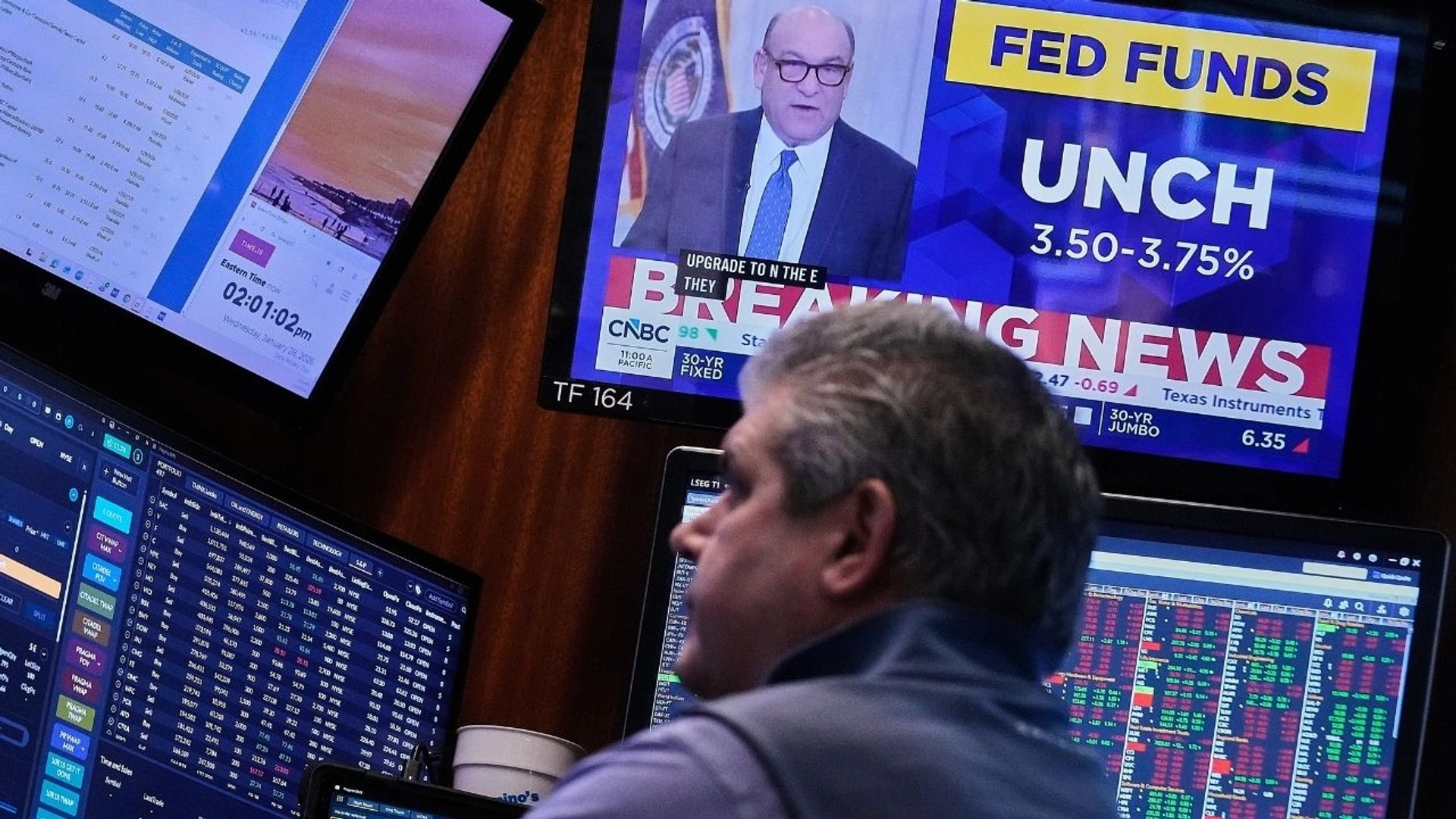
For most of the summer, Wall Street’s working assumption was simple: the US labor market was cooling gently, inflation was easing more slowly than the Fed wanted, and September’s meeting would be a coin-flip between holding steady and one final quarter-point hike. That assumption did not survive contact with the July jobs report.
The Bureau of Labor Statistics reported that US employers cut 23,000 jobs in July — a stark reversal from Wall Street forecasts that had called for a gain of roughly 80,000 positions. It was not an isolated miss. The agency simultaneously slashed its estimates for May and June by a combined 103,000 jobs, meaning the true state of hiring over the past three months is more than a quarter-million jobs weaker than markets believed as recently as Thursday.
The unemployment rate ticked down to 4.1% from 4.2%, but that headline improvement is misleading: it was driven by workers leaving the labor force rather than new hiring, a distinction economists watch closely because it signals discouragement rather than strength.
Why This Report Landed Differently
Soft jobs numbers are not new in 2026 — hiring has been decelerating for months. What makes July’s release different is the scale of the surprise combined with its timing, arriving weeks after the Federal Reserve’s July meeting, where policymakers held rates steady and some officials were still openly discussing the case for a hike given elevated energy costs tied to the ongoing Middle East conflict.
That posture is now obsolete. Within hours of the release, odds on the CME FedWatch tool for the Fed holding rates steady in September jumped sharply, while prediction market Kalshi showed traders assigning roughly a two-thirds probability to a steady-rate outcome — a complete reversal from the near coin-flip odds that prevailed just 24 hours earlier. Separately, Morgan Stanley’s economics team shifted its own call following Fed Chair Jerome Powell’s Jackson Hole remarks, now forecasting a quarter-point cut in September followed by a steady quarterly easing cycle through 2026, targeting a terminal rate near 2.75%–3.00% — down from the current 3.50%–3.75% range.
The reversal wasn’t confined to rates. The 10-year Treasury yield fell as investors priced in a materially weaker growth outlook, while the dollar index came under renewed selling pressure as traders concluded the Fed’s easing runway had just gotten longer, not shorter.
The Sectoral Story: Not All Weakness Is Equal
The composition of the July losses matters as much as the headline. Weakness concentrated in local government education, which cut roughly 50,000 positions, and retail trade, down close to 19,000 — both areas sensitive to seasonal hiring patterns and consumer-facing budget pressure. Healthcare, by contrast, continued adding jobs, extending a multi-year pattern in which medical and social-assistance employment has been the most reliable source of US job growth. Wage growth also missed expectations, with average hourly earnings rising 3.2% year-over-year against a forecast of 3.5% — a sign that whatever residual inflationary pressure exists in the labor market is easing faster than anticipated.
What August 28 and September 4 Mean for Markets
Two dates now sit on every trading desk’s calendar. On August 28, the BLS will release its preliminary annual benchmark revision, using state unemployment insurance tax records to recheck the entire prior year of payroll data — a technical exercise that in past cycles has meaningfully reshaped the market’s understanding of how strong or weak hiring actually was. On September 4, the August jobs report lands just twelve days before the Fed’s September 16 decision, effectively serving as the last major data point policymakers will have in hand.
Richmond Fed President Thomas Barkin offered a measured read following the release, describing the labor market as neither loose nor tight — language that suggests the Fed is not yet panicking, but is clearly recalibrating. Inflation Insights president Omair Sharif cautioned that officials have signaled for months that they view the “breakeven” pace of job growth — the number of jobs the economy needs to add just to keep the unemployment rate flat — as unusually low right now, meaning a soft headline number doesn’t automatically imply outright labor-market distress.
The Global Transmission Channel
For readers outside the US, the mechanics matter more than the headline. A more dovish Fed typically means:
- A softer dollar, which eases imported-inflation pressure for import-heavy economies like the UK and Pakistan but complicates export competitiveness for economies pegged or quasi-pegged to the dollar, including the UAE and much of the Gulf.
- Lower US Treasury yields, which tend to push global capital toward higher-yielding emerging-market and Gulf sovereign debt — a dynamic already visible in DIFC-based fixed-income flows.
- Cheaper dollar-denominated debt servicing for economies like Pakistan and Indonesia that carry significant external, dollar-denominated obligations.
- A complicating factor for the Bank of England and other central banks now weighing their own policy paths against a Fed that appears to be moving faster than expected toward easing, even as UK inflation remains above target.
The Bottom Line
The July jobs report did not just move a single data series — it rewired the market’s central assumption about where US monetary policy is headed into year-end. A Fed that spent mid-2026 debating whether it had room to hike is now managing expectations for a cutting cycle, with September 16 as the first test. For businesses, investors, and policymakers from London to Dubai to Jakarta, the practical question shifts from “will the Fed hike” to “how fast, and how far, will it cut” — and the answer will shape currency, capital-flow, and borrowing-cost decisions well into 2027.
Discover more from The Economy
Subscribe to get the latest posts sent to your email.

China’s economy in 2026 is best understood not as a single growth trajectory but as two divergent ones running in parallel. Citi Research’s 2026 outlook describes this explicitly as a “K-shaped” pattern that is becoming entrenched — one branch defined by booming AI-linked exports and equity markets, the other by a deepening property downturn that shows no clear sign of bottoming, according to Citi’s China Economics 2026 Outlook.
The upside branch: exports and AI are filling the demand gap
External demand has stepped in where domestic consumption has fallen short. High-tech exports are expanding, net exports are now contributing 1.4 percentage points to overall GDP growth, and China’s trade surplus is approaching $1.2 trillion, per Citi’s analysis. In equity markets, AI-related sectors have rallied sharply through 2026, even as “old economy” names — Baijiu, property, coal — have underperformed, illustrating just how concentrated the current growth engine has become.
Citi’s base case anticipates continued measured policy support: roughly RMB 1 trillion in additional fiscal stimulus, a 20 basis-point rate cut, and a 50 basis-point cut to the reserve requirement ratio, with the bank maintaining its 2026 GDP growth forecast at 4.7%.
The downside branch: a property sector still contracting
Housing investment may continue to contract by as much as 13% in 2026, with supply curbs remaining the primary tool policymakers are using to rebalance an oversupplied sector, according to Citi’s outlook. This is not a new phenomenon — it reflects a structural break from China’s prior debt-driven, real-estate-centric growth model — but the persistence of the contraction into a third consecutive year underscores how difficult the rebalancing has proven.
The overcapacity problem underneath the export strength
A separate analysis from the Brussels-based think tank Bruegel offers a less flattering read on the same export data: China’s growth model continues to rely on expanding industrial capacity and exporting to the world rather than lifting domestic consumption, and this has driven a marked increase in China’s global share of manufactured exports — raising international concern about overcapacity, according to Bruegel’s analysis. Capacity utilisation has declined even as exports have grown, pointing to a genuine mismatch between what Chinese factories can produce and what the domestic market can absorb. Producer and export prices have fallen in most months since the start of 2025 as a result — a form of exported deflation that has drawn criticism, and occasional retaliatory trade measures, from the US and EU.
Why the policy response has been narrow rather than broad-based
Despite years of external pressure to shift toward domestic-consumption-led growth, Chinese leaders have largely refrained from adopting broad stimulus measures, instead relying on narrower tools — tax incentives for technology and research, VAT export rebates, and “cash for clunkers”-style trade-in financing for EVs and appliances — partly to avoid adding further to already-elevated debt levels, according to the Congressional Research Service. At the Central Economic Work Conference in late 2025, leaders set a 2026 “proactive” fiscal policy aimed at boosting investment in key industries while maintaining austerity on local government debt — a combination that keeps the K-shaped divergence largely intact rather than resolving it.
Key takeaways
- Citi describes China’s 2026 growth pattern as increasingly “K-shaped”: AI-linked exports and equities surging, property and old-economy sectors declining.
- China’s trade surplus is approaching $1.2 trillion, with net exports contributing 1.4 percentage points to GDP growth.
- Housing investment may contract as much as 13% in 2026.
- Citi maintains a 4.7% GDP growth forecast for 2026, expecting roughly RMB 1 trillion in additional fiscal stimulus.
- Export strength partly reflects overcapacity rather than pure competitiveness, with falling producer and export prices since early 2025.
FAQ
What does “K-shaped” mean for China’s economy? It describes a growth pattern where some sectors (AI, high-tech exports) are expanding strongly while others (property, “old economy” industries) continue to contract — rather than the economy moving uniformly in one direction.
How large is China’s trade surplus in 2026? Approaching $1.2 trillion, according to Citi Research.
Is China’s property sector recovering in 2026? No — housing investment is projected to contract by as much as 13% in 2026, continuing a multi-year downturn.
Discover more from The Economy
Subscribe to get the latest posts sent to your email.

Pakistan’s Trade Gap Widens to $3.95bn Despite Meeting FY26 Current Account Target

Why Ottawa Is Betting on Dubai: Inside Canada’s Gulf Trade Pivot

UK Wealth Tax Fears Trigger Record £13.9bn Investor Exodus Ahead of October Budget

July Jobs Shock: Why the Fed’s September Rate Decision Just Flipped (2026 Analysis)

Global Growth Forecast 2026: IMF, World Bank Outlooks and the “Slow-Hire, Slow-Fire” Labor Market

Pakistan Agriculture 2026: Sindh’s Cotton Surge vs. Punjab’s Monsoon Decline

Gold Price 2026: Why Bullion Has Fallen 25% From Its January Record High

Airfare Prices 2026: Why Flights Are Up 26.5% and What Could Finally Bring Fares Down

Indonesia Investment 2026: Record Q2 Realization vs. Falling FDI Confidence

Russia Oil Revenue 2026: The Iran War Windfall and What a Hormuz Deal Means for Moscow

China Economy 2026: How AI Exports and a Property Crash Are Splitting Growth in Two

Malaysia GDP 2026: Why Growth Keeps Outperforming Official Forecasts

Singapore GDP Q2 2026: 5.7% Growth Driven by AI-Linked Semiconductor Exports

Al Maktoum International Airport 2026: Dubai’s $35B Plan for the World’s Largest Airport

Russia Bans Diesel Exports 2026: Global Fuel Market Impact Explained

Gold Price Forecast 2026: Fed’s July 29 Decision and Record Central Bank Buying Explained

Strait of Hormuz 2026: Why Markets Still Don’t Trust It’s Open

Strait of Hormuz Blockade 2026: Oil Prices Surge 9% as US-Iran Conflict Reignites

China Politburo July 2026: Stimulus Signals Explained

Pakistan Economy 2026: GDP Grows 3.7% as IMF Completes EFF Review Amid Middle East Risk

Apple vs OpenAI Lawsuit: The Economic Story Behind the Headline

Down But Not Out: Inside the Slow Sinking of Russia’s War Economy

Gulf Capital Retreat From Pakistan 2026: UAE Loan Freeze & What It Means

Indonesia Russian Oil Imports 2026: Why Jakarta Is Diversifying Crude Supply

AI Capex Bubble 2026: The Hidden $662B Debt Nobody Reports

The Yuan Now Settles 67% of Russian Oil Payments — Quiet De-Dollarization in Action

Gulf Sovereign Wealth Funds Hit Record $53.9B in H1 2026 Despite Iran War

Global Stock Market Selloff 2026: Stagflation Fears Return as Iran Conflict Reignites
-

 Markets & Finance7 months ago
Top 15 Stocks for Investment in 2026 in PSX: Your Complete Guide to Pakistan’s Best Investment Opportunities
-

 Analysis6 months ago
Johor’s Investment Boom: The Hidden Costs Behind Malaysia’s Most Ambitious Economic Surge
-

 Analysis6 months ago
Top 10 Stocks for Investment in PSX for Quick Returns in 2026
-

 Analysis6 months ago
Brazil’s Rare Earth Race: US, EU, and China Compete for Critical Minerals as Tensions Rise
-

 Banks7 months ago
Best Investments in Pakistan 2026: Top 10 Low-Price Shares and Long-Term Picks for the PSX
-

 Investment7 months ago
Top 10 Mutual Fund Managers in Pakistan for Investment in 2026: A Comprehensive Guide for Optimal Returns
-

 Global Economy7 months ago
15 Most Lucrative Sectors for Investment in Pakistan: A 2025 Data-Driven Analysis
-

 Global Economy7 months ago
Pakistan’s Export Goldmine: 10 Game-Changing Markets Where Pakistani Businesses Are Winning Big in 2025