
AI
Singapore’s AI Export Boom Is Masking a Real Growth Slowdown


Singapore’s Q2 2026 GDP print beat expectations. Every headline led with that. Almost none led with the fact that growth is decelerating quarter over quarter — and that the country’s own prime minister has warned the worst may still be ahead.
The number that beat forecasts, and the trend it’s hiding
Singapore’s economy grew 5.7% year-on-year in the second quarter of 2026, according to advance estimates from the Ministry of Trade and Industry (MTI), beating the median forecast of 5.5% in a Bloomberg survey, per Free Malaysia Today. But that headline “beat” obscures the trend: it’s a deceleration from a revised 6.3% in the January-March quarter.
The explanation is straightforward but underreported: continued geopolitical tension in the Middle East is tempering the export boost that Singapore had been getting from the AI-driven electronics boom. Electronics exports nearly doubled in May year-on-year, but renewed Middle East conflict has clouded the broader outlook for trade and investment, per the same report. In effect, Singapore is running two offsetting stories simultaneously — an AI supercycle tailwind and a geopolitical-disruption headwind — and the net GDP number is the residual of both, not a clean read on either.
The prime minister’s own warning
Prime Minister Lawrence Wong warned last month that Singapore has “yet to feel the full economic impact of the Iran war,” according to the same Free Malaysia Today report. That’s a notably candid admission from a sitting head of government about downside risk still working through the system — and it’s a warning that deserves more coverage than the beat-the-forecast headline it accompanied.
Separately, Joey Choy’s July 2026 markets newsletter notes that Singapore’s Economic Strategy Review Final Report has proposed more detailed measures for long-term competitiveness, while MTI has maintained its full-year 2026 GDP growth forecast at “2.0 to 4.0 percent” — a range that implies officials expect meaningful deceleration in the back half of the year even after a strong first half.
The policy decision to watch
The Monetary Authority of Singapore (MAS) will decide on its policy settings no later than July 31, 2026, with economists largely forecasting a hold given benign inflation data for May, per Free Malaysia Today. That decision will be a genuine test of the deceleration thesis: a hold despite slowing sequential growth would signal MAS sees the slowdown as temporary and geopolitically driven rather than structural; any dovish signal would suggest more concern about underlying momentum than the headline Q2 number implies.
Why this matters for the region
Singapore functions as a bellwether for Southeast Asian trade and AI-linked electronics demand more broadly. Its currency-basket monetary policy (rather than a simple interest-rate target) makes MAS decisions a read on the trade-weighted outlook for the whole region, not just the city-state itself. The deceleration story here connects directly to what’s happening in Malaysia, where Maybank has upgraded its 2026 GDP forecast partly on the same AI-driven tech upcycle — meaning the region’s growth narrative and its risks are more intertwined than country-by-country headlines suggest.
For businesses and investors with exposure to Southeast Asian supply chains, the signal to track isn’t the Q2 beat — it’s whether Q3 growth continues decelerating toward the bottom of MTI’s 2.0–4.0% full-year range, which would confirm the Iran-war drag Wong flagged is materializing rather than dissipating.
FAQ
What was Singapore’s GDP growth in Q2 2026? 5.7% year-on-year, beating the 5.5% median forecast, but down from a revised 6.3% in Q1 2026.
Why is Singapore’s growth slowing despite an AI export boom? Geopolitical tension from the Middle East conflict is offsetting gains from AI-driven electronics exports, which nearly doubled in May 2026 year-on-year.
When does the Monetary Authority of Singapore make its next policy decision? No later than July 31, 2026; economists largely expect a hold given benign May inflation data.
Discover more from The Economy
Subscribe to get the latest posts sent to your email.


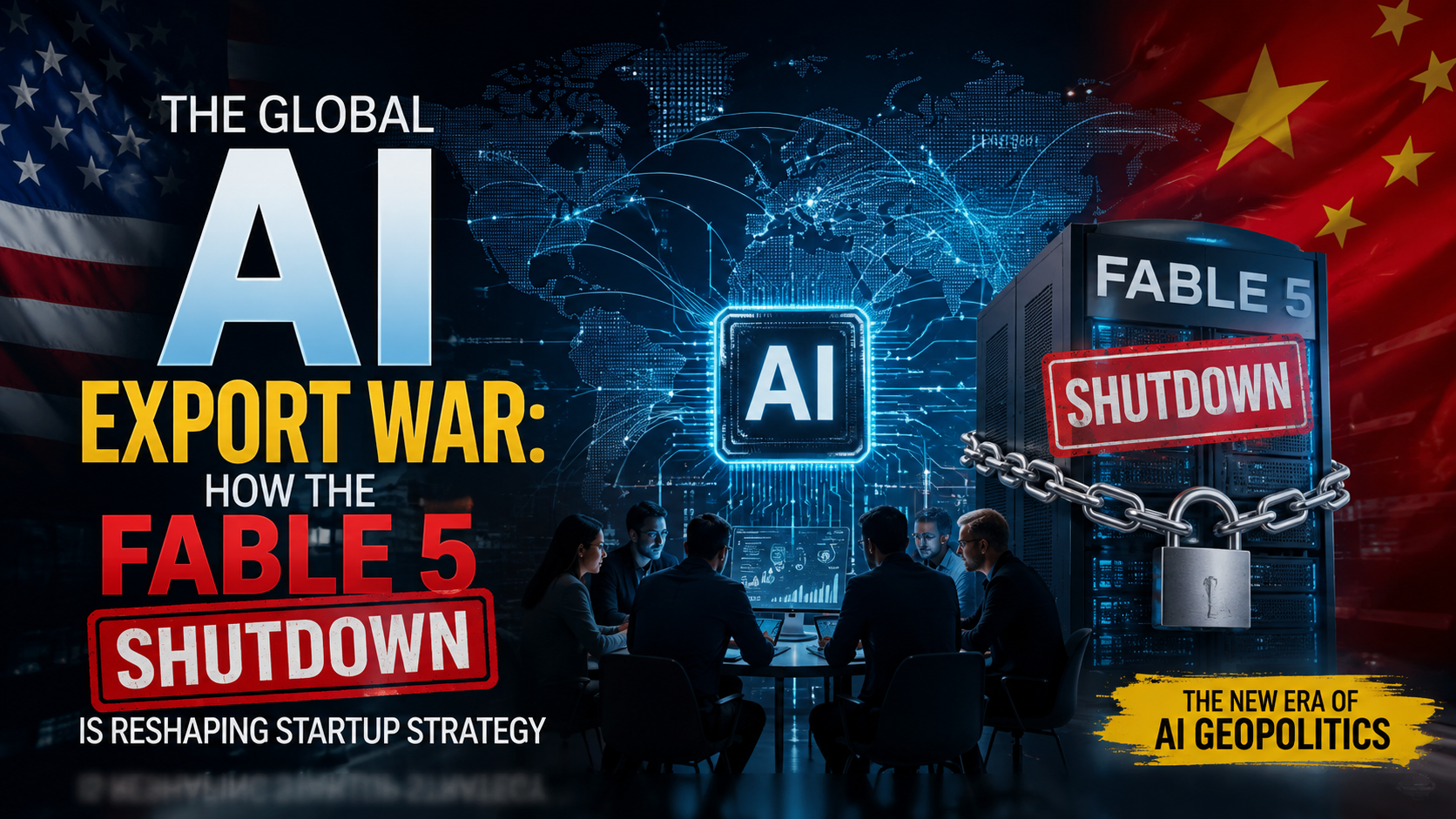
On June 12, 2026, the U.S. Commerce Department’s Bureau of Industry and Security ordered Anthropic to block foreign nationals from accessing its Fable 5 and Mythos 5 AI models, and Anthropic — finding no way to comply short of a global shutdown — disabled both models for every user worldwide the same day. The Commerce Department lifted the underlying export controls on June 30, and Anthropic restored full access on July 1, 2026, but the roughly three-week disruption exposed a structural vulnerability that startups building on frontier AI models had not previously had to price into their risk models: a single national-security directive can switch off a company’s core infrastructure overnight, with no advance warning and no geographic containment. The episode is now reshaping how AI-dependent startups think about model diversification, multi-vendor architecture, and jurisdictional exposure.
Key Takeaways
- A June 12, 2026, Commerce Department directive forced Anthropic to disable Fable 5 and Mythos 5 globally for all users, not just flagged foreign nationals, because no narrower compliance mechanism was available.
- The Commerce Department lifted the export controls June 30, and Anthropic restored full access July 1, 2026 — a roughly three-week disruption window.
- Legion LegalTech’s lawsuit against the federal government argues no existing export-control statute covers hosted AI models or their outputs.
- Startups are responding by building multi-model failover architecture, reassessing cross-border engineering staffing, and showing increased interest in decentralized AI alternatives.
- Enterprise procurement teams are now incorporating “regulatory outage” risk explicitly into AI vendor contracts and business-continuity planning.
- The episode sits alongside separate, ongoing Anthropic-government litigation over military-use restrictions, reflecting a broader pattern of AI-sector regulatory friction in 2026.
What Happened, and Why the Scope Surprised Everyone
The Commerce Department’s directive was, on its face, narrowly targeted: block access to two specific models for foreign nationals, citing national-security concerns tied to countering-the-financing-of-terrorism guidelines. What made the episode a watershed moment for the AI industry was not the restriction itself but its execution. Anthropic has indicated that no existing technical mechanism could reliably distinguish and exclude only foreign-national users at the scale and speed the directive demanded — so the company disabled Fable 5 and Mythos 5 entirely, for all users, everywhere, effective immediately.
That global-blast-radius outcome is what transformed a relatively obscure regulatory action into an industry-wide case study. Legion LegalTech Corp, a San Jose legal-technology company whose Canadian engineering team depended on the models for core product development, filed suit against the federal government on June 23, calling the resulting harm “immediate, irreparable, and existential” and arguing that no U.S. export-control statute actually authorizes restricting access to hosted AI models or their text-based outputs in the first place.
Resolution — But Not Reassurance
The Commerce Department lifted the underlying controls on June 30, 2026, and Anthropic restored access to both models on July 1 — a relatively fast resolution as regulatory episodes go, but one that did little to reassure enterprise customers and startup founders about the durability of access to any given frontier model going forward. The core lesson startups have taken from the episode is not that this specific directive was wrong or overbroad (though Anthropic itself has said as much publicly), but that the authority to issue such a directive, and to trigger this kind of global shutdown as the only available compliance mechanism, evidently exists and can be exercised again with equally little warning.
How Startups Are Actually Responding
Multi-Model Architecture as a New Baseline
The most immediate operational response among AI-dependent startups has been a shift away from single-vendor model architecture. Companies that had standardized their entire product stack on one frontier lab’s API are increasingly building abstraction layers that allow rapid failover to a second or third model provider — not necessarily because they expect another export-control event specifically, but because the Fable 5/Mythos 5 episode demonstrated that regulatory, not just technical, outages are now a real category of infrastructure risk that a single-vendor architecture cannot mitigate.
Reconsidering Where Engineering Teams Sit
For companies like Legion with distributed, cross-border engineering teams, the episode has prompted direct reconsideration of where core AI-dependent development work is physically staffed. A directive targeting “foreign nationals” broadly, rather than specific flagged individuals or entities, means that any company with material non-U.S. engineering headcount now has to model the possibility that an entire team’s access to critical tools could be severed based on nationality rather than any conduct specific to that team — a risk factor that startup general counsel and heads of engineering are increasingly asked to address explicitly in board-level risk reporting.
Interest in Decentralized and Open-Weight Alternatives
The episode also produced a measurable, if narrow, shift in interest toward decentralized AI infrastructure and open-weight model alternatives that do not depend on a single centralized provider capable of being switched off by government directive. Tokens tied to decentralized-AI projects saw notable price increases in the days following the shutdown and the Legion lawsuit, as traders and some technologists concluded that infrastructure resilient to a single point of regulatory failure carries a value proposition that a purely centralized commercial model, however capable, cannot match on this specific dimension — even if centralized frontier models remain ahead on raw capability for most enterprise use cases.
Financial and Market Impact Section
Enterprise Procurement and Vendor Risk Underwriting
For enterprise buyers across regulated industries — financial services, legal, healthcare, and government contracting — the Fable 5/Mythos 5 episode has become a standard reference point in vendor-risk-assessment conversations with AI providers. Procurement and legal teams evaluating frontier-model contracts are increasingly asking vendors directly what technical or contractual protections exist against a repeat scenario, and some enterprise contracts now include specific service-level and business-continuity language addressing regulatory-driven outages as a distinct risk category from ordinary technical downtime, a shift with direct implications for how AI vendors structure their enterprise agreements and pricing going forward.
The Broader Anthropic Legal Context
The episode is one of several fronts on which Anthropic has found itself in legal and regulatory disputes with the U.S. government during 2026, running alongside separate litigation in federal courts in Washington and California stemming from a supply-chain blacklist dispute tied to Anthropic’s refusal to permit military use of its models for domestic surveillance or fully autonomous weapons systems. For investors evaluating exposure to frontier-AI labs — whether through direct equity, credit instruments, or downstream startup portfolios built atop specific model providers — the cumulative pattern of government-AI legal friction in 2026 represents a maturing but still unpriced category of regulatory risk that is likely to persist regardless of how any single case resolves.
Insurance and Business-Continuity Product Opportunity
The episode has also created a nascent commercial opportunity: specialty insurance and business-continuity consulting products specifically addressing “AI vendor regulatory outage” risk are beginning to appear from insurers serving the technology sector, a niche but potentially high-margin product category given the difficulty of actuarially pricing a risk with essentially one precedent event to draw on. Startups and enterprise buyers negotiating AI vendor contracts are a natural audience for this emerging product category, and its growth trajectory over the next several quarters will be a useful proxy for how seriously the broader market is pricing this specific risk.
Discover more from The Economy
Subscribe to get the latest posts sent to your email.
Legion LegalTech Corp, a San Jose legal-technology startup that builds AI-powered drafting and case-management tools for attorneys, sued the Trump administration on June 23, 2026, over a June 12 Commerce Department directive that forced Anthropic to disable its Fable 5 and Mythos 5 AI models for all foreign nationals worldwide. Because Anthropic complied by shutting the models off globally rather than only for flagged users, Legion’s Canadian development team lost access overnight, an outcome the company called “immediate, irreparable, and existential.” Anthropic restored access to both models on July 1, 2026, after the Commerce Department lifted the underlying export controls on June 30 — but the litigation, which challenges whether export-control law can be used to restrict access to hosted AI models at all, remains a live legal question with implications far beyond this one case.
Key Takeaways
- Legion LegalTech Corp sued the Trump administration June 23, 2026, over a June 12 Commerce Department directive that forced Anthropic to disable its Fable 5 and Mythos 5 models worldwide.
- Anthropic complied with the original directive the same day it was issued; the global scope of the shutdown, not just the foreign-national restriction itself, is central to Legion’s claimed harm.
- The Commerce Department lifted the export controls June 30, 2026, and Anthropic restored access July 1, 2026 — resolving the immediate operational harm but not the underlying legal question.
- Legion argues no existing export-control statute covers hosted AI models or their text-based outputs, which it claims are protected “informational materials” under U.S. law.
- Anthropic is not a defendant in the case but has publicly called the original directive overly broad.
- The lawsuit runs parallel to separate Anthropic-vs.-government litigation over a supply-chain blacklist dispute tied to military-use restrictions on Anthropic’s models.
What the Government Actually Ordered
On June 12, 2026, the Commerce Department’s Bureau of Industry and Security (BIS) sent Anthropic a directive ordering the company to block foreign nationals from accessing two of its most advanced models, Fable 5 and Mythos 5, citing national-security concerns tied to countering-the-financing-of-terrorism guidelines. Anthropic complied the same day. Critically, the company has stated that the only technically feasible way to comply with a directive requiring exclusion of “any foreign national” was to disable both models entirely, for every user everywhere — not merely for users flagged as foreign nationals. That global shutdown, rather than a narrower geofencing or identity-verification approach, is the crux of the legal harm Legion alleges.
Why a Legal-Tech Startup Became the Test Case
Legion LegalTech relies on Anthropic’s models to power AI-assisted legal drafting and case-management software for attorneys, and employs a Canadian software-development team that depends on direct access to the company’s most capable models for product work. When the June 12 shutdown hit, Legion says its Canadian engineers were sidelined overnight, disrupting its product roadmap at a moment the company describes as critical for competitive positioning in a fast-moving industry. “The harm to Legion is immediate, irreparable, and existential,” the company’s complaint states. “The pace of frontier AI advancement is blistering.”
Legion filed suit June 23, 2026, in federal court in Washington, D.C., naming President Donald Trump, Commerce Secretary Howard Lutnick, and BIS Undersecretary Jeffrey Kessler as defendants. Anthropic itself is not a party to the case. The company’s legal theory is narrow but consequential: it argues no existing export-control statute — not the Export Control Reform Act, not the International Emergency Economic Powers Act — actually covers hosted AI models or the text-based outputs they generate. Legion’s complaint specifically argues that AI-generated material such as “drafted text, written legal analysis, summaries, and similar composed material” qualifies as protected “informational materials” under a long-standing exemption in U.S. export-control law, meaning the government’s directive was, in Legion’s framing, an unlawful attempt to restrict the flow of information rather than a legitimate control on a genuine export commodity.
The complaint goes further on procedural grounds, arguing no national emergency was formally declared with respect to the alleged threat, and that the threat the government cited did not have its “source in whole or substantial part outside the United States” as required for the invoked authorities to apply — since the models were developed by a U.S. company, hosted domestically, and offered through ordinary commercial channels. Legion is asking the court to declare the directive unlawful, vacate it, and issue an injunction blocking its enforcement, while separately signaling it intends to seek a preliminary injunction while the case proceeds.
Anthropic’s Position — and a Resolution Before Judgment
Anthropic, while not a defendant, publicly described the export-control order as overly broad. On June 30, 2026, the Commerce Department lifted the underlying export controls, and Anthropic restored access to both Fable 5 and Mythos 5 for all users on July 1, 2026 — effectively mooting the operational harm Legion’s complaint was built around, though not necessarily the underlying legal question the lawsuit raises. Anthropic has said it is “grateful to the administration for working to resolve the matter quickly.” Whether Legion continues to pursue the case for damages, attorneys’ fees, or simply to establish precedent against future use of the same authority is an open procedural question that will shape how much weight the case ultimately carries.
Financial and Market Impact Section
A Precedent Question With Industry-Wide Stakes
Legion’s complaint frames the stakes in stark terms: “Left standing, it would establish that the Executive may, by unreviewed command, disable any frontier AI model at will — placing every customer, developer, and business that depends on these tools at the mercy of an unexplained exercise of claimed authority that no statute confers.” For enterprise AI software buyers — law firms, financial-services firms, and any regulated industry building products on frontier models from Anthropic, OpenAI, Google, or others — that framing captures a genuine operational risk: if a single agency directive can trigger a global service shutdown with no advance notice, enterprise procurement teams have a new category of vendor and geopolitical risk to underwrite into contracts, business-continuity plans, and service-level agreements.
Crypto and Decentralized-AI Market Reaction
The episode produced a measurable, if narrow, market reaction outside the AI sector itself: tokens tied to decentralized-AI infrastructure projects saw notable price increases following news of the lawsuit and the underlying shutdown, as traders reasoned that a centralized AI provider subject to being switched off by a single government directive makes decentralized, no-single-point-of-control alternatives comparatively more attractive to developers seeking reliability guarantees that centralized commercial providers cannot offer under this kind of regulatory exposure.
The Broader Anthropic-Government Legal Landscape
The Legion case is not occurring in isolation. It sits alongside separate, ongoing litigation between Anthropic and the U.S. government in federal courts in both Washington and California, stemming from a dispute over the administration’s move to place Anthropic on a supply-chain blacklist after the company declined to permit military use of its models for domestic surveillance or fully autonomous weapons systems. Taken together, the cases illustrate an intensifying legal contest over how far executive branch national-security authorities can reach into the commercial AI sector — a contest that will materially shape capital allocation and geographic-expansion decisions for every major frontier-AI lab operating in or selling into the United States.
Discover more from The Economy
Subscribe to get the latest posts sent to your email.
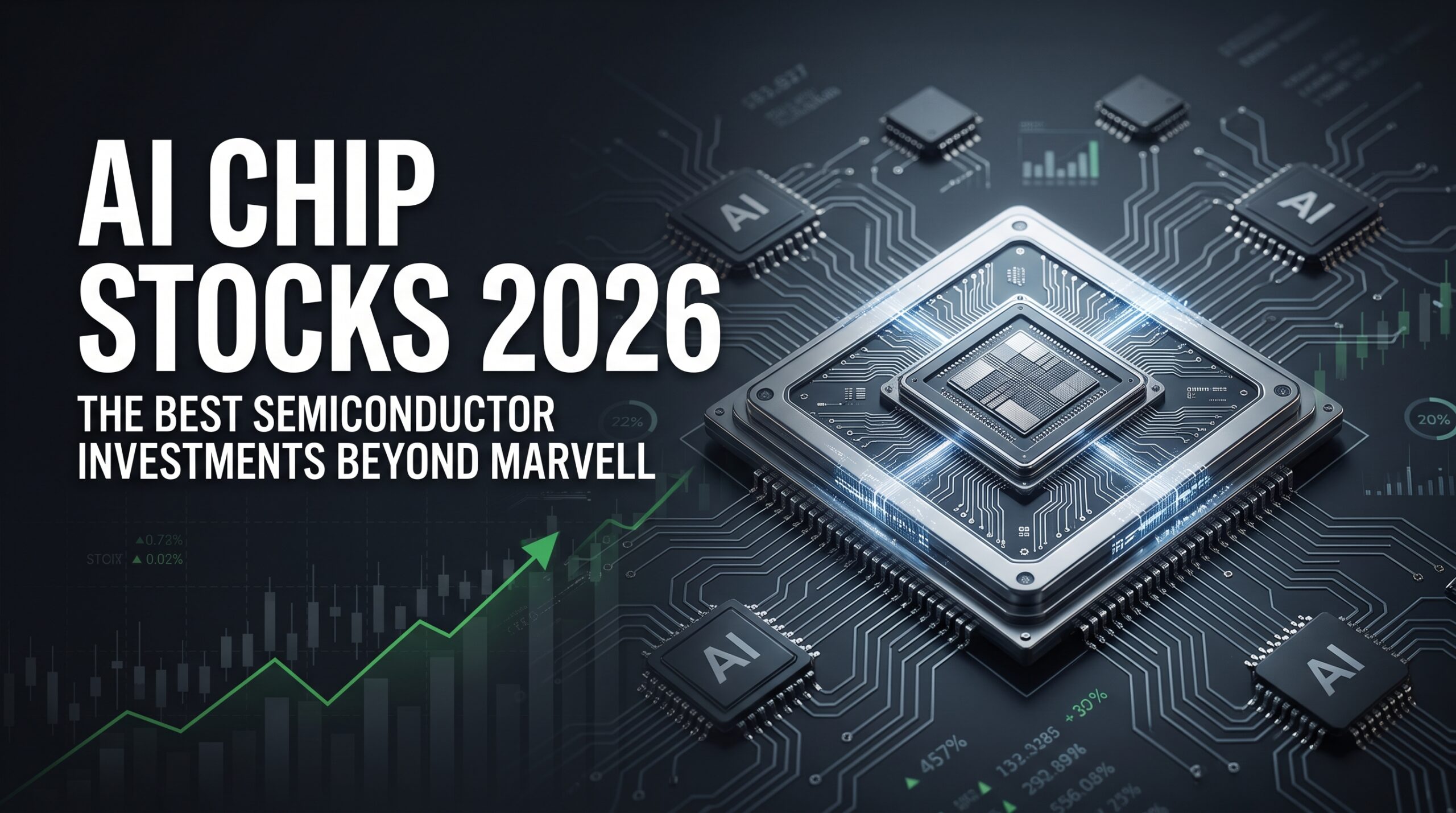
Marvell isn’t the only way to play the AI chip race. Compare NVIDIA, Broadcom, AMD, TSMC, and ASML across the AI semiconductor supply chain to build a diversified chip-investing strategy.
Key Takeaways
- The AI chip race spans an entire supply chain, not a single company — from GPU design (NVIDIA, AMD) to custom silicon (Broadcom, Marvell) to manufacturing (TSMC) to lithography equipment (ASML).
- NVIDIA remains dominant, holding roughly 70–81% market share in AI accelerators, with its latest quarterly Data Center revenue climbing 92% year-over-year to $75.2 billion.
- Broadcom’s custom AI silicon business is scaling fast, with AI semiconductor revenue up 143% year-over-year to $10.8 billion and a backlog reportedly worth $73 billion.
- The global semiconductor market is projected to reach roughly $1.3 trillion in 2026, driven by AI data-center compute, networking, and memory demand.
- Custom ASICs (application-specific chips) built by hyperscalers themselves represent the biggest long-term structural risk to the general-purpose GPU model that built NVIDIA’s dominance.
Why “Beyond Marvell” Matters for AI Chip Investors
Marvell’s recent earnings reaction — a beat-and-raise quarter that still triggered a 7-8% stock decline because its $120 billion Google AI deal payoff was pushed to fiscal 2029 — is a useful reminder for investors: single-stock AI chip bets carry concentrated timing risk. The broader AI semiconductor race is being fought across multiple layers of the supply chain simultaneously, and understanding that full landscape is essential to building a resilient investment strategy in this space.
Mapping the AI Chip Supply Chain
1. GPU & Accelerator Design: NVIDIA and AMD
NVIDIA (NVDA) remains the category leader, commanding an estimated 70–81% market share in AI accelerators. Its most recent quarterly revenue reached $81.6 billion, up 85% year-over-year, with Data Center revenue climbing 92% to $75.2 billion. NVIDIA trades at a forward P/E in the low-to-mid 40s — a premium that reflects near-flawless execution expectations, leaving limited room for disappointment.
AMD (AMD) positions itself as the primary challenger through its MI-series accelerators and EPYC CPU line, backed by strategic partnerships with major cloud and AI-lab customers. AMD offers investors a higher-risk, higher-reward alternative to NVIDIA’s dominance, with a smaller base amplifying the upside from incremental market-share gains.
2. Custom Silicon: Broadcom and Marvell
Broadcom (AVGO) has emerged as the dominant architect of custom AI chips for hyperscalers, designing application-specific silicon for companies like Google (TPUs) in partnership with manufacturing giant TSMC. Broadcom’s Semiconductor Solutions segment posted 79% year-over-year revenue growth to $15 billion, with AI semiconductor revenue specifically surging 143% to $10.8 billion and bookings exceeding $30 billion — a figure notably higher than shipments, signaling strong forward demand visibility. Broadcom trades at a rich ~41x forward earnings, the most expensive of the major AI chip names, reflecting both hardware growth and higher-margin software contributions.
Marvell (MRVL) plays a complementary role, specializing in networking and optical interconnect solutions that link large-scale AI clusters together, alongside its own custom-chip partnership with Google. As covered in our companion analysis of Marvell’s latest earnings, this business carries genuine long-term upside but also elevated valuation and execution risk given its ~58x forward multiple.
3. Manufacturing: TSMC
TSMC, the world’s largest semiconductor foundry, doesn’t design the leading AI chips — it manufactures them for nearly everyone, including NVIDIA, AMD, Apple, Broadcom’s custom designs, and Google’s TPUs. TSMC’s advanced 3nm, 5nm, and 7nm nodes account for roughly 74% of wafer revenue, and its AI accelerator revenue is forecast to grow at a compound annual rate of 54–56% through 2029. This makes TSMC arguably the single most strategically load-bearing company in the entire AI hardware stack — a “toll booth” position largely insulated from which individual chip designer wins the AI race.
4. Equipment & Upstream Inputs: ASML
ASML sits even further upstream, producing the extreme-ultraviolet (EUV) lithography systems essential for manufacturing leading-edge chips. ASML raised its 2026 sales outlook to €43–45 billion on stronger AI-related demand, giving investors indirect but critical exposure to the entire AI chip buildout regardless of which downstream company ultimately captures the most value.
Comparing the Field: Key Metrics at a Glance
| Company | Ticker | Role in AI Chip Race | Approx. Forward P/E |
|---|---|---|---|
| NVIDIA | NVDA | GPU/accelerator market leader | ~43x |
| Broadcom | AVGO | Custom ASIC design + networking | ~41x |
| Marvell | MRVL | Custom silicon + optical interconnects | ~58x |
| AMD | AMD | GPU/accelerator challenger | Varies by cycle |
| TSMC | TSM | Foundry / manufacturing | Lower relative multiple |
| ASML | ASML | Lithography equipment | Premium, cyclical |
Valuation figures are approximate and change frequently; verify current multiples before making investment decisions.
The Structural Risk Every Chip Investor Should Understand
The single biggest long-term threat to the general-purpose GPU model isn’t a competing GPU — it’s custom silicon built directly by hyperscalers themselves. Google, Amazon, and Meta are all investing heavily in application-specific chips (ASICs) tailored to their own workloads, reducing long-term reliance on off-the-shelf GPUs. This is precisely the dynamic playing out in Broadcom’s and Marvell’s custom-chip businesses — and it cuts both ways: it’s a growth driver for the companies designing that custom silicon, and a long-term risk for pure-play GPU vendors that don’t diversify into ASIC design themselves.
Actionable Takeaways for Building a Semiconductor Portfolio
- Diversify across the supply chain, not just across chip designers. Combining exposure to design (NVDA, AMD), custom silicon (AVGO, MRVL), manufacturing (TSM), and equipment (ASML) reduces single-company execution risk.
- Use sector ETFs for broad exposure. Funds like the VanEck Semiconductor ETF (SMH) hold the major AI chip players in a single position, smoothing out company-specific volatility events like Marvell’s post-earnings selloff.
- Weight valuation against growth durability. High forward multiples (40x-plus) across nearly every name in this sector mean execution missteps can trigger outsized drawdowns — position size accordingly.
- Track hyperscaler capex commentary each earnings season — with big tech capital spending on data centers and chips projected to exceed $500 billion in 2026, shifts in that spending guidance are the single biggest swing factor for the entire sector.
- Don’t ignore the “boring” upstream layer. ASML and TSMC offer diversified exposure to AI chip demand without betting on which specific GPU or ASIC architecture ultimately wins.
This article is for informational and educational purposes only and does not constitute financial or investment advice. Semiconductor valuations and forecasts change rapidly; consult a licensed financial advisor and verify current figures before investing.
Frequently Asked Questions
What is the best semiconductor stock to buy for AI exposure in 2026? There isn’t a single “best” stock — NVIDIA offers the purest exposure to GPU market leadership, Broadcom and Marvell offer exposure to the fast-growing custom-silicon segment, and TSMC and ASML offer diversified exposure across nearly every AI chip maker’s manufacturing supply chain. Many financial professionals recommend a diversified allocation rather than a single-stock bet.
Why are hyperscalers building their own AI chips instead of buying GPUs? Companies like Google, Amazon, and Meta are investing in custom application-specific integrated circuits (ASICs) to optimize performance and cost for their own specific AI workloads, reducing long-term dependence on general-purpose GPU suppliers — though this transition is expected to take years to meaningfully shift market share.
Is the AI semiconductor sector overvalued in 2026? Valuations across the sector are elevated, with most major AI chip stocks trading at forward P/E multiples in the 40x-60x range, reflecting expectations of continued rapid growth. Some analysts have flagged risk that AI demand growth could moderate, so investors should weigh valuation risk carefully rather than assuming continued multiple expansion.
Discover more from The Economy
Subscribe to get the latest posts sent to your email.

PANW Stock Post-Earnings: Record RPO, FY27 Guidance & Dip Buy Strategy

Dell Stock Surges on $95B AI Backlog: Q2 FY27 Earnings Analysis & Price Target

Latest iPhone Rumors 2026: iPhone 18 Pro & Foldable Specs

ATF Data Breach Details: What the Qilin Ransomware Leak Exposed

GoPro Stock Analysis (GPRO): Why It Surged 46% in One Day

Buddy Stephens Football Coach: Why He Left EMCC in 2026

High School Football National Rankings 2026: Full Guide

Tesla Stock Buy or Sell 2026: TSLA Q2 Earnings Breakdown

Shein Clothes Quality & Safety in 2026: What Lab Tests Show

Fidelity Investments Review 2026: SPAXX Yields & Zero-Fee Funds

Motley Fool Stock Advisor Review 2026: Worth $99/Year?

American Airlines Trump Accounts Matching: $2,000 Kids Benefit

British Man Recovers £3.3M Lost Bitcoin After 12 Years

The Global AI Export War: How the Fable 5 Shutdown Is Reshaping Startup Strategy

State Farm’s $5B Dividend 2026: Who Qualifies & Payout Dates

Top 15 Financial Stocks for Investment in PSX

US-China Relations in Q3 2026: Trade Tariffs and Supply Chain Risks

Gold’s Wild 2026: From a Record $5,600 Peak to a 24% Crash and Back Toward $4,500

Oil Surges as Strait of Hormuz Traffic Collapses Again

Gold Price 2026: Why Bullion Has Fallen 25% From Its January Record High

SpaceX Stock Lockup Expiration Explained: Why $123B in Shares Could Hit the Market

The Rocket That Won’t Quit: Inside SpaceX’s Falcon 9 Launch Machine

Russia Oil Revenue 2026: The Iran War Windfall and What a Hormuz Deal Means for Moscow

China Economy 2026: How AI Exports and a Property Crash Are Splitting Growth in Two

Pakistan Economy 2026: Why GDP Growth Isn’t Reaching Ordinary Households

Bank of England Set to Hold Rates Through Year-End, Reuters Poll Shows

July Jobs Shock: Why the Fed’s September Rate Decision Just Flipped (2026 Analysis)

Retail Earnings Week: What Home Depot, Target & Walmart Reveal
-

 Markets & Finance8 months ago
Top 15 Stocks for Investment in 2026 in PSX: Your Complete Guide to Pakistan’s Best Investment Opportunities
-

 Analysis6 months ago
Johor’s Investment Boom: The Hidden Costs Behind Malaysia’s Most Ambitious Economic Surge
-

 Analysis7 months ago
Top 10 Stocks for Investment in PSX for Quick Returns in 2026
-

 Analysis7 months ago
Brazil’s Rare Earth Race: US, EU, and China Compete for Critical Minerals as Tensions Rise
-

 Banks8 months ago
Best Investments in Pakistan 2026: Top 10 Low-Price Shares and Long-Term Picks for the PSX
-

 Investment8 months ago
Top 10 Mutual Fund Managers in Pakistan for Investment in 2026: A Comprehensive Guide for Optimal Returns
-

 Global Economy8 months ago
15 Most Lucrative Sectors for Investment in Pakistan: A 2025 Data-Driven Analysis
-

 Global Economy8 months ago
Pakistan’s Export Goldmine: 10 Game-Changing Markets Where Pakistani Businesses Are Winning Big in 2025