
Pakistan Economy
Pakistan Iran-US Ceasefire Mediation 2026: Diplomatic Gains, Economic Risks


For a country usually discussed in terms of what it owes the IMF, Pakistan spent much of 2026 doing something unusual: sitting at the center of the biggest diplomatic story in the world. When Prime Minister Shehbaz Sharif announced the framework that calmed the Strait of Hormuz crisis, it wasn’t a footnote. It was Pakistan converting decades of quiet back-channel access into the kind of leverage that normally belongs to much bigger players.
How Islamabad got the seat at the table
Pakistan has functioned as an unofficial communication channel between Washington and Tehran for years — a Cold War-era arrangement running partly through the Pakistani embassy, according to Forbes. Most years, that channel carries routine diplomatic traffic. This spring, it carried a ceasefire.
Under Sharif and Army Chief Field Marshal Asim Munir, Pakistan spent roughly two months as what Forbes calls a “switchboard” — relaying messages when direct US-Iran contact broke down, sequencing energy relief ahead of other issues, and hosting the first high-level American-Iranian talks in decades. According to Al Jazeera’s account, Munir was in direct contact with US officials including Vance and Witkoff, and with Iranian negotiator Araghchi, through the tensest hours of the standoff — right up to the moment President Trump had set a hard deadline and warned publicly of catastrophic consequences if it passed.
When the ceasefire held, oil prices dropped 16% and the Strait of Hormuz reopened for the first time in five weeks, per Al Jazeera’s reporting. Analysts described Pakistan’s role as historically unusual: a country that wasn’t at the table for the 2015 Iran nuclear deal or the Abraham Accords had positioned itself at the center of a major 2026 diplomatic effort.
The market didn’t wait for the diplomacy to finish
The Pakistan Stock Exchange has felt every twist of this story in real time. When the ceasefire appeared to collapse in early July and the US launched fresh strikes on Iran following attacks on tankers in the Strait of Hormuz, the PSX shed more than 4,500 points in a single session, according to Arab News. Arif Habib Commodities CEO Ahsan Mehanti told Arab News the selloff reflected both direct fear over the collapsing peace deal and knock-on anxiety from surging global crude prices. United Bank Limited, Fauji Fertilizer, Engro Holdings, Lucky Cement and Hub Power collectively shaved roughly 1,528 points off the index that day, with trading volume rising to 1.551 billion shares.
That volatility captures the core tension in Pakistan’s position: the country is simultaneously the mediator trying to keep the ceasefire alive and one of the economies most exposed to the fallout if it fails, given its dependence on Gulf remittances and its own energy import bill.
Turning reputation into something concrete
Forbes’ analysis lays out the fork in the road bluntly. If the Munir-Trump relationship holds and the 60-day talks produce durable relief, Pakistan’s diplomatic profile could translate into tangible economic upside — investment packages, a revived conversation around the long-dormant Iran-Pakistan gas pipeline, and Gulf or sovereign capital looking for a regional stabilizer to partner with. The reputational shift, from regional destabilizer to trusted facilitator, is itself an asset that compounds: it invites Pakistan into the next mediation, and the next one after that.
The darker branch is just as real. If Israeli operations in Lebanon widen, if Tehran’s hardliners push back against the memorandum, or if strait enforcement simply fails, the ceasefire frays — and Pakistan is exposed by association, according to Forbes’ reporting. The oil-price premium that a collapsed deal would reintroduce would hit Pakistan’s already-thin reserves hard, precisely because it’s a large energy importer with limited buffers.
What to actually watch
The signal to track isn’t Pakistan’s own press releases — it’s whether the diplomatic architecture Islamabad built survives contact with the next flashpoint: a leadership change in Washington, a border incident, a sectarian flare-up in the region. As one analyst put it in Forbes’ reporting, diplomacy moves faster than oil markets can reprice risk — meaning Pakistan’s economic reward for its mediation role, if it materializes at all, will likely lag well behind the diplomatic credit it has already banked.
Discover more from The Economy
Subscribe to get the latest posts sent to your email.


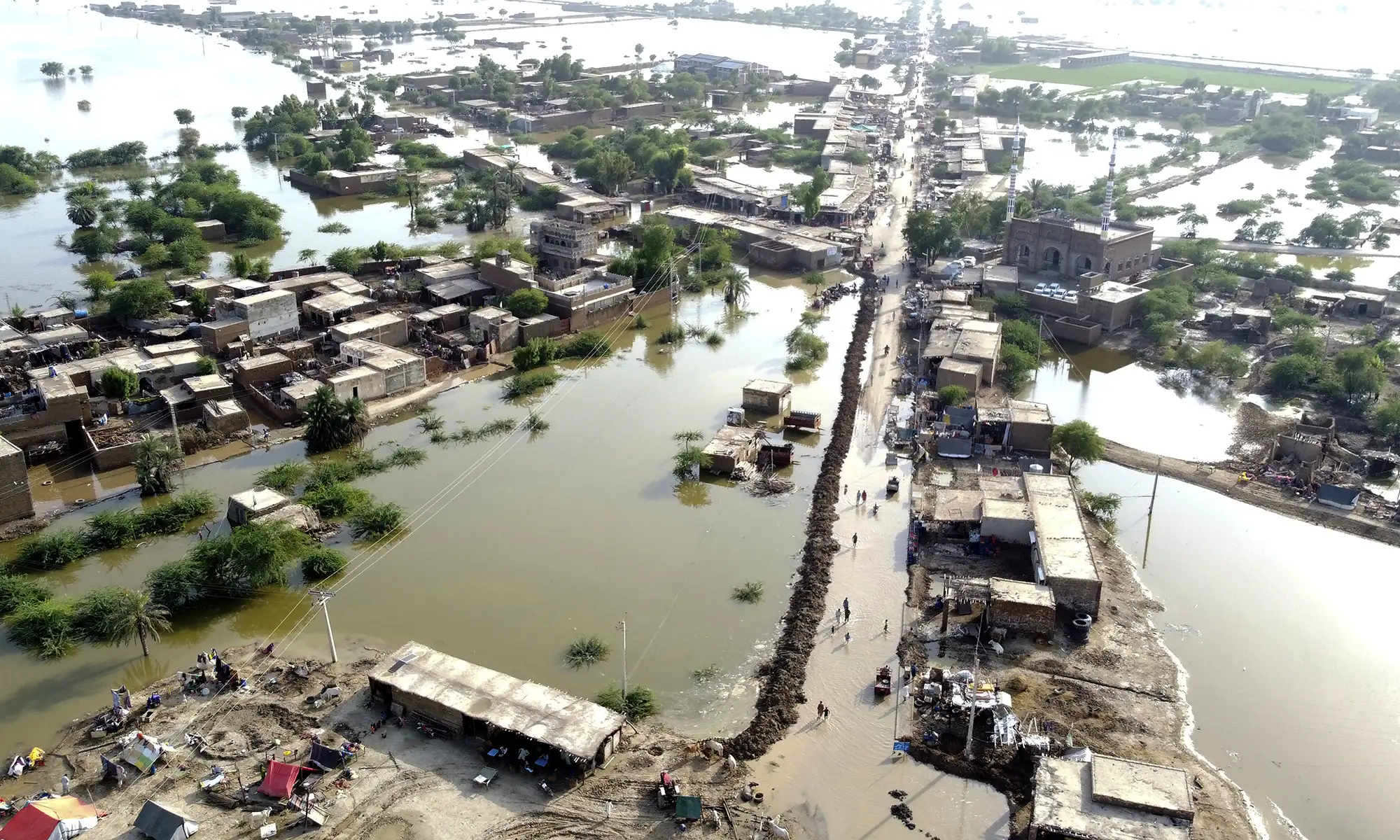
As Pakistan’s 2026 monsoon season continues to claim lives across Punjab, Khyber Pakhtunkhwa, Sindh and Balochistan, a harder question is coming into focus in Islamabad: whether the country’s fiscal priorities match the scale of the climate risk it now faces year after year — even as defence spending, driven by tensions with India, continues to climb.
The Human Toll Keeps Rising
Pakistan’s death toll from rain-related incidents since June 26 had climbed to 126 as of early August, according to the National Disaster Management Authority’s latest situation report, with Punjab and Khyber Pakhtunkhwa provinces bearing the heaviest losses at 47 and 55 deaths respectively. The NDMA has continued to warn of fresh flooding risk across Sindh, Punjab, KP and Balochistan as additional rain spells move through the country.
The federal Emergency Response Committee, chaired by Planning Minister Ahsan Iqbal, has stressed the importance of close coordination among stakeholders to ensure a timely and effective response to the unfolding emergency, while NDMA teams continue coordinating relief operations with national and international humanitarian partners.
A Pattern Pakistan Has Seen Before
This year’s floods carry unmistakable echoes of 2022, when record monsoon rains and glacial melt killed more than 1,700 people, affected over 33 million, and caused an estimated $30 billion in economic losses — one of Pakistan’s worst natural disasters on record. While this year’s death toll has so far been far lower, the pattern of institutional response has drawn sharp criticism from Pakistani commentators. A Business Recorder editorial argued that every monsoon exposes the same shortcomings — inadequately maintained drainage systems, encroachments blocking natural waterways, and construction proceeding in flood-prone areas with little regard for long-term risk, with administrative coordination typically strengthening only during the emergency itself rather than before it.
Compounding the risk, the World Meteorological Organization’s July 31 update flagged El Niño’s effect on rising temperatures and drought conditions in the coming months — suggesting Pakistan’s climate volatility is unlikely to ease even once this monsoon season passes.
The Fiscal Trade-off
What distinguishes this year’s flooding from a purely humanitarian story is the fiscal backdrop against which it is unfolding. Despite mounting climate risk, Pakistan raised defence spending by 20% for the 2025-2026 fiscal year, citing ongoing tensions with India, while cutting its overall federal budget by 6.9%, according to analysis of the country’s competing budget priorities.
The scale of the mismatch is stark when set against Pakistan’s long-term climate financing needs. The World Bank estimates Pakistan will require $348 billion by 2030 to address climate impacts, split between $152 billion for adaptation and resilience strategies and $196 billion toward reducing carbon emissions across the economy — a figure that dwarfs the country’s current fiscal capacity even before accounting for the defence-spending increase.
Agriculture Bears the Brunt
The economic exposure runs deep given Pakistan’s reliance on farming. Agriculture accounts for roughly 24% of Pakistan’s GDP and employs half of its labour force, meaning flood damage to Punjab’s farmland — a critical agricultural hub — carries outsized consequences for both rural livelihoods and the broader economy’s growth trajectory, coming just as the country posted its fastest GDP growth in four years for FY26.
Unlike the catastrophic 2022 floods, this year’s disaster has affected an even broader geographic swathe of the country, including areas of Punjab that were less severely hit three years ago — a reminder that flood risk is spreading rather than concentrating in historically vulnerable regions.
Why This Matters for Investors and Policymakers
For a country whose fiscal credibility with the IMF and international creditors already rests on a delicate balance of reform commitments, the collision between climate adaptation needs and defence spending pressures adds a new variable to Pakistan’s macroeconomic outlook. Every flood season that passes without meaningfully upgraded drainage infrastructure or flood-plain zoning enforcement effectively defers costs rather than avoiding them — costs that show up later as emergency relief spending, agricultural output losses, or renewed pressure on the current account through disrupted export crops like cotton.
Key Takeaways
- Pakistan’s 2026 monsoon death toll has climbed to at least 126 since June 26, with Punjab and Khyber Pakhtunkhwa hardest hit.
- The government raised defence spending 20% for FY26 citing India tensions, while cutting the overall federal budget by 6.9%.
- The World Bank estimates Pakistan needs $348 billion by 2030 for climate adaptation and emissions reduction — far exceeding current fiscal capacity.
- Agriculture, which accounts for 24% of GDP and employs half the labour force, remains acutely exposed to repeated flood damage.
- Commentators warn that recurring institutional shortcomings — poor drainage maintenance and flood-plain construction — are deferring rather than reducing long-term costs.
Frequently Asked Questions
How many people have died in Pakistan’s 2026 monsoon floods? Pakistan’s death toll from rain-related incidents since June 26, 2026 had reached at least 126 as of early August, according to the National Disaster Management Authority.
How much does Pakistan need for climate adaptation? The World Bank estimates Pakistan will require $348 billion by 2030, including $152 billion for adaptation and resilience and $196 billion for reducing emissions across the economy.
Why has Pakistan increased defence spending despite flood risks? Pakistan raised defence spending by 20% for FY26, citing ongoing tensions with India, while simultaneously cutting its overall federal budget by 6.9%, creating a fiscal trade-off with climate adaptation needs.
Discover more from The Economy
Subscribe to get the latest posts sent to your email.

Pakistan closed out July 2026 with two of its strongest economic signals in years — even as the underlying trade picture tells a more cautious story. Workers’ remittances hit $3.6 billion in July, up 13% year-on-year, the State Bank of Pakistan confirmed on Monday, August 10 (The Nation). Meanwhile, the benchmark KSE-100 index has delivered one of its strongest runs in the region.
Remittances: A Record Year, Confirmed
July’s $3.6 billion inflow marked a 4.5% increase over June, continuing a pattern that has defined Pakistan’s external accounts throughout FY2026. According to the Ministry of Finance’s monthly economic outlook, cited by the Express Tribune, workers’ remittances rose to $41.6 billion for the full FY2025-26, up 8.6% from $38.3 billion the previous year (Express Tribune). Saudi Arabia and the UAE remain the dominant sources, together accounting for close to half of total inflows, according to earlier-year tracking from Pakistan & Gulf Economist, alongside notably strong growth from the UK and EU corridors.
The KSE-100’s Extraordinary Run
Pakistan’s stock market has been the standout story of FY2026. The benchmark KSE-100 index surged 27.6% year-on-year to 176,042 points by July 29, 2026, with market capitalisation rising 19.4% in rupee terms and 21.6% in dollar terms, according to the Ministry of Finance’s own reporting (Express Tribune). That kind of rally, sustained over a full fiscal year, places Pakistan’s equity market among the best performers globally for the period — a striking outcome for an economy still working through an active IMF program.
The Trade Picture Is Less Flattering
The same Ministry of Finance report is candid about where the pressure points remain. Exports declined to $30.8 billion for FY2025-26, down from $32.3 billion the prior year, while imports rose sharply to $64.5 billion from $59.1 billion. Foreign direct investment fell to $1.64 billion from $2.48 billion, and portfolio investment remained negative for the year.
Despite that widening trade gap, Pakistan’s current account deficit was contained to just $139 million for the full fiscal year — a remarkably narrow figure that the finance ministry credits directly to record remittance inflows. Foreign exchange reserves reached $22.7 billion by mid-July 2026, and the rupee actually appreciated slightly to Rs277.80 against the dollar, compared with Rs283.05 a year earlier. Inflation averaged 7.1% across FY2026, staying within the government’s target band despite elevated global oil prices.
The IMF Backdrop
Pakistan’s macroeconomic stabilization continues under the IMF’s Extended Fund Facility. The Fund’s most recent review found fiscal performance “strong,” with a primary surplus of 1.6% of GDP expected for FY26, in line with program targets, while gross reserves climbed to $16 billion by end-2025 from $14.5 billion six months earlier (IMF). A separate 28-month Resilience and Sustainability Facility arrangement, approved in May 2025, continues supporting Pakistan’s climate and disaster-resilience reforms.
The Risk the Ministry Itself Flagged
Pakistan’s own finance ministry has been unusually direct about the fragility beneath these headline numbers, warning that renewed escalation between the United States and Iran could trigger volatility in global energy prices, trade flows, and financial markets — risks that could disrupt Pakistan’s improving trajectory given the country’s continued exposure to Gulf labor markets and energy import costs (Express Tribune).
The Bottom Line
Pakistan’s FY2026 story is genuinely two-sided: a stock market and remittance base performing better than almost anyone forecast a year ago, financing a current account that has stayed remarkably close to balance — set against an export sector that continues to shrink and a foreign direct investment picture that remains stubbornly weak. Whether the KSE-100 rally and remittance strength can persist long enough for structural export reform to catch up remains the defining question for Pakistan’s economy heading into FY2027.
How much did Pakistan’s remittances grow in July 2026?
Pakistan’s remittances reached $3.6 billion in July 2026, up 13% year-on-year, while the KSE-100 stock index surged 27.6% year-on-year to 176,042 points by late July.
Discover more from The Economy
Subscribe to get the latest posts sent to your email.
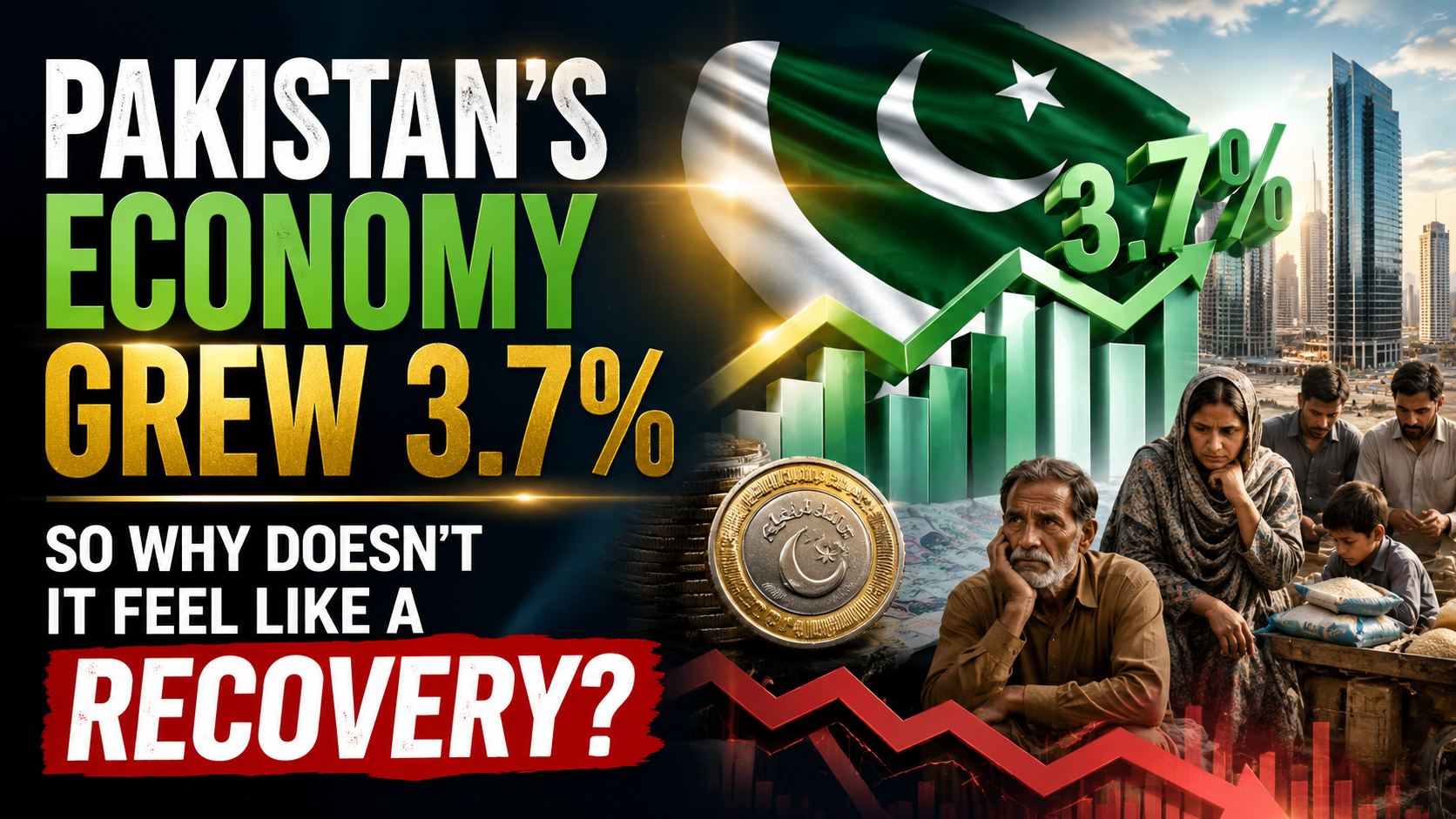
Islamabad’s macro dashboard is, on paper, the healthiest it has been in years. Real GDP expanded 3.7% in FY2025–26, foreign exchange reserves have strengthened, the current account posted a surplus, and the primary fiscal balance came in ahead of target under the IMF reform programme. The United Nations’ World Economic Situation and Prospects 2026 report credits the trajectory to sustained IMF-anchored reforms and projects 3.5% growth for the calendar year, while flagging flood-related shocks as a persistent downside risk (Pakistan Today).
Yet for most Pakistanis, the recovery remains a statistic rather than a lived experience. That disconnect is now the central economic story of 2026 — and it is a more useful lens for readers than another recitation of headline growth.
The sectoral mismatch driving the gap
The Pakistan Economic Survey 2025–26 shows the recovery is sharply uneven across sectors. Large-scale manufacturing expanded 6.1%, roughly double the pace of agriculture’s 2.9% growth — even though agriculture remains the primary income source for tens of millions of Pakistanis, particularly in rural Punjab and Sindh (Pakistan Today). Quarterly data reinforces the pattern: Q1 FY26 growth of 3.71% marked a sharp acceleration from 1.80% a year earlier, but the acceleration has been concentrated in capital-intensive industry rather than labour-absorbing agriculture (Pakistan Today).
Structurally, services still account for 58.4% of GDP against agriculture’s 23.4% and industry’s 18.1%, while labour-force distribution skews the opposite way — agriculture employs 37.4% of the workforce against a much smaller services-sector employment share, according to national accounts data. That mismatch between where GDP is generated and where people actually work is the single biggest reason the recovery narrative and household experience have diverged.
Poverty and prices: the numbers households actually feel
Even as headline inflation has cooled from crisis-era peaks, the poverty rate remains at 44.7%, with 16.4% of the population in extreme poverty. Unemployment sits at 6.9% nationally, understating distress in rural districts where underemployment in agriculture is chronic. Energy-subsidy withdrawal and fiscal tightening — both prerequisites of the IMF programme — have compressed household budgets even as macro indicators improved, a trade-off officials including Planning Minister Ahsan Iqbal have acknowledged while pointing to Q1 FY26 momentum as a foundation for further stabilisation (Pakistan Today).
Flood risk and the fragility beneath the numbers
The UN report’s caution about flood-related shocks is not abstract. Pakistan’s 2025 flood season damaged crops and infrastructure in ways that compound the agriculture-services growth gap directly — hitting the sector that employs the most people while leaving industrial and services output comparatively insulated. Climate volatility is increasingly a macroeconomic variable in Pakistan, not just a humanitarian one, and future growth forecasts will need to price that risk explicitly rather than treat it as a footnote.
What would make the recovery feel real
Three shifts would close the gap between statistics and sentiment: wage growth outpacing core inflation in real terms, agricultural productivity investment that lifts rural incomes rather than only large-scale manufacturing output, and a visible reduction in energy and utility costs for households rather than only fiscal-balance improvements for the state. Until then, Pakistan’s macro story and its social story will keep running on separate tracks — one for economists, one for everyone else.
Discover more from The Economy
Subscribe to get the latest posts sent to your email.

Luxury Wellness: The Monetization and Expansion of Boutique Low-Impact Training

Leveraging Viral AI & Climate Hashtags for Brand Growth on X

The Medicaid Churn: Front-End Revenue Cycle Risks for Enterprise Hospitals

The 2026 Crypto Regulatory Shift: What It Means for Institutional Investors

AI-Powered Training: The Next Multi-Billion Dollar Ecosystem in Fitness

BRICS Summit 2026: Economic Implications of the India-China Diplomatic Thaw

Emerging Market Debt: The Ripple Effect of China’s Sovereign Refinancing Role

Dropping Oil & Surging Gold: Navigating Safe-Haven Investments in Q3

2026 AI Stock Frenzy: How to Position Your Portfolio

The AI Disruption in Financial Risk Management: Moving Beyond Record Banking Profits

The Rise of Green Aviation: Balancing High Fuel Prices with Sustainable Infrastructure

US-China Relations in Q3 2026: Trade Tariffs and Supply Chain Risks

Emerging Markets Rebound: Top Stock Strategies for the Gulf and South Asia

Tackling the 2026 Global Food Crisis: Policy Shifts and Market Speculation

China Politburo July 2026: Stimulus Signals Explained

Russia Fuel Shortages 2026: Inside a Cracking War Economy

State Farm’s $5B Dividend 2026: Who Qualifies & Payout Dates

Top 15 Financial Stocks for Investment in PSX

Pakistan Passed Its Third IMF Review

SpaceX Stock Lockup Expiration Explained: Why $123B in Shares Could Hit the Market

Pakistan IMF Program 2026: Inside the Push Toward an Interest-Free Economy

Russia Oil Revenue 2026: How Sanctions on Rosneft and Lukoil Are Draining the War Chest

Andy Burnham, UK Gilts and Mortgages: July 2026 Explainer

Gold Price 2026: Why Bullion Has Fallen 25% From Its January Record High

Pakistan’s 2026 Monsoon Floods Threaten Fragile Economic Recovery as Inflation Nears 9%

Russia Oil Revenue 2026: The Iran War Windfall and What a Hormuz Deal Means for Moscow

Russia’s Budget Deficit Blew Past Its Full-Year Target in Three Months

Canada US Trade War 2026: Inside Carney’s Push to Cut Ties With Trump’s Tariffs
-

 Markets & Finance8 months ago
Top 15 Stocks for Investment in 2026 in PSX: Your Complete Guide to Pakistan’s Best Investment Opportunities
-

 Analysis6 months ago
Johor’s Investment Boom: The Hidden Costs Behind Malaysia’s Most Ambitious Economic Surge
-

 Analysis6 months ago
Top 10 Stocks for Investment in PSX for Quick Returns in 2026
-

 Analysis7 months ago
Brazil’s Rare Earth Race: US, EU, and China Compete for Critical Minerals as Tensions Rise
-

 Banks7 months ago
Best Investments in Pakistan 2026: Top 10 Low-Price Shares and Long-Term Picks for the PSX
-

 Investment8 months ago
Top 10 Mutual Fund Managers in Pakistan for Investment in 2026: A Comprehensive Guide for Optimal Returns
-

 Global Economy8 months ago
15 Most Lucrative Sectors for Investment in Pakistan: A 2025 Data-Driven Analysis
-

 Global Economy8 months ago
Pakistan’s Export Goldmine: 10 Game-Changing Markets Where Pakistani Businesses Are Winning Big in 2025