
Analysis
Japanese Mid-Sized Firms Flock to Southeast Asia for Growth

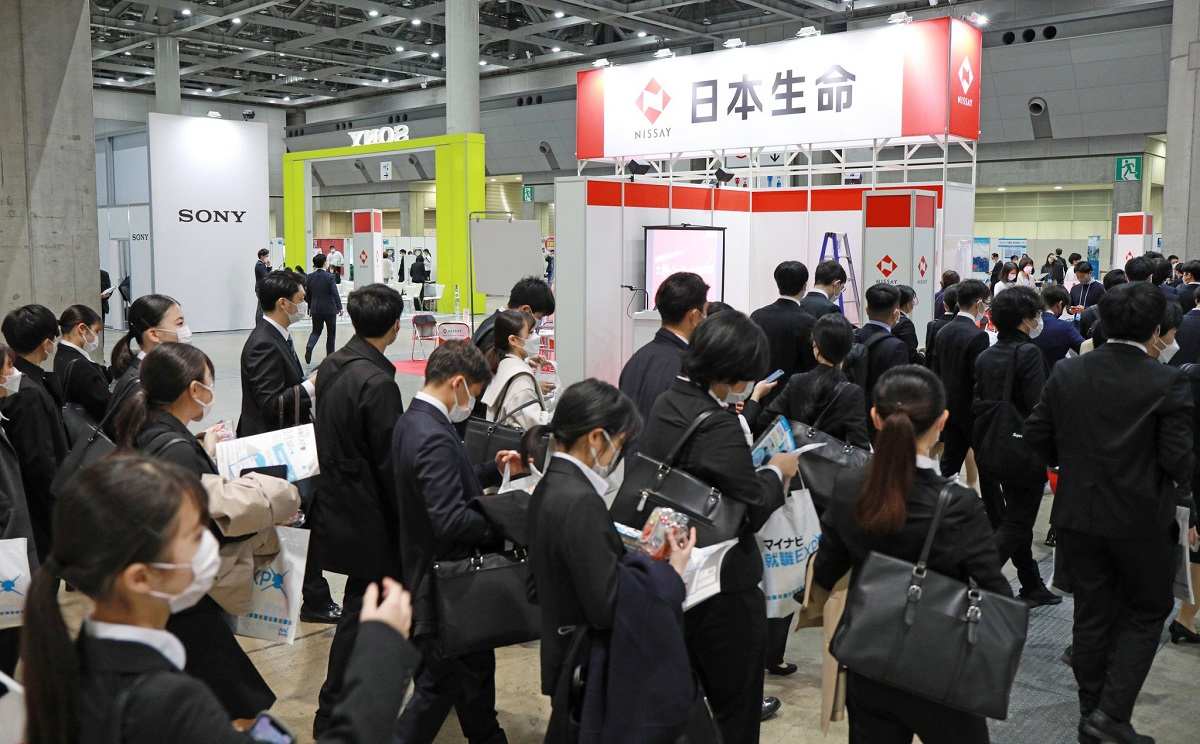
On a muggy Tuesday in March, Taro Yamamoto — operations director of a mid-sized Osaka precision-parts maker — stepped off a flight into Ho Chi Minh City for the third time in six months. He wasn’t scouting for components. He was scouting for customers. His domestic order book had contracted for the fourth consecutive year. His shop floor was greying, and two machine operators had retired with no replacements in sight. Back in Tokyo, the Tokyo Stock Exchange’s new capital-efficiency requirements had made inaction financially untenable. Across Japan, thousands of mid-sized executives are making exactly this calculation. The destination is almost always the same. The logic, once you see the numbers, is difficult to argue with.
The Arithmetic of Decline: Japan’s Domestic Squeeze
Japan has been living with a slow-motion structural crisis for the better part of three decades. The country’s population has fallen from its 2008 peak of 128 million and, by government projections, is set to slide toward 88 million by 2065. More than 29% of Japanese citizens are already aged 65 or older, making Japan the most demographically aged major economy on earth, as the IMF’s Finance & Development journal has documented. The working-age share of the population — those between 15 and 64 — has already fallen below 60%, the lowest among G7 nations. An aging society, as the IMF bluntly put it, “consumes less than a young one.”
For large multinationals — Toyota, Sony, SoftBank — the pivot overseas happened long ago. Their international revenue insulated them. It’s the mid-tier, the thousands of companies with 50 to 500 employees that form the backbone of Japanese manufacturing, services, and distribution, where the pressure is now acute. These firms were built to serve domestic demand. And domestic demand is structurally, irreversibly shrinking.
Set against this backdrop, Southeast Asia’s growth rates read like an alternate universe. The Asian Development Bank, in its December 2025 Outlook, revised the region’s GDP forecasts upward: growth of 4.5% for 2025, with Vietnam projected to expand by 6.6%, the Philippines at around 6%, and Indonesia at 5%. The IMF, speaking at the ASEAN Summit in October 2025, put it plainly: ASEAN is the world’s fourth-largest economy, with a collective GDP exceeding $4 trillion, growing 25% faster than the global average. For a Japanese mid-sized firm watching its addressable market contract at home, those numbers are not an abstraction. They are a survival map.
Why are Japanese companies expanding into Southeast Asia?
Japanese mid-sized companies are expanding into Southeast Asia because of converging structural pressures: a shrinking domestic consumer base driven by demographic decline, Tokyo Stock Exchange governance reforms compelling capital efficiency, the China-plus-one supply-chain imperative, and Southeast Asia’s sustained GDP growth of 4.5–6.6% across key markets — offering volume that Japan’s home market can no longer supply.
1 — The Core Development: A New Wave of Japanese Mid-Sized Companies Heading to Southeast Asia
The outbound push among Japanese mid-sized companies into Southeast Asia is not a new phenomenon. What’s changed is its scale, its urgency, and critically, the profile of the businesses involved.
For decades, it was Japan’s manufacturing giants — Hitachi, Panasonic, Bridgestone — that staked early positions across Vietnam, Thailand, and Indonesia. Their supply chains came first; their back-office operations followed. The mid-tier watched from the sidelines, constrained by capital, language barriers, and a domestic comfort zone propped up by decades of steady, if modest, home-market demand. That comfort zone has now dissolved.
JETRO’s FY2025 global survey of Japanese companies operating overseas — covering 7,485 valid responses across 82 countries — found that 66.5% of Japanese-affiliated overseas companies expect to be profitable in 2025, rising for the second consecutive year. The direction of expansion intentions tells a clearer story: survey respondents signalled growing appetite for Southwest Asia and ASEAN, while China — once the region’s default destination — continues to lose ground. In China, the proportion of companies anticipating business expansion hit an all-time low. The appetite is shifting, and it’s shifting south.
The structural driver is the “China plus one” strategy, which, by 2026, has stopped being a strategy and started being an operating assumption. Sino-American trade tensions, periodic supply-chain shocks, and rising Chinese labour costs have pushed Japanese manufacturers to seek parallel production bases. Vietnam has emerged as the primary beneficiary, attracting Japanese automakers, electronics suppliers, and — increasingly — second-tier parts makers who once fed larger Japanese manufacturers. Thailand, with its mature automotive industrial base and 60-year-old Japanese manufacturing presence, continues to draw mid-sized component makers. Indonesia, with its population of 280 million and a PMI that hit a multi-month high of 53.6 in early 2025 according to S&P Global data, is drawing fresh interest from consumer-goods manufacturers seeking volume markets.
UNCTAD’s 2025 FDI Explorer data shows ASEAN inflows hit a record $225 billion in 2024, up 10%, even as Europe’s FDI collapsed and China’s fell 29%. The region absorbed capital when almost nowhere else did.
What’s different now is who is moving. It’s no longer primarily the large enterprise with a dedicated global-expansion team and a Singapore holding company. It’s the Osaka die-caster, the Nagoya food-equipment manufacturer, the Fukuoka logistics-software firm — businesses that, until recently, had neither the appetite nor the architecture for foreign operations.
2 — The Structural Logic: Why Southeast Asia, Why Now?
The question most analysts ask is why the timing. The answer is a convergence of four pressures that have, in 2025 and 2026, reached simultaneous critical mass.
What is driving Japanese mid-sized companies to expand into Southeast Asia?
Japanese mid-sized companies are expanding into Southeast Asia because of converging structural pressures: a shrinking domestic consumer base driven by demographic decline, Tokyo Stock Exchange governance reforms compelling capital efficiency, the China-plus-one supply-chain imperative, and Southeast Asia’s sustained GDP growth of 4.5–6.6% across key markets — offering volume that Japan’s home market can no longer supply.
First, the demographic arithmetic, already described, is irreversible on any business-relevant time horizon. Companies can adapt temporarily — through automation, productivity gains, pricing — but they cannot manufacture new Japanese consumers. The medium-term demand trajectory at home is fixed. Growth, if it comes, must come from somewhere else.
Second, the TSE’s corporate governance overhaul — which since 2023 has placed intense scrutiny on companies trading below book value — has created a new accountability mechanism. Japanese mid-sized firms, traditionally patient with low returns, are now under pressure from institutional investors to demonstrate capital efficiency. Overseas expansion, with its attendant revenue diversification, has become a credible answer to that pressure. As documented by analysts writing for Insignia Business Review, the TSE’s push on price-to-book ratios is “forcing Japanese companies to think differently about partnerships, including those with international firms.”
Third, U.S. tariff policy has injected a new and urgent variable. Japanese manufacturers heavily embedded in Chinese supply chains face cost exposure that’s now structural, not cyclical. The premium on supply-chain geographic diversification has risen sharply since the Trump administration’s tariff expansions, and ASEAN — with its favourable trade agreements, including RCEP and CPTPP — offers a route around the worst of the exposure.
Fourth, and perhaps least discussed, is the sheer scale of Southeast Asia’s consumer base. The region’s middle class is expanding at a rate that has no parallel in Japan’s recent history. J.P. Morgan research has projected the internet economy across six key ASEAN markets approaching $360 billion in gross merchandising value. For a mid-sized Japanese food manufacturer, a health-care-products company, or a retail-concept operator, that is not a distant opportunity. It’s a currently accessible, rapidly deepening market — and Japanese brands, given the cultural cachet they carry across the region, start with a significant standing advantage.
3 — Implications and Second-Order Effects
The shift carries consequences that extend well beyond the balance sheets of individual companies.
For Japan itself, the most immediate concern is what economists sometimes call the “hollowing out” risk. When large Japanese manufacturers moved production offshore in the 1990s, domestic suppliers suffered. If the current wave of mid-sized firms follows not just with production but with their management, R&D, and commercial operations, the domestic economic base could erode further. Japan’s Ministry of Economy, Trade and Industry has acknowledged this tension in its 2025 White Paper on International Economy and Trade, which frames overseas expansion as necessary for value creation while simultaneously signalling concern about domestic industrial capacity.
For Southeast Asian host economies, the implications are broadly positive but uneven. Vietnam and Thailand, which have the most established Japanese industrial infrastructure, are best positioned to absorb further waves of investment quickly. Indonesia faces more complex challenges: its logistics infrastructure, while improving, still lags Vietnam’s in efficiency for export-oriented manufacturing. Malaysia, meanwhile, is seeing a particular surge — S&P Global’s 2025 Reshoring Special Report found that 28% of Malaysian manufacturers reported increased demand tied to reshoring, up sharply from 20% in 2024, with medium-sized firms particularly optimistic.
For the broader regional trade architecture, the Japanese mid-sized firm’s arrival accelerates something that was already underway: the transformation of ASEAN from a primarily large-enterprise investment zone to a genuine habitat for mid-market global capital. That shift has compounding effects. Japanese SMEs bring with them supplier relationships, technology transfer, and operational know-how that seed local industrial ecosystems. In Vietnam’s industrial provinces, the downstream effect of Japanese mid-tier manufacturers has been the emergence of local sub-suppliers and component fabricators that did not exist a decade ago.
There’s a currency dimension, too, that shouldn’t be underplayed. The yen’s extended period of weakness — a consequence of the Bank of Japan’s historically accommodative stance and the slow pace of normalisation — has paradoxically made overseas investment cheaper in yen terms, even as it erodes repatriated profits. Companies with significant local-currency revenue in baht, dong, or rupiah are, in effect, hedging against further yen weakness. The financial calculus has shifted in ways that favour commitment over caution.
4 — The Counterarguments: Not Every Mid-Sized Firm Should Go
The enthusiasm carries real risks, and anyone advising Japanese mid-sized firms on Southeast Asian expansion would be negligent to paper over them.
The first is operational. Large corporations move to ASEAN with teams of experts, legal counsel, and institutional knowledge accumulated over decades. Mid-sized firms typically don’t. The complexities of establishing a subsidiary in, say, Indonesia — navigating local-ownership rules, labour regulations, tax treaties, and sometimes opaque licensing processes — can overwhelm companies that lack dedicated international capacity. Research published in the journal Asia Pacific Business Review documented that some Japanese firms that expanded into Thailand and Indonesia in the mid-2010s subsequently withdrew, citing rising labour costs, talent shortages, and intensifying competition from Western companies. Those conditions have not uniformly improved.
The second risk is the competitive environment itself. Japanese mid-sized firms arriving in Vietnam or Indonesia in 2026 are not entering empty markets. Chinese manufacturers — displaced by tariffs or simply pursuing their own internationalisation — are competing aggressively for the same factory sites, the same skilled workers, and the same distribution channels. The JETRO survey noted that concerns about “intensifying competition with Chinese companies” ranked among the top worries for Japanese manufacturers in Asia.
Third, the World Bank’s April 2026 East Asia and Pacific update flagged that Southeast Asian growth itself faces a slower trajectory — projecting a regional moderation to 4.2% in 2026, down from 5%, partly because of the conflict in the Middle East and its effect on energy prices. Thailand, in particular, is struggling, with forecast growth of just 1.3% in 2026, dragged by high household debt and political uncertainty. A company that entered Thailand’s market betting on strong consumer growth may find the reality more complicated than the prospectus suggested.
The picture is more complicated still for firms without a clear competitive differentiation. Japanese brand cachet travels far in Southeast Asia, but it is not infinite. It doesn’t automatically compensate for a product that’s 30% more expensive than a local equivalent, or a distribution model that was built for Japanese retail formats and doesn’t translate.
Closing: The Point of No Return
There is something close to inevitability in what is happening. Japan’s mid-sized companies are not choosing to internationalise so much as accepting that the alternative — remaining anchored to a structurally contracting domestic base — is its own form of decline. The question isn’t whether to move, but whether to move with enough preparation and self-awareness to avoid the mistakes of those who moved before.
Southeast Asia will absorb this capital. The region has the demographic momentum, the infrastructure investment trajectory, and the trade architecture to sustain Japanese mid-tier ambitions for at least the next decade. What the region cannot guarantee is that every company that arrives will thrive. The mid-sized firms that succeed will be those that treat the region as a set of distinct, demanding markets — not as a single, grateful alternative to the one they left behind.
Japan’s corporate middle is heading south. The question that will define the next chapter is not whether, but how well.
Discover more from The Economy
Subscribe to get the latest posts sent to your email.



Key Takeaways
- Rolex’s secondary market rose approximately 7.9% year-over-year as of 2026 (per WatchCharts data) — trailing Patek Philippe (+16.2%) and Tudor (+11.4%) but still outperforming Audemars Piguet (+3.4%).
- Rolex raised U.S. retail prices 4–9% in January 2026 (steel models ~5.6%, gold models ~8.7%), narrowing the historical gap between retail and pre-owned pricing.
- Not every model appreciates: steel sports references (Submariner, GMT-Master II, Daytona) have held value far better than two-tone or widely available dress references like the standard Datejust.
- The Lady-Datejust posted the sharpest 2026 gain among tracked collections — up 22.73%, from roughly $9,269 to $11,376 — driven by demand for smaller, “everyday luxury” watches.
- Gold’s rise past $2,400/oz has directly lifted the investment case for Rolex’s precious-metal references (Day-Date, Sky-Dweller, Yacht-Master).
The Model-by-Model Picture
| Category | 2026 Trend |
|---|---|
| Lady-Datejust | +22.73% (strongest performer among tracked collections) |
| Steel sports models (Submariner, GMT-Master II) | Held value well; corrected from 2022 peak but stabilized above retail |
| Daytona | Corrected from highs above $50,000 to the mid-$30,000s; still among the most sought-after references |
| Two-tone/widely available Datejust | Flat to negative — “holds value” is an overstatement for this category |
| Gold references (Day-Date, Sky-Dweller) | Lifted by gold’s rise above $2,400/oz |
Why the “Rolex Always Appreciates” Myth Is Fading
The pandemic-era boom pushed some references — the Daytona above all — to speculative highs disconnected from historical norms. Since the March 2022 peak, steel sports models have compressed meaningfully, and dealers who bought inventory near the top have in some cases faced 20–40% markdowns on liquidation. The lesson for 2026 buyers: Rolex as a category is not a monolith. Value retention depends heavily on specific reference, condition, and whether the piece comes with box and papers (“full set”).
What’s Actually Driving 2026 Strength
- Retail price increases raise the floor. When a new Submariner retails at $10,050 (up from $9,500), a pre-owned example at $11,000–$12,000 suddenly represents a smaller premium — narrowing the gap without secondary prices actually moving.
- Supply discipline remains Rolex’s core lever. The brand has never confirmed production numbers, and secondary-market premiums remain entirely a function of Rolex’s own manufacturing decisions — a risk factor as much as a support.
- Certified Pre-Owned rollout. Rolex’s now fully rolled-out CPO program has changed how buyers transact in the used market, adding a layer of brand-verified legitimacy that supports pricing.
The Case for Rolex as a Portfolio Diversifier
Financial advisors increasingly frame luxury watches not as a replacement for equities or bonds, but as a tangible, historically low-correlation diversifier — one that carries its own risks (illiquidity, condition-dependent pricing, no yield) but has demonstrated multi-decade resilience for specific references.
Is Rolex a good investment in 2026?
It depends heavily on the specific reference. Steel sports models like the Submariner and Daytona have held or grown in value; two-tone and widely available dress models generally have not. Overall, Rolex’s secondary market rose about 7.9% year-over-year in 2026, trailing Patek Philippe but ahead of Audemars Piguet.
Discover more from The Economy
Subscribe to get the latest posts sent to your email.

Navigating Mortgage and Loan Refinancing in a High-Yield Environment
Global public debt crossing critical thresholds has kept central bank policies volatile, resulting in fluctuating US Treasury yields throughout 2026. For homeowners and commercial property holders burdened by previous high-interest borrowing cycles, finding optimal refinance windows has become a high-stakes financial puzzle. Stalled disinflation and stubborn employment numbers mean rate cuts are incremental, requiring borrowers to act with precision.
Timing your mortgage or commercial loan refinance in this environment requires a deep understanding of yield curve movements and lender risk appetites.
Decoding 2026 Refinance Dynamics
The 10-Year Treasury Yield Benchmark
Mortgage rates continue to track closely with the 10-year US Treasury yield. When macroeconomic anxiety spikes debt issuance, yields rise, tightening consumer borrowing capacity. Savvy borrowers monitor weekly Treasury auctions to lock in rates during brief dip windows.
Hybrid ARMs and Alternative Structures
With fixed rates remaining elevated, 7/1 and 10/1 adjustable-rate mortgages (ARMs) have surged in popularity. These products offer lower initial monthly payments, giving borrowers breathing room until central bank easing cycles fully materialize.
| Loan Product | Current Rate Range | Best For | Key Risk Factor |
| 30-Year Fixed Mortgage | 6.2% – 6.8% | Long-term predictability | Higher initial monthly outlay |
| 7/1 Hybrid ARM | 5.5% – 5.9% | Short-term ownership / flipping | Rate reset risk after year 7 |
| Commercial Refinance | 7.0% – 8.2% | Corporate asset restructuring | Strict DSCR lender covenants |
Actionable Steps for Successful Refinancing
To maximize your chances of securing favorable refinance terms in a volatile market, follow a disciplined preparation strategy.
Boost Your Credit Score Immediately: Lenders in 2026 are applying stringent credit tiering; a 20-point increase can drop your APR by a crucial quarter-point.
Shop Regional Credit Unions: Smaller financial institutions often offer portfolio loans with more flexible underwriting than major national banks.
Calculate the Break-Even Point: Ensure your total closing costs are recouped through monthly savings within 24 months of closing.
“Market Strategist View: Refinancing in 2026 is an exercise in opportunistic timing. Borrowers must maintain immaculate financial profiles ready to strike the moment Treasury yields dip.”
Mastering the complexities of today’s debt environment ensures you can successfully lower your debt service costs and protect your long-term financial stability.
Discover more from The Economy
Subscribe to get the latest posts sent to your email.

The days of pulling generic auto insurance quotes based purely on your zip code and age are officially over. In 2026, insurance comparison engines are powered entirely by generative AI and real-time telematics. These platforms digest thousands of live data points—ranging from your driving smoothness via connected vehicle sensors to real-time traffic congestion patterns—to generate hyper-personalized premiums instantly.
For consumers, this evolution represents both a massive opportunity for savings and a hidden trap for penalty pricing. Understanding how AI algorithms evaluate risk is essential for anyone looking to lower their monthly auto insurance premiums.
How AI Comparison Engines Evaluate Your Risk Profile
Behavioral Telematics and Connected Cars
Modern cars stream performance data directly to insurance aggregators. Generative AI models analyze braking sharpness, acceleration curves, cornering G-forces, and phone distraction metrics. Drivers who maintain smooth, defensive habits are rewarded with dynamic rate cuts of up to 40% compared to traditional rating tiers.
Predictive Traffic and Weather Modeling
AI tools now cross-reference your daily commute route with predictive weather and accident probability models. If your standard parking location or driving corridor has a statistically higher incidence of uninsured motorist claims, your quotes will reflect that hyper-local risk assessment.
| Comparison Factor | Traditional Rating Model | 2026 Generative AI Model | Impact on Premium |
| Mileage & Usage | Annual estimated odometer reading | GPS tracking & live trip duration | High (up to 35% savings) |
| Driving Behavior | MVR driving record & accidents | Real-time braking, speed, & G-force | Critical (determines tier) |
| Vehicle Tech | Make, model, and safety rating | ADAS calibration & repair cost data | Moderate |
Strategies to Lower Your AI-Driven Insurance Quote
To outsmart the algorithm and secure the lowest possible premium in 2026, drivers must proactively manage their digital footprint on insurance platforms.
Opt-In for Telematics Trial Periods: Many insurers offer immediate 15% discounts just for installing their driving app; let it track safe habits for 30 days to lock in permanent savings.
Scrub Unverified Public Records: Ensure your motor vehicle report is free of clerical errors that AI risk models misinterpret as reckless behavior.
Compare AI Aggregators: Use platforms that integrate multi-carrier API feeds rather than single-brand comparison sites to find the best risk-adjusted rate.
“Industry Note: AI-driven pricing rewards transparency and precision. Drivers who actively manage their telematics data consistently out-save those relying on legacy quote calculators.”
Embracing AI comparison tools allows savvy policyholders to customize coverage limits precisely to their driving habits, eliminating wasted premium spend while ensuring robust protection.
Discover more from The Economy
Subscribe to get the latest posts sent to your email.

Neocloud Economics in 2026: GPU Debt, Utilization and Power

What Is a Neocloud? How AI GPU Clouds Work and Compare

Lula Re-elected in 2026: What Changes for the Dollar, Brazilian Stocks, and Interest Rates?

Lula Wins Brazil’s 2026 Election: Five Economic Tests for 2027

SSI November 2026 Payment: Why Benefits Arrive October 30

Russia Sanctions Waiver: What Asian Oil Buyers Gain

Asia Markets Weekly: How Oil, US Yields and the Fed Reach Tokyo, Kuala Lumpur and Karachi

Gold Near $4,000: Buy, Hold or Wait? A Pakistan Tola Price Guide

US 10-Year Treasury Yield Near 5%: The Hidden Cost for Pakistani Investors

Fed Meeting on October 28: Hike or Hold—and Why Pakistan Investors Should Care

Can Pakistan Turn US–Iran Mediation Into an Economic Dividend?

Oil Above $100: How Higher Crude Prices Reach Pakistan’s Rupee, Petrol and Imports

SBP Interest Rate at 11.5%: What Will Decide Pakistan’s Next Policy Move?

The Global South: Debt, Climate Finance and Investment in 2026

Crude Oil & Petroleum Market Analysis: OPEC+ Decisions and Price Forecasts

Top US Convenience Store Chains: Store Counts, EV Charging, and Sales Trends

Algorithmic Dogfights: Why the U.S. and China Must Establish Rules of Engagement for Autonomous Air Power

Who Is Shivon Zilis? The Neuralink Executive at the Center of the Musk–OpenAI Trial

Social Security Extra $90 Deposit: Who Qualifies for the October 2026 Medicare Rebate?

Corporate America Faces a New Debt Test as US Borrowing Costs Surge

Gold Price Outlook 2026: The Forces Behind the Forecasts—and What Could Reverse Them

Global Economic Outlook 2026: 7 Forces Reshaping Markets, Trade and Business

Gold Falls 3.7% as Yields Surge: Is Gold Still a Safe Haven in 2026?

Stock Market Crash in 2026? Warning Signs, Scenarios and a Calm Investor Checklist

MAS Allocates S$1.45 Billion to Five Asset Managers in Third EQDP Batch: Total Deployment Reaches S$5.4 Billion

Anthropic Bans Sustained Abuse of Claude AI Under New Usage Policy Effective November 12, 2026

Stock Market Today: Dow, S&P 500, and Nasdaq Retreat as Treasury Yields

Geopolitics and Your Portfolio: How International Affairs Move Global Markets
-

 Markets & Finance10 months ago
Top 15 Stocks for Investment in 2026 in PSX: Your Complete Guide to Pakistan’s Best Investment Opportunities
-

 Analysis8 months ago
Johor’s Investment Boom: The Hidden Costs Behind Malaysia’s Most Ambitious Economic Surge
-

 Analysis8 months ago
Top 10 Stocks for Investment in PSX for Quick Returns in 2026
-

 Banks9 months ago
Best Investments in Pakistan 2026: Top 10 Low-Price Shares and Long-Term Picks for the PSX
-

 Analysis9 months ago
Brazil’s Rare Earth Race: US, EU, and China Compete for Critical Minerals as Tensions Rise
-

 Investment10 months ago
Top 10 Mutual Fund Managers in Pakistan for Investment in 2026: A Comprehensive Guide for Optimal Returns
-

 Global Economy10 months ago
15 Most Lucrative Sectors for Investment in Pakistan: A 2025 Data-Driven Analysis
-

 Global Economy10 months ago
Pakistan’s Export Goldmine: 10 Game-Changing Markets Where Pakistani Businesses Are Winning Big in 2025