
Analysis
From Wall Street to Weimar: Six Crisis Lessons That Could Save Your Portfolio

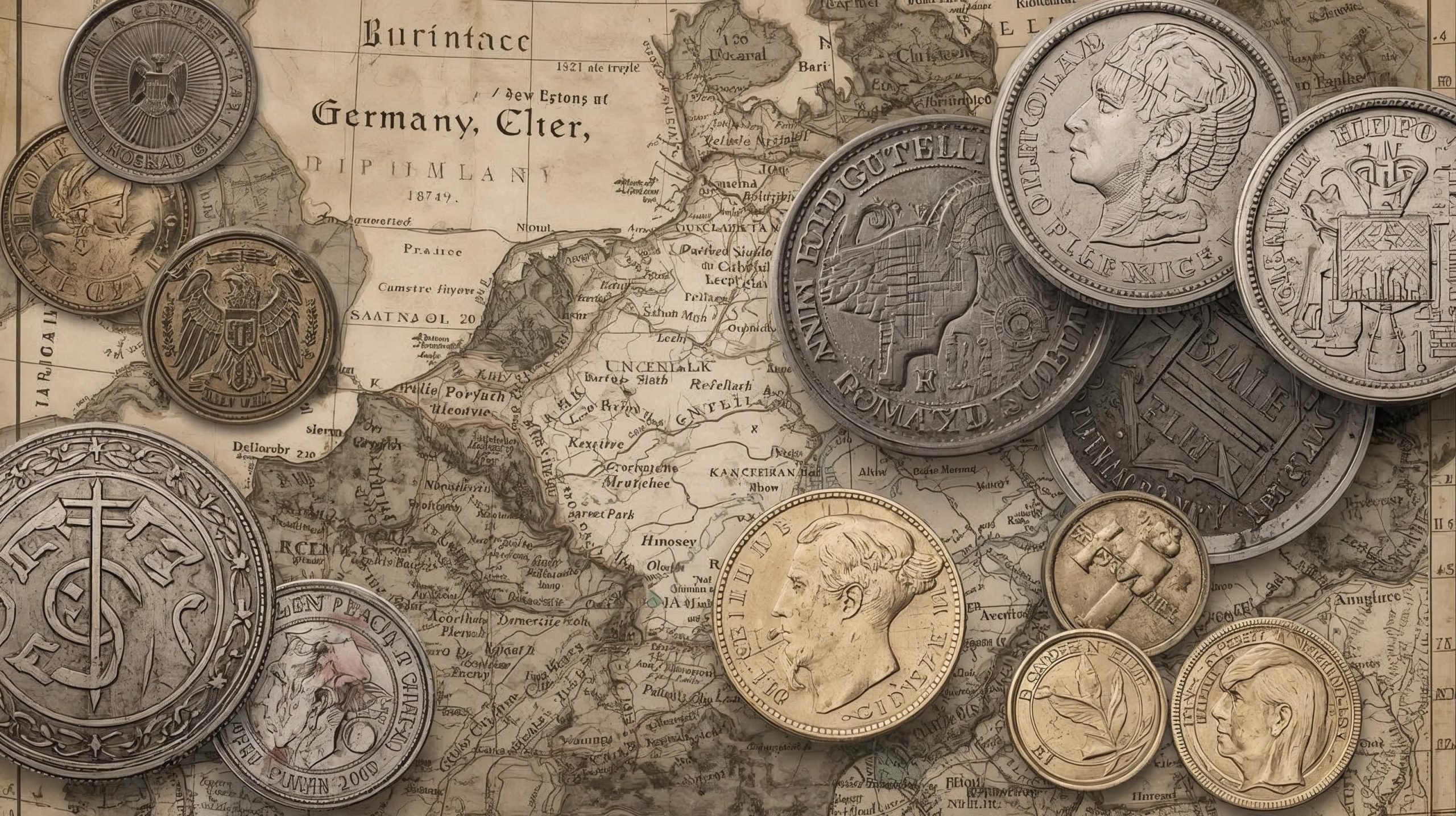
Every generation believes itself immune to the follies of the last. Every generation is wrong. From the speculative fever of 1929 to the subprime recklessness of 2008, from Weimar’s wheelbarrow-loads of worthless currency to Bangkok’s baht in free fall, the history of economic collapse is less a chronicle of unique disasters than a recurring nightmare playing on loop — with new characters, the same plot. The patterns are there for those willing to look. The tragedy is that so few do.
The 21st century alone has delivered five major financial crises in just over two decades. As researchers at London Business School have documented, the dotcom bust of 2000–01, the global financial crisis of 2008–09, the European sovereign debt crisis of 2010, the COVID-19 economic shock of 2020, and China’s ongoing property sector collapse have each exacted enormous human cost. And yet, in each case, the post-mortem has revealed warnings that were visible, credible, and ignored.
This is not a lecture in academic history. It is a practical guide for investors, finance professionals, and citizens who live with the consequences of systemic failure. The six lessons below are distilled from centuries of economic collapse — from the South Sea Bubble of 1720 to the regional bank failures of 2023 — and they remain as urgently relevant today as the day they were first learned and promptly forgotten.
The Six Crises at a Glance
| Year | Crisis | Scale of Damage |
|---|---|---|
| 1923 | Weimar Hyperinflation | 4.2 trillion marks per dollar; social and political devastation |
| 1929 | The Great Crash & Depression | Wall Street collapse; 25% U.S. unemployment; decade-long global deflation |
| 1997–98 | Asian Financial Crisis | Currency contagion from Thailand to Indonesia; ~$600B in losses; IMF intervention |
| 2000–01 | Dotcom Collapse | NASDAQ lost 78% of peak value; $5 trillion in market cap erased |
| 2007–09 | Global Financial Crisis | Lehman bankruptcy; $2T in banking losses; worst recession since the 1930s |
| 2023 | Regional Banking Failures | SVB, Signature Bank, First Republic; interest rate risk and deposit runs return |
Lesson 1 — No Crisis Is Ever “Contained”
Systemic Risk · Contagion
In the summer of 1997, Thailand’s central bank ran out of foreign reserves defending its currency peg and was forced to float the baht. Within weeks, the contagion had swept across Malaysia, Indonesia, South Korea, and the Philippines. As documented by the Federal Reserve Bank of San Francisco, the crisis exposed how deeply interconnected Asian financial systems had become, and how quickly investor sentiment could reverse capital flows across entire regions.
The phrase “contained to subprime” would become a monument to institutional hubris a decade later. In 2007, senior Federal Reserve officials, Treasury secretaries, and Wall Street executives repeated variations of this reassurance as mortgage defaults crept upward. They were wrong in the most expensive way possible. By September 2008, when Lehman Brothers filed for bankruptcy, the contagion had spread not just across asset classes but across continents. The Federal Reserve’s own post-crisis account describes how dollar-funding markets froze almost simultaneously in Tokyo, Frankfurt, and New York.
“A systemic crisis is not a local fire. It is a temperature increase in the entire atmosphere — by the time you smell smoke in one room, the whole house is already warm.”
— On financial contagion, drawing on Kindleberger & Reinhart/Rogoff
The lesson for investors is not merely historical. Diversification across correlated assets provides no protection when systemic stress arrives — because correlation rises toward 1.0 during crises. The only genuine hedge against contagion is liquidity, counter-cyclical reserve building, and the intellectual honesty to recognise when “this time is different” is the most dangerous phrase in finance.
Lesson 2 — Herd Behavior Is the Market’s Operating System
Investor Psychology · Behavioral Economics
Tulip mania in 1637. The South Sea Bubble in 1720. The Mississippi Scheme. Japanese real estate in 1989. The dotcom bubble of the late 1990s. Bitcoin’s successive boom-and-bust cycles. The surface details change; the underlying psychology does not. Behavioral finance research published by Springer identifies the same cognitive mechanisms at work across centuries: overconfidence during the bubble phase, herd behavior as prices rise, and loss aversion that paralyzes investors at the bottom.
What makes this lesson so difficult to apply is that herd behavior feels, in the moment, like consensus intelligence. When everyone around you is buying, when anchors speak of a “new paradigm,” when your neighbor has tripled his money in six months, the psychological cost of standing apart is enormous. The human brain is wired to treat social consensus as evidence of truth. This is useful in many contexts. In speculative markets, it is catastrophic.
📊 Key Statistic: The NASDAQ fell −78% from peak to trough between 2000 and 2002, erasing approximately five trillion dollars in market capitalisation.
The San Francisco Fed’s retrospective on the Asian crisis notes that investors throughout the 1990s poured capital into Southeast Asian economies while frequently ignoring fundamental risk metrics. The herd moved together into the region, and when confidence cracked, it moved together out — with devastating speed. Investor psychology during crashes is not a failure of individual judgment; it is the predictable output of a social system under stress.
Lesson 3 — Regulatory Memory Is Shorter Than Market Memory
Regulatory Failure · Moral Hazard
Every major financial crisis in history has been followed by a wave of regulatory reform. The Great Depression produced Glass-Steagall and the Securities Exchange Act. The savings and loan crisis produced FIRREA. The 2008 collapse produced Dodd-Frank. And in each case, within a generation, the political will that produced those reforms had eroded — replaced by industry lobbying, regulatory capture, and the comfortable amnesia of prolonged stability.
In a landmark 2025 address, former FDIC Chairman Martin Gruenberg warned that memories are dangerously short — that many professionals are no longer familiar with the thrift and banking crises of thirty years ago, let alone the regional bank failures of spring 2023. He identified a recurring pattern across three financial crises: interest rate and liquidity risk, leverage, rapid growth, inadequate capital, and failures of supervision that not only missed the danger but sometimes amplified it.
“Innovation can greatly enhance the operation of the financial system. But experience suggests it be tempered by careful management and appropriate regulation — especially when the risks of new products are poorly understood.”
— Martin Gruenberg, FDIC Chairman, 2025 (paraphrased)
The political economy of financial regulation is inherently asymmetric. The costs of excessive risk are borne broadly — by taxpayers, workers, and pension holders. The profits accrue narrowly to financial intermediaries. This asymmetry creates persistent lobbying pressure to weaken safeguards during good times, precisely when safeguards need strengthening. Understanding this dynamic is not cynicism. It is a precondition for intelligent policy.
Lesson 4 — Leverage Is the Accelerant; Liquidity Is the Oxygen
Leverage & Liquidity · Banking Crisis Insights
If there is a single mechanical explanation for why financial crises become existential rather than merely painful, it is leverage. Borrowed money does not merely amplify gains — it transforms the nature of risk entirely. An unleveraged investor who experiences a 30% decline in asset values is poorer but solvent. A leveraged investor facing the same decline may be wiped out, face margin calls that force selling at the worst possible moment, and — if systemically important — take down other institutions in the process.
The 2008 global financial crisis was, at its core, a leverage crisis. Major investment banks had built balance sheets with leverage ratios of 30:1 or higher. The Financial Stability Board’s post-crisis analysis documented how, in the aftermath of Lehman Brothers’ bankruptcy, global dollar-funding markets froze almost instantaneously — exposing the fragility of institutions that had financed long-term, illiquid assets with short-term borrowing.
📊 Key Statistic: Pre-2008 leverage ratios at major investment banks reached 30:1 — meaning a mere 3.3% decline in asset values was sufficient to wipe out all equity.
The Asian crisis of 1997 was partly driven by maturity mismatches in which regional banks financed long-term or illiquid projects with short-term, dollar-denominated foreign borrowing. When sentiment reversed and foreign lenders refused to roll over credit, the liquidity crisis became a solvency crisis with startling speed. Every major banking crisis in history shares this architecture: leverage that looks manageable in calm markets, and liquidity that evaporates precisely when it is most needed.
Lesson 5 — Currencies Collapse When Confidence Does, Not When Math Does
Currency Crisis · Sovereign Risk · Currency Meltdown Case Studies
The Weimar Republic’s hyperinflation of 1921–1923 is the canonical currency crisis — so extreme it has passed from economic history into cultural mythology. By November 1923, one U.S. dollar purchased 4.2 trillion German marks. Workers were paid twice daily to spend their wages before they lost value. The social and political damage was profound, accelerating the conditions that would eventually produce fascism.
But Weimar was not unique in its fundamental dynamics. Currency crises are crises of confidence, not arithmetic. The Thai baht, the Indonesian rupiah, the Argentine peso, the Russian ruble — each collapsed not when their underlying economies became mathematically unviable, but when investors made a coordinated judgment that they would collapse. As the Chicago Fed’s analysis of the Asian crisis concludes, a systemic crisis involves a loss of confidence — and once that confidence is lost, the mechanics of currency defence become almost impossible to sustain.
The modern relevance is acute. In the aftermath of 1997, Asian nations — notably Japan, China, and South Korea — spent the following decade building large foreign exchange reserves as a hedge against speculative attacks. This macroprudential lesson was widely learned in Asia. It has been less consistently applied elsewhere, and the vulnerability of nations with thin reserve buffers remains a live risk in any environment of rising global interest rates and declining dollar liquidity.
Lesson 6 — Speed and Decisiveness in Response Determines Everything
Recovery Economics · Policy Response
The Great Depression lasted a decade. The Global Financial Crisis of 2008–09 was severe, but recovery — uneven and incomplete as it was — was measurably faster. The difference was not the severity of the initial shock. It was the speed and scale of the policy response. Ben Bernanke, who had devoted his academic career to studying the Depression’s policy failures, was determined not to repeat them.
The Federal Reserve’s interventions in 2008 — emergency lending facilities, swap lines with foreign central banks, quantitative easing, the rescue of AIG — were controversial. Many remain so. But the counterfactual is instructive: as the Federal Reserve’s own history documents, the 1929 crash became the Great Depression in large part because the Fed contracted the money supply at exactly the moment it should have expanded it, allowed thousands of banks to fail, and permitted deflation to take hold. The lesson is not that all interventions are wise — it is that the cost of under-responding to a systemic crisis almost always exceeds the cost of over-responding.
Economists studying the comparative responses to the Asian and global financial crises consistently emphasise two factors that determine whether a crisis becomes catastrophic or merely severe: official credibility and transparency. Uncertainty about the health of financial institutions — when regulators obscure bad news, when stress test results are questioned, when the market suspects reassurances are incomplete — prolongs and deepens the damage. The willingness to acknowledge the problem fully, and respond to it forcefully, is not just good policy. It is the medicine.
Summary: Six Lessons, Six Crises
| # | Lesson | Core Insight | Crisis Origin |
|---|---|---|---|
| 1 | No Crisis Is “Contained” | Financial contagion crosses asset classes and borders; correlation rises to 1.0 under stress | Asian Crisis 1997 / GFC 2008 |
| 2 | Herd Behavior Dominates | Social consensus masquerades as market intelligence; bubbles are psychologically rational in the moment | Dotcom Bubble / Tulip Mania |
| 3 | Regulatory Memory Fades | Reform follows crisis; complacency follows reform; the cycle repeats with institutional amnesia | S&L Crisis / SVB 2023 |
| 4 | Leverage Accelerates Collapse | Borrowed money transforms corrections into catastrophes; maturity mismatch is the structural fault line | GFC 2008 / Asian Crisis |
| 5 | Currencies Collapse on Confidence | Currency meltdowns are crises of coordination failure, not arithmetic; reserves are the only real defence | Weimar 1923 / Baht 1997 |
| 6 | Response Speed Determines Outcome | Under-response costs more than over-response; transparency and credibility are the medicine | Great Depression vs. 2008 |
The Uncomfortable Truth About the Next Crisis
Carmen Reinhart and Kenneth Rogoff titled their comprehensive history of financial folly “This Time Is Different” — not as a claim, but as an indictment. Those four words are the most expensive in the vocabulary of finance. They are spoken at the peak of every bubble by the people most deeply invested in believing them.
London Business School researchers argue that China’s property sector — the largest in the world by some measures — represents a candidate for the next great crash, precisely because it has avoided one during four decades of near-uninterrupted growth. Whether that is the source or something else entirely, the next crisis is not a possibility to be hedged against. It is a certainty to be prepared for.
The six lessons above will not prevent the next crisis. Nothing will. But they offer something more valuable than prevention: the analytical framework to recognise a crisis in its early stages rather than its late ones — and the intellectual discipline to act on that recognition before the crowd does.
In finance, as in medicine, early diagnosis is everything. History has already performed every autopsy we need. The only question is whether we are willing to read the report.
Discover more from The Economy
Subscribe to get the latest posts sent to your email.


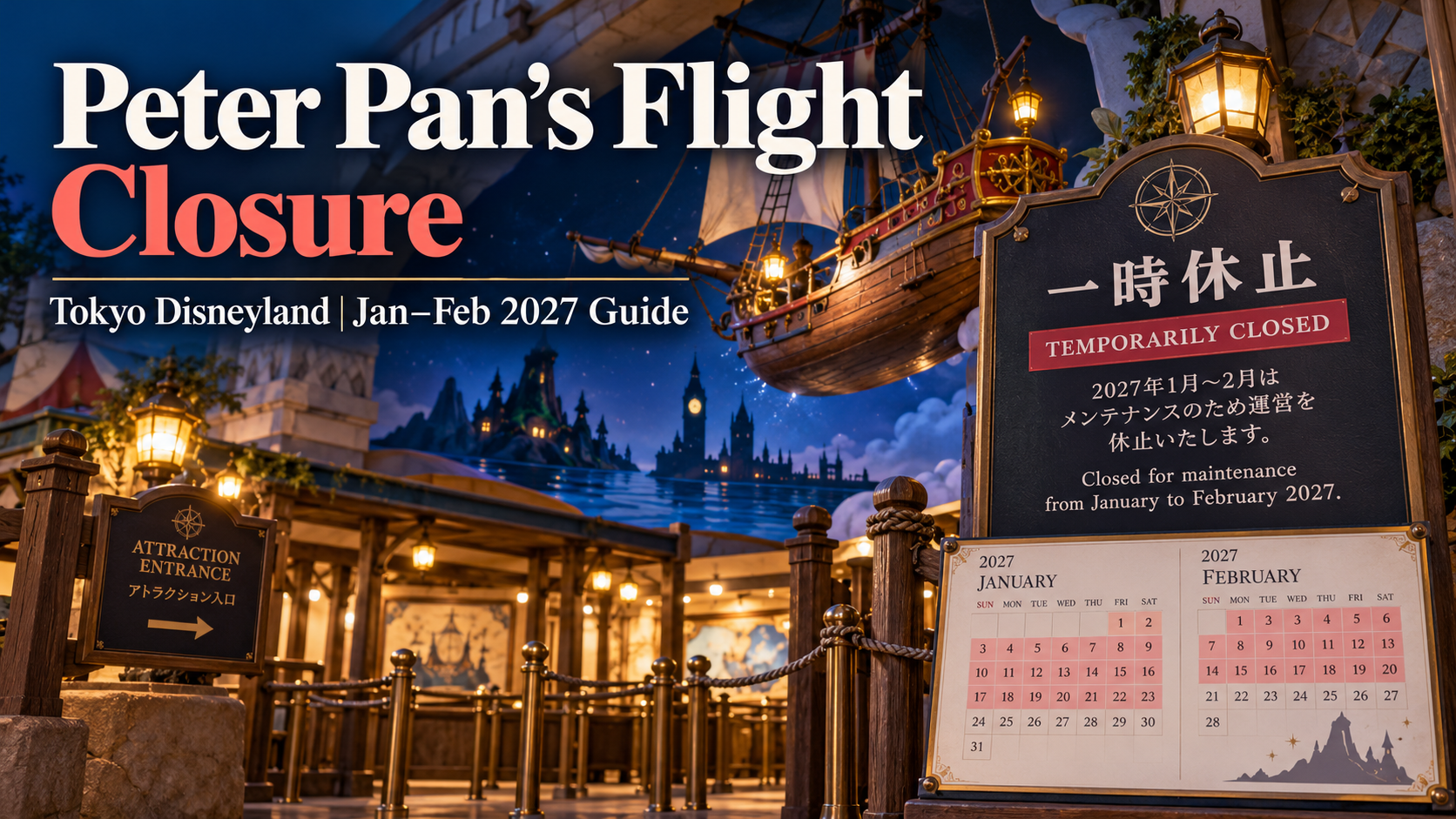
Guests planning a visit to Tokyo Disneyland in early 2027 should put one easily missed detail on their itinerary: Peter Pan’s Flight is scheduled to be temporarily closed from January 6 through February 2, 2027. The operator lists the dates both on its official attraction page and in the Tokyo Disneyland closure schedule. This is a scheduled interruption, not an announcement that the classic ride is being removed permanently. Travelers visiting on dates inside that window should assume the attraction will not be available unless Tokyo Disney Resort publishes a change.
The distinction matters because online references to “Peter Pan closing at Tokyo Disney” can confuse two different parks and two different experiences. Tokyo Disneyland’s Peter Pan’s Flight is a compact Fantasyland ride. Tokyo DisneySea has a separate, newer attraction called Peter Pan’s Never Land Adventure, with its own planned March 2027 maintenance period. The first planning step is making sure the information applies to the ticket you actually bought.
At a glance: what the operator currently says
| Planning question | Verified answer |
|---|---|
| Which attraction? | Peter Pan’s Flight |
| Which park? | Tokyo Disneyland, Fantasyland |
| Scheduled closure starts | January 6, 2027 |
| Scheduled closure ends | February 2, 2027 |
| Reopening expectation | After the listed closure window, subject to operator changes |
| Type of notice | Temporary closure; not announced as permanent |
| Where to recheck | Official attraction listing |
The dates are explicitly labeled as a temporary closure by Tokyo Disney Resort. Do not treat February 3 as an unconditional reopening guarantee: an operator may update maintenance information or temporarily suspend operations for other reasons. Check again shortly before travel and on the day you enter the park.
What is Peter Pan’s Flight?
Peter Pan’s Flight is a dark ride based on the familiar journey from London to Never Land. Guests sit in a flying pirate-ship vehicle that travels through a storybook environment. According to the operator’s ride information, it is in Fantasyland, lasts about two and a half minutes and carries two people per vehicle. It operates indoors and includes dark spaces. These details make it particularly appealing to families who want a gentle, classic Disney experience rather than a high-speed thrill ride.
There are restrictions worth noting even on operating days. The published guidance says a guest must be able to maintain a stable seated position independently and that children may not be held on an adult’s lap during the ride. If your group includes young children, anyone needing seating assistance or visitors uncomfortable with darkness, read the official description and accessibility guidance rather than assuming that the attraction suits everyone because it is short.
Short ride duration is not the same as short waiting time. Demand for well-known classics can vary with crowds, operating conditions and holiday schedules, so it is unwise to schedule a tight sequence of unrelated bookings around a predicted queue. The operator’s app and in-park staff can provide current operating information when the ride is available.
The dates around the closure are not interchangeable
A guest visiting January 5 has a fundamentally different planning position from someone arriving January 6. January 5 falls before the currently listed closure, while January 6 is its opening day. A February 2 visit falls on the final listed day of the maintenance window; February 3 is the earliest day after that window, not a contractual promise that the ride will run.
For a family staying at the resort for multiple days, the difference might be worth changing which day is assigned to Tokyo Disneyland. If one day is before January 6 and another is inside the closure, put Disneyland first if the classic Peter Pan ride is a must-do. But do not swap a park ticket or hotel reservation until you understand the applicable change and cancellation conditions. The economic cost of reshuffling an entire trip can exceed the benefit of experiencing one short ride.
A visitor traveling from overseas may be choosing between a single Disneyland day and a DisneySea day. In that case, consider the trip’s overall priorities. Someone who values vintage Fantasyland attractions may still prefer Disneyland even during the closure. Someone traveling expressly for an immersive Peter Pan adventure could be more interested in the DisneySea attraction—but must buy admission to that different park and verify its own operating schedule.
Other Tokyo Disneyland closures during the same period
The official park maintenance listing shows other attractions with early-2027 closure windows that may overlap your visit. At the time of this review, it lists Jungle Cruise: Wildlife Expeditions from January 6 through March 31, Splash Mountain from January 7 through February 4, and Haunted Mansion from January 8 through February 4. These are operator-published schedules, not independent predictions about refurbishment completion.
This makes the Peter Pan closure more significant for certain visitors than a single unavailable ride might suggest. A group that expected several classic experiences in one afternoon could find multiple priorities temporarily inaccessible. Conversely, the park contains many other attractions and entertainment offerings, and the attractions that remain open should be evaluated on their own current descriptions rather than guessed from historical schedules.
It is worth making a small “must ride / would enjoy / optional” list. Mark each attraction against the closure page. Then build flexibility around weather, performance calendars and queue variation. A plan with alternatives is more resilient than a rigid minute-by-minute schedule.
Better alternatives for different kinds of visitors
If the attraction’s appeal is gentle fantasy storytelling, explore other Fantasyland offerings listed in the official Tokyo Disneyland attraction directory. Filter for ride type and height or access restrictions, and read the current operating details. Do not assume that a neighboring attraction will be open merely because it is not listed in an older travel blog.
If the main attraction is Disney character immersion, devote time to character experiences, themed areas, shopping or scheduled entertainment that is actually available on your day. These can preserve the spirit of the trip without pretending they are substitutes for the ride itself. Some guests will prefer to spend the recovered time on a longer headliner; others may value an unhurried lunch and a park exploration that is less vulnerable to queues.
If the trip is built around Peter Pan specifically, Tokyo DisneySea’s Never Land Adventure may appear attractive. But it is not the same ride: it is a 3D boat-based experience in Fantasy Springs, with different restrictions and a different length. Tokyo Disney Resort’s DisneySea attraction page is the reliable way to compare them. Admission, access arrangements and the day’s capacity remain separate questions.
Parents should also avoid overstating the value of a replacement to children. “Another attraction has pirates” does not make it the planned Peter Pan experience. Setting expectations before entering the park is often more effective than negotiating disappointment in a crowded queue area.
Are refunds or ticket changes automatic?
The announcement of an attraction’s temporary closure does not itself demonstrate that every guest is entitled to a ticket refund or a date change. Theme-park tickets ordinarily grant admission subject to operating conditions, not a binding guarantee that every individual ride will operate. Actual ticket terms, package conditions and any operator-specific accommodation policy govern what can be changed.
Before buying or modifying a pass, review the official Tokyo Disney Resort ticket and reservations guidance and any reseller’s terms. A third-party package might combine transport, hotel rooms and tickets under separate cancellation rules. You should not rely on the statement “ride closed” as a universal reason for a penalty-free cancellation.
If your booking is complex, write down the name of the supplier, reservation reference, exact park date and type of admission. Seek a written answer before paying a change fee. This is particularly important if you plan to move only one day of a multi-day trip and keep the remainder unchanged.
Does Disney Premier Access help during the closure?
No paid queue-management product can make an attraction operate while it is closed. Disney Premier Access is a separate, paid tool for eligible operating experiences; eligibility and availability can change. The official Premier Access guide explains that places may sell out and that the price does not include park admission. It should not be marketed to families as a guaranteed workaround for a published maintenance closure.
The app can nevertheless be useful for other attractions and live operating information. If a ride is unavailable, remove it from the day’s queue-management plan and redirect attention to attractions genuinely offered that day. Check the current product terms before purchasing any additional access.
How to build a more reliable 2027 itinerary
Start with the official attraction closure list rather than the social-media version of it. Choose a date, read the list for the correct park, then check the pages for the two or three attractions most important to your group. If several favorites overlap with closures, compare another travel day, but preserve buffer time and cost limits.
Once you have a provisional itinerary, check whether your whole group can experience the alternatives. A family with a toddler and grandparents may have different needs from a group of teenagers. Ride seating rules, dark environments, height restrictions and walking distances deserve attention before buying optional upgrades.
A week before departure, look at the operator’s park calendar and attraction pages again. On the morning of your visit, follow current app information and staff instructions. Write down a backup plan that does not depend on a single ride reopening on the first conceivable day.
Quick visitor questions
Is Peter Pan’s Flight shutting permanently? The published notice says temporary closure January 6–February 2, 2027. It does not announce permanent removal.
Is it in Tokyo Disneyland or DisneySea? Peter Pan’s Flight is in Tokyo Disneyland’s Fantasyland. DisneySea has the separate Never Land Adventure.
Can I ride on February 2? The current listing includes February 2 in the closure window. Do not plan on riding that day.
Is February 3 the official reopening day? It is the first day after the presently announced closure period, assuming the dates are unchanged. Confirm the park’s live information rather than treating operation as guaranteed.
Should I change my trip? That depends on how important this specific ride is compared with hotel, flights, admission and other attractions. For most travelers, adjusting priorities within the same park is the lower-risk first option.
Final planning advice
This news is not a farewell to Peter Pan’s Flight. It is a defined, temporary gap in the operating calendar. The useful response is to check your exact visit date, compare the rides your family actually cares about and keep a realistic alternative ready. Tokyo Disneyland can still be an appealing destination during the listed closure; the difference between an enjoyable trip and a frustrating one may simply be accurate expectations.
Discover more from The Economy
Subscribe to get the latest posts sent to your email.

Key Takeaways
- Rolex’s secondary market rose approximately 7.9% year-over-year as of 2026 (per WatchCharts data) — trailing Patek Philippe (+16.2%) and Tudor (+11.4%) but still outperforming Audemars Piguet (+3.4%).
- Rolex raised U.S. retail prices 4–9% in January 2026 (steel models ~5.6%, gold models ~8.7%), narrowing the historical gap between retail and pre-owned pricing.
- Not every model appreciates: steel sports references (Submariner, GMT-Master II, Daytona) have held value far better than two-tone or widely available dress references like the standard Datejust.
- The Lady-Datejust posted the sharpest 2026 gain among tracked collections — up 22.73%, from roughly $9,269 to $11,376 — driven by demand for smaller, “everyday luxury” watches.
- Gold’s rise past $2,400/oz has directly lifted the investment case for Rolex’s precious-metal references (Day-Date, Sky-Dweller, Yacht-Master).
The Model-by-Model Picture
| Category | 2026 Trend |
|---|---|
| Lady-Datejust | +22.73% (strongest performer among tracked collections) |
| Steel sports models (Submariner, GMT-Master II) | Held value well; corrected from 2022 peak but stabilized above retail |
| Daytona | Corrected from highs above $50,000 to the mid-$30,000s; still among the most sought-after references |
| Two-tone/widely available Datejust | Flat to negative — “holds value” is an overstatement for this category |
| Gold references (Day-Date, Sky-Dweller) | Lifted by gold’s rise above $2,400/oz |
Why the “Rolex Always Appreciates” Myth Is Fading
The pandemic-era boom pushed some references — the Daytona above all — to speculative highs disconnected from historical norms. Since the March 2022 peak, steel sports models have compressed meaningfully, and dealers who bought inventory near the top have in some cases faced 20–40% markdowns on liquidation. The lesson for 2026 buyers: Rolex as a category is not a monolith. Value retention depends heavily on specific reference, condition, and whether the piece comes with box and papers (“full set”).
What’s Actually Driving 2026 Strength
- Retail price increases raise the floor. When a new Submariner retails at $10,050 (up from $9,500), a pre-owned example at $11,000–$12,000 suddenly represents a smaller premium — narrowing the gap without secondary prices actually moving.
- Supply discipline remains Rolex’s core lever. The brand has never confirmed production numbers, and secondary-market premiums remain entirely a function of Rolex’s own manufacturing decisions — a risk factor as much as a support.
- Certified Pre-Owned rollout. Rolex’s now fully rolled-out CPO program has changed how buyers transact in the used market, adding a layer of brand-verified legitimacy that supports pricing.
The Case for Rolex as a Portfolio Diversifier
Financial advisors increasingly frame luxury watches not as a replacement for equities or bonds, but as a tangible, historically low-correlation diversifier — one that carries its own risks (illiquidity, condition-dependent pricing, no yield) but has demonstrated multi-decade resilience for specific references.
Is Rolex a good investment in 2026?
It depends heavily on the specific reference. Steel sports models like the Submariner and Daytona have held or grown in value; two-tone and widely available dress models generally have not. Overall, Rolex’s secondary market rose about 7.9% year-over-year in 2026, trailing Patek Philippe but ahead of Audemars Piguet.
Discover more from The Economy
Subscribe to get the latest posts sent to your email.

Navigating Mortgage and Loan Refinancing in a High-Yield Environment
Global public debt crossing critical thresholds has kept central bank policies volatile, resulting in fluctuating US Treasury yields throughout 2026. For homeowners and commercial property holders burdened by previous high-interest borrowing cycles, finding optimal refinance windows has become a high-stakes financial puzzle. Stalled disinflation and stubborn employment numbers mean rate cuts are incremental, requiring borrowers to act with precision.
Timing your mortgage or commercial loan refinance in this environment requires a deep understanding of yield curve movements and lender risk appetites.
Decoding 2026 Refinance Dynamics
The 10-Year Treasury Yield Benchmark
Mortgage rates continue to track closely with the 10-year US Treasury yield. When macroeconomic anxiety spikes debt issuance, yields rise, tightening consumer borrowing capacity. Savvy borrowers monitor weekly Treasury auctions to lock in rates during brief dip windows.
Hybrid ARMs and Alternative Structures
With fixed rates remaining elevated, 7/1 and 10/1 adjustable-rate mortgages (ARMs) have surged in popularity. These products offer lower initial monthly payments, giving borrowers breathing room until central bank easing cycles fully materialize.
| Loan Product | Current Rate Range | Best For | Key Risk Factor |
| 30-Year Fixed Mortgage | 6.2% – 6.8% | Long-term predictability | Higher initial monthly outlay |
| 7/1 Hybrid ARM | 5.5% – 5.9% | Short-term ownership / flipping | Rate reset risk after year 7 |
| Commercial Refinance | 7.0% – 8.2% | Corporate asset restructuring | Strict DSCR lender covenants |
Actionable Steps for Successful Refinancing
To maximize your chances of securing favorable refinance terms in a volatile market, follow a disciplined preparation strategy.
Boost Your Credit Score Immediately: Lenders in 2026 are applying stringent credit tiering; a 20-point increase can drop your APR by a crucial quarter-point.
Shop Regional Credit Unions: Smaller financial institutions often offer portfolio loans with more flexible underwriting than major national banks.
Calculate the Break-Even Point: Ensure your total closing costs are recouped through monthly savings within 24 months of closing.
“Market Strategist View: Refinancing in 2026 is an exercise in opportunistic timing. Borrowers must maintain immaculate financial profiles ready to strike the moment Treasury yields dip.”
Mastering the complexities of today’s debt environment ensures you can successfully lower your debt service costs and protect your long-term financial stability.
Discover more from The Economy
Subscribe to get the latest posts sent to your email.

The Fed’s 10-2 Hold: Why Two Dissenters Wanted a Rate Hike

SBP Raises Policy Rate to 12%: What It Means for Your Loans, Savings and Business

IMF’s $1.2bn Staff-Level Deal: What Pakistan Promised on Surplus

Decoding the DBS–BCA Merger Rumour: Market Volatility, Strategic Realities

New Xbox Games October 26–30, 2026: Releases and Game Pass

Tokyo Disneyland Peter Pan’s Flight Closure: January–February 2027 Guide

Neocloud Economics in 2026: GPU Debt, Utilization and Power

What Is a Neocloud? How AI GPU Clouds Work and Compare

Lula Re-elected in 2026: What Changes for the Dollar, Brazilian Stocks, and Interest Rates?

Lula Wins Brazil’s 2026 Election: Five Economic Tests for 2027

SSI November 2026 Payment: Why Benefits Arrive October 30

Russia Sanctions Waiver: What Asian Oil Buyers Gain

Asia Markets Weekly: How Oil, US Yields and the Fed Reach Tokyo, Kuala Lumpur and Karachi

Gold Near $4,000: Buy, Hold or Wait? A Pakistan Tola Price Guide

Crude Oil & Petroleum Market Analysis: OPEC+ Decisions and Price Forecasts

Top US Convenience Store Chains: Store Counts, EV Charging, and Sales Trends

Social Security Extra $90 Deposit: Who Qualifies for the October 2026 Medicare Rebate?

Who Is Shivon Zilis? The Neuralink Executive at the Center of the Musk–OpenAI Trial

Algorithmic Dogfights: Why the U.S. and China Must Establish Rules of Engagement for Autonomous Air Power

Gold Price Outlook 2026: The Forces Behind the Forecasts—and What Could Reverse Them

Corporate America Faces a New Debt Test as US Borrowing Costs Surge

Global Economic Outlook 2026: 7 Forces Reshaping Markets, Trade and Business

Stock Market Crash in 2026? Warning Signs, Scenarios and a Calm Investor Checklist

Gold Falls 3.7% as Yields Surge: Is Gold Still a Safe Haven in 2026?

Stock Market Today: Dow, S&P 500, and Nasdaq Retreat as Treasury Yields

Geopolitics and Your Portfolio: How International Affairs Move Global Markets

Anthropic Bans Sustained Abuse of Claude AI Under New Usage Policy Effective November 12, 2026

US–Iran Conflict in October 2026: Hormuz, Oil Prices and Diplomacy
-

 Markets & Finance10 months ago
Top 15 Stocks for Investment in 2026 in PSX: Your Complete Guide to Pakistan’s Best Investment Opportunities
-

 Analysis8 months ago
Johor’s Investment Boom: The Hidden Costs Behind Malaysia’s Most Ambitious Economic Surge
-

 Analysis8 months ago
Top 10 Stocks for Investment in PSX for Quick Returns in 2026
-

 Banks9 months ago
Best Investments in Pakistan 2026: Top 10 Low-Price Shares and Long-Term Picks for the PSX
-

 Analysis9 months ago
Brazil’s Rare Earth Race: US, EU, and China Compete for Critical Minerals as Tensions Rise
-

 Investment10 months ago
Top 10 Mutual Fund Managers in Pakistan for Investment in 2026: A Comprehensive Guide for Optimal Returns
-

 Global Economy10 months ago
15 Most Lucrative Sectors for Investment in Pakistan: A 2025 Data-Driven Analysis
-

 Global Economy10 months ago
Pakistan’s Export Goldmine: 10 Game-Changing Markets Where Pakistani Businesses Are Winning Big in 2025