
Analysis
US Banks Make Record Buybacks on Trump’s Looser Rules and Choppy Markets

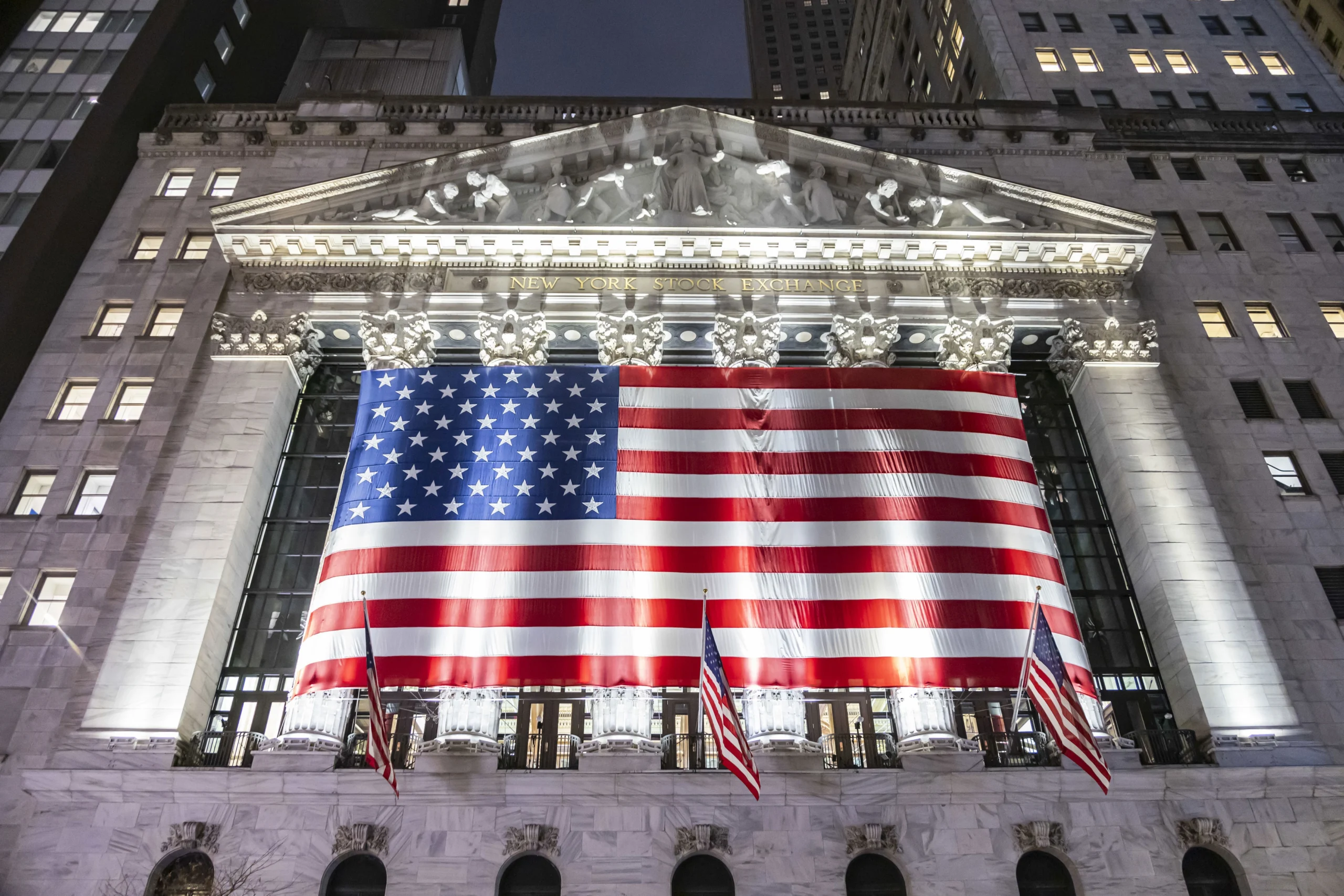
There is a peculiar kind of irony in Wall Street’s first quarter of 2026. American equity markets endured their worst opening three months since the mini-banking crisis of 2023—rattled by a shooting war with Iran, an oil price spike that briefly pushed Brent crude past $120 a barrel, and a Federal Reserve that refused to blink. Yet inside the fortress balance sheets of America’s six largest lenders, a very different story was unfolding: a record-shattering cascade of cash flowing back to shareholders.
When the earnings releases landed this week, the numbers were extraordinary. JPMorgan Chase, Bank of America, Citigroup, Wells Fargo, Goldman Sachs, and Morgan Stanley together spent approximately $32 billion on share repurchases in a single quarter—a figure that comfortably eclipsed analyst consensus expectations and, more importantly, signals that the Trump administration’s quiet dismantling of post-crisis capital rules is already reshaping the financial landscape in ways both celebrated and quietly alarming.
The record is not accidental. It is the logical, almost inevitable, consequence of a regulatory pivot that accelerated on March 19, 2026, when the Federal Reserve officially re-proposed a dramatically softened version of the Basel III Endgame framework—a moment that Wall Street lobbyists had spent three years and tens of millions of dollars engineering.
A Brief History of the Capital Arms Race
To understand why $32 billion in a single quarter is so remarkable, you need to remember what banks were doing with that money until very recently: hoarding it. The original 2023 Basel III Endgame proposal, drafted under Biden-era regulators, would have forced the eight largest US lenders to increase their common equity tier 1 (CET1) capital ratios by as much as 19%. The logic was defensible—the 2008 financial crisis exposed catastrophic capital inadequacy, and regulators globally wanted thicker shock absorbers. Banks pushed back furiously, running advertisements warning of reduced mortgage lending and constrained small-business credit. Quietly, they also began accumulating capital buffers in anticipation of stricter rules.
By the time Donald Trump won a second term and installed Michelle Bowman as Federal Reserve Vice Chair for Supervision—replacing the architect of the original proposal, Michael Barr—the largest US banks were sitting on an estimated $650 to $750 billion in projected cumulative excess capital over Trump’s presidency, according to Oliver Wyman analysis. That capital had to go somewhere. The March 2026 re-proposal gave it somewhere to go.
The new framework, per Conference Board analysis of the regulatory proposals, would reduce overall capital requirements at the largest banks by nearly 6%—a near-perfect inversion of what Biden regulators had sought. Critically, the GSIB surcharge, the extra capital buffer levied on globally systemically important banks, was also re-proposed for recalibration. JPMorgan CFO Jeremy Barnum captured the mood on this week’s earnings call, noting the bank currently measures some $40 billion in excess capital relative to today’s required levels—even before any final easing of the rules.
The $32 Billion Surge: Who Spent What
The precision of the data, pulled directly from SEC 8-K filings released this week, is striking. Here is where the capital went:
| Bank | Q1 2026 Buybacks | Total Capital Returned to Shareholders |
|---|---|---|
| JPMorgan Chase | $8.1 billion | ~$12.2bn (incl. $4.1bn dividends) |
| Bank of America | $7.2 billion | ~$9.3bn (incl. $2.0bn dividends) |
| Citigroup | $6.3 billion | ~$7.4bn (incl. ~$1.1bn dividends) |
| Goldman Sachs | $5.0 billion | ~$6.4bn (incl. $1.38bn dividends) |
| Wells Fargo | $4.0 billion | ~$5.4bn (incl. ~$1.4bn dividends) |
| Morgan Stanley | $1.75 billion | ~$2.5bn (incl. dividends) |
| Combined | ~$32.35 billion | ~$43bn |
Sources: JPMorgan 8-K, Bank of America 8-K, Citigroup 8-K, Goldman Sachs 8-K, Wells Fargo 8-K, Morgan Stanley 8-K
For context, the Big Six averaged roughly $14 billion per quarter in buybacks across 2021–2024, before accelerating to $21 billion in Q2 2025, according to J.P. Morgan Private Bank research. The Q1 2026 figure is more than double that historical average. Citigroup’s $6.3 billion was, as CEO Jane Fraser noted on the earnings call, the highest quarterly buyback in the bank’s history—a milestone at an institution that was technically insolvent in 2008 and reliant on a $45 billion government bailout.
The Regulatory Machinery: Basel III’s “Mulligan”
What regulatory observers are calling the “Basel III Mulligan” deserves careful unpacking for non-specialist readers. In simple terms: for three years, large US banks were required to hold more capital than rules formally demanded—essentially self-imposing buffers to prepare for what everyone assumed would be much stricter requirements. Those requirements never arrived in their original form. The March 2026 re-proposal, issued simultaneously by the Fed, FDIC, and Office of the Comptroller of the Currency, replaced the proposed 19% capital increase with a framework that, in many cases, delivers net capital relief rather than additional requirements, according to Financial Content analysis of the new rules.
The result is structurally elegant from a shareholder’s perspective: banks spent years building fortress balance sheets for a regulatory winter that has now been declared a false alarm. That excess capital—tens of billions of dollars per institution—represents a dammed river suddenly unblocked. The public comment period for the new proposals runs through June 18, 2026, meaning final rules remain months away. But banks are not waiting. The market signal from regulators is unambiguous, and buyback programs respond to signals, not final texts.
Bloomberg’s analysis had anticipated precisely this moment, noting that Trump-era regulators were moving toward a “capital-neutral” Basel III outcome that would unlock shareholder distributions at a scale not seen since before the financial crisis. What was predicted has duly arrived.
Chaos as Catalyst: How Market Volatility Amplified the Story
Here is where the narrative turns counterintuitive—and, for a certain class of investor, deeply satisfying. Conventional wisdom holds that banks struggle in choppy markets. In reality, the definition of “struggle” depends entirely on which side of the bank’s business you are examining.
The Nasdaq KBW Bank Index endured its worst first-quarter performance since the 2023 mini-banking crisis, dragged lower by fears about private credit contagion, the US-Iran conflict that erupted on February 28, and the so-called “March Oil Shock” that briefly paralyzed capital markets activity. Lending-sensitive banks faced NII compression worries. Credit quality concerns loomed.
And yet Goldman Sachs posted record equities trading revenue in Q1 2026. Goldman CEO David Solomon acknowledged rising volatility “amid the broader uncertainty” of the period, while noting that the bank’s results confirmed “very strong performance for our shareholders this quarter.” Citigroup’s markets and services divisions delivered double-digit growth precisely because volatility generates transaction volume—every hedge fund repositioning, every corporate treasury scrambling to cover commodity exposure, every sovereign wealth manager rebalancing away from dollar assets represents a fee opportunity for a well-capitalised trading desk.
The paradox is structural: volatile markets that suppress bank stock prices also generate the trading revenues that finance the buybacks that prop up those same stock prices. It is capitalism’s own form of recursion.
The Risks That Risk Managers Are Quietly Managing
Premium financial journalism demands more than celebration, and there are real risks embedded in this capital bonanza that deserve scrutiny.
Moral hazard and the memory hole. The explicit purpose of higher post-crisis capital requirements was to ensure that taxpayers would never again be asked to rescue financial institutions that had been permitted to lever up their balance sheets in pursuit of short-term shareholder returns. Reducing those requirements—even modestly—reverses that logic. As the Atlantic Council has noted in its analysis of global regulatory fragmentation, the Trump administration’s deregulatory stance is already prompting delays and dilutions elsewhere: the UK Prudential Regulation Authority has pushed implementation to January 2027, and the EU is debating further postponements. When every major jurisdiction softens simultaneously, the global backstop weakens simultaneously.
The buyback signal as inequality amplifier. Share repurchases concentrate wealth among existing shareholders—disproportionately institutional investors and high-net-worth individuals. A $32 billion quarterly return program at the six largest banks is, in distributional terms, largely a transfer to the top quintile of the wealth spectrum. That the same quarter saw Bank of America’s consumer banking division report loan charge-offs of $1.4 billion underscores the bifurcation: capital is being efficiently returned to shareholders while credit stress among retail borrowers persists.
Geopolitical tail risk remains unpriced. Jamie Dimon’s shareholder letter this spring referenced “stagflation” risks explicitly. The KBW Bank Index’s Q1 underperformance was a rational market signal that investors see non-trivial probability of scenarios—broader Middle East escalation, sustained elevated oil prices, a Federal Reserve forced to choose between inflation and growth—where these fortified balance sheets are tested in ways that would make the current buyback pace look imprudent in retrospect.
The Global Dimension: Europe, Asia, and the Regulatory Arbitrage Question
The implications extend well beyond American shores. European banks, which operate under stricter ongoing capital frameworks and face their own Basel III implementation challenges, are watching the US deregulatory sprint with a mixture of envy and alarm. EU lenders’ aggregate CET1 ratio sits at approximately 15.73%—comfortable on paper, but increasingly constrained relative to US peers now liberated to return capital more aggressively. European banks are lobbying Brussels for comparable relief, creating competitive pressure that risks a race to the bottom on global capital standards.
Asian regulators, particularly in Japan and Australia, have been broadly more faithful to Basel III implementation timelines. This creates a genuine regulatory arbitrage dynamic: US banks, freed from the capital drag of the original Endgame framework, can price risk more aggressively and pursue returns that more conservatively capitalised international peers cannot match. In the medium term, this may advantage Wall Street in global capital markets mandates—but it also means the US financial system absorbs more of the global tail risk.
What This Means for Investors in 2026 and Beyond
For retail and institutional investors parsing these numbers, a few practical observations:
The buyback surge mechanically reduces share counts, improving earnings per share metrics. Bank of America’s common shares outstanding fell 6% year-over-year; Citigroup’s EPS of $3.06 was materially aided by a smaller denominator. This is genuine value creation for patient long-term holders who have endured years of regulatory uncertainty weighing on bank valuations.
The deregulatory tailwind, however, is not infinite. JPMorgan’s Barnum was notably measured on the Q1 earnings call: “We prefer to deploy the capital serving clients,” he noted, flagging that buybacks at current market prices represent a second-best use of the bank’s firepower relative to organic growth or strategic acquisitions. Morgan Stanley’s relatively modest $1.75 billion repurchase—against peers spending multiples more—suggests not every institution is deploying excess capital at the same pace or conviction.
The next inflection points to watch: the Federal Reserve’s June 2026 stress test results, which will set new Stress Capital Buffers for each institution; the final form of the Basel III and GSIB surcharge rules expected by Q4 2026; and Citigroup’s Investor Day in May, where CFO Gonzalo Luchetti has signaled fresh guidance on the pace of repurchases following the nearly completed $20 billion program.
The Question That Lingers
There is a version of this story that reads simply as good news: well-capitalised banks returning excess capital to shareholders, generating trading revenues from market volatility, and demonstrating the resilience of a financial system that—unlike 2008—does not require emergency intervention. JPMorgan’s CET1 ratio sits at 15.4%. Bank of America’s at 11.2%. Even after the buyback blitz, these are not reckless institutions.
But there is another version of the story, less comfortable and ultimately more important. The capital that US banks are returning to shareholders this quarter was accumulated partly because regulators told them they needed it as a buffer against catastrophic, low-probability events. The decision to declare that buffer unnecessary was made not by markets, not by stress models, but by a political administration with a stated ideological commitment to deregulation. The question is not whether the system is resilient today. It is whether the memory of why the buffers existed in the first place will survive long enough to matter when it next becomes relevant.
Wall Street has a notoriously short institutional memory. History, unfortunately, does not.
Sources & Further Reading:
- Federal Reserve Basel III Endgame Re-Proposal, March 19, 2026
- JPMorgan Chase Q1 2026 Earnings Release (SEC 8-K)
- Bank of America Q1 2026 Earnings Release (SEC 8-K)
- Citigroup Q1 2026 Earnings Release (SEC 8-K)
- Goldman Sachs Q1 2026 Earnings Release (SEC 8-K)
- Wells Fargo Q1 2026 Earnings Release (SEC 8-K)
- Morgan Stanley Q1 2026 Earnings Release (SEC 8-K)
- Oliver Wyman: How Trump 2.0 Will Impact US Financial Regulation
- Atlantic Council: Basel III Endgame and Global Regulatory Fragmentation
- Bloomberg Intelligence: Capital-Neutral Basel III Endgame in 2026
- Conference Board: Revised Bank Capital Requirements
- J.P. Morgan Private Bank: Bank Deregulation and Capital Returns
Discover more from The Economy
Subscribe to get the latest posts sent to your email.



Indonesia has taken its first concrete legislative step toward building a financial centre intended to compete with Singapore, Hong Kong, and Dubai, as President Prabowo Subianto pushes an ambitious plan to draw foreign capital into Southeast Asia’s largest economy and lift growth toward 8% by the end of his term in 2029.
Parliament Passes Enabling Legislation
Indonesia’s parliament passed the enabling legislation for the new financial hub, laying its legal foundation, according to reporting by the South China Morning Post. The milestone marks the most tangible progress yet on a project analysts say is projected to attract billions of dollars in investment — though they caution that crucial details on tax incentives, investor eligibility requirements, and regulatory safeguards still need to be finalised before the centre can credibly compete with established regional players.
The ambition is unmistakable: a financial centre capable of pulling capital away from Singapore’s deep, established markets, Hong Kong’s China-gateway status, and Dubai’s fast-growing wealth-management ecosystem is a tall order, and observers note that persuading global institutional investors to relocate meaningful operations to a new jurisdiction is a multi-year undertaking that has only just begun in earnest.
Indonesia’s parliament passed enabling legislation in July 2026 for a new financial hub designed to rival Singapore, Hong Kong, and Dubai, as President Prabowo Subianto targets 8% GDP growth by 2029. Singapore remains Indonesia’s top foreign investor at $8.8 billion in H1 2026, ahead of Hong Kong and China.
A Broader Investment Story Already Taking Shape
The financial-hub push arrives alongside signs that Indonesia is already deepening its role as a regional investment destination. Singapore remained Indonesia’s largest foreign investor in the first half of 2026, contributing $8.8 billion, followed by Hong Kong at $7.8 billion, China at $3.9 billion, Japan at $1.9 billion, and the United States at $1.7 billion, according to investment data reported by the New Straits Times. Malaysia ranked fifth, contributing $700 million in the second quarter alone, as Indonesia’s total realised investment reached Rp511.8 trillion.
Indonesian Investment Minister Rosan Roeslani has pointed to regulatory reform — including Government Regulation No. 28, introduced last October, which he said has provided greater licensing certainty — as a key driver of investor interest, while explicitly acknowledging that neighbouring economies are reforming in parallel, requiring Indonesia to keep pace.
Growth Outlook Holds Steady Amid Regional Headwinds
The financial-hub push comes as Indonesia’s broader macroeconomic backdrop remains comparatively resilient. The Asian Development Bank’s July 2026 outlook kept Indonesia’s growth forecast unchanged at 5.2% for both 2026 and 2027, even as the bank lowered its overall developing Asia and Pacific growth projection to 4.9% amid Middle East-driven energy cost pressures. That stability stands in contrast to Malaysia, whose 2026 growth forecast was revised only marginally higher to 2%, according to the same ADB report — even as Maybank Investment Banking Group separately upgraded its own Malaysia forecast more aggressively, to 4.9%, citing strong regional investor interest at July’s Invest ASEAN conference in Singapore, which drew 200 institutional investors managing a combined $23 trillion in assets.
Rice Diplomacy as a Parallel Economic Thread
Indonesia’s regional economic engagement extends beyond high finance. State logistics agency Bulog is continuing negotiations with Malaysia and Singapore over proposed rice export deals, with pricing and commercial terms still under discussion as of mid-July, according to The Star. The talks illustrate the breadth of Indonesia’s economic diplomacy push across ASEAN even as its flagship financial-hub ambitions dominate headlines.
What It Means for Global Investors
For asset managers and multinationals weighing where to locate Southeast Asian operations, Indonesia’s financial-hub legislation is a signal of intent rather than an immediate call to relocate. The real test will come as tax-incentive structures, licensing rules, and investor-protection frameworks are finalised over the coming months — details that will determine whether Jakarta can credibly compete with Singapore’s decades-long regulatory head start, or whether the hub instead becomes a complementary gateway focused on domestic Indonesian capital markets and Belt-and-Road-adjacent regional flows.
Discover more from The Economy
Subscribe to get the latest posts sent to your email.

China’s leadership used its closely watched late-July Politburo meeting to strike a more supportive tone on the economy without committing to the kind of sweeping stimulus package investors had hoped might follow a sharp second-quarter slowdown, reinforcing Beijing’s preference for targeted, precision-guided policy support over broad-based easing.
Growth Slows Below Beijing’s Own Target Range
China’s economy expanded 4.3% year-on-year in the second quarter of 2026, a marked deceleration from the 5.0% pace recorded in the first quarter and a figure that sits below the lower bound of Beijing’s own 4.5–5% full-year growth target — the lowest such target range Beijing has set since the early 1990s, according to CryptoBriefing’s analysis of the data. Consumer demand has remained persistently weak, and deflationary pressure has now been a recurring theme in the Chinese economy for several consecutive quarters.
A Reuters poll of economists ahead of the meeting found growth for 2026 as a whole is expected to cool to around 4.6%, before easing further to roughly 4.4% in 2027, as weak domestic demand offsets the boost from resilient exports recorded during a global oil-price shock earlier this year.
Fiscal Firepower Exists — But Beijing Is Choosing Restraint
Perhaps the most consequential signal from analysts previewing the meeting was not about new money, but about unused capacity. China retains roughly RMB 6.8 trillion of this year’s approved government bond issuance quota still undeployed as of the end of June, alongside an RMB 800 billion quasi-policy financing instrument and an estimated RMB 1.8 trillion in unused bond quota carried over from prior years, according to analysis published on Substack’s macro research platform. The implication: Beijing does not lack tools, it is choosing to prioritise faster execution of existing plans over announcing a new headline package.
Standard Chartered economists have argued the meeting was likely to emphasise accelerating fiscal execution in the second half rather than expanding the overall scope of policy support, with monetary policy relegated to a supplementary role. That reading is consistent with the People’s Bank of China’s approach since May 2025, when it last adjusted policy rates or reserve requirements, opting instead for short-term liquidity operations.
China’s July 2026 Politburo meeting signalled stronger support language without a large new stimulus package, after Q2 GDP growth slowed to 4.3% — below Beijing’s 4.5–5% target. With RMB 6.8 trillion in unused bond quota available, policymakers are prioritising faster fiscal execution over broad-based monetary or fiscal easing.
Property Downturn and Overcapacity Remain the Structural Drag
Beneath the headline growth numbers lies a widening bifurcation. New growth drivers — high-end manufacturing, the digital economy, and modern services — accounted for more than 40% of growth in the first half, with high-tech manufacturing value-added up 13.3%. Yet retail sales grew just 1.3% year-on-year in the same period, and fixed-asset investment fell 5.7%, according to detailed policy analysis from independent China economy newsletter Fred Gao. That divergence — a resilient “new economy” propping up an ailing “old economy” — is precisely the dynamic policymakers appear determined not to paper over with indiscriminate stimulus that could derail the structural transition central to the 15th Five-Year Plan’s opening year.
Markets Should Watch Implementation, Not Rhetoric
The consistent message from economists across Citi, Standard Chartered, and independent research houses ahead of the meeting was that markets should discount policy language and instead track fiscal execution data in the coming months — the pace of local government bond issuance, infrastructure project approvals, and any loosening of housing-related restrictions in major cities. Beijing’s playbook, as one analyst close to policymaking circles put it, increasingly resembles precision-guided support rather than the credit-fuelled stimulus waves of 2008–09 or 2015–16.
What It Means for Investors
For global investors positioned in Chinese equities, the yuan, or commodities exposed to Chinese infrastructure demand, the takeaway is one of managed disappointment: meaningful policy support is coming, but gradually, and calibrated to avoid reigniting the property-sector excesses Beijing spent years trying to unwind. A weaker yuan remains the most likely near-term consequence of any incremental stimulus, while a sharper-than-expected growth slowdown in the third quarter remains the primary catalyst that could force Beijing’s hand toward broader action.
Discover more from The Economy
Subscribe to get the latest posts sent to your email.
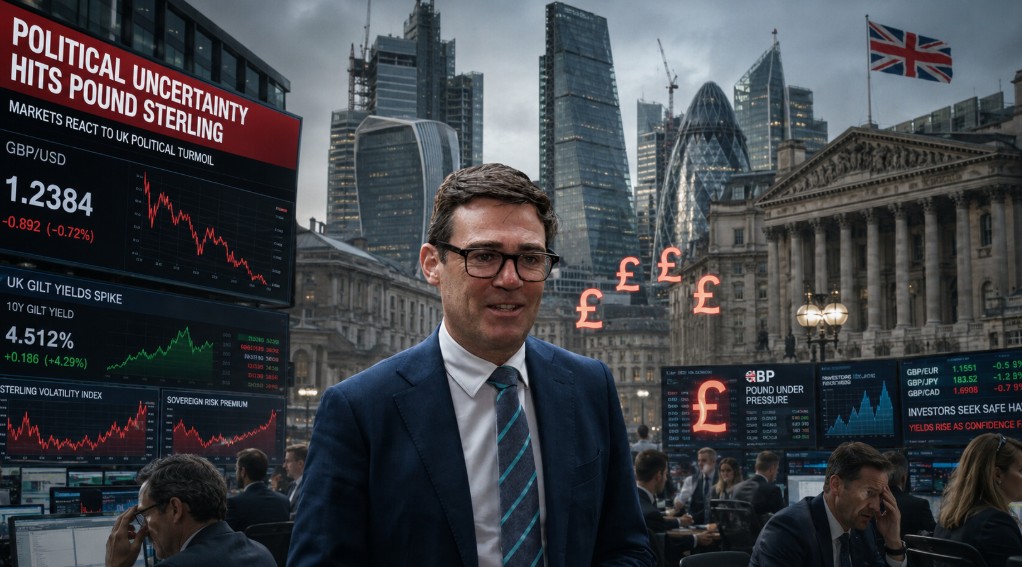
Britain’s government bond market is entering a delicate holding pattern as investors wait for new Prime Minister Andy Burnham to lay out his economic programme, with 10-year gilt yields hovering near 5% and the Bank of England widely expected to keep interest rates unchanged this week.
Gilts Steady as Markets Await Policy Clarity
Ten-year gilt yields eased two basis points to roughly 5.01% in late July, while 30-year yields — the maturity most sensitive to fiscal risk — slipped to around 5.72%, according to Bloomberg. The modest moves came as data showed UK private-sector wage growth slowing to its weakest pace since 2020, tempering expectations for near-term rate hikes even as markets digest the transition to a new premiership.
The yield backdrop remains elevated by historical standards. Earlier in the month, the 10-year gilt yield climbed toward 5.1% — its highest level since May — after outgoing Finance Minister John Healey warned of rising costs of doing business and persistent cost-of-living pressure, according to Trading Economics. The 30-year gilt, a proxy for long-term fiscal credibility, touched its highest level since May 19 in the same window.
Inflation Cools, Giving the Bank of England Room to Hold
Underpinning the relative calm in bond markets is an unexpectedly benign inflation print: annual consumer price growth slowed to a 15-month low of 2.6% in June, below the Bank of England’s own forecasts, per Trading Economics. Delayed pass-through of wholesale energy costs to regulated household bills has helped keep UK inflation below both the US and eurozone, where rate increases are still expected before year-end.
Consumer-facing data has also surprised to the upside. UK retail sales rose 1% in June, confounding forecasts for a 0.3% decline, boosted by warmer weather and a consumer spending lift tied to the football World Cup, while consumer confidence climbed to a six-month high in July.
Why Gilt Yields — Not Bank Rate — Are Driving Mortgage Costs
For households, the more immediate transmission channel runs through the gilt market rather than the Bank of England’s policy rate directly. UK fixed-rate mortgages are priced off swap rates that track gilt yields, meaning the current 10-year yield sits roughly 1.32 percentage points above the Bank of England’s 3.75% base rate, according to mortgage-market analysis from SalaryWise. That spread — near the top of its multi-year range — means fixed mortgage pricing has stayed elevated even as headline inflation has cooled, a disconnect that is likely to dominate the political conversation around the cost of living as Burnham settles into office.
The Burnham Variable
Markets are treating the change in Downing Street as a genuine source of uncertainty rather than a formality. Investors are specifically awaiting fresh policy detail from the new administration on fiscal rules, spending commitments, and its approach to the gilt-issuance programme inherited from its predecessor. Until that detail arrives, strategists expect gilts to trade in a holding pattern, reactive to incoming data — this week’s Bank of England decision chief among them — rather than to political headlines alone.
What to Watch
The Bank of England’s rate decision this week is expected to confirm a hold at 3.75%, but the accompanying minutes and forecasts will be scoured for any signal on how the Monetary Policy Committee is weighing the new government’s early fiscal signals against the growth and inflation outlook. A repeat of the volatility seen during the 2022 mini-budget episode remains the tail risk markets are most keen to avoid.
Discover more from The Economy
Subscribe to get the latest posts sent to your email.

Indonesia Financial Hub 2026: Can It Rival Singapore, Dubai?

Russia Fuel Shortages 2026: Inside a Cracking War Economy

China Politburo July 2026: Stimulus Signals Explained

Andy Burnham, UK Gilts and Mortgages: July 2026 Explainer

Pakistan’s 2026 Monsoon Floods Threaten Fragile Economic Recovery as Inflation Nears 9%

Pakistan Gulf Investment Outflows 2026: Peace Deal Stakes Explained

Canada Trade Diversification 2026: China, Indonesia, UAE Deals Explained

US Forced-Labour Tariffs on 60 Countries: The Hidden Trade Shock of 2026

Global Central Banks 2026: Fed, BoE and BoJ Decisions Could Reshape Markets

Gulf Capital Retreat From Pakistan 2026: UAE Loan Freeze & What It Means

Pakistan’s Most Reliable Export Is Its People: Remittances Hit $41.6 Billion, Overtaking Total Exports

Indonesia’s Confidence Problem: Record Investment, a Sinking Rupiah, and a Widening Credibility Gap

Down But Not Out: Inside the Slow Sinking of Russia’s War Economy

China’s Growth Slips to a Four-Year Low: Why Beijing Still Won’t Pull the Stimulus Trigger

Carry Trade Unwind 2026: How the Yen’s Snapback Triggered a Global Margin Call

AI Bubble Warning 2026: Why BIS, IMF and Bank of England Fear a Market Crash

BRICS De‑Dollarization Strategy Takes Shape with $15 Billion Local‑Currency Push

The AI Super Bubble Is Ready to Burst

Russia Bans Diesel Exports 2026: Global Fuel Market Impact Explained

Strait of Hormuz Blockade 2026: Oil Prices Surge 9% as US-Iran Conflict Reignites

Private Credit Warning: Most BDCs Turn Unprofitable in 2026, Reuters Finds

Bitcoin $150k Milestone Achieved as US Sovereign Crypto Pivot Looms

IMF Cuts Pakistan Growth Forecast, Raises Inflation to 8.4%
Gulf Capital Retreat From Pakistan 2026: UAE Loan Freeze & What It Means

India Economic Rise 2026: How the Subcontinent Toppled Japan

Strait of Hormuz 2026: Why Markets Still Don’t Trust It’s Open

China Housing Market Turnaround: White‑List Model Stabilises Prices

Gold Price Forecast 2026: Fed’s July 29 Decision and Record Central Bank Buying Explained
-

 Markets & Finance7 months ago
Top 15 Stocks for Investment in 2026 in PSX: Your Complete Guide to Pakistan’s Best Investment Opportunities
-

 Analysis5 months ago
Johor’s Investment Boom: The Hidden Costs Behind Malaysia’s Most Ambitious Economic Surge
-

 Analysis5 months ago
Top 10 Stocks for Investment in PSX for Quick Returns in 2026
-

 Analysis6 months ago
Brazil’s Rare Earth Race: US, EU, and China Compete for Critical Minerals as Tensions Rise
-

 Banks6 months ago
Best Investments in Pakistan 2026: Top 10 Low-Price Shares and Long-Term Picks for the PSX
-

 Investment7 months ago
Top 10 Mutual Fund Managers in Pakistan for Investment in 2026: A Comprehensive Guide for Optimal Returns
-

 Global Economy7 months ago
15 Most Lucrative Sectors for Investment in Pakistan: A 2025 Data-Driven Analysis
-

 Global Economy7 months ago
Pakistan’s Export Goldmine: 10 Game-Changing Markets Where Pakistani Businesses Are Winning Big in 2025