Connect with us

Analysis

A Regional Agreement for the Strait of Hormuz: The World Can No Longer Afford to Wait

Published

on

The 2026 crisis proves the Strait of Hormuz needs a binding regional agreement. Here’s the legal, economic, and diplomatic case for a governing arrangement based on law and fact.

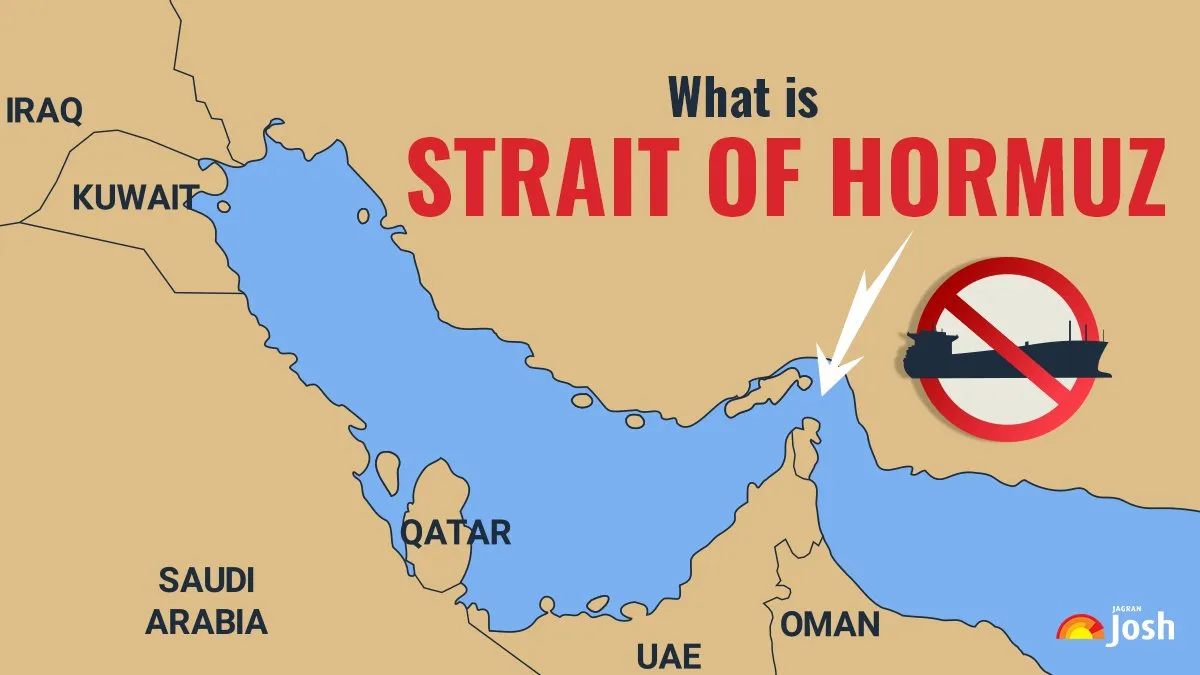
Oil topped $100 a barrel again on Sunday. Twenty thousand seafarers are stranded on vessels in the Persian Gulf, unable to move. Roughly 230 loaded tankers sit anchored west of the strait, burning fuel and running out of provisions. A ceasefire that was supposed to reopen the world’s most critical maritime chokepoint has produced, four days in, an average of seventeen transits per day — in a corridor that previously handled one hundred and fifty. At its narrowest point, the Strait of Hormuz measures twenty-one nautical miles. It is, in both physical and geopolitical terms, the most consequential twenty-one miles on Earth. And right now, those twenty-one miles have no governing framework adequate to the crisis unfolding within them.

That absence is not an accident of history. It is a structural failure — one that can be corrected, and must be, before the next crisis arrives. The argument here is not that the current war should be managed differently, though it should. It is that when the guns fall silent, the international community will face a choice: rebuild on the same contested, ambiguous legal terrain that made weaponizing Hormuz so temptingly easy for Tehran, or construct a durable regional agreement for the Strait of Hormuz that gives every stakeholder — littoral states, user states, shipping companies, seafarers — a framework grounded in law and fact. The second option is harder. It is also the only one that works.

The Legal Vortex That Created This Crisis

At its narrowest, the Strait of Hormuz measures twenty-one nautical miles — a dimension unremarkable in physical terms but arguably the most consequential maritime measurement on Earth. Through this corridor, more than twenty-one million barrels of crude oil and approximately twenty percent of global liquefied natural gas trade transit daily. No other chokepoint — not Suez, not Malacca, not the Bosphorus — carries comparable systemic weight. The National

And yet the legal architecture governing it is, as one rigorous recent analysis put it, a contested patchwork of treaty law, asserted custom, domestic legislation, and unresolved doctrinal conflict — a framework whose structural ambiguities Iran has, across four decades, exploited with considerable legal sophistication. The National

The primary instrument is the United Nations Convention on the Law of the Sea. Under Part III, Articles 37 to 44, the Strait falls under the regime of transit passage — a right categorically distinct from ordinary innocent passage: non-suspendable under any circumstances, applying equally to surface vessels, submarines in submerged transit, and overflight by aircraft. Diplomacy and Law Article 38 provides that all ships and aircraft enjoy the right of transit passage, and Article 44 states that bordering states shall not hamper that passage and that there shall be no suspension of it. ONEST Network

Clear enough, one might think. Except that neither Iran nor the United States is a party to UNCLOS, yet each invokes it — in mutually contradictory ways — as the authoritative statement of their respective rights. Just Security The U.S. Freedom of Navigation program treats the UNCLOS transit passage regime as reflective of customary international law and has specifically asserted navigation claims against both Iran and Oman related to transit through Hormuz. Lawfare Iran, meanwhile, insists it is not bound by a treaty it never ratified, and that wartime conditions rewrite whatever peacetime rules might otherwise apply.

This creates a situation where approximately 3,200 commercial vessels and 20,000 seafarers remain trapped in Gulf waters, caught inside a legal architecture that international maritime law was not designed to govern. House of Saud Iran has engineered a selective transit-toll franchise — permitting Chinese, Russian, and Indian-affiliated vessels through for fees settled in yuan or cryptocurrency, while obstructing passage for ships linked to what Tehran designates hostile nations — that falls outside the formal definition of a naval blockade, outside the distress provisions of international safety conventions, and outside any enforcement mechanism the International Maritime Organization possesses. House of Saud

This is not merely a crisis. It is a demonstration that the existing legal order for the Strait of Hormuz has failed, comprehensively and expensively.

The 2026 Crisis: What the Numbers Tell Us

The economic devastation wrought since February 28, 2026, when the United States and Israel launched their air campaign against Iran and the IRGC shut the strait in response, is staggering in scale. Brent crude reached US$166 per barrel on March 19 — its highest on record. Shipping traffic has been largely blocked since the opening day of the war. The restriction of shipments by more than ninety percent — approximately ten million barrels per day — has raised energy and agricultural input costs worldwide. Wikipedia

On March 11, the thirty-two International Energy Agency member states unanimously agreed to release four hundred million barrels of oil from their emergency reserves — roughly four days’ worth of global consumption. Wikipedia The United States suspended its embargo on Russian petroleum to ease supply. California gasoline prices exceeded five dollars per gallon. The International Energy Agency characterised the disruption as the gravest shock to global energy supply since the 1973 crisis. The National

None of these emergency measures addressed the underlying problem. They were tourniquets, not surgery. Analysts warn that prices will not decline further until the strait is reopened and damaged oil facilities are repaired, and that those are “huge variables which are really, really unsolved” — meaning elevated oil prices are likely through at least the end of 2026. CNN

Meanwhile, approximately 230 loaded oil tankers remain waiting inside the Gulf. Wikipedia A ceasefire has been declared, but the maritime system has not reset. Transit through the Strait of Hormuz remains restricted, coordinated, and selectively enforced. There has been no return to open commercial navigation. Standard shipping lanes remain largely unused, and no meaningful increase in traffic has followed the ceasefire announcement. Windward

The cost of this structural void is not abstract. It is measured in dollars per barrel, in stranded seafarers, and in the food and energy insecurity of countries that had no role in causing the conflict.

Iran’s Toll Booth: A Precedent the World Cannot Accept

Among the most consequential developments of the 2026 crisis has been Tehran’s attempt to transform the Strait of Hormuz from an international maritime corridor into something closer to a managed toll road. Iran’s 10-point peace proposal explicitly included continued Iranian control of the Strait of Hormuz. Its parliament has moved to formally codify Iranian sovereignty, control, and oversight over the waterway — creating a permanent revenue stream through the collection of transit fees. Time

Several dozen ships have now reportedly paid a toll and crossed the channel under the “Tehran Toll Booth” protocol, which coordinates passage with Iran’s Islamic Revolutionary Guard Corps and directs ships around Iran’s Larak Islands, closer to the Iranian coast. Eno Center for Transportation

The legal arguments against this are powerful. Under Article 26 of UNCLOS, charges may be levied only as payment for specific services rendered to the transiting vessel, applied without discrimination. Tehran’s fee is neither linked to any service nor applied without discrimination — it is a selective toll imposed for purely coercive purposes. Just Security The International Maritime Organization warned that tolls in Hormuz would set a dangerous precedent; passage through an international strait is a right, not a service sold by the bordering state. TRT World

But the legal arguments, however sound, have not reopened the strait. That is precisely the point. Legal correctness without institutional enforcement is insufficient. The world needs a governing arrangement for the Strait of Hormuz that gives those legal principles teeth — not through unilateral military action, which risks escalation and provides no durable resolution, but through a negotiated, multilateral framework that all key stakeholders have an interest in maintaining.

What a Hormuz Governing Arrangement Could Actually Look Like

The Strait of Hormuz is not unprecedented as a governance challenge. There are workable precedents, none of them perfect, but all of them instructive.

The Montreux Convention of 1936 governs the Turkish Straits, giving Turkey defined rights to regulate warship passage during wartime while guaranteeing civilian maritime freedom. Iran has sought legal authorities analogous to those Turkey holds under Montreux, and has even proposed that Oman co-administer a similar bilateral framework. But the Montreux Convention predates UNCLOS by decades, and Article 35 of UNCLOS explicitly preserves only long-standing international conventions already in force — not a template available to other straits states by analogy. Just Security There is no Hormuz Convention yet. The argument for creating one is therefore not a capitulation to Iranian demands; it is the international community seizing the initiative to define the terms before Tehran does so unilaterally.

The Regional Cooperation Agreement on Combating Piracy and Armed Robbery against Ships in Asia (ReCAAP) provides a different model — a multilateral maritime security framework binding coastal states, user states, and the shipping industry to shared information-sharing and incident-response obligations, administered by a dedicated secretariat. It works because every party has a concrete interest in its functioning.

An analogous arrangement for the Strait of Hormuz — call it a Congress for Hormuz, or a Hormuz Maritime Security Commission — would need to reconcile three distinct sets of interests:

Littoral states — Iran and Oman — have legitimate sovereign interests in their territorial seas, navigation safety, environmental protection, and security. These interests are real and must be accommodated. Iran’s consistent position that it should have more say in managing the strait than UNCLOS currently allows is not entirely unreasonable as a political matter, even where its legal arguments are weak. Any durable arrangement must give Tehran genuine institutional standing — a seat at the table, not just a legal obligation to comply with rules it had no hand in writing.

Gulf producer states — Saudi Arabia, the UAE, Iraq, Kuwait, Qatar — have an overwhelming economic interest in an open, predictable strait. They are also the states most exposed to Iranian leverage. The GCC has already floated proposals for multilateral maritime oversight. That political will should be formalized and channeled, not dissipated in crisis-management cycles.

Major user states — China, India, Japan, South Korea, the European Union, the United Kingdom — collectively consume the majority of the hydrocarbons that transit Hormuz. India alone, with 1.4 billion people and heavy dependence on Middle Eastern oil and gas, faces acute energy crisis risk from any sustained disruption. CNN These states have the economic leverage to make a governing arrangement attractive to all parties, and the strongest long-term interest in ensuring it works.

A Hormuz Maritime Security Commission, hosted perhaps by Oman — the one regional actor that has retained the trust of all parties throughout the crisis — could provide: a standing mechanism for navigational safety and traffic separation oversight, working with the IMO; a formal disputes procedure for incidents involving transiting vessels; agreed protocols for mine-clearance and maritime emergency response; and a permanent channel for littoral-state concerns that does not require an armed confrontation to be heard.

Why This Is Feasible Now, Not Despite the Crisis But Because of It

The standard objection to ambitious multilateral frameworks in the Gulf is that the regional distrust is too deep, the legal disagreements too fundamental, and the geopolitical interests of outside powers too divergent. All of that is true. It was also true of the Bosphorus in 1936, of the South China Sea fisheries negotiations in the 1990s, and of the Gulf of Aden counter-piracy coalitions assembled after 2008.

What changes the calculus is the cost of the alternative. Iran’s own 10-point peace proposal explicitly included a protocol to re-open the Strait of Hormuz and the creation of a regional framework ensuring safe navigation. Wikipedia That is a significant concession buried in maximalist packaging. It signals that even Tehran recognizes the strait cannot remain in its current condition indefinitely — and that Iran would prefer to manage the transition through negotiation rather than capitulation.

Oman’s Foreign Minister Badr Albusaidi, urging extension of the ceasefire, put it plainly: “Success may require everyone to make painful concessions, but this is nothing as compared to the pain of failure and war.” Al Jazeera Oman, which sits on the southern bank of the strait and has historically maintained working relations with Tehran even through the worst of the regional tensions, is the natural convener of any multilateral process. The UN Secretary-General and the IMO have already signaled readiness to support an appropriate navigational mechanism; the infrastructure for multilateral engagement exists.

The harder question is not whether such a framework is possible. It is whether the major powers — the United States, China, and Russia — will subordinate their bilateral leverage over Iran to a genuinely multilateral process. China has an overwhelming economic interest in open passage and has already demonstrated willingness to mediate; it co-sponsored the Pakistan-China five-point initiative in late March. Russia has an interest in normalized shipping lanes that benefits its energy exports, whatever its short-term gains from elevated oil prices. The United States, having learned once again the limits of unilateral military pressure as a tool of maritime governance, should recognize that a regional arrangement it helps design is preferable to one Iran designs in its absence.

The Path Forward: Four Steps Toward a Hormuz Legal Framework Agreement

The diplomatic architecture for a Hormuz regional agreement does not need to be invented from scratch. It needs to be assembled deliberately from elements already in play.

First, the ceasefire negotiations in Pakistan and any successor talks should include a dedicated maritime track, focused specifically on navigational governance rather than embedded within the broader nuclear and sanctions framework. Mixing those files gives Iran maximum leverage to hold shipping hostage to unrelated concessions; separating them creates space for narrower, more achievable agreements.

Second, the IMO — which has both the technical expertise and the institutional neutrality — should be mandated by the UN Security Council to develop a proposed traffic management and safety framework for the strait, in consultation with Iran, Oman, the GCC states, and major user states. This gives the legal architecture international legitimacy without requiring Iranian ratification of UNCLOS as a precondition.

Third, the major user states — China, India, Japan, South Korea, and the EU — should jointly declare their support for a Hormuz International Strait Security Architecture and offer concrete economic incentives: trade agreements, investment guarantees, infrastructure financing for Iran’s civilian ports and energy sector, conditional on Iran’s participation in the governance framework. Sovereignty is not incompatible with multilateral management; the economics of cooperation must be made visible.

Fourth, and most fundamentally, the international community must accept that the legal status quo — two non-UNCLOS parties asserting contradictory interpretations of a treaty neither has ratified, over a waterway on which the global economy depends — is not a stable foundation for anything. A Strait of Hormuz treaty, negotiated multilaterally and incorporating both the customary law principles of transit passage and a formal role for the littoral states in its administration, would resolve this structural ambiguity rather than perpetuate it.

The Chokepoint That Governs Us All

The Strait of Hormuz has been weaponized before — in 1988, in 2012, in 2019, and now in 2026 with catastrophic economic consequence. Each time, the world responded with crisis management and returned, when the immediate pressure eased, to the same ambiguous baseline. Each time, the lessons went unlearned.

The argument for a governing arrangement for the Strait of Hormuz is not idealistic. It is the most realistic position available: either the international community negotiates a durable legal and institutional framework now, in the window created by the current crisis, or it waits for the next crisis to do it under worse conditions and higher prices. The legal foundation exists in customary law. The economic imperative is undeniable. The diplomatic ingredients — Oman’s credibility, China’s economic leverage, the IMO’s technical capacity, Iran’s own stated preference for a negotiated framework — are all present.

Twenty-one nautical miles. One fifth of the world’s oil. Sixty years of unresolved legal ambiguity. The strait does not ask for our attention; it commands it. The question is whether we will use this moment, finally, to respond with architecture rather than improvisation.


Discover more from The Economy

Subscribe to get the latest posts sent to your email.

Analysis

Singapore’s Construction & Defence Supercycle: The $100B Case

Published

on

The Quiet Outperformer in a Noisy World

While markets gyrate on every Federal Reserve whisper and geopolitical tremor from Taipei to Tehran, a quieter, more durable story has been compounding beneath the surface of Southeast Asian finance. Singapore’s Straits Times Index has demonstrated a resilience that confounds the casual observer—not because Singapore has somehow insulated itself from global volatility, but because its domestic capex cycle is so deep, so structural, and so government-anchored that it functions almost like a sovereign bond with equity-like upside.

The thesis is not complicated, but its implications are profound: Singapore is simultaneously running two of the most compelling domestic investment supercycles in Asia. The first is a construction and infrastructure boom of historic proportions, projected to sustain demand of between S$47 billion and S$53 billion in 2026 alone, according to the Building and Construction Authority. The second is a defence upcycle driven not by ideology but by cold strategic arithmetic—Singapore’s FY2026 defence budget has risen 6.4% to S$24.9 billion, the largest single allocation in the city-state’s history. Together, these twin engines are forging what may be the most underappreciated domestic growth story in global markets today.

For the sophisticated investor, the question is not whether to pay attention. It is how quickly to act.

The Architecture of a S$100 Billion Construction Boom

To understand why Singapore’s construction sector 2026 outlook is so structurally compelling, you must first appreciate the government’s almost Victorian confidence in long-range planning. Unlike the speculative infrastructure cycles that have periodically ravaged emerging markets from Jakarta to Ankara, Singapore’s construction pipeline is anchored by sovereign balance sheet commitments that span decades.

The headline project is, of course, Changi Airport Terminal 5—a S$15 billion-plus undertaking that, when complete, will make Changi one of the largest airport complexes on the planet, capable of handling an additional 50 million passengers annually. Construction mobilisation is accelerating, with land reclamation and enabling works already underway at Changi East. The ripple effects on contractors, materials suppliers, and specialist engineers are only beginning to register in earnings.

Alongside Changi, the Cross Island Line Phase 2—linking Turf City to Bright Hill and eventually to the eastern corridor—adds another multi-billion-dollar spine to an already formidable rail network. The Land Transport Authority has positioned this as foundational infrastructure for Singapore’s next-generation urban mobility. Construction timelines extend through the early 2030s, providing a long runway for sector earnings visibility.

Then there is the HDB public housing programme—perhaps the least glamorous but most structurally certain component of the boom. Singapore’s Housing and Development Board has committed to building 100,000 new flats between 2021 and 2025, with demand for subsequent tranches remaining elevated as the city’s population and household formation dynamics continue to evolve. These are not speculative builds awaiting buyers. These are politically mandated, fully financed housing units for which demand is structurally guaranteed.

The cumulative effect? Approximately S$100 billion in construction demand projected through 2030 and beyond, according to sector analysts—a figure that represents not a single boom-bust cycle but a sustained, multi-phase expansion with government backstop at every stage.

What the Analysts Are Saying—and Why It Matters

The analyst community has been unusually aligned on this theme. Thilan Wickramasinghe of Maybank Securities has argued forcefully that Singapore’s construction sector is enjoying a “structural demand floor” that is unlikely to recede before 2029 at the earliest. This is not standard sell-side optimism. It is a data-driven observation grounded in the project pipeline’s physical characteristics: these are not ribbon-cuttings awaiting funding approval. They are cranes in the ground, contracts signed, and milestone payments flowing.

Shekhar Jaiswal of RHB has echoed similar conviction, pointing to the tight interplay between public-sector infrastructure commitments and private-sector demand—particularly from the data centre construction wave now rolling across Singapore’s industrial landmass. Hyperscaler demand for purpose-built facilities from the likes of Google, Microsoft, and ByteDance subsidiaries has added an entirely new stratum of construction activity to an already saturated order book.

OCBC and UOB Kay Hian analysts have focused their attention on specific SGX-listed beneficiaries: Seatrium (offshore and marine engineering), Wee Hur Holdings (construction and workers’ accommodation), Tiong Seng Holdings, and the larger integrated players like Sembcorp Industries, whose energy infrastructure pivot dovetails neatly with the broader construction narrative. The common thread is margin recovery—after years of pandemic-era cost disruption, Singapore’s leading contractors are now embedded in projects with cost-escalation clauses and more sophisticated risk-sharing frameworks, which means that even if materials costs rise, earnings visibility is meaningfully improved.

The Defence Upcycle: Not a Trend, a Structural Shift

If the construction boom is the known unknown of Singapore’s equity story, the defence sector is the unknown unknown—underappreciated, underanalysed, and consequentially under-owned.

Singapore’s FY2026 defence budget of S$24.9 billion—up 6.4% year-on-year—needs to be contextualised properly. This is not a government responding to domestic political pressure or an election cycle. Singapore has no serious opposition defence constituency to satisfy. This is a city-state of 5.9 million people, sitting at the confluence of the South China Sea, the Malacca Strait, and the Indian Ocean, that has made a sober-eyed strategic calculation that the post-Cold War peace dividend is over.

The geopolitical calculus is not subtle. US-China strategic competition has moved from trade tariffs to semiconductor export controls to naval posturing in the Taiwan Strait, with no credible de-escalation pathway in view. The Middle East conflict, far from remaining regionally contained, has introduced new fragility into global shipping lanes, energy supply chains, and rare materials pricing—all of which matter acutely to Singapore’s import-dependent economy. And the South China Sea, where Singapore maintains scrupulous diplomatic neutrality while quietly acknowledging the risks, remains a theatre of escalating jurisdictional assertion.

Against this backdrop, Singapore’s defence spending is not an anomaly. It is part of a broader Asia-Pacific rearmament that includes Australia’s AUKUS submarine programme, Japan’s historic doubling of its defence budget to 2% of GDP, and South Korea’s accelerated weapons modernisation. The difference is that Singapore, as a city-state, cannot afford strategic ambiguity. Every dollar of defence spending is a genuine operational commitment.

For investors, the opportunity lies in the domestic supply chain. ST Engineering—Singapore’s defence and engineering conglomerate—remains the most direct beneficiary, with its defence systems, aerospace, and smart city divisions all feeding into either the domestic programme or allied nation contracts. ST Engineering’s order book has expanded materially, and its defence electronics segment is particularly positioned for multi-year contract extensions as the Singapore Armed Forces modernise their digital battlefield capabilities.

Beyond ST Engineering, the defence ecosystem extends into Sembcorp Marine (now Seatrium) for naval vessel sustainment, specialised SMEs in precision engineering and electronics, and the broader aerospace MRO cluster at Seletar and Changi that services both military and commercial aviation demand.

Singapore as Asia’s Geopolitical Hedge: The “Switzerland of Asia” Premium

There is a deeper, more structural argument that sophisticated international investors have begun to price—though not yet fully. Singapore’s unique positioning as Asia’s neutral financial hub, legal jurisdiction, and logistics nerve centre means that its domestic capex cycle functions as a partial hedge against the very geopolitical risks that threaten broader Asian exposure.

When US-China tensions spike, capital does not simply evaporate. It relocates—and Singapore is the most natural beneficiary in Southeast Asia. Family offices, private equity vehicles, and corporate treasury functions have been migrating to Singapore at an accelerating pace, bringing with them demand for premium office space, data infrastructure, financial services, and—critically—the physical construction that houses all of it.

This creates a feedback loop that is underappreciated in most macro models: geopolitical tension, rather than being a pure negative for Singapore, actually reinforces the investment case by accelerating the city-state’s role as a regional sanctuary. BlackRock’s 2024 Asia Outlook and similar institutional frameworks have acknowledged this dynamic, even if mainstream commentary has been slow to internalise it.

The BCA construction demand forecast of S$47–53 billion for 2026 needs to be read through this lens. This is not just an infrastructure pipeline number. It is a measure of Singapore’s strategic confidence in its own future as the undisputed hub of a fractured Asia.

The Risk Register: What Could Go Wrong

A platinum-standard analysis demands honest accounting of the downside. Three risks deserve genuine investor attention.

First, cost and labour pressures. Singapore’s construction industry remains heavily dependent on foreign labour, and any tightening of the foreign worker levy regime or supply-side disruption—whether from regional competition for migrant labour or policy shifts in source countries—could compress contractor margins. The more sophisticated players have hedged through escalation clauses and project phasing, but smaller subcontractors remain exposed.

Second, prolonged Middle East conflict and materials pricing. Steel, cement, and specialised construction inputs remain vulnerable to supply-chain disruption originating far from Singapore. A broadening of the Middle East conflict that affects Suez Canal traffic or Gulf petrochemical output could translate into meaningful materials cost inflation. Analysts at DBS have flagged this as a key variable in their sector models for 2026.

Third, the REIT overhang. Singapore’s once-celebrated S-REIT sector remains under pressure from an extended higher-rate environment. While the construction boom benefits developers and contractors, the REIT vehicles that typically hold completed assets face a more challenging refinancing environment and yield compression dynamic. Investors should distinguish sharply between the construction/engineering beneficiaries—where the opportunity is structural and near-term—and the REIT space, where patience and selectivity remain the watchwords. Mixed views from analysts across OCBC, UOB Kay Hian, and Maybank reflect this nuance.

Actionable Investor Takeaways

For the sophisticated investor seeking to position for this supercycle, the following framework applies:

  • Overweight Singapore construction and engineering equities with direct exposure to the Changi T5, Cross Island Line, and HDB pipeline—specifically contractors with government-dominated order books and embedded escalation protections.
  • ST Engineering remains the single most compelling defence play on the SGX, combining domestic budget tailwinds with a growing international defence electronics export business. Its diversification across defence, aerospace, and smart infrastructure makes it uniquely resilient.
  • Data centre construction plays deserve attention as a secular growth overlay—the hyperscaler buildout in Singapore is additive to, not substitutive for, the public infrastructure cycle.
  • Be selective on S-REITs. Industrial and logistics REITs with long-lease, institutional-grade tenants are better positioned than retail or office-heavy vehicles in the current rate environment.
  • Monitor the BCA’s mid-year construction demand update (typically released mid-2026) as a key catalyst for sentiment re-rating in the sector.

The Fortress That Keeps Building

There is a phrase that circulates quietly among Singapore’s policymakers: “We build, therefore we are.” It captures something essential about a city-state that has never had the luxury of assuming its own survival—and has converted that existential urgency into one of the most disciplined, forward-planned construction and defence investment programmes in the world.

In a global environment defined by fragmentation, supply-chain anxiety, and strategic hedging, Singapore’s domestic capex story is not merely a local equity theme. It is a window into how a small, brilliant state is building its way into relevance for the next quarter-century—crane by crane, frigate by frigate, terminal by terminal.

The investors who recognise this earliest will own the supercycle. The rest will read about it when it is already priced.


Discover more from The Economy

Subscribe to get the latest posts sent to your email.

Continue Reading

Analysis

Chaos Has a Price: The Politics-Economy Truce Won’t Last

Published

on

The global economy has repeatedly survived political dysfunction in recent years. But survival is not immunity. With war in the Persian Gulf, a fiscal powder keg in Washington, and political legitimacy fracturing across democracies, the conditions for sustained resilience are exhausted.

Live Context

IndicatorValue
IMF 2026 Growth Forecast (Apr.)3.1%
Brent Crude / bbl$102
Global Inflation Forecast4.4%
VIX (Apr. 13)19.1
EPU Above Historical Mean8.3σ

Introduction: The Most Dangerous Illusion in Finance

There is a story that sophisticated investors have been telling themselves for the better part of three years, and it goes roughly like this: politics is noise, fundamentals are signal, and the global economy is simply too large, too adaptive, and too AI-turbocharged to be knocked off course by the theatrics of elected officials.

It is a seductive story. It has also, for long stretches, been correct. Markets climbed while Washington burned through shutdown after shutdown. The S&P 500 recovered from a VIX spike of 52.33 — last seen only during the pandemic — in fewer than 100 trading days. Global GDP expanded by an estimated 3.4 percent in 2025, even as trade policy lurched between Liberation Day tariffs and partial retreats. The decoupling thesis seemed, if not proven, at least defensible.

Then came February 28, 2026.

The day US-Israeli strikes on Iran triggered a retaliatory blockade of the Strait of Hormuz — the chokepoint through which roughly 20 percent of the world’s oil and LNG supplies travel — the decoupling thesis stopped being defensible. Brent crude that opened the year at $66 a barrel peaked at $126 before settling around $102. The IMF, which had been on the verge of upgrading its 2026 global growth forecast to 3.4 percent, instead cut it to 3.1 percent yesterday — and outlined a severe scenario where the global economy grazes 2.0 percent growth, a threshold signalling de facto global recession only four times in modern history.

The truce between chaotic politics and resilient economics is not ending. It has already ended. The question is only how disorderly the reckoning will be.

“We were planning to upgrade growth for 2026 to 3.4 percent — if not for the war.”

— Pierre-Olivier Gourinchas, IMF Chief Economist, April 14 2026

The Uncertainty Tax: Invisible, Cumulative, and Now Very Visible

Before the Middle East crisis crystallized the argument in crude prices and shipping insurance premiums, the damage was already being done through a subtler channel: the uncertainty tax.

In mid-April 2025, the Economic Policy Uncertainty Index reached 8.3 standard deviations above its historical mean — a figure that dwarfed even the pandemic shock. Trade policy uncertainty soared to an astonishing 16 standard deviations above its long-run average. These are not merely academic measurements. Federal Reserve research is unambiguous: EPU and VIX shocks produce sizable, long-lasting drags on investment, because firms delay capital expenditure until the policy environment is legible. When it never becomes legible, the delay becomes permanent forgone investment.

The CSIS has called this dynamic the “uncertainty tax”: firms postpone decisions, consumers defer big purchases, and lenders tighten credit in a feedback loop that reinforces stagnation. The current administration has pursued both industrial policy and foreign policy leverage simultaneously through tariffs — an approach that is inherently conflicting. You cannot credibly threaten and credibly stabilize at the same time.

What made 2025’s resilience possible was that corporations and consumers adapted to uncertainty rather than being destroyed by it. Supply chains rerouted. AI investment continued at pace. Consumer spending proved stickier than models predicted. But adaptation is not immunity. It is a one-time adjustment that consumes the buffer. The next shock arrives into a system with less slack.

The Hormuz Shock: What Structural Fragility Actually Looks Like

The Strait of Hormuz is the world’s most important three-mile-wide argument against the decoupling thesis. When it closes — even partially — the transmission from political chaos to economic damage is neither slow nor indirect. It is immediate, global, and arithmetically punishing.

The IMF’s April 2026 World Economic Outlook laid out the algebra with characteristic precision. Under the “reference” scenario — a relatively short-lived conflict — global growth still falls to 3.1 percent and headline inflation rises to 4.4 percent, up 0.6 percentage points from the January forecast. Under the “adverse” scenario, growth falls to 2.5 percent and inflation hits 5.4 percent — a textbook definition of stagflation. Under the “severe” scenario, the world is at the edge of recession with growth at 2.0 percent and inflation above 6 percent.

IMF Chief Economist Gourinchas made the political point plainly: the fund had been planning to upgrade the 2026 forecast before hostilities erupted. The war cost the world, in expectation value alone, 0.3 percentage points of output in a single quarter. For every $10 sustained increase in oil prices, GDP growth drops by roughly 0.4 percent. Brent has risen $36 from its year-open level. Do the arithmetic.

The eurozone, still dependent on imported energy and already fragile — France struggling with fiscal overhang and turbulent politics; Germany in a confidence-thin recovery — faces a 0.2-point downgrade to 1.1 percent growth. Japan, another energy importer, risks a resurgence of inflation that could revive the carry-trade unwinds that spooked markets in 2024. Asian manufacturing hubs, reliant on LNG, face a direct cost shock precisely when margins are already compressed by trade fragmentation.

The Fiscal Powder Keg Beneath the Growth Numbers

Even before the Hormuz shock, the underlying fiscal arithmetic was deteriorating in ways that political dysfunction made harder, not easier, to address.

In the United States, the “One Big Beautiful Bill Act” — signed in July 2025 — provides a near-term demand stimulus that partially explains American growth exceptionalism heading into 2026. But the Congressional Budget Office estimates it will add $4.1 trillion to the federal deficit over ten years. That stimulus is borrowed time, literally. With US PCE inflation forecast to rise to 3.2 percent in Q4 2026 and the Federal Reserve holding rates at 3.50–3.75 percent, there is no monetary cushion available. The Fed cannot cut into a Hormuz-driven energy shock without risking an inflation re-anchoring failure. It cannot hold rates indefinitely without deepening the already-rising US unemployment rate, now 4.6 percent — the highest in four years.

In France, the diagnosis is starker. CaixaBank Research notes that “fiscal imbalance plus political instability is a recipe that is difficult to digest” — particularly when tax revenues exceed 50 percent of GDP yet the primary deficit remains above 3 percent. French sovereign risk premiums have been repriced to resemble Italy’s more than Germany’s. The eurozone fragmentation-prevention mechanisms — ESM, IPT — were stress-tested once, in 2012, and survived. They have never been tested simultaneously against energy shock, political dysfunction, and fiscal deterioration.

The WEF’s Global Risks Report 2026 identified inequality as the most interconnected global risk for the second consecutive year, warning of “permanently K-shaped economies” — where the top decile experiences asset-price-driven prosperity while the median household faces cost-of-living pressures that no headline GDP figure captures. This is not merely a welfare concern. It is a political economy concern. K-shaped economies produce the disillusionment, the “streets versus elites” narratives, and ultimately the radical political movements that generate the very policy chaos undermining the growth they claim to oppose. The cycle feeds itself.

When History Warned Us and We Chose Not to Listen

This is not the first time markets have decided that political chaos and economic resilience could coexist indefinitely. It is never the last time either.

In the early 1970s, the geopolitical ruptures of the Nixon years — Watergate, the end of Bretton Woods, the oil embargo — seemed for a time to leave the corporate economy intact. They did not. They produced the decade’s stagflation, which required a Volcker shock of near-suicidal severity to resolve. The political and economic crises did not happen in parallel; they were causally linked, in both directions.

In 1998, financial markets dismissed Russian political dysfunction until the government defaulted and LTCM imploded — at which point the “this is a developing-market problem” narrative collapsed in weeks. The 2010 eurozone debt crisis followed a remarkably similar pattern: years of political dysfunction in Athens and Rome that bond markets chose to treat as noise, until they were forced to treat them as signal, and the signal was catastrophic.

What these episodes share is a common structure: a period of apparent decoupling during which political dysfunction accumulates unremedied, followed by a shock that collapses the separation entirely. The longer the decoupling persists, the more unremedied dysfunction accumulates — and the more violent the eventual reconnection.

Three Scenarios for the Remainder of 2026

For central bankers and portfolio managers, the practical question is not whether the truce ends — it has — but how disorderly the unwinding becomes.

Base Case — Muddling Through (45%): The Hormuz conflict is relatively short-lived. Brent settles in the $90–100 range. Global growth lands at 3.1 percent. The Fed holds through mid-year before one reluctant cut. US growth slows toward 2.0 percent by Q4 2026 as fiscal stimulus fades. Markets absorb the repricing with moderate volatility. Political chaos has been costly but not terminal — and policymakers feel vindicated in their passivity.

Adverse Case — Stagflation Returns (35%): Conflict extends through Q3. Oil remains above $100. Headline inflation rises to 5.4 percent globally, and expectations begin to de-anchor in the eurozone and emerging markets. The Fed faces the 1970s dilemma in its modern form: tighten into a supply shock and tip the US into recession, or hold and risk wage-price spiraling. Political dysfunction makes the fiscal response incoherent. This is where the decoupling thesis dies publicly and permanently.

Severe Case — Near-Recession (20%): Energy disruptions extend into 2027. Global growth approaches 2.0 percent. Emerging markets excluding China face a 1.9 percentage-point cut. Debt service in low-income energy-importing economies becomes unserviceable. Capital flows into safe havens; the dollar surges; emerging market currencies collapse in a sequence echoing 1997–98 at higher starting debt levels. Political extremism intensifies in every affected country, generating the next round of policy dysfunction. The loop closes.

The Verdict: Resilience Was Real, But Never Unconditional

The global economy’s resilience over the past three years deserves genuine respect. The adaptation to tariff shocks, the AI-driven productivity gains, the labor market durability — these reflected genuine structural strengths, particularly in the United States and India. UNCTAD put it rightly in February 2026: the headline resilience was “real and meaningful,” but “beneath the headline numbers lies a global economy that is fragile, uneven, and increasingly ill-equipped to deliver sustained and inclusive growth.”

Fragile. Uneven. Ill-equipped. These are not adjectives that survive a second simultaneous shock.

The decoupling thesis asked us to believe that political institutions could degrade indefinitely without extracting an economic price. It was always a claim about timing, not direction. Political entropy — in Washington, in Paris, in the Persian Gulf, in every capital where short-termism has replaced governance — is a tax that accrues silently until it is collected loudly, all at once, in oil prices and credit spreads and shattered supply chains.

For policymakers, the fiscal space to buffer the next shock is narrowing faster than the political will to preserve it is strengthening. Credible medium-term consolidation frameworks — postponed since 2022 across half the eurozone — are not austerity; they are insurance premiums on growth. Unpaying them compounds the eventual cost.

For investors, the portfolio implication is a meaningful increase in the premium on political-risk diversification, energy-transition assets, and inflation protection — not as tail hedges, but as core positions. The VIX at 19.12 as of April 13 is not complacency exactly, but it is not wisdom either. The market has learned that chaos can be survived. It has not priced the probability that this particular sequence of chaos — war, energy shock, fiscal deterioration, monetary constraint — is different in degree, not just kind.

For citizens, the economy and the polity are not separate domains. Governance quality is the variable on which all other variables ultimately depend.

An economy that outperforms its politics for long enough eventually gets the politics it deserves. We are approaching that point faster than anyone’s baseline forecast would suggest.

Key Data · April 2026

MetricValueNote
IMF Global Growth Forecast3.1%Downgraded from 3.3% in Jan. 2026
Global Headline Inflation4.4%Up 0.6pp from Jan. forecast
Brent Crude$102/bblUp from $66 at year-open; peaked at $126
US EPU Index8.3σ above meanApr. 2025 peak
US Unemployment Rate4.6%Highest in four years (Dec. 2025)

IMF Scenarios · 2026

ScenarioProbabilityGrowthInflationOutlook
Base Case45%3.1%4.4%Short conflict. Muddling through.
Adverse35%2.5%5.4%Extended conflict. Stagflation risk.
Severe20%<2.0%>6%Near-recession. EM debt cascade.

Sources


Discover more from The Economy

Subscribe to get the latest posts sent to your email.

Continue Reading

Analysis

Indonesia Eyes Russian Crude as Middle East Tensions Deepen Import Gap and Subsidy Strain

Published

on

The tanker hasn’t docked yet. But the decision has already been made.

Introduction: A Rerouting That Rewrites the Map

Picture a Pertamina supertanker — laden with nothing, steaming northeast past the Andaman Sea toward a port it has never called before. Not Ras Tanura. Not Ruwais. Vladivostok. Or perhaps Kozmino, Russia’s Pacific export terminal on the Sea of Japan, where Urals-grade crude has been quietly accumulating since the West turned its back on Russian barrels in 2022.

This is no longer a hypothetical. In early April 2026, Indonesian Energy Minister Bahlil Lahadalia sat across the table from Russian counterpart Sergey Tsivilev in what officials described as “exploratory but substantive” bilateral energy talks. The agenda: Indonesian crude import diversification. The subtext: a calculated hedge by Southeast Asia’s largest economy against the compounding shocks of Middle East volatility, Western sanctions complexity, and a domestic fuel subsidy bill that is quietly detonating under the 2026 fiscal framework.

Indonesia’s pivot toward Russian crude is being framed in Jakarta as prudent procurement diversification. Viewed from the right altitude, it is something far more consequential: a sovereign assertion by a 280-million-strong nation that the old architecture of global energy trade — and the geopolitical leverage it carries — is broken beyond repair.

1: The Widening Import Gap — When Domestic Output Meets an Insatiable Appetite

Indonesia’s energy arithmetic has never been comfortable. The country that once exported oil as an OPEC member now struggles to feed its own refineries.

Domestic crude production currently hovers between 600,000 and 605,000 barrels per day, according to the U.S. Energy Information Administration — a figure that has stagnated for years despite Pertamina’s upstream investment pledges and a raft of PSC (Production Sharing Contract) incentives designed to lure back international majors. Meanwhile, national demand has pushed decisively past 1.6–1.7 million barrels per day, a gap of nearly one million barrels that must be sourced from international markets every single day.

That is roughly the daily output of the entire Bakken formation in North Dakota — imported, every day, forever, or until Indonesia’s energy transition delivers something more structurally sustainable.

The Middle East has historically plugged approximately 20–25% of this gap, with crude and LPG flowing primarily through the Strait of Hormuz — that 21-mile-wide chokepoint through which, on a normal day, approximately 20% of all global oil trade passes. There is nothing normal about 2026.

Regional tensions in the Gulf have produced shipping insurance premiums that have spiked to levels not seen since the 2019 tanker attacks, with IEA data showing a material tightening of Asia-bound Middle East crude flows in Q1 2026. For a procurement team at Pertamina managing multi-month cargo scheduling, this is not geopolitics — it is a logistics emergency measured in dollars per barrel and weeks of supply buffer.

The import gap is widening. The traditional supply lane is increasingly hostile. And Jakarta’s energy ministers are looking at maps with fresh eyes.

2: Why Russia Now? Price, Proximity, and a Timely Sanctions Window

The case for Indonesian Russia crude imports is built on three reinforcing pillars: price discount, refinery compatibility, and — crucially — a brief regulatory window that may not stay open long.

The Discount That Makes Accountants Smile

Russian Urals crude has traded at a persistent discount to Brent ever since the G7 price cap mechanism was imposed in December 2022. While the spread has narrowed from its early-2023 lows of $30–35 below Brent, a Bloomberg analysis of Russian crude export pricing into Asian markets through early 2026 suggests Urals continues to clear at $10–15 per barrel below comparable Middle Eastern grades. For a country importing roughly one million barrels per day of crude equivalents, that arithmetic is impossible to ignore: theoretical annual savings of $3.6–5.5 billion, even after accounting for additional freight costs on the longer Eastern route.

Indonesia spends approximately $9–10 billion annually on fuel subsidies — a figure that has ballooned with global price volatility and now sits as one of the most politically radioactive line items in the national budget. A meaningful per-barrel reduction on import costs does not just help Pertamina’s margins. It directly reduces the sovereign subsidy burden.

Urals and Indonesian Refineries: A Technical Fit

Not all crude is interchangeable. Indonesia’s refinery fleet — including the strategically vital Cilacap complex in Central Java and the Balikpapan facility in East Kalimantan — has historically processed a blend of medium-sour crudes from the Middle East alongside lighter domestic barrels. Urals crude, a medium-gravity, medium-sour blend with an API gravity typically around 31–32° and sulfur content near 1.5%, sits within a technically compatible processing window for these refineries, according to Wood Mackenzie’s Asia-Pacific downstream analysis. Some investment in blending logistics would be required, but the engineering case is manageable — a far cry from the expensive refinery retrofits that, say, U.S. Gulf Coast refiners required to process heavy Venezuelan crudes.

The Thirty-Day Window — and What It Signals

Perhaps the most quietly consequential piece of this puzzle: the U.S. Treasury’s issuance of a 30-day sanctions waiver covering stranded Russian oil cargoes created a legal corridor that Jakarta’s procurement strategists observed with intense interest. While the waiver was technically designed to allow specific stranded cargoes to clear, its issuance signaled something important to Southeast Asian energy policymakers: Washington’s sanctions architecture has elastic edges, and the U.S. is not uniformly prepared to punish countries that are not treaty allies for purchasing discounted Russian barrels.

Indonesia has simultaneously signaled outreach to alternative suppliers — the U.S., Nigeria, Angola, and Brunei — a deliberate display of multi-vector diversification that is as much political theater as genuine procurement strategy. It tells Washington: we are not defecting to Moscow, we are managing a portfolio.

3: Subsidy Strain and the Fiscal Tightrope of 2026

Behind every Jakarta press conference about energy security lies a more urgent conversation happening in the offices of the Finance Ministry: how to keep the 2026 budget deficit below the constitutionally mandated 3% of GDP ceiling while global oil prices surge, the rupiah wobbles, and 280 million Indonesians have been politically conditioned to expect cheap fuel.

Indonesia’s fuel subsidy architecture is a legacy institution that successive administrations have reformed at the margins but never fundamentally dismantled. Pertamina acts simultaneously as commercial entity and policy arm of the state, absorbing the spread between global crude prices and the government-regulated retail price of Pertalite (the subsidized 90-octane gasoline that remains the fuel of the Indonesian masses). When oil prices spike, Pertamina hemorrhages cash that the government must eventually backstop.

The IMF’s most recent Article IV consultation on Indonesia flagged subsidy expenditures as a “structural fiscal vulnerability,” noting that every $10 per barrel increase in Brent adds approximately $1.2–1.5 billion to the annual subsidy obligation. With Brent trading above $90 for extended stretches in early 2026 — driven partly by Hormuz tension premiums — the subsidy math has become genuinely alarming for Finance Minister Sri Mulyani’s team, who have built a budget framework premised on a far more modest crude price assumption.

Russian crude at a $10–15 discount is not just a procurement advantage. It is a fiscal lifeline that arrives at precisely the right political moment — ahead of regional elections in which fuel prices are a visceral voter concern.

This is the humanized reality beneath the geopolitical headline: somewhere in a Jakarta housing estate, a motorcycle taxi driver is watching Pertalite prices at the pump with the same focus that hedge fund managers in Singapore watch Brent futures. His vote, and the votes of 50 million Indonesians like him, are shaped by that price. Energy Minister Bahlil understands this with crystalline clarity.

4: The Geopolitical Chessboard — ASEAN, Great Powers, and the Art of Strategic Ambiguity

Indonesia is not making an alliance choice. It is making a market choice — and it is doing so with full awareness of how that choice lands in Washington, Beijing, and Brussels simultaneously.

This is the sophisticated game Jakarta has played with increasing confidence since President Prabowo Subianto took office. Indonesia’s active non-alignment doctrine — a deliberate evolution from the Sukarno-era bebas aktif (free and active) principle — holds that in a fracturing multipolar world, the greatest strategic asset a large middle power possesses is optionality. You do not lock in. You hedge. You extract value from your indispensability to multiple patrons simultaneously.

Washington’s Dilemma

The United States finds itself in an impossible position regarding Indonesian Russia crude negotiations. It cannot credibly threaten secondary sanctions against the world’s fourth-largest country by population, a critical Indo-Pacific partner, the host of G20 rotating presidencies, and a nation Washington desperately needs onside for its China containment architecture. Applying maximum sanctions pressure would collapse the very Southeast Asian coalition that U.S. strategic planners have spent a decade assembling. The Atlantic Council’s Indo-Pacific energy security framework has repeatedly warned that energy-coercive diplomacy toward swing states in ASEAN risks accelerating their drift toward Beijing’s orbit.

Washington will raise concerns quietly. It will not act decisively. Jakarta knows this.

China Watches, Learns, and Benefits

Beijing, meanwhile, observes the Indonesian pivot with something approximating satisfaction. Every barrel of Russian crude that flows to Southeast Asia rather than China tightens global supply slightly, supporting prices that Beijing — as a massive net importer — does not love. But strategically, Indonesia’s willingness to defy Western energy norms creates political cover for China’s own continued Russian crude intake, which has made China Russia’s largest export customer since the war in Ukraine began. China imported approximately 2.1 million barrels per day of Russian crude in early 2026, and Jakarta’s normalization of this trade lane reduces the reputational stigma Beijing has managed at some diplomatic cost.

ASEAN: A Region Quietly Choosing Pragmatism

Indonesia is not alone. India has been the most visible emerging-market buyer of Russian crude, building its share of Urals imports to record levels. Malaysia’s state oil company PETRONAS has quietly expanded exposure to Russian LNG. Thailand has engaged with Rosneft on downstream cooperation. The IEA’s most recent Southeast Asia energy outlook noted with characteristic diplomatic understatement that “the region’s energy procurement patterns increasingly reflect national interest calculations that diverge from IEA member-state policy frameworks.”

In plain language: Asia is buying Russian barrels. The sanctions coalition is a Western phenomenon with limited purchase south of the Himalayas and east of Warsaw.

5: The Risks — Secondary Sanctions, Logistics, and the Reputational Ledger

No analysis of Indonesia’s Russian crude pivot would be complete without a sober accounting of the genuine risks. Jakarta is not sleepwalking into this decision; it is walking in with eyes open to hazards that are real, if manageable.

Secondary Sanctions: The Latent Sword

The most acute risk is secondary sanctions exposure for Indonesian financial institutions and Pertamina itself. American secondary sanctions regulations theoretically allow the U.S. Treasury to penalize any entity that provides “material support” for Russian energy revenues. In practice, enforcement against a sovereign state oil company of Indonesia’s scale would be diplomatically catastrophic — but practice can change with administrations, and a more hawkish U.S. posture post-2026 could revisit these calculations. Pertamina’s legal team is undoubtedly war-gaming scenarios involving dollar-clearing restrictions, and Jakarta would be wise to accelerate rupiah-ruble or yuan-denominated settlement mechanisms as insurance.

The Logistics Premium

Russian Eastern-route crude involves longer voyage times than Middle Eastern supply — approximately 12–14 days from Kozmino to Cilacap versus 7–9 days from Ras Tanura. Additional freight costs erode some of the price discount. And Indonesia would need to develop new cargo infrastructure, insurance relationships, and potentially refinery blending protocols. These are surmountable engineering and logistics challenges, but they carry a real capital cost that must be factored into any honest net-benefit analysis.

The Long Game: Fossil Fuel Dependency as Strategic Vulnerability

Perhaps the most important risk is the one that Russian crude cannot solve: structural dependency on imported fossil fuels as an enduring sovereign liability. Indonesia has extraordinary renewable energy endowment — geothermal resources alone rank among the world’s largest, the archipelago’s solar irradiance is exceptional, and offshore wind potential in strategic corridors is largely untapped. The IEA’s Indonesia Energy Policy Review consistently notes that the country’s energy transition has proceeded below its structural potential, constrained by subsidy-distorted retail markets that make clean energy economics persistently challenging.

Every Russian barrel that arrives in Cilacap is, in a narrow sense, a fiscal success. In the broader strategic calculus, it is another year of delayed transition — another year in which Indonesia’s vulnerability to geopolitical oil price shocks is extended rather than resolved. The smartest version of Jakarta’s strategy uses the Russian crude discount not simply to preserve the status quo, but to fund the capital expenditure that removes import dependency over a 10–15 year horizon.

Conclusion: The Fracturing Order and What Jakarta Knows That Brussels Doesn’t

Here is the uncomfortable truth that Indonesia’s Russian crude negotiations illuminate with uncomfortable clarity: the post-Cold War energy order — in which Western pricing mechanisms, dollar-denominated settlements, and OECD-governed trade norms structured global oil markets — is fracturing at a pace that Western capitals have not fully processed.

Indonesia is not an outlier. It is the archetype of what rational energy governance looks like for a large, developing, non-aligned nation in 2026. Faced with supply shocks from a region it cannot control, a fiscal subsidy architecture it cannot quickly dismantle, and a domestic energy industry that cannot close the production gap, Jakarta is doing exactly what a sophisticated sovereign actor should do: maximizing optionality, extracting value from competing great-power interests, and buying time for a structural transition that — if properly funded and politically protected — could eventually free Indonesia from this entire dilemma.

The Western sanctions architecture was designed to isolate Russia economically and strategically. Instead, it has accelerated the emergence of a parallel energy trade ecosystem across the Global South — one that is increasingly liquid, increasingly normalized, and increasingly beyond the reach of Western enforcement. Indonesia eyes Russian crude not because it loves Moscow’s politics. It eyes Russian crude because the arithmetic is compelling, the alternatives are constrained, and the world that Western policymakers are trying to preserve already looks, from Jakarta, like a fading photograph.

The tanker heading northeast knows exactly where it’s going.

Frequently Asked Questions

Q1: Why is Indonesia considering buying Russian crude oil in 2026? Indonesia faces a structural supply gap of nearly one million barrels per day between domestic production (~600,000 bpd) and national demand (~1.6–1.7 million bpd). Middle East tensions threatening Hormuz transit routes and Russian Urals crude trading at a $10–15 per barrel discount to Brent make Russian oil an economically compelling diversification option, particularly given Indonesia’s multibillion-dollar annual fuel subsidy burden.

Q2: How does Indonesia’s fuel subsidy strain relate to Russia crude imports? Indonesia spends approximately $9–10 billion annually on fuel subsidies. Every $10 per barrel increase in global crude prices adds $1.2–1.5 billion to this obligation. Sourcing Russian crude at a sustained discount meaningfully reduces the sovereign fiscal burden — a critical consideration as Indonesia tries to maintain its 2026 budget deficit below the constitutional 3% of GDP ceiling.

Q3: Does buying Russian oil expose Indonesia to U.S. secondary sanctions? Theoretically, yes — U.S. secondary sanctions regulations could target entities providing material support to Russian energy revenues. In practice, applying enforcement against Indonesia, a critical Indo-Pacific partner and the world’s fourth-largest country by population, would be diplomatically counterproductive for Washington. Jakarta is managing this risk through multi-vector procurement outreach and potential non-dollar settlement arrangements.

Q4: Is Russian Urals crude compatible with Indonesian refineries? Urals crude (API ~31–32°, sulfur ~1.5%) falls within a technically compatible processing range for key Indonesian refineries including Cilacap and Balikpapan, which are configured for medium-sour crudes. Some blending optimization would be required, but no major capital retrofits are anticipated — making the transition logistically manageable.

Q5: What does Indonesia’s Russian crude pivot mean for global energy markets? It signals the accelerating normalization of a parallel oil trade ecosystem across the Global South that operates outside Western sanctions architecture. As India, Indonesia, China, and other large Asian importers collectively absorb discounted Russian barrels, the structural isolation of Russia that the G7 price cap was designed to achieve becomes progressively less effective — with significant long-term implications for both global energy pricing and the geopolitical leverage of Western-controlled financial infrastructure.


Discover more from The Economy

Subscribe to get the latest posts sent to your email.

Continue Reading

Trending

Copyright © 2025 The Economy, Inc . All rights reserved .

Discover more from The Economy

Subscribe now to keep reading and get access to the full archive.

Continue reading