Analysis
The Next Global Food Crisis Has Already Begun: How Blocked Fertilizer Shipments and a Fading La Niña Are Locking In 2026 Harvest Losses
The Strait of Hormuz crisis has detonated one of the most severe shocks to global agricultural supply chains in a generation. With spring planting underway across the Northern Hemisphere and fertilizer inventories draining by the day, the food inflation of 2026–2027 is not a forecast—it is already being written in empty bags and dry fields.
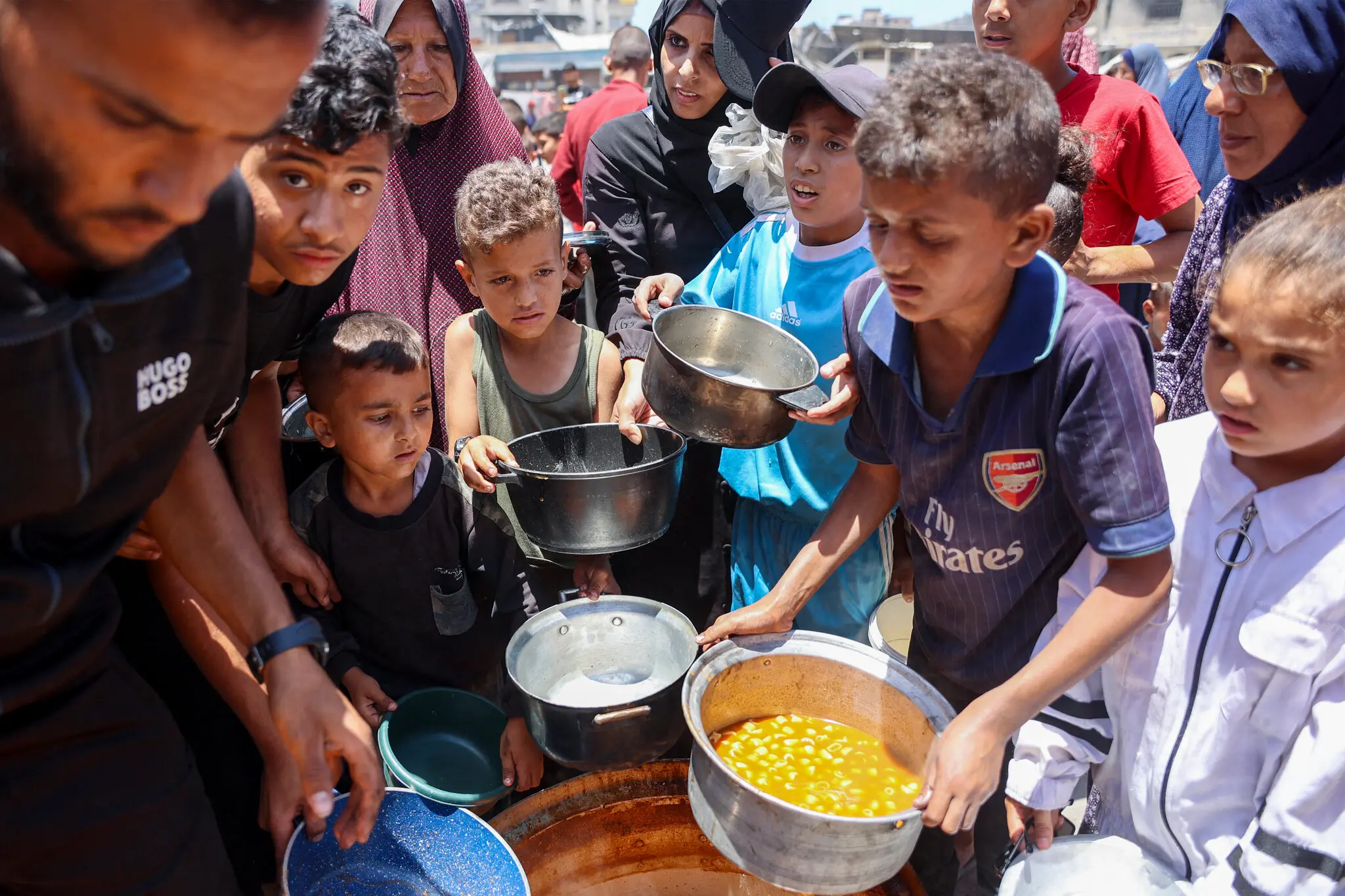
Consider a smallholder in Bihar, India’s most agriculturally precarious state, preparing her Kharif fields in late spring. She has been waiting weeks for her urea allocation. The bags that arrived were fewer than ordered and cost nearly a third more than last season. She will plant anyway—she has no choice—but she will apply less fertilizer than the crop needs. Across South Asia, across the Sahel, across the river deltas of Bangladesh, millions of farmers are making exactly the same quiet, devastating calculation. The harvest they shortchange today is the food crisis of 2027.
The trigger is by now well-documented but insufficiently understood in its full systemic depth. On February 28, 2026, the United States and Israel launched “Operation Epic Fury” against Iran. Within days, tanker traffic through the Strait of Hormuz collapsed by more than 90 percent, as Iranian drone strikes on commercial shipping drove every major insurer to withdraw war-risk coverage. Without insurance, no captain runs a vessel worth hundreds of millions of dollars through a contested chokepoint for a cargo of fertilizer. The economics are brutally simple.
What has not been simple to convey to policymakers—or to a public still fixating on oil prices—is that the Hormuz closure is not merely an energy shock. As FAO Chief Economist Máximo Torero put it bluntly at a UN press briefing in late March: “This is not only an energy shock. It is a systematic shock affecting agrifood systems globally.” The distinction matters enormously, and it is one the world has not yet fully reckoned with.
The Fertilizer Chokepoint Nobody Planned For
Most people understand the Strait of Hormuz as an oil artery. What they do not understand is that it is equally a food artery.
Up to 30 percent of internationally traded fertilizers normally transit the Strait. The Gulf region—Saudi Arabia, Qatar, the UAE, Iran, and Bahrain—accounts for roughly a third of global urea exports and around 20 to 30 percent of ammonia exports. The region also produces nearly half of the world’s traded sulfur, a byproduct of oil and gas refining that is essential for converting phosphate rock into the water-soluble fertilizer plants can absorb. When the Gulf goes dark, it does not just switch off the lights. It pulls out the nutrients from under the world’s crops.
The numbers are already stark. Benchmark urea prices have surged approximately 30 percent in a single month, according to Carnegie Endowment analysts Noah Gordon and Lucy Corthell, who identified the cascading second-order effects even before markets had fully priced them in. At ports like New Orleans, urea is now trading above $600 per metric ton; diammonium phosphate and MAP have crossed $700 per metric ton. Fitch Ratings has raised its full-year 2026 ammonia and urea price expectations by around 25 percent. The World Bank’s commodity market data shows urea prices surging nearly 46 percent month-on-month between February and March—a shock comparable in speed, if not yet in magnitude, to the worst weeks of the 2022 Ukraine fertilizer crisis.
There is a cruel asymmetry in who bears this cost. The United States produces roughly three-quarters of the fertilizer it consumes and is partially insulated. But Brazil imports more than 80 percent of its fertilizers, relying heavily on Gulf-sourced nitrogen and phosphate. Ethiopia sources almost all of its nitrogen fertilizer through Gulf supply routes and is confronting acute shortages at its most critical planting juncture. India—the world’s second-largest agricultural economy and a country where smallholder farmers operate with razor-thin margins—faces reduced domestic nitrogen fertilizer output precisely as its Kharif season approaches. Bangladesh’s fertilizer plants have paused operations as LNG prices have spiked. Schools in Pakistan have closed as energy supply falters.
The interconnection that makes this crisis uniquely insidious is the natural gas link. Nitrogen fertilizers—urea, ammonium nitrate, UAN—are synthesized from ammonia, which requires enormous volumes of natural gas both as feedstock and energy. European gas prices have surged 50 to 75 percent since the conflict began. Egypt, a major nitrogen fertilizer producer that had partially compensated for Gulf supply losses during the 2022 Ukraine crisis, has now lost its pipeline gas imports from Israel and must compete on the now-devastated LNG spot market. The secondary circuit has blown. There is no obvious compensating supplier.
A Lingering Climate Hangover
The fertilizer shock does not arrive in isolation. It lands on agricultural systems already stressed by a protracted La Niña episode that, while weaker than the 2020–2022 triple-dip event, left distinctive fingerprints on key growing regions before its recent fade.
Through the first quarter of 2026, NOAA’s Climate Prediction Center confirmed La Niña persisted, albeit in a weakened state, with its atmospheric circulation patterns carrying through into the early Northern Hemisphere spring with a characteristic lag. For South America, the pattern reinforced dryness risk across parts of Argentina’s eastern corn belt and southern Brazil’s second-crop maize, precisely the safrinha crop that accounts for the bulk of Brazil’s annual maize production. Forecasters including Dr. Michael Cordonnier maintained cautious uncertainty on Argentine soybean estimates through January, noting that the La Niña-driven dryness risk, while not catastrophic, remained live.
Drought in parts of the U.S. central and southern Plains, which lingered from a dry late 2025 and which La Niña conditions reinforced into early 2026, has stressed the hard red winter wheat crop. The FAO’s March 2026 Cereal Price Index noted international wheat prices rising 4.3 percent in a single month, supported by “deteriorating crop condition ratings in the United States amid drought concerns and expectations of reduced plantings in Australia in response to anticipated higher fertilizer costs.” That phrase—”reduced plantings in response to higher fertilizer costs”—deserves more attention than it has received. It is a direct supply-side feedback loop: the Hormuz crisis is now reshaping what farmers in the Southern Hemisphere will choose to plant in the second half of 2026.
La Niña’s precise contribution is not the dominant story here, and it would be analytically dishonest to inflate it. Meteorologists and agricultural scientists broadly concur that the current episode has been relatively mild compared to its predecessors, and the transition to ENSO-neutral and possibly El Niño conditions through mid-2026 should bring relief to South American and some East African growing areas. But two important caveats apply. First, the timing of that transition matters acutely: a lagged atmospheric response means La Niña’s influence lingers into the Northern Hemisphere planting window even after Pacific Ocean temperatures have normalized, exactly as the USDA’s ENSO advisory for spring 2026 warned. Second, and more consequently, a late-developing El Niño carries its own risks for the western Pacific Rim—drought in parts of Australia, Southeast Asia, and southern Africa—arriving precisely as the fertilizer shock is biting hardest into 2026–27 crop cycles.
The climate and geopolitical shocks are not additive. They are multiplicative. A farmer who cannot afford fertilizer is far more vulnerable to a drought stress event than a well-nourished crop. The margin for error has narrowed catastrophically.
Why This Crisis Is Different From 2022
It has become fashionable to invoke the 2022 Ukraine shock as the reference point for the current crisis. The comparison is instructive but dangerous if it breeds complacency.
In 2022, the primary disruption was to grain exports: Russia and Ukraine together accounted for roughly 29 percent of global wheat exports, and their simultaneous exit from global markets caused a supply panic that drove wheat prices up over 70 percent. Fertilizer prices also spiked sharply, but the shock was diffuse—the price transmission to food was visible within weeks because wheat itself was the missing commodity.
The 2026 Hormuz disruption follows a different and in some respects more treacherous logic. As analysts at the University of Illinois’s farmdoc daily noted, the Persian Gulf is not a major grain export region, so the Hormuz closure primarily increases fertilizer costs rather than directly removing grain from the market. Crop futures moved upward after the initial shock but modestly—corn and soybean futures rose only 3.6 to 8 percent in the first two weeks, compared to the 70 percent-plus wheat surge in 2022.
This relative calm in grain futures is precisely the danger. It suggests markets are pricing the current crisis as a cost shock to inputs rather than an immediate supply shock to outputs. They are correct—for now. But fertilizer is not a commodity that can be substituted overnight. A farmer who under-applies urea at planting cannot compensate at harvest. The yield reduction is baked in at the moment the bag stays on the shelf. And because fertilizer use follows a nonlinear yield response, even modest reductions—say, 10 to 15 percent fewer kilograms per hectare applied by cost-squeezed smallholders—can produce disproportionately large declines in output, particularly in regions where nutrient application is already far below agronomic optimum. This is the amplifier that the grain futures desks are not fully pricing.
If the disruption persists for three months or longer, FAO projects reduced yields for wheat, rice, and maize, crop substitution toward nitrogen-fixing legumes, and escalating competition between food crops and biofuel feedstocks as elevated oil prices stimulate ethanol and biodiesel demand. The 2022 food crisis peaked visibly and painfully within six months of the Ukraine invasion. The 2026 crisis will peak more quietly, and somewhat later—perhaps not until the 2026–27 harvest season—but with consequences no less severe for those at the bottom of the global income distribution.
The World Food Programme estimates that the conflict could push 45 million additional people into acute hunger by mid-2026. That is a figure that deserves to be read slowly.
The Architecture of Neglect
Every major food supply chain crisis—1973, 2008, 2011, 2022—has, in its aftermath, prompted confident declarations that the international community has learned its lesson and will build resilience. Every declaration has quietly dissolved under the pressure of competing budget priorities and market complacency during the long, calm years that follow.
The Hormuz crisis has exposed four specific architectural failures that go beyond this particular conflict.
The strategic reserve asymmetry. G7 countries do not maintain strategic fertilizer reserves to match their oil stockpiles. This is not an oversight—it reflects a deliberate political economy in which energy security has powerful industrial lobbies and food security has smallholder farmers who are voiceless in international forums. Saudi Arabia built a pipeline to enable Red Sea exports of oil when the Hormuz chokepoint is threatened. There is no equivalent pipeline for ammonia, and there are no globally coordinated ammonia stockpiles. The food system has been treated, implicitly, as a residual claim on energy infrastructure rather than as independent strategic infrastructure of its own.
The insurance failure. War-risk insurance premiums surged from 0.25 percent to as high as 10 percent of vessel value, resetting weekly, within days of the Hormuz disruption. Even if the conflict ends tomorrow—and the Security Council vote on Bahrain’s proposal to mandate open passage remains deadlocked as of this writing—the insurance industry will require months of incident-free sailing before normalizing premiums. One industry expert estimated that even a rapid diplomatic resolution would take months before maritime trade returns to normal shipping capacity. The planting season does not wait for insurers.
The China paradox. Even before the Iran war, China had been restricting fertilizer exports to protect its own farmers. China’s self-sufficiency in fertilizers was supposed to make it a buffer; instead, its export restrictions amplify global scarcity. Beijing needs Brazil to grow soybeans to feed Chinese livestock. Brazil needs Gulf urea to grow those soybeans. The Gulf is blocked. The interdependence is total and the safety valve does not exist.
The just-in-time delusion. The 2022 Ukraine shock was supposed to cure the world of just-in-time supply chain management in strategic commodities. It manifestly did not. Fertilizer inventories globally were at comfortable but not exceptional levels when the Hormuz disruption hit; the 40 to 60 day supply buffer that most import-dependent countries held has been eroding since early March. Countries like Ethiopia, which sources essentially all of its nitrogen fertilizer via Gulf supply routes, had no meaningful buffer at all.
What Must Change
The immediate priority, as the International Crisis Group’s Comfort Ero has argued, is a humanitarian transit deal through the Strait of Hormuz that allows food and fertilizer shipments to pass regardless of the military situation. Iran’s partial concessions—allowing vessels from China, Russia, India, Iraq, Pakistan, and several Southeast Asian nations to transit, and agreeing to a UN request for humanitarian and fertilizer shipments—are welcome but fragile and selective. What is needed is a robust, institutionally anchored mechanism analogous to the Black Sea Grain Initiative of 2022, covering all flag states and backed by a credible monitoring framework. The UN task force announced in early April is a starting point, not a solution.
Beyond the immediate crisis, three structural shifts deserve serious international investment.
Fertilizer diplomacy must become food diplomacy. The G7, G20, and major multilateral lenders need to treat fertilizer supply chains with the same strategic seriousness they apply to oil and semiconductor supply chains. This means coordinated strategic reserves, early-warning systems linked to ENSO forecasts, and pre-negotiated alternative routing agreements before the next chokepoint fails—not after.
Green ammonia deserves urgent acceleration, not because it is cheap, but because geography-based vulnerability demands it. The FAO’s long-term recommendation for green ammonia is not a climate fantasy—it is a food security hedge. Distributed production of nitrogen fertilizers, decoupled from Gulf gas fields, is the structural answer to geographic concentration risk. Every dollar invested in green ammonia production in Africa, South Asia, or Latin America is a dollar of insurance against the next Hormuz closure.
Smallholder resilience cannot be an afterthought. The farmer in Bihar who is applying less urea to her Kharif field right now will not generate a headline. She will not appear in a futures market report. But she—and the 300 million smallholders like her across Asia and Africa—is where the food crisis actually lives. Emergency credit facilities, targeted subsidy deployment, and climate-smart agronomic support that reduces fertilizer dependency through precision application and nitrogen-fixing cover crops are not soft development investments. They are the front line of food price stability for the entire world.
The FAO Food Price Index reached 128.5 points in March 2026, its second consecutive monthly increase, driven by energy-related pressures now bleeding into every agricultural commodity group. It remains below the terrifying peak of March 2022. But the gap is closing, and it is closing for structural reasons—reasons that will not reverse when a ceasefire is eventually signed and the drones stop flying over the Strait.
The food crisis of 2026–2027 will not announce itself with a single dramatic headline. It will arrive, as it always does for the world’s poorest, in the slow accumulation of empty shelves, skipped meals, and fields that yielded less than they should have—because the bag of urea arrived too late, cost too much, or never arrived at all. We have been warned. The question is whether the warning will be heard before the harvest, or only after it.
Discover more from The Economy
Subscribe to get the latest posts sent to your email.
Analysis
Wall Street’s Blockchain Gold Rush Has a Fatal Flaw the IMF Just Named
As BlackRock, JPMorgan, and the NYSE race to tokenise everything, the fund that guards global financial stability is issuing a quiet but urgent warning: build this wrong, and the next market crisis won’t just spread faster — it will be structurally impossible to stop.
There is a particular kind of danger in making financial systems too efficient. The history of modern finance is, in some essential way, the story of buffers — the friction, the delay, the human pause between a decision and its consequence. Margin calls that took hours to process. Settlement cycles that ran two business days. Clearing houses that smoothed out the chaos of simultaneous trades. These inefficiencies were not design flaws. They were, in the language of systems engineering, shock absorbers. And Wall Street has spent the last three years engineering a future in which they no longer exist.
That future now has a name — tokenised finance — and it is accelerating with the kind of momentum that tends to outpace regulatory architecture by a decade. BlackRock’s BUIDL fund, launched in 2024 on the Ethereum blockchain and now managing over $2.5 billion in assets, has become the flagship of a movement. JPMorgan’s Kinexys platform — which powers the bank’s new My OnChain Net Yield Fund, known as MONY — made JPMorgan the largest globally systemically important bank to launch a tokenised money-market fund on a public blockchain. Earlier this year, the New York Stock Exchange announced plans for a blockchain-based venue that would allow investors to trade tokenised stocks and ETFs around the clock — no settlement delay, no market hours, no pause. According to data from rwa.xyz, tokenised real-world assets have now crossed $27.5 billion on-chain, with U.S. Treasury products alone accounting for more than $12 billion of that total.
This is not speculative anymore. This is infrastructure being built in real-time, at systemic scale, by institutions that sit at the very centre of the global financial plumbing.
And now the IMF wants you to pay attention to what happens when the plumbing has no pressure-relief valve.
What Tobias Adrian Actually Said — and Why It Matters More Than Headlines Suggest
On April 1, 2026, the IMF published a note that deserves to be read in full rather than summarised in a press release. Authored by Tobias Adrian, the Fund’s Financial Counsellor and Director of the Monetary and Capital Markets Department, “Tokenized Finance” does not read like a bureaucratic warning. It reads like a structural diagnosis.
Adrian’s central argument is precisely the one that Wall Street’s boosters tend to dismiss: that tokenisation is not a marginal efficiency improvement. It is, as the note puts it, “a structural shift in financial architecture” — one that fundamentally alters how trust, settlement, and risk management function at the system level. The distinction matters enormously. You can regulate a product. Regulating an architecture requires thinking several orders of magnitude further ahead.
The paper identifies four specific risk categories that deserve unpacking, because each one is more counterintuitive than it first appears.
The Four Risks: Why Speed Is the Most Dangerous Efficiency of All
1. The Temporal Buffer Problem
Traditional finance has always embedded time into its risk management. When a bank faces a margin call in a T+2 settlement system, it has approximately 48 hours to locate liquidity, assess counterparty exposure, and if necessary, contact a regulator. Central banks are designed around this rhythm — their liquidity tools, their emergency facilities, their intervention protocols — all calibrated to business-day cycles.
As the IMF note warns, tokenised systems replace this architecture with automated margin calls, continuous settlement, and algorithmic feedback loops that compress the intervention window to near-zero. Think about what that means in practice. A stress event that currently gives a regulator 48 hours to respond might, in a fully tokenised system, leave a window of 48 minutes — or less. The irony is acute: the feature Wall Street is selling as a benefit (instant settlement, 24/7 operation) is precisely the feature that turns a liquidity problem into a systemic cascade.
This is not theoretical. The crypto markets have already run this experiment, repeatedly. In May 2022, the collapse of the Terra/Luna ecosystem wiped out approximately $40 billion in value in 72 hours — a speed of contagion that no traditional market mechanism could have produced. Tokenised finance, at institutional scale, with real-world assets as collateral, would be playing the same game with significantly higher stakes.
2. Concentration and Shared Infrastructure Risk
The second risk is one that financial stability analysts recognise from the pre-2008 era — but with a modern twist. When multiple institutions route through the same ledger infrastructure, errors in smart contracts or infrastructure failures can affect all participants simultaneously, rather than in the sequential fashion that allows for containment. The IMF calls this a concentration risk embedded in shared ledger architecture — a form of correlated exposure that has no real precedent in traditional finance.
One bug in a smart contract governing a trillion-dollar collateral ecosystem is not an operational nuisance. It is a systemic event.
3. Fragmentation and the Liquidity Silo Problem
Here is where the picture becomes genuinely paradoxical. Tokenisation promises to improve market liquidity — and in narrow, isolated conditions, it does. But if multiple platforms emerge with incompatible standards and siloed liquidity pools, the aggregate effect is the opposite. The IMF warns that fragmentation across platforms reduces netting efficiency and impairs the par convertibility between assets — the ability to treat different instruments as equivalent for settlement purposes — which is a foundational assumption of modern financial plumbing.
Imagine ten competing tokenisation platforms, each hosting its own version of tokenised Treasuries, each with slightly different legal frameworks and redemption mechanisms. In a calm market, they coexist. In a stress event — when institutions rush simultaneously to redeem and convert — the absence of common standards turns a manageable liquidity event into a multi-front crisis with no coordinating mechanism.
4. Cross-Border Chaos and the Jurisdictional Void
Tokenised transactions are, by their nature, borderless. A smart contract executing on Ethereum does not consult a legal jurisdiction before settling. But dispute resolution mechanisms remain stubbornly national — and the legal status of tokenised assets remains, in most jurisdictions, profoundly uncertain. Who owns a tokenised bond during an insolvency? Under which country’s law? In which court? The IMF flags that the principle of “code is law” — beloved by blockchain maximalists — is not a substitute for legal certainty, especially for instruments sitting inside systemically important institutions.
The Emerging Market Dimension: Who Bears the Tail Risk?
If you are reading this from London, New York, or Frankfurt, the systemic risks of tokenised finance feel abstract — contained, perhaps, to the corridors of Canary Wharf or Wall Street. That is a dangerous perspective.
For economies in Latin America, sub-Saharan Africa, and South and Southeast Asia, the tokenisation wave carries a specific and asymmetric danger: monetary sovereignty. A previous IMF analysis documented how dollar-backed stablecoins are already accelerating currency substitution in high-inflation economies — Argentina, Turkey, and Venezuela are the textbook cases. Privately issued global stablecoins, if they become dominant settlement assets in tokenised markets, could displace local currencies in exactly the jurisdictions where central banks have least capacity to respond.
This is the emerging market dimension of tokenisation risk that most Western commentary ignores entirely: the possibility that the infrastructure of the next financial crisis will be built in New York but the worst of its consequences will be felt in Nairobi, Jakarta, or Buenos Aires. The capital-flow volatility implications alone — tokenised assets enabling frictionless cross-border movement — could destabilise exchange rates in ways that make the 1997 Asian financial crisis look well-cushioned by comparison.
Why This Is Not Anti-Innovation Scaremongering
Let us be precise about what this argument is not.
The efficiency gains from tokenisation are real and measurable. Atomic settlement — the simultaneous exchange of asset and payment — eliminates counterparty risk in a way that the T+2 system never could. Embedded compliance through programmable assets reduces the cost of regulatory reporting. Continuous liquidity management allows institutions to optimise collateral use in ways that genuinely benefit end investors. BlackRock’s Larry Fink has called for the entire financial system to run on a common blockchain — and while the maximalism of that vision invites scepticism, the underlying logic about settlement efficiency is sound.
The IMF note, to its credit, does not dispute any of this. Adrian explicitly acknowledges the benefits. His argument — and mine — is architectural, not ideological. The question is not whether to tokenise finance. That ship has already sailed, and the $27.5 billion on-chain today is merely the early tide. The question is how the foundational infrastructure is built, and who bears the systemic risk when it fails.
A high-speed train is not inherently dangerous. A high-speed train without adequate braking systems, operating on tracks without standardised gauges, running through tunnels with no emergency protocols — that is a different proposition entirely.
The IMF’s Five-Pillar Prescription: A Policy Architecture Worth Taking Seriously
Adrian proposes a five-part framework that is more rigorous than most regulatory roadmaps currently circulating in parliamentary committees and central banking briefing rooms.
First, anchor settlement in safe money — specifically, wholesale central bank digital currencies (wCBDCs) or equivalent public-sector settlement assets. The principle is straightforward: the trust that makes financial systems function cannot be fully outsourced to private infrastructure. Settlement in private stablecoins, however well-designed, creates a dependency on entities that lack the public accountability and unconditional backing of a central bank.
Second, apply consistent regulation to economically equivalent activities. A tokenised money-market fund that functions identically to a traditional money-market fund should face the same regulatory requirements — regardless of the technology underlying it. This sounds obvious. In practice, regulatory arbitrage between tokenised and traditional instruments is already emerging, and the IMF is right to call it out early.
Third, establish legal certainty for tokenised assets — clarifying ownership rights, creditor protections, and jurisdictional applicability before the scale of these markets makes retroactive legal reform prohibitively complex.
Fourth, promote interoperability standards that prevent the fragmentation of liquidity across incompatible platforms. This is a role for standard-setting bodies — the BIS Innovation Hub, IOSCO, the Financial Stability Board — rather than individual institutions, and it requires coordination across jurisdictions that rarely cooperate at speed.
Fifth, and most ambitiously, adapt central bank liquidity tools to a 24/7 automated environment. This is the deepest structural challenge. The Federal Reserve, the European Central Bank, the Bank of England — all of them are currently calibrated to intervene at business-day frequency. A financial system that settles continuously requires lender-of-last-resort tools that operate continuously. That is not a software update. It is a fundamental reimagining of what central banking looks like in the digital age.
The Window Is Open — For Now
There is a line near the end of Adrian’s note that should be quoted wherever serious people discuss financial architecture: “The window for shaping the architecture of the tokenised financial system is open, but it will not remain so indefinitely.”
That is not bureaucratic boilerplate. It is a precise statement about the path-dependency of infrastructure decisions. Once JPMorgan’s MONY fund has $100 billion under management. Once the NYSE’s tokenised equities platform is processing ten million trades a day. Once the legal precedents that emerge from the first tokenisation-related insolvency have hardened into case law in six different jurisdictions simultaneously — at that point, the architecture is largely fixed. You can regulate at the margins. You cannot redesign the plumbing while the city runs on it.
Policymakers — at the Federal Reserve, the Bank for International Settlements, the Financial Stability Board, and in finance ministries from Washington to Brussels to Singapore — have a narrow window to establish the public infrastructure and coordination frameworks that could make tokenised finance genuinely safe. What that requires, practically, is not regulatory hostility to innovation but something considerably harder: regulatory ambition. The willingness to build public infrastructure ahead of private demand. The discipline to enforce interoperability before fragmentation becomes entrenched. The foresight to extend central bank tools into a 24/7 world before the first crisis demonstrates why it was necessary.
The private sector is moving fast. BlackRock, JPMorgan, the NYSE — they are not waiting. The public sector, historically, moves slower. In this case, the asymmetry between those two speeds is itself the systemic risk.
The IMF has named it. The architecture remains, for now, unbuilt. That is the most important financial stability question of 2026 — and the one that will define the next crisis when it comes.
Discover more from The Economy
Subscribe to get the latest posts sent to your email.
Analysis
The Strait of Hormuz: The World’s Most Dangerous Energy Chokepoint
There is a strip of seawater — twenty-one miles wide at its narrowest, wedged between the Iranian coastline and the Omani shore — that has long been described by energy analysts as the single most consequential geographic feature in the global economy. For decades, that description felt like an abstraction. A risk. A theoretical vulnerability that strategists pencilled into worst-case scenarios and then quietly filed away.
The events of late February 2026 have made that abstraction brutally, expensively concrete.
On 28 February, the United States and Israel initiated coordinated airstrikes on Iran under Operation Epic Fury, targeting military facilities, nuclear sites, and leadership. Within hours, at least three oil tankers had been struck near the strait, shipping companies began suspending transits, and oil prices were moving with a velocity not seen in modern market history. Brent crude crossed $100 per barrel on 8 March — for the first time in four years — before surging to a peak of $126 per barrel. Wikipedia
The Strait of Hormuz crisis of 2026 has since been characterized by the head of the International Energy Agency, Fatih Birol, as “the largest supply disruption in the history of the global oil market.” World Economic Forum That is not hyperbole. That is the understated language of a man watching the architecture of global energy security collapse in real time.
This essay is not another news dispatch. It is an argument — an urgent, evidence-based argument — that the Hormuz crisis has exposed structural failures so profound, and dependencies so reckless, that incremental policy responses are no longer sufficient. The world needs radical rethinking. And it needed it twenty years ago.
The Anatomy of a Chokepoint: Why Hormuz Was Always the Most Dangerous Fault Line
The Strait of Hormuz is the world’s pre-eminent energy chokepoint not because of its width but because of its irreplaceability. Its two unidirectional sea lanes facilitate the transit of around 20 million barrels of oil per day, representing roughly 20% of global seaborne oil trade, primarily from producers like Saudi Arabia, the United Arab Emirates, Iraq, and Qatar. Wikipedia
But the implications of Strait of Hormuz closure on the world energy economy extend far beyond crude oil — and this is precisely what the shallow reporting of prior crises failed to capture. While focus rightly falls on the 11 million barrels of oil and 140 billion cubic metres of gas in daily global circulation, the impact extends far beyond energy. World Economic Forum The strait is simultaneously an artery for liquefied natural gas, fertilizers, aluminium, methanol, sulfur, helium, and petrochemical feedstocks — a supply chain polymath that quietly underpins everything from the plastic packaging on your groceries to the nitrogen fertilizer that grew the corn in your food.
The U.S. Energy Information Administration has long designated Hormuz as a “world oil transit chokepoint,” noting in successive annual reports that no viable substitute exists at comparable volume. The EIA’s warnings were consistent, authoritative, and largely ignored by policymakers who preferred optimism to contingency planning.
The Strait’s geopolitical risks are equally structural. It is, uniquely among major chokepoints, bordered on one side by a state — Iran — with both the capability and the demonstrated willingness to weaponize the waterway in pursuit of strategic objectives. The Strait of Suez has Egypt. The Strait of Malacca has Malaysia and Indonesia. Hormuz has Iran. That asymmetry has always made it the most dangerous fault line in global energy logistics.
February–April 2026: How the Crisis Unfolded
The immediate trigger was Operation Epic Fury, but the conditions for catastrophe had been accumulating for years. Tensions between Iran, the United States, and Israel had escalated in the lead-up to 2026, stemming from failed nuclear negotiations in Geneva and a prior 12-day air conflict in 2025. Wikipedia In the weeks before the strikes, war-risk ship insurance premiums for the strait increased from 0.125% to between 0.2% and 0.4% of the ship insurance value per transit — for very large oil tankers, an increase of a quarter of a million dollars per crossing. Wikipedia
What followed February 28 was a cascade of compounding failures that no strategic reserve or pipeline bypass could adequately address.
The warnings and subsequent attacks on vessels caused tanker traffic to drop first by approximately 70%, with over 150 ships anchoring outside the strait. Traffic subsequently dropped to near zero. Wikipedia Major container shipping companies — Maersk, Hapag-Lloyd, and CMA CGM — suspended operations, rerouting vessels around Africa’s southern tip. CNBC War-risk insurers followed, cancelling protection and indemnity insurance for Gulf transits from 5 March. Carra Globe The result, as commodity intelligence firm Kpler diagnosed with clinical precision, was a de facto closure for most of the global shipping community — insurance withdrawal doing the work that a physical blockade had not. Kpler
Vessel tracking data indicate that 16 million barrels per day of crude oil and oil products have stopped flowing through the Strait — a staggering decline of 80 percent compared to the 2025 average, with only 10 vessel crossings recorded over a four-day period, against a typical daily average of 70 to 80. Gulf International Forum
On 27 March, the IRGC formally declared the strait closed to vessels bound to or from the ports of the United States, Israel, and their allies. By early April, Brent crude had climbed to $127.61 per barrel — nearly double the $71.32 price recorded the day before Operation Epic Fury. USNI News
The Economic and Geopolitical Implications: A Multi-Layered Shock
Hormuz Blockade Impact on Oil Prices and the Spectre of Stagflation
The oil price shock alone would constitute a significant macroeconomic event. But the Federal Reserve Bank of Dallas has modelled the full GDP consequences with sobering precision. A complete cessation of oil exports from the Gulf amounts to removing close to 20 percent of global oil supplies from the market. The Dallas Fed model implies this raises the average WTI price to $98 per barrel and lowers global real GDP growth by an annualized 2.9 percentage points in Q2 2026. Dallas Fed If the disruption extends to three quarters, oil prices could reach $132 per barrel and global real GDP growth could fall 1.3 percentage points for the year. Dallas Fed
The even grimmer scenario circulating among Wall Street analysts cited by Bloomberg is $200 per barrel — a number that, if realized, would constitute not merely a recession trigger but a structural shattering of the post-pandemic global recovery.
European gas markets have been hit through a separate but reinforcing channel: historically low gas storage levels — estimated at just 30% capacity following a harsh 2025–2026 winter — meant that QatarEnergy’s force majeure declaration sent Dutch TTF gas benchmarks nearly doubling to over €60/MWh by mid-March. Wikipedia The echoes of 2022, when Russia’s invasion of Ukraine upended European energy, were unmistakable and humiliating: the continent had, once again, failed to structurally wean itself from a single fragile supply corridor.
Hormuz Blockade Impact on Asian Oil Imports: The Existential Exposure
If Europe’s predicament is severe, Asia’s is existential. The Strait of Hormuz as a chokepoint creates geopolitical risks that are disproportionately concentrated in the Asia-Pacific region — and the 2026 crisis has exposed that vulnerability with a candour that decades of diplomatic optimism obscured.
In 2024, 84% of the crude oil and condensate and 83% of the LNG that moved through the Strait went to Asian markets, with China, India, Japan, and South Korea accounting for a combined 69% of all Hormuz crude flows. Seatrade Maritime
The individual country exposure is jaw-dropping. Japan relies on the strait for close to three-quarters of its oil imports; South Korea sources roughly 60% of its crude via the same route; almost half of India’s crude oil imports and about 60% of its natural gas supplies move through Hormuz. Seatrade Maritime Around 84% of the crude oil and 83% of the LNG passing through the Strait went to Asia in 2024. Wikipedia
For the LNG market — where there are genuinely no alternative routes for stranded Gulf production — the situation is even more extreme. Unlike oil, there are no alternative routes to get the gas to market and very few strategic stockpiles to cushion the shortfall. Bloomberg LNG spot prices in Asia increased by over 140% as QatarEnergy declared force majeure on its contracts and shut down gas liquefaction at Ras Laffan, with analysts warning that restarting would take weeks. Wikipedia
South Korean petrochemical producers cut run rates by up to 50 percent. Japan, sourcing roughly 4 in every 10 barrels of its crude from the Gulf, faced comparable pressure. Atlantic Council Meanwhile, China — the largest crude importer on earth — discovered that its buffers, while more substantial than its neighbours’, were not inexhaustible. China’s LNG inventories as of end-February stood at 7.6 million tonnes, providing short-term cover, but Beijing would need to compete for Atlantic cargoes if the outage persisted. CNBC
Chart suggestion: Pre- and Post-Crisis Daily Flows Through the Strait of Hormuz (barrels/day, LNG volumes, Q4 2025 vs. March 2026)
The Fertilizer and Food Security Cascade: The Crisis Nobody Saw Coming
The most underappreciated dimension of the 2026 Hormuz crisis is not its energy dimensions — it is its agricultural ones.
The Arabian Gulf is the central hub for global agriculture, accounting for at least 20% of all seaborne fertilizer exports. The dependency is even more acute for urea, the world’s most widely used nitrogen fertilizer, with 46% of global trade originating from the region. World Economic Forum This supply is critical for India (which accounts for 18% of global urea imports), Brazil (10%), and China (8%).
About one-third of global seaborne trade in fertilizers typically passes through the Strait of Hormuz. The disruption affects not only export markets such as Sudan, Brazil, or Sri Lanka, but also fertilizer producers elsewhere that lack key ingredients. Carnegie Endowment for International Peace The Gulf produces roughly a quarter of global sulfur — a byproduct of oil refining that phosphate producers worldwide need to convert rock phosphate into a plant-absorbable nutrient. With Gulf refineries offline, that input supply has simply ceased.
The price shock and shortage of fertilizer during spring planting season could reduce the planting and yields of corn in the US — the main feedstock for US beef, poultry, and dairy — and potentially increase global food prices into 2027. Wikipedia The urea benchmark is up about 30 percent in the last month. Carnegie Endowment for International Peace Fertilizer plants have paused operations in Bangladesh, schools have closed in Pakistan, and India and Japan are turning to coal wherever possible. Time
The deeper structural problem, as the Carnegie Endowment for International Peace has noted, is that G7 countries do not maintain strategic fertilizer reserves to match their oil stockpiles. Carnegie Endowment for International Peace The geopolitical architecture of critical commodity security was designed for petroleum. It was not designed for the agricultural inputs that petroleum-adjacent economies also happen to produce in abundance. That is a failure of imagination that is now measurable in calories.
Why Bypass Pipelines and Alternative Routes Are Not the Answer
The default technocratic response to any Hormuz crisis has always involved pointing to bypass infrastructure — and the bypass infrastructure has always fallen grotesquely short of requirements.
Saudi Arabia increasingly diverted oil to the Red Sea port of Yanbu via the East–West Crude Oil Pipeline, while the UAE diverted oil via the Abu Dhabi Crude Oil Pipeline to Fujairah on the Arabian Sea. Iraq has an alternative route via the Kirkuk–Ceyhan Pipeline to the Mediterranean through Turkey. The combined capacity of these pipelines is 9 million barrels per day — compared to the 20 million that ordinarily transits the strait. Wikipedia
That arithmetic is damning enough. But the picture is worse. The Red Sea route is vulnerable to potential attacks by the Houthis Wikipedia, who announced a resumption of attacks on commercial shipping contemporaneously with the Hormuz closure, forcing Suez Canal traffic to reroute around Africa’s Cape of Good Hope, adding weeks to transit times and increasing shipping costs. Wikipedia
For LNG, there is no bypass solution whatsoever. Pipeline infrastructure does not exist to redirect Qatari or Emirati gas exports to Asia in the event of Hormuz closure. The rerouting of LNG tankers around the Cape adds weeks — weeks during which Asian countries run through reserves and industrial facilities shut down. By March 22, Dun & Bradstreet’s analysis had identified 7,716 businesses that had experienced at least one shipment cancellation since February 28, with more than 44,000 businesses across 174 economies having at least one shipment exposed. Dun & Bradstreet
The seductive promise of alternatives to Strait of Hormuz oil transit has always obscured one fundamental reality: the strait was never just an oil route. It is the central node of a complex energy and commodities system that evolved, over fifty years, to run through that single chokepoint. You cannot reroute a system. You can only redesign it.
An Honest Reckoning: Why This Was Always Coming
Let me say something that the diplomatic language of think-tank reports tends to avoid: the Hormuz crisis of 2026 is a failure of political will, not a failure of intelligence.
Every credible scenario exercise run by the Brookings Institution, the Centre for Strategic and International Studies, or the Council on Foreign Relations in the past twenty years identified Hormuz as the single largest structural vulnerability in global energy security. Every IEA annual report since the early 2000s flagged the concentration of oil transit through a single choke point controlled by a potentially hostile state. Every geopolitical stress test modelled this exact scenario — an Iran-US confrontation triggering a de facto closure — and generated results that looked very much like the data we are reading today.
The world was warned. Repeatedly. In precise technical language by credentialed institutions with significant policy access. And the world — its energy ministries, its central banks, its insurance markets, its shipping consortia — collectively decided that the costs of reducing Hormuz dependency were higher than the probability-weighted costs of a crisis.
That calculation was wrong. And it was wrong not because the probability was misjudged, but because the magnitude of the crisis was systematically underestimated. The assumption was that Hormuz disruptions would be brief, partial, and primarily confined to oil prices. No model adequately captured the simultaneous fertilizer shock, the LNG supply collapse, the insurance market withdrawal, the compounding Red Sea disruption, or the cascading food security crisis across three continents. The system turned out to be dramatically more interconnected than the models assumed.
In conversations with more than three dozen oil and gas traders, executives, brokers, shippers, and advisers, one message was repeated over and over: the world still hasn’t grasped the severity of the situation. Bloomberg That, perhaps, is the most chilling line to emerge from this crisis. If the energy professionals closest to the system believe its severity is still underestimated, then every policy response calibrated to “managing” rather than “redesigning” the global energy architecture is starting from the wrong premise.
The Way Forward After the Hormuz Crisis: Energy Security That Doesn’t Rely on a Single Lane
1. A Hormuz Transit Initiative: Multilateral Legal Architecture for Chokepoints
The most immediate need is political, not technical. The Black Sea Grain Initiative offers a lesson: even in the midst of war, diplomacy can still make room for necessity. Time What is needed is a standing international legal regime — call it a Hormuz Transit Initiative — that establishes permanent protocols for the safe passage of food, fertilizers, and energy commodities through internationally critical straits, backed by multilateral guarantees and enforceable under UNCLOS.
Iran’s closure of the strait constitutes a violation of the UN Convention on the Law of the Sea by denying transit passage through a strait used for international navigation. Wikipedia The international community’s failure to enforce that principle in real time reflects the absence of a pre-negotiated institutional mechanism. A Hormuz Transit Initiative would not require the resolution of the US-Iran conflict. It would require only the recognition of a shared global interest in preventing cascading humanitarian crises — an interest that, as the International Crisis Group has argued, is real even for adversarial states.
2. Diversified Strategic Reserve Coordination: Extending SPR Logic to LNG and Fertilizers
The strategic petroleum reserve system, coordinated through the IEA, is the only institutional mechanism that has provided any meaningful buffer to this crisis — and its limitations have been nakedly exposed. G7 countries maintain no strategic fertilizer reserves to match their oil stockpiles. Carnegie Endowment for International Peace There are no internationally coordinated LNG strategic reserves.
This must change. The IEA framework should be extended, urgently, to encompass minimum mandatory LNG storage commitments for net-importing nations, and a G20 fertilizer reserve coordination mechanism should be established before the next Northern Hemisphere planting season. These are not radical proposals; they are the application of fifty-year-old strategic reserve logic to commodities that the 21st-century economy has made equally critical.
3. Accelerated Energy Transition as Strategic Security Policy
The long-term answer to Hormuz dependency is not more pipelines. It is fewer hydrocarbons. The structural reduction of global dependence on Persian Gulf oil and gas is simultaneously the most effective climate policy and the most effective energy security policy available.
The current crisis has, ironically, made the economic case for the energy transition more compelling than any carbon price or regulatory mandate. Analysts warn that if disruptions persist, the world will have to significantly reduce its oil and gas consumption — with some in the industry warning that the energy transition will be “forced on us in a very painful way.” CNBC
Japan and South Korea — among the most Hormuz-exposed economies on earth — should treat accelerated offshore wind, advanced nuclear, and hydrogen infrastructure not as energy policy but as national security investments. The World Economic Forum’s Global Risks Report 2026 notes that geoeconomic confrontation is now a key driver of economic and industrial policy. World Economic Forum Energy transition investment is the most effective hedge against that confrontation.
4. Gulf-Asia Energy Diplomacy: New Long-Term Architecture
For Asian economies that will remain hydrocarbon-dependent for the next decade, the strategic response to 2026 must include a fundamental restructuring of their energy supply relationships. The Gulf International Forum has noted that Gulf national oil companies can leverage the current crisis to accelerate long-term supply agreements with Asian buyers now acutely aware of their vulnerability to spot market volatility. Gulf International Forum
Long-term offtake agreements, co-investment in bypass infrastructure, and the strategic diversification of supply sources — toward US LNG, Australian LNG, East African oil, and Atlantic basin producers — should now be treated as non-negotiable elements of Asian energy security planning. The era of comfortable spot market dependence on a single chokepoint region is over.
5. Petrochemical and Fertilizer Supply Chain Resilience
The crisis could enable Beijing to establish new chokepoints over near-term or more enduring petrochemical supply chains Atlantic Council — a geopolitical consequence that democracies in Asia and Europe have been slow to recognize. Western industrial policy, already pivoting toward critical mineral supply chain resilience, must now explicitly encompass petrochemical feedstocks, fertilizer inputs, and LNG.
The US Inflation Reduction Act and the EU’s Critical Raw Materials Act were steps in the right direction. A Hormuz-aware industrial policy would extend this logic to the full spectrum of commodities that transit this chokepoint — and invest accordingly in domestic production capacity, allied-nation supply agreements, and stockpiling.
What This Crisis Has Already Changed — Permanently
It would be a mistake to treat the 2026 Hormuz crisis as an event from which the world simply recovers and returns to a previous equilibrium. That equilibrium is gone.
Insurance markets have permanently repriced Gulf transit risk. Shipping companies have begun investing in Cape of Good Hope routing infrastructure. Asian governments have initiated emergency reviews of their Hormuz exposure, and some — Japan and South Korea most urgently — are accelerating alternative energy investments that would previously have faced years of political resistance.
As of April 2026, there are ongoing concerns about energy security as well as food security related to fertiliser shortages and costs. Wikipedia These concerns will not resolve when the Strait reopens. They will persist — and they should persist — as the animating force behind an overdue restructuring of global energy architecture.
The crisis has also, finally, forced a honest public accounting of the degree to which the global food system runs on Gulf hydrocarbons. The fertilizer supply chain, the nitrogen cycle, the spring planting season in the Northern Hemisphere — all of these depend, in ways most consumers have never been asked to understand, on smooth passage through a twenty-one-mile bottleneck controlled by a nation currently at war.
That is not a sustainable arrangement. It was never a sustainable arrangement. The difference between 2006 and 2026 is that the consequences of sustaining it are no longer hypothetical.
Conclusion: The Strait Has Spoken — Now Policymakers Must Act
The Strait of Hormuz has always been more than a shipping lane. It is a test — a recurring, high-stakes examination of whether the international community has the strategic foresight and political will to manage its own dependencies.
For fifty years, the world has failed that test by passing it narrowly enough to avoid catastrophe. The disruptions of 2011, 2012, 2019, and 2020 were warnings. Each time, the system held — barely — and the warnings were filed under “risk management” rather than “structural reform.”
The 2026 crisis may be different. Not because the immediate shock is unique — it was always predictable — but because the second and third-order consequences are now visible in ways that are genuinely unprecedented. Fertilizer shortages during planting season. LNG rationing in Pakistan and Bangladesh. South Korean factories cutting production by half. European gas prices doubling into spring. A possible $200 barrel of oil that would constitute the largest single economic disruption since the 2008 financial crisis.
The main message from the energy industry insiders closest to the crisis is that the world will get the energy transition forced on it in a very painful way that will happen very quickly. Bloomberg That is not, ultimately, an oil trader’s message. It is a policymaker’s instruction.
The way forward is not to reopen the Strait and return to the comfortable dependency that created this crisis. The way forward is to use this rupture — this painful, expensive, globally disruptive moment — to build a global energy architecture that no longer has a single point of failure.
Twenty-one miles of water should not hold the world to ransom. The fact that it does, in 2026, is a policy choice. And policy choices can be unmade.
Discover more from The Economy
Subscribe to get the latest posts sent to your email.
AI
The New Global Metabolism: How Electrostates Are Eating the World Petrostates Built
The rupture in world order is not merely political. It is thermodynamic. Two civilizational models—one running on molecules, one on electrons—are now in direct and irreversible collision. The side that misreads this as a trade dispute will lose the century.
When Mark Carney stepped to the podium in Davos on January 20, 2026, he did not arrive with a policy platform. He arrived with a death certificate. The rules-based liberal international order—that elaborate postwar architecture of interlocking institutions, U.S.-guaranteed public goods, and lawyerly multilateralism—was finished, he told a stunned room of hedgers, ministers, and central bankers. Not wounded. Not strained. Finished. “The old order is not coming back,” he said, to a rare standing ovation. “Nostalgia is not a strategy.”
He was right. But Carney, precise and sober as ever, still understated the depth of the break. What is ending is not merely a diplomatic arrangement or a particular configuration of great-power relations. What is ending is the fossil-fueled metabolic order that made the liberal world profitable, politically stable, and physically possible for three-quarters of a century. We are not watching a geopolitical transition. We are watching a civilizational one—the close of the Carbon Age and the violent, disorganized birth of the Electric Century. And the central story of that birth is the contest now taking shape between electrostates and petrostates: between nations rewiring the global grid and nations weaponizing the pipelines of the past.
The Metabolic Rupture: Why This Is Different From Every Previous Energy Shift
Energy transitions have happened before. Coal displaced wood. Oil displaced coal. Each shift reshuffled geopolitical hierarchies, created new empires, and ruined old ones. But what distinguishes the current transition is its deliberately competitive character. This is not a market quietly rotating from one fuel to another. It is a strategic mobilization—two superpower blocs making diametrically opposed bets about what will power the 21st-century economy, and consciously constructing the institutions, alliances, and supply chains to back those bets.
The term “electrostate” has proliferated rapidly in the analytical literature of 2025 and 2026, and for good reason: it captures something real about how national power is being reconstituted. An electrostate, in its cleanest definition, is a nation that draws a large and growing share of its total final energy consumption in the form of electricity—and that has positioned itself to dominate the technologies, supply chains, and standards that make mass electrification possible. A petrostate, by contrast, is a nation whose political economy, fiscal base, and civilizational identity remain anchored in the extraction and export of fossil fuels—and, crucially, in the perpetuation of a global order that keeps those fuels indispensable.
By this reckoning, the contest is not simply China versus America, though that is its sharpest edge. It is a structural divide running through the global economy, separating nations whose relative geopolitical position improves as the world electrifies from those whose position deteriorates with every solar panel installed and every internal combustion engine retired.
The Electrostate: China’s Monopoly on the Future’s Hardware
No serious analyst disputes China’s position. The numbers are not debatable; they are staggering. According to the International Energy Agency, China controls more than 90 percent of global rare earth processing and 94 percent of permanent magnet production—the components essential for EV motors and wind turbines. Its share in manufacturing solar panels exceeds 80 percent. It produces more than 70 percent of all lithium-ion EV batteries and accounts for over 70 percent of global electric vehicle production. In 2025, China installed nearly twenty times the wind and solar capacity of the United States. Nine-tenths of China’s investment growth in 2025 was concentrated in the green energy sector.
These figures describe not a market participant but a hegemon. China has, in less than a generation, constructed what analysts at the Columbia University Center on Global Energy Policy call the “electric stack”—a vertically integrated command of every layer of the clean energy supply chain, from rare earth mining to battery chemistry to EV software. Critically, it has decoupled this dominance from Western demand: nearly half of China’s green technology exports now flow to emerging markets across Africa, Southeast Asia, and Latin America, embedding Beijing as the indispensable infrastructure partner for the global south’s electrification journey.
This is not accidental. It is the product of what historian Nils Gilman has called China’s “authoritarian developmental state” operating with a generational strategic horizon that democratic governments structurally cannot match. Beijing’s dominance of the green supply chain is simultaneously an industrial policy triumph, a geopolitical masterstroke, and—for nations that have not yet grasped its implications—a slow-motion trap. The leverage here is not the blunt instrument of a gas cutoff. It is subtler and more durable: control over standards, compatibility, long-term dependency, and the terms on which the developing world modernizes its energy metabolism.
The Petrostate Counterplay: Washington’s Bet on Molecules
Against this, consider the American wager. By early 2026, U.S. crude production remained near record highs—approximately 13.6 million barrels per day—making the United States the world’s largest oil and gas producer and its largest LNG exporter. The Trump administration, having dismissed climate change as a “disastrous ideology” in its 2025 National Security Strategy, has doubled down on what it calls “energy dominance”: rolling back renewable subsidies, fast-tracking fossil fuel permits, and positioning American LNG as the geopolitical tether that keeps European and Asian allies aligned with Washington.
There is a coherent strategic logic here, and it should not be dismissed. The “shale shield” is real. When Russian gas flows to Europe collapsed after 2022, American LNG kept the lights on in Berlin and Warsaw. Energy secretary Chris Wright’s comment at Davos—that global renewable investment had been “economically a failure”—was received as ideological dogma by most of the room, but it contained a grain of tactical truth: energy density, portability, and the ability to dispatch power on demand still matter enormously in a crisis. A China that produces 70 percent of the world’s EV batteries remains the world’s largest importer of oil and gas. In a military confrontation, an electrostate without domestic hydrocarbon reserves has vulnerabilities that no number of solar panels eliminates overnight.
And yet. The petrostate counterplay is a strategy for the next decade, not the next half-century. It is a bet that the world will continue to need molecules at current volumes for long enough that the political and fiscal costs of the green transition can be deferred indefinitely. That bet is becoming harder to sustain with each passing year. As the Thucydides trap of the 21st century closes not around military force but around industrial capacity, the United States is bringing a very good weapon to a fight that has already changed its rules.
The most consequential piece of strategic self-harm in the Trump administration’s energy posture is not any particular rollback but a systemic failure of industrial policy imagination. By withdrawing renewable subsidies and erecting tariff walls against Chinese solar and battery imports, Washington has not protected American industry—it has orphaned it. Hyperscale AI companies, desperate to power vast compute clusters, are theoretically the vanguard of an American electrostate. But as economist Adam Tooze has argued, even if generating capacity could be built, the U.S. grid interconnection process is so bureaucratically broken that it cannot be hooked up efficiently. The United States is not incapable of electrification. It is structurally slowing itself down while Beijing sprints.
The Middle Powers: Crucible of the New Order
Between the two blocs lies a crowded, strategically consequential middle ground that will determine which model ultimately prevails. The EU, India, Brazil, Indonesia, South Korea, Japan, Australia, and a constellation of African and Latin American nations are all, in different ways, being forced to choose their metabolic alignment—or to construct a third path that neither bloc controls.
This is where Carney’s Davos architecture becomes genuinely interesting, even if its execution remains uncertain. His call for “coalitions of the willing” based on “common values and interests” is not mere diplomatic boilerplate. It is an acknowledgment that the middle powers possess something neither superpower bloc can replicate: legitimacy without hegemony. They can act as bridge-builders, standard-setters, and coalition anchors in a way that neither Beijing nor Washington can, precisely because they are not superpowers.
The material basis for middle-power leverage in the electrostate era is minerals. The lithium deposits of Argentina’s salt flats, the nickel and cobalt reserves of Australia’s Kalgoorlie Basin, the rare earth distributions across Indonesia and Kazakhstan—these are not peripheral endowments. They are the physical foundation of the electric economy, and nations that hold them possess a form of structural leverage that the postcolonial Non-Aligned Movement of the 1950s could only dream of. The difference is that this leverage is technologically activated: it only converts into power if mineral-rich middle powers invest in the processing, refining, and value-added manufacturing capacity to avoid simply re-running the colonial commodity trap under a green banner.
Australia’s position is illustrative. It holds some of the world’s largest reserves of lithium, nickel, and rare earth elements. Whether it becomes an electrostate—a nation that converts mineral endowment into clean-tech manufacturing dominance—or remains a raw material exporter shipping inputs to Chinese factories will be one of the defining strategic choices of the decade. The EU’s Carbon Border Adjustment Mechanism, which took effect in 2026 and taxes carbon-intensive imports at the border, creates a powerful incentive structure for middle powers to electrify their own production before they lose market access.
The Alliance of Petrostates: A Marriage of Inconvenience
The petrostate camp is more fractured than its rhetorical solidarity suggests. The United States, Russia, and Saudi Arabia may share a tactical interest in prolonging global fossil fuel consumption and spreading doubt about the clean energy transition. But their strategic interests diverge sharply—on oil pricing, on Ukraine, on regional proxy conflicts from Sudan to Syria, and on the fundamental question of who leads a post-liberal world order. This coalition has the structural instability of the Berlin-Rome-Tokyo Axis: a convergence of reactionary interests rather than a coherent vision.
Saudi Arabia’s position is particularly revealing. Riyadh has simultaneously championed oil’s long-term future at every COP negotiation while investing its sovereign wealth aggressively in clean technology and AI. The Saudi Aramco CEO’s performance at Davos—insisting on sustained oil demand while the Kingdom quietly deepens its relationship with Chinese EV manufacturers and battery infrastructure—was a masterclass in strategic ambiguity. The Gulf states understand, even if Washington currently does not, that the question is not whether the transition happens but who controls it.
Russia’s calculus is grimmer. Cut off from Western capital and technology markets by sanctions, and with its economy increasingly a raw material appendage of China’s industrial machine, Moscow is perhaps the most purely dependent member of the petrostate axis. Its leverage—natural gas to Europe, oil to China—is eroding on the European flank and being repriced downward on the Chinese one. The much-discussed revival of Nord Stream 2 under a potential U.S.-Russia détente would be a geopolitical paradox: a move that simultaneously serves American deal-making ambitions and further entrenches the fossil fuel dependency that the electrostate transition is designed to escape.
The Irreversibility Thesis: Why the Split Cannot Be Undone
The deepest analytical error in most coverage of the electrostates-versus-petrostates contest is to treat it as reversible—as though a change of administration in Washington, a commodity price shock, or a diplomatic reset could restore the pre-2020 energy geopolitical equilibrium. It cannot, for three structural reasons.
First, the cost curve. Solar and wind electricity generation costs have fallen by roughly 90 percent over the past decade and are continuing to decline. At current trajectories, clean electricity is becoming the cheapest form of power in most of the world’s major economies, regardless of subsidies. Economic gravity works in only one direction here.
Second, the infrastructure lock-in. Every electric vehicle sold, every heat pump installed, every grid-scale battery deployed creates a physical constituency for electrification that compounds over time. Nations that electrify early create self-reinforcing industrial ecosystems; nations that delay face progressively higher entry costs into industries where learning curves have already been climbed.
Third, the security logic. For the 70 percent of the world’s population that lives in fossil fuel-importing countries, as Columbia’s Center on Global Energy Policy notes, domestic renewable energy is not merely a climate preference—it is an energy security imperative. Every geopolitical crisis that drives oil prices above $100 per barrel (as the U.S.-Israeli war on Iran’s infrastructure did in early 2026) provides fresh proof that dependence on fossil fuel imports is a strategic vulnerability. Each shock accelerates the electrostate transition.
These three forces interact and compound. The question is not whether the global energy metabolism will shift from molecules to electrons. The question is whether that shift will be led by a democratic electrostate bloc that embeds open standards, interoperability, and developmental equity into the emerging infrastructure—or whether it will be captured by a Chinese-dominated Green Entente whose infrastructural leverage over the global south will be, in its own way, as coercive as the petrostates’ pipelines ever were.
Conclusion: What Carney Knew, and What He Left Unsaid
Carney’s Davos eulogy was remarkable for its honesty. It was incomplete in its prescription. Naming the rupture is necessary but insufficient. The harder task—the one that policymakers, investors, and strategists across the middle-power world now face—is constructing an electrostate architecture that is genuinely pluralistic rather than substituting one form of infrastructural dependency for another.
For the United States, the strategic error is not that it remains a major fossil fuel producer. Hydrocarbons will remain part of the global energy mix for decades. The error is abdicating industrial policy leadership in the technologies that will define the economy of the 2040s and 2050s. A nation that simultaneously abandons renewable subsidies, blocks cheap Chinese clean-tech imports, and fails to fix its grid interconnection crisis is not pursuing energy dominance. It is pursuing energy nostalgia.
For middle powers—from India to Indonesia to Brazil to Canada—the window for strategic positioning is open but will not remain so indefinitely. Nations with mineral wealth, demographic dividends, and genuine diplomatic capital must convert those endowments into manufacturing depth and supply chain participation before the electric infrastructure of the 21st century is locked in around them rather than built with them.
The fossil-fueled liberal order is over. Carney was right about that. What replaces it—an Electric Century shaped by openness, interoperability, and distributed prosperity, or a new metabolic hegemony as coercive as the one it replaced—remains genuinely undecided. That is the contest worth watching. That is the rupture that matters.
For Policymakers, Investors, and Strategists
The electrostate transition is not a speculative future. It is the present, disaggregated unevenly across geographies. Nations and institutions that treat it as a distant trend will find themselves navigating a world whose infrastructure, alliances, and leverage structures have already been rebuilt around them. The actionable imperative is bilateral: accelerate domestic electrification to reduce fossil fuel strategic vulnerability, and secure supply-chain participation in the clean-tech stack through partnerships, investment, and minerals diplomacy—before the commanding heights of the Electric Century are beyond reach.
The molecules are running out of time. The electrons are just getting started.
Discover more from The Economy
Subscribe to get the latest posts sent to your email.
-
Markets & Finance3 months agoTop 15 Stocks for Investment in 2026 in PSX: Your Complete Guide to Pakistan’s Best Investment Opportunities
-
Analysis2 months agoBrazil’s Rare Earth Race: US, EU, and China Compete for Critical Minerals as Tensions Rise
-
Banks3 months agoBest Investments in Pakistan 2026: Top 10 Low-Price Shares and Long-Term Picks for the PSX
-
Investment3 months agoTop 10 Mutual Fund Managers in Pakistan for Investment in 2026: A Comprehensive Guide for Optimal Returns
-
Analysis2 months agoTop 10 Stocks for Investment in PSX for Quick Returns in 2026
-
Asia3 months agoChina’s 50% Domestic Equipment Rule: The Semiconductor Mandate Reshaping Global Tech
-
Global Economy3 months agoPakistan’s Export Goldmine: 10 Game-Changing Markets Where Pakistani Businesses Are Winning Big in 2025
-
Global Economy3 months ago15 Most Lucrative Sectors for Investment in Pakistan: A 2025 Data-Driven Analysis