
Analysis
Fed Could Slash Balance Sheet by $2tn Without Turmoil, Says Miran — As Trump Hails ‘Courage’ in Powell Probe

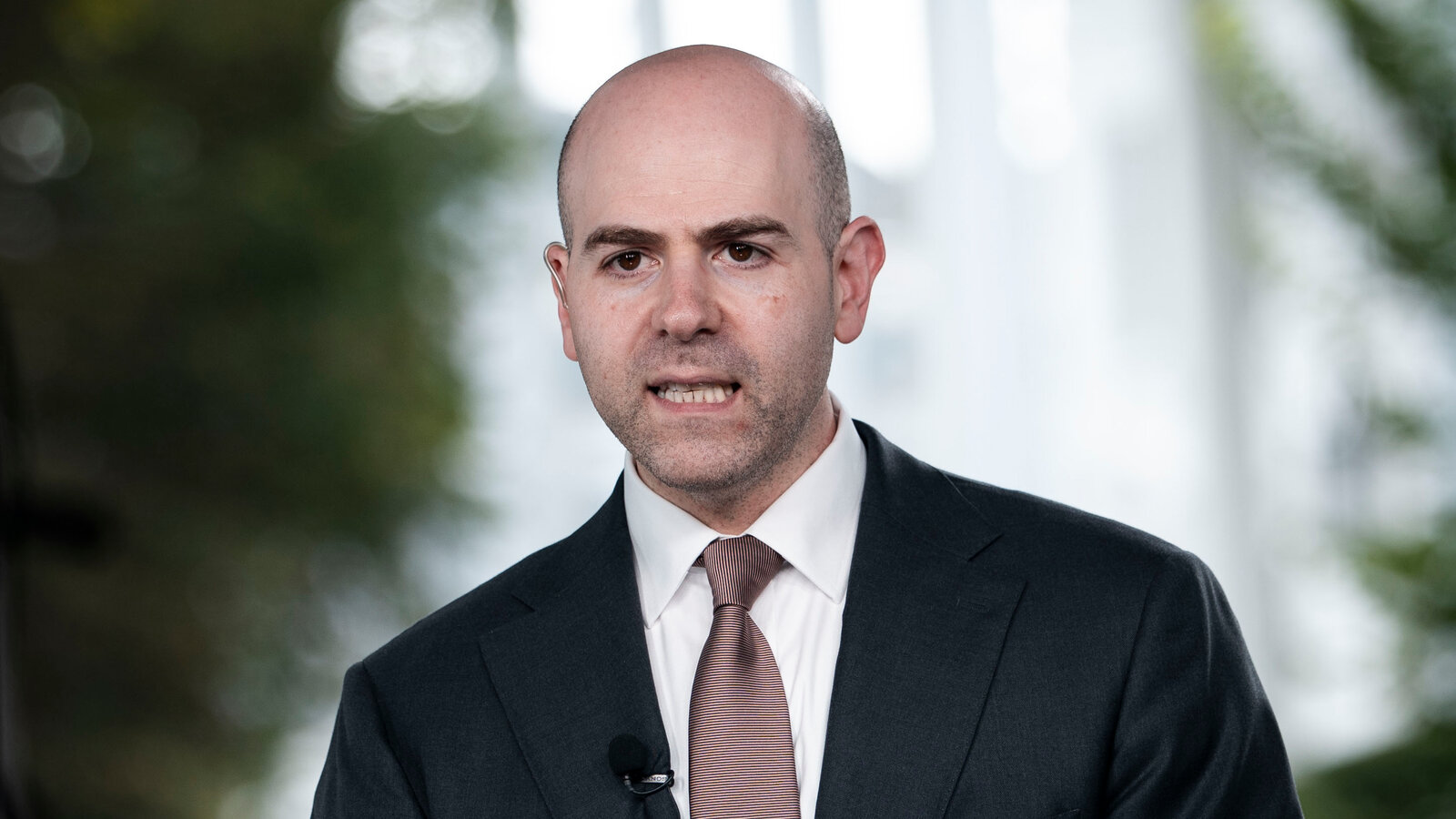
Fed Governor Stephen Miran outlines a $2tn balance-sheet reduction roadmap while Trump praises Pirro and Bondi for their “courage” in the DOJ probe of Chair Jerome Powell. Here’s what it means for markets.
On the same extraordinary Thursday that Federal Reserve Governor Stephen Miran stood before the Economic Club of Miami and sketched a meticulous blueprint for shrinking the world’s most powerful central bank by as much as $2 trillion, President Donald Trump was in the Oval Office doing something altogether less fastidious — lavishing praise on the officials hunting his own Fed chairman. “We have a moron at the Fed,” Trump declared, before adding that he wanted to “thank Jeanine Pirro and Pam and her group for having the courage to bring this suit.”
Two events. One seismic day. A perfect tableau of the tectonic collision reshaping American monetary policy in 2026.
Miran’s speech — calm, rigorous, and laden with footnotes — offered the intellectual scaffolding for a leaner Federal Reserve. Trump’s Oval Office remarks, by contrast, were a wrecking ball still swinging at the institutional walls those footnotes are meant to protect. Together, they encapsulate the defining tension of this moment: a policy reform agenda of genuine substance, entangled in a political pressure campaign that threatens to delegitimize it entirely.
Miran’s Roadmap: Engineering a Smaller Fed
The core of Governor Stephen Miran‘s March 26 address was a co-authored research paper titled “A User’s Guide to Reducing the Federal Reserve’s Balance Sheet” (Finance and Economics Discussion Series 2026-019), which maps out a phased, technically credible path toward a structurally smaller Fed footprint.
The current balance sheet stands at approximately $6.7 trillion — a figure that, while already down from its $9 trillion pandemic peak, remains historically elevated and, in Miran’s view, a source of ongoing market distortion. His thesis is deceptively simple: the Fed holds far more assets than it needs to because banks, under existing liquidity regulations, are compelled to hoard reserves. Fix the regulations, destigmatize emergency lending facilities, and the demand for those reserves — and by extension the need for a bloated balance sheet — shrinks organically.
“Shrinking the size of the balance sheet is desirable,” Miran told the audience, adding that those who say it cannot happen “simply lack imagination.”
The precise contours of his proposal rest on four interlocking levers:
- Easing liquidity regulations. Current rules — particularly the Liquidity Coverage Ratio and the Net Stable Funding Ratio — inflate banks’ demand for central-bank reserves as a buffer. Recalibrating these requirements would reduce reserve demand, allowing the Fed to hold fewer assets without destabilizing money markets.
- Tweaking bank stress tests. Stress scenarios that penalize banks for drawing on central-bank facilities inadvertently discourage their use, creating artificial demand for reserves as a substitute.
- Destigmatizing the discount window and standing repo facility. Banks are reluctant to access emergency lending because doing so signals weakness to the market. Normalizing these facilities — perhaps through mandatory, unpublicized usage — would allow them to function as genuine shock absorbers rather than instruments of last resort.
- Active liquidity management. More frequent open-market operations, Miran argued, could replace the blunt instrument of a permanently large balance sheet.
The governor was careful to note that the optimal size of the balance sheet “is a subject that warrants more serious work,” and that the $1 trillion to $2 trillion reduction figure represents a range, not a target. What was unambiguous was his directional conviction: “We should aim for as small a footprint in markets as possible to minimize government-induced distortions, including funding market disintermediation.”
The Ghost of QT Past — and Why This Time Is Different
Markets have reason to approach talk of balance-sheet reduction with scar tissue still fresh. The Fed’s previous quantitative tightening (QT) cycle, launched in 2022, ended not with a triumphant normalization but with a white-knuckled halt. When short-term financing markets experienced volatility and some banks’ funding costs significantly exceeded the Fed’s target range, the Fed was forced to hit the brakes. QT was wound down, and the balance sheet — far from returning to pre-pandemic norms — stabilized above $6.5 trillion before the Fed began cautiously rebuilding reserves.
Miran’s framework is explicitly designed to avoid a repeat. He emphasized that the most important guardrail is pace: “I would counsel a slow pace of reductions to ensure the private sector can absorb all the securities shed off our own balance sheet,” he said, adding that reductions should happen “passively, rather than via active sales.” Selling bonds outright would realize mark-to-market losses on holdings acquired at lower yields — an accounting embarrassment the Fed is keen to avoid.
Think of it as the difference between bleeding air slowly from an over-inflated tire versus puncturing it with a knife. The Miran approach relies on structural reform to lower the pressure threshold at which the system needs that air in the first place.
The broader macro stakes are not trivial. A smaller balance sheet, Miran contended, would allow for interest rates to be lower than they otherwise would be — a result that would simultaneously advance the Trump administration’s rate-cut agenda and give the Fed more room to deploy large-scale asset purchases in the next crisis, when the fiscal and political cost of doing so from an already-bloated balance sheet would be enormous.
The Kevin Warsh Factor: Confirmation Limbo
Miran’s speech did not land in an institutional vacuum. The issue of shrinking the Fed’s balance sheet could take on greater importance after Fed Chair-designate Kevin Warsh is confirmed to lead the central bank. Nominated on March 4, 2026, to succeed Powell when his chairmanship expires in May, Warsh is widely regarded as even more hawkish on the balance sheet than Miran — he has publicly called the Fed’s holdings “bloated” and argued that the freed capital should be redeployed as lower interest rates for households.
The irony, however, is excruciating. The very political pressure campaign Trump is waging against Powell has become the single largest obstacle to Warsh’s confirmation. Senator Thom Tillis of North Carolina has repeatedly vowed to block Warsh’s nomination from advancing through the Senate Banking Committee until the DOJ drops its probe of Powell. In a pointed remark, Tillis said: “I have no earthly idea what the market reaction would have been if suddenly the perception is that the Fed chair serves at the pleasure of the President.”
Trump, by praising the probe, is thus paradoxically delaying the confirmation of the very replacement he wants. This is not politics as three-dimensional chess. It is politics as a dog chasing its own tail at 500 basis points.
The DOJ Probe: ‘Courage’ or Constitutional Crisis?
The legal backdrop to all of this is extraordinary, and its trajectory over the past fortnight has moved quickly. US District Judge James Boasberg wrote in a blistering ruling that a “mountain of evidence suggests that the Government served these subpoenas on the Board to pressure its Chair into voting for lower interest rates or resigning.” Boasberg quashed the grand-jury subpoenas that DC US Attorney Jeanine Pirro had issued against the Federal Reserve as part of a criminal investigation nominally focused on cost overruns in the renovation of the Fed’s headquarters — a project the Fed says totals roughly $2.5 billion (Trump has repeatedly claimed the figure is “over $3 billion, maybe $4 billion”).
Then came the bombshell heard, perhaps deliberately, by no one in Trump’s immediate circle. A top deputy to Pirro, G.A. Massucco-LaTaif, told Judge Boasberg in a closed-door hearing that the office does “not know at this time” what evidence there is of fraud or criminal misconduct. Pirro’s deputy acknowledged that the Justice Department did not have evidence of wrongdoing in its criminal investigation.
The judge was unimpressed. Boasberg wrote: “On the other side of the scale, the Government has produced essentially zero evidence to suspect Chair Powell of a crime; indeed, its justifications are so thin and unsubstantiated that the Court can only conclude that they are pretextual.”
Despite all of this — the judicial rebuke, the deputy’s candid admission, the legal improbability of an appeal succeeding — Trump chose March 26 to celebrate the probe’s architects. He declared: “I want to thank Jeanine Pirro and Pam and her group for having the courage to bring this suit.”
The word “courage” is doing extraordinary load-bearing work in that sentence. A federal judge found essentially no probable cause. The lead prosecutor’s own deputy admitted ignorance of any crime. And yet the framing is one of brave officials daring to hold power to account. This is what the erosion of institutional norms looks like in real time: not a single dramatic rupture, but a steady rhetorical reframing of accountability as heroism and evidence as optional.
Powell’s Defiant Autumn
For his part, Jerome Powell has not bent. The JFK Library Foundation announced it will present the John F. Kennedy Profile in Courage Award to Powell on May 31, honoring him for “protecting the independence of the Federal Reserve despite years of personal attacks and threats from the highest levels of government.” Powell’s term as Fed chair ends in May; he could retain his governorship seat through 2028 if he chooses.
Powell’s institutional defiance has been the financial world’s most important — and arguably most undercovered — macro stability force of 2025–26. In a world where global investors price US Treasury bonds as risk-free assets partly because the Fed is independent, the market implications of a compliant Fed are not academic. They are embedded in sovereign spreads, dollar valuations, and the yield premiums demanded by foreign holders of American debt.
Market Implications: The Bull/Bear Framework
The Bull Case for Miran’s Balance-Sheet Blueprint
If implemented gradually and credibly, the Miran framework is genuinely constructive for risk assets. A structurally smaller balance sheet achieved through regulatory reform — rather than aggressive asset sales — would:
- Reduce the “term premium” investors demand on long-duration Treasuries, keeping yields anchored.
- Free the Fed to cut rates more aggressively (Miran has publicly called for over 100 basis points of cuts in 2026), supporting equity valuations.
- Enhance the Fed’s future crisis-response toolkit by ensuring a large-scale QE program in the next recession would not crowd out private credit on an already-saturated balance sheet.
- Signal a market-neutral, rules-based monetary framework — music to the ears of global reserve managers and central bank watchers at the BIS.
The Bear Case
The risks are equally real. Any miscalibration in the pace of balance-sheet reduction could reprise the 2019 repo market stress or the 2023 regional banking crisis. Liquidity is not a dial but a complex, non-linear system; reducing reserve demand through regulatory change while simultaneously rolling off securities leaves multiple pressure points in operation simultaneously.
More critically: the entire Miran framework requires institutional credibility to function. Investors must believe the Fed will proceed methodically, on its own terms, without political interference. If the DOJ probe drags on, if Warsh’s confirmation remains hostage to it, and if markets begin pricing in a Fed that operates under White House supervision, the term premium on Treasuries could rise even as the balance sheet shrinks — exactly the opposite of the intended effect.
Emerging market economies face a specific variant of this risk. A credibility discount on US monetary institutions would accelerate dollar-diversification efforts already underway in BRICS nations, pushing capital flows toward gold, euro-denominated assets, and renminbi instruments. For countries with dollar-pegged currencies or heavy USD-denominated debt service, a Fed credibility shock is not a background risk. It is a foreground crisis.
The Grand Irony: Two Kinds of Courage
There is something almost Shakespearean about the juxtaposition on March 26, 2026. Inside a Miami ballroom, a Fed governor with a Harvard doctorate was making the technical case — cautiously, methodically, with seventeen footnotes — for how the world’s largest central bank might, over many years, become a slightly smaller one. In Washington, the President of the United States was calling that central bank’s chairman “a moron” and congratulating the prosecutor whose deputy just admitted she cannot find a crime.
One document, Miran’s speech, will be read by central bankers in Frankfurt, Tokyo, and Sydney as a thoughtful contribution to the global literature on balance-sheet normalization. The other, Trump’s Oval Office remarks, will be read by those same central bankers as a warning — of what happens when executive ambition outruns judicial patience and institutional respect.
The word “courage” has two meanings in this story. One is Miran’s quiet intellectual courage: presenting a technically demanding, politically inconvenient proposal for shrinking a government institution in a moment when the White House prefers its central bank compliant, not lean. The other is the courage Trump attributed to officials pursuing a probe that a federal judge called pretextual and whose own prosecutor admitted was evidentially hollow.
History will distinguish between the two. Markets, which deal in probabilities rather than rhetoric, already are.
Expert Takeaway for Global Investors and Policymakers
Three signals deserve close monitoring in the weeks ahead:
1. The Warsh confirmation timeline. If Sen. Tillis’s blockade holds, Powell remains in the chair past May — potentially triggering further Trump escalation. A clean confirmation, by contrast, would allow the Miran balance-sheet framework to become official Fed policy under new leadership. Watch the Senate Banking Committee calendar.
2. The Boasberg appeal ruling. The DOJ’s appeal of the subpoena-blocking order is a legal long shot, but its outcome shapes the political temperature around Fed independence. A sustained appellate fight keeps the probe alive and the Tillis blockade in place. An early dismissal could clear the path for Warsh.
3. Reserve market technicals. The Fed is currently adding to its balance sheet through reserve-management purchases. Monitor overnight repo rates and bank reserve levels at the Fed for early signs of stress that might complicate, or accelerate, the political case for the Miran framework.
The bottom line: Miran has produced a credible, technically sophisticated roadmap for a leaner Fed. Whether that road gets traveled depends less on the elegance of his framework than on whether the political environment allows institutional trust to survive long enough to implement it.
That, in 2026, is the defining macro question. And for now, the answer remains genuinely uncertain.
Discover more from The Economy
Subscribe to get the latest posts sent to your email.



When the Trump administration’s tariff regime rattled export-dependent Asian economies in 2025, Malaysia’s finance ministry response stood out for its composure. “We didn’t panic,” the finance minister told reporters, describing a deliberate strategy of diversification and negotiation rather than reactive concessions (Fortune).
From crisis response to execution agenda
That composure has carried into 2026. Malaysia’s economy minister has described this year explicitly as one of “execution,” as the Anwar Ibrahim administration works to lock in the policy gains built through 2025’s trade turbulence (Fortune). The framing matters: it signals Putrajaya sees 2026 less as a year of new initiatives and more as a year of delivering on commitments already made — the Johor-Singapore Special Economic Zone chief among them.
The semiconductor exposure that both helps and constrains
Malaysia’s electrical and electronics sector accounts for roughly 40% of total exports, with semiconductors alone comprising about 65% of E&E exports (J.P. Morgan Private Bank). That concentration is precisely why Malaysia benefited from 2025’s tariff exemptions on semiconductors, electronics and pharmaceuticals, and precisely why any future change to those exemptions carries outsized risk for Malaysian growth relative to more diversified regional peers (J.P. Morgan Private Bank).
The Johor-Singapore SEZ as the structural bet
Johor’s 7,300-acre innovation sandbox, part of the new special economic zone with Singapore, is Malaysia’s clearest attempt to convert its manufacturing base into a higher-value regional hub rather than remain a low-cost assembly point (Fortune). The zone’s stated ambition — combining Johor’s “land and scale” with Singapore’s “capital and speed” — positions the region to capture AI-linked infrastructure and hardware investment that would otherwise bypass both countries individually (Fortune).
Corporate consolidation follows the growth signal
Confidence in Malaysia’s execution story is visible in corporate activity too: two Southeast Asia 500 companies are reportedly exploring a merger that would form Malaysia’s largest construction conglomerate, a scale bet that typically follows — rather than precedes — genuine confidence in a multi-year infrastructure pipeline (Fortune).
The regulatory friction points
Not every 2026 storyline is frictionless. Malaysia has moved to temporarily block the Grok AI platform alongside Indonesia following a sexual-deepfake scandal, illustrating that Malaysia’s AI-forward economic strategy is running in parallel with an increasingly assertive AI-governance posture — a tension regional investors should track as a signal of how Malaysia intends to regulate the same technology sector it is courting for investment (Fortune).
What “execution” needs to mean by year-end
For Malaysia’s 2026 narrative to hold, three things need to materialise beyond announcements: measurable Johor SEZ tenant commitments, continued semiconductor export resilience against any tariff-exemption rollback, and a construction-sector consolidation that actually delivers infrastructure rather than simply consolidating market share.
Discover more from The Economy
Subscribe to get the latest posts sent to your email.

Singapore has spent the past two years becoming one of the primary beneficiaries of the global AI infrastructure buildout, alongside Taiwan’s semiconductor sector. The city-state’s role as a data-center hub allowed it to capture significant capital inflows even as the broader labour-market impact of that investment stayed limited, given how capital-intensive AI infrastructure spending tends to be (J.P. Morgan Private Bank).
Why the AI cycle didn’t stay contained to Singapore
What is changing in 2026 is the geography of that investment. J.P. Morgan’s Asia outlook notes Southeast Asian economies — traditionally anchored in commodities and export manufacturing — are now aligning more closely with the global AI investment cycle by deepening involvement in higher-value areas: infrastructure, hardware and complementary supply chains (J.P. Morgan Private Bank).
Land constraints in Singapore make expansion difficult, which is precisely where the Johor-Singapore Special Economic Zone becomes central to the region’s AI investment thesis rather than a side story.
The Johor SEZ as capacity release valve
Johor has launched a 7,300-acre innovation sandbox as part of the new special economic zone bordering Singapore, explicitly designed to combine Johor’s land and scale with Singapore’s capital and speed, according to the state investment committee’s chair (Fortune). One local official described the ambition bluntly: the zone is meant to be more than “an industrial park with a nicer brochure” (Fortune).
Malaysia’s structural beneficiary position
Malaysia’s electrical and electronics sector already accounts for roughly 40% of the country’s total exports, with semiconductors comprising about 65% of E&E exports — positioning Malaysia as a structural beneficiary of the AI-linked shift in regional trade, according to J.P. Morgan’s Asia analysis (J.P. Morgan Private Bank). Malaysia’s economy minister has framed 2026 explicitly as a year of “execution” for the Anwar administration as it tries to lock in these policy gains (Fortune).
Monetary policy backdrop supports the buildout
Asian central banks spent much of 2025 easing policy and are entering the final stages of that cycle in 2026, shifting more of the growth-support burden to fiscal policy — a backdrop J.P. Morgan expects to support stronger domestic credit growth and consumer demand across the region, reinforcing rather than competing with the AI capital cycle (J.P. Morgan Private Bank).
The regional risk to watch
Most of the region avoided the brunt of 2025’s tariff shock thanks to exemptions on semiconductors, electronics and pharmaceuticals, but that exemption structure remains a policy choice in Washington rather than a permanent feature — meaning the Singapore-Johor AI corridor’s growth case still carries meaningful US trade-policy risk that investors should not discount simply because 2025’s tariffs were absorbed relatively smoothly (J.P. Morgan Private Bank).
Discover more from The Economy
Subscribe to get the latest posts sent to your email.

Dubai’s transformation from oil-adjacent trading post to global capital hub is no longer a talking point — it is a measurable trend. The emirate’s newly launched Economic Survey 2026 shows GDP climbing to $265 billion alongside rising employment, while international family offices are gathering for the Family Office Summit Dubai 2026 as the city cements its position as a family-wealth hub (Gateway Group; Arabian Business).
The non-oil growth engine
The UAE enters 2026 with the World Bank projecting national growth of roughly 5%, well above the global average, driven substantially by 5.3% expansion in the non-oil sector (Barchart). Technology, green energy and healthcare are the top-performing sectors, and 64% of UAE executives expect trade volumes to exceed 2025 levels — confidence underpinned by the country’s expanding network of Comprehensive Economic Partnership Agreements (Barchart). Historically, oil production accounted for half of Dubai’s GDP; today it contributes less than 1% (Wikipedia/Economy of Dubai).
Why family offices specifically are relocating
The Family Office Summit Dubai 2026 is drawing international participants precisely because the emirate has built regulatory infrastructure — inside jurisdictions like the DIFC — designed to attract exactly this category of capital. As one DIFC executive noted, incentives alone are no longer enough to win global finance; institutional credibility and regulatory clarity now matter more, which explains why firms such as Sixth Street have opened Abu Dhabi offices as global investment houses deepen their Middle East presence (Gateway Group).
Infrastructure is compounding the pull
Beyond finance, the UAE’s infrastructure build-out is reinforcing the wealth-hub thesis. Etihad Rail’s Abu Dhabi–Fujairah passenger service and the Madinat Zayed and Liwa station openings, arriving ahead of schedule, signal a state execution model that investors increasingly cite as a differentiator versus regional peers (GCC Business Watch). Dubai has also rolled out a AED 1 billion economic support package aimed at business liquidity and resilience amid regional geopolitical headwinds (GCC Business Watch).
The regional competition for capital
Dubai’s rise is happening alongside — not in isolation from — a broader Gulf capital race. Saudi Arabia’s economy is set for stronger growth per IMF assessments, and Gulf sovereign and corporate capital is increasingly being deployed across sectors from AI infrastructure to green growth commitments, meaning Dubai’s wealth-hub status will need continual reinforcement rather than passive maintenance (GCC Business Watch).
The bottom line for investors
For family offices weighing jurisdiction, Dubai’s pitch in 2026 combines three elements rarely available together: near-zero effective taxation, a non-oil economy growing faster than most G20 peers, and physical and financial infrastructure being built ahead of demand rather than in reaction to it. That combination — not simply low tax rates — is what is now pulling global family wealth toward the emirate.
Discover more from The Economy
Subscribe to get the latest posts sent to your email.

Russia’s War Economy Got a Reprieve From Iran

China’s Economy Has a Structural Problem: Factories Are Winning, Households Are Losing

How Malaysia “Shrugged Off” Trump’s Tariffs — and What Comes Next

Singapore’s AI Boom Is Now a Two-Country Story

Why Global Family Offices Are Converging on Dubai in 2026

A Weak Jobs Report Just Rewired the Fed’s Autumn — And Wall Street Cheered

Britain’s Fragile Rebound Meets a Budget Deadline and a Trump Ultimatum

Pakistan’s Economy Grew 3.7% — So Why Doesn’t It Feel Like a Recovery?

Top 15 Financial Stocks for Investment in PSX

Pakistan Exports 2026: Record $35.6B Forecast Masks Trade Deficit Risk

UK’s Jobs Downturn Now Matches the 2008 Financial Crisis — And AI Is Accelerating It

Fed Rate Cut Bets Surge After Shock US Jobs Report Exposes Labor Market Cracks

Pakistan’s Trade Gap Widens to $3.95bn Despite Meeting FY26 Current Account Target

Why Ottawa Is Betting on Dubai: Inside Canada’s Gulf Trade Pivot

Gold Price Forecast 2026: Fed’s July 29 Decision and Record Central Bank Buying Explained

China Politburo July 2026: Stimulus Signals Explained

Pakistan Economy 2026: GDP Grows 3.7% as IMF Completes EFF Review Amid Middle East Risk

Strait of Hormuz Blockade 2026: Oil Prices Surge 9% as US-Iran Conflict Reignites

Down But Not Out: Inside the Slow Sinking of Russia’s War Economy

Apple vs OpenAI Lawsuit: The Economic Story Behind the Headline

Gulf Capital Retreat From Pakistan 2026: UAE Loan Freeze & What It Means

Global Stock Market Selloff 2026: Stagflation Fears Return as Iran Conflict Reignites

Pakistan’s Economic Survey FY26: Inflation Spike Insights

Russia Fuel Shortages 2026: Inside a Cracking War Economy

Strait of Hormuz Crisis 2026: How Trump’s Toll U-Turn Exposes Global Economic Risk

Bank of England Rate Decision Amid Energy Crisis

Russia’s War Economy Model Is Starting to Crack, Think Tank Warns

Pakistan’s Economic Growth: Resilience Amid Challenges
-

 Markets & Finance7 months ago
Top 15 Stocks for Investment in 2026 in PSX: Your Complete Guide to Pakistan’s Best Investment Opportunities
-

 Analysis6 months ago
Johor’s Investment Boom: The Hidden Costs Behind Malaysia’s Most Ambitious Economic Surge
-

 Analysis6 months ago
Top 10 Stocks for Investment in PSX for Quick Returns in 2026
-

 Analysis6 months ago
Brazil’s Rare Earth Race: US, EU, and China Compete for Critical Minerals as Tensions Rise
-

 Banks7 months ago
Best Investments in Pakistan 2026: Top 10 Low-Price Shares and Long-Term Picks for the PSX
-

 Investment7 months ago
Top 10 Mutual Fund Managers in Pakistan for Investment in 2026: A Comprehensive Guide for Optimal Returns
-

 Global Economy8 months ago
15 Most Lucrative Sectors for Investment in Pakistan: A 2025 Data-Driven Analysis
-

 Global Economy8 months ago
Pakistan’s Export Goldmine: 10 Game-Changing Markets Where Pakistani Businesses Are Winning Big in 2025