
Analysis
The Decline and Fall of the Roman Currency Empire: What Ancient Aurei Reveal About Dollar Dominance in 2026

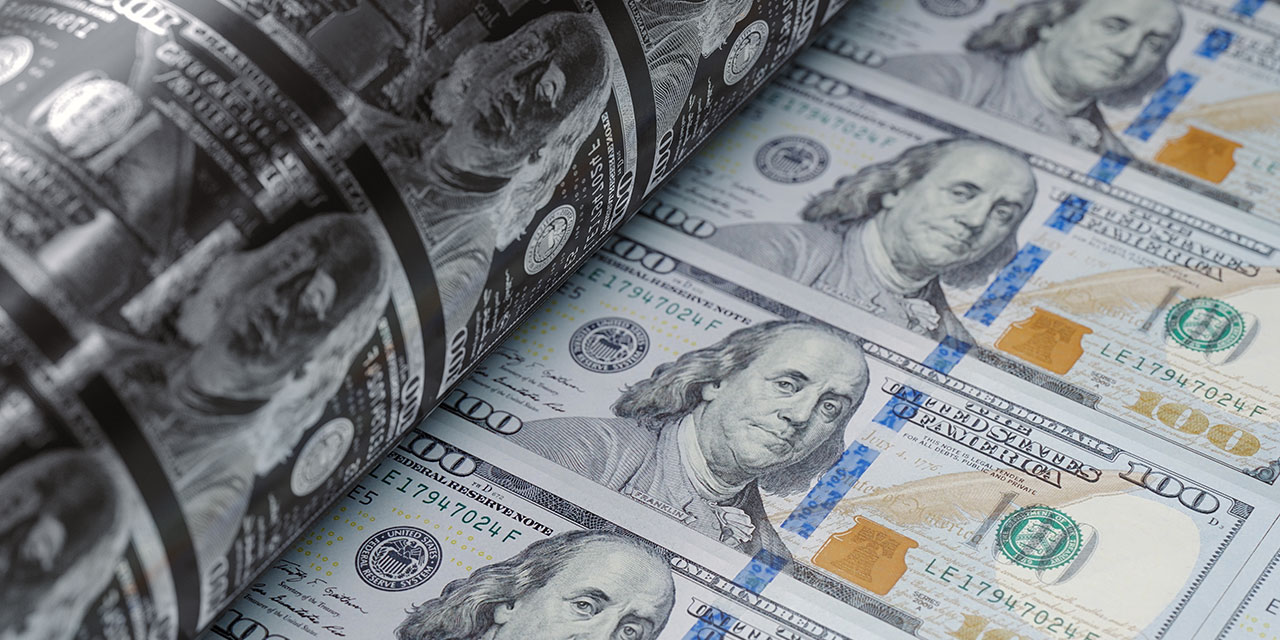
In the monsoon-softened earth of Kerala, a forgotten hoard once held the secrets of the world’s first global currency. What those labourers threw away in 1847 may be exactly what modern investors need today.
During the summer of 1847, a group of labourers breaking ground near Kottayam in what is now Kerala, India, felt their spades strike something hard and luminous beneath the red laterite soil. What tumbled into their calloused hands were dozens of gleaming gold discs — perfectly struck, astonishingly heavy, each bearing the stern profile of emperors dead for seventeen centuries. The coins caught the afternoon light like small suns. The men looked at one another, then at the coins, and made the calculation available to them: a handful of aurei bought a week’s rice, perhaps a modest length of cloth, maybe a few rupees from the local merchant who asked no questions and kept no records.
Most of those coins were melted within days — dissolved into anklets, earrings, temple offerings — their inscriptions of Augustus, Tiberius, and Nero reduced to anonymous gold. The labourers were not fools. They were hungry, and gold is gold. What they could not have known is that they were destroying physical nodes of the world’s first truly global reserve currency: Roman aurei that had crossed three continents, lubricated the silk and pepper trades, and turned up in hoards from the Scottish Highlands to the Malabar Coast. A handful of Kottayam coins survived and eventually reached museums. They are, today, archaeologically priceless and economically instructive.

The decline and fall of the Roman currency empire is not merely antiquarian spectacle. It is, in 2026, an uncomfortably precise mirror held up to dollar dominance — a system built on strikingly similar foundations of military supremacy, institutional trust, trade centrality, and what Valéry Giscard d’Estaing famously called America’s “exorbitant privilege.” Rome’s currency did not collapse overnight. It was slowly poisoned: debased coin by coin, deficit by deficit, until the trust that made a stamped disc of metal worth more than its weight simply evaporated. The question haunting policymakers, central bankers, and investors in 2026 is not whether the dollar will collapse tomorrow. It is whether the slow burn has already begun.
Rome’s Currency Empire at Its Zenith: The World’s First Reserve Currency
To understand what was lost in that Kerala field, you must first understand what the aureus was — and what it represented beyond its 8.19 grams of nearly pure gold.
By the reign of Augustus (27 BC–14 AD), Rome had achieved something no civilization before it had managed at scale: monetary standardization across an empire stretching from the Euphrates to the Rhine. The aureus sat atop a tripartite currency pyramid — gold aureus, silver denarius, bronze sestertius — whose exchange ratios were fixed, understood, and trusted from Britannia to Mesopotamia. This was not merely convenient. It was transformative. Merchants in Alexandria, Antioch, and Londinium could price, contract, and settle in the same currency. Rome had, in effect, created the ancient world’s dollar.
The parallels to the Bretton Woods architecture are not accidental. Both systems rested on three pillars: the issuing power’s military dominance (Rome’s legions, America’s carrier groups), its position as the indispensable node of global trade (Rome’s Mediterranean highway, America’s dollar-denominated commodities markets), and — most crucially — an unspoken faith that the issuer would not abuse the privilege. As the economic historian Peter Temin documented in his landmark study of the Roman economy, the Mediterranean under the early Principate functioned as a genuine integrated market, with Rome at its monetary centre.
The Kottayam hoard is not an anomaly. Roman coins have been excavated across the Indian subcontinent — at Pudukottai, Coimbatore, Eyyal — testament to the pepper, ivory, and textile trade that drew Roman gold eastward along the routes that would later become the Silk Road. The Roman geographer Pliny the Elder complained bitterly that India was draining the empire of 50 million sesterces annually in exchange for luxury goods — a first-century current account deficit that ought to resonate in Washington. Roman coins have also been found near Tusculum in Scotland, carried by soldiers and merchants to the very edge of the known world. The aureus was, in the most literal sense, a global currency — accepted not because Rome compelled it but because Rome’s reputation made it worth accepting.
That reputation rested on purity. The Augustan aureus was struck at roughly 99% gold. The denarius held approximately 90% silver. For two centuries, the system held. Then came Nero.
The Slow Poison: Debasement, Deficit, and the Fall of the Denarius
The Roman currency debasement inflation story is often told as a tale of imperial wickedness — greedy emperors shaving coins to fund luxuries. The reality is more structurally familiar, and therefore more alarming.
Rome’s fiscal problem was structural and bipartisan (to use an anachronism): the empire’s commitments — legions on the Rhine, grain doles in the capital, monumental public works, bureaucratic expansion — consistently outran its tax revenues. When the gap grew too wide, the temptation was always the same: reduce the precious metal content of coinage and mint more of it. Sound familiar?
The debasement timeline reads like a slow financial horror story:
- 64 AD — Nero: The denarius is reduced from ~90% to ~93% silver (a modest start, rationalised as “reform”). The aureus shrinks slightly in weight.
- 193–211 AD — Septimius Severus: Silver content of the denarius falls to ~56%. Military pay is raised to buy loyalty; debasement funds the raise.
- 218–222 AD — Elagabalus: Denarius silver content dips below 50%. The psychological threshold — the point at which the coin is more base metal than silver — has been crossed.
- 235–284 AD — The Crisis of the Third Century: Twenty-six emperors in fifty years. Silver content collapses to 2–5%. The antoninianus, a debased double-denarius, floods the market.
- 301 AD — Diocletian’s Edict on Maximum Prices: In a futile attempt to control the inflation that debasement has unleashed, Diocletian mandates price ceilings across the empire. The result is shortages, black markets, and economic paralysis.
The consequences were not abstract. Wheat prices in Roman Egypt rose roughly 200-fold between the first and fourth centuries AD — a hyperinflationary arc that would not disgrace Weimar Germany. Soldiers demanded payment in kind rather than coin, because coin had become unreliable. Merchants hoarded gold and silver objects, melting old aurei (like those Kottayam labourers, but with better information). The state, to enforce tax collection in an environment of monetary chaos, resorted increasingly to payment in grain, oil, and labour — a regression to barter that signalled the monetary system had effectively ceased to function.
What is particularly instructive — and what the fall of the Roman denarius today camp sometimes misses — is that debasement did not cause Rome’s fall directly. It accelerated a cluster of pathologies: erosion of institutional credibility, the fragmentation of trade networks as currency trust collapsed, the militarisation of fiscal policy, and the progressive unravelling of the social contract between ruler and ruled. The currency was a symptom and an accelerant simultaneously. When Diocletian’s price edict failed, it was not merely an economic policy that had collapsed. It was the state’s claim to monetary authority.
Uncomfortable Parallels to Dollar Dominance in 2026
The lessons from Roman empire currency collapse for USD hegemony are not the province of gold bugs and doom-scrollers. They are, increasingly, the concern of serious institutional economists — including Barry Eichengreen, whose recent analysis in The Economist (March 2026) revisits his foundational argument about dollar resilience while acknowledging, with unusual candour, that the structural supports are weakening in ways he had not fully anticipated a decade ago.
Consider the 2026 landscape against the Roman template:
The Exorbitant Privilege Is Real — and Increasingly Resented. America’s ability to borrow in its own currency, run persistent current account deficits, and use dollar-denominated sanctions as a geopolitical weapon mirrors Rome’s monetary centrality with uncomfortable precision. The IMF’s 2025 reserve currency composition data shows the dollar still commanding roughly 58% of global foreign exchange reserves — down from 71% in 2000. That 13-percentage-point erosion over a quarter-century is not a crisis. It is a trend. And trends, as Rome demonstrated, have momentum.
The Deficit Arithmetic Is Sobering. The U.S. federal debt-to-GDP ratio is projected by the Congressional Budget Office to exceed 130% by 2035 under current trajectories — a number that would have seemed fantastical to the architects of Bretton Woods. The 2026 fiscal deficit alone is projected near $2 trillion. Rome’s emperors of the third century did not consciously choose hyperinflation. They chose, year after year, to fund obligations they could not tax their way out of. The mechanism of modern monetary finance is more sophisticated than clipping coins, but the underlying logic — spending commitments that outrun fiscal capacity, bridged by the printing of money — is structurally identical.
Sanctions Overuse Is Eroding Dollar Credibility. When Rome debased its coinage, merchants in the eastern empire began routing around Roman monetary authority — shifting to barter, to Byzantine gold, to local currencies. Today, the dollar’s weaponisation through sanctions — the freezing of Russian central bank assets in 2022, the exclusion of Iranian banks from SWIFT — has prompted precisely this kind of rerouting. As the Financial Times has documented, BRICS+ nations are actively constructing bilateral payment rails, yuan-denominated commodity contracts, and central bank digital currency frameworks explicitly designed to reduce dollar dependency. Saudi Arabia’s decision to price a portion of its oil exports in yuan is, symbolically, the Malabar Coast merchants choosing not to accept aurei.
The Fed Independence Question Is Not Trivial. Diocletian’s price edict failed because it was a political intervention in a monetary problem that required structural fiscal adjustment. In 2026, with the Federal Reserve navigating a presidential transition and facing public pressure on interest rate policy, the institutional independence that has been the dollar’s most important non-military asset is under a strain that would concern any student of monetary history. Foreign Affairs has flagged this directly: central bank credibility, once lost, is extraordinarily expensive to rebuild — as Paul Volcker’s recession-inducing 1980s disinflation demonstrated.
Gold Is Whispering Something. Central bank gold purchases reached near-record levels in 2024 and 2025, with China, Poland, India, and Turkey among the largest buyers, according to the World Gold Council. This is not sentiment or superstition. It is sovereign hedging — precisely the behaviour Roman merchants displayed when they hoarded gold objects and refused to accept the debased antoninianus at face value. When those who manage the world’s reserves begin quietly accumulating the asset that exists outside any government’s monetary architecture, they are expressing, in the politest institutional language available, a concern about the long-term reliability of paper claims.
The 2026 Reckoning: What Rome Actually Teaches Policymakers
The dollar dominance risks 2026 literature has a tendency toward two equally unhelpful poles: triumphalism (“the dollar has no credible alternative and never will”) and catastrophism (“the dollar will collapse within the decade and we’re all going back to barter”). Rome’s actual history suggests a third path — the slow burn — that is more instructive and considerably more actionable.
Rome did not lose its monetary supremacy in a single dramatic crisis. The aurei found in Kerala were minted between roughly 50 BC and 200 AD — a span of two and a half centuries during which the system functioned well enough to finance transcontinental trade. The deterioration was generational. Parents passed debased coins to children who had never known the Augustan standard. The memory of monetary integrity faded before the reality of monetary chaos arrived. By the time Diocletian issued his famous edict, the damage was centuries in the making.
What Rome’s experience actually prescribes for 2026 is a short, unfashionable list:
Fiscal discipline is not optional for reserve currency issuers. The exorbitant privilege is real, but it is not unconditional. It rests on the implicit promise that the issuer will not abuse it. As Brookings Institution research on reserve currency durability consistently finds, the single most reliable predictor of reserve currency erosion is the issuer’s long-run fiscal trajectory. America’s current trajectory is not sustainable by any honest accounting. This is not a partisan observation. It is arithmetic.
Institutional independence is a strategic asset. The Federal Reserve’s credibility — earned painfully through the Volcker era and sustained through two generations of technocratic discipline — is worth more to dollar dominance than any number of aircraft carriers. Political pressure on central banks is not uniquely American; it is historically universal. And historically, it reliably precedes monetary instability.
Sanctions are a wasting asset. Each use of dollar-denominated financial exclusion as a geopolitical weapon accelerates the construction of alternative payment architectures. Rome’s military dominance in the first century was an enabler of monetary trust; in the third century, as military costs drove debasement, it became a destroyer of that same trust. America’s ability to project financial power and its long-run monetary credibility are not independent variables.
Diversification is not disloyalty. The nations currently building yuan payment rails or accumulating gold reserves are not, for the most part, ideological adversaries of the United States. They are rational actors managing tail risk — exactly as a prudent investor would. Treating reserve diversification as a hostile act misreads the signal and forecloses the diplomacy needed to manage the transition.
The dollar is not the denarius. The United States in 2026 is not Rome in 300 AD. The differences — democratic accountability, flexible exchange rates, deep capital markets, the absence of a credible institutional successor — are real and significant. Barry Eichengreen’s foundational work on dollar hegemony remains correct that currency transitions are measured in decades, not years. But “not collapsing overnight” and “structurally sound” are not the same thing. Rome’s merchants knew the difference. Eventually.
Conclusion: What the Labourers Did Not Know — And What We Have No Excuse Not To
Return, for a moment, to that field in Kerala. The labourers who unearthed those aurei in 1847 were not ignorant of gold’s value. They understood, perfectly well, that what they held was precious. What they could not know was the specific weight of history those coins carried — the empires they had financed, the trade routes they had lubricated, the monetary architecture they had once sustained across three continents. That context was invisible to them, and its invisibility made those coins worth only what the nearest merchant would pay.
The risk for modern investors, policymakers, and citizens is a different and less excusable form of the same blindness. The historical context is available. The data on reserve currency erosion is published quarterly by the IMF. The deficit trajectories are modelled publicly by the CBO. The central bank gold purchases are reported by the World Gold Council. The de-dollarization infrastructure being built across the Global South is covered, soberly and thoroughly, by every serious financial publication. The decline and fall of the Roman currency empire is not a secret. It is a curriculum.
What is missing is not information but urgency — the same urgency that is always missing in the slow-burn phase of a long historical transition, when each individual quarter looks manageable, each individual policy choice seems reasonable, and the cumulative drift remains visible only if you are willing to zoom out to the century-scale view that historians occupy and investors too rarely do.
The Kottayam labourers can be forgiven. They were hungry, they had no libraries, and the coins they melted down were, to any reasonable nineteenth-century assessment, simply gold. Modern policymakers operating in 2026 — with every lesson of Roman monetary history digitised, analysed, and available at a search query’s distance — will not be afforded the same forgiveness by the historians who come after them. The aurei are trying to tell us something. The question is whether we are listening before we melt them down.
Discover more from The Economy
Subscribe to get the latest posts sent to your email.



Key Takeaways
- Rolex’s secondary market rose approximately 7.9% year-over-year as of 2026 (per WatchCharts data) — trailing Patek Philippe (+16.2%) and Tudor (+11.4%) but still outperforming Audemars Piguet (+3.4%).
- Rolex raised U.S. retail prices 4–9% in January 2026 (steel models ~5.6%, gold models ~8.7%), narrowing the historical gap between retail and pre-owned pricing.
- Not every model appreciates: steel sports references (Submariner, GMT-Master II, Daytona) have held value far better than two-tone or widely available dress references like the standard Datejust.
- The Lady-Datejust posted the sharpest 2026 gain among tracked collections — up 22.73%, from roughly $9,269 to $11,376 — driven by demand for smaller, “everyday luxury” watches.
- Gold’s rise past $2,400/oz has directly lifted the investment case for Rolex’s precious-metal references (Day-Date, Sky-Dweller, Yacht-Master).
The Model-by-Model Picture
| Category | 2026 Trend |
|---|---|
| Lady-Datejust | +22.73% (strongest performer among tracked collections) |
| Steel sports models (Submariner, GMT-Master II) | Held value well; corrected from 2022 peak but stabilized above retail |
| Daytona | Corrected from highs above $50,000 to the mid-$30,000s; still among the most sought-after references |
| Two-tone/widely available Datejust | Flat to negative — “holds value” is an overstatement for this category |
| Gold references (Day-Date, Sky-Dweller) | Lifted by gold’s rise above $2,400/oz |
Why the “Rolex Always Appreciates” Myth Is Fading
The pandemic-era boom pushed some references — the Daytona above all — to speculative highs disconnected from historical norms. Since the March 2022 peak, steel sports models have compressed meaningfully, and dealers who bought inventory near the top have in some cases faced 20–40% markdowns on liquidation. The lesson for 2026 buyers: Rolex as a category is not a monolith. Value retention depends heavily on specific reference, condition, and whether the piece comes with box and papers (“full set”).
What’s Actually Driving 2026 Strength
- Retail price increases raise the floor. When a new Submariner retails at $10,050 (up from $9,500), a pre-owned example at $11,000–$12,000 suddenly represents a smaller premium — narrowing the gap without secondary prices actually moving.
- Supply discipline remains Rolex’s core lever. The brand has never confirmed production numbers, and secondary-market premiums remain entirely a function of Rolex’s own manufacturing decisions — a risk factor as much as a support.
- Certified Pre-Owned rollout. Rolex’s now fully rolled-out CPO program has changed how buyers transact in the used market, adding a layer of brand-verified legitimacy that supports pricing.
The Case for Rolex as a Portfolio Diversifier
Financial advisors increasingly frame luxury watches not as a replacement for equities or bonds, but as a tangible, historically low-correlation diversifier — one that carries its own risks (illiquidity, condition-dependent pricing, no yield) but has demonstrated multi-decade resilience for specific references.
Is Rolex a good investment in 2026?
It depends heavily on the specific reference. Steel sports models like the Submariner and Daytona have held or grown in value; two-tone and widely available dress models generally have not. Overall, Rolex’s secondary market rose about 7.9% year-over-year in 2026, trailing Patek Philippe but ahead of Audemars Piguet.
Discover more from The Economy
Subscribe to get the latest posts sent to your email.

Navigating Mortgage and Loan Refinancing in a High-Yield Environment
Global public debt crossing critical thresholds has kept central bank policies volatile, resulting in fluctuating US Treasury yields throughout 2026. For homeowners and commercial property holders burdened by previous high-interest borrowing cycles, finding optimal refinance windows has become a high-stakes financial puzzle. Stalled disinflation and stubborn employment numbers mean rate cuts are incremental, requiring borrowers to act with precision.
Timing your mortgage or commercial loan refinance in this environment requires a deep understanding of yield curve movements and lender risk appetites.
Decoding 2026 Refinance Dynamics
The 10-Year Treasury Yield Benchmark
Mortgage rates continue to track closely with the 10-year US Treasury yield. When macroeconomic anxiety spikes debt issuance, yields rise, tightening consumer borrowing capacity. Savvy borrowers monitor weekly Treasury auctions to lock in rates during brief dip windows.
Hybrid ARMs and Alternative Structures
With fixed rates remaining elevated, 7/1 and 10/1 adjustable-rate mortgages (ARMs) have surged in popularity. These products offer lower initial monthly payments, giving borrowers breathing room until central bank easing cycles fully materialize.
| Loan Product | Current Rate Range | Best For | Key Risk Factor |
| 30-Year Fixed Mortgage | 6.2% – 6.8% | Long-term predictability | Higher initial monthly outlay |
| 7/1 Hybrid ARM | 5.5% – 5.9% | Short-term ownership / flipping | Rate reset risk after year 7 |
| Commercial Refinance | 7.0% – 8.2% | Corporate asset restructuring | Strict DSCR lender covenants |
Actionable Steps for Successful Refinancing
To maximize your chances of securing favorable refinance terms in a volatile market, follow a disciplined preparation strategy.
Boost Your Credit Score Immediately: Lenders in 2026 are applying stringent credit tiering; a 20-point increase can drop your APR by a crucial quarter-point.
Shop Regional Credit Unions: Smaller financial institutions often offer portfolio loans with more flexible underwriting than major national banks.
Calculate the Break-Even Point: Ensure your total closing costs are recouped through monthly savings within 24 months of closing.
“Market Strategist View: Refinancing in 2026 is an exercise in opportunistic timing. Borrowers must maintain immaculate financial profiles ready to strike the moment Treasury yields dip.”
Mastering the complexities of today’s debt environment ensures you can successfully lower your debt service costs and protect your long-term financial stability.
Discover more from The Economy
Subscribe to get the latest posts sent to your email.

The days of pulling generic auto insurance quotes based purely on your zip code and age are officially over. In 2026, insurance comparison engines are powered entirely by generative AI and real-time telematics. These platforms digest thousands of live data points—ranging from your driving smoothness via connected vehicle sensors to real-time traffic congestion patterns—to generate hyper-personalized premiums instantly.
For consumers, this evolution represents both a massive opportunity for savings and a hidden trap for penalty pricing. Understanding how AI algorithms evaluate risk is essential for anyone looking to lower their monthly auto insurance premiums.
How AI Comparison Engines Evaluate Your Risk Profile
Behavioral Telematics and Connected Cars
Modern cars stream performance data directly to insurance aggregators. Generative AI models analyze braking sharpness, acceleration curves, cornering G-forces, and phone distraction metrics. Drivers who maintain smooth, defensive habits are rewarded with dynamic rate cuts of up to 40% compared to traditional rating tiers.
Predictive Traffic and Weather Modeling
AI tools now cross-reference your daily commute route with predictive weather and accident probability models. If your standard parking location or driving corridor has a statistically higher incidence of uninsured motorist claims, your quotes will reflect that hyper-local risk assessment.
| Comparison Factor | Traditional Rating Model | 2026 Generative AI Model | Impact on Premium |
| Mileage & Usage | Annual estimated odometer reading | GPS tracking & live trip duration | High (up to 35% savings) |
| Driving Behavior | MVR driving record & accidents | Real-time braking, speed, & G-force | Critical (determines tier) |
| Vehicle Tech | Make, model, and safety rating | ADAS calibration & repair cost data | Moderate |
Strategies to Lower Your AI-Driven Insurance Quote
To outsmart the algorithm and secure the lowest possible premium in 2026, drivers must proactively manage their digital footprint on insurance platforms.
Opt-In for Telematics Trial Periods: Many insurers offer immediate 15% discounts just for installing their driving app; let it track safe habits for 30 days to lock in permanent savings.
Scrub Unverified Public Records: Ensure your motor vehicle report is free of clerical errors that AI risk models misinterpret as reckless behavior.
Compare AI Aggregators: Use platforms that integrate multi-carrier API feeds rather than single-brand comparison sites to find the best risk-adjusted rate.
“Industry Note: AI-driven pricing rewards transparency and precision. Drivers who actively manage their telematics data consistently out-save those relying on legacy quote calculators.”
Embracing AI comparison tools allows savvy policyholders to customize coverage limits precisely to their driving habits, eliminating wasted premium spend while ensuring robust protection.
Discover more from The Economy
Subscribe to get the latest posts sent to your email.

Solar Panel Installation Cost in 2026: Why the Math Changed Overnight

Business Insurance: What Coverage You Actually Need and What It Costs in 2026

Auto Insurance Quotes: How to Get the Lowest Rate Without Losing Coverage

Huntington Online Banking: Full Features, Fees, and How It Compares in 2026

Apply for a Bank Account Online: What You Need and How Long It Actually Takes

World’s Largest Economies: Ranking the Top Global Powers

Business Loan: A Complete 2026 Guide to Rates, Types, and Qualifying

Fast Invoice Factoring: How to Turn Unpaid Invoices Into Cash Within 24 Hours

Investment Banking Services: What They Cost and How to Choose the Right Firm in 2026

Structured Settlement Loan: What “Cash Now” Offers Actually Cost You

DUI Attorney: Why Your First Call After an Arrest Should Never Be to the Court

Personal Injury Lawyer: A Complete Guide to Filing Your Claim in 2026

Commercial Vehicle Accident Lawyer: Holding Companies Accountable Beyond the Driver

Inside the White House Feud: How Trump’s Allies Are Painting Anthropic’s Dario Amodei as the Face of ‘AI Doomerism’

Top 30 Stocks for Investment in PSX for Massive ROI in 2026

SpaceX Starship Flight 14: First Orbital Attempt & Starlink V3 Launch Explained

Oil Prices Break $100 in 2026: Middle East Conflict & Energy Markets

Fidelity Investments Review 2026: SPAXX Yields & Zero-Fee Funds

AI Chip Stocks 2026: The Best Semiconductor Investments Beyond Marvell

BRICS+ Cross-Border Payments 2026: Interoperability Explained

Tween Back-to-School Trends 2026: What’s Driving the $85B Season

10-Year Treasury Yield Hits 4.80%: What It Means for Rates & Portfolios

Shein Clothes Quality & Safety in 2026: What Lab Tests Show

China’s US$10.8 Billion Trade Shortcut: Why the Pinglu Canal Matters

MRVL Earnings 2026: Why Marvell Sank Despite Beating Estimates

IMF & World Bank 2026 Global Economic Outlook: Growth, Inflation, Debt

High-CPM Finance Niches 2026: Publisher Monetization Blueprint

Middle East War Economics 2026: Oil Prices & Energy Markets
-

 Markets & Finance9 months ago
Top 15 Stocks for Investment in 2026 in PSX: Your Complete Guide to Pakistan’s Best Investment Opportunities
-

 Analysis7 months ago
Johor’s Investment Boom: The Hidden Costs Behind Malaysia’s Most Ambitious Economic Surge
-

 Analysis7 months ago
Top 10 Stocks for Investment in PSX for Quick Returns in 2026
-

 Banks8 months ago
Best Investments in Pakistan 2026: Top 10 Low-Price Shares and Long-Term Picks for the PSX
-

 Analysis8 months ago
Brazil’s Rare Earth Race: US, EU, and China Compete for Critical Minerals as Tensions Rise
-

 Investment9 months ago
Top 10 Mutual Fund Managers in Pakistan for Investment in 2026: A Comprehensive Guide for Optimal Returns
-

 Global Economy9 months ago
15 Most Lucrative Sectors for Investment in Pakistan: A 2025 Data-Driven Analysis
-

 Global Economy9 months ago
Pakistan’s Export Goldmine: 10 Game-Changing Markets Where Pakistani Businesses Are Winning Big in 2025