
Opinion
Singapore Boards Face the Ultimate Test: Navigating Corporate Fraud in the Age of Transparency


When the Singapore High Court issued sweeping freezing orders against Autobahn Rent A Car and five affiliated companies in January 2026, the city-state’s financial community felt a disquieting sense of déjà vu. The numbers alone commanded attention: the Autobahn group of related companies collectively owes S$305.9 million to various financial institutions, businesses, and government agencies—with DBS Bank owed S$103 million, UOB S$17 million, and OCBC S$12.5 million. But it was the nature of the alleged fraud—forged documents, suspected double financing of vehicles—that made seasoned observers reach for their history books. Just five years earlier, a nearly identical playbook had brought down Hin Leong Trading, one of Asia’s largest oil traders, in a scandal that cost global banks an estimated US$3.5 billion.
Singapore has some of the world’s most sophisticated corporate governance architecture. Yet in early 2026, two directors of a car-rental group stand charged with forgery and cheating. The question that deserves an honest answer is not simply how the fraud allegedly happened—it is why the systemic vulnerabilities that enabled it persist, what the board-level response template should look like when misconduct surfaces, and how Singapore can translate regulatory ambition into genuine behavioural change at the boardroom table.
Singapore Corporate Governance Challenges: The Autobahn Case in Detail
The Autobahn collapse did not arrive without warning signals. The group grew its fleet aggressively from roughly 500 to 1,700 vehicles, requiring massive borrowing to finance vehicle purchases, insurance, and operational costs—a classic expansion-outpacing-capital-structure trajectory that prudent lenders and alert board members are trained to interrogate.
The two directors, Tan Boon Kee (also known as Roy Tan) and Sanjay Kumar Rai, were issued freezing orders of S$101.9 million each. The five companies covered by the injunction are Autobahn Rent A Car, AhTan Car Repairs, Hamilton Autobahn, Hamilton Autohub, and Hamilton Capital.
The specific charge against the pair is instructive. The directors are alleged to have instructed a staff member to fraudulently create a false “Official Receipt” dated November 6, 2025, bearing the letterhead of Komoco Motors—purportedly confirming full payment for 10 Hyundai Kona Hybrid vehicles—which they allegedly intended to pass off as genuine. One forged document. One false receipt. In a business carrying over S$300 million in debt to more than 40 creditors.
The banality is the point. Corporate fraud of this magnitude rarely looks like a thriller. It looks like paperwork—until suddenly, it doesn’t.
Deja Vu: Asset-Backed Lending Risks Singapore Cannot Afford to Ignore
The Autobahn case sits within a depressingly familiar pattern. In 2020, Hin Leong Trading’s collapse exposed the extent to which the company had become dependent on fake trades, forged documents, and dubious financing to cover up accumulated losses exceeding US$800 million—a “vicious cycle” of fraud documented in exhaustive detail by judicial managers PwC.
The parallel is not just stylistic. Both cases feature: physical assets (oil inventories; motor vehicles) deployed as collateral across multiple lending relationships; forged documentation to misrepresent ownership or payment status; and a concentration of control in founder-directors whose authority apparently went unchecked by independent oversight structures.
A common theme of Singapore’s 2020 trading scandals was dubious paperwork, used to secure credit from financial institutions in order to hide losses and make leveraged bets—and in response, Singapore launched a Trade Finance Registry to prevent the same asset being pledged as security for more than one loan to different institutions. The registry was a meaningful innovation. Yet in 2026, alleged double financing of motor vehicles—a far more tractable asset class than bulk oil cargoes—has surfaced again.
This is the core asset-backed lending risk Singapore’s financial sector must confront: the fraud vector is not exotic. It requires no sophisticated derivative structure, no opaque offshore entity, no dark web marketplace. It requires a printer, a company letterhead, and an institution whose credit approval process treats paper as equivalent to physical verification.
Why the Vulnerability Persists
Several structural factors explain the persistence of these risks in Singapore’s lending ecosystem:
Information silos among creditors. The Autobahn group owes debt across hire-purchase agreements, business loans, mortgages, and fees to over 40 creditors—a fragmented creditor base that, absent a shared registry for vehicle-backed finance, creates arbitrage opportunities for borrowers willing to exploit the gaps between institutions’ information systems.
Rapid fleet expansion as a red flag ignored. A company that grows its fleet from 500 to 1,700 vehicles in a short period while operating in a thin-margin, COE-volatile market represents a credit profile that demands enhanced due diligence—not merely a tick-box review of hire-purchase documentation.
Concentrated founder-director control. Both Hin Leong and Autobahn were characterised by situations where the individuals seeking credit were simultaneously the signatories, the directors, and the operational decision-makers. Independent oversight was, at best, nominal.
Board Response to Corporate Fraud: The Three Phases That Define Leadership
When misconduct surfaces—whether through a whistleblower, a regulatory inquiry, or a creditor’s legal action—the board’s response in the first 72 hours will define the institutional narrative for years. Boards that hesitate, equivocate, or allow management to control the disclosure tempo invariably find that the cover-up attracts more regulatory scrutiny than the underlying misconduct.
Phase One: Secure, Segregate, Stabilise
The immediate priority is evidence integrity. Independent legal counsel—not management’s existing advisors, who may face conflicts—must be engaged within hours. Electronic communications, financial records, and access logs must be preserved before they can be altered. A board that allows management to conduct its own “internal review” of alleged misconduct has already compromised the credibility of whatever conclusions that review produces.
Simultaneously, the board must assess whether any director or officer who might be implicated should be placed on administrative leave. This is not a punitive measure—it is a governance necessity that protects both the investigation’s independence and the company’s legal exposure.
Phase Two: Constitute an Independent Special Committee
Best-practice governance in misconduct situations requires the formation of an independent committee of non-executive directors, supported by external forensic accountants and legal counsel with no prior relationship to the company. This committee should have:
- Unrestricted access to all books, records, and personnel
- Authority to engage external experts without management approval
- A direct reporting line to the full board, not to the CEO or executive chairman
- A clear mandate to report findings to regulators as required by law
The independence of this structure is not merely procedural. It is what gives the board’s ultimate findings credibility with regulators, creditors, courts, and the public. A special committee staffed by directors with longstanding personal or business relationships with the alleged wrongdoers is not independent in any meaningful sense.
Phase Three: Proactive Regulatory Disclosure
Boards operating in Singapore face a layered disclosure environment that has grown considerably more demanding in recent years. Under Section 203 of the Securities and Futures Act, listed companies face criminal liability for intentional or reckless failure to disclose material information. Negligent failures carry civil penalties. The duty runs not merely to shareholders but to the market as a whole.
In private-company situations like Autobahn—where the SGX Listing Rules do not directly apply—directors still face exposure under the Companies Act and common law fiduciary duties. Section 157 of the Companies Act requires directors to act honestly and with reasonable diligence. As Singapore courts have repeatedly affirmed, a director who turns a blind eye to red flags is not insulated from liability by the mere absence of actual knowledge.
The SGX Disclosure Regime: What the October 2025 Reforms Mean for Boards
Singapore’s regulatory evolution reached a landmark on 29 October 2025. SGX RegCo implemented several new measures recommended by the Equities Market Review Group, marking a major shift towards a more disclosure-based regulatory approach—with the focus moving from prescriptive compliance to the materiality of information that needs to be disclosed in a timely and accurate manner, so the market can better discriminate in favour of companies with high standards of corporate governance.
The implications for listed company boards are substantial. Under the reformed regime, companies are no longer simply asked to confirm the non-materiality of weaknesses in internal controls—they must disclose those weaknesses. The burden has shifted from a passive negative confirmation to an active, affirmative duty of transparency. For a board that knows its audit committee has flagged concerns about a management team’s handling of hire-purchase documentation, silence is no longer a defensible position.
SGX RegCo has made clear that failure to comply with disclosure obligations may result in penalties under the Listing Rules and the Securities and Futures Act, and that where necessary, it will refer cases to the Monetary Authority of Singapore and other relevant authorities for further enforcement action.
The SGX RegCo’s evolution from a prescriptive rulebook enforcer to a principles-based disclosure champion places the burden of judgment—and accountability—squarely on directors. This is the correct direction of travel. Rulebooks can be gamed; genuine disclosure culture cannot.
Director Duties in Misconduct Cases: What the Law Expects
Singapore directors operate within a statutory framework that is unambiguous in its demands. The Companies Act imposes duties of loyalty, care, and diligence. The Code of Corporate Governance, now enforced through SGX Listing Rules on a “comply or explain” basis, expects boards to maintain robust audit and risk frameworks. Listed company directors face SGX sanctions plus MAS criminal prosecution for disclosure failures—and Singapore regulatory bodies issued penalties totalling S$27.45 million to nine financial institutions in July 2025 alone for governance failures.
The trend line is clear: enforcement is intensifying. Directors who believed that Singapore’s historically light-touch approach to governance failures would continue are discovering otherwise.
Restoring Trust After Corporate Scandals: A Framework for Leadership
The Autobahn case will eventually conclude in the courts. What will take longer to resolve is the reputational aftershock—for Singapore’s automotive financing sector, for the banks whose credit committees approved the lending, and for the broader perception of Singapore’s corporate governance standards among international investors.
Restoring institutional trust after corporate scandals in Singapore requires a playbook that goes beyond legal compliance into the realm of demonstrated behavioural change. The research literature on post-scandal trust restoration points to three non-negotiable elements:
Accountability without ambiguity. Trust returns when those responsible face consequences that are proportionate and visible. Singapore’s prosecution of Hin Leong founder Lim Oon Kuin—sentenced to more than 17 years in prison—was explicitly framed by the court as warranting a deterrent sentence to prevent offences from pervading Singapore’s financial ecosystem. The same clarity of consequence must follow from the Autobahn proceedings.
Structural reform, not cosmetic compliance. Banks exposed to vehicle-backed lending need to move beyond document review toward physical verification protocols—spot-checking asset existence against hire-purchase records, cross-referencing vehicle registration databases, and building inter-institutional information sharing for the hire-purchase sector analogous to what Singapore’s Trade Finance Registry does for commodity lending.
Board renewal and cultural reset. Companies that have experienced governance failures need board compositions that can credibly represent a new chapter—directors whose independence is beyond question, whose forensic awareness is current, and whose engagement with management is genuinely supervisory rather than ceremonially deferential.
A Regional Perspective: Singapore’s Governance Reputation in the Global Frame
International investors allocate capital to Singapore partly on the strength of its governance reputation. The 2020 commodity finance scandals—Hin Leong, Agritrade International, ZenRock—temporarily shook that confidence. Singapore responded with institutional reforms that were broadly credible. The question the Autobahn case raises is whether those reforms were sufficient, or whether they addressed only the specific sector (commodity trade finance) while leaving analogous vulnerabilities in other asset-backed lending categories unaddressed.
The answer, honestly assessed, is that Singapore has made genuine regulatory progress—the SGX RegCo reforms of October 2025 are substantive, not cosmetic—but that regulatory architecture alone cannot substitute for the judgment of well-resourced, genuinely independent boards. The Autobahn case was not a failure of disclosure rules. It was, if the allegations prove correct, a failure of credit governance, document verification, and the basic human willingness to ask hard questions of fast-growing borrowers who present plausible narratives.
That failure is not uniquely Singaporean. It is universal. What is distinctively Singaporean is the institutional capacity to learn from it faster than most jurisdictions can.
Key Takeaways for Directors and Risk Professionals
- The 72-hour window matters. Board response in the immediate aftermath of fraud allegations defines the narrative. Independent counsel, evidence preservation, and management segregation are non-negotiable first steps.
- Independent special committees require genuine independence. Directors with prior relationships to alleged wrongdoers cannot credibly chair misconduct investigations.
- SGX RegCo’s October 2025 reforms demand proactive disclosure. The new disclosure-based regime requires boards to actively surface material weaknesses—not merely confirm their absence.
- Asset-backed lending needs physical verification layers. Document review is not sufficient when the fraud vector is document fabrication. Banks must build cross-institutional, registry-based verification for vehicle and asset-backed hire-purchase financing.
- Deterrence requires visible consequences. Singapore’s courts have demonstrated willingness to impose severe sentences for financial fraud. Directors should calibrate their risk assessments accordingly.
- Trust restoration is a multi-year project. Structural reform, board renewal, and demonstrated behavioural change—not press releases—are what rebuild institutional credibility with investors and creditors.
Conclusion: The Boards That Will Define Singapore’s Next Chapter
Singapore’s corporate governance story is, in many ways, the story of a jurisdiction that has consistently shown the capacity to reform faster than it fails. The Trade Finance Registry, the SGX RegCo disclosure reforms, the MAS-enforced tenure limits for independent directors—these are not window dressing. They represent genuine institutional learning embedded into regulatory architecture.
But the Autobahn case is a reminder that architecture and culture are not the same thing. Buildings can be designed with fire suppression systems, and still burn if no one tests the sprinklers. The boards that will define Singapore’s next decade of corporate governance are not those that merely comply with the letter of the disclosure regime—they are those that build cultures of genuine challenge, where the finance director is asked to explain the collateral twice, where the CEO’s optimistic expansion narrative is met with a sceptical audit committee, and where a forged receipt would have been caught not by the creditor, but by the company’s own internal controls before it ever left the building.
That is the standard Singapore’s boards must now hold themselves to. Not because the regulators demand it—though they increasingly do—but because the alternative is a continued erosion of the trust that underpins the city-state’s entire value proposition as Asia’s premier financial and business hub.
Cited Sources & Further Reading
- Caproasia — Autobahn Rent A Car: S$300M Debt & Freezing Orders (2026)
- The Star — Autobahn Directors Charged for Forgery (2026)
- Singapore Law Watch — Freezing Orders on Autobahn Group (2026)
- Mothership SG — Autobahn Directors Charged: Full Details (2026)
- Global Trade Review — Hin Leong’s “Vicious Cycle” of Trade Finance Fraud (2020)
- Global Trade Review — Hin Leong Founder Jailed (2024)
- CNP Law — SGX RegCo Disclosure-Based Regime, October 2025
- MAS — Code of Corporate Governance
- Singapore Legal Advice — Guide to Singapore’s Code of Corporate Governance
- NTUC — Autobahn Vehicle Repossessions Impact on Drivers (2026)
Discover more from The Economy
Subscribe to get the latest posts sent to your email.


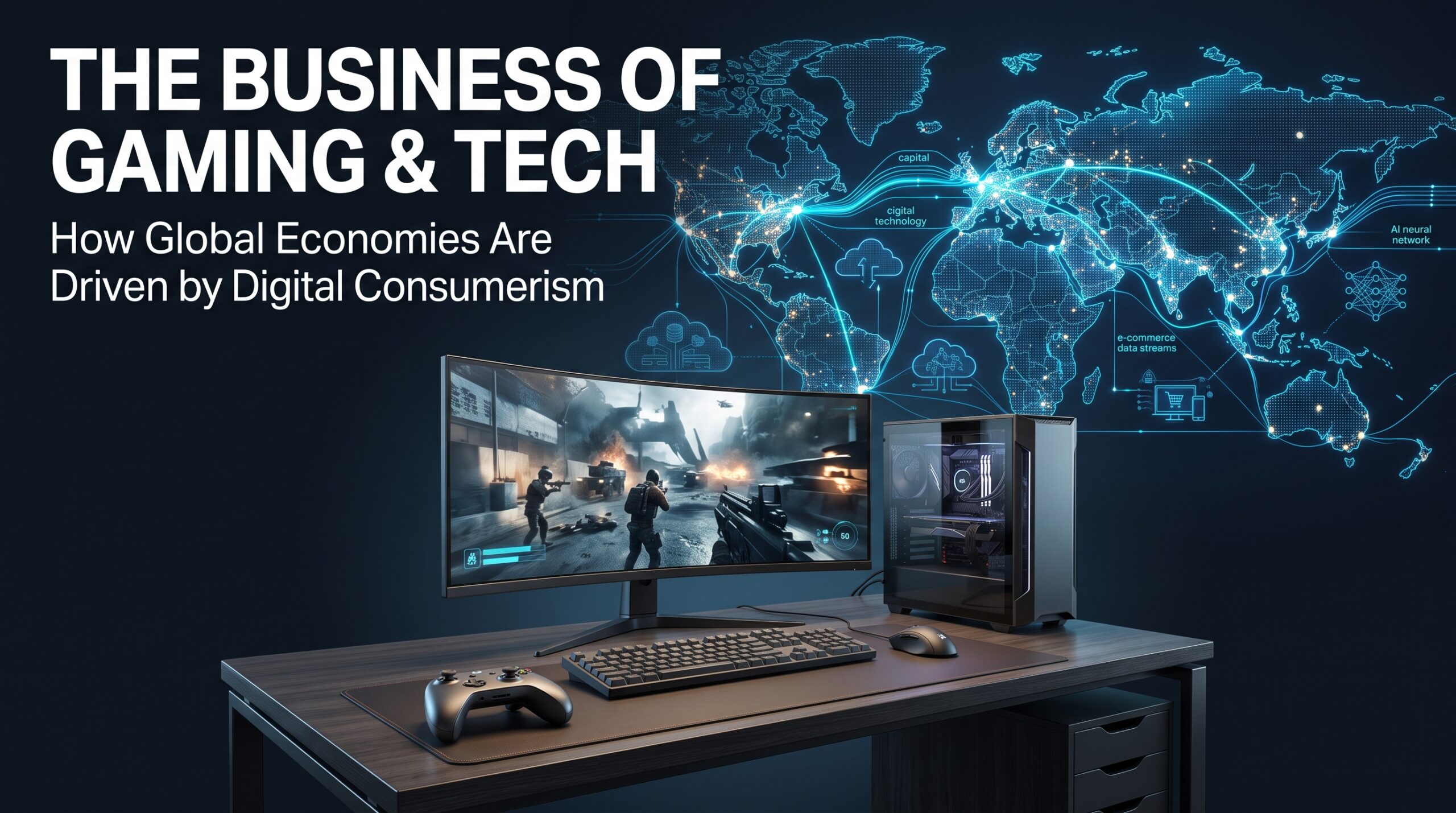
The global video game industry now generates more annual revenue than the entire GDP of Hungary — and it did so with an audience of 3.6 billion people, close to half of humanity, playing regularly. Gaming has quietly become one of the most reliable case studies in how digital consumerism scales into genuine macroeconomic weight, reshaping everything from U.S. GDP contribution figures to sovereign wealth fund allocation strategy in the Gulf. Here’s the full economic picture as of 2026.
The Headline Numbers: A Market the Size of a Mid-Sized Economy
Sizing the global games market precisely depends heavily on methodology — narrower estimates that track only direct consumer game spending land meaningfully lower than broader “gaming market” figures that fold in hardware, services, and adjacent digital media. Using the more conservative, widely cited Newzoo-based figures, the global games market reached $188.8 billion in 2025 and was forecast to hit roughly $205 billion in 2026, a 4.6% rise, according to SQ Magazine’s 2026 data breakdown. Visa’s own economic analysis frames that 2026 figure in a striking way: at roughly $205 billion, the games market is now “close to the value of a mid-sized European economy such as Hungary,” according to Visa’s consulting and analytics team.
Broader market-sizing methodologies that include hardware and adjacent digital services put the figure considerably higher — Statista’s forecast projects $577.9 billion in 2026 games-market revenue growing at a 6.58% CAGR through 2030, while other industry trackers cite figures ranging from $250 billion to over $400 billion depending on scope, according to a range of 2026 market reports from Straits Research, Mordor Intelligence, and Grand View Research. Whichever methodology is used, the direction is consistent: gaming is one of the fastest-structurally-growing segments of the global entertainment economy, and unlike film or television, its growth curve has held up through multiple macroeconomic cycles.
Gaming market size by source (2026 estimates — note methodology varies):
| Source | 2026 Estimate | Scope |
|---|---|---|
| Newzoo / SQ Magazine | $205 billion | Direct consumer game spend |
| Visa Consulting | $205 billion | Consistent with Newzoo |
| Straits Research | $250.9 billion | Broader market definition |
| Mordor Intelligence | $224.7 billion | Platform + regional breakdown |
| Grand View Research | $374.8 billion | Includes adjacent segments |
| Statista Market Forecast | $577.9 billion | Broadest — includes hardware/services |
The Player Base: Nearly Half the Planet
The scale of gaming’s consumer base is the real driver of its macroeconomic relevance. The worldwide player base reached 3.58 billion in 2025 — over 60% of the world’s online population — and is forecast to approach 4 billion by 2028, according to Newzoo data cited by SQ Magazine. Visa’s analysis separately projects 3.8 billion gamers by 2026, or nearly half the world’s population.
Mobile dominates that base by a wide margin: mobile gaming reaches roughly 3 billion players (83% of all gamers), well ahead of PC at 936 million and console at 645 million, per SQ Magazine’s 2026 breakdown. That platform split matters commercially — mobile also leads on revenue share at 55% of total industry spend, even though console posted the fastest year-on-year segment growth in 2025 at +5.5%.
Regional revenue leaders (2025 data):
| Region | Revenue | Notes |
|---|---|---|
| Asia-Pacific | $87.6 billion | Largest region by revenue |
| North America | $52.7 billion | — |
| China | $49.8 billion | Largest single country |
| United States | $49.6 billion | Close second to China |
The U.S. Case Study: Gaming as Measurable GDP Contribution
Gaming’s economic footprint is now formally tracked as a discrete GDP contributor in the United States. The Entertainment Software Association’s 2026 Economic Impact Report put the U.S. video game industry’s contribution to GDP at $65.5 billion for 2025, with total economic impact — including indirect and induced effects — reaching $95.8 billion, according to SQ Magazine’s summary of ESA data. U.S. weekly players reached 212.3 million, up 3% year-on-year, with the average American player now 37 years old — decisively undercutting the persistent stereotype that gaming is a youth-only pastime.
Emerging Markets: Where the Growth Actually Is
While mature markets like the U.S. and Europe have been largely flat, emerging markets have driven the sharpest growth in mobile game consumer spending. Turkey grew mobile game spending 28% year-on-year, Mexico grew 21%, and India grew 17% in 2024, according to SensorTower data cited by Udonis’ gaming industry report. By contrast, Japan’s mobile gaming revenue actually fell roughly 7% amid domestic economic headwinds during the same period — a reminder that even within a structurally growing global category, individual national markets remain exposed to local macroeconomic conditions.
The Middle East’s Sovereign-Fund Bet on Gaming
Perhaps the clearest sign that gaming has become genuine macroeconomic infrastructure — rather than just consumer entertainment — is the scale of Gulf state investment in the sector. Saudi Arabia has pledged $38 billion toward gaming and esports development, explicitly targeting a $13.3 billion contribution to its own GDP and 39,000 new jobs by 2030, according to Mordor Intelligence’s 2026 regional analysis. Riyadh’s Esports World Cup functions as the public-facing showcase of that sovereign-fund ambition, while the UAE has separately built out incentive programs to attract regional game publishing operations. The Middle East and North Africa region is now growing at a 9.16% CAGR, nearly matching the global average — a striking figure for a region with no prior gaming-industry legacy infrastructure to build on.
The Creator Economy Layer
Gaming’s economic footprint extends beyond direct game sales into an increasingly monetized creator and streaming layer. Total live-streaming hours watched grew approximately 12% in 2024 to 32.5 billion hours, according to Stream Hatchet data cited by Udonis, reversing a slight 2022 dip. Major publishers now build content-creator outreach into launch strategy as standard practice, and esports co-streaming arrangements — where popular streamers broadcast alongside official tournament coverage — have become a deliberate audience-expansion tool for titles like League of Legends and Valorant.
Layoffs Amid Growth: The Industry’s Own Contradiction
Despite the headline growth figures, the games industry has simultaneously undergone significant workforce contraction. Over 10,000 game developer jobs were cut in 2023 alone amid post-pandemic economic tightening and project cancellations, according to Udonis — a pattern that has pushed surviving studios toward cross-platform-first development from day one, using engines that deploy to PC, console, and mobile simultaneously with minimal additional engineering cost, maximizing revenue reach per unit of development spend.
Final Verdict
Gaming’s 2026 economic story is less about any single blockbuster launch and more about scale of ordinary, recurring consumer spending compounding across nearly 4 billion people globally. Whether measured conservatively at roughly $205 billion or more expansively above $500 billion depending on methodology, the industry has crossed a threshold where national governments — not just corporate boardrooms — now treat it as deliberate economic infrastructure, exemplified by Saudi Arabia’s $38 billion sovereign bet and the U.S. government’s own formal GDP-contribution tracking through the ESA. For investors and policymakers alike, the more useful lens going forward is not “is gaming growing” — that question is settled — but which regional and platform segments (emerging-market mobile spend, Gulf sovereign-backed esports infrastructure, and the creator-economy layer built on top of both) capture the next leg of that growth.
Discover more from The Economy
Subscribe to get the latest posts sent to your email.
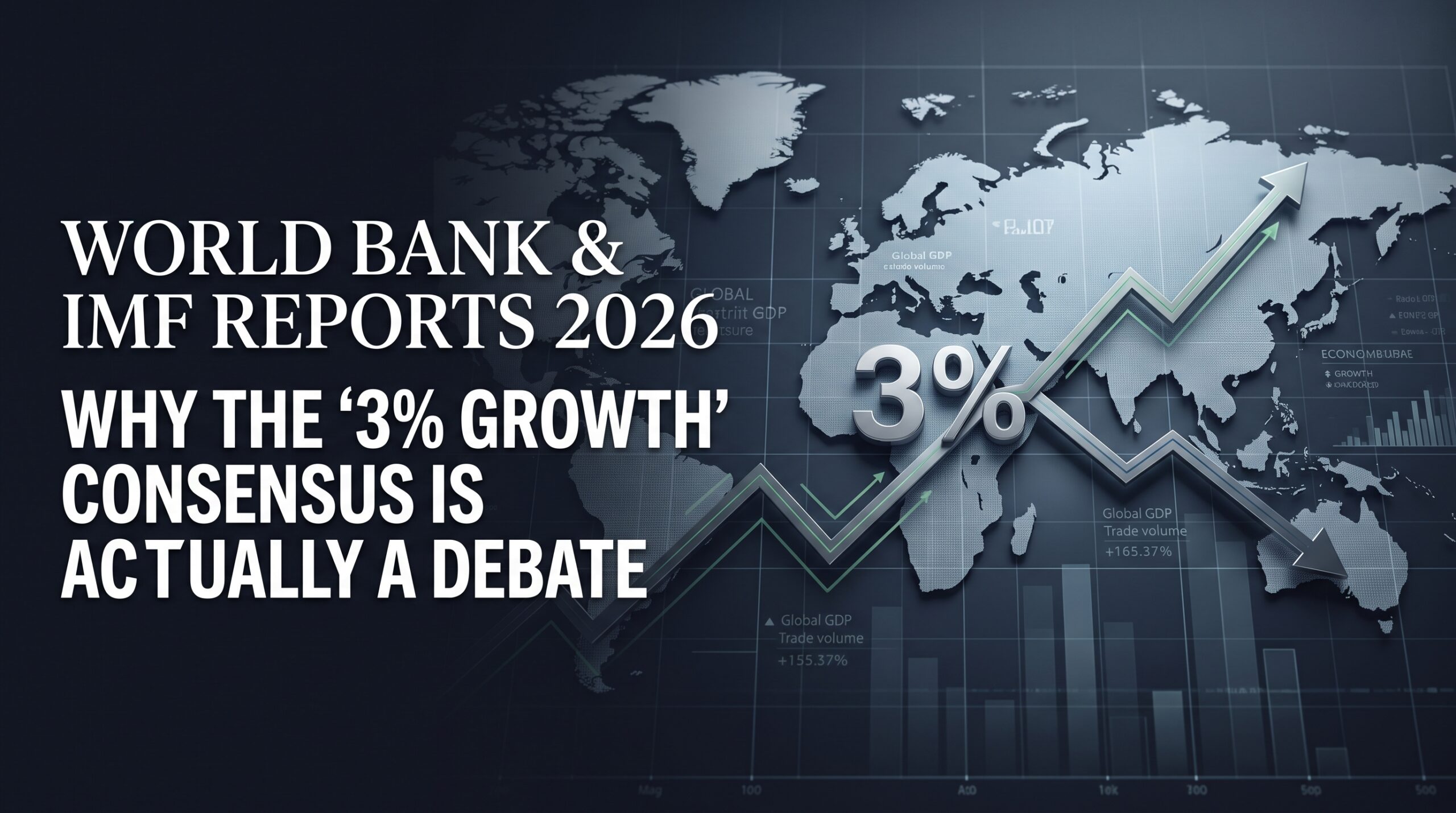
Two of the world’s most authoritative economic institutions have published starkly different verdicts on the global economy in 2026 — and the gap between them tells you more about the state of the world than either number alone. The IMF’s most recent projection puts global growth at 3.0% for 2026. The World Bank, using a different methodology and a more pessimistic read on the Middle East war’s fallout, puts the same year at 2.5% — the weakest rate since the COVID-19 pandemic. Understanding why these two numbers diverge is essential for anyone allocating capital across the world’s largest economies in the second half of 2026.
The IMF’s Case: Resilience Interrupted, Not Broken
The IMF entered 2026 with genuine optimism. Its January 2026 World Economic Outlook Update projected 3.3% global growth for the year — a small upward revision from October 2025 — crediting technology investment, fiscal and monetary support, and private-sector adaptability for offsetting ongoing trade-policy disruption.
The outbreak of war in the Middle East on February 28 forced a rapid downward revision. The April 2026 World Economic Outlook, titled pointedly “Global Economy in the Shadow of War,” cut the 2026 forecast to 3.1%, warning that a longer or broader conflict, a reassessment of AI-driven productivity expectations, or renewed trade tensions could weaken growth significantly further. By the July 2026 update, the figure had settled at 3.0% for 2026, rising to 3.4% in 2027 — a forecast the IMF frames as “broadly unchanged cumulatively” from April, arguing that AI-driven demand lifting technology-integrated economies is offsetting the war’s drag on energy importers.
IMF global growth revisions through 2026:
| Report Date | 2026 Projection | 2027 Projection | Key Framing |
|---|---|---|---|
| January 2026 | 3.3% | 3.2% | “Steady amid Divergent Forces” |
| April 2026 | 3.1% | 3.2% | “Shadow of War” |
| July 2026 | 3.0% | 3.4% | “Crosscurrents of War and Technology” |
The World Bank’s Case: The Weakest Growth Since COVID
The World Bank’s Global Economic Prospects report tells a more sobering story. Its June 2026 edition cut global growth to 2.5% for 2026, down from 2.9% in 2025 — explicitly the lowest rate since the onset of the COVID-19 pandemic. Forecasts for two-thirds of the world’s economies were downgraded relative to the World Bank’s own January 2026 report, which had initially projected 2.6% growth for the year.
World Bank Group Chief Economist Indermit Gill did not mince words in the report’s foreword, warning per the World Bank’s own press release that the 2020s remain on track to be the weakest decade for global growth since the 1960s, and that “virtually half of all developing economies have failed since 2019 to advance on the most rudimentary promise of development: narrowing the income gap with the world’s most prosperous economies.”
World Bank global growth revisions:
| Report Date | 2026 Projection | Context |
|---|---|---|
| January 2026 | 2.6% | Up from June 2025 forecast, driven by U.S. strength |
| June 2026 | 2.5% | Lowest since COVID-19; Middle East war impact |
| 2027 (June forecast) | 2.8% | Still 0.4pp below 2010s average |
Why the Numbers Don’t Match: Methodology, Not Disagreement on Facts
The roughly half-a-percentage-point gap between the IMF’s 3.0% and the World Bank’s 2.5% is not really a disagreement about the war’s severity — both institutions cite the same core shock. It reflects different weighting of technology-driven offsetting growth versus energy-importer drag, and different treatment of emerging-market vulnerability. The World Bank’s framing emphasizes that growth in low-income countries (LICs) is expected to reach 5.4% in 2026, 0.3 percentage points lower than previous forecasts specifically because of the conflict, with real per-capita GDP growth across LICs averaging only about 2.7% through 2026–28 — insufficient, in the Bank’s own assessment, to meaningfully reduce poverty.
Breaking Down the Big Economies
Both institutions converge more closely at the country level than at the global aggregate, which is instructive for investors trying to translate the headline debate into portfolio decisions.
2026 growth projections by major economy/bloc:
| Economy/Bloc | Projection | Source |
|---|---|---|
| United States | 2.2%–2.4% | World Bank (2.2%) / IMF (2.4%) |
| Advanced economies (aggregate) | 1.7%–1.8% | IMF |
| GCC states | 4.4% | World Bank |
| MENAP region (incl. Pakistan) | 3.6% | World Bank |
| Low-income countries | 5.4% | World Bank / IMF |
| Global (IMF) | 3.0% | IMF, July 2026 |
| Global (World Bank) | 2.5% | World Bank, June 2026 |
The United States is the one major economy where both institutions agree growth is holding up better than expected, with the World Bank crediting the U.S. for roughly two-thirds of its own upward revision to global growth back in January — before the war reversed some of that optimism. Gulf Cooperation Council economies are the other standout, benefiting directly from elevated oil prices even as the same conflict drags down oil-importing peers.
Inflation: The Shared Warning
Both reports converge on inflation risk. The IMF’s April 2026 outlook explicitly modeled inflation rising to 4.4% globally under its reference war scenario, a sharp reversal from the disinflation trend of 2024–25. The World Bank similarly flagged that headline inflation expectations have risen broadly across emerging markets and developing economies, with local-currency bond yields and external spreads remaining elevated in commodity-importing nations specifically because of the conflict’s pass-through to energy and food costs.
What This Means for Asset Allocation
The practical takeaway from the IMF-World Bank gap is that “global growth” is now a genuinely bimodal concept in 2026: technology-exposed and energy-exporting economies are outperforming, while energy-importing emerging markets and low-income countries are absorbing a disproportionate share of the war-driven slowdown. A portfolio built around a single “global growth” assumption risks missing this bifurcation entirely — the more useful lens for 2026 is regional and sectoral, not aggregate.
Final Verdict
The IMF’s 3.0% and the World Bank’s 2.5% are not competing predictions so much as two honest readings of the same uncertain war-affected environment, filtered through different modeling emphasis. What both institutions agree on matters more than where they diverge: growth in 2026 is meaningfully weaker than it would have been absent the Middle East conflict, inflation risk has returned after two years of disinflation, and the burden of the shock is falling disproportionately on energy-importing emerging markets rather than being evenly distributed. Investors and policymakers should treat both the 3.0% and 2.5% figures as bookends of a realistic range rather than seeking a single “correct” number — and should watch the IMF’s next scheduled update for whether the numbers converge toward the optimistic or pessimistic end as the war’s duration becomes clearer.
Discover more from The Economy
Subscribe to get the latest posts sent to your email.
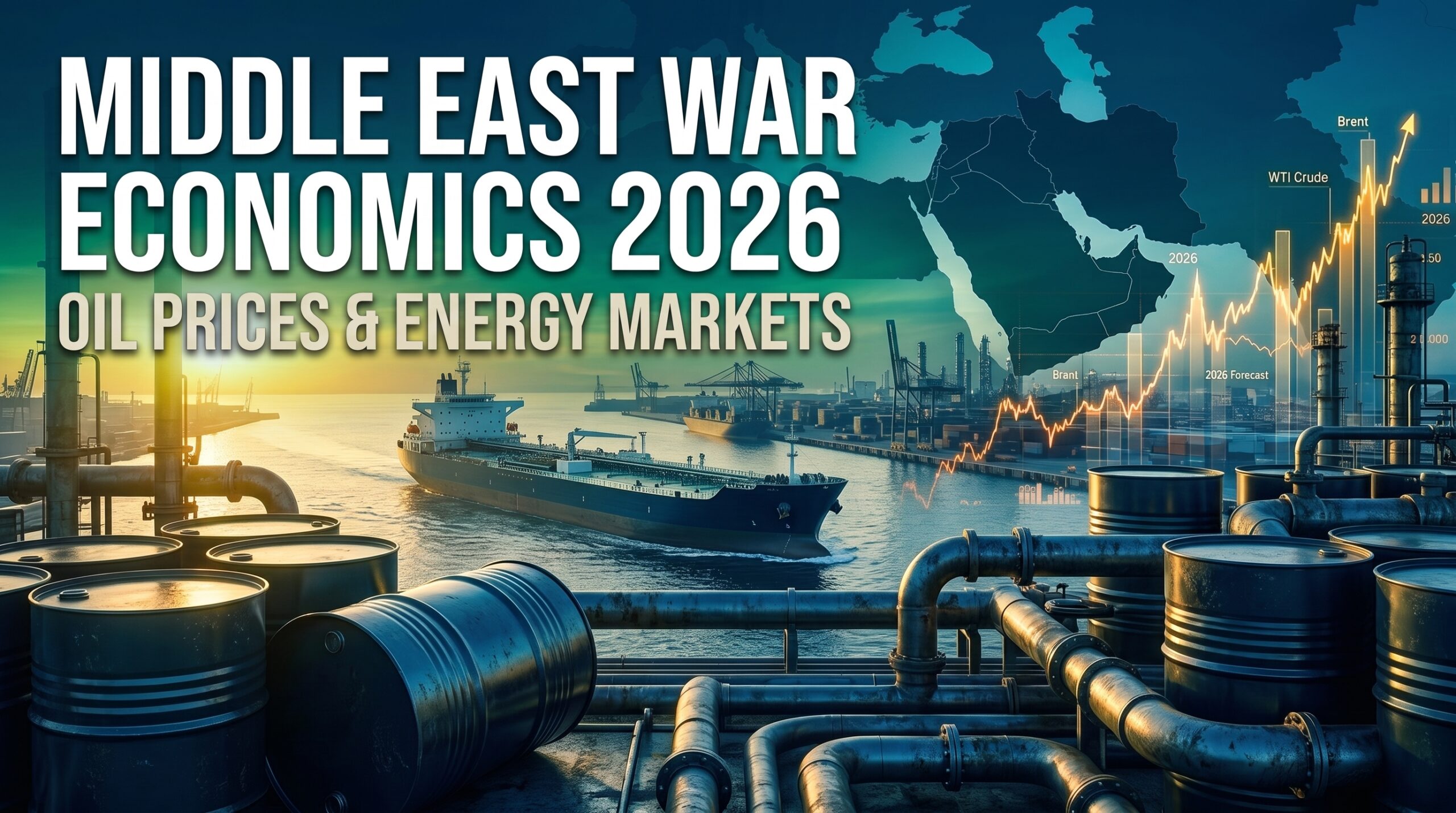
Six months into the war between the United States, Israel, and Iran, one pattern has become unmistakable to energy traders: every reported ceasefire has been followed, sooner or later, by a fresh escalation. What started as a limited conflict on February 28, 2026, has evolved into the most disruptive geopolitical shock to global oil supply since Russia’s invasion of Ukraine — and as of September 2026, it is still actively reshaping energy markets, shipping routes, and inflation forecasts worldwide.
The Ceasefire-and-Relapse Cycle
The conflict has produced at least three distinct ceasefire announcements since February, and none has held for more than a few weeks. In April 2026, a US-Iran arrangement briefly reopened the Strait of Hormuz and sent oil plunging below $100 a barrel, as reported by Euronews. Gold, which had surged as a safe haven, still traded near $4,750 an ounce that same week as investors openly doubted the truce would last, according to Trading Economics — key disputes remained unresolved and the Strait stayed effectively closed even after the announcement.
That skepticism proved warranted. By September 2026, oil had round-tripped decisively higher. Brent crude surpassed $100 a barrel for the first time in nearly six weeks after fresh attacks on oil facilities and tankers, settling at $97.89 before jumping 2.4% to $100.29, with WTI gaining to $94.77, according to reporting carried by the Washington Times. The proximate trigger: the U.S. military struck five Iranian tankers in response to attempted missile attacks on a Navy warship, while Iranian-backed Houthi forces ignited fires at Saudi Arabian oil facilities.
Oil price trajectory during the conflict:
| Date | Brent Crude | Context |
|---|---|---|
| Mar 21, 2026 | ~$106.77 | Fifth straight weekly gain amid escalation |
| Mar 20, 2026 | Forecast warning of $180+ | Saudi Aramco officials warned WSJ of extreme scenario |
| Apr 8, 2026 | Below $100 | Ceasefire announcement, Strait reopening pledge |
| Sept 7, 2026 | $97.31 | Six-week high; Iran vows to strike energy infrastructure |
| Sept 9, 2026 | $100.29 | Attacks on tankers and Saudi refineries |
| Sept 11, 2026 | ~$100, +9% week | Diplomatic talks announced on Hormuz shipping |
Why the Strait of Hormuz Is the Real Story
The Strait of Hormuz is the fulcrum of this entire crisis. Roughly 20% of the world’s oil supply passes through this chokepoint, including about half of Asia’s oil imports and a quarter of its LNG imports, according to TD Economics. Since the war began, fighting has halted most shipping through the strait, and — critically — markets have stopped believing repeated U.S. government proclamations that reopening is imminent. As one energy analyst told Marketplace, “The Strait of Hormuz won’t be what it was before. Now, we understand that Iran can and will block it.”
The physical impact on trade flows has been severe. Oil shipments out of the Middle East are running roughly 65% below year-ago levels, and the cost of shipping crude to Asia on the largest tankers has hit a record high, per the same Marketplace reporting. The United Arab Emirates has responded by actively building alternative export routes and trade corridors to avoid having its energy exports “held hostage” by the conflict, a senior UAE presidential adviser confirmed to Reuters in early September.
Demand Destruction Is Now the Dominant Theme
While supply disruption drove the initial price spike, the market’s focus by September 2026 has shifted decisively toward demand destruction. The International Energy Agency sharply lowered its 2026 global oil demand outlook, forecasting a contraction of 2.5 million barrels per day — the largest annual decline since the COVID-19 pandemic — as higher prices and tighter supply weigh on consumption, according to Trading Economics. OPEC has cut its own demand-growth forecast for a fifth consecutive month. Both organizations now agree that sustained triple-digit oil is actively destroying the demand it was created by.
OPEC+ itself has opted for caution rather than aggressive supply response, keeping its October output policy unchanged at its early-September meeting, pending agreement on new quotas before any further steps, Reuters reported.
The Inflation and Consumer Pass-Through
The war’s inflationary impact has already shown up in hard data. U.S. gasoline prices surged in March 2026 to an EIA-reported average of $3.638 per gallon, the highest since September 2023, with AAA data showing the national average briefly topping $4.02 per gallon — a monthly jump described by Trading Economics as exceeding even the spikes following Hurricane Katrina and Russia’s 2022 invasion of Ukraine. Euro-area inflation jumped to 2.5% in the same window, well above the European Central Bank’s 2% target, driven almost entirely by the energy component.
Who is most exposed:
| Category | Exposure | Why |
|---|---|---|
| Asian oil importers (Japan, India, Pakistan, China) | Very high | ~50% of Asia’s oil, 25% of LNG via Hormuz |
| European energy consumers | High | Already strained post-Russia diversification |
| Gulf oil exporters (Saudi, UAE, Qatar) | Mixed | Higher prices offset by direct attack risk on infrastructure |
| U.S. consumers | Moderate-high | Domestic production buffers some but not all of the shock |
| Global shipping/logistics | High | Record tanker rates, rerouting costs |
Diplomatic Off-Ramps Being Tested
The most significant near-term catalyst for de-escalation is the diplomatic track around Strait of Hormuz shipping management. Top diplomats from the six-member Gulf Cooperation Council were scheduled to meet their Iranian counterpart to negotiate a possible temporary arrangement for managing transit through the strait, according to Trading Economics. Iranian state media separately indicated Tehran would meet Gulf states in Oman for related talks. Markets have priced in modest optimism around these talks — crude paused its rally and settled near $100 on the news — but given the track record of failed ceasefires since February, traders are treating any de-escalation as tactical rather than durable until physical shipping data confirms a sustained reopening.
Final Verdict
The “ceasefire economics” of the 2026 Middle East war have proven to be a recurring, not a resolving, phenomenon: each truce has produced a short-lived relief rally in oil and a corresponding dip in inflation expectations, followed by renewed escalation that erases the gains. As of September 2026, Brent and WTI sit near six-week highs above $90–100, the Strait of Hormuz remains functionally impaired, and both the IEA and OPEC now forecast the sharpest demand contraction since the pandemic. For investors and policymakers, the actionable conclusion is that oil-price volatility itself — not a stable higher or lower price level — is the defining condition of this market, and near-term direction hinges almost entirely on whether the current Gulf-Iran diplomatic track produces a verifiable, physically confirmed reopening of shipping lanes rather than another rhetorical ceasefire.
Discover more from The Economy
Subscribe to get the latest posts sent to your email.

Microeconomics vs. Macroeconomics Explained: Key Differences, Interdependence & Global Impact

Devaluation vs Depreciation: Clear Differences, Causes, and Economic Impact

Purchasing Power Parity (PPP) Explained: Global Rankings, Living Standards & Why Nominal Exchange Rates Mislead in 2026

Remittances 2026: Global Trends, Household Resilience & Economic Lifeline for Developing Nations

Stagflation Explained: Causes, Global Impact & 2026 Economic Outlook

Understanding Foreign Exchange Reserves: Key Purposes and Global Impact

The Business of Gaming and Tech: How Global Economies Are Driven by Digital Consumerism

Crypto Daily Outlook: Bitcoin, Altcoins, and the Future of Decentralized Finance

Anthony Scaramucci’s Crypto Prediction: Why MicroStrategy’s Move Is Bitcoin’s “iPhone Moment”

Best Dividend Stocks 2026: European & Asian Blue Chips

World Bank & IMF Reports 2026: Why the “3% Growth” Consensus Is Actually a Debate

Elon Musk’s Boring Company Hits $23B Valuation After UAE-Led $3 Billion Series D

Middle East War Economics 2026: Oil Prices & Energy Markets

PSX Forecast 2026: KSE-100, IMF Reviews & Geopolitics

State Farm’s $5B Dividend 2026: Who Qualifies & Payout Dates

US-China Relations in Q3 2026: Trade Tariffs and Supply Chain Risks

Gold’s Wild 2026: From a Record $5,600 Peak to a 24% Crash and Back Toward $4,500

Oil Surges as Strait of Hormuz Traffic Collapses Again

The Rocket That Won’t Quit: Inside SpaceX’s Falcon 9 Launch Machine

Bank of England Set to Hold Rates Through Year-End, Reuters Poll Shows

SpaceX Starship Flight 14: First Orbital Attempt & Starlink V3 Launch Explained

The 2026 Crypto Regulatory Shift: What It Means for Institutional Investors

AI Chip Stocks 2026: The Best Semiconductor Investments Beyond Marvell

Top 30 Stocks for Investment in PSX for Massive ROI in 2026

Retail Earnings Week: What Home Depot, Target & Walmart Reveal

AI-Powered Training: The Next Multi-Billion Dollar Ecosystem in Fitness

Russia’s Black Sea Oil Exports Fall for a Fifth Straight Week

Tween Back-to-School Trends 2026: What’s Driving the $85B Season
-

 Markets & Finance8 months ago
Top 15 Stocks for Investment in 2026 in PSX: Your Complete Guide to Pakistan’s Best Investment Opportunities
-

 Analysis7 months ago
Johor’s Investment Boom: The Hidden Costs Behind Malaysia’s Most Ambitious Economic Surge
-

 Analysis7 months ago
Top 10 Stocks for Investment in PSX for Quick Returns in 2026
-

 Analysis7 months ago
Brazil’s Rare Earth Race: US, EU, and China Compete for Critical Minerals as Tensions Rise
-

 Banks8 months ago
Best Investments in Pakistan 2026: Top 10 Low-Price Shares and Long-Term Picks for the PSX
-

 Investment8 months ago
Top 10 Mutual Fund Managers in Pakistan for Investment in 2026: A Comprehensive Guide for Optimal Returns
-

 Global Economy9 months ago
15 Most Lucrative Sectors for Investment in Pakistan: A 2025 Data-Driven Analysis
-

 Global Economy9 months ago
Pakistan’s Export Goldmine: 10 Game-Changing Markets Where Pakistani Businesses Are Winning Big in 2025