
Analysis
Singapore’s Bold Economic Bet: Why the City-State Must Learn to Fail

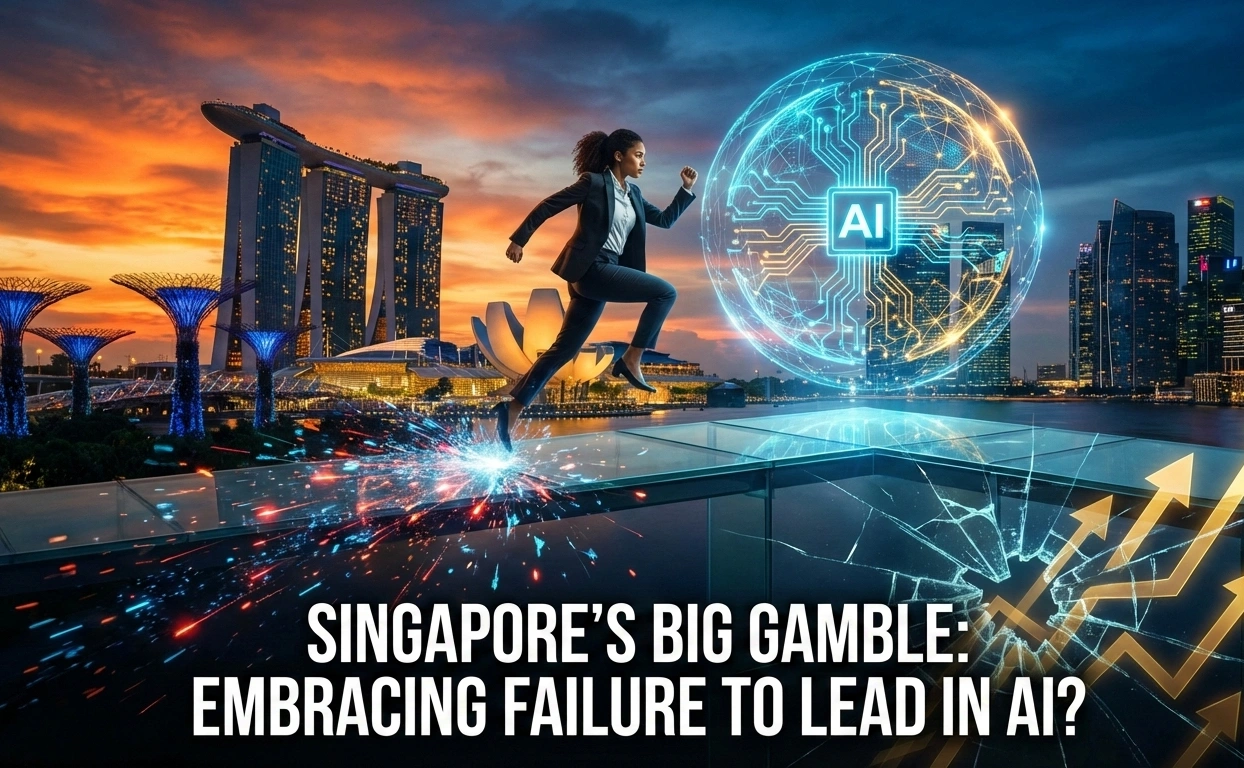
Singapore stands at an inflection point. For decades, the city-state has built its prosperity on precision, predictability, and prudent risk management—the very qualities that transformed a resource-poor island into one of the world’s wealthiest nations. But on January 29, 2026, Deputy Prime Minister Gan Kim Yong delivered a message that would have seemed heretical a generation ago: Singapore must learn to embrace failure.
The Singapore Economic Strategy Review 2026 mid-term update, unveiled after months of consultation with businesses and workers, marks a striking departure from the nation’s traditional playbook. At its core lies a fundamental recognition that in an era of geopolitical fragmentation, artificial intelligence disruption, and climate imperatives, playing it safe is the riskiest strategy of all. The question now is whether a society built on stability can genuinely cultivate the “spirit of risk-taking” its leaders insist is essential for survival.
A Changed World Demands Changed Thinking
“Today’s crisis is very different,” DPM Gan told reporters at the briefing. “It is going to be a different world that we are going to emerge from. We are never going to go back to where we were.” His words carried unusual weight, spoken by a minister who has spent decades navigating Singapore through economic turbulence—from the Asian financial crisis to the global pandemic.
The seven recommendations emerging from the five Economic Strategy Review committees read less like incremental policy adjustments and more like a cultural manifesto. Developed through over 60 engagements with stakeholders, they acknowledge uncomfortable truths: achieving economic growth will be challenging, and growth can no longer be assumed to generate jobs. The twin objectives—sustaining growth at the higher end of 2-3% annually over the next decade while creating good jobs for Singaporeans—require a fundamentally different approach.
What makes this Singapore ESR risk-taking agenda particularly striking is not just what it proposes, but what it admits. Singapore must move beyond simply attracting multinational corporations and instead nurture enterprises that “dream big and take risks.” The phrase appears repeatedly in committee documents—a deliberate rhetorical choice in a nation where failure has historically carried deep stigma. As Acting Minister Jeffrey Siow emphasized during the briefing, the global economy is being reshaped by forces Singapore cannot control: major power rivalry, security concerns supplanting free trade, and technological advancement that renders traditional comparative advantages obsolete within years rather than decades.
The Seven Pillars of Singapore’s Economic Reinvention
What Are the 7 ESR Recommendations?
The ESR recommendations Singapore announced on January 29 form an interconnected strategy to position the nation for a more volatile future:
1. Establish Global Leadership in Key Growth Sectors
Singapore aims to transform its manufacturing prowess in semiconductors, healthcare, specialty chemicals, and aerospace through aggressive investment in AI, automation, and emissions-reducing technologies. But ambition extends beyond making existing industries more efficient—the goal is “best-in-class and sustainable operations” that serve as global benchmarks. The recommendation includes directing national-level R&D resources toward securing leadership positions rather than merely participating in high-value industries.
2. Pursue Emerging Opportunities to Create New Economic Engines
This represents perhaps the boldest cultural shift. The ESR committees are urging Singapore to place bets on frontier technologies—quantum computing, decarbonization technologies, space exploration—where outcomes remain deeply uncertain. Committee member Lim Hock Heng, former vice-president of British pharmaceutical giant GSK, captured the ambition: “Singapore can be more than just a regional hub. We have the chance to become the global benchmark for advanced manufacturing and modern services, a place where the future of the industry takes shape.”
3. Position Singapore as an AI Leader with an AI-Empowered Economy
Building on the National AI Strategies launched in recent years, this recommendation pushes for Singapore to become “a location of choice for companies and talent to come together to develop, test, deploy, and scale innovative and impactful AI solutions.” Crucially, it emphasizes AI adoption across the entire economy to drive productivity, not just in elite tech sectors. This Singapore AI leader strategy recognizes that AI will reshape every industry—and nations that hesitate will be left behind.
4. Strengthen Connectivity and Support Firms to Internationalize
Rather than relying solely on its position as a regional hub, Singapore must actively help local firms expand abroad. The recommendation calls for enhanced transport links, deeper trade networks, and support for Singaporean companies pursuing international ventures—a recognition that in an age of protectionism, market access cannot be taken for granted.
5. Broaden the Range of Good Jobs
This tackles a more sensitive issue: the concentration of high-quality employment in a narrow band of sectors. The review proposes expanding opportunities in skilled trades, care services, and emerging fields created by AI and frontier technologies. It’s an acknowledgment that Singapore innovation growth 2026 must translate into broad-based prosperity, not just elite prosperity.
6. Make Lifelong Learning Practical
Workers will need to become more agile, acquiring new skills throughout their careers through flexible pathways that blend training and work. The proposal includes developing a national AI workforce strategy to build literacy and fluency across the workforce—not just among data scientists and engineers.
7. Enable Businesses to Navigate Transitions
Companies will receive support to assess their health, plan pivots, and reposition themselves for new opportunities. In a restructuring economy, this amounts to acknowledging that not all businesses will survive—and providing mechanisms to help those that can adapt do so successfully.
The Cultural Chasm: Can Singapore Truly Embrace Failure?
Here’s where theory meets the hard ground of cultural reality. Singapore’s success has been built on the opposite of the risk-embracing, failure-tolerant culture now being advocated. Students face intense pressure to excel in standardized exams. Civil servants advance through proven competence rather than bold experimentation. The bankruptcy laws, though reformed, still carry social stigma. Even the vaunted startup ecosystem tends to favor proven business models over moonshots.
The Singapore economy embrace failure message will require more than policy changes—it demands a generational shift in mindset. When ESR committees urge the government to “go beyond attracting multinational corporations and nurture a new generation of enterprises and start-ups that dream big and take risks,” they’re essentially asking Singapore to become something it has never been: comfortable with ambitious failure.
Consider the contrast with other innovation economies. Israel’s “Startup Nation” culture actively celebrates pivots and failures as learning experiences. Silicon Valley treats bankruptcy as a badge of honor, evidence that you swung for the fences. China’s tech giants grew by launching dozens of products simultaneously, killing the failures quickly. Singapore’s approach has historically been more like Japan’s: careful, consensus-driven, risk-averse.
Yet there are reasons for optimism. Singapore has demonstrated remarkable adaptability before—pivoting from entrepôt trade to manufacturing to financial services to tech hub within two generations. The government’s willingness to convene this review and publicly acknowledge the need for risk-taking is itself significant. As DPM Gan noted, the recommendations and measures being considered “have to be quite different from what we were doing before” precisely because the environment has fundamentally changed.
The AI Gambit: Singapore’s Biggest Bet Yet
If there’s one area where the Singapore economic update risk appetite is most evident, it’s artificial intelligence. The ESR committees are proposing that Singapore position itself as a global AI leader—not just in deployment, but in development and governance.
This is audacious. Singapore lacks the vast data lakes of China, the venture capital ecosystem of the United States, or the deep bench of AI researchers in London or Toronto. What it can offer is something potentially more valuable: a trusted regulatory environment where AI can be tested, deployed, and scaled with both innovation and accountability.
The proposal to create “a location of choice” for AI companies recognizes that geography matters less than governance in the AI era. If Singapore can establish itself as the jurisdiction where controversial applications get fair, intelligent oversight—where privacy, safety, and innovation are balanced—it could capture an outsized share of AI value creation. The Republic has form here: it did something similar with biotech in the 2000s, building Biopolis and attracting pharmaceutical giants through intelligent regulation and infrastructure investment.
But the AI strategy goes beyond attraction. The push for economy-wide AI adoption—helping SMEs integrate AI into operations, building AI literacy across the workforce—addresses a hard truth: the countries that thrive won’t be those with the most AI researchers, but those where AI amplifies human productivity most broadly.
The Global Context: Singapore’s Gamble in Historical Perspective
Singapore’s pivot toward risk-taking arrives at a peculiar moment in global economic history. The post-Cold War consensus that favored open trade, mobile capital, and integrated supply chains—the very system Singapore mastered—is fracturing. Countries are “reconfiguring trade networks and supply chains in the name of resilience and security”, Prime Minister Lawrence Wong warned in December. These aren’t temporary disruptions but “permanent features of a fragmented world.”
The irony is rich: just as protectionism makes Singapore’s traditional strengths less valuable, the ESR is urging the nation to double down on openness and risk-taking. It’s a calculated gamble that in a balkanized world economy, there will be even more value in being the trusted intermediary, the neutral ground where Chinese and American companies can still do business, the place willing to try things others won’t.
History suggests this could work. Small, trade-dependent nations have often thrived during periods of great power competition by becoming indispensable to all sides. The Netherlands did it during the religious wars of the 16th century. Switzerland managed it through two world wars. Singapore itself prospered during the Cold War by maintaining relationships with both camps.
But there’s a crucial difference: those historical examples involved managing existing strengths, not cultivating new ones. Singapore is attempting something harder—transforming its risk culture while maintaining the stability and trust that made it successful in the first place. It’s trying to become both the safe harbor and the daring adventurer simultaneously.
The Uncomfortable Questions
The ESR mid-term update raises questions that deserve frank examination. First, can a government engineer a culture of risk-taking, or is such a culture necessarily organic? Singapore’s top-down approach has worked brilliantly for infrastructure, education, and industrial policy. But risk-taking and innovation may be different beasts—less amenable to five-year plans and committee recommendations.
Second, is Singapore being realistic about the trade-offs? A genuine failure-tolerant culture means accepting that some high-profile bets will fail spectacularly and publicly. It means entrepreneurs will squander government grants. It means brilliant researchers will pursue dead ends. Singapore’s electorate, accustomed to efficiency and accountability, may find this difficult to stomach.
Third, can Singapore compete with economies that have natural advantages in risk-taking cultures? The United States produces more failed startups than successful ones—but it also produces Google, Amazon, and Tesla. China’s tech giants emerged from chaotic, under-regulated environments where failure was ubiquitous and cheap. Singapore cannot replicate either model even if it wanted to.
Perhaps the answer lies not in becoming Silicon Valley or Shenzhen, but in creating a distinctly Singaporean model: calculated risk-taking, not reckless gambling. Failure tolerance within guardrails. Innovation with governance. The ESR’s emphasis on supporting “high-potential, fast-growing start-ups” to scale globally suggests this middle path—identifying promising ventures early and backing them intelligently rather than throwing money at everything.
What Success Looks Like—And What It Costs
If the ESR succeeds, Singapore in 2035 will look different from Singapore in 2025. The economy will be more diversified, with clusters of globally competitive companies in quantum computing, space technology, and climate tech alongside the traditional strengths in finance and manufacturing. Workers will move fluidly between roles and sectors, armed with AI skills and comfortable with career pivots. The startup ecosystem will have produced a handful of global champions—companies valued in the tens of billions that choose to keep their headquarters in Singapore even as they expand worldwide.
The Singapore innovation growth 2026 trajectory will have created not just GDP expansion but meaningful social mobility. The “good jobs” the ESR promises will span a wider range of sectors and skill levels. Care workers and skilled tradespeople will earn professional wages. AI will have automated drudgery without devastating employment, because the workforce adapted fast enough.
But this optimistic scenario requires Singapore to overcome its hardest challenge: accepting that some bets won’t pay off. The quantum computing company that burns through billions before pivoting. The space venture that launches satellites into the wrong orbit. The AI startup whose promising technology fails to find product-market fit. These aren’t policy failures to be avoided—they’re the inevitable price of ambition.
As the government prepares its formal response to the ESR recommendations at Budget 2026 in February, the crucial test will be whether it’s willing to embrace this reality. Will ministers defend failed ventures as necessary learning experiences, or will they retreat to safe, incremental bets at the first sign of trouble?
The Verdict: A Necessary Gamble
The Singapore Economic Strategy Review 2026 represents either a courageous reimagining of what Singapore can become or a risky departure from proven success formulas—possibly both. What’s certain is that standing still isn’t an option. In DPM Gan’s phrasing, doing “more of the same” in a fundamentally changed world guarantees decline.
The review’s power lies not in any single recommendation but in its cumulative message: Singapore must transform its relationship with uncertainty. That means celebrating ambitious failure as much as steady success, supporting companies that dream big over those that play it safe, and accepting that 2-3% GDP growth in a volatile world represents triumph, not mediocrity.
Whether Singapore’s leaders and citizens are truly ready for this psychological shift remains the great unanswered question. The next decade will reveal whether a nation built on calculated prudence can learn to dance with risk—or whether the call to “embrace failure” will itself become a failure to embrace.
For now, Singapore is placing its bet. The world will be watching to see if a 728-square-kilometer city-state can write a new playbook for economic success in the 21st century—one where taking the leap matters more than landing perfectly every time.
Discover more from The Economy
Subscribe to get the latest posts sent to your email.


When the Trump administration’s tariff regime rattled export-dependent Asian economies in 2025, Malaysia’s finance ministry response stood out for its composure. “We didn’t panic,” the finance minister told reporters, describing a deliberate strategy of diversification and negotiation rather than reactive concessions (Fortune).
From crisis response to execution agenda
That composure has carried into 2026. Malaysia’s economy minister has described this year explicitly as one of “execution,” as the Anwar Ibrahim administration works to lock in the policy gains built through 2025’s trade turbulence (Fortune). The framing matters: it signals Putrajaya sees 2026 less as a year of new initiatives and more as a year of delivering on commitments already made — the Johor-Singapore Special Economic Zone chief among them.
The semiconductor exposure that both helps and constrains
Malaysia’s electrical and electronics sector accounts for roughly 40% of total exports, with semiconductors alone comprising about 65% of E&E exports (J.P. Morgan Private Bank). That concentration is precisely why Malaysia benefited from 2025’s tariff exemptions on semiconductors, electronics and pharmaceuticals, and precisely why any future change to those exemptions carries outsized risk for Malaysian growth relative to more diversified regional peers (J.P. Morgan Private Bank).
The Johor-Singapore SEZ as the structural bet
Johor’s 7,300-acre innovation sandbox, part of the new special economic zone with Singapore, is Malaysia’s clearest attempt to convert its manufacturing base into a higher-value regional hub rather than remain a low-cost assembly point (Fortune). The zone’s stated ambition — combining Johor’s “land and scale” with Singapore’s “capital and speed” — positions the region to capture AI-linked infrastructure and hardware investment that would otherwise bypass both countries individually (Fortune).
Corporate consolidation follows the growth signal
Confidence in Malaysia’s execution story is visible in corporate activity too: two Southeast Asia 500 companies are reportedly exploring a merger that would form Malaysia’s largest construction conglomerate, a scale bet that typically follows — rather than precedes — genuine confidence in a multi-year infrastructure pipeline (Fortune).
The regulatory friction points
Not every 2026 storyline is frictionless. Malaysia has moved to temporarily block the Grok AI platform alongside Indonesia following a sexual-deepfake scandal, illustrating that Malaysia’s AI-forward economic strategy is running in parallel with an increasingly assertive AI-governance posture — a tension regional investors should track as a signal of how Malaysia intends to regulate the same technology sector it is courting for investment (Fortune).
What “execution” needs to mean by year-end
For Malaysia’s 2026 narrative to hold, three things need to materialise beyond announcements: measurable Johor SEZ tenant commitments, continued semiconductor export resilience against any tariff-exemption rollback, and a construction-sector consolidation that actually delivers infrastructure rather than simply consolidating market share.
Discover more from The Economy
Subscribe to get the latest posts sent to your email.
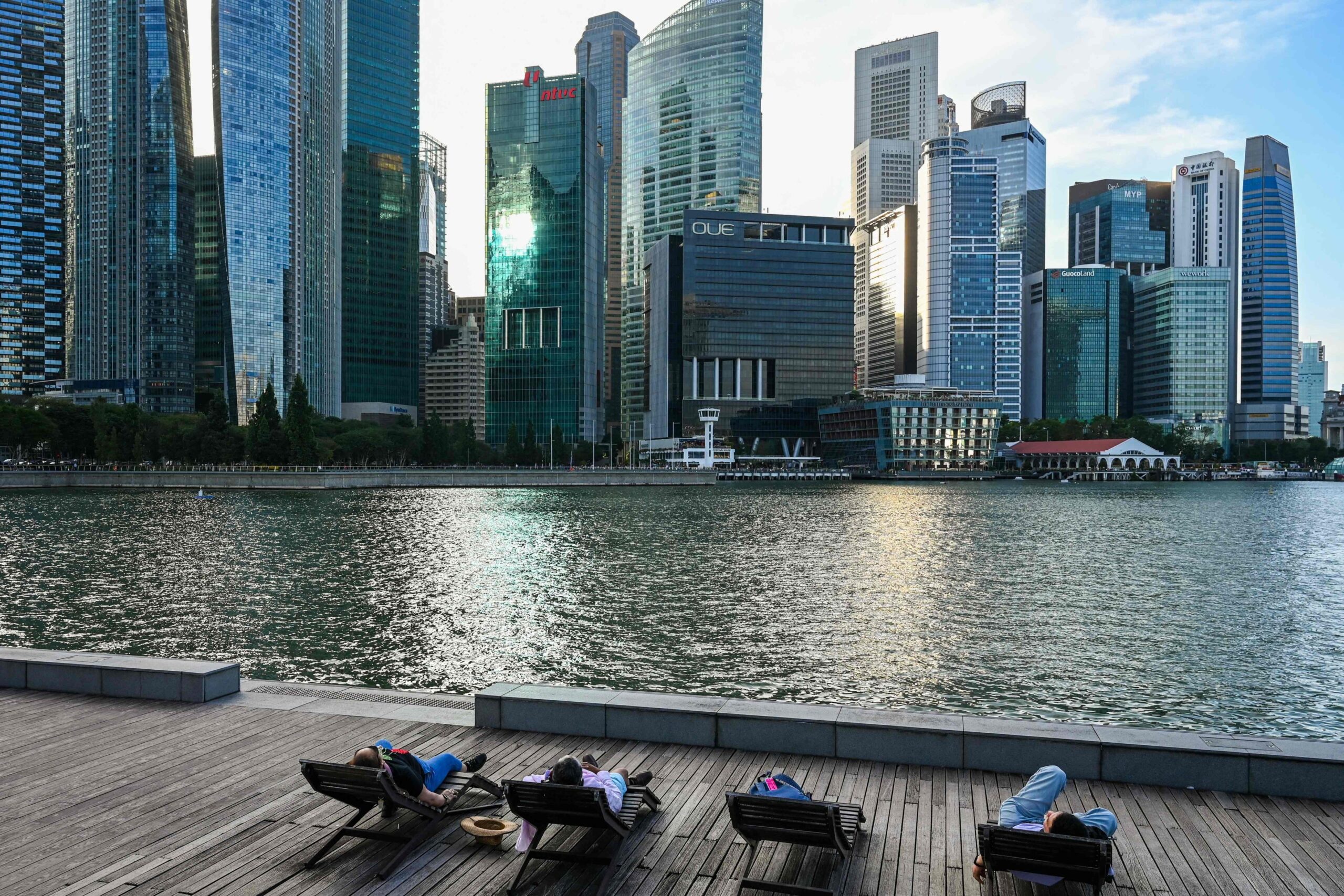
Singapore has spent the past two years becoming one of the primary beneficiaries of the global AI infrastructure buildout, alongside Taiwan’s semiconductor sector. The city-state’s role as a data-center hub allowed it to capture significant capital inflows even as the broader labour-market impact of that investment stayed limited, given how capital-intensive AI infrastructure spending tends to be (J.P. Morgan Private Bank).
Why the AI cycle didn’t stay contained to Singapore
What is changing in 2026 is the geography of that investment. J.P. Morgan’s Asia outlook notes Southeast Asian economies — traditionally anchored in commodities and export manufacturing — are now aligning more closely with the global AI investment cycle by deepening involvement in higher-value areas: infrastructure, hardware and complementary supply chains (J.P. Morgan Private Bank).
Land constraints in Singapore make expansion difficult, which is precisely where the Johor-Singapore Special Economic Zone becomes central to the region’s AI investment thesis rather than a side story.
The Johor SEZ as capacity release valve
Johor has launched a 7,300-acre innovation sandbox as part of the new special economic zone bordering Singapore, explicitly designed to combine Johor’s land and scale with Singapore’s capital and speed, according to the state investment committee’s chair (Fortune). One local official described the ambition bluntly: the zone is meant to be more than “an industrial park with a nicer brochure” (Fortune).
Malaysia’s structural beneficiary position
Malaysia’s electrical and electronics sector already accounts for roughly 40% of the country’s total exports, with semiconductors comprising about 65% of E&E exports — positioning Malaysia as a structural beneficiary of the AI-linked shift in regional trade, according to J.P. Morgan’s Asia analysis (J.P. Morgan Private Bank). Malaysia’s economy minister has framed 2026 explicitly as a year of “execution” for the Anwar administration as it tries to lock in these policy gains (Fortune).
Monetary policy backdrop supports the buildout
Asian central banks spent much of 2025 easing policy and are entering the final stages of that cycle in 2026, shifting more of the growth-support burden to fiscal policy — a backdrop J.P. Morgan expects to support stronger domestic credit growth and consumer demand across the region, reinforcing rather than competing with the AI capital cycle (J.P. Morgan Private Bank).
The regional risk to watch
Most of the region avoided the brunt of 2025’s tariff shock thanks to exemptions on semiconductors, electronics and pharmaceuticals, but that exemption structure remains a policy choice in Washington rather than a permanent feature — meaning the Singapore-Johor AI corridor’s growth case still carries meaningful US trade-policy risk that investors should not discount simply because 2025’s tariffs were absorbed relatively smoothly (J.P. Morgan Private Bank).
Discover more from The Economy
Subscribe to get the latest posts sent to your email.
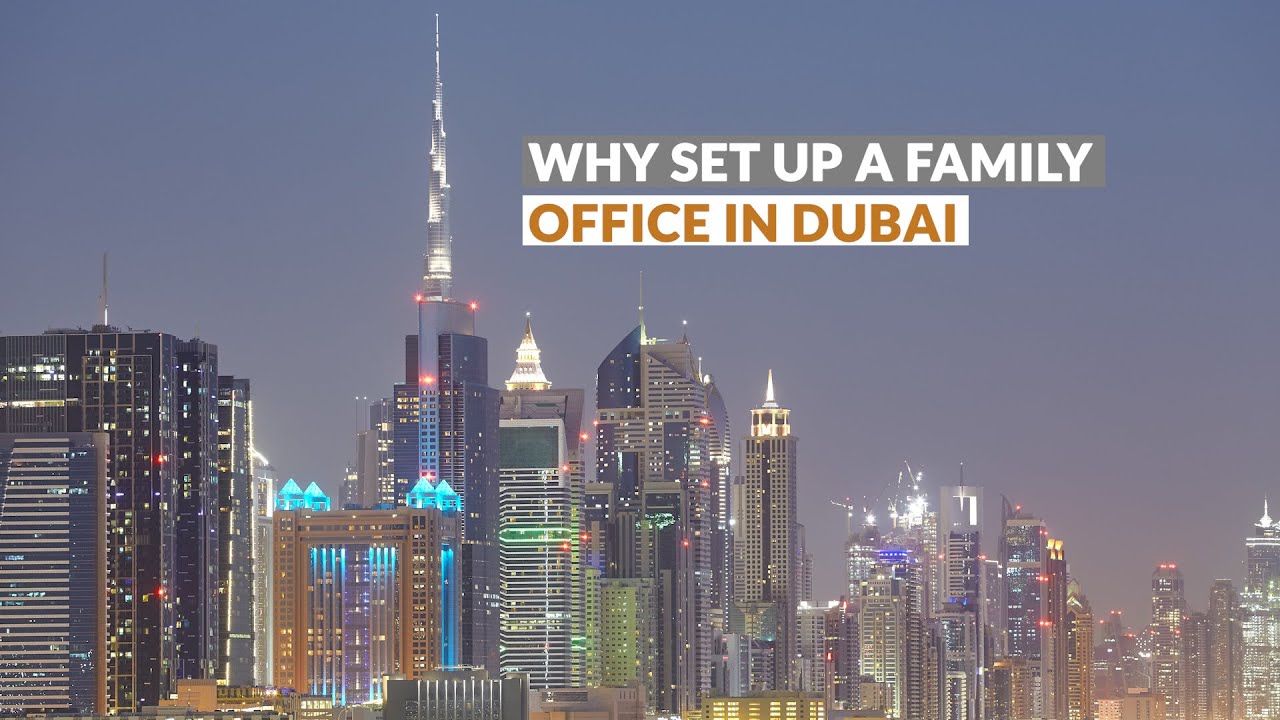
Dubai’s transformation from oil-adjacent trading post to global capital hub is no longer a talking point — it is a measurable trend. The emirate’s newly launched Economic Survey 2026 shows GDP climbing to $265 billion alongside rising employment, while international family offices are gathering for the Family Office Summit Dubai 2026 as the city cements its position as a family-wealth hub (Gateway Group; Arabian Business).
The non-oil growth engine
The UAE enters 2026 with the World Bank projecting national growth of roughly 5%, well above the global average, driven substantially by 5.3% expansion in the non-oil sector (Barchart). Technology, green energy and healthcare are the top-performing sectors, and 64% of UAE executives expect trade volumes to exceed 2025 levels — confidence underpinned by the country’s expanding network of Comprehensive Economic Partnership Agreements (Barchart). Historically, oil production accounted for half of Dubai’s GDP; today it contributes less than 1% (Wikipedia/Economy of Dubai).
Why family offices specifically are relocating
The Family Office Summit Dubai 2026 is drawing international participants precisely because the emirate has built regulatory infrastructure — inside jurisdictions like the DIFC — designed to attract exactly this category of capital. As one DIFC executive noted, incentives alone are no longer enough to win global finance; institutional credibility and regulatory clarity now matter more, which explains why firms such as Sixth Street have opened Abu Dhabi offices as global investment houses deepen their Middle East presence (Gateway Group).
Infrastructure is compounding the pull
Beyond finance, the UAE’s infrastructure build-out is reinforcing the wealth-hub thesis. Etihad Rail’s Abu Dhabi–Fujairah passenger service and the Madinat Zayed and Liwa station openings, arriving ahead of schedule, signal a state execution model that investors increasingly cite as a differentiator versus regional peers (GCC Business Watch). Dubai has also rolled out a AED 1 billion economic support package aimed at business liquidity and resilience amid regional geopolitical headwinds (GCC Business Watch).
The regional competition for capital
Dubai’s rise is happening alongside — not in isolation from — a broader Gulf capital race. Saudi Arabia’s economy is set for stronger growth per IMF assessments, and Gulf sovereign and corporate capital is increasingly being deployed across sectors from AI infrastructure to green growth commitments, meaning Dubai’s wealth-hub status will need continual reinforcement rather than passive maintenance (GCC Business Watch).
The bottom line for investors
For family offices weighing jurisdiction, Dubai’s pitch in 2026 combines three elements rarely available together: near-zero effective taxation, a non-oil economy growing faster than most G20 peers, and physical and financial infrastructure being built ahead of demand rather than in reaction to it. That combination — not simply low tax rates — is what is now pulling global family wealth toward the emirate.
Discover more from The Economy
Subscribe to get the latest posts sent to your email.

Russia’s War Economy Got a Reprieve From Iran

China’s Economy Has a Structural Problem: Factories Are Winning, Households Are Losing

How Malaysia “Shrugged Off” Trump’s Tariffs — and What Comes Next

Singapore’s AI Boom Is Now a Two-Country Story

Why Global Family Offices Are Converging on Dubai in 2026

A Weak Jobs Report Just Rewired the Fed’s Autumn — And Wall Street Cheered

Britain’s Fragile Rebound Meets a Budget Deadline and a Trump Ultimatum

Pakistan’s Economy Grew 3.7% — So Why Doesn’t It Feel Like a Recovery?

Top 15 Financial Stocks for Investment in PSX

Pakistan Exports 2026: Record $35.6B Forecast Masks Trade Deficit Risk

UK’s Jobs Downturn Now Matches the 2008 Financial Crisis — And AI Is Accelerating It

Fed Rate Cut Bets Surge After Shock US Jobs Report Exposes Labor Market Cracks

Pakistan’s Trade Gap Widens to $3.95bn Despite Meeting FY26 Current Account Target

Why Ottawa Is Betting on Dubai: Inside Canada’s Gulf Trade Pivot

Gold Price Forecast 2026: Fed’s July 29 Decision and Record Central Bank Buying Explained

China Politburo July 2026: Stimulus Signals Explained

Pakistan Economy 2026: GDP Grows 3.7% as IMF Completes EFF Review Amid Middle East Risk

Strait of Hormuz Blockade 2026: Oil Prices Surge 9% as US-Iran Conflict Reignites

Down But Not Out: Inside the Slow Sinking of Russia’s War Economy

Gulf Capital Retreat From Pakistan 2026: UAE Loan Freeze & What It Means

Global Stock Market Selloff 2026: Stagflation Fears Return as Iran Conflict Reignites

Pakistan’s Economic Survey FY26: Inflation Spike Insights

Russia Fuel Shortages 2026: Inside a Cracking War Economy

Strait of Hormuz Crisis 2026: How Trump’s Toll U-Turn Exposes Global Economic Risk

Bank of England Rate Decision Amid Energy Crisis

Russia’s War Economy Model Is Starting to Crack, Think Tank Warns

Pakistan’s Economic Growth: Resilience Amid Challenges

Andy Burnham, UK Gilts and Mortgages: July 2026 Explainer
-

 Markets & Finance7 months ago
Top 15 Stocks for Investment in 2026 in PSX: Your Complete Guide to Pakistan’s Best Investment Opportunities
-

 Analysis6 months ago
Johor’s Investment Boom: The Hidden Costs Behind Malaysia’s Most Ambitious Economic Surge
-

 Analysis6 months ago
Top 10 Stocks for Investment in PSX for Quick Returns in 2026
-

 Analysis6 months ago
Brazil’s Rare Earth Race: US, EU, and China Compete for Critical Minerals as Tensions Rise
-

 Banks7 months ago
Best Investments in Pakistan 2026: Top 10 Low-Price Shares and Long-Term Picks for the PSX
-

 Investment7 months ago
Top 10 Mutual Fund Managers in Pakistan for Investment in 2026: A Comprehensive Guide for Optimal Returns
-

 Global Economy8 months ago
15 Most Lucrative Sectors for Investment in Pakistan: A 2025 Data-Driven Analysis
-

 Global Economy8 months ago
Pakistan’s Export Goldmine: 10 Game-Changing Markets Where Pakistani Businesses Are Winning Big in 2025