
Analysis
Transforming Karachi into a Livable and Competitive Megacity

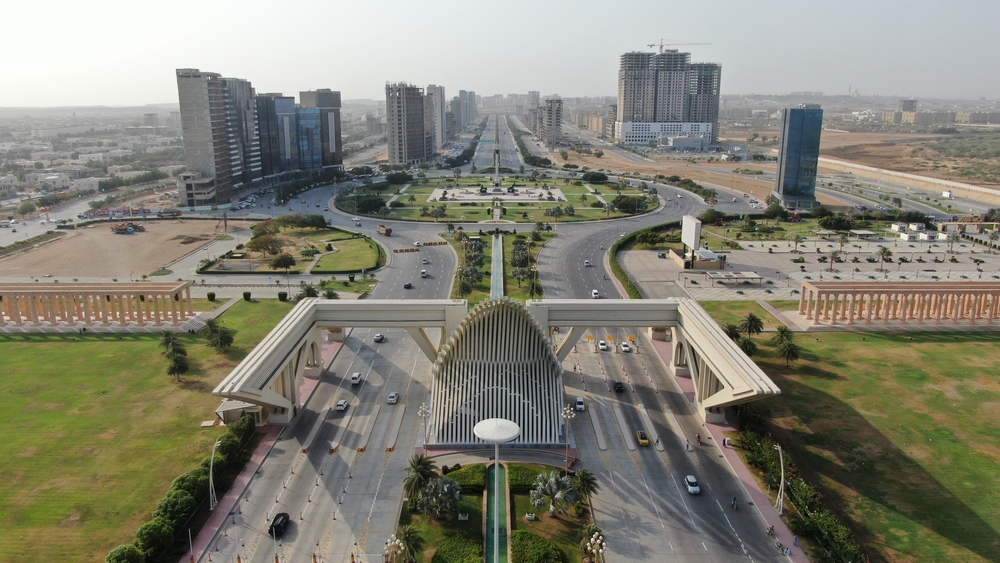
A comprehensive analysis of governance, fiscal policy, and urban transformation in South Asia’s most complex megacity
Based on World Bank Diagnostic Report | Policy Roadmap 2025–2035 | $10 Billion Transformation Framework
PART 1: EXECUTIVE SUMMARY & DIAGNOSTIC FRAMEWORK
Karachi is a city in contradiction. The financial capital of the world’s fifth-most populous nation, it contributes between 12 and 15 percent of Pakistan’s entire GDP while remaining home to some of the most acute urban deprivation in South Asia. A landmark World Bank diagnostic, the foundation of this expanded analysis, structures its findings around three interconnected “Pathways” of reform and four operational “Pillars” for transformation. Together, they constitute a $10 billion roadmap to rescue a city that is quietly—but measurably—losing its economic crown.
The Three Pathways: A Diagnostic Overview
Pathway 1 — City Growth & Prosperity
The central paradox driving the entire World Bank report is one that satellite imagery has made impossible to ignore. While Karachi officially generates between 12 and 15 percent of Pakistan’s national GDP—an extraordinary concentration of economic output in a single metropolitan area—the character and location of that wealth is shifting in troubling ways. Nighttime luminosity data, a reliable proxy for economic intensity, shows a measurable dimming of the city’s historic core. High-value enterprises, anchor firms, and knowledge-economy businesses are quietly relocating to the unmanaged periphery, where land is cheaper, regulatory friction is lower, and the absence of coordinated planning perversely functions as a freedom.
This is not simply a real estate story. It is a harbinger of long-term structural decline. When economic activity migrates from dense, serviced urban centers to sprawling, infrastructure-poor peripheries, the fiscal returns per unit of land diminish, commute times lengthen, productivity suffers, and the social fabric of mixed-use neighborhoods frays. Karachi is not alone in this dynamic—it mirrors patterns seen in Lagos, Dhaka, and pre-reform Johannesburg—but the speed and scale of its centrifugal drift are alarming.
Yet the picture is not uniformly bleak. One of the report’s most striking findings is the city’s quiet success in poverty reduction. Between 2005 and 2015, the share of Karachi’s population living in poverty fell from 23 percent to just 9 percent, making it one of the least poor districts anywhere in Pakistan. This achievement, largely the product of informal economic dynamism, remittance flows, and the resilience of its entrepreneurial working class, stands as proof that Karachi’s underlying human capital remains formidable. The governance challenge is not to create prosperity from nothing—it is to stop squandering the prosperity that already exists.
“Karachi’s economy is like a powerful engine running on a broken chassis. The horsepower is there. The infrastructure to harness it is not.”
Pathway 2 — City Livability
By global benchmarks, Karachi is a city in crisis. It consistently ranks in the bottom decile of international livability indices, a fact that reflects not mere inconvenience but a fundamental failure of urban governance to provide the basic services that allow residents to live healthy, productive, and dignified lives.
Water and sanitation constitute the most acute dimension of this failure. The city’s non-revenue water losses—water that enters the distribution system but never reaches a paying consumer due to leakage, illegal connections, and metering failures—are among the highest recorded for any city of comparable size globally. In a megacity of 16 to 20 million people, depending on the methodology used to define its boundaries, these losses translate into hundreds of millions of liters of treated water wasted daily while residents in katchi abadis pay informal vendors a price per liter that is many multiples of what wealthier households in serviced areas pay through formal utilities. This regressive dynamic—where the urban poor subsidize systemic dysfunction—is one of the defining injustices of Karachi’s service delivery crisis.
Green space presents a related but distinct vulnerability. At just 4 percent of total urban area, Karachi’s parks, tree canopy, and public open spaces are a fraction of the 15 to 20 percent benchmarks recommended by urban health organizations. In a coastal city where summer temperatures routinely exceed 40 degrees Celsius and where the Arabian Sea’s humidity compounds heat stress, this deficit is not merely aesthetic. It is a public health emergency waiting to erupt. The urban heat island effect—whereby dense built environments trap and re-radiate solar energy, raising local temperatures by several degrees above surrounding rural areas—disproportionately affects the informal settlements that house half the city’s population and where air conditioning is a luxury few can afford.
Underlying both crises is the governance fragmentation that the report identifies as the structural root cause of virtually every livability failure. Karachi is currently administered by a patchwork of more than 20 federal, provincial, and local agencies. These bodies collectively control approximately 90 percent of the city’s land. They include the Defence Housing Authority, the Karachi Port Trust, the Karachi Development Authority, the Malir Development Authority, and a constellation of cantonment boards, each operating according to its own mandate, budget cycle, and institutional incentive structure. The result is what urban economists call a “tragedy of the commons” applied to governance: because no single entity bears comprehensive responsibility for the city’s functioning, no single entity has the authority—or the accountability—to coordinate a systemic response to its failures.
“In Karachi, everyone owns the problem and no one owns the solution. That is not governance; it is organized irresponsibility.”
Pathway 3 — City Sustainability & Inclusiveness
The fiscal dimension of Karachi’s crisis is perhaps the most analytically tractable, because it is the most directly measurable. Property taxation—the foundational revenue instrument of urban government worldwide, and the mechanism by which cities convert the value of land and improvements into public services—is dramatically underperforming in Sindh relative to every comparable benchmark.
The International Monetary Fund’s cross-country data confirms that property tax yields in Sindh are significantly below those achieved in Punjab, Pakistan’s other major province, and far below those recorded in comparable Indian metropolitan areas such as Mumbai, Pune, or Hyderabad. The gap is not marginal. Whereas a well-functioning urban property tax system should generate revenues equivalent to 0.5 to 1.0 percent of local GDP, Karachi’s yields fall well short of this range. The consequences are compounding: underfunded maintenance leads to asset deterioration, which reduces the assessed value of the property base, which further constrains tax revenues, which deepens the maintenance deficit. This is a fiscal death spiral, and Karachi is caught within it.
Social exclusion compounds the fiscal crisis in ways that resist easy quantification. Approximately 50 percent of Karachi’s population—somewhere between 8 and 10 million people—lives in katchi abadis, the informal settlements that have grown organically on land not formally designated for residential use, often lacking title, rarely connected to formal utility networks, and perpetually vulnerable to eviction or demolition. The rapid growth of these settlements, driven by both natural population increase and sustained rural-to-urban migration, has increased what sociologists describe as social polarization: the geographic and economic distance between the formal, serviced city and the informal, unserviced one.
This polarization is not merely a social concern. It has direct economic consequences. Informal settlement residents who lack property rights cannot use their homes as collateral for business loans. Children who spend excessive time collecting water or navigating unsafe streets have less time for education. Workers who cannot afford reliable transport face constrained labor market options. The informal city subsidizes the formal one through its labor, while receiving little of the infrastructure investment that makes formal urban life possible.
The Four Transformation Pillars
The World Bank’s $10 billion roadmap does not limit itself to diagnosis. It proposes four operational pillars through which the three pathways of reform can be pursued simultaneously. These pillars are not sequential—they are interdependent, and progress on one without the others is unlikely to prove durable.
Pillar 1 — Accountable Institutions
The first and arguably most foundational pillar concerns governance architecture. The report argues, persuasively, that no amount of infrastructure investment will generate sustainable improvement so long as 20-plus agencies continue to operate in silos across a fragmented land ownership landscape. The solution it proposes is a transition from the current provincial-led, agency-fragmented model to an empowered, elected local government with genuine fiscal authority over the metropolitan area.
This is not a technical recommendation. It is a political one. The devolution of meaningful power to an elected metropolitan authority would require the Sindh provincial government—which has historically resisted any erosion of its control over Karachi’s lucrative land assets—to accept a substantial redistribution of authority. It would require federal agencies to cede operational jurisdiction over land parcels they have controlled for decades. And it would require the creation of new coordination mechanisms: inter-agency land-use committees, joint infrastructure planning bodies, and unified development authorities with the mandate and resources to enforce coherent spatial plans.
International precedents for such transitions are encouraging. Greater Manchester’s devolution deal in the United Kingdom, Metropolitan Seoul’s governance reforms in the 1990s, and the creation of the Greater London Authority all demonstrate that consolidating fragmented metropolitan governance into accountable elected structures can unlock significant improvements in both service delivery and economic performance.
Pillar 2 — Greening for Resilience
The climate dimension of Karachi’s transformation cannot be treated as a luxury add-on to more “practical” infrastructure priorities. A city with 4 percent green space in a warming coastal environment is a city accumulating climate risk at an accelerating rate. The 2015 Karachi heat wave, which killed more than 1,200 people in a single week, was a preview of what routine summers will look like within a decade if the urban heat island effect is not actively countered.
The greening pillar encompasses multiple overlapping interventions: expanding parks and urban forests to absorb heat and manage stormwater; restoring the mangrove ecosystems along Karachi’s coastline that serve as natural buffers against storm surges and coastal erosion; redesigning road networks to incorporate permeable surfaces, street trees, and bioswales; and integrating green infrastructure standards into building codes for new development.
These investments are not merely environmental. They are economic. The World Health Organization estimates that urban green space reduces healthcare costs, increases property values in surrounding areas, and improves labor productivity by reducing heat stress. In a city where informal settlement residents have no access to air conditioning, every degree reduction in ambient temperature achievable through urban greening has a direct, measurable impact on human welfare.
Pillar 3 — Leveraging Assets
Karachi possesses one asset in extraordinary abundance: prime urban land controlled by public agencies. The Defence Housing Authority alone controls thousands of hectares in locations that, by any market measure, represent some of the most valuable real estate on the subcontinent. The Karachi Port Trust, the railways, and various federal ministries hold additional parcels of commercially significant land that are either underdeveloped, misused, or lying fallow.
The asset monetization pillar proposes to unlock this latent value through structured Public-Private Partnerships (PPPs) that use land as the primary input for financing major infrastructure projects. The model is well-established: a government agency contributes land at concessional rates to a joint venture, a private developer finances and constructs mixed-use development on a portion of the parcel, and the revenue generated—whether through commercial rents, residential sales, or transit-adjacent development premiums—is used to cross-subsidize the public infrastructure component of the project.
This model has been successfully deployed for mass transit financing in Hong Kong (through the MTR Corporation’s property development strategy), in Singapore (through integrated transit-oriented development), and more recently in Indian cities like Ahmedabad (through the BRTS land value capture mechanism). Karachi’s $10 billion infrastructure gap—encompassing mass transit, water treatment, wastewater management, and flood resilience—is too large for public budgets alone. Asset monetization is not optional; it is the essential bridge between fiscal reality and infrastructure ambition.
Pillar 4 — Smart Karachi
The fourth pillar recognizes that technological capacity is both a multiplier of the other three pillars and a reform agenda in its own right. A city that cannot accurately map its land parcels, track its utility consumption, monitor its traffic flows, or measure its air quality in real time is a city flying blind. Karachi’s current data infrastructure is fragmented, inconsistently maintained, and largely inaccessible to the policymakers who most need it.
The Smart Karachi pillar envisions a comprehensive digital layer over the city’s physical fabric: GIS-based land registries that reduce the scope for fraudulent title claims and agency disputes; smart metering for water and electricity that reduces non-revenue losses; integrated traffic management systems that improve the efficiency of Karachi’s chronically congested road network; and citizen-facing digital platforms that allow residents to pay utility bills, register property transactions, and report service failures without navigating physical bureaucracies that historically reward connection over competence.
Beyond service delivery, digital infrastructure enables a new quality of fiscal accountability. When every property transaction is recorded on a unified digital platform, the scope for tax evasion narrows. When utility consumption is metered and billed accurately, the implicit subsidies that currently flow to well-connected large users are exposed and can be redirected to the residents who actually need them.
PART 2: OPINION ARTICLE
The Megacity Paradox: Can Karachi Reclaim Its Crown?
Originally conceived for The Economist / Financial Times | Policy & Economics Desk
I. The Lights Are Going Out
There is a satellite image that haunts Pakistan’s urban planners. Taken at night, it shows the Indian subcontinent as a constellation of light—Mumbai’s sprawl blazing across the Arabian Sea coast, Delhi’s agglomeration pulsing outward in every direction, Lahore’s core radiating upward into Punjab’s flat horizon. And then there is Karachi.
Karachi is visible, certainly. It is not a dark city. But look closely at the World Bank’s time-series nighttime luminosity analysis, and something disturbing emerges: the city center—the historic financial district that once justified Karachi’s sobriquet as the “City of Lights”—is getting dimmer, not brighter. The economic heartbeat of Pakistan’s largest city is weakening at its core while its periphery sprawls outward in an unlit, unplanned, ungovernable direction.
This is not poetry. It is data. And the data tells a story that no government in Islamabad or Karachi seems to want to confront directly: Pakistan’s financial capital is slowly but measurably losing the competition for economic intensity. While Karachi still accounts for an extraordinary 12 to 15 percent of national GDP—more than any other Pakistani city by an enormous margin—the character of that contribution is shifting from high-value, knowledge-intensive activity to lower-productivity, sprawl-dependent commerce. The lights are going out in the places that matter most.
“A city that cannot govern its center cannot grow its future. Karachi is learning this lesson the hard way.”
II. The Governance Trap: Twenty Agencies and No Captain
To understand why Karachi is losing its economic edge, it is necessary to understand something about how the city is actually governed—which is to say, how it is catastrophically not governed.
More than 20 federal, provincial, and local agencies currently exercise jurisdiction over some portion of Karachi’s land, infrastructure, or services. The Defence Housing Authority controls some of the most commercially prime real estate on the subcontinent. The Karachi Development Authority nominally plans land use for the broader metropolitan area. The Malir Development Authority manages a separate zone. Cantonment boards exercise authority over military-adjacent districts. The Sindh government retains overarching provincial jurisdiction. The federal government maintains control of the port, the railways, and various strategic assets.
Together, these agencies control roughly 90 percent of Karachi’s total land area. Separately, none of them has the mandate, the resources, or the incentive to coordinate with the others in service of any coherent vision for the city as a whole. The result is what economists call a “tragedy of the commons” applied to urban governance: because the costs of mismanagement are diffused across all agencies and the benefits of good management accrue to whoever happens to govern the relevant parcel, rational self-interest produces collectively irrational outcomes. Roads built by one agency end abruptly at the boundary of another’s jurisdiction. Water mains installed by one utility are torn up months later by another laying telecom cables. Parks planned for one precinct are quietly rezoned for residential development when a connected developer makes the right request to the right official.
This is not corruption in the traditional sense—though corruption is certainly present. It is something more structurally damaging: the institutionalization of irresponsibility. When no single entity is accountable for the city’s performance, no single entity can be held to account for its failures. Karachi’s governance crisis is not a problem of bad actors. It is a problem of a system designed, whether intentionally or through historical accumulation, to ensure that no one is ever truly responsible.
The analogy that comes to mind is that of a vast corporation with twenty co-equal CEOs, each controlling a different business unit, each reporting to a different shareholder group, and none with the authority to overrule the others on decisions that affect the whole enterprise. No serious investor would put money into such a structure. Yet international capital is expected to flow into Karachi’s infrastructure on exactly these terms.
III. The Fiscal Frontier: The Absurdity of Karachi’s Property Tax
Here is a number that should concentrate minds in every finance ministry from Islamabad to Washington: the property tax yield of Sindh province—which means, in practical terms, largely Karachi—is dramatically lower than that of Punjab, Pakistan’s other major province, and an order of magnitude below what comparable cities in India manage to extract from their property bases.
Property taxation is, as the IMF has repeatedly documented, the bedrock of sustainable urban finance. Unlike income taxes, which are mobile and can be avoided by relocating economic activity, property taxes fall on an asset that cannot move. Land is fixed. Buildings are fixed. The value embedded in a well-located urban parcel—value created not by the owner but by the surrounding city’s infrastructure, connectivity, and economic density—is a legitimate and efficient target for public revenue extraction.
Karachi’s failure to capture this value is not a technical problem. The Sindh government knows where the land is. It knows who owns it, at least formally. The failure is political. Property in Karachi is owned, directly or indirectly, by constituencies that have historically exercised substantial influence over provincial revenue decisions: military-affiliated institutions, politically connected developers, landed families whose wealth is measured in urban plots rather than agricultural hectares, and the 20-plus agencies whose own landholdings are routinely exempt from assessment.
The practical consequence is a city that starves its own maintenance budget. Without adequate property tax revenues, Karachi cannot fund the routine upkeep of its roads, drains, parks, and utility networks. Deferred maintenance becomes structural deterioration. Structural deterioration reduces assessed property values. Reduced assessed values further constrain tax revenues. The spiral tightens. And as the infrastructure degrades, the high-value businesses and residents who might otherwise anchor the formal tax base migrate—precisely to the peri-urban fringe where assessments are even lower and enforcement is even weaker.
The comparison with Mumbai is instructive and humbling. Mumbai’s Brihanmumbai Municipal Corporation, despite its own well-documented dysfunctions, generates property tax revenues sufficient to fund a meaningful share of the city’s operating budget. Karachi’s fiscal capacity is a fraction of Mumbai’s, despite a comparable or larger population. This gap is not destiny. It is policy failure, and policy failure can be reversed.
IV. The Human Cost: Green Space, Public Transport, and Social Exclusion
Behind every percentage point of GDP and every unit of property tax yield, there are people. And in Karachi, roughly half of those people—somewhere between 8 and 10 million human beings—live in katchi abadis: informal settlements without formal property rights, reliable utilities, or legal protection against eviction.
The absence of green space, which stands at a mere 4 percent of Karachi’s urban area against a globally recommended minimum of 15 percent, may seem like a quality-of-life concern rather than a governance emergency. But in a coastal megacity where summer temperatures regularly exceed 40 degrees Celsius, green space is not a luxury. It is a survival infrastructure. The 2015 heat wave that killed more than 1,200 Karachi residents in a single week—the vast majority of them poor, elderly, or engaged in outdoor labor—was a preview of what happens when a city builds itself as a concrete heat trap and then removes the last natural mechanisms for thermal relief.
Public transport amplifies the exclusion dynamic. Karachi has one of the lowest rates of formal public transit use of any megacity its size. The city’s primary mass transit project—the Green Line Bus Rapid Transit corridor—has been in various stages of construction and delay for the better part of a decade. In its absence, millions of residents depend on informal minibuses and rickshaws that are slow, unreliable, expensive relative to informal-sector wages, and environmentally catastrophic. Workers in Karachi’s industrial zones who might otherwise access higher-paying employment in the financial district are effectively priced out of mobility. The labor market is segmented not by skill alone but by geography, and geography in Karachi is determined by whether one happens to live near the remnants of a functional transit connection.
Social polarization—the growing distance, geographic and economic, between those who live in the serviced formal city and those consigned to the informal one—is not merely an equity concern. It is a threat to the social contract that makes metropolitan agglomeration economically productive in the first place. Cities generate wealth through density, through the interactions and spillovers that occur when diverse people with diverse skills and ideas occupy shared space. When half a city’s population is effectively excluded from the spaces where those interactions happen—because they cannot afford the transport, because they lack the addresses required for formal employment, because the green spaces that make urban life bearable do not exist in their neighborhoods—the economic dividend of agglomeration is substantially squandered.
“Karachi’s inequality is not an unfortunate side effect of its growth. It is an active drag on the growth that could otherwise occur.”
V. Radical Empowerment: The Only Path Forward
The World Bank report is, appropriately, diplomatic in its language. It speaks of “institutional reform,” of “transitioning toward empowered local government,” of “Track 1 vision” and “shared commitment.” These are the necessary euphemisms of multilateral diplomacy. But translated into plain language, the report’s core argument is blunt: Karachi will not be saved by better planning documents or more coordinated inter-agency meetings. It will be saved only by radical political devolution.
What Karachi needs—what its scale, complexity, and fiscal situation demand—is an elected metropolitan mayor with genuine executive authority over the city’s land, budget, and infrastructure. Not a mayor who advises the provincial government. Not a mayor who chairs a committee. A mayor who can be voted out of office if the roads are not repaired, the water does not flow, and the city continues to dim.
This is not an untested idea. Greater London’s transformation under Ken Livingstone and Boris Johnson—whatever one thinks of their respective politics—demonstrated that a directly elected executive with transport and planning powers can fundamentally alter the trajectory of a major global city within a single term. Metro Manila’s governance reforms in the 1990s, imperfect as they were, showed that consolidating fragmented metropolitan authority into a more unified structure produces measurable improvements in infrastructure coordination. Even Pakistan’s own history provides precedent: Karachi’s period of most effective urban management arguably occurred under the elected metropolitan mayor system that prevailed briefly in the early 2000s, before provincial interests reasserted control.
The Sindh government’s resistance to devolution is understandable in terms of short-term political calculus. Karachi’s land is extraordinarily valuable, and control of that land is the foundation of enormous political and economic power. But the calculus changes when one considers the medium-term consequences of continued governance failure. If Karachi’s economic decline continues—if the businesses flee, the tax base erodes, the informal settlements expand, and the infrastructure deteriorates beyond cost-effective rehabilitation—the Sindh government will find itself governing a fiscal and social catastrophe rather than a golden goose.
The international community—the OECD, the IMF, the World Bank, bilateral development partners—has a role to play in shifting this calculus. The $10 billion investment framework proposed in the World Bank report should not be made available on the existing governance terms. It should be conditioned, explicitly and transparently, on measurable progress toward metropolitan devolution: the passage of legislation establishing an elected metropolitan authority, the transfer of specific land-use planning powers from provincial agencies to the new metropolitan government, and the implementation of a reformed property tax system with independently verified yield targets.
This is not interference in Pakistan’s internal affairs. It is the basic principle of development finance: that large public investments require the governance conditions necessary to make those investments productive. Pouring $10 billion into a city governed by 20 uncoordinated agencies is not development. It is waste on a grand scale.
Karachi was once the most dynamic city in South Asia. In 1947, it was Pakistan’s largest, wealthiest, and most cosmopolitan urban center. The decades of governance failure that followed its initial promise are not irreversible. The city’s underlying assets—its port, its financial markets, its entrepreneurial population, its coastal location—remain extraordinary. The human capital that built Karachi’s original prosperity has not gone anywhere. It is waiting, in informal settlements and gridlocked streets and underperforming schools, for a governance system capable of releasing it.
The question is not whether Karachi can reclaim its crown. The question is whether Pakistan’s political establishment has the will to create the conditions under which it can. The satellite data showing the city’s dimming lights is not a verdict. It is a warning. And warnings, unlike verdicts, can still be heeded.
Key Statistics at a Glance
Economic Contribution: 12–15% of Pakistan’s GDP generated by a single city
Poverty Reduction: From 23% (2005) to 9% (2015) — one of Pakistan’s least poor districts
Governance Fragmentation: 20+ agencies controlling 90% of city land
Green Space Deficit: 4% vs. 15–20% globally recommended
Informal Settlements: 50% of population in katchi abadis without property rights
Infrastructure Investment Gap: $10 billion required over the next decade
Heat Wave Mortality: 1,200+ deaths in the 2015 event alone
Property Tax Yield: Significantly below Punjab, Pakistan and Indian metro benchmarksThis analysis draws on the World Bank Karachi Urban Diagnostic Report, IMF cross-country fiscal data, and global urban governance research. It is intended for policymakers, development finance institutions, and international investors engaged with Pakistan’s urban futur
Discover more from The Economy
Subscribe to get the latest posts sent to your email.



Navigating Mortgage and Loan Refinancing in a High-Yield Environment
Global public debt crossing critical thresholds has kept central bank policies volatile, resulting in fluctuating US Treasury yields throughout 2026. For homeowners and commercial property holders burdened by previous high-interest borrowing cycles, finding optimal refinance windows has become a high-stakes financial puzzle. Stalled disinflation and stubborn employment numbers mean rate cuts are incremental, requiring borrowers to act with precision.
Timing your mortgage or commercial loan refinance in this environment requires a deep understanding of yield curve movements and lender risk appetites.
Decoding 2026 Refinance Dynamics
The 10-Year Treasury Yield Benchmark
Mortgage rates continue to track closely with the 10-year US Treasury yield. When macroeconomic anxiety spikes debt issuance, yields rise, tightening consumer borrowing capacity. Savvy borrowers monitor weekly Treasury auctions to lock in rates during brief dip windows.
Hybrid ARMs and Alternative Structures
With fixed rates remaining elevated, 7/1 and 10/1 adjustable-rate mortgages (ARMs) have surged in popularity. These products offer lower initial monthly payments, giving borrowers breathing room until central bank easing cycles fully materialize.
| Loan Product | Current Rate Range | Best For | Key Risk Factor |
| 30-Year Fixed Mortgage | 6.2% – 6.8% | Long-term predictability | Higher initial monthly outlay |
| 7/1 Hybrid ARM | 5.5% – 5.9% | Short-term ownership / flipping | Rate reset risk after year 7 |
| Commercial Refinance | 7.0% – 8.2% | Corporate asset restructuring | Strict DSCR lender covenants |
Actionable Steps for Successful Refinancing
To maximize your chances of securing favorable refinance terms in a volatile market, follow a disciplined preparation strategy.
Boost Your Credit Score Immediately: Lenders in 2026 are applying stringent credit tiering; a 20-point increase can drop your APR by a crucial quarter-point.
Shop Regional Credit Unions: Smaller financial institutions often offer portfolio loans with more flexible underwriting than major national banks.
Calculate the Break-Even Point: Ensure your total closing costs are recouped through monthly savings within 24 months of closing.
“Market Strategist View: Refinancing in 2026 is an exercise in opportunistic timing. Borrowers must maintain immaculate financial profiles ready to strike the moment Treasury yields dip.”
Mastering the complexities of today’s debt environment ensures you can successfully lower your debt service costs and protect your long-term financial stability.
Discover more from The Economy
Subscribe to get the latest posts sent to your email.

The days of pulling generic auto insurance quotes based purely on your zip code and age are officially over. In 2026, insurance comparison engines are powered entirely by generative AI and real-time telematics. These platforms digest thousands of live data points—ranging from your driving smoothness via connected vehicle sensors to real-time traffic congestion patterns—to generate hyper-personalized premiums instantly.
For consumers, this evolution represents both a massive opportunity for savings and a hidden trap for penalty pricing. Understanding how AI algorithms evaluate risk is essential for anyone looking to lower their monthly auto insurance premiums.
How AI Comparison Engines Evaluate Your Risk Profile
Behavioral Telematics and Connected Cars
Modern cars stream performance data directly to insurance aggregators. Generative AI models analyze braking sharpness, acceleration curves, cornering G-forces, and phone distraction metrics. Drivers who maintain smooth, defensive habits are rewarded with dynamic rate cuts of up to 40% compared to traditional rating tiers.
Predictive Traffic and Weather Modeling
AI tools now cross-reference your daily commute route with predictive weather and accident probability models. If your standard parking location or driving corridor has a statistically higher incidence of uninsured motorist claims, your quotes will reflect that hyper-local risk assessment.
| Comparison Factor | Traditional Rating Model | 2026 Generative AI Model | Impact on Premium |
| Mileage & Usage | Annual estimated odometer reading | GPS tracking & live trip duration | High (up to 35% savings) |
| Driving Behavior | MVR driving record & accidents | Real-time braking, speed, & G-force | Critical (determines tier) |
| Vehicle Tech | Make, model, and safety rating | ADAS calibration & repair cost data | Moderate |
Strategies to Lower Your AI-Driven Insurance Quote
To outsmart the algorithm and secure the lowest possible premium in 2026, drivers must proactively manage their digital footprint on insurance platforms.
Opt-In for Telematics Trial Periods: Many insurers offer immediate 15% discounts just for installing their driving app; let it track safe habits for 30 days to lock in permanent savings.
Scrub Unverified Public Records: Ensure your motor vehicle report is free of clerical errors that AI risk models misinterpret as reckless behavior.
Compare AI Aggregators: Use platforms that integrate multi-carrier API feeds rather than single-brand comparison sites to find the best risk-adjusted rate.
“Industry Note: AI-driven pricing rewards transparency and precision. Drivers who actively manage their telematics data consistently out-save those relying on legacy quote calculators.”
Embracing AI comparison tools allows savvy policyholders to customize coverage limits precisely to their driving habits, eliminating wasted premium spend while ensuring robust protection.
Discover more from The Economy
Subscribe to get the latest posts sent to your email.

Despite decades of bans and strict handling mandates, asbestos remains a silent killer across legacy manufacturing plants, shipyards, and modern green-energy infrastructure retrofits. In 2026, regulatory changes by the EPA and tightened occupational health standards have triggered a fresh wave of mesothelioma litigation. Manufacturers attempting to fast-track industrial transitions are encountering catastrophic oversight, exposing workers to legacy toxins and opening corporate parent companies to unprecedented liability.
Navigating a mesothelioma claim in 2026 requires understanding how modern industrial supply chains intersect with historical exposure. Trusts established decades ago are being audited under stricter transparency laws, altering payout ratios and accelerating fast-track settlements for terminally ill plaintiffs.
Modern Industrial Exposure Hotspots
Green Retrofitting and Renewable Energy Infrastructure
A primary source of 2026 asbestos exposure occurs during the decommissioning and retrofitting of older industrial facilities for renewable energy production. Workers insulating electrical grids, modernizing HVAC systems, or upgrading manufacturing floors frequently disturb encapsulated asbestos materials that were improperly documented or ignored during facility audits.
Automotive and Aerospace Supply Chains
With advanced manufacturing booming, workers handling specialized friction materials, gaskets, and heat shields face ongoing risks. Supply chain tracing has become more sophisticated, allowing legal teams to pinpoint exact corporate entities responsible for raw material distribution across multinational borders.
| Industry Sector | Primary Exposure Risk | Legal Venue / Trust | Avg. Claim Value Range |
| Green Energy Retrofit | Disturbed insulation, pipe lagging | Federal Tort / Manufacturer Trust | $1.2M – $3.5M |
| Shipbuilding & Marine | Boiler insulation, structural seals | Asbestos Bankruptcy Trusts | $800K – $2.4M |
| Automotive Manufacturing | Brake components, high-heat gaskets | Third-Party Product Liability | $600K – $1.8M |
Securing Maximum Compensation: Steps for Plaintiffs
Time is of the essence in mesothelioma cases. Plaintiffs and their families must act decisively to secure financial recovery before statutes of limitations expire.
Retain Specialized Counsel: Work exclusively with national mesothelioma law firms possessing deep historical databases of asbestos-containing products.
Audit Employment History: Document every job site, supervisor name, and equipment brand encountered throughout your career.
Expedite Medical Filings: Secure a formal pathological diagnosis quickly to qualify for expedited trust fund distribution and priority trial settings.
“Expert Insight: Modern asbestos litigation is no longer just about historical tracking; it is about holding modern corporations accountable for failing to conduct rigorous environmental safety audits before initiating industrial retrofits.”
By combining meticulous work history reconstruction with aggressive multi-trust filings, victims can secure substantial financial relief to cover specialized immunotherapy and family support.
Discover more from The Economy
Subscribe to get the latest posts sent to your email.

Global Economy 2026: IMF Growth, Inflation & Private Credit

Current Account Deficit (CAD) : Causes and Impact

Balance of Payments (BOP)

The Falkland Islands Dispute: Sovereign Wealth, Offshore Drilling, and Market Impacts

Gross Domestic Product (GDP): Nominal vs. Real

What is Inflation and the Consumer Price Index (CPI)?

US-China Trade Competition 2026: Supply Chain Relocation Guide

Oil Prices Break $100 in 2026: Middle East Conflict & Energy Markets

South-South Trade Expansion: Digital Integration and Emerging Market Growth

$166B Tariff Refund Tapering Fast: Is Your Business Missing Out?

Stock Market Today: Dow Climbs 500 Points as Markets Shake Off Inflation Jitters

14th WTO Conference 2026: Tariffs & Global Supply Chain Impact

Swish Secures $24M Funding to Disrupt India’s $100B Food Market

Physical AI and Driverless Tech: The Next Trillion-Dollar Industrial Revolution

State Farm’s $5B Dividend 2026: Who Qualifies & Payout Dates

US-China Relations in Q3 2026: Trade Tariffs and Supply Chain Risks

Gold’s Wild 2026: From a Record $5,600 Peak to a 24% Crash and Back Toward $4,500

Oil Surges as Strait of Hormuz Traffic Collapses Again

The Rocket That Won’t Quit: Inside SpaceX’s Falcon 9 Launch Machine

Bank of England Set to Hold Rates Through Year-End, Reuters Poll Shows

SpaceX Starship Flight 14: First Orbital Attempt & Starlink V3 Launch Explained

The 2026 Crypto Regulatory Shift: What It Means for Institutional Investors

AI Chip Stocks 2026: The Best Semiconductor Investments Beyond Marvell

Retail Earnings Week: What Home Depot, Target & Walmart Reveal

AI-Powered Training: The Next Multi-Billion Dollar Ecosystem in Fitness

Russia’s Black Sea Oil Exports Fall for a Fifth Straight Week

Top 30 Stocks for Investment in PSX for Massive ROI in 2026

Tween Back-to-School Trends 2026: What’s Driving the $85B Season
-

 Markets & Finance8 months ago
Top 15 Stocks for Investment in 2026 in PSX: Your Complete Guide to Pakistan’s Best Investment Opportunities
-

 Analysis7 months ago
Johor’s Investment Boom: The Hidden Costs Behind Malaysia’s Most Ambitious Economic Surge
-

 Analysis7 months ago
Top 10 Stocks for Investment in PSX for Quick Returns in 2026
-

 Analysis7 months ago
Brazil’s Rare Earth Race: US, EU, and China Compete for Critical Minerals as Tensions Rise
-

 Banks8 months ago
Best Investments in Pakistan 2026: Top 10 Low-Price Shares and Long-Term Picks for the PSX
-

 Investment8 months ago
Top 10 Mutual Fund Managers in Pakistan for Investment in 2026: A Comprehensive Guide for Optimal Returns
-

 Global Economy9 months ago
15 Most Lucrative Sectors for Investment in Pakistan: A 2025 Data-Driven Analysis
-

 Global Economy9 months ago
Pakistan’s Export Goldmine: 10 Game-Changing Markets Where Pakistani Businesses Are Winning Big in 2025