
Investment
Top 10 Insurance Companies of Pakistan with Massive Growth and High Returns: A Political Economy Analysis


Discover the top 10 insurance companies in Pakistan for 2025-2026. Expert political economy analysis on growth, ROI, and SECP-backed data for smart investing.
In my 15 years of analyzing Pakistan’s financial sector, I have witnessed several “false dawns.” However, what we are seeing in the 2024-2025 fiscal cycle is different. Despite the macroeconomic headwinds, Pakistan’s insurance sector has shown a remarkable resilience, with total premiums crossing the Rs. 500 billion mark for the first time in history.
But here is the catch: while the sector is expanding, not all players are created equal. The intersection of political stability (or the lack thereof), regulatory tightening by the Securities and Exchange Commission of Pakistan (SECP), and the rapid shift toward Takaful (Islamic Insurance) has created a landscape where only the most agile companies are delivering “massive returns.”
If you are looking to secure your family’s future or seeking a high-growth investment vehicle, understanding the political economy of these companies is no longer optional—it is essential.
Quick Answer: Top 5 Insurance Companies in Pakistan by Growth (2024-2025)
- State Life Insurance – 22% premium growth, Sovereign-backed returns.
- EFU Life Assurance – 18% growth, Pioneer in private-sector innovation.
- Jubilee Life – 15% growth, Dominant in Bancassurance.
- Adamjee Insurance – 14% growth, Leader in General & Auto segments.
- TPL Insurance – 25% growth (Digital segment), The InsureTech disruptor.Data derived from SECP Annual Reports and PSX Financial Statements.
1. Market Overview & Political Economy Analysis
The Pakistani insurance market is a paradox. With an insurance penetration rate still hovering below 1% of GDP, the growth ceiling is virtually non-existent. However, the “Political Economy” of this sector is influenced by three major pillars:
The Regulatory Push (SECP Reforms)
In late 2024, the SECP introduced the Insurance Ordinance (Amendment) Bill, which raised the minimum capital requirements. This move was designed to weed out “zombie companies” and encourage mergers. For the consumer, this means the Top 10 listed below are now more solvent and “too big to fail” than ever before.
The Shariah-Shift
As of 2025, Takaful windows now account for nearly 30% of new business for traditional players. The political push for an interest-free economy (aligned with Federal Shariat Court rulings) has turned Takaful from a niche product into a primary growth engine.
Economic Stabilization
Following the IMF’s Extended Fund Facility, the stabilization of the Rupee has allowed insurance companies with heavy international re-insurance treaties to manage their “Claim Settlement Ratios” more effectively without eroding their capital base.
2. Methodology: How We Ranked the Giants
To provide a truly “Premium Analysis,” I haven’t just looked at who is the biggest. I’ve looked at who is the smartest. Our ranking utilizes a weighted index of:
- Premium Growth Rate (30%): Year-over-year increase in new business.
- Investment Returns (25%): How effectively they play the Pakistan Stock Exchange (PSX) and Government Bonds (PIBs).
- Claim Settlement Ratio (25%): The “Trust Factor”—how much of the claimed amount they actually pay out.
- Solvency Margin (20%): Their ability to meet long-term obligations.
3. Top 10 Insurance Companies: Deep-Dive Analysis
1. State Life Insurance Corporation (SLIC)
The Sovereign Giant
State Life remains the undisputed king, holding over 50% of the life insurance market share.
- Growth Metric: 22% Premium Growth in 2024.
- Claim Settlement: ~90% (Highest in volume).
- Political Economy Factor: As a state-owned entity, it carries a Sovereign Guarantee. In times of political volatility, capital flees to State Life as a “Safe Haven.”
- Expert Opinion: “If you are risk-averse, State Life’s massive real estate portfolio across Pakistan provides a buffer that no private entity can match.”
2. EFU Life Assurance
The Private Sector Trailblazer
EFU is the first name that comes to mind for private-sector innovation.
- Growth Metric: 18% YoY Growth.
- ROI: Consistent 12-15% on unit-linked funds.
- Political Economy Factor: EFU has successfully lobbied for digital signature integrations, making them the leader in paperless insurance.
- USP: Their “Hemayah” Takaful brand is currently the fastest-growing Shariah-compliant product in the country.
3. Jubilee Life Insurance
The Bancassurance Powerhouse
Through partnerships with banks like HBL, Jubilee has mastered the art of selling insurance at the bank counter.
- Growth Metric: 15% Premium Growth.
- Key Strength: Diverse investment fund options (Aggressive vs. Conservative).
- Political Economy Factor: Their parent company, the Aga Khan Fund for Economic Development (AKFED), provides a global layer of trust and “Institutional Stability.”
4. Adamjee Insurance
The General Insurance Specialist
Part of the Nishat Group (Mansha family), Adamjee is the go-to for corporate and auto insurance.
- Growth Metric: 14% growth.
- Unique Factor: Exceptional performance in the UAE market, providing a crucial “Dollar Hedge” for the company.
- Expert Opinion: “With the 2025 revival of the auto industry, Adamjee is positioned to see a massive spike in motor insurance premiums.”
5. IGI Life & General Insurance
The Packages Group Edge
IGI, backed by the Packages Group, represents the “Gold Standard” of corporate governance in Pakistan.
- Claim Settlement Ratio: 94% (Industry Leading).
- Investment Return: High alpha returns through strategic PSX investments.
- Political Economy Factor: Their deep ties with the manufacturing sector ensure a steady stream of “Group Life” and “Health Insurance” contracts.
6. TPL Insurance
The Digital Disruptor
If you want to see where the industry is going in 2026, look at TPL.
- Growth Metric: 25% growth in digital retail.
- USP: First to launch “Pay-as-you-drive” and mobile-app-based claim filing.
- Political Economy Factor: Beneficiary of the SBP’s Digital Banking Licenses, integrating insurance directly into fintech ecosystems.
7. Alfalah Insurance
The Abu Dhabi Group Backing
Owned by the Abu Dhabi Group, this company benefits from Middle Eastern capital stability.
- Key Strength: Excellent reinsurance treaties with global giants like Swiss Re.
- Political Economy Factor: Their ability to offer “Foreign Currency” denominated policies for specific corporate clients makes them unique.
8. Askari Insurance
The Stability Play
Backed by the Army Welfare Trust (AWT), Askari Insurance offers a level of institutional continuity that is rare in Pakistan.
- Growth Metric: 12% steady growth.
- Key Segment: Dominant in “Health and Accident” insurance for large-scale institutional employees.
9. Atlas Insurance
The Corporate Favorite
Part of the Atlas Group (Honda), they focus on high-quality, low-risk corporate portfolios.
- ROI: Consistently pays out high dividends to shareholders.
- Expert Opinion: “Atlas is the ‘Value Stock’ of the insurance world. Not the flashy growth of TPL, but the reliability of a Swiss watch.”
10. Pak-Qatar Takaful
The Pure-Play Shariah Leader
The only company on this list that started as a dedicated Takaful entity.
- Growth Metric: 20% growth in the SME sector.
- Political Economy Factor: As the government pushes for “Riba-Free” banking, Pak-Qatar is the natural beneficiary of religious-driven consumer shifts.
4. Comparative Analysis Table (2025 Projections)
| Company | Premium Growth | Avg. ROI (Funds) | Claim Ratio | Key Strength |
| State Life | 22% | 14% (Govt Bonds) | 90% | Sovereign Guarantee |
| EFU Life | 18% | 15% | 88% | Innovation/Digital |
| Jubilee Life | 15% | 13% | 85% | Bancassurance |
| Adamjee | 14% | 11% | 92% | Auto/General |
| TPL Insurance | 25% | N/A (Retail) | 82% | InsureTech/App |
| IGI Insurance | 12% | 16% | 94% | Claim Reliability |
5. Investment Opportunities & Risks in 2026
The political economy of Pakistan is never without its “Black Swans.” While the insurance sector is bullish, investors must consider:
- Inflationary Pressure: High inflation can lead to “Under-insurance.” If a car worth 2 million is insured, but its replacement cost jumps to 4 million, the company faces a liquidity challenge.
- Interest Rate Volatility: Insurance companies are the biggest buyers of Pakistan Investment Bonds (PIBs). A sudden drop in interest rates could lower their investment income.
- Political Instability: Any disruption in the “Special Investment Facilitation Council (SIFC)” framework could dampen the foreign direct investment (FDI) that drives large-scale industrial insurance.
6. Expert Recommendations: Which One is for You?
- For the “Safety First” Investor: Stick with State Life. You cannot beat a government guarantee in a volatile economy.
- For the Tech-Savvy Millennial: Go with TPL Insurance. Their app-based claims and transparent pricing are unmatched.
- For Shariah-Compliant Growth: Pak-Qatar Takaful or EFU Hemayah are your best bets.
- For High Returns: Look at IGI or EFU Life’s Aggressive Growth Funds, which have historically outperformed the KSE-100 index.
Conclusion: The Future is Underwritten
The “Top 10 Insurance Companies of Pakistan” are no longer just passive collectors of premiums. They have become sophisticated financial engines that drive the PSX and provide a social safety net where the state cannot.
As we move further into 2026, the consolidation of the market under SECP’s watchful eye will likely lead to even higher returns for the survivors. My final advice? Do not just buy a policy; buy into a company whose political and economic alignment matches your long-term goals.
What do you think? Is the sovereign guarantee of State Life enough to keep you away from the digital innovation of EFU or TPL?
Discover more from The Economy
Subscribe to get the latest posts sent to your email.


Markets & Finance
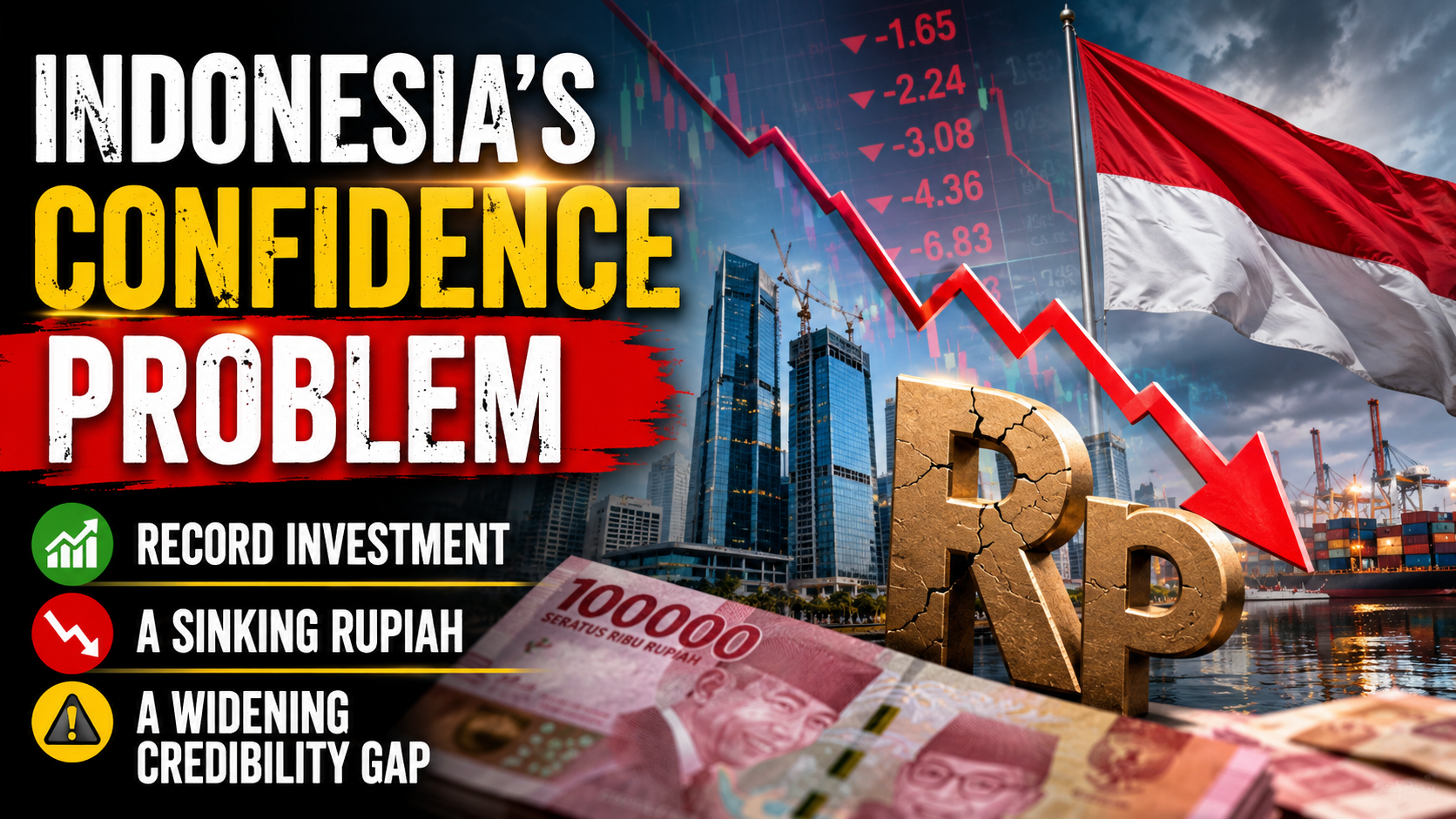
Indonesia’s Confidence Problem: Record Investment, a Sinking Rupiah, and a Widening Credibility Gap
Introduction
Indonesia’s economic story in mid-2026 is one of genuine contradiction. On one hand, the government posted a record Rp1,010.6 trillion ($56.1 billion) in realized investment for the first half of the year, up 7.2% from a year earlier and on pace to hit its full-year target (Antara News). On the other, the rupiah has been sliding toward Rp18,000 per US dollar, the state budget deficit has widened, and a growing chorus of domestic commentators is warning that Indonesia risks permanently losing what one Jakarta Post analysis called “the vital game of investor confidence” (The Jakarta Post).
The Investment Numbers Look Genuinely Strong
Indonesia’s Investment and Downstreaming Minister Rosan Roeslani reported that first-half 2026 investment realization reached 49.5% of the government’s full-year target of Rp2,041.3 trillion, creating 1.44 million jobs — a 15% increase in job creation compared to the first half of 2025 (Antara News). Domestic and foreign investment remained almost perfectly balanced, with foreign direct investment reaching Rp507.6 trillion (50.2% of the total) against Rp502.9 trillion in domestic investment (Antara News). Notably, investment outside the country’s most populous island, Java, exceeded inflows into Java itself for the first time in this dataset — Rp507.8 trillion versus Rp502.8 trillion — supporting the government’s long-standing goal of more balanced regional development (Antara News).
Singapore remained by far Indonesia’s largest source of foreign capital at $8.8 billion, followed by Hong Kong ($7.6 billion), China ($3.9 billion), Japan ($1.9 billion) and the United States ($1.7 billion) — together accounting for roughly 77.8% of all foreign direct investment into the country (Antara News). Second-quarter investment specifically rose 7.1% year-on-year to Rp511.8 trillion, with Minister Roeslani noting that investor commitment to Indonesia has held up despite significant “geopolitical and geoeconomic challenges” globally (The Jakarta Post).
But the Pace Is Slowing, and the Currency Is Under Pressure
Despite the record absolute figures, the Jakarta Post notes that investment growth in 2026 has been running at a distinctly slower pace than the country achieved in recent prior years, even as it remains on track to hit the annual target (The Jakarta Post). Meanwhile Bank Indonesia has had to actively respond to renewed rupiah weakness, attributing the currency’s slide toward Rp18,000 per dollar to hawkish signals from Federal Reserve officials and broader movements in the US dollar index (Samuel Sekuritas Daily Economic Insights). The state budget deficit reached Rp196.5 trillion in the first half of 2026, equivalent to 0.76% of GDP (Samuel Sekuritas Daily Economic Insights).
There has been some relief more recently: a 27.4% surge in second-quarter foreign direct investment helped strengthen the rupiah, with USD/IDR trading around 17,990 in mid-July as softer US inflation data reduced the odds of a near-term Fed hike (TMGM). Even so, the US dollar has retained broad support from escalating Middle East geopolitical tensions, keeping the rupiah’s recovery fragile rather than decisive (TMGM).
Why Growth Forecasts Keep Getting Trimmed
International lenders have grown more cautious about Indonesia’s growth trajectory for 2026. The OECD has held its outlook at 4.7% year-on-year — a clear deterioration from 2025’s realized 5.1% growth — with most major lending institutions clustering around the 5.0% threshold, implying a loss of momentum after Indonesia posted 5.61% growth in the first quarter of 2026 alone (Indonesia Investments). The deceleration is attributed to a softening labor market, weakening consumer confidence, and contracting retail sales in the second quarter (Indonesia Investments). High global oil prices are compounding the pressure on the government’s fiscal balance, since Indonesia continues to subsidize a significant portion of domestically sold fuel — a policy that transmits global energy volatility directly into the state budget rather than shielding consumers from it entirely (Indonesia Investments).
The Deeper Warning: A Confidence Problem, Not Just a Cyclical One
The most pointed recent critique comes from domestic commentary rather than foreign analysts. A Jakarta Post opinion piece published July 20, 2026 argues Indonesia must halt what it describes as erratic policymaking and institutional erosion before the country permanently damages its standing in the “vital game of investor confidence,” framing the rupiah’s weakness and shifting global market conditions as symptoms of a deeper credibility issue rather than purely external shocks (The Jakarta Post). That framing matters for how the strong headline investment numbers should be read: capital is still arriving, but the terms on which it arrives, and the confidence with which it stays, are visibly more fragile than the raw totals suggest.
Strategic Bright Spots
Not every recent development points toward strain. India secured access to Indonesian critical minerals through several major agreements signed during Prime Minister Narendra Modi’s visit to Jakarta, part of a broader push by Indonesia to leverage its resource base for deeper strategic partnerships (Samuel Sekuritas Daily Economic Insights). Indonesia is also pursuing energy independence through B50 biodiesel and compressed natural gas development, aimed explicitly at reducing reliance on imported LPG — a structural move that, if successful, would reduce exactly the kind of imported-energy vulnerability now straining the budget (Samuel Sekuritas Daily Economic Insights).
Key Takeaways
- Indonesia posted a record Rp1,010.6 trillion ($56.1 billion) in H1 2026 investment, up 7.2% year-on-year, with foreign and domestic capital nearly evenly split.
- The rupiah has weakened toward Rp18,000 per dollar on hawkish Fed signals, though a Q2 FDI surge has since provided partial relief.
- International lenders have trimmed Indonesia’s 2026 growth outlook to around 4.7–5.0%, down from 5.1% realized growth in 2025.
- The H1 2026 budget deficit reached 0.76% of GDP, pressured by continued fuel subsidies amid high global oil prices.
- Domestic commentary increasingly frames Indonesia’s challenge as a credibility and policymaking issue, not merely a cyclical external shock.
Sources: Antara News, The Jakarta Post — Investment Growth, The Jakarta Post — Confidence Game, Samuel Sekuritas Daily Economic Insights, Indonesia Investments, TMGM
Discover more from The Economy
Subscribe to get the latest posts sent to your email.
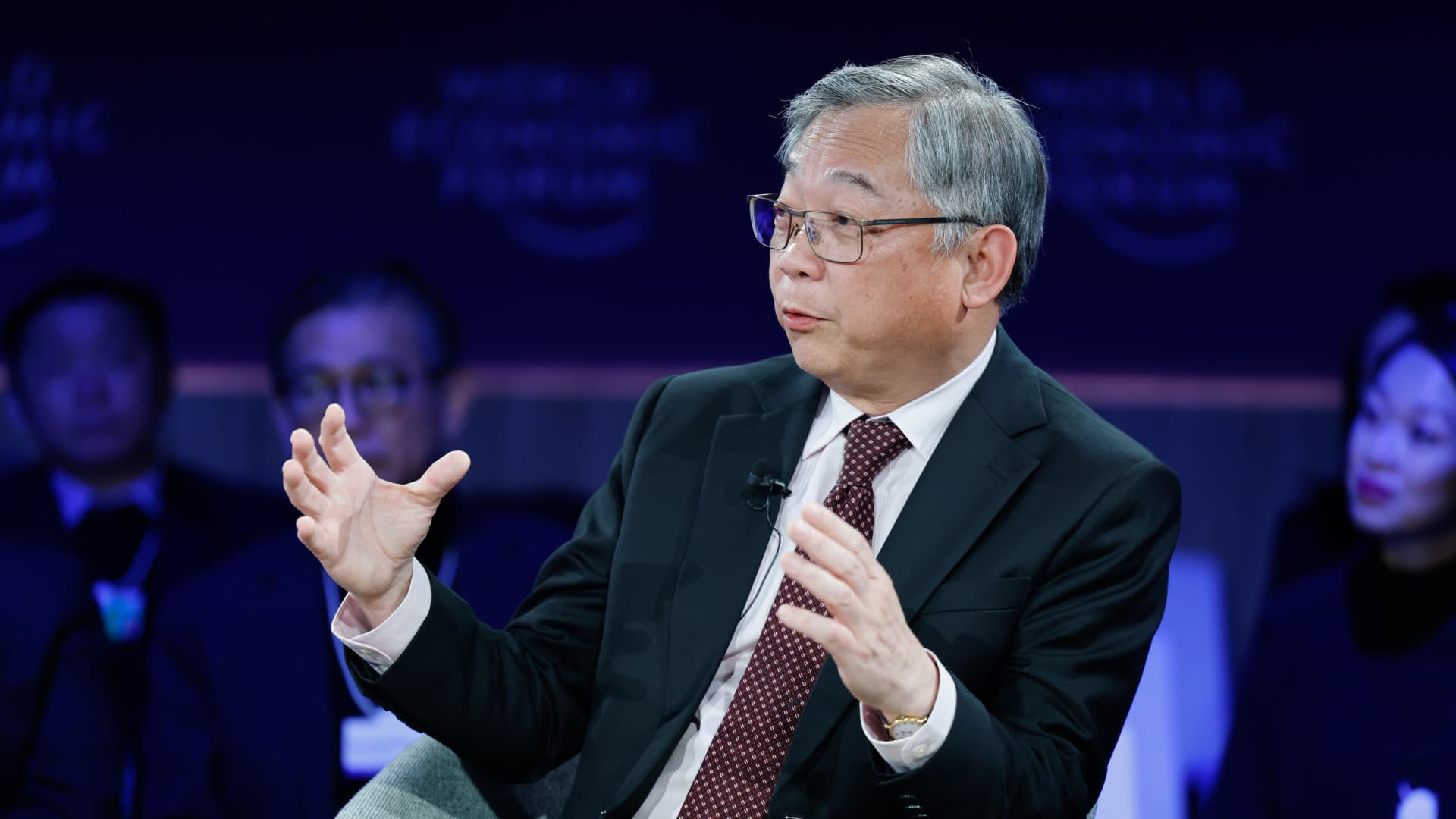
The 13th Invest ASEAN conference in Singapore brought together 200 institutional investors managing a combined US$23 trillion in assets and 54 listed companies worth US$553 billion. The concentration reflects a broader recalibration of global capital toward Southeast Asia as energy transition, supply-chain reconfiguration, and AI-led digital transformation converge — with Singapore positioning itself as the region’s financial gateway for that capital.
The number that got buried in the GDP headline
Most coverage of Singapore’s economy this month led with the topline figure: Q1 2026 GDP growth came in at a robust 6.0% year-on-year, well above flash estimates of 4.6% and the strongest reading since Q3 2024 (Joey Choy Newsletter). That’s a genuinely strong number. But it obscures a more consequential story happening in parallel: the sheer scale of capital now treating Singapore as Southeast Asia’s default financial hub for AI-era investment.

At this year’s Invest ASEAN conference, Maybank Investment Banking Group reported that 200 institutional investors managing US$23 trillion in combined assets attended alongside 54 companies with a combined market capitalization of US$553 billion, spanning Malaysia, Singapore, Thailand, Indonesia, the Philippines, Vietnam and India (BigGo Finance). Maybank IBG’s CEO Michael Oh-Lau said attendance exceeded expectations, underscoring sustained interest from both global and local investors in the region’s resilience amid worldwide uncertainty.
Why now — the three-part thesis driving the capital shift
The conference’s dominant themes weren’t accidental. Three forces are converging simultaneously:
- Energy transition — as global supply chains reroute away from Middle East chokepoints exposed by the Strait of Hormuz conflict, Southeast Asia’s manufacturing base becomes comparatively more attractive.
- Supply chain reconfiguration — companies diversifying out of single-country manufacturing dependence increasingly view ASEAN as a structural beneficiary, not just a cyclical one.
- AI-led digital transformation — the region is capturing meaningful downstream value from the AI capex boom, not just as a manufacturing base for chips but as a testing, R&D and deployment hub.
Maybank IBG simultaneously upgraded its Asean-6 growth forecast to 4.7% from 4.5%, citing easing global oil prices, a recovering flow of tanker traffic through the Strait of Hormuz, and robust regional activity (BigGo Finance) — a dynamic explored further in our Malaysia GDP upgrade analysis.
Singapore’s policy backdrop: stability as the product
Singapore’s Ministry of Trade and Industry has kept its full-year 2026 GDP growth forecast at 2.0–4.0%, flagging geopolitical developments — not domestic weakness — as the primary downside risk to monitor (Joey Choy Newsletter). Inflation remains contained within a 1–2% range, which has allowed the Monetary Authority of Singapore to hold its policy stance steady rather than react defensively. In a year when most major central banks are navigating volatility, that steadiness is itself the competitive advantage drawing capital in.
What this means beyond Singapore
The capital concentration isn’t purely a Singapore story — it’s a bet on the entire ASEAN growth thesis, with Singapore serving as the transaction and custody layer. For businesses and investors, the practical signal is that Southeast Asia is increasingly being treated by global allocators as a coherent investment bloc rather than nine separate frontier markets, with Singapore’s regulatory stability functioning as the anchor that makes exposure to higher-growth, higher-volatility neighbors (Indonesia, Vietnam, the Philippines) palatable to large institutional funds.
Discover more from The Economy
Subscribe to get the latest posts sent to your email.
Two of China‘s best-known hedge fund managers have told clients that the global rally in artificial-intelligence stocks has crossed from exuberance into what they are calling a “super bubble,” a warning that has already rattled semiconductor markets from Seoul to Santa Clara. Wealspring Asset, founded by Yang Dong — a manager credited in China with correctly calling the peak of the 2007 bull market — and Shanghai Banxia Investment Management Center issued the warnings in investor letters that quickly circulated beyond their client base.
The letters carry weight precisely because of who wrote them. Fund managers who navigated China’s own boom-and-bust cycles are now applying the same skepticism to a global AI trade that Western allocators have largely treated as a structural, multi-year growth story rather than a bubble in the classical sense.
The Case for a ‘Super Bubble’
Yang Dong‘s Ningquan Asset — the vehicle behind the most quoted warning — argued in its H1 2026 investment report that global AI stocks have formed a bubble condition with a collapse point that “may not be far away,” according to reporting from KuCoin’s news desk. The fund went further, projecting that a substantial share of the most popular AI-linked A-share stocks could fall by 80% or more once sentiment turns.
Wealspring, which manages more than $1.4 billion in assets, framed its skepticism around business fundamentals rather than pure valuation math. The firm argued that many of China’s AI infrastructure companies lack a durable competitive moat, run comparatively ordinary business models, and require continuous capital expenditure just to sustain current growth rates, according to Bloomberg’s original reporting carried by Yahoo Finance. The firm drew an explicit parallel to China’s 2015 equity bull run, describing current buying patterns in domestic AI infrastructure names as reminiscent of the “brainless buying” that preceded that crash.
Shanghai Banxia, a smaller fund managing roughly $294 million, took a different angle, pointing to a specific and testable trigger outside China’s borders: pressure on Anthropic‘s revenue growth trajectory. Banxia predicted that Anthropic’s annualized revenue run-rate — a metric closely tracked by AI bulls as a proxy for enterprise adoption — will fall short of market expectations as large technology companies push back against rising token costs and as competitors erode the company’s standing among software developers.
Market Reaction Has Already Arrived
The warnings did not stay confined to investor letters. Global chip stocks fell sharply in the days following the letters’ circulation, with the Nasdaq Composite dropping 2.2% on June 23 and South Korea‘s KOSPI sinking nearly 10% — a decline severe enough to trip a circuit breaker for the first time since March, according to analysis published by NAI 500. Micron Technology plunged more than 13% in the same window, and Nvidia slid as investors reassessed whether AI infrastructure capital expenditure could continue delivering earnings growth commensurate with its valuation.
The severity of the Asian sell-off reflects the region’s outsized exposure to the AI hardware supply chain. South Korea’s chip-heavy index had surged nearly 100% earlier in the year, powered by a rally in SK Hynix and Samsung Electronics, making it disproportionately vulnerable to a sentiment reversal. China’s own CSI Artificial Intelligence Index had climbed more than 35% year-to-date heading into the warnings, far outpacing the roughly 5% gain in the broader Chinese benchmark — a valuation gap the hedge funds argue is unsustainable.
At least four additional Chinese hedge funds expressed reluctance around AI exposure in a monthly summary of fund positioning compiled by CSC Financial Co., with only four funds registering a positive stance and seven declining to take one at all — evidence that the skepticism extends well beyond the two most-quoted names.
A Test of Who Is Early Versus Who Is Right
The central tension in the AI bubble debate is not whether artificial intelligence will reshape enterprise software and global productivity — most market participants, bullish and bearish alike, accept that premise. The dispute is whether current public equity valuations have already priced in an adoption curve, margin structure, and pricing power that has not yet been proven at scale. As framed by NAI 500’s analysis, the AI trade has moved from “look what this model can do” to “show us the business case” — a materially higher evidentiary bar for markets to clear.
Institutional voices remain split. The Bank of England warned in prior analysis that AI-linked equities had become a growing share of total US market capitalization, with some valuation metrics approaching dot-com-era extremes, while Morgan Stanley‘s 2026 outlook estimates that nearly $3 trillion in AI-related infrastructure investment could still flow through the global economy by 2028 — suggesting the capital expenditure cycle, whatever its near-term valuation risk, is far from complete.
Why the China Angle Matters Globally
What distinguishes this warning from generic bubble commentary is its origin. Yang Dong‘s track record calling the 2007 peak gives his current call outsized credibility inside China’s domestic investor base, while Banxia‘s Anthropic-specific thesis offers international investors a concrete, trackable metric rather than an abstract valuation argument. Because Anthropic remains a private company, the revenue data underpinning Banxia’s thesis is not independently auditable — a caveat that tempers, without eliminating, the weight of the warning.
For investors and strategists tracking Asia’s exposure to the AI capital cycle, the practical takeaway is that the region’s chip manufacturers, foundries, and AI infrastructure suppliers now carry two distinct risk vectors simultaneously: the conventional cyclical risk of semiconductor demand, and a newer, sentiment-driven risk tied directly to whether frontier AI developers can convert capital expenditure into durable revenue before investor patience runs out. The next disclosed revenue milestone from a major AI lab, whichever company reports it first, is likely to become the market’s de facto referendum on which side of this debate was correct.
Discover more from The Economy
Subscribe to get the latest posts sent to your email.

Gulf Capital Retreat From Pakistan 2026: UAE Loan Freeze & What It Means

Pakistan’s Most Reliable Export Is Its People: Remittances Hit $41.6 Billion, Overtaking Total Exports

Indonesia’s Confidence Problem: Record Investment, a Sinking Rupiah, and a Widening Credibility Gap

Down But Not Out: Inside the Slow Sinking of Russia’s War Economy

China’s Growth Slips to a Four-Year Low: Why Beijing Still Won’t Pull the Stimulus Trigger

The Johor-Singapore Corridor: How Malaysia Became Southeast Asia’s AI Infrastructure Powerhouse

Canada’s Economy ‘On Pause’: Inside the CUSMA Deadline That Passed Without a Deal

Dubai’s Millionaire Magnet: How the UAE Turned Middle East Turmoil Into a Capital Safe-Haven Boom

Britain’s Sixth Prime Minister in a Decade: What Starmer’s Exit Means for Gilts, Sterling and Your Portfolio

Anthropic Offers Up to $600,000 Salary for Critical IPO Role as AI Giant Prepares for Wall Street Debut

EU Readies Crisis Team for Potential China Rare Earths Stand-Off as Supply Chain Risks Mount

Singapore Weighs Hedge Fund Tax Cuts to Counter Hong Kong’s Growing Financial Challenge

Facebook and Instagram Experience Global Outage

Inside the $1 Billion Tap-to-Pay Fraud Rings Targeting Banks and Retailers

Carry Trade Unwind 2026: How the Yen’s Snapback Triggered a Global Margin Call

AI Bubble Warning 2026: Why BIS, IMF and Bank of England Fear a Market Crash

BRICS De‑Dollarization Strategy Takes Shape with $15 Billion Local‑Currency Push

Male Labor Force Participation Rate 2026: Why Men Are Leaving & Economic Impact

Russia Bans Diesel Exports 2026: Global Fuel Market Impact Explained

The AI Super Bubble Is Ready to Burst

Strait of Hormuz Blockade 2026: Oil Prices Surge 9% as US-Iran Conflict Reignites

IMF Cuts Pakistan Growth Forecast, Raises Inflation to 8.4%

Private Credit Warning: Most BDCs Turn Unprofitable in 2026, Reuters Finds
Gulf Capital Retreat From Pakistan 2026: UAE Loan Freeze & What It Means

India Economic Rise 2026: How the Subcontinent Toppled Japan

Bitcoin $150k Milestone Achieved as US Sovereign Crypto Pivot Looms

Strait of Hormuz 2026: Why Markets Still Don’t Trust It’s Open

Chipmakers Just Lost 6.7% in Two Days: Inside the Great AI Trade Rotation
-

 Markets & Finance7 months ago
Top 15 Stocks for Investment in 2026 in PSX: Your Complete Guide to Pakistan’s Best Investment Opportunities
-

 Analysis5 months ago
Johor’s Investment Boom: The Hidden Costs Behind Malaysia’s Most Ambitious Economic Surge
-

 Analysis5 months ago
Top 10 Stocks for Investment in PSX for Quick Returns in 2026
-

 Analysis6 months ago
Brazil’s Rare Earth Race: US, EU, and China Compete for Critical Minerals as Tensions Rise
-

 Banks6 months ago
Best Investments in Pakistan 2026: Top 10 Low-Price Shares and Long-Term Picks for the PSX
-

 Investment7 months ago
Top 10 Mutual Fund Managers in Pakistan for Investment in 2026: A Comprehensive Guide for Optimal Returns
-

 Global Economy7 months ago
15 Most Lucrative Sectors for Investment in Pakistan: A 2025 Data-Driven Analysis
-

 Global Economy7 months ago
Pakistan’s Export Goldmine: 10 Game-Changing Markets Where Pakistani Businesses Are Winning Big in 2025