
Banks
The World’s Top 10 Banks in 2025: Power, Risk, and the New Financial Order


China’s trillion-dollar banking giants dominate global finance—but their real estate exposure could reshape the entire system
The global banking landscape has reached an inflection point. As we close 2025, the world’s 100 largest banks control $95.5 trillion in assets—a figure that eclipses the GDP of most nations combined. Yet beneath this staggering concentration of financial power lies a paradox that should concern policymakers and investors alike: the banks with the biggest balance sheets may not be the most resilient.
Four Chinese state-owned institutions—Industrial and Commercial Bank of China, Agricultural Bank of China, China Construction Bank, and Bank of China—occupy the top spots in the global rankings by total assets. Meanwhile, JPMorgan Chase, the largest U.S. bank and fifth globally, commands the highest market capitalization at nearly $788 billion, signaling that investors value American banking efficiency over sheer size.
This divergence tells us something critical: in 2025’s banking world, scale and strength are no longer synonymous.
The Rankings: Size Doesn’t Equal Safety
Based on the latest data from S&P Global Market Intelligence and financial reports through Q4 2024, here are the world’s ten largest banks by total assets:
1. Industrial and Commercial Bank of China (ICBC) – $6.6 trillion in assets. The world’s largest bank by assets continues to benefit from Beijing’s infrastructure spending and state support, operating over 16,000 branches globally. Yet non-performing loan ratios are forecast to rise to 5.4-5.8% in 2025-2027, up from 5.1% in 2024, driven primarily by real estate exposure.
2. Agricultural Bank of China – Approximately $5.8 trillion. Deeply embedded in rural China’s financial system, ABC faces similar real estate headwinds while supporting Beijing’s rural development priorities.
3. China Construction Bank – Around $5.6 trillion. As its name suggests, CCB’s fortunes are intimately tied to China’s construction sector, making it particularly vulnerable to the ongoing property crisis.
4. Bank of China – Approximately $4.8 trillion. The most internationally oriented of China’s “Big Four,” with significant foreign operations, yet still carrying substantial domestic real estate exposure.
5. JPMorgan Chase – $4.0 trillion in assets. The most profitable large bank globally, JPMorgan’s return on equity reached 18% in 2024, demonstrating that American banks achieve more with less. With 5,021 domestic branches and sophisticated digital platforms, JPMorgan exemplifies the “smaller but mightier” model.
6. Bank of America – $2.65 trillion. The second-largest U.S. bank maintains 3,624 domestic branches and has aggressively invested in digital banking, serving millions through its AI-powered virtual assistant Erica.
7. HSBC Holdings – $3.0 trillion. Europe’s largest bank by assets, HSBC is navigating a strategic pivot toward Asia while managing legacy exposures across its global footprint.
8. BNP Paribas – Approximately $2.9 trillion. France’s largest bank and a European leader in investment banking and corporate finance.
9. Crédit Agricole – Around $2.6 trillion. Another French banking giant with significant retail and corporate banking operations across Europe.
10. Citigroup – $1.84 trillion. Once the world’s largest bank, Citi has streamlined operations but maintains an unparalleled global presence with operations in 109 foreign branches.
The Elephant in the Boardroom: China’s Real Estate Time Bomb
Here’s what the asset rankings don’t show: Chinese banks’ exposure to real estate loans has created systemic vulnerabilities, with non-performing asset ratios for property development loans potentially reaching 7% by 2027 if markets stabilize—and much worse if they don’t.
Walk through any major Chinese city today and you’ll see the problem in concrete and steel: unfinished apartment towers, silent construction sites, and the ghostly remains of a $52 trillion property bubble that’s now deflating. Chinese policymakers removed price caps on housing in 2024, allowing eligible families to buy unlimited homes in suburban areas, a desperate attempt to revive demand that has largely failed.
The human cost is staggering. Mid-2025 data shows mortgage non-performing loan rates at listed banks rising overall, with some banks up more than 20 basis points. Millions of Chinese homeowners now hold “underwater” mortgages—properties worth less than their outstanding loans. Some have lost both their homes and down payments yet still owe banks hundreds of thousands of yuan.
For the Big Four Chinese banks, this isn’t just a loan quality issue—it’s an existential question. Banks’ exposure to housing and local government debt declined to 20.7% in Q4 2024 from 22.2% a year earlier, but that still represents trillions in potentially troubled assets. Beijing’s response? Issuing 500 billion yuan in special treasury bonds in 2025 to support bank recapitalization.
Think about that for a moment. The government that owns these banks is now having to inject capital into them to cover losses from lending that the government itself encouraged. It’s a circular firing squad of state capitalism.
American Excellence: Smaller, Smarter, More Profitable
Cross the Pacific and the banking model looks radically different. JPMorgan Chase’s annualized return on equity for Q2 2025 was 16.93%, a performance Chinese banks can only dream of. With roughly $4 trillion in assets—a third of ICBC’s size—JPMorgan generated comparable or superior profits through better risk management, superior technology, and diversified revenue streams.
American banks aren’t perfect. They face their own challenges: rising commercial real estate defaults, regulatory uncertainty around the Basel III endgame rules, and fierce competition from fintech disruptors. Yet their fundamental business model—strict capital requirements, transparent accounting, and market discipline—creates resilience.
The regulatory framework matters enormously. Basel III requires banks to maintain a minimum Common Equity Tier 1 ratio at all times, plus a mandatory capital conservation buffer equivalent to at least 2.5% of risk-weighted assets. U.S. implementation has been stricter than in many jurisdictions, forcing American banks to hold more capital but also making them genuinely safer.
Compare this to China, where banks have remained cautious about new property exposure, transferring housing risks to non-bank financial institutions. That’s not risk management—that’s risk concealment. The leverage doesn’t disappear; it just moves to less regulated corners of the financial system.
The Digital Divide: Innovation as the New Moat
Size and capital strength matter, but in 2025, technological sophistication increasingly separates winners from also-rans. DBS Bank’s AI investments are projected to reach 750 million Singapore dollars (about $577 million) in 2024 and surpass SG$1 billion in 2025. The Singapore-based bank has deployed over 1,500 AI and machine learning models across 370 use cases, from corporate risk assessment to customer service.
JPMorgan and Bank of America aren’t far behind. BofA’s Erica virtual assistant has handled billions of customer interactions, while JPMorgan uses AI for everything from fraud detection to trading strategies. Only 8% of banks were developing generative AI systematically in 2024, with 78% taking a tactical approach, but that’s changing rapidly.
The Chinese banks? They’re investing heavily in digital infrastructure, to be sure. Yet their technology serves a fundamentally different purpose: facilitating state-directed lending, monitoring transactions for political purposes, and supporting Beijing’s social credit systems. Innovation, yes—but innovation in service of control rather than customer value.
European banks occupy an uncomfortable middle ground. BBVA’s expansion of its OpenAI collaboration will see ChatGPT Enterprise rolled out to all 120,000 global employees, signaling serious AI ambitions. Yet European banks collectively lag their American and Asian peers in both investment and implementation.
Basel III Endgame: The Regulatory Reckoning
Speaking of uncomfortable positions, let’s address the regulatory elephant: the Basel III endgame. Under the original proposal, large banks would begin transitioning to the new framework on July 1, 2025, with full compliance starting July 1, 2028. The proposal would have resulted in an aggregate 16% increase in common equity tier 1 capital requirements for affected bank holding companies.
But here’s the twist: US regulators recently proposed to reduce capital requirements on the largest banks, bowing to intense industry lobbying and political pressure. The revised proposal now calls for only a 9% increase for global systemically important banks—still significant, but less onerous than originally planned.
This compromise may prove disastrous. The average leverage ratio of US global systemically important banks declined from a 2016 peak of 9% to about 7% in 2023 and has remained there. Banks have been gaming the system, increasing risk exposure while maintaining superficially healthy risk-weighted capital ratios.
Meanwhile, the European Central Bank and Bank of England have delayed their Basel III implementation, citing US inaction. We’re witnessing a potential regulatory race to the bottom—exactly what the Basel framework was designed to prevent.
The Geopolitical Wildcard: Trade, Tariffs, and Banking Stress
Banking doesn’t happen in a vacuum. International trade disputes and changes in tariffs are expected to influence the performance of banks, impacting asset quality and growth potential. If U.S.-China trade tensions escalate further—a real possibility given recent political developments—Chinese banks will feel the pain first and hardest.
Reciprocal tariffs between the US and China are exerting pressure on Chinese banks, particularly due to declining demand from export-oriented manufacturers. When factories close or cut production, loan defaults follow. It’s Economics 101, but at a scale that could destabilize the entire Chinese banking system.
American banks have their own trade exposure, of course, but it’s more diversified and often hedged. JPMorgan operates in over 100 countries. Citi, despite its shrinking footprint, remains the most truly global bank. They have options. Chinese banks, despite their size, remain heavily dependent on the domestic economy.
What This Means for 2026 and Beyond
So where does this leave us? Here’s my take, informed by twenty years covering this beat:
First, asset size is an increasingly misleading metric. ICBC’s $6.6 trillion balance sheet looks impressive until you examine what’s actually on it. Quality trumps quantity, and American banks demonstrate this daily through superior profitability and resilience.
Second, the Chinese banking system faces a reckoning. It’s not a matter of if, but when and how severe. Chinese banks were sitting on 3.2 trillion yuan ($440 billion) worth of bad loans by the end of September—a 33% increase from pre-Covid times. These numbers, from the banks themselves, are almost certainly understated.
Third, technology is creating a two-tier banking world. Banks that aggressively adopt AI, blockchain, and advanced analytics will dominate. Those that don’t will become utilities—low-margin, heavily regulated, and perpetually vulnerable to disruption.
Fourth, regulatory arbitrage is back with a vengeance. The Basel III endgame was supposed to eliminate it. Instead, we’re seeing regulators water down requirements in response to bank lobbying. This should terrify anyone who remembers 2008.
Finally, geopolitics increasingly dictates banking success. In an era of great power competition, owning a bank in Shanghai or New York means different things. Chinese banks serve the state; American banks serve shareholders (at least theoretically). European banks are caught in between, trying to navigate relationships with both powers while maintaining independence.
The Billion-Dollar Question
Here’s what keeps me up at night: We’ve seen this movie before. Massive banks, seemingly too big to fail, carrying hidden risks that regulators either can’t see or choose to ignore. Policymakers convinced that “this time is different” because of better capital rules, smarter supervision, or more sophisticated risk management.
It never is.
The difference in 2025 is that the risks are concentrated in banks that operate under fundamentally different rules. When—not if—the Chinese property crisis forces Beijing to choose between bank bailouts and economic growth, the ripples will reach far beyond Asia.
The world’s largest 100 banks account for $95.5 trillion in assets, up 3% year over year. That’s growth, yes, but it’s also concentration. Too much power, in too few hands, making too many bets on too few assumptions.
Jamie Dimon, CEO of JPMorgan, likes to say his bank could survive another 2008-style crisis. He’s probably right—JPMorgan is genuinely well-capitalized and well-managed. But could the global financial system survive a crisis originating in China’s $6 trillion banking sector?
That’s the question that should haunt every central banker and finance minister. Because in 2025, we’re not just worried about banks that are too big to fail. We’re worried about banks that are too big, too opaque, and too politically connected for anyone to fully understand the risks they carry.
The world’s top ten banks in 2025 aren’t just financial institutions. They’re nodes in a global system where everyone’s connected to everyone else through invisible chains of credit, derivatives, and counterparty risk. Pull one thread, and you might unravel the whole sweater.
Sleep tight.
The author is a Senior Opinion Columnist specializing in global finance and policy. Views expressed are personal.
Discover more from The Economy
Subscribe to get the latest posts sent to your email.


Analysis
Iran War Singapore Growth & Inflation 2026: Gan’s Warning Explained | A Wake-Up Call for Asia
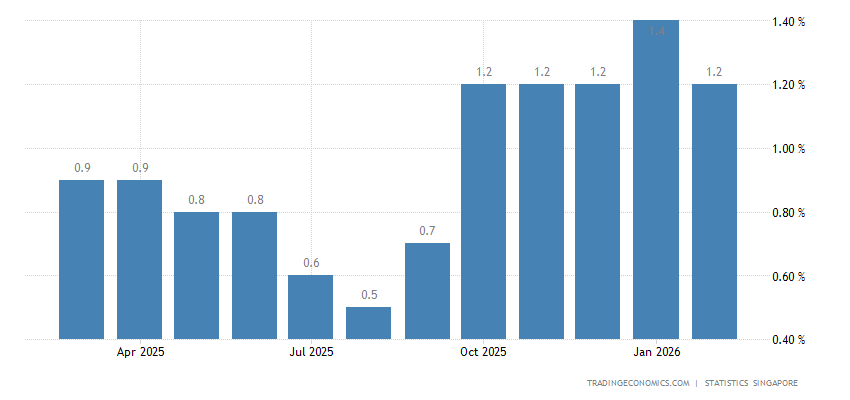
DPM Gan Kim Yong told Parliament on April 7, 2026 that the Iran war will hurt Singapore’s GDP and push inflation higher. Here’s what it means for Asia’s open economies — and why the forecast revision coming in May could be the most consequential in a decade.
Singapore’s Moment of Reckoning Has Arrived
The chamber was unusually charged for a Tuesday afternoon. More than seventy parliamentary questions had been filed — a volume that, by Singapore’s meticulous standards, signals genuine institutional alarm. When Deputy Prime Minister and Minister for Trade and Industry Gan Kim Yong rose to address Parliament on April 7, 2026, the words he delivered were neither catastrophist nor comforting. They were something more unsettling than both: calibrated, honest, and unmistakably ominous. “As a small and highly open economy,” he said, “Singapore will not be able to insulate ourselves completely from this crisis. Growth in the coming quarters is likely to be affected by the ongoing conflict.”
Outside on Shenton Way, the morning’s trading boards told a parallel story — the Straits Times Index down, freight quotes climbing, electricity tariffs that had already been revised upward on April 1 now looking like a floor rather than a ceiling. For Singapore, a city-state with no hinterland, no domestic energy base, and no insulation from the global price of anything, the Iran war is not a distant geopolitical abstraction. It is an arriving economic storm, and Gan’s parliamentary statement was the clearest official admission yet that the government’s own forecasts — upgraded as recently as February to a bullish 2% to 4% GDP growth for 2026 — will need to be revisited.
This is the story of why that revision matters, and what it reveals about the structural vulnerabilities of every small, trade-dependent economy in a world increasingly shaped by great-power conflict.
Not Ukraine Redux: Why This Shock Is Different in Kind
Experienced market watchers were quick to reach for the 2022 Russia-Ukraine playbook when the US-Israeli strikes on Iran began on February 28, 2026. That instinct is understandable but analytically dangerous. The Ukraine episode was primarily a European energy shock — devastating for the continent’s natural gas grid, but geographically contained in ways that allowed Asian economies to pivot rapidly toward alternative suppliers and routes. The Iran war is something structurally different, and more globally corrosive.
The Strait of Hormuz, through which approximately 20% of the world’s traded oil passes alongside vast volumes of liquefied natural gas, does not have a European bypass. The closure of the strait triggered by the conflict has disrupted roughly a fifth of global oil supply, sending Brent crude surging to over US$82 per barrel — a 30% increase since the start of 2026 and the highest level since January 2025. Unlike the Suez Canal, for which alternative routing around the Cape of Good Hope is slow and costly but physically possible, the Hormuz chokepoint forces rerouting that simply cannot be accomplished at comparable volumes or speed.
More critically, the war’s cascading effects are not bounded by energy markets. Analysts have described the economic impact as the world’s largest supply disruption since the 1970s energy crisis, encompassing surges in oil and gas prices, wide disruptions in aviation and tourism, and volatility in financial markets. That characterisation — the 1970s benchmark — is one that Singapore’s older policymakers understand viscerally. The 1973 oil embargo reshaped the city-state’s energy strategy for a generation. What is unfolding in 2026 is arriving with far greater interconnectedness and far less margin for response.
The Four Channels: How the Iran War Hits Singapore’s Economy
Energy and Chemicals: The First and Loudest Channel
Singapore is one of Asia’s pre-eminent refining and petrochemicals hubs. Its Jurong Island complex processes millions of barrels of crude annually, supplying refined products and chemical feedstocks across the region. When global crude prices surge and Gulf supply contracts abruptly, the feedstock economics of that entire industrial ecosystem are upended. Parliamentary questions filed for the April 7 sitting explicitly asked whether Singapore’s petrochemical and refining sectors face risks to output, margins and competitiveness given the republic’s role as a regional energy and chemicals hub.
Gan confirmed that the spike in global oil and natural gas prices will inevitably raise fuel and electricity costs for Singapore, and that cost increases will “feed through to broader inflation.” He went further, calling the supply disruption from the Hormuz closure “the worst disruption since the 1973 oil embargo” — language that carries particular weight from a minister known for understatement.
Electricity tariffs were already revised upward from April 1. Singaporean authorities have warned of sharper increases to come, with cooking gas prices also rising, though some providers said they may absorb costs for hawker centres. For industrial consumers — manufacturers, data centres, cold-chain logistics — these are not headline distractions. They are margin compressors arriving on top of already elevated input costs.
Manufacturing: The Second-Round Hit
Singapore’s manufacturing sector — which encompasses electronics, biomedical products, and advanced chemicals — does not consume crude oil directly in most of its processes. But energy is embedded in every stage of global supply chains, and when shipping costs and input prices rise simultaneously, the squeeze reaches even the most advanced factories.
Senior economists at DBS Group Research noted that Singapore’s economy is confronting uncertainty from a relatively strong position, with solid growth momentum buoyed by global AI-related tailwinds and still-low inflation at the start of 2026. That strength, real as it is, does not make the republic immune to margin compression in its externally-facing industries. Semiconductor packaging, precision engineering, and pharmaceutical manufacturing all depend on global logistics networks whose costs are now rising sharply.
The AI demand tailwind that powered Singapore’s manufacturing resilience through early 2026 remains intact — demand for advanced chips has not diminished. But when energy and transport costs rise across the supply chain, even AI-driven production is not entirely insulated. Earnings risk for Singapore’s listed manufacturers is real and, as yet, inadequately priced by equity markets.
Transport and Travel: The Visible Daily Pain
Here is where the economic shock becomes humanised. Jet fuel prices have climbed in lockstep with crude, squeezing airline operating margins and threatening the air connectivity on which Singapore’s Changi Airport — the city’s most strategically important piece of infrastructure — depends. Parliamentary questions addressed fare adjustments by ride-hailing operators Grab and ComfortDelGro, asking whether the Ministry of Transport was consulted and what regulatory oversight is in place to prevent private-hire and taxi operators from passing on fuel costs unchecked. The fact that cab drivers received a S$200 fuel subsidy in the April 7 package is telling: the government recognises that transport cost pass-throughs are already live.
Aviation and tourism were singled out among the sectors facing wide disruptions from the conflict. For Singapore, which has positioned itself as Asia’s premier transit hub and whose aviation-adjacent services — hospitality, MICE, retail — form a meaningful slice of services GDP, a sustained softening in air traffic flows is a multi-quarter drag that GDP models may not yet fully capture.
Domestic Services: The Inflation Spiral That Begins in Changi Road
The most economically insidious channel is the one that receives the least analytical attention: the inflationary pass-through into domestic services. When fuel prices rise, school bus operators raise fares — something already visible in Singapore’s local reports. When electricity tariffs rise, restaurants’ operating costs rise; when food import costs climb because freight is more expensive, hawker centre prices follow. These are the mechanisms through which an energy shock migrates from the oil market to the heartland household.
As school bus driver V. Parath put it plainly: “The price of everything in Singapore is increasing.” That is not merely anecdote. It is a leading indicator that core inflation is beginning to broaden from energy and transport into services — a broadening that, once embedded in wage expectations, becomes structurally stickier.
Pull Quote: “This is not a standard energy shock. It is a simultaneous hit to feedstock costs, freight rates, exchange-rate dynamics and consumer confidence — arriving in an economy that was already managing multiple transition pressures. Singapore’s buffers are real and substantial. But buffers are finite.”
The Macro Ripple: MAS, the SGD, and an Unenviable Policy Dilemma
The Monetary Authority of Singapore’s principal policy instrument is the exchange rate, not the interest rate. The central bank manages the Singapore dollar against an undisclosed basket of trading partner currencies within a policy band, adjusting the slope, width, and centre of that band to target imported inflation. In a standard energy shock, the textbook response is to allow or even encourage modest SGD appreciation to absorb imported price increases.
MAS confirmed in early March that it is conducting a formal assessment of the domestic financial system’s exposure, and that the Singapore dollar nominal effective exchange rate remains within its established appreciating policy band — positioning intended to dampen imported inflationary pressures.
But the policy dilemma is more complex than the textbook suggests. Broader dollar strength driven by safe-haven demand and reduced US Federal Reserve rate-cut expectations — with futures markets now pricing the first fully priced Fed cut as late as September, two months later than the July consensus prevailing before the conflict — has compressed Singapore’s room to manoeuvre. A SGD that appreciates against the USD provides some imported-price relief but simultaneously hits the competitiveness of Singapore’s export-facing industries at precisely the moment when their margins are already being squeezed.
Maybank economist Chua Hak Bin had flagged inflation as an underappreciated risk in 2026, citing rising semiconductor prices and the unwinding of Chinese export deflation — a deflationary cushion that had kept manufactured goods prices suppressed for several years. A Gulf supply shock superimposes an energy cost surge on top of those pre-existing pressures. If the conflict persists beyond four to six weeks, Singapore’s core inflation could break above MAS’s 1–2% forecast band, creating pressure on the central bank to shift its exchange-rate policy.
That band adjustment, if it comes, will be one of the most significant MAS signals in years — and it is coming into view.
The Limits of “Safe Haven”: Why Singapore Is Not Immune to Structural Fragmentation
For a generation, Singapore cultivated — and largely deserved — a reputation as Asia’s most resilient small open economy: deep reserves, AAA fiscal credibility, trade agreements with virtually every major partner, and an uncanny institutional capacity to navigate geopolitical turbulence without becoming its casualty. That reputation is not false. But this crisis is exposing its conditionality.
Coordinating Minister for National Security K. Shanmugam warned on April 7 that markets have yet to factor in the worst-case scenario — and that Singapore cannot rule out power disruptions if the conflict in Iran further disrupts global energy supplies. A sitting minister explicitly raising the spectre of power disruption in a city whose every competitive advantage rests on the reliability of its infrastructure is not rhetoric — it is a risk disclosure.
The structural issue is one that Singapore shares with a cohort of ultra-open economies whose prosperity was architected for a rules-based, multilateral trade order. Taiwan, South Korea, and the Netherlands are the most obvious analogues. Each is deeply integrated into global supply chains, each imports most of its energy needs, and each has built extraordinary competitiveness precisely by maximising openness rather than pursuing autarky. In a world of discrete shocks — a pandemic here, a trade dispute there — openness is the right bet. In a world where great-power conflict is becoming endemic rather than episodic, that calculus deserves harder scrutiny.
The Iran war’s economic impact is not merely a supply shock. It is a signal that the frequency and geographic scope of geopolitical disruptions may be structurally higher going forward than the models that underpin Singapore’s growth forecasts were calibrated for. When Gan says growth in the coming quarters will be “affected,” he is describing an outcome. The deeper question is whether Singapore’s — and Asia’s — planning frameworks are being updated to account for a world where such statements become a recurring feature rather than an exception.
May’s Forecast Revision: What to Expect — and Fear
Singapore’s GDP advance estimate for the first quarter is due on April 14, with a full economic outlook update scheduled for May. The first-quarter numbers will almost certainly show resilience — Gan himself acknowledged that early data indicate economic activity held up well through Q1. That resilience, largely built on AI-driven electronics demand and services strength, will briefly reassure markets.
May’s revision is another matter. The 2% to 4% full-year GDP forecast issued in February was calibrated for a world in which the Iran conflict was either resolved or contained within weeks. Singapore’s predicament is shaped by geography as much as policy — the republic sits far from the conflict zone, yet its economy is tied tightly to global trade, imported food and imported fuel. Any threat to Gulf energy production or maritime passage through strategic chokepoints can ripple quickly into Asian benchmark prices, freight costs and business sentiment.
A sustained conflict — and with over a month of fighting already in the books, “sustained” is no longer a tail risk — points to a revised growth forecast closer to the lower end of the current range or potentially below it. Inflation forecasts, already tracking against MAS’s 1–2% core target band, are likely to be revised upward. For households and SMEs that have not yet felt the full pass-through of April’s electricity tariff increase, the coming months will be measurably harder.
What Policymakers Must Do — and What Singapore Offers as Model
The S$1 billion support package unveiled on April 7 — boosting the corporate income tax rebate from 40% to 50%, advancing grocery vouchers to June, and providing S$200 supplements to both eligible households and cab drivers — is competent crisis management. It cushions the immediate pain, demonstrates governmental responsiveness, and signals institutional credibility to markets. It is not, however, a structural solution.
For Singapore specifically, the priorities are now fourfold. First, accelerate energy diversification — Shanmugam noted that Singapore is studying alternatives including nuclear power to broaden its fuel mix, a move that was politically contentious eighteen months ago and is now strategically urgent. Second, extend supply-chain diplomacy aggressively: the Singapore-Australia joint energy security statement of March 23, 2026 is exactly the kind of bilateral redundancy-building that needs to be replicated across multiple partners and commodity categories. Third, provide targeted, time-limited support for SMEs facing acute energy and freight cost pressure — the risk of SME failures compressing domestic employment and spending is underappreciated. Fourth, and most importantly, begin recalibrating the medium-term planning framework to assume a structurally less stable geopolitical environment than the one that informed Singapore’s last decade of growth strategy.
For the broader cohort of open Asian economies — South Korea, Taiwan, Vietnam, Thailand — Singapore’s predicament is a live case study in vulnerabilities they share. The lesson is not to retreat from openness, which remains the correct long-term bet for small economies without large domestic markets. It is to build genuine redundancy into energy, food, and supply-chain systems; to cultivate multiple geopolitical relationships that provide diplomatic buffer in crises; and to hold fiscal capacity in reserve precisely for moments like this one.
Singapore has those reserves. Its institutions are among the world’s most capable. The response so far has been measured, credible, and appropriately scaled. But Gan’s words in Parliament on April 7 should be read not only as a situational update but as a structural warning — to Singapore, and to every economy that built its prosperity on the assumption that the global order would remain permissive. That assumption is now, unmistakably, in question.
The bumpy ride ahead is not Singapore’s alone.
Discover more from The Economy
Subscribe to get the latest posts sent to your email.

The $82 billion exodus from America’s debt market signals more than wartime liquidity stress — it may mark the beginning of a structural reckoning for the dollar’s exorbitant privilege.
As oil prices pierced $110 a barrel and Iran’s blockade of the Strait of Hormuz choked the arteries of global energy trade, something quieter — and potentially more consequential — was unfolding in the marble-floored corridors of the New York Federal Reserve. Foreign central banks were liquidating American debt at the fastest pace in more than a decade.
Federal Reserve custody data shows that holdings of US Treasuries by foreign official institutions at the New York Fed have plunged by $82 billion since February 25, collapsing to $2.7 trillion — the lowest level since 2012. All-Weather Media The timing is not coincidental. The sell-off began almost precisely as the first missiles fell on Iranian soil, and it has accelerated with every week of conflict that grinds on. What began as a wartime liquidity scramble now carries the contours of a deeper structural shift — one that has economists in Frankfurt, Washington, and Beijing quietly updating their long-term models.
This is not merely a story about bond markets under pressure. It is a story about the foundations of American financial power.
The Mechanics of a Wartime Sell-Off
To understand why central banks are selling Treasuries into a crisis that would historically have driven buying, one must follow the energy channel rather than the geopolitical headline.
After Iran blocked the Strait of Hormuz, global oil prices soared, and oil-importing countries were hit hardest. Foreign exchange reserves shrank passively, combined with the need to intervene in currency markets, prompting central banks in many countries to accelerate the liquidation of US Treasuries. All-Weather Media
The logic is grimly circular. An oil-importing nation — say, India or Thailand — suddenly faces a surging import bill denominated entirely in dollars. Its currency weakens under the pressure of that trade shock. To defend the exchange rate and prevent a domestic inflationary spiral, the central bank must sell dollar assets to buy its own currency. The most liquid, deep dollar asset most central banks hold? US Treasuries. Brad Setser, senior fellow at the Council on Foreign Relations, pointed out that Turkey, India, Thailand, and other oil-importing countries are likely the main participants in this round of selling, because these countries must pay higher oil prices in dollars. All-Weather Media
Meghan Swiber, US rate strategist at Bank of America, confirmed the dynamic bluntly: “Foreign official institutions are selling US Treasuries.” All-Weather Media
The distinction that animates debate among market participants is whether this selling is passive — a mechanical consequence of reserve depletion — or active, reflecting a more deliberate choice to reduce dollar exposure. Stephen Jones, Chief Investment Officer at Aegon Asset Management, described the selling as countries “raising war funds,” saying, “They are drawing on emergency reserves.” All-Weather Media In practice, it is likely both, and the combination is what makes the current episode remarkable.
The Scale of It: A Data Table in Words
The numbers are stark and merit clear articulation.
Official data shows that since February 27 — the day before Iran was attacked — the Turkish central bank alone has sold $22 billion in foreign government bonds from its foreign reserves. All-Weather Media Turkey, battling a persistently weak lira and an energy import dependency that leaves it acutely exposed to oil shocks, has been the most aggressive seller. But it is hardly alone.
Independent data from the central banks of Thailand and India also show that both countries’ foreign exchange reserves have declined after the outbreak of the conflict. All-Weather Media Whether the drawdown came from Treasuries specifically or dollar deposits held elsewhere remains partially unclear, but the directional signal is unambiguous: oil importers across Asia and the emerging world are under intense balance-of-payments stress.
At the other end of the oil equation, Gulf exporters face a different calculus. Saudi Arabia held $149.5 billion in US Treasuries as of December 2025. The Gulf states collectively maintain over $2 trillion in dollar-denominated assets. Saudi Arabia, the UAE, Kuwait, Qatar, and Bahrain all peg their currencies to the US dollar, requiring them to keep vast amounts of dollars to support that peg and, in doing so, help sustain Treasury demand. Middle East Eye Their behavior in the weeks ahead — whether they hold, or quietly reduce — will be among the most consequential signals to watch in global bond markets.
Yields Surge: America’s Borrowing Costs Bite Back
The sell-off is not happening in a vacuum. It is coinciding with — and amplifying — a broader repricing of US government debt that has unsettled investors and policymakers alike.
The 10-year US Treasury yield has risen from around 3.9% to a peak of 4.4%, while the 2-year yield climbed from 3.35% to above 4% — both hitting eight-month highs. Euronews That may not sound catastrophic in isolation, but it arrives against a backdrop of acute fiscal vulnerability. The US national debt crossed $39 trillion on March 18, 2026 — a milestone reached just weeks into the war in Iran — with interest costs projected to become the fastest-growing line item in the federal budget, after credit downgrades from all three major ratings agencies. Fortune
RSM Chief Economist Joseph Brusuelas captured the market’s collective anxiety: “The US Treasury bond market has finally responded to the Mideast war, giving its assessment of the energy shock’s severity and the war’s effect on US fiscal imbalance and inflation.” The MOVE index, which tracks volatility in the Treasury market, has spiked to levels consistent with price instability and policy dysfunction. Fortune
BCA Research’s Chief Fixed Income Strategist Robert Timper has characterized the pattern as “aggressive bear flattening of yield curves,” reflecting a hawkish monetary policy repricing in response to inflation fears stemming from the Iran war. Euronews On a conventional reading, this is stagflationary: energy-driven inflation pushes short-term rates higher even as growth expectations deteriorate. The Fed, caught between an oil shock and a slowing labor market, finds itself precisely where it least wants to be — with no clean policy option.
Central banks are concerned that another inflation shock, even if caused by a temporary spike in oil, might convince consumers and businesses that inflation is going to be high for a long time. Marketplace The confidence channel, in other words, may matter as much as the oil price level itself.
The Petrodollar’s Perfect Storm
Here is where the analysis shifts from cyclical to structural — and where the Iran conflict becomes geopolitically transformative rather than merely disruptive.
Deutsche Bank FX strategist Mallika Sachdeva has argued that the conflict could be remembered as a key catalyst for “erosion in petrodollar dominance, and the beginnings of the petroyuan.” CNBC That is a remarkable sentence to see in a research note from a major Western bank, and it demands unpacking.
The petrodollar system — born from a secret 1974 agreement between the US and Saudi Arabia — is elegantly simple in its design. Riyadh agreed to price its oil exports in dollars and invest its petroleum windfalls into US Treasuries; in return, Washington provided military protection and security guarantees for Gulf infrastructure. Other OPEC members followed, locking the dollar in as the indispensable currency of the modern world. Fortune That recycling loop allowed Washington to borrow cheaply, run persistent deficits, and still command the world’s reserve currency — what the French famously called America’s “exorbitant privilege.”
The Iran war has directly challenged every pillar of that arrangement. US military assets and bases in the Gulf have come under attack. Oil infrastructure in the Gulf has been hit. And the US ability to provide maritime security to ensure the global flow of oil has been challenged by the closure of Hormuz. The US security umbrella has been fundamentally tested. The Canary
Deutsche Bank’s Sachdeva wrote that the conflict “may expose further fault lines, by challenging the US security umbrella for Gulf infrastructure and maritime security for global trade in oil,” adding that “damage to Gulf economies could encourage an unwind in their foreign asset savings held largely in dollars.” Middle East Eye
The most concrete manifestation of this risk is already visible. Reports from multiple outlets confirm that Iran has been negotiating tanker passage through the Strait of Hormuz only when transactions are settled in yuan — a policy Deutsche Bank flags as a potential watershed moment. Bitcoin News At least 11.7 million barrels have moved through Chinese-linked tankers since late February, with many vessels going dark to avoid tracking. Discussions with at least eight non-Middle Eastern countries on yuan-based oil trade for safe transit have also been reported. Bitcoin News
This is not yet the petroyuan. But it is its audition.
Dedollarization: Accelerant, Not Origin
It would be analytically sloppy to present the Iran war as the singular cause of dedollarization. The trend predates the current conflict by years — accelerated by US sanctions on Russia in 2022, the rise of BRICS payment alternatives, and China’s persistent push to internationalize the renminbi through mechanisms like the mBridge central bank digital currency project.
Even before the Iran war, hypotheses about the petrodollar’s erosion had been building. US sanctions on Russian and Iranian oil had already created illicit trade routes settled in yuan and roubles. Saudi Arabia had joined mBridge, taking a seat in China’s alternative payment infrastructure. Fortune
What the Iran war has done is compress the timeline. Structural shifts that might have taken a decade now have a geopolitical accelerant behind them. And critically, this wave of selling reflects a deeper trend: global reserve management institutions have been diversifying dollar asset allocations for years, and the status of US Treasuries as the primary global reserve asset is being increasingly eroded. All-Weather Media
That said, the dollar doomsayers deserve scrutiny alongside the dollar optimists. The offshore dollar credit market stood at $2.5 trillion in 2000 and has hit $14.2 trillion more recently — evidence of structural resilience that should temper apocalyptic narratives. Fortune The dollar index is on track to gain around 3% in March, with energy-driven stagflation risks supporting the greenback in the near term, according to OCBC strategists. CNBC Crises, paradoxically, often strengthen the dollar even when they degrade its long-term foundations.
The distinction — between short-term safe-haven demand for the currency and long-term diversification away from the asset — is exactly what makes this moment so analytically treacherous. Central banks may be buying dollars even as they sell Treasuries. As Wells Fargo’s Brendan McKenna noted, investors who want dollar safety have plenty of options beyond Treasuries — money market funds, savings accounts, corporate bonds — all dollar-denominated, none of which require holding sovereign debt. Marketplace
What Comes Next: The Fed’s Dilemma and the Gold Trade
The Federal Reserve finds itself boxed in on multiple fronts. Prediction markets now price only a 23.5% probability of a Fed rate hike in 2026, and only 37% probability of zero cuts — meaning the majority of investors still expect the Fed to remain relatively more dovish compared to major central banks like the ECB, which markets now give an 85% probability of hiking. Benzinga
That divergence matters for Treasury markets. If the Fed stays patient while inflation creeps higher, the risk premium on longer-dated Treasuries will widen further. If it hikes preemptively, it risks tipping a slowing economy into recession — and potentially triggering exactly the kind of demand destruction that would crash oil prices and resolve the inflationary shock anyway. Neither path is comfortable.
Meanwhile, the private investment alternatives are multiplying. Gold — the original reserve asset, abandoned by Bretton Woods but never fully forgotten — has surged as central banks globally have accelerated purchases. For emerging market central banks now questioning the sanctity of US sovereign debt, gold offers something Treasuries currently cannot: an asset without geopolitical counterparty risk.
The deeper implication, the one that keeps Treasury officials awake, is about the fiscal term premium — the extra yield investors demand to hold long-duration US debt given fiscal and policy uncertainty. Brusuelas warned that if uncertainty continues, it could trigger broader funding stress in debt markets already under pressure from concerns about private credit — with total investment-grade supply coming to market in 2026 estimated at around $14 trillion. Fortune The competition for global capital has never been fiercer, and the US no longer bids from a position of unquestioned supremacy.
The Long View: A Privilege Under Audit
The $82 billion drop in foreign official Treasury holdings is, in isolation, manageable. The US Treasury market is the deepest and most liquid in the world; $82 billion is noise in a $28 trillion market. What is not manageable — if it continues — is the structural message embedded in the data.
For fifty years, the petrodollar system functioned as a self-reinforcing cycle: oil exported in dollars, dollars recycled into Treasuries, cheap US borrowing reinforcing dollar dominance, dollar dominance reinforcing oil pricing. The Iran war has not broken that cycle. But it has introduced friction into every link of the chain simultaneously — energy shock, currency stress, reserve drawdown, yield surge, and a nascent yuan-for-oil experiment at the world’s most critical chokepoint.
Policymakers in Washington should be paying close attention not just to where Treasury yields are today, but to where foreign central bank buying will be in six, twelve, and twenty-four months. The exorbitant privilege was never guaranteed. It was maintained by confidence — in American institutions, American security commitments, and American fiscal restraint. The Iran war is testing all three at once.
For now, the dollar holds. The question is whether it holds the same thing it did before the war began.
Discover more from The Economy
Subscribe to get the latest posts sent to your email.
Mortgage applications hit a 25-year low as first-time buyers collapse to 21% of market share. Why young Americans face a future as perpetual renters — and what it means for the economy. “Mortgage applications hit a 25-year low. First-time buyers are a record-low 21% of the market. Why young Americans face life as perpetual renters.
The Numbers No One Wants to See
Consider what it takes to close on a home in America right now. You need a household income approaching six figures to qualify for the median-priced existing home. You need a down payment that, at the current median of 10% for first-time buyers, amounts to more than $43,000 in cash — at the highest level since 1989. You need the nerve to lock into a 30-year fixed mortgage rate of 6.43% — more than double the pandemic-era lows that millions of existing homeowners are still sitting on, quite contentedly, with no intention of surrendering. And you need the good fortune of finding something for sale in the first place.
If you’ve managed all of that, congratulations. You are, in a measurable and increasingly literal sense, one of the lucky few.
The American mortgage — that foundational instrument of middle-class wealth, the financial backbone of the postwar suburban compact — is vanishing. Not gradually, and not quietly. Data released by the Mortgage Bankers Association on March 25, 2026 showed mortgage applications tumbling another 10.5% in a single week, with the Purchase Index falling 5% week-over-week. The week prior — ending March 13 — had already seen a 10.9% collapse, the steepest single-week drop since September 2025. These aren’t blips. They are the fingerprints of a structural transformation so deep that it risks redrawing the sociological map of American wealth for a generation.
Worse Than the Great Recession — Without the Excuse
To grasp how extraordinary the current freeze is, it helps to recall what the housing market looked like during the worst economic catastrophe of living memory. In 2009 and 2010, as the subprime bubble imploded and unemployment breached 10%, mortgage originations cratered. The MBA’s Market Composite Index — which tracks total loan application volume — fell to what seemed like unthinkable lows. The housing market was broken, the country agreed, and policymakers mobilized accordingly.
Today, unemployment sits at roughly 4%. The economy has, by standard macroeconomic measures, recovered. And yet 96 of the 100 lowest readings of the MBA’s weekly mortgage application index have occurred in the past three years — a span that began not with a financial crisis but with the Federal Reserve’s campaign to tame post-pandemic inflation. The market is not broken in the way 2009 was broken. It is frozen, seized by a structural contradiction: the people who own homes have every incentive to stay put, and the people who want homes cannot afford to enter.
The MBA’s weekly Purchase Index — which isolates new home purchase applications from refinancing activity — was only 5% higher than the same week one year ago as of late March 2026, a derisory gain that barely registers against years of suppressed demand. Elevated Treasury yields, driven in part by geopolitical oil-price pressures, have kept mortgage rates stubbornly high. The 30-year conforming rate closed the week at 6.43%, with jumbo balances carrying 6.45%. The window in early 2026 when some lenders briefly offered rates approaching 6.25% — hailed breathlessly at the time as a turning point — has snapped shut.
The Rate-Lock Prison
To understand why the supply side of the housing market has frozen so completely, follow the math of the existing homeowner. The median American seller has now owned their home for a record 11 years before listing — an all-time high in data stretching back to 1981. Roughly 60% of outstanding mortgages in the United States carry rates below 4%. Trading a 3% mortgage for a 6.4% one, on a more expensive house, in a market with higher property taxes and insurance premiums, requires a powerful motivating force — a job relocation, a family expansion, a death, a divorce. For tens of millions of Americans, the math simply doesn’t pencil out, and so they stay. Their inertia is perfectly rational. Its aggregate effect is devastating.
The NAR’s 2025 Profile of Home Buyers and Sellers — a survey of transactions conducted between July 2024 and June 2025 — captures the downstream consequences with clinical precision. The typical seller age hit a record 64. The typical buyer age hit a record 59. The median age of first-time buyers climbed to an all-time high of 40 — up from the late twenties in the 1980s, and from 30 as recently as 2010. By NAR’s accounting, a decade of deferred homeownership costs a typical buyer roughly $150,000 in accumulated equity on a standard starter home. That is not a financial setback. That is a generational wealth transfer, running in reverse.
Redfin, using a different methodology that draws more directly on Federal Reserve microdata, places the first-time buyer median age at 35 in 2025 — lower than NAR’s figure, and a modest improvement from the prior year. Even at 35, the typical first-time buyer is significantly older than at any point in the postwar era, and the methodological debate between NAR and Redfin only underscores the point: by any honest accounting, Americans are buying their first homes later, under more financial duress, with lower long-term equity gains ahead of them.
The First-Time Buyer Collapse
The most alarming data point in the NAR survey is not the age figure — it is the share. First-time buyers accounted for just 21% of all home purchases over the 12-month survey period — a record low in data going back to 1981, and a figure that has been cut in half since 2007, when first-timers made up around 40% of the market. Before the Great Recession, 40% was considered the structural norm. The NAR’s deputy chief economist, Jessica Lautz, did not mince words: “The implications for the housing market are staggering. Today’s first-time buyers are building less housing wealth and will likely have fewer moves over a lifetime as a result.”
The vacuum left by absent first-time buyers has been filled, predictably, by those with the deepest pockets. Repeat buyers now constitute 79% of all home purchases, with a median age of 62 and a median down payment of 23% — the highest since 2003. Thirty percent of repeat buyers paid all cash, bypassing the mortgage market altogether. In a healthy housing ecosystem, first-time buyers feed the lower rungs of the ladder, creating demand that allows existing owners to trade up. When that base collapses, the entire market ossifies. Turnover falls. Supply dwindles. Prices, absent the corrective pressure of a functioning bottom of the market, hold or rise despite unaffordable conditions. This is not a market failure in the traditional sense. It is a market succeeding — extraordinarily well — for a narrow slice of older, already-wealthy participants, at the expense of everyone else.
Key Generational Homeownership Data (2025)
| Generation | Homeownership Rate (2025) | Boomer Rate at Same Age |
|---|---|---|
| Gen Z (ages 19–28) | 27.1% | ~40–44% |
| Millennials (ages 29–44) | 55.4% | ~60–65% |
| Gen X (ages 45–60) | 72.7% | — |
| Baby Boomers (ages 61–79) | 79.9% | — |
Sources: Redfin analysis of Census Current Population Survey, 2025; Scotsman Guide
Gen Z’s homeownership rate reached 27.1% in 2025, up marginally from 26.1% the year before. That modest gain deserves context: when Gen Xers and baby boomers were the same age, homeownership rates for 28-year-olds stood at 42.5% and 44.4%, respectively. Gen Z is tracking 15 percentage points behind its parents’ generation at the same stage of life. Meanwhile, racial gaps remain stark: the homeownership rate for Gen Z Black Americans stood at just 14.2% in Q4 2025, a figure that compounds the racial wealth gap with brutal efficiency.
Among young adults broadly, the under-35 homeownership rate rose from 36.3% to 37.9% in the fourth quarter of 2025 — a genuine uptick, but one that remains below the 25-year average, and one achieved not because the market opened up but because a fraction of younger buyers made extraordinary sacrifices to enter it. As Redfin senior economist Asad Khan noted, “Gen Zers and millennials are making small gains in homeownership because they’re eager to buy, they’re making sacrifices, and because affordability has improved a bit at the margins — not because homes suddenly became affordable.”
Even at current levels, the median household income lags nearly $25,000 behind the earnings required to purchase a median-priced home. That gap is not a rounding error. It is a structural chasm.
The Supply Catastrophe Underneath
Every discussion of housing affordability eventually circles back to supply — and the supply picture in America is not improving fast enough. Single-family housing starts averaged 943,000 units in 2025, down from 1.02 million in 2024, with MBA projecting a roughly flat 2026 at around 930,000 units. That number falls far short of the estimated 1.5 to 2 million new units economists say are required annually to close the supply deficit built up over the past decade and a half of underbuilding.
Homebuilders face a perfect storm of their own: elevated input costs, persistent labor shortages, zoning and permitting barriers that add months and hundreds of thousands of dollars to project timelines, and — critically — an elevated inventory of unsold new homes sitting at 472,000 units as of December 2025, equivalent to an 8-month supply. Builders are not inclined to break ground aggressively into a market where completed homes sit unsold. The result is a construction industry operating at a cautious pace precisely when the country needs urgency.
The rental alternative provides cold comfort. Rents have softened in some Sunbelt markets as a surge of multifamily completions finally came to market, but vacancy rates in major East Coast metros remain tight. For young Americans priced out of ownership, renting is not a temporary waystation — it is increasingly a permanent condition. Apartment List’s 2025 Millennial Homeownership Report found that nearly 25% of millennials expect to always rent — a figure that has roughly doubled since 2018. That psychological shift matters: when a generation stops believing homeownership is attainable, the political and social pressure to fix housing markets loses one of its most powerful engines.
A Global Pattern, an American Inflection
The United States is not alone in this predicament. The housing affordability crisis plaguing American millennials and Gen Z has close cousins in Canada, Australia, the United Kingdom, and across Western Europe, where a toxic combination of years of low interest rates inflating asset prices, NIMBYist planning regimes restricting supply, and demographic demand from large young cohorts has pushed homeownership rates for people under 40 to multi-decade lows. In London, Sydney, Toronto, and Auckland, the conversation about a permanently renting younger class is years further along than in Washington or New York. The political backlash — housing as a central election issue — is already transforming party platforms in the U.K. and Australia.
What distinguishes the American case is the mortgage itself. The 30-year fixed-rate mortgage, a product unique to the United States among major economies, has historically functioned as an extraordinary wealth-building tool and a form of consumption smoothing — allowing households to lock in a predictable housing cost for three decades, building equity through forced savings, and eventually owning an asset outright. The product was explicitly designed, through the government-sponsored enterprises Fannie Mae and Freddie Mac, to democratize capital access. When that instrument becomes unaffordable to the bottom half of the income distribution — and then the bottom 60%, 70% — it stops serving its designed purpose and begins functioning as a wealth-concentrating tool for those already inside the system.
What Comes Next — and What Policy Must Do
The Federal Reserve’s rate-cutting cycle, which saw three quarter-point reductions in 2025, has done remarkably little to ease mortgage rates, which respond primarily to 10-year Treasury yields rather than the fed funds rate. MBA forecasts rates averaging around 6.4% through 2026, while Fannie Mae has projected a more optimistic path toward sub-6% rates by year’s end — a divergence that reflects genuine uncertainty about the trajectory of inflation, fiscal deficits, and global capital flows. Even if rates fell to 5.5% tomorrow, the affordability math for a 28-year-old earning the median income would remain deeply challenging. Rate relief alone cannot fix a market distorted by a decade of underbuilding.
What would fix it — or at least bend the curve — is a policy agenda serious enough to match the scale of the problem:
- Zoning reform at scale. States that have moved to override restrictive local zoning — Montana, California’s recent legislative efforts, and several New England states — are showing early signs that supply can respond when the regulatory cage is opened. Federal incentives tied to zoning liberalization deserve serious legislative attention.
- Expansion of first-time buyer tools. Down payment assistance programs exist in every state, with over 2,200 initiatives nationally — yet 80% of eligible FHA borrowers fail to access them, simply because awareness is catastrophically low. A federally coordinated information campaign, combined with direct first-generation buyer subsidies, could meaningfully move the needle.
- Rate-lock portability. The most counterintuitive policy idea gaining traction is allowing homeowners to transfer their low-rate mortgages to new properties when they sell. If sellers feel less trapped by their existing rates, more would list. More listings means more supply. More supply means lower prices. The mechanism is financially complex, but the logic is sound.
- Long-term institutional investor accountability. The growing share of single-family homes purchased by institutional investors — and converted to rentals — deserves rigorous scrutiny. While the macroeconomic evidence on investor impact is mixed, the political economy of housing requires that policymakers be seen to address what has become a legitimate public grievance.
The Closing of the American Dream
There is a particular cruelty to the present moment that the aggregate data obscures. For three generations, the mortgage was the mechanism by which an ordinary family — a teacher, a mechanic, a nurse — converted labor into permanent wealth. It was imperfect, racially exclusionary in its early decades, and frequently predatory at the margins. But it worked, on balance, as an engine of intergenerational mobility. The children of homeowners were statistically more likely to attend college, accumulate savings, and buy homes themselves. The equity built in a home served as start-up capital for businesses, as a buffer against medical emergencies, as the inheritance that smoothed the generational transfer of modest prosperity.
When 87% of millennials tell pollsters they believe government should do more to make homeownership accessible — a figure significantly higher than older generations — they are not articulating an abstract ideological preference. They are describing a locked door. They grew up watching their parents build equity in appreciating homes. They graduated into a labor market reshaped by the Great Recession. They came of age as borrowers just as rates rose from 3% to 7%. And now, as the MBA’s weekly surveys confirm week after week, they are applying for mortgages at a rate lower than any seen in 25 years — lower than during the depths of the worst economic collapse in living memory.
The homeownership rate for all Americans under 35 stands at 37.9%. It is slightly higher than it was a year ago, and the analysts at Realtor.com are careful to note it. But the 25-year average for that demographic is 39.7%. And when previous generations were the same age, under-35 homeownership ran closer to 42–44%. The gap is not closing. The structural headwinds — rates, prices, supply, debt, stagnant wages relative to home values — are not resolving themselves on a timeline that will save the housing mobility of the generation currently in its prime buying years.
If a 30-year-old in 2026 waits until 40 to buy — as the NAR data suggests is now the median outcome — they will spend a decade paying someone else’s mortgage, building no equity, and arriving at ownership with 10 fewer years of compounding appreciation ahead of them. Multiplied across 80 million millennials and the Gen Z cohort now entering the labor force behind them, that delay represents an almost incalculable transfer of wealth from the young to the already-propertied.
The mortgage is not gone. It is still being written, still being signed, still closing on homes across America every day. But it is becoming a luxury product — a credential of the already-arrived rather than a ladder for the aspiring. That transformation, if left unaddressed, will not merely reshape household balance sheets. It will reshape the country.
Discover more from The Economy
Subscribe to get the latest posts sent to your email.
-

 Markets & Finance3 months ago
Top 15 Stocks for Investment in 2026 in PSX: Your Complete Guide to Pakistan’s Best Investment Opportunities
-

 Analysis2 months ago
Brazil’s Rare Earth Race: US, EU, and China Compete for Critical Minerals as Tensions Rise
-

 Banks3 months ago
Best Investments in Pakistan 2026: Top 10 Low-Price Shares and Long-Term Picks for the PSX
-

 Investment3 months ago
Top 10 Mutual Fund Managers in Pakistan for Investment in 2026: A Comprehensive Guide for Optimal Returns
-

 Analysis2 months ago
Top 10 Stocks for Investment in PSX for Quick Returns in 2026
-

 Asia3 months ago
China’s 50% Domestic Equipment Rule: The Semiconductor Mandate Reshaping Global Tech
-

 Global Economy3 months ago
Pakistan’s Export Goldmine: 10 Game-Changing Markets Where Pakistani Businesses Are Winning Big in 2025
-

 Global Economy3 months ago
15 Most Lucrative Sectors for Investment in Pakistan: A 2025 Data-Driven Analysis