
Oil Markets
The US$100 Barrel: Oil Shockwaves Reach South-east Asia – And Could Hit $150

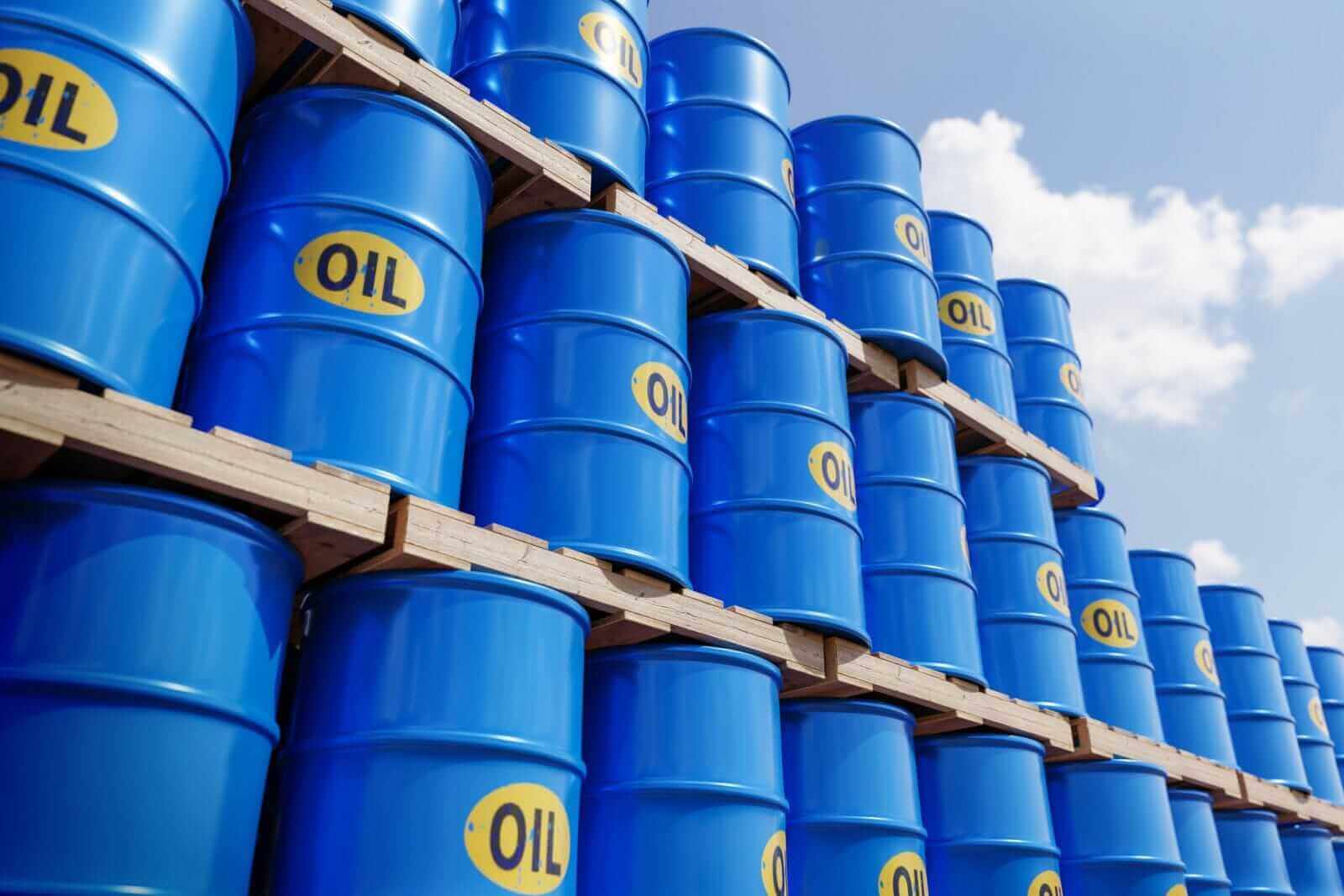
The ghost of 2022 is back to haunt the global economy, and its shadow looms darkest over Southeast Asia. As escalating conflict in the Middle East effectively shutters the Strait of Hormuz—the artery through which nearly 20% of the world’s oil flows—the price of Brent crude has violently surged past $114 a barrel, sending governments from Jakarta to Manila scrambling. This isn’t just a price spike; it’s a full-blown stagflationary shock threatening to derail the region’s fragile post-pandemic recovery, with some analysts now warning that $150 oil is no longer a distant fantasy.
The math is brutal. For every $10 increase in the price of oil, global GDP growth is trimmed by roughly 0.15 percentage points, while inflation gets a 0.4 percentage point boost. With oil jumping more than 25% in a matter of days, the impact is immediate and painful. From the Grab driver in Kuala Lumpur seeing his margins evaporate to the factory worker in Bangkok facing a higher cost of living, the US$100 barrel is a tax on everything. It’s a world of higher transport and food costs, ballooning fuel subsidy bills, and a gut-punch to consumer confidence.
From the Pump to the Plate: The Real-World Impact
The economic shockwave is radiating across the region, hitting each nation with unique force. The core issue is that most of Southeast Asia’s economies are massive net oil importers, leaving them dangerously exposed to global price swings.
- Philippines & Thailand: The Stagflation Crucible. These two nations are perhaps the most vulnerable. With a heavy reliance on imported energy, the pass-through to domestic inflation is rapid. The Thai baht and Philippine peso have weakened against a surging U.S. dollar, compounding the cost of imports. This leaves their central banks in an impossible position: raise rates to fight inflation and risk killing growth, or hold steady and watch purchasing power evaporate. Nomura has explicitly warned of a “stagflationary shock,” a toxic cocktail of stagnant growth and soaring prices that could lead to social and political instability.
- Malaysia & Indonesia: The Subsidy Black Hole. For years, these nations have used massive fuel subsidies to keep a lid on prices at the pump and maintain social harmony. But at over $100 a barrel, that strategy becomes fiscally ruinous. Indonesia’s Finance Minister has vowed to absorb the shock for now, but admits the state budget is under immense pressure. Malaysia, which was already planning to reform its subsidy program, now faces a monumental bill to shield its citizens. These subsidies, while politically popular, divert billions of dollars that could be spent on healthcare, education, and infrastructure.
- Singapore: A Crisis of Connectivity. As a global trade and finance hub with no natural resources, Singapore’s fate is tied to the free flow of goods and capital. While its direct energy consumption as a share of its economy is lower than its neighbors’, the island nation is hit by second-order effects. The effective closure of the Strait of Hormuz has thrown global shipping into chaos, with insurance premiums skyrocketing and vessels stranded. This spells higher costs for nearly everything Singapore imports and exports.
The Tourism Effect: Jet Fuel and Jittery Travelers
The oil shock extends beyond industry and into one of Southeast Asia’s most vital economic engines: tourism. The surge in crude prices directly translates to higher jet fuel costs, a major operating expense for airlines.
This pressure comes at a critical time for the region’s travel recovery. Destinations like Bali, Phuket, and Singapore, which have been banking on a strong 2026 travel season, now face the prospect of higher flight prices, which could deter long-haul visitors. Singapore has already moved to introduce a sustainable aviation fuel (SAF) levy for flights departing from Changi Airport starting this year, a necessary green step that will now be compounded by the oil price shock. The dream of an affordable tropical getaway is suddenly becoming more expensive, threatening to slow the flow of tourist dollars that support millions of jobs.
The Strait of Hormuz: A Geopolitical Powder Keg
The source of this economic earthquake is the geopolitical standoff in the Middle East. The effective closure of the Strait of Hormuz, whether by direct military action or the refusal of insurers to cover vessels, has created a de facto blockade. With around 15-20 million barrels of oil per day suddenly at risk, the market has reacted with predictable panic.
Analysts at Goldman Sachs and the IMF have warned that a sustained disruption could be catastrophic. Goldman’s upside scenario sees oil hitting $100 per barrel and shaving 0.4 percentage points off global growth. More alarmist predictions, including from analysts at Bloomberg, suggest a prolonged closure could send oil hurtling toward $150 or even $200 a barrel, a level that would almost certainly trigger a global recession. The crisis is not just about oil; it’s also a fertilizer shock, as a significant portion of the world’s urea and other key agricultural inputs transit the strait, threatening global food security.
The Road Ahead: $150 Oil and Difficult Choices
Is $150 oil a real possibility? If the Strait of Hormuz remains effectively closed for more than a few weeks, the answer is a terrifying yes. The world simply does not have enough spare production capacity to cover a shortfall of this magnitude.
This leaves Southeast Asian policymakers with a menu of painful options:
- Let prices float: Pass the full cost to consumers and businesses, risking mass public anger and a sharp economic contraction.
- Subsidize: Continue to burn through fiscal reserves to cap prices, mortgaging the future for short-term stability.
- Accelerate the green transition: Use the crisis as a catalyst to double down on renewable energy, electric vehicles, and energy efficiency. This is the long-term solution, but it provides little relief in the short run.
The US$100 barrel is more than a headline; it’s a structural shock that exposes the deep vulnerabilities of our globalized, fossil-fuel-dependent economy. For Southeast Asia, the coming months will be a brutal test of economic resilience, political will, and social cohesion. The shockwaves are already here, and the tsunami may be yet to come.
FAQs(FREQUENTLY ASKED QUESTIONS)
1. How does the Strait of Hormuz disruption affect Southeast Asia?
The Strait of Hormuz is a critical chokepoint for global oil shipments. Its closure disrupts supply, causing prices to surge. Since most Southeast Asian nations are net oil importers, they are forced to pay significantly more for energy, which drives inflation, strains government budgets, and slows economic growth.
2. Which countries in Southeast Asia are most at risk from $100 oil?
The Philippines and Thailand are considered highly vulnerable due to their heavy dependence on imported energy and the potential for a “stagflationary shock” (high inflation and low growth). Malaysia and Indonesia face massive fiscal pressure from their large fuel subsidy programs.
3. Could oil prices really reach $150 a barrel?
Analysts believe that if the disruption in the Strait of Hormuz is prolonged, oil prices could indeed spike to $150 or higher. This is because there is not enough spare oil production capacity globally to make up for the millions of barrels per day that transit the strait.
Discover more from The Economy
Subscribe to get the latest posts sent to your email.


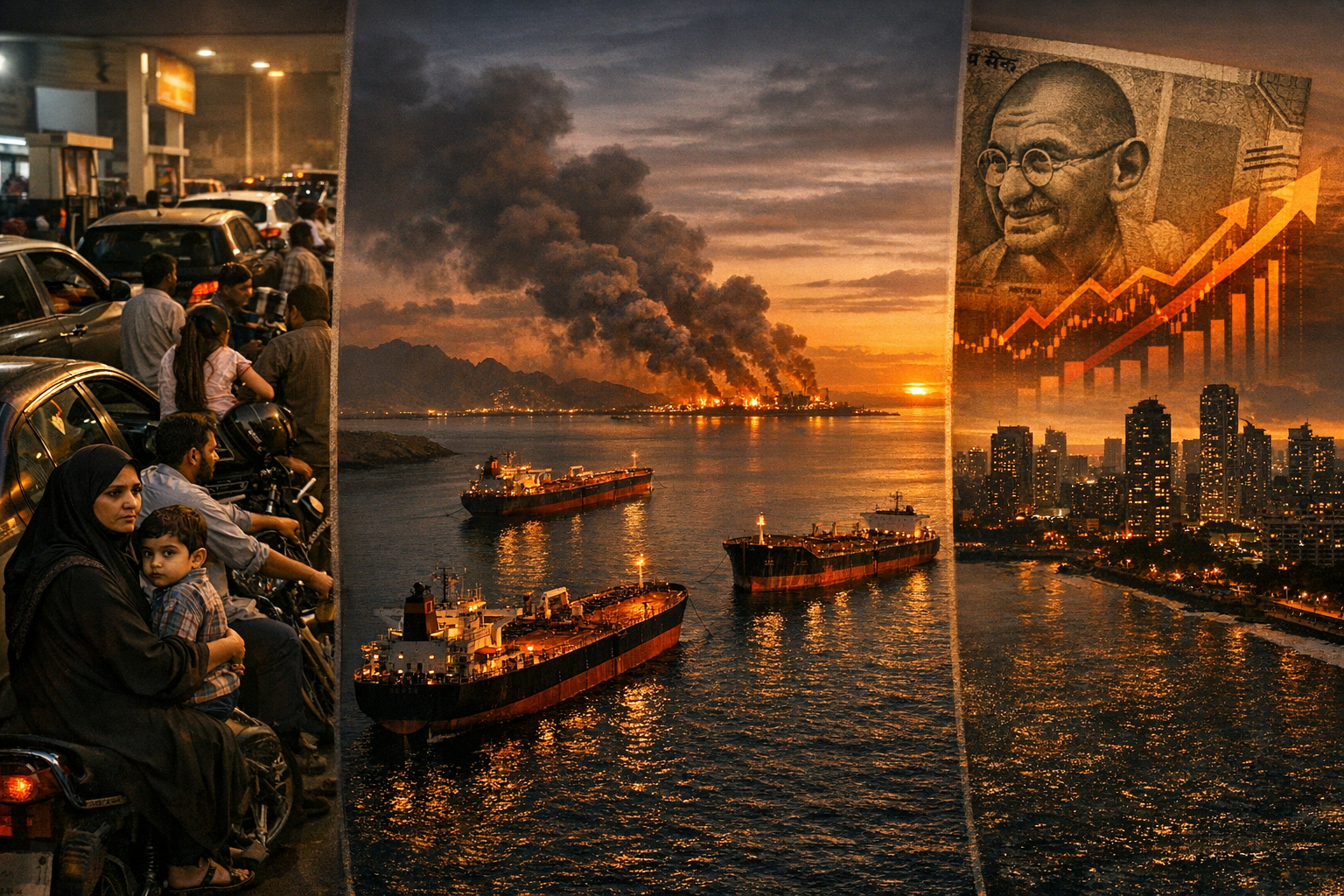
In a cramped flat in Karachi’s Lyari district, Fatima Siddiqui runs the calculations she hoped she would never have to make again. The LPG cylinder that kept her family’s stove burning through winter now costs 40 percent more than it did a fortnight ago. Across the border in Mumbai, autorickshaw driver Rajan Patil stares at a fuel pump showing prices he last saw in 2022. Neither of them has ever heard of Operation Epic Fury. Both of them are paying for it.
Oil prices surged past $100 a barrel on Sunday, March 9 — the first time crude has traded in triple digits since Russia’s invasion of Ukraine — after Brent jumped more than 30 percent, at one point topping $119, as the US and Israeli war on Iran entered its second week. Al Jazeera International benchmark Brent crude futures traded 11.6 percent higher at $103.47 per barrel on Monday morning, while US West Texas Intermediate futures were last seen 12.2 percent higher at $101.97, putting oil on track for one of its biggest single-day jumps on record. CNBC
The trigger is as structural as it is sudden. On February 28, 2026, the United States and Israel initiated coordinated airstrikes on Iran under Operation Epic Fury, targeting military facilities, nuclear sites, and leadership, resulting in the death of Supreme Leader Ali Khamenei. Wikipedia Iran’s retaliation was immediate and surgical: tanker traffic through the Strait of Hormuz dropped to four vessels on Sunday, March 1, compared with an average of 24 per day since January. Euronews For the world’s most critical energy chokepoint — the narrow passage connecting the Persian Gulf to the Arabian Sea — that is the equivalent of cardiac arrest.
For Pakistan and India, it is something closer to a pre-existing condition suddenly, violently exposed.
Why the Strait of Hormuz Is the Aorta of South Asian Energy
The geography of South Asia’s energy dependency is stark. Almost half of India’s crude oil imports and about 60 percent of its natural gas supplies move through the Strait of Hormuz. Seatrade Maritime Qatar and the United Arab Emirates account for 99 percent of Pakistan’s LNG imports and 53 percent of India’s, according to Kpler data. CNBC No other major economy outside the Gulf itself carries that kind of concentrated exposure to a single 21-mile-wide chokepoint.
The majority of the crude oil shipped through the Strait of Hormuz goes to Asia, with China, India, Japan, and South Korea accounting for nearly 70 percent of shipments, according to the US Energy Information Administration. NPR But the strategic buffer that separates China — with its substantial onshore storage — from India and Pakistan is decisive. India’s limited crude oil reserves of about 100 million barrels are sufficient for only 40 to 45 days of consumption, leaving the country particularly vulnerable to supply disruptions through the Strait of Hormuz, the Asian Development Bank warned on Friday. Business Standard Pakistan has no meaningful strategic petroleum reserve at all.
The prognosis from analysts is blunt. BMI (Fitch Solutions) identifies Pakistan and India as the most vulnerable among emerging markets, as energy importers with relatively high exposure to the Strait of Hormuz, while Egypt and Turkey are singled out for secondary exposure due to high energy import bills, fragile external positions, large energy subsidies, and unanchored inflation. Business Recorder
The Supply Shock: Unprecedented, and Worsening
Energy market veterans are reaching for superlatives they rarely deploy. Claudio Galimberti, chief economist at Rystad Energy, compares the effective halt of oil flows through the Strait of Hormuz to blocking the aorta in a circulatory system, adding that “we have not seen anything like this in pretty much the history of the Strait of Hormuz.” NPR
The anatomy of the disruption has several compounding layers. QatarEnergy halted activity at the world’s largest liquefied natural gas export facility after it was targeted in an Iranian drone attack, while tanker traffic through the Strait of Hormuz — which handles around a quarter of global seaborne oil trade and a fifth of LNG supply — has come to a near standstill. Bloomberg Iraq and Kuwait have already begun to shut in production, with analysts warning that the UAE and Saudi Arabia may also be vulnerable if the Strait of Hormuz remains closed for a sustained period. CNBC
Goldman Sachs, which had forecast a second-quarter Brent average of $76 per barrel as recently as Wednesday, now warns of a far darker scenario. The bank estimates that traders demand about $14 more per barrel than before the conflict to compensate for increased risks, roughly corresponding to the effect of a full four-week halt in flows through the Strait of Hormuz with spare pipeline capacity used as a partial offset. If flows are halted for five weeks, prices could reach $100 per barrel — a threshold already breached. Goldman Sachs
Saul Kavonic, a senior energy analyst, captures the systemic danger with particular clarity: cutting off 15 to 20 percent of the world’s oil supply not only slows down every economy globally but also introduces an inflation impulse — and inflation plus slowing growth is stagflation, which constitutes an economic disaster. Business Recorder
Pakistan: Structurally Fragile, Acutely Exposed
Pakistan enters this crisis with no margin. An IMF bailout program, a current account that was only just stabilizing, and energy subsidies already consuming a destabilizing share of the federal budget — the Hormuz shock arrives at the worst possible moment.
Petrol prices in Pakistan rose by Rs55 per litre in March 2026, triggering long queues at filling stations, increased transport costs, and widespread public frustration. Modern Diplomacy The government’s official line — that the increase is an inevitable consequence of global oil volatility — is accurate as far as it goes. What it understates is the structural dimension: Pakistan’s near-total LNG dependence on Qatar and the UAE, combined with the absence of meaningful storage infrastructure, leaves the country exposed not just to price spikes but to physical shortfalls.
Pakistan has limited storage and procurement flexibility, meaning disruption would likely trigger fast power-sector demand destruction rather than aggressive spot bidding, according to Go Katayama, principal insight analyst at Kpler. CNBC In practical terms, that means rolling blackouts in a country where electricity shortfalls are already politically explosive.
On March 4, Pakistan officially requested that Saudi Arabia reroute oil supplies through Yanbu’s Red Sea port, with Riyadh providing assurances and arranging at least one crude shipment to bypass the closed strait. Wikipedia The arrangement provides temporary relief. It cannot substitute for the volume, reliability, or price levels to which Pakistan’s energy system is calibrated.
The Pakistani rupee, already among the most depreciated major currencies of the past three years, faces renewed downward pressure. Every $10 increase in oil prices widens Pakistan’s current account deficit by an estimated 0.4 to 0.6 percent of GDP — an economy that cannot absorb that hit without either rationing foreign exchange or accelerating monetary loosening that further stokes inflation already running above 20 percent in food categories.
India: Scale Amplifies Vulnerability
India’s exposure is structural rather than acute — but at Indian scale, structural vulnerability produces acute consequences.
With nearly 90 percent of India’s crude oil requirement met through imports, any disruption in global energy supply — particularly through the Strait of Hormuz — poses a direct risk to macroeconomic stability, according to SBI Research. Business Today Moody’s warned that costly energy imports would weaken the rupee, raise inflation, worsen the current account balance, and complicate monetary policy as well as fiscal management if they lead to expanded subsidies to offset the economic shock. Business Standard
The fiscal arithmetic is unforgiving. India’s Union Budget for 2026–27 was constructed on oil averaging $68 to $70 per barrel. At $103, every rupee of subsidy relief the government extends to consumers — and political pressure to do so is intense, with state elections pending — translates directly into fiscal slippage. Every rupee of subsidy withheld translates into retail fuel price increases of ₹5 to ₹15 per litre on current trajectory estimates.
India has already ordered refiners to maximise production of cooking fuel as imports from the Middle East decline, while gas-intensive industries, particularly fertiliser manufacturers, may face pressure if LNG supplies remain tight. Business Standard The fertiliser link is particularly consequential: disrupted LNG supply constrains domestic fertiliser production just as Rabi crop planting cycles approach, threatening both agricultural output and rural inflation.
The Indian rupee’s recent relative stability — it had appreciated marginally against the dollar in early 2026 — faces a sharp test. India’s oil imports are priced in dollars, so a weaker rupee means the same barrel of oil costs more in local currency, driving inflation through the transport, manufacturing, and agriculture chains simultaneously. Wordzz
The Comparison Table: Pakistan vs India vs GCC
| Indicator | Pakistan | India | GCC Average |
|---|---|---|---|
| Oil import dependency | ~85% imported | ~90% imported | Net exporter |
| LNG sourced from Gulf | ~99% | ~53% | Exporter |
| Strategic petroleum reserve | Effectively none | 40–45 days | Substantial |
| Current account position | Fragile surplus | ~1.5% deficit | Surplus |
| Fiscal space for subsidies | Very limited | Constrained | Ample |
| Currency resilience | Low | Moderate | High |
| Exposure rating (BMI/Fitch) | Most vulnerable | Most vulnerable | Adverse but manageable |
Tourism, Logistics, and the Invisible Multiplier
The economic damage radiating from the Strait of Hormuz crisis extends well beyond oil prices. The waterway is not merely an energy corridor — it is a central artery of the global logistics system, and its disruption is reshaping aviation, hospitality, and freight networks with consequences that will outlast any ceasefire.
Cruise ships reduced activity in the Persian Gulf and stopped using the strait, stranding 15,000 passengers on six major cruise ships. Wikipedia The Gulf aviation hub model — built on Dubai and Abu Dhabi serving as transfer points between Asia and Europe — is under immediate pressure as war-risk insurance surcharges inflate operating costs and itinerary rerouting adds hours and fuel burns to long-haul routes.
For Pakistan and India, the tourism dimension cuts both ways. The Gulf diaspora — some 7 million Pakistanis and 8 million Indians working in the Gulf Cooperation Council states — represents a critical source of remittances. Any sustained economic disruption to Gulf economies, whether through reduced oil revenues or conflict-related instability, threatens remittance flows that collectively account for 7 to 8 percent of Pakistan’s GDP and a meaningful share of India’s foreign exchange receipts. BMI’s baseline scenario is that the conflict in Iran will be large but short-lived, though there is a clear risk of a prolonged war. Among emerging markets, the economic impact will be most pronounced in the GCC, reflecting the shock’s adverse effects on trade, logistics, tourism, and investment. Business Recorder The knock-on to South Asian remittance economies would be severe.
The Forward Scenarios: Baseline and Downside
Baseline (BMI/Goldman Sachs): The conflict remains intense but contained, with the Strait of Hormuz beginning to partially reopen within three to four weeks as US naval escorts provide a corridor. Goldman Sachs estimates that a four-week full halt in Hormuz flows would push Brent to around $85 to $90 per barrel, with prices moderating as Strategic Petroleum Reserve releases from the G7 — which finance ministers discussed on Monday — provide partial offset. Goldman Sachs Under this scenario, Pakistan faces six to eight months of elevated inflation and currency pressure but avoids balance-of-payments crisis. India absorbs a current account widening of approximately 0.8 to 1.2 percent of GDP.
Downside (Prolonged Disruption): If the disruption in the Strait of Hormuz persists for another one to two weeks beyond current levels, prices could move toward $130 to $150 per barrel, according to senior market analysts. Business Recorder Under this scenario, Pakistan would almost certainly require an emergency IMF facility enhancement; India would face stagflationary pressure combining slowing growth with food and fuel inflation above 8 percent. The rupee and Pakistani rupee would both face disorderly adjustment risk.
The tail risk is darker still. If infrastructure is seriously damaged in oil-rich countries along the Gulf, it could take much longer for production to normalize even after missile strikes stop, and a full closure of the Strait of Hormuz would leave OPEC barrels in the region as effectively stranded assets in an extended war scenario. NPR
Policy Responses: What Islamabad and New Delhi Are Doing
Pakistan’s immediate moves:
- Emergency request to Saudi Arabia to reroute crude shipments via the Red Sea corridor through Yanbu port
- Engagement with the State Bank of Pakistan to manage rupee liquidity and cap speculative dollar demand
- Preliminary discussions with the IMF on contingency facility options if the crisis extends beyond six weeks
India’s immediate moves:
- Directive to state refiners to maximize domestic fuel production capacity
- Reopening of discussions on Russian crude procurement from floating storage in Asian waters
- Review of strategic petroleum reserve release protocols in coordination with the IEA
Both governments face the same fundamental dilemma: subsidise to protect consumers and blow up fiscal balances, or pass through prices and risk political instability. There is no clean answer when the originating shock is geopolitical and beyond domestic control.
Investor and Traveller Takeaways
For investors with exposure to South Asian equities and credit: the Pakistani rupee and Indian rupee face asymmetric downside risk in a prolonged disruption scenario. Pakistani sovereign spreads, already elevated, will widen further on any indication of IMF program slippage. Indian equities’ energy-sector composition and the fiscal arithmetic of subsidy policy make consumer staples and financial sector names most vulnerable to earnings revisions.
For travellers and the travel industry: Gulf aviation hubs face operational disruption and insurance cost inflation that will flow through to ticket prices across Asia-Europe routes within days. Bangladesh is experiencing severe strain, with the government bringing forward Eid holidays, ordering universities to close temporarily to reduce electricity demand, and imposing limits on fuel sales amid panic buying. Business Standard Regional tourism recovery, which had only just returned to pre-pandemic levels across South and Southeast Asia, faces a significant setback.
The Strait of Hormuz has been threatened before. It has never actually closed — until now. What the markets are pricing, and what Fatima Siddiqui and Rajan Patil are already living, is the realisation that 50 years of energy-security wargaming has finally become a news headline. The models suggested Pakistan and India would be most vulnerable. The models were right.
Discover more from The Economy
Subscribe to get the latest posts sent to your email.
Analysis
Oil Prices Surge as Iran War Escalates: Brent Crude Hits $108, on Track for Record Single-Day Jump
Supply cuts, Hormuz shipping fears, and a widening Middle East conflict are driving crude toward territory not seen since 2022 — and the economic aftershocks are only beginning.
Brent crude futures climbed $15.51, or 16.7%, to $108.20 a barrel on Monday, while US West Texas Intermediate rose $14.23, or 15.7%, to $105.13 — levels unseen since mid-2022, and prices that, if sustained through the close, would mark the largest single-day percentage gain in the modern history of crude benchmarks. The catalyst is neither OPEC politics nor a hurricane in the Gulf of Mexico. It is war.
The expanding US-Israeli military confrontation with Iran — now entering what analysts describe as its most destabilising phase — has injected a risk premium into global energy markets that paper traders, physical buyers, and sovereign wealth funds alike are scrambling to price. Oil pared some of its earlier highs by midday in London, a modest retreat that disciplined traders read not as relief but as the natural breath of a market absorbing something genuinely unprecedented.
Why This Surge Is Different From Every Previous Middle East Flare-Up
Students of the oil market are accustomed to the ritual: missiles fly, crude spikes, diplomats talk, prices retreat. The pattern held through the 2019 Abqaiq attack on Saudi Aramco’s infrastructure, through the 2020 killing of Qasem Soleimani, and through a dozen lesser crises over the past decade.
This time, three structural factors make the calculus profoundly different.
First, major producers have already cut supply. OPEC+ entered this crisis with output voluntarily restrained, meaning there is limited spare capacity to cushion a physical disruption — a point underscored in the IEA’s most recent Oil Market Report, which flagged historically thin global buffers.
Second, the conflict’s geography touches the Strait of Hormuz directly. Approximately 21 million barrels of crude pass through that 33-kilometre chokepoint every day — roughly one-fifth of global consumption. Iranian naval doctrine has long included the option of mining or blockading the strait in extremis, and analysts at Argus Media have warned for months that even a partial disruption lasting two to three weeks could drain OECD commercial inventories to critically low levels.
Third, shipping insurance markets are already responding. War-risk premiums on tankers transiting the Persian Gulf have surged to levels not seen since the 1980s Tanker War, according to underwriters at Lloyd’s. Vessel operators are rerouting around the Gulf of Oman where possible — adding days and cost to journeys that Asian refiners have long taken for granted.
The Asian Importer Problem: Most Exposed, Least Hedged
No region of the world is more structurally vulnerable to a sustained Hormuz disruption than Asia. Japan, South Korea, India, and China collectively import the overwhelming majority of their crude from the Gulf — a dependency built over decades of cost-optimised supply chains that assumed geopolitical stability as a given.
Japanese refiners, operating under long-term contract structures that offer some price protection, are nonetheless exposed to spot market tightness when tanker availability collapses. South Korean petrochemical complexes, among the world’s most sophisticated, are built around a steady diet of Arab Light and Kuwait Export Crude that has no obvious short-term substitute. India, which has in recent years diversified toward discounted Russian Urals, still draws significant volumes from the Gulf and faces its own logistical constraints.
China presents the most complex picture. Beijing holds the world’s largest strategic petroleum reserve, which independent analysts at Kpler estimate could cover roughly 90 days of net import needs at current drawdown rates. That buffer buys time — but not indefinitely — and Chinese refiners scrambling for replacement barrels from West Africa or Latin America would face significant freight cost increases that would erode the margin advantage they currently enjoy.
The macro effect: inflation imported from the energy complex, at precisely the moment Asian central banks believed they had wrestled domestic price pressures under control.
The Road to $120: Scenarios and Probabilities
Commodity desks from Goldman Sachs to BNP Paribas have in recent weeks published scenario analyses suggesting Brent could reach $120 to $130 per barrel if the Hormuz strait is even partially obstructed. A full closure — which Iran has threatened but never executed — would, in most models, push prices toward $150 or beyond, a level that historical precedent suggests would trigger demand destruction across the global economy.
Monday’s rally, though dramatic, still prices in only a partial risk premium. Markets are not yet trading a closure; they are trading the credible possibility of one. That distinction matters enormously.
Key variables the market is watching:
- Duration of active hostilities: A contained exchange followed by ceasefire negotiations would likely see Brent retrace toward $90. A multi-week campaign, particularly one involving Iranian strikes on regional infrastructure, changes the calculus entirely.
- US strategic petroleum reserve deployment: The Biden and Trump administrations have both used SPR releases as a political tool during price spikes. A coordinated IEA release could provide short-term relief — though the IEA’s own guidance suggests member states’ reserve levels have not fully recovered from previous drawdowns.
- US shale response time: American tight oil producers can accelerate output, but the supply response typically takes six to nine months to materialise at scale — cold comfort to a market in acute distress today.
At the Pump: The Human Arithmetic of $108 Oil
The gap between a barrel of Brent crude and the price a commuter pays at a filling station in Manchester, Mumbai, or Minneapolis is not fixed — it is shaped by refinery margins, taxes, retail competition, and currency effects. But at $108 per barrel, the direction of travel for retail fuel prices is unambiguous.
In the United States, where the American Automobile Association tracks retail gasoline in real time, analysts expect the national average to breach $4.00 per gallon within days if futures hold at current levels — a threshold that past polling consistently identifies as the point at which consumers begin visibly altering behaviour: cancelling discretionary road trips, accelerating electric vehicle enquiries, and cutting spending elsewhere.
In Europe, where fuel is already heavily taxed and prices are denominated in euros, the inflationary pass-through is somewhat muted at the retail level but amplified through industrial energy costs. Airlines, petrochemical producers, and logistics companies face immediate margin compression.
For airlines specifically, jet fuel typically represents 20 to 25 percent of operating costs in normal conditions. At current crude levels — and jet fuel commands a premium over crude — that ratio climbs sharply. IATA, the industry’s global body, had projected a return to comfortable profitability for the sector in 2026; those projections are being quietly revised.
Central Banks, Inflation, and the Policy Bind
For monetary policymakers, an oil shock of this magnitude at this juncture is the scenario they hoped to avoid. The Federal Reserve, the European Central Bank, and the Bank of England have spent the better part of three years battling inflation driven in part by the 2021–2022 commodity super-cycle. Having largely succeeded, they are now staring at a potential re-ignition from the supply side — and supply-side inflation is, by definition, something interest rates cannot efficiently address.
The bind is acute: raise rates to signal inflation-fighting resolve, and risk choking off a recovery still tender in several major economies. Hold rates, and risk un-anchoring inflation expectations that took painful years to re-establish.
ECB board members speaking this month had already flagged geopolitical energy risk as the primary tail scenario in their projections. That tail has, as of Monday morning, arrived.
What Comes Next: A Forward Look for Households, Airlines, and Markets
The honest answer, which professional forecasters are reluctant to offer but which the evidence demands, is that uncertainty is now the dominant variable. The range of plausible outcomes — from a rapid ceasefire that allows prices to retrace to $85, to a prolonged conflict that sustains crude above $110 for months — is wider than at any point since the COVID-19 demand collapse of 2020.
What can be said with confidence:
- Households in fuel-import-dependent economies face a material squeeze on disposable income beginning this quarter, with the lowest-income deciles hardest hit as a share of spending.
- Airlines will begin passing costs through within weeks, with surcharges on long-haul routes appearing first, followed by broader fare increases if oil remains elevated.
- Central banks will be slower to cut rates than markets had priced, with rate-cut expectations for mid-2026 across the G7 now requiring significant reassessment.
- Asian sovereign buyers will accelerate their already-underway diversification strategies — both toward non-Gulf suppliers and, at a structural level, toward domestic renewable capacity.
The oil market’s message on Monday was neither hysterical nor irrational. It was the sound of the world repricing risk it had chosen, for too long, to ignore.
Discover more from The Economy
Subscribe to get the latest posts sent to your email.
Brent crude surges to a four-year high of $119.50 before retreating. G7 finance ministers convene an emergency call. The Strait of Hormuz, the world’s most critical oil artery, is effectively closed. For the global economy, the clock is ticking.
In the clearest sign yet that the world’s wealthiest democracies are alarmed by the speed and severity of the current oil shock, G7 finance ministers held an emergency meeting Monday to discuss a possible joint release of petroleum from strategic reserves coordinated by the International Energy Agency, as oil prices surged following the conflict in the Gulf. Investing.com
The call — scheduled for around 1:30 p.m. CET and initiated by France, which currently holds the G7 presidency Bloomberg — represents the most consequential coordinated energy-market intervention discussed by Western governments since Russia’s invasion of Ukraine in 2022. Three G7 countries, including the United States, have so far expressed support for the idea, according to the Financial Times, which first reported the talks. U.S. News & World Report
The urgency is unmistakable. Oil prices surged to their highest since 2022, crossing $119 a barrel on Monday before pulling back toward $100, paring a nearly 30 percent spike as the International Energy Agency convened an extraordinary meeting of member governments. Energy Connects
The Anatomy of a Price Shock: What Happened and Why
To understand why governments are reaching for their deepest emergency tools, it helps to trace what has unfolded since the night of February 28.
West Texas Intermediate crude futures surpassed $100 per barrel for the first time since mid-2022 — when Russia’s invasion of Ukraine jolted global energy markets — with WTI rising as high as $119 a barrel overnight. CNBC The trigger: a sustained, widening conflict involving the United States, Israel, and Iran that has choked one of the most strategically vital waterways on Earth.
The Iran war has disrupted 20% of global oil supply for nine days and counting, more than double the previous record set during the Suez Crisis of 1956–57, which disrupted just under 10%, according to Rapidan Energy Group. Axios
The chokepoint is the Strait of Hormuz. Ships carrying roughly 20 million barrels of oil a day have been left stranded in the Persian Gulf, unable to safely pass through the narrow mouth of the Gulf bordered on its north side by Iran. PBS The numbers downstream are staggering: output in Iraq, the second-biggest OPEC producer, has effectively collapsed, with production from its three main southern oilfields falling 70% to 1.3 million barrels per day. CNBC Kuwait has begun precautionary production cuts. The UAE is under pressure.
Qatar’s energy minister, Saad al-Kaabi, told the Financial Times that Gulf exporters would halt production in days if tankers cannot pass the Strait of Hormuz — a scenario he warned could spike oil prices to $150 a barrel and “bring down the economies of the world.” CNBC
What the G7 Is Actually Proposing
The mechanics of any coordinated release matter enormously. Some US officials believe a joint release in the range of 300 million to 400 million barrels would be appropriate. Investing.com
According to the FT, G7 governments are considering a coordinated release of 300 to 400 million barrels from their stockpiles. The IEA’s 32 member governments hold strategic reserves as part of a collective emergency system designed precisely for oil price crises like this one. Energy Connects
Current G7 oil reserves sit at approximately 1.2 billion barrels, meaning the proposed release would represent a substantial share of their collective holdings. KAOHOON INTERNATIONAL For context, the United States Strategic Petroleum Reserve — the world’s largest — has an authorized storage capacity of 714 million barrels, stored in huge underground salt caverns along the Gulf of America coastline. Energy Connects
French President Emmanuel Macron confirmed the deliberation publicly. Oil prices moderated after Macron confirmed that “the use of strategic reserves is an envisaged option,” though Brent remained above $100 per barrel. Fortune
The precedent for such action exists. In 2022, the IEA coordinated the largest-ever release of strategic reserves — some 182 million barrels — in response to the Russia-Ukraine war. The G7 reserve release, if it materializes, would be the most significant coordinated intervention in oil markets since that episode. CoinDesk
The Macroeconomic Stakes: Inflation, Growth, and the Central Bank Dilemma
The speed and scale of this oil shock puts central banks in an extraordinarily difficult position. After years of effort to bring post-pandemic inflation back toward 2% targets, a persistent energy price surge threatens to reignite price pressures just as the disinflation battle appeared won.
IMF Managing Director Kristalina Georgieva warned that “every 10% increase in oil prices — if persistent through most of this year — results in a 40 basis point increase in global headline inflation and a 0.1 to 0.2% fall in global output.” IOL With oil prices up more than 30% from pre-war levels, the arithmetic is sobering: the current shock, if sustained, could add more than a full percentage point to global headline inflation while meaningfully slowing growth.
The IMF currently forecasts world growth of 3.3% in 2026 and 3.2% in 2027, but Georgieva warned that this resilience is being tested by the latest conflict as shipping through the Strait of Hormuz has dropped by about 90%. IOL
The IMF is already in discussions with the most vulnerable energy-importing economies to potentially assist them financially if energy prices and market uncertainty spike further. OilPrice.com Emerging markets with high energy import dependence — particularly across South and Southeast Asia — face currency pressures, widening current-account deficits, and fiscal strain simultaneously.
For the United States, the political arithmetic is equally uncomfortable. Average gasoline prices reached $3.45 a gallon Sunday, up 16% from the week prior, according to AAA. A prolonged spike in oil and gas prices could exacerbate America’s struggles with affordability, putting Trump and Republicans in a precarious political position ahead of midterm elections. CNN
Key Data Snapshot: Oil Market Crisis at a Glance (March 9, 2026)
| Indicator | Value | Change |
|---|---|---|
| Brent Crude (intraday high) | $119.50/bbl | +30% from pre-war level |
| Brent Crude (current) | ~$104/bbl | +12% on day |
| WTI Crude (current) | ~$102/bbl | +12% on day |
| Iraq oil output | 1.3M bbl/day | -70% |
| Strait of Hormuz traffic | ~10% of normal | -90% |
| US gasoline (avg) | $3.45/gallon | +16% week-on-week |
| Jet fuel (US) | $3.95/gallon | +56% vs. pre-war |
| G7 proposed SPR release | 300–400M barrels | — |
| Total G7 SPR holdings | ~1.2B barrels | — |
Sources: Reuters, CNBC, Bloomberg, IEA
Asia on the Frontline of the Energy Crisis
No region outside the Gulf itself is more exposed to this shock than Asia. Many of Asia’s largest energy consumers — including China, Japan, South Korea, and India — depend heavily on crude oil and LNG shipments from the Middle East transported through the Strait of Hormuz. Economy Post
Asian equity markets slumped as energy prices spiked, with Japan’s Nikkei down more than 6% and South Korea’s KOSPI falling similarly. The National These are not merely stock-market gyrations. For Japan — which imports nearly all of its oil — a sustained $30-per-barrel increase in crude translates directly into higher manufacturing costs, a weaker yen, and imported inflation on everything from food to transport.
China, which holds the world’s second-largest strategic petroleum reserve at approximately 400 million barrels, faces competing pressures: as a major energy importer, it absorbs higher costs; as a geopolitical actor, it observes Western reserve deployments closely and may choose strategic inaction.
The SPR Calculus: Can 400 Million Barrels Turn the Tide?
Strategic petroleum reserve releases are a blunt instrument. They buy time — they do not resolve underlying supply disruptions. The 2022 IEA coordinated release helped cool prices temporarily, but Brent ultimately remained elevated for months as the Ukraine war dragged on.
The current scenario is both more acute and more uncertain. Unlike 2022, where Russian export flows — though reduced — continued, the Strait of Hormuz closure represents a near-total blockade of the world’s most concentrated oil export corridor. Whether 300 to 400 million barrels of reserve releases can substitute for the 9 to 14 million barrels per day that have effectively gone offline is deeply uncertain.
The more powerful signal may be psychological. A coordinated G7 release — particularly one that includes Japan and Europe alongside the United States — communicates resolve, limits speculative overshoot, and buys diplomatic time for ceasefire efforts. That signal alone moved markets Monday: Brent fell from $119.50 to around $104 on the news of the talks, a $15 drop in hours.
How This Oil Shock Hits Travelers and the Aviation Industry
Airfares, Cancellations, and the $4,000 Flight
For ordinary travelers, the consequences of this oil shock are already landing in their inboxes — and their wallets.
Jet fuel, which accounts for about one-fifth of airlines’ operating expenses, cost $3.95 a gallon Thursday — up 56% from $2.50 in late February, one day before the joint US-Israel attack on Iran. CBS News That cost trajectory is not sustainable for carriers already operating on thin margins.
More than 37,000 flights to and from the Middle East have been cancelled since the conflict began on February 28. A Seoul-to-London flight on Korean Air jumped from $564 to $4,359 in just one week, according to Google Flights data. OilPrice.com
Diesel prices doubled in Europe, and jet fuel prices rose by close to 200% in Asia, according to Claudio Galimberti, chief economist at Rystad Energy. PBS Airlines in the region are rerouting through longer corridors — around the Arabian Peninsula rather than over it — burning additional fuel on already strained operations.
Airline stocks tumbled across global markets Monday. In Asia, Korean Air fell 8.6%, Air New Zealand dropped 7.8%, and Cathay Pacific lost 5%, while European carriers including Air France-KLM, IAG, and Lufthansa slid between 4% and 6%. OilPrice.com
Tourism, Hospitality, and the Consumer Spending Squeeze
The travel industry’s pain extends well beyond the airlines. Hotels, cruise lines, and tour operators serving the Gulf have seen mass cancellations. Gulf-based carriers — Emirates, Qatar Airways, and Etihad — which normally handle roughly a third of Europe-to-Asia passenger traffic — face operational paralysis as long as regional airspace remains closed.
More broadly, higher fuel costs ripple through to every energy-intensive economic sector. Shipping surcharges lift the price of imported goods. Petrochemical feedstocks — the building blocks of plastics, packaging, and fertilizers — track crude oil prices. For consumers already strained by years of post-pandemic inflation, the cumulative effect threatens to suppress discretionary spending on travel, dining, and durable goods precisely as central banks were beginning to ease.
What Comes Next: Three Scenarios
Scenario 1 — Short conflict, rapid reopening. If the Strait of Hormuz reopens within two to three weeks and Gulf producers resume normal output, the reserve release buys critical breathing room. Oil retreats toward $80 to $90 per barrel by late March. The inflation impact is transitory; central banks hold steady.
Scenario 2 — Prolonged closure, sustained elevated prices. If the conflict drags into April or May, the structural supply deficit deepens. Even a full release of 400 million barrels covers roughly 40 to 45 days of the disrupted supply. Oil could test $130 to $150. Stagflation risk rises materially across import-dependent economies.
Scenario 3 — Escalation to Gulf infrastructure. The most dangerous scenario remains an Iranian strike on Saudi Arabia’s East-West Pipeline or Aramco processing facilities. That scenario — with 9 to 14 million additional barrels per day at risk — would overwhelm any SPR response and potentially take Brent past $150 or higher.
What It Means for You
For households, the most immediate consequence of this oil shock is visible at the pump and, soon, at check-in. Fuel surcharges on international flights are already rising. If current dynamics persist through the spring, round-trip transatlantic fares could climb 20% to 30% above pre-war levels, and long-haul Asia-Europe routes will be the hardest hit. Travelers with existing bookings should review their itineraries, check fuel surcharge provisions in their ticket contracts, and consider travel insurance that covers fuel-related disruptions — a category most standard policies exclude.
For investors and businesses, the more consequential question is duration. Oil shocks that resolve within a quarter tend to leave only modest marks on corporate earnings and macroeconomic trajectories. Shocks that persist for two or more quarters — as in 1973 and 2022 — fundamentally reset inflation expectations, force central bank tightening, and compress equity valuations across energy-intensive sectors. The SPR announcement has bought time. What policymakers — and military planners — do with that time will determine which scenario unfolds.
For policymakers themselves, Monday’s G7 emergency call is a reminder that energy security has never truly left the top of the agenda. The world has spent the past four years diversifying away from fossil fuel dependence, investing in renewables, and reshoring critical supply chains. Yet a single chokepoint — 21 miles wide at its narrowest — retains the power to send the global economy into crisis within days. The most durable policy lesson of the Iran war crisis may ultimately be the same one written by every energy shock since 1973: strategic reserves stabilize markets, but they do not substitute for structural resilience.
FAQ: G7 Emergency Oil Reserves and the Middle East Crisis
What are strategic petroleum reserves (SPRs)? Strategic petroleum reserves are sovereign stockpiles of crude oil held by governments as an emergency buffer against supply disruptions. The United States holds the world’s largest SPR — with authorized capacity of 714 million barrels stored in underground salt caverns along the Gulf Coast.
Why are G7 countries considering a joint oil reserve release? The Iran war, which began February 28, 2026, has effectively closed the Strait of Hormuz to tanker traffic, cutting off roughly 20% of global seaborne oil supply. Brent crude surged more than 30% to nearly $120 a barrel before G7 talks prompted a partial retreat. A coordinated release is intended to stabilize markets and limit inflationary damage to the global economy.
How much oil is the G7 considering releasing? Reports suggest a coordinated release of 300 to 400 million barrels, coordinated through the International Energy Agency. Total G7 reserves stand at approximately 1.2 billion barrels, so the proposed release would be the largest in history.
How will the oil price surge affect airline tickets? Jet fuel has already risen 56% in the United States and nearly 200% in Asia since the conflict began. United Airlines CEO Scott Kirby warned that higher fuel costs will have a “meaningful” impact on ticket prices “probably starting quick.” Travelers should expect surcharges on international routes, particularly trans-Pacific and Europe-Asia itineraries.
What is the IMF saying about the impact on the global economy? IMF Managing Director Kristalina Georgieva stated that every 10% increase in oil prices sustained for a year adds 40 basis points to global inflation and reduces global output by 0.1% to 0.2%. With oil prices currently up more than 30%, the risk to the disinflation progress made in 2024 and 2025 is significant.
Discover more from The Economy
Subscribe to get the latest posts sent to your email.
-

 Markets & Finance2 months ago
Top 15 Stocks for Investment in 2026 in PSX: Your Complete Guide to Pakistan’s Best Investment Opportunities
-

 Analysis1 month ago
Brazil’s Rare Earth Race: US, EU, and China Compete for Critical Minerals as Tensions Rise
-

 Banks2 months ago
Best Investments in Pakistan 2026: Top 10 Low-Price Shares and Long-Term Picks for the PSX
-

 Investment2 months ago
Top 10 Mutual Fund Managers in Pakistan for Investment in 2026: A Comprehensive Guide for Optimal Returns
-

 Asia2 months ago
China’s 50% Domestic Equipment Rule: The Semiconductor Mandate Reshaping Global Tech
-

 Global Economy2 months ago
Pakistan’s Export Goldmine: 10 Game-Changing Markets Where Pakistani Businesses Are Winning Big in 2025
-

 Global Economy2 months ago
What the U.S. Attack on Venezuela Could Mean for Oil and Canadian Crude Exports: The Economic Impact
-

 Global Economy2 months ago
15 Most Lucrative Sectors for Investment in Pakistan: A 2025 Data-Driven Analysis