
Analysis
The Soybean Paradox: China’s Pragmatic Decoupling from Global Food Markets

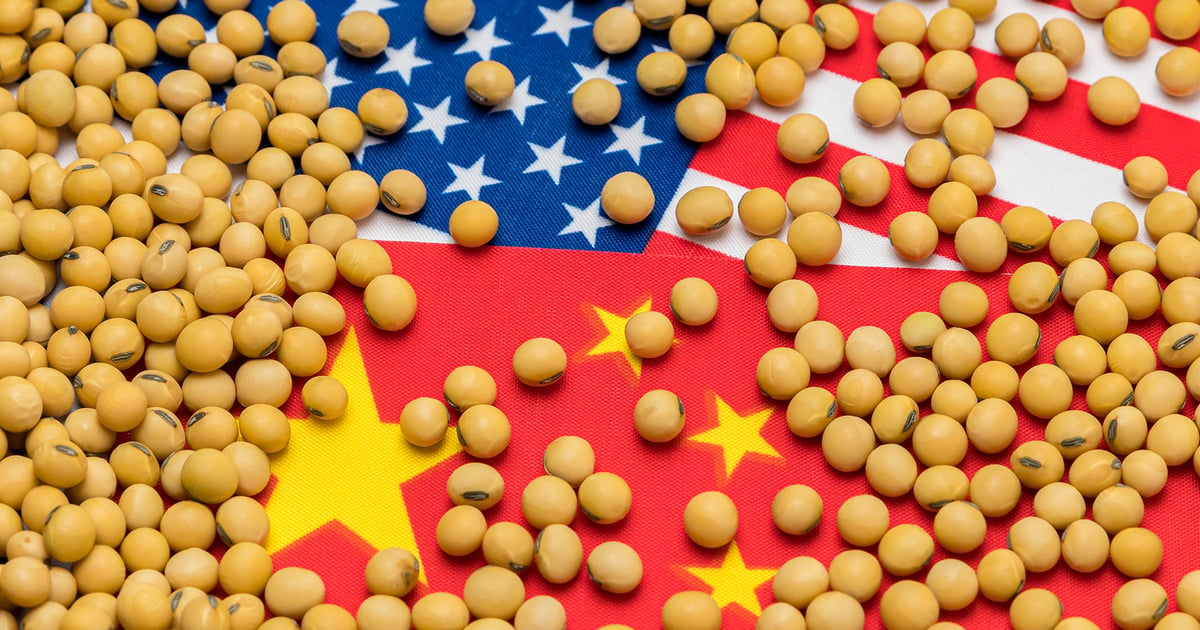
How Beijing is quietly rewiring the architecture of global agriculture — succeeding at the edges while remaining hostage to a single, stubborn bean.
There is a particular irony buried inside China’s most consequential agricultural statistic of 2024. The country’s total grain imports fell 2.3% that year to 157.53 million tonnes — the most deliberate retreat from global markets in nearly a decade — yet in that same calendar year, Chinese soybean imports hit a record 105.03 million tonnes, a 6.5% year-on-year increase, accounting for 66% of total grain imports by volume. The strategists in Zhongnanhai are simultaneously winning and losing the food security game they’ve been playing for thirty years. Grasping both truths at once is essential to understanding one of the defining economic relationships of the coming decade. Modern DiplomacyModern Diplomacy
Call it the Soybean Paradox: China is demonstrably, successfully reducing its dependence on global food markets for rice, wheat, and corn while deepening a structural addiction to imported oilseeds that no domestic policy, however muscular, has yet been able to cure. This is not a story of decoupling. It is a story of strategic de-risking — partial, pragmatic, and geopolitically loaded — with reverberations that will reach farmers in Iowa, traders in Santos, and smallholders in the Sahel for decades to come.
From Humiliation to Harvest: The Long Arc of Chinese Food Policy
Understanding where China stands today requires a brief detour through the memory that animates its every agricultural instinct. The great famine of 1959–1961 — which historians believe claimed between 15 and 55 million lives — left an indelible mark on the Communist Party’s institutional psychology. Food security is not, for Beijing, a technocratic concern to be managed through import optimization and comparative advantage logic, as Western economists might counsel. It is existential. It is sovereignty.
This explains why, since Xi Jinping consolidated power in 2013, the language surrounding food has hardened from policy to theology. “China’s rice bowl must always be firmly held in its own hands,” Xi has declared repeatedly — a phrase whose political weight dwarfs its agricultural specificity. Each year since 2004, the central government’s most symbolic annual directive — the so-called “No. 1 Document” — has been devoted to rural and agricultural priorities, signaling to provincial governors, state enterprises, and private farmers alike that food production is not a sector to be disrupted by market rationality alone.
The 2025 No. 1 Document doubled down. It emphasized agricultural technology as central to the food security strategy, directing the central government to accelerate research and application of advanced domestic agricultural machinery and smart farming systems, including AI, 5G, big data, and low-altitude systems. Then, in April 2025, Beijing unveiled its most ambitious blueprint yet: the “Plan for Accelerating the Construction of an Agricultural Powerhouse (2024–2035),” which sets foundational goals for securing China’s food production and supply, including strengthening production capacity, conserving arable land, diversifying food sources domestically and abroad, and advancing agricultural technology and machinery. The ten-year horizon is telling. This is not crisis management. It is civilizational architecture. Asia TimesChinaPower Project
What China Has Actually Achieved: The Staples Miracle
Before cataloguing vulnerabilities — and they are real and numerous — the record of achievement deserves honest acknowledgment.
In 2024, China’s grain output exceeded 700 million tonnes for the first time, with per capita grain possession reaching 500 kilograms — above the internationally recognized food security line of 400 kilograms per capita. Absorb that figure in its full historical context: in 1978, China’s per-capita grain production barely crossed 300 kilograms. The country has, with 8% of the world’s arable land, sustained the dietary needs of nearly 18% of the global population across four decades of rapid urbanization, industrialization, and dietary upgrading. This is an agricultural accomplishment without modern precedent. English.gov.cn
The recent trajectory of staple grain imports tells the de-risking story clearly. In 2024, wheat imports fell 8% to 11.18 million tonnes, rice imports dropped a striking 37% to 1.625 million tonnes, and corn imports decreased by 49% to 13.76 million tonnes. These are not modest adjustments at the margin — they represent a deliberate and largely successful policy of reasserting domestic sufficiency in the grains that matter most to political stability and caloric security. For rice and wheat — the twin pillars of the Chinese dietary identity — self-sufficiency rates have remained above 95% in recent years, with official data showing rice, maize, and wheat self-sufficiency above 98% as recently as 2019. Modern DiplomacyNature
The methods underpinning this success are instructive. China has pursued what academics call a “land red line” policy with near-religious discipline, enforcing a rigid farmland protection floor of 1.8 billion mu (120 million hectares) to prevent agricultural land from being converted to industrial or residential use. It has invested massively in high-standard farmland construction — leveling, draining, and irrigating lower-quality plots to boost per-hectare yields. And it has quietly reversed decades of official hostility toward biotechnology: in 2023, China’s Ministry of Agriculture and Rural Affairs approved GM corn and soybeans as well as GM seeds for commercial use, with another 17 GM crop variants approved in December 2024 — a profound change given long-standing public antagonism against GM foods. English.gov.cnChinaPower Project
The digital revolution is now arriving at the farm gate. In June 2025, seven key government agencies jointly released the Implementation Plan for the Food Industry Digital Transformation, an ambitious roadmap to bring precision farming, AI-driven planting optimization, and smart logistics to a sector still dominated by smallholder plots averaging less than half a hectare. The challenge is formidable; the intent is unmistakable. chinaobservers
The Soybean Trap: Where De-Risking Meets Its Limits
And then there is the bean that breaks every model.
China’s demand for soybeans is approximately 110 million tonnes per year, and roughly 90% of that must be imported. Soybeans are the primary source of vegetable oil in the Chinese diet and, far more consequentially, the dominant protein source for China’s livestock industry — the vast pig, poultry, and aquaculture complex that feeds the country’s growing appetite for meat. China’s Ministry of Agriculture and Rural Affairs noted in January 2025 that 70% of animal husbandry production costs derive from feeds, the bulk of which depends on soybean meal. China’s pork supply chain — the most politically sensitive food commodity in the country — is thus structurally dependent on the global soybean market. This is not a vulnerability that can be engineered away quickly. CssnChinaPower Project
The geopolitical dimension of this dependency has become acute. Trade tensions with the United States have accelerated a diversification that was already underway. Between 2016 and 2024, the US share of China’s soybean imports plummeted from 40% to just 18%. In 2024, Brazil alone accounted for approximately 71% of China’s total soybean imports, a concentration that has redrawn the commercial geography of global agriculture. US agricultural exports to China are projected at just $17 billion in 2025, down 30% from 2024 and more than 50% from 2022; by 2026, the figure is expected to fall to $9 billion — the lowest level since the 2018 trade war. Global Times + 2
From January through August 2025, US soybean exports to China totaled just 218 million bushels, down sharply from 985 million bushels in the equivalent period of 2024. This is not trade friction; it is a structural rupture. For the American agricultural heartland — corn-belt states whose entire revenue model was built around the assumption of Chinese demand — the implications are not merely uncomfortable. They are existential. American Farm Bureau Federation
China has not simply found a new supplier. It has begun constructing a new supply architecture. The “Soy China” initiative — modeled on a successful “Boi China” beef supply chain that Brazil developed specifically to Chinese quality and traceability standards — aims to create a dedicated soybean supply chain cultivated in accordance with sustainability and quality standards defined by China, with the PRC expected to inject capital into Brazil’s agricultural sector to support the recovery of degraded lands. This is agri-diplomacy with a precision that Washington has consistently failed to match: rather than simply purchasing commodities, China is co-designing supply chains, financing logistics infrastructure, and embedding preferential standards that make alternative sourcing progressively more difficult. USDA
The Brazil-China soybean relationship has become a case study in strategic commercial interdependence — but with asymmetries that favor Beijing. 73% of Brazil’s exported soybeans are now destined for China, a concentration that gives Beijing enormous leverage over Brasília’s agricultural policy, land use decisions, and trade posture in any multilateral negotiation. This is the quiet power of being the buyer that cannot be replaced. Farmdoc Daily
The Virtual Water Problem and Climate Reckoning
Soybean dependency is not only a geopolitical liability — it is, on one reading, an ecological strategy of stunning cleverness. Soybeans are extraordinarily water-intensive to produce. By importing 105 million tonnes annually, China effectively imports the equivalent of hundreds of billions of cubic meters of “virtual water” — the water embedded in traded agricultural goods — from Brazil and Argentina, thereby relieving pressure on its own chronically stressed aquifers, particularly in the North China Plain, where groundwater depletion has reached crisis levels in some provinces.
Yet this logic, elegant in the short run, becomes precarious in a world of accelerating climate disruption. Climate change is expected to reshape precipitation patterns, heat accumulation, and the frequency of extreme weather events, with water-stressed regions like the North China Plain becoming more vulnerable to production risks, while resource-rich northeastern provinces could emerge as critical grain expansion zones. Brazil’s soybean production is equally exposed to climatic volatility — La Niña events, deforestation-induced rainfall disruption in the Amazon basin, and the worsening drought cycles in Mato Grosso, which produces the majority of Brazilian soy. China’s supply security is therefore only as resilient as the climate systems of countries it has chosen to depend on — which is to say, increasingly fragile. MDPI
The domestic dimension is similarly sobering. Of China’s 31 provincial-level administrative regions, 19 have failed to achieve food self-sufficiency, with a stark divide between food-surplus northern inland provinces and food-deficit southern coastal regions that depend on inter-regional transfers. The national food self-sufficiency rate has declined to 82% by 2022 when broader food categories including beans and tubers are counted — a figure that underscores the gap between the officially celebrated grain self-sufficiency narrative and the full complexity of the food system. MDPIMDPI
The Global Ripple: Who Wins, Who Loses
Beijing’s strategic de-risking has already produced winners and losers, and the redistribution will intensify.
Brazil is the clearest beneficiary — a soybean superpower whose agricultural export revenues have become structurally dependent on Chinese demand. The risk, rarely discussed in Brasília, is that Brazil has traded one form of external dependency for another: it has diversified away from American market exposure only to concentrate on Chinese demand to a degree that rivals US exposure at its peak.
Russia and the Global South are increasingly integrated into China’s agricultural diversification playbook. Chinese investment in Russian Far East farmland, grain corridors through Central Asia, and agricultural cooperation agreements with ASEAN and African nations all reflect a Belt and Road logic applied to food security: building redundant supply networks so that no single geopolitical rupture can threaten the food chain. China has pledged 1 billion yuan in emergency food assistance to Africa, development of 100,000 mu of agricultural demonstration areas, and the dispatch of 500 agricultural experts — soft power investments that simultaneously build goodwill and create future supply dependencies. English.gov.cn
American farmers are experiencing the sharpest adjustment. In 2012, China purchased more than $25 billion in US farm products, nearly 20% of all agricultural exports. The recovery under the Phase 1 agreement was temporary; since then, China has steadily diversified its suppliers. The lesson that US agricultural policy has been slow to internalize is that Chinese diversification is not purely reactive to tariff cycles — it is a structural policy goal that trade concessions can slow but not reverse. American Farm Bureau Federation
Evaluating the Strategy: Partial Success, Persistent Gaps
How should this Chinese agricultural strategy be assessed against its own ambitions?
On staple grains: broadly successful. The combination of land protection policies, yield-enhancing technology, price support mechanisms, and strategic reserves has produced genuine food security for the 1.4 billion population’s core caloric needs. China’s average grain stock-to-consumption ratio of 54% stands far above the FAO’s food security warning line of 17% — a buffer that provides meaningful insulation against short-term supply shocks. Nature
On oilseeds and feed proteins: still deeply vulnerable. China’s soybean imports are on track to reach a record high in 2025, potentially exceeding 110 million tonnes — the inverse of what de-risking doctrine demands. Domestic soybean production, despite substantial policy support, achieved a self-sufficiency rate of just 18.5% as recently as 2022. The Five-Year Agricultural Plan targets domestic soybean production of 23 million tonnes by 2025 — an aspiration that would still leave 80% of demand unmet from imports. Dccchina + 2
On supplier diversification: genuine progress, but with new concentration risks. Reducing dependence on the US from 40% to 18% of soybean imports is a meaningful strategic achievement. But replacing it with 71% dependence on Brazil is less diversification than substitution. True resilience would require viable supply streams from five or six geographically dispersed sources, each capable of rapid scale-up — a supply architecture that does not yet exist for soybeans and may not be structurally achievable given the crop’s biophysical requirements.
On technology: genuinely promising, but with a decade-long lag. The embrace of precision agriculture, AI-optimized planting, and GM seed technology represents China’s most underappreciated long-term lever. Seven government agencies launched a joint Implementation Plan for the Food Industry Digital Transformation in June 2025, signaling the kind of whole-of-government coordination that tends to produce results in China’s development model. The productivity gains from widespread GM adoption, combined with precision irrigation in the water-stressed North China Plain, could materially improve self-sufficiency rates in oilseeds by the 2030s — but the timeline is uncertain, and the structural demand from a protein-hungry middle class is relentless. chinaobservers
The Broader Lesson: A New Model of Commodity Power
China’s agricultural strategy offers a masterclass in what might be called “dependency asymmetry management”: systematically reducing the leverage that any single foreign supplier holds over its food system while simultaneously increasing the leverage that China itself holds over those suppliers. The US-China soybean relationship was, at its peak, one of profound mutual dependency. Today, American farmers are more exposed to Chinese purchasing decisions than Chinese consumers are to American supply disruptions — a strategic inversion achieved over fifteen years through patient diversification, supplier cultivation, and infrastructure investment in the Global South.
This is not decoupling. It is something more sophisticated and arguably more destabilizing for the existing global trade order: selective interdependence, calibrated to minimize China’s vulnerability while preserving — and deepening — the vulnerabilities of its trading partners.
For commodity markets, the implications are profound. A China that continues buying record volumes of Brazilian soybeans while systematically excluding US origins will reshape the economics of both exporting nations, redirect global shipping patterns, and — through the “Soy China” initiative — begin to impose quality and sustainability standards on global production that Beijing, not Geneva, will define. China’s emergence as the buyer that sets the rules, rather than the buyer that follows them, represents a structural shift in global agricultural governance that has received insufficient attention.
For the broader project of globalization, China’s food security strategy embodies the central tension of our era: between the efficiency gains of comparative advantage and the resilience demands of geopolitical competition. Beijing has concluded, with some empirical justification, that the post-Cold War trade order was built on assumptions of political trust that no longer hold. Its response — partial, pragmatic, and increasingly effective — is not a rejection of global markets but a renegotiation of the terms on which it participates in them.
The Soybean Paradox will not be resolved quickly. China will remain the world’s largest agricultural importer for the foreseeable future, and its soybeans will continue to flow overwhelmingly from the Southern Hemisphere. But the trajectory is unmistakable: a country of 1.4 billion, armed with ambitious policy, deepening technology, and a strategic patience that Western democracies struggle to match, is slowly, deliberately tightening its grip on the one resource that every civilization has learned, sometimes through catastrophe, is too important to leave to markets alone.
The rice bowl, Beijing has decided, will be held in Chinese hands — even if the soybeans that fill it still arrive on Brazilian ships.
Discover more from The Economy
Subscribe to get the latest posts sent to your email.



Key Takeaways
- Rolex’s secondary market rose approximately 7.9% year-over-year as of 2026 (per WatchCharts data) — trailing Patek Philippe (+16.2%) and Tudor (+11.4%) but still outperforming Audemars Piguet (+3.4%).
- Rolex raised U.S. retail prices 4–9% in January 2026 (steel models ~5.6%, gold models ~8.7%), narrowing the historical gap between retail and pre-owned pricing.
- Not every model appreciates: steel sports references (Submariner, GMT-Master II, Daytona) have held value far better than two-tone or widely available dress references like the standard Datejust.
- The Lady-Datejust posted the sharpest 2026 gain among tracked collections — up 22.73%, from roughly $9,269 to $11,376 — driven by demand for smaller, “everyday luxury” watches.
- Gold’s rise past $2,400/oz has directly lifted the investment case for Rolex’s precious-metal references (Day-Date, Sky-Dweller, Yacht-Master).
The Model-by-Model Picture
| Category | 2026 Trend |
|---|---|
| Lady-Datejust | +22.73% (strongest performer among tracked collections) |
| Steel sports models (Submariner, GMT-Master II) | Held value well; corrected from 2022 peak but stabilized above retail |
| Daytona | Corrected from highs above $50,000 to the mid-$30,000s; still among the most sought-after references |
| Two-tone/widely available Datejust | Flat to negative — “holds value” is an overstatement for this category |
| Gold references (Day-Date, Sky-Dweller) | Lifted by gold’s rise above $2,400/oz |
Why the “Rolex Always Appreciates” Myth Is Fading
The pandemic-era boom pushed some references — the Daytona above all — to speculative highs disconnected from historical norms. Since the March 2022 peak, steel sports models have compressed meaningfully, and dealers who bought inventory near the top have in some cases faced 20–40% markdowns on liquidation. The lesson for 2026 buyers: Rolex as a category is not a monolith. Value retention depends heavily on specific reference, condition, and whether the piece comes with box and papers (“full set”).
What’s Actually Driving 2026 Strength
- Retail price increases raise the floor. When a new Submariner retails at $10,050 (up from $9,500), a pre-owned example at $11,000–$12,000 suddenly represents a smaller premium — narrowing the gap without secondary prices actually moving.
- Supply discipline remains Rolex’s core lever. The brand has never confirmed production numbers, and secondary-market premiums remain entirely a function of Rolex’s own manufacturing decisions — a risk factor as much as a support.
- Certified Pre-Owned rollout. Rolex’s now fully rolled-out CPO program has changed how buyers transact in the used market, adding a layer of brand-verified legitimacy that supports pricing.
The Case for Rolex as a Portfolio Diversifier
Financial advisors increasingly frame luxury watches not as a replacement for equities or bonds, but as a tangible, historically low-correlation diversifier — one that carries its own risks (illiquidity, condition-dependent pricing, no yield) but has demonstrated multi-decade resilience for specific references.
Is Rolex a good investment in 2026?
It depends heavily on the specific reference. Steel sports models like the Submariner and Daytona have held or grown in value; two-tone and widely available dress models generally have not. Overall, Rolex’s secondary market rose about 7.9% year-over-year in 2026, trailing Patek Philippe but ahead of Audemars Piguet.
Discover more from The Economy
Subscribe to get the latest posts sent to your email.

Navigating Mortgage and Loan Refinancing in a High-Yield Environment
Global public debt crossing critical thresholds has kept central bank policies volatile, resulting in fluctuating US Treasury yields throughout 2026. For homeowners and commercial property holders burdened by previous high-interest borrowing cycles, finding optimal refinance windows has become a high-stakes financial puzzle. Stalled disinflation and stubborn employment numbers mean rate cuts are incremental, requiring borrowers to act with precision.
Timing your mortgage or commercial loan refinance in this environment requires a deep understanding of yield curve movements and lender risk appetites.
Decoding 2026 Refinance Dynamics
The 10-Year Treasury Yield Benchmark
Mortgage rates continue to track closely with the 10-year US Treasury yield. When macroeconomic anxiety spikes debt issuance, yields rise, tightening consumer borrowing capacity. Savvy borrowers monitor weekly Treasury auctions to lock in rates during brief dip windows.
Hybrid ARMs and Alternative Structures
With fixed rates remaining elevated, 7/1 and 10/1 adjustable-rate mortgages (ARMs) have surged in popularity. These products offer lower initial monthly payments, giving borrowers breathing room until central bank easing cycles fully materialize.
| Loan Product | Current Rate Range | Best For | Key Risk Factor |
| 30-Year Fixed Mortgage | 6.2% – 6.8% | Long-term predictability | Higher initial monthly outlay |
| 7/1 Hybrid ARM | 5.5% – 5.9% | Short-term ownership / flipping | Rate reset risk after year 7 |
| Commercial Refinance | 7.0% – 8.2% | Corporate asset restructuring | Strict DSCR lender covenants |
Actionable Steps for Successful Refinancing
To maximize your chances of securing favorable refinance terms in a volatile market, follow a disciplined preparation strategy.
Boost Your Credit Score Immediately: Lenders in 2026 are applying stringent credit tiering; a 20-point increase can drop your APR by a crucial quarter-point.
Shop Regional Credit Unions: Smaller financial institutions often offer portfolio loans with more flexible underwriting than major national banks.
Calculate the Break-Even Point: Ensure your total closing costs are recouped through monthly savings within 24 months of closing.
“Market Strategist View: Refinancing in 2026 is an exercise in opportunistic timing. Borrowers must maintain immaculate financial profiles ready to strike the moment Treasury yields dip.”
Mastering the complexities of today’s debt environment ensures you can successfully lower your debt service costs and protect your long-term financial stability.
Discover more from The Economy
Subscribe to get the latest posts sent to your email.

The days of pulling generic auto insurance quotes based purely on your zip code and age are officially over. In 2026, insurance comparison engines are powered entirely by generative AI and real-time telematics. These platforms digest thousands of live data points—ranging from your driving smoothness via connected vehicle sensors to real-time traffic congestion patterns—to generate hyper-personalized premiums instantly.
For consumers, this evolution represents both a massive opportunity for savings and a hidden trap for penalty pricing. Understanding how AI algorithms evaluate risk is essential for anyone looking to lower their monthly auto insurance premiums.
How AI Comparison Engines Evaluate Your Risk Profile
Behavioral Telematics and Connected Cars
Modern cars stream performance data directly to insurance aggregators. Generative AI models analyze braking sharpness, acceleration curves, cornering G-forces, and phone distraction metrics. Drivers who maintain smooth, defensive habits are rewarded with dynamic rate cuts of up to 40% compared to traditional rating tiers.
Predictive Traffic and Weather Modeling
AI tools now cross-reference your daily commute route with predictive weather and accident probability models. If your standard parking location or driving corridor has a statistically higher incidence of uninsured motorist claims, your quotes will reflect that hyper-local risk assessment.
| Comparison Factor | Traditional Rating Model | 2026 Generative AI Model | Impact on Premium |
| Mileage & Usage | Annual estimated odometer reading | GPS tracking & live trip duration | High (up to 35% savings) |
| Driving Behavior | MVR driving record & accidents | Real-time braking, speed, & G-force | Critical (determines tier) |
| Vehicle Tech | Make, model, and safety rating | ADAS calibration & repair cost data | Moderate |
Strategies to Lower Your AI-Driven Insurance Quote
To outsmart the algorithm and secure the lowest possible premium in 2026, drivers must proactively manage their digital footprint on insurance platforms.
Opt-In for Telematics Trial Periods: Many insurers offer immediate 15% discounts just for installing their driving app; let it track safe habits for 30 days to lock in permanent savings.
Scrub Unverified Public Records: Ensure your motor vehicle report is free of clerical errors that AI risk models misinterpret as reckless behavior.
Compare AI Aggregators: Use platforms that integrate multi-carrier API feeds rather than single-brand comparison sites to find the best risk-adjusted rate.
“Industry Note: AI-driven pricing rewards transparency and precision. Drivers who actively manage their telematics data consistently out-save those relying on legacy quote calculators.”
Embracing AI comparison tools allows savvy policyholders to customize coverage limits precisely to their driving habits, eliminating wasted premium spend while ensuring robust protection.
Discover more from The Economy
Subscribe to get the latest posts sent to your email.

Asian Stock Markets 2026: Japan, China, Pakistan & More

Mortgage Rates Today 2026: Full Rate Guide & Forecast

Beyond Paper Wealth: Unpacking Donald Trump’s Multibillion-Dollar Liquidity and Legal Crisis

Bitcoin & XRP 2026: Inside Crypto’s Institutional Era

Global Economy 2026: IMF Growth, AI Stocks & Market Risk

China’s Local Debt Race Against Time: Why Economists Demand Central Action Before the Deflation Window Closes

Money News: How to Protect Your Portfolio From Global Inflation

World Bank Projections: Emerging vs. Big Economies of Asia

IMF Reports 2026: What the Latest Data Means for the Global Economy

Singapore Stocks Outlook: A Safe Haven in the Asian Market?

China Stocks vs. Japan Stocks: Where Should You Invest in Late 2026?

VIX Index Explained: How to Trade Wall Street’s Fear Gauge Today

Commercial vs Residential Real Estate: Which Wins in 2026?

Presidential Stock Market Performance: How Trump’s Second Term Compares to History

Top 30 Stocks for Investment in PSX for Massive ROI in 2026

SpaceX Starship Flight 14: First Orbital Attempt & Starlink V3 Launch Explained

AI Chip Stocks 2026: The Best Semiconductor Investments Beyond Marvell

The 2026 Crypto Regulatory Shift: What It Means for Institutional Investors

Fidelity Investments Review 2026: SPAXX Yields & Zero-Fee Funds

Oil Prices Break $100 in 2026: Middle East Conflict & Energy Markets

Tween Back-to-School Trends 2026: What’s Driving the $85B Season

AI-Powered Training: The Next Multi-Billion Dollar Ecosystem in Fitness

BRICS+ Cross-Border Payments 2026: Interoperability Explained

10-Year Treasury Yield Hits 4.80%: What It Means for Rates & Portfolios

Shein Clothes Quality & Safety in 2026: What Lab Tests Show

China’s US$10.8 Billion Trade Shortcut: Why the Pinglu Canal Matters

MRVL Earnings 2026: Why Marvell Sank Despite Beating Estimates

Leveraging Viral AI & Climate Hashtags for Brand Growth on X
-

 Markets & Finance9 months ago
Top 15 Stocks for Investment in 2026 in PSX: Your Complete Guide to Pakistan’s Best Investment Opportunities
-

 Analysis7 months ago
Johor’s Investment Boom: The Hidden Costs Behind Malaysia’s Most Ambitious Economic Surge
-

 Analysis7 months ago
Top 10 Stocks for Investment in PSX for Quick Returns in 2026
-

 Analysis8 months ago
Brazil’s Rare Earth Race: US, EU, and China Compete for Critical Minerals as Tensions Rise
-

 Banks8 months ago
Best Investments in Pakistan 2026: Top 10 Low-Price Shares and Long-Term Picks for the PSX
-

 Investment8 months ago
Top 10 Mutual Fund Managers in Pakistan for Investment in 2026: A Comprehensive Guide for Optimal Returns
-

 Global Economy9 months ago
15 Most Lucrative Sectors for Investment in Pakistan: A 2025 Data-Driven Analysis
-

 Global Economy9 months ago
Pakistan’s Export Goldmine: 10 Game-Changing Markets Where Pakistani Businesses Are Winning Big in 2025