
Analysis
The Permanent Scars of the 2026 Strait of Hormuz Crisis

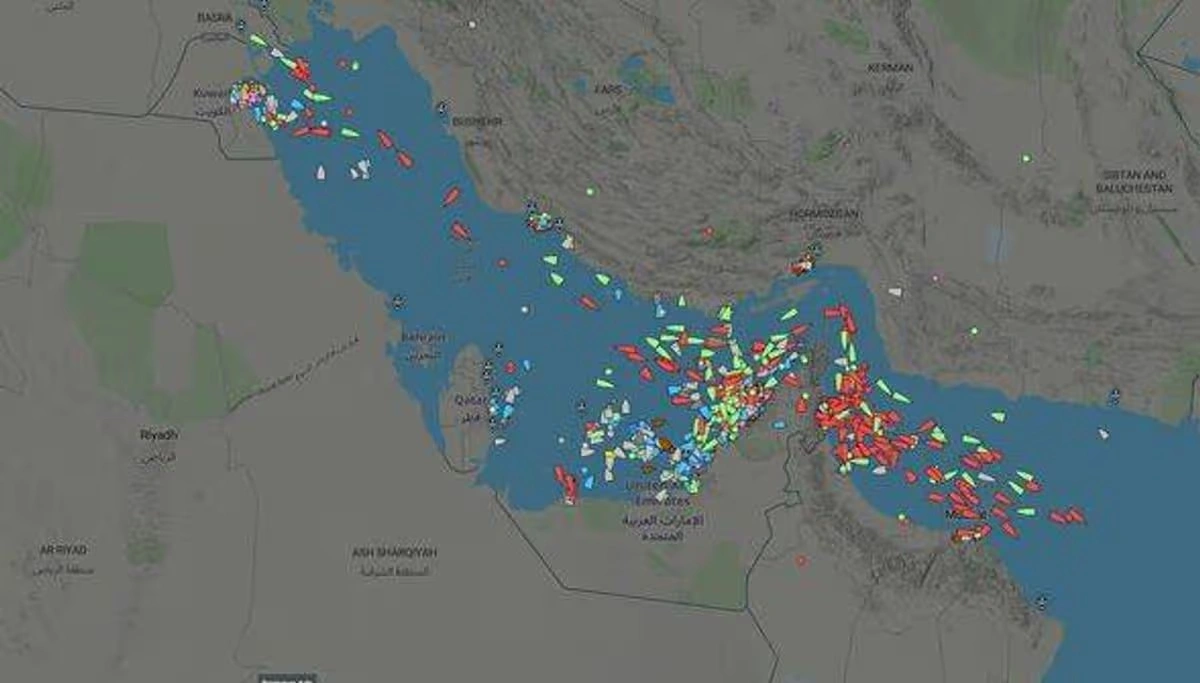
Ten million barrels a day offline. Qatar’s LNG trains in ruins. Brent past $120. The ceasefire changes the headlines — it does not change the damage. The Middle East energy order as we knew it is not disrupted. It is broken.
There is a peculiar ritual that follows every great energy shock: within days of the first price spike, the soothing voices of market analysts and government spokespeople emerge to reassure us that supply disruption is temporary, strategic reserves are ample, and the world’s oil machine will self-correct. The ritual is underway again. But this time — after forty-three days of the largest supply disruption in the history of the global oil market, as the International Energy Agency has described it — those soothing voices are reciting from a script the facts no longer support. The 2026 Strait of Hormuz crisis is not a disruption to be managed. It is a structural wound.
The arithmetic alone is staggering. Since Iran’s Revolutionary Guards declared the strait “not allowed” to commercial shipping on February 28, 2026 — hours after the United States launched Operation Epic Fury — tanker traffic through the waterway has collapsed by more than 90 percent. Roughly 10 million barrels per day of oil production have been effectively taken off world markets. That is more oil than Germany, France, the United Kingdom, and Italy consume combined. Add the simultaneous shutdown of Qatar’s LNG exports — the world’s largest — and you have an energy rupture that dwarfs the 1973 Yom Kippur embargo, the 1979 Iranian Revolution, and the 1990 Gulf War disruption, rolled into one.
Crisis at a Glance — Key Metrics (as of 12 April 2026)
| Metric | Figure |
|---|---|
| Gulf oil production effectively offline | ~10 mb/d |
| Brent crude peak | $120+ per barrel |
| Qatar LNG capacity destroyed | 17% — 3–5 year repair timeline |
| QatarEnergy estimated annual lost revenue | $20 billion |
| Asian LNG spot price spike post-Ras Laffan strike | +140% |
| Loaded tankers trapped in the Persian Gulf (9 Apr) | 230 vessels |
Yet numbers, however eye-watering, fail to capture the true nature of what has happened. The war has not merely interrupted flows through a choke point. It has physically destroyed irreplaceable infrastructure, accelerated a geopolitical realignment years in the making, and imposed costs — financial, strategic, and reputational — that the Gulf’s great petrostate empires will be paying for the better part of a decade. A fragile two-week ceasefire agreed on April 8 has not reopened the strait. By April 9, ADNOC CEO Sultan Al Jaber was blunt: “The Strait of Hormuz is not open. Access is being restricted, conditioned and controlled.” Two hundred and thirty laden tankers sat anchored inside the Gulf, waiting for a passage that, as of this writing, remains subject to Iranian veto.
The Physical Damage: Bombed Trains, Broken Compressors, Years of Repair
Start with the concrete and the steel — because in energy infrastructure, the physical damage is where the multi-year consequences begin. On March 18, Iranian missiles struck Ras Laffan Industrial City, the sprawling 200-square-kilometre complex eighty kilometres northeast of Doha that is, without exaggeration, the most important natural gas export hub on earth. QatarEnergy subsequently confirmed that two of its fourteen LNG production trains — the giant refrigeration units that liquefy gas for export — and one of its two gas-to-liquids (GTL) facilities were destroyed. According to Bloomberg, two of the plant’s 14 production trains were damaged, with repairs expected to take years.
QatarEnergy CEO Saad al-Kaabi was precise in his damage assessment: the attack wiped out capacity producing 12.8 million tonnes per year of LNG — 17 percent of Qatar’s total export capacity. Repairs will take three to five years. The reason is not a lack of money or will. It is physics and procurement. QatarEnergy requires replacement gas turbines to power the refrigeration compressors of the destroyed trains. Only three manufacturers worldwide produce the required equipment, and current order books put delivery timelines at two to four years. You cannot Amazon-Prime a gas turbine. The South site at Ras Laffan, which took the direct hits, has dropped from 36 million tonnes per annum capacity to 24 mtpa — a permanent loss that no ceasefire can rapidly undo.
“These are not repairs that can be made in a week or two. These are repairs that are going to take probably years to replace, and, by virtue of that, there is going to be a sizable impact.”
— Energy Economist, University of Colorado Denver, via Scientific American, March 2026
The damage beyond Qatar is less headline-grabbing but cumulatively severe. Kpler’s vessel-tracking analysis confirms that insurance withdrawal — not physical blockade alone — effectively shuttered the strait from day one of the conflict. By early March, insurance premiums for vessels transiting the passage had risen four to six times over the prior week. Iraq and Kuwait began curtailing oil well production by early March as onshore storage filled to capacity with crude that had nowhere to go. The collective oil output of Kuwait, Iraq, Saudi Arabia, and the UAE had dropped by a reported 6.7 million barrels per day by March 10, and by at least 10 million barrels per day by March 12. Saudi Arabia’s Ras Tanura refinery, one of the world’s largest at 550,000 barrels per day, was among Iranian targets. Iran also struck facilities in Kuwait, UAE, and threatened further strikes on the Jubail Petrochemical complex and UAE’s Al Hosn gasfield.
The infrastructure repair bill, when it is eventually totalled, will run well into the tens of billions of dollars across the Gulf. The direct $20 billion annual revenue loss from Ras Laffan alone — over a three-to-five-year repair horizon — implies a present-value destruction of somewhere between $40 billion and $70 billion in Qatari energy wealth, before secondary effects on planned expansions such as the North Field East project are accounted for.
The Hormuz Stranglehold: A 20% Global Oil Shock That the Pipelines Cannot Fix
One of the persistent myths of pre-war energy security planning was that Gulf producers had meaningful bypass routes. Saudi Arabia’s East-West Pipeline can carry crude to Yanbu on the Red Sea; the UAE’s Habshan-Fujairah pipeline offers an outlet to the Gulf of Oman. In theory, these could absorb some Hormuz disruption. In practice, as the Congressional Research Service noted in its March 2026 analysis, combined available capacity across both pipelines amounts to roughly 2.6 million barrels per day — a fraction of the 20 million barrels that normally transit the strait daily. Saudi Arabia did crank the East-West pipeline to its 7 million bpd capacity limit by end of March, according to Al Jazeera, pumping more oil through it than ever before. But there is no pipeline for LNG. Gas molecules trapped inside the Gulf have nowhere to go.
The scale of the supply shock — 20 percent of global seaborne oil trade suddenly offline — is without modern precedent. The 1973 embargo removed roughly 7 percent of global supply. The 1979 Iranian Revolution cut about 4 percent. Even combined, they did not approach what the 2026 Hormuz closure has achieved. Federal Reserve Bank of Dallas economists writing in March 2026 are unequivocal: “A complete cessation of oil exports from the Gulf region amounts to removing close to 20 percent of global oil supplies from the market.” Their models warn that a quarter-long closure would impose significant output losses on the global economy, weighted most heavily on Asia, which receives roughly 80 percent of Gulf crude exports.
The Asian Dilemma
China sourced roughly a third of its oil imports through Hormuz. Japan, as of February 2026, sourced 94.2 percent of its crude from the Middle East. India’s refineries pivoted rapidly to Russian crude — deepening a strategic dependency that will not easily reverse when the war ends. South Korea has emergency reserves estimated to last over a year. The Philippines, importing 98 percent of its oil from the Middle East, declared a state of national energy emergency on March 24. As Bloomberg’s analysis documents, fuel shortages spread from Thailand to Pakistan within weeks, while European traders warned of diesel scarcity if the strait remained closed.
Beyond Oil: The Invisible Damage — Fertilizer, Helium, and Food
This crisis has taught an uncomfortable lesson: the Strait of Hormuz is not merely an oil pipeline. It is a supply artery for the global agricultural system. Up to 30 percent of internationally traded fertilizers — primarily urea and ammonia — normally transit the strait. The Gulf region accounts for 30–35 percent of global urea exports and 20–30 percent of ammonia exports. Disruption to fertilizer supply during the Northern Hemisphere spring planting season could suppress corn yields in the United States, the world’s primary corn producer — with downstream effects rippling through beef, poultry, and dairy prices into 2027. Global fertilizer prices are estimated to average 15–20 percent higher in the first half of 2026 if the crisis continues.
Add to that helium — critical for MRI machines, semiconductor manufacturing, and scientific research — of which the Gulf is a major supplier. The crisis has constrained global helium supply, disrupting industries with few substitute suppliers. Sulfur — of which Gulf countries supply roughly 45 percent globally — faces similar choking, with knock-on effects on copper mining and acid production. The 2026 Hormuz crisis is not an energy crisis. It is a civilizational supply chain emergency whose secondary consequences will take years to fully surface.
“Every day the Strait remains restricted, the consequences compound. Supply is delayed, markets tighten, prices rise. The impact is felt beyond energy markets, in economies, industries and households worldwide.”
— Sultan Ahmed Al Jaber, CEO, ADNOC, via CNBC, 9 April 2026
The Structural Wound: Why This Is Not the 1970s — It Is Worse
Historical analogies are seductive in a crisis. Market veterans reflexively reach for 1973 and 1979, the canonical oil shocks. But the 2026 crisis differs from its predecessors in three ways that make it structurally more damaging.
First, physical destruction. The 1973 embargo was a political act — a tap turned off. The tap was always intact and could be turned back on. Ras Laffan’s destroyed LNG trains cannot be turned back on. The Pearl GTL facility — one of the world’s most complex energy installations — will require years of engineering work and two-to-four years of lead time just on gas turbine procurement. This is infrastructure damage, not a pricing dispute. The gap between “disruption” and “destruction” is measured in years, not quarters.
Second, the simultaneous closure of multiple commodity streams. The 1973 shock was an oil shock. The 2026 crisis is an oil shock, a gas shock, a fertilizer shock, a helium shock, and a food security shock — simultaneously, through a single choke point. The systemic interdependencies are categorically more complex, and the feedback loops — oil prices feeding into food prices feeding into inflation feeding into central bank tightening feeding into recession risk — operate faster in the digitally connected, just-in-time supply chain world of 2026 than they did in 1973.
Third, the Gulf Cooperation Council’s economic model has suffered a credibility rupture. Analysts describe a “systemic collapse of the GCC economic model” — the implicit contract in which Gulf states provided the world with uninterrupted energy flows in exchange for security guarantees and geopolitical accommodation. That contract has been violated. Not by choice, but by geography and the logic of warfare. Foreign investors who once treated Gulf energy infrastructure as the world’s most bankable physical asset are reassessing. Capital that was financing the Gulf’s Vision 2030-style economic diversification programmes will seek safer harbours, at precisely the moment when diversification was finally beginning to bear fruit.
Recovery Timeline: What Partial Ceasefire Actually Means
| Timeframe | Expected Milestone | Key Risk |
|---|---|---|
| May–June 2026 | Ras Laffan North site potentially restarts 12 operable LNG trains (Wood Mackenzie); 14 stranded LNG cargoes exit the Gulf | Fragile ceasefire collapses; Iran re-restricts passage |
| Aug–Sep 2026 | Ras Laffan South site earliest possible partial restart; tanker flows normalize if strait fully opens | Turbine procurement bottleneck; insurance market slow to re-normalise |
| 2027–2028 | Gulf oil production ramps back toward pre-war levels; stranded North Field East expansion resumes | Investor confidence gap; delayed capex decisions across region |
| 2029–2031 | Two destroyed LNG trains at Ras Laffan fully repaired and online (CEO estimate: 3–5 years from strike) | Gas turbine delivery delays; structural demand shift to US LNG may be permanent |
Wood Mackenzie’s assessment is sobering: even with a ceasefire, QatarEnergy cannot fully restart all twelve operable trains before late August at the earliest, assuming a May resumption — and that assumes security conditions permit it. “The ceasefire means it may be possible for the 14 trapped laden LNG cargoes in the Gulf to exit the Strait of Hormuz,” said Wood Mackenzie’s Tom Marzec-Manser. “But for there to be a real structural change in supply, the Ras Laffan site in Qatar would need to restart its 12 operable trains. It is unclear if QatarEnergy would consider doing this during a ceasefire.”
Winners, Losers, and the Accelerated Energy Transition
Winners
- US LNG exporters — structural demand shift from Qatar LNG by European and Asian buyers
- American shale producers — Brent above $100 makes marginal barrels highly profitable
- Russia — India and China deepening crude import dependency amid Gulf disruption
- Renewable energy developers — war accelerates energy diversification mandates globally
- Norwegian gas exporters — European pipeline gas alternatives gain premium
- Australian LNG — new long-term contracts from Asia locked in at elevated prices
Losers
- Qatar — $20B annual revenue loss, North Field expansion delayed, sovereign reputation damage
- Kuwait and Iraq — prolonged well shut-ins cause reservoir damage; fiscal crises deepen
- Asian LNG importers — Japan, South Korea, China facing multi-year supply tightness
- European industry — energy-intensive manufacturing faces existential competitiveness crisis
- Global food systems — fertilizer shock cascades into 2027 harvests
- Emerging markets — fuel import bills spike; currency crises in Philippines, Bangladesh, Pakistan
The most consequential long-run winner may be the energy transition itself — though not in any comfortable sense. As one executive interviewed by Bloomberg put it bluntly: “The main message is that we’re going to get the energy transition forced on us in a very painful way.” Forced transitions are rarely efficient ones. Governments scrambling to reactivate coal plants and speed-build LNG regasification terminals are making choices that will lock in infrastructure for thirty years. The crisis has simultaneously made fossil fuel investment look more profitable in the short term — producers will not rush to bet on multi-year projects given volatility risk — and made diversification away from Middle Eastern supply a strategic imperative. The result, paradoxically, may be more investment in both shale and renewables simultaneously, further compressing the role of Gulf producers in the global energy mix over the next decade.
Policy Implications: What Must Come Next
The 2026 Hormuz crisis has exposed the hollowness of decades of energy security planning. The assumption that strategic petroleum reserves — built for 90-day disruptions — could manage a complete cessation of Gulf supply was always a comforting fiction. The IEA’s emergency stock release mechanisms were designed for disruptions, not destructions. The fertilizer sector, as the Wikipedia crisis chronicle notes, lacks any internationally coordinated strategic reserves whatsoever, making supply disruptions there almost entirely unmanageable through existing tools.
- Establish international fertilizer strategic reserves — modelled on IEA oil emergency sharing agreements. The agricultural cascades from 2026 will arrive in 2027 and 2028; governments that act now can blunt the worst of them.
- Accelerate LNG import infrastructure in Europe and Asia — floating storage and regasification units can be deployed in 18–24 months. The lesson of 2026 is that no single supplier — not Qatar, not Russia — should command more than 20 percent of any country’s gas supply.
- Renegotiate the architecture of Gulf energy security guarantees — the implicit US-Gulf compact that underpinned the post-1945 energy order has cracked. New frameworks must involve China and India, as the world’s largest Gulf oil importers, in the burden-sharing of strait security.
- Design a Hormuz bypass financing mechanism — Saudi Arabia’s East-West Pipeline and UAE’s Fujairah pipeline together represent 2.6 mb/d of bypass capacity against a 20 mb/d strait flow. A multilateral infrastructure fund to expand and harden these alternatives is not just prudent; it is now an urgent civilizational priority.
- Resist the siren call of short-term shale bingeing — US producers face intense pressure to ramp output rapidly. But the lesson of every prior oil shock is that supply responses built on panic investment create the next crash. Disciplined, long-cycle capital allocation — not a shale free-for-all — will better serve global energy stability.
The Long View: A Region Diminished, a World Reconfigured
In the weeks since February 28, a great deal of commentary has focused on when the Strait of Hormuz will reopen. That is the wrong question. The right question is: what kind of Middle Eastern energy order will exist on the other side of this crisis?
The Gulf producers will recover. Kuwait and Iraq will pump oil again; Saudi Aramco will restore its formidable output; even Qatar will eventually restart its LNG trains, once replacement turbines arrive from the handful of manufacturers who make them. But the aura of invincibility — the sense that Persian Gulf energy infrastructure was somehow sheltered from the logic of warfare — has been permanently shattered. Every insurer, every long-term LNG contract negotiator, every sovereign wealth fund manager will price geopolitical risk in the Gulf differently for the next generation. Capital will diversify away from the region at the margin, year after year, compounding into a structural decline in Gulf market share even before physical recovery is complete.
The deeper irony is that Iran — by striking Qatar, a Muslim neighbour with whom it shares the world’s largest gas reservoir — has accelerated precisely the outcome it most fears: a world that finds its way around the Middle East’s energy geography. US LNG will lock in long-term supply contracts with Europe and Asia that were previously occupied by Qatari molecules. Australian and Norwegian exporters will sign deals that, under normal conditions, they could never have won on price. The energy transition, messy and painful as the crisis is making it, will receive a political mandate in Tokyo, Berlin, and Seoul that no climate conference could have generated.
History will record the 2026 Strait of Hormuz crisis as an inflection point — the moment when the post-1970s global energy order, already creaking under the weight of decarbonisation pressures and geopolitical fragmentation, finally broke. What replaces it will be more diversified, more expensive to build, and more resilient by design. The scars from Ras Laffan’s bombed LNG trains will fade, in time. The strategic wounds — to Gulf leverage, to the reliability premium that Middle Eastern energy once commanded — will not.
Every delay deepens the disruption, Sultan Al Jaber warned. He was speaking about tankers. He might just as well have been speaking about history.
Discover more from The Economy
Subscribe to get the latest posts sent to your email.



Navigating Mortgage and Loan Refinancing in a High-Yield Environment
Global public debt crossing critical thresholds has kept central bank policies volatile, resulting in fluctuating US Treasury yields throughout 2026. For homeowners and commercial property holders burdened by previous high-interest borrowing cycles, finding optimal refinance windows has become a high-stakes financial puzzle. Stalled disinflation and stubborn employment numbers mean rate cuts are incremental, requiring borrowers to act with precision.
Timing your mortgage or commercial loan refinance in this environment requires a deep understanding of yield curve movements and lender risk appetites.
Decoding 2026 Refinance Dynamics
The 10-Year Treasury Yield Benchmark
Mortgage rates continue to track closely with the 10-year US Treasury yield. When macroeconomic anxiety spikes debt issuance, yields rise, tightening consumer borrowing capacity. Savvy borrowers monitor weekly Treasury auctions to lock in rates during brief dip windows.
Hybrid ARMs and Alternative Structures
With fixed rates remaining elevated, 7/1 and 10/1 adjustable-rate mortgages (ARMs) have surged in popularity. These products offer lower initial monthly payments, giving borrowers breathing room until central bank easing cycles fully materialize.
| Loan Product | Current Rate Range | Best For | Key Risk Factor |
| 30-Year Fixed Mortgage | 6.2% – 6.8% | Long-term predictability | Higher initial monthly outlay |
| 7/1 Hybrid ARM | 5.5% – 5.9% | Short-term ownership / flipping | Rate reset risk after year 7 |
| Commercial Refinance | 7.0% – 8.2% | Corporate asset restructuring | Strict DSCR lender covenants |
Actionable Steps for Successful Refinancing
To maximize your chances of securing favorable refinance terms in a volatile market, follow a disciplined preparation strategy.
Boost Your Credit Score Immediately: Lenders in 2026 are applying stringent credit tiering; a 20-point increase can drop your APR by a crucial quarter-point.
Shop Regional Credit Unions: Smaller financial institutions often offer portfolio loans with more flexible underwriting than major national banks.
Calculate the Break-Even Point: Ensure your total closing costs are recouped through monthly savings within 24 months of closing.
“Market Strategist View: Refinancing in 2026 is an exercise in opportunistic timing. Borrowers must maintain immaculate financial profiles ready to strike the moment Treasury yields dip.”
Mastering the complexities of today’s debt environment ensures you can successfully lower your debt service costs and protect your long-term financial stability.
Discover more from The Economy
Subscribe to get the latest posts sent to your email.

The days of pulling generic auto insurance quotes based purely on your zip code and age are officially over. In 2026, insurance comparison engines are powered entirely by generative AI and real-time telematics. These platforms digest thousands of live data points—ranging from your driving smoothness via connected vehicle sensors to real-time traffic congestion patterns—to generate hyper-personalized premiums instantly.
For consumers, this evolution represents both a massive opportunity for savings and a hidden trap for penalty pricing. Understanding how AI algorithms evaluate risk is essential for anyone looking to lower their monthly auto insurance premiums.
How AI Comparison Engines Evaluate Your Risk Profile
Behavioral Telematics and Connected Cars
Modern cars stream performance data directly to insurance aggregators. Generative AI models analyze braking sharpness, acceleration curves, cornering G-forces, and phone distraction metrics. Drivers who maintain smooth, defensive habits are rewarded with dynamic rate cuts of up to 40% compared to traditional rating tiers.
Predictive Traffic and Weather Modeling
AI tools now cross-reference your daily commute route with predictive weather and accident probability models. If your standard parking location or driving corridor has a statistically higher incidence of uninsured motorist claims, your quotes will reflect that hyper-local risk assessment.
| Comparison Factor | Traditional Rating Model | 2026 Generative AI Model | Impact on Premium |
| Mileage & Usage | Annual estimated odometer reading | GPS tracking & live trip duration | High (up to 35% savings) |
| Driving Behavior | MVR driving record & accidents | Real-time braking, speed, & G-force | Critical (determines tier) |
| Vehicle Tech | Make, model, and safety rating | ADAS calibration & repair cost data | Moderate |
Strategies to Lower Your AI-Driven Insurance Quote
To outsmart the algorithm and secure the lowest possible premium in 2026, drivers must proactively manage their digital footprint on insurance platforms.
Opt-In for Telematics Trial Periods: Many insurers offer immediate 15% discounts just for installing their driving app; let it track safe habits for 30 days to lock in permanent savings.
Scrub Unverified Public Records: Ensure your motor vehicle report is free of clerical errors that AI risk models misinterpret as reckless behavior.
Compare AI Aggregators: Use platforms that integrate multi-carrier API feeds rather than single-brand comparison sites to find the best risk-adjusted rate.
“Industry Note: AI-driven pricing rewards transparency and precision. Drivers who actively manage their telematics data consistently out-save those relying on legacy quote calculators.”
Embracing AI comparison tools allows savvy policyholders to customize coverage limits precisely to their driving habits, eliminating wasted premium spend while ensuring robust protection.
Discover more from The Economy
Subscribe to get the latest posts sent to your email.

Despite decades of bans and strict handling mandates, asbestos remains a silent killer across legacy manufacturing plants, shipyards, and modern green-energy infrastructure retrofits. In 2026, regulatory changes by the EPA and tightened occupational health standards have triggered a fresh wave of mesothelioma litigation. Manufacturers attempting to fast-track industrial transitions are encountering catastrophic oversight, exposing workers to legacy toxins and opening corporate parent companies to unprecedented liability.
Navigating a mesothelioma claim in 2026 requires understanding how modern industrial supply chains intersect with historical exposure. Trusts established decades ago are being audited under stricter transparency laws, altering payout ratios and accelerating fast-track settlements for terminally ill plaintiffs.
Modern Industrial Exposure Hotspots
Green Retrofitting and Renewable Energy Infrastructure
A primary source of 2026 asbestos exposure occurs during the decommissioning and retrofitting of older industrial facilities for renewable energy production. Workers insulating electrical grids, modernizing HVAC systems, or upgrading manufacturing floors frequently disturb encapsulated asbestos materials that were improperly documented or ignored during facility audits.
Automotive and Aerospace Supply Chains
With advanced manufacturing booming, workers handling specialized friction materials, gaskets, and heat shields face ongoing risks. Supply chain tracing has become more sophisticated, allowing legal teams to pinpoint exact corporate entities responsible for raw material distribution across multinational borders.
| Industry Sector | Primary Exposure Risk | Legal Venue / Trust | Avg. Claim Value Range |
| Green Energy Retrofit | Disturbed insulation, pipe lagging | Federal Tort / Manufacturer Trust | $1.2M – $3.5M |
| Shipbuilding & Marine | Boiler insulation, structural seals | Asbestos Bankruptcy Trusts | $800K – $2.4M |
| Automotive Manufacturing | Brake components, high-heat gaskets | Third-Party Product Liability | $600K – $1.8M |
Securing Maximum Compensation: Steps for Plaintiffs
Time is of the essence in mesothelioma cases. Plaintiffs and their families must act decisively to secure financial recovery before statutes of limitations expire.
Retain Specialized Counsel: Work exclusively with national mesothelioma law firms possessing deep historical databases of asbestos-containing products.
Audit Employment History: Document every job site, supervisor name, and equipment brand encountered throughout your career.
Expedite Medical Filings: Secure a formal pathological diagnosis quickly to qualify for expedited trust fund distribution and priority trial settings.
“Expert Insight: Modern asbestos litigation is no longer just about historical tracking; it is about holding modern corporations accountable for failing to conduct rigorous environmental safety audits before initiating industrial retrofits.”
By combining meticulous work history reconstruction with aggressive multi-trust filings, victims can secure substantial financial relief to cover specialized immunotherapy and family support.
Discover more from The Economy
Subscribe to get the latest posts sent to your email.

Crypto Daily Outlook: Bitcoin, Altcoins, and the Future of Decentralized Finance

Anthony Scaramucci’s Crypto Prediction: Why MicroStrategy’s Move Is Bitcoin’s “iPhone Moment”

Best Dividend Stocks 2026: European & Asian Blue Chips

World Bank & IMF Reports 2026: Why the “3% Growth” Consensus Is Actually a Debate

Elon Musk’s Boring Company Hits $23B Valuation After UAE-Led $3 Billion Series D

Middle East War Economics 2026: Oil Prices & Energy Markets

PSX Forecast 2026: KSE-100, IMF Reviews & Geopolitics

Asian Markets Outlook 2026: China, Japan & Singapore Stocks

Global Economy 2026: IMF Growth, Inflation & Private Credit

Current Account Deficit (CAD) : Causes and Impact

Balance of Payments (BOP)

The Falkland Islands Dispute: Sovereign Wealth, Offshore Drilling, and Market Impacts

Gross Domestic Product (GDP): Nominal vs. Real

What is Inflation and the Consumer Price Index (CPI)?

State Farm’s $5B Dividend 2026: Who Qualifies & Payout Dates

US-China Relations in Q3 2026: Trade Tariffs and Supply Chain Risks

Gold’s Wild 2026: From a Record $5,600 Peak to a 24% Crash and Back Toward $4,500

Oil Surges as Strait of Hormuz Traffic Collapses Again

The Rocket That Won’t Quit: Inside SpaceX’s Falcon 9 Launch Machine

Bank of England Set to Hold Rates Through Year-End, Reuters Poll Shows

SpaceX Starship Flight 14: First Orbital Attempt & Starlink V3 Launch Explained

The 2026 Crypto Regulatory Shift: What It Means for Institutional Investors

AI Chip Stocks 2026: The Best Semiconductor Investments Beyond Marvell

Retail Earnings Week: What Home Depot, Target & Walmart Reveal

AI-Powered Training: The Next Multi-Billion Dollar Ecosystem in Fitness

Top 30 Stocks for Investment in PSX for Massive ROI in 2026

Russia’s Black Sea Oil Exports Fall for a Fifth Straight Week

Tween Back-to-School Trends 2026: What’s Driving the $85B Season
-

 Markets & Finance8 months ago
Top 15 Stocks for Investment in 2026 in PSX: Your Complete Guide to Pakistan’s Best Investment Opportunities
-

 Analysis7 months ago
Johor’s Investment Boom: The Hidden Costs Behind Malaysia’s Most Ambitious Economic Surge
-

 Analysis7 months ago
Top 10 Stocks for Investment in PSX for Quick Returns in 2026
-

 Analysis7 months ago
Brazil’s Rare Earth Race: US, EU, and China Compete for Critical Minerals as Tensions Rise
-

 Banks8 months ago
Best Investments in Pakistan 2026: Top 10 Low-Price Shares and Long-Term Picks for the PSX
-

 Investment8 months ago
Top 10 Mutual Fund Managers in Pakistan for Investment in 2026: A Comprehensive Guide for Optimal Returns
-

 Global Economy9 months ago
15 Most Lucrative Sectors for Investment in Pakistan: A 2025 Data-Driven Analysis
-

 Global Economy9 months ago
Pakistan’s Export Goldmine: 10 Game-Changing Markets Where Pakistani Businesses Are Winning Big in 2025