
Global Economy
The Double-Edged Sword of U.S. Economic Power

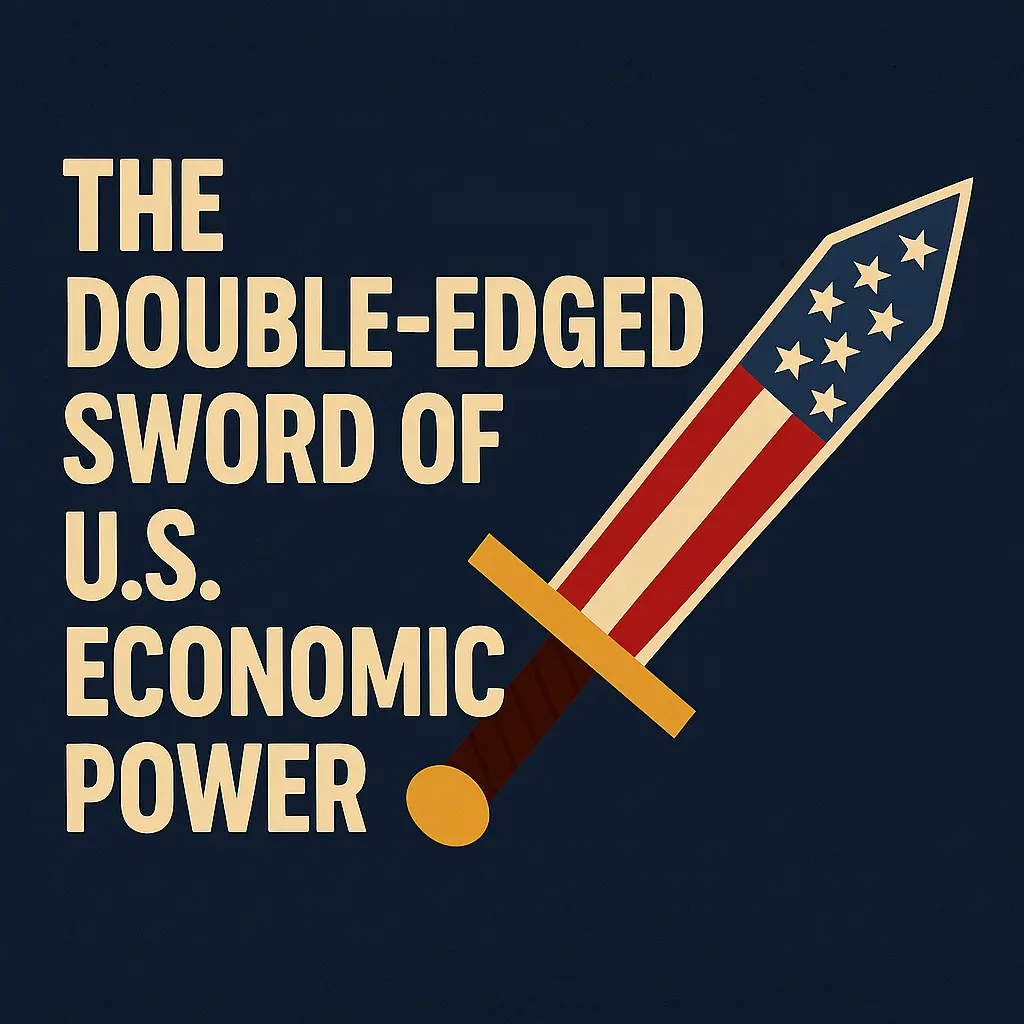
The United States has increasingly utilized its economic might as a tool of statecraft in the twenty-first century.
The United States has increasingly utilized its economic might as a tool of statecraft in the twenty-first century. Washington has employed tariffs, sanctions, and military force to influence the actions of its adversaries. Two of the most significant instances of this tactic are the tariffs placed on China during the trade war and the sanctions placed on Russia after it invaded Ukraine.
The goals of both actions were to safeguard American interests and exert influence overseas. However, the ramifications of their actions have been far more intricate than Washington policymakers may have expected. They have expedited the disintegration of the international order, tested relationships, and changed global markets.
In 2022, the United States and its allies imposed an unprecedented set of sanctions in response to Russian tanks rolling into Ukraine. Energy corporations were subject to restrictions, Russian banks were shut out of the global financial system, and the assets of oligarchs were frozen. The objective was clear: to put pressure on President Vladimir Putin to alter the path of the war and to make it harder for Moscow to finance it.
The sanctions have produced a range of economic outcomes. Although Russia’s GDP shrank precipitously in the immediate aftermath, the nation turned out to be more resilient than many had anticipated. Moscow was able to lessen the impact by shifting oil exports to China, India, and other ready consumers.
Despite its volatility, the ruble did not completely collapse. But there is no denying the long-term harm. Russia has been compelled to rely on Beijing, denied access to cutting-edge technology, and shut out of Western financing markets. In order to preserve cash flow, its energy industry, which was formerly the foundation of its worldwide dominance, is now selling at a discount. The largest trading bloc in the world, the Regional Comprehensive Economic Partnership (RCEP), provided China with new ways to counteract American pressure.
However, there have been notable global consequences. Europe’s severe reliance on Russian gas led to an energy crisis and a sharp increase in costs. Developing countries, already struggling with post-pandemic inflation, saw increases in the cost of food and petrol. The world was also affected by sanctions meant to punish Moscow, raising questions about whether the West had underestimated the collateral damage.
Russia’s resolve has been diplomatically reinforced by sanctions. Instead, the Kremlin has stepped up its depiction of Western hostility. For many in the Global South, the sanctions regime has reinforced perceptions of a divided international order, where Western values are selectively implemented.
Tariffs on China were the result of rivalry, whereas sanctions on Russia were the result of conflict. Citing unfair trade practices, intellectual property theft, and a widening trade deficit, Washington levied broad duties on Chinese goods starting in 2018. The purpose of the tariffs was to safeguard American industries and restore economic equilibrium. The immediate result was a dramatic rise in hostilities between the United States and China. Beijing responded by imposing tariffs of its own on American manufacturing and agriculture.
Customers suffered at the checkout counter, supply networks were interrupted, and business expenses increased. Although the tariffs hindered China’s economy, they also encouraged adaptation. By making significant investments in domestic technology and extending commercial relations with ASEAN countries, Beijing strengthened its commitment to independence.
China now has additional ways to counteract pressure from the United States thanks to the Regional Comprehensive Economic Partnership (RCEP), the largest trading grouping in the world. The trade imbalance was not significantly reduced by the tariffs for the US.
Rather, they emphasized how closely the two economies are interdependent. Farmers that depended on Chinese markets suffered from retaliatory actions, while American businesses that relied on Chinese production had to pay more.
Above all, the tariffs possibly sped up the decoupling process. As Beijing and Washington started to reconsider their mutual dependence, global supply chains gradually changed. Reshoring and diversification helped some industries, but overall, the impact was increased costs and more unpredictability.
Both measures disrupted global markets, imposed costs on both allies and adversaries, and produced mixed results in terms of changing behavior. China has not fundamentally changed its industrial policies, and Russia has not withdrawn from Ukraine. Instead, both countries have adapted, finding ways to mitigate the pressure while strengthening ties with alternative partners.
At first glance, tariffs on China and sanctions on Russia may seem like different tools aimed at different problems; one targeted geopolitical aggression, the other economic competition. However, both measures reflect a broader U.S. strategy: using economic leverage to achieve political ends without resorting to military force.
But the distinctions are just as significant. Global manufacturing has changed as a result of tariffs on China, while global energy markets have changed as a result of sanctions on Russia. Tariffs are transactional and competitive, whereas sanctions are punitive and isolating. When taken as a whole, they demonstrate the flexibility—and constraints—of economic pressure.
The indirect effects of U.S. sanctions and tariffs on the global system may be more important than their direct effects on China or Russia. Washington has made it clear that political alignment is required to gain access to its markets and financial networks by weaponizing economic interdependence.
This has caused competitors to look for other options. While China is establishing alternative organizations like the Asian Infrastructure Investment Bank and encouraging the use of the yuan in international trade, Russia is becoming more and more dependent on China. To avoid getting caught in the crossfire of great-power conflict, even allies of the United States are hedging.
As a result, the liberal economic system that the US helped establish is gradually being undermined. We might be heading towards a fractured world of rival blocs rather than a single, cohesive global organization. This results in increased expenses and uncertainty for firms. Governments will have to make more difficult decisions between conflicting areas of power.
The lesson is not that tariffs and sanctions don’t work. They have the power to signal resolve, inflict actual costs, and influence rivals’ calculations. However, they are not panaceas. Economic coercion has the risk of turning into a blunt tool that emboldens adversaries and alienates allies in the absence of diplomacy, coalition building, and long-term planning.
Additionally, Washington needs to understand the boundaries of its power. Although the dollar still holds sway, excessive use of financial sanctions may hasten the development of substitutes. Tariffs might shield some industries, but they can’t undo decades of globalization in a single day.
The United States must ultimately find a balance between engagement and pressure. Instead of being the toolkit itself, sanctions and tariffs ought to be a component of a larger one. If not, the United States runs the risk of eroding the same framework of free markets and partnerships that has long served as the basis for its dominance.
Both the potential and the danger of economic statecraft are demonstrated by the tariffs on China and the sanctions on Russia. They show that without firing a shot, the United States can nevertheless influence world events. However, they also demonstrate that, similar to military might, economic might has unforeseen repercussions.
Washington needs to use its economic powers more accurately, modestly, and strategically if it hopes to survive this new era of great-power competition. Otherwise, America itself could be harmed by the two-edged sword of tariffs and sanctions, not only its enemies.
Discover more from The Economy
Subscribe to get the latest posts sent to your email.


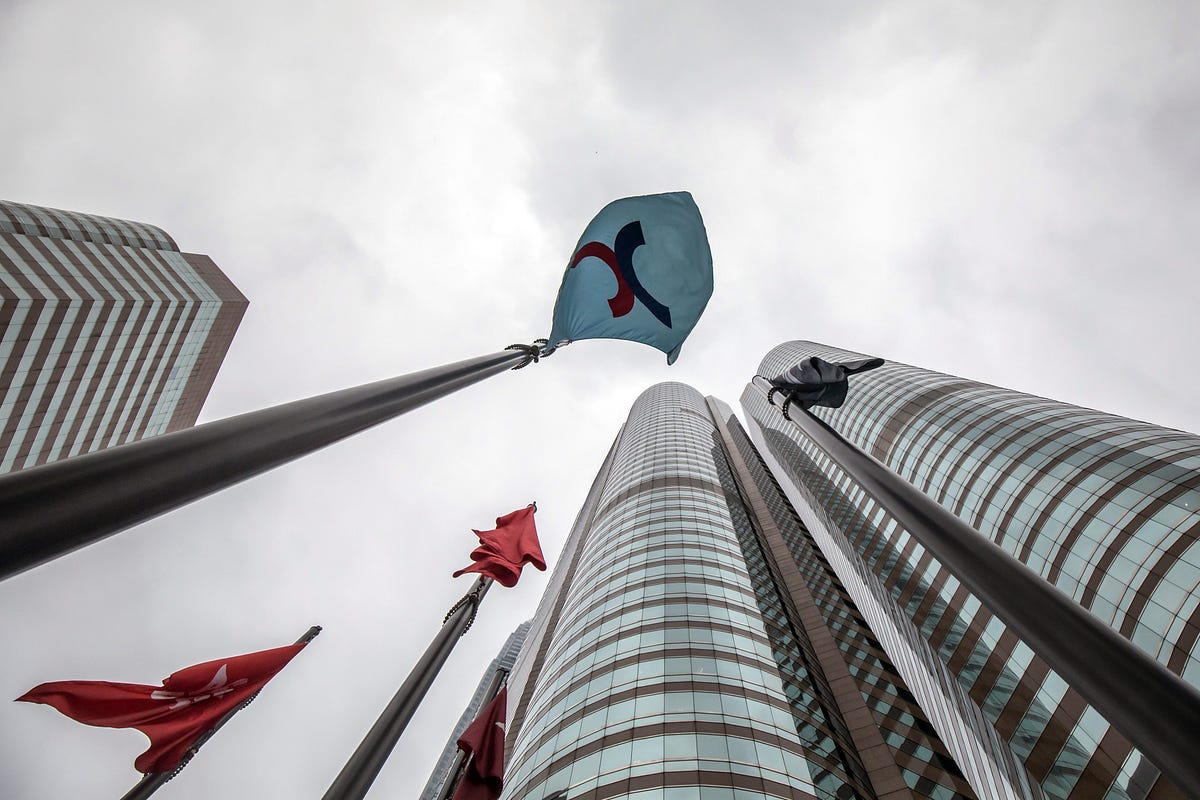
Beijing is formally repositioning Hong Kong from a neutral intermediary between Chinese and global capital into a ‘vanguard’ of the state’s financial security architecture — and the infrastructure to do exactly that is already operational.
For decades, the working assumption in global finance was that Hong Kong’s value lay in its studied neutrality. It was the threshold between two monetary worlds — a place where mainland capital could breathe the same air as Western institutional money without either being contaminated by the other. That assumption is now obsolete.
The Hong Kong Beijing vanguard financial sovereignty dynamic crystallised quietly across a string of policy announcements that, viewed individually, read as routine bureaucratic coordination. Viewed together, they mark one of the more consequential strategic reorientations in contemporary Asian finance. Under Xi Jinping’s “strong financial nation” doctrine, Beijing is no longer content to treat Hong Kong as a convenient pass-through. It is redesigning the city as an active instrument — a forward position in what Chinese state media and senior officials now explicitly call the construction of a “financially strong nation.” The word in circulation among pro-Beijing commentators is no longer “bridge.” It is vanguard.
The Ideological Turn: From Bridge to Vanguard
The language shift matters enormously. A bridge is passive infrastructure; it serves whoever crosses it. A vanguard has a mission, an adversary, and a direction of march. The semantic pivot reflects an ideological evolution at the highest levels of Chinese statecraft that arguably began crystallising at the Central Financial Work Conference in October 2023, where Xi articulated the ambition of building China into a qiánjìn guójiā — a strong financial nation. That formulation elevated monetary sovereignty and payment infrastructure from commercial concerns to instruments of national security.
Beijing financial sovereignty Hong Kong — the concept is no longer abstract. By late 2025, senior officials were writing in People’s Daily that China’s forthcoming 15th Five-Year Plan must “accelerate the construction of a financially strong nation” and explicitly support Hong Kong in consolidating its offshore renminbi hub function. The 15th Five-Year Plan, expected to receive formal National People’s Congress endorsement imminently, will set China’s strategic coordinates through 2030 — and Hong Kong figures with unusual prominence in the financial architecture chapters.
What emerges from a careful reading of that framework, alongside Hong Kong’s 2026-27 Budget speech delivered by Financial Secretary Paul Chan on February 25, is a document of strategic alignment that goes well beyond typical intergovernmental coordination. The Budget commits Hong Kong to contribute to the national objective of accelerating the construction of a financially strong nation. More strikingly, it is the first time Hong Kong has committed to producing its own five-year plan in coordination with the national blueprint — a structural embedding of the SAR into Beijing’s planning cycle with no precedent under “One Country, Two Systems.”
The Infrastructure Already in Place
mBridge, CIPS, and the Architecture of Dollar Independence
The most consequential developments are not rhetorical. They are engineered. The mBridge multilateral CBDC platform, developed through a collaboration between the HKMA, the People’s Bank of China, and the central banks of the UAE and Thailand, processed over US$55.5 billion in cross-border transactions by late 2025 — with the digital yuan accounting for roughly 95 percent of settlement volume. That figure represents a system at operational scale, not a proof-of-concept experiment.
Simultaneously, the PBoC’s Cross-Border Interbank Payment System (CIPS) continues its expansion in Hong Kong, deepening a renminbi-denominated settlement infrastructure that, in aggregate with mBridge, constitutes the foundations of a payments architecture capable of operating independently of dollar-denominated correspondent banking. This is not speculative. It is the explicit design intention behind what Beijing describes as its Hong Kong financial security architecture — a redundant settlement layer that can route Chinese trade and financial flows without touching the SWIFT-dollar nexus if geopolitical conditions ever demand it.
The RMB Liquidity Doubling and What It Actually Signals
On January 26, the HKMA announced that its RMB Business Facility — the mechanism through which onshore renminbi liquidity is channelled into offshore markets via a “hub-and-spoke” model with Hong Kong at the centre — would double from RMB 100 billion to RMB 200 billion (approximately US$27.8 billion), effective February 2. The expansion followed overwhelming demand: all 40 participating banks had exhausted their initial quotas within three months of the facility’s October 2025 launch.
HKMA Chief Executive Eddie Yue described the expansion as designed to “provide timely and sufficient RMB liquidity to meet market development needs.” What the statement elides, but the architecture makes explicit, is the geographic reach of that liquidity. According to the HKMA, participating banks are not merely recycling yuan within Hong Kong. They are channelling it to corporate clients across ASEAN, the Middle East, and Europe — precisely the corridors that the offshore RMB hub vanguard model was designed to penetrate. A Hong Kong bank can now funnel cheaper RMB liquidity to its Singapore or London subsidiaries, extending Beijing’s monetary infrastructure into the deepest capillaries of Western finance.
Complementing the facility doubling, the 2026-27 Budget outlined measures to construct an offshore RMB yield curve through regular bond issuances across maturities, facilitate RMB foreign exchange quotations against regional currencies, and accelerate research into incorporating RMB counters into the Southbound Stock Connect. Together, these constitute what analysts at FOFA Group describe as “systemic measures to reduce corporate exchange rate risks and increase the proportion of RMB invoicing and settlement” — currently around 30 percent of China’s goods trade, a figure Beijing intends to raise materially.
The IPO Revival as Strategic Capital Mobilisation
Hong Kong Reclaims the Global Crown
The numbers are striking enough to arrest even the most seasoned equity strategist. According to KPMG’s 2025 IPO Markets Review, Hong Kong reclaimed the top spot in global IPO rankings for the first time since 2019, driven by a record number of A+H share-listings that contributed over half of total funds raised. The London Stock Exchange Group confirmed that 114 companies raised US$37.22 billion on the HKEX main board in 2025 — a 229 percent increase from US$11.3 billion in 2024, placing Hong Kong well ahead of Nasdaq’s US$27.53 billion. Four of the world’s ten largest IPOs that year were Hong Kong listings. As of December 7, 2025, HKEX had an all-time high of over 300 active IPO applications in its pipeline, including 92 A+H listing applicants.
The CATL moment. When Contemporary Amperex Technology Co. — the world’s largest electric vehicle battery maker — raised US$4.6 billion on debut in June 2025, its H-share tranche priced at a premium to its A-shares, a rare occurrence that signalled something deeper than sentiment recovery. International institutional investors were expressing, through price discovery, confidence in Hong Kong’s continued capacity to deliver credible valuations on China’s most strategically important industrial companies. That confidence has since been replicated across Hengrui Pharmaceutical, Haitian Flavouring & Food, and Sanhua Intelligent Controls — collectively accounting for four of the world’s ten largest IPOs.
The “Going Global” Strategy Hardens Into Architecture
The commercial logic of this IPO surge is inseparable from Beijing’s political economy. The Hong Kong 15th Five-Year Plan coordination framework explicitly designates the city as the primary offshore platform for mainland enterprises pursuing international expansion under the “going global” strategy. The GoGlobal Task Force, established under the 2025 Policy Address and coordinated by InvestHK, now operates as a one-stop platform marshaling legal, accounting, and financial advisory functions to position Hong Kong as the base from which Chinese firms access global markets. The 2026-27 Budget entrenched this with a cross-sectoral professional services platform and targeted promotional campaigns.
For international investors, the implication is nuanced but important: the Hong Kong international financial centre 2026 is not a market recovering its pre-2019 identity. It is a market acquiring a new one — one in which the dominant issuer class is strategically aligned mainland enterprises, the dominant growth sectors are those embedded in China’s 15th Five-Year Plan priorities (AI, biotech, new energy, advanced manufacturing), and the dominant policy imperative is Beijing’s, not the SAR’s.
The Virtual Asset Divergence: A Regulatory Laboratory
Nowhere is Hong Kong’s new function as Beijing’s financial laboratory more transparent than in the city’s treatment of virtual assets. Since its comprehensive ban on cryptocurrency trading in 2021, the PBoC has maintained an adversarial posture toward privately issued digital assets. In February 2026, the PBoC together with seven central authorities issued a joint notice classifying most virtual currency activity and real-world asset tokenization as illegal absent explicit state approval — extending liability to intermediaries and technology providers and imposing strict supervision over cross-border issuance structures.
Hong Kong, simultaneously, has moved in precisely the opposite direction: licensing crypto exchanges, issuing regulatory frameworks for stablecoin issuers, and advertising itself as Asia’s virtual asset hub. This regulatory divergence is so deliberate it can only be read as coordinated. Hong Kong acts as the state’s controlled experiment — piloting the integration of digital asset infrastructure with RMB payment rails in a jurisdiction where failure can be contained and success can be replicated. The longer-term implication — a Hong Kong-licensed stablecoin operating as an offshore RMB proxy, connecting RMB internationalization Hong Kong with emerging digital finance corridors — is not speculative fiction. It is the logical terminus of the current regulatory architecture.
Singapore, the West, and the Impossible Middle Ground
The Divergence With Singapore
The comparison with Singapore illuminates Hong Kong’s trajectory by contrast. Singapore has spent the post-2020 period consolidating what might be called studied ambiguity: a financial centre that is deeply integrated into both Western and Chinese capital flows without being directionally committed to either. According to InCorp’s 2025-2026 analysis, Singapore’s economy grew 4.2 percent year-on-year in Q3 2025, with predictable inflation at 0.5-1.5 percent for 2026 — a macroeconomic profile that appeals precisely to Western multinationals seeking stable regional headquarters removed from US-China friction.
Singapore’s weakness, as the Anbound Think Tank has noted, is structural: as a city-state with a population of several million and no hinterland of the scale China offers, it cannot generate IPO pipelines of comparable depth or provide the kind of renminbi liquidity infrastructure that Hong Kong’s PBoC-backed facilities now deliver. Singapore competes on neutrality. Hong Kong is now competing on alignment — and betting that, in a bifurcating world, alignment with the world’s second-largest economy is the stronger hand.
What Western Banks Face
For global banks — HSBC, Standard Chartered, Citigroup, JPMorgan — the repositioning of Hong Kong creates a structurally uncomfortable operating environment. Over 70 of the world’s top 100 banks maintain a presence in Hong Kong. That presence was premised on the city’s capacity to intermediate between two capital systems without imposing a political tariff on the transaction. As that neutrality erodes, Western institutions face a binary they have been studiously avoiding: participate in Hong Kong’s deepening integration into Beijing’s financial architecture and accept the associated secondary sanctions exposure, or reduce their footprint and cede one of Asia’s richest revenue pools to Chinese and regional competitors.
The Bloomberg Professional analysis on Hong Kong’s wealth management outlook put it with characteristic precision: more Western investors may continue shifting assets to Singapore and elsewhere as geopolitical risks persist, leaving the city’s private wealth growth constrained in the near term. The risk is asymmetric. If US-China tensions escalate toward financial decoupling, the cost of having both a large Hong Kong operation and robust SWIFT-dollar compliance infrastructure could become prohibitive. The question is not whether that scenario will arrive but how quickly institutions are building contingency capacity for when it does.
The Structural Constraint Beijing Cannot Resolve Without Hong Kong
The extraordinary thing about Beijing’s China 15th Five-Year Plan Hong Kong finance ambitions is that they are driven as much by vulnerability as by confidence. Despite more than a decade of active promotion, the renminbi’s share of global foreign exchange reserves has declined, from approximately 2.8 percent in early 2022 to roughly 1.9 percent by late 2025, according to IMF COFER data. China’s capital account remains substantially closed. A fully open renminbi is structurally incompatible with the Communist Party’s political economy — it would require subordinating monetary policy to market forces and accepting the wealth transfer mechanisms that full convertibility entails.
Hong Kong resolves this dilemma with elegant precision. As an offshore platform under Chinese jurisdiction with residual common law credibility — enough, at least, to maintain international institutional confidence in its clearing and custody infrastructure — it can pilot instruments that cannot be tested on the mainland without exposing the domestic financial system to associated risks. The Hong Kong renminbi offshore hub function is not merely a commercial service. It is a controlled decompression valve through which Beijing can internationalise its currency, its payment infrastructure, and its capital market access without conceding the internal monetary sovereignty that the Party regards as existential.
The RMB internationalization Hong Kong pipeline is thus a geopolitical instrument dressed in the clothing of financial services — and increasingly, even the disguise is being shed. The 2026-27 Budget’s explicit alignment with the 15th Five-Year Plan’s financial sovereignty objectives is the first time a Hong Kong budget document has openly acknowledged this dual function.
The Investor Verdict: What the Numbers Cannot Fully Capture
Featured snippet: Beijing is repositioning Hong Kong as a ‘vanguard’ of its financial security architecture by embedding the city’s regulatory, monetary, and capital market infrastructure into the 15th Five-Year Plan framework — a shift that transforms Hong Kong from a neutral intermediary into an active instrument of RMB internationalization and dollar-independent settlement architecture.
The headline figures — Hong Kong ranked first globally in IPO fundraising in 2025, the HKEX pipeline at over 300 applicants, RMB Business Facility doubled to RMB 200 billion, mBridge processing over US$55.5 billion in settlements — create an impression of unambiguous momentum. And in commercial terms, that impression is not wrong. Deloitte forecasts Hong Kong will raise at least HK$300 billion in IPO proceeds in 2026. UBS’s vice-chairman in Hong Kong describes the pipeline as “very strong.”
But the momentum is directional in a way that has not fully priced into Western institutional thinking. The Hong Kong international financial centre 2026 that is emerging from this policy moment is a significantly more capable financial hub than its 2020-2023 nadir — but it is a hub serving a strategic agenda that differs from the open, neutral intermediary model on which its original international reputation was built.
For international investors and multinational financial institutions, this creates a set of questions that are not yet fully embedded in standard risk frameworks. How will secondary sanctions exposure evolve as Hong Kong’s mBridge and CIPS participation deepens? How will US-China financial decoupling scenarios affect the liquidity of H-share positions held by Western institutional funds? How should capital allocation between Hong Kong and Singapore — or Hong Kong and Tokyo, or Hong Kong and London — be recalibrated in a world where Hong Kong’s regulatory architecture is increasingly coordinates with Beijing’s security priorities rather than responding to market forces alone?
None of these questions have clean answers today. But the framework for thinking about them has permanently shifted. The “bridge” model that gave global finance its comfortable relationship with Hong Kong is being methodically replaced by something far more purposeful — and far more geopolitically consequential.
Conclusion: The Vanguard Doctrine and Its Implications
The word vanguard has a specific meaning in the Chinese political tradition. It is the term Mao reserved for the Communist Party itself — the leading force that preceded the masses into territory not yet secured. Its application to Hong Kong’s financial role under the 15th Five-Year Plan is not accidental. It signals that Beijing no longer views the city’s international financial function as a legacy arrangement to be managed but as an active instrument to be deployed.
For policymakers in Washington, Brussels, and London — and for the compliance officers, risk committees, and board directors of every major financial institution with a Hong Kong presence — the strategic reconfiguration underway demands a correspondingly strategic response. Incremental adjustments to existing frameworks will not suffice. The “strong financial nation” doctrine has graduated from slogan to architecture, and Hong Kong is where that architecture is being built.
The city’s financial mojo, to borrow the Economist’s phrase, is not in question. What is in question is whose agenda that mojo now serves — and at what cost to those who assumed the answer would always be: everyone’s.
Discover more from The Economy
Subscribe to get the latest posts sent to your email.

The February 2026 jobs report delivered the starkest labor market warning in months: nonfarm payrolls fell by 92,000 — far worse than any forecast — as federal workforce cuts, a major healthcare strike, and mounting AI-driven layoffs converged into a single, bruising data point.
The American jobs machine didn’t just stall in February. It reversed. The U.S. Bureau of Labor Statistics reported Friday that nonfarm payrolls dropped by 92,000 last month — a miss so severe it nearly doubled the worst estimates on Wall Street, which had penciled in a modest gain of 50,000 to 59,000. The unemployment rate climbed to 4.4%, up from 4.3% in January, marking the highest reading since late 2024.
The February 2026 jobs report doesn’t arrive in a vacuum. It lands at a moment of compounding economic pressures: a Federal Reserve frozen in a “wait-and-see” posture, geopolitical oil shocks from a new Middle East conflict, tariff uncertainty reshaping corporate hiring plans, and a relentless wave of AI-driven workforce restructuring. The convergence of all these forces — punctuated by what one economist called “a perfect storm of temporary drags” — produced a headline number that markets could not dismiss.
Equity futures reacted with immediate alarm. The S&P 500 fell 0.8% and the Nasdaq dropped 1.0% in the minutes after the 8:30 a.m. ET release. The 10-year Treasury yield retreated four basis points to 4.11% as investors rushed into safe-haven bonds, while gold rose 1% and silver 2%. WTI crude oil surged 6.2% to $86 per barrel, adding another layer of stagflationary pressure that complicates the Fed’s already knotted path.
What the February 2026 Nonfarm Payrolls Data Actually Shows
The headline figure — a loss of 92,000 jobs — is striking enough. But the full picture from the BLS Employment Situation report is considerably darker once the revisions are accounted for.
December 2025 was revised downward by a stunning 65,000 jobs, swinging from a reported gain of 48,000 to a loss of 17,000 — the first outright contraction in months. January 2026 was nudged down by 4,000, from 130,000 to 126,000. In total, the two-month revision erased 69,000 jobs from prior estimates. The three-month average payroll gain now stands at approximately 6,000 — essentially statistical noise. The six-month average has turned negative for the fourth time in five months.
“After lackluster job gains in 2025, the labor market is coming to a standstill,” said Jeffrey Roach, chief economist at LPL Financial. “I don’t expect the Fed to act sooner than June, but if the labor market deteriorates faster than expected, officials could cut rates on April 29.”
Sector Breakdown: Where the Jobs Disappeared
| Sector | February Change | Context |
|---|---|---|
| Health Care | –28,000 | Kaiser Permanente strike (31,000+ workers) |
| Manufacturing | –12,000 | Missed estimate of +3,000 |
| Information | –11,000 | AI-driven restructuring, 12-month trend |
| Transportation & Warehousing | –11,000 | Demand softening |
| Federal Government | –10,000 | Down 330,000 (–11%) since Oct. 2024 peak |
| Local Government | –1,000 | Partially offset by state gains |
| Social Assistance | +9,000 | Individual and family services (+12,000) |
The health care sector’s reversal is perhaps the most analytically significant. For much of 2025 and early 2026, health care was the single pillar keeping the headline payroll numbers out of outright contraction territory. In January it added 77,000 jobs. In February it shed 28,000 — a 105,000-job swing — primarily because a strike at Kaiser Permanente kept more than 30,000 nurses and healthcare professionals in California and Hawaii off the payroll during the BLS survey reference week. The labor action ended February 23, meaning the jobs will likely reappear in the March data, but the strike’s timing could not have been worse for February’s optics.
Federal government employment, meanwhile, continues its historic contraction. Federal government employment is down 330,000 jobs, or 11%, from its October 2024 peak Fox Business, a decline driven by the Trump administration’s aggressive reduction-in-force campaign. President Trump’s efforts to pare federal payrolls has seen a slide of 330,000 jobs since October 2024, a few months before Trump took office. CNBC
Manufacturing’s 12,000-job loss underscores the squeeze that elevated borrowing costs and trade-policy uncertainty are placing on goods-producing industries. Transportation and warehousing losses of 11,000 suggest logistics networks are already adjusting to softer demand expectations. The information sector’s 11,000-job decline continues a 12-month trend in which the sector has averaged losses of 5,000 per month — a structural signal, not a cyclical one, as artificial intelligence reshapes the contours of knowledge-work employment.
The Wage Paradox: Hot Pay, Cold Hiring
In an economy where the headline is undeniably weak, one data point stands out as paradoxically stubborn: wages.
Average hourly earnings increased 0.4% for the month and 3.8% from a year ago, both 0.1 percentage point above forecast. CNBC That combination — deteriorating employment alongside above-expectation wage growth — is precisely the stagflationary profile that gives the Federal Reserve its greatest headache. The Fed cannot simply cut rates to rescue the labor market if doing so risks reigniting the price pressures it has spent three years fighting.
The wage story is also deeply unequal. While higher-income wage growth rose to 4.2% year-over-year in February, lower- and middle-income wage growth slowed to 0.6% and 1.2% respectively — the largest gap since the beginning of available data. Bank of America Institute An economy where the well-paid are getting paid more while everyone else sees real-wage stagnation is not a healthy one, regardless of what the aggregate number says.
The household survey — which provides the unemployment rate and tends to be more sensitive to true labor-market stress — painted an even grimmer portrait. That portion of the report indicated a drop of 185,000 in those reporting at work and a rise of 203,000 in the unemployment level. CNBC The broader U-6 measure of underemployment, which includes discouraged workers and those involuntarily working part-time, came in at 7.9%, down 0.2 percentage points from January — a modest offset to the headline deterioration.
The Federal Reserve’s Dilemma
What the Jobs Report Means for Rate Cuts
Following the payrolls report, traders pulled forward expectations for the next cut to July and priced in a greater chance of two cuts before the end of the year, according to the CME Group’s FedWatch gauge of futures market pricing. CNBC
The Federal Reserve has been navigating a uniquely treacherous policy landscape. After cutting the federal funds rate to its current range of 3.50%–3.75%, it paused its easing cycle in early 2026 as inflation remained sticky above the 2% target and layoffs — despite slowing hiring — failed to produce the labor-market slack needed to justify further accommodation.
Fed Governor Christopher Waller said earlier in the morning that a weak jobs report could impact policy. “If we get a bad number, January’s revised down to some really low number… the question is, why are you just sitting on your hands?” Waller said on Bloomberg News. CNBC Waller has been among the minority of FOMC members pressing for near-term cuts. Friday’s data gave him considerably more ammunition.
San Francisco Fed President Mary Daly offered a characteristic note of caution. “I think it just tells us that the hopes that the labor market was steadying, maybe that was too much,” Daly told CNBC. “We also have inflation printing above target and oil prices rising. How long they last, we don’t know, but both of our goals are in our risks now.” CNBC
That dual-mandate tension — maximum employment under pressure, price stability still elusive — defines the central bank’s predicament heading into its next meeting.
Atlanta Fed GDPNow: A Warning Already Flashing
The jobs report doesn’t arrive as a surprise to those tracking the Atlanta Fed’s real-time growth model. The GDPNow model estimate for real GDP growth in the first quarter of 2026 was 3.0% on March 2 Federal Reserve Bank of Atlanta — a figure that already reflected softening in personal consumption and private investment. Critically, that pre-report estimate has not yet incorporated February’s job losses; Friday’s data will almost certainly pull the Q1 nowcast lower.
GDPNow had recently dropped to as low as –2.8% earlier in the current tracking period before recovering Charles Schwab, suggesting the model’s directional trajectory was already pointing toward deceleration even before the payroll shock. Whether the updated estimate breaks below zero again will be closely watched as a leading indicator of recession risk.
Is This a Recession Signal? A Closer Look
Temporary Shocks vs. Structural Deterioration
The intellectual debate emerging from Friday’s report centers on one critical distinction: how much of the 92,000-job loss is temporary, and how much is the economy genuinely breaking down?
The case for temporary distortion is real. Jefferies economist Thomas Simons called the result “a perfect storm of temporary drags coming together following an above-trend print in January.” CNBC The Kaiser Permanente strike alone subtracted roughly 28,000 to 31,000 jobs from the headline. Severe winter weather further depressed activity in construction and outdoor industries during the survey week. Both factors should partially reverse in March.
But the case for structural concern is equally compelling. “Looking through the weather-impacted sectors and the strike, which ended on February 23, this is still a poor jobs number,” Simons added. CNBC Strip out the healthcare strike and winter-weather effects and the underlying number is still deeply soft. Manufacturing lost 12,000 jobs without a weather excuse. Federal employment continues its unprecedented contraction. And the information sector’s ongoing slide reflects not a seasonal disruption but a multi-year rearchitecting of how corporations use labor in an age of generative AI.
“Still, the pace of job gains over the last few months is still dramatically slower than it was in 2024 and much of 2025 — this is going to make it harder for the Fed to sell the labor market stabilization narrative that’s been used to justify patience on further rate cuts. Add higher oil prices given conflict in the Middle East and renewed tariff uncertainty to the convoluted jobs market story, and you have a tricky, stagflationary mix of risks in the backdrop for the Fed,” Fox Business said one Ausenbaugh of J.P. Morgan.
What Happens Next: A Scenario Framework
Scenario A — Temporary Bounce-Back (Base Case): The Kaiser strike’s resolution and a weather reversal produce a March payroll rebound of 100,000–150,000. The Fed stays on hold through June, inflation data cools, and markets stabilize. Probability: ~45%.
Scenario B — Protracted Weakness (Risk Case): Federal workforce contraction deepens, manufacturing continues shedding jobs, and the three-month average payroll trend falls below zero outright. The Fed cuts rates in June or earlier. Recession risk climbs above 35%. Probability: ~35%.
Scenario C — Stagflationary Spiral (Tail Risk): Wage growth remains above 3.5%, oil sustains above $85, and tariff escalation drives goods-price inflation back above 3%. The Fed is paralyzed, unable to cut despite labor market deterioration. Dollar strengthens. Equity markets re-price earnings estimates lower. Probability: ~20%.
Global Ripple Effects
How the February 2026 US Jobs Report Moves the World
A weakening US labor market is not a domestic story. It travels — through capital flows, trade volumes, currency markets, and commodity demand — to every corner of the global economy.
Europe: The euro-area economy, which has been cautiously recovering from the energy crisis of 2023–2024, now faces the prospect of a softer US import demand picture just as its own manufacturing sector had begun to stabilize. The European Central Bank, which has already cut rates further than the Fed, finds its policy divergence potentially narrowing. A weaker dollar would provide some export-competitiveness relief to European firms, but it would also reduce the purchasing power of European consumers of dollar-denominated commodities like oil — of which Friday’s $86 WTI price is already a concern.
China and Emerging Markets: Beijing, which has been engineering its own modest stimulus program to stabilize growth at around 4.5%, will watch the US labor deterioration with some ambivalence. A slowing American consumer is a headwind for Chinese export sectors, particularly electronics, consumer goods, and industrial equipment. For dollar-denominated debt holders in emerging markets, however, any shift toward a weaker dollar — if the Fed is eventually forced to cut — would provide meaningful relief on debt-servicing costs.
Travel and Hospitality: The leisure and hospitality sector saw no notable job gains in February, continuing a pattern of stagnation in an industry still recalibrating from post-pandemic normalization. Expedia Group and other travel industry bellwethers will be monitoring whether consumer spending resilience — which has so far been concentrated among upper-income earners — can sustain international travel demand even as lower- and middle-income households face real-wage erosion. The risk is a bifurcated travel economy: business-class cabins full while economy-seat bookings slow.
The Bigger Picture: A Labor Market in Structural Transition
Zoom out far enough and February’s number is less a sudden rupture than the clearest confirmation yet of a trend that has been building for 18 months. Total nonfarm employment growth for 2025 was revised down to +181,000 from +584,000, implying average monthly job gains of just 15,000 — well below the previously reported 49,000. TRADING ECONOMICS An economy adding 15,000 jobs per month on average is not expanding its workforce in any meaningful sense; it is essentially flatlining.
Three structural forces are doing the work that cyclical headwinds once did:
Federal workforce reduction is real, large, and accelerating. A loss of 330,000 federal jobs since October 2024 is not a rounding error — it is a deliberate political restructuring of the size of the American state, with multiplier effects on contractors, lobbyists, lawyers, consultants, and the entire ecosystem of the Washington metropolitan area and beyond.
AI-driven labor displacement is moving from theoretical to measurable. The information sector’s 12-month average loss of 5,000 jobs per month reflects an industry actively substituting machine intelligence for human workers. Jack Dorsey’s announcement that Block would cut 40% of its payroll due to AI — cited in pre-report previews — was emblematic of a boardroom trend spreading well beyond Silicon Valley.
Healthcare dependency has masked the underlying weakness for too long. “One of the things that is very interesting-slash-potentially problematic is that we have almost all the growth happening in this health care and social assistance sector,” CNBC said Laura Ullrich of the Federal Reserve Bank of Richmond. When the single sector sustaining your jobs headline goes on strike, the vulnerability of the entire superstructure is suddenly visible.
Key Data Summary
| Indicator | February 2026 | January 2026 | Consensus Estimate |
|---|---|---|---|
| Nonfarm Payrolls | –92,000 | +126,000 (rev.) | +50,000–59,000 |
| Unemployment Rate | 4.4% | 4.3% | 4.3% |
| Avg. Hourly Earnings (MoM) | +0.4% | +0.4% | +0.3% |
| Avg. Hourly Earnings (YoY) | +3.8% | +3.7% | +3.7% |
| U-6 Underemployment | 7.9% | 8.1% | — |
| Dec. 2025 Revision | –17,000 | Prior: +48,000 | — |
| 10-Year Treasury Yield | 4.11% | ~4.15% | — |
| S&P 500 Futures | –0.8% | — | — |
The Bottom Line
February’s employment report is not a definitive verdict on the American economy. One month of data — distorted by a strike and abnormal weather — does not make a recession. But it does something arguably more important: it forces a serious reckoning with the possibility that the “stable but slow” labor market narrative that policymakers have been selling since mid-2025 was always more fragile than it appeared.
The Federal Reserve is now caught in a policy bind that will define the next six months of market psychology. Cut too soon and you risk re-igniting inflation in an economy where wages are still growing at 3.8%. Cut too late and you risk allowing a soft landing to become a hard one. The Fed’s March meeting was always going to be consequential. After Friday morning, it is indispensable.
The March jobs report — due April 3 — will be the next critical data point. If the healthcare bounce-back materializes and weather-related distortions reverse, the February number may be remembered as a noisy outlier. If it doesn’t, the conversation shifts from “when does the Fed cut?” to “can the Fed cut fast enough?”
For the full BLS Employment Situation data tables, visit bls.gov. For Atlanta Fed GDPNow real-time Q1 2026 tracking, see atlantafed.org.
Discover more from The Economy
Subscribe to get the latest posts sent to your email.
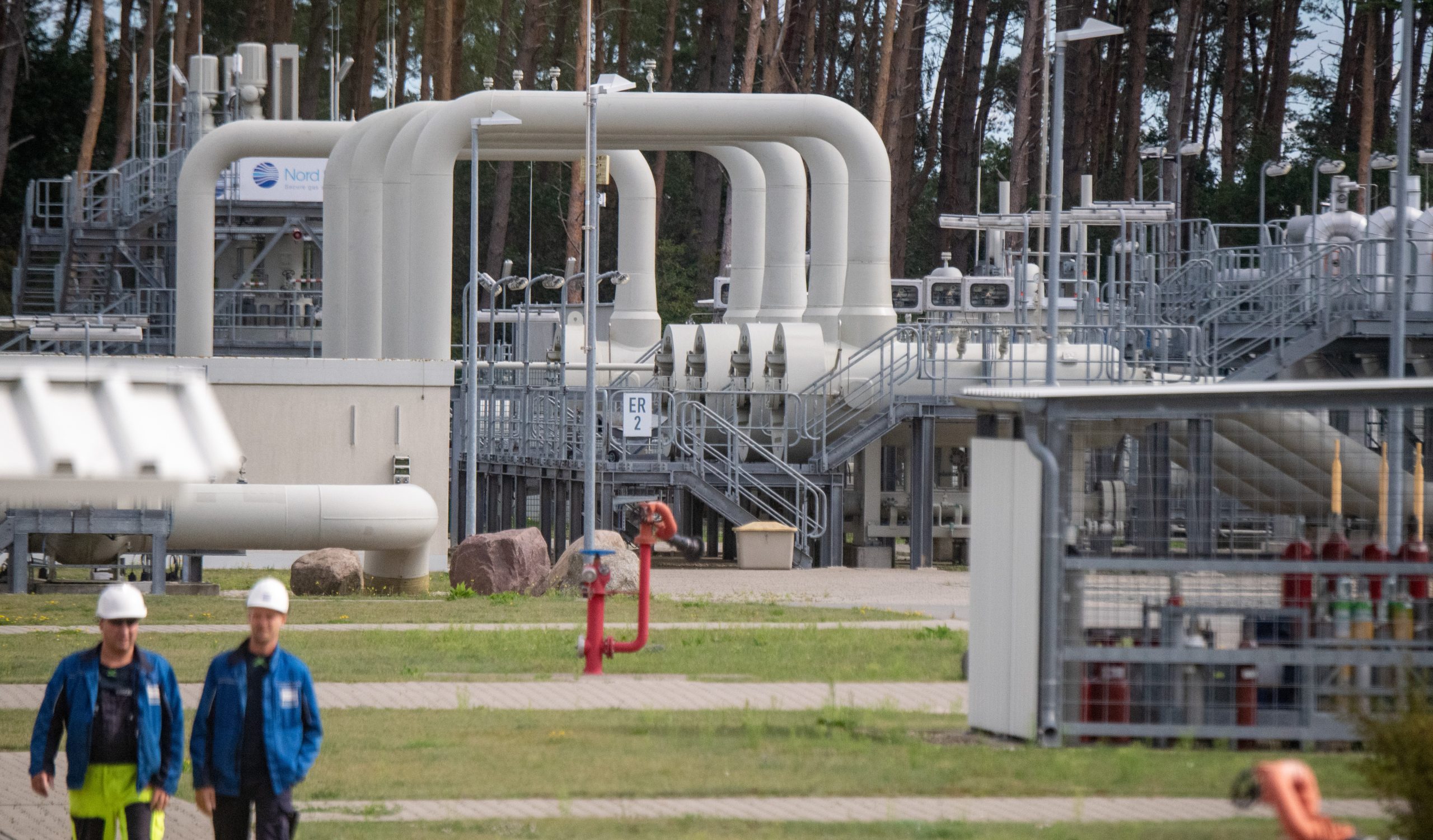
The Kremlin’s signal that it could voluntarily exit the European gas market is part bluff, part genuine pivot — and entirely consequential for global energy security in 2026 and beyond.
Russia may halt gas supplies to Europe as Putin exploits the Iran energy spike. Analysing the real stakes behind the Kremlin’s threat, TTF price surge, and Moscow’s Asian pivot.
Introduction: A Threat Dressed as a Business Decision
On the morning of March 4, 2026, Russian President Vladimir Putin sat down with Kremlin television correspondent Pavel Zarubin and appeared to do something unusual for a man whose public statements are rarely accidental: he thought out loud. Against the backdrop of global energy markets in full-blown crisis — triggered by the U.S.-Israeli military campaign against Iran and Tehran’s counter-strikes across the Gulf — Putin mused that Russia might halt gas supplies to Europe entirely, and do so immediately, rather than wait to be formally ejected under the European Union’s own phase-out timeline.
“Now other markets are opening up,” Putin said, according to the Kremlin transcript. “And perhaps it would be more profitable for us to stop supplying the European market right now. To move into those markets that are opening up and establish ourselves there.”
He was careful, almost lawyerly, in his framing. “This is not a decision,” he added. “It is, in this case, what is called thinking out loud. I will definitely instruct the government to work on this issue together with our companies.” But in the language of energy geopolitics, where a single presidential signal can move commodity markets by double digits, the distinction between thinking out loud and making policy is narrower than it appears. What Putin said on March 4 was not a bluff — or at least, not entirely one. It was a calculated reflection of a structural shift already underway, supercharged by a Middle East crisis that has remade the arithmetic of global gas markets in just seventy-two hours.
To understand what this means, you have to understand where Europe stands today — and where Russia has been heading for the past three years.
Background: A Market Already Departing Itself
The story of Russia’s decline as Europe’s dominant gas supplier is one of the most dramatic commercial collapses in modern energy history. Before February 2022, Russia supplied approximately 40% of the EU’s pipeline gas, making Gazprom — then valued at over $330 billion — the third-largest company in the world. By early 2026, that figure had fallen to just 6%, and Gazprom’s market capitalisation had cratered to roughly $40 billion, a destruction of value that no Western sanctions regime alone could have engineered without Moscow’s own strategic miscalculations.
Europe’s REPowerEU programme — launched in the immediate aftermath of the Ukraine invasion — has proven surprisingly effective. Norway, the United States, and Algeria have collectively absorbed most of what Russia once provided. LNG import terminals that did not exist three years ago now dot Europe’s Atlantic coastline. The continent’s dependence on pipeline gas from a single adversarial supplier has been structurally dismantled.
What remained of Russia’s European gas footprint was a dwindling rump of legacy contracts, principally serving Hungary and Slovakia — nations whose governments had maintained warmer diplomatic relationships with Moscow. It was a commercially marginal position, but one that gave the Kremlin a residual foothold in Europe’s energy map and, more importantly, a psychological card to play. That card is what Putin attempted to deploy on Wednesday.
The European Commission has approved a binding phase-out schedule that accelerates significantly this spring. The key EU ban milestones are: April 25, 2026, for short-term Russian LNG contracts; June 17, 2026, for short-term pipeline gas; January 1, 2027, for long-term LNG contracts; and September 30, 2027, for long-term pipeline contracts. Putin’s suggestion — that Russia should exit now rather than wait to be shown the door — is, on one level, a face-saving exercise. But on another, it is a genuine strategic calculation being shaped by events thousands of kilometres away, in the Persian Gulf.
The Iran Crisis: How a Middle East War Changed European Gas Arithmetic Overnight
The convergence of the Iran crisis with Putin’s remarks is not coincidental. In late February 2026, European gas markets had entered what traders described as a period of “prolonged dormancy.” The Dutch TTF benchmark — Europe’s primary gas pricing index — had drifted to roughly €32 per megawatt hour, the lower half of Goldman Sachs’s estimated coal-to-gas switching range. Norwegian output from the Troll field was at peak efficiency. The energy crisis of 2022 seemed a distant, if instructive, memory.
Then, over the weekend of February 28 to March 1, came the military escalation that markets had not priced in. Iranian strikes on Gulf Arab neighbors, the effective closure of the Strait of Hormuz, and — most critically for gas markets — QatarEnergy’s announcement that it was halting all LNG production after Iranian drone attacks targeted two of its facilities. QatarEnergy accounts for nearly one-fifth of global LNG exports. The impact was immediate and seismic.
By Tuesday, March 3, the TTF had surged more than 60% to a three-year high, peaking intraday at €65.79/MWh. Goldman Sachs — which had entered the week forecasting a €36/MWh April TTF price — raised its April forecast to €55/MWh and warned that a full one-month Strait of Hormuz closure could drive TTF toward €74/MWh, the level that triggered large-scale demand destruction during the 2022 crisis. Brent crude climbed to around $83 a barrel mid-week, some 25% above its pre-strike close.
Chart: European TTF Gas Price vs. Iran Crisis Timeline (February–March 2026) TTF at ~€32/MWh (Feb 28) → €46.41/MWh (Mar 2, Hormuz closure) → €65.79/MWh intraday peak (Mar 3, Qatar halt) → ~€60/MWh (Mar 4, Putin statement). Goldman Sachs scenario range: €74–€90/MWh if disruption extends beyond 30 days. 2022 crisis peak for reference: €345/MWh (August 2022). Source: ICE TTF, Goldman Sachs Commodity Research, ICIS.
The scale of Europe’s structural vulnerability was made even more vivid by the storage data. EU gas storage entered March 2026 at approximately 46 billion cubic metres — compared to 60 bcm in 2025 and 77 bcm in 2024. Facility fill rates were sitting at around 30% of capacity, with Germany at roughly 21.6% and France in the low-20s. Oxford Economics warned that European storage was now on track to fall below 20% by the end of the summer refill season, making the EU’s mandated 80% target for December virtually unreachable without a rapid restoration of Qatari output and Hormuz shipping lanes.
It was into this environment — with European buyers suddenly desperate for any available molecule and willing to pay premium prices — that Putin delivered his “thinking out loud” signal.
Deep Analysis: What Putin Actually Said, and What It Means
Strip away the diplomatic language and the Kremlin’s careful framing, and Putin’s message on March 4 had three distinct layers.
The first was commercial. With global spot LNG prices surging alongside TTF, the opportunity cost of continuing to sell residual pipeline volumes to a market that has legislated for your exit has genuinely shifted. “Customers have emerged who are willing to buy the same natural gas at higher prices, in this case due to events in the Middle East, the closure of the Strait of Hormuz, and so on,” Putin told Zarubin. “This is natural; there’s nothing here, there’s no political agenda — it is just business.” This is not entirely a confection. The disruption to Qatari and Gulf supply has created a genuine spot-market premium that makes diverting flexible LNG cargoes to Asian buyers financially attractive.
The second layer was geopolitical. Ukraine’s government immediately characterised Putin’s remarks as “Energy Blackmail 2.0”, arguing that Moscow is attempting to exploit the global energy shock to pressure Europe into softening its next round of gas sanctions — specifically the April 25 deadline for banning new short-term Russian LNG contracts. That reading is credible. Putin linked his remarks directly to the EU’s “misguided policies” and singled out Slovakia and Hungary as “reliable partners” who would continue to receive Russian gas — a studied wedge aimed at splitting the bloc along its most familiar fault lines.
The third layer is structural, and it is the one that matters most for the medium term. Russia is not simply threatening to leave Europe’s gas market. It is trying, under conditions of genuine commercial pressure, to accelerate a pivot that is already underway — but that faces serious bottlenecks. Russia’s pipeline gas exports to China via the Power of Siberia 1 line are expected to hit 38–39 bcm in 2025, up from 31 bcm the previous year. A legally binding memorandum to build the 50 bcm Power of Siberia 2 pipeline — running from the Yamal Peninsula through Mongolia to northern China — was signed in September 2025. But key commercial parameters, including price, financing, and construction timeline, remain unresolved. The pipeline could not realistically begin deliveries before 2030.
That gap — between the rhetoric of an Asian pivot and its physical reality — is the central vulnerability in Putin’s position. Russia can talk about redirecting gas to “more promising markets.” It cannot actually do so at scale, quickly, without the infrastructure that does not yet exist.
The Asymmetry of Pain: Who Needs This More?
The critical question any serious analyst must ask is: who is in the weaker negotiating position? And the honest answer is that both sides are weaker than they publicly admit.
Europe is, right now, more exposed than at any point since 2022. Low storage, a Qatari production halt, a constrained Hormuz corridor, and the structural dependency on spot LNG that replaced Russian pipeline gas — all of this has placed the EU in a position where any additional supply disruption narrows the margin between a price shock and a supply crisis. The European Commission told member states on March 4 that it saw no immediate threat to supplies and was not planning emergency measures — technically accurate, but dependent on the Hormuz situation resolving within weeks rather than months. A sustained shutdown beyond thirty days would likely trigger EU emergency coordination mechanisms and, potentially, renewed industrial demand rationing in Germany and Italy.
Russia, meanwhile, is not in a position of strength it can easily monetise. Gazprom’s finances have been devastated by the loss of the European market. The company that was worth $330 billion in 2007 is now a shadow institution, sustained by domestic subsidies and Chinese pipeline flows priced at significant discounts to European rates. Before the war, Russia earned $20–30 billion annually from 150 bcm of gas sales to Europe. Even the completion of Power of Siberia 2 would replace only a fraction of that revenue, at lower unit prices. Nature Communications’ modelling suggests that under even the most optimistic Asian pivot scenario, Russia’s gas exports in 2040 would remain 13–38% below pre-crisis levels.
The Iran crisis is, therefore, a short-term opportunity for Moscow — a window in which spot prices are high enough to make diverting LNG cargoes look commercially rational, and in which Europe’s anxiety is visible enough to potentially extract political concessions. The window may be narrow, but Putin, characteristically, is using it.
Europe’s Alternatives and the Long-Term Structural Outlook
For European policy desks, the Iran crisis and the Putin signal converge into a single, uncomfortable lesson: the substitution of Russian pipeline gas with global LNG has increased Europe’s resilience against one specific geopolitical actor, while simultaneously increasing its exposure to a different category of risk — global market volatility and shipping lane disruption.
The diversification has been real and substantial. Norway remains the most stable and geographically proximate anchor of European supply. U.S. LNG — whose export volumes have grown dramatically since 2022 — provides a flexible, if expensive, buffer. Algeria and Azerbaijan offer incremental pipeline capacity. The EU’s REPowerEU framework — which accelerated renewable deployment alongside supply diversification — has also reduced the bloc’s structural gas demand.
But Bruegel’s analysis is pointed: “Europe’s exposure to geopolitical shocks remains rooted in its continued reliance on imported fossil fuels traded on volatile global markets — even if it has shifted dependency from Russia to other suppliers.” A continent that spent 2022 learning that pipeline dependency is a strategic liability spent 2023–2025 building LNG infrastructure — only to discover in March 2026 that LNG, too, has a geopolitical chokepoint problem. The Strait of Hormuz handles roughly one-fifth of global LNG trade. That is a structural risk that no European Commission regulation can address directly.
The medium-term policy implications are significant. Europe must continue to accelerate domestic renewable capacity at a pace that reduces structural gas demand — not merely substitutes one supplier for another. The ambition to hit 80% renewable electricity by 2030 under the Green Deal framework looks, against this backdrop, less like an environmental aspiration and more like an energy security imperative.
The Russia-China Variable: Beijing Holds the Cards
Perhaps the most consequential long-term dynamic in this story is not Russia’s leverage over Europe, but China’s leverage over Russia. Beijing has watched Moscow’s European collapse with the cool patience of a buyer who knows the seller has nowhere else to go. China’s share of Russia’s gas imports rose from 10% in 2021 to over 25% by 2024, and Power of Siberia 1 is now delivering above its planned annual capacity. But the pricing dynamic tells the real story: China is reportedly seeking gas prices closer to domestic levels around $60 per thousand cubic metres, while Russia has historically priced European contracts at approximately $350. That gap is not merely a commercial negotiating point — it is a measure of Russia’s strategic desperation.
When Putin instructs his government to “work on this issue together with our companies,” the companies in question face a market reality that the Kremlin’s rhetorical confidence does not reflect. The molecules that currently flow to residual European buyers cannot, in the near term, be physically rerouted to Asia without the infrastructure that will not exist for years. In the meantime, Russia’s attempt to leverage the Iran crisis into a position of energy market strength is constrained by its own strategic isolation — and by Beijing’s entirely rational decision to extract maximum commercial advantage from a supplier with limited alternatives.
What This Means for Global Energy Markets in 2026–2027
The Putin signal and the Iran crisis, taken together, define the contours of a global gas market that has entered a structurally more volatile phase. Several dynamics deserve close attention over the next twelve to eighteen months.
The TTF price range is not reverting to pre-crisis levels quickly. Goldman Sachs’s revised Q2 2026 forecast of €45/MWh represents a structural step-up from pre-crisis pricing, even under a relatively benign resolution of the Hormuz situation. The combination of low European storage, disrupted Qatari supply, and elevated geopolitical risk premia will keep European gas prices meaningfully above their late-2025 baseline.
Russia’s European exit is happening on Europe’s terms, not Moscow’s. Putin’s attempt to frame a forced commercial retreat as a voluntary strategic pivot is partly theatre. The EU’s phase-out timeline is legally binding, broadly supported across member states, and operationally advanced. The April 25 ban on new short-term Russian LNG contracts will proceed regardless of Putin’s “thinking out loud.” Hungary and Slovakia may retain some residual pipeline flows under existing long-term contracts, but these are margin cases, not strategic leverage.
The Power of Siberia 2 is not yet a solution. The September 2025 memorandum between Gazprom and CNPC was significant — but it left pricing, financing, and construction timing unresolved. The pipeline cannot realistically deliver first gas before 2030. Russia’s “pivot to Asia,” for the medium term, remains a slogan with better infrastructure than revenues.
The global LNG market is entering a period of structural tightness. The convergence of Qatari disruption, the Hormuz closure, and strong Asian demand growth means that the spot-market flexibility that Europe has relied upon since 2022 will be more expensive and less reliable than buyers had assumed. The ICIS-modelled €90/MWh scenario is not a tail risk — it is a realistic outcome if Hormuz shipping remains constrained through April and May. European industrial competitiveness, already under severe pressure, faces another energy cost headwind.
The real winner may be Washington. Putin himself acknowledged that if premium buyers emerge elsewhere, American LNG exporters “will, of course, leave the European market for higher-paying markets.” This is accurate — but it also reflects a constraint on U.S. flexibility. American LNG export facilities are capacity-constrained and cannot rapidly increase volumes. In the short term, the Iran crisis helps the case for additional U.S. LNG export investment. It also strengthens the hand of American negotiators in any bilateral energy diplomacy with European allies.
The deeper lesson, one that transcends any single news cycle, is that the post-2022 European energy reordering has produced greater supply diversity but not necessarily greater supply security. Swapping a pipeline from Moscow for LNG from a global market that transits through contested choke points is a trade-off, not a solution. Putin’s remarks on March 4 are best read not as a threat, but as a symptom — of Russia’s commercial decline, of Europe’s structural exposure, and of a global gas market in which the old certainties have been permanently dissolved.
The age of cheap, abundant gas flowing reliably through predictable corridors is over. What comes next will be shaped not by any single leader’s calculations, but by the hard physics of where the molecules are, how they move, and who controls the routes between them.
Discover more from The Economy
Subscribe to get the latest posts sent to your email.
-

 Markets & Finance2 months ago
Top 15 Stocks for Investment in 2026 in PSX: Your Complete Guide to Pakistan’s Best Investment Opportunities
-

 Analysis1 month ago
Brazil’s Rare Earth Race: US, EU, and China Compete for Critical Minerals as Tensions Rise
-

 Banks2 months ago
Best Investments in Pakistan 2026: Top 10 Low-Price Shares and Long-Term Picks for the PSX
-

 Investment2 months ago
Top 10 Mutual Fund Managers in Pakistan for Investment in 2026: A Comprehensive Guide for Optimal Returns
-

 Asia2 months ago
China’s 50% Domestic Equipment Rule: The Semiconductor Mandate Reshaping Global Tech
-

 Global Economy2 months ago
Pakistan’s Export Goldmine: 10 Game-Changing Markets Where Pakistani Businesses Are Winning Big in 2025
-

 Global Economy2 months ago
What the U.S. Attack on Venezuela Could Mean for Oil and Canadian Crude Exports: The Economic Impact
-

 Global Economy2 months ago
15 Most Lucrative Sectors for Investment in Pakistan: A 2025 Data-Driven Analysis