
Business
Speedy European IPOs: Banks Slash Bookbuilding Periods Amid Surging Stock Demand in 2026

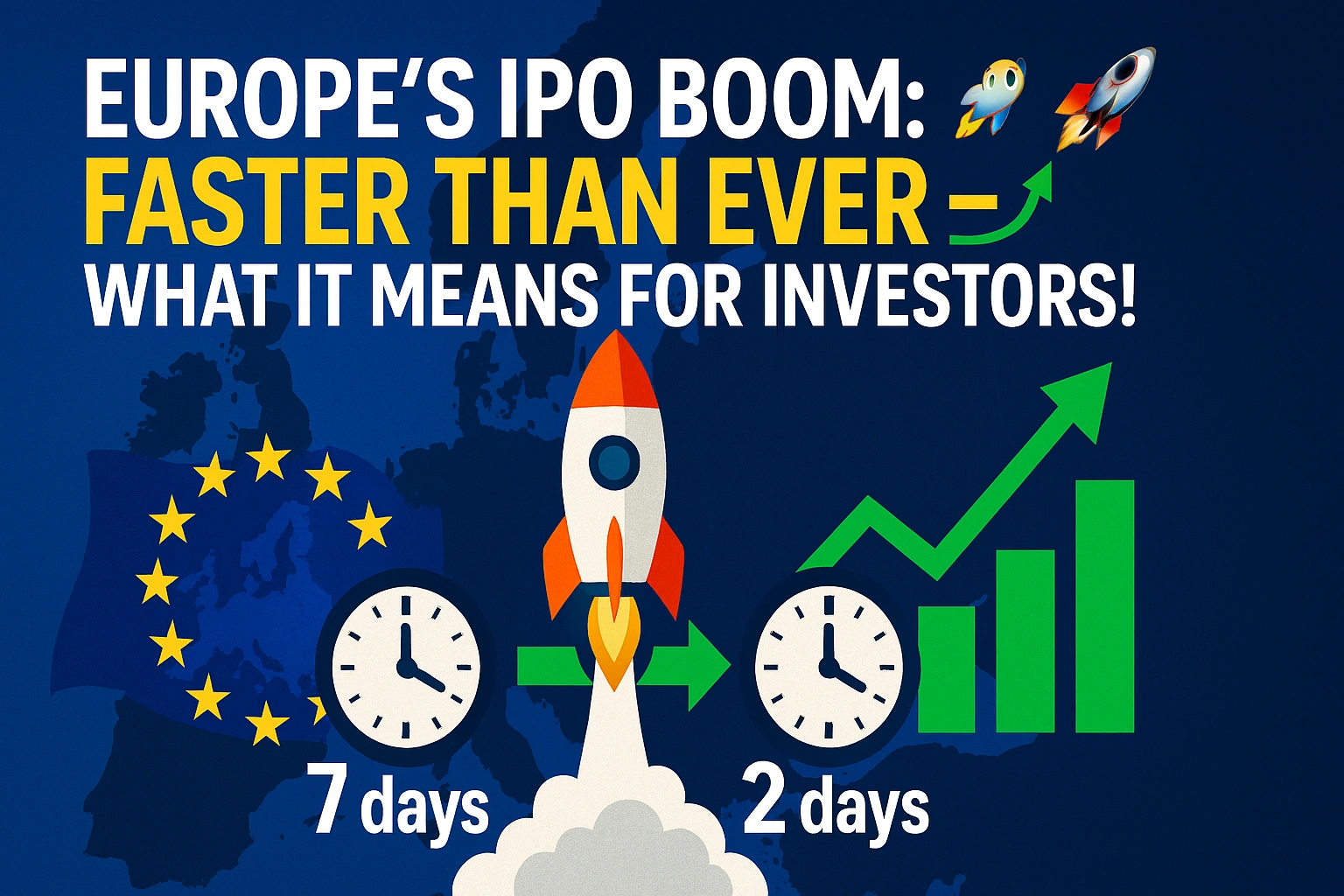
The European IPO market is experiencing a dramatic transformation. After years of cautious positioning, banks are accelerating deal execution at an unprecedented pace, compressing traditional bookbuilding timelines to capitalize on robust investor appetite. This shift comes as Europe’s IPO pipeline for 2026 builds momentum across defense, industrials, financials and technology sectors Cleary Gottlieb, signaling what could be the continent’s most significant equity capital markets resurgence since the pre-pandemic era.
Picture this: a major European defense contractor launches its IPO roadshow on a Monday, gathers investor commitments by Wednesday, and prices the deal by Friday. What once took weeks now unfolds in days. This isn’t hypothetical—it’s the new reality of European IPO execution in 2026, driven by a potent combination of pent-up demand, geopolitical urgency, and institutional investors hungry for quality European equities.
The Shift to Faster IPOs
The traditional IPO playbook is being rewritten. Investment banks across Europe are pushing for dramatically shortened bookbuilding periods—the critical window between launching investor roadshows and pricing the deal—to reduce market risk and lock in favorable valuations before sentiment shifts.
Private equity-backed IPOs more than doubled year-over-year in 2025, aided by anchor investors and early book momentum, features increasingly central to European execution strategies Cleary GottliebClearymawatch, according to Cleary Gottlieb. This trend has intensified into early 2026, as bankers realize that extended marketing periods expose deals to volatility without necessarily improving pricing outcomes.
The acceleration reflects a fundamental shift in market dynamics. Rather than leisurely two-week roadshows followed by week-long bookbuilding processes, issuers and their advisors are condensing timelines to three to five days of intensive investor engagement. The strategy minimizes execution risk in an environment where market sentiment can pivot rapidly based on macroeconomic data, central bank signals, or geopolitical developments.
Driving Factors and Market Demand
Why the rush? Several converging forces are propelling this European IPO recovery and the accompanying speedy execution:
Strong Stock Market Performance: European defense stocks, in particular, have seen astronomical gains. The Stoxx Europe Total Market Aerospace & Defense Index climbed over 12% between the start of the year and January 9 ION Analytics, as reported by ION Analytics. This performance has created favorable backdrop conditions for new listings.
Institutional Appetite: After years of European equity underperformance relative to U.S. markets, institutional allocators are recognizing value. The combination of reasonable valuations, earnings growth in key sectors, and currency considerations has brought global capital back to European exchanges.
Regulatory Tailwinds: Regulatory recalibration across the UK and EU, including reforms to listing and prospectus regimes, tax incentives for post-IPO trading and relaxed French and Belgian disclosure rules, reflects an ongoing effort to enhance the competitiveness of European capital markets Cleary Gottlieb, notes Cleary Gottlieb. These reforms reduce compliance burdens and make the IPO process more efficient.
Anchor Investor Strategy: Banks are securing cornerstone investors early in the process, building confidence that allows for compressed timelines. When 30-40% of an offering is committed before the public marketing begins, the remaining bookbuilding can proceed rapidly.
Real-Time Data and Examples
The defense sector exemplifies these European IPO trends 2026 in action. Czechoslovak Group (CSG) raised €3.8 billion ($4.5 billion) in its IPO, marking the world’s largest defense IPO ever recorded CNBC, according to CNBC. The Prague-based defense manufacturer’s shares surged 31% on their Amsterdam debut in late January, demonstrating the robust demand underpinning fast bookbuilding Europe.
CSG received investment commitments totaling €900 million from Artisan Partners Global Equity Team, BlackRock-managed funds, and Qatar’s Al-Rayyan Holding Defense News before going public, as Defense News reported. This anchor investor support allowed for efficient execution.
The defense pipeline continues to build. KNDS, the French-German maker of the Leopard 2 main battle tank, announced plans for a dual listing in Paris and Frankfurt in 2026, with an order backlog of €23.5 billion KNDS Group, per the company’s announcement. These billion-euro-plus offerings are being executed with unprecedented speed compared to historical norms.
Beyond defense, the European IPO pipeline 2026 shows remarkable breadth. Euronext launched its IPOready 2026 program with over 160 companies from 22 countries, representing €29 billion in combined annual revenue and 140,000 employees Euronext, according to Euronext’s announcement. Technology companies comprise 69% of participants (TMT 43%, Healthtech 17%, Cleantech 9%), reflecting European stock market demand for innovative growth stories.
Comparative Analysis: Bookbuilding Evolution
| Period | Traditional Bookbuilding Timeline | 2026 Accelerated Timeline | Key Drivers |
|---|---|---|---|
| 2019-2021 | 7-14 days typical | Standard process | Stable markets, extensive roadshows |
| 2022-2024 | Extended or postponed | Market volatility | Rate hikes, geopolitical uncertainty |
| 2026 | 3-5 days increasingly common | Compressed execution | Strong demand, anchor investors, reduced market risk |
Risks and Analyst Insights
Not everyone embraces this acceleration without reservations. Critics argue that compressed timelines may compromise price discovery, potentially disadvantaging either issuers or investors depending on how quickly sentiment shifts.
“The speed is impressive, but it requires tremendous preparation,” notes one ECM banker familiar with recent European defense IPOs. “You need your story locked down, your anchor investors committed, and your syndicate aligned before you even launch. There’s no room for iteration once the process begins.”
The IPO market risk reduction strategy—the core rationale for faster bookbuilding periods—assumes markets remain stable during the condensed window. If volatility spikes mid-process, issuers face difficult decisions about whether to push through at potentially unfavorable prices or pull the offering entirely.
Europe is seeing less IPO activity overall, and those that do come to market tend to feature more resilient cash flow-oriented business models, stronger governance and clearer value-creation roadmaps EY, according to EY’s Global IPO Trends report. This selectivity supports rapid execution—only the highest-quality issuers can command the investor confidence necessary for compressed timelines.
From a macroeconomic perspective, activity in 2025 demonstrated a return of confidence in global IPO markets, marked by a selective and fast-moving environment where investors favored scale, clarity and resilience EY, says Karim Anani, EY Global IPO Leader, as quoted in EY’s report. This selectivity creates a self-reinforcing cycle: strong companies execute quickly, weak ones struggle to gain traction regardless of timeline.
Outlook for 2026
The speedy European IPOs trend appears sustainable through at least the first half of 2026, barring major macroeconomic shocks. Several factors support this outlook:
Deepening Pipeline: Banks anticipate a strong start for European IPOs in 2026, with active pipelines building across defense, industrials, financials and technology Cleary Gottlieb, according to Cleary Gottlieb. The defense sector alone could see multiple billion-euro listings beyond CSG and KNDS.
Private Equity Pressure: Years of constrained exit opportunities have created urgency among sponsors. Dual-track processes are expected to increase as private equity sponsors seek liquidity in a favorable macro environment Cleary Gottlieb, notes Cleary Gottlieb’s analysis. These sophisticated sellers favor efficient execution.
Technology Renaissance: While U.S. markets dominate AI headlines, European technology companies are preparing significant listings. The Euronext IPOready cohort suggests a robust pipeline of tech-enabled industrials, healthtech innovators, and cleantech pioneers.
Continued Geopolitical Support: European defense spending commitments—driven by NATO requirements and regional security concerns—provide multi-year revenue visibility for contractors. This certainty supports compressed IPO timelines by reducing due diligence complexity.
However, risks remain. Geopolitical risks and trade tensions remain risks to European IPO activity in 2026 Cleary Gottlieb, cautions Cleary Gottlieb. Any significant deterioration in U.S.-Europe trade relations, escalation of conflicts, or unexpected monetary policy shifts could quickly close IPO windows.
Conclusion: A New Normal for European Capital Markets
The acceleration of European IPO bookbuilding represents more than a tactical adjustment—it signals a maturing market that has learned to operate with greater efficiency. Banks are pushing for speedy European IPOs not merely to reduce market risk, but because they’ve recognized that in today’s environment, prolonged processes often create risk rather than mitigate it.
As we’ve seen in recent European IPO surges, particularly in the defense sector with CSG’s record-breaking debut, strong fundamentals combined with genuine investor demand create conditions where compressed timelines succeed. The shift toward shrinking bookbuilding periods reflects market reality: when quality issuers meet receptive investors, the middle doesn’t need to be long.
For companies contemplating listings in 2026, the message is clear: preparation is paramount. The compressed timelines demand that governance, financial reporting, equity story, and investor targeting all be finalized before launch. There’s no time for improvisation when the bookbuilding clock runs for days instead of weeks.
The European IPO market recovery appears genuine, underpinned by improving economic fundamentals, regulatory reforms, and genuine investor appetite. Whether this translates to a sustained multi-year renaissance or a short-lived window depends on factors beyond banks’ control—but for now, speed is the watchword as European capital markets sprint into 2026.
Discover more from The Economy
Subscribe to get the latest posts sent to your email.



How once-unimaginable catastrophes become baseline assumptions
There is a particular kind of hubris that infects markets in the long stretches between catastrophes. Volatility compresses. Risk premia decay. The insurance gets quietly cancelled because it hasn’t paid out in years and the premiums feel like wasted money. Then the disaster arrives — not as a distant rumble but as a wall of water — and the entire analytical framework investors have spent years constructing turns out to have been a map of the wrong country.
We are living through one of the most instruction-rich moments in modern financial history. Since February 28, 2026, when the United States launched military operations against Iran and Tehran responded by closing the Strait of Hormuz, markets have been running a live masterclass in catastrophe pricing. West Texas Intermediate crude surged from $67 to $111 per barrel in under a fortnight — the fastest oil spike in four decades. War-risk insurance premiums on shipping through the Gulf soared more than 1,000 percent. The S&P 500 lost 5 percent in a single week, and the ECB and Bank of England are now staring down a renewed tightening scenario they spent the first quarter of 2026 insisting was off the table.
And yet — and this is the part that should make every portfolio manager uncomfortable — the analytical mistakes driving losses right now are not new. They are the same six structural errors investors have made in every previous crisis. Understanding them, really understanding them, is not an academic exercise. It is the difference between surviving the next disaster and being liquidated by it.
Key Takeaways at a Glance
- Markets price first-order disaster impacts; second- and third-order cascades are systematically underpriced
- Volatility is information; price-discovery failure is the true systemic risk — monitor private-to-public valuation spreads
- Tight CAT bond spreads signal capital crowding, not benign risk — use compression as a contrarian indicator
- Emerging market currencies and credit spreads lead developed-market pricing of global disasters
- Geopolitical risk premia decay faster than structural damage — separate the transitory from the permanent
- The best time to buy tail protection is when every indicator says you do not need it
Lesson One: Markets price the disaster they know, not the one that is compounding behind it
The economics of disaster pricing contain a fundamental asymmetry. Markets are reasonably good at incorporating a known risk — geopolitical tension, elevated VIX, stretched valuations — into current prices. What they catastrophically underprice is the second-order cascade that no single model captures.
Consider what the Hormuz closure actually detonated. Yes, oil went to $111 per barrel. Obvious. What was less obvious: the inflation feedback loop that forced investors to reprice central bank paths they had already discounted as settled. The Federal Reserve was expected to hold rates in 2026; futures now assign a 74 percent probability it does not cut at all this year. Europe’s energy import dependency made the ECB’s position worse. That transmission — from oil shock to rate-repricing to credit stress to equity multiple compression — is a chain, not a point event. Most risk models price the first link.
The academic framework for this is well established but rarely operationalised. The NBER disaster-risk literature, particularly Wachter (2013) and Barro (2006), argues that rare disasters produce risk premia that appear irrational in calm periods but are in fact the rational price of tail exposure across long time horizons. What these models miss, however, is that real-world disasters rarely arrive as clean, isolated point events. They arrive as cascades. The COVID-19 pandemic was not just a health shock — it was simultaneously a supply-chain shock, a demand shock, a sovereign-debt shock, and a labour-market restructuring shock. The Hormuz closure is not just an oil shock. It is an inflation shock, a monetary policy shock, a EM balance-of-payments shock, and an AI-investment sentiment shock, all at once.
Key takeaway: Map not just the primary disaster scenario but every second- and third-order transmission mechanism it activates. The primary impact is already partially in the price. The cascades are not.
Lesson Two: The real crisis is not volatility — it is the collapse of price discovery
Scott Bessent, the US Treasury Secretary, said something in March 2026 that deserves to be read not as politics but as a precise financial concept. Asked what genuinely frightened him after 35 years in markets, Bessent answered: “Markets go up and down. What’s important is that they are continuous and functioning. When people panic is when you’re not able to have price discovery — when markets close, when there is the threat of gating.”
Volatility is information. A price moving sharply up or down is a market doing exactly what it should: integrating new signals, adjusting expectations, clearing. The true systemic catastrophe is not a 10 percent drawdown. It is the moment when buyers and sellers can no longer find each other at any price — when the mechanism that produces prices breaks entirely.
This is not theoretical. Private credit markets are currently exhibiting exactly this dynamic. US BDCs — business development companies that provide credit to mid-market companies — have seen share prices fall 10 percent and trade 20 percent or more below their latest stated NAVs. Alternative asset managers that collect fees from these vehicles are down more than 30 percent. The public market is rendering a verdict on private valuations that the private market itself cannot yet deliver, because the private marks have not moved. There is no continuous clearing mechanism. There is no daily price discovery. There is only the last funding round — which is a negotiated fiction, not a price.
Investors who understand this distinction can do something useful with it: treat the spread between public-market pricing and private-market marks as a real-time fear gauge. When that gap widens sharply, the market is not panicking irrationally. It is pricing the absence of price discovery itself.
Key takeaway: Distinguish between volatility (information-rich, manageable) and price-discovery failure (structurally dangerous, contagion-prone). Monitor private-to-public valuation spreads as a leading indicator of the latter.
Lesson Three: Catastrophe bond complacency is always a warning, never a reassurance
In February 2026, Bloomberg reported that catastrophe-bond risk premia had fallen to levels not seen since before Hurricane Ian struck Florida in 2022. The cause was a surge of fresh capital chasing ILS yields. Managers called it a healthy market. A more honest reading is that it was a market pricing the wrong risk for the wrong reasons.
Here is the structural problem with catastrophe bonds, and indeed with most insurance-linked securities: the risk premium is set by the supply of capital chasing the trade, not by the true probability distribution of the underlying disaster. When capital floods in — as it has, driven by institutional allocators seeking uncorrelated returns — spreads compress regardless of whether the actual hurricane, flood, or geopolitical catastrophe risk has changed. The academic literature on CAT bond pricing, including recent work in the Journal of the Operational Research Society, confirms that cyclical capital flows consistently distort the risk-neutral pricing of catastrophe events.
The counter-intuitive lesson: when CAT bond spreads are tightest, protection is cheapest to buy and most expensive to have sold. The compression that looks like market efficiency is often capital crowding masquerading as a risk assessment. A catastrophe-bond market trading at pre-Ian yields six months before an Iran-driven energy crisis was not a serene market. It was a complacent one.
Key takeaway: Use catastrophe-bond spread compression not as a signal of benign risk conditions but as a contrarian indicator of under-priced tail exposure. Buy protection when it is cheap; do not sell it because it is cheap.
Lesson Four: Emerging markets absorb the shock first — and price it most honestly
There is a geographic hierarchy to disaster pricing that sophisticated global investors routinely ignore. When a major geopolitical or macro catastrophe detonates, the signal appears first in emerging market currencies, credit spreads, and energy import bills — not in the S&P 500 or the Dax. This is not because EM markets are more efficient. It is because they have less capacity to absorb shocks and therefore less incentive to pretend the shock is temporary.
The Hormuz closure is a case study. Developed-market investors spent the first week debating whether oil at $111 per barrel was “priced in.” Meanwhile, Gulf states were issuing precautionary production-cut announcements and Middle Eastern shipping had effectively ceased. Economies in South and Southeast Asia — which import 80 percent or more of their petroleum needs — faced simultaneous currency pressure (oil is dollar-denominated), fiscal pressure (fuel subsidies explode), and inflation pressure (food and transport costs surge). Countries like Pakistan, Sri Lanka, and Bangladesh were pricing a recession before most DM economists had updated their Q1 2026 forecasts.
The BIS research on disaster-risk transmission across 42 countries documents precisely this dynamic: world and country-specific disaster probabilities co-move in complex, non-linear ways. When global disaster probability rises, EM asset prices move first and fastest. For a DM investor, this is an early-warning system hiding in plain sight.
Key takeaway: Monitor EM currency indices, sovereign credit spreads, and fuel import data as leading indicators of how the global market is actually pricing a disaster — before the consensus in New York or London has caught up.
Lesson Five: Geopolitical risk premia have a half-life problem — and it is shorter than you think
Markets are extraordinarily good at normalising the catastrophic. This is not a character flaw; it is a survival mechanism. But for investors, the normalisation of extreme risk is one of the most financially treacherous dynamics in markets.
Consider the structural pattern Tyler Muir documented in his landmark paper Financial Crises and Risk Premia: equity risk premia collapse by roughly 20 percent at the onset of a financial crisis, then recover by around 20 percent over the following three years — even when the underlying structural damage persists. Wars display an even more dramatic version of this pattern. The initial shock is priced aggressively. But as weeks become months, the equity market begins to discount the conflict as background noise, even if oil remains $20 per barrel above pre-war levels and inflation continues to compound.
This half-life problem cuts in two directions. On the way in: investors are often too slow to price a new geopolitical risk, underestimating how durable its effects will be. On the way out: investors often reprice risk premia too quickly back to baseline, treating a structural change in the global system as if it were a weather event that has now passed. The Strait of Hormuz may reopen. But global shipping has permanently re-priced war-risk. Sovereign wealth funds in the Gulf are permanently reconsidering their US dollar reserve holdings. Indian and Japanese energy policymakers are permanently accelerating domestic diversification. These structural changes do not vanish when the headline risk premium fades.
Key takeaway: When pricing geopolitical disasters, separate the acute risk premium (which will fade) from the structural repricing (which will not). The former is a trading signal. The latter is an asset allocation decision that most portfolios have not yet made.
Lesson Six: The moment you feel safest is precisely when you are most exposed
The final lesson is the most counter-intuitive, and arguably the most important. There is a specific period in any market cycle — often 18 to 36 months after the previous crisis — when the cost of tail protection is at its cheapest, investor confidence is high, and catastrophe risk feels entirely theoretical. This is exactly when the next disaster is being loaded.
We can locate this period with precision in the current cycle. In early 2026, the CAPE ratio on US equities reached 39.8, its second-highest reading in 150 years. The Buffett Indicator (total market cap to GDP) hovered between 217 and 228 percent — historically associated with the period immediately before major corrections. CAT bond spreads were at post-Ian lows. VIX had compressed back to mid-teens. Private-credit redemption queues were elevated but not yet alarming. And the macroeconomic consensus — including, notably, within the US Treasury — was that tariff-driven inflation would prove transitory and that central banks would be cutting before mid-year.
Every one of those conditions has now reversed. The reversal took six weeks.
The academic literature on learning and disaster risk, particularly the Kozlowski, Veldkamp, and Venkateswaran (2020) framework on “scarring” from rare events, finds that markets systematically underestimate disaster probability in long stretches without disasters, then over-correct sharply when one arrives. This is not irrationality in the pejorative sense — it is Bayesian updating in the presence of genuinely ambiguous information. But the practical implication is stark: the time to buy disaster insurance is not after the disaster has arrived and the VIX has spiked to 45. It is in the quiet months when every indicator says you don’t need it.
Key takeaway: Maintain systematic, rule-based disaster hedges that do not depend on a real-time catastrophe forecast. The moment it feels unnecessary to hold tail protection is the moment the portfolio is most exposed to needing it.
The Synthesis: From Lessons to Portfolio Architecture
These six lessons converge on a single architectural principle: disaster pricing is not a moment-in-time forecast exercise. It is a permanent structural feature of portfolio construction.
The real mistake — the one that has cost investors dearly in 2020, in 2022, and again in 2026 — is not failing to predict the next disaster. It is believing that markets have already priced it in. The history of catastrophe pricing teaches us, with brutal consistency, that they have not. The cascade is underpriced. The price-discovery failure is unmodelled. The CAT bond spread is supply-driven, not risk-driven. The EM signal is ignored. The geopolitical risk premium is given a shorter half-life than the structural damage it caused. And the tail hedge is cancelled precisely when it is most needed.
The investors who will outperform across the full cycle are not those who predicted the Hormuz closure or the tariff escalation or the next crisis that has not yet been named. They are those who understood that unpriceable disasters are not unpriceable because they are impossible to imagine. They are unpriceable because the incentive structures of the investment industry consistently penalise the premiums required to hedge them.
That gap between what disasters cost and what markets charge for protection is not a market inefficiency. It is the most durable alpha in finance. Learning to harvest it is, in the deepest sense, the only lesson that matters.
Discover more from The Economy
Subscribe to get the latest posts sent to your email.
Analysis
How to Make the Startup Battlefield Top 20 — And What Every Company Gets Regardless (Even If You Don’t Win)
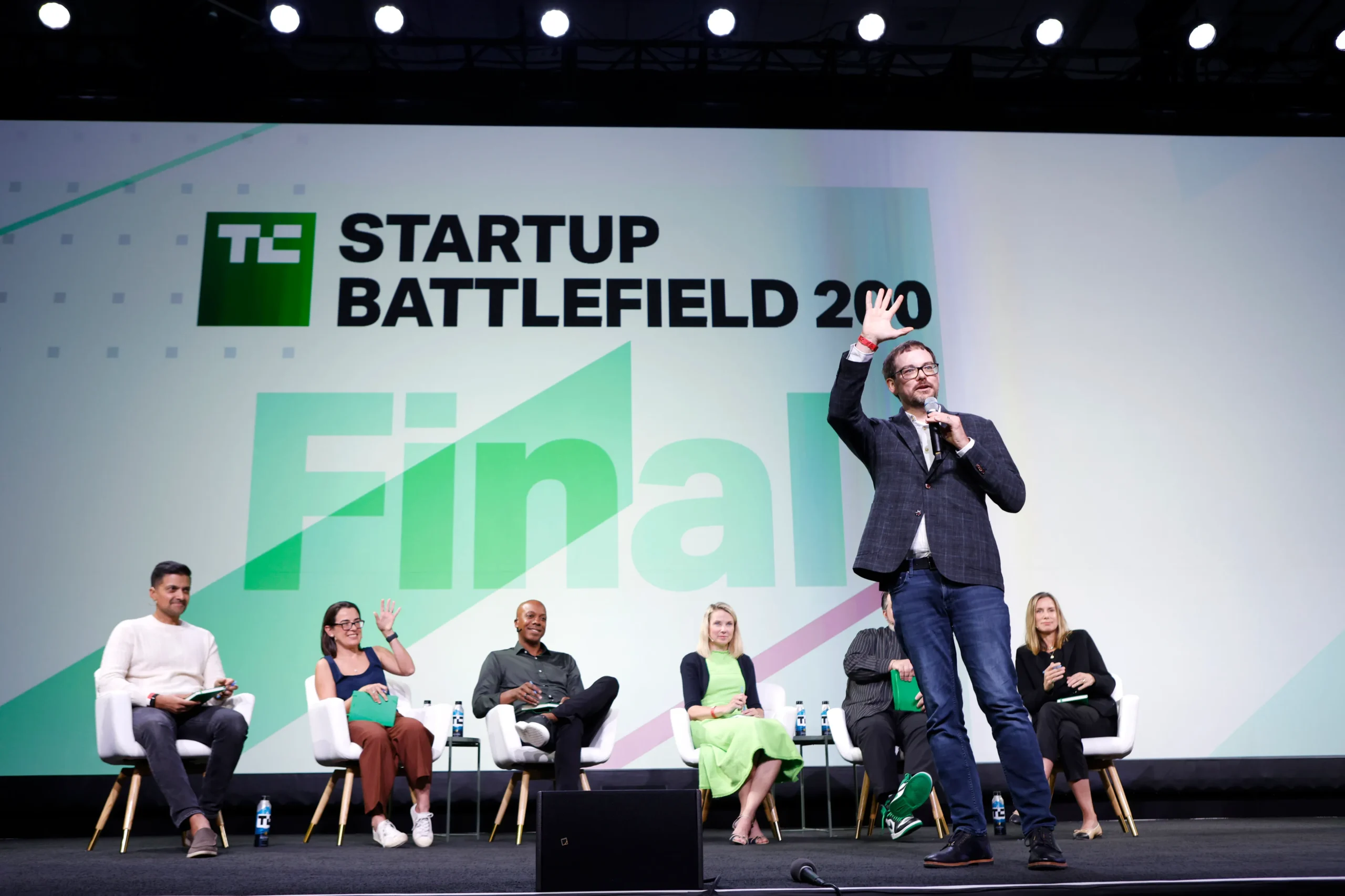
Applications close May 27, 2026. TechCrunch Disrupt runs October 13–15 in San Francisco. The clock is already ticking — and the smartest founders I know aren’t waiting.
Let me tell you about a founder I met in Lagos last spring. Her name is Adaeze, and she builds infrastructure for cross-border health payments across West Africa. She submitted to the Startup Battlefield 200 with nine months of runway, a product live in three markets, and the kind of quiet conviction that doesn’t photograph well but moves rooms. She didn’t make the Top 20. She didn’t step onto the Disrupt Main Stage. She didn’t shake hands with Aileen Lee under the camera lights.
What she did get was a TechCrunch profile, two warm intros from Battlefield alumni, a due diligence process that forced her to compress her pitch to its sharpest possible form, and — six weeks later — a Series A term sheet from a fund that had discovered her through the Battlefield ecosystem. “Not winning,” she told me, “was the best thing that happened to my company.”
That’s the story no one tells loudly enough. The Startup Battlefield Top 20 is real, legendary, and worth obsessing over. But the Battlefield 200 is where category-defining companies are actually forged — and the moment you hit submit, the real prize has already begun to arrive.
The Myth of the Main Stage: Why Everyone Chases Top 20 (And Why They’re Half Right)
The cultural mythology of the Startup Battlefield is formidable. Since its inception, the competition has introduced the world to companies including Dropbox, Mint, and Yammer at a moment when most of the investing world hadn’t yet heard their names. That legacy creates an understandable gravitational pull: every founder imagines themselves under those lights, six minutes on the clock, a panel of the most consequential venture capitalists alive leaning slightly forward.
And the 2026 judges panel is, frankly, extraordinary. Aileen Lee of Cowboy Ventures — the woman who coined the term “unicorn” — sits alongside Kirsten Green of Forerunner, whose consumer instincts have been quietly prescient for fifteen years. Navin Chaddha of Mayfield, Chris Farmer of SignalFire, Dayna Grayson of Construct Capital, Ann Miura-Ko of Floodgate, and Hans Tung of Notable Capital round out a panel whose collective portfolio value runs into the hundreds of billions. Six minutes in front of that group is, genuinely, not nothing.
But here’s the contrarian truth most competition coverage won’t say plainly: the Main Stage is a broadcast mechanism, not a selection mechanism. The investors in that room — and the far larger audience watching the livestream globally — are equally attentive to the Battlefield 200 track, the hallway conversations, the TechCrunch editorial context that frames every competing company. Making the Top 20 amplifies a signal. The Battlefield 200 creates the signal in the first place.
The real mistake isn’t failing to reach Top 20. It’s failing to apply.
What It Actually Takes to Make Startup Battlefield Top 20 in 2026
TechCrunch is not secretive about its selection criteria, which makes it all the more remarkable how many applications fail to address them directly. The official 2026 Battlefield selection framework prioritizes four factors — and most founders stack-rank them incorrectly.
1. Product Video: The Most Underestimated Requirement
The two-minute product video is where the majority of applications functionally end. Judges watch hundreds of these. They are, by professional training, pattern-matching for momentum, clarity, and differentiated function — not production quality. A founder filming in a Lagos apartment who shows the actual product moving actual money in real time will outperform a polished agency reel showing a UI mockup every single time.
Your product video needs three things: a real user doing a real thing in thirty seconds, a founder who speaks with the specificity of someone who built it themselves, and a problem framing that makes the viewer feel slightly embarrassed they hadn’t noticed it before. That’s it. That’s the whole brief.
2. Founder Conviction, Not Founder Charisma
There is a widespread and damaging conflation of conviction with performance. TechCrunch’s editorial team has been explicit: they are selecting for companies they believe will define markets, not founders they believe will win pitch competitions. Conviction means you have answered — specifically, not philosophically — why this market, why now, why you, and what happens if you’re right at scale. Charisma is pleasant. Conviction is decisive.
3. Competitive Differentiation That’s Immediately Legible
In a category saturated with AI-adjacent pitches, the differentiation bar has risen sharply for 2026. Judges are looking for what PitchBook’s 2025 venture trends analysis identified as “structural moats” — advantages rooted in proprietary data, regulatory positioning, hardware-software integration, or distribution relationships that aren’t easily replicated by a well-funded incumbent. If your differentiation is “we’re faster/cheaper/cleaner,” you haven’t found it yet.
4. An MVP That’s Actually in Market
The Battlefield 200 accepts pre-revenue companies, but the Top 20 almost universally goes to founders with real users experiencing a real product. This isn’t a formal criterion — it’s an observable pattern. Live usage creates a gravitational narrative that hypothetical TAMs simply cannot replicate. If you’re three months from launch, apply to Battlefield 200 now, use the application process to sharpen your story, and come back with stronger ammunition when your product is breathing.
The Hidden Premium Package: What Every Battlefield Applicant Gets
This is the part of the Battlefield story that receives almost no coverage, and I think that’s partly intentional. TechCrunch benefits from the mythology of the Main Stage. But the Battlefield 200 package — available to every company selected from thousands of global applicants — is, frankly, staggering for an early-stage company.
Every Battlefield 200 company receives:
- A dedicated TechCrunch article — organic, editorial, indexed globally. At a domain authority that rivals the FT for technology coverage, this is not a press release. This is coverage.
- Full Disrupt conference access — three days in the room where allocation decisions happen informally, between sessions, over coffee. Harvard Business Review research on startup ecosystems has consistently found that informal investor touchpoints at concentrated events produce conversion rates multiple times higher than formal pitch processes.
- Exclusive partner discounts and resources — AWS credits, legal services, SaaS tooling — the kind of operational runway extension that actually matters when you’re still pre-Series A.
- The Battlefield alumni network — a cross-vintage community of founders who have navigated similar scaling inflection points and are, as a cultural matter, unusually generous with warm introductions.
- The due diligence forcing function — this is the hidden premium feature nobody talks about. The application process forces you to compress your narrative, clarify your defensibility, and confront your assumptions in ways that three months of internal planning rarely achieves. The best founders I know treat Battlefield applications as strategic planning exercises with publishing rights.
You do not need to win to receive these. You need to be selected for the Battlefield 200. And you need to apply by May 27, 2026.
A Global Economist’s Lens: Why Battlefield Matters Far Beyond San Francisco
Here’s the dimension of this competition that the tech press chronically underweights: the Startup Battlefield is no longer a California story.
The 2026 applicant pool will draw from startup ecosystems that, five years ago, barely registered in global VC data. Lagos. Nairobi. Bangalore. Jakarta. São Paulo. Warsaw. Riyadh. These aren’t edge cases — they’re the growth frontier. The World Economic Forum’s 2025 Global Startup Ecosystem Report found that emerging-market startup activity grew at 2.3 times the rate of Silicon Valley across the prior two years, even as absolute capital remained concentrated in traditional hubs.
The Battlefield, when it amplifies a Nairobi health-tech company or a Warsaw defense-technology startup, isn’t being charitable. It’s being correct about where the next wave of valuable companies is actually forming. The judges know this. The TechCrunch editorial team knows this. The AI wave, the climate infrastructure wave, and the defense-tech wave are all, fundamentally, global waves — and the founders best positioned to ride them often sit far outside Sand Hill Road.
For international founders specifically, the Battlefield 200 functions as a credentialing mechanism in a way that no local competition can replicate. A TechCrunch editorial mention is legible to any investor in any timezone. That’s an asymmetric advantage worth crossing an ocean for.
The Insider Playbook: Application Tactics That Separate Top 20 from the Rest
Let me be direct. After studying Battlefield alumni companies and talking with founders across multiple cohorts, the differentiation between Top 20 and the broader Battlefield 200 comes down to a handful of consistent patterns.
Lead with the insight, not the solution. The most memorable applications open with a counterintuitive observation about a market — something that makes the reader feel briefly disoriented before the product snaps everything into focus. Don’t open with your product. Open with the thing you know that most people don’t.
Show the unfair advantage early. Judges are filtering for irreplaceability. What do you have that a well-funded competitor cannot simply buy? Name it explicitly. Don’t make judges infer it.
Let your numbers do the emotional labor. Retention rates, NPS scores, revenue growth trajectories — when these are strong, they communicate conviction more credibly than any adjective. If your numbers aren’t strong yet, show the qualitative signal with the same specificity: customer quotes, use-case depth, early partnership terms.
Apply even if you think you’re not ready. This is perhaps the most counterintuitive piece of advice I can offer, and I give it with full conviction. The application process itself — the forcing function of articulating your thesis, differentiation, and trajectory in a compressed format — is a strategic tool. The companies that use Battlefield applications as a planning discipline, regardless of outcome, emerge sharper. Apply now. Sharpen later if needed.
Target the Battlefield 200 explicitly, not just the Top 20. Frame your application for a reader who wants to discover a company worth writing about. TechCrunch’s editorial team is not just selecting pitch competitors — they’re selecting companies they want to cover. Give them a story.
The Founder Mindset Shift: Applying Is Never a Risk
There’s a question I hear constantly from founders considering the Battlefield: What if we apply and don’t get in?
I want to reframe this question entirely, because it misunderstands the nature of the opportunity.
The risk isn’t applying and not making Battlefield 200. The risk is building a company in 2026 without forcing yourself through the disciplined articulation that serious competition requires. The risk is arriving at your Series A pitch without having stress-tested your narrative against the sharpest editorial and investor judgment available for free. The risk is letting the May 27 deadline pass while you wait for more traction, more polish, more time — none of which will make the application easier, only theoretically safer.
The $100,000 equity-free prize awarded to the Top 20 winner is real and meaningful. But the actual prize structure of the Startup Battlefield is far more democratic than that figure suggests. Every company in the Battlefield 200 receives resources, visibility, and credibility that early-stage startups typically spend years accumulating through slower, more expensive channels.
The Main Stage is where careers are validated. The Battlefield 200 is where they’re launched.
Apply before May 27, 2026. TechCrunch Disrupt runs October 13–15 in San Francisco. The application is free. The upside is not.
The question isn’t whether you’re ready for the Battlefield. The question is whether you’re ready for what not applying costs you.
→ Submit your Startup Battlefield 2026 application at TechCrunch Disrupt before May 27, 2026. Applications are free. The stage is global. Your category is waiting.
Discover more from The Economy
Subscribe to get the latest posts sent to your email.
The Ceasefire That Nearly Didn’t Happen — and Why It Changes Everything
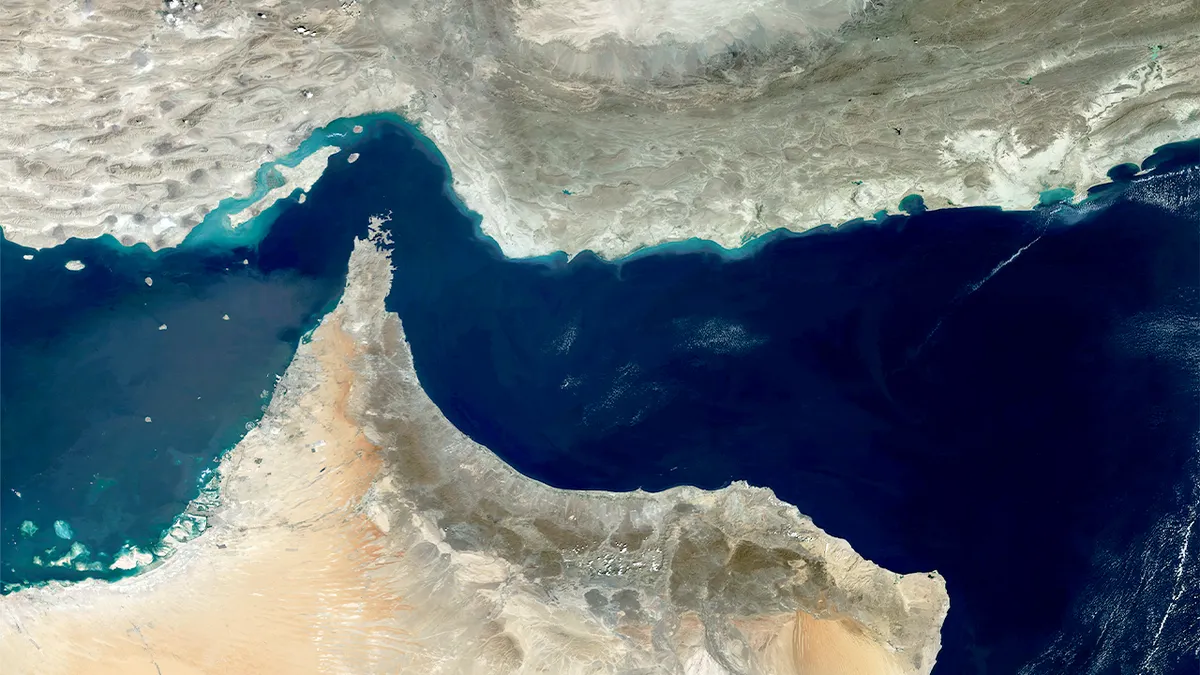
It was, in the bluntest possible terms, a civilization held to ransom. For forty days, the United States and Israel had struck Iran with a ferocity not seen since the Second World War — bridges, power plants, universities, military installations reduced to rubble. Iran had responded by sealing the Strait of Hormuz, the 21-mile chokepoint through which roughly a fifth of the world’s daily oil supply once flowed freely, triggering what the International Energy Agency has characterized as the single largest disruption to global oil markets in recorded history. Then, with less than two hours before Donald Trump’s deadline to rain “obliteration” on what remained of Iranian civilian infrastructure, Islamabad performed a diplomatic miracle.
Pakistan Prime Minister Shehbaz Sharif asked Trump to extend his deadline by two weeks and simultaneously urged Tehran to reopen the strait as a goodwill gesture, framing the appeal in terms of giving diplomacy time to run its course. CNBC It worked. Trump announced a two-week, double-sided ceasefire on the condition that Iran agree to the “complete, immediate, and safe opening of the Strait of Hormuz,” citing a 10-point Iranian peace proposal as “a workable basis on which to negotiate.” Axios
The phrase “workable basis” — anodyne to the casual reader — is, in the diplomatic lexicon of great-power competition, nothing short of seismic.
What Iran’s 10-Point Plan Actually Contains — and What It Reveals
Strip away the triumphalist messaging from both Tehran and Washington, and Iran’s 10-point proposal reads less like a peace plan and more like a maximalist opening bid from a government that has been bombed back to the pre-digital age and knows it. The plan, as spelled out by Iran’s Supreme National Security Council, includes controlled passage through the Strait of Hormuz coordinated with Iranian armed forces, the necessity of ending the war against all components of the “resistance axis,” and the withdrawal of U.S. combat forces from all regional bases and positions. NBC News It also calls for lifting all sanctions, releasing Iranian assets frozen abroad, and full payment of Iran’s war-related damages. CNBC
This is not, on any plain reading, a document the Trump administration will sign in its current form. But it is a document designed to do something far more subtle: establish Iran as a state with agency, leverage, and a coherent strategic vision — even in defeat. The Supreme National Security Council’s accompanying claim that “nearly all war objectives have been achieved” NBC News is partly face-saving theater, but it also carries a kernel of uncomfortable truth. Iran has demonstrated, unambiguously, that it holds a hand no adversary can entirely trump: physical control over the jugular vein of global energy.
The ten points, read against the backdrop of six weeks of unprecedented aerial bombardment, constitute a negotiating position, not a capitulation. Tehran knows this. Washington, if it is honest with itself, knows it too.
Pakistan’s Quiet Triumph — and the New Architecture of Mediation
Before this week, Pakistan’s role in the great-power theatre of the Middle East was largely peripheral. Islamabad was a regional pivot — important to Washington for counterterrorism cooperation, to Beijing for the China-Pakistan Economic Corridor — but not a player in the first rank of Middle East diplomacy. That calculus has been permanently revised. The truce, brokered by Pakistan, follows fierce exchanges of airstrikes, missile attacks, and threats that saw unprecedented strikes on Gulf nations, disrupted global shipping routes, and heightened fears of a prolonged confrontation. Al Jazeera
Sharif’s intervention succeeded precisely because it offered both parties something neither could offer themselves: a procedural exit. Trump needed a formula that did not look like backing down; Iran needed survival with the rhetorical scaffolding of victory. Pakistan provided the ladder for both men to descend. Peace talks are expected to begin in Islamabad on Friday, with Vice President JD Vance likely to lead the American delegation. Axios
This is diplomatically significant beyond the immediate crisis. It signals that the post-American-unipolar world is not simply a world dominated by Chinese or Russian mediation — as Riyadh’s 2023 rapprochement with Tehran, brokered by Beijing, suggested. Pakistan’s success here introduces a new variable: middle powers, credibly positioned as neither adversaries nor puppets of Washington, may now carry decisive diplomatic weight in conflicts where the principal parties have exhausted their bilateral channels.
Beijing, ever quick to register shifts in multilateral architecture, moved with characteristic swiftness. China’s Foreign Ministry spokesperson said Beijing “welcomes the ceasefire agreement” and will “support the mediation efforts” by Pakistan and other parties, noting that Chinese Foreign Minister Wang Yi had held 26 phone calls with counterparts from relevant countries. ABC News That is not the statement of a bystander — it is the statement of a great power carefully positioning itself as indispensable to whatever comes next.
The Oil Market Shock: Anatomy of a Historic Selloff
The market reaction was, in a word, violent — and that violence was entirely rational.
WTI, the U.S. crude benchmark, tumbled almost 16% to $95 a barrel — still well above the $67 level it settled at on February 27, before the war began. Brent crude futures, the global oil benchmark, dropped 14% to $93.8 a barrel. CNN For context: Dated Brent — the global benchmark for physical barrels — had reached its highest recorded price of $144.42, according to S&P Global Platts, surpassing even the 2008 financial crisis peak. Axios And the selloff itself made history: analysts described it as the biggest one-day free fall in oil prices since the 1991 Gulf War. Axios
The arithmetic of the disruption explains the arithmetic of the relief. The war in the Middle East — and the effective closure of the crucial Strait of Hormuz — has caused the biggest oil supply shock on record, choking off roughly 12 million to 15 million barrels of crude oil a day. CNN As of Tuesday, 187 tankers laden with 172 million barrels of seaborne crude and refined oil products remained inside the Gulf, according to Kpler, a global trade intelligence firm. CNN
That backlog does not clear overnight. Ports are congested, tanker routing is scrambled, and insurance premiums — which had rendered the Strait commercially prohibitive — will not normalize until underwriters are satisfied that the ceasefire is durable. Tehran has in recent weeks reportedly charged some shipping companies a $2 million fee to guarantee safe passage through the strait. CNN Iranian foreign minister Araghchi’s confirmation that safe transit would be possible “via coordination with Iran’s Armed Forces” Axios is careful language — it preserves Iranian control as a structural fact, regardless of the ceasefire’s duration. As one economist noted, that amounts to a de facto partial nationalization of the world’s most important shipping corridor.
For investors navigating the aftermath: the relief rally is real, but it is pricing in a best-case scenario that two weeks of fragile diplomacy has not yet warranted. Energy sector equities that surged 40-100% year-to-date will face significant profit-taking. Airlines, petrochemical manufacturers, and consumer-facing retailers stand to benefit materially from every dollar of sustained oil price decline. But position sizing in either direction should be calibrated to the probability of the Islamabad talks collapsing — which, given the chasm between Washington’s core demands on Iran’s nuclear program and Tehran’s insistence on full sanctions relief, remains non-trivial.
The Stock Market Surge: Reading the Signal Correctly
Stocks surged across regions: South Korea’s Kospi jumped over 5%, Japan’s Nikkei rose 4%, Hong Kong’s Hang Seng gained more than 2%, and the pan-European Stoxx 600 climbed 3.6%. Futures tied to the Dow Jones Industrial Average rose by 967 points, S&P 500 futures added 2.1%, and Nasdaq 100 futures climbed 2.3%. CNBC
The equity market’s interpretation is straightforward: lower energy costs are a global stimulus. But sophisticated investors should separate the signal from the noise here. The stock market is not pricing a peace deal — it is pricing the possibility of a peace deal, which is a materially different thing. As one market analyst from eToro observed, “TACO is becoming less of a joke and more of a trading strategy across markets. Investors have seen enough last-minute pivots to know that a two-week deadline isn’t necessarily what it seems.” CNBC
The persistence of gold’s bid — spot gold rose 2.2% to $4,803.83 per ounce even as risk assets rallied CNBC — tells the more cautious half of the story. Institutional money is hedging. The relief rally and the haven bid are running simultaneously, which is the market’s elegant way of saying: we want to believe this, but we’ve been burned before.
The Quiet Winners — and the One Uncomfortable Loser Nobody Is Naming
History’s great turning points always redistribute power in ways that the initial headlines obscure. This ceasefire is no exception.
Pakistan emerges with diplomatic capital it will spend for years. Islamabad is now, demonstrably, a credible interlocutor between Washington and Tehran — a status no amount of lobbying or bilateral summitry could have purchased.
China emerges with its multilateral positioning validated. Beijing’s five-point Chinese-Pakistani peace framework, its 26 diplomatic phone calls, its quiet shuttle diplomacy in the Gulf — all of it contributed to the architecture that made the Pakistani intervention possible. The belt-and-road world, Beijing will quietly argue, is a more stable world.
Tehran — counterintuitively — emerges with its deterrence posture partially rehabilitated. The clerical establishment that many analysts, not least in Tel Aviv and Washington, expected to collapse under military pressure has survived. Its control over the Strait of Hormuz has been demonstrated as real, not rhetorical. Whatever the outcome of the Islamabad talks, that leverage does not disappear when the ceasefire expires.
The uncomfortable loser — the entity most conspicuously absent from the diplomatic success narrative — is Israel. The office of Israeli Prime Minister Benjamin Netanyahu announced that while Israel supports the United States’ two-week ceasefire with Iran, the deal does not include the fighting between Israel’s military and Iranian-backed groups in Lebanon. CBS News Netanyahu’s carve-out on Lebanon reveals a government that found itself outmaneuvered by a diplomatic process it could not control — partners in the military campaign, bystanders in its resolution.
The Road to Islamabad: What a Durable Deal Would Actually Require
The next two weeks are not, as Trump’s Truth Social effusions might suggest, a straightforward path to the “Golden Age of the Middle East.” They are a negotiation of extraordinary complexity, with parties whose core demands are structurally incompatible at the outset.
Washington’s irreducible minimum — shared explicitly by Netanyahu, who said the U.S. “is committed to achieving” the goal of ensuring Iran “no longer poses a nuclear, missile and terror threat” ABC News — is a verifiable end to Iran’s nuclear program. Tehran’s irreducible minimum, embedded in its 10-point plan, is the lifting of all sanctions and the normalization of its economy. Bridging those positions in fourteen days is not diplomacy; it is alchemy.
What Islamabad can realistically deliver is a framework agreement — a set of principles broad enough for both sides to claim success, specific enough to extend the ceasefire and return tanker traffic to the Strait, and ambiguous enough to defer the hard questions about nuclear verification, sanctions architecture, and Iran’s regional proxy network. That is not nothing. In the history of this particular conflict, it would be a great deal.
Vice President Vance, addressing critics within the Iranian system who are “lying about the nature of the ceasefire,” said: “If the Iranians are willing, in good faith, to work with us, I think we can make an agreement.” Axios That conditional is doing a lot of work. It is also, for now, the most honest assessment available of where things actually stand.
What This Means for Global Energy Security — the Structural Question That Survives Any Deal
Even if the Islamabad talks succeed beyond all reasonable expectation, this crisis has exposed a structural vulnerability in the architecture of global energy security that no ceasefire can paper over.
A single nation — Iran — demonstrated that it could, with conventional military and asymmetric naval tools, effectively halt nearly a quarter of the world’s seaborne oil trade and push global benchmark prices to record highs within weeks. The response from OPEC, from Washington, from the IEA’s emergency reserves mechanism, from alternative routing through the Cape of Good Hope — none of it came close to compensating for what the Strait’s closure removed.
The strategic conclusion is unavoidable: the concentration of global energy transit through the Strait of Hormuz is an unacceptable systemic risk, and the post-ceasefire world — whatever shape it takes — will accelerate investments in alternative infrastructure, strategic reserve capacity, and the long-term energy transition away from Persian Gulf dependence. For sovereign wealth funds, infrastructure investors, and the energy majors themselves, the crisis of 2026 has clarified the investment case for resilience in ways that no analyst report could have achieved.
The Hormuz gambit may be over. The lesson it taught the world is just beginning to sink in.
Discover more from The Economy
Subscribe to get the latest posts sent to your email.
-

 Markets & Finance3 months ago
Top 15 Stocks for Investment in 2026 in PSX: Your Complete Guide to Pakistan’s Best Investment Opportunities
-

 Analysis2 months ago
Brazil’s Rare Earth Race: US, EU, and China Compete for Critical Minerals as Tensions Rise
-

 Banks3 months ago
Best Investments in Pakistan 2026: Top 10 Low-Price Shares and Long-Term Picks for the PSX
-

 Investment3 months ago
Top 10 Mutual Fund Managers in Pakistan for Investment in 2026: A Comprehensive Guide for Optimal Returns
-

 Analysis2 months ago
Top 10 Stocks for Investment in PSX for Quick Returns in 2026
-

 Asia3 months ago
China’s 50% Domestic Equipment Rule: The Semiconductor Mandate Reshaping Global Tech
-

 Global Economy3 months ago
Pakistan’s Export Goldmine: 10 Game-Changing Markets Where Pakistani Businesses Are Winning Big in 2025
-

 Global Economy3 months ago
15 Most Lucrative Sectors for Investment in Pakistan: A 2025 Data-Driven Analysis