
Analysis
Project Vault: How America’s $1.3 Billion Bet on Pakistan’s Reko Diq Mine Challenges China’s Mineral Dominance

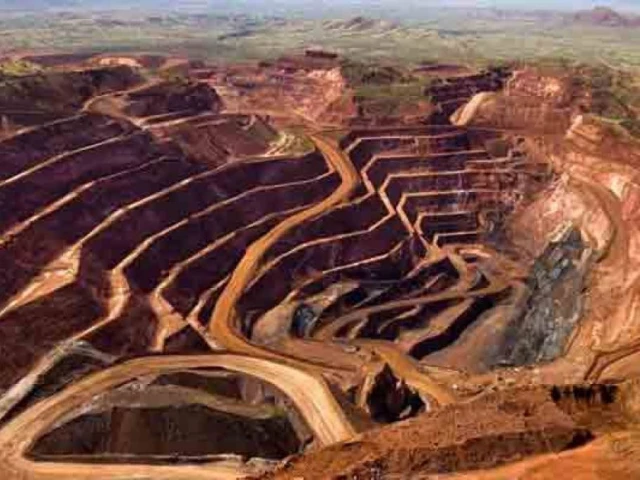
A Strategic Analysis of Critical Minerals Geopolitics
It is a significant geopolitical maneuver that signals Washington’s intensifying competition with Beijing over critical mineral supplies, the United States Export-Import Bank (EXIM) has committed up to $1.3 billion in financing for Pakistan’s Reko Diq copper-gold mining project. Announced during the 2026 Critical Minerals Ministerial on February 4, this investment represents the sole international project within EXIM’s ambitious $10 billion ‘Project Vault’ initiative—a strategic reserve program designed to reshape global supply chains for materials essential to electric vehicles, artificial intelligence infrastructure, and advanced manufacturing.
The commitment, detailed in a US State Department fact sheet released February 4, 2026, places Pakistan’s flagship mineral development project at the center of a broader American strategy to counter China’s overwhelming dominance in critical minerals processing. With Beijing controlling over 90% of global refined rare earth output and commanding substantial market shares across copper, cobalt, and lithium supply chains, the Reko Diq financing underscores how resource diplomacy has become central to great power competition in an era of energy transition and digital transformation.
Project Vault: Establishing America’s Critical Minerals Reserve
Announced by President Donald Trump on February 2, 2026, Project Vault marks an unprecedented commitment to securing domestic and allied access to strategic minerals. The EXIM Board of Directors approved a direct loan of up to $10 billion—more than double the largest financing in the institution’s 90-year history—to establish the US Strategic Critical Minerals Reserve. This initiative aims to shield American manufacturers from supply disruptions, expand domestic production and processing capacity, and fundamentally strengthen the nation’s critical minerals sector.
The timing reflects mounting concerns over supply chain vulnerabilities exposed by pandemic-era disruptions and heightened geopolitical tensions. According to the State Department, EXIM’s critical minerals portfolio now encompasses $1.3 billion for Reko Diq alongside domestic investments including $27.4 million for 6K Additive in Pennsylvania (titanium and nickel production), $23.5 million for Amaero Advanced Materials in Tennessee, $15.9 million for Empire State Mines in New York (zinc operations), and $11.1 million for IperionX in Virginia (titanium processing).
More broadly, EXIM has issued approximately $14.8 billion in Letters of Interest for critical minerals projects under the current administration, spanning rare earth development in the United States ($455 million), lithium extraction in Arkansas ($400 million), cobalt and nickel production in Australia ($350 million), and tin extraction across the United Kingdom and Australia ($215 million). The US government estimates it has mobilized over $30 billion in commitments for critical minerals initiatives in recent months, with officials arguing these public investments are crowding in substantially larger private capital flows.
Reko Diq: One of the World’s Largest Undeveloped Deposits
Located in the Chagai district of Balochistan province near the borders with Iran and Afghanistan, Reko Diq represents one of the planet’s most substantial untapped copper-gold resources. According to Barrick Gold Corporation, the project operator holding a 50% stake, the deposit contains approximately 5.9 billion tonnes of ore grading 0.41% copper and 0.22 grams per tonne gold—translating to roughly 41.5 million ounces of gold reserves.
An updated feasibility study completed in March 2025 by Oil and Gas Development Company Limited (OGDCL), one of the Pakistani state partners, outlines a 37-year mine life divided into two phases. Phase 1, requiring an estimated capital outlay of $5.6 billion (excluding financing costs and inflation), is planned to process 45 million tonnes of mill feed annually beginning in 2028. Phase 2, targeted for 2034, would double processing capacity to 90 million tonnes per annum. Over the project’s lifetime, Reko Diq is expected to yield approximately 13.1 million tonnes of copper and 17.9 million ounces of gold on a 100% basis.
However, cost estimates have escalated significantly. Pakistan’s Economic Coordination Committee revised the Phase 1 total cost to $7.72 billion in September 2025—a 79% increase from initial projections—citing higher loan costs and inflation hedging measures. Barrick CEO Mark Bristow stated in January 2025 that Phase 1 would require approximately $5.5 billion in initial capital, with Phase 2 adding roughly $3 billion, bringing total project costs to potentially $8-10 billion across both phases.
Based on market prices of approximately $3,016 per ounce for gold and $9,815 per tonne for copper prevailing in early 2025, Pakistan’s Ministry of Petroleum estimated the total value of projected yields at over $60 billion, comprising roughly $54 billion in gold and $6 billion in copper. Barrick projects the mine will generate approximately $74 billion in free cash flow over 37 years at consensus long-term commodity prices.
Ownership Structure: A Model of Resource Partnership
The reconstituted Reko Diq project, finalized in December 2022 following resolution of a decade-long legal dispute, features a carefully structured ownership arrangement designed to balance commercial viability with equitable benefit sharing. Barrick Gold Corporation holds 50% and serves as operator. The remaining 50% is divided between Pakistani stakeholders: 25% held by the Government of Balochistan (15% on a fully funded basis through Balochistan Mineral Resources Limited, and 10% on a free carried basis), and 25% by three federal state-owned enterprises—OGDCL, Pakistan Petroleum Limited (PPL), and Government Holdings (Private) Limited (GHPL)—each holding 8.33%.
This structure reflects Barrick’s philosophy of partnership with host countries and communities. Critically, Balochistan’s entire 25% shareholding is fully funded by the federal government and Barrick, meaning the province will receive dividends, royalties, and other benefits without contributing financially to construction or operations. Barrick has committed approximately $70 million in social development programs during the feasibility and construction period, focusing on healthcare, education, vocational training, food security, and potable water provision. The company also advanced up to $50 million in royalties to Balochistan ahead of commercial production, ensuring communities begin benefiting before the mine operates.
Geopolitical Dimensions: Countering China’s Mineral Hegemony
The US investment in Reko Diq cannot be understood outside the context of intensifying Sino-American competition over critical minerals—materials the International Energy Agency projects will see demand multiply four- to six-fold by 2040 under climate scenarios limiting global warming to 2°C. China’s systematic acquisition and vertical integration of mineral supply chains over the past two decades has created dependencies that Washington views as strategic vulnerabilities, particularly for technologies underpinning military capabilities, renewable energy systems, and advanced computing.
Copper, in particular, sits at the nexus of these concerns. The metal is essential for electric vehicle production (averaging 80 kg per EV versus 20 kg for conventional vehicles), renewable energy infrastructure (wind turbines require up to 15 tonnes each), and data center expansion driven by artificial intelligence deployment. Global copper consumption is forecast to exceed 30 million tonnes annually by 2030—up from approximately 25 million tonnes in 2024—even as mining grades decline and new discoveries diminish.
Secretary of State Marco Rubio, alongside Vice President JD Vance and senior economic officials, framed the 2026 Critical Minerals Ministerial—which convened representatives from 54 countries—as part of an effort to ‘reshape the global market for critical minerals and rare earths.’ The explicit naming of China’s dominance in official statements reflects a strategic shift toward open acknowledgment of resource competition as a dimension of great power rivalry.
For Pakistan, the Reko Diq investment represents both opportunity and complexity. The country’s mineral sector currently contributes merely 3.2% to GDP, with exports accounting for just 0.1% of global totals—vastly underperforming relative to geological endowment. Balochistan hosts substantial unexplored areas along the Tethyan Metallogenic Belt, suggesting Reko Diq could catalyze broader sectoral development. However, the province has experienced persistent insurgency and security challenges, necessitating an estimated 5,000-strong security force for the project at substantial cost.
Production Timeline and Projected Economic Contribution
Construction activities at Reko Diq commenced in 2025 following approval of the updated feasibility study. Fluor Corporation was selected in October 2025 as lead Engineering, Procurement, and Construction Management (EPCM) partner, bringing experience from comparable projects including Chile’s Quebrada Blanca Phase 2. First commercial production is targeted for late 2028, with Phase 1 operations expected to yield approximately 200,000 tonnes of copper concentrate and 250,000 ounces of gold annually.
The project anticipates employing 7,500 workers during peak construction and creating 4,000 permanent positions once operational—substantial numbers for a region characterized by limited economic opportunities and high unemployment. Barrick prioritizes local hiring and has established vocational training centers in Quetta and Chagai to prepare residents for mining-related trades. The company projects that 30% of supplies will be sourced from Pakistani small and medium enterprises, potentially fostering ancillary industrial development.
For the US economy, the financing is expected to generate approximately $2 billion in American equipment exports, supporting manufacturing employment in sectors producing mining machinery, processing equipment, and specialized technologies. This export dimension aligns with EXIM’s core mandate of supporting American jobs through overseas project financing.
Pakistan’s government estimates Reko Diq could contribute $5-7 billion annually to national GDP once fully operational, representing a transformative impact for an economy with total GDP of approximately $350 billion. The project’s fiscal contributions—including royalties, taxes, and dividend distributions to state shareholders—could provide significant budgetary relief for a country that has repeatedly required International Monetary Fund assistance due to chronic external imbalances.
Financing Architecture: Multilateral Support and Project Finance
The $1.3 billion EXIM commitment forms part of a broader financing package structured to minimize sovereign risk while securing adequate capital for Phase 1 development. The project is pursuing limited-recourse project financing of up to $3 billion, with the remainder funded through shareholder equity contributions. OGDCL approved an increased funding commitment of $627 million in March 2025, representing its proportional share of total capital requirements.
Multilateral development institutions have signaled support. The International Finance Corporation (IFC) reportedly disbursed $300 million in April 2025 and an additional $700 million in June 2025, though these figures require independent verification. The Asian Development Bank approved $410 million in August 2025, with ADB President Masato Kanda characterizing the package as ‘a game-changer for Pakistan… underpinning the nation’s transition toward a more resilient and diversified economy.’
Additional international investor interest has emerged. Saudi Arabia’s Manara Minerals—a joint venture between state-controlled miner Ma’aden and the $925 billion Public Investment Fund—conducted due diligence visits in 2024 exploring a potential equity stake. Pakistani officials indicated in early 2025 that negotiations were progressing, with an investment expected within six months, though no formal announcement has materialized. Barrick has stated it would support governmental decisions regarding additional partners but will not dilute its own equity position.
Navigating Risks: Security, Infrastructure, and Environmental Concerns
Despite its economic promise, Reko Diq confronts multifaceted challenges that could affect timelines, costs, and social outcomes. Security considerations loom large in Balochistan, which has experienced separatist insurgency for decades. Armed groups have historically targeted resource extraction projects, viewing them as exploitative of provincial wealth. The necessity of maintaining a substantial security force adds ongoing operational expenses and creates reputational sensitivities.
Environmental and resource constraints present technical hurdles. The Chagai district’s arid climate necessitates a $500 million desalination plant to ensure adequate water supply for mining and processing operations. The Environmental and Social Impact Assessment (ESIA), approved by Pakistani authorities, mandates dry-stack tailings management to prevent groundwater contamination and biodiversity offset programs to protect the Chagai Desert ecosystem. Implementation costs and compliance monitoring will require sustained attention throughout the mine’s operational life.
Infrastructure deficits compound development complexity. The project requires construction of a 340-kilometer road connecting the mine site to Gwadar Port, alongside power transmission lines and supporting utilities. While these investments create lasting regional benefits, they increase upfront capital requirements and extend construction timelines.
Human rights and governance concerns have attracted scrutiny from international civil society organizations. Critics argue that without binding human rights conditions, transparency mechanisms, and independent monitoring, foreign financing risks enabling state practices that restrict democratic freedoms in Balochistan. Barrick has emphasized its commitment to responsible mining, transparent engagement, and adherence to international environmental and social safeguards, but ongoing vigilance will be required to ensure these standards are maintained.
Broader Implications for Global Mineral Markets
Reko Diq’s development occurs against a backdrop of structural transformation in commodity markets driven by decarbonization imperatives and technological evolution. The global energy transition from fossil fuels to renewable electricity and electric mobility creates unprecedented demand for copper, lithium, cobalt, nickel, and rare earth elements—collectively termed ‘energy transition minerals’ by analysts.
Yet new mine development has lagged demand growth, constrained by declining ore grades, permitting delays in established mining jurisdictions, underinvestment during the commodity downturn of 2014-2020, and heightened environmental and social requirements. The average time from discovery to production for major copper projects now exceeds 15 years. Reko Diq itself endured a decade-long legal hiatus following the 2011 license rejection, underscoring how political and regulatory uncertainty can stall even world-class deposits.
Successful delivery of Reko Diq by 2028-2029 would add meaningful supply to tight global markets at a critical juncture. With 200,000 tonnes of annual copper production in Phase 1—potentially doubling to 400,000 tonnes post-2034—the project would rank among the world’s top copper producers and contribute approximately 1-2% of global supply. This scale offers genuine diversification benefits for consuming nations seeking alternatives to concentrated sources.
For emerging market resource holders, Reko Diq’s ownership model and financing structure may serve as a template for attracting international investment while preserving national interests. The free-carried provincial stake, advance royalty payments, and emphasis on local content and skills development represent mechanisms for ensuring mining projects deliver inclusive growth rather than enclave economics. Whether this model proves replicable will depend heavily on governance quality, institutional capacity, and political stability in host countries.
Conclusion: A Bellwether for Resource Geopolitics
The United States’ $1.3 billion commitment to Pakistan’s Reko Diq project through Project Vault represents far more than a discrete financing decision. It signals a fundamental recalibration of American economic statecraft toward active engagement in shaping mineral supply chains—domains Washington had largely left to market forces and Chinese initiative over recent decades.
Whether this approach succeeds in meaningfully diversifying critical mineral supplies and reducing strategic dependencies will depend on execution across numerous dimensions: delivering projects on time and budget, establishing commercially viable operations in challenging environments, building local capacity and ensuring equitable benefit distribution, and sustaining political support through inevitable complications and cost overruns.
For Pakistan, Reko Diq offers a genuine opportunity to unlock economic value from geological endowment, attract technology and expertise transfer, and demonstrate investment climate improvements that could catalyze broader foreign direct investment. The risks—security volatility, governance challenges, environmental stewardship demands—are substantial and will require sustained attention from government, operators, and civil society.
As construction accelerates through 2025-2028 and the first concentrate shipments approach, Reko Diq will serve as a bellwether for whether public financing can effectively reshape mineral geopolitics in an era of great power competition and climate-driven industrial transformation. The project’s ultimate success or failure will reverberate well beyond Balochistan’s arid highlands, influencing how governments worldwide approach resource security in the decades ahead.
Key Sources and References
1. US Department of State – 2026 Critical Minerals Ministerial
2. Barrick Gold Corporation – Reko Diq Project
3. Oil and Gas Development Company Limited (OGDCL) – Reko Diq Feasibility Study Announcements
4. The Express Tribune – US earmarks $1.3b for Reko Diq mining project
5. Geo.tv – Reko Diq emerges as strategic asset amid Washington’s push for critical minerals
6. Mining.com – Barrick’s Reko Diq project to generate $74bn over 37 years
7. Asian Development Bank – Reko Diq Project Financing Announcements
8. International Energy Agency – The Role of Critical Minerals in Clean Energy Transitions
Discover more from The Economy
Subscribe to get the latest posts sent to your email.



Key Takeaways
- Rolex’s secondary market rose approximately 7.9% year-over-year as of 2026 (per WatchCharts data) — trailing Patek Philippe (+16.2%) and Tudor (+11.4%) but still outperforming Audemars Piguet (+3.4%).
- Rolex raised U.S. retail prices 4–9% in January 2026 (steel models ~5.6%, gold models ~8.7%), narrowing the historical gap between retail and pre-owned pricing.
- Not every model appreciates: steel sports references (Submariner, GMT-Master II, Daytona) have held value far better than two-tone or widely available dress references like the standard Datejust.
- The Lady-Datejust posted the sharpest 2026 gain among tracked collections — up 22.73%, from roughly $9,269 to $11,376 — driven by demand for smaller, “everyday luxury” watches.
- Gold’s rise past $2,400/oz has directly lifted the investment case for Rolex’s precious-metal references (Day-Date, Sky-Dweller, Yacht-Master).
The Model-by-Model Picture
| Category | 2026 Trend |
|---|---|
| Lady-Datejust | +22.73% (strongest performer among tracked collections) |
| Steel sports models (Submariner, GMT-Master II) | Held value well; corrected from 2022 peak but stabilized above retail |
| Daytona | Corrected from highs above $50,000 to the mid-$30,000s; still among the most sought-after references |
| Two-tone/widely available Datejust | Flat to negative — “holds value” is an overstatement for this category |
| Gold references (Day-Date, Sky-Dweller) | Lifted by gold’s rise above $2,400/oz |
Why the “Rolex Always Appreciates” Myth Is Fading
The pandemic-era boom pushed some references — the Daytona above all — to speculative highs disconnected from historical norms. Since the March 2022 peak, steel sports models have compressed meaningfully, and dealers who bought inventory near the top have in some cases faced 20–40% markdowns on liquidation. The lesson for 2026 buyers: Rolex as a category is not a monolith. Value retention depends heavily on specific reference, condition, and whether the piece comes with box and papers (“full set”).
What’s Actually Driving 2026 Strength
- Retail price increases raise the floor. When a new Submariner retails at $10,050 (up from $9,500), a pre-owned example at $11,000–$12,000 suddenly represents a smaller premium — narrowing the gap without secondary prices actually moving.
- Supply discipline remains Rolex’s core lever. The brand has never confirmed production numbers, and secondary-market premiums remain entirely a function of Rolex’s own manufacturing decisions — a risk factor as much as a support.
- Certified Pre-Owned rollout. Rolex’s now fully rolled-out CPO program has changed how buyers transact in the used market, adding a layer of brand-verified legitimacy that supports pricing.
The Case for Rolex as a Portfolio Diversifier
Financial advisors increasingly frame luxury watches not as a replacement for equities or bonds, but as a tangible, historically low-correlation diversifier — one that carries its own risks (illiquidity, condition-dependent pricing, no yield) but has demonstrated multi-decade resilience for specific references.
Is Rolex a good investment in 2026?
It depends heavily on the specific reference. Steel sports models like the Submariner and Daytona have held or grown in value; two-tone and widely available dress models generally have not. Overall, Rolex’s secondary market rose about 7.9% year-over-year in 2026, trailing Patek Philippe but ahead of Audemars Piguet.
Discover more from The Economy
Subscribe to get the latest posts sent to your email.

Navigating Mortgage and Loan Refinancing in a High-Yield Environment
Global public debt crossing critical thresholds has kept central bank policies volatile, resulting in fluctuating US Treasury yields throughout 2026. For homeowners and commercial property holders burdened by previous high-interest borrowing cycles, finding optimal refinance windows has become a high-stakes financial puzzle. Stalled disinflation and stubborn employment numbers mean rate cuts are incremental, requiring borrowers to act with precision.
Timing your mortgage or commercial loan refinance in this environment requires a deep understanding of yield curve movements and lender risk appetites.
Decoding 2026 Refinance Dynamics
The 10-Year Treasury Yield Benchmark
Mortgage rates continue to track closely with the 10-year US Treasury yield. When macroeconomic anxiety spikes debt issuance, yields rise, tightening consumer borrowing capacity. Savvy borrowers monitor weekly Treasury auctions to lock in rates during brief dip windows.
Hybrid ARMs and Alternative Structures
With fixed rates remaining elevated, 7/1 and 10/1 adjustable-rate mortgages (ARMs) have surged in popularity. These products offer lower initial monthly payments, giving borrowers breathing room until central bank easing cycles fully materialize.
| Loan Product | Current Rate Range | Best For | Key Risk Factor |
| 30-Year Fixed Mortgage | 6.2% – 6.8% | Long-term predictability | Higher initial monthly outlay |
| 7/1 Hybrid ARM | 5.5% – 5.9% | Short-term ownership / flipping | Rate reset risk after year 7 |
| Commercial Refinance | 7.0% – 8.2% | Corporate asset restructuring | Strict DSCR lender covenants |
Actionable Steps for Successful Refinancing
To maximize your chances of securing favorable refinance terms in a volatile market, follow a disciplined preparation strategy.
Boost Your Credit Score Immediately: Lenders in 2026 are applying stringent credit tiering; a 20-point increase can drop your APR by a crucial quarter-point.
Shop Regional Credit Unions: Smaller financial institutions often offer portfolio loans with more flexible underwriting than major national banks.
Calculate the Break-Even Point: Ensure your total closing costs are recouped through monthly savings within 24 months of closing.
“Market Strategist View: Refinancing in 2026 is an exercise in opportunistic timing. Borrowers must maintain immaculate financial profiles ready to strike the moment Treasury yields dip.”
Mastering the complexities of today’s debt environment ensures you can successfully lower your debt service costs and protect your long-term financial stability.
Discover more from The Economy
Subscribe to get the latest posts sent to your email.

The days of pulling generic auto insurance quotes based purely on your zip code and age are officially over. In 2026, insurance comparison engines are powered entirely by generative AI and real-time telematics. These platforms digest thousands of live data points—ranging from your driving smoothness via connected vehicle sensors to real-time traffic congestion patterns—to generate hyper-personalized premiums instantly.
For consumers, this evolution represents both a massive opportunity for savings and a hidden trap for penalty pricing. Understanding how AI algorithms evaluate risk is essential for anyone looking to lower their monthly auto insurance premiums.
How AI Comparison Engines Evaluate Your Risk Profile
Behavioral Telematics and Connected Cars
Modern cars stream performance data directly to insurance aggregators. Generative AI models analyze braking sharpness, acceleration curves, cornering G-forces, and phone distraction metrics. Drivers who maintain smooth, defensive habits are rewarded with dynamic rate cuts of up to 40% compared to traditional rating tiers.
Predictive Traffic and Weather Modeling
AI tools now cross-reference your daily commute route with predictive weather and accident probability models. If your standard parking location or driving corridor has a statistically higher incidence of uninsured motorist claims, your quotes will reflect that hyper-local risk assessment.
| Comparison Factor | Traditional Rating Model | 2026 Generative AI Model | Impact on Premium |
| Mileage & Usage | Annual estimated odometer reading | GPS tracking & live trip duration | High (up to 35% savings) |
| Driving Behavior | MVR driving record & accidents | Real-time braking, speed, & G-force | Critical (determines tier) |
| Vehicle Tech | Make, model, and safety rating | ADAS calibration & repair cost data | Moderate |
Strategies to Lower Your AI-Driven Insurance Quote
To outsmart the algorithm and secure the lowest possible premium in 2026, drivers must proactively manage their digital footprint on insurance platforms.
Opt-In for Telematics Trial Periods: Many insurers offer immediate 15% discounts just for installing their driving app; let it track safe habits for 30 days to lock in permanent savings.
Scrub Unverified Public Records: Ensure your motor vehicle report is free of clerical errors that AI risk models misinterpret as reckless behavior.
Compare AI Aggregators: Use platforms that integrate multi-carrier API feeds rather than single-brand comparison sites to find the best risk-adjusted rate.
“Industry Note: AI-driven pricing rewards transparency and precision. Drivers who actively manage their telematics data consistently out-save those relying on legacy quote calculators.”
Embracing AI comparison tools allows savvy policyholders to customize coverage limits precisely to their driving habits, eliminating wasted premium spend while ensuring robust protection.
Discover more from The Economy
Subscribe to get the latest posts sent to your email.

Solar Panel Installation Cost in 2026: Why the Math Changed Overnight

Business Insurance: What Coverage You Actually Need and What It Costs in 2026

Auto Insurance Quotes: How to Get the Lowest Rate Without Losing Coverage

Huntington Online Banking: Full Features, Fees, and How It Compares in 2026

Apply for a Bank Account Online: What You Need and How Long It Actually Takes

World’s Largest Economies: Ranking the Top Global Powers

Business Loan: A Complete 2026 Guide to Rates, Types, and Qualifying

Fast Invoice Factoring: How to Turn Unpaid Invoices Into Cash Within 24 Hours

Investment Banking Services: What They Cost and How to Choose the Right Firm in 2026

Structured Settlement Loan: What “Cash Now” Offers Actually Cost You

DUI Attorney: Why Your First Call After an Arrest Should Never Be to the Court

Personal Injury Lawyer: A Complete Guide to Filing Your Claim in 2026

Commercial Vehicle Accident Lawyer: Holding Companies Accountable Beyond the Driver

Inside the White House Feud: How Trump’s Allies Are Painting Anthropic’s Dario Amodei as the Face of ‘AI Doomerism’

Top 30 Stocks for Investment in PSX for Massive ROI in 2026

SpaceX Starship Flight 14: First Orbital Attempt & Starlink V3 Launch Explained

Oil Prices Break $100 in 2026: Middle East Conflict & Energy Markets

Fidelity Investments Review 2026: SPAXX Yields & Zero-Fee Funds

AI Chip Stocks 2026: The Best Semiconductor Investments Beyond Marvell

BRICS+ Cross-Border Payments 2026: Interoperability Explained

Tween Back-to-School Trends 2026: What’s Driving the $85B Season

10-Year Treasury Yield Hits 4.80%: What It Means for Rates & Portfolios

Shein Clothes Quality & Safety in 2026: What Lab Tests Show

China’s US$10.8 Billion Trade Shortcut: Why the Pinglu Canal Matters

MRVL Earnings 2026: Why Marvell Sank Despite Beating Estimates

IMF & World Bank 2026 Global Economic Outlook: Growth, Inflation, Debt

High-CPM Finance Niches 2026: Publisher Monetization Blueprint

Middle East War Economics 2026: Oil Prices & Energy Markets
-

 Markets & Finance9 months ago
Top 15 Stocks for Investment in 2026 in PSX: Your Complete Guide to Pakistan’s Best Investment Opportunities
-

 Analysis7 months ago
Johor’s Investment Boom: The Hidden Costs Behind Malaysia’s Most Ambitious Economic Surge
-

 Analysis7 months ago
Top 10 Stocks for Investment in PSX for Quick Returns in 2026
-

 Banks8 months ago
Best Investments in Pakistan 2026: Top 10 Low-Price Shares and Long-Term Picks for the PSX
-

 Analysis8 months ago
Brazil’s Rare Earth Race: US, EU, and China Compete for Critical Minerals as Tensions Rise
-

 Investment9 months ago
Top 10 Mutual Fund Managers in Pakistan for Investment in 2026: A Comprehensive Guide for Optimal Returns
-

 Global Economy9 months ago
15 Most Lucrative Sectors for Investment in Pakistan: A 2025 Data-Driven Analysis
-

 Global Economy9 months ago
Pakistan’s Export Goldmine: 10 Game-Changing Markets Where Pakistani Businesses Are Winning Big in 2025