
Space
SpaceX Falcon 9 Upper Stage Crashes Into Moon, Creating New Crater Near Einstein

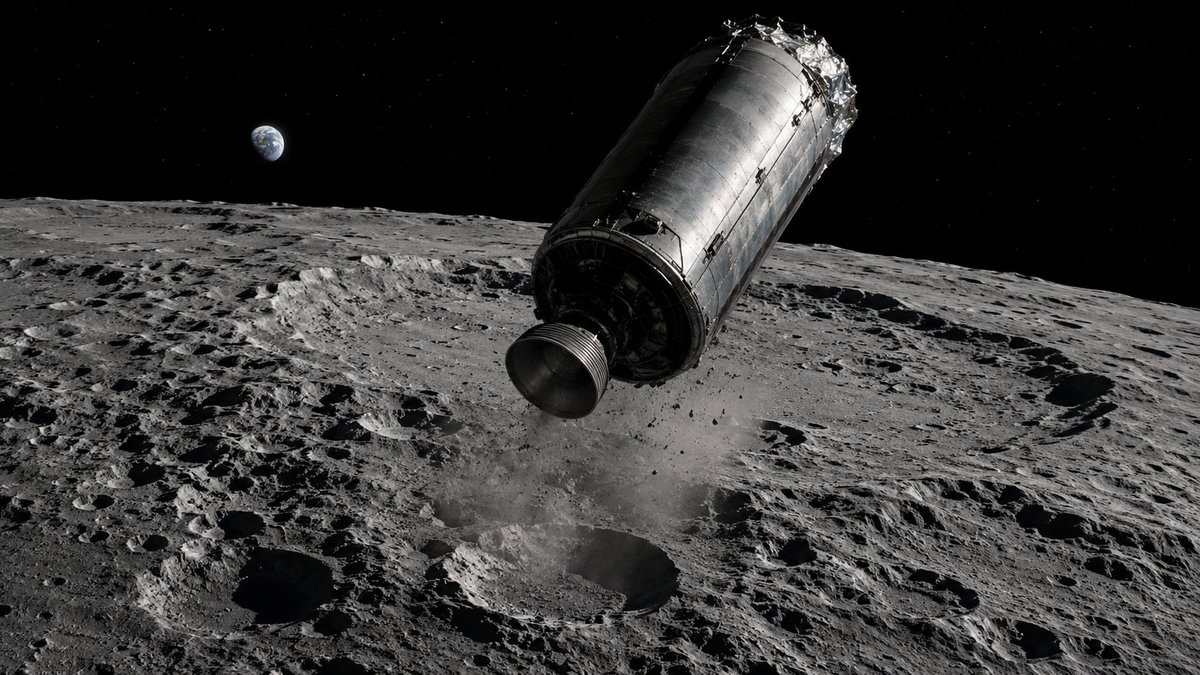
A spent SpaceX Falcon 9 rocket stage from the Blue Ghost mission crashed into the Moon on August 5, 2026, and NASA is racing to image the fresh crater and analyze lunar dust for water ice.
On August 5, 2026, at approximately 2:35 a.m. ET, a discarded SpaceX Falcon 9 upper stage collided with the Moon near the craters Einstein and Bell, carving a fresh crater into the lunar surface at roughly 5,400 miles per hour.
The impact marks one of the rare instances of human-made space debris striking the Moon and offers scientists an unprecedented opportunity to study ejecta composition and impact physics in real time.
The rocket stage—cataloged as 2025-010D—was abandoned in a high-Earth orbit after successfully deploying Firefly Aerospace’s Blue Ghost 1 lunar lander and ispace’s RESILIENCE lander on January 15, 2025.
Gravitational forces and solar radiation pressure gradually destabilized its orbit over 18 months, setting it on an unavoidable collision course.
What Scientists Hope to Learn
NASA’s Lunar Reconnaissance Orbiter (LRO) and ground-based telescopes were positioned to observe the impact, which is expected to excavate a crater approximately 60 feet wide and 12 feet deep.
Researchers are particularly eager to analyze the ejecta plume—the cloud of dust and rock thrown skyward by the impact. Because the Falcon 9 stage’s mass (roughly 4,900 kg) and velocity (2.43 km/s) are precisely known, the event serves as a calibration benchmark for natural meteoroid impacts, which are detected frequently but lack verified mass and speed data.
Lead researcher Benjamin Fernando of Los Alamos National Laboratory noted that measuring the composition of the ejected material could reveal the presence of water ice trapped in permanently shadowed regolith—a critical resource for future lunar habitats.
NASA’s Response and Tracking Operations
NASA’s Center for Near Earth Object Studies (CNEOS) at the Jet Propulsion Laboratory confirmed the stage had a 100% probability of lunar impact and tracked it as part of operational training for hazardous object monitoring.
The Meteoroid Environments Office at Marshall Space Flight Center attempted real-time imaging using ground-based telescopes, though visibility was complicated by the impact occurring on the sunlit portion of the lunar limb.
The Commercial Space Race: Investment Implications
The Falcon 9 lunar impact arrives at a pivotal moment for the commercial space economy, as NASA pushes to return astronauts to the Moon by 2028 and establish a permanent lunar base. For investors and aerospace stakeholders, the event highlights several high-growth vectors:
- Lunar Infrastructure & Habitats: Companies developing radiation-hardened habitats, in-situ resource utilization (ISRU) technology, and lunar construction robotics stand to benefit from increased government and private funding.
- Satellite Infrastructure & Orbital Debris Management: The incident underscores demand for advanced space situational awareness (SSA) platforms, debris-tracking sensors, and end-of-life disposal protocols—critical as launch cadence accelerates.
- Aerospace Technology & Defense: Firms producing propulsion systems, lunar landers, and cislunar logistics vehicles are positioned for multi-billion-dollar contract flows under NASA’s Artemis and CLPS programs.
- Space Resource Extraction: If ejecta analysis confirms subsurface water ice, expect renewed venture capital interest in lunar mining startups focused on extracting hydrogen and oxygen for rocket propellant.
The impact also raises policy questions about space debris liability and the need for international frameworks governing end-of-life disposal for rockets on translunar trajectories. SpaceX has already adjusted procedures for subsequent missions, placing newer upper stages in heliocentric orbits to avoid future lunar collisions.
People Also Ask: SpaceX Moon Impact 2026
Did a SpaceX rocket really hit the Moon? Yes. The spent upper stage of a Falcon 9 rocket from the January 2025 Blue Ghost mission impacted the Moon on August 5, 2026, near the Einstein crater.
Will the SpaceX moon impact be visible from Earth? No. The impact flash is too faint for naked-eye observation and occurred on the sunlit lunar surface, making detection extremely difficult even with telescopes.
Why didn’t SpaceX prevent the rocket from hitting the Moon? The upper stage was left in a high-Earth orbit after delivering lunar landers. Gravitational perturbations and solar radiation pressure gradually altered its trajectory over 18 months, an outcome that was not initially predicted with certainty.
Discover more from The Economy
Subscribe to get the latest posts sent to your email.


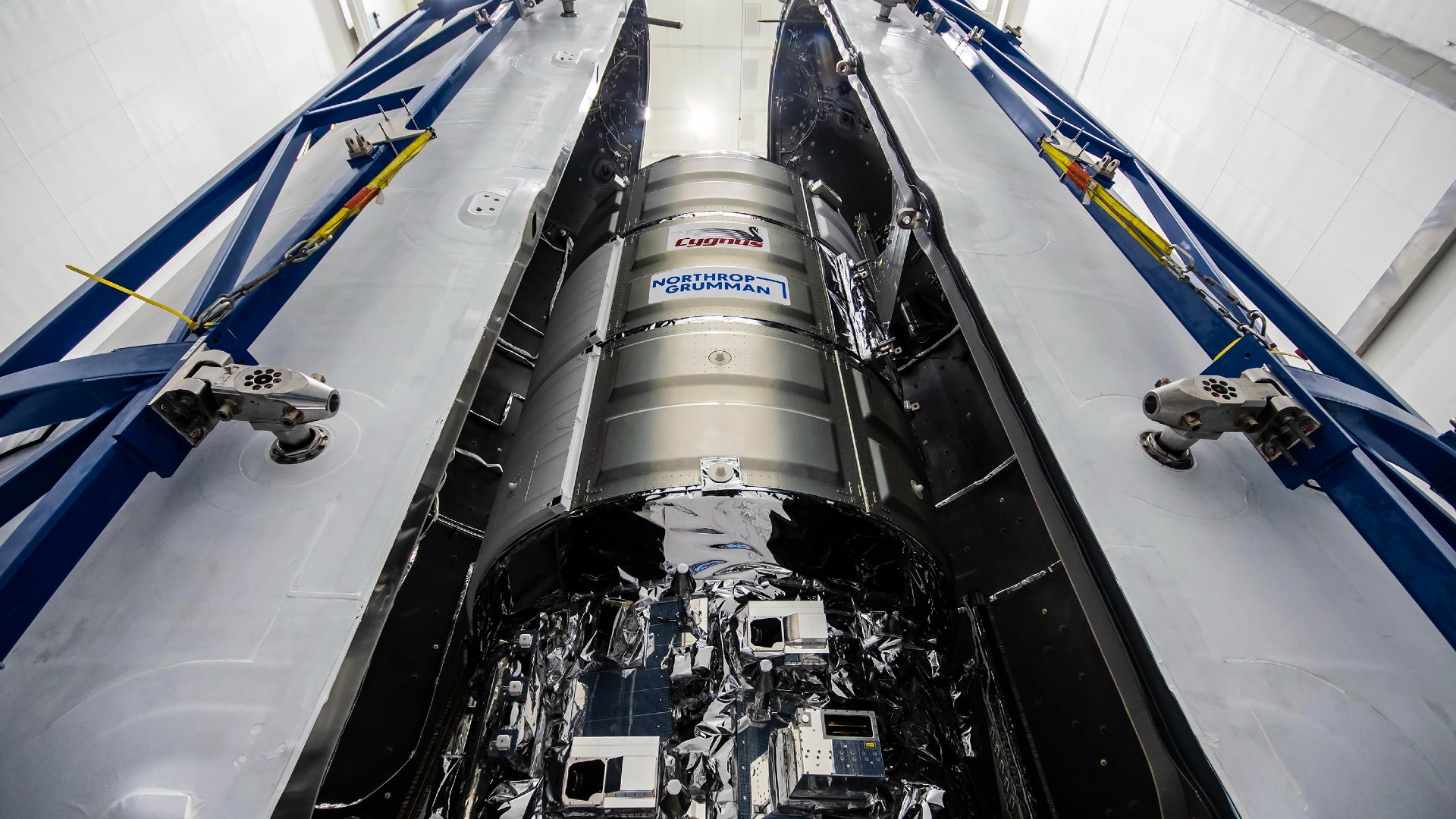
A rocket booster the size of a ten-story building just flew for the 36th time. It didn’t explode. It didn’t even make headlines outside the space press. And that, more than any single launch, is the story.
Three years ago, a booster flying a third time was newsworthy. Today, SpaceX is flying the same Falcon 9 first stage — designated B1067 — for a record 36th mission, landing it just three flights shy of NASA Space Shuttle Discovery’s all-time reuse record of 39. The milestone puts the vehicle within three flights of Discovery’s all-time record, set across multiple decades of shuttle operations. This week alone, SpaceX is running three Falcon 9 launches in seven days out of Vandenberg Space Force Base in California — one of them carrying a classified national security payload for the U.S. government. The booster assigned to that national security mission is a fleet veteran making its 18th flight, and it will attempt an ocean landing on the droneship Of Course I Still Love You.
The Story
This isn’t a one-off engineering flex. It’s the operating model of a company that just went public.
The reusability math is the real headline for anyone tracking aerospace investment. Building a new Falcon 9 booster costs roughly $30 million, while refurbishing a recovered one costs under $300,000 — less than one percent of the original manufacturing cost. Once a booster clears SpaceX’s internal depreciation threshold, the hardware is effectively “free” on the books for every subsequent flight. SpaceX’s S-1 prospectus, filed ahead of its Nasdaq debut in June 2026, disclosed that Falcon 9 Block 5 first stages are depreciated over 25 flights for accounting purposes, with an engineering target of up to 40 flights.
The result shows up directly in unit economics. A Falcon 9 launch costs roughly $74 million today, compared to a NASA analysis that put the Space Shuttle’s per-launch cost at around $1.5 billion. Independent industry estimates put the savings from reusability at up to 65 percent versus a fully expendable rocket.
Cadence Is the Competitive Moat
Reusability only matters if you fly often enough to amortize it — and SpaceX’s flight rate has become the hardest thing for competitors to replicate.
- SpaceX had completed around 650 orbital launches by mid-2026, with more than 540 of them using flight-proven Falcon hardware.
- A single Starlink mission from California this month was the 92nd Falcon 9 flight of the year, with prediction markets pricing in roughly 156 total launches for 2026.
- The Starlink 17-49 mission from Vandenberg on August 11-12 was SpaceX’s 51st West Coast flight of the year alone.
- For comparison, Europe has attempted 334 total space launches since 1970 — a number SpaceX is now closing in on annually.
Who’s Actually Chasing SpaceX
No serious rival has matched the combination of reuse rate and cadence, though the field is trying.
- Blue Origin has recovered and reflown a New Glenn booster.
- Rocket Lab is designing its upcoming Neutron rocket around a reusable first stage.
- China’s LandSpace is developing the methane-fueled Zhuque-3, targeting a Falcon 9-class capability, after an earlier landing attempt ended when the booster exploded during descent.
The Solution — Why This Matters Beyond the Launch Pad
For investors, telecom operators, and governments alike, Falcon 9’s cadence is the infrastructure layer underneath three separate high-growth stories: satellite broadband, national security space access, and direct-to-cell connectivity.
Satellite Broadband at Industrial Scale
Every third or fourth Falcon 9 flight this year has carried Starlink hardware, and the constellation’s growth is the clearest proof point of the reusability model paying off commercially. SpaceX currently operates more than 9,500 Starlink satellites in low Earth orbit, a number that keeps climbing on the back of near-weekly launches.
Check the technology powering these launches: SpaceX’s Falcon 9 uses nine Merlin engines on its first stage and a single vacuum-optimized Merlin on the second stage — the same core architecture that has now flown more than 650 times.
Direct-to-Cell: The Next CPC Frontier
Falcon 9 isn’t just a Starlink workhorse. SpaceX has also flown AST SpaceMobile’s “BlueBird” satellites, which unfurl into arrays covering roughly 693 square feet each to deliver space-based cellular broadband directly to ordinary phones. AST SpaceMobile’s president said the orbital launch, combined with expanded manufacturing capacity, positions the company for beta service later this year — a development telecom analysts are watching closely for its implications on rural connectivity markets and legacy carrier valuations.
National Security Is a Recurring Customer, Not a One-Off
This week’s Vandenberg schedule includes a Falcon 9 flight dedicated to a national security payload, part of a steady cadence of U.S. government launches that underscores how central SpaceX has become to national space infrastructure — a dynamic with direct implications for defense-sector and aerospace investment portfolios tracking government launch contracts.
Frequently Asked Questions
How many times can a Falcon 9 booster fly? SpaceX depreciates each booster over 25 flights for accounting purposes but engineers them for an operational target of up to 40 flights. The current record-holder, B1067, has already flown 36 times.
How much does a Falcon 9 launch cost? Roughly $74 million per mission as of 2026, driven down substantially by the near-zero marginal hardware cost of reflying a depreciated booster.
Is SpaceX publicly traded? Yes — the company filed an S-1 prospectus ahead of a Nasdaq debut in June 2026, which is when much of the booster-economics data referenced above became public for the first time.
Discover more from The Economy
Subscribe to get the latest posts sent to your email.
Thursday, August 6, 2026, is not an ordinary session for SpaceX shareholders. It is the day the company’s first post-IPO lockup period expires, freeing up to roughly 911.5 million insider-held shares — worth close to $123 billion at recent prices — for potential sale on the open market, according to The Motley Fool. To put that in perspective: SpaceX’s entire public float has stood below 280 million shares since its record-breaking June 12 IPO, meaning the unlock could roughly triple the number of tradable shares in a single day.
This is the story competitor outlets are covering as a single-day news event. Few are explaining why the structure of SpaceX’s lockup makes this particular date so unusual — or what it signals about how the company priced risk into its unprecedented listing.
Why this lockup is different from a typical IPO unlock
Most companies use a single 180-day lockup. SpaceX instead built a staggered, performance-linked release schedule tied to its earnings calendar. Insiders became eligible to sell an initial 20% tranche on the second full trading day after the company’s first quarterly earnings report as a public company — which landed on August 4, pushing the unlock date to August 6, per The Motley Fool’s original lockup breakdown.
A bonus 10% tranche would have unlocked early had SPCX traded at least 30% above its $135 IPO price for five of the ten sessions before earnings. That threshold — above $175 — was never reached; the stock has instead spent recent weeks trading near or below its offer price, having fallen more than 40% from the post-IPO high of $225.64 it touched four days after listing, according to StartupHub.ai.
Further pressure is scheduled, not speculative. Additional 7% employee tranches are due around August 21 and September 10, and analysts at 22V Research estimate insiders could collectively be free to sell as much as 44% of total shares by early September — an roughly ninefold increase in the tradable float from where it stood at listing, per Yahoo Finance.
The fundamentals behind the slide
The unlock is landing on a stock that was already under pressure for reasons beyond supply mechanics. SpaceX reported a $4.9 billion net loss for 2025 and lost a further $4.28 billion in the first quarter of 2026, a burn rate that has cooled post-IPO enthusiasm even among investors who back the long-term Starship and Starlink thesis, according to analysis from DayTradingToolkit. Despite posting stronger-than-expected earnings this week, SPCX shares tumbled roughly 14% as the market looked past the results and priced in the incoming supply, based on Bloomberg’s markets desk.
What history suggests happens next
Lockup expirations do not automatically trigger crashes — the actual price impact depends on how much of the newly eligible stock insiders choose to sell, and at what price they’re willing to part with it. Some analysts argue the reaction could be a useful signal in itself: if SPCX absorbs this wave of supply without breaking to fresh lows, that would suggest the market has already priced in the dilution risk, a view echoed by commentary from The Motley Fool’s investing desk. Others counsel patience, arguing the stock’s valuation looks stretched even before accounting for the added float.
For investors weighing an entry point, the practical takeaway is that August 6 is the first of several tests, not the last. The rolling 7% employee releases in late August and September mean supply pressure is likely to recur through the fourth quarter, with the float expected to expand roughly sixfold by late September and to around a third of total shares by Halloween, according to earlier lockup modelling reported by Investing.com.
Key takeaways
- SpaceX’s first lockup expiration frees up to 911.5 million shares (~$123 billion) for potential sale starting August 6, 2026.
- The bonus early-unlock trigger — a 30% share-price premium to the $135 IPO price — was not met, so this is the baseline release, not an accelerated one.
- SPCX has fallen over 40% from its post-IPO peak and briefly traded below its offer price.
- Further 7% tranches are scheduled for late August and mid-September, meaning supply-driven volatility is likely to continue into Q4 2026.
- The stock’s slide reflects both the lockup mechanics and underlying losses of roughly $4.28 billion in Q1 2026 alone.
FAQ
When does SpaceX’s stock lockup expire? The first tranche expired August 6, 2026, two trading days after SpaceX’s first quarterly earnings report as a public company. Additional tranches are scheduled through December 8, 2026.
How many SpaceX shares could be sold? Up to approximately 911.5 million shares — about 20% of eligible insider holdings — became sellable on August 6, against a public float that had been below 280 million shares.
Why did SpaceX stock fall despite strong earnings? Investors appear to be pricing in the incoming supply from the lockup expiration rather than reacting purely to quarterly results, alongside continued losses tied to Starship development costs.
Discover more from The Economy
Subscribe to get the latest posts sent to your email.

Capital One vs Wells Fargo: Best Credit Card for Buying Crypto in 2026

The 2026 Guide to Staking ADA and BNB: How to Earn Passive Crypto Income on the Best Platforms

BigLaw Backlash 2026: Why Top US Firms Are Being Slammed for “Crazy” 1L Hiring

SpaceX Falcon 9 Upper Stage Crashes Into Moon, Creating New Crater Near Einstein

7-Eleven, GameStop, and Grocery Outlet Slash Hundreds of Stores in 2026 Restructuring Wave

Toyota Recalls 508,000 Camrys Over Blank Dashboard Screens That Disable Turn Signals

State Farm Mails Record $5 Billion Dividend to Auto Policyholders: How to Claim Your Check

Indonesia’s Rupiah and FDI Confidence Gap Widens Despite Headline Growth

Global Aviation Split: Cargo Boom Masks Falling Passenger Demand

Malaysia’s Chip Exports Defy the Wall Street Selloff

Singapore Upgrades 2026 Growth Forecast Again as AI Exports Surge

Dubai’s Property Market Posts Second-Best H1 Ever — While Hotels Sit Empty

Gold’s Wild 2026 Round Trip Resumes as Chip Selloff Revives Haven Demand

Russia’s Black Sea Oil Exports Fall for a Fifth Straight Week

China Politburo July 2026: Stimulus Signals Explained

Russia Fuel Shortages 2026: Inside a Cracking War Economy

Top 15 Financial Stocks for Investment in PSX

Pakistan Passed Its Third IMF Review

Andy Burnham, UK Gilts and Mortgages: July 2026 Explainer

SpaceX Stock Lockup Expiration Explained: Why $123B in Shares Could Hit the Market

Pakistan IMF Program 2026: Inside the Push Toward an Interest-Free Economy

Russia Oil Revenue 2026: How Sanctions on Rosneft and Lukoil Are Draining the War Chest

Pakistan’s 2026 Monsoon Floods Threaten Fragile Economic Recovery as Inflation Nears 9%

Russia Oil Revenue 2026: The Iran War Windfall and What a Hormuz Deal Means for Moscow

Russia’s Budget Deficit Blew Past Its Full-Year Target in Three Months

Canada US Trade War 2026: Inside Carney’s Push to Cut Ties With Trump’s Tariffs

Oil Prices Fall as Strait of Hormuz Reopens: 2026 Update

China Economy 2026: How AI Exports and a Property Crash Are Splitting Growth in Two
-

 Markets & Finance7 months ago
Top 15 Stocks for Investment in 2026 in PSX: Your Complete Guide to Pakistan’s Best Investment Opportunities
-

 Analysis6 months ago
Johor’s Investment Boom: The Hidden Costs Behind Malaysia’s Most Ambitious Economic Surge
-

 Analysis6 months ago
Top 10 Stocks for Investment in PSX for Quick Returns in 2026
-

 Analysis6 months ago
Brazil’s Rare Earth Race: US, EU, and China Compete for Critical Minerals as Tensions Rise
-

 Banks7 months ago
Best Investments in Pakistan 2026: Top 10 Low-Price Shares and Long-Term Picks for the PSX
-

 Investment7 months ago
Top 10 Mutual Fund Managers in Pakistan for Investment in 2026: A Comprehensive Guide for Optimal Returns
-

 Global Economy8 months ago
15 Most Lucrative Sectors for Investment in Pakistan: A 2025 Data-Driven Analysis
-

 Global Economy8 months ago
Pakistan’s Export Goldmine: 10 Game-Changing Markets Where Pakistani Businesses Are Winning Big in 2025