
Opinion
Singapore Boards Face the Ultimate Test: Navigating Corporate Fraud in the Age of Transparency


When the Singapore High Court issued sweeping freezing orders against Autobahn Rent A Car and five affiliated companies in January 2026, the city-state’s financial community felt a disquieting sense of déjà vu. The numbers alone commanded attention: the Autobahn group of related companies collectively owes S$305.9 million to various financial institutions, businesses, and government agencies—with DBS Bank owed S$103 million, UOB S$17 million, and OCBC S$12.5 million. But it was the nature of the alleged fraud—forged documents, suspected double financing of vehicles—that made seasoned observers reach for their history books. Just five years earlier, a nearly identical playbook had brought down Hin Leong Trading, one of Asia’s largest oil traders, in a scandal that cost global banks an estimated US$3.5 billion.
Singapore has some of the world’s most sophisticated corporate governance architecture. Yet in early 2026, two directors of a car-rental group stand charged with forgery and cheating. The question that deserves an honest answer is not simply how the fraud allegedly happened—it is why the systemic vulnerabilities that enabled it persist, what the board-level response template should look like when misconduct surfaces, and how Singapore can translate regulatory ambition into genuine behavioural change at the boardroom table.
Singapore Corporate Governance Challenges: The Autobahn Case in Detail
The Autobahn collapse did not arrive without warning signals. The group grew its fleet aggressively from roughly 500 to 1,700 vehicles, requiring massive borrowing to finance vehicle purchases, insurance, and operational costs—a classic expansion-outpacing-capital-structure trajectory that prudent lenders and alert board members are trained to interrogate.
The two directors, Tan Boon Kee (also known as Roy Tan) and Sanjay Kumar Rai, were issued freezing orders of S$101.9 million each. The five companies covered by the injunction are Autobahn Rent A Car, AhTan Car Repairs, Hamilton Autobahn, Hamilton Autohub, and Hamilton Capital.
The specific charge against the pair is instructive. The directors are alleged to have instructed a staff member to fraudulently create a false “Official Receipt” dated November 6, 2025, bearing the letterhead of Komoco Motors—purportedly confirming full payment for 10 Hyundai Kona Hybrid vehicles—which they allegedly intended to pass off as genuine. One forged document. One false receipt. In a business carrying over S$300 million in debt to more than 40 creditors.
The banality is the point. Corporate fraud of this magnitude rarely looks like a thriller. It looks like paperwork—until suddenly, it doesn’t.
Deja Vu: Asset-Backed Lending Risks Singapore Cannot Afford to Ignore
The Autobahn case sits within a depressingly familiar pattern. In 2020, Hin Leong Trading’s collapse exposed the extent to which the company had become dependent on fake trades, forged documents, and dubious financing to cover up accumulated losses exceeding US$800 million—a “vicious cycle” of fraud documented in exhaustive detail by judicial managers PwC.
The parallel is not just stylistic. Both cases feature: physical assets (oil inventories; motor vehicles) deployed as collateral across multiple lending relationships; forged documentation to misrepresent ownership or payment status; and a concentration of control in founder-directors whose authority apparently went unchecked by independent oversight structures.
A common theme of Singapore’s 2020 trading scandals was dubious paperwork, used to secure credit from financial institutions in order to hide losses and make leveraged bets—and in response, Singapore launched a Trade Finance Registry to prevent the same asset being pledged as security for more than one loan to different institutions. The registry was a meaningful innovation. Yet in 2026, alleged double financing of motor vehicles—a far more tractable asset class than bulk oil cargoes—has surfaced again.
This is the core asset-backed lending risk Singapore’s financial sector must confront: the fraud vector is not exotic. It requires no sophisticated derivative structure, no opaque offshore entity, no dark web marketplace. It requires a printer, a company letterhead, and an institution whose credit approval process treats paper as equivalent to physical verification.
Why the Vulnerability Persists
Several structural factors explain the persistence of these risks in Singapore’s lending ecosystem:
Information silos among creditors. The Autobahn group owes debt across hire-purchase agreements, business loans, mortgages, and fees to over 40 creditors—a fragmented creditor base that, absent a shared registry for vehicle-backed finance, creates arbitrage opportunities for borrowers willing to exploit the gaps between institutions’ information systems.
Rapid fleet expansion as a red flag ignored. A company that grows its fleet from 500 to 1,700 vehicles in a short period while operating in a thin-margin, COE-volatile market represents a credit profile that demands enhanced due diligence—not merely a tick-box review of hire-purchase documentation.
Concentrated founder-director control. Both Hin Leong and Autobahn were characterised by situations where the individuals seeking credit were simultaneously the signatories, the directors, and the operational decision-makers. Independent oversight was, at best, nominal.
Board Response to Corporate Fraud: The Three Phases That Define Leadership
When misconduct surfaces—whether through a whistleblower, a regulatory inquiry, or a creditor’s legal action—the board’s response in the first 72 hours will define the institutional narrative for years. Boards that hesitate, equivocate, or allow management to control the disclosure tempo invariably find that the cover-up attracts more regulatory scrutiny than the underlying misconduct.
Phase One: Secure, Segregate, Stabilise
The immediate priority is evidence integrity. Independent legal counsel—not management’s existing advisors, who may face conflicts—must be engaged within hours. Electronic communications, financial records, and access logs must be preserved before they can be altered. A board that allows management to conduct its own “internal review” of alleged misconduct has already compromised the credibility of whatever conclusions that review produces.
Simultaneously, the board must assess whether any director or officer who might be implicated should be placed on administrative leave. This is not a punitive measure—it is a governance necessity that protects both the investigation’s independence and the company’s legal exposure.
Phase Two: Constitute an Independent Special Committee
Best-practice governance in misconduct situations requires the formation of an independent committee of non-executive directors, supported by external forensic accountants and legal counsel with no prior relationship to the company. This committee should have:
- Unrestricted access to all books, records, and personnel
- Authority to engage external experts without management approval
- A direct reporting line to the full board, not to the CEO or executive chairman
- A clear mandate to report findings to regulators as required by law
The independence of this structure is not merely procedural. It is what gives the board’s ultimate findings credibility with regulators, creditors, courts, and the public. A special committee staffed by directors with longstanding personal or business relationships with the alleged wrongdoers is not independent in any meaningful sense.
Phase Three: Proactive Regulatory Disclosure
Boards operating in Singapore face a layered disclosure environment that has grown considerably more demanding in recent years. Under Section 203 of the Securities and Futures Act, listed companies face criminal liability for intentional or reckless failure to disclose material information. Negligent failures carry civil penalties. The duty runs not merely to shareholders but to the market as a whole.
In private-company situations like Autobahn—where the SGX Listing Rules do not directly apply—directors still face exposure under the Companies Act and common law fiduciary duties. Section 157 of the Companies Act requires directors to act honestly and with reasonable diligence. As Singapore courts have repeatedly affirmed, a director who turns a blind eye to red flags is not insulated from liability by the mere absence of actual knowledge.
The SGX Disclosure Regime: What the October 2025 Reforms Mean for Boards
Singapore’s regulatory evolution reached a landmark on 29 October 2025. SGX RegCo implemented several new measures recommended by the Equities Market Review Group, marking a major shift towards a more disclosure-based regulatory approach—with the focus moving from prescriptive compliance to the materiality of information that needs to be disclosed in a timely and accurate manner, so the market can better discriminate in favour of companies with high standards of corporate governance.
The implications for listed company boards are substantial. Under the reformed regime, companies are no longer simply asked to confirm the non-materiality of weaknesses in internal controls—they must disclose those weaknesses. The burden has shifted from a passive negative confirmation to an active, affirmative duty of transparency. For a board that knows its audit committee has flagged concerns about a management team’s handling of hire-purchase documentation, silence is no longer a defensible position.
SGX RegCo has made clear that failure to comply with disclosure obligations may result in penalties under the Listing Rules and the Securities and Futures Act, and that where necessary, it will refer cases to the Monetary Authority of Singapore and other relevant authorities for further enforcement action.
The SGX RegCo’s evolution from a prescriptive rulebook enforcer to a principles-based disclosure champion places the burden of judgment—and accountability—squarely on directors. This is the correct direction of travel. Rulebooks can be gamed; genuine disclosure culture cannot.
Director Duties in Misconduct Cases: What the Law Expects
Singapore directors operate within a statutory framework that is unambiguous in its demands. The Companies Act imposes duties of loyalty, care, and diligence. The Code of Corporate Governance, now enforced through SGX Listing Rules on a “comply or explain” basis, expects boards to maintain robust audit and risk frameworks. Listed company directors face SGX sanctions plus MAS criminal prosecution for disclosure failures—and Singapore regulatory bodies issued penalties totalling S$27.45 million to nine financial institutions in July 2025 alone for governance failures.
The trend line is clear: enforcement is intensifying. Directors who believed that Singapore’s historically light-touch approach to governance failures would continue are discovering otherwise.
Restoring Trust After Corporate Scandals: A Framework for Leadership
The Autobahn case will eventually conclude in the courts. What will take longer to resolve is the reputational aftershock—for Singapore’s automotive financing sector, for the banks whose credit committees approved the lending, and for the broader perception of Singapore’s corporate governance standards among international investors.
Restoring institutional trust after corporate scandals in Singapore requires a playbook that goes beyond legal compliance into the realm of demonstrated behavioural change. The research literature on post-scandal trust restoration points to three non-negotiable elements:
Accountability without ambiguity. Trust returns when those responsible face consequences that are proportionate and visible. Singapore’s prosecution of Hin Leong founder Lim Oon Kuin—sentenced to more than 17 years in prison—was explicitly framed by the court as warranting a deterrent sentence to prevent offences from pervading Singapore’s financial ecosystem. The same clarity of consequence must follow from the Autobahn proceedings.
Structural reform, not cosmetic compliance. Banks exposed to vehicle-backed lending need to move beyond document review toward physical verification protocols—spot-checking asset existence against hire-purchase records, cross-referencing vehicle registration databases, and building inter-institutional information sharing for the hire-purchase sector analogous to what Singapore’s Trade Finance Registry does for commodity lending.
Board renewal and cultural reset. Companies that have experienced governance failures need board compositions that can credibly represent a new chapter—directors whose independence is beyond question, whose forensic awareness is current, and whose engagement with management is genuinely supervisory rather than ceremonially deferential.
A Regional Perspective: Singapore’s Governance Reputation in the Global Frame
International investors allocate capital to Singapore partly on the strength of its governance reputation. The 2020 commodity finance scandals—Hin Leong, Agritrade International, ZenRock—temporarily shook that confidence. Singapore responded with institutional reforms that were broadly credible. The question the Autobahn case raises is whether those reforms were sufficient, or whether they addressed only the specific sector (commodity trade finance) while leaving analogous vulnerabilities in other asset-backed lending categories unaddressed.
The answer, honestly assessed, is that Singapore has made genuine regulatory progress—the SGX RegCo reforms of October 2025 are substantive, not cosmetic—but that regulatory architecture alone cannot substitute for the judgment of well-resourced, genuinely independent boards. The Autobahn case was not a failure of disclosure rules. It was, if the allegations prove correct, a failure of credit governance, document verification, and the basic human willingness to ask hard questions of fast-growing borrowers who present plausible narratives.
That failure is not uniquely Singaporean. It is universal. What is distinctively Singaporean is the institutional capacity to learn from it faster than most jurisdictions can.
Key Takeaways for Directors and Risk Professionals
- The 72-hour window matters. Board response in the immediate aftermath of fraud allegations defines the narrative. Independent counsel, evidence preservation, and management segregation are non-negotiable first steps.
- Independent special committees require genuine independence. Directors with prior relationships to alleged wrongdoers cannot credibly chair misconduct investigations.
- SGX RegCo’s October 2025 reforms demand proactive disclosure. The new disclosure-based regime requires boards to actively surface material weaknesses—not merely confirm their absence.
- Asset-backed lending needs physical verification layers. Document review is not sufficient when the fraud vector is document fabrication. Banks must build cross-institutional, registry-based verification for vehicle and asset-backed hire-purchase financing.
- Deterrence requires visible consequences. Singapore’s courts have demonstrated willingness to impose severe sentences for financial fraud. Directors should calibrate their risk assessments accordingly.
- Trust restoration is a multi-year project. Structural reform, board renewal, and demonstrated behavioural change—not press releases—are what rebuild institutional credibility with investors and creditors.
Conclusion: The Boards That Will Define Singapore’s Next Chapter
Singapore’s corporate governance story is, in many ways, the story of a jurisdiction that has consistently shown the capacity to reform faster than it fails. The Trade Finance Registry, the SGX RegCo disclosure reforms, the MAS-enforced tenure limits for independent directors—these are not window dressing. They represent genuine institutional learning embedded into regulatory architecture.
But the Autobahn case is a reminder that architecture and culture are not the same thing. Buildings can be designed with fire suppression systems, and still burn if no one tests the sprinklers. The boards that will define Singapore’s next decade of corporate governance are not those that merely comply with the letter of the disclosure regime—they are those that build cultures of genuine challenge, where the finance director is asked to explain the collateral twice, where the CEO’s optimistic expansion narrative is met with a sceptical audit committee, and where a forged receipt would have been caught not by the creditor, but by the company’s own internal controls before it ever left the building.
That is the standard Singapore’s boards must now hold themselves to. Not because the regulators demand it—though they increasingly do—but because the alternative is a continued erosion of the trust that underpins the city-state’s entire value proposition as Asia’s premier financial and business hub.
Cited Sources & Further Reading
- Caproasia — Autobahn Rent A Car: S$300M Debt & Freezing Orders (2026)
- The Star — Autobahn Directors Charged for Forgery (2026)
- Singapore Law Watch — Freezing Orders on Autobahn Group (2026)
- Mothership SG — Autobahn Directors Charged: Full Details (2026)
- Global Trade Review — Hin Leong’s “Vicious Cycle” of Trade Finance Fraud (2020)
- Global Trade Review — Hin Leong Founder Jailed (2024)
- CNP Law — SGX RegCo Disclosure-Based Regime, October 2025
- MAS — Code of Corporate Governance
- Singapore Legal Advice — Guide to Singapore’s Code of Corporate Governance
- NTUC — Autobahn Vehicle Repossessions Impact on Drivers (2026)
Discover more from The Economy
Subscribe to get the latest posts sent to your email.


How once-unimaginable catastrophes become baseline assumptions
There is a particular kind of hubris that infects markets in the long stretches between catastrophes. Volatility compresses. Risk premia decay. The insurance gets quietly cancelled because it hasn’t paid out in years and the premiums feel like wasted money. Then the disaster arrives — not as a distant rumble but as a wall of water — and the entire analytical framework investors have spent years constructing turns out to have been a map of the wrong country.
We are living through one of the most instruction-rich moments in modern financial history. Since February 28, 2026, when the United States launched military operations against Iran and Tehran responded by closing the Strait of Hormuz, markets have been running a live masterclass in catastrophe pricing. West Texas Intermediate crude surged from $67 to $111 per barrel in under a fortnight — the fastest oil spike in four decades. War-risk insurance premiums on shipping through the Gulf soared more than 1,000 percent. The S&P 500 lost 5 percent in a single week, and the ECB and Bank of England are now staring down a renewed tightening scenario they spent the first quarter of 2026 insisting was off the table.
And yet — and this is the part that should make every portfolio manager uncomfortable — the analytical mistakes driving losses right now are not new. They are the same six structural errors investors have made in every previous crisis. Understanding them, really understanding them, is not an academic exercise. It is the difference between surviving the next disaster and being liquidated by it.
Key Takeaways at a Glance
- Markets price first-order disaster impacts; second- and third-order cascades are systematically underpriced
- Volatility is information; price-discovery failure is the true systemic risk — monitor private-to-public valuation spreads
- Tight CAT bond spreads signal capital crowding, not benign risk — use compression as a contrarian indicator
- Emerging market currencies and credit spreads lead developed-market pricing of global disasters
- Geopolitical risk premia decay faster than structural damage — separate the transitory from the permanent
- The best time to buy tail protection is when every indicator says you do not need it
Lesson One: Markets price the disaster they know, not the one that is compounding behind it
The economics of disaster pricing contain a fundamental asymmetry. Markets are reasonably good at incorporating a known risk — geopolitical tension, elevated VIX, stretched valuations — into current prices. What they catastrophically underprice is the second-order cascade that no single model captures.
Consider what the Hormuz closure actually detonated. Yes, oil went to $111 per barrel. Obvious. What was less obvious: the inflation feedback loop that forced investors to reprice central bank paths they had already discounted as settled. The Federal Reserve was expected to hold rates in 2026; futures now assign a 74 percent probability it does not cut at all this year. Europe’s energy import dependency made the ECB’s position worse. That transmission — from oil shock to rate-repricing to credit stress to equity multiple compression — is a chain, not a point event. Most risk models price the first link.
The academic framework for this is well established but rarely operationalised. The NBER disaster-risk literature, particularly Wachter (2013) and Barro (2006), argues that rare disasters produce risk premia that appear irrational in calm periods but are in fact the rational price of tail exposure across long time horizons. What these models miss, however, is that real-world disasters rarely arrive as clean, isolated point events. They arrive as cascades. The COVID-19 pandemic was not just a health shock — it was simultaneously a supply-chain shock, a demand shock, a sovereign-debt shock, and a labour-market restructuring shock. The Hormuz closure is not just an oil shock. It is an inflation shock, a monetary policy shock, a EM balance-of-payments shock, and an AI-investment sentiment shock, all at once.
Key takeaway: Map not just the primary disaster scenario but every second- and third-order transmission mechanism it activates. The primary impact is already partially in the price. The cascades are not.
Lesson Two: The real crisis is not volatility — it is the collapse of price discovery
Scott Bessent, the US Treasury Secretary, said something in March 2026 that deserves to be read not as politics but as a precise financial concept. Asked what genuinely frightened him after 35 years in markets, Bessent answered: “Markets go up and down. What’s important is that they are continuous and functioning. When people panic is when you’re not able to have price discovery — when markets close, when there is the threat of gating.”
Volatility is information. A price moving sharply up or down is a market doing exactly what it should: integrating new signals, adjusting expectations, clearing. The true systemic catastrophe is not a 10 percent drawdown. It is the moment when buyers and sellers can no longer find each other at any price — when the mechanism that produces prices breaks entirely.
This is not theoretical. Private credit markets are currently exhibiting exactly this dynamic. US BDCs — business development companies that provide credit to mid-market companies — have seen share prices fall 10 percent and trade 20 percent or more below their latest stated NAVs. Alternative asset managers that collect fees from these vehicles are down more than 30 percent. The public market is rendering a verdict on private valuations that the private market itself cannot yet deliver, because the private marks have not moved. There is no continuous clearing mechanism. There is no daily price discovery. There is only the last funding round — which is a negotiated fiction, not a price.
Investors who understand this distinction can do something useful with it: treat the spread between public-market pricing and private-market marks as a real-time fear gauge. When that gap widens sharply, the market is not panicking irrationally. It is pricing the absence of price discovery itself.
Key takeaway: Distinguish between volatility (information-rich, manageable) and price-discovery failure (structurally dangerous, contagion-prone). Monitor private-to-public valuation spreads as a leading indicator of the latter.
Lesson Three: Catastrophe bond complacency is always a warning, never a reassurance
In February 2026, Bloomberg reported that catastrophe-bond risk premia had fallen to levels not seen since before Hurricane Ian struck Florida in 2022. The cause was a surge of fresh capital chasing ILS yields. Managers called it a healthy market. A more honest reading is that it was a market pricing the wrong risk for the wrong reasons.
Here is the structural problem with catastrophe bonds, and indeed with most insurance-linked securities: the risk premium is set by the supply of capital chasing the trade, not by the true probability distribution of the underlying disaster. When capital floods in — as it has, driven by institutional allocators seeking uncorrelated returns — spreads compress regardless of whether the actual hurricane, flood, or geopolitical catastrophe risk has changed. The academic literature on CAT bond pricing, including recent work in the Journal of the Operational Research Society, confirms that cyclical capital flows consistently distort the risk-neutral pricing of catastrophe events.
The counter-intuitive lesson: when CAT bond spreads are tightest, protection is cheapest to buy and most expensive to have sold. The compression that looks like market efficiency is often capital crowding masquerading as a risk assessment. A catastrophe-bond market trading at pre-Ian yields six months before an Iran-driven energy crisis was not a serene market. It was a complacent one.
Key takeaway: Use catastrophe-bond spread compression not as a signal of benign risk conditions but as a contrarian indicator of under-priced tail exposure. Buy protection when it is cheap; do not sell it because it is cheap.
Lesson Four: Emerging markets absorb the shock first — and price it most honestly
There is a geographic hierarchy to disaster pricing that sophisticated global investors routinely ignore. When a major geopolitical or macro catastrophe detonates, the signal appears first in emerging market currencies, credit spreads, and energy import bills — not in the S&P 500 or the Dax. This is not because EM markets are more efficient. It is because they have less capacity to absorb shocks and therefore less incentive to pretend the shock is temporary.
The Hormuz closure is a case study. Developed-market investors spent the first week debating whether oil at $111 per barrel was “priced in.” Meanwhile, Gulf states were issuing precautionary production-cut announcements and Middle Eastern shipping had effectively ceased. Economies in South and Southeast Asia — which import 80 percent or more of their petroleum needs — faced simultaneous currency pressure (oil is dollar-denominated), fiscal pressure (fuel subsidies explode), and inflation pressure (food and transport costs surge). Countries like Pakistan, Sri Lanka, and Bangladesh were pricing a recession before most DM economists had updated their Q1 2026 forecasts.
The BIS research on disaster-risk transmission across 42 countries documents precisely this dynamic: world and country-specific disaster probabilities co-move in complex, non-linear ways. When global disaster probability rises, EM asset prices move first and fastest. For a DM investor, this is an early-warning system hiding in plain sight.
Key takeaway: Monitor EM currency indices, sovereign credit spreads, and fuel import data as leading indicators of how the global market is actually pricing a disaster — before the consensus in New York or London has caught up.
Lesson Five: Geopolitical risk premia have a half-life problem — and it is shorter than you think
Markets are extraordinarily good at normalising the catastrophic. This is not a character flaw; it is a survival mechanism. But for investors, the normalisation of extreme risk is one of the most financially treacherous dynamics in markets.
Consider the structural pattern Tyler Muir documented in his landmark paper Financial Crises and Risk Premia: equity risk premia collapse by roughly 20 percent at the onset of a financial crisis, then recover by around 20 percent over the following three years — even when the underlying structural damage persists. Wars display an even more dramatic version of this pattern. The initial shock is priced aggressively. But as weeks become months, the equity market begins to discount the conflict as background noise, even if oil remains $20 per barrel above pre-war levels and inflation continues to compound.
This half-life problem cuts in two directions. On the way in: investors are often too slow to price a new geopolitical risk, underestimating how durable its effects will be. On the way out: investors often reprice risk premia too quickly back to baseline, treating a structural change in the global system as if it were a weather event that has now passed. The Strait of Hormuz may reopen. But global shipping has permanently re-priced war-risk. Sovereign wealth funds in the Gulf are permanently reconsidering their US dollar reserve holdings. Indian and Japanese energy policymakers are permanently accelerating domestic diversification. These structural changes do not vanish when the headline risk premium fades.
Key takeaway: When pricing geopolitical disasters, separate the acute risk premium (which will fade) from the structural repricing (which will not). The former is a trading signal. The latter is an asset allocation decision that most portfolios have not yet made.
Lesson Six: The moment you feel safest is precisely when you are most exposed
The final lesson is the most counter-intuitive, and arguably the most important. There is a specific period in any market cycle — often 18 to 36 months after the previous crisis — when the cost of tail protection is at its cheapest, investor confidence is high, and catastrophe risk feels entirely theoretical. This is exactly when the next disaster is being loaded.
We can locate this period with precision in the current cycle. In early 2026, the CAPE ratio on US equities reached 39.8, its second-highest reading in 150 years. The Buffett Indicator (total market cap to GDP) hovered between 217 and 228 percent — historically associated with the period immediately before major corrections. CAT bond spreads were at post-Ian lows. VIX had compressed back to mid-teens. Private-credit redemption queues were elevated but not yet alarming. And the macroeconomic consensus — including, notably, within the US Treasury — was that tariff-driven inflation would prove transitory and that central banks would be cutting before mid-year.
Every one of those conditions has now reversed. The reversal took six weeks.
The academic literature on learning and disaster risk, particularly the Kozlowski, Veldkamp, and Venkateswaran (2020) framework on “scarring” from rare events, finds that markets systematically underestimate disaster probability in long stretches without disasters, then over-correct sharply when one arrives. This is not irrationality in the pejorative sense — it is Bayesian updating in the presence of genuinely ambiguous information. But the practical implication is stark: the time to buy disaster insurance is not after the disaster has arrived and the VIX has spiked to 45. It is in the quiet months when every indicator says you don’t need it.
Key takeaway: Maintain systematic, rule-based disaster hedges that do not depend on a real-time catastrophe forecast. The moment it feels unnecessary to hold tail protection is the moment the portfolio is most exposed to needing it.
The Synthesis: From Lessons to Portfolio Architecture
These six lessons converge on a single architectural principle: disaster pricing is not a moment-in-time forecast exercise. It is a permanent structural feature of portfolio construction.
The real mistake — the one that has cost investors dearly in 2020, in 2022, and again in 2026 — is not failing to predict the next disaster. It is believing that markets have already priced it in. The history of catastrophe pricing teaches us, with brutal consistency, that they have not. The cascade is underpriced. The price-discovery failure is unmodelled. The CAT bond spread is supply-driven, not risk-driven. The EM signal is ignored. The geopolitical risk premium is given a shorter half-life than the structural damage it caused. And the tail hedge is cancelled precisely when it is most needed.
The investors who will outperform across the full cycle are not those who predicted the Hormuz closure or the tariff escalation or the next crisis that has not yet been named. They are those who understood that unpriceable disasters are not unpriceable because they are impossible to imagine. They are unpriceable because the incentive structures of the investment industry consistently penalise the premiums required to hedge them.
That gap between what disasters cost and what markets charge for protection is not a market inefficiency. It is the most durable alpha in finance. Learning to harvest it is, in the deepest sense, the only lesson that matters.
Discover more from The Economy
Subscribe to get the latest posts sent to your email.
Analysis
How to Make the Startup Battlefield Top 20 — And What Every Company Gets Regardless (Even If You Don’t Win)
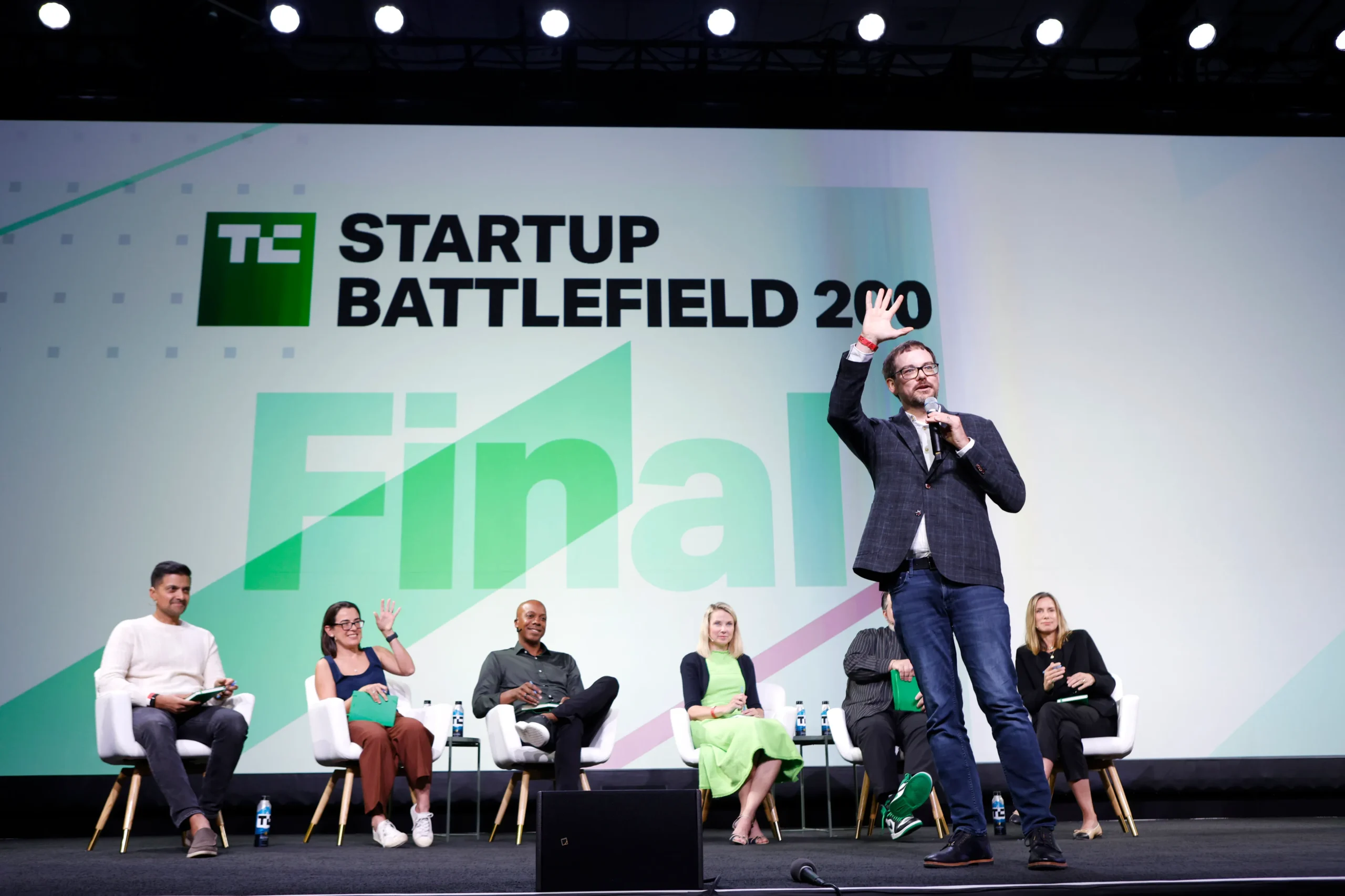
Applications close May 27, 2026. TechCrunch Disrupt runs October 13–15 in San Francisco. The clock is already ticking — and the smartest founders I know aren’t waiting.
Let me tell you about a founder I met in Lagos last spring. Her name is Adaeze, and she builds infrastructure for cross-border health payments across West Africa. She submitted to the Startup Battlefield 200 with nine months of runway, a product live in three markets, and the kind of quiet conviction that doesn’t photograph well but moves rooms. She didn’t make the Top 20. She didn’t step onto the Disrupt Main Stage. She didn’t shake hands with Aileen Lee under the camera lights.
What she did get was a TechCrunch profile, two warm intros from Battlefield alumni, a due diligence process that forced her to compress her pitch to its sharpest possible form, and — six weeks later — a Series A term sheet from a fund that had discovered her through the Battlefield ecosystem. “Not winning,” she told me, “was the best thing that happened to my company.”
That’s the story no one tells loudly enough. The Startup Battlefield Top 20 is real, legendary, and worth obsessing over. But the Battlefield 200 is where category-defining companies are actually forged — and the moment you hit submit, the real prize has already begun to arrive.
The Myth of the Main Stage: Why Everyone Chases Top 20 (And Why They’re Half Right)
The cultural mythology of the Startup Battlefield is formidable. Since its inception, the competition has introduced the world to companies including Dropbox, Mint, and Yammer at a moment when most of the investing world hadn’t yet heard their names. That legacy creates an understandable gravitational pull: every founder imagines themselves under those lights, six minutes on the clock, a panel of the most consequential venture capitalists alive leaning slightly forward.
And the 2026 judges panel is, frankly, extraordinary. Aileen Lee of Cowboy Ventures — the woman who coined the term “unicorn” — sits alongside Kirsten Green of Forerunner, whose consumer instincts have been quietly prescient for fifteen years. Navin Chaddha of Mayfield, Chris Farmer of SignalFire, Dayna Grayson of Construct Capital, Ann Miura-Ko of Floodgate, and Hans Tung of Notable Capital round out a panel whose collective portfolio value runs into the hundreds of billions. Six minutes in front of that group is, genuinely, not nothing.
But here’s the contrarian truth most competition coverage won’t say plainly: the Main Stage is a broadcast mechanism, not a selection mechanism. The investors in that room — and the far larger audience watching the livestream globally — are equally attentive to the Battlefield 200 track, the hallway conversations, the TechCrunch editorial context that frames every competing company. Making the Top 20 amplifies a signal. The Battlefield 200 creates the signal in the first place.
The real mistake isn’t failing to reach Top 20. It’s failing to apply.
What It Actually Takes to Make Startup Battlefield Top 20 in 2026
TechCrunch is not secretive about its selection criteria, which makes it all the more remarkable how many applications fail to address them directly. The official 2026 Battlefield selection framework prioritizes four factors — and most founders stack-rank them incorrectly.
1. Product Video: The Most Underestimated Requirement
The two-minute product video is where the majority of applications functionally end. Judges watch hundreds of these. They are, by professional training, pattern-matching for momentum, clarity, and differentiated function — not production quality. A founder filming in a Lagos apartment who shows the actual product moving actual money in real time will outperform a polished agency reel showing a UI mockup every single time.
Your product video needs three things: a real user doing a real thing in thirty seconds, a founder who speaks with the specificity of someone who built it themselves, and a problem framing that makes the viewer feel slightly embarrassed they hadn’t noticed it before. That’s it. That’s the whole brief.
2. Founder Conviction, Not Founder Charisma
There is a widespread and damaging conflation of conviction with performance. TechCrunch’s editorial team has been explicit: they are selecting for companies they believe will define markets, not founders they believe will win pitch competitions. Conviction means you have answered — specifically, not philosophically — why this market, why now, why you, and what happens if you’re right at scale. Charisma is pleasant. Conviction is decisive.
3. Competitive Differentiation That’s Immediately Legible
In a category saturated with AI-adjacent pitches, the differentiation bar has risen sharply for 2026. Judges are looking for what PitchBook’s 2025 venture trends analysis identified as “structural moats” — advantages rooted in proprietary data, regulatory positioning, hardware-software integration, or distribution relationships that aren’t easily replicated by a well-funded incumbent. If your differentiation is “we’re faster/cheaper/cleaner,” you haven’t found it yet.
4. An MVP That’s Actually in Market
The Battlefield 200 accepts pre-revenue companies, but the Top 20 almost universally goes to founders with real users experiencing a real product. This isn’t a formal criterion — it’s an observable pattern. Live usage creates a gravitational narrative that hypothetical TAMs simply cannot replicate. If you’re three months from launch, apply to Battlefield 200 now, use the application process to sharpen your story, and come back with stronger ammunition when your product is breathing.
The Hidden Premium Package: What Every Battlefield Applicant Gets
This is the part of the Battlefield story that receives almost no coverage, and I think that’s partly intentional. TechCrunch benefits from the mythology of the Main Stage. But the Battlefield 200 package — available to every company selected from thousands of global applicants — is, frankly, staggering for an early-stage company.
Every Battlefield 200 company receives:
- A dedicated TechCrunch article — organic, editorial, indexed globally. At a domain authority that rivals the FT for technology coverage, this is not a press release. This is coverage.
- Full Disrupt conference access — three days in the room where allocation decisions happen informally, between sessions, over coffee. Harvard Business Review research on startup ecosystems has consistently found that informal investor touchpoints at concentrated events produce conversion rates multiple times higher than formal pitch processes.
- Exclusive partner discounts and resources — AWS credits, legal services, SaaS tooling — the kind of operational runway extension that actually matters when you’re still pre-Series A.
- The Battlefield alumni network — a cross-vintage community of founders who have navigated similar scaling inflection points and are, as a cultural matter, unusually generous with warm introductions.
- The due diligence forcing function — this is the hidden premium feature nobody talks about. The application process forces you to compress your narrative, clarify your defensibility, and confront your assumptions in ways that three months of internal planning rarely achieves. The best founders I know treat Battlefield applications as strategic planning exercises with publishing rights.
You do not need to win to receive these. You need to be selected for the Battlefield 200. And you need to apply by May 27, 2026.
A Global Economist’s Lens: Why Battlefield Matters Far Beyond San Francisco
Here’s the dimension of this competition that the tech press chronically underweights: the Startup Battlefield is no longer a California story.
The 2026 applicant pool will draw from startup ecosystems that, five years ago, barely registered in global VC data. Lagos. Nairobi. Bangalore. Jakarta. São Paulo. Warsaw. Riyadh. These aren’t edge cases — they’re the growth frontier. The World Economic Forum’s 2025 Global Startup Ecosystem Report found that emerging-market startup activity grew at 2.3 times the rate of Silicon Valley across the prior two years, even as absolute capital remained concentrated in traditional hubs.
The Battlefield, when it amplifies a Nairobi health-tech company or a Warsaw defense-technology startup, isn’t being charitable. It’s being correct about where the next wave of valuable companies is actually forming. The judges know this. The TechCrunch editorial team knows this. The AI wave, the climate infrastructure wave, and the defense-tech wave are all, fundamentally, global waves — and the founders best positioned to ride them often sit far outside Sand Hill Road.
For international founders specifically, the Battlefield 200 functions as a credentialing mechanism in a way that no local competition can replicate. A TechCrunch editorial mention is legible to any investor in any timezone. That’s an asymmetric advantage worth crossing an ocean for.
The Insider Playbook: Application Tactics That Separate Top 20 from the Rest
Let me be direct. After studying Battlefield alumni companies and talking with founders across multiple cohorts, the differentiation between Top 20 and the broader Battlefield 200 comes down to a handful of consistent patterns.
Lead with the insight, not the solution. The most memorable applications open with a counterintuitive observation about a market — something that makes the reader feel briefly disoriented before the product snaps everything into focus. Don’t open with your product. Open with the thing you know that most people don’t.
Show the unfair advantage early. Judges are filtering for irreplaceability. What do you have that a well-funded competitor cannot simply buy? Name it explicitly. Don’t make judges infer it.
Let your numbers do the emotional labor. Retention rates, NPS scores, revenue growth trajectories — when these are strong, they communicate conviction more credibly than any adjective. If your numbers aren’t strong yet, show the qualitative signal with the same specificity: customer quotes, use-case depth, early partnership terms.
Apply even if you think you’re not ready. This is perhaps the most counterintuitive piece of advice I can offer, and I give it with full conviction. The application process itself — the forcing function of articulating your thesis, differentiation, and trajectory in a compressed format — is a strategic tool. The companies that use Battlefield applications as a planning discipline, regardless of outcome, emerge sharper. Apply now. Sharpen later if needed.
Target the Battlefield 200 explicitly, not just the Top 20. Frame your application for a reader who wants to discover a company worth writing about. TechCrunch’s editorial team is not just selecting pitch competitors — they’re selecting companies they want to cover. Give them a story.
The Founder Mindset Shift: Applying Is Never a Risk
There’s a question I hear constantly from founders considering the Battlefield: What if we apply and don’t get in?
I want to reframe this question entirely, because it misunderstands the nature of the opportunity.
The risk isn’t applying and not making Battlefield 200. The risk is building a company in 2026 without forcing yourself through the disciplined articulation that serious competition requires. The risk is arriving at your Series A pitch without having stress-tested your narrative against the sharpest editorial and investor judgment available for free. The risk is letting the May 27 deadline pass while you wait for more traction, more polish, more time — none of which will make the application easier, only theoretically safer.
The $100,000 equity-free prize awarded to the Top 20 winner is real and meaningful. But the actual prize structure of the Startup Battlefield is far more democratic than that figure suggests. Every company in the Battlefield 200 receives resources, visibility, and credibility that early-stage startups typically spend years accumulating through slower, more expensive channels.
The Main Stage is where careers are validated. The Battlefield 200 is where they’re launched.
Apply before May 27, 2026. TechCrunch Disrupt runs October 13–15 in San Francisco. The application is free. The upside is not.
The question isn’t whether you’re ready for the Battlefield. The question is whether you’re ready for what not applying costs you.
→ Submit your Startup Battlefield 2026 application at TechCrunch Disrupt before May 27, 2026. Applications are free. The stage is global. Your category is waiting.
Discover more from The Economy
Subscribe to get the latest posts sent to your email.
The Physical Market Is Screaming What Futures Won’t Admit
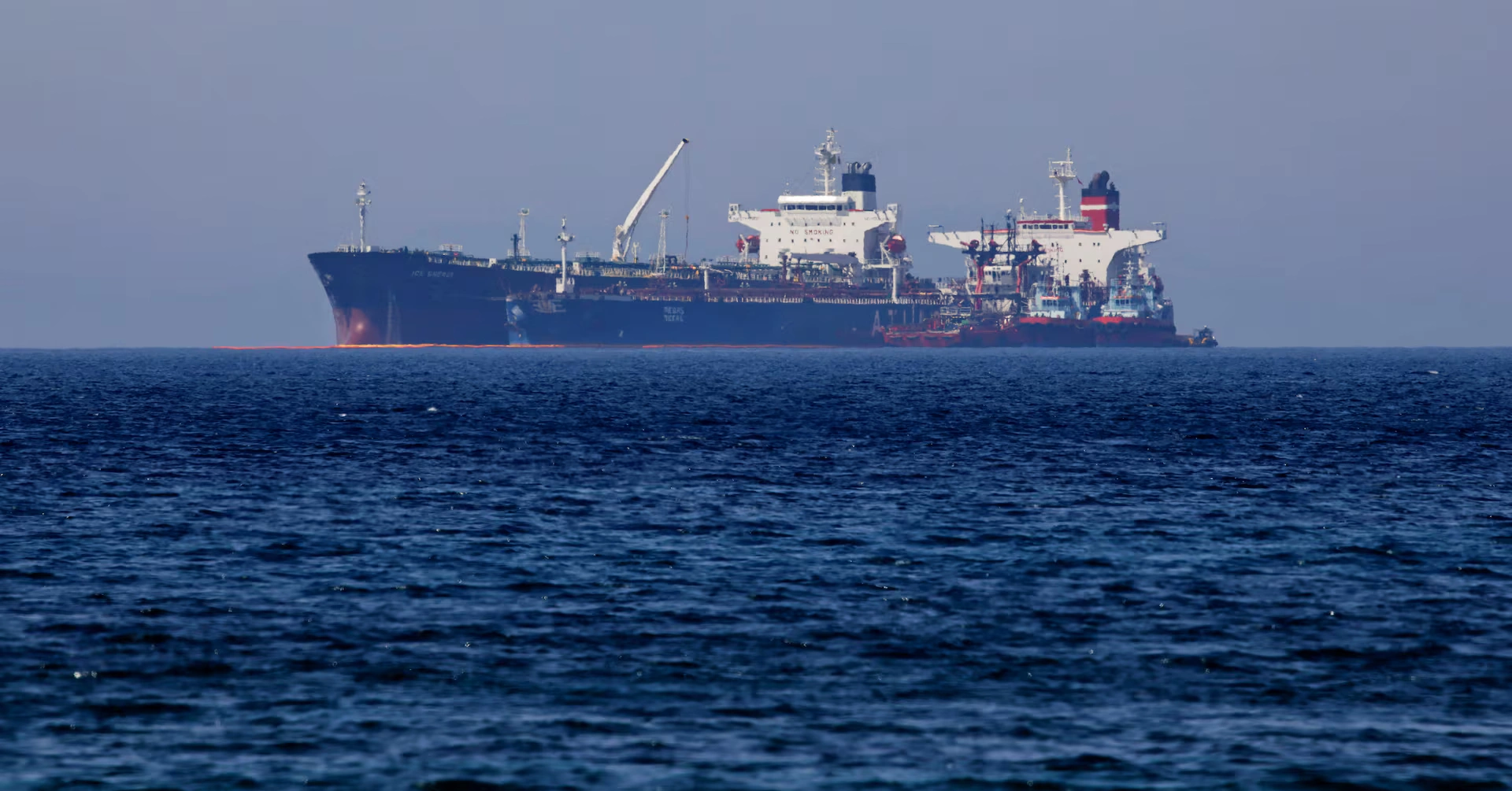
On the afternoon of April 7, 2026, as President Donald Trump’s 8:00 p.m. deadline for Iran loomed, something unprecedented happened in the North Sea. Dated Brent—the benchmark for physical cargoes of crude oil being loaded onto ships—touched $144.42 per barrel, surpassing the crisis peaks of Russia’s 2022 invasion of Ukraine and even the 2008 global financial crisis frenzy. By the following day, some North Sea Forties cargoes were effectively pricing north of $150 per barrel.
Meanwhile, Brent futures for June delivery—the paper contracts that dominate news tickers—hovered around $96.50 to $110 per barrel, creating a historic $32-per-barrel premium between physical spot markets and forward contracts. This is not merely a spread. This is a warning siren.
The message from the physical market is unambiguous: the ceasefire is theater, and the energy crunch is only beginning.
The Ceasefire That Isn’t: Iran’s De Facto Hormuz Control
The United States and Iran announced a two-week ceasefire on the evening of April 7, 2026, following nearly six weeks of conflict that began with U.S.-Israeli strikes on February 28. The agreement, brokered with Pakistani mediation, was meant to pause military operations and reopen the Strait of Hormuz—the chokepoint through which 20 million barrels per day of crude and products transited before the war, representing roughly 20% of global seaborne oil trade.
Yet by April 10, the strait remained effectively closed to normal commercial traffic. According to MarineTraffic data, only six ships transited the strait on April 9—including just two oil or chemical tankers—compared to 53 tankers on February 27, the day before hostilities began. The first non-Iranian oil tanker to pass since the ceasefire—a Gabon-flagged vessel carrying 7,000 tonnes of Emirati fuel oil—only transited on April 9, nearly 48 hours after the truce took effect.
The reason for the paralysis is simple: Iran has institutionalized control over the waterway. Under the ceasefire terms announced by Tehran, all vessels must coordinate passage with the Islamic Revolutionary Guard Corps (IRGC) Navy and navigate designated corridors—specifically routes between Qeshm and Larak islands that avoid Iranian-laid sea mines. Iran’s Ports and Maritime Organization explicitly stated that transit requires “coordination with Iran’s Armed Forces and with due consideration to technical limitations”.
This is not freedom of navigation. This is a toll system disguised as security protocol.
The $2 Million Question: Iran’s Economic Warfare
President Trump took to Truth Social on April 10 to warn Iran against charging “fees” to tankers: “They better not be and, if they are, they better stop now!”. But the reality on the water suggests otherwise.
According to maritime intelligence firm Lloyd’s List and multiple ship brokers, Iran has been using Larak Island as a tolling stop for tankers during the war, demanding payments of $1 million to $2 million per vessel—or approximately $1 per barrel—with fees collected in Chinese yuan or cryptocurrency. Iranian-flagged vessels and ships from “friendly” nations like Malaysia reportedly transit toll-free, while vessels from Western-aligned countries face exclusion or exorbitant charges.
If normalized at pre-war traffic levels of roughly 21.5 million barrels daily, a $1-per-barrel toll would generate approximately $645 million monthly—or $7.74 billion annually—for the Iranian regime. This is not incidental revenue; this is a strategic economic weapon that transforms Hormuz from a passive chokepoint into an active taxation regime on global energy flows.
The implications extend beyond immediate costs. As CIBC Private Wealth’s Rebecca Babin notes, “A toll structure effectively puts a straightjacket on flows… creating friction and likely reducing overall throughput”. Even if the ceasefire holds, Iran has demonstrated that it can constrain global supply at will—and profit handsomely from doing so.
The North Sea Premium: A Market Voting With Its Feet
While futures traders price in an optimistic resolution—Brent futures remain in steep backwardation, with front-month contracts commanding premiums over longer-dated ones—the physical market tells a different story. The backwardation structure itself signals acute near-term supply tightness; as Société Générale strategists warned, “The system is running out of buffer and the physical market is now signaling acute stress”.
Dated Brent’s surge to $144+ reflects a brutal scramble for prompt barrels among refiners who cannot wait for Hormuz to reopen. With at least 12 million barrels per day of Middle Eastern supply effectively shut in—roughly 12% of global output—European and Asian refiners are bidding aggressively for replacement cargoes from the North Sea, West Africa, and the Atlantic Basin.
The International Energy Agency has characterized the disruption as the “largest supply disruption in the history of the global oil market”. Gulf production cuts have exceeded 10 million barrels per day, including 8 million barrels of crude and 2 million barrels of condensates and NGLs, with major reductions in Iraq, Qatar, Kuwait, the UAE, and Saudi Arabia. Ras Laffan, the world’s largest liquefaction facility in Qatar, has been offline since March 2.
In response, IEA member countries agreed on March 11 to release 400 million barrels from emergency reserves—the largest coordinated stock release in history. Yet as the IEA itself acknowledged, this remains a “stop-gap measure.” Full restoration of flows, according to the U.S. Energy Information Administration, “will take months,” with modeling indicating fuel prices will continue rising until variables resolve.
The Futures-Physical Disconnect: What Traders Are Missing
The divergence between futures and physical markets reveals a dangerous complacency. Futures traders—betting on financial contracts settled months from now—appear to assume the Hormuz crisis will resolve swiftly. Physical buyers, needing barrels today, have no such luxury.
As Wood Mackenzie’s Alan Gelder observed, the Brent futures curve has shifted from pre-war contango (where future prices exceed spot) to pronounced backwardation extending through 2033, reflecting “the challenge on prompt barrel supply and availability as the market is scrambling for crude barrels in all geographies”. The M1-M3 backwardation has widened from roughly $2-3 per barrel pre-war to $20 per barrel currently.
This is not a market expecting a quick fix. This is a market pricing in sustained structural tightness.
The disconnect carries real-world consequences. When physical prices greatly exceed futures, fuel costs for consumers escalate rapidly. As IDX Advisors’ Ben McMillan noted, “Dated Brent is where the rubber meets the road,” and Brent futures surpassing $150 per barrel remains “certainly within the cards” if negotiations fail.
Washington’s Gambit: Theater Over Strategy
The ceasefire negotiations scheduled for April 10 in Islamabad, Pakistan—led by Vice President JD Vance, senior envoy Steve Witkoff, and Jared Kushner—carry the weight of global expectations. Yet the fundamental dynamics undermine optimism.
President Trump has declared that U.S. military forces will remain in place around Iran until a “REAL AGREEMENT” is reached, threatening that “the ‘Shootin’ Starts,’ bigger, and better, and stronger than anyone has ever seen before” if terms are violated. Simultaneously, he has mused about a U.S.-Iran “joint venture” on Hormuz tolls—a proposal that would effectively legitimize Iranian control over the waterway.
This incoherence reflects a deeper strategic failure. As the Council on Foreign Relations’ Steven A. Cook observed, “There has been no regime change in Iran, the current leadership is not any less radical than their predecessors, the Iranians still have the ability to menace their neighbors, and Iran has leverage over the Strait of Hormuz when it did not before the war began”. The war has not degraded Iran’s Hormuz capabilities; it has demonstrated and monetized them.
Israel’s continued strikes on Lebanon—targeting Hezbollah positions that both Iran and Pakistan claim are covered by the ceasefire—further complicate the truce’s viability. German Chancellor Friedrich Merz warned that “the severity with which Israel is waging war there could cause the failure of the peace process as a whole”. When Israeli Prime Minister Benjamin Netanyahu declares that Lebanon is excluded from the ceasefire while Iranian officials insist it is included, the agreement’s foundations appear sand-soft.
The New Energy Security Architecture
The Hormuz crisis has exposed vulnerabilities that will persist regardless of the ceasefire’s fate. The IEA’s emergency stock release, while unprecedented, cannot replace 20 million barrels per day of disrupted flows indefinitely. Global inventories—while currently at 8.2 billion barrels, their highest since February 2021—are being drawn down steadily as “early-March inventory cushions” thin and pre-conflict cargoes discharge.
More fundamentally, the crisis has shattered the assumption that major shipping chokepoints remain neutral infrastructure. Iran has proven that a mid-tier military power can, through asymmetric capabilities—naval mines, missile threats, and IRGC coordination regimes—effectively tax global trade and force superpowers to the negotiating table.
For energy markets, this means a permanent risk premium. The North Sea’s record premiums are not an anomaly; they are the new baseline for a world where physical availability trumps financial speculation. Refiners will pay whatever it takes to secure prompt cargoes, and producers outside the Hormuz zone—North Sea, West African, U.S. Gulf—will command structural premiums for their reliability.
The Verdict: Structural Risks Baked In
The Washington-Tehran ceasefire is not a resolution; it is a tactical pause in a broader confrontation over control of global energy arteries. Iran retains de facto sovereignty over Hormuz transit, complete with IRGC coordination requirements, toll demands, and the demonstrated capacity to close the strait at will. The North Sea’s record physical prices reflect market recognition that this leverage is not temporary—it is structural.
For sophisticated investors and policymakers, the implications extend beyond the immediate price spike. The energy transition narrative—already strained by years of underinvestment—faces a brutal reality check. As one analyst noted, after two decades and $5 trillion invested in renewable energy, the world remains “utterly dependent on crude oil” when supply tightens. The International Air Transport Association has warned that jet fuel shortages will persist for months even after the strait reopens.
The backwardation in futures curves suggests traders expect normalization eventually. The physical market’s screaming premiums suggest otherwise. When the world’s most liquid benchmark crude—North Sea Dated Brent—trades at $144+ per barrel while futures languish $30+ below, the market is voting with its wallet.
The ceasefire has failed to stem the global energy crunch because it was never designed to. It is a face-saving measure that leaves Iran in control, the strait constrained, and physical markets in acute stress. The North Sea premium is not a bug in the system—it is the system adjusting to a new reality where Hormuz is no longer a free passage, but a toll road run by the IRGC.
For energy security planners in Washington, Brussels, Beijing, and beyond, the message is clear: diversification is no longer optional, and strategic reserves are no longer sufficient. The Hormuz crisis has demonstrated that in an era of asymmetric warfare and economic coercion, the chokepoints that matter most are those that can be monetized by those willing to hold them hostage.
The North Sea’s record prices are the first verdict. They will not be the last.
Discover more from The Economy
Subscribe to get the latest posts sent to your email.
-

 Markets & Finance3 months ago
Top 15 Stocks for Investment in 2026 in PSX: Your Complete Guide to Pakistan’s Best Investment Opportunities
-

 Analysis2 months ago
Brazil’s Rare Earth Race: US, EU, and China Compete for Critical Minerals as Tensions Rise
-

 Banks3 months ago
Best Investments in Pakistan 2026: Top 10 Low-Price Shares and Long-Term Picks for the PSX
-

 Investment3 months ago
Top 10 Mutual Fund Managers in Pakistan for Investment in 2026: A Comprehensive Guide for Optimal Returns
-

 Analysis2 months ago
Top 10 Stocks for Investment in PSX for Quick Returns in 2026
-

 Asia3 months ago
China’s 50% Domestic Equipment Rule: The Semiconductor Mandate Reshaping Global Tech
-

 Global Economy3 months ago
Pakistan’s Export Goldmine: 10 Game-Changing Markets Where Pakistani Businesses Are Winning Big in 2025
-

 Global Economy3 months ago
15 Most Lucrative Sectors for Investment in Pakistan: A 2025 Data-Driven Analysis