
Opinion
Oil Prices Soar Above $100 a Barrel. This Time, the World Changes With Them.

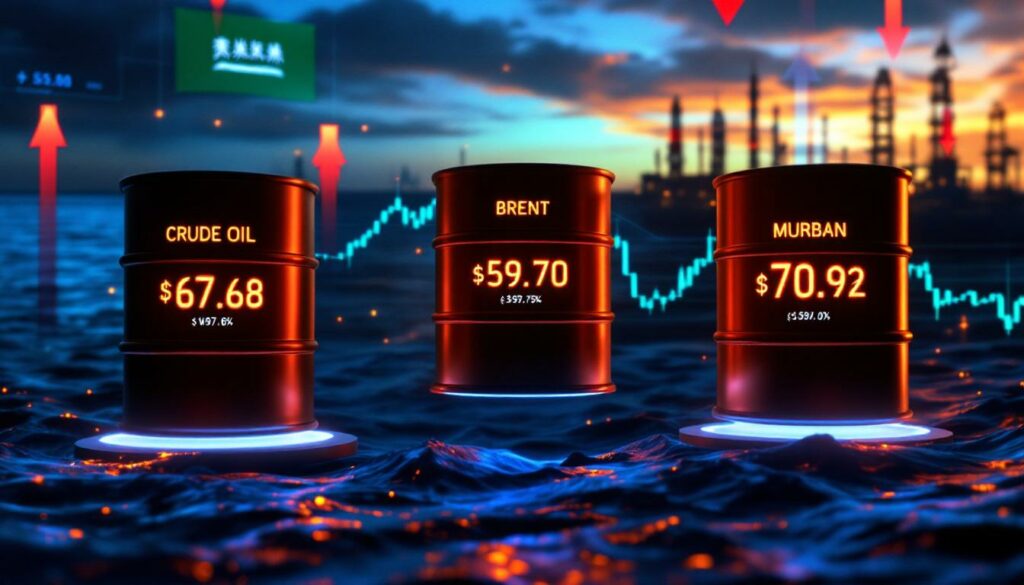
Live Prices — April 13, 2026
| Benchmark | Price | Change |
|---|---|---|
| Brent Crude | $102.80 | ▲ +7.98% |
| WTI | $104.88 | ▲ +8.61% |
| U.S. Gas (avg) | $4.12/gal | ▲ +38% since Feb. |
| Hormuz Traffic | 17 ships/day | ▼ vs. 130 pre-war |
As Brent crude clears $102 and WTI tops $104 in a single Monday session, the U.S. Navy prepares to blockade Iranian ports and a fragile ceasefire teeters on collapse. This is not a price spike. It is a civilisational stress test — and the global economy is failing it.
On the morning of April 13, 2026, the global economy received a message written in the price of crude oil. WTI futures for May delivery vaulted nearly 8% to $104.04 a barrel while Brent, the international benchmark, rose above $102 — the third time in six weeks that oil prices have soared above $100 a barrel. The catalyst was grimly familiar by now: the collapse of U.S.-Iran peace negotiations in Islamabad and President Donald Trump’s announcement that the U.S. Navy would begin blockading all maritime traffic entering or leaving Iranian ports, effective 10 a.m. Eastern Time. It was an extraordinary escalation. It was also, in many ways, entirely predictable.
What is not predictable — what no model, no spreadsheet, and no geopolitical risk matrix has successfully priced — is how long this goes on, how far it spreads, and what kind of global economy emerges on the other side. This is not just another oil price spike. The 1973 Arab oil embargo, the 1979 Iranian Revolution, the Gulf War shocks of 1990: historians will one day place the 2026 Hormuz Crisis in the same catalogue of civilisational economic ruptures. The difference is that this time, the chokepoint has not just been threatened — it has been functionally closed for six weeks, and the world’s largest naval power is now formally blockading it from both ends.
KEY FIGURES
- +55% — Brent crude rise since the Iran war began on Feb. 28, 2026
- 17 — Ships transiting Hormuz on Saturday, vs. 130+ daily pre-war
- $119 — Brent peak reached in early April 2026
- 30% — Goldman Sachs-estimated U.S. recession probability, up from 20%
The Anatomy of the Largest Oil Supply Disruption in History
The numbers are almost surreal in their severity. Before the U.S.-Israeli strikes on Iran began on February 28, the Strait of Hormuz — a 21-mile-wide channel between Iran and Oman — handled roughly 25% of the world’s seaborne oil and 20% of its LNG. More than 130 vessels transited daily. That flow has been reduced to a trickle. On Saturday, April 12, only 17 ships made the passage, according to maritime analytics firm Windward. The International Energy Agency has called the current disruption the largest supply shock in the history of the global oil market — a statement it does not make lightly. Production losses in the Middle East have been running at roughly 11 million barrels per day, with Goldman Sachs analysts warning they could peak at 17 million before any recovery begins.
Iran has not simply blockaded the strait — it has monetised it. Tehran began charging tolls of up to $2 million per ship for passage, a sovereign toll road carved from one of humanity’s most critical energy arteries. Oil industry executives have been lobbying Washington frantically to reject any deal that concedes Iran’s de facto control of the waterway. The Revolutionary Guards have warned that military vessels approaching the strait will be “dealt with harshly and decisively.” Iran’s Supreme Leader advisor Ali Akbar Velayati put it bluntly: the “key to the Strait of Hormuz” remains in Tehran’s hands.
And then came Sunday. After marathon talks in Islamabad collapsed — Vice President JD Vance citing Iran’s failure to provide “an affirmative commitment” to forgo nuclear weapons — President Trump posted to social media announcing a full naval blockade of Iranian ports. U.S. Central Command clarified the scope: all vessels from all nations, entering or leaving Iranian ports on the Arabian Gulf and Gulf of Oman, would be interdicted beginning Monday morning. Markets, already frayed, buckled immediately.
“Transit through the Strait of Hormuz remains restricted, coordinated, and selectively enforced. There has been no return to open commercial navigation.”
— Windward Maritime Intelligence, April 2026
Why Oil Prices Above $100 a Barrel Are Different This Time
Context, always context. When Brent crossed $100 in 2008, it was on the back of a commodity supercycle and voracious pre-crisis demand. When it briefly touched triple digits again in 2011 and 2022, those spikes were bounded by recoverable circumstances — Libyan disruption here, Russian invasion there. What defines the current oil price surge in 2026 is the combination of three factors that have never simultaneously aligned in the modern era: a total physical closure of the world’s most critical maritime chokepoint, an active military confrontation between the United States and Iran, and a global economy already weakened by years of tightening monetary policy and tariff escalation.
The physical-versus-paper market divergence alone should unnerve policymakers. While Brent futures trade around $102 this morning, physical crude barrels for immediate delivery have been trading at record premiums of approximately $150 a barrel in some grades. That is not a market in orderly price discovery. That is a market screaming that actual oil — the kind you put in a tanker, refine, and burn — is becoming genuinely scarce in ways that paper futures cannot fully capture.
Major Oil Supply Shocks: A Historical Comparison
| Event | Year | Peak Price Surge | Duration | % of Global Supply Affected |
|---|---|---|---|---|
| Arab Oil Embargo | 1973 | ~+400% (over 12 months) | ~5 months | ~7–9% |
| Iranian Revolution | 1979 | ~+150% | ~12 months | ~4% |
| Gulf War (Kuwait invasion) | 1990 | ~+130% | ~6 months | ~5% |
| Russia-Ukraine War | 2022 | ~+80% (Brent peak ~$139) | ~4 months peak | ~8–10% |
| 2026 Hormuz Crisis | 2026 | +55% in 6 weeks; Brent from $70 → $119 peak | Ongoing | ~20%+ (Hormuz total) |
The Economic Impact of Oil Over $100: A Global Reckoning
The cascade effects of sustained oil prices above $100 a barrel are no longer theoretical. They are unfolding in real time, and the transmission mechanisms differ sharply by geography.
The United States: Inflation, the Fed, and the $4-a-Gallon Problem
American motorists are paying an average of $4.12 per gallon at the pump — up 38% since the war began in late February. For a country where gasoline pricing is a leading indicator of presidential approval ratings, this creates an acute political problem for an administration that launched the military campaign in the first place. Goldman Sachs has raised its 12-month U.S. recession probability to 30%, up from 20% before the conflict began, and elevated its 2026 inflation forecast to roughly 3% — a figure that would make the Federal Reserve’s dual mandate look increasingly unachievable. The Fed now faces its least comfortable scenario: a supply-driven inflationary shock paired with slowing growth, a stagflationary bind that rate tools are poorly designed to address.
Europe: An Energy Crisis Stacked on an Energy Crisis
For Europe, the timing could scarcely be worse. The continent entered 2026 with gas storage at roughly 30% capacity following a harsh winter, and its dependence on Qatari LNG — which transits Hormuz — has proved a fatal vulnerability. Dutch TTF gas benchmarks nearly doubled to over €60/MWh by mid-March, while the European Central Bank postponed its planned rate reductions on March 19, raising its inflation forecast and cutting GDP projections simultaneously. The ECB now warns of stagflation for energy-dependent economies; UK inflation is expected to breach 5% this year. Germany and Italy — the continent’s industrial engines — face the real possibility of technical recession by year-end, with chemical and steel manufacturers already imposing surcharges of up to 30% on industrial customers.
Asia: The Quiet Crisis
Asia’s exposure is less discussed but arguably more profound. In 2024, an estimated 84% of crude flowing through Hormuz was destined for Asian markets. China, which receives a third of its oil via the strait, has been accumulating reserves and strategically holding its hand — but even a billion barrels of reserve buys only a few months of supply at normal consumption rates. India has dispatched destroyers to escort tankers, launching Operation Sankalp to evacuate Indian-flagged LPG carriers from the Gulf of Oman. Japan and South Korea, overwhelmingly dependent on Middle Eastern crude, have activated emergency reserve release programs. The ASEAN economies are, in the IMF’s language, experiencing a severe “terms-of-trade shock” that is accelerating currency depreciation and eroding import capacity across the region simultaneously.
Goldman Sachs and the Anatomy of a $120 Scenario
No institution has been more forensic in its scenario modelling than Goldman Sachs, and its language has grown progressively more alarming. In a note carried by Bloomberg last Thursday, Goldman warned that if the Strait of Hormuz remains mostly shut for another month, Brent would average above $100 per barrel for the remainder of 2026 — with Q3 averaging $120 and Q4 at $115. The bank’s lead commodity analyst Daan Struyven described the situation as “fluid,” which, in the measured language of Wall Street research, reads as genuinely alarming.
Wood Mackenzie’s analysis is blunter still: if Brent averages $100 per barrel in 2026, global economic growth slows to 1.7%, down from the pre-war forecast of 2.5%. At $200 oil — a figure that was science fiction six weeks ago and is now a tail risk in Barclays’ scenario models — global recession becomes mathematically inevitable, with the world economy contracting by approximately 0.5%. The most chilling detail in the Goldman note is the observation that even after the Strait reopens, oil prices will not fall quickly back to pre-war levels. The shock has forced markets to permanently reprice the geopolitical risk premium embedded in Persian Gulf production concentration. That repricing is already baked into long-dated oil forwards.
“If a resolution to the war proves unachievable, we expect Brent to trade upwards again, with higher prices and demand destruction ultimately balancing the market.”
— Wood Mackenzie Energy Analysts, April 2026
The Geopolitical Oil Crisis: Strait of Hormuz as the New Berlin Wall
There is a structural argument buried beneath the daily price moves that deserves serious attention, because it will outlast whatever ceasefire or deal eventually materialises. The Strait of Hormuz has always been the world’s single greatest energy chokepoint — a geographic accident that turned a narrow Persian Gulf passage into the jugular vein of the global industrial economy. What the 2026 crisis has done is demonstrate, for the first time at full operational scale, exactly how catastrophic its closure actually is. Energy planners and policymakers have long known this intellectually. They now know it viscerally, with $4-a-gallon gasoline and rationing notices.
The strategic consequences will be generational. Every major oil-importing nation is now conducting emergency reviews of its energy supply diversification posture. The U.S. shale industry — constrained in the near term to roughly 1.5 million additional barrels per day — will receive a decade of investment incentives. Saudi Arabia and the UAE, which have limited alternative pipeline capacity via Yanbu and Fujairah respectively (a combined ceiling of roughly 9 million barrels per day against Hormuz’s normal 20 million), will face enormous pressure to expand redundant infrastructure. The energy transition, already turbocharged by post-pandemic economics, now has a third accelerant: geopolitical necessity. When a single authoritarian government can threaten to collapse the global economy by closing a 21-mile strait, the case for renewable energy independence ceases to be an environmental argument. It becomes a national security imperative.
What Comes Next: Three Scenarios for the Oil Price Outlook
Markets are, at their core, probability machines. And right now, the probability distributions on oil price scenarios have never been wider or more consequential. Three plausible trajectories present themselves.
Scenario 1 — Negotiated resolution (base case, narrowing): The blockade and counter-blockade create sufficient economic pain on both sides — Iranian export revenues collapse while U.S. domestic inflation becomes a serious political liability — to force a resumption of talks. A deal that includes Iranian nuclear concessions and a Hormuz reopening could see Brent retreat toward $80–$85 by year-end, consistent with Goldman’s conditional base case. The window for this scenario is closing fast.
Scenario 2 — Frozen stalemate (elevated probability): The ceasefire technically holds but the Strait remains in Iran’s supervised pause — open to some nations, closed to others, with tolls, IRGC escorts, and constant threat of escalation. Oil prices trade in a $95–$115 range for the remainder of the year. Global growth slows to around 2%, the Fed and ECB remain paralysed between inflation and recession. This is the slow bleed scenario, and arguably the most likely.
Scenario 3 — Escalation (tail risk, but priced insufficiently): Limited U.S. strikes on Iran, which the Wall Street Journal reported Trump is actively considering, trigger Iranian retaliation against Gulf production infrastructure. Brent tests $150 or higher. Global recession is not a tail risk — it is a base case. The physical crude market, already pricing some grades at $150, would simply catch up to what it already knows.
A Final Word on What $100 Oil Actually Means
There is a tendency in financial commentary to treat $100-a-barrel oil as a number — a round, symbolic threshold that triggers algorithmic reactions and attention-grabbing headlines. But it is worth sitting with what it actually represents. Every barrel of oil that costs $104 instead of $70 is a transfer of wealth from oil-importing nations — from the factories of Germany, the commuters of Manila, the farmers of Brazil who depend on Hormuz-transited fertilizers — to a geopolitical conflict that most of the world’s population did not choose and cannot control.
The IEA has called this the largest oil supply disruption in the history of the global market. That distinction matters. Every previous shock eventually resolved — through diplomacy, demand destruction, technological substitution, or simple exhaustion. This one will too. But the world that emerges from the 2026 Hormuz crisis will be structurally different from the one that entered it: more fragmented in its energy supply chains, more accelerated in its renewable transition, more alert to the terrifying leverage embedded in a 21-mile waterway that sits entirely within Iranian territorial reach.
When they write the history of how the world finally, truly moved beyond its dependence on Middle Eastern oil, the chapter title may well be: April 2026.
Discover more from The Economy
Subscribe to get the latest posts sent to your email.


Sotheby’s is now offering sellers 7% interest on delayed auction proceeds. Is it a clever financial pivot or a sign of deeper liquidity stress? A premium analysis for serious collectors and investors.
When an Auction House Becomes Your Bank
Picture a consignor — a discreet family office, let’s say, with a Basquiat they’ve held since the early 1990s — being told by their Sotheby’s specialist that the house won’t be remitting their proceeds immediately after the hammer falls. Not because something went wrong at the sale. Not because of a dispute over provenance or a buyer who walked. But because Sotheby’s, the 280-year-old citadel of the global art trade, has quietly begun offering sellers the option to defer their payouts — in exchange for a 7% annual interest rate on the funds it retains.
The arrangement, reported today by the Financial Times and confirmed by sources close to multiple major consignors, marks a startling evolution in the auction industry’s financial architecture. What appears, at first glance, like a generous yield on idle capital is, on closer inspection, something far more complex: a signal that the world’s largest auction house is actively managing a liquidity crunch by turning consignor payables into a low-cost funding instrument — and hoping its clients see it as a perk, not a problem.
This article’s thesis is blunt: Sotheby’s interest-to-sellers program is less a financial innovation than a sophisticated piece of cash-flow engineering, born of the specific pressures facing a heavily leveraged, privately held institution operating in a market that has spent two years contracting. It deserves to be read that way — by collectors, institutional lenders, rival auction houses, and anyone with money or ambition tied to the global art economy.
The Mechanics: What Sotheby’s Is Actually Offering
The structure, according to sources cited by the Financial Times, is straightforward in outline if unusual in practice. Sotheby’s is reportedly offering sellers a 7% interest rate to postpone payments on auction proceeds. Previously, sellers whose auction items fetched over $30 million and agreed to let Sotheby’s hold part of their funds for at least six months were promised an 8% interest rate. Following interest rate cuts by the Federal Reserve last year, Sotheby’s adjusted this rate downward.
The revised 7% figure sits comfortably above the Fed Funds rate — which, after last year’s cuts, has settled in a range that makes a 7% return look appealing to a high-net-worth seller with patience and no immediate capital need. For Sotheby’s, the arithmetic works differently. If it can defer millions — or tens of millions — of dollars in seller payouts, even for three to six months, it gains short-term float without drawing on its revolving credit facility, issuing new debt, or turning to its Abu Dhabi sovereign wealth fund backer, ADQ, for fresh equity.
There is one further detail that complicates the picture considerably. The auction house has also retained some client funds beyond the agreed terms. Whether inadvertent or structural, that disclosure transforms the narrative from “innovative yield product” to “operational liquidity management under stress” — a distinction that sophisticated consignors should not overlook.
The Balance Sheet Behind the Offer
To understand why Sotheby’s is here, you need to understand Patrick Drahi’s balance sheet — or rather, the part of it his auction house sits on.
Drahi has a 750-million-euro collection of modern art and bought Sotheby’s in 2019 for $3.7 billion. But a major market downturn has left Sotheby’s struggling, and Drahi’s penchant for leveraging his assets may cost him control of the auction house. Since acquisition, the auction house’s debt has nearly doubled — it ballooned from $1 billion to $1.8 billion.
The headline figure from Sotheby’s parent company, BidFair Luxembourg, is stark: Sotheby’s published a pre-tax loss of $248 million in 2024, more than double the previous year, according to a report in the Financial Times. Against such numbers, a 7% interest arrangement with consignors is a rounding error in isolation — but it speaks to a broader pattern of financial creativity that has come to define the Drahi era at Sotheby’s.
Drahi has split Sotheby’s into three parts: the auction business, the buildings that house it, and the discrete business of lending money, both to collectors who offer their prizes for auction. This financial disaggregation has helped manage covenant obligations and ring-fence assets, but it has also introduced opacity that lenders and counterparties are increasingly wary of.
As has been widely reported, Drahi’s companies currently have $60 billion in debt, with some loans requiring payment in 2027. ADQ, Abu Dhabi’s sovereign wealth fund, stepped in late in 2024, raising roughly $1 billion through a stock sale. The deal raised some $1bn through the sale of stock, which will go to pay down some of Sotheby’s $1.6 billion of debt. It bought Drahi time. It did not eliminate the structural pressure.
Surface Recovery, Hidden Stress
The paradox at the heart of this story is that Sotheby’s looks like it is thriving. Sotheby’s reported that its total sales for the year will be $7 billion, a 17 percent increase over 2024. Fine art was up 15 percent, to $4.3 billion. A headline-grabbing November in New York, anchored by the Leonard Lauder collection, culminated in Gustav Klimt’s Portrait of Elisabeth Lederer selling for $236.3 million — the record for most expensive work of Modern art sold at auction.
These are real numbers. They reflect genuine market demand for exceptional works. But they mask a crucial distinction between gross sales volume and profitability, which the house’s opaque private structure allows it to suppress. Auction houses do not retain sale proceeds: those flow to buyers and sellers. Revenue — commissions, buyer premiums, financial services income — is a fraction of the hammer total. And commission margins, already under competitive pressure from Christie’s and Phillips, have been squeezed further by Sotheby’s recent fee restructuring. Sotheby’s has also announced it will stop giving its best clients some of the house’s fees, a move that signals the end of the era when ultra-high-net-worth consignors could negotiate seller’s premiums down to near zero.
Meanwhile, by the summer of 2025, the three main auction houses — Christie’s, Sotheby’s, and Phillips — recorded an average fall in sales of 6% in the first half compared to the previous year. The recovery, when it came, was concentrated in H2 and disproportionately dependent on a small number of ultra-premium consignments. That is not a business model — that is tournament economics, where a handful of crown-jewel lots subsidize a vast infrastructure of specialists, specialists, exhibitions, and marketing.
The Art Market’s Structural Moment
Sotheby’s liquidity maneuvering does not occur in a vacuum. The global art market recorded an estimated $59.6 billion in sales in 2025, a return to growth after two years of declining values, with public auction sales increasing by 9% to $20.7 billion. But the recovery is narrower than the headline suggests.
Sales for works priced above $10 million rose by 30% in value in 2025. However, works priced under $50,000 — representing 95% of auction transactions — saw both value and volume decline by 2%. The market is bifurcating sharply: brilliant at the very top, thin and anxious in the middle. For an institution like Sotheby’s, which needs volume as much as trophy lots, that bifurcation creates cash-flow volatility that is genuinely difficult to manage.
Dr. Clare McAndrew of Arts Economics, who authored the Art Basel and UBS report, noted: “The market welcomed a shift in direction in 2025, from the contraction of previous years to modest growth. However, it continued to operate in a volatile geopolitical environment, particularly regarding cross-border trade, the full implications of which are still unfolding in 2026.”
Geopolitics matters here in specific ways. The recovery in Asia is lagging behind that seen in the United States and Europe — Christie’s Asian auction sales contracted by 5%, while auction sales in the Americas surged 15%. For Sotheby’s, which has invested heavily in building presence in Hong Kong, Tokyo, and mainland China, a sluggish Asian recovery is a direct drag on consignment pipelines.
The Christie’s Contrast
If Sotheby’s financial engineering reflects the pressures of leveraged private ownership, Christie’s response to the same market conditions is instructive by contrast.
Both houses have grown their private sales business in recent years. This year’s improved auction results have seen private sales accounting for 24% of total revenue at Christie’s and 17% at Sotheby’s. Christie’s states in its report that the top three sales this year were made privately.
The divergence in private-sales strategy is telling. Comparing end-of-year results from 2019 and 2025, Christie’s brought in $700 million more from private sales this year than it did in 2019 ($800m vs $1.5bn). Sotheby’s made $200 million more in private sales compared to 2019 ($1bn vs $1.2bn).
Christie’s, backed by the Pinault family’s Artémis holding company and carrying far less balance-sheet leverage than Sotheby’s, has been able to invest in private-sales infrastructure consistently — building relationships, hiring specialists, and structuring deals that never touch an auction floor. The house does not require exact details of its financial performance to be disclosed — but Christie’s CEO Bonnie Brennan noted “renewed confidence worldwide” and a second half up 26% year-on-year.
Christie’s does not need to offer its consignors a yield to hold their funds. Sotheby’s, with its debt obligations and thinner margins, apparently does.
A Financial Services Pivot in Art-Market Clothing
There is a more charitable reading of Sotheby’s move — and it deserves serious consideration, not dismissal.
Auction houses have long been informal capital providers to the collecting community: through advances on consignments, through guarantees that transfer price risk from seller to house, and through art-secured loans. Sotheby’s Financial Services arm is among the largest art-secured lending operations in the world. If the house now begins receiving capital from sellers — even temporarily, at a negotiated interest rate — it is effectively expanding its balance sheet in both directions: lending to buyers and borrowing from sellers.
This is, in essence, a proto-banking model for the art market. It creates float, reduces dependence on traditional credit facilities, and deepens client relationships with high-net-worth individuals who may appreciate a bespoke, art-adjacent yield product.
The risk is obvious: this model works beautifully when clients trust the institution and no one needs their money urgently. It unravels rapidly under stress — which is precisely why the detail about funds being held beyond agreed terms is so unsettling. If Sotheby’s is already testing the boundaries of these arrangements, the structural parallels to shadow banking are not merely metaphorical.
For the collector community — particularly family offices in Geneva, sovereign-linked collectors in the Gulf, and institutional estates in New York — the appropriate response is not panic, but diligence. The question is not whether Sotheby’s will exist in five years (it almost certainly will, in some form, under some ownership). The question is whether your consignment proceeds are subject to unannounced delays, and whether you have documented, legally enforceable terms that prevent that.
The Emirati Angle and Ownership Complexity
One dimension of this story that has received insufficient attention is the role of ADQ — Abu Dhabi’s strategic investment fund — as a minority stakeholder in Sotheby’s. Sotheby’s, which is part-owned by the Abu Dhabi sovereign wealth fund ADQ, held a ‘Collectors Week’ in the UAE capital in December, including its first auction there, which made $133.4m from luxury items.
ADQ’s stake is strategic as much as financial: it anchors Sotheby’s presence in a region of fast-growing collector wealth, and it provides a degree of political and reputational insulation for an auction house that has, at times, been buffeted by the turbulence surrounding its owner. But it does not fundamentally resolve the leverage problem. ADQ bought equity, not absolution from debt.
The broader implication is that Sotheby’s is increasingly a multi-stakeholder institution, with complex, sometimes competing interests among its owner (Drahi), its sovereign backer (ADQ), its secured creditors (BlackRock, Elliott, PIMCO), and its client base. In that environment, transparency around financial arrangements — including the interest-to-sellers program — matters enormously.
What This Means for Collectors, Consignors, and the Market’s Future
For Consignors
If you are consigning a significant work to Sotheby’s in 2026, you should negotiate settlement terms explicitly and in writing. A 7% yield is attractive — but only if it is genuinely voluntary, fully documented, and accompanied by iron-clad repayment commitments. The detail about funds retained beyond agreed terms suggests that the voluntary / involuntary line may already be blurring for some clients.
For the Market Broadly
The interest program is a symptom of a deeper issue: the auction house business model generates significant gross volumes but notoriously thin net margins. Sotheby’s posted a $248 million pre-tax loss in 2024 — its worst in over a decade. In a market returning to modest growth, the pressure to find non-traditional revenue streams and manage working capital creatively is intense. Other houses, watching Sotheby’s experiment, will draw their own conclusions.
For the 2026–2027 Outlook
Confidence strengthened heading into 2026, with 43% of dealers expecting sales to improve and 38% anticipating stable performance. The structural tailwind of the great wealth transfer — more than $83 trillion set to pass between generations in the coming decades — argues for long-run expansion in the collecting class. New buyers, predominantly younger and more female than before, are entering at every price point.
But macro risks are real. Tariff uncertainty, continued softness in China, and a geopolitical environment that punishes cross-border trade all create headwinds for an industry that depends on the free international circulation of both art and capital. And for Sotheby’s specifically, the debt maturity wall — with Drahi’s companies facing obligations requiring payment in 2027 — concentrates risk in a narrow window.
The interest-to-sellers program is, in this light, a preparation for that window: a way of managing liquidity, deepening client loyalty, and buying time. Whether it signals a sophisticated pivot toward financial-services embedded in the auction model — or a more precarious scramble for working capital — will become clear not in the press release, but in the repayment record.
For now, the smartest consignors will take the 7%. They will document it fastidiously. And they will watch, very closely, for whether the check arrives on time.
Discover more from The Economy
Subscribe to get the latest posts sent to your email.
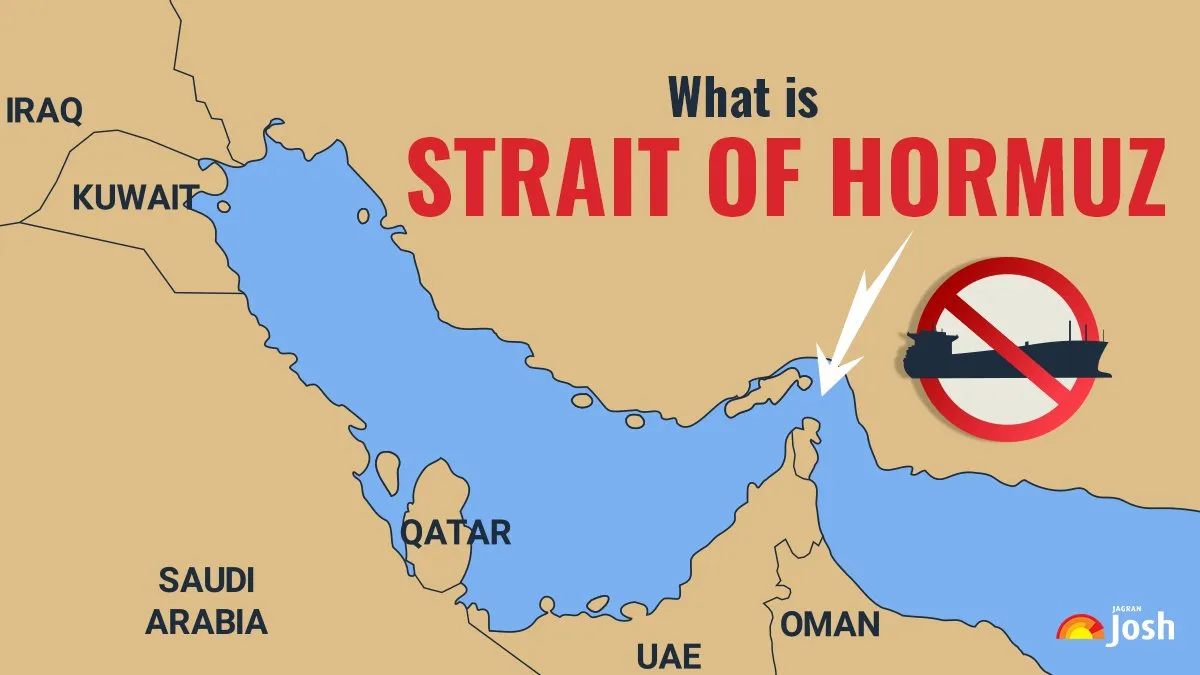
The 2026 crisis proves the Strait of Hormuz needs a binding regional agreement. Here’s the legal, economic, and diplomatic case for a governing arrangement based on law and fact.
Oil topped $100 a barrel again on Sunday. Twenty thousand seafarers are stranded on vessels in the Persian Gulf, unable to move. Roughly 230 loaded tankers sit anchored west of the strait, burning fuel and running out of provisions. A ceasefire that was supposed to reopen the world’s most critical maritime chokepoint has produced, four days in, an average of seventeen transits per day — in a corridor that previously handled one hundred and fifty. At its narrowest point, the Strait of Hormuz measures twenty-one nautical miles. It is, in both physical and geopolitical terms, the most consequential twenty-one miles on Earth. And right now, those twenty-one miles have no governing framework adequate to the crisis unfolding within them.
That absence is not an accident of history. It is a structural failure — one that can be corrected, and must be, before the next crisis arrives. The argument here is not that the current war should be managed differently, though it should. It is that when the guns fall silent, the international community will face a choice: rebuild on the same contested, ambiguous legal terrain that made weaponizing Hormuz so temptingly easy for Tehran, or construct a durable regional agreement for the Strait of Hormuz that gives every stakeholder — littoral states, user states, shipping companies, seafarers — a framework grounded in law and fact. The second option is harder. It is also the only one that works.
The Legal Vortex That Created This Crisis
At its narrowest, the Strait of Hormuz measures twenty-one nautical miles — a dimension unremarkable in physical terms but arguably the most consequential maritime measurement on Earth. Through this corridor, more than twenty-one million barrels of crude oil and approximately twenty percent of global liquefied natural gas trade transit daily. No other chokepoint — not Suez, not Malacca, not the Bosphorus — carries comparable systemic weight. The National
And yet the legal architecture governing it is, as one rigorous recent analysis put it, a contested patchwork of treaty law, asserted custom, domestic legislation, and unresolved doctrinal conflict — a framework whose structural ambiguities Iran has, across four decades, exploited with considerable legal sophistication. The National
The primary instrument is the United Nations Convention on the Law of the Sea. Under Part III, Articles 37 to 44, the Strait falls under the regime of transit passage — a right categorically distinct from ordinary innocent passage: non-suspendable under any circumstances, applying equally to surface vessels, submarines in submerged transit, and overflight by aircraft. Diplomacy and Law Article 38 provides that all ships and aircraft enjoy the right of transit passage, and Article 44 states that bordering states shall not hamper that passage and that there shall be no suspension of it. ONEST Network
Clear enough, one might think. Except that neither Iran nor the United States is a party to UNCLOS, yet each invokes it — in mutually contradictory ways — as the authoritative statement of their respective rights. Just Security The U.S. Freedom of Navigation program treats the UNCLOS transit passage regime as reflective of customary international law and has specifically asserted navigation claims against both Iran and Oman related to transit through Hormuz. Lawfare Iran, meanwhile, insists it is not bound by a treaty it never ratified, and that wartime conditions rewrite whatever peacetime rules might otherwise apply.
This creates a situation where approximately 3,200 commercial vessels and 20,000 seafarers remain trapped in Gulf waters, caught inside a legal architecture that international maritime law was not designed to govern. House of Saud Iran has engineered a selective transit-toll franchise — permitting Chinese, Russian, and Indian-affiliated vessels through for fees settled in yuan or cryptocurrency, while obstructing passage for ships linked to what Tehran designates hostile nations — that falls outside the formal definition of a naval blockade, outside the distress provisions of international safety conventions, and outside any enforcement mechanism the International Maritime Organization possesses. House of Saud
This is not merely a crisis. It is a demonstration that the existing legal order for the Strait of Hormuz has failed, comprehensively and expensively.
The 2026 Crisis: What the Numbers Tell Us
The economic devastation wrought since February 28, 2026, when the United States and Israel launched their air campaign against Iran and the IRGC shut the strait in response, is staggering in scale. Brent crude reached US$166 per barrel on March 19 — its highest on record. Shipping traffic has been largely blocked since the opening day of the war. The restriction of shipments by more than ninety percent — approximately ten million barrels per day — has raised energy and agricultural input costs worldwide. Wikipedia
On March 11, the thirty-two International Energy Agency member states unanimously agreed to release four hundred million barrels of oil from their emergency reserves — roughly four days’ worth of global consumption. Wikipedia The United States suspended its embargo on Russian petroleum to ease supply. California gasoline prices exceeded five dollars per gallon. The International Energy Agency characterised the disruption as the gravest shock to global energy supply since the 1973 crisis. The National
None of these emergency measures addressed the underlying problem. They were tourniquets, not surgery. Analysts warn that prices will not decline further until the strait is reopened and damaged oil facilities are repaired, and that those are “huge variables which are really, really unsolved” — meaning elevated oil prices are likely through at least the end of 2026. CNN
Meanwhile, approximately 230 loaded oil tankers remain waiting inside the Gulf. Wikipedia A ceasefire has been declared, but the maritime system has not reset. Transit through the Strait of Hormuz remains restricted, coordinated, and selectively enforced. There has been no return to open commercial navigation. Standard shipping lanes remain largely unused, and no meaningful increase in traffic has followed the ceasefire announcement. Windward
The cost of this structural void is not abstract. It is measured in dollars per barrel, in stranded seafarers, and in the food and energy insecurity of countries that had no role in causing the conflict.
Iran’s Toll Booth: A Precedent the World Cannot Accept
Among the most consequential developments of the 2026 crisis has been Tehran’s attempt to transform the Strait of Hormuz from an international maritime corridor into something closer to a managed toll road. Iran’s 10-point peace proposal explicitly included continued Iranian control of the Strait of Hormuz. Its parliament has moved to formally codify Iranian sovereignty, control, and oversight over the waterway — creating a permanent revenue stream through the collection of transit fees. Time
Several dozen ships have now reportedly paid a toll and crossed the channel under the “Tehran Toll Booth” protocol, which coordinates passage with Iran’s Islamic Revolutionary Guard Corps and directs ships around Iran’s Larak Islands, closer to the Iranian coast. Eno Center for Transportation
The legal arguments against this are powerful. Under Article 26 of UNCLOS, charges may be levied only as payment for specific services rendered to the transiting vessel, applied without discrimination. Tehran’s fee is neither linked to any service nor applied without discrimination — it is a selective toll imposed for purely coercive purposes. Just Security The International Maritime Organization warned that tolls in Hormuz would set a dangerous precedent; passage through an international strait is a right, not a service sold by the bordering state. TRT World
But the legal arguments, however sound, have not reopened the strait. That is precisely the point. Legal correctness without institutional enforcement is insufficient. The world needs a governing arrangement for the Strait of Hormuz that gives those legal principles teeth — not through unilateral military action, which risks escalation and provides no durable resolution, but through a negotiated, multilateral framework that all key stakeholders have an interest in maintaining.
What a Hormuz Governing Arrangement Could Actually Look Like
The Strait of Hormuz is not unprecedented as a governance challenge. There are workable precedents, none of them perfect, but all of them instructive.
The Montreux Convention of 1936 governs the Turkish Straits, giving Turkey defined rights to regulate warship passage during wartime while guaranteeing civilian maritime freedom. Iran has sought legal authorities analogous to those Turkey holds under Montreux, and has even proposed that Oman co-administer a similar bilateral framework. But the Montreux Convention predates UNCLOS by decades, and Article 35 of UNCLOS explicitly preserves only long-standing international conventions already in force — not a template available to other straits states by analogy. Just Security There is no Hormuz Convention yet. The argument for creating one is therefore not a capitulation to Iranian demands; it is the international community seizing the initiative to define the terms before Tehran does so unilaterally.
The Regional Cooperation Agreement on Combating Piracy and Armed Robbery against Ships in Asia (ReCAAP) provides a different model — a multilateral maritime security framework binding coastal states, user states, and the shipping industry to shared information-sharing and incident-response obligations, administered by a dedicated secretariat. It works because every party has a concrete interest in its functioning.
An analogous arrangement for the Strait of Hormuz — call it a Congress for Hormuz, or a Hormuz Maritime Security Commission — would need to reconcile three distinct sets of interests:
Littoral states — Iran and Oman — have legitimate sovereign interests in their territorial seas, navigation safety, environmental protection, and security. These interests are real and must be accommodated. Iran’s consistent position that it should have more say in managing the strait than UNCLOS currently allows is not entirely unreasonable as a political matter, even where its legal arguments are weak. Any durable arrangement must give Tehran genuine institutional standing — a seat at the table, not just a legal obligation to comply with rules it had no hand in writing.
Gulf producer states — Saudi Arabia, the UAE, Iraq, Kuwait, Qatar — have an overwhelming economic interest in an open, predictable strait. They are also the states most exposed to Iranian leverage. The GCC has already floated proposals for multilateral maritime oversight. That political will should be formalized and channeled, not dissipated in crisis-management cycles.
Major user states — China, India, Japan, South Korea, the European Union, the United Kingdom — collectively consume the majority of the hydrocarbons that transit Hormuz. India alone, with 1.4 billion people and heavy dependence on Middle Eastern oil and gas, faces acute energy crisis risk from any sustained disruption. CNN These states have the economic leverage to make a governing arrangement attractive to all parties, and the strongest long-term interest in ensuring it works.
A Hormuz Maritime Security Commission, hosted perhaps by Oman — the one regional actor that has retained the trust of all parties throughout the crisis — could provide: a standing mechanism for navigational safety and traffic separation oversight, working with the IMO; a formal disputes procedure for incidents involving transiting vessels; agreed protocols for mine-clearance and maritime emergency response; and a permanent channel for littoral-state concerns that does not require an armed confrontation to be heard.
Why This Is Feasible Now, Not Despite the Crisis But Because of It
The standard objection to ambitious multilateral frameworks in the Gulf is that the regional distrust is too deep, the legal disagreements too fundamental, and the geopolitical interests of outside powers too divergent. All of that is true. It was also true of the Bosphorus in 1936, of the South China Sea fisheries negotiations in the 1990s, and of the Gulf of Aden counter-piracy coalitions assembled after 2008.
What changes the calculus is the cost of the alternative. Iran’s own 10-point peace proposal explicitly included a protocol to re-open the Strait of Hormuz and the creation of a regional framework ensuring safe navigation. Wikipedia That is a significant concession buried in maximalist packaging. It signals that even Tehran recognizes the strait cannot remain in its current condition indefinitely — and that Iran would prefer to manage the transition through negotiation rather than capitulation.
Oman’s Foreign Minister Badr Albusaidi, urging extension of the ceasefire, put it plainly: “Success may require everyone to make painful concessions, but this is nothing as compared to the pain of failure and war.” Al Jazeera Oman, which sits on the southern bank of the strait and has historically maintained working relations with Tehran even through the worst of the regional tensions, is the natural convener of any multilateral process. The UN Secretary-General and the IMO have already signaled readiness to support an appropriate navigational mechanism; the infrastructure for multilateral engagement exists.
The harder question is not whether such a framework is possible. It is whether the major powers — the United States, China, and Russia — will subordinate their bilateral leverage over Iran to a genuinely multilateral process. China has an overwhelming economic interest in open passage and has already demonstrated willingness to mediate; it co-sponsored the Pakistan-China five-point initiative in late March. Russia has an interest in normalized shipping lanes that benefits its energy exports, whatever its short-term gains from elevated oil prices. The United States, having learned once again the limits of unilateral military pressure as a tool of maritime governance, should recognize that a regional arrangement it helps design is preferable to one Iran designs in its absence.
The Path Forward: Four Steps Toward a Hormuz Legal Framework Agreement
The diplomatic architecture for a Hormuz regional agreement does not need to be invented from scratch. It needs to be assembled deliberately from elements already in play.
First, the ceasefire negotiations in Pakistan and any successor talks should include a dedicated maritime track, focused specifically on navigational governance rather than embedded within the broader nuclear and sanctions framework. Mixing those files gives Iran maximum leverage to hold shipping hostage to unrelated concessions; separating them creates space for narrower, more achievable agreements.
Second, the IMO — which has both the technical expertise and the institutional neutrality — should be mandated by the UN Security Council to develop a proposed traffic management and safety framework for the strait, in consultation with Iran, Oman, the GCC states, and major user states. This gives the legal architecture international legitimacy without requiring Iranian ratification of UNCLOS as a precondition.
Third, the major user states — China, India, Japan, South Korea, and the EU — should jointly declare their support for a Hormuz International Strait Security Architecture and offer concrete economic incentives: trade agreements, investment guarantees, infrastructure financing for Iran’s civilian ports and energy sector, conditional on Iran’s participation in the governance framework. Sovereignty is not incompatible with multilateral management; the economics of cooperation must be made visible.
Fourth, and most fundamentally, the international community must accept that the legal status quo — two non-UNCLOS parties asserting contradictory interpretations of a treaty neither has ratified, over a waterway on which the global economy depends — is not a stable foundation for anything. A Strait of Hormuz treaty, negotiated multilaterally and incorporating both the customary law principles of transit passage and a formal role for the littoral states in its administration, would resolve this structural ambiguity rather than perpetuate it.
The Chokepoint That Governs Us All
The Strait of Hormuz has been weaponized before — in 1988, in 2012, in 2019, and now in 2026 with catastrophic economic consequence. Each time, the world responded with crisis management and returned, when the immediate pressure eased, to the same ambiguous baseline. Each time, the lessons went unlearned.
The argument for a governing arrangement for the Strait of Hormuz is not idealistic. It is the most realistic position available: either the international community negotiates a durable legal and institutional framework now, in the window created by the current crisis, or it waits for the next crisis to do it under worse conditions and higher prices. The legal foundation exists in customary law. The economic imperative is undeniable. The diplomatic ingredients — Oman’s credibility, China’s economic leverage, the IMO’s technical capacity, Iran’s own stated preference for a negotiated framework — are all present.
Twenty-one nautical miles. One fifth of the world’s oil. Sixty years of unresolved legal ambiguity. The strait does not ask for our attention; it commands it. The question is whether we will use this moment, finally, to respond with architecture rather than improvisation.
Discover more from The Economy
Subscribe to get the latest posts sent to your email.
Analysis
Poste Italiane’s €10.8bn Telecom Italia Gamble Is Italy’s Boldest Digital Sovereignty Play in Decades — And the Critics Are Missing the Point
There is a moment in every audacious corporate move when the market panics, analysts reach for their sharpest vocabulary, and pundits line up to declare the deal strategically baffling. For Matteo Del Fante, the quietly methodical CEO of Poste Italiane who has spent nearly a decade transforming an Italian postal company into a financial-digital powerhouse, that moment arrived on the morning of March 24, 2026, when his company’s shares plunged roughly 7% after a surprise Sunday-night announcement that Poste would launch a €10.8 billion cash-and-share bid for full control of Telecom Italia — effectively returning Italy’s former phone monopoly to the embrace of the state, three decades after its privatization.
Picture Del Fante fielding questions on an analyst call that Monday morning. Calm, precise, slightly amused by the uproar. “We realized,” he told the assembled analysts, “that we were probably not going fast enough for the opportunity we had on the table.” It is the kind of remark that only lands properly if you understand what that table holds — and how long Del Fante has been circling it.
This, in essence, is the story the market has struggled to read. It is not a story about renationalization nostalgia or Giorgia Meloni’s industrial policy instincts, though those are relevant backdrops. It is a story about who controls the data arteries, cloud infrastructure, and cybersecurity architecture of a G7 economy in the age of artificial intelligence. Italy, it turns out, has decided the answer should not be a Connecticut-headquartered private equity firm.
The Real Story Behind the Poste Italiane Telecom Italia Bid
The offer values TIM at €0.167 in cash plus 0.0218 newly issued Poste Italiane shares per TIM share — a 9% premium to TIM’s closing price on March 20 — with the express goal of achieving a full delisting from Euronext Milan. CEP-Research Poste, which is 64% owned by the Italian government, already holds a 27.3% stake in TIM and wants to take full control of the country’s primary telecommunications operator. Sharecast.com The total consideration, in the event of full acceptance, comes to approximately €10.8 billion.
On paper, the numbers look modest. Barclays said in a report the bid’s 9% premium looked low, given also the benefits TIM might be able to get from further consolidation in the hyper-competitive Italian telecoms market. Sahm Capital James Ratzer of New Street Research went further, characterizing the move as an opportunistic attempt at renationalization, suggesting the premium was insufficient. TIM’s shares, which had more than doubled over the preceding twelve months, stayed stubbornly below the offer price after the announcement — the market’s way of suggesting it wanted more.
But premium debates, while legitimate, can blind analysts to the architecture of what is actually being assembled. Del Fante’s move is not a financial arbitrage. It is an infrastructure thesis dressed in corporate deal clothes.
Why a 9% Premium Is the Wrong Lens Entirely
Del Fante’s most incisive response to his critics came in an interview with the Financial Times published this week. He made two arguments that deserve serious attention.
The first concerns track record. “Since we acquired our stake in TIM, the company has outperformed. We are confident we deserve the same trust now that we have launched the tender offer,” he told the newspaper. Askanews This is not bravado. It is a rebuke to critics who treat state-linked ownership as synonymous with under-performance. Under Poste’s stewardship as TIM’s largest shareholder, the trajectory improved measurably.
The second argument is the more structurally interesting one. Del Fante noted that the offer would actually increase free float, since the state’s controlling share in the combined entity would fall from 65% to 50%, with new shares being issued to TIM’s investors. “In this sense,” he said, “it is a step towards the market.” Askanews This is, if you squint past the statist optics, a genuine point. The critics calling this renationalization are describing a transaction in which state ownership is actually diluted relative to Poste’s current structure.
Then there is the dividend argument — perhaps the most practically compelling one for retail TIM shareholders. “The offer is fair. We plan to start paying a dividend, which TIM shareholders haven’t received for five years,” Del Fante stated. Il Sole 24 ORE He added: “If you hold TIM today and accept the offer, you continue to benefit from the upside. The point is not just the immediate value we offer, but the opportunity to benefit from future synergies and a stronger growth trajectory under Poste.” Poste Italiane
For TIM investors who have watched the company cycle through debt crises, management changes, a contentious KKR-led infrastructure sale, and years of dividend drought, this framing carries real weight. The 9% cash premium is the floor, not the ceiling of the offer’s value.
The €700 Million Synergy Case: Credible or Corporate Fantasy?
Poste anticipates €700 million in annual pre-tax synergies, with €500 million derived from cost reductions and the remainder from cross-selling across their combined digital platforms. Total Telecom Sceptics are right to interrogate these numbers — synergy projections in M&A are notoriously optimistic. But the structure of this particular combination provides more credibility than the typical industrial merger.
Poste Italiane is not a stranger to TIM’s world. The two companies already share commercial initiatives; Poste Mobile, Poste’s own MVNO operation, runs on TIM’s network. The customer overlap between Poste’s 35 million-plus financial services clients and TIM’s consumer subscriber base is a cross-selling runway that does not require heroic assumptions to monetize. Del Fante and CFO Camillo Greco detailed synergy timelines: 50% of cost savings expected to land in 2027, 50% in 2028. Revenue synergies — the harder-to-capture kind — are projected to follow at 20–30% per year across the same window. MilanoFinanza
Earnings per share, Del Fante projected, will be positive as early as 2027 and in double-digit growth territory from 2028 onwards. FIRSTonline For a transaction of this scale and complexity, that timeline is aggressive but not implausible — particularly given that TIM, under Pietro Labriola’s tenure, has successfully executed its most consequential restructuring in a generation.
Data Sovereignty in the Age of AI: Poste’s Hidden Edge
Here is the argument that most financial analysis has inadequately grappled with, and which places the Poste–TIM deal in its proper geopolitical frame.
“Controlling core digital infrastructure — made of networks, cloud, edge computing — is essential to secure a sustainable competitive advantage,” Del Fante told analysts. The deal would put Poste in control of TIM’s data-centre network and its cybersecurity unit Telsy, and would expand Poste’s role in digital services directed at consumers, large companies, and government bodies. Global Banking and Finance
Telsy is not a household name outside Italian defence and intelligence circles. But it is one of the country’s most strategically sensitive assets — a certified cryptography and cybersecurity provider with deep government contracts. Folding it into a group that also controls postal delivery, BancoPosta’s financial rails, insurance, and now telecoms creates something that Italy’s competitors in European industrial policy — France with Orange, Germany with Deutsche Telekom — have maintained for decades: a vertically integrated national platform across which sensitive data never needs to leave the national regulatory perimeter.
Italy became the first country in the EU to approve a comprehensive law regulating artificial intelligence aligned with the EU’s landmark AI Act in September 2025, appointing the Agency for Digital Italy and the National Cybersecurity Agency to enforce it. International Trade Administration The Poste–TIM combination, if consummated, would position the resulting entity as the natural execution arm for Italy’s sovereign AI and cloud strategy. The combined group’s data centres would become the beating heart of a national cloud infrastructure at a moment when European governments are scrambling to reduce dependency on US hyperscalers and, increasingly, on Chinese hardware suppliers.
Poste Italiane aims to create a single company that would “represent the country’s largest connected infrastructure platform, a true engine of innovation, a hub of infrastructural and technological security, and a strategic pillar of the national economy” enabling “the country’s digital transformation” and the convergence of “networks, cloud, edge computing, data and digital identity.” TelecomTV
This is not political rhetoric. It is a description of what the AI-era national champion looks like when built from existing industrial assets rather than from scratch.
Why Renationalization Beats Another Failed Privatization — Revisited
The backdrop to this deal matters enormously, and most English-language commentary has underweighted it. Italy’s 1997 privatization of Telecom Italia was, in retrospect, a case study in how not to privatize a strategic national asset. The company cycled through successive leveraged buyouts by Olivetti and then a sequence of private investors that saddled it with debt levels — peaking near €26 billion — that consumed management attention for the better part of two decades and starved capital expenditure. TIM’s debt problems were a direct legacy of those successive leveraged buyouts that followed the privatization. Sahm Capital
The sale of NetCo — TIM’s fixed-line network — to a KKR-led consortium in 2024 for approximately €22 billion was the culmination of that saga. Italy retrieved partial control (the Ministry of Economy holds roughly 16% of the new FiberCop entity), but the country’s core fixed infrastructure now sits primarily in the hands of American private equity. The lesson absorbed by Italian policymakers was sharp: strategic assets sold under duress tend not to return.
Del Fante has noted that Poste has been monitoring TIM for five years — across successive governments. The bid is the result not of political pressure but of a five-year industrial thesis that became executable only once Pietro Labriola completed TIM’s deleveraging in 2024 and the company’s new institutional identity became clear. MilanoFinanza This is not opportunism. It is patience rewarded.
The Risks Are Real — And Del Fante Knows It
Intellectual honesty requires confronting the genuine risks in this transaction, because they are neither trivial nor easily dismissed.
The funding mechanism is the most discussed: the deal is partly financed through newly issued Poste shares, which explains the 7% share price drop on announcement day. Dilution is real. In the case of 100% adhesion to the offer, TIM shareholders would hold 22% of Poste’s capital, while the diluting effect for the state’s controlling share would be around 23%. Il Sole 24 ORE Managing that dilution without compromising Poste’s own balance sheet discipline will be Del Fante’s most technically demanding task.
Execution risk is the second major concern. Integrating a telecoms operator with over 40,000 Italian employees into a postal-financial conglomerate is not a weekend project. Del Fante has been careful to specify that TIM will remain “stand alone” within the group, with its organisational structure and iconic brand protected. FIRSTonline That may partly be political messaging — TIM’s brand has deep cultural resonance in Italy — but it also reflects a pragmatic integration approach that gives the merged entity time to capture cost synergies before attempting deeper structural changes.
On antitrust risk, Del Fante has been categorical: “There are no risks,” he told analysts, noting that no involvement from the European Commission’s competition directorate is expected. MilanoFinanza The deal does not obviously create market concentration problems since Poste and TIM operate in largely complementary rather than competing segments. But regulatory timelines in Italy can surprise, and the transaction must receive Italian antitrust clearance before proceeding.
The tender offer itself is scheduled to launch in July, with closing targeted for the fourth quarter of 2026 — an ambitious but feasible window if no shareholder fights materialize.
Del Fante’s Fourth Act: The CEO Who Built Italy Inc.
It is worth pausing on the man executing this transaction. Italy nominated Del Fante to a fourth term as Poste Italiane CEO, a nomination subject to shareholder approval at the April 27 general meeting — keeping a trusted veteran in his role overseeing a group central to the country’s savings system and increasingly active in strategic industries. Bloomberg This is a man the Italian state trusts with its most sensitive financial infrastructure — and is now entrusting with its telecoms future.
Del Fante’s tenure at Poste since 2017 has been defined by one consistent insight: that Italy’s large public companies are underused platforms. He transformed a sleepy postal group into a financial services leader, Italy’s top insurer by certain metrics, a logistics disruptor, and now the pivot of a national digital champion. He has said the bid was triggered partly by investor behaviour at a recent roadshow: shareholders were uninterested in everything except Poste’s digital transition and AI strategy, asking almost exclusively about those themes. Global Banking and Finance When your investors tell you what the business should become, it pays to listen.
Europe’s Industrial Policy Is the Bigger Story Here
Zoom out far enough and the Poste–TIM deal looks like the most concrete expression yet of a European reckoning that has been building since the Covid pandemic disrupted supply chains, since the Russian invasion of Ukraine exposed energy dependency, and since the AI race threatened to leave European companies perpetually behind American and Chinese hyperscalers.
The combined revenues of the two entities would reach approximately €27 billion, making the resulting group one of the largest industrial companies in Italy with a workforce of over 150,000. Sharecast.com That is not a national champion by default — it is one forged from assets that already exist, already serve millions of Italians, and already hold the licenses and regulatory relationships that would take a new entrant decades to replicate.
The critics who reach reflexively for “renationalization” as a pejorative are applying a 1990s Washington Consensus framework to a 2026 geopolitical reality. In that reality, the question is not whether the state should own strategic digital infrastructure — France, Germany, Finland, and others never really stopped — but whether the ownership structure actually serves the public interest and generates competitive returns. Del Fante’s bet is that a professionally managed, publicly listed, diversified group with a state anchor shareholder can thread that needle better than a private equity firm optimizing for a seven-year exit.
He may be right. The €700 million synergy case, the dividend restart, the AI-era data sovereignty logic, and TIM CEO Pietro Labriola’s endorsement of a deal that he has described as creating a “national champion” — these are not the signatures of a defensive, backward-looking transaction.
The Verdict: Italy Is Playing the Long Game — Finally
The Poste Italiane Telecom Italia bid is not a perfect deal. The 9% premium will need to satisfy shareholders who have watched TIM double in a year. The integration risks are genuine. The synergy timeline is tight. And there will be political noise — there always is when Italy reasserts itself in the ownership of major national assets.
But judged against the alternative — leaving TIM’s cloud assets, cybersecurity capabilities, and enterprise data infrastructure in the orbit of a shareholder base with no particular loyalty to Italian digital sovereignty — Del Fante’s move begins to look less like nostalgia and more like strategic lucidity.
“The point is not just the value we offer immediately,” Del Fante told the Financial Times this week, “but the possibility to benefit from future synergies and a stronger growth trajectory under Poste.” In the age of artificial intelligence, data sovereignty, and European industrial policy revival, that future trajectory may be worth considerably more than a 9% premium suggests.
Italy has spent thirty years regretting the TIM privatization. Del Fante is betting it will spend the next thirty grateful for what comes next. On present evidence, that is not a reckless bet at all.
Discover more from The Economy
Subscribe to get the latest posts sent to your email.
-

 Markets & Finance3 months ago
Top 15 Stocks for Investment in 2026 in PSX: Your Complete Guide to Pakistan’s Best Investment Opportunities
-

 Analysis2 months ago
Brazil’s Rare Earth Race: US, EU, and China Compete for Critical Minerals as Tensions Rise
-

 Banks3 months ago
Best Investments in Pakistan 2026: Top 10 Low-Price Shares and Long-Term Picks for the PSX
-

 Analysis2 months ago
Top 10 Stocks for Investment in PSX for Quick Returns in 2026
-

 Investment3 months ago
Top 10 Mutual Fund Managers in Pakistan for Investment in 2026: A Comprehensive Guide for Optimal Returns
-

 Global Economy4 months ago
Pakistan’s Export Goldmine: 10 Game-Changing Markets Where Pakistani Businesses Are Winning Big in 2025
-

 Asia3 months ago
China’s 50% Domestic Equipment Rule: The Semiconductor Mandate Reshaping Global Tech
-

 Global Economy4 months ago
15 Most Lucrative Sectors for Investment in Pakistan: A 2025 Data-Driven Analysis