
Geopolitics
Why the New Trade Order Demands Bold Adaptation, Not Nostalgia


The era of seamless globalization has ended. The Economy’s analysis reveals a fragmented trade future where geopolitics trumps economics. Winners will embrace the patchwork, not mourn the old order.
Picture a container ship navigating waters that have transformed overnight—no longer a predictable ocean highway but a quilted seascape of shifting currents, each patch governed by different rules, different depths, different dangers. This is not metaphor but reality. The 2025 U.S. tariff surge, imposing levies of up to 60% on Chinese imports and 10-20% on goods from traditional allies, has shattered the illusion that post-Cold War globalization represented an irreversible tide. According to Boston Consulting Group’s comprehensive trade futures analysis, we have entered what they term the “patchwork scenario”—a fragmented trade architecture characterized by regional blocs, strategic partnerships, and the primacy of geopolitics over pure economic efficiency.
The thesis is stark and demands acceptance: This multi-nodal trade patchwork represents our most probable future. Rather than lamenting the lost rules-based order or waiting for a restoration that will never arrive, business executives and political leaders must fundamentally reimagine trade strategy. Those who treat geopolitics as a core strategic variable—not a temporary disruption—will secure competitive advantage in this fragmented reality. Those who cling to nostalgia for seamless multilateralism will find themselves outmaneuvered, outflanked, and increasingly irrelevant.
The Death of the Old Order Is Real—and Irreversible
Boston Consulting Group’s scenario planning identified four potential trade futures: renewed multilateralism, bilateral fragmentation, complete isolationism, and the patchwork. Their evidence overwhelmingly points toward the latter. The World Trade Organization—once the undisputed arbiter of global commerce—has not successfully concluded a major multilateral trade round since 1994. Its dispute settlement mechanism has been paralyzed since 2019, when the United States blocked judicial appointments. As The Financial Times reported, the WTO’s inability to adjudicate the U.S.-China trade conflict effectively rendered it a spectator to the defining economic confrontation of our era.
The numbers substantiate this institutional decline. According to World Bank trade statistics, tariff-based trade restrictions increased by 47% between 2018 and 2024, while non-tariff barriers—including subsidies, local content requirements, and “national security” exclusions—surged by 73%. The Most-Favored-Nation principle, cornerstone of post-war trade liberalization, exists now primarily in technical documentation rather than actual practice. When the world’s largest importer openly discriminates between trading partners based on political alignment, the legal fiction of non-discrimination collapses.
My assessment: Nostalgia for full multilateralism is emotionally understandable but strategically futile. The quasi-religious faith that bound policymakers to ever-deeper integration—the conviction that commerce would inevitably triumph over conflict—has been exposed as historically contingent rather than economically inevitable. The post-1990 period represented an anomaly, not a natural equilibrium. Pretending the old order merely faces temporary turbulence delays the necessary institutional and strategic adaptation that this inflection point demands.
Winners and Losers in the Patchwork: A Realignment of Economic Power
The modeling projects profound shifts in relative economic influence across the patchwork landscape. The United States, despite its tariff aggression, faces relative decline in global trade share—from 11.4% of world exports in 2023 to a projected 9.8% by 2030. This erosion stems not from absolute contraction but from faster growth elsewhere, combined with retaliatory measures and supply chain diversification away from U.S.-dependent nodes.
China’s strategic pivot toward the Global South accelerates dramatically in patchwork scenarios. Research from the Peterson Institute for International Economics demonstrates that China’s trade with Africa, Latin America, and Southeast Asia grew at 12.3% annually between 2020-2024, compared to just 2.1% with traditional OECD markets. Beijing’s Belt and Road Initiative, once dismissed by Western analysts as economically irrational, now appears prescient—building infrastructure and institutional ties precisely where trade growth will concentrate over the next decade.
The so-called “Plurilateralists”—the European Union, CPTPP members (including the UK, Japan, and ASEAN nations), and various regional integration projects—demonstrate that rules-based cooperation still generates substantial dividends. According to European Commission trade data, intra-EU trade resilience during the 2020-2024 disruption period exceeded extra-EU commerce by 34 percentage points, validating the economic value of deep regulatory harmonization and institutional trust.
Yet the most intriguing dynamic involves the emerging “Rest of World” neutrals—nations from Vietnam to Morocco to Colombia that deliberately avoid full alignment with any single bloc. Analysis from the International Monetary Fund suggests these swing players capture disproportionate negotiating leverage, extracting preferential terms from multiple nodes simultaneously. India’s strategic autonomy, maintaining robust economic ties with both the United States and Russia while deepening Asian integration, exemplifies this opportunistic positioning.
My opinion crystallizes around American strategic myopia. The U.S. tariff approach imposes measurable domestic costs—Federal Reserve analysis estimates 2025 tariffs will raise consumer prices by 1.8-2.3% while generating minimal manufacturing reshoring—without guaranteeing the promised industrial revival. Manufacturing competitiveness depends on productivity, innovation ecosystems, and human capital, none of which tariffs directly address. Meanwhile, Plurilateralists demonstrate that regulatory cooperation and market integration deliver growth without the self-inflicted wounds of protectionism.
What Business Leaders Must Do—Now: From Risk Management to Strategic Offense
Boston Consulting Group’s prescriptions for corporate executives warrant not merely endorsement but urgent implementation. Their three imperatives—embed geopolitics in capital allocation, reconfigure supply chains node-by-node, and pursue aggressive cost productivity—represent the minimum viable adaptation. Let me expand upon why each matters critically.
First, treating geopolitics as a core strategic variable rather than an exogenous risk factor. Traditional enterprise risk management frameworks categorize trade policy under “external shocks”—events to be hedged against but not fundamentally incorporated into business models. This approach catastrophically misunderstands our current moment. According to McKinsey’s supply chain research, companies that established dedicated geopolitical strategy units between 2020-2023 outperformed peers by 340 basis points in shareholder returns, precisely because they viewed fragmentation as creating exploitable opportunities rather than merely imposing costs.
Concrete application: Capital allocation committees must now evaluate investments through explicit geopolitical scenarios. A manufacturing facility in Vietnam offers different value propositions depending on whether U.S.-China tensions escalate, whether ASEAN deepens integration, or whether India’s economy sustains high growth. Running NPV calculations under multiple trade regime scenarios—rather than assuming continuation of current policies—fundamentally alters optimal location decisions.
Second, granular supply chain reconfiguration. The outdated model of “China+1” diversification—maintaining Chinese operations while establishing one alternative production site—proves insufficient for the patchwork reality. Research from MIT’s Center for Transportation & Logistics demonstrates that truly resilient supply networks require presence in at least three distinct geopolitical nodes, with flexible capacity allocation mechanisms that can shift production volumes based on evolving trade barriers.
This demands sophisticated tariff optimization beyond simple tax minimization. Modern trade strategy incorporates rules of origin engineering, free trade zone utilization, temporary admission regimes, and dynamic re-routing based on real-time duty rate changes. Companies that master these complexities—often with AI-driven trade compliance platforms—capture 8-15% cost advantages over competitors still operating with static supply chains, per Deloitte’s trade management benchmarking.
Third, relentless productivity enhancement through technology adoption. In fragmented markets where scale economies fragment and compliance costs multiply, operational excellence becomes the decisive competitive differentiator. Automation, artificial intelligence, and advanced analytics transform from nice-to-have capabilities into survival requirements. World Economic Forum research indicates that manufacturers deploying Industry 4.0 technologies achieve 22% lower per-unit costs, sufficient to overcome tariff disadvantages of 15-20 percentage points.
My opinion: Companies treating geopolitics merely as a “risk” function—something to be managed defensively by government affairs teams—have fundamentally misunderstood this transition. The patchwork creates asymmetric opportunities for those willing to pursue offensive strategies: establishing operations in underserved Global South markets before competitors arrive, building privileged relationships with swing-state governments, or developing products specifically tailored to regional regulatory requirements. Firms waiting for policy clarity before acting have already ceded first-mover advantages to bolder rivals.
What Policymakers Should Do—Realistically: Strategic Choices for a Fragmented World
For national governments, the patchwork demands agonizing choices between competing imperatives. TE’s policy advice—reassess genuine competitive advantages, choose strategic trade partnerships deliberately, remove domestic friction—provides sound starting principles. But implementation reveals profound tensions, particularly for smaller and middle powers.
The illusion of sustained neutrality must be abandoned. During the Cold War, non-alignment offered viable positioning for nations from India to Indonesia to Egypt. Today’s economic interdependence makes pure neutrality functionally impossible. Supply chains demand physical infrastructure—ports, customs systems, regulatory frameworks—that inherently favor certain trading partners. Analysis from the Asian Development Bank demonstrates that trade infrastructure investments lock in partner preferences for 15-25 years, making today’s alignment decisions consequential for a generation.
Yet full subordination to any single node carries equal dangers. Small economies that align completely with one bloc—whether through currency unions, full regulatory harmonization, or exclusive trade agreements—sacrifice the negotiating leverage that comes from strategic flexibility. Research from the United Nations Conference on Trade and Development shows that developing nations maintaining diversified trade partnerships secured 12-18% better terms in bilateral negotiations compared to those dependent on single major partners.
The optimal path balances strategic autonomy with selective deep integration. Vietnam exemplifies this approach: CPTPP membership provides regulatory alignment and market access within Asia-Pacific, while carefully managed relations with China (its largest trading partner) and growing ties with the European Union and United States preserve multi-nodal positioning. According to The Economist Intelligence Unit, Vietnam’s trade-to-GDP ratio reached 210% in 2024—evidence that flexible alignment strategies can dramatically outperform rigid bloc membership.
Domestic reform becomes equally critical. The patchwork punishes internal inefficiencies that previously hid behind protected markets. Permitting delays, regulatory redundancy, infrastructure bottlenecks, and skill mismatches directly undermine competitiveness when global supply chains can seamlessly relocate to more business-friendly jurisdictions. OECD productivity analysis reveals that regulatory streamlining delivers 2-3 times greater competitiveness gains than tariff protection—yet proves politically harder because it requires confronting entrenched domestic interests rather than blaming foreign competitors.
My prescription for policymakers: Abandon the fantasy that correct rhetoric or diplomatic skill can restore the pre-2016 system. That world is gone. Instead, conduct rigorous assessment of genuine comparative advantages—not sentimental attachments to legacy industries—and build trade architecture around sectors where your economy can realistically compete. For resource-rich nations, this means adding processing and manufacturing value rather than simply exporting raw materials. For service-oriented economies, it demands securing digital trade provisions and professional mobility rights. For manufacturing hubs, it requires constant productivity enhancement to offset wage inflation.
Choose “anchor hubs” wisely but avoid exclusivity. Most middle powers benefit from deep integration with one major bloc—whether EU, CPTPP, or emerging frameworks like the African Continental Free Trade Area—while maintaining workable commercial relations with others. The goal is strategic clarity, not autarky.
Conclusion: Stitching Competitive Advantage in a Fragmented Reality
Trade will not collapse. Boston Consulting Group’s projections, corroborated by International Monetary Fund forecasts, anticipate continued global trade growth of 3-4% annually through 2030—slower than the 6% average of 2000-2008 but hardly catastrophic. The salient question is not whether trade continues but who captures its benefits.
The winners in this patchwork world will be actors—whether corporations or countries—that proactively stitch their own advantageous patterns rather than passively clinging to the old seamless fabric. This demands intellectual courage to abandon comfortable assumptions, strategic discipline to choose positioning rather than chase every opportunity, and operational excellence to execute complex multi-node strategies.
For businesses, it means embedding geopolitical analysis into every major decision, building genuinely flexible supply networks, and achieving productivity levels that overcome fragmentation costs. For governments, it requires honest assessment of competitive position, deliberate partnership choices, and sustained domestic reform to remove friction that global competitors have already eliminated.
The transition from seamless globalization to the patchwork imposes real adjustment costs. Supply chain reconfiguration requires capital expenditure. New trade partnerships demand diplomatic investment. Regulatory harmonization consumes bureaucratic resources. These are not trivial burdens. Yet the alternative—passive acceptance of disadvantageous positioning in an order being actively shaped by more decisive actors—guarantees marginalization.
History offers reassurance. Previous trade regime transitions—from mercantilism to free trade in the 19th century, from autarky to Bretton Woods after 1945, from import substitution to export orientation in developing Asia during the 1960s-80s—initially appeared chaotic and threatening. In each case, early adapters that embraced new realities rather than mourning old certainties captured disproportionate gains. Britain’s embrace of free trade in the 1840s, Japan’s export-led development in the 1960s, and China’s WTO accession strategy in 2001 all exemplified this pattern: accept the new order’s logic, position advantageously within it, and execute with discipline.
The patchwork is here. The question before us is not whether we prefer it to the alternative—that choice has been made by forces beyond any individual actor’s control. The only remaining question is whether we will adapt boldly or belatedly. Those who move decisively today, treating this fragmentation as an exploitable strategic landscape rather than a temporary aberration, will build competitive advantages that endure long after today’s uncertainties fade into historical footnotes. The future belongs not to those who wait for clarity but to those who create it.
Discover more from The Economy
Subscribe to get the latest posts sent to your email.



Key Takeaways
- Geopolitical risk is a measurable drag, not just a headline. A widely cited Federal Reserve study finds that higher geopolitical risk foreshadows lower investment and employment, and that the damage comes from both the threat of events and the events themselves.
- 2026 broke a familiar hedge. With oil driven higher by the Iran war, the U.S. 10-year Treasury yield briefly touched about 5.34%, its highest since 2002, so bonds did not cushion stocks the way textbooks promise.
- Energy is the transmission belt. Roughly a fifth of the world’s oil normally sails through the Strait of Hormuz, which is why a regional conflict becomes a global inflation story.
- Indexes can look calm while the market underneath is not. The S&P 500 sits within a couple of percent of its August record, yet market breadth is weak.
- The practical response is structural, not tactical. Diversification, a sensible time horizon and a plan for rebalancing do more than guessing the next headline.
Every few years a news story makes investors feel that the world has changed overnight. A tanker stops moving. A central bank surprises the room. A border closes. Then your portfolio app lights up red, and the temptation to do something becomes almost physical.
This guide is about doing the right something. It explains how international affairs actually reach your investments, what the evidence says about geopolitical shocks, what has happened in 2026 so far, and how to build a portfolio that can absorb the next surprise without a panic sale. It is general information, not personalized financial advice.
How a Distant Conflict Ends Up in Your Account
Geopolitics doesn’t touch prices directly. It moves through a few well-worn channels.
- Commodities. War and sanctions disrupt supply of oil, gas, grain and fertilizer. Prices jump, and costs ripple through transport, food and manufacturing.
- Inflation and interest rates. Higher energy prices push inflation up, which can force central banks to raise rates or delay cuts.
- Currencies and capital flows. Money rotates toward perceived safe havens and away from import-dependent economies.
- Corporate planning. Executives delay investment when the outlook is murky, which is exactly the effect researchers measure.
- Sentiment. Fear alone can reprice risk assets, even before any physical disruption shows up in the data.
The academic backbone here is the geopolitical risk index built by Fed economists Dario Caldara and Matteo Iacoviello. Their paper, published in the American Economic Review, finds that higher geopolitical risk is associated with lower investment and employment and with a greater probability of disasters and larger downside risks. Industries and firms more exposed to those risks cut investment more.
What 2026 Has Looked Like So Far
Start with the shock. Iran’s reported closure of the Strait of Hormuz in early March sent Brent crude sharply higher, as Yahoo Finance reported at the time, and Treasury yields rose on bets that inflation would run hotter. Within about a week, an AP report cited Rystad Energy estimating that more than 12 million barrels of oil equivalent per day had been taken offline.
Since then, the conflict has produced a pattern of hope and disappointment. Brent fell more than 7% in one early-August week on signals of a deal to reopen the strait, per CNBC, then rebounded as the prospects faded. By October 1, Brent was back above $100.
The knock-on effects reached everyday costs. U.S. on-highway diesel averaged $6.382 a gallon in the week of September 28, about $2.63 more than a year earlier.
Where markets stood on October 5
| Indicator | Level | What it signals |
|---|---|---|
| S&P 500 | About 7,720 | Near records, but narrow leadership |
| Nasdaq Composite | About 27,190 | Tech still carrying the index |
| U.S. 10-year Treasury yield | About 5.28% | Borrowing costs near two-decade highs |
| WTI crude | About $90 | Energy still priced for disruption |
| Gold | About $4,190 an ounce | Elevated, but not a one-way bet |
| U.S. Dollar Index | About 102 | A firm dollar tightens conditions abroad |
Figures are from Schwab’s market update and are rounded. Schwab also noted that the S&P 500 Equal Weight Index had posted its seventh straight weekly loss, a sign that gains are concentrated in a small group of large stocks.
The Hedge That Didn’t Hedge
For decades, investors assumed bonds would rise when stocks fell. A geopolitical energy shock can break that assumption, because the problem isn’t weak growth. It’s inflation, and inflation pushes bond yields up and prices down.
You can see it in 2026. The 10-year Treasury hit highs not seen since 2023 in early September, according to CNBC, and then climbed past 5.3% by October 1, a level last seen decades ago. The Federal Reserve raised rates in September to a 3.75% to 4.00% range, its first hike since 2023, and its next meeting is October 27 to 28.
The UK shows the same pattern. Its 10-year gilt yield hovered near 5.4% and the 30-year yield approached 6%, according to Trading Economics, as a global bond sell-off hit one market after another.
The lesson isn’t that bonds are broken. It’s that which kind of shock you face determines which assets protect you. A growth scare favors long-duration government bonds. An inflation scare punishes them.
How Different Assets Tend to React
| Asset | Typical behavior in a Gulf supply shock | Caveat from 2026 |
|---|---|---|
| Energy stocks and commodities | Often benefit as prices rise | Prices can reverse fast on peace headlines |
| Broad equities | Dip on the shock, then recover if growth holds | Leadership can be narrow and fragile |
| Long-term government bonds | Normally a safe haven | Fell when the shock was inflationary |
| Gold | Traditional geopolitical hedge | Highly volatile; forecasts miss often |
| Cash and short-term bills | Stable, with rising yields | Loses ground if inflation persists |
| Import-dependent currencies | Pressured by a higher oil bill | Depends on reserves and policy credibility |
On gold, remember how hard it is to time. JPMorgan was reported in March forecasting gold at $6,300 an ounce by the end of 2026. In early October it traded near $4,190. A gold gain of 7.1% in a single August week was its best weekly performance since January, which also shows how violently it can move in both directions.
Why Your Home Market Matters
Geopolitics hits countries unevenly. An oil shock is a windfall for some and a bill for others.
| Exposure type | Typical pressure points | Examples |
|---|---|---|
| Net energy importers | Higher import bills, weaker currencies, inflation | Pakistan, China |
| Major energy exporters | Stronger trade balances, sanction and logistics risk | Canada, Russia |
| Trade and finance hubs | Shipping costs, risk-off capital flows | Singapore, UK |
| Mixed commodity economies | Depends on the commodity mix | Malaysia, Indonesia |
If most of your income, spending and savings sit in one currency and one market, a geopolitical shock that hurts that economy hits you three times. Spreading exposure across regions and currencies is the cheapest protection available.
A Practical Framework for Investors
None of this requires predicting the next headline. It requires a plan you can follow when the headline arrives.
1. Decide what job each asset does
Equities for growth. Government bonds for stability in growth scares. Real assets or inflation-linked instruments for inflation scares. Cash for liquidity. If you can’t name the job, you probably don’t understand the risk.
2. Match your horizon to your holdings
Money you need within a few years shouldn’t sit in assets that can fall sharply during a crisis. Money you won’t touch for decades can ride out volatility that would be unbearable on a shorter clock.
3. Rebalance by rule, not by mood
Set thresholds in advance, such as reviewing when an asset class drifts five percentage points from target. Rebalancing forces you to trim what has run up and add to what has fallen, which feels wrong in the moment and works over time.
4. Check your inflation sensitivity
Ask what your portfolio does if energy prices stay high for a year. Long-duration bonds, rate-sensitive stocks and thin-margin businesses tend to struggle. Companies with pricing power tend to cope better.
5. Watch the transmission, not the noise
Four numbers tell you more than most cable-news segments: oil prices, bond yields, the dollar and central-bank decisions. If they are calm, the headline is probably just a headline.
Mistakes to Avoid
- Selling after the drop. Geopolitical selloffs are often sharpest early, so panic exits tend to lock in losses.
- Treating gold or any single asset as a guarantee. Hedges are probabilities, not promises.
- Ignoring currency risk. A foreign investment can rise in local terms and still lose in yours.
- Overreacting to forecasts. Price targets and scenario headlines are guesses, as the gold example shows.
Asked & Answered
Do wars always crash the stock market?
No. Research finds that higher geopolitical risk tends to weigh on investment, employment and stock returns, but the size and duration vary widely. Markets often absorb a shock and recover if the economy underneath stays healthy.
Why did bonds fall when stocks were under pressure in 2026?
Because the shock was inflationary. Higher oil prices raised inflation expectations, which pushed yields up and bond prices down, even while equities wobbled.
Is gold a reliable geopolitical hedge?
It can help, but it is volatile and hard to time. Gold moved sharply in both directions this year, and forecasts have repeatedly missed.
How does a Strait of Hormuz disruption affect everyday costs?
Roughly a fifth of the world’s oil normally passes through the strait. When that flow is disrupted, crude, diesel and shipping costs rise, which feeds into transport, food and manufacturing prices.
What should I do with my portfolio when conflict flares?
Start with your plan, not the news. Confirm your asset allocation matches your goals and time horizon, rebalance if you’ve drifted, and avoid large moves made in a hurry. For decisions specific to your situation, talk to a qualified financial adviser.
Discover more from The Economy
Subscribe to get the latest posts sent to your email.
Fintech & Global Finance
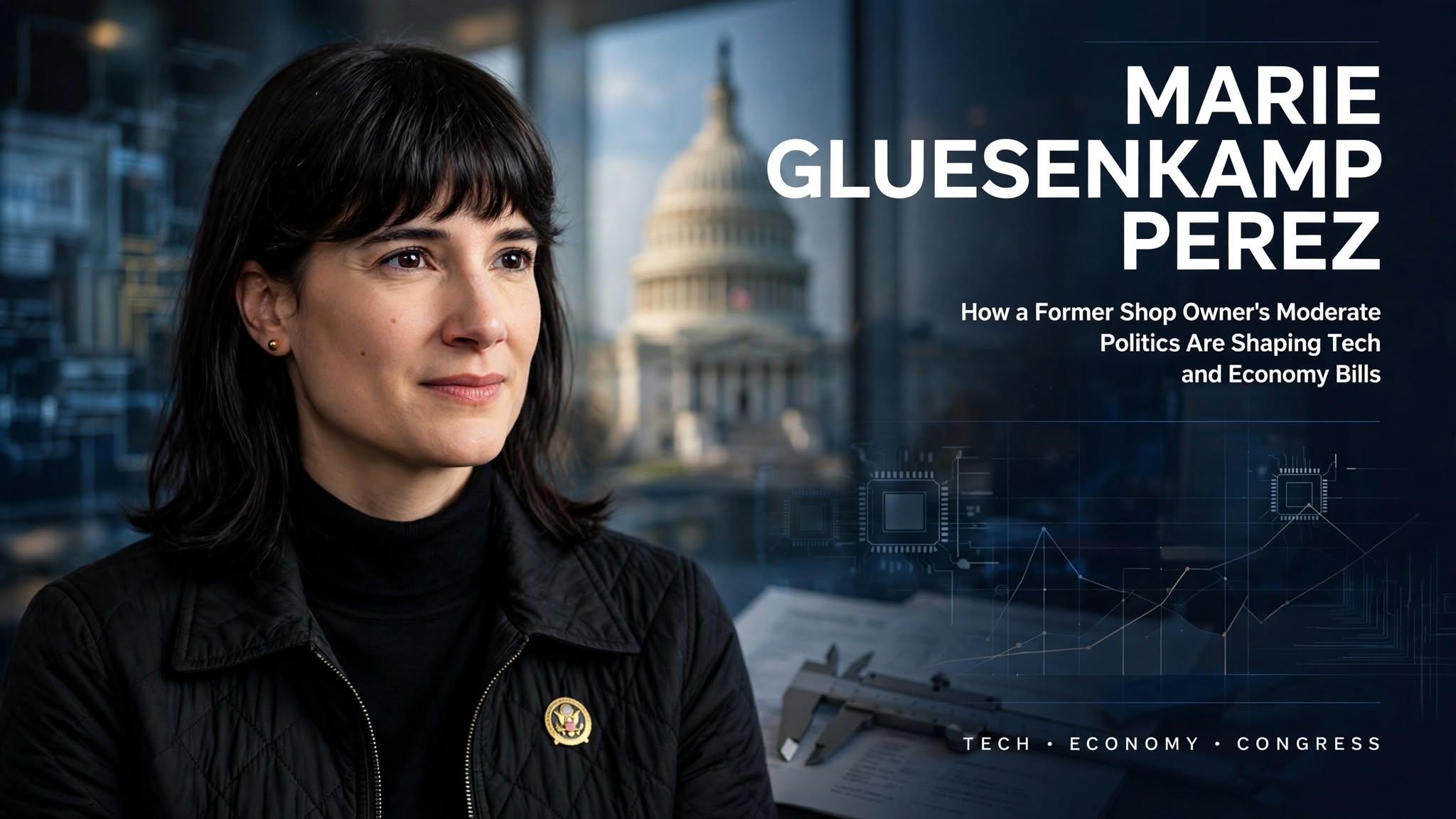
Marie Gluesenkamp Perez: How a Former Shop Owner’s Moderate Politics Are Shaping Tech and Economy Bills
Key Takeaways
- Rep. Marie Gluesenkamp Perez (D-WA-3), a former auto repair shop co-owner, has built a legislative record centered on right-to-repair, trades workforce development, and semiconductor manufacturing funding.
- She helped secure a $105 million federal investment for Analog Devices, including $80 million for Pacific Northwest projects, to modernize domestic semiconductor fabrication — reinforcing Washington’s “Silicon Forest” manufacturing base.
- Described as one of the House’s most centrist Democrats, she sits in the Problem Solvers Caucus, the Blue Dog Coalition, and the Congressional Hispanic Caucus, and serves on the House Appropriations Committee.
- She is seeking a third term in the 2026 midterms against Republican John Braun, the Washington State Senate minority leader.
- Her legislative approach consistently favors practical, trade-oriented policy over ideological framing — a positioning that has made her a notable swing-district data point heading into November.
From Auto Shop to Appropriations Committee
Gluesenkamp Perez co-owned an auto repair and machine shop with her husband before her 2022 upset win over Republican Joe Kent, a race she repeated and won again in 2024. That hands-on business background has directly shaped her legislative priorities: she has pushed bipartisan right-to-repair legislation for agricultural equipment, introduced the Fairness for the Trades Act to expand 529 education savings plans to cover trade-career tools, and worked to ease regulatory burdens on small businesses like the one she used to run.
The Semiconductor Funding Win
In one of her more tangible economy-facing wins, Gluesenkamp Perez — alongside Washington Senators Patty Murray and Maria Cantwell — helped secure $105 million for Analog Devices to modernize domestic chip fabrication, with $80 million specifically benefiting Pacific Northwest facilities, including an expansion in Camas. The investment targets mature-node semiconductors used in automotive, healthcare, aerospace, defense, and consumer electronics — chips that are less headline-grabbing than AI accelerators but arguably more embedded in everyday supply chains (a theme covered in our companion piece on 2026 silicon supply chain risk).
Where She Sits Politically
Caucus memberships tell their own story: Problem Solvers Caucus, Blue Dog Coalition, and Congressional Hispanic Caucus place her firmly in the House’s center-right Democratic lane. She has been publicly described as one of the chamber’s most centrist Democrats, willing to break from party lines on specific votes. Her appropriations work has focused heavily on constituent-level wins — from mobile home energy-efficiency provisions to Secure Rural Schools reauthorization — over broader ideological legislation.
2026 Midterm Context
Gluesenkamp Perez is defending her seat in Washington’s 3rd Congressional District against John Braun, the Washington State Senate’s Republican minority leader — a race widely watched as a bellwether for how centrist Democrats in competitive districts perform in the 2026 midterms.
What is Marie Gluesenkamp Perez known for in Congress?
Rep. Gluesenkamp Perez (D-WA-3) is known for centrist, trades- and small-business-focused legislation, including right-to-repair bills and a $105 million semiconductor manufacturing investment for the Pacific Northwest. She sits on the House Appropriations Committee and is seeking a third term in 2026 against Republican John Braun.
Discover more from The Economy
Subscribe to get the latest posts sent to your email.
Key Takeaways
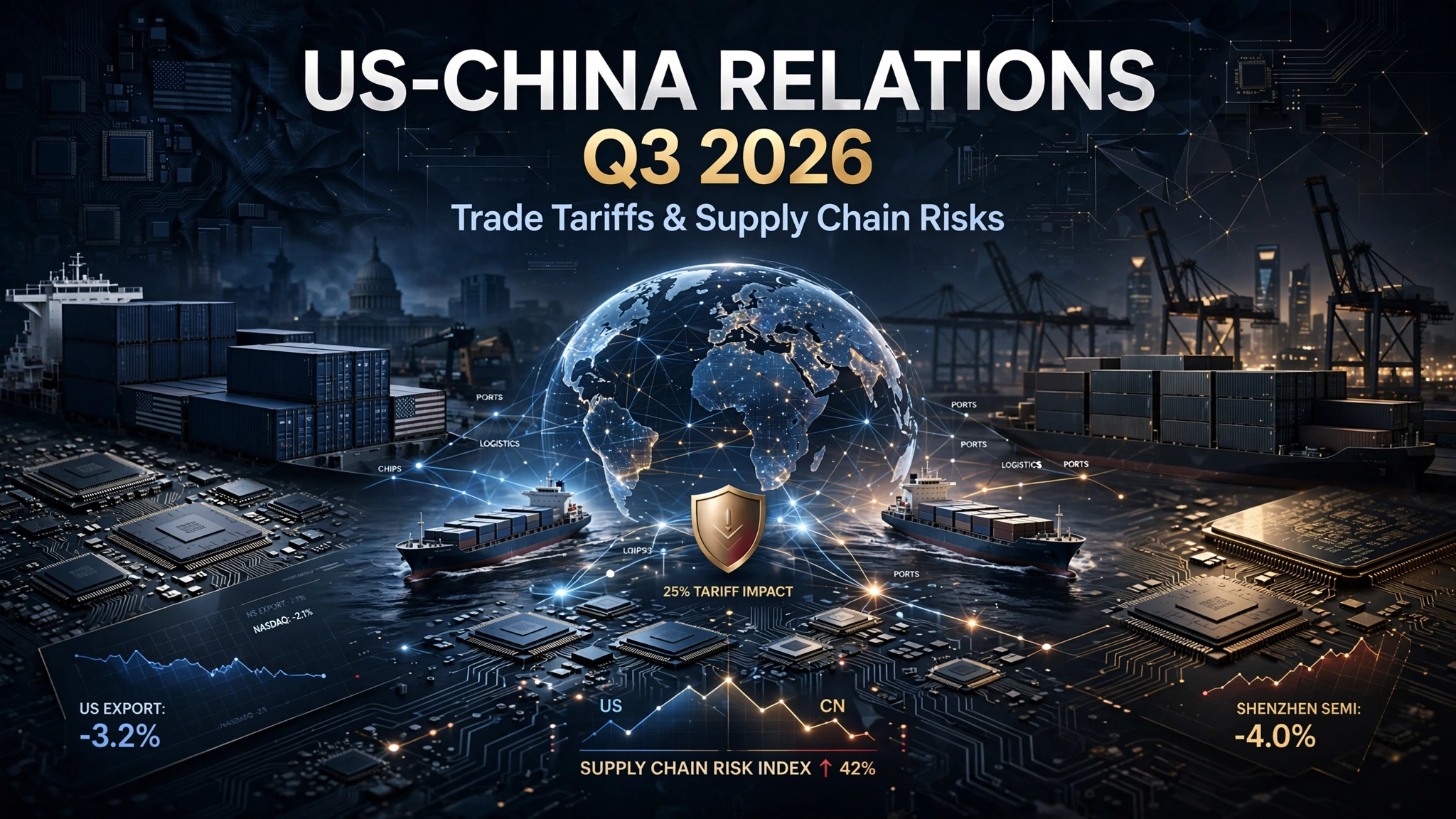
- The US-China relationship in Q3 2026 is best described as a “tactical truce” — managed friction with both sides avoiding total decoupling, rather than a resolved trade relationship.
- The blended effective US tariff on Chinese imports stood around 33% as of May 2026, stacked across four separate legal layers, with some product categories (EVs, batteries, solar) clearing 145%.
- A Supreme Court ruling on February 20, 2026 found the President cannot use IEEPA to impose tariffs, forcing a pivot to Section 122 and Section 301 authorities — a significant legal constraint reshaping the tariff toolkit.
- Washington’s focus has shifted from tariff escalation toward structural supply chain revamps, including critical-minerals diplomacy with dozens of allied countries.
- US imports from China have fallen to near-2001 levels — the year China joined the WTO — reflecting one of the most significant trade reallocations in a generation.
From Escalation to “Managed Competition”
Q3 2026 finds the US-China relationship in a distinctly different posture than the tariff-escalation cycles of 2025. As of mid-2026, the US-China trade relationship is best described as a “tactical truce” — a state of managed friction where both nations maintain aggressive competitive postures while avoiding total economic decoupling. Unlike the optimistic expectations surrounding the 2020 Phase One agreement, today’s reality reflects a fundamental shift toward “de-risking” and “friend-shoring” strategies reshaping global logistics patterns.
That truce has institutional grounding. President Trump and President Xi Jinping appear to have maintained a fragile truce in the trade war following their May 2026 summit in Beijing, though experts say complete decoupling of the world’s two biggest economies remains unlikely, with high tariffs, rare earth restrictions, and tech export controls remaining major sticking points. The two leaders shared a vision of building “a constructive relationship of strategic stability” to bring enhanced certainty and predictability to the global economy — with the agreed approach to restore stability being “managed trade” through a board of trade to manage bilateral trade in non-sensitive goods, reduced tariff and non-tariff barriers in selective sectors, and Chinese commitments to purchase US aircraft and address US concerns about critical mineral supplies.
The Tariff Stack: Complex, Layered, and Legally Contested
Understanding the actual tariff burden on US-China trade in Q3 2026 requires unpacking a genuinely complex, multi-layered structure. The blended effective US tariff on Chinese imports stood around 33% in May 2026, stacked across four layers: MFN (~3.4%), Section 301 (7.5-25%), IEEPA fentanyl (20%), and the reciprocal tariff (currently 10% during a truce extension) — though some HS codes covering EVs, batteries, and solar clear 145%.
That legal architecture was upended mid-year by the judiciary. On February 20, 2026, the Supreme Court ruled that the President cannot use IEEPA to impose tariffs. President Trump subsequently lifted such tariffs and imposed a 10% global tariff for 150 days under Section 122 of the Trade Act instead. This ruling forced a structural pivot in how the administration constructs its China tariff policy — shifting weight toward Section 301 and Section 122 authorities, which carry different procedural and duration constraints than the IEEPA framework the administration had relied on.
The November 2025 Truce Framework Still Shapes Q3 2026
Under the trade agreement, the US halved the 20% fentanyl-related tariff to 10% and extended Section 301 tariff exclusions through November 2026, while China pledged to suspend retaliatory tariffs on US agricultural and food products. The US also agreed to suspend implementation of the new BIS “Affiliates Rule” for one year until November 9, 2026, and China agreed to “take appropriate measures” to resume semiconductor manufacturing and exports of legacy chips, suspending for one year its October 2025 export control measures on rare earth materials — though the status of its earlier April 2025 controls remains ambiguous.
That November 10, 2026 expiration date is the single most important near-term calendar event for anyone tracking US-China trade risk through Q3 and into Q4 2026 — nearly every major concession in the current truce is time-limited to that date.
The Structural Shift: From Tariffs to Supply Chain Architecture
The most consequential Q3 2026 development is not a new tariff announcement but a change in strategic focus. Washington has been steadily moving to revamp supply chains away from China — after taking US levies on China up past 100% at their peak, the administration’s efforts to reset the economic relationship have lately focused on a different set of tools. In early 2026, the United States convened dozens of countries and hosted two separate ministerial meetings on critical minerals, signalling that the policy centre of gravity has moved from bilateral tariff brinkmanship toward multilateral supply chain realignment.
The scale of the underlying reallocation is historically significant. The recalibration of supply chains has been so profound that US imports from China have returned to near-2001 levels — the year China entered the World Trade Organization — with research showing companies were already positioned to adjust to tariff levels well before the most recent escalations.
Comparative Table: US-China Trade Relationship, Late 2025 vs. Q3 2026
| Dimension | Late 2025 | Q3 2026 |
|---|---|---|
| Overall posture | Active tariff escalation | “Tactical truce” / managed competition |
| Primary tariff legal basis | IEEPA (executive emergency powers) | Section 122 / Section 301 (post-Supreme Court ruling) |
| Blended effective tariff rate | Higher, more volatile | ~33% (as of May 2026), layered across four mechanisms |
| Policy focus | Tariff rate negotiation | Critical-minerals diplomacy, supply chain diversification |
| US imports from China | Declining | Near 2001 (pre-WTO-accession-era) levels |
| Key expiration date to watch | N/A | November 9-10, 2026 (multiple truce provisions expire) |
Why It Matters: Sector-Specific Supply Chain Exposure
The blended tariff figures conceal enormous sector variation, and that variation is where the real corporate risk-management work lies. The technology sector has been hit hardest, with tariffs on components forcing abrupt sourcing shifts and catalysing a wave of investment in domestic fabrication, though dependence on Asian supply chains remains a persistent challenge. Automakers have been compelled to redesign supply routes, absorbing some extra costs via price adjustments while facing longer lead times and increased inventory holding that strain margins. Retailers in consumer goods and apparel have explored new sourcing from Bangladesh, India, and Central America, but price volatility and inconsistent quality control remain problematic.
For investors and supply chain planners, the practical takeaway is that “US-China trade risk” is no longer a single macro variable — it is a sector-specific, product-code-specific exposure that requires granular mapping rather than a single blended-tariff assumption.
What to Do Next
- Calendar the November 9-10, 2026 expiration dates explicitly — the Affiliates Rule suspension, Section 301 exclusions, and reciprocal tariff terms are all time-limited to this window, making it the highest-probability point for renewed volatility.
- Map exposure at the HS-code level, not the country level — with some categories facing 145% effective rates while the blended average sits near 33%, country-level tariff assumptions materially understate risk for EV, battery, and solar-linked supply chains.
- Track critical-minerals diplomacy as a leading indicator of the next phase of US trade strategy — the shift from tariff brinkmanship to allied-country mineral-supply coordination signals a more durable structural approach than tariff negotiation alone.
- Monitor the Supreme Court’s IEEPA ruling’s downstream effects on the administration’s remaining tariff toolkit, since Section 301 and Section 122 authorities carry different procedural constraints than the now-invalidated IEEPA approach.
- Treat “near-2001 levels” of US-China import volume as a durable baseline, not a cyclical dip — the scale of supply chain reallocation documented by Harvard Business School research suggests this is structural rather than temporary.
FAQ
What is the current effective tariff rate on Chinese imports to the US?
The blended effective US tariff on Chinese imports stood around 33% as of May 2026, stacked across four layers — MFN, Section 301, the IEEPA fentanyl tariff, and the reciprocal tariff — though specific categories like EVs, batteries, and solar can face rates as high as 145%.
Did the Supreme Court block Trump’s China tariffs?
Partially. On February 20, 2026, the Supreme Court ruled that the President cannot use the International Emergency Economic Powers Act to impose tariffs, prompting a shift to a 10% global tariff under Section 122 of the Trade Act instead. Section 301 tariffs, which rest on separate legal authority, remain largely intact.
When does the current US-China trade truce expire?
Multiple key provisions expire around the same date. The suspension of the BIS “Affiliates Rule” runs until November 9, 2026, and the suspension of heightened tariffs on Chinese imports is set to run until November 10, 2026 — making that window the most significant near-term risk point for the relationship.
Discover more from The Economy
Subscribe to get the latest posts sent to your email.

Global Banking Trends 2026: Digital Banks, AI and Compliance

Gold vs US Dollar vs Bitcoin in 2026: Inflation Hedge Compared

How Global Interest Rates Affect Savings, Loans and Investments

How to Invest During High Inflation: A Global Guide

Best Global Stocks to Watch in 2026: Four Sectors to Research

Pakistan’s 2027 Growth Strategy: Exports, AI, Energy and Jobs

Pakistan Economy FY2027: IMF Reform, Debt and Recovery Outlook

Global Interest Rates 2027: Risks for Pakistan’s Rupee and Debt

Energy Shock 2026–2027: Oil, Gas and Pakistan’s Economy

World Trade 2027: Tariffs, Supply Chains and Pakistan Exports

AI Investment Boom 2026–2027: Can Pakistan Capture the Upside?

Global Economy 2026–2027: What Slower Growth Means for Pakistan

Why Global Inflation Is Rising Again in 2026, and What It Means for Pakistan

Raast Pakistan 2026: Digital Payments, Fintech

Crude Oil & Petroleum Market Analysis: OPEC+ Decisions and Price Forecasts

World’s Largest Economies: Ranking the Top Global Powers

Pakistan Economy 2026: Inside the SBP’s Balancing Act

Silver Price Today: Why the Xi-Trump AI Standoff Is Fueling a Safe-Haven Rally

Oil Prices 2026: Inside the Hormuz Crisis That Won’t End

SpaceX IPO 2026: History’s Biggest Stock Debut?

Algorithmic Dogfights: Why the U.S. and China Must Establish Rules of Engagement for Autonomous Air Power

Top US Convenience Store Chains: Store Counts, EV Charging, and Sales Trends

Who Is Shivon Zilis? The Neuralink Executive at the Center of the Musk–OpenAI Trial

Business Insurance: What Coverage You Actually Need and What It Costs in 2026

Global Economic Outlook 2026: 7 Forces Reshaping Markets, Trade and Business

Corporate America Faces a New Debt Test as US Borrowing Costs Surge

Is AI a Stock Bubble in 2026? What the Data Shows

US 10-Year Yield Hits 5.24%: What the Historic Bond Market Sell off Means for Mortgages and Investors
-

 Markets & Finance10 months ago
Top 15 Stocks for Investment in 2026 in PSX: Your Complete Guide to Pakistan’s Best Investment Opportunities
-

 Analysis8 months ago
Johor’s Investment Boom: The Hidden Costs Behind Malaysia’s Most Ambitious Economic Surge
-

 Analysis8 months ago
Top 10 Stocks for Investment in PSX for Quick Returns in 2026
-

 Banks9 months ago
Best Investments in Pakistan 2026: Top 10 Low-Price Shares and Long-Term Picks for the PSX
-

 Analysis9 months ago
Brazil’s Rare Earth Race: US, EU, and China Compete for Critical Minerals as Tensions Rise
-

 Investment9 months ago
Top 10 Mutual Fund Managers in Pakistan for Investment in 2026: A Comprehensive Guide for Optimal Returns
-

 Global Economy10 months ago
15 Most Lucrative Sectors for Investment in Pakistan: A 2025 Data-Driven Analysis
-

 Global Economy10 months ago
Pakistan’s Export Goldmine: 10 Game-Changing Markets Where Pakistani Businesses Are Winning Big in 2025