
Lending Agencies
IMF Calls on China to Halve Industrial Subsidies — and the Stakes for the Global Economy Have Never Been Higher

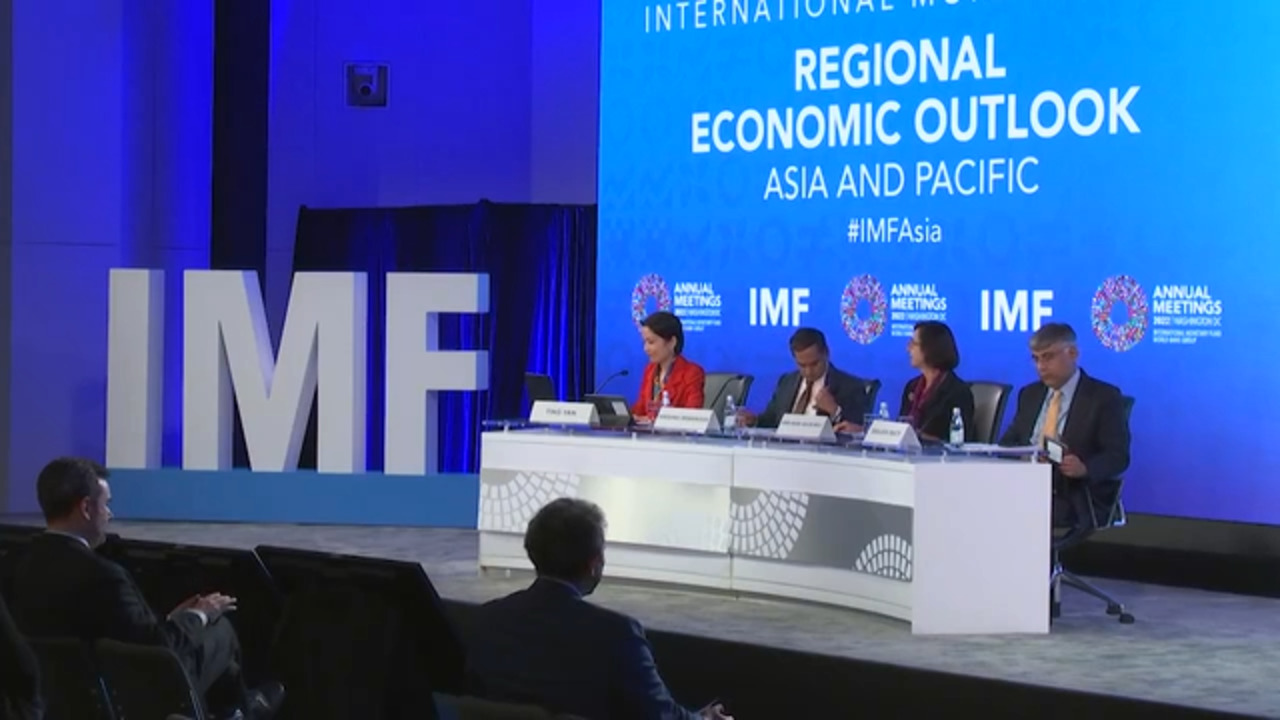
China’s state-backed industrial machine is running at full throttle — but the International Monetary Fund says the fuel costs are crippling the very economy it’s meant to supercharge.
In a sweeping set of policy recommendations that span from Beijing’s factory floors to global supply chains, the International Monetary Fund has delivered its clearest call yet for China industrial policy reform: slash state subsidies to industry from roughly 4 percent of GDP to around 2 percent, redirect those savings toward social welfare spending, and pivot the world’s second-largest economy away from export-led manufacturing toward domestic consumption. The message is urgent, data-backed, and geopolitically loaded.
This is not a bureaucratic nudge. It is a diagnosis of a fundamental imbalance — one with consequences that ripple from the steel mills of Wuhan to the factory floors of Michigan, the automotive plants of Stuttgart, and the solar panel markets of Mumbai.
The 4 Percent Problem: What IMF China Subsidies Research Actually Found
The numbers at the heart of this debate come from IMF Working Paper No. 2025/155, a landmark study published in August 2025 that, for the first time, comprehensively quantified the full fiscal cost of China’s industrial policy apparatus. The findings were striking:
- Cash subsidies account for approximately 2.0 percent of GDP annually
- Tax benefits add another 1.5 percent of GDP
- Subsidized land contributes 0.5 percent of GDP
- Subsidized credit adds a further 0.4 percent of GDP
- Combined total: roughly 4 percent of GDP per year — equivalent to well over $700 billion at current exchange rates
To put that in perspective: China’s annual industrial policy expenditure rivals the entire GDP of Switzerland. The beneficiaries are concentrated heavily in sectors flagged under Beijing’s “Made in China 2025” strategic plan — chemicals, machinery, electric vehicles, metals, and semiconductors. By 2022, the number of subsidies flowing into these strategic sectors had nearly quadrupled compared to 2015.
Yet here is the paradox that IMF China subsidies reduction advocates keep returning to: all this spending is quietly undermining the very productivity it claims to boost.
The Hidden Drag: 1.2 Percent Productivity Loss
The IMF’s structural modeling reveals a striking inefficiency at the core of Beijing’s industrial strategy. By distorting how capital and labor are allocated across the economy — a phenomenon economists call “factor misallocation” — China’s industrial policies are estimated to reduce aggregate total factor productivity (TFP) by approximately 1.2 percent. That is not a rounding error. For an economy of China’s scale, a 1.2 percent productivity drag represents hundreds of billions of dollars in foregone output every year.
The mechanics differ by policy instrument. Cash subsidies and subsidized credit tend to encourage excess production — factories churn out more than the market can absorb, leading to the gluts in steel, aluminum, and electric vehicles that have triggered trade disputes from Brussels to Washington. Trade and regulatory barriers, by contrast, suppress production in sectors that might otherwise thrive, distorting resource allocation in the opposite direction.
The net result, as discussed in CEPR’s analysis of China’s industrial policy costs, is an economy that is simultaneously over-producing in some industries and under-investing in others — a structural imbalance that feeds directly into deflation, weak domestic demand, and swelling trade surpluses.
IMF Recommendations for China’s Economy: The Reform Blueprint
The Fund’s 2025 Article IV Consultation with China, concluded in December 2025 and formally endorsed by the IMF Executive Board in February 2026, frames IMF recommendations for China’s economy around three interlocking priorities.
1. Scale back industrial subsidies — urgently. The IMF’s call to roughly halve support from 4 percent to around 2 percent of GDP is not merely about fiscal savings. It is about forcing market discipline back into an economy where state preferences have increasingly crowded out private-sector dynamism. Freed-up fiscal resources should be redirected toward social protection: healthcare, pensions, childcare, and expanded coverage for China’s 300 million-plus migrant workers under Hukou reform.
2. Rebalance toward consumption-led growth. IMF Managing Director Kristalina Georgieva, speaking at the 2025 Article IV press conference, was direct: China has the opportunity to reach “a new stage in its economic development, in which its growth engine switches from investment and exports to domestic consumption.” The Fund estimates that boosting social spending — particularly in rural areas — combined with Hukou reform could lift consumption by up to 3 percentage points of GDP in the medium term.
3. Structural reforms to lift long-term growth. These include reducing regulatory burdens, lowering barriers to internal trade (especially in services), leveling the competitive playing field between state-owned and private enterprises, and addressing persistent youth unemployment.
The payoff, the IMF calculates, is substantial: material progress on all three fronts could lift China’s GDP by about 2.5 percent by 2030, generate approximately 18 million new jobs, and meaningfully reduce both deflationary pressures and the current account surplus — currently running at an estimated 3.3 percent of GDP in 2025, up sharply from 2.3 percent the year before.
Global Trade Impact of China Subsidies: A World on Edge
The global trade impact of China subsidies has become one of the defining fault lines of 21st-century economic diplomacy. Beijing’s subsidized exports have suppressed prices in sectors from solar panels and electric vehicles to steel and furniture across dozens of markets. The IMF’s own 2024 working paper on trade implications found that Chinese subsidies not only boosted the country’s own exports and depressed imports, but amplified these effects through supply-chain linkages — subsidies given to upstream industries expand the export competitiveness of downstream sectors in ways that compound and cascade globally.
The resulting overcapacity has fed a wave of trade countermeasures. The European Union has imposed tariffs on Chinese electric vehicles. The United States has layered tariffs on a broad range of Chinese manufactured goods. India, Brazil, and other emerging markets are increasingly deploying anti-dumping investigations. The IMF’s call for IMF China subsidies reduction is, in this context, as much a diplomatic signal as an economic one — a multilateral institution urging Beijing to defuse tensions by reforming the policies at their source.
For global businesses and policymakers tracking the global trade impact of China subsidies, the IMF’s framework offers a rare piece of analytical clarity in what has otherwise been a fog of political rhetoric.
China’s Balancing Act: Resilience Meets Structural Fragility
None of this is to suggest China’s economy is in crisis. Far from it. The IMF projects GDP growth of 5 percent in 2025 — meeting the government’s target — and 4.5 percent in 2026. China accounts for roughly 30 percent of global growth. Its export machine, fueled in part by the very subsidies the IMF wants curtailed, has been a pillar of resilience.
But the structural tensions are real and deepening. Headline inflation averaged 0 percent in 2025. The GDP deflator continued to decline. Consumer confidence remains fragile. The property sector, once a locomotive of growth, has shifted into a slow-motion adjustment that is compressing local government finances and dragging on household wealth. The yuan, weakened in real terms relative to trading partners, has kept exports competitive but contributed to external imbalances the rest of the world finds increasingly difficult to absorb.
The China economic shift toward consumption that the IMF envisions would address all of these dynamics — but it requires the government to consciously redirect resources from the industrial sector it has long prioritized toward households it has long expected to save.
Modeling the Reform Scenarios: What Halving Subsidies Could Mean
Consider two scenarios, based on IMF modeling assumptions:
Scenario A — Partial Reform (subsidies cut to 3 percent of GDP): Factor misallocation eases modestly. TFP improves by approximately 0.4–0.6 percent. Fiscal savings of roughly 1 percent of GDP are partially redirected to social spending, nudging household consumption upward. Trade tensions moderate but do not resolve. Net GDP benefit by 2030: modest.
Scenario B — Full Reform (subsidies cut to 2 percent of GDP, per IMF target): Factor misallocation falls sharply. TFP gains approach the full 1.2 percent identified in the working paper. Fiscal savings fund meaningful social protection expansion, boosting consumption by up to 3 percentage points of GDP over the medium term. Current account surplus narrows. Trade tensions ease. GDP gains of 2.5 percent by 2030 materialize. Eighteen million new jobs created.
The second scenario is economically compelling. It is also politically difficult. China’s industrial policy apparatus is not just an economic tool — it is a statement of geopolitical ambition, a mechanism for technological self-sufficiency, and a source of local government revenue and employment. The IMF knows this. Its language is careful, constructive, and notably free of ultimatums.
Conclusion: A Reform Window That Won’t Stay Open Forever
The IMF’s call for China to halve its industrial subsidies is the most precisely calibrated version yet of an argument the global economic community has been making for years: that China’s current growth model, for all its undeniable successes, is generating costs — domestic and global — that are becoming increasingly hard to ignore.
The data on IMF China subsidies reduction is unambiguous. A 4-percent-of-GDP industrial policy bill that drags productivity by 1.2 percent, inflates trade surpluses, fuels global overcapacity, and suppresses household consumption is not a foundation for durable prosperity. It is a structural vulnerability dressed up as industrial strength.
China’s leaders have signaled their awareness of the challenge. The 15th Five-Year Plan explicitly names the transition to consumption-led growth as a strategic objective. But as the IMF’s Georgieva noted pointedly in December 2025, the economy is like a large ship — changing course takes time. The question is whether the wheel is being turned with sufficient force and speed.
For businesses navigating global supply chains, investors pricing geopolitical risk, and policymakers from Washington to Brussels, the answer to that question will define much of the decade ahead. As discussed in broader analyses of global trade impacts, the trajectory of China economic policy reform is not a regional story — it is the central economic narrative of our time.
Discover more from The Economy
Subscribe to get the latest posts sent to your email.


Mortgage applications hit a 25-year low as first-time buyers collapse to 21% of market share. Why young Americans face a future as perpetual renters — and what it means for the economy. “Mortgage applications hit a 25-year low. First-time buyers are a record-low 21% of the market. Why young Americans face life as perpetual renters.
The Numbers No One Wants to See
Consider what it takes to close on a home in America right now. You need a household income approaching six figures to qualify for the median-priced existing home. You need a down payment that, at the current median of 10% for first-time buyers, amounts to more than $43,000 in cash — at the highest level since 1989. You need the nerve to lock into a 30-year fixed mortgage rate of 6.43% — more than double the pandemic-era lows that millions of existing homeowners are still sitting on, quite contentedly, with no intention of surrendering. And you need the good fortune of finding something for sale in the first place.
If you’ve managed all of that, congratulations. You are, in a measurable and increasingly literal sense, one of the lucky few.
The American mortgage — that foundational instrument of middle-class wealth, the financial backbone of the postwar suburban compact — is vanishing. Not gradually, and not quietly. Data released by the Mortgage Bankers Association on March 25, 2026 showed mortgage applications tumbling another 10.5% in a single week, with the Purchase Index falling 5% week-over-week. The week prior — ending March 13 — had already seen a 10.9% collapse, the steepest single-week drop since September 2025. These aren’t blips. They are the fingerprints of a structural transformation so deep that it risks redrawing the sociological map of American wealth for a generation.
Worse Than the Great Recession — Without the Excuse
To grasp how extraordinary the current freeze is, it helps to recall what the housing market looked like during the worst economic catastrophe of living memory. In 2009 and 2010, as the subprime bubble imploded and unemployment breached 10%, mortgage originations cratered. The MBA’s Market Composite Index — which tracks total loan application volume — fell to what seemed like unthinkable lows. The housing market was broken, the country agreed, and policymakers mobilized accordingly.
Today, unemployment sits at roughly 4%. The economy has, by standard macroeconomic measures, recovered. And yet 96 of the 100 lowest readings of the MBA’s weekly mortgage application index have occurred in the past three years — a span that began not with a financial crisis but with the Federal Reserve’s campaign to tame post-pandemic inflation. The market is not broken in the way 2009 was broken. It is frozen, seized by a structural contradiction: the people who own homes have every incentive to stay put, and the people who want homes cannot afford to enter.
The MBA’s weekly Purchase Index — which isolates new home purchase applications from refinancing activity — was only 5% higher than the same week one year ago as of late March 2026, a derisory gain that barely registers against years of suppressed demand. Elevated Treasury yields, driven in part by geopolitical oil-price pressures, have kept mortgage rates stubbornly high. The 30-year conforming rate closed the week at 6.43%, with jumbo balances carrying 6.45%. The window in early 2026 when some lenders briefly offered rates approaching 6.25% — hailed breathlessly at the time as a turning point — has snapped shut.
The Rate-Lock Prison
To understand why the supply side of the housing market has frozen so completely, follow the math of the existing homeowner. The median American seller has now owned their home for a record 11 years before listing — an all-time high in data stretching back to 1981. Roughly 60% of outstanding mortgages in the United States carry rates below 4%. Trading a 3% mortgage for a 6.4% one, on a more expensive house, in a market with higher property taxes and insurance premiums, requires a powerful motivating force — a job relocation, a family expansion, a death, a divorce. For tens of millions of Americans, the math simply doesn’t pencil out, and so they stay. Their inertia is perfectly rational. Its aggregate effect is devastating.
The NAR’s 2025 Profile of Home Buyers and Sellers — a survey of transactions conducted between July 2024 and June 2025 — captures the downstream consequences with clinical precision. The typical seller age hit a record 64. The typical buyer age hit a record 59. The median age of first-time buyers climbed to an all-time high of 40 — up from the late twenties in the 1980s, and from 30 as recently as 2010. By NAR’s accounting, a decade of deferred homeownership costs a typical buyer roughly $150,000 in accumulated equity on a standard starter home. That is not a financial setback. That is a generational wealth transfer, running in reverse.
Redfin, using a different methodology that draws more directly on Federal Reserve microdata, places the first-time buyer median age at 35 in 2025 — lower than NAR’s figure, and a modest improvement from the prior year. Even at 35, the typical first-time buyer is significantly older than at any point in the postwar era, and the methodological debate between NAR and Redfin only underscores the point: by any honest accounting, Americans are buying their first homes later, under more financial duress, with lower long-term equity gains ahead of them.
The First-Time Buyer Collapse
The most alarming data point in the NAR survey is not the age figure — it is the share. First-time buyers accounted for just 21% of all home purchases over the 12-month survey period — a record low in data going back to 1981, and a figure that has been cut in half since 2007, when first-timers made up around 40% of the market. Before the Great Recession, 40% was considered the structural norm. The NAR’s deputy chief economist, Jessica Lautz, did not mince words: “The implications for the housing market are staggering. Today’s first-time buyers are building less housing wealth and will likely have fewer moves over a lifetime as a result.”
The vacuum left by absent first-time buyers has been filled, predictably, by those with the deepest pockets. Repeat buyers now constitute 79% of all home purchases, with a median age of 62 and a median down payment of 23% — the highest since 2003. Thirty percent of repeat buyers paid all cash, bypassing the mortgage market altogether. In a healthy housing ecosystem, first-time buyers feed the lower rungs of the ladder, creating demand that allows existing owners to trade up. When that base collapses, the entire market ossifies. Turnover falls. Supply dwindles. Prices, absent the corrective pressure of a functioning bottom of the market, hold or rise despite unaffordable conditions. This is not a market failure in the traditional sense. It is a market succeeding — extraordinarily well — for a narrow slice of older, already-wealthy participants, at the expense of everyone else.
Key Generational Homeownership Data (2025)
| Generation | Homeownership Rate (2025) | Boomer Rate at Same Age |
|---|---|---|
| Gen Z (ages 19–28) | 27.1% | ~40–44% |
| Millennials (ages 29–44) | 55.4% | ~60–65% |
| Gen X (ages 45–60) | 72.7% | — |
| Baby Boomers (ages 61–79) | 79.9% | — |
Sources: Redfin analysis of Census Current Population Survey, 2025; Scotsman Guide
Gen Z’s homeownership rate reached 27.1% in 2025, up marginally from 26.1% the year before. That modest gain deserves context: when Gen Xers and baby boomers were the same age, homeownership rates for 28-year-olds stood at 42.5% and 44.4%, respectively. Gen Z is tracking 15 percentage points behind its parents’ generation at the same stage of life. Meanwhile, racial gaps remain stark: the homeownership rate for Gen Z Black Americans stood at just 14.2% in Q4 2025, a figure that compounds the racial wealth gap with brutal efficiency.
Among young adults broadly, the under-35 homeownership rate rose from 36.3% to 37.9% in the fourth quarter of 2025 — a genuine uptick, but one that remains below the 25-year average, and one achieved not because the market opened up but because a fraction of younger buyers made extraordinary sacrifices to enter it. As Redfin senior economist Asad Khan noted, “Gen Zers and millennials are making small gains in homeownership because they’re eager to buy, they’re making sacrifices, and because affordability has improved a bit at the margins — not because homes suddenly became affordable.”
Even at current levels, the median household income lags nearly $25,000 behind the earnings required to purchase a median-priced home. That gap is not a rounding error. It is a structural chasm.
The Supply Catastrophe Underneath
Every discussion of housing affordability eventually circles back to supply — and the supply picture in America is not improving fast enough. Single-family housing starts averaged 943,000 units in 2025, down from 1.02 million in 2024, with MBA projecting a roughly flat 2026 at around 930,000 units. That number falls far short of the estimated 1.5 to 2 million new units economists say are required annually to close the supply deficit built up over the past decade and a half of underbuilding.
Homebuilders face a perfect storm of their own: elevated input costs, persistent labor shortages, zoning and permitting barriers that add months and hundreds of thousands of dollars to project timelines, and — critically — an elevated inventory of unsold new homes sitting at 472,000 units as of December 2025, equivalent to an 8-month supply. Builders are not inclined to break ground aggressively into a market where completed homes sit unsold. The result is a construction industry operating at a cautious pace precisely when the country needs urgency.
The rental alternative provides cold comfort. Rents have softened in some Sunbelt markets as a surge of multifamily completions finally came to market, but vacancy rates in major East Coast metros remain tight. For young Americans priced out of ownership, renting is not a temporary waystation — it is increasingly a permanent condition. Apartment List’s 2025 Millennial Homeownership Report found that nearly 25% of millennials expect to always rent — a figure that has roughly doubled since 2018. That psychological shift matters: when a generation stops believing homeownership is attainable, the political and social pressure to fix housing markets loses one of its most powerful engines.
A Global Pattern, an American Inflection
The United States is not alone in this predicament. The housing affordability crisis plaguing American millennials and Gen Z has close cousins in Canada, Australia, the United Kingdom, and across Western Europe, where a toxic combination of years of low interest rates inflating asset prices, NIMBYist planning regimes restricting supply, and demographic demand from large young cohorts has pushed homeownership rates for people under 40 to multi-decade lows. In London, Sydney, Toronto, and Auckland, the conversation about a permanently renting younger class is years further along than in Washington or New York. The political backlash — housing as a central election issue — is already transforming party platforms in the U.K. and Australia.
What distinguishes the American case is the mortgage itself. The 30-year fixed-rate mortgage, a product unique to the United States among major economies, has historically functioned as an extraordinary wealth-building tool and a form of consumption smoothing — allowing households to lock in a predictable housing cost for three decades, building equity through forced savings, and eventually owning an asset outright. The product was explicitly designed, through the government-sponsored enterprises Fannie Mae and Freddie Mac, to democratize capital access. When that instrument becomes unaffordable to the bottom half of the income distribution — and then the bottom 60%, 70% — it stops serving its designed purpose and begins functioning as a wealth-concentrating tool for those already inside the system.
What Comes Next — and What Policy Must Do
The Federal Reserve’s rate-cutting cycle, which saw three quarter-point reductions in 2025, has done remarkably little to ease mortgage rates, which respond primarily to 10-year Treasury yields rather than the fed funds rate. MBA forecasts rates averaging around 6.4% through 2026, while Fannie Mae has projected a more optimistic path toward sub-6% rates by year’s end — a divergence that reflects genuine uncertainty about the trajectory of inflation, fiscal deficits, and global capital flows. Even if rates fell to 5.5% tomorrow, the affordability math for a 28-year-old earning the median income would remain deeply challenging. Rate relief alone cannot fix a market distorted by a decade of underbuilding.
What would fix it — or at least bend the curve — is a policy agenda serious enough to match the scale of the problem:
- Zoning reform at scale. States that have moved to override restrictive local zoning — Montana, California’s recent legislative efforts, and several New England states — are showing early signs that supply can respond when the regulatory cage is opened. Federal incentives tied to zoning liberalization deserve serious legislative attention.
- Expansion of first-time buyer tools. Down payment assistance programs exist in every state, with over 2,200 initiatives nationally — yet 80% of eligible FHA borrowers fail to access them, simply because awareness is catastrophically low. A federally coordinated information campaign, combined with direct first-generation buyer subsidies, could meaningfully move the needle.
- Rate-lock portability. The most counterintuitive policy idea gaining traction is allowing homeowners to transfer their low-rate mortgages to new properties when they sell. If sellers feel less trapped by their existing rates, more would list. More listings means more supply. More supply means lower prices. The mechanism is financially complex, but the logic is sound.
- Long-term institutional investor accountability. The growing share of single-family homes purchased by institutional investors — and converted to rentals — deserves rigorous scrutiny. While the macroeconomic evidence on investor impact is mixed, the political economy of housing requires that policymakers be seen to address what has become a legitimate public grievance.
The Closing of the American Dream
There is a particular cruelty to the present moment that the aggregate data obscures. For three generations, the mortgage was the mechanism by which an ordinary family — a teacher, a mechanic, a nurse — converted labor into permanent wealth. It was imperfect, racially exclusionary in its early decades, and frequently predatory at the margins. But it worked, on balance, as an engine of intergenerational mobility. The children of homeowners were statistically more likely to attend college, accumulate savings, and buy homes themselves. The equity built in a home served as start-up capital for businesses, as a buffer against medical emergencies, as the inheritance that smoothed the generational transfer of modest prosperity.
When 87% of millennials tell pollsters they believe government should do more to make homeownership accessible — a figure significantly higher than older generations — they are not articulating an abstract ideological preference. They are describing a locked door. They grew up watching their parents build equity in appreciating homes. They graduated into a labor market reshaped by the Great Recession. They came of age as borrowers just as rates rose from 3% to 7%. And now, as the MBA’s weekly surveys confirm week after week, they are applying for mortgages at a rate lower than any seen in 25 years — lower than during the depths of the worst economic collapse in living memory.
The homeownership rate for all Americans under 35 stands at 37.9%. It is slightly higher than it was a year ago, and the analysts at Realtor.com are careful to note it. But the 25-year average for that demographic is 39.7%. And when previous generations were the same age, under-35 homeownership ran closer to 42–44%. The gap is not closing. The structural headwinds — rates, prices, supply, debt, stagnant wages relative to home values — are not resolving themselves on a timeline that will save the housing mobility of the generation currently in its prime buying years.
If a 30-year-old in 2026 waits until 40 to buy — as the NAR data suggests is now the median outcome — they will spend a decade paying someone else’s mortgage, building no equity, and arriving at ownership with 10 fewer years of compounding appreciation ahead of them. Multiplied across 80 million millennials and the Gen Z cohort now entering the labor force behind them, that delay represents an almost incalculable transfer of wealth from the young to the already-propertied.
The mortgage is not gone. It is still being written, still being signed, still closing on homes across America every day. But it is becoming a luxury product — a credential of the already-arrived rather than a ladder for the aspiring. That transformation, if left unaddressed, will not merely reshape household balance sheets. It will reshape the country.
Discover more from The Economy
Subscribe to get the latest posts sent to your email.
The Fund clears its third EFF review and second RSF review, unlocking a lifeline that brings total disbursements to $4.5bn. Reserves are rising, inflation is contained — yet tax shortfalls, circular debt and structural fragility remain stubbornly intact.
Key Indicators at a Glance
| Metric | Value |
|---|---|
| Tranche Unlocked | $1.21 billion |
| Total Disbursed (EFF + RSF) | ~$4.5 billion |
| Gross FX Reserves (Feb 2026) | $21.43 billion |
| SBP Policy Rate | 10.5% |
| Headline Inflation (Feb 2026) | 7.0% y/y |
| GDP Growth Target FY26 | ~4.2% |
On a humid February morning in Karachi, a team of IMF economists sat down with Pakistan’s finance officials in an air-conditioned conference room and began a conversation the country’s 240 million people could not afford to have go wrong. Six weeks, two cities, and dozens of virtual sessions later — on Saturday, March 28, 2026 — the International Monetary Fund announced it had reached a staff-level agreement with Islamabad for the third review of its 37-month Extended Fund Facility and the second review of its 28-month Resilience and Sustainability Facility. The prize: roughly $1.21 billion in fresh disbursements, $1.0 billion under the EFF and $210 million under the RSF, bringing total releases under both programmes to approximately $4.5 billion.
It is, by any measure, a milestone — and a reminder of just how far this nation has travelled from the edge of a sovereign default in 2023, and how much further it still needs to go.
What Was Agreed — and Why the Dual Architecture Matters
The deal is not simply another tranche of liquidity support. It is, structurally, two agreements layered atop one another — and understanding that architecture is essential to grasping both the ambition and the fragility of Pakistan’s stabilisation story.
The Extended Fund Facility, approved by the IMF Executive Board in September 2024, is the macroeconomic anchor: a 37-month, $7 billion programme designed to entrench fiscal discipline, rebuild foreign-exchange buffers, overhaul the energy sector and reduce the outsized footprint of state-owned enterprises. The third review of the EFF — the one concluded this week — signals that Pakistan has, broadly speaking, met its quarterly performance criteria and structural benchmarks through the first half of fiscal year 2026.
The Resilience and Sustainability Facility, a 28-month arrangement approved in May 2025, is newer and, in many respects, more interesting. The RSF is not a crisis instrument. It is a structural reform vehicle — one specifically designed for climate-vulnerable, low-income countries seeking to build institutional resilience against floods, drought and the energy transition. Pakistan, ranked among the ten countries most exposed to climate risk by the World Bank, is precisely the target demographic. The RSF’s $210 million tranche unlocked this week is linked to progress on water pricing reform, federal-provincial disaster-risk coordination, climate-risk disclosure in the banking sector, and the country’s renewable energy transition agenda.
Together, the dual structure reflects a more sophisticated IMF engagement than the blunt fiscal conditionality programmes of the 1980s and 1990s. Whether Pakistan can convert that sophistication into durable reform is the central question hanging over Saturday’s announcement.
“Supported by the EFF, ongoing policies have continued to strengthen the economy and rebuild market confidence. Inflation and the current account balance remained contained, and external buffers continued to strengthen.”
— Iva Petrova, IMF Mission Chief to Pakistan, March 28, 2026
The Numbers That Matter
Strip away the diplomatic language of an IMF press release and what you find, in Pakistan’s case, is a picture that is genuinely improving — but not yet reassuring.
Pakistan Economic Snapshot — March 2026
| Indicator | Value | Status |
|---|---|---|
| Gross FX Reserves (Feb 2026) | $21.43 billion | ✅ Recovering |
| SBP Policy Rate | 10.5% | — |
| Headline Inflation (Feb 2026) | 7.0% y/y | ⚠️ Upper bound of target |
| Core Inflation (Feb 2026) | ~7.6% | ⚠️ Sticky |
| Real GDP Growth (FY26 Proj.) | 3.75–4.75% | — |
| Current Account (Jul–Jan FY26) | –$1.1 billion deficit | ✅ Within target |
| FBR Tax Collection Growth | +10.6% (vs target) | ⚠️ Lagging |
| Primary Surplus Target FY26 | 1.6% of GDP | — |
| IMF EFF Total Approved | $7 billion (37 months) | — |
| Total Disbursed (EFF + RSF) | ~$4.5 billion | ✅ On track |
The foreign-exchange reserve trajectory is the most encouraging data point. Total gross reserves climbed to $21.4 billion in February 2026, a quantum leap from the catastrophic $3.7 billion low of early 2023 when Pakistan teetered on the brink of Sri Lanka-style default. The State Bank of Pakistan’s Monetary Policy Committee has flagged a target of $18 billion in SBP-held reserves by June 2026 — a figure that, if met, would represent roughly three months of import cover and provide meaningful insulation against external shocks.
Inflation, meanwhile, has staged a dramatic retreat from its 38% peak in May 2023, settling at 7.0% in February 2026 — within but at the upper bound of the SBP’s 5–7% target range. Core inflation, however, remains stickier at around 7.6%, a reminder that supply-side rigidities and energy price pass-throughs have not been fully resolved. The SBP kept its benchmark policy rate unchanged at 10.5% in March, citing the heightened uncertainty from Middle East energy market volatility — a prudent call, but one that signals the easing cycle, which delivered 1,100 basis points of cuts from late 2024 onward, may have found its floor for now.
GDP growth tells a more nuanced story. The IMF and SBP both project FY26 growth at 3.75–4.75% — respectable for a stabilisation year, but well below the 6–7% trajectory Pakistan needs to absorb its 2.5 million new annual labour-market entrants and arrest the slow-motion erosion of per-capita income.
Why This Matters Now — Geopolitical and Climate Lens
The timing of the staff-level agreement — reached against a backdrop of escalating Middle East tensions and volatile global energy markets — is not incidental. The IMF’s own statement flagged the conflict in the region as a cloud over Pakistan’s economic outlook, warning that volatile oil prices and tighter global financial conditions risk “putting upward pressure on inflation and weighing on growth and the current account.”
For a country that imports roughly 30% of its primary energy needs, the geopolitical risk is immediate and material. Every $10 per barrel increase in the oil price adds roughly $1.5–2 billion to Pakistan’s annual import bill — a direct pressure on the current account, the rupee and the government’s subsidy exposure. The IMF has been explicit: exchange-rate flexibility must serve as the primary shock absorber, and fuel subsidies must be avoided. The political economy of that instruction is, to put it mildly, challenging in a country where petrol prices are a direct barometer of government popularity.
The RSF dimension adds an additional layer of strategic significance. Pakistan lost roughly $30 billion to the catastrophic 2022 floods — a climate disaster that submerged a third of the country and set back development indicators by years. The RSF’s climate-conditionality is therefore not academic: it is a direct bet that Islamabad can build institutional resilience against the next inevitable deluge. Progress under the second RSF review includes early-stage reforms to water pricing — arguably the most politically sensitive resource question in a country where agriculture consumes over 90% of freshwater — and nascent steps toward a coordinated disaster-risk financing framework between Islamabad and the provinces.
“The conflict in the Middle East casts a cloud over the outlook as volatile energy prices and tighter global financial conditions risk putting upward pressure on inflation and weigh on growth and the current account.”
— IMF Statement on Pakistan, March 28, 2026
Reform Report Card: Progress vs Persistent Challenges
The IMF’s endorsement of Pakistan’s third EFF review is not a clean pass — it is more akin to a conditional promotion. Assessed honestly, the reform scorecard looks like this:
✅ Fiscal Consolidation — Broadly on Track
A primary surplus of 1.3% of GDP was achieved in FY25. The FY26 target of 1.6% remains in place, and Q1-FY26 recorded both an overall and primary fiscal surplus — aided by a sizeable SBP profit transfer and contained expenditure. Creditable, if partly mechanical.
⚠️ Tax Mobilisation — Dangerously Lagging
FBR tax collection grew only 10.6% in July–February FY26 — well below the pace required to meet the annual target. The newly created Tax Policy Office and digital invoicing drive are steps in the right direction, but the tax-to-GDP ratio, stuck below 11%, remains one of the lowest in the emerging world. “Elite capture” of exemptions — agricultural income, real-estate undervaluation, informal sector opacity — remains the elephant in the room.
⚠️ Energy Sector Viability — Partial
Timely tariff adjustments have begun to chip away at circular debt flows. But the stock of legacy circular debt — estimated by the Asian Development Bank at over Rs3 trillion — remains a fiscal contingent liability of the first order. Privatisation of inefficient generation companies has been announced multiple times; actual execution continues to slip. The IMF’s language here is pointed: “It is critical that sustainability is maintained through timely tariff adjustments that ensure cost recovery.”
⚠️ SOE Reform and Privatisation — Slow
The privatisation agenda — including PIA, Pakistan Steel and dozens of smaller entities — has been a fixture of IMF programmes for three decades. Execution remains politically fraught. The Fund acknowledges progress on the “reform framework” while noting that actual reduction of the state’s economic footprint remains limited.
✅ Social Protection (BISP) — Expanding
The Benazir Income Support Programme has been strengthened with inflation-adjusted cash transfers, expanded beneficiary coverage and improved payment digitisation. This is one area where the programme’s social equity mandate is genuinely advancing.
❌ FBR Governance and Anti-Corruption — Concerning
The IMF has explicitly flagged weaknesses in the FBR’s internal governance — a rare and pointed signal that the tax authority’s transformation plan has “yet to produce fully effective results.” This matters not just fiscally but institutionally: a revenue authority that cannot police itself cannot credibly police taxpayers.
Market and Investor Implications
The Rupee and External Buffers
The immediate market reaction to staff-level agreements has historically been muted — the real catalyst is IMF Executive Board approval, which triggers actual disbursement. But the signalling effect is significant. A confirmed third review removes a key tail risk for rupee stability, and the sustained build-up in FX reserves — from $9.4 billion at end-FY24 to over $21 billion today (total gross) — provides the SBP with meaningful intervention capacity against any renewed external shock.
The rupee has remained broadly stable since the EFF’s approval in September 2024, a marked contrast to the currency’s 40% depreciation episode of 2022–23. The IMF’s insistence on exchange-rate flexibility as the primary shock absorber means any renewed volatility will be allowed to play out in the market rather than suppressed through administrative controls — a policy discipline that has tangible credibility benefits, even if it produces short-term political discomfort.
Sovereign Bonds and Credit Spreads
Pakistan’s Eurobond spreads tightened dramatically over the course of the EFF — from crisis-era levels above 2,000 basis points in 2023 to roughly 600 basis points by March 2025, before the April 2025 tariff announcements injected fresh volatility. A successful third review should provide a further anchor for spread compression, particularly if the Executive Board approves the disbursement on schedule. Longer term, the path to an investment-grade sovereign rating — Pakistan was downgraded to CCC+ by S&P in early 2023 — runs directly through sustained programme compliance and genuine fiscal consolidation, not just stabilisation.
FDI and the Private Sector
Foreign direct investment into Pakistan has historically underperformed its economic weight — barely 0.5% of GDP in recent years. The IMF programme’s structural conditionality around SOE reform, anti-corruption measures, and improved “level playing field for businesses and investors” is theoretically FDI-positive. In practice, the regulatory environment, energy costs, and political uncertainty remain the dominant deterrents. The Special Investment Facilitation Council, established to fast-track Gulf and Chinese investment in agriculture, mining and technology, is showing early traction — but the test will be greenfield commitments, not MoU signings.
What Happens Next — The Executive Board Timeline
Saturday’s staff-level agreement is not the finishing line — it is the last checkpoint before the line. The formal disbursement of $1.21 billion requires approval from the IMF’s Executive Board, a body of 24 directors representing the Fund’s 190 member countries. For a programme that has been proceeding broadly on track, Board approval is typically a formality — but typically is not always.
Based on the precedent of previous Pakistan EFF reviews, Executive Board consideration is likely to occur within four to six weeks of the staff-level agreement, putting the formal approval — and the actual wire transfer — in May 2026. That timeline matters for FX reserve management, for budget financing, and for the confidence signals it sends to bilateral creditors in Riyadh, Abu Dhabi and Beijing who have rolled over their own debt in coordination with the IMF umbrella.
Beyond the immediate disbursement, the programme calendar stretches to the mid-2026 fourth review — which will coincide with the finalisation of the FY2026–27 budget. The IMF has already set a target of a primary surplus of 2% of GDP for FY27, a step up from FY26’s 1.6% target. Given FBR’s underperformance, achieving that without either politically toxic tax base-broadening or deep expenditure cuts will be arithmetically difficult.
The Road Ahead: Can Pakistan Finally Break the IMF Cycle?
Pakistan has now completed 24 IMF programmes since 1958 — a record matched by few countries and exceeded by almost none among comparable emerging economies. Each programme has stabilised; none has transformed. The pattern is familiar: fiscal consolidation under Fund pressure, a degree of reserve rebuilding, followed by a gradual relaxation of discipline once the IMF programme concludes and political incentives reassert themselves. The question is whether the 2024–2026 vintage is different.
There are genuine reasons for cautious optimism. Finance Minister Muhammad Aurangzeb — a former JPMorgan and Habib Bank executive with deep creditor-side experience — has articulated an export-led, private-sector-driven growth strategy that goes beyond the traditional stabilisation playbook. The creation of a Tax Policy Office, the push for digital invoicing and FBR audit reform, and the RSF’s climate-conditionality all represent institutional innovations that did not exist in previous programmes. The SBP’s enhanced independence and its commitment to positive real interest rates are genuinely new features of the monetary landscape.
And yet the structural vulnerabilities that have defeated 23 previous programmes remain largely intact. A tax base that excludes the agricultural sector — controlled by the landed elite who dominate provincial assemblies — cannot achieve the 15%+ tax-to-GDP ratio that sustainable fiscal space requires. An energy sector whose circular debt is structurally generated by the gap between politically determined tariffs and economically determined costs will continue to drain the fiscal position regardless of the tariff adjustments any single year achieves. A state that owns hundreds of enterprises it cannot manage efficiently but cannot sell politically will continue to distort credit allocation, suppress private-sector dynamism and expose the budget to contingent liabilities.
Breaking that cycle requires not merely good technocratic policy — Pakistan has that, at the federal finance ministry level, more consistently than its programme record suggests. It requires political will at the apex of a system where the most powerful economic actors have the most to lose from genuine reform. That is the challenge that no IMF programme, however well-designed, can resolve from the outside.
Analyst’s Conclusion
The $1.21 billion staff-level agreement of March 28, 2026 is a genuine milestone in Pakistan’s longest and arguably most consequential IMF engagement. The stabilisation achieved — from crisis-level reserves to a normalised current account, from 38% inflation to a contained 7%, from sovereign default risk to narrowed spreads — is real and hard-won. The dual EFF-RSF architecture is smarter than anything the Fund has previously attempted with Islamabad. But a stable platform for reform is not the same as reform itself. The next twelve months — the FY27 budget, the fourth EFF review, the inevitable test of Middle East energy-price volatility — will reveal whether this time is genuinely different. History counsels scepticism. The data, for now, counsels watchful hope.
FAQs (Frequently Asked Questions)
Q: What is the Pakistan IMF staff-level agreement for $1.21bn in March 2026?
On March 28, 2026, the IMF and Pakistan reached a staff-level agreement on the third review of the 37-month Extended Fund Facility (EFF) and the second review of the 28-month Resilience and Sustainability Facility (RSF). The deal unlocks approximately $1.0 billion under the EFF and $210 million under the RSF, bringing total disbursements under both arrangements to around $4.5 billion. The agreement is subject to final approval by the IMF Executive Board.
Q: What is the difference between Pakistan’s EFF and RSF programmes with the IMF?
The Extended Fund Facility (EFF), approved in September 2024, is a 37-month, $7 billion macroeconomic stabilisation programme focused on fiscal consolidation, reserve rebuilding, energy sector reform, and SOE privatisation. The Resilience and Sustainability Facility (RSF), approved in May 2025, is a 28-month climate-focused programme supporting water resilience, disaster-risk coordination, climate-risk disclosure and the renewable energy transition. Together, they form a dual-track engagement combining crisis stabilisation with structural climate resilience.
Q: When will the IMF Executive Board approve the $1.21bn disbursement to Pakistan?
Based on the precedent of previous Pakistan EFF reviews, IMF Executive Board consideration typically follows a staff-level agreement by four to six weeks. The formal Board vote — and actual disbursement — is therefore expected in May 2026, pending no unforeseen complications.
Q: What are Pakistan’s current FX reserves and economic indicators in March 2026?
As of February 2026, Pakistan’s total gross foreign exchange reserves stood at approximately $21.4 billion, a dramatic recovery from the $3.7 billion crisis low of early 2023. Headline inflation was 7.0% year-on-year in February 2026, within the SBP’s 5–7% target range. The SBP policy rate is held at 10.5%. GDP growth for FY26 is projected at 3.75–4.75%. The current account posted a cumulative deficit of $1.1 billion in July–January FY26, well within the 0–1% of GDP target.
Q: What are the biggest risks to Pakistan’s IMF programme in 2026?
The principal risks include: (1) Middle East energy price volatility, which could push inflation above target and widen the current account deficit; (2) persistent underperformance in FBR tax collection, which threatens the FY26 primary surplus target of 1.6% of GDP; (3) political resistance to SOE privatisation and energy tariff adjustments; (4) potential floods or climate shocks in the 2026 monsoon season; and (5) the post-programme discipline risk — the historical tendency for Pakistan to relax reform effort once IMF monitoring eases.
Q: What does the IMF’s RSF climate finance mean for Pakistan’s economic future?
The RSF represents a new model of IMF engagement for climate-vulnerable countries. For Pakistan — which lost $30 billion to the 2022 floods and faces intensifying monsoon and heat stress — the RSF’s conditionality is designed to build institutional resilience rather than simply stabilise the balance of payments. Key reform areas include water pricing reform, improved federal-provincial disaster coordination, climate-risk disclosure in the banking system, and support for renewable energy adoption. If implemented effectively, the RSF could help Pakistan reduce its long-term fiscal exposure to climate shocks and make its economy more competitive in a decarbonising global economy.
Discover more from The Economy
Subscribe to get the latest posts sent to your email.
Analysis
Roads to the Future: How a $378 Million World Bank Bet on Climate-Resilient Rural Access Is Quietly Transforming Khyber Pakhtunkhwa
The World Bank’s Khyber Pakhtunkhwa Rural Accessibility Project has passed its latest implementation review with a “Satisfactory” development rating — a quiet but significant milestone for 1.7 million people living at the end of some of Asia’s most treacherous mountain roads.
A Girl, a Road, and a Country’s Future
Nadia is thirteen years old and lives in a village above the Swat Valley where the road — if one can call it that — dissolves into gravel and rockfall within two kilometres of her house. On the days she makes it to school, she walks forty-five minutes each way across a path that floods every monsoon, crumbles every winter, and has claimed the lives of two adults from her community in separate accidents over the past four years. On the days she does not make it to school, nobody records her absence in any database that policymakers in Islamabad or Washington will ever read.
She is, in the cold arithmetic of development economics, an externality.
But Nadia and the estimated 442,000 people already reached by the World Bank’s Khyber Pakhtunkhwa Rural Accessibility Project (KPRAP) are becoming something more legible. As of the project’s eighth Implementation Status and Results Report, dated 2 March 2026, the Bank’s evaluators have rated Progress toward the Project Development Objective as “Satisfactory” — the highest category available — while Overall Implementation Progress sits at “Moderately Satisfactory.” The overall risk rating remains “Substantial,” a distinction worth understanding not as alarm, but as honest accounting in one of the world’s most logistically complex operating environments.
This article examines what those ratings actually mean on the ground, who is already benefiting, what obstacles remain, and why a $378 million infrastructure project in Pakistan’s northwest may be quietly writing one of the most important development stories of the decade.
The Stakes: Why Rural Roads in KP Are a Global Issue
Khyber Pakhtunkhwa sits at the intersection of some of the twenty-first century’s most consequential pressures: climate breakdown, post-conflict reconstruction, gender exclusion, and the economics of geographic isolation. The province borders Afghanistan, encompasses the former Federally Administered Tribal Areas — now rebranded the Newly Merged Districts — and sits atop a seismic and hydrological fault line that renders ordinary infrastructure investment an act of sustained optimism.
The 2022 floods, which submerged nearly a third of Pakistan and caused losses exceeding $30 billion, demonstrated with brutal precision what happens when physical connectivity fails in a crisis: supply chains collapse, health workers cannot reach patients, and girls, who travel further and more vulnerably than boys to reach school, simply stop going. In KP, the floods destroyed or severely damaged more than 3,000 kilometres of roads and over 400 bridges. Recovery has been uneven, and in the more remote districts — South Waziristan, Upper Dir, Kohistan — it has barely begun.
It is against this backdrop that the $378 million IDA-financed KPRAP, approved by the World Bank’s Board in June 2022 and effective from January 2023, acquires its weight. The project’s ambition is not merely to repair what was lost but to rebuild it better: 600 kilometres of rural roads upgraded or rehabilitated to climate-resilient standards, incorporating slope stabilisation, improved drainage, road-safety engineering, and — critically — the kind of all-weather surfaces that remain passable during the monsoon months when Pakistan’s rural poor are most vulnerable and most isolated.
Pakistan’s fiscal position, while stabilised under the IMF’s $7 billion Extended Fund Facility agreed in 2024, leaves little room for the provincial government to finance such capital investment independently. KP’s annual development budget has historically been absorbed by security expenditure and administrative consolidation of the Newly Merged Districts. The World Bank’s concessional IDA financing — carrying near-zero interest rates and a 30-year repayment horizon — is not a luxury here. It is the only realistic mechanism through which this infrastructure gets built within any foreseeable planning window.
Progress Deep-Dive: What the March 2026 Data Actually Shows
The March 2026 ISR reveals a project that has moved from planning to construction with reasonable momentum, though not without friction.
Civil works represent the project’s largest and most visible component. Of the twelve civil-work packages that constitute the full road rehabilitation programme, eight have been awarded — covering Phases I and II — and construction is actively underway across multiple districts. The remaining four packages, numbered 9 through 12, are expected to commence by May 2026, completing the award cycle and ensuring that all 600 kilometres of targeted road upgrading are under contract before the project’s midpoint.
This sequencing matters. World Bank infrastructure projects in South Asia have historically struggled with procurement delays that compress construction timelines into the final phase, creating quality risks and cost overruns. KPRAP’s phased award strategy — while slower than some optimistic early projections — has allowed the implementing agency, KP’s Communication and Works (C&W) Department, to build supervision capacity incrementally rather than attempting to manage a dozen simultaneous contracts across geographically dispersed and technically challenging terrain.
PDO indicators — the formal metrics measuring travel-time savings to schools, health facilities, and markets — remain under active evaluation as the roads approach completion. This is technically appropriate: measuring time savings on roads still under construction would produce misleading baselines. The Bank’s evaluators appear satisfied that the methodology is sound and that final measurements will be credible when roads reach operational status. Given a project closing date of June 2027, there is sufficient runway for meaningful indicator capture if construction stays broadly on schedule.
The early beneficiary count of 442,000 people with improved road access already represents a significant real-world outcome, even before the project’s completion. The full target of 1.7 million beneficiaries — drawn from KP’s most geographically isolated and economically marginalised communities — remains achievable if the remaining packages proceed on the revised timeline.
Component 2: The Girls’ Education Dividend
If the road rehabilitation is KPRAP’s body, Component 2 — the Safe School Journeys programme for girls — is its conscience, and arguably its most internationally significant innovation.
The premise is deceptively straightforward: in KP’s conservative rural communities, girls’ school attendance is constrained not primarily by parental attitudes (surveys suggest these are more progressive than outside observers often assume) but by the physical danger and social vulnerability of long, unaccompanied journeys on broken roads. Subsidised, dedicated, and safe transport removes that constraint directly, without waiting for road construction to complete.
The numbers from the March 2026 ISR tell a striking story of acceleration. As of June 2025, the programme was serving 4,593 girls across a subset of target schools. By February 2026 — eight months later — that figure had risen to 14,848 girls across 152 schools in 10 districts. The trajectory implies not merely linear growth but a programme finding its operational rhythm: schools enrolling, transport providers establishing routes, families gaining confidence.
Current attendance sits at 73% against a project target of 80%. The gap is real but not discouraging; attendance rates in rural KP’s girls’ schools have historically hovered far below 50% in the most remote areas. The ultimate annual target of 30,000 girls per year receiving subsidised transport remains ambitious, requiring roughly a doubling of the current beneficiary base by June 2027, but the eight-month growth rate from June 2025 to February 2026 — more than a threefold increase — suggests the programme has demonstrated proof of concept convincingly.
The broader significance extends beyond Pakistan. International development institutions have long debated whether supply-side education interventions (building schools) or demand-side ones (removing barriers to attendance) deliver better returns in contexts of deep gender exclusion. KPRAP’s Component 2 is generating real-time evidence for the demand-side case: you do not always need to wait for a girl’s family to change their values. Sometimes you just need to get her there safely.
UNESCO’s 2024 Global Education Monitoring Report documented that South Asia accounts for a disproportionate share of the world’s out-of-school adolescent girls, with transport safety emerging as a top-cited barrier in household surveys. KPRAP’s model — subsidised dedicated transport, targeting the most remote districts, with provincial government co-financing — could serve as a replicable template across Afghanistan, northern Bangladesh, and rural India’s tribal belts.
Understanding the “Substantial” Risk Rating — Without the Alarmism
The project’s “Substantial” overall risk rating requires explanation rather than elision. It reflects the Bank’s honest assessment of conditions that are structural, not programmatic.
KP’s Newly Merged Districts remain among the world’s most complex operating environments. Security conditions in parts of South Waziristan and the Bajaur district require ongoing contractor risk management. Climate hazards — landslides, flash floods, glacial lake outburst events — can destroy months of construction progress in hours. Governance capacity in districts that only formally joined the provincial administrative system in 2018 is still consolidating.
The C&W Department, as the primary implementing agency, has made measurable capacity improvements since the project’s inception, including in procurement and financial management. But institutional depth remains thinner than the Bank’s standard benchmarks, and supervisor-to-contractor ratios on remote sites are difficult to maintain. These are not reasons to abandon the project — they are reasons to sustain the intensive supervision that the Bank’s task team has evidently provided.
The World Bank’s own resilience framework for fragile and conflict-affected states acknowledges that “Substantial” risk is often the price of operating where need is greatest. A project rated “Low” risk in KP would almost certainly be operating in the wrong districts.
Beyond the Data: Tourism, Trade, and the Broader Economic Case
The economic rationale for rural road investment in KP extends well beyond the social sectors the project formally targets.
Pakistan’s tourism industry, concentrated in the Swat Valley, Chitral, and the Karakoram corridor, generated an estimated $1.9 billion in 2023 — a figure that analysts at the Asian Development Bank believe could triple within a decade if infrastructure constraints are eased. The communities most dependent on this growth are precisely those served by KPRAP’s target roads: Upper Dir, Kohistan, the valleys feeding into Swat. When a seasonal road becomes an all-weather road, it does not merely move people. It moves goods to market at lower cost, enables health workers to reach patients in the monsoon months, and makes a valley legible to a tourist with a rental car and a Tripadvisor account.
Agricultural marketability is equally consequential. KP’s highland farmers — producers of high-value crops including saffron, walnuts, and aromatic herbs — face price penalisation that scales directly with road condition. A farmer who must pay inflated transport costs for road conditions that damage a truck’s axles in two seasons does not simply earn less: she invests less, grows less, and ultimately contributes less to a provincial economy that Pakistan’s macroeconomic stabilisation programme desperately needs to grow. The IMF’s Article IV consultation published in late 2025 flagged infrastructure connectivity as one of Pakistan’s three principal constraints on private-sector growth, alongside energy costs and regulatory burden.
Climate resilience embedded in KPRAP’s engineering specifications — slope stabilisation, reinforced culverts, improved drainage designed for higher rainfall intensities — also represents a hedge against the fiscal cost of repeated reconstruction. Pakistan has rebuilt the same rural roads after monsoon damage in an expensive annual cycle for decades. A road engineered to withstand a one-in-fifty-year rainfall event costs more upfront but eliminates four or five cycles of emergency reconstruction over its lifetime. At scale, this is not social spending: it is fiscal prudence.
The View to 2027: What Completion Requires
KPRAP’s closing date of June 2027 creates a compressed but achievable timeline, provided several conditions hold.
The May 2026 start of packages 9–12 must proceed without significant procurement slippage. Construction across all twelve packages will then need to advance through the 2026 monsoon season — always the most challenging operational period — and into the final completion and handover phase in the first half of 2027. The Bank’s task team has reportedly been working with C&W on monsoon-season contingency protocols, drawing lessons from comparable projects in Nepal and the Himalayan belt of northern India.
Component 2’s scaling to 30,000 girls annually requires district-level transport operators to expand capacity — more vehicles, more trained drivers — while maintaining the safety and reliability standards that have driven the programme’s strong word-of-mouth uptake in participating communities. Provincial co-financing commitments for the programme’s subsidy structure must also be honoured as KP navigates a tight fiscal position.
Beyond project closure, the sustainability question looms. Rural roads in mountain environments require sustained maintenance financing that provincial governments across South Asia have historically underprovided. The World Bank’s design reportedly includes institutional strengthening components intended to embed maintenance planning within the C&W Department’s routine budget cycles. Whether this survives political transitions and fiscal pressures after donor supervision ends is the question every infrastructure project in the developing world must eventually confront.
A Quiet Revolution at Road Level
Back in the valley above Swat, a road crew from a local contracting firm — one of several KP-based companies that have built technical capacity through KPRAP procurement — is laying a reinforced base course on a section of road that last year was impassable from November through April. The foreman, a civil engineer from Peshawar who studied on a government scholarship, estimates completion before the next monsoon.
When this stretch opens, Nadia’s forty-five-minute walk becomes a fifteen-minute drive. Her school’s attendance register, which today records her as absent more often than present, starts to tell a different story. A health worker from the district hospital will be able to reach the village during winter. A walnut farmer will get his crop to Mingora market before prices collapse. A hiker from Lahore — or London, or Seoul — will discover a valley that was invisible to the outside world six months ago.
None of this appears, yet, in the PDO indicators. The travel-time measurements are still being calibrated. The beneficiary count is still climbing toward 1.7 million. The ratings in the World Bank’s database — Satisfactory, Moderately Satisfactory, Substantial — capture the bones of a project finding its shape.
What they cannot capture is the texture of what changes when a road is built: the confidence that geography is no longer destiny, that distance is a problem with a solution, that a girl who wants to go to school has, at last, a way to get there.
That is the story the data points to, imperfectly and incompletely. It is also the story that matters most.
Policy Recommendations
For the World Bank task team and KP government, three priorities emerge from the current trajectory:
First, accelerate the resolution of any remaining procurement conditions on packages 9–12 to protect the May 2026 start date. A further delay risks compressing construction into the 2027 monsoon window and creating quality risks at handover.
Second, expand Component 2’s geographic scope incrementally, prioritising the districts where road construction is furthest advanced, so that safe transport and improved roads reach girls simultaneously rather than sequentially.
Third, initiate post-project maintenance framework negotiations now, before project closure creates a vacuum. Engaging KP’s Finance Department in ring-fencing a road maintenance allocation — potentially linked to provincial transfers from Islamabad’s National Finance Commission award — would be more productive before the Bank’s leverage diminishes than after.
For international policymakers and development institutions watching this space, KPRAP offers a template worth studying: climate-resilient engineering combined with gender-sensitive demand-side interventions, deployed in a fragile environment, with honest risk acknowledgment and sustained institutional support. It is neither a miracle nor a disaster. It is, in the best sense of the word, a project — patient, complicated, and, at this midpoint, quietly succeeding.
Discover more from The Economy
Subscribe to get the latest posts sent to your email.
-

 Markets & Finance3 months ago
Top 15 Stocks for Investment in 2026 in PSX: Your Complete Guide to Pakistan’s Best Investment Opportunities
-

 Analysis2 months ago
Brazil’s Rare Earth Race: US, EU, and China Compete for Critical Minerals as Tensions Rise
-

 Banks3 months ago
Best Investments in Pakistan 2026: Top 10 Low-Price Shares and Long-Term Picks for the PSX
-

 Investment3 months ago
Top 10 Mutual Fund Managers in Pakistan for Investment in 2026: A Comprehensive Guide for Optimal Returns
-

 Analysis2 months ago
Top 10 Stocks for Investment in PSX for Quick Returns in 2026
-

 Asia3 months ago
China’s 50% Domestic Equipment Rule: The Semiconductor Mandate Reshaping Global Tech
-

 Global Economy3 months ago
Pakistan’s Export Goldmine: 10 Game-Changing Markets Where Pakistani Businesses Are Winning Big in 2025
-

 Global Economy3 months ago
15 Most Lucrative Sectors for Investment in Pakistan: A 2025 Data-Driven Analysis