
Analysis
HSBC Profits Hit by $400 Million ‘Fraud-Related’ Exposure

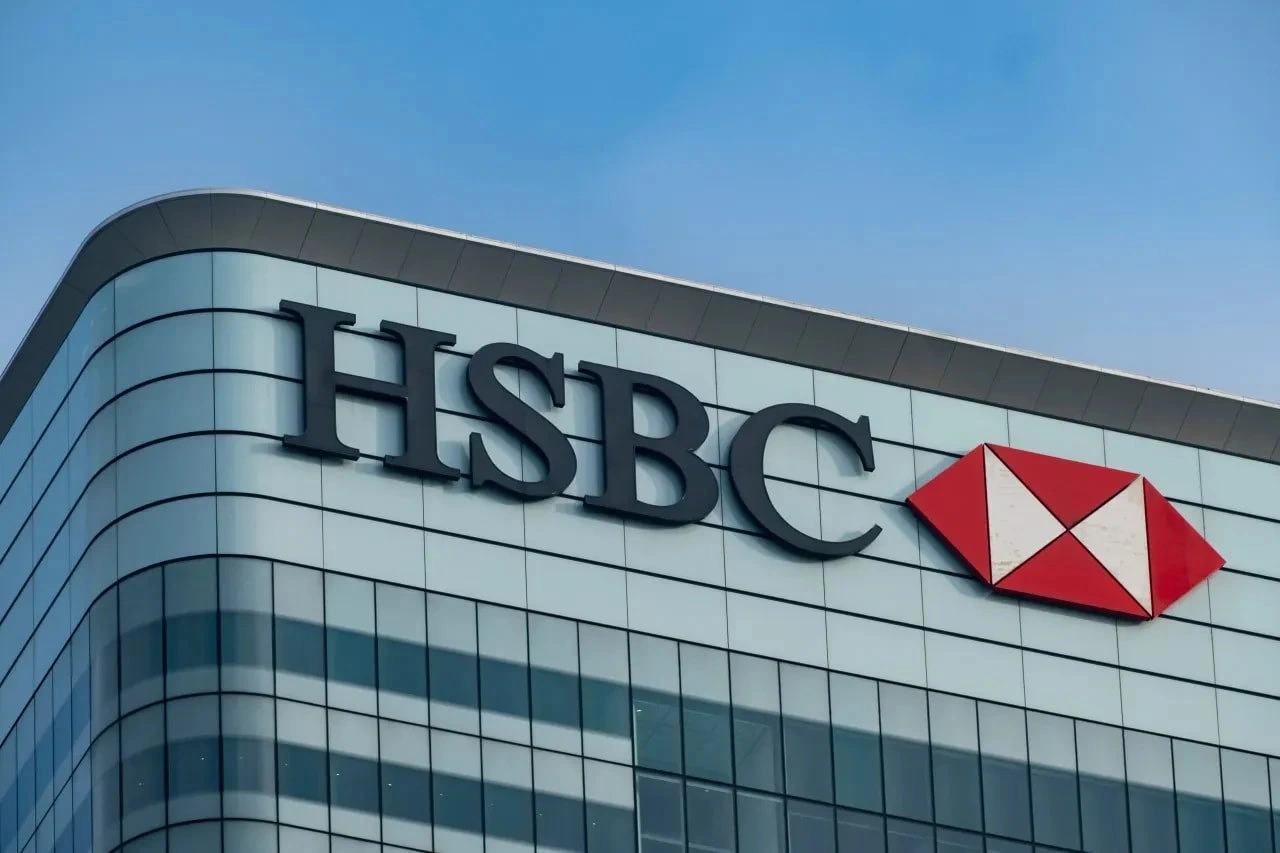
A surprise charge tied to the administration of Market Financial Solutions exposed a chain of secondary risk running from a UK bridging lender through Apollo’s Atlas SP Partners to HSBC’s corporate banking book — and raises uncomfortable questions about due diligence in the $3.5 trillion private credit industry.
Key Figures at a Glance
| Metric | Figure |
|---|---|
| HSBC Q1 2026 Pretax Profit | $9.4bn |
| Fraud-Related Charge | $400mn |
| Total ECL, Q1 2026 | $1.3bn |
| MFS Collateral Shortfall (est.) | £930mn+ |
| Barclays MFS Impairment | £228mn (~$308mn) |
| HSBC Total Securitisation Finance Exposure | $3bn |
| Analyst Profit Consensus | $9.59bn |
| HSBC Q1 2025 Profit (prior year) | $9.5bn |
There was supposed to be nothing remarkable about HSBC’s first-quarter results. Europe’s largest bank had just come off a record-breaking 2025, its transformation under chief executive Georges Elhedery was drawing cautious applause from analysts, and its wealth franchise in Asia was humming along with the kind of fee income that makes CFOs sleep soundly. Then came the $400 million question nobody had anticipated.
Buried inside a terse disclosure in HSBC’s Q1 2026 earnings release was a charge described as a “fraud-related secondary securitisation exposure with a financial sponsor in the UK” within its Corporate and Institutional Banking (CIB) division. The language was deliberately opaque — as bank disclosures tend to be when the underlying facts are still emerging from administrators’ offices and courtrooms. But the facts trickled out quickly enough: the charge was linked to the spectacular collapse of Market Financial Solutions (MFS), a London-based bridging lender that entered administration on 25 February 2026 amid allegations of one of the most audacious collateral frauds in recent UK financial history.
HSBC’s exposure was indirect — the bank had not lent directly to MFS — but that distinction provided cold comfort. It had assumed risk through a financial sponsor, later identified by the Financial Times as Apollo Global Management’s structured credit unit Atlas SP Partners. The result: a $400 million hole in Q1 earnings, a profits miss, and a fresh set of questions about whether the booming private credit industry has been moving faster than the risk controls designed to govern it.
What Happened: A Timeline of the Surprise
January 2026 — Early Warning Signs Barclays freezes MFS’s accounts after detecting financial anomalies. By mid-February, nearly every director except founder Paresh Raja had departed the company.
20 February 2026 — MFS Applies for Administration MFS files with the High Court of Justice citing a “technical and procedural impasse” with banking providers. The move is quickly overtaken by creditors filing their own application alleging “real and serious concerns about mismanagement.”
25 February 2026 — Administration Confirmed Chief Insolvency Judge Nicholas Briggs approves administration. AlixPartners (Ben Browne, Alastair Beveridge, and Simon Appell) are appointed joint administrators. Paresh Raja reportedly departs the UK for Dubai.
27 February 2026 — The £930mn Shortfall Revealed Bloomberg reports creditors’ claim of an 80%+ “unaccounted-for deficiency” on £1.2bn of debts, with only ~£230mn in verifiable collateral — implying a shortfall of over £930 million.
Q1 2026 — Banks Take Hits Barclays books £228mn impairment. HSBC’s secondary exposure via Apollo’s Atlas SP crystallises as a $400mn ECL charge in its CIB book.
5 May 2026 — HSBC Earnings Day Q1 2026 pretax profit of $9.4bn misses the $9.59bn analyst consensus. HSBC discloses full scope of fraud charge. CFO Pam Kaur and CEO Georges Elhedery address the exposure on the analyst call.
The MFS Scandal: How Double-Pledging Unravels a £2.4bn Empire
To understand why HSBC — which did not lend a single pound directly to Market Financial Solutions — finds itself nursing a $400 million loss, it is necessary to understand the particular mechanics of the fraud alleged at the heart of MFS’s collapse.
MFS was, on the surface, an unremarkable success story of modern alternative finance. Founded in 2006 by Paresh Raja, the London-based bridging lender grew rapidly by filling the gap between cautious high-street banks and property borrowers who needed capital fast. It assembled a £2.4 billion loan book, raised over £2 billion in institutional warehouse funding lines from some of the world’s most sophisticated financial institutions — including Barclays, Apollo’s Atlas SP, Castlelake, Santander, Jefferies, and Wells Fargo — and received a clean audit as recently as March 2025.
Key Figures in the MFS Collapse
- £2.4bn — MFS’s total loan book at time of administration
- £1.2bn — Total institutional debts owed by MFS
- ~£230mn — Collateral that administrators could verify
- £930mn+ — Estimated collateral shortfall cited by creditors Zircon & Amber Bridging
- 80%+ — “Unaccounted-for deficiency” on debts (Bloomberg, citing court documents)
- Paresh Raja — MFS founder, reportedly departed UK for Dubai following fraud allegations
- AlixPartners — Appointed joint administrators
The mechanism of the alleged fraud — double-pledging — is, in concept, almost brutally simple. A loan originator pledges the same pool of mortgage assets as collateral to multiple lenders simultaneously. Each lender believes it holds an exclusive senior claim on a clean pool of assets. In reality, those assets have been committed several times over. As legal analysts at CMS Law noted, “double pledging is a vulnerability in asset-based lending structures whereby a loan originator fraudulently pledges the same collateral to multiple lenders simultaneously. This creates a shortfall of collateral and, on a default, lenders who believed they held an exclusive senior claim on assets discover that the collateral is insufficient or legally encumbered elsewhere.”
When Zircon Bridging and Amber Bridging — themselves now in administration — forced MFS into insolvency proceedings, the arithmetic was devastating. Bloomberg reported that against £1.2 billion of institutional debts, administrators could identify only around £230 million in verifiable collateral — an implied deficiency of more than 80%. The clean audit issued less than a year before collapse will invite intense and prolonged scrutiny of auditing standards in alternative lending.
The Apollo Connection: When Secondary Becomes Primary Risk
HSBC’s route into this debacle was not through a direct lending relationship with MFS. The bank had structured its exposure as secondary securitisation financing — effectively lending against portfolios of receivables originated by the likes of MFS, with a financial sponsor (Apollo’s Atlas SP Partners) sitting in between, responsible for underwriting and due diligence on the underlying collateral.
The problem is precisely what that structure assumes: that the financial sponsor’s due diligence is sound, that the collateral verification processes are robust, and that the assets underlying the receivables portfolios are what they purport to be. In MFS’s case, those assumptions collapsed catastrophically.
“In this ecosystem, no one is immune to second-order exposures, which is where we have risk hedged from financial sponsors. Clearly, as a learning, what we are working on is looking at very specifically some of the additional due diligence processes we may carry, even where we are relying on the due diligence of financial sponsors.”
— Georges Elhedery, Group CEO, HSBC Holdings, Q1 2026 Earnings Call, 5 May 2026
HSBC’s official disclosure confirmed the charge “primarily reflected a $0.4bn fraud-related, secondary, securitisation exposure with a financial sponsor in the UK in our Corporate and Institutional Banking business.”
CFO Pam Kaur, addressing analysts on Tuesday morning’s earnings call, confirmed HSBC has $3 billion in total exposure to this type of securitisation financing — lending backed by portfolios of mortgages, consumer loans, and auto loans. The $400 million charge represents roughly 13% of that total book. She indicated that HSBC would review its due diligence processes for such exposures going forward, particularly where the bank is relying on a financial sponsor’s own verification rather than conducting primary collateral checks independently.
HSBC’s Broader Q1 2026 Performance: Resilient, But Not Invincible
Strip out the fraud charge and HSBC’s Q1 2026 numbers tell a more encouraging story — though context matters. Pretax profit came in at $9.4 billion, essentially flat on the $9.5 billion recorded a year earlier and fractionally below the $9.59 billion analyst consensus. Revenue performance actually beat expectations, a testament to the resilience of HSBC’s Asian wealth franchise, transaction banking operations, and its Hong Kong home market following the Hang Seng privatisation completed earlier this year.
The drag came overwhelmingly from a surge in expected credit losses (ECL) to $1.3 billion — more than double the run-rate the market had anticipated. Of that total, $400 million was the MFS-linked fraud charge and $300 million represented additional allowances tied to a deteriorating forward economic outlook following the onset of the Israel-US Middle East conflict on 28 February 2026. The board approved a first interim dividend for 2026 of 10 cents per share, signalling continued confidence in the capital position despite the earnings shortfall.
Q1 2026 Performance vs. Expectations
| Metric | Q1 2026 Actual | Q1 2025 | Analyst Consensus | Variance |
|---|---|---|---|---|
| Pretax Profit | $9.4bn | $9.5bn | $9.59bn | Miss (–$0.19bn) |
| Revenue | Beat | — | In-line/beat | Positive |
| ECL Charge | $1.3bn | ~$0.9bn | ~$0.8bn | Significant miss |
| MFS Fraud Charge | $0.4bn | — | $0 | Surprise |
| Middle East ECL Add | $0.3bn | — | Not guided | Surprise |
| Interim Dividend | $0.10/share | $0.10/share | $0.10/share | In-line |
Not Alone: Barclays and the Wider Exposure Map
HSBC’s discomfort is shared. Barclays reported a £228 million ($308 million) impairment charge in the same quarter, reflecting its own direct exposure to MFS as one of the bridging lender’s primary warehouse funders — the institution that had frozen MFS’s accounts as early as January 2026 when internal monitoring systems flagged anomalies. The full roster of lenders now navigating their MFS exposure, as identified through court proceedings and media reporting, includes Castlelake, Santander, Jefferies, and Wells Fargo.
Bloomberg drew explicit comparisons to the collapse of First Brands Group and Tricolor Holdings in the United States — two earlier instances in the private credit boom where double-pledging allegations similarly upended the confidence that institutional lenders had placed in tangible collateral. Each case fits the same uncomfortable template: a fast-growing non-bank lender, Wall Street capital pouring in, an apparently clean audit record, and then the discovery that the collateral underpinning hundreds of millions in loans had been pledged to multiple parties simultaneously. MFS is, by this measure, the third major double-pledging allegation in six months.
Implications for Private Credit: A $3.5 Trillion Industry Under Scrutiny
The timing of the MFS collapse could hardly be more delicate for private credit markets. The sector — broadly defined to include direct lending, asset-based finance, real estate credit, and structured products deployed by non-bank institutions — has grown to exceed $3.5 trillion in assets globally, expanding roughly threefold over the past decade. Major banks have increasingly sought to participate in this ecosystem not as originators but as providers of liquidity and securitisation facilities, precisely the role HSBC was playing through its relationship with Atlas SP.
The Due Diligence Gap
The MFS case exposes a specific structural vulnerability in asset-based lending: the progressive erosion of independent collateral verification. As CMS Law noted in a March 2026 analysis, independent collateral verification “was once standard market practice, but competitive pressures and deal velocity on certain platforms have led many participants to move away from this approach.”
In practice, lenders in secondary positions — like HSBC via Atlas SP — have routinely relied on the primary financial sponsor’s due diligence rather than conducting their own verification. That trust was rational in a period of low defaults and rising asset values. It looks considerably less rational now.
The proposed remedies are not new:
- Blockchain-based collateral registries that would make double-pledging technically infeasible by recording asset pledges on an immutable ledger
- More frequent independent auditing of pledged asset pools, decoupled from borrower relationships
- Enhanced KYC tools deployed not just at loan origination but across the full lending chain
- Hybrid governance models combining fintech operational speed with traditional banking oversight standards
The barrier has been adoption speed and cost in a competitive market environment. MFS may prove to be the catalyst that changes the cost-benefit calculation.
For bank treasurers and risk officers, the episode has sharpened a longstanding concern about indirect exposure in private credit financing arrangements. HSBC’s own CEO articulated it plainly: in a world where banks participate as second-order counterparties in complex securitisation structures, they are necessarily dependent on the integrity of the primary sponsor’s collateral verification. When that integrity fails — whether through negligence or, as alleged here, outright fraud — the shock travels up the chain with remarkable efficiency.
The Financial Conduct Authority (FCA) is widely expected to use the MFS collapse as the catalyst for a formal review of underwriting and risk management standards across the non-bank lending sector. Several insolvency practitioners have already noted that the case is attracting regulatory attention. A formal FCA investigation, if confirmed, would add another layer of reputational and compliance cost to the bridging finance and specialist lending sectors.
Market and Investor Reaction
HSBC shares fell in early trading on 5 May following the earnings release, as investors digested the $400 million surprise alongside the broader ECL deterioration. The reaction was measured rather than panicked — a reflection both of HSBC’s overall resilience and of the market’s growing familiarity with fraud-related charges emerging from private credit exposures.
The bank’s capital position remains robust: management has consistently flagged its CET1 ratio as comfortably above its medium-term operating range, and the 10 cents interim dividend demonstrates the board’s conviction that the MFS charge is a discrete and contained event.
For longer-term investors, the more meaningful data point may be HSBC’s stated total exposure of $3 billion to securitisation financing of this type. The $400 million charge represents a material proportion of that book. Management’s assurance that they “remain comfortable overall” while simultaneously flagging a review of due diligence processes may satisfy some analysts; others will want to see the results of that review before returning to a positive stance on the CIB division’s provisioning trajectory.
Expert Analysis and Forward Outlook
What the MFS episode ultimately reveals is a structural tension at the heart of the private credit boom that has been building for years. Banks, constrained by their own capital requirements and risk appetites, have increasingly acted as liquidity providers to non-bank lenders rather than direct competitors. The economics were attractive; the risk was theoretically bounded by collateral, sponsor due diligence, and the buffer of a financial intermediary between the bank and the ultimate borrower. The MFS case demonstrates that this buffer can be illusory when the underlying collateral integrity is compromised.
Elhedery’s “cockroach” problem — the uncomfortable reality that a visible fraud typically signals others lurking nearby — will haunt board risk committees for the remainder of 2026. JPMorgan’s Jamie Dimon has made similar observations about the structural vulnerabilities of non-bank lending ecosystems, warning repeatedly that speed and volume in private credit deployment have outpaced the governance frameworks designed to constrain them.
“We will continue to be even more diligent where we are relying on financial sponsors related secondary exposures and their due diligence. Same as before, but continue to be even more diligent.”
— Pam Kaur, Group CFO, HSBC Holdings, Q1 2026 Earnings Call, 5 May 2026
For HSBC specifically, the immediate task is threefold: complete its internal review of securitisation financing concentrations, implement enhanced due diligence processes that do not wholly rely on financial sponsors’ verification, and demonstrate to investors in subsequent quarters that the $400 million charge was indeed a one-off rather than the first instalment of a larger provisioning cycle. Management’s retention of full-year targets — including mid-teens return on tangible equity and positive revenue growth — suggests confidence that the broader franchise remains intact.
The broader market implications are harder to contain. The private credit industry will survive MFS — the sector is too large, too embedded in institutional portfolios, and fills too genuine a need to be derailed by a single collapse. But the manner and speed of regulatory and market response will determine whether this episode is remembered as an isolated governance failure or as the moment that prompted a fundamental rethink of how banks, financial sponsors, and the non-bank lending ecosystem manage shared collateral risk in an era of ever-more-complex structured finance.
What is certain is that the age of trusting the trust — of relying on a counterparty’s due diligence as a substitute for one’s own — has, for European structured finance at least, come to an abrupt and expensive end.
Frequently Asked Questions
What is HSBC’s $400 million fraud-related charge in Q1 2026?
HSBC booked a $400 million expected credit loss (ECL) charge in its Corporate and Institutional Banking (CIB) division, described officially as a “fraud-related secondary securitisation exposure with a financial sponsor in the UK.” The charge is linked to the collapse of Market Financial Solutions (MFS), a UK bridging lender that entered administration in February 2026 amid allegations of double-pledging — fraudulently using the same property assets as collateral for multiple loans simultaneously. HSBC’s exposure was not through direct lending to MFS but through a secondary structured financing arrangement with Apollo Global Management’s Atlas SP Partners unit.
What is Market Financial Solutions (MFS) and why did it collapse?
Market Financial Solutions was a London-based bridging and specialist mortgage lender founded in 2006 by Paresh Raja. It had grown to a £2.4 billion loan book and held over £2 billion in institutional funding from major financial institutions. MFS entered administration on 25 February 2026 after creditors alleged serious financial irregularities, specifically that MFS had pledged the same property assets as collateral to multiple lenders simultaneously. AlixPartners was appointed administrator and estimated that only around £230 million in collateral could be verified against approximately £1.2 billion in debts — an 80%+ shortfall. Paresh Raja reportedly left the UK for Dubai following the fraud allegations.
How is Apollo’s Atlas SP Partners connected to HSBC’s MFS loss?
Atlas SP Partners, the structured credit unit of Apollo Global Management, acted as the “financial sponsor” in the structured financing arrangement through which HSBC assumed its exposure to MFS-originated mortgage portfolios. In securitisation financing of this type, a financial sponsor packages mortgage receivables from a lender like MFS, then draws on warehouse or securitisation facilities from banks like HSBC. HSBC’s $400 million loss crystallised because the collateral backing those portfolios — which Atlas SP was responsible for verifying — proved to be fraudulently pledged and largely unrecoverable.
Did HSBC beat or miss analyst expectations in Q1 2026?
HSBC missed analyst profit expectations in Q1 2026. The bank reported a pretax profit of $9.4 billion, below the $9.59 billion analyst consensus and flat on $9.5 billion in Q1 2025. However, revenue performance beat expectations, and the miss was driven almost entirely by a surge in ECL to $1.3 billion — including the $400 million MFS fraud charge and $300 million in additional macro provisions linked to the Middle East conflict. The bank maintained its full-year targets and approved a 10 cents per share first interim 2026 dividend.
How does HSBC’s MFS charge compare with Barclays’ exposure?
Barclays reported a £228 million (~$308 million) impairment charge in Q1 2026 related to its direct exposure to MFS as a primary warehouse lender — it had frozen MFS’s accounts as early as January 2026 after detecting anomalies. HSBC’s $400 million charge arose through a secondary, structured route via Apollo’s Atlas SP Partners, making it larger in absolute dollar terms but one step removed from the original lending relationship. Both charges illustrate how the MFS fraud transmitted losses across multiple institutional counterparties through different layers of the financing chain.
What is double-pledging and why is it dangerous in private credit?
Double-pledging occurs when a loan originator fraudulently uses the same assets — in MFS’s case, mortgage receivables secured on UK properties — as collateral for multiple separate loans from different lenders simultaneously. Each lender believes it holds an exclusive senior claim on an unencumbered asset pool. When default occurs, administrators discover the same assets have been committed several times over, leaving a massive shortfall. In private credit markets, the risk is amplified by structural reliance on financial sponsors’ own due diligence and competitive pressure to reduce independent collateral verification. The MFS case is the third major double-pledging allegation in six months, following First Brands Group and Tricolor Holdings in the US.
What are the regulatory implications of the MFS collapse for UK banks?
The Financial Conduct Authority (FCA) is widely expected to launch a formal review of underwriting and risk management standards across the non-bank lending sector. Several insolvency practitioners and legal advisers have noted the case has already attracted regulatory attention. Potential measures include mandatory independent collateral verification for asset-based lending structures, enhanced reporting requirements for warehouse facilities extended to non-bank lenders, and greater scrutiny of auditing standards in alternative finance. HSBC’s CEO has publicly acknowledged reviewing the bank’s own due diligence processes for secondary securitisation exposures.
Is the $400 million charge expected to be a one-off for HSBC?
HSBC management has strongly implied the charge is discrete and contained. CFO Pam Kaur stated the bank remains “comfortable overall” with its $3 billion securitisation financing book and has not indicated further material provisioning is expected from this source. CEO Georges Elhedery maintained full-year targets including mid-teens return on tangible equity. However, analysts have noted that HSBC’s total $3 billion exposure to this type of securitisation financing means investors will be watching closely for any further deterioration in subsequent quar
Discover more from The Economy
Subscribe to get the latest posts sent to your email.



Key Takeaways
- Rolex’s secondary market rose approximately 7.9% year-over-year as of 2026 (per WatchCharts data) — trailing Patek Philippe (+16.2%) and Tudor (+11.4%) but still outperforming Audemars Piguet (+3.4%).
- Rolex raised U.S. retail prices 4–9% in January 2026 (steel models ~5.6%, gold models ~8.7%), narrowing the historical gap between retail and pre-owned pricing.
- Not every model appreciates: steel sports references (Submariner, GMT-Master II, Daytona) have held value far better than two-tone or widely available dress references like the standard Datejust.
- The Lady-Datejust posted the sharpest 2026 gain among tracked collections — up 22.73%, from roughly $9,269 to $11,376 — driven by demand for smaller, “everyday luxury” watches.
- Gold’s rise past $2,400/oz has directly lifted the investment case for Rolex’s precious-metal references (Day-Date, Sky-Dweller, Yacht-Master).
The Model-by-Model Picture
| Category | 2026 Trend |
|---|---|
| Lady-Datejust | +22.73% (strongest performer among tracked collections) |
| Steel sports models (Submariner, GMT-Master II) | Held value well; corrected from 2022 peak but stabilized above retail |
| Daytona | Corrected from highs above $50,000 to the mid-$30,000s; still among the most sought-after references |
| Two-tone/widely available Datejust | Flat to negative — “holds value” is an overstatement for this category |
| Gold references (Day-Date, Sky-Dweller) | Lifted by gold’s rise above $2,400/oz |
Why the “Rolex Always Appreciates” Myth Is Fading
The pandemic-era boom pushed some references — the Daytona above all — to speculative highs disconnected from historical norms. Since the March 2022 peak, steel sports models have compressed meaningfully, and dealers who bought inventory near the top have in some cases faced 20–40% markdowns on liquidation. The lesson for 2026 buyers: Rolex as a category is not a monolith. Value retention depends heavily on specific reference, condition, and whether the piece comes with box and papers (“full set”).
What’s Actually Driving 2026 Strength
- Retail price increases raise the floor. When a new Submariner retails at $10,050 (up from $9,500), a pre-owned example at $11,000–$12,000 suddenly represents a smaller premium — narrowing the gap without secondary prices actually moving.
- Supply discipline remains Rolex’s core lever. The brand has never confirmed production numbers, and secondary-market premiums remain entirely a function of Rolex’s own manufacturing decisions — a risk factor as much as a support.
- Certified Pre-Owned rollout. Rolex’s now fully rolled-out CPO program has changed how buyers transact in the used market, adding a layer of brand-verified legitimacy that supports pricing.
The Case for Rolex as a Portfolio Diversifier
Financial advisors increasingly frame luxury watches not as a replacement for equities or bonds, but as a tangible, historically low-correlation diversifier — one that carries its own risks (illiquidity, condition-dependent pricing, no yield) but has demonstrated multi-decade resilience for specific references.
Is Rolex a good investment in 2026?
It depends heavily on the specific reference. Steel sports models like the Submariner and Daytona have held or grown in value; two-tone and widely available dress models generally have not. Overall, Rolex’s secondary market rose about 7.9% year-over-year in 2026, trailing Patek Philippe but ahead of Audemars Piguet.
Discover more from The Economy
Subscribe to get the latest posts sent to your email.

Navigating Mortgage and Loan Refinancing in a High-Yield Environment
Global public debt crossing critical thresholds has kept central bank policies volatile, resulting in fluctuating US Treasury yields throughout 2026. For homeowners and commercial property holders burdened by previous high-interest borrowing cycles, finding optimal refinance windows has become a high-stakes financial puzzle. Stalled disinflation and stubborn employment numbers mean rate cuts are incremental, requiring borrowers to act with precision.
Timing your mortgage or commercial loan refinance in this environment requires a deep understanding of yield curve movements and lender risk appetites.
Decoding 2026 Refinance Dynamics
The 10-Year Treasury Yield Benchmark
Mortgage rates continue to track closely with the 10-year US Treasury yield. When macroeconomic anxiety spikes debt issuance, yields rise, tightening consumer borrowing capacity. Savvy borrowers monitor weekly Treasury auctions to lock in rates during brief dip windows.
Hybrid ARMs and Alternative Structures
With fixed rates remaining elevated, 7/1 and 10/1 adjustable-rate mortgages (ARMs) have surged in popularity. These products offer lower initial monthly payments, giving borrowers breathing room until central bank easing cycles fully materialize.
| Loan Product | Current Rate Range | Best For | Key Risk Factor |
| 30-Year Fixed Mortgage | 6.2% – 6.8% | Long-term predictability | Higher initial monthly outlay |
| 7/1 Hybrid ARM | 5.5% – 5.9% | Short-term ownership / flipping | Rate reset risk after year 7 |
| Commercial Refinance | 7.0% – 8.2% | Corporate asset restructuring | Strict DSCR lender covenants |
Actionable Steps for Successful Refinancing
To maximize your chances of securing favorable refinance terms in a volatile market, follow a disciplined preparation strategy.
Boost Your Credit Score Immediately: Lenders in 2026 are applying stringent credit tiering; a 20-point increase can drop your APR by a crucial quarter-point.
Shop Regional Credit Unions: Smaller financial institutions often offer portfolio loans with more flexible underwriting than major national banks.
Calculate the Break-Even Point: Ensure your total closing costs are recouped through monthly savings within 24 months of closing.
“Market Strategist View: Refinancing in 2026 is an exercise in opportunistic timing. Borrowers must maintain immaculate financial profiles ready to strike the moment Treasury yields dip.”
Mastering the complexities of today’s debt environment ensures you can successfully lower your debt service costs and protect your long-term financial stability.
Discover more from The Economy
Subscribe to get the latest posts sent to your email.

The days of pulling generic auto insurance quotes based purely on your zip code and age are officially over. In 2026, insurance comparison engines are powered entirely by generative AI and real-time telematics. These platforms digest thousands of live data points—ranging from your driving smoothness via connected vehicle sensors to real-time traffic congestion patterns—to generate hyper-personalized premiums instantly.
For consumers, this evolution represents both a massive opportunity for savings and a hidden trap for penalty pricing. Understanding how AI algorithms evaluate risk is essential for anyone looking to lower their monthly auto insurance premiums.
How AI Comparison Engines Evaluate Your Risk Profile
Behavioral Telematics and Connected Cars
Modern cars stream performance data directly to insurance aggregators. Generative AI models analyze braking sharpness, acceleration curves, cornering G-forces, and phone distraction metrics. Drivers who maintain smooth, defensive habits are rewarded with dynamic rate cuts of up to 40% compared to traditional rating tiers.
Predictive Traffic and Weather Modeling
AI tools now cross-reference your daily commute route with predictive weather and accident probability models. If your standard parking location or driving corridor has a statistically higher incidence of uninsured motorist claims, your quotes will reflect that hyper-local risk assessment.
| Comparison Factor | Traditional Rating Model | 2026 Generative AI Model | Impact on Premium |
| Mileage & Usage | Annual estimated odometer reading | GPS tracking & live trip duration | High (up to 35% savings) |
| Driving Behavior | MVR driving record & accidents | Real-time braking, speed, & G-force | Critical (determines tier) |
| Vehicle Tech | Make, model, and safety rating | ADAS calibration & repair cost data | Moderate |
Strategies to Lower Your AI-Driven Insurance Quote
To outsmart the algorithm and secure the lowest possible premium in 2026, drivers must proactively manage their digital footprint on insurance platforms.
Opt-In for Telematics Trial Periods: Many insurers offer immediate 15% discounts just for installing their driving app; let it track safe habits for 30 days to lock in permanent savings.
Scrub Unverified Public Records: Ensure your motor vehicle report is free of clerical errors that AI risk models misinterpret as reckless behavior.
Compare AI Aggregators: Use platforms that integrate multi-carrier API feeds rather than single-brand comparison sites to find the best risk-adjusted rate.
“Industry Note: AI-driven pricing rewards transparency and precision. Drivers who actively manage their telematics data consistently out-save those relying on legacy quote calculators.”
Embracing AI comparison tools allows savvy policyholders to customize coverage limits precisely to their driving habits, eliminating wasted premium spend while ensuring robust protection.
Discover more from The Economy
Subscribe to get the latest posts sent to your email.

SpaceX Starship Achieves First Full Orbit on Historic 10-Hour Test Flight 14

Google’s $15B Finland AI Investment: Data Centers, Nuclear Power & Jobs

Fast Invoice Factoring: Rates, APR Math & Contract Traps

SOC 2 Type II Guide: Cost, Timeline & Compliance Companies

Hong Kong Wages Surge 3.4% in June: Sector Data & Analysis

Silver Price Today: Why the Xi-Trump AI Standoff Is Fueling a Safe-Haven Rally

Citibank & Dólar Estadounidense: Forex Playbook After the Xi-Trump Truce

How the Trump-Xi White House Summit Is Reshaping Mortgage Rates Today for Real Estate Investors

Indonesia Navigates Mega-Project Risks as China and Russia Eye the 2,772km Trans-Kalimantan Railway

Trump-Xi 2026 Summit Takeaways: The Trade Truce, Taiwan, and the AI Divide

Solar Panel Installation Cost in 2026: Why the Math Changed Overnight

Business Insurance: What Coverage You Actually Need and What It Costs in 2026

Auto Insurance Quotes: How to Get the Lowest Rate Without Losing Coverage

Huntington Online Banking: Full Features, Fees, and How It Compares in 2026

Top 30 Stocks for Investment in PSX for Massive ROI in 2026

SpaceX Starship Flight 14: First Orbital Attempt & Starlink V3 Launch Explained

Oil Prices Break $100 in 2026: Middle East Conflict & Energy Markets

BRICS+ Cross-Border Payments 2026: Interoperability Explained

Fidelity Investments Review 2026: SPAXX Yields & Zero-Fee Funds

Tween Back-to-School Trends 2026: What’s Driving the $85B Season

10-Year Treasury Yield Hits 4.80%: What It Means for Rates & Portfolios

Shein Clothes Quality & Safety in 2026: What Lab Tests Show

IMF & World Bank 2026 Global Economic Outlook: Growth, Inflation, Debt

China’s US$10.8 Billion Trade Shortcut: Why the Pinglu Canal Matters

High-CPM Finance Niches 2026: Publisher Monetization Blueprint

Middle East War Economics 2026: Oil Prices & Energy Markets

China Stocks Today: Are Big Economies in Asia Nearing a Market Bottom?

Social Security Trust Fund 2032: OASI Depletion Timeline Explained
-

 Markets & Finance9 months ago
Top 15 Stocks for Investment in 2026 in PSX: Your Complete Guide to Pakistan’s Best Investment Opportunities
-

 Analysis7 months ago
Johor’s Investment Boom: The Hidden Costs Behind Malaysia’s Most Ambitious Economic Surge
-

 Analysis7 months ago
Top 10 Stocks for Investment in PSX for Quick Returns in 2026
-

 Banks8 months ago
Best Investments in Pakistan 2026: Top 10 Low-Price Shares and Long-Term Picks for the PSX
-

 Analysis8 months ago
Brazil’s Rare Earth Race: US, EU, and China Compete for Critical Minerals as Tensions Rise
-

 Investment9 months ago
Top 10 Mutual Fund Managers in Pakistan for Investment in 2026: A Comprehensive Guide for Optimal Returns
-

 Global Economy9 months ago
15 Most Lucrative Sectors for Investment in Pakistan: A 2025 Data-Driven Analysis
-

 Global Economy9 months ago
Pakistan’s Export Goldmine: 10 Game-Changing Markets Where Pakistani Businesses Are Winning Big in 2025