
Analysis
From 1MDB to ‘Corporate Mafia’: Malaysia’s New Governance Test

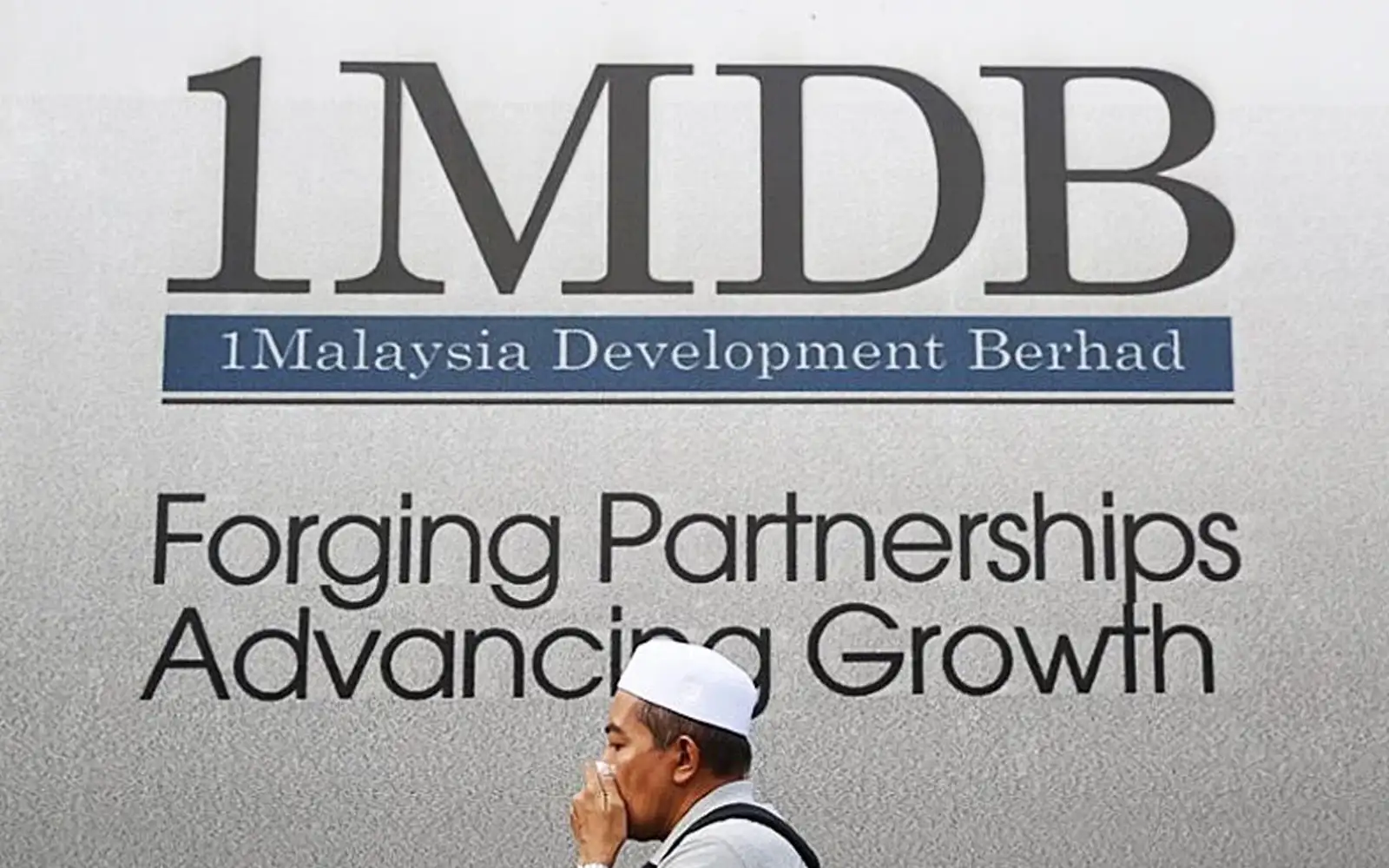
A decade after 1MDB shook Malaysia, a new scandal targets the anti-graft agency itself. Are the rules still being applied fairly — or is the watchdog now the predator?
The Gunman in the Restaurant
On a June afternoon in 2023, Tai Boon Wee was summoned to The Social, a Kuala Lumpur suburb restaurant famous for football screenings and chicken wings. He had just been questioned by the Malaysian Anti-Corruption Commission over accounting irregularities at GIIB Holdings, the rubber products company he founded. When he arrived, a man named Andy Lim — a new shareholder — was waiting. Before long, Lim raised his arms to reveal a pistol beneath his jacket. He wanted two board seats, and the weapon was his negotiating tool.
The CCTV footage of that meeting, reviewed by Bloomberg journalists Tom Redmond and Niki Koswanage, would become the combustible heart of one of the most consequential investigative reports in Southeast Asian financial journalism in years. Published on February 11, 2026, the Bloomberg feature — titled “Who’s Watching Malaysia’s Anti-Corruption Watchdog?” — described how a commission set up to fight graft was allegedly helping a group of businessmen seize control of companies, with questions about its conduct going all the way to the top. Bloomberg
That question — all the way to the top — is the one that Kuala Lumpur has been unable to shake since. And for global investors already edgy about rule-of-law risks in Southeast Asia, it is exactly the kind of question that changes capital allocation decisions.
Malaysia is facing a new governance test. One that may prove more corrosive to institutional credibility than even 1MDB — because this time, the allegation is not that the watchdog failed. It is that the watchdog became the wolf.
A Different Kind of Scandal
The 1MDB affair — in which an estimated $4.5 billion was looted from a state investment fund and spent on superyachts, Picassos, and Hollywood productions — was breathtaking in its brazenness but ultimately comprehensible. It was a straight-line theft: powerful men used state resources as a personal treasury. International prosecutors, from Washington to Singapore to Zurich, followed the money. Najib Razak was convicted. Goldman Sachs paid. The architecture of the crime, however grotesque, was legible.
What Bloomberg’s 2026 investigation describes is something structurally different — and, in some ways, more insidious. The report details how the MACC, led by chief commissioner Azam Baki, is alleged to have assisted rogue businessmen in forcibly taking over public-listed companies by using the agency’s extensive powers to arrest, intimidate, and threaten charges against company founders and executives. MalaysiaNow The alleged playbook is precise and repeatable: targeted investors take stakes, MACC probes are triggered against company founders, bank accounts are frozen, board seats reshuffled, and in some instances founders are pushed out altogether. Dimsum Daily
This is not theft by subtraction — the pillaging of a state fund. It is theft by substitution: the weaponisation of the state’s anti-corruption apparatus to facilitate corporate predation in the private sector. It attacks the engine of market confidence itself.
Victor Chin, a Malaysian businessman himself under investigation for alleged involvement in the scheme, put it with chilling clarity in a March statement: “The corporate mafia is not just about a person or single organisation. It is a tactic, and it is ongoing. The individuals may change, and the target companies may differ, but the method remains the same in each corporate attack.” Bloomberg
When the alleged perpetrators of a scheme are the ones best placed to describe its mechanics, you know the system has entered a complex moral inversion.
The Architecture of the ‘Corporate Mafia’
At the operational centre of the Bloomberg investigation is a MACC unit known as “Section D,” which handles complaints and arrests related to corruption in listed companies. The unit was led by Wong Yun Fui, currently MACC’s deputy director of investigations. MalaysiaNow According to the report, this unit became the enforcement arm that businessmen allegedly used to apply pressure on company founders.
The gunman episode at The Social restaurant crystallised the alleged methodology. After Tai Boon Wee was approached by Andy Lim — who demanded board seats at GIIB Holdings with a firearm — police eventually arrested Lim and confiscated the pistol. But sources told Bloomberg that Azam subsequently called the police to request the return of Lim’s gun, and that conversations within MACC revealed Lim was “very close with Azam Baki,” a friendship also referenced in an internal memo circulated within the agency. MalaysiaNow
Azam has denied the allegations comprehensively and filed a lawsuit against Bloomberg seeking RM100 million in damages. The MACC’s advisory board urged an end to speculation, arguing assessments must be grounded in verifiable facts.
But the Bloomberg investigation did not rest on a single incident. Another businessman, Brian Ng, recounted a similar experience to that of Tai: facing an MACC investigation, he was summoned to a restaurant meeting with one Francis Leong, allegedly a member of the same “corporate mafia” network linked to Victor Chin. MalaysiaNow The pattern recurs: MACC investigation, unexpected meeting, coercive demand.
Then came Victor Chin’s own allegations. In April 2026, Chin filed suit against Aminul Islam — also known as Amin — a labor tycoon involved in Malaysia’s foreign worker recruitment sector, alleging that Aminul orchestrated pressure from law enforcement agencies and applied other tactics in an attempt to take over NexG Bhd, a provider of identification systems, where Chin had served as chief operating officer until September 2025. Bloomberg
NexG is not a minor player. The company holds lucrative government contracts worth over RM2.5 billion to supply identification documents, including passports, foreign worker IDs, and driving licences. Asia News Network In other words, at the centre of an alleged “corporate mafia” operation is a company controlling some of the most sensitive state-issued identity infrastructure in the country. The governance implications are not merely financial.
The Azam Baki Question — and Anwar’s Dilemma
Azam Baki’s tenure at MACC has been extended three times by Prime Minister Anwar Ibrahim MalaysiaNow, a remarkable act of institutional loyalty — or political insulation — given the accumulation of controversies. Bloomberg reported that corporate filings showed Azam held 17.7 million shares in Velocity Capital Partner Bhd as of last year, a stake worth roughly RM800,000 at recent prices, above guideline thresholds for public officials. Dimsum Daily Azam subsequently admitted to purchasing the shares while serving as MACC chief but maintained he had broken no laws, saying the holdings were acquired transparently and disposed of within the year.
This was notably not the first time. Azam was previously implicated for the same alleged violation back in 2021 and was absolved after the Securities Commission determined his brother had used his trading account. MalaysiaNow The pattern of allegation, denial, and institutional absolution has cycled twice now, each rotation generating less public credulity than the last.
Anwar’s handling of the crisis has drawn intense scrutiny. Bloomberg reported that Anwar urged officials to avoid immediately releasing a report on Azam’s shareholdings to the public — a report produced by a three-person committee of senior civil servants led by the attorney-general, which had reported its findings to cabinet and been referred to the chief secretary for next steps. Bloomberg The delay — combined with the composition of the investigative panel, all members of which are appointed by and report directly to the prime minister — prompted civil society groups to question whether an “independent” panel was anything of the sort.
Civil society groups called for any commission to be led by a figure of genuine judicial stature, such as former Chief Justice Tengku Maimun Tuan Mat, and to operate outside the orbit of executive appointment. Bloomberg That call has gone unanswered.
Anwar’s own position has been contradictory to a degree that has frustrated even his allies. In Parliament on March 3, he said he disagreed with Bloomberg’s allegations but acknowledged the investigations remained open. When questioned about the government’s level of transparency, he told the Dewan Rakyat: “Both of these are not closed — that is the difference.” The Star It is a distinction that fails to satisfy an electorate watching police visit Bloomberg’s office in the Petronas Towers — the physical centrepiece of Malaysia’s modernity — to demand the names of the journalists who wrote the stories.
Police launched a criminal defamation investigation into Bloomberg under Section 500 of the Penal Code and Section 233 of the Communications and Multimedia Act 1998 — both laws frequently used to silence government critics, journalists, and whistleblowers. MalaysiaNow Shooting the messenger is never a good look for a government committed, rhetorically at least, to institutional reform.
Why This Is More Corrosive Than 1MDB
The comparison to 1MDB is unavoidable, but it can mislead. The 1MDB scandal was, in its grotesque way, a monument to old-school kleptocracy: money looted, laundered, and spent. It was recoverable — legally, reputationally, institutionally — because it was a crime committed against the state’s governance apparatus, not through it.
What the MACC “corporate mafia” allegations describe, if credible, is a crime committed through the state’s governance apparatus. And that distinction matters enormously for investor confidence.
When you corrupt a state fund, you destroy one institution. When you allegedly corrupt the anti-corruption institution itself — instrumentalising it as the enforcement arm of private predation — you undermine the entire architecture of market governance. Every listed company becomes a potential target. Every MACC investigation becomes a source of uncertainty rather than assurance. The cost of doing business in Malaysia rises not because of regulatory overreach, but because of regulatory arbitrage by the powerful.
Malaysia is already facing a threat of investor flight in cases of transparency lapses — FDI reportedly declined 15% in the fourth quarter of 2025, a drop analysts have linked to the accumulation of governance-related uncertainty. TECHi The country’s Corruption Perceptions Index score has stagnated at around 50 out of 100, a reflection of persistent concerns about public sector integrity that have remained largely unaddressed despite the post-1MDB reform rhetoric. Ainvest
The geopolitical stakes compound this domestic governance failure. Malaysia sits at the intersection of the US-China technology competition, hosting semiconductor facilities critical to both Western supply chain diversification and China’s regional ambitions. The United States alone reported $7.4 billion in approved investments in Malaysia in 2024, with Germany and China following closely. U.S. Department of State Investors selecting between Kuala Lumpur, Ho Chi Minh City, and Penang as regional bases are doing so in an environment where governance credibility is a quantifiable competitive variable, not a soft consideration.
A country that cannot guarantee that its anti-corruption agency will not be weaponised against the companies that foreign investors have backed is a country that will see capital quietly redirect to neighbours less entangled in institutional scandal.
The Political Fallout: Alliances Fracturing
The corporate mafia allegations have metastasised beyond a governance controversy into a political crisis for Anwar’s unity coalition. Human Resources Minister Ramanan Ramakrishnan — a senior figure in Anwar’s Parti Keadilan Rakyat — was compelled to publicly deny in late March that he had solicited or received a RM9.5 million bribe from Victor Chin, allegedly to help resolve Chin’s legal troubles with the police and MACC. Bloomberg “I never met him. I don’t know him,” Ramanan insisted. The denial may be truthful, but the requirement to make it is itself a measure of how deeply the scandal has penetrated.
Even within Anwar’s coalition, frustration has reached breaking point: DAP, a key coalition partner, moved its national congress two months earlier — from September to July — so members could vote on whether to remain in Anwar’s government depending on whether genuine reforms actually materialise. The Rakyat Post That is a live tripwire beneath an already fragile coalition arithmetic.
When three young protestors interrupted an Azam Baki speech on integrity in early April with placards calling for his arrest, they were detained — prompting lawyers to condemn what they described as a violation of constitutionally guaranteed free speech. MalaysiaNow The irony of arresting citizens for protesting at an integrity event is the kind of tableau that writes itself into the international press cycle.
As of mid-April, Azam’s contract as MACC chief is set to expire on May 12, and reporting by Singapore’s Straits Times — citing high-level sources — suggests his tenure will not be renewed, with Anwar himself reportedly telling cabinet in recent weeks: “Azam is done.” The Star If confirmed, this would mark a significant reversal after three contract extensions — and would almost certainly be read less as a principled reform decision than as political triage, the abandonment of a liability rather than a genuine reckoning with institutional failure.
What Global Governance Frameworks Are Saying
The World Bank’s Worldwide Governance Indicators consistently flag Malaysia’s “Rule of Law” and “Control of Corruption” scores as weak relative to the country’s income level — a divergence that academics have termed the “Malaysian governance paradox”: sophisticated economic management coexisting with institutional opacity.
The IMF’s Article IV consultations on Malaysia have repeatedly emphasised the need for transparent anti-corruption enforcement as a prerequisite for sustained productivity-led growth. The MACC’s alleged weaponisation, if substantiated, would represent precisely the type of governance failure IMF analysts flag as most damaging to private sector confidence — not because it increases regulatory burden, but because it makes regulatory enforcement unpredictable and politically transactional.
ASEAN peers are watching closely. Thailand’s Securities and Exchange Commission has accelerated its own listed-company protection framework in the past 18 months. Indonesia’s Financial Services Authority (OJK) has strengthened minority shareholder protections. Vietnam has passed sweeping anti-corruption amendments. Malaysia, which marketed itself aggressively as a reformed investment destination post-1MDB, risks ceding ground in the regional governance competition at precisely the moment when FDI is being reshuffled by supply-chain decoupling and the semiconductor buildout.
The Path Forward: Five Prescriptions
The question of whether Malaysia is facing a new governance test has been answered — it plainly is. The more urgent question is whether its institutions retain the capacity to pass it.
First, a genuinely independent Royal Commission of Inquiry is the necessary minimum. The current multi-agency task force — comprising the police, Securities Commission, MACC, and Inland Revenue Board — suffers from an obvious conflict: the MACC is both an investigating body and a subject of investigation. Civil society groups have rightly called for a commission led by figures of judicial stature entirely outside the executive appointment chain. Bloomberg
Second, the long-delayed reform to separate the Attorney General’s dual role as both chief legal adviser to the government and public prosecutor must be enacted as a matter of urgency. As long as the same official advises the cabinet and controls prosecution decisions, the structural incentive for political interference in high-profile cases remains intact.
Third, the MACC’s internal oversight architecture — specifically the “Section D” unit and its relationship to listed-company investigations — requires forensic external audit. This is not simply an accountability exercise; it is a market integrity imperative. The Bursa Malaysia cannot operate as a transparent exchange if its listed companies are subject to coercive manipulation through regulatory channels.
Fourth, whistleblower protection legislation must be materially strengthened. The current framework explicitly excludes protection for those who disclose allegations to the media — a provision that chills the very disclosures necessary for public accountability.
Fifth, and perhaps most fundamentally, Prime Minister Anwar Ibrahim must choose between political calculation and institutional credibility. He cannot occupy both positions simultaneously. His decision to repeatedly extend Azam’s tenure, to resist the rapid release of the investigative committee’s findings, and to characterise Bloomberg’s reporting as a “foreign-backed” operation has forfeited credibility with precisely the international investor and civil society audience whose confidence is essential to his economic reform agenda.
The reputational cost of delay compounds with time. Every week that the corporate mafia inquiry remains procedurally murky is another week in which fund managers in Singapore, London, and New York quietly update their country-risk matrices.
Conclusion: The Watchdog Must Be Watched
Ten years ago, 1MDB forced the world to ask whether Malaysia’s institutions could survive political capture. The answer, eventually, was yes — at enormous cost, over a decade, and only with the weight of international law enforcement bearing down on Kuala Lumpur from multiple continents.
The corporate mafia allegations present a more structurally dangerous question: not whether an institution failed, but whether an institution was deliberately inverted — turned from a shield for market integrity into a weapon against it. If the allegations are substantiated, the damage is not confined to the MACC. It radiates outward to the Securities Commission, to Bursa Malaysia, to every listed company where founders must now wonder whether an unexpected call from a new shareholder is a market transaction or the opening gambit of a coordinated predation.
Malaysia has the economic fundamentals to absorb governance shocks. Its semiconductor positioning, its infrastructure, its skilled workforce — these are genuine competitive assets. But assets depreciate when institutions corrode. And institutions corrode fastest when the people charged with preventing corruption become, in the vocabulary of the street, part of the mafia.
The answer to the question — is Malaysia facing a new governance test? — is unambiguous. What remains uncertain is whether Kuala Lumpur’s political class has learned, from the long, expensive, humiliating lesson of 1MDB, that the cost of institutional failure is paid not in one dramatic reckoning, but in thousands of small decisions made by investors and companies who quietly chose to build elsewhere.
The watchdog must be watched. Malaysia’s institutions know this. The question is whether they have the will to act on it before the window closes.
Discover more from The Economy
Subscribe to get the latest posts sent to your email.



Navigating Mortgage and Loan Refinancing in a High-Yield Environment
Global public debt crossing critical thresholds has kept central bank policies volatile, resulting in fluctuating US Treasury yields throughout 2026. For homeowners and commercial property holders burdened by previous high-interest borrowing cycles, finding optimal refinance windows has become a high-stakes financial puzzle. Stalled disinflation and stubborn employment numbers mean rate cuts are incremental, requiring borrowers to act with precision.
Timing your mortgage or commercial loan refinance in this environment requires a deep understanding of yield curve movements and lender risk appetites.
Decoding 2026 Refinance Dynamics
The 10-Year Treasury Yield Benchmark
Mortgage rates continue to track closely with the 10-year US Treasury yield. When macroeconomic anxiety spikes debt issuance, yields rise, tightening consumer borrowing capacity. Savvy borrowers monitor weekly Treasury auctions to lock in rates during brief dip windows.
Hybrid ARMs and Alternative Structures
With fixed rates remaining elevated, 7/1 and 10/1 adjustable-rate mortgages (ARMs) have surged in popularity. These products offer lower initial monthly payments, giving borrowers breathing room until central bank easing cycles fully materialize.
| Loan Product | Current Rate Range | Best For | Key Risk Factor |
| 30-Year Fixed Mortgage | 6.2% – 6.8% | Long-term predictability | Higher initial monthly outlay |
| 7/1 Hybrid ARM | 5.5% – 5.9% | Short-term ownership / flipping | Rate reset risk after year 7 |
| Commercial Refinance | 7.0% – 8.2% | Corporate asset restructuring | Strict DSCR lender covenants |
Actionable Steps for Successful Refinancing
To maximize your chances of securing favorable refinance terms in a volatile market, follow a disciplined preparation strategy.
Boost Your Credit Score Immediately: Lenders in 2026 are applying stringent credit tiering; a 20-point increase can drop your APR by a crucial quarter-point.
Shop Regional Credit Unions: Smaller financial institutions often offer portfolio loans with more flexible underwriting than major national banks.
Calculate the Break-Even Point: Ensure your total closing costs are recouped through monthly savings within 24 months of closing.
“Market Strategist View: Refinancing in 2026 is an exercise in opportunistic timing. Borrowers must maintain immaculate financial profiles ready to strike the moment Treasury yields dip.”
Mastering the complexities of today’s debt environment ensures you can successfully lower your debt service costs and protect your long-term financial stability.
Discover more from The Economy
Subscribe to get the latest posts sent to your email.

The days of pulling generic auto insurance quotes based purely on your zip code and age are officially over. In 2026, insurance comparison engines are powered entirely by generative AI and real-time telematics. These platforms digest thousands of live data points—ranging from your driving smoothness via connected vehicle sensors to real-time traffic congestion patterns—to generate hyper-personalized premiums instantly.
For consumers, this evolution represents both a massive opportunity for savings and a hidden trap for penalty pricing. Understanding how AI algorithms evaluate risk is essential for anyone looking to lower their monthly auto insurance premiums.
How AI Comparison Engines Evaluate Your Risk Profile
Behavioral Telematics and Connected Cars
Modern cars stream performance data directly to insurance aggregators. Generative AI models analyze braking sharpness, acceleration curves, cornering G-forces, and phone distraction metrics. Drivers who maintain smooth, defensive habits are rewarded with dynamic rate cuts of up to 40% compared to traditional rating tiers.
Predictive Traffic and Weather Modeling
AI tools now cross-reference your daily commute route with predictive weather and accident probability models. If your standard parking location or driving corridor has a statistically higher incidence of uninsured motorist claims, your quotes will reflect that hyper-local risk assessment.
| Comparison Factor | Traditional Rating Model | 2026 Generative AI Model | Impact on Premium |
| Mileage & Usage | Annual estimated odometer reading | GPS tracking & live trip duration | High (up to 35% savings) |
| Driving Behavior | MVR driving record & accidents | Real-time braking, speed, & G-force | Critical (determines tier) |
| Vehicle Tech | Make, model, and safety rating | ADAS calibration & repair cost data | Moderate |
Strategies to Lower Your AI-Driven Insurance Quote
To outsmart the algorithm and secure the lowest possible premium in 2026, drivers must proactively manage their digital footprint on insurance platforms.
Opt-In for Telematics Trial Periods: Many insurers offer immediate 15% discounts just for installing their driving app; let it track safe habits for 30 days to lock in permanent savings.
Scrub Unverified Public Records: Ensure your motor vehicle report is free of clerical errors that AI risk models misinterpret as reckless behavior.
Compare AI Aggregators: Use platforms that integrate multi-carrier API feeds rather than single-brand comparison sites to find the best risk-adjusted rate.
“Industry Note: AI-driven pricing rewards transparency and precision. Drivers who actively manage their telematics data consistently out-save those relying on legacy quote calculators.”
Embracing AI comparison tools allows savvy policyholders to customize coverage limits precisely to their driving habits, eliminating wasted premium spend while ensuring robust protection.
Discover more from The Economy
Subscribe to get the latest posts sent to your email.

Despite decades of bans and strict handling mandates, asbestos remains a silent killer across legacy manufacturing plants, shipyards, and modern green-energy infrastructure retrofits. In 2026, regulatory changes by the EPA and tightened occupational health standards have triggered a fresh wave of mesothelioma litigation. Manufacturers attempting to fast-track industrial transitions are encountering catastrophic oversight, exposing workers to legacy toxins and opening corporate parent companies to unprecedented liability.
Navigating a mesothelioma claim in 2026 requires understanding how modern industrial supply chains intersect with historical exposure. Trusts established decades ago are being audited under stricter transparency laws, altering payout ratios and accelerating fast-track settlements for terminally ill plaintiffs.
Modern Industrial Exposure Hotspots
Green Retrofitting and Renewable Energy Infrastructure
A primary source of 2026 asbestos exposure occurs during the decommissioning and retrofitting of older industrial facilities for renewable energy production. Workers insulating electrical grids, modernizing HVAC systems, or upgrading manufacturing floors frequently disturb encapsulated asbestos materials that were improperly documented or ignored during facility audits.
Automotive and Aerospace Supply Chains
With advanced manufacturing booming, workers handling specialized friction materials, gaskets, and heat shields face ongoing risks. Supply chain tracing has become more sophisticated, allowing legal teams to pinpoint exact corporate entities responsible for raw material distribution across multinational borders.
| Industry Sector | Primary Exposure Risk | Legal Venue / Trust | Avg. Claim Value Range |
| Green Energy Retrofit | Disturbed insulation, pipe lagging | Federal Tort / Manufacturer Trust | $1.2M – $3.5M |
| Shipbuilding & Marine | Boiler insulation, structural seals | Asbestos Bankruptcy Trusts | $800K – $2.4M |
| Automotive Manufacturing | Brake components, high-heat gaskets | Third-Party Product Liability | $600K – $1.8M |
Securing Maximum Compensation: Steps for Plaintiffs
Time is of the essence in mesothelioma cases. Plaintiffs and their families must act decisively to secure financial recovery before statutes of limitations expire.
Retain Specialized Counsel: Work exclusively with national mesothelioma law firms possessing deep historical databases of asbestos-containing products.
Audit Employment History: Document every job site, supervisor name, and equipment brand encountered throughout your career.
Expedite Medical Filings: Secure a formal pathological diagnosis quickly to qualify for expedited trust fund distribution and priority trial settings.
“Expert Insight: Modern asbestos litigation is no longer just about historical tracking; it is about holding modern corporations accountable for failing to conduct rigorous environmental safety audits before initiating industrial retrofits.”
By combining meticulous work history reconstruction with aggressive multi-trust filings, victims can secure substantial financial relief to cover specialized immunotherapy and family support.
Discover more from The Economy
Subscribe to get the latest posts sent to your email.

Crypto Daily Outlook: Bitcoin, Altcoins, and the Future of Decentralized Finance

Anthony Scaramucci’s Crypto Prediction: Why MicroStrategy’s Move Is Bitcoin’s “iPhone Moment”

Best Dividend Stocks 2026: European & Asian Blue Chips

World Bank & IMF Reports 2026: Why the “3% Growth” Consensus Is Actually a Debate

Elon Musk’s Boring Company Hits $23B Valuation After UAE-Led $3 Billion Series D

Middle East War Economics 2026: Oil Prices & Energy Markets

PSX Forecast 2026: KSE-100, IMF Reviews & Geopolitics

Asian Markets Outlook 2026: China, Japan & Singapore Stocks

Global Economy 2026: IMF Growth, Inflation & Private Credit

Current Account Deficit (CAD) : Causes and Impact

Balance of Payments (BOP)

The Falkland Islands Dispute: Sovereign Wealth, Offshore Drilling, and Market Impacts

Gross Domestic Product (GDP): Nominal vs. Real

What is Inflation and the Consumer Price Index (CPI)?

State Farm’s $5B Dividend 2026: Who Qualifies & Payout Dates

US-China Relations in Q3 2026: Trade Tariffs and Supply Chain Risks

Gold’s Wild 2026: From a Record $5,600 Peak to a 24% Crash and Back Toward $4,500

Oil Surges as Strait of Hormuz Traffic Collapses Again

The Rocket That Won’t Quit: Inside SpaceX’s Falcon 9 Launch Machine

Bank of England Set to Hold Rates Through Year-End, Reuters Poll Shows

SpaceX Starship Flight 14: First Orbital Attempt & Starlink V3 Launch Explained

The 2026 Crypto Regulatory Shift: What It Means for Institutional Investors

AI Chip Stocks 2026: The Best Semiconductor Investments Beyond Marvell

Retail Earnings Week: What Home Depot, Target & Walmart Reveal

AI-Powered Training: The Next Multi-Billion Dollar Ecosystem in Fitness

Top 30 Stocks for Investment in PSX for Massive ROI in 2026

Russia’s Black Sea Oil Exports Fall for a Fifth Straight Week

Tween Back-to-School Trends 2026: What’s Driving the $85B Season
-

 Markets & Finance8 months ago
Top 15 Stocks for Investment in 2026 in PSX: Your Complete Guide to Pakistan’s Best Investment Opportunities
-

 Analysis7 months ago
Johor’s Investment Boom: The Hidden Costs Behind Malaysia’s Most Ambitious Economic Surge
-

 Analysis7 months ago
Top 10 Stocks for Investment in PSX for Quick Returns in 2026
-

 Analysis7 months ago
Brazil’s Rare Earth Race: US, EU, and China Compete for Critical Minerals as Tensions Rise
-

 Banks8 months ago
Best Investments in Pakistan 2026: Top 10 Low-Price Shares and Long-Term Picks for the PSX
-

 Investment8 months ago
Top 10 Mutual Fund Managers in Pakistan for Investment in 2026: A Comprehensive Guide for Optimal Returns
-

 Global Economy9 months ago
15 Most Lucrative Sectors for Investment in Pakistan: A 2025 Data-Driven Analysis
-

 Global Economy9 months ago
Pakistan’s Export Goldmine: 10 Game-Changing Markets Where Pakistani Businesses Are Winning Big in 2025