
Analysis
ESG Loans in Southeast Asia Plunge 46% as Iran War Bites

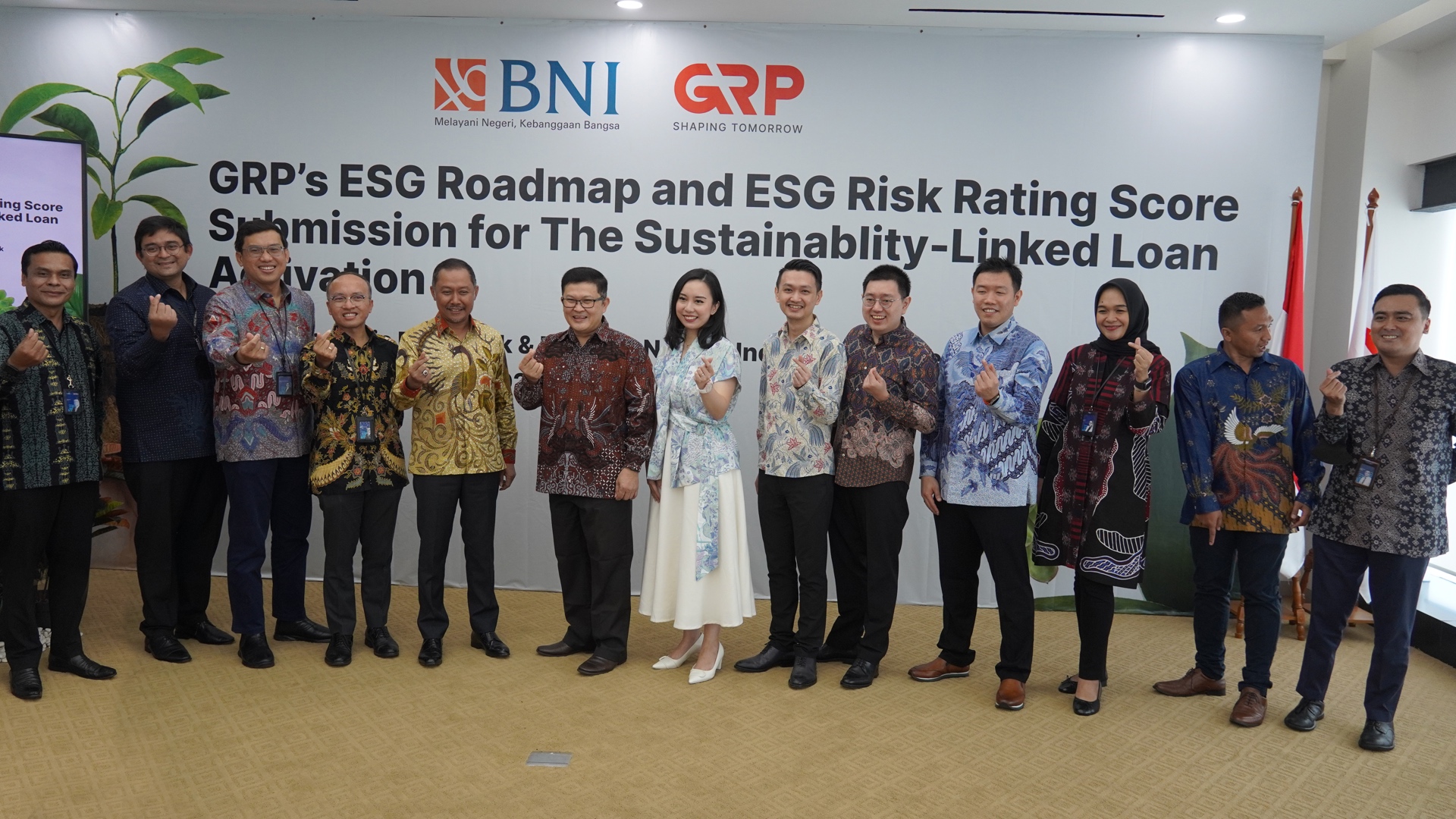
Southeast Asia’s ESG loan market collapsed 46% in Q1 2026 to $5.9bn as the Iran war triggered an energy shock, inflation surge, and a flight from sustainable finance.
From Singapore’s boardrooms to Jakarta’s treasury floors, the Iran war’s energy shock has done what regulators and critics could not: it has exposed the profound geopolitical fragility at the heart of Asia’s green lending ambitions.
At a Glance
| Metric | Q1 2026 | Change (YoY) |
|---|---|---|
| ESG Loan Proceeds, Southeast Asia | US$5.9bn | –46.3% |
| ESG Loan Proceeds, APAC ex-Japan | US$16.6bn | –40.3% |
| ESG Bond Proceeds, Southeast Asia | US$4.0bn | –26.5% |
| Global ESG Loan Proceeds | US$148.5bn | +11.5% |
| Brent Crude (peak, Q1 2026) | ~US$100–110/bbl | Morgan Stanley base |
| Asia LNG Spot Price Increase | >140% surge | Post Ras Laffan strike |
| ADB Regional Growth Forecast, 2026–27 | 5.1% | Down from 5.4% |
In the first week of March 2026, as American and Israeli aircraft struck Iranian energy infrastructure and the Strait of Hormuz began its chilling closure to commercial tanker traffic, the conversations that mattered most were not in the Pentagon or the Knesset. They were happening in the treasury departments of Singapore’s Raffles Place, Jakarta’s Sudirman district, and Bangkok’s Silom corridor. CFOs, sustainability officers, and deal bankers were picking up phones and, one by one, pulling the trigger on a single instruction: pause.
The results of those boardroom decisions are now quantified, and they are extraordinary. ESG loan proceeds across Southeast Asia collapsed to just US$5.9 billion in the first quarter of 2026 — a 46.3% plunge from US$11.1 billion in the same period a year earlier, according to data compiled by LSEG Deals Intelligence. ESG bond issuance across the region fell a further 26.5%, to US$4 billion. Broaden the lens to Asia-Pacific excluding Japan, and ESG lending contracted by 40.3% to US$16.6 billion — a figure that places the region in stark, damning contrast with the rest of the world.
The global ESG loan market, by comparison, grew 11.5% over the same period to US$148.5 billion. That divergence — between a globally resilient sustainable finance market and a Southeast Asia in freefall — is not simply a story about one quarter’s bad numbers. It is a structural confession about the vulnerability of green finance in geopolitically exposed emerging markets, and a warning that the net-zero architecture being built across ASEAN may be far more brittle than its architects have been willing to admit.
The Strait of Hormuz and the Price of Green Ambitions
To understand why ESG lending in Southeast Asia collapsed so rapidly, one must first understand what the Iran war did to the fundamental economics of the region. Asia bears the brunt of the Strait of Hormuz closure more than any other region: roughly 84% of the crude oil and 83% of the LNG that passed through the strait in 2024 was bound for Asian buyers. When Iran shut that corridor, it did not just spike Brent crude — it repriced the entire risk framework within which corporate borrowers in Southeast Asia operate.
Regional oil benchmarks surged well above US$150 per barrel while LNG spot prices in Asia rose by more than 140% following Iran’s strike on Qatar’s Ras Laffan complex in mid-March. The Asian Development Bank estimates that regional growth will slow from 5.4% to 5.1% in both 2026 and 2027, while inflation rises to 3.6%. For a corporate treasurer in Manila or Kuala Lumpur contemplating a five-year sustainability-linked loan with performance targets tied to energy consumption or carbon intensity, this is not merely turbulence. It is a fundamental invalidation of the model.
“Geopolitical volatility of this magnitude forces companies to prioritise liquidity and balance sheet resilience above everything else. ESG-linked structures, with their bespoke KPI frameworks and margin ratchets, become the first casualty of a crisis that demands simplicity and speed.”
— Jeong Yoonmee, Head of Global Wholesale Banking Sustainability Office, OCBC
The mechanism is straightforward, even if its scale is startling. ESG-linked loans — those that tie borrowing costs to the achievement of environmental, social, or governance targets — are, by design, complex instruments. They require companies to commit to measurable sustainability KPIs, to engage third-party verifiers, to absorb margin adjustments, and to publish progress. In stable, low-volatility environments, the 10–25 basis point reduction in borrowing costs they offer is worth the administrative burden. In a crisis in which energy costs are spiking, currencies are under pressure, and central banks are rethinking rate paths, that calculus inverts instantaneously. The simpler the instrument, the faster it can be deployed. When survival instincts kick in, the sustainability premium is the first line item crossed off the deal sheet.
The Canary in the Coal Mine
ESG Loan Volume Change, Q1 2026 vs Q1 2025
| Market | Change |
|---|---|
| Southeast Asia | –46.3% |
| APAC ex-Japan | –40.3% |
| Global | +11.5% |
The global resilience of ESG lending at +11.5% is real, and its architects in European capitals and North American boardrooms deserve credit. But it also masks a deeply uncomfortable truth: the markets that have grown fastest and made the boldest net-zero commitments in recent years — precisely the ASEAN economies of Indonesia, Thailand, Malaysia, the Philippines, Vietnam, and Singapore — are also those most exposed to geopolitical shocks of the kind now unfolding.
This is the canary-in-the-coal-mine dynamic that sustainable finance’s boosters have too long ignored. Emerging Asia’s ESG market was built on three assumptions: relatively stable energy prices, progressive central bank policies, and a geopolitical environment permissive of long-horizon corporate planning. The Iran war has demolished all three simultaneously. Asia imports more than 56% of its oil from the Middle East and more than 30% of its gas — a dependency that translates directly into sovereign and corporate vulnerability every time the Gulf ignites.
The region’s financial markets have reflected this with brutal clarity. Global stocks have fallen 5.5% since the conflict began, with Asian markets the worst hit. Emerging market currencies have come under sustained pressure as the dollar strengthened. The repricing of risk across credit markets has pushed up financing costs at precisely the moment when corporate borrowers most need predictability. In this environment, green lending — inherently forward-looking, structurally complex, and dependent on confidence in long-term regulatory frameworks — is fighting a rearguard action against crude, immediate financial survival instincts.
ESG vs. Survival: The Commitment Problem
There is a more uncomfortable dimension to this collapse that sustainability advocates must confront honestly: the data strongly suggests that many of the ESG commitments made by Southeast Asian corporates in 2023 and 2024 were, at least partly, cyclical rather than structural. Sustainability-linked loans were attractive when interest rates were falling, when capital was abundant, and when corporate reputations benefited from green credentials that cost relatively little to maintain. The first genuine macroeconomic shock has revealed the depth — or lack thereof — of those commitments.
This is not a new critique. Academic research has consistently shown that low-transparency sustainability-linked loan borrowers exhibit deteriorating ESG performance after issuance, a pattern consistent with greenwashing rather than genuine transformation. The Iran war has simply accelerated and amplified this dynamic, providing corporate boards with a geopolitically credible justification for deferring sustainability spending that was, in many cases, already under pressure from tightening margins.
What is striking, however, is the asymmetry. The 46.3% contraction in ESG loans is far steeper than the 26.5% decline in ESG bonds — and that gap is revealing. Bond markets, with their more diverse investor bases and standardised structures, have proven somewhat more resilient. Loan markets, by contrast, are bilateral and relationship-driven: when a corporate treasurer calls their relationship bank to pause a sustainability-linked facility, it happens quietly, quickly, and without the scrutiny of a public market. The opacity of the loan market is magnifying the withdrawal.
The Net-Zero Clock and a Fractured Pipeline
For Southeast Asia’s climate ambitions, the timing could hardly be worse. The ASEAN bloc has made increasingly bold net-zero pledges over the past three years, and green lending was central to the financing architecture designed to turn those pledges into capital expenditure. Indonesia has committed to peak emissions by 2030 and net-zero by 2060. Vietnam’s 2050 net-zero target requires an estimated US$368 billion in green investment. The Philippines, Malaysia, and Thailand have each committed to substantial renewable energy targets within this decade.
All of those commitments were calibrated to a financing environment that no longer exists. A US$5.2 billion contraction in a single quarter of ESG lending is not a rounding error — it represents delayed solar projects, deferred green building retrofits, and postponed transition finance for the region’s most carbon-intensive industries. The pipeline, once paused, does not restart overnight. ING’s Sustainable Finance Pulse had projected Asia-Pacific to lead global momentum in transition finance in 2026. That forecast now reads as optimistic archaeology from a pre-war strategic calculus.
Governments have attempted to cushion the macro shock — Thailand capped diesel prices, Vietnam weighed fuel tariff cuts, Indonesia expanded fuel subsidies — but these interventions are, by design, diametrically opposed to the price signals that incentivise the private sector to invest in clean energy and sustainable infrastructure. Every rupiah spent subsidising fossil fuels is a signal that the energy transition can wait. It cannot.
The Path Through Disruption: What Comes Next
Scenario A: Ceasefire Holds, Hormuz Normalises (Base Case)
If the current US-Iran ceasefire stabilises and tanker traffic through the Strait of Hormuz recovers to 80% or above by mid-year, Morgan Stanley expects oil to average US$80–90 per barrel across 2026. Under this scenario, ESG lending volumes in Southeast Asia could recover partially in Q3, with full-year 2026 ESG loan proceeds likely stabilising at around US$20–24 billion — still well below the US$33.9 billion implied by 2025’s run rate, but not catastrophic. The pipeline of deferred deals will not disappear; many will simply be repriced and re-launched with revised KPI structures that better reflect the new energy cost environment.
Scenario B: Prolonged Conflict, Persistent Volatility (Downside)
If oil remains above US$100 per barrel through H2 2026, central banks in the region delay rate cuts or signal hikes, and corporate balance sheets remain under sustained pressure, ESG lending could remain depressed well into 2027. The risk here is not just cyclical contraction but structural damage: if corporates and banks alike perceive green lending as incompatible with periods of high volatility, the market may never recapture its pre-war momentum without regulatory mandates forcing the issue.
The Structural Opportunity
Paradoxically, the energy shock has created a powerful argument for accelerating, not retreating from, the transition. The region’s extreme dependence on Middle Eastern hydrocarbons is precisely what makes domestic renewable energy capacity — solar, geothermal, wind, green hydrogen — a strategic priority of the first order. Vietnam, Indonesia, and Malaysia are already seeing renewed interest from development finance institutions willing to anchor long-tenor green loans that the commercial market has vacated. The ADB, IFC, and bilateral development agencies have balance sheets designed for exactly this moment.
What CFOs, Policymakers, and Investors Must Do Now
Three imperatives flow from this analysis, and they are not optional for anyone who takes the region’s net-zero trajectory seriously.
First, standardise and simplify ESG loan structures for high-volatility environments. The Asia Pacific Loan Market Association and regional banking associations should work urgently on streamlined, crisis-resilient ESG loan templates — structures that preserve the integrity of sustainability KPIs without the administrative complexity that makes them the first casualty of boardroom triage. If green instruments are to be durable, they must be designed for the world as it is, not as sustainable finance’s architects wished it to be.
Second, mobilise development finance as the anchor of last resort. Commercial banks have a fiduciary obligation to retrench when risk spikes — it is futile to moralize about it. The multilateral development banks and export credit agencies that have deeper mandates and longer horizons must step into the gap now, pricing and structuring green loans that keep the pipeline alive until commercial appetite returns. This is exactly what institutions like the ADB’s climate finance facility was built for.
Third, decarbonisation must be reframed as energy security. The political economy of this moment, if anything, strengthens the case for domestic clean energy investment across Southeast Asia. The governments and institutional investors capable of making that argument — and backing it with blended finance, green guarantees, and concessional capital — will determine whether Q1 2026 is remembered as a temporary setback or the beginning of a decade-long detour from the region’s net-zero path.
The Iran war has not killed sustainable finance in Southeast Asia. But it has done something almost as damaging: it has revealed that the market was never as deep, as committed, or as structurally robust as its cheerleaders claimed. The 46.3% collapse in ESG loans is a number that demands honesty, not spin. The conversation it forces — about geopolitical risk, about the true depth of corporate ESG commitment, about the architecture of green finance in emerging markets — is one the region could no longer afford to defer. It is, in the bleakest sense, the most useful crisis the sustainable finance community in Southeast Asia has yet faced.
Discover more from The Economy
Subscribe to get the latest posts sent to your email.



Key Takeaways
- Rolex’s secondary market rose approximately 7.9% year-over-year as of 2026 (per WatchCharts data) — trailing Patek Philippe (+16.2%) and Tudor (+11.4%) but still outperforming Audemars Piguet (+3.4%).
- Rolex raised U.S. retail prices 4–9% in January 2026 (steel models ~5.6%, gold models ~8.7%), narrowing the historical gap between retail and pre-owned pricing.
- Not every model appreciates: steel sports references (Submariner, GMT-Master II, Daytona) have held value far better than two-tone or widely available dress references like the standard Datejust.
- The Lady-Datejust posted the sharpest 2026 gain among tracked collections — up 22.73%, from roughly $9,269 to $11,376 — driven by demand for smaller, “everyday luxury” watches.
- Gold’s rise past $2,400/oz has directly lifted the investment case for Rolex’s precious-metal references (Day-Date, Sky-Dweller, Yacht-Master).
The Model-by-Model Picture
| Category | 2026 Trend |
|---|---|
| Lady-Datejust | +22.73% (strongest performer among tracked collections) |
| Steel sports models (Submariner, GMT-Master II) | Held value well; corrected from 2022 peak but stabilized above retail |
| Daytona | Corrected from highs above $50,000 to the mid-$30,000s; still among the most sought-after references |
| Two-tone/widely available Datejust | Flat to negative — “holds value” is an overstatement for this category |
| Gold references (Day-Date, Sky-Dweller) | Lifted by gold’s rise above $2,400/oz |
Why the “Rolex Always Appreciates” Myth Is Fading
The pandemic-era boom pushed some references — the Daytona above all — to speculative highs disconnected from historical norms. Since the March 2022 peak, steel sports models have compressed meaningfully, and dealers who bought inventory near the top have in some cases faced 20–40% markdowns on liquidation. The lesson for 2026 buyers: Rolex as a category is not a monolith. Value retention depends heavily on specific reference, condition, and whether the piece comes with box and papers (“full set”).
What’s Actually Driving 2026 Strength
- Retail price increases raise the floor. When a new Submariner retails at $10,050 (up from $9,500), a pre-owned example at $11,000–$12,000 suddenly represents a smaller premium — narrowing the gap without secondary prices actually moving.
- Supply discipline remains Rolex’s core lever. The brand has never confirmed production numbers, and secondary-market premiums remain entirely a function of Rolex’s own manufacturing decisions — a risk factor as much as a support.
- Certified Pre-Owned rollout. Rolex’s now fully rolled-out CPO program has changed how buyers transact in the used market, adding a layer of brand-verified legitimacy that supports pricing.
The Case for Rolex as a Portfolio Diversifier
Financial advisors increasingly frame luxury watches not as a replacement for equities or bonds, but as a tangible, historically low-correlation diversifier — one that carries its own risks (illiquidity, condition-dependent pricing, no yield) but has demonstrated multi-decade resilience for specific references.
Is Rolex a good investment in 2026?
It depends heavily on the specific reference. Steel sports models like the Submariner and Daytona have held or grown in value; two-tone and widely available dress models generally have not. Overall, Rolex’s secondary market rose about 7.9% year-over-year in 2026, trailing Patek Philippe but ahead of Audemars Piguet.
Discover more from The Economy
Subscribe to get the latest posts sent to your email.

Navigating Mortgage and Loan Refinancing in a High-Yield Environment
Global public debt crossing critical thresholds has kept central bank policies volatile, resulting in fluctuating US Treasury yields throughout 2026. For homeowners and commercial property holders burdened by previous high-interest borrowing cycles, finding optimal refinance windows has become a high-stakes financial puzzle. Stalled disinflation and stubborn employment numbers mean rate cuts are incremental, requiring borrowers to act with precision.
Timing your mortgage or commercial loan refinance in this environment requires a deep understanding of yield curve movements and lender risk appetites.
Decoding 2026 Refinance Dynamics
The 10-Year Treasury Yield Benchmark
Mortgage rates continue to track closely with the 10-year US Treasury yield. When macroeconomic anxiety spikes debt issuance, yields rise, tightening consumer borrowing capacity. Savvy borrowers monitor weekly Treasury auctions to lock in rates during brief dip windows.
Hybrid ARMs and Alternative Structures
With fixed rates remaining elevated, 7/1 and 10/1 adjustable-rate mortgages (ARMs) have surged in popularity. These products offer lower initial monthly payments, giving borrowers breathing room until central bank easing cycles fully materialize.
| Loan Product | Current Rate Range | Best For | Key Risk Factor |
| 30-Year Fixed Mortgage | 6.2% – 6.8% | Long-term predictability | Higher initial monthly outlay |
| 7/1 Hybrid ARM | 5.5% – 5.9% | Short-term ownership / flipping | Rate reset risk after year 7 |
| Commercial Refinance | 7.0% – 8.2% | Corporate asset restructuring | Strict DSCR lender covenants |
Actionable Steps for Successful Refinancing
To maximize your chances of securing favorable refinance terms in a volatile market, follow a disciplined preparation strategy.
Boost Your Credit Score Immediately: Lenders in 2026 are applying stringent credit tiering; a 20-point increase can drop your APR by a crucial quarter-point.
Shop Regional Credit Unions: Smaller financial institutions often offer portfolio loans with more flexible underwriting than major national banks.
Calculate the Break-Even Point: Ensure your total closing costs are recouped through monthly savings within 24 months of closing.
“Market Strategist View: Refinancing in 2026 is an exercise in opportunistic timing. Borrowers must maintain immaculate financial profiles ready to strike the moment Treasury yields dip.”
Mastering the complexities of today’s debt environment ensures you can successfully lower your debt service costs and protect your long-term financial stability.
Discover more from The Economy
Subscribe to get the latest posts sent to your email.

The days of pulling generic auto insurance quotes based purely on your zip code and age are officially over. In 2026, insurance comparison engines are powered entirely by generative AI and real-time telematics. These platforms digest thousands of live data points—ranging from your driving smoothness via connected vehicle sensors to real-time traffic congestion patterns—to generate hyper-personalized premiums instantly.
For consumers, this evolution represents both a massive opportunity for savings and a hidden trap for penalty pricing. Understanding how AI algorithms evaluate risk is essential for anyone looking to lower their monthly auto insurance premiums.
How AI Comparison Engines Evaluate Your Risk Profile
Behavioral Telematics and Connected Cars
Modern cars stream performance data directly to insurance aggregators. Generative AI models analyze braking sharpness, acceleration curves, cornering G-forces, and phone distraction metrics. Drivers who maintain smooth, defensive habits are rewarded with dynamic rate cuts of up to 40% compared to traditional rating tiers.
Predictive Traffic and Weather Modeling
AI tools now cross-reference your daily commute route with predictive weather and accident probability models. If your standard parking location or driving corridor has a statistically higher incidence of uninsured motorist claims, your quotes will reflect that hyper-local risk assessment.
| Comparison Factor | Traditional Rating Model | 2026 Generative AI Model | Impact on Premium |
| Mileage & Usage | Annual estimated odometer reading | GPS tracking & live trip duration | High (up to 35% savings) |
| Driving Behavior | MVR driving record & accidents | Real-time braking, speed, & G-force | Critical (determines tier) |
| Vehicle Tech | Make, model, and safety rating | ADAS calibration & repair cost data | Moderate |
Strategies to Lower Your AI-Driven Insurance Quote
To outsmart the algorithm and secure the lowest possible premium in 2026, drivers must proactively manage their digital footprint on insurance platforms.
Opt-In for Telematics Trial Periods: Many insurers offer immediate 15% discounts just for installing their driving app; let it track safe habits for 30 days to lock in permanent savings.
Scrub Unverified Public Records: Ensure your motor vehicle report is free of clerical errors that AI risk models misinterpret as reckless behavior.
Compare AI Aggregators: Use platforms that integrate multi-carrier API feeds rather than single-brand comparison sites to find the best risk-adjusted rate.
“Industry Note: AI-driven pricing rewards transparency and precision. Drivers who actively manage their telematics data consistently out-save those relying on legacy quote calculators.”
Embracing AI comparison tools allows savvy policyholders to customize coverage limits precisely to their driving habits, eliminating wasted premium spend while ensuring robust protection.
Discover more from The Economy
Subscribe to get the latest posts sent to your email.

Asian Stock Markets 2026: Japan, China, Pakistan & More

Mortgage Rates Today 2026: Full Rate Guide & Forecast

Beyond Paper Wealth: Unpacking Donald Trump’s Multibillion-Dollar Liquidity and Legal Crisis

Bitcoin & XRP 2026: Inside Crypto’s Institutional Era

Global Economy 2026: IMF Growth, AI Stocks & Market Risk

China’s Local Debt Race Against Time: Why Economists Demand Central Action Before the Deflation Window Closes

Money News: How to Protect Your Portfolio From Global Inflation

World Bank Projections: Emerging vs. Big Economies of Asia

IMF Reports 2026: What the Latest Data Means for the Global Economy

Singapore Stocks Outlook: A Safe Haven in the Asian Market?

China Stocks vs. Japan Stocks: Where Should You Invest in Late 2026?

VIX Index Explained: How to Trade Wall Street’s Fear Gauge Today

Commercial vs Residential Real Estate: Which Wins in 2026?

Presidential Stock Market Performance: How Trump’s Second Term Compares to History

Top 30 Stocks for Investment in PSX for Massive ROI in 2026

SpaceX Starship Flight 14: First Orbital Attempt & Starlink V3 Launch Explained

The 2026 Crypto Regulatory Shift: What It Means for Institutional Investors

AI Chip Stocks 2026: The Best Semiconductor Investments Beyond Marvell

Oil Prices Break $100 in 2026: Middle East Conflict & Energy Markets

Tween Back-to-School Trends 2026: What’s Driving the $85B Season

Fidelity Investments Review 2026: SPAXX Yields & Zero-Fee Funds

AI-Powered Training: The Next Multi-Billion Dollar Ecosystem in Fitness

10-Year Treasury Yield Hits 4.80%: What It Means for Rates & Portfolios

BRICS+ Cross-Border Payments 2026: Interoperability Explained

Shein Clothes Quality & Safety in 2026: What Lab Tests Show

MRVL Earnings 2026: Why Marvell Sank Despite Beating Estimates

China’s US$10.8 Billion Trade Shortcut: Why the Pinglu Canal Matters

Leveraging Viral AI & Climate Hashtags for Brand Growth on X
-

 Markets & Finance9 months ago
Top 15 Stocks for Investment in 2026 in PSX: Your Complete Guide to Pakistan’s Best Investment Opportunities
-

 Analysis7 months ago
Johor’s Investment Boom: The Hidden Costs Behind Malaysia’s Most Ambitious Economic Surge
-

 Analysis7 months ago
Top 10 Stocks for Investment in PSX for Quick Returns in 2026
-

 Analysis8 months ago
Brazil’s Rare Earth Race: US, EU, and China Compete for Critical Minerals as Tensions Rise
-

 Banks8 months ago
Best Investments in Pakistan 2026: Top 10 Low-Price Shares and Long-Term Picks for the PSX
-

 Investment8 months ago
Top 10 Mutual Fund Managers in Pakistan for Investment in 2026: A Comprehensive Guide for Optimal Returns
-

 Global Economy9 months ago
15 Most Lucrative Sectors for Investment in Pakistan: A 2025 Data-Driven Analysis
-

 Global Economy9 months ago
Pakistan’s Export Goldmine: 10 Game-Changing Markets Where Pakistani Businesses Are Winning Big in 2025