
Analysis
Why Distressed-Debt Funds See a Once-in-a-Generation Bet in Private Credit’s Unraveling

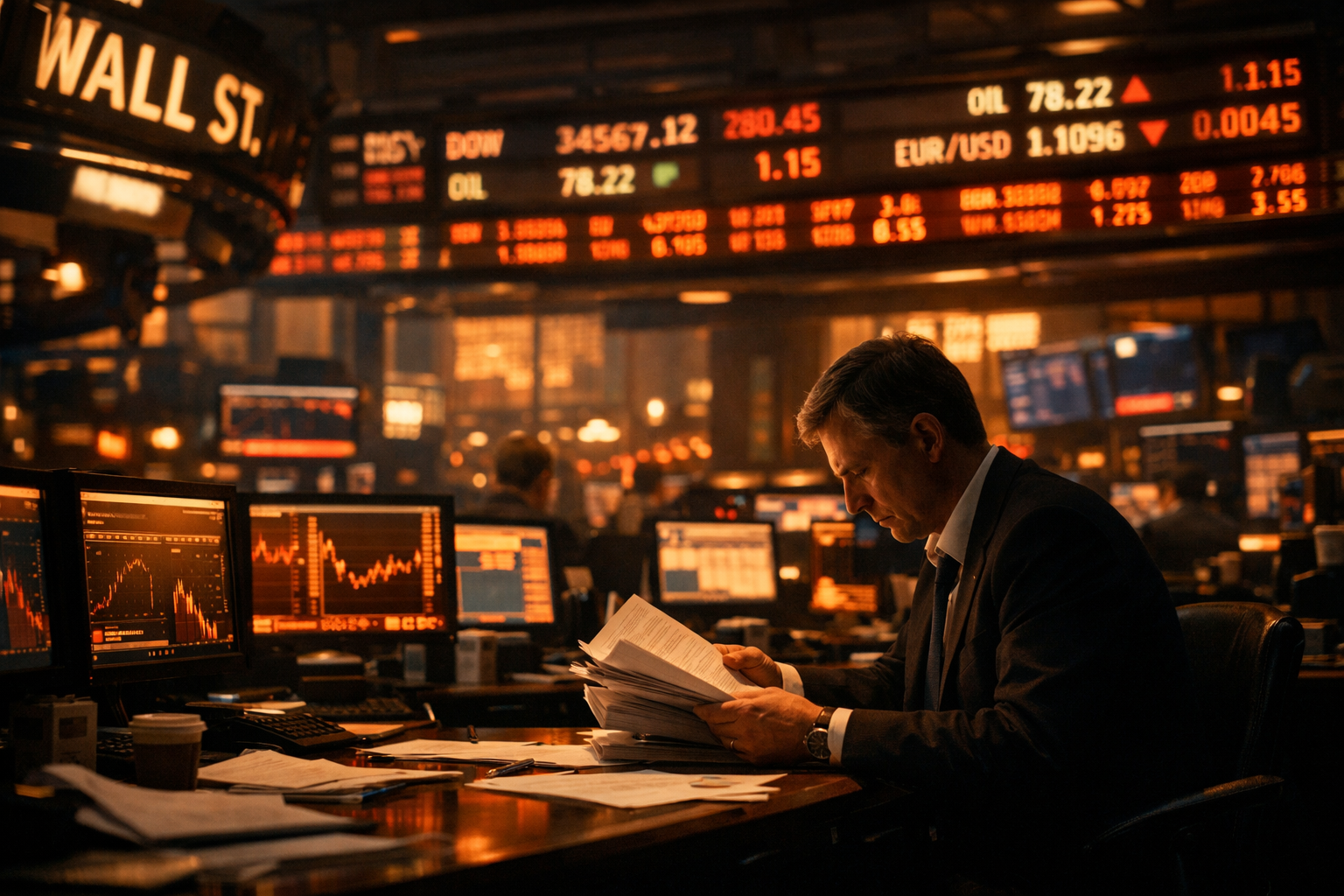
Distressed-debt funds are targeting the $2 trillion private credit downturn as the greatest opportunity since 2008. Here’s what’s fueling the frenzy — and the risks ahead.
The Smell of Distress in the Morning
Picture a room in midtown Manhattan in early March 2026. A portfolio manager at one of the world’s largest credit funds is on the phone, not to his prime broker or his LPs, but to a lawyer specialising in debt restructuring. On his screen: a blinking alert from Bloomberg showing that Blue Owl Capital’s flagship retail lending vehicle has permanently shuttered its redemption window after withdrawal requests surged past 15% of net asset value — three times the quarterly cap it once guaranteed investors. Around him, colleagues are tracking similar red flags at Blackstone, Ares, BlackRock, and Morgan Stanley. The room is tense. But beneath that tension, for a certain class of investor, there is something else: barely suppressed excitement.
The $2 trillion private credit market is in distress. And the funds that specialise in buying broken debt at broken prices — the so-called vulture investors who made fortunes in the wreckage of 2008 — are sharpening their talons.
A Golden Era That Became a Gilded Cage
To understand why distressed specialists are salivating today, you need to trace the improbable arc of private credit since the global financial crisis. Burned by the carnage of 2008, regulators tightened capital requirements on banks through Basel III, effectively driving them out of mid-market corporate lending. Into that vacuum stepped a new class of non-bank lenders: direct lending funds operated by firms like Apollo, Ares, Blackstone, Blue Owl, and KKR. Private credit entered 2026 as a near-$3 trillion asset class, having grown fivefold since the post-GFC era, with institutional investors — pensions, sovereign wealth funds, insurers, and family offices — piling in for the promise of floating-rate income and low volatility. Withintelligence
The pitch was elegant: private loans, unlike publicly traded bonds, were not marked to market daily. Defaults, when they occurred, were resolved quietly in bilateral negotiations between lender and sponsor, without the messy spectacle of public-market repricing. For a decade of near-zero rates and robust corporate earnings, this model was close to frictionless. Money poured in. Funds raced to deploy it. Covenants became “covenant-lite.” Leverage multiples crept upward. And in the most competitive corners of the market — particularly software and technology — loan structures that once would have drawn a raised eyebrow became standard.
Then came higher-for-longer rates, agentic AI threatening SaaS business models, and a cohort of retail investors who, lured by quarterly liquidity promises, discovered that private credit’s “semi-liquid” label was doing an awful lot of work.
The Anatomy of a Squeeze
By late 2025, Fitch Ratings reported private credit defaults surging toward historic highs, with risks concentrated in highly leveraged, rate-sensitive debt — particularly among software names and smaller borrowers — as “shadow defaults” and “amend-and-pretend” arrangements masked the true depth of corporate stress. CNBC Payment-in-kind toggle usage — whereby borrowers pay interest in additional debt rather than cash — accelerated alarmingly. Research from S&P Global Intelligence found that “selective defaults,” covering covenant waivers, distressed debt exchanges, and out-of-court restructurings tantamount to default, outpaced conventional defaults five to one in 2024, pointing to elevated stress levels that headline figures failed to reveal. Debt Explorer
The fault lines cracked fully open in Q1 2026. Blue Owl’s technology-focused fund saw redemption requests jump to approximately 15% of net asset value — triple its quarterly cap — forcing the firm into a capital-return plan. At Blackstone, investors sought to pull $3.8 billion from its flagship BCRED fund, representing 7.9% of assets, prompting the firm to take the extraordinary step of deploying $400 million of its own capital to satisfy requests. BlackRock restricted withdrawals on its $26 billion HPS Lending Fund after requests reached 9.3%, nearly double its cap. Morgan Stanley returned $169 million to investors after repurchase requests topped 10.9% in its North Haven Private Income fund. Wealth Management
Redemption requests from investors in retail-focused private credit funds reached an all-time high, as fund managers faced an acute dilemma: relax liquidity caps to satisfy investors and risk compromising portfolio value, or hold the line and gate redemptions, alienating capital and sending a distress signal to the wider market. Morningstar
The mechanism underlying the panic is a classic liquidity mismatch — structurally identical to what economists call a “bank run,” even if private credit funds lack deposit insurance. Loans originated over five-year terms were packaged into vehicles promising quarterly exits. When sentiment soured, the gap between asset duration and liability terms became a chasm.
Enter the Opportunists
This is precisely the moment distressed-debt specialists have been waiting for. The strategy is as old as capitalism itself: buy assets that someone else must sell at prices that do not reflect long-term value. What is different today is the scale, the complexity, and the particular texture of the opportunity.
Opportunistic, special-situations, and distressed-debt funds have collectively raised over $100 billion in the past two years, while the ten largest funds currently in the market are targeting almost $50 billion — suggesting that fund managers and allocators are deliberately building war chests in anticipation of a credit cycle turning point. Withintelligence
The opportunity manifests in several forms. First and most immediately, there are forced-seller dynamics among semi-liquid retail funds. As firms like Blue Owl sold high-quality loan portfolios to meet redemption demands, buyers were able to acquire par-value assets at discounts from forced sellers — exactly the asymmetric entry point that distressed specialists seek. FinancialContent Boaz Weinstein’s Saba Capital, the New York-based credit hedge fund, reportedly launched a dedicated vehicle to acquire Blue Owl fund stakes at discounts of up to 35% to stated NAV — an act that serves simultaneously as arbitrage trade and implicit verdict on the credibility of private credit valuations.
Second, there is a growing pipeline of genuinely impaired corporate debt. Attention has focused on software exposure in direct lending — estimated at around 26% by Morgan Stanley — following fears that agentic AI could disrupt traditional software-as-a-service business models. Funds concentrated in volatile sectors or holding covenant-lite loans are also vulnerable, as are highly leveraged healthcare roll-ups. CNBC As these businesses deteriorate, their loans will trade into distressed territory — not at fire-sale prices, but at discounts that reward patient, analytical capital.
Third, and perhaps most structurally interesting, there is the opportunity in mezzanine and subordinated debt. Analysis from MSCI shows that from 2020 to 2025, loan losses in the riskier portions of the capital stack were substantial, with these losses by debt funds indicating precisely where distress opportunities can be found in this cycle. Mezzanine lenders, through their interests in the LLCs that control underlying assets, gain meaningful control rights upon default — allowing them to influence outcomes more directly than in prior cycles. MSCI
Is This Really 2008 Redux?
The comparison to 2008 is both instructive and misleading, and the honest analyst must hold both truths simultaneously.
The similarities are structural. A decade-long credit expansion, enabled by regulatory arbitrage, compressed risk premia, and institutional herding, is unwinding in an environment where the exit doors are narrower than many investors assumed. The leverage is real. The opacity is real. The mispricing was real.
But the differences are material. Private credit funds are generally less leveraged today than the investment banks caught up in the 2008 crash, and the fundamental distinction is that 2008 involved significant leverage on similar assets with full recourse to whoever owned them. CNBC The damage, in other words, is likely to be more contained — painful for those who hold impaired loans or mispriced semi-liquid structures, but unlikely to produce the systemic contagion that froze interbank lending and triggered a global recession.
Historical comparison bears this out. Distressed assets reached 20% of total sales by late 2010, three years after the GFC began. Through mid-2025, distressed transactions had reached only 3% of market share, and while prices fell sharply during the GFC — dropping 23% year-over-year by Q3 2009 — the maximum decline in this cycle was approximately 10%, following the 2022 rate shock. MSCI The distressed opportunity in 2026, while significant, is more surgical than it was systemic seventeen years ago. It rewards specialists over generalists.
There is also the question of geography. As European countries ramp up infrastructure and defense spending, fund managers such as Apollo Global Management and Ares Management have cited a substantial origination opportunity on the continent, and as Europe implements Basel IV, a major shift is expected away from bank lending — currently around 70% of total European lending — toward private debt funds. Withintelligence For distressed specialists with European capabilities, the continent offers a second, distinct wave of opportunity driven by the refinancing stress on COVID-era leveraged borrowers.
The Risk the Bulls Ignore
No analysis of this moment is honest without confronting what could go wrong for the distressed buyers themselves.
The core risk is one of timing and depth. Distressed debt generates its finest returns when dislocation is sharp and recovery is swift. But if the private credit correction is slow and grinding — a multi-year unwinding of mismarked loans through a succession of quiet restructurings — then the entry points for opportunistic capital may remain frustratingly inaccessible. The “amend-and-pretend” culture that has characterised private credit through this cycle, whereby sponsors and lenders quietly extend and modify rather than formally default, is a feature, not a bug, of a relationship-driven market. It delays the forced selling that distressed funds need to deploy capital at their target returns.
There is also the risk of contamination: that distressed funds buying impaired loans discover that the marks from which they calculated their discounts were themselves inflated. Saba Capital’s willingness to purchase Blue Owl fund stakes at discounts of up to 35% to stated NAV signalled deep scepticism toward the valuations provided by private lenders FinancialContent — and if those doubts prove warranted at scale, the “discount” entry could still prove expensive.
Finally, there is regulatory risk. Policymakers on both sides of the Atlantic are watching the private credit dislocation closely. The Financial Stability Board, the IMF, and national regulators have long flagged concerns about liquidity mismatch in semi-liquid private fund structures. A forced structural reform — mandating longer lock-up periods, higher liquidity buffers, or independent third-party valuations — could alter the playing field in ways that compress both distressed opportunities and the broader market’s return profile.
What Comes Next
The credit cycle, like all economic cycles, does not unfold on a schedule. But the directional logic is clear: the great private credit expansion of the post-2008 era is entering a period of reckoning, and the reckoning will produce both casualties and fortunes.
For institutional allocators, the question is not whether to engage with the distressed opportunity, but how. Distressed strategies can deliver IRRs in the low teens or better, but returns come with greater complexity — including legal, restructuring, and timing risk — and outcomes are highly manager-skill dependent. Globalbankingmarkets A satellite allocation to a handful of deeply experienced distressed specialists, positioned alongside a diversified core private credit book, is likely the appropriate response for most large institutional portfolios. Concentration in any single vintage or geography would be imprudent.
For the broader economy, the unwinding has a silver lining. A spike in loan defaults, while painful for existing holders, will ultimately clear misallocated capital, restore pricing discipline to new loan issuance, and bring private credit valuations back into line with reality. One senior credit officer described it as a “healthy reset” — a stress test the market needed to take but had been deferring for years.
The vultures circling private credit in 2026 are not predators in the pejorative sense. They are a mechanism of price discovery, a corrective force, and, for those with the capital and patience to engage them, a potential source of the vintage returns that are minted only at moments of genuine dislocation. The greatest private credit opportunity since 2008, it turns out, may not be in lending. It may be in the ruins of what lending became.
Discover more from The Economy
Subscribe to get the latest posts sent to your email.


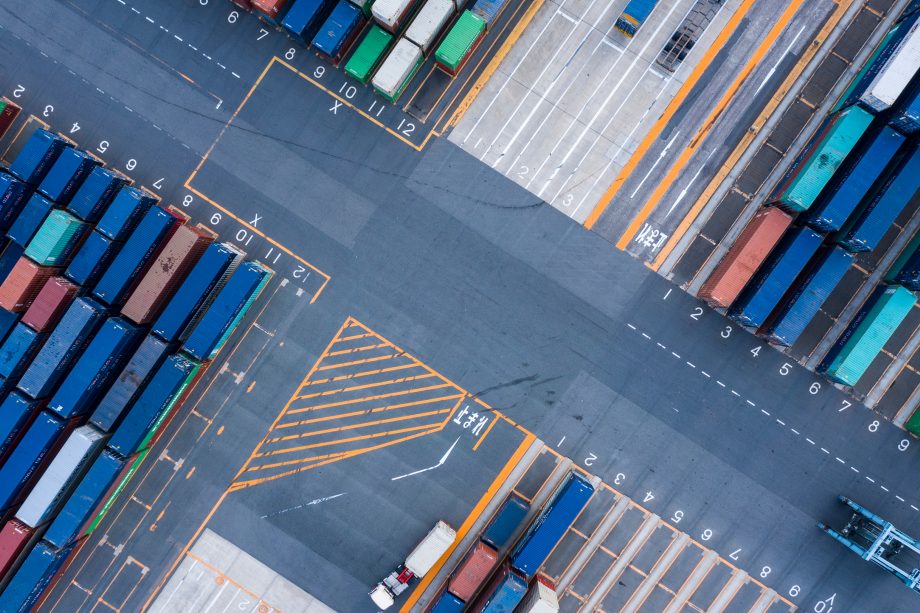
How a board-game importer’s near-bankruptcy became the defining story of America’s small-business tariff refund battle — and what every importer needs to know right now.
Jonathan Silva didn’t sleep much in the winter of 2025. The founder of WS Game Company, a Massachusetts-based maker of deluxe, heirloom-quality board games — the kind of Monopoly set that sits under a Christmas tree and gets handed down a generation — had built something genuinely beautiful out of nothing. Premium lacquered boxes. Velvet-lined trays. Gold-foil lettering. His products were manufactured in China, assembled with the care of artisanal furniture, and sold at a premium that justified every cent of cost. Then the tariffs came, and the math that had made WS Game Company viable for over a decade simply stopped working.
For small importers like Silva, the Trump administration’s sweeping use of the International Emergency Economic Powers Act — IEEPA — to impose tariffs ranging from 10% to 145% on Chinese goods was not an abstraction. It was an invoice. A brutal, recurring, cash-depleting invoice that arrived with every container. Small business tariff refunds weren’t yet a phrase anyone was using. Survival was the only vocabulary that mattered.
Then, on February 20, 2026, the landscape shifted — dramatically, and with the kind of judicial finality that sends shockwaves through trade policy circles. In a 6-3 ruling, the United States Supreme Court struck down the administration’s IEEPA-based tariffs as an unconstitutional overreach of executive power, affirming a lower Court of International Trade decision and handing American importers their most significant legal victory since the Section 232 steel battles of the previous decade. Jonathan Silva, like tens of thousands of small-business owners across America, exhaled for the first time in months. But the exhale, it turns out, was premature.
The Ruling Heard Around the Supply Chain
The Supreme Court’s February decision was, in the dry language of constitutional law, a separation-of-powers case. In plain English, it was a repudiation of the idea that a president could unilaterally impose sweeping import taxes on the entire global trading system by declaring a trade deficit a national emergency.
Writing for the majority, the Court held that IEEPA’s broad delegation of economic powers to the executive did not encompass the authority to impose comprehensive tariff schedules — a power the Constitution explicitly reserves for Congress. The dissent, authored by the Court’s three most conservative justices, argued that modern economic emergencies demanded executive flexibility. The majority was unmoved.
The immediate legal consequence: every IEEPA-based tariff collected since the policy’s implementation was, in principle, an unlawful taking. According to modeling by the Penn Wharton Budget Model and analysis cited by Bloomberg Economics, the total pool of potentially refundable duties ranges from $130 billion to $175 billion — one of the largest potential government refund obligations in American history.
For context: that sum is larger than the annual GDP of Hungary. It dwarfs the 2008 TARP bank bailout disbursements in a single fiscal year. And it sits in the coffers of U.S. Customs and Border Protection, waiting — theoretically — to flow back to the importers who paid it.
The word “theoretically” is doing enormous work in that sentence.
Why “You Won” Doesn’t Mean “You’re Paid”
Judge Richard Eaton of the Court of International Trade issued a supplementary ruling in March 2026 that should have provided a clear refund pathway. It did not. What it provided instead was a framework for CBP to process claims — a framework that, in practice, has moved with the urgency of continental drift.
CBP, which processes roughly $80 billion in duties annually under normal circumstances, was not designed to administer a retroactive refund program of this magnitude. Its legacy IT systems require manual entry for many claim types. Its staffing levels — reduced by administration-wide federal hiring freezes — are inadequate for the volume. Importers and their customs brokers report waiting periods of six to eighteen months for even preliminary claim acknowledgments.
For WS Game Company, which Silva estimates paid over $2.3 million in IEEPA tariffs across a 14-month period, the refund represents the difference between solvency and the kind of debt restructuring that changes a company’s trajectory permanently. “The money is theoretically ours,” Silva told a trade-industry forum in Boston in March. “But ‘theoretically’ doesn’t pay my vendors. It doesn’t pay my staff.”
His frustration is arithmetically precise. Small importers carry disproportionate cash-flow burdens relative to large corporations for a structural reason: they lack the balance-sheet depth to absorb multi-million-dollar duties and simply wait for courts to sort it out. A Fortune 500 retailer that overpaid $200 million in tariffs has a treasury function, revolving credit facilities, and investor patience. A family-owned importer that overpaid $2 million has a personal guarantee on a business line of credit and a very anxious accountant.
The Vultures Are Circling: Hedge Funds and the 10-Cent Dollar
Into this gap — between legal victory and actual cash — a new industry has emerged with the predatory efficiency that financial markets always display when uncertainty meets urgency.
Hedge funds and specialty finance firms have begun approaching small importers with offers to purchase their tariff refund claims outright, at 10 to 30 cents on the dollar. The pitch is seductive in its simplicity: take the certainty of immediate liquidity over the uncertainty of a government process that may take years and involves litigation risk if the administration pursues legislative workarounds.
For a business owner staring at payroll in two weeks, a 15-cent offer on a $2 million claim — $300,000 in hand today — can feel like salvation. It is, in structural terms, a payday loan dressed in a Brooks Brothers suit.
Trade attorneys are unanimous in urging caution. “These firms are pricing in legal risk that, post-Supreme Court, is substantially lower than they’re representing,” says one Washington-based customs lawyer who requested anonymity due to ongoing client negotiations. “Small businesses that sell these claims at 15 cents are giving away 85 cents of what is very likely their money.”
The tariff refund process for small importers is navigable, these attorneys argue — but it requires patience, proper documentation, and ideally representation by a licensed customs broker or trade law firm. The legal playbook is discussed in detail in the survival section below.
The Human Cost Behind the Numbers
Before the policy debate, before the litigation timeline, before the survival strategies: there are people.
The U.S. Chamber of Commerce estimates that over 180,000 small and mid-sized import-dependent businesses were materially impacted by IEEPA tariffs. The majority of these are not tech-enabled direct-to-consumer brands with venture backing. They are distributors, specialty retailers, furniture makers, toy importers, electronics assemblers, hardware suppliers — businesses woven into the fabric of local economies in every congressional district in America.
Research by Harvard economists during the first Trump tariff era established a template that 2025–2026 data is replicating with grim fidelity: the cost of import tariffs falls overwhelmingly on domestic consumers and domestic businesses, not on foreign exporters. The $1,300 to $1,800 annual household cost estimate — now updated by the Yale Budget Lab for 2025–2026 tariff schedules — represents a regressive tax that hits lower-income households hardest, since they spend a higher share of income on goods.
At the macroeconomic level, the Peterson Institute for International Economics projected a 0.6 to 0.9 percentage point drag on GDP growth in 2025 attributable to the combined tariff program, with disproportionate effects in manufacturing-adjacent service sectors. Unemployment in import-sensitive industries — retail buyers, customs logistics, freight forwarding — rose measurably, though the headline unemployment figures masked significant churn.
The Global Chessboard: How the World Responded
The Supreme Court tariff ruling’s impact on small business has a domestic dimension that dominates American coverage. But the geopolitical reverberations deserve equal attention — and they complicate the picture considerably.
The European Union, which had prepared a €95 billion countermeasure package targeting American exports, placed those retaliatory tariffs in legal suspension following the Supreme Court ruling, pending clarification of U.S. trade policy. Brussels remains poised to act; the package is not withdrawn, merely paused.
China, for its part, has used the 14-month tariff war to accelerate supply-chain relationships with Southeast Asian manufacturers, deepening what trade economists call “tariff-hopping” arrangements — routing production through Vietnam, Malaysia, and Cambodia to reach American shelves. The practical effect: Chinese manufacturing remains in American supply chains, just with additional logistics overhead and a Vietnamese certificate of origin.
For emerging-market exporters — Bangladesh, Sri Lanka, India’s textile sector — the uncertainty has been both threat and opportunity. Vietnam saw $4.2 billion in new foreign direct investment in the first three quarters of 2025, much of it from Chinese manufacturers establishing “China+1” facilities. India’s electronics sector, benefiting from both Apple’s supply-chain diversification and favorable bilateral negotiations, posted record export growth.
The deeper question, one that Foreign Affairs and the Atlantic Council are actively debating: does this ruling restore confidence in the rules-based trading order, or does it merely establish that American courts, not American trade commitments, are the last line of defense for international economic stability? The answer matters enormously for the WTO’s already diminished authority.
Trump’s Response: Section 122 and the Next Battle
The administration did not accept defeat quietly. Within three weeks of the Supreme Court ruling, the White House announced a new tariff framework under Section 122 of the Trade Act of 1974 — a statutory authority that grants the president explicit congressional authorization to impose tariffs of up to 15% for up to 150 days to address balance-of-payments emergencies.
The new Trump Section 122 tariffs, set at the statutory maximum of 15%, cover roughly 60% of the goods previously subject to IEEPA rates. For importers like Silva, this represents a material reduction — but not elimination — of tariff burden. Goods that faced 145% duties now face 15%. The cash-flow math improves; it does not resolve.
Legal challenges to Section 122’s application are already moving through the Court of International Trade. Trade attorneys note that Section 122’s 150-day time limit creates an inherent sunset; without congressional extension, these tariffs expire automatically. Whether Congress will act — and what a bipartisan trade framework might look like — is the central legislative drama of mid-2026.
How to Survive a Trade War in 2026: Eight Strategies for Small Importers
The following framework is drawn from conversations with trade attorneys, customs brokers, supply-chain consultants, and small-business owners who have navigated the past 18 months with their companies intact. It is not legal advice. It is the distilled operational intelligence of people who have been through it.
1. File Your Refund Claims Immediately — and Precisely The statute of limitations on customs duty protests is 180 days from the date of liquidation of each entry. Every day of delay narrows your window. Work with a licensed customs broker or trade attorney to file CBP Form 19 protests for every entry paid under IEEPA authority. Document everything: commercial invoices, bills of lading, entry summaries. The CBP protest process is navigable but unforgiving of paperwork errors.
2. Do Not Sell Your Refund Claim Without Independent Legal Advice If a hedge fund or specialty finance firm approaches you with a claim-purchase offer, obtain an independent legal assessment of your claim’s value before responding. The post-Supreme Court legal risk profile of these claims is substantially lower than buyers are representing. A second opinion may save you millions.
3. Model Your Supply Chain Against Every Tariff Scenario Section 122 tariffs expire in 150 days unless extended. Build financial models for three scenarios: tariffs expire and are not replaced; tariffs are extended at 15%; new tariffs are imposed under fresh congressional authorization. Your procurement decisions, inventory levels, and pricing strategy should be scenario-tested, not anchored to a single assumption.
4. Explore Duty Drawback Programs If you import goods that are subsequently exported, processed, or incorporated into exported products, CBP’s duty drawback program allows recovery of up to 99% of duties paid. This program predates IEEPA and remains fully operational. Many small importers are leaving significant refunds unclaimed simply because they’re unaware of the mechanism.
5. Investigate First Sale Valuation Customs duties are assessed on the “transaction value” of goods — but for multi-tiered supply chains, there are legal methods to have duties assessed on the first sale price (manufacturer to middleman) rather than the final sale price (middleman to importer). This can reduce dutiable value by 15–30% in complex supply chains. Consult a customs attorney.
6. Diversify Sourcing — But Do the Math Honestly “China+1” has become a mantra, but the economics are frequently misrepresented. Vietnam, India, and Mexico each offer genuine advantages for specific product categories — but also carry hidden costs: longer lead times, higher minimum order quantities, infrastructure gaps, and intellectual property risks that are different but real. Model the total landed cost, not just the tariff differential, before committing to sourcing shifts.
7. Use Currency and Commodity Hedging Where Available For businesses with sufficient scale, forward contracts on Chinese yuan (CNY) and on key commodity inputs (aluminum, cotton, lithium) can provide meaningful protection against the cost volatility that trade-war uncertainty generates. Many small businesses assume hedging is reserved for large corporations. Increasingly, fintech platforms are making basic hedging accessible at sub-institutional scale.
8. Build a Cash-Flow Buffer Explicitly Sized for Policy Shock The lesson of 2025–2026 is that policy shock — sudden, large, unpredictable cost increases — is now a permanent feature of the operating environment for import-dependent businesses. Financial advisors specializing in SME trade finance now recommend maintaining 90 to 120 days of import duty costs in liquid reserves, specifically earmarked for tariff-related cash-flow disruption. This is no longer conservative; it is table stakes.
The Longer Arc: What This Moment Means
Jonathan Silva’s roller-coaster — the joy of a Supreme Court victory, the frustration of a bureaucratic refund process, the anxiety of new Section 122 tariffs, the predatory comfort of hedge-fund offers — is not an anomaly. It is the defining small-business experience of 2026.
The deeper structural story is about institutional fragility. American trade policy, for decades backstopped by a relatively stable WTO framework and bipartisan congressional commitment to rules-based commerce, has revealed itself to be more dependent on the restraint of individual executive actors than anyone fully appreciated. When that restraint failed, the courts ultimately held — but only after 14 months of damage to businesses that cannot easily absorb damage.
For the global trading order, the American example is simultaneously reassuring and alarming. Reassuring: judicial independence worked. Courts struck down unlawful executive action. The rule of law functioned. Alarming: the process took 14 months, cost hundreds of billions of dollars in economic disruption, and left the resolution of refund claims in the hands of an underfunded administrative apparatus that will take years to clear the backlog.
Small businesses did not cause the trade war. They absorbed it. They paid for it. And now, in the long administrative aftermath of a Supreme Court victory, they are being asked to wait — again — for money that is, by every legal definition, already theirs.
Jonathan Silva is waiting. So are 180,000 others.
The check, as they say in American commerce, is in the mail.
Discover more from The Economy
Subscribe to get the latest posts sent to your email.
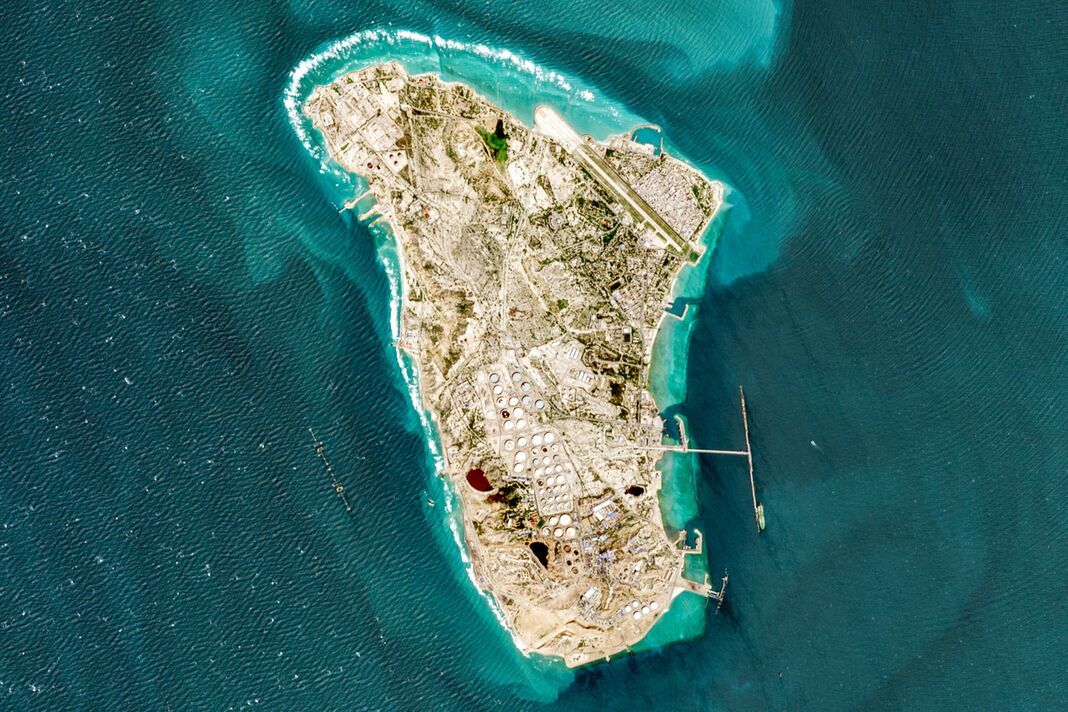
The popular Idiom : “The Cat comes out of bag” reveals the actual designs of trump by imposing illegal war on Iran . All he wants to occupy Oil reserves like he did in Venezuela.There are moments in geopolitics when a single sentence, dropped casually into a newspaper interview, reconfigures the strategic landscape. Donald Trump provided one such moment on Sunday when he told the Financial Times that his “favourite thing is to take the oil in Iran” — and that he was weighing whether to order U.S. forces to seize Kharg Island, the sun-scorched coral outcrop in the northern Persian Gulf that serves as the beating heart of the Islamic Republic’s petrostate economy.
“To be honest with you, my favourite thing is to take the oil in Iran, but some stupid people back in the US say: ‘why are you doing that?’ But they’re stupid people,” Trump told the newspaper. When pressed on whether U.S. forces might seize the island, he replied: “Maybe we take Kharg Island, maybe we don’t. We have a lot of options.” CNN
The markets did not wait for clarification. May futures for Brent crude rose over 3.2% to $116.12 per barrel during early Asia hours, with the international benchmark heading for a record monthly jump, while U.S. West Texas Intermediate futures gained 3.4% to $102.9ba6 per barrel. CNBC The words of one man in an Oval Office interview had, within hours, threatened to reroute the global economy.
The Island That Runs an Empire
To understand why Trump’s remarks triggered such alarm, one must first appreciate the extraordinary concentration of strategic value contained within nine square miles of Persian Gulf coral.
Around 96% of Iran’s crude exports pass through Kharg, making it one of the most concentrated oil-export chokepoints in the world. Over the past year Iran exported about 1.64 million barrels per day of crude, roughly 1.577 million bpd of which departed from Kharg’s terminals. The terminal can theoretically load up to 5 million bpd, far above current export levels. The island also hosts 55 storage tanks capable of holding about 34 million barrels of crude. Iranopendata
Kharg Island lies in the northern Middle East Gulf, around 25 km off Iran’s coast and more than 480 km northwest of the Strait of Hormuz. Its importance begins with geography. Much of Iran’s coastline is too shallow for the world’s largest tankers, but Kharg is surrounded by naturally deep water, allowing Very Large Crude Carriers to berth directly and load cargoes of up to roughly two million barrels. Kpler
This is not merely infrastructure. It is the fiscal spine of the Iranian state. Disrupt Kharg, and you do not merely inconvenience Tehran — you amputate its primary source of hard currency. Iran has spent decades and billions of dollars attempting to build alternatives, but as Kpler data confirms, the Jask terminal’s effective capacity is widely estimated at closer to 0.3 million barrels per day, with historically low utilization. By comparison, Kharg alone has historically exported around 1.5 to 2.0 million barrels per day. Kpler
The island’s vulnerability was not lost on Iran either. During the 15 to 20 February period before hostilities commenced, Iran increased its oil export to three times its normal rate and reduced oil storage — probably in anticipation of an attack. Wikipedia A regime that had spent years insisting Kharg was inviolable was hedging in ways that suggested otherwise.
The Venezuela Parallel — and Its Limits
Trump’s framing of the Kharg question is revealing. He likened the potential move to the U.S. ambitions to control Venezuela’s oil industry following the capture of its leader Nicolás Maduro in January. CNN The comparison illuminates both the president’s strategic logic and its considerable weaknesses.
Venezuela’s oil infrastructure was seized after a regime change that unfolded largely through domestic political collapse, accelerated by economic strangulation. Iran is a different proposition entirely. It is a sovereign state with a standing military, substantial missile and drone arsenals, and — crucially — geography that does not afford the United States the luxury of standoff control. Kharg Island sits within range of Iranian rocket artillery and short-range ballistic missiles. Unlike Venezuela’s Maracaibo Basin, it is embedded within a conflict zone where Iranian forces retain the capacity to strike daily.
Real dangers to the troops would come after the initial invasion. Iran would turn the U.S. presence on the key island into a priority target and focus its firepower there. Iran has been hit hard, but still retains the ability to fire drones and missiles, including daily barrages at Israel and the UAE. Unlike Israel, Kharg is in range of Iranian rocket artillery, as well as multiple types of suicide drones. The Times of Israel
Trump acknowledged this arithmetic only obliquely: “It would also mean we had to be there [in Kharg Island] for a while,” CNBC he told the FT — a rare concession that even optimistic scenarios involve an extended, contested occupation of hostile territory deep in the Persian Gulf.
The Military Backdrop: Strikes, Troops, and Escalating Posture
Trump’s remarks do not emerge from a vacuum of rhetorical speculation. They land in a conflict that is now in its fifth week and has already made Kharg Island a theatre of direct U.S. military action.
The United States on March 14 targeted military assets on Kharg Island as part of a broader campaign aimed at protecting maritime traffic in the Strait of Hormuz. U.S. Central Command said American forces struck military targets on the island while deliberately avoiding its oil infrastructure. “Moments ago, at my direction, the United States Central Command executed one of the most powerful bombing raids in the history of the Middle East and totally obliterated every military target in Iran’s crown jewel, Kharg Island,” Trump wrote in a post on Truth Social. Iran International
The deliberate sparing of oil infrastructure was itself a message — one that Trump has now placed under explicit review. “Should Iran, or anyone else, do anything to interfere with the free and safe passage of ships through the Strait of Hormuz, I will immediately reconsider this decision,” he wrote at the time. Iran International
The troop posture reinforces the strategic intent. The Washington Post reported that the Pentagon was preparing for weeks of potential ground conflict in Iran with around 3,500 troops arriving in the region on Friday, while thousands of soldiers from the 82nd Airborne Division have also been ordered to support the war effort. CNBC An amphibious assault team arrived in the Persian Gulf on Saturday. The combination of airborne and marine assets in the region is precisely the force package one would assemble to secure and hold a fortified island.
Three Scenarios the Market Is Now Pricing
Analysts surveying the current landscape have begun structuring their outlook around three distinct trajectories, each with materially different energy-market implications:
- Scenario A — Negotiated settlement: Parallel diplomatic efforts, notably Pakistan’s offer to host talks, produce a ceasefire framework. Trump told reporters aboard Air Force One that Iran had agreed to “most of” the 15-point list of demands conveyed via Pakistan to end the war, adding: “They’re agreeing with us on the plan.” CNN In this scenario, Kharg Island serves as a pressure lever rather than an occupation target; oil recedes toward the $90 range. Probability: rising but fragile.
- Scenario B — Blockade or encirclement: U.S. naval forces impose a maritime cordon around Kharg without a physical landing, severing Iranian oil exports through economic rather than military occupation. This hedges U.S. casualty risk while achieving the fiscal strangulation objective, though it invites Iranian retaliation against Gulf energy infrastructure and risks a protracted naval standoff.
- Scenario C — Physical seizure: American marines and paratroopers land on Kharg Island, securing the oil terminal under U.S. military administration. This is Trump’s stated preference. Such an attempt would likely require a ground troop operation, and an attack would also likely prompt further energy market volatility at a time when oil prices have soared to nearly $120 a barrel. CNBC In the worst-case variant, Iranian retaliation extends to Saudi Arabia’s Ras Tanura and Abu Dhabi’s Fujairah terminals, removing a combined 15 to 20 million barrels per day from global supply and triggering recession conditions across import-dependent economies.
The Hormuz Dimension
Any analysis of Kharg Island must account for the Strait of Hormuz, the nautical bottleneck whose closure has already inflicted severe damage on global energy flows since the war began in late February.
Before the disruption, about 14.7 million bpd of crude and 4.8 million bpd of petroleum products moved through the strait each day. Energy prices have surged roughly 30%, pushing oil above $100 per barrel. The ripple effects extend beyond crude: Qatar has halted exports of roughly 330 million cubic metres of LNG per day, about one-fifth of global liquefied natural gas trade. Iranopendata
Iran’s naval doctrine emphasizes the use of asymmetric tactics, including naval mines, fast-attack boats and anti-ship missiles. Iran is believed to possess between 2,000 and 6,000 naval mines. Even a limited number could disrupt maritime traffic in the narrow waterway. Iran International
The seizure of Kharg Island is, in part, Trump’s proposed solution to the Hormuz problem: occupy the oil infrastructure Iran uses to fund its naval doctrine, and the regime’s capacity to sustain a blockade erodes. The logic is not without merit — but it rests on the assumption that an occupied Kharg would remain operational. That assumption is far from guaranteed. JPMorgan’s commodities research team found it likely that an attack on Kharg Island could trigger retaliation in the Strait of Hormuz or against major regional energy facilities, including Saudi Arabia’s Ras Tanura, the Abqaiq processing facility, and the UAE’s Fujairah. Euronews
Expert Perspectives: A Divided Strategic Community
The analyst community reflects the genuine strategic ambiguity of the moment.
Senator Lindsey Graham, a Republican influential in guiding Trump’s policy on Iran, argued that controlling the island could shorten the war. “Seldom in warfare does an enemy provide you a single target like Kharg Island that could dramatically alter the outcome of the conflict,” he wrote on X. Time
Former Israeli defence minister Yoav Gallant was equally direct. “On the strategic chessboard of this war, Kharg Island is the next piece,” he wrote. “It may be the move that decides the conflict. If it is going to be made, it must be made now.” The Times of Israel
But seasoned military and energy analysts are considerably more cautious. Marc Gustafson, former head of the White House Situation Room who served under presidents Trump, Biden and Obama, acknowledged that Trump may be tempted by the opportunity to claim a “big PR win” and give U.S. troops a natural barrier from mainland Iran, but this must be weighed against force protection risks. CNBC
Jan van Eck, CEO of VanEck Funds, had earlier offered a prescient framing of the strategic calculus: “It’s where 90% of Iran’s oil gets exported out of — that is a choke point. And if you think that Trump just follows the same playbook that he did in Venezuela — he cut off their oil exports, their hard currency, and I think he is going to want that leverage point going forward.” CNBC
The critical distinction, however, is one of sequencing. Richard Goldberg of the Foundation for Defense of Democracies offered a pointed qualifier: “If you could actually deny them that oil export, it would likely mean we’ve so degraded the regime’s threat capacity that we don’t fear for our own force protection whether on or near Kharg.” The Times of Israel The question, in other words, is not whether Kharg is a prize worth having — it manifestly is — but whether the conditions for holding it can be created before the attempt is made.
The Wider Regional Fragmentation
Iran has not stood still while these calculations are being made in Washington. As hostilities continue for a fifth week, Tehran has escalated attacks on Gulf energy and civilian infrastructure, with a service building at a power generation and water desalination plant in Kuwait damaged Sunday evening, killing one worker. CNBC The Houthi rebels in Yemen formally entered the conflict over the weekend, adding another axis of missile and drone pressure. Oil prices surged to about $115 a barrel after Iranian media reported a suspected US-Israeli strike on the Tabriz Petrochemical Company in northwestern Iran on Monday. RT International
Meanwhile, analysts warned that the most significant risk remains broader escalation targeting energy infrastructure across the region, with particular concern about attacks on Saudi Arabia’s East-West pipeline and the UAE’s Abu Dhabi crude oil pipeline, both of which are being used to re-route oil flows disrupted by the Strait of Hormuz’s closure. Euronews
The global macroeconomic implications are no longer hypothetical. Asian equities fell sharply on Monday morning. LNG-dependent economies in South Korea, Japan, and Taiwan face acute near-term supply deficits. European energy ministers convened emergency calls. The economic impact of a prolonged U.S. seizure of Iran’s oil terminal — combined with the pre-existing Hormuz disruption — would constitute the most severe peacetime energy shock since the 1973 Arab oil embargo, and arguably surpass it in duration and geographic scope.
Historical Echoes: Oil as the Currency of Power
Trump’s instinct to “take the oil” is neither new nor confined to Iran. It reflects a persistent thread in his strategic worldview — one that treats energy infrastructure as sovereign collateral in the service of American power projection.
He made similar arguments about Iraqi oil during both his 2016 campaign and first term. He framed the Venezuela intervention in part through the lens of oil control. The difference in 2026 is that, for the first time, the rhetorical posture has been coupled with deployed military assets, live combat operations against Kharg’s military facilities, and an explicit public statement of preference — delivered not on a rally stage but to the Financial Times.
That distinction matters. Presidents who tell the Financial Times what they “really want” to do are rarely speaking entirely off the cuff.
Conclusion: The Most Consequential Nine Square Miles on Earth
Kharg Island has occupied a unique position in the geography of global energy since the 1960s, when Mohammad Reza Shah partnered with American oil companies to transform a coral outcrop into the engine of Iran’s petrostate. It has survived the Iran-Iraq War, international sanctions, and decades of strategic calculation by adversaries who understood that destroying it would inflict more pain on global markets than on Tehran alone.
It now confronts an entirely new category of threat: not destruction, but seizure. A U.S. president publicly stated that taking it is his “favourite option.” Whether that preference translates into orders depends on the outcome of parallel diplomatic tracks, the resilience of Tehran’s negotiating position, and the tolerance of American allies for a ground operation that could, depending on Iranian retaliation, spiral into the most consequential regional conflict since the Second World War.
What is already beyond doubt is the economic verdict. Oil above $116 a barrel, LNG flows disrupted, a Strait effectively closed to commercial traffic — these are not hypothetical stress tests. They are today’s reality. The decision on Kharg Island will determine whether they become tomorrow’s starting point.
The stakes, as Trump himself might say, are very, very big.
References
Euronews Business. (2026, March 16). Explainer: Why Kharg Island is vital to Iran and the global economy. Euronews. https://www.euronews.com/business/2026/03/16/explainer-why-kharg-island-is-vital-to-iran-and-the-global-economy
Financial Times. (2026, March 30). Trump says US could ‘take the oil in Iran’ as president eyes Kharg Island. Financial Times. https://www.ft.com/content/3bd9fb6c-2985-4d24-b86b-23b7884031f5
Kpler. (2026). Explainer: Why Kharg Island is the backbone of Iran’s oil economy — and its greatest vulnerability. Kpler Intelligence. https://www.kpler.com/blog/explainer-why-kharg-island-is-the-backbone-of-irans-oil-economy—and-its-greatest-vulnerability
CNBC. (2026, March 9). Iran war, US-Israel conflict, oil prices and Kharg Island. CNBC. https://www.cnbc.com/2026/03/09/iran-war-us-israel-conflict-oil-prices-kharg-island.html
Times of Israel. (2026). Taking Kharg Island is seen as key to opening Hormuz — there are better options. The Times of Israel. https://www.timesofisrael.com/taking-kharg-island-is-seen-as-key-to-opening-hormuz-there-are-better-options/
Washington Post. (2026, March 30). Iran-US-Israel conflict: Trump, Lebanon, latest updates — March 30, 2026. The Washington Post. https://www.washingtonpost.com/business/2026/03/30/iran-us-israel-trump-lebanon-march-30-2026/
Discover more from The Economy
Subscribe to get the latest posts sent to your email.
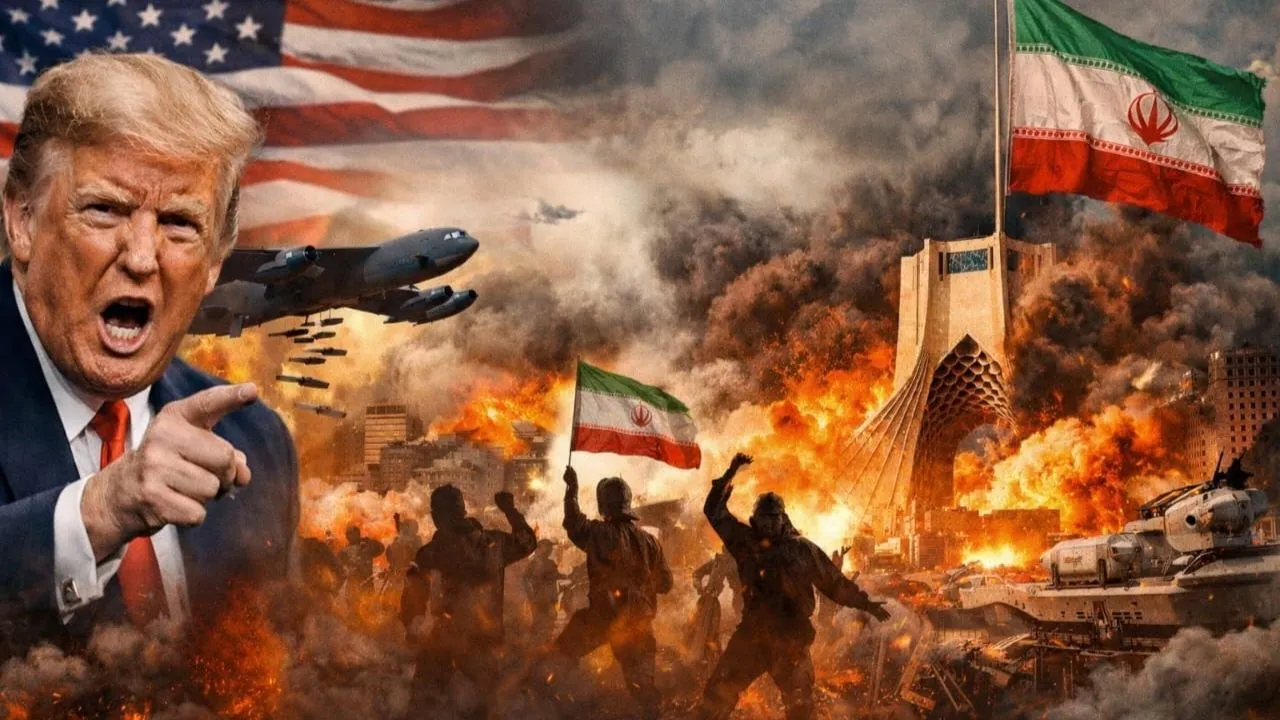
The US-Iran conflict of 2026 crashed oil markets, froze the Strait of Hormuz, and pushed developing nations from Pakistan to Egypt toward economic collapse. A deep analysis of the financial and social fallout.
The Day the World Paid for a War It Did Not Choose
On the morning of March 6, 2026, Ahmed Farouk had already been waiting three hours at a petrol station on the outskirts of Cairo when an attendant walked out and hung a hand-written sign on the pump: No Diesel. Ahmed drives a freight truck for a living. No diesel means no work. No work means no bread — not for him, and not for the forty families whose weekly produce deliveries he hauls from the Nile Delta to the capital. He sat back in his cab, pulled out his phone, and read about a war being fought 2,000 kilometres away — a war, he would tell a journalist later, “that no one asked us about.”
The US-Israel strikes on Iran — launched on February 28, 2026, under the codename Operation Epic Fury — represent one of the most consequential geopolitical decisions of the decade. The immediate military objectives: to degrade Iran’s nuclear facilities and missile infrastructure. The immediate economic consequences: a supply disruption the International Energy Agency described as “the greatest global energy security challenge in history”, the closure of the Strait of Hormuz — through which roughly 20 percent of global oil demand flows daily — and a cascade of financial shocks that have pushed developing nations from Pakistan to sub-Saharan Africa to the edge of economic collapse.
This is not merely a story about oil prices. It is a story about what happens when powerful states choose war and the world’s poorest nations pay the bill.
A Familiar Architecture of Catastrophe
History has seen this before, and its lessons are rarely learned in time.
When the United States invaded Iraq in March 2003, global oil prices climbed steadily from roughly $30 per barrel toward $60 within a year, feeding inflationary pressure across import-dependent economies that were entirely peripheral to the war’s stated purposes. The 1973 Arab oil embargo — itself a retaliatory geopolitical move — triggered a global recession, destroyed a generation of Western consumer confidence, and pushed countless low-income nations into debt spirals from which some never truly recovered. Russia’s invasion of Ukraine in February 2022 sent Brent crude surging to $139 per barrel and precipitated a global food crisis that, according to the World Food Programme, drove an estimated 70 million additional people toward acute hunger.
What distinguishes the 2026 US-Iran conflict from those episodes is not its severity alone — though its severity is historically unprecedented — but its structural architecture. As analysts at Al Jazeera and the World Economic Forum have documented, prior shocks were sanctions-driven or logistical in nature, allowing for rerouting, substitution, and policy intervention. The current crisis is a physical chokepoint crisis: Iran’s retaliatory closure of the Strait of Hormuz has taken offline not merely trade routes but the very capacity of producers to export, pushing markets beyond the reach of conventional adjustment mechanisms.
The logic of escalation that produced this outcome was, in retrospect, grimly predictable. Iran — its economy already battered by sanctions, with inflation exceeding 40 percent in 2025 and its rial in freefall — had little to lose strategically by weaponizing the Strait once strikes began. Unable to match the US and Israel militarily, Tehran chose to internationalize the costs of war, targeting energy infrastructure, shipping lanes, and civilian water supplies across the Gulf. The calculation, as the World Economic Forum’s analysis put it, was blunt: raise the price of escalation until pressure for de-escalation builds.
It worked. The question is who bears the cost of that arithmetic.
The Oil Shock: Numbers That Reshape Economies
By March 4, 2026 — six days after the opening strikes — Iran had effectively closed the Strait of Hormuz to commercial tanker traffic. Brent crude, which had surged 10–13 percent to around $80–82 per barrel in the conflict’s opening days, blew past $120 per barrel as markets began pricing in sustained disruption. QatarEnergy declared force majeure on all exports. The collective oil production of Kuwait, Iraq, Saudi Arabia, and the UAE dropped by a reported 6.7 million barrels per day by March 10, and reached at least 10 million barrels per day by March 12 — the largest supply disruption in the recorded history of global oil markets, according to the IEA.
For context: the 2022 Ukraine crisis, which shocked financial markets worldwide, was primarily a sanctions-driven disruption. Producers could still pump; buyers could still source alternatives. In 2026, the pumps are still running in some Gulf fields, but the oil has nowhere to go. Oilfields forced to shut in across the region as storage capacity fills could take “days or weeks or months” to return to pre-war output levels even after a ceasefire, according to Amir Zaman of Rystad Energy — a detail that markets have begun, belatedly, to price in.
The transmission from crude markets to consumer prices is faster and more brutal than most economic models predict in real time. As certified financial planner Stephen Kates told CNBC, “unlike last year’s higher tariffs, which took months to filter meaningfully into prices, increases in oil prices are quickly reflected” — in gasoline, airline tickets, shipping costs, and anything touched by oil-based inputs. In the United States, the national average gasoline price reached $3.41 per gallon within the first week of the conflict, up $0.43. US crude prices soared more than 35 percent, posting their biggest weekly gain since crude futures began trading in 1983.
For the eurozone, the arithmetic is worse. Capital Economics projected that inflation would peak above 4 percent year-on-year in the euro area, with the ECB likely forced to reverse its rate-cutting trajectory — a painful reversal for economies still navigating post-pandemic debt burdens. Japan, which imports virtually all of its crude, faces a structural dilemma between defending the yen’s purchasing power and supporting domestic growth. Even in the United States, despite record domestic production levels, supply-chain linkages to global markets mean that price insulation is largely illusory — a decade of building export infrastructure has effectively tied American pump prices to the same global benchmarks it once sought to escape.
Equity markets reflected the shock imperfectly but unmistakably. Asian and European indices fell more sharply than US benchmarks — a pattern Frederic Schneider of the Middle East Council on Global Affairs attributed to their greater exposure to the energy crisis and thinner cushion of corporate winners in defense and oil. Russian stocks trended upward, as any oil-price shock that bypasses Moscow’s export routes functions as a windfall for the Kremlin — a grim irony of the geoeconomic landscape.
The Federal Reserve’s Impossible Dilemma
Central banks have been here before, and they have rarely found a good answer.
A supply-side energy shock presents monetary policy with a structural trap. Raising interest rates to contain the inflationary impulse risks choking economic growth and employment. Cutting rates to support activity risks pouring fuel on price pressures. The Federal Reserve, according to Morgan Stanley analysts, is likely to favor a holding pattern — smaller adjustments or outright pauses — while it watches incoming data. But the political pressure to act is enormous: with US midterm elections on the horizon, voters are acutely sensitive to gasoline prices and grocery bills, and a Reuters/Ipsos poll found only about 27 percent approval for the initial strikes.
IMF Managing Director Kristalina Georgieva, speaking at a symposium hosted by Japan’s Ministry of Finance on March 9, warned that a prolonged conflict poses an inflationary risk to the global economy that policymakers must prepare for now. The IMF’s scenarios are not comforting. Capital Economics projected that if conflict is contained to three months, Brent crude could average $150 per barrel over the following six months — a figure that, if realized, would constitute the most prolonged and severe oil price shock since the 1970s Arab embargo.
What begins as a battlefield decision hardens, in the language of financial markets, into a geoeconomic constraint: not a temporary shock to be absorbed but a restructuring of the conditions under which global growth is possible at all.
The Invisible Casualties: Fertilizer, Food, and the Coming Agricultural Crisis
Beyond the oil price charts, a slower and more devastating crisis is taking shape — one that threatens food security for hundreds of millions of people who have never heard of Operation Epic Fury.
The Strait of Hormuz handles roughly 50 percent of global urea and sulfur exports, and 20 percent of global LNG trade — the latter a critical feedstock for nitrogen-based fertilizers. Since the strait’s effective closure, fertilizer exports from the Persian Gulf have dropped precipitously. According to Morningstar projections reported by Reuters, nitrogen fertilizer prices could roughly double from 2024 levels, while phosphate prices may rise by approximately 50 percent.
The timing is catastrophic. These disruptions are coinciding with the Northern Hemisphere’s spring planting season — the window in which farmers in South Asia, the Middle East, and sub-Saharan Africa must apply fertilizers to secure yields for the year. The World Food Programme’s deputy executive director Carl Skau has warned bluntly: “In the worst case, this means lower yields and crop failures next season. In the best case, higher input costs will be included in food prices next year.”
There is no cavalry coming. China, the world’s largest nitrogen and phosphate fertilizer producer, is prioritizing domestic supply and is unlikely to resume urea shipments before May. Russian plants are already running near full capacity. As Máximo Torero, the UN Food and Agriculture Organization’s chief economist, told NPR: “The loss of Gulf exports creates an immediate global shortfall with no quick substitutes.” Unlike oil, there are no strategic international fertilizer stockpiles to release.
Even short delays matter enormously at the farm level. Research from Zambia cited by agricultural analysts suggests that delayed fertilizer application can reduce maize yields by approximately 4 percent per season — a figure that may sound modest in aggregate but translates, at scale, into tens of millions of people facing inadequate caloric intake during the 2026–27 harvest cycle.
The Developing World at the Breaking Point
The architecture of the global economy is not neutral. It distributes the costs of distant decisions in ways that fall heaviest on those least responsible for them.
Pakistan: The Arithmetic of Austerity
In Lahore, motorcyclists queue for hours at filling stations. Pakistan — a country still recovering from the 2022 floods that ravaged a third of its national territory, and from an IMF bailout process that has demanded painful fiscal consolidation — is among the most acutely exposed economies in the world to this particular shock. The government has raised state-controlled energy prices by 20 percent, instituted a four-day work week for public offices, and closed educational institutions for two weeks to conserve fuel. As Khalid Waleed of the Sustainable Development Policy Institute told Al Jazeera, “diesel is the backbone of Pakistan’s freight and agricultural economy. Trucking costs have started climbing, and that will feed into everything from flour to fertiliser in the weeks ahead.”
Pakistan’s foreign exchange reserves were already thin before the conflict. The rupee — like most emerging market currencies — has come under renewed pressure as global investors flee to dollar-denominated safe assets. Pakistan may need to roll over around $1 billion in outstanding eurobonds in the coming year, a burden that becomes structurally harder as the dollar strengthens. Plants producing fertilizer domestically have, in some cases, been forced to halt production entirely as natural gas prices spike. A country already on the edge of balance-of-payments crisis is now absorbing a simultaneous fuel shock, food production threat, and capital outflow.
Bangladesh: Universities Dark, Queues at Every Pump
Bangladesh, which imports approximately 95 percent of its oil and receives roughly 25 percent of the natural gas that fuels its power plants from Qatar, is facing what analysts at Yale’s School of Management have termed an existential energy dependency crisis. The government has closed all universities to conserve electricity, anticipating power shortages as the country’s LNG supply from Qatar has been effectively interrupted. Petrol pumps in some districts have run dry despite fuel rationing measures. The Bangladesh Petroleum Corporation has imposed per-vehicle refueling limits.
These are not abstract economic statistics. They are the contours of daily life for 170 million people, many of whom were only recently climbing toward middle-income status — a fragile trajectory that this war is now threatening to reverse.
Egypt: Suez Losses, Currency Collapse, and the Emergency Declaration
Egypt occupies a uniquely painful position in this crisis. As one of the region’s largest energy importers and most indebted economies, the country was already navigating a grueling IMF stabilization program when the war began. Now it faces simultaneous pressure from multiple directions.
The Egyptian pound has depreciated more than 8 percent against the US dollar since the conflict’s opening days. Reduced traffic through the Suez Canal — caused by war-related shipping disruptions — is costing the country approximately $10 billion in losses according to World Bank estimates. Egypt provides extensive fossil fuel subsidies to its population; with global prices surging, those subsidies have become fiscally unsustainable, but unwinding them risks triggering street-level inflation and political instability. President el-Sisi has ordered malls and cafes to close by 9pm, cut back public lighting, and described his country’s economy as being in a “state of near-emergency.”
Egypt needs to roll over more than $4 billion in outstanding eurobonds within the next year. Against the backdrop of currency depreciation, energy price inflation, and capital outflow, the mathematics of that debt servicing are becoming precarious. The Centre for Global Development in Washington has placed Egypt explicitly on its watch list of countries at serious risk of fiscal crisis if the conflict continues.
Sub-Saharan Africa: Fiscal Buffers Already Gone
The countries least equipped to absorb this shock are those already operating without fiscal margin. Janes analysts have identified Burkina Faso, Burundi, the Central African Republic, the Democratic Republic of Congo, Liberia, and Mozambique as particularly vulnerable — countries that entered this crisis with depleted buffers, high petroleum import reliance, and deep pre-existing poverty.
For smallholder farmers in East Africa, the fertilizer crisis is already tangible. Stephen Muchiri, a Kenyan maize farmer and CEO of the Eastern African Farmers Federation — which represents 25 million smallholders — notes that early heavy rains have left a narrow planting window. Fertilizer shortages and price hikes are forcing farmers to apply less, with knock-on consequences for yields. The UN World Food Programme has explicitly warned that disruptions are driving long-term global food price increases that could replicate or exceed the severity of the 2022 food crisis.
The Remittance Rupture
One dimension of the developing-world impact has received insufficient attention: the collapse of Gulf remittances. Workers in Gulf countries — predominantly from South Asia, Southeast Asia, and sub-Saharan Africa — collectively send home $88 billion annually, according to Centre for Global Development analysis. Egypt, Pakistan, and Jordan each receive more than 4 percent of GDP from Gulf remittances. Nepal and the Philippines receive remittances equivalent to over 25 percent of GDP, with Qatar and the UAE among the largest sources.
As large infrastructure projects in the Gulf are paused or abandoned and the mass evacuation of foreign residents accelerates in the wake of strikes on civilian infrastructure, the construction and service workers who sustain these remittance flows are returning home to economies that cannot absorb them. The social implications — families losing their primary income source, children pulled from school, small businesses shuttered — unfold quietly and are rarely captured in GDP data.
Beyond Economics: The Social Fractures That Wars Ignite
The social implications of this US-Iran conflict 2026 economic impact extend well beyond macroeconomic metrics. They are written on the faces of children eating half-rations in Karachi, on the ledgers of microfinance institutions in Cairo watching loan repayment rates collapse, and in the decisions of families in Dhaka calculating whether to pull their daughters out of school to reduce household expenses.
Research consistently demonstrates that energy and food price shocks have non-linear social effects. The standard economic framing — inflation reduces real income, which reduces consumption — captures only the mechanical surface. What it misses is the deeper structural damage: the interruption of educational trajectories, particularly for girls in societies where female schooling is the first casualty of household fiscal stress; the acceleration of child labor; the erosion of community savings structures that took years to build; the triggering of migration decisions that become permanent.
A Centre for Global Development analysis has documented the risk explicitly: governments facing the double bind of depleted fiscal buffers and surging import costs will initially attempt to subsidize households. “However, with depleted fiscal buffers and shrinking revenues, this becomes unsustainable. The ensuing austerity, combined with hyperinflation, can trigger widespread social unrest and a full-blown fiscal crisis.”
History offers no reassurance here. The Arab Spring of 2010–2012 was preceded by a spike in global wheat prices — itself a product of drought and the Ukraine-Russia breadbasket disruption of that period. The bread riots that preceded Tunisia’s uprising began in the produce markets of provincial towns, not in ideological seminars. What is happening in Egypt, Pakistan, Jordan, and sub-Saharan Africa today is not categorically different in structure. The question is not whether social pressure will build, but how quickly, and whether governments have the legitimacy and institutional capacity to manage it.
The humanitarian crisis in the Gulf adds another layer of complexity. Iranian strikes on desalination plants — which provide 99 percent of drinking water in Kuwait and Qatar — have turned an economic crisis into an existential one for those societies. The mass evacuation of foreign residents from Gulf cities is not only a human tragedy; it is the collapse of the labor architecture that underpins the entire remittance economy stretching from Kathmandu to Nairobi.
Scenarios: The Fork in the Road
Scenario One: Short, Contained Conflict (Resolution within 4–6 Weeks)
If a ceasefire is reached and Iran reopens the Strait within the next month, Capital Economics projects that Brent crude would fall back sharply toward $65 per barrel by year-end. Inflation pressures would ease, emerging market currencies would stabilize, and the fertilizer supply shock — while severe — would be partially mitigated by late-season planting. The economic damage to developing nations would be significant but potentially recoverable with targeted international support. The political damage to the United States — domestically and globally — would be harder to quantify.
Scenario Two: Prolonged Conflict (3–6 Months or Longer)
The scenario that keeps economists awake. If oil prices average $150 per barrel over the next six months, the global inflationary impulse would be comparable to or exceed the 1973 oil shock. The IMF’s emergency financing mechanisms would be overwhelmed by simultaneous requests from multiple vulnerable economies. Fertilizer shortages would translate directly into crop failures across South Asia and sub-Saharan Africa during the 2026–27 harvest cycle. The WFP estimates that this could push tens of millions of people into acute food insecurity. In countries like Bangladesh, Pakistan, and Egypt, fiscal crises would likely materialize, triggering IMF programs that impose the kind of austerity that historically precedes political upheaval.
The IEA has assessed the current episode as the largest supply disruption in the history of the global oil market — larger than the 1973 embargo, larger than the post-Ukraine disruption. In Scenario Two, the tools used in 2022 — diversification, rerouting, strategic reserve releases — simply do not apply. The chokepoint is physical, not logistical.
Policy: What Needs to Happen, and Quickly
The Centre for Global Development’s prescriptions are clear and urgent. The IMF must deploy rapid financing facilities at scale — potentially including a revived Food Shock Window — for vulnerable economies unable to self-finance through this shock. The World Bank should mobilize IDA crisis response financing and consider frontloading IDA 21 disbursements. The G20, under the US presidency, should convene an emergency discussion of debt service relief for the most exposed countries.
For the longer term — a horizon that this crisis has brutally compressed — the lesson is energy system architecture. The 1979 Iranian Revolution drove Japan’s aggressive energy-efficiency transformation; the 2022 Ukraine crisis accelerated European renewable energy investment. The 2026 conflict has simultaneously exposed the dangerous physical concentration of global hydrocarbon flows in a single strait and the absence of any serious equivalent in fertilizer markets. Both vulnerabilities require structural remedies that no amount of military power can substitute for.
Djibouti’s finance minister Ilyas M. Dawaleh put it with unvarnished directness: the fighting will “bring severe economic consequences for developing countries” — nations that had no seat at the table when the decision for war was made, no vote on the calculus of Operation Epic Fury, and no mechanism to claim compensation for the losses now accruing in their petrol queues, their darkened universities, and their half-planted fields.
The Broader Lesson Wars Will Not Teach Themselves
Ahmed Farouk, the Cairo freight driver, eventually got diesel — three days later, from a black-market reseller at nearly double the official price. He passed the cost on in his next delivery, which passed it on to the market vendors, which passed it on to families who were already spending 60 percent of their income on food. By the time the price of a war 2,000 kilometres away reaches a household budget in a Cairo apartment building, it has traveled through oil futures, currency markets, shipping logistics, fertilizer supply chains, and grocery store shelves. It has been amplified, invisibly, at every step.
This is the hidden accounting of intentional and authoritative wars — the ledger that appears in no military briefing, no presidential authorization, no congressional resolution. The formal costs of war are denominated in strategic objectives, casualty counts, and defense budgets. The real costs are denominated in rupees and Egyptian pounds and Zambian kwacha, in missed harvests and interrupted schooling and remittances that no longer arrive.
The International Energy Agency’s description of this crisis as the “greatest global energy security challenge in history” is not hyperbole. It is a precise description of a structural reality: that the world has built an energy system so concentrated in a single 33-kilometre-wide strait that one country’s retaliation for a war it did not start can disrupt the livelihoods of hundreds of millions of people across three continents.
History will record what happened on February 28, 2026. Whether it will also record what was done to prevent the next time — whether the financial and social devastation now radiating outward through developing economies will catalyze the energy system reform, the multilateral financing architecture, and the diplomatic frameworks that might reduce the cost of the next crisis — remains an open and urgent question.
Wars, as the developing world knows better than anyone, rarely end when the shooting stops. Their economic afterlife can last a generation.
References
Al Jazeera. (2026, March 8). Iran war threatens prolonged impact on energy markets as oil prices rise. Al Jazeera. https://www.aljazeera.com/news/2026/3/8/iran-war-threatens-prolonged-impact-on-energy-markets-as-oil-prices-rise
Al Jazeera. (2026, March 16). The tell-tale signs: How bad has the Iran war hit the global economy? Al Jazeera. https://www.aljazeera.com/news/2026/3/16/the-tell-tale-signs-how-bad-has-the-iran-war-hit-the-global-economy
Al Jazeera. (2026, March 23). Why the oil and gas price shock from the Iran war won’t just fade away. Al Jazeera. https://www.aljazeera.com/opinions/2026/3/23/why-the-oil-and-gas-price-shock-from-the-iran-war-wont-just-fade-away
Al Jazeera. (2026, March 25). From Pakistan to Egypt: Iran war drives up fuel prices in the Global South. Al Jazeera. https://www.aljazeera.com/economy/2026/3/25/from-pakistan-to-egypt-iran-war-drives-up-fuel-prices-in-the-global-south
Center for American Progress. (2026). The war in Iran will raise fuel prices and costs throughout the economy. https://www.americanprogress.org/article/the-war-in-iran-will-raise-fuel-prices-and-costs-throughout-the-economy/
Centre for Global Development. (2026). Will the Iran war be the breaking point for vulnerable countries? https://www.cgdev.org/blog/will-iran-war-be-breaking-point-vulnerable-countries
CNBC. (2026, March 10). Iran war spikes oil prices — what consumers need to know. CNBC. https://www.cnbc.com/2026/03/10/iran-war-spikes-oil-prices-consumers.html
Deloitte Insights. (2026). Iran and Middle East conflict: Impacts on the global economy. Deloitte. https://www.deloitte.com/us/en/insights/topics/economy/iran-middle-east-conflict-impacts-global-economy.html
International Food Policy Research Institute. (2026). The Iran war: Potential food security impacts. IFPRI. https://www.ifpri.org/blog/the-iran-war-potential-food-security-impacts/
Janes Defence Intelligence. (2026). Iran conflict 2026: Disruption to Strait of Hormuz increases energy and food production risks. Janes. https://www.janes.com/osint-insights/defence-and-national-security-analysis/iran-conflict-2026-disruption-to-strait-of-hormuz-increases-energy-and-food-production-risks
Morgan Stanley. (2026). Iran war, oil prices, inflation, and the stock market. Morgan Stanley Wealth Management. https://www.morganstanley.com/insights/articles/iran-war-oil-inflation-stock-market-2026
NPR. (2026, March 20). How the Iran war threatens global food supply. NPR. https://www.npr.org/2026/03/20/nx-s1-5750812/how-the-iran-war-threatens-global-food-supply
U.S. News & World Report. (2026, March 26). The war in Iran sparks a global fertilizer shortage and threatens food prices. U.S. News. https://www.usnews.com/news/business/articles/2026-03-26/the-war-in-iran-sparks-a-global-fertilizer-shortage-and-threatens-food-prices
Washington Post. (2026, March 12). Iran, the economy, oil, gas, and inflation. The Washington Post. https://www.washingtonpost.com/business/2026/03/12/iran-economy-oil-gas-inflation/
Wikipedia. (2026). Economic impact of the 2026 Iran war. Wikimedia Foundation. https://en.wikipedia.org/wiki/Economic_impact_of_the_2026_Iran_war
World Economic Forum. (2026, March). The global price tag of war in the Middle East. WEF. https://www.weforum.org/stories/2026/03/the-global-price-tag-of-war-in-the-middle-east/
Yale School of Management. (2026). What are the consequences of the Iran war for the developing world? Yale Insights. https://insights.som.yale.edu/insights/what-are-the-consequences-of-the-iran-war-for-the-developing-world
Discover more from The Economy
Subscribe to get the latest posts sent to your email.
-

 Markets & Finance3 months ago
Top 15 Stocks for Investment in 2026 in PSX: Your Complete Guide to Pakistan’s Best Investment Opportunities
-

 Analysis2 months ago
Brazil’s Rare Earth Race: US, EU, and China Compete for Critical Minerals as Tensions Rise
-

 Banks2 months ago
Best Investments in Pakistan 2026: Top 10 Low-Price Shares and Long-Term Picks for the PSX
-

 Investment3 months ago
Top 10 Mutual Fund Managers in Pakistan for Investment in 2026: A Comprehensive Guide for Optimal Returns
-

 Analysis1 month ago
Top 10 Stocks for Investment in PSX for Quick Returns in 2026
-

 Asia3 months ago
China’s 50% Domestic Equipment Rule: The Semiconductor Mandate Reshaping Global Tech
-

 Global Economy3 months ago
Pakistan’s Export Goldmine: 10 Game-Changing Markets Where Pakistani Businesses Are Winning Big in 2025
-

 Global Economy3 months ago
15 Most Lucrative Sectors for Investment in Pakistan: A 2025 Data-Driven Analysis