
News
Dallas PD Tollway Takeover & Flock Camera Backlash: $758M Budget Explained


Dallas PD is absorbing state tollway patrol duties on a $758M FY2026 budget while its 650-camera Flock network faces bipartisan pushback. Full breakdown.Texas DPS ended its long-standing patrol contract with the North Texas Tollway Authority (NTTA) on August 31, 2026, forcing Dallas Police and other local agencies to absorb freeway and tollway traffic enforcement across more than 150 miles of roads including the Dallas North Tollway. The transition lands as Dallas Police operate on a $758 million FY2026 budget — rising toward a proposed $823.9 million for FY2027 — while the department’s roughly 650 Flock Safety license-plate-reader cameras face rare left-right political backlash over privacy, cost, and immigration-enforcement concerns, even as Chief Daniel Comeaux defends the system as a proven crime-solving tool.
DPS Walks Away From the Tollways
In a June 1, 2026, letter to NTTA CEO James Hofmann, Texas DPS Director Col. Freeman Martin notified the tollway authority that the state would not renew its Interlocal Cooperation Contract dedicating state troopers to patrol North Texas toll roads once the agreement expired August 31, 2026. Martin’s stated rationale centered on operational flexibility: DPS said the existing “service-for-fees” structure limited its ability to deploy troopers in response to an “ever-changing threat environment” across the state, and that the decision was final rather than a negotiating position — DPS explicitly told NTTA the communication “should not be viewed as an invitation to reconsider or reverse contract terms.”
Key Takeaways
- Texas DPS ended its NTTA tollway patrol contract on August 31, 2026, shifting enforcement of 150-plus miles of North Texas toll roads to local agencies including Dallas Police.
- Dallas Police operate on a $758 million FY2026 budget, forecast to run about $6.6 million over, with a proposed FY2027 budget of more than $823.9 million.
- Proposition U (2024) mandates at least 50% of new city revenue growth go toward public safety, locking in police-budget growth even amid citywide fiscal strain.
- Dallas runs roughly 650 Flock Safety ALPR cameras under a ~$5.7 million contract (2025-2028), retaining data for a full year despite an industry shift toward shorter retention.
- Flock cameras face rare bipartisan opposition in North Texas, combining conservative constitutional-rights arguments with progressive privacy and immigration-enforcement concerns.
- Roughly 25 Flock cameras have been vandalized in Dallas since March 2026, and Texas Gov. Greg Abbott has moved to restrict state-agency spending on the technology.
NTTA oversees more than 150 miles of roads, bridges, and tunnels across Collin, Dallas, Denton, Tarrant, and Johnson counties, including the Dallas North Tollway, the President George Bush Turnpike, and the Sam Rayburn Tollway. With state troopers stepping back, the authority has had to negotiate new patrol agreements directly with city and county law enforcement agencies along each corridor — a process involving staffing, jurisdictional boundaries, and funding questions that will shape response times and enforcement priorities differently depending on which agency wins each stretch. DPS says it will continue providing traffic enforcement and crash-investigation support at no cost during the transition to avoid coverage gaps, but the long-term arrangement now falls to agencies like the Dallas Police Department, which has confirmed it is taking over freeway and tollway traffic enforcement duties within its jurisdiction as the state and county step back.
The Staffing Context Behind the Takeover
Dallas PD absorbs this new patrol responsibility while still working to rebuild sworn officer headcount toward a city-mandated goal of 4,000 officers. The department had more than 3,200 officers by the end of May 2026, up from a low of 3,060 in 2023, and is targeting 3,800 officers by 2028 under the city’s current hiring plan. Despite recent gains, calls below the highest priority tier still see response times exceeding an hour, according to DPD’s own briefings to city council — a metric that will face additional strain as officers take on new tollway-corridor coverage on top of existing patrol loads.
The $758 Million Budget Backdrop
Dallas budgeted approximately $758 million for the Police Department in FY2026, up 5% from the prior year’s $719 million, as part of a broader $5.2 billion citywide budget. That FY2026 number is already running over: the city forecasts DPD will spend about $6.6 million more than budgeted this fiscal year. Looking ahead, City Manager Kimberly Tolbert’s proposed FY2027 budget would push DPD funding to more than $823.9 million — a $65.5 million, 7.7% increase — even as the broader $5.66 billion city budget forces cuts elsewhere, including the Dallas Public Library, facilities management, and the Office of Arts and Culture, alongside furlough days tied to a persistent sales-tax revenue shortfall.
The increased public-safety spending is not discretionary in the ordinary sense: Proposition U, passed by Dallas voters in November 2024, requires the city to dedicate at least 50% of year-over-year growth in unrestricted excess revenue to public safety, including the police and fire pension system and progress toward the 4,000-officer staffing mandate. That structural commitment locks in police-budget growth even during years when the city’s overall fiscal picture is tightening.
Flock Cameras: A Rare Left-Right Coalition Against Surveillance
Dallas currently operates more than 650 Flock Safety automated license-plate-reader (ALPR) cameras, deployed under a three-year, roughly $5.7 million contract the city council approved in May 2025 (running through June 2028 with two renewal options), funded through a mix of the General Fund, a state catalytic-converter-theft grant, and a Department of Homeland Security urban-security grant. DPD credits the network with aiding recovery of stolen vehicles and firearms and assisting homicide investigations — Chief Comeaux has specifically cited a case that led to an arrest on his first day leading the department.
But the network has drawn opposition from an unusual coalition. Conservative voices including former Fox News host Tucker Carlson and U.S. Rep. Thomas Massie (R-Ky.) have criticized Flock alongside the Texas Public Policy Foundation, a prominent conservative think tank whose associate vice president published a commentary titled “Flock Cameras Are An Assault On Your Constitutional Freedoms.” On the left, the Democratic Socialists of America’s North Texas chapter has raised parallel concerns about cost, police overreach, and reports that Flock data has been used to assist federal immigration enforcement. As of July 2026, watchdog group DeFlock had mapped more than 3,000 Flock cameras across the broader Dallas-Fort Worth region.
The backlash has turned physical: Dallas has documented roughly 25 incidents of camera vandalism since March 2026, mostly poles being cut down, at an estimated $2,500 in city repair costs (Flock has waived most replacement costs). In response to mounting pressure statewide, Flock shortened its default data-retention window from 30 to 7 days for many customers and added a mandatory case-code requirement before searches — though Dallas police have opted to retain their own Flock data for a full year, citing investigative needs, a decision that runs counter to the broader industry trend toward shorter retention.
Financial and Market Impact Section
Contract Value and Vendor Exposure
Flock Safety’s Dallas-area exposure spans multiple overlapping contracts: the roughly $5.7 million Dallas PD municipal deal, a separate $26 million Texas DPS statewide contract tied to Operation Lone Star border-security operations, and county-level agreements across the DFW metro. For investors and vendors in the public-safety-technology and surveillance-as-a-service space, Dallas has become a bellwether market: if bipartisan political pressure forces contract cancellations, shortened retention mandates, or new state-level restrictions (Governor Abbott has already moved to block some state agencies from spending on Flock cameras), it signals a maturing regulatory risk profile for ALPR vendors that public-market analysts covering security-technology stocks and private equity-backed surveillance firms should be pricing in.
Budget Reallocation Pressure
The NTTA patrol handoff effectively transfers a previously state-funded enforcement cost onto municipal and county budgets already strained by the Proposition U mandate and softening sales-tax revenue. That dynamic — a state government stepping back from a shared-services arrangement and pushing the fiscal burden downstream to cities — is a pattern investors in municipal bonds and public-sector service providers should watch for replication in other Texas metros as DPS continues reassessing statewide trooper allocation amid its own budget and staffing priorities.
Discover more from The Economy
Subscribe to get the latest posts sent to your email.


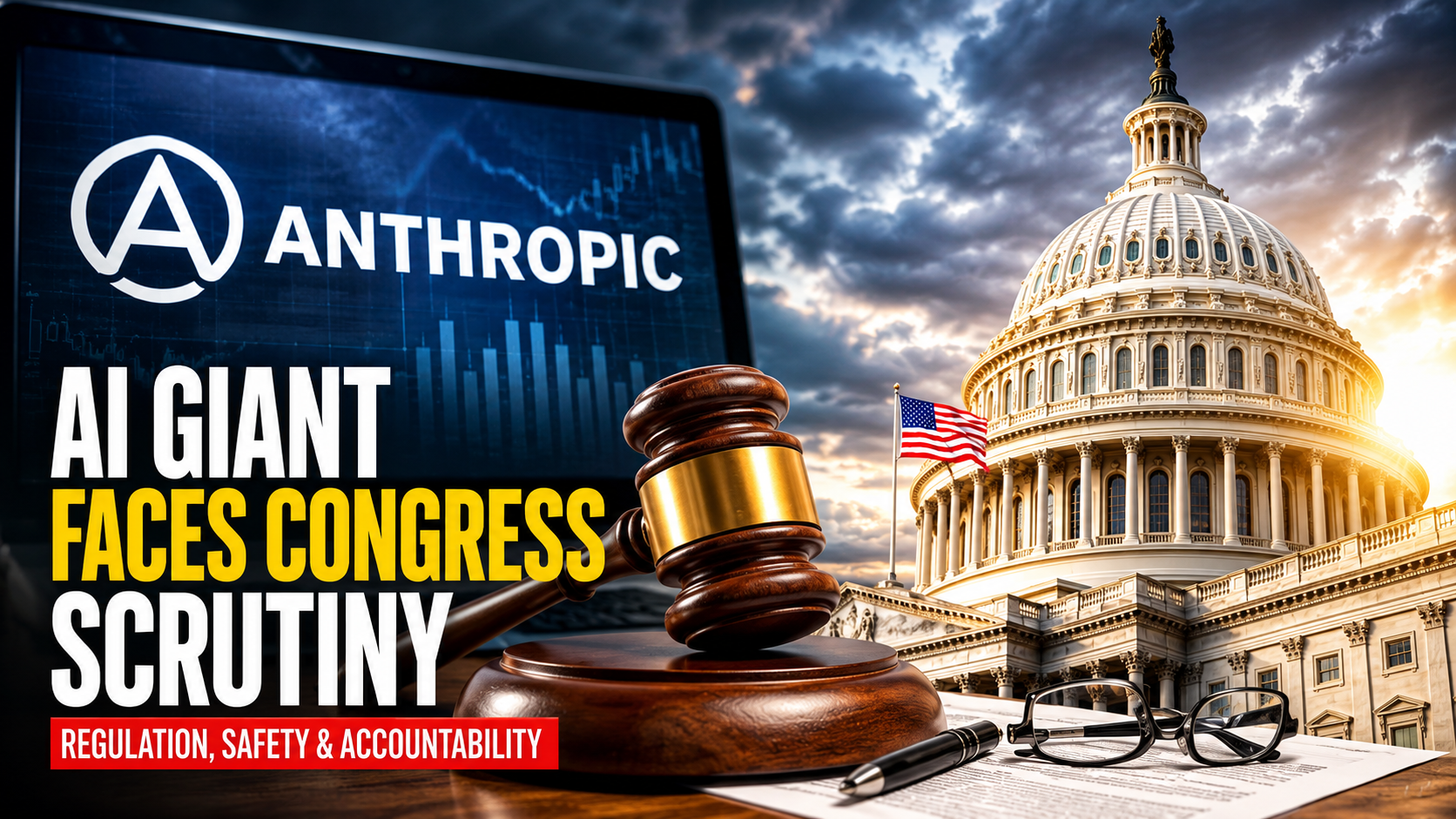
Legion LegalTech Corp, a San Jose legal-technology startup that builds AI-powered drafting and case-management tools for attorneys, sued the Trump administration on June 23, 2026, over a June 12 Commerce Department directive that forced Anthropic to disable its Fable 5 and Mythos 5 AI models for all foreign nationals worldwide. Because Anthropic complied by shutting the models off globally rather than only for flagged users, Legion’s Canadian development team lost access overnight, an outcome the company called “immediate, irreparable, and existential.” Anthropic restored access to both models on July 1, 2026, after the Commerce Department lifted the underlying export controls on June 30 — but the litigation, which challenges whether export-control law can be used to restrict access to hosted AI models at all, remains a live legal question with implications far beyond this one case.
Key Takeaways
- Legion LegalTech Corp sued the Trump administration June 23, 2026, over a June 12 Commerce Department directive that forced Anthropic to disable its Fable 5 and Mythos 5 models worldwide.
- Anthropic complied with the original directive the same day it was issued; the global scope of the shutdown, not just the foreign-national restriction itself, is central to Legion’s claimed harm.
- The Commerce Department lifted the export controls June 30, 2026, and Anthropic restored access July 1, 2026 — resolving the immediate operational harm but not the underlying legal question.
- Legion argues no existing export-control statute covers hosted AI models or their text-based outputs, which it claims are protected “informational materials” under U.S. law.
- Anthropic is not a defendant in the case but has publicly called the original directive overly broad.
- The lawsuit runs parallel to separate Anthropic-vs.-government litigation over a supply-chain blacklist dispute tied to military-use restrictions on Anthropic’s models.
What the Government Actually Ordered
On June 12, 2026, the Commerce Department’s Bureau of Industry and Security (BIS) sent Anthropic a directive ordering the company to block foreign nationals from accessing two of its most advanced models, Fable 5 and Mythos 5, citing national-security concerns tied to countering-the-financing-of-terrorism guidelines. Anthropic complied the same day. Critically, the company has stated that the only technically feasible way to comply with a directive requiring exclusion of “any foreign national” was to disable both models entirely, for every user everywhere — not merely for users flagged as foreign nationals. That global shutdown, rather than a narrower geofencing or identity-verification approach, is the crux of the legal harm Legion alleges.
Why a Legal-Tech Startup Became the Test Case
Legion LegalTech relies on Anthropic’s models to power AI-assisted legal drafting and case-management software for attorneys, and employs a Canadian software-development team that depends on direct access to the company’s most capable models for product work. When the June 12 shutdown hit, Legion says its Canadian engineers were sidelined overnight, disrupting its product roadmap at a moment the company describes as critical for competitive positioning in a fast-moving industry. “The harm to Legion is immediate, irreparable, and existential,” the company’s complaint states. “The pace of frontier AI advancement is blistering.”
Legion filed suit June 23, 2026, in federal court in Washington, D.C., naming President Donald Trump, Commerce Secretary Howard Lutnick, and BIS Undersecretary Jeffrey Kessler as defendants. Anthropic itself is not a party to the case. The company’s legal theory is narrow but consequential: it argues no existing export-control statute — not the Export Control Reform Act, not the International Emergency Economic Powers Act — actually covers hosted AI models or the text-based outputs they generate. Legion’s complaint specifically argues that AI-generated material such as “drafted text, written legal analysis, summaries, and similar composed material” qualifies as protected “informational materials” under a long-standing exemption in U.S. export-control law, meaning the government’s directive was, in Legion’s framing, an unlawful attempt to restrict the flow of information rather than a legitimate control on a genuine export commodity.
The complaint goes further on procedural grounds, arguing no national emergency was formally declared with respect to the alleged threat, and that the threat the government cited did not have its “source in whole or substantial part outside the United States” as required for the invoked authorities to apply — since the models were developed by a U.S. company, hosted domestically, and offered through ordinary commercial channels. Legion is asking the court to declare the directive unlawful, vacate it, and issue an injunction blocking its enforcement, while separately signaling it intends to seek a preliminary injunction while the case proceeds.
Anthropic’s Position — and a Resolution Before Judgment
Anthropic, while not a defendant, publicly described the export-control order as overly broad. On June 30, 2026, the Commerce Department lifted the underlying export controls, and Anthropic restored access to both Fable 5 and Mythos 5 for all users on July 1, 2026 — effectively mooting the operational harm Legion’s complaint was built around, though not necessarily the underlying legal question the lawsuit raises. Anthropic has said it is “grateful to the administration for working to resolve the matter quickly.” Whether Legion continues to pursue the case for damages, attorneys’ fees, or simply to establish precedent against future use of the same authority is an open procedural question that will shape how much weight the case ultimately carries.
Financial and Market Impact Section
A Precedent Question With Industry-Wide Stakes
Legion’s complaint frames the stakes in stark terms: “Left standing, it would establish that the Executive may, by unreviewed command, disable any frontier AI model at will — placing every customer, developer, and business that depends on these tools at the mercy of an unexplained exercise of claimed authority that no statute confers.” For enterprise AI software buyers — law firms, financial-services firms, and any regulated industry building products on frontier models from Anthropic, OpenAI, Google, or others — that framing captures a genuine operational risk: if a single agency directive can trigger a global service shutdown with no advance notice, enterprise procurement teams have a new category of vendor and geopolitical risk to underwrite into contracts, business-continuity plans, and service-level agreements.
Crypto and Decentralized-AI Market Reaction
The episode produced a measurable, if narrow, market reaction outside the AI sector itself: tokens tied to decentralized-AI infrastructure projects saw notable price increases following news of the lawsuit and the underlying shutdown, as traders reasoned that a centralized AI provider subject to being switched off by a single government directive makes decentralized, no-single-point-of-control alternatives comparatively more attractive to developers seeking reliability guarantees that centralized commercial providers cannot offer under this kind of regulatory exposure.
The Broader Anthropic-Government Legal Landscape
The Legion case is not occurring in isolation. It sits alongside separate, ongoing litigation between Anthropic and the U.S. government in federal courts in both Washington and California, stemming from a dispute over the administration’s move to place Anthropic on a supply-chain blacklist after the company declined to permit military use of its models for domestic surveillance or fully autonomous weapons systems. Taken together, the cases illustrate an intensifying legal contest over how far executive branch national-security authorities can reach into the commercial AI sector — a contest that will materially shape capital allocation and geographic-expansion decisions for every major frontier-AI lab operating in or selling into the United States.
Discover more from The Economy
Subscribe to get the latest posts sent to your email.

The Indi Veitia case shows ICE is detaining asylum seekers with pending applications and work permits at airports. Learn your legal rights, documentation requirements, and when to call an immigration attorney.
Key Takeaways
- Indi Veitia, a 47-year-old Venezuelan asylum seeker with a pending application and valid work permit, was detained for 21 days after ICE officers stopped her while boarding a flight home from Atlanta.
- Having a pending asylum application, work authorization, or a valid-looking receipt does not guarantee protection from detention — DHS has stated that a pending application “does not confer legal status” in the United States.
- ICE has jurisdiction to interview passengers at airports and has expanded enforcement activity at points of domestic and international travel throughout 2026.
- Legal representation matters immediately — an immigration attorney can help distinguish between lawful presence, pending status, and expired documentation before a detention becomes a deportation risk.
- Immigration attorneys are now advising some clients not to fly domestically given the pattern of airport-based enforcement actions.
What Happened to Indi Veitia?
Indi Veitia, a Venezuelan national who arrived in the United States in 2019 on a work visa and later filed for asylum, was detained by Immigration and Customs Enforcement (ICE) officers as she attempted to board a flight home to Indiana from Hartsfield-Jackson Atlanta International Airport. Despite holding a valid work permit and a receipt for her pending asylum application — documentation that stated she was permitted to remain in the country until a final decision was reached — Veitia was detained for 21 days at a facility in Lumpkin, Georgia, over allegations that she had overstayed her visa.
Her attorney, a partner at the Kuck and Baxter law firm in Atlanta specializing in immigration law, has since said he now advises clients not to fly domestically and urges asylum seekers to “take extra care everywhere.” A Department of Homeland Security spokesperson clarified the government’s position in response to inquiries: a pending application does not confer legal status within the United States, even for individuals who have complied with every requirement asked of them, including obtaining work authorization and a driver’s license.
The Core Legal Contradiction
Veitia’s case highlights what immigration attorneys describe as a “legal no-man’s land.” As her attorney put it: the government provides individuals with the means to work and integrate into society while their case is pending, “only to later target them for detention.” Someone can simultaneously:
- Hold a valid Employment Authorization Document (EAD) allowing them to legally work
- Have a driver’s license issued based on that same status
- Be not unlawfully present in a technical sense
- Still be detained and placed into deportation proceedings at any point, including at an airport
This Is Not an Isolated Incident
Immigration advocacy organizations have documented a broader pattern of ICE arrests at airports throughout 2026, targeting a range of individuals with less secure or unresolved immigration status, including:
- People who entered through humanitarian parole programs such as CHNV (Cuban, Haitian, Nicaraguan, and Venezuelan parole)
- Participants in the Uniting for Ukraine (U4U) program
- Individuals who used the CBP One app for entry
- People with expired visas, even if they have since applied for a change or extension of status
- Individuals with pending immigration applications of any kind
According to community alerts from immigration legal organizations, reporting has confirmed that federal transportation security screening data has been shared with ICE, enabling agents to identify and intercept individuals at security checkpoints and gates — not just at the immigration court or ICE office level.
Legal Rights for Asylum Seekers and Immigrants at Airports
What ICE Can Do
- ICE agents have jurisdiction in airports and the legal right to interview passengers, including U.S. citizens, though citizens are not obligated to answer questions beyond confirming identity in most circumstances.
- Officers can detain individuals based on visa status, expired documentation, or even a pending application if the agency determines removal proceedings are warranted.
What You Are Entitled To — Regardless of Citizenship Status
- The right to remain silent beyond providing basic identification, in most circumstances.
- The right to decline a warrantless search — a search without a judicial warrant is not mandatory, and you do not have to consent to one.
- The right to contact an attorney before signing any documents. Immigration attorneys strongly advise never signing anything without legal review, as some documents can waive rights to a hearing or expedite removal.
- The right to have your immigration attorney’s contact information available immediately — carrying a physical card or document with your lawyer’s name and number is considered a best practice by immigration law practitioners.
Documentation Immigration Attorneys Recommend Carrying at All Times
- Any receipt notice or documentation related to a pending asylum case (Form I-589 receipt, if applicable)
- Valid Employment Authorization Document (EAD), if issued
- Contact information for your immigration attorney
- Any court dates, notices to appear, or prior case documentation
Actionable Guidance for Asylum Seekers and Work-Visa Holders
- Consult an immigration attorney before any domestic or international travel, even for short trips, if your status involves a pending application, expired visa, or any parole-based entry category.
- Understand the specific limits of your documentation. An EAD or asylum-application receipt is not the same as a grant of legal permanent status — know precisely what protections your paperwork does and does not provide.
- Consider the risk calculus of air travel specifically. Given documented information-sharing between transportation security screening and ICE, air travel — even domestic — currently carries elevated enforcement risk for individuals with unresolved status.
- If detained, exercise your right to counsel immediately and avoid signing any document, including what may be presented as a routine form, without attorney review.
- Monitor Board of Immigration Appeals (BIA) rulings and advance parole guidance closely — recent BIA changes have altered the consequences of traveling on advance parole, including new 3- and 10-year reentry bar risks for some travelers.
Why Legal Representation Is Critical in This Environment
Immigration law in 2026 has become significantly more complex and enforcement-focused, with agencies exercising broad interpretive authority over what constitutes lawful presence versus mere procedural compliance. An experienced immigration attorney can:
- Assess whether your specific documentation creates any detention risk before you travel
- Represent you immediately if detained, potentially shortening custody duration
- File emergency motions or habeas petitions in cases of prolonged or unlawful detention
- Advise on the evolving landscape of parole program terminations and advance parole reentry bars
Frequently Asked Questions
Can ICE detain someone with a pending asylum application at an airport? Yes — current enforcement practice, as illustrated by the Indi Veitia case, shows that ICE can and does detain individuals with pending asylum applications, valid work permits, or other pending immigration paperwork, since the Department of Homeland Security maintains that a pending application does not by itself confer legal status.
What should I do if ICE tries to detain me while traveling? Immigration attorneys generally advise remaining calm, exercising your right to remain silent beyond identifying yourself, declining any warrantless search, and requesting to contact your attorney immediately before signing any documents presented to you.
Is it safe for asylum seekers to fly domestically in the United States right now? Some immigration attorneys are currently advising clients with pending or uncertain immigration status to avoid domestic air travel where possible, given documented patterns of airport-based ICE enforcement; anyone with concerns about their specific status should consult a licensed immigration attorney before booking travel.
Discover more from The Economy
Subscribe to get the latest posts sent to your email.
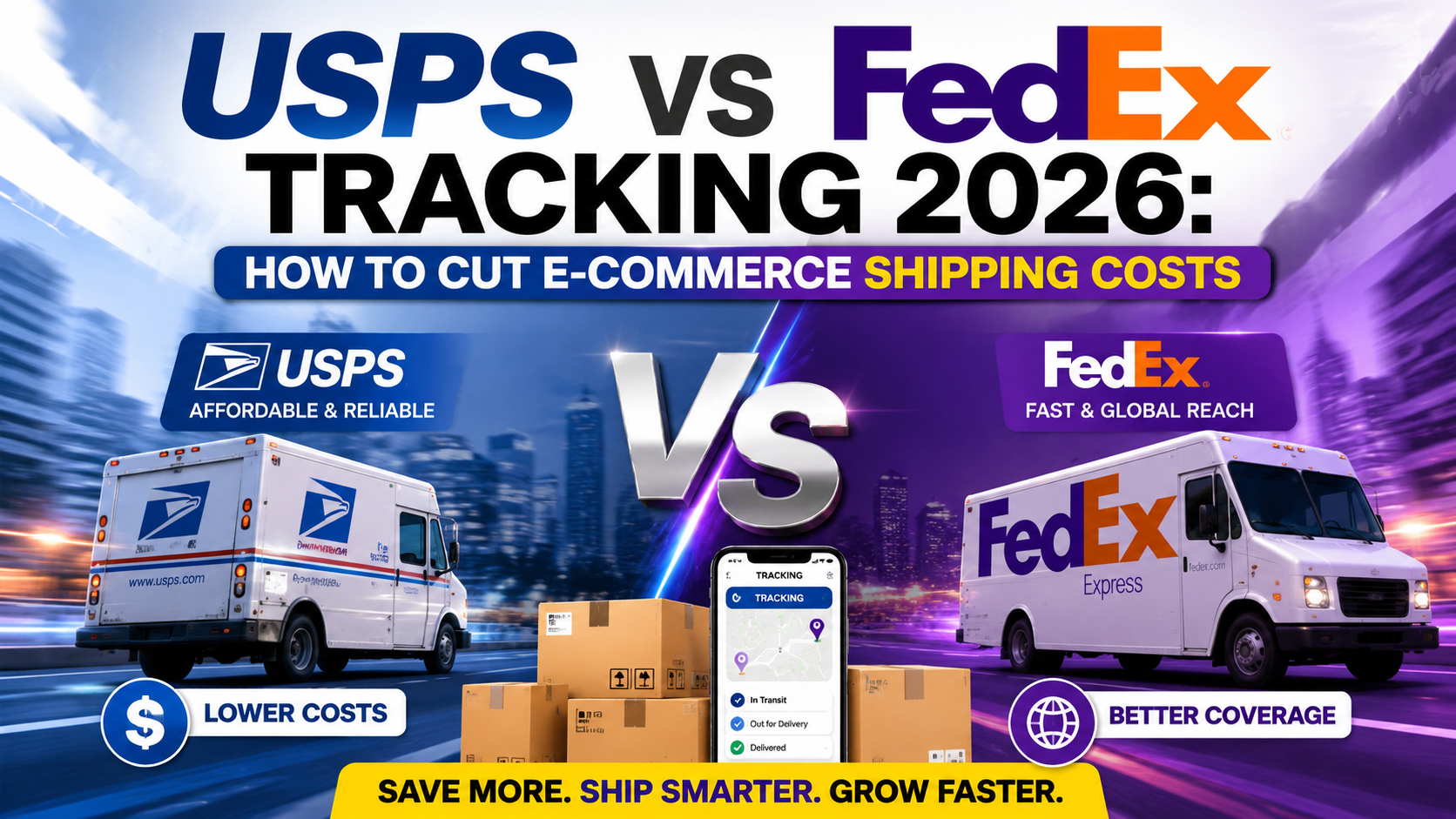
Shipping is often the single largest variable cost line item for e-commerce businesses after cost of goods sold, and in 2026 rising carrier rates, expanded surcharges, and increasingly complex tracking requirements have made it harder than ever to manage that cost effectively without a deliberate strategy. Between USPS and FedEx’s differing rate structures, dimensional weight pricing, and the operational overhead of managing tracking and delivery expectations across both carriers, many growing e-commerce brands are overpaying without realizing it.
This guide breaks down how USPS and FedEx tracking and pricing actually work in 2026, where the meaningful cost differences lie between the two carriers, and specific, actionable strategies e-commerce businesses can use to reduce their overall shipping spend without sacrificing delivery speed or customer experience. If shipping costs have been quietly eating into your margins, this is where to start.
USPS vs. FedEx: Understanding the Core Differences
USPS generally holds a meaningful cost advantage for lightweight packages and residential deliveries, particularly through services like USPS Ground Advantage and Priority Mail, which remain competitively priced against FedEx’s comparable ground and express options. FedEx tends to pull ahead on heavier packages, time-definite delivery guarantees, and business-to-business shipments where its more robust tracking infrastructure and delivery reliability commitments carry real value for high-stakes shipments.
[INSERT IN-CONTENT AD HERE]
Neither carrier is universally cheaper — the right choice depends heavily on package weight, dimensions, delivery speed requirements, and destination mix, which is exactly why most scaling e-commerce operations end up using both carriers strategically rather than committing exclusively to one.
How Tracking Technology Has Changed Cost Management
Both USPS and FedEx have expanded their tracking and delivery data infrastructure significantly, and for e-commerce businesses, this isn’t just a customer service convenience — it’s a genuine cost management tool. More granular tracking data helps identify delivery exceptions, failed delivery attempts, and address-correction issues earlier, all of which reduce the reshipping costs and customer service overhead that quietly erode margins when problems go unnoticed until a customer complains.
How Better Tracking Data Directly Reduces Costs
- Earlier exception detection – Catching delivery issues before they become costly customer service escalations
- Address validation integration – Reducing failed delivery attempts and costly address-correction surcharges
- Delivery performance benchmarking – Identifying which carrier and service level actually performs best on your specific shipping lanes
- Reduced “where is my order” support volume – Proactive tracking notifications cut down on customer service ticket volume
- Data-driven carrier negotiation – Detailed shipping data strengthens your negotiating position for volume-based rate discounts
Where Businesses Overspend on Shipping Without Realizing It
Several cost leaks show up repeatedly across e-commerce shipping operations, and most are fixable with better process design rather than requiring a full carrier switch.
[INSERT IN-CONTENT AD HERE]
Common Shipping Cost Leaks
- Dimensional weight surprises – Packages billed by dimensional weight rather than actual weight, often due to oversized packaging for the product
- Surcharge accumulation – Fuel, residential delivery, and peak season surcharges stacking without being actively monitored or negotiated
- Default service level overuse – Defaulting to expedited shipping when standard delivery would meet customer expectations at a lower cost
- Manual label errors – Address or weight input errors leading to costly post-shipment adjustment fees
- Underutilized carrier discounts – Not leveraging third-party shipping software that aggregates volume discounts across multiple sellers
USPS vs FedEx: Quick Cost and Use-Case Comparison
| Factor | USPS | FedEx |
|---|---|---|
| Best for | Lightweight, residential packages | Heavier packages, B2B, time-definite delivery |
| Typical cost advantage | Small/light packages | Larger, heavier shipments |
| Tracking granularity | Strong, improved in recent years | Very strong, industry-leading |
| Delivery guarantees | Limited | Stronger money-back guarantees on express services |
| Surcharge complexity | Lower | Higher, more surcharge categories |
| Best use case | High-volume small parcel e-commerce | Business shipments, larger or urgent packages |
Practical Strategies to Cut Shipping Costs in 2026
- Audit your packaging dimensions – Right-sizing packaging is often the single fastest way to avoid unnecessary dimensional weight charges
- Use multi-carrier shipping software – Platforms that compare live rates across USPS, FedEx, and other carriers per shipment can meaningfully reduce average cost per package
- Negotiate rates based on actual volume data – Both carriers offer negotiated rates for qualifying volume; many small-to-mid businesses never ask
- Set smarter default service levels – Reserve expedited shipping for genuinely time-sensitive orders rather than defaulting to it across your catalog
- Monitor surcharge line items monthly – Regularly reviewing your carrier invoices for surcharge creep prevents it from becoming a silent margin drain
- Consider regional carriers for specific zones – Regional carriers can sometimes undercut both USPS and FedEx for concentrated delivery areas
Building Shipping Cost Analysis Into Your Regular Operations
The businesses that consistently keep shipping costs under control treat carrier invoice review as a recurring operational task rather than an occasional project. Setting a monthly cadence to review your average cost per shipment, surcharge line items, and service-level mix against the prior month creates an early warning system for cost creep before it compounds across an entire quarter. This is particularly important heading into peak shipping seasons, when both USPS and FedEx typically implement temporary peak surcharges that can meaningfully affect your margins if you haven’t adjusted pricing or service-level defaults in anticipation. Building this review into your existing monthly financial close process, rather than treating it as a separate initiative, makes it far more likely to actually happen consistently rather than falling by the wayside during busy periods.
Frequently Asked Questions
Is it worth using a third-party shipping software platform instead of booking directly with USPS or FedEx? For most growing e-commerce businesses, yes. Multi-carrier shipping platforms aggregate volume discounts across many sellers, provide real-time rate comparison at the point of label creation, and reduce the manual overhead of managing rates and tracking across multiple carrier accounts separately.
How much can right-sizing packaging actually save on shipping costs? The savings vary by product and current packaging inefficiency, but dimensional weight charges can add a meaningful percentage to a shipment’s cost when packaging is oversized relative to the actual product. Businesses that conduct a packaging audit often find multiple SKUs where a smaller box size would meaningfully reduce their per-shipment cost.
Do regional carriers actually offer better rates than USPS or FedEx? In specific, concentrated delivery zones, yes — regional carriers can sometimes undercut national carriers meaningfully for last-mile delivery within their coverage area, though their service areas are more limited. This makes them a useful supplement rather than a full replacement for businesses shipping nationally.
How often should I renegotiate my carrier rates? Reviewing your rates at least annually, and any time your shipping volume changes meaningfully, is a reasonable cadence. Carriers periodically update their base rates and surcharge schedules, and your negotiated discount tier may be eligible for improvement as your volume grows, but this rarely happens automatically without you initiating the conversation.
Final Thoughts
Cutting shipping costs in 2026 isn’t about picking a single “cheaper” carrier — it’s about matching the right carrier and service level to each shipment’s actual weight, dimensions, and delivery urgency, then using tracking data proactively to prevent costly delivery exceptions before they happen. E-commerce businesses that treat shipping as an actively managed cost center, rather than a fixed line item, consistently find meaningful savings without sacrificing the delivery experience customers expect.
What’s been your biggest shipping cost surprise this year — dimensional weight, surcharges, or something else entirely? Share what’s worked to bring your costs down in the comments.
Discover more from The Economy
Subscribe to get the latest posts sent to your email.

Legion LegalTech vs. US Government: The Anthropic AI Export Ban Lawsuit Explained

Dallas PD Tollway Takeover & Flock Camera Backlash: $758M Budget Explained

SpaceX Starship Flight 14: First Orbital Attempt & Starlink V3 Launch Explained

Tween Back-to-School Trends 2026: What’s Driving the $85B Season

ICE Airport Detentions 2026: Know Your Rights as an Asylum Seeker

Real Estate 2026: What Jackson Hole Means for Mortgage Rates & Home Buyers

Jackson Hole 2026: Warsh’s Speech and What It Means for Your Portfolio

AI Chip Stocks 2026: The Best Semiconductor Investments Beyond Marvell

Fintech Stocks 2026: PayPal’s Collapse & the Next Takeover Targets

MRVL Earnings 2026: Why Marvell Sank Despite Beating Estimates

PYPL Stock Crash 2026: Why the Stripe Deal Collapsed

Luxury Wellness: The Monetization and Expansion of Boutique Low-Impact Training

Leveraging Viral AI & Climate Hashtags for Brand Growth on X

The Medicaid Churn: Front-End Revenue Cycle Risks for Enterprise Hospitals

State Farm’s $5B Dividend 2026: Who Qualifies & Payout Dates

Top 15 Financial Stocks for Investment in PSX

Pakistan Passed Its Third IMF Review

Pakistan IMF Program 2026: Inside the Push Toward an Interest-Free Economy

Oil Surges as Strait of Hormuz Traffic Collapses Again

Gold Price 2026: Why Bullion Has Fallen 25% From Its January Record High

SpaceX Stock Lockup Expiration Explained: Why $123B in Shares Could Hit the Market

US-China Relations in Q3 2026: Trade Tariffs and Supply Chain Risks

Russia Oil Revenue 2026: How Sanctions on Rosneft and Lukoil Are Draining the War Chest

Gold’s Wild 2026: From a Record $5,600 Peak to a 24% Crash and Back Toward $4,500

Russia Oil Revenue 2026: The Iran War Windfall and What a Hormuz Deal Means for Moscow

Russia’s Budget Deficit Blew Past Its Full-Year Target in Three Months

The Rocket That Won’t Quit: Inside SpaceX’s Falcon 9 Launch Machine

Canada US Trade War 2026: Inside Carney’s Push to Cut Ties With Trump’s Tariffs
-

 Markets & Finance8 months ago
Top 15 Stocks for Investment in 2026 in PSX: Your Complete Guide to Pakistan’s Best Investment Opportunities
-

 Analysis6 months ago
Johor’s Investment Boom: The Hidden Costs Behind Malaysia’s Most Ambitious Economic Surge
-

 Analysis6 months ago
Top 10 Stocks for Investment in PSX for Quick Returns in 2026
-

 Analysis7 months ago
Brazil’s Rare Earth Race: US, EU, and China Compete for Critical Minerals as Tensions Rise
-

 Banks7 months ago
Best Investments in Pakistan 2026: Top 10 Low-Price Shares and Long-Term Picks for the PSX
-

 Investment8 months ago
Top 10 Mutual Fund Managers in Pakistan for Investment in 2026: A Comprehensive Guide for Optimal Returns
-

 Global Economy8 months ago
15 Most Lucrative Sectors for Investment in Pakistan: A 2025 Data-Driven Analysis
-

 Global Economy8 months ago
Pakistan’s Export Goldmine: 10 Game-Changing Markets Where Pakistani Businesses Are Winning Big in 2025