
Analysis
China Overhauls the World’s Biggest Surveillance Network with Advanced AI

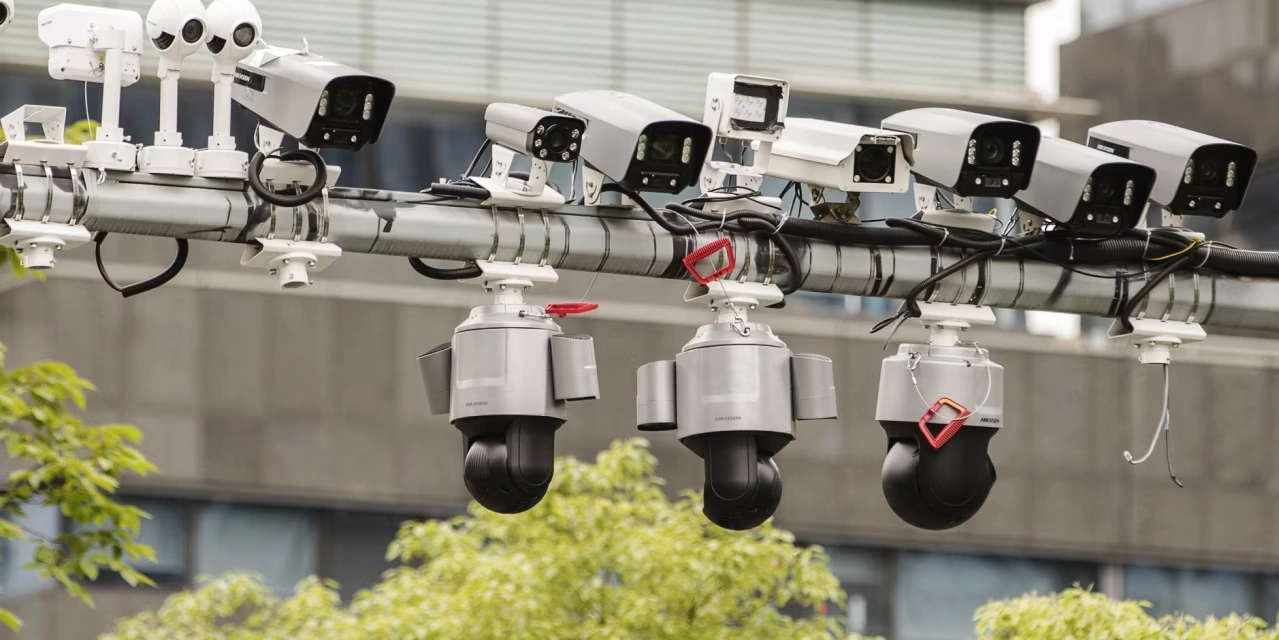
On a clear morning in Shanghai’s Pudong district, a camera detects a crowd assembling near a subway exit. Within seconds, an AI system flags the gathering, cross-references faces against a national database, and fires a pre-emptive alert to local police — before a single word has been spoken, let alone a permit requested. This is not a speculative scenario. It’s the operational reality of China’s surveillance architecture today, and it’s being rebuilt from the ground up with generative AI, large language models, and a political mandate to make authoritarian control faster, cheaper, and effectively invisible.
The Surveillance State Finds Its Intelligence Layer
China has spent two decades constructing what is almost certainly the world’s most extensive state surveillance infrastructure. Estimates put the country’s camera count at up to 600 million — roughly three cameras for every seven citizens. But raw hardware counts have never been the story. The real transformation is happening in the software layer.
Beijing’s 15th Five-Year Plan (2026–2030), unveiled at the March 2026 “Two Sessions” legislative meetings, enshrines AI-driven governance as a national strategic priority, carrying an explicit directive for China to seize the “commanding heights of science and technological development.” The plan formalises what researchers had already been documenting for two years: an accelerating fusion of generative AI, large language models, and legacy surveillance hardware into a single, predictive control apparatus.
Crucially, China’s amended Cybersecurity Law — the first major revision since 2017 — took effect in January 2026, weaving AI explicitly into the legal architecture of state surveillance for the first time. The Cyberspace Administration of China described the updated law as providing the foundational framework for “cyber sovereignty,” stressing its role in Xi Jinping’s directive for China to become a cyber superpower. When AI and censorship law merge, the implications don’t stay inside China’s borders for long.
1 — The Core Development: How China’s AI Surveillance Network Is Being Rebuilt
The China AI surveillance network upgrade is not a single programme. It’s a layered modernisation of interconnected systems, each accelerated by the same generation of tools now reshaping industries worldwide.
At its foundation sit two legacy projects. Skynet (天网工程), deployed primarily in urban centres including Beijing, Shenzhen, and Chengdu, operates as a high-precision facial recognition and automated tracking system — state media once claimed it could scan China’s entire population in under a second, though researchers at Georgetown’s Center for Security and Emerging Technology have noted that such claims “ignore glaring technical limitations.” Sharp Eyes (雪亮工程), launched in 2015 by the National Development and Reform Commission, extended surveillance into rural and semi-urban provinces including Hunan, Henan, Sichuan, and Guizhou, setting a target of 100% coverage of public space by 2020. It went further: integrating private household cameras into centralised monitoring platforms, and in some areas giving local residents access to live security footage — a model of what researchers now term “participatory surveillance.”
What has changed is the intelligence layer sitting on top of that hardware. According to a December 2025 report by the Australian Strategic Policy Institute (ASPI) — granted to The Washington Post for exclusive early access — the Chinese Communist Party is “harnessing AI to make its existing systems of control far more efficient and intrusive.” ASPI senior analyst Nathan Attrill stated: “AI lets the CCP monitor more people, more closely, with less effort. In practice, AI has become the backbone of a far more pervasive and predictive form of authoritarian control.”
The hardware supply chain is equally telling. Hikvision and Dahua together supply roughly one-third of the global market for security cameras and digital video recorders, and Hikvision directly implements Sharp Eyes infrastructure in cities including Xi’an. SenseTime, designated an official “AI Champion” by the party-state, provides facial recognition algorithms feeding into centralised police databases. The 206 System, developed by iFlyTek, analyses criminal evidence and recommends sentences to prosecutors. In Anhui province, prosecutors use AI platforms to draft indictments and flag inconsistencies in dossiers — an end-to-end automation of the charging process.
The architecture is converging toward what analysts described in March 2026 as an AI-driven criminal justice pipeline — surveillance that doesn’t merely observe, but actively adjudicates.
2 — The Analytical Layer: Predictive Control and the Logic of Pre-emptive Suppression
How Is China Using AI for Predictive Policing?
China is using AI for predictive policing through a combination of large language models, neighbourhood grid worker data networks, and real-time social media monitoring. Systems process individuals’ personality profiles, emotional states, and exposure to “negative cultural influences” to forecast social unrest before it occurs — a function previously requiring large human intelligence operations, now automated at scale.
The most significant shift is not the hardware. It’s the move from reactive surveillance — watching and recording — to predictive surveillance, which attempts to identify threats before they materialise. In August 2025, Guizhou Normal University filed a patent proposing the use of OpenAI’s GPT models as a “core reasoning tool” in a system designed to predict “social governance incidents” — the official euphemism for protests and collective petitions. The patent draws on inputs including individuals’ “long-term emotional states” and “degree of exposure to negative cultural influences,” without specifying how that last category would be measured. Any functioning implementation would depend entirely on the pre-existing surveillance infrastructure.
The human network feeding these AI systems is itself a revealing detail. Since early 2025, multiple Chinese institutions have developed tools built on reports from “grid workers” (网格员) — typically paid community workers who monitor assigned neighbourhood grids and upload incident reports in real time through a dedicated smartphone app. AI systems aggregate and analyse that granular social data, giving local authorities a dynamic, block-level picture of sentiment and risk. This is Xi’s concept of social governance operationalised through machine learning: citizens enlisted as data collection nodes in a system that processes their reports at a scale no human bureaucracy could sustain.
The picture is more complicated when one considers the incentive structures for domestic AI firms. Alibaba, Baidu, and Tencent are building multimodal large language models that censor and reshape descriptions of politically sensitive content — not because they’re state-owned enterprises, but because commercial operating licences in China effectively require it. Private companies like SenseTime didn’t survive by resisting the surveillance state. They thrived by building it, and in doing so, became too strategically valuable for either side to disentangle.
What this produces is an AI ecosystem in which the line between commercial product and state instrument has effectively dissolved. That’s the structural condition that makes Beijing’s surveillance ambitions sustainable in a way that brute state spending alone never could have achieved.
3 — Implications and Second-Order Effects: The Export Problem
What Does China’s Surveillance Technology Export Mean Globally?
The global consequences are no longer a projection. Companies including Huawei, ZTE, and SenseTime have invested hundreds of millions of dollars in AI-related infrastructure across Asia, Africa, and Latin America, according to research by the Alan Turing Institute’s Centre for Emerging Technology and Security. These projects — ranging from broadband rollouts to city surveillance systems — come bundled with Chinese-built AI solutions, effectively embedding China’s technical standards and governance norms in host countries.
The Digital Silk Road has become the primary vehicle for this diffusion. When a government in Central Asia or sub-Saharan Africa purchases a “safe city” package from Huawei, it frequently receives the same underlying surveillance architecture deployed in Xinjiang, rebranded and repackaged for export. The technology transfer is also a norm transfer: the proposition that government surveillance of this kind is normal, desirable, and technically achievable.
The supply chain problem runs in both directions. A November 2025 congressional report found that American-made semiconductors, cloud computing resources, and AI development tools continued to flow into Chinese surveillance firms despite existing export controls. Representative Raja Krishnamoorthi argued that Washington had “deprioritised human rights protections in its China policy,” and that tightening controls would require coordination with European and Asian allies — because many of the most advanced AI systems and semiconductor manufacturing tools are produced collaboratively across borders. A unilateral American response, the report concluded, will be insufficient.
Inside China, the judicial implications are concrete and accelerating. Oxford University’s Institute of Technology and Justice has documented that China’s Supreme People’s Court declared all courts to be using AI tools in judicial proceedings by the end of 2025, with full AI integration across the justice system targeted for 2030. In Shanghai, an AI platform now recommends whether suspects should be arrested or granted bail. In at least one prison, facial recognition cameras monitored inmates’ expressions, flagging them for intervention if they appeared angry. Surveillance has moved inside the cell.
4 — The Counterargument: The System Is Less Unified Than It Looks
The instinct of outside observers is to imagine China’s surveillance state as a seamlessly coordinated machine, operated from a single console in Zhongnanhai. The operational reality is considerably messier.
Researchers who study the system closely note that China’s surveillance infrastructure is fragmented — a patchwork of overlapping jurisdictions, incompatible data standards, and uneven local implementation. Skynet and Sharp Eyes were rolled out by different agencies at different times; Xinjiang’s Integrated Joint Operations Platform (IJOP) was built largely in isolation from the national infrastructure. Police Cloud systems vary dramatically between provinces. Academic work published in Regulation & Governance in 2024 documented how platformised policing generated massive datasets that frequently couldn’t communicate with one another — information silos in the middle of a supposed information state.
That fragmentation limits actual predictive capability. Beijing wants unified AI surveillance; it has, for now, a collection of partially connected systems generating data that AI tools are only beginning to stitch together. The gap between the Chinese state’s surveillance ambitions and its operational architecture remains measurable — and that gap is precisely where privacy still partially exists.
Some Chinese legal academics have quietly raised accountability concerns, too. The Supreme People’s Court’s push for AI in sentencing has met internal scepticism from judges who ask: who is responsible when an algorithm recommends the wrong outcome? These aren’t dissident voices; they’re institutional concerns from within the apparatus itself.
None of this adds up to a reassuring counter-narrative. The trajectory is clear, the investment is sustained, and the 15th Five-Year Plan provides the political mandate to accelerate integration. But it does mean the gap between Beijing’s stated ambitions for its AI surveillance network and the system’s operational reality remains wider than official statements suggest. Ambition and capability are not the same thing — and in this domain, treating them as identical is its own form of error.
The Architecture Is Now Legal, Not Just Technical
China’s AI surveillance overhaul is, at its core, the industrialisation of authoritarian control — the application of the same machine learning techniques powering medical diagnostics and content recommendation to the problem of population management. The efficiency gains are real. The harms scale with the efficiency.
What makes this moment distinctively consequential is the legal architecture now surrounding it. The amended Cybersecurity Law, the 15th Five-Year Plan’s explicit directives, and the Supreme Court’s AI integration mandates have moved this from a technology project to a formal governance system. The apparatus is being institutionalised, not just expanded. That distinction matters: institutions survive their architects, outlast political cycles, and are far harder to dismantle than experimental programmes.
Whether democratic governments and technology companies can meaningfully slow the proliferation of these tools — across China’s borders, through the supplier relationships that sustain them, and into the legal frameworks of countries that may find them attractive — is among the defining policy questions of the next decade. Export controls, sanctions, and multilateral coordination are all on the table. None has yet proven sufficient.
The cameras don’t blink. The question is whether anyone watching them will.
Discover more from The Economy
Subscribe to get the latest posts sent to your email.



Key Takeaways
- Rolex’s secondary market rose approximately 7.9% year-over-year as of 2026 (per WatchCharts data) — trailing Patek Philippe (+16.2%) and Tudor (+11.4%) but still outperforming Audemars Piguet (+3.4%).
- Rolex raised U.S. retail prices 4–9% in January 2026 (steel models ~5.6%, gold models ~8.7%), narrowing the historical gap between retail and pre-owned pricing.
- Not every model appreciates: steel sports references (Submariner, GMT-Master II, Daytona) have held value far better than two-tone or widely available dress references like the standard Datejust.
- The Lady-Datejust posted the sharpest 2026 gain among tracked collections — up 22.73%, from roughly $9,269 to $11,376 — driven by demand for smaller, “everyday luxury” watches.
- Gold’s rise past $2,400/oz has directly lifted the investment case for Rolex’s precious-metal references (Day-Date, Sky-Dweller, Yacht-Master).
The Model-by-Model Picture
| Category | 2026 Trend |
|---|---|
| Lady-Datejust | +22.73% (strongest performer among tracked collections) |
| Steel sports models (Submariner, GMT-Master II) | Held value well; corrected from 2022 peak but stabilized above retail |
| Daytona | Corrected from highs above $50,000 to the mid-$30,000s; still among the most sought-after references |
| Two-tone/widely available Datejust | Flat to negative — “holds value” is an overstatement for this category |
| Gold references (Day-Date, Sky-Dweller) | Lifted by gold’s rise above $2,400/oz |
Why the “Rolex Always Appreciates” Myth Is Fading
The pandemic-era boom pushed some references — the Daytona above all — to speculative highs disconnected from historical norms. Since the March 2022 peak, steel sports models have compressed meaningfully, and dealers who bought inventory near the top have in some cases faced 20–40% markdowns on liquidation. The lesson for 2026 buyers: Rolex as a category is not a monolith. Value retention depends heavily on specific reference, condition, and whether the piece comes with box and papers (“full set”).
What’s Actually Driving 2026 Strength
- Retail price increases raise the floor. When a new Submariner retails at $10,050 (up from $9,500), a pre-owned example at $11,000–$12,000 suddenly represents a smaller premium — narrowing the gap without secondary prices actually moving.
- Supply discipline remains Rolex’s core lever. The brand has never confirmed production numbers, and secondary-market premiums remain entirely a function of Rolex’s own manufacturing decisions — a risk factor as much as a support.
- Certified Pre-Owned rollout. Rolex’s now fully rolled-out CPO program has changed how buyers transact in the used market, adding a layer of brand-verified legitimacy that supports pricing.
The Case for Rolex as a Portfolio Diversifier
Financial advisors increasingly frame luxury watches not as a replacement for equities or bonds, but as a tangible, historically low-correlation diversifier — one that carries its own risks (illiquidity, condition-dependent pricing, no yield) but has demonstrated multi-decade resilience for specific references.
Is Rolex a good investment in 2026?
It depends heavily on the specific reference. Steel sports models like the Submariner and Daytona have held or grown in value; two-tone and widely available dress models generally have not. Overall, Rolex’s secondary market rose about 7.9% year-over-year in 2026, trailing Patek Philippe but ahead of Audemars Piguet.
Discover more from The Economy
Subscribe to get the latest posts sent to your email.

Navigating Mortgage and Loan Refinancing in a High-Yield Environment
Global public debt crossing critical thresholds has kept central bank policies volatile, resulting in fluctuating US Treasury yields throughout 2026. For homeowners and commercial property holders burdened by previous high-interest borrowing cycles, finding optimal refinance windows has become a high-stakes financial puzzle. Stalled disinflation and stubborn employment numbers mean rate cuts are incremental, requiring borrowers to act with precision.
Timing your mortgage or commercial loan refinance in this environment requires a deep understanding of yield curve movements and lender risk appetites.
Decoding 2026 Refinance Dynamics
The 10-Year Treasury Yield Benchmark
Mortgage rates continue to track closely with the 10-year US Treasury yield. When macroeconomic anxiety spikes debt issuance, yields rise, tightening consumer borrowing capacity. Savvy borrowers monitor weekly Treasury auctions to lock in rates during brief dip windows.
Hybrid ARMs and Alternative Structures
With fixed rates remaining elevated, 7/1 and 10/1 adjustable-rate mortgages (ARMs) have surged in popularity. These products offer lower initial monthly payments, giving borrowers breathing room until central bank easing cycles fully materialize.
| Loan Product | Current Rate Range | Best For | Key Risk Factor |
| 30-Year Fixed Mortgage | 6.2% – 6.8% | Long-term predictability | Higher initial monthly outlay |
| 7/1 Hybrid ARM | 5.5% – 5.9% | Short-term ownership / flipping | Rate reset risk after year 7 |
| Commercial Refinance | 7.0% – 8.2% | Corporate asset restructuring | Strict DSCR lender covenants |
Actionable Steps for Successful Refinancing
To maximize your chances of securing favorable refinance terms in a volatile market, follow a disciplined preparation strategy.
Boost Your Credit Score Immediately: Lenders in 2026 are applying stringent credit tiering; a 20-point increase can drop your APR by a crucial quarter-point.
Shop Regional Credit Unions: Smaller financial institutions often offer portfolio loans with more flexible underwriting than major national banks.
Calculate the Break-Even Point: Ensure your total closing costs are recouped through monthly savings within 24 months of closing.
“Market Strategist View: Refinancing in 2026 is an exercise in opportunistic timing. Borrowers must maintain immaculate financial profiles ready to strike the moment Treasury yields dip.”
Mastering the complexities of today’s debt environment ensures you can successfully lower your debt service costs and protect your long-term financial stability.
Discover more from The Economy
Subscribe to get the latest posts sent to your email.

The days of pulling generic auto insurance quotes based purely on your zip code and age are officially over. In 2026, insurance comparison engines are powered entirely by generative AI and real-time telematics. These platforms digest thousands of live data points—ranging from your driving smoothness via connected vehicle sensors to real-time traffic congestion patterns—to generate hyper-personalized premiums instantly.
For consumers, this evolution represents both a massive opportunity for savings and a hidden trap for penalty pricing. Understanding how AI algorithms evaluate risk is essential for anyone looking to lower their monthly auto insurance premiums.
How AI Comparison Engines Evaluate Your Risk Profile
Behavioral Telematics and Connected Cars
Modern cars stream performance data directly to insurance aggregators. Generative AI models analyze braking sharpness, acceleration curves, cornering G-forces, and phone distraction metrics. Drivers who maintain smooth, defensive habits are rewarded with dynamic rate cuts of up to 40% compared to traditional rating tiers.
Predictive Traffic and Weather Modeling
AI tools now cross-reference your daily commute route with predictive weather and accident probability models. If your standard parking location or driving corridor has a statistically higher incidence of uninsured motorist claims, your quotes will reflect that hyper-local risk assessment.
| Comparison Factor | Traditional Rating Model | 2026 Generative AI Model | Impact on Premium |
| Mileage & Usage | Annual estimated odometer reading | GPS tracking & live trip duration | High (up to 35% savings) |
| Driving Behavior | MVR driving record & accidents | Real-time braking, speed, & G-force | Critical (determines tier) |
| Vehicle Tech | Make, model, and safety rating | ADAS calibration & repair cost data | Moderate |
Strategies to Lower Your AI-Driven Insurance Quote
To outsmart the algorithm and secure the lowest possible premium in 2026, drivers must proactively manage their digital footprint on insurance platforms.
Opt-In for Telematics Trial Periods: Many insurers offer immediate 15% discounts just for installing their driving app; let it track safe habits for 30 days to lock in permanent savings.
Scrub Unverified Public Records: Ensure your motor vehicle report is free of clerical errors that AI risk models misinterpret as reckless behavior.
Compare AI Aggregators: Use platforms that integrate multi-carrier API feeds rather than single-brand comparison sites to find the best risk-adjusted rate.
“Industry Note: AI-driven pricing rewards transparency and precision. Drivers who actively manage their telematics data consistently out-save those relying on legacy quote calculators.”
Embracing AI comparison tools allows savvy policyholders to customize coverage limits precisely to their driving habits, eliminating wasted premium spend while ensuring robust protection.
Discover more from The Economy
Subscribe to get the latest posts sent to your email.

Neocloud Economics in 2026: GPU Debt, Utilization and Power

What Is a Neocloud? How AI GPU Clouds Work and Compare

Lula Re-elected in 2026: What Changes for the Dollar, Brazilian Stocks, and Interest Rates?

Lula Wins Brazil’s 2026 Election: Five Economic Tests for 2027

SSI November 2026 Payment: Why Benefits Arrive October 30

Russia Sanctions Waiver: What Asian Oil Buyers Gain

Asia Markets Weekly: How Oil, US Yields and the Fed Reach Tokyo, Kuala Lumpur and Karachi

Gold Near $4,000: Buy, Hold or Wait? A Pakistan Tola Price Guide

US 10-Year Treasury Yield Near 5%: The Hidden Cost for Pakistani Investors

Fed Meeting on October 28: Hike or Hold—and Why Pakistan Investors Should Care

Can Pakistan Turn US–Iran Mediation Into an Economic Dividend?

Oil Above $100: How Higher Crude Prices Reach Pakistan’s Rupee, Petrol and Imports

SBP Interest Rate at 11.5%: What Will Decide Pakistan’s Next Policy Move?

The Global South: Debt, Climate Finance and Investment in 2026

Crude Oil & Petroleum Market Analysis: OPEC+ Decisions and Price Forecasts

Top US Convenience Store Chains: Store Counts, EV Charging, and Sales Trends

Algorithmic Dogfights: Why the U.S. and China Must Establish Rules of Engagement for Autonomous Air Power

Who Is Shivon Zilis? The Neuralink Executive at the Center of the Musk–OpenAI Trial

Social Security Extra $90 Deposit: Who Qualifies for the October 2026 Medicare Rebate?

Global Economic Outlook 2026: 7 Forces Reshaping Markets, Trade and Business

Corporate America Faces a New Debt Test as US Borrowing Costs Surge

Gold Price Outlook 2026: The Forces Behind the Forecasts—and What Could Reverse Them

Gold Falls 3.7% as Yields Surge: Is Gold Still a Safe Haven in 2026?

MAS Allocates S$1.45 Billion to Five Asset Managers in Third EQDP Batch: Total Deployment Reaches S$5.4 Billion

Stock Market Today: Dow, S&P 500, and Nasdaq Retreat as Treasury Yields

Stock Market Crash in 2026? Warning Signs, Scenarios and a Calm Investor Checklist

Anthropic Bans Sustained Abuse of Claude AI Under New Usage Policy Effective November 12, 2026

Geopolitics and Your Portfolio: How International Affairs Move Global Markets
-

 Markets & Finance10 months ago
Top 15 Stocks for Investment in 2026 in PSX: Your Complete Guide to Pakistan’s Best Investment Opportunities
-

 Analysis8 months ago
Johor’s Investment Boom: The Hidden Costs Behind Malaysia’s Most Ambitious Economic Surge
-

 Analysis8 months ago
Top 10 Stocks for Investment in PSX for Quick Returns in 2026
-

 Banks9 months ago
Best Investments in Pakistan 2026: Top 10 Low-Price Shares and Long-Term Picks for the PSX
-

 Analysis9 months ago
Brazil’s Rare Earth Race: US, EU, and China Compete for Critical Minerals as Tensions Rise
-

 Investment10 months ago
Top 10 Mutual Fund Managers in Pakistan for Investment in 2026: A Comprehensive Guide for Optimal Returns
-

 Global Economy10 months ago
15 Most Lucrative Sectors for Investment in Pakistan: A 2025 Data-Driven Analysis
-

 Global Economy10 months ago
Pakistan’s Export Goldmine: 10 Game-Changing Markets Where Pakistani Businesses Are Winning Big in 2025