
Analysis
CBDCs vs Stablecoins: 5 Key Differences in 2025

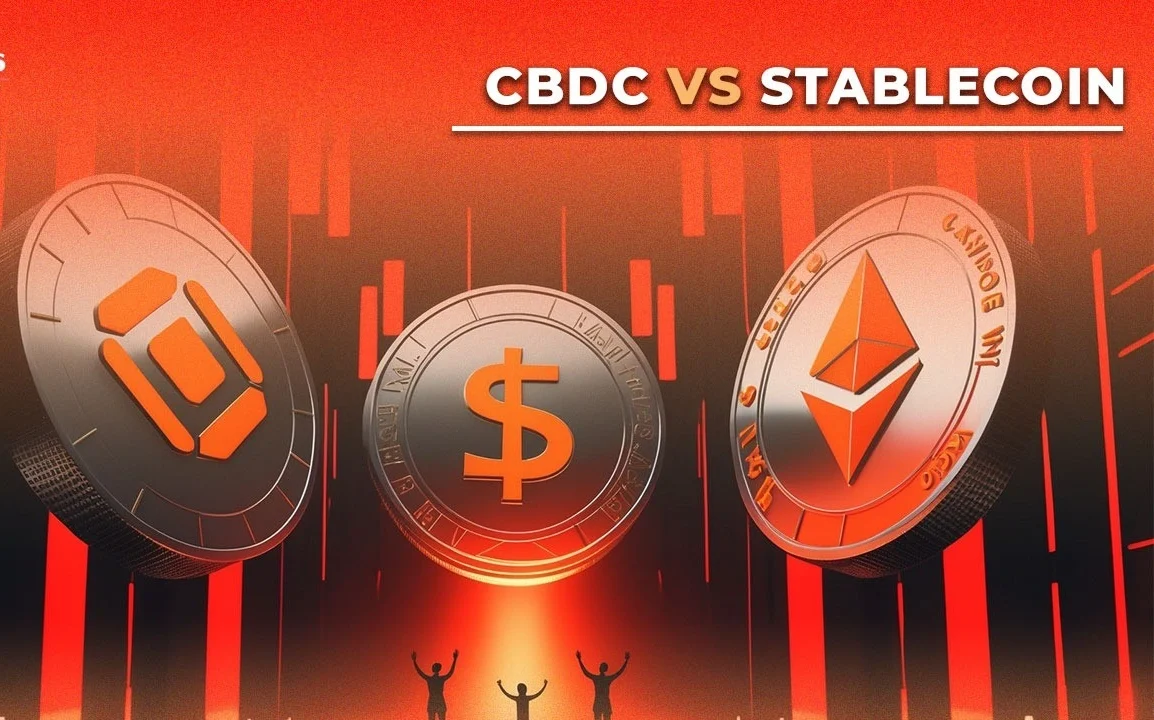
On March 18, a European Central Bank official told a closed-door session in Frankfurt that the digital euro “will not be a stablecoin competitor.” The statement was polite, but the subtext was clear: central banks are no longer the only game in town. In the past 12 months, stablecoins have surged to a combined $280 billion market cap, according to the IMF. Meanwhile, over 130 central banks are now exploring CBDCs, with China’s e-CNY having already processed $1.3 trillion in transactions. The two forms of digital money are often lumped together, but they are not twins. They are, in fact, ideological opposites.
The battle between public and private digital money is not academic. It is reshaping everything from monetary policy to cross-border settlement speeds. Today, a cross-border payment using the Bank for International Settlements’ Project mBridge – a wholesale CBDC pilot – can settle in three seconds. A traditional SWIFT transfer takes three days. Stablecoins, by contrast, settle in minutes, but carry reserve and counterparty risks. The European Union’s MiCA framework went into full effect in January 2025, giving stablecoins a legal roadmap while many CBDCs remain in pilot limbo. The IMF estimates that if just 20% of cross-border payments shift to stablecoins, global remittance costs would fall by $12 billion annually. Yet central banks fret about sovereignty. The picture is more complicated than a simple race.
1 – The Core Development: Why the CBDC vs Stablecoin Debate Has Intensified
The fundamental question is not which technology is faster, but who holds the liability. A CBDC is a direct claim on the central bank – sovereign money, legal tender. A stablecoin is a claim on a private issuer, backed by a pool of assets (most often U.S. Treasury bills). This distinction appears technical, but it has explosive consequences. When a stablecoin issuer fails, as TerraUSD did in 2022, holders have no deposit insurance. When a central bank fails, the state can simply print more money – a feature, not a bug, for stability purposes.
Yet stablecoins are winning the speed race. The Federal Reserve Bank of Boston and MIT’s Project Hamilton found that a retail CBDC could process 1.7 million transactions per second – 100 times Visa’s peak. That sounds dominant, but stablecoins already run at that pace on Layer-2 blockchains. The difference: CBDCs have to be built from scratch, with layers of governance, privacy rules, and offline capability mandates. Stablecoins inherit crypto’s existing rails. As of February 2025, the dollar-backed stablecoin USDC processed $1.2 trillion in annualised transfer volume, according to Circle’s public data, dwarfing the e-CNY’s $1.3 trillion since launch.
The ECB’s digital euro pilot has been running for 18 months, but a final decision is still not expected until 2026. Meanwhile, MiCA-licensed stablecoins can operate across the entire EU today. That asymmetry has turned the “CBDCs vs stablecoins” debate from a theoretical tug-of-war into a live policy emergency.
2 – Analytical Layer: The Structural Divergence Between Sovereign and Private Digital Money
What is the main difference between a CBDC and a stablecoin?
At its core: a CBDC is central bank liability – government-backed, legal tender, and theoretically free of credit risk. A stablecoin is private debt, collateralised by a basket of assets. That means a CBDC can never go bankrupt, while a stablecoin can lose its peg or its reserves. The trade-off: CBDCs are slower to design, stablecoins are faster to deploy.
That trade-off matters more than speed. Consider the privacy angle. The ECB’s 2025 progress report notes that 85% of EU citizens demand privacy guarantees in any digital euro. Stablecoins, by design, are pseudonymous at the blockchain layer – anyone can send USDC without permission. But regulators are pressuring stablecoin issuers to implement know-your-customer checks, eroding that advantage. China’s e-CNY, by contrast, is fully trackable – the government can see every transaction. That’s a feature for the People’s Bank of China, but a non-starter in the EU.
Then there is interest-bearing capability. No wholesale CBDC yet pays interest; doing so risks disintermediating commercial banks. Stablecoins, however, are increasingly offered with yield through DeFi protocols. Tether’s USDt, for example, generates returns by holding Treasuries. That makes stablecoins more attractive for savers – but also creates a shadow banking system outside central bank control. The U.S. Treasury’s 2025 risk assessment flagged that stablecoin reserves now hold $120 billion in short-term Treasuries, representing 40% of the entire Treasury repo market. A sudden stablecoin run could trigger a liquidity crisis in the world’s safest asset.
3 – Implications & Second-Order Effects: What This Means for Markets, Policy, and Citizens
The rise of stablecoins is not just a threat to CBDCs; it is a stress test for monetary sovereignty. If a large share of cross-border trade settles in USDC or Tether, the dollar’s dominance remains intact – but the Fed’s ability to control the money supply weakens. Stablecoin issuers are not subject to interest rate policy. They create money outside the banking system. The IMF warned last year that a 10% shift of global payments into stablecoins could reduce the effectiveness of central bank rate hikes by up to 0.5 percentage points.
For emerging economies, the calculus is different. Nigeria’s eNaira has seen less than 1% adoption after three years. But stablecoin usage in Nigeria has exploded – citizens hold dollars through USDT to bypass capital controls and inflation. The government banned crypto in 2021, but stablecoins remain widely used through peer-to-peer exchanges. The lesson: when a central bank’s own currency is weak, stablecoins become de facto private digital dollars. That is a humiliating outcome for any monetary authority.
The second-order effect on cross-border payments could be enormous. The BIS’s mBridge pilot has demonstrated that wholesale CBDCs can settle in three seconds. Stablecoins can already do that on public blockchains, but they face regulatory friction. The EU’s MiCA, for instance, caps stablecoin transaction volumes at €200 million per day – an explicit attempt to keep them small. Yet a harmonised global stablecoin standard, if agreed, could bypass that. The Financial Stability Board is now studying exactly that: a framework for “global stablecoin arrangements” that would let a single issuer operate in multiple jurisdictions. If that happens, CBDCs will be forced to compete on not just safety but convenience.
4 – Competing Perspectives: The Case for Stablecoins Over CBDCs
Not everyone agrees that central banks should even enter the race. Jeremy Allaire, CEO of Circle (which issues USDC), testified before the U.S. House Financial Services Committee in March 2025: “A government-run digital dollar would be a surveillance tool dressed in monetary policy clothes. Stablecoins offer the same programmability without the political risk of financial censorship.” The argument is straightforward: CBDCs give governments the power to freeze or restrict wallets. Stablecoins, by design, cannot be blocked by any single authority.
Critics of CBDCs also point to operational risk. The ECB’s own stress tests show that a digital euro could trigger bank deposit outflows of up to €150 billion in a panic, forcing the central bank to bail out commercial banks. Stablecoins, because they are not legal tender, cannot cause a bank run in the traditional sense. Instead, a stablecoin collapse would hit crypto markets first, then spill over into Treasury markets if reserves are liquidated. That is a real risk – but the U.S. Treasury argues it is manageable with proper collateral requirements.
The steel-man argument runs as follows: the private sector innovates faster. Stablecoins have already achieved global reach, low costs, and 24/7 settlement. CBDCs are still designing offline functionality and privacy layers. Why wait for governments to build a slow, monitored alternative when the market has already delivered a better product? The IMF’s 2025 working paper acknowledges that “in jurisdictions with weak monetary policy credibility, stablecoins may outperform CBDCs as a store of value.”
CLOSING
The tension between CBDCs and stablecoins is not a binary choice. It is a continuum: on one end, state-backed digital currency with full legal tender and credit risk of zero; on the other, private digital money with speed, flexibility, and counterparty risk. The winning model will not be determined by technology alone. It will be shaped by regulation, privacy norms, and – above all – trust. If the public trusts central banks more than Circle or Tether, CBDCs win. If they trust code and markets more than politicians, stablecoins will eat the world.
What follows, however, is that neither can win without the other losing something essential. CBDCs guarantee stability but risk surveillance. Stablecoins offer freedom but run on unstable reserves. The next five years will tell us which trade-off the world is willing to make. And that decision, unlike a blockchain transaction, cannot be undone with a single line of code.
Discover more from The Economy
Subscribe to get the latest posts sent to your email.



Navigating Mortgage and Loan Refinancing in a High-Yield Environment
Global public debt crossing critical thresholds has kept central bank policies volatile, resulting in fluctuating US Treasury yields throughout 2026. For homeowners and commercial property holders burdened by previous high-interest borrowing cycles, finding optimal refinance windows has become a high-stakes financial puzzle. Stalled disinflation and stubborn employment numbers mean rate cuts are incremental, requiring borrowers to act with precision.
Timing your mortgage or commercial loan refinance in this environment requires a deep understanding of yield curve movements and lender risk appetites.
Decoding 2026 Refinance Dynamics
The 10-Year Treasury Yield Benchmark
Mortgage rates continue to track closely with the 10-year US Treasury yield. When macroeconomic anxiety spikes debt issuance, yields rise, tightening consumer borrowing capacity. Savvy borrowers monitor weekly Treasury auctions to lock in rates during brief dip windows.
Hybrid ARMs and Alternative Structures
With fixed rates remaining elevated, 7/1 and 10/1 adjustable-rate mortgages (ARMs) have surged in popularity. These products offer lower initial monthly payments, giving borrowers breathing room until central bank easing cycles fully materialize.
| Loan Product | Current Rate Range | Best For | Key Risk Factor |
| 30-Year Fixed Mortgage | 6.2% – 6.8% | Long-term predictability | Higher initial monthly outlay |
| 7/1 Hybrid ARM | 5.5% – 5.9% | Short-term ownership / flipping | Rate reset risk after year 7 |
| Commercial Refinance | 7.0% – 8.2% | Corporate asset restructuring | Strict DSCR lender covenants |
Actionable Steps for Successful Refinancing
To maximize your chances of securing favorable refinance terms in a volatile market, follow a disciplined preparation strategy.
Boost Your Credit Score Immediately: Lenders in 2026 are applying stringent credit tiering; a 20-point increase can drop your APR by a crucial quarter-point.
Shop Regional Credit Unions: Smaller financial institutions often offer portfolio loans with more flexible underwriting than major national banks.
Calculate the Break-Even Point: Ensure your total closing costs are recouped through monthly savings within 24 months of closing.
“Market Strategist View: Refinancing in 2026 is an exercise in opportunistic timing. Borrowers must maintain immaculate financial profiles ready to strike the moment Treasury yields dip.”
Mastering the complexities of today’s debt environment ensures you can successfully lower your debt service costs and protect your long-term financial stability.
Discover more from The Economy
Subscribe to get the latest posts sent to your email.

The days of pulling generic auto insurance quotes based purely on your zip code and age are officially over. In 2026, insurance comparison engines are powered entirely by generative AI and real-time telematics. These platforms digest thousands of live data points—ranging from your driving smoothness via connected vehicle sensors to real-time traffic congestion patterns—to generate hyper-personalized premiums instantly.
For consumers, this evolution represents both a massive opportunity for savings and a hidden trap for penalty pricing. Understanding how AI algorithms evaluate risk is essential for anyone looking to lower their monthly auto insurance premiums.
How AI Comparison Engines Evaluate Your Risk Profile
Behavioral Telematics and Connected Cars
Modern cars stream performance data directly to insurance aggregators. Generative AI models analyze braking sharpness, acceleration curves, cornering G-forces, and phone distraction metrics. Drivers who maintain smooth, defensive habits are rewarded with dynamic rate cuts of up to 40% compared to traditional rating tiers.
Predictive Traffic and Weather Modeling
AI tools now cross-reference your daily commute route with predictive weather and accident probability models. If your standard parking location or driving corridor has a statistically higher incidence of uninsured motorist claims, your quotes will reflect that hyper-local risk assessment.
| Comparison Factor | Traditional Rating Model | 2026 Generative AI Model | Impact on Premium |
| Mileage & Usage | Annual estimated odometer reading | GPS tracking & live trip duration | High (up to 35% savings) |
| Driving Behavior | MVR driving record & accidents | Real-time braking, speed, & G-force | Critical (determines tier) |
| Vehicle Tech | Make, model, and safety rating | ADAS calibration & repair cost data | Moderate |
Strategies to Lower Your AI-Driven Insurance Quote
To outsmart the algorithm and secure the lowest possible premium in 2026, drivers must proactively manage their digital footprint on insurance platforms.
Opt-In for Telematics Trial Periods: Many insurers offer immediate 15% discounts just for installing their driving app; let it track safe habits for 30 days to lock in permanent savings.
Scrub Unverified Public Records: Ensure your motor vehicle report is free of clerical errors that AI risk models misinterpret as reckless behavior.
Compare AI Aggregators: Use platforms that integrate multi-carrier API feeds rather than single-brand comparison sites to find the best risk-adjusted rate.
“Industry Note: AI-driven pricing rewards transparency and precision. Drivers who actively manage their telematics data consistently out-save those relying on legacy quote calculators.”
Embracing AI comparison tools allows savvy policyholders to customize coverage limits precisely to their driving habits, eliminating wasted premium spend while ensuring robust protection.
Discover more from The Economy
Subscribe to get the latest posts sent to your email.

Despite decades of bans and strict handling mandates, asbestos remains a silent killer across legacy manufacturing plants, shipyards, and modern green-energy infrastructure retrofits. In 2026, regulatory changes by the EPA and tightened occupational health standards have triggered a fresh wave of mesothelioma litigation. Manufacturers attempting to fast-track industrial transitions are encountering catastrophic oversight, exposing workers to legacy toxins and opening corporate parent companies to unprecedented liability.
Navigating a mesothelioma claim in 2026 requires understanding how modern industrial supply chains intersect with historical exposure. Trusts established decades ago are being audited under stricter transparency laws, altering payout ratios and accelerating fast-track settlements for terminally ill plaintiffs.
Modern Industrial Exposure Hotspots
Green Retrofitting and Renewable Energy Infrastructure
A primary source of 2026 asbestos exposure occurs during the decommissioning and retrofitting of older industrial facilities for renewable energy production. Workers insulating electrical grids, modernizing HVAC systems, or upgrading manufacturing floors frequently disturb encapsulated asbestos materials that were improperly documented or ignored during facility audits.
Automotive and Aerospace Supply Chains
With advanced manufacturing booming, workers handling specialized friction materials, gaskets, and heat shields face ongoing risks. Supply chain tracing has become more sophisticated, allowing legal teams to pinpoint exact corporate entities responsible for raw material distribution across multinational borders.
| Industry Sector | Primary Exposure Risk | Legal Venue / Trust | Avg. Claim Value Range |
| Green Energy Retrofit | Disturbed insulation, pipe lagging | Federal Tort / Manufacturer Trust | $1.2M – $3.5M |
| Shipbuilding & Marine | Boiler insulation, structural seals | Asbestos Bankruptcy Trusts | $800K – $2.4M |
| Automotive Manufacturing | Brake components, high-heat gaskets | Third-Party Product Liability | $600K – $1.8M |
Securing Maximum Compensation: Steps for Plaintiffs
Time is of the essence in mesothelioma cases. Plaintiffs and their families must act decisively to secure financial recovery before statutes of limitations expire.
Retain Specialized Counsel: Work exclusively with national mesothelioma law firms possessing deep historical databases of asbestos-containing products.
Audit Employment History: Document every job site, supervisor name, and equipment brand encountered throughout your career.
Expedite Medical Filings: Secure a formal pathological diagnosis quickly to qualify for expedited trust fund distribution and priority trial settings.
“Expert Insight: Modern asbestos litigation is no longer just about historical tracking; it is about holding modern corporations accountable for failing to conduct rigorous environmental safety audits before initiating industrial retrofits.”
By combining meticulous work history reconstruction with aggressive multi-trust filings, victims can secure substantial financial relief to cover specialized immunotherapy and family support.
Discover more from The Economy
Subscribe to get the latest posts sent to your email.

Macroeconomic Fallout of Middle Eastern Airspace Restrictions: Why U.S. Carriers Are Abandoning Gulf Hubs Through 2027

High-CPM Finance Niches 2026: Publisher Monetization Blueprint

IMF & World Bank 2026 Global Economic Outlook: Growth, Inflation, Debt

Pork Recall 2026: USDA Guanciale Listeria Recall in 8 States Explained

Zelda: Ocarina of Time Switch 2 Remake — Release Date & Everything Confirmed

Social Security Trust Fund 2032: OASI Depletion Timeline Explained

Oracle (ORCL) Stock Analysis: AI Cloud Growth Ahead of Sept 10 Earnings

2027 Social Security COLA: 3.5% Increase Explained

Non-State Actors and AI 2026: The Push for Global Guardrails

Mandatory Lobbying Registers 2026: Corporate Risk Guide

Beyond $100 Oil: Why the Geopolitical Shock at Hormuz Marks a Structural Turning Point

Digitally Deliverable Services: 56% of Global Trade in 2026

AI Data Center Real Estate 2026: Power & Grid Battle Guide

Smart Glasses Privacy Crisis 2026: Regulation & Compliance

State Farm’s $5B Dividend 2026: Who Qualifies & Payout Dates

US-China Relations in Q3 2026: Trade Tariffs and Supply Chain Risks

Gold’s Wild 2026: From a Record $5,600 Peak to a 24% Crash and Back Toward $4,500

Oil Surges as Strait of Hormuz Traffic Collapses Again

The Rocket That Won’t Quit: Inside SpaceX’s Falcon 9 Launch Machine

Bank of England Set to Hold Rates Through Year-End, Reuters Poll Shows

The 2026 Crypto Regulatory Shift: What It Means for Institutional Investors

SpaceX Starship Flight 14: First Orbital Attempt & Starlink V3 Launch Explained

Retail Earnings Week: What Home Depot, Target & Walmart Reveal

AI-Powered Training: The Next Multi-Billion Dollar Ecosystem in Fitness

AI Chip Stocks 2026: The Best Semiconductor Investments Beyond Marvell

Russia’s Black Sea Oil Exports Fall for a Fifth Straight Week

China’s Economy Has a Structural Problem: Factories Are Winning, Households Are Losing

Global Chip Selloff Deepens: What’s Driving the Aug. 19 Semiconductor Rout
-

 Markets & Finance8 months ago
Top 15 Stocks for Investment in 2026 in PSX: Your Complete Guide to Pakistan’s Best Investment Opportunities
-

 Analysis7 months ago
Johor’s Investment Boom: The Hidden Costs Behind Malaysia’s Most Ambitious Economic Surge
-

 Analysis7 months ago
Top 10 Stocks for Investment in PSX for Quick Returns in 2026
-

 Analysis7 months ago
Brazil’s Rare Earth Race: US, EU, and China Compete for Critical Minerals as Tensions Rise
-

 Banks8 months ago
Best Investments in Pakistan 2026: Top 10 Low-Price Shares and Long-Term Picks for the PSX
-

 Investment8 months ago
Top 10 Mutual Fund Managers in Pakistan for Investment in 2026: A Comprehensive Guide for Optimal Returns
-

 Global Economy9 months ago
15 Most Lucrative Sectors for Investment in Pakistan: A 2025 Data-Driven Analysis
-

 Global Economy9 months ago
Pakistan’s Export Goldmine: 10 Game-Changing Markets Where Pakistani Businesses Are Winning Big in 2025