
Analysis
Børge Brende WEF Resignation Epstein: How One Scandal Broke an Institution Already on Its Knees

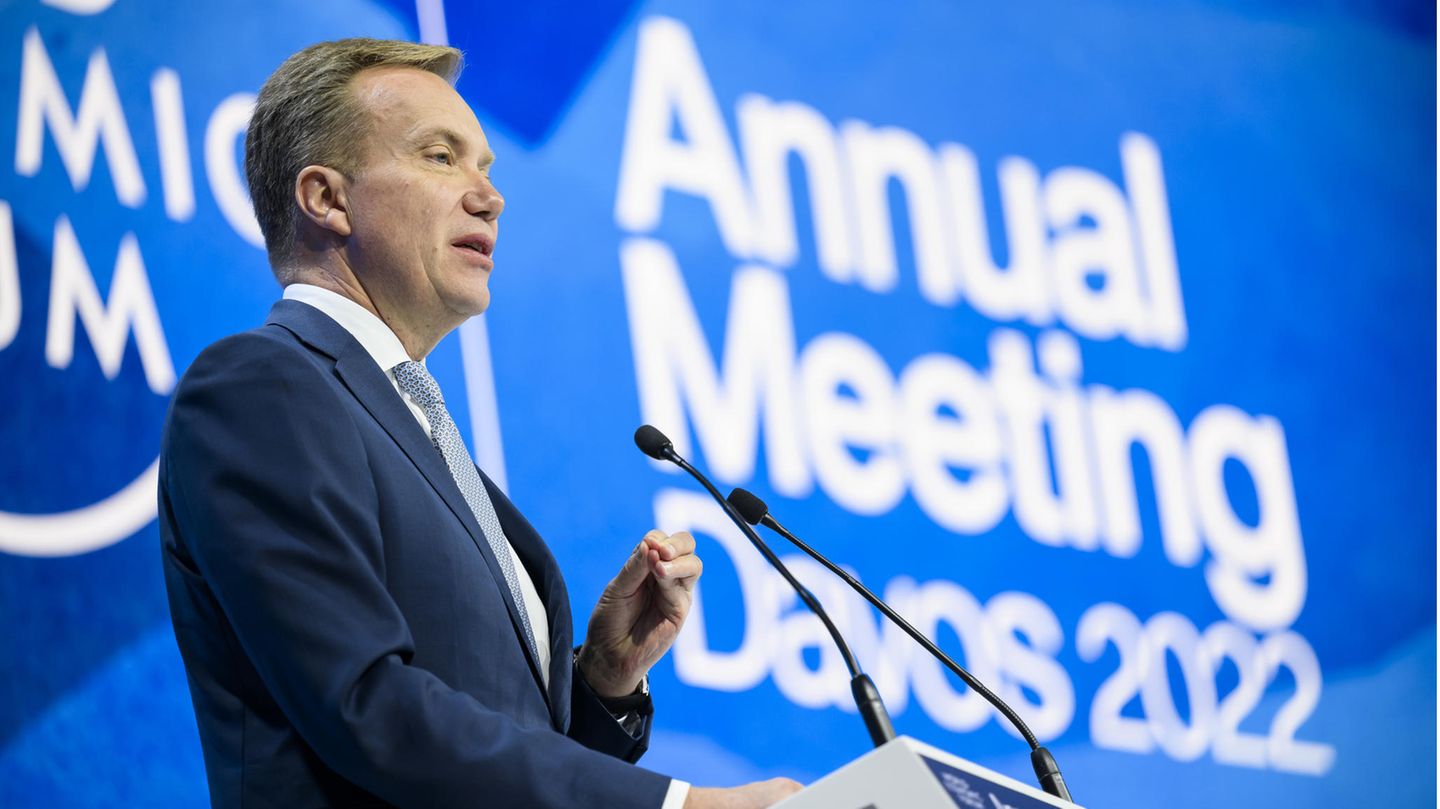
The departure of the World Economic Forum’s CEO over Jeffrey Epstein ties is more than a personal scandal — it is an institutional reckoning with elite impunity at Davos.
There is a particular kind of silence that descends on institutions when their carefully constructed image of moral authority finally collapses. On February 26, 2026, that silence fell over the headquarters of the World Economic Forum in Cologny, Switzerland — a sleek stone-and-glass building overlooking Lake Geneva that has come to symbolize the lofty ambitions, and equally lofty contradictions, of the global elite. Børge Brende, president and CEO of the WEF, announced he was stepping down after the organization launched an independent investigation into his relationship with the late sex offender Jeffrey Epstein. CNN He had been in the role for eight and a half years. He leaves it diminished, and so, many argue, does the institution he led.
The timing is brutal. Just five weeks earlier, Brende had stood on the Davos stage interviewing US President Donald Trump following his address to global leaders. CNN The Forum had declared its 2026 annual meeting a triumph. And then the files arrived.
The Resignation: What the Epstein Files Revealed
Documents in the Epstein files showed Brende arranging to meet the financier at his home in New York for dinner in 2018 and 2019. The second of those meetings was planned just weeks before Epstein’s arrest on federal sex trafficking charges. Bloomberg He died in jail in August 2019, his network of wealthy and influential contacts frozen in amber by circumstance — until the US Department of Justice began releasing millions of pages of documents in late 2025 under the Epstein Files Transparency Act.
The WEF launched an independent review earlier this month when it emerged that Brende had attended three business dinners with Epstein in 2018 and 2019, as well as communicated with him via emails and text messages. At least one of the dinners took place at Epstein’s New York home, according to the emails. CNN What made the correspondence particularly damaging was its warmth. The Financial Times reported that Brende wrote to Epstein: “thx for a very interesting dinner … You’re a brilliant host,” and in another message said, “Missing you Sir.” Breitbart
In an earlier statement after the WEF launched its probe, Brende said he had been “completely unaware of Epstein’s past and criminal activities” and would not have communicated or attended dinners with him had he known. “I recognize that I could have conducted a more thorough investigation into Epstein’s history, and I regret not doing so,” he said. CNN That admission — careful, measured, calibrated to minimize — could not withstand the accumulating weight of scrutiny.
The contradiction at the heart of Brende’s defence deserves examination. By 2018, Epstein’s 2008 conviction for procuring a minor for prostitution was a matter of public record. The former Norwegian foreign minister — a man whose entire professional life was built on due diligence, diplomatic intelligence, and geopolitical risk assessment — claims he did not investigate Epstein’s background. He had, in fact, denied ever having met Epstein as recently as November 2025, before the document release forced him to acknowledge the contacts. Wikipedia This reversal, combined with the tonal intimacy of the emails, generated precisely the kind of “distraction” that would ultimately cost him his position.
In a joint statement, WEF co-chairs André Hoffmann and Larry Fink said the independent review had concluded, with findings that “there were no additional concerns beyond what had been previously disclosed.” Al Jazeera Brende’s resignation statement, notably, made no mention of Epstein, with Brende saying only that “now is the right moment for the Forum to continue its important work without distractions.” Axios Alois Zwinggi will take over as interim president and chief executive with immediate effect, with the WEF Board of Trustees supervising the leadership transition and beginning the process of identifying a permanent successor. wionews
WEF CEO Quits Jeffrey Epstein Ties: A Growing Casualty List
Brende’s departure is the latest in what has become a rolling institutional crisis in the corridors of global power. The list of executives whose careers have been derailed by the Epstein files includes Hyatt Hotels executive chairman Tom Pritzker, top Goldman Sachs lawyer Kathy Ruemmler, and Sultan Ahmed bin Sulayem, CEO of DP World. CNN Brad Karp, chair of top corporate law firm Paul, Weiss, resigned after his emails with Epstein were revealed. Casey Wasserman, the Hollywood talent agent who chairs the LA28 Olympic committee, said he would sell his agency after his Epstein ties were disclosed. Axios
What distinguishes this wave from earlier Epstein fallout — such as the 2021 departures of Apollo Global Management CEO Leon Black and Barclays CEO Jes Staley — is its velocity and geographical breadth. The DOJ’s release of over three million documents has created a kind of accountability avalanche that no elite management communications team was prepared for. The files do not merely name individuals; they document the texture of relationships, the tone of correspondence, the specificity of social arrangements. In that texture, reputations dissolve.
Norway’s Epstein Shadow: Jagland, Brende and a Pattern of Proximity
For Norway, a country that has long positioned itself as a global moral beacon — home to the Nobel Peace Prize, a leader in development aid, a proponent of multilateral governance — the Epstein files have been a particular kind of reckoning.
Thorbjørn Jagland, former Norwegian prime minister and former secretary-general of the Council of Europe, has been charged with “aggravated corruption” following a police probe into his Epstein ties. Terje Rød-Larsen and his wife Mona Juul, both diplomats, have also been charged. Al Jazeera These are not peripheral figures in Norwegian public life. They are among the country’s most senior statesmen, individuals who spent careers representing humanitarian values on the international stage.
The pattern invites uncomfortable analysis. Norway’s small, tightly networked political elite — educated at the same institutions, rotating through the same multilateral organizations, attending the same Davos dinners — may have been structurally predisposed to encounter Epstein’s curated world of access and influence brokerage. Epstein did not merely collect the powerful; he collected people who collected the powerful. Norwegian diplomats and multilateral organization heads were precisely the kind of connective tissue he sought. That Brende and Jagland should both appear in the files, in different capacities, is less a coincidence than a reflection of how Epstein understood and exploited the architecture of global influence.
The WEF’s Institutional Reckoning: From Schwab to Brende
Klaus Schwab’s abrupt departure from the World Economic Forum, the influential organization he founded and led for more than half a century, had already complicated carefully laid plans to persuade Christine Lagarde to assume the helm in a seamless transition. Bloomberg Schwab resigned from the post of chairman at the end of April 2025 in the wake of an external investigation into allegations of possible misconduct, which he denies. Swissinfo In the aftermath, Larry Fink and André Hoffmann were appointed interim co-chairs of the Board of Trustees. Wikipedia
The Brende crisis arrives, therefore, not as an isolated shock but as the second major leadership implosion inside twelve months at an organization that has, for over five decades, styled itself as a forum for responsible global leadership. Davos has always attracted criticism — for its carbon-intensive private jets, its exclusive membership fees, its air of patrician consensus-building insulated from democratic accountability. But until recently, that criticism was largely tolerated as the price of convening power. Two consecutive leadership scandals have changed the calculus. The WEF was also reportedly under Swiss investigation in February 2026 over whether it had broken the law by paying Brende around 19 million NOK in salary — 3 million more than the previous year — with questions arising over whether such remuneration to managers of a tax-exempt non-profit foundation could constitute illicit enrichment. Wikipedia
These are no longer questions about optics. They are questions about governance.
Epstein Scandal Davos 2026: Economic and Reputational Fallout
For international economists and governance researchers, the question is not simply whether Børge Brende had inappropriate ties to a convicted sex offender. The deeper question is structural: what does it mean for an organization whose core value proposition is convening power when that power becomes associated, even tangentially, with the Epstein network?
The WEF’s revenue model depends on roughly 1,000 member companies — typically multinationals with annual turnovers exceeding $5 billion — paying substantial membership fees for access to the annual Davos gathering and year-round platform benefits. Participation is not merely transactional; it is reputational. CEOs attend Davos partly because other CEOs attend Davos. That reflexive logic of prestige is durable, but not infinitely so. Two consecutive scandals involving the organization’s most senior figures, combined with the broader Epstein fallout now touching multiple Davos-adjacent networks, introduce a reputational friction that some corporate governance officers and compliance teams will find professionally untenable to ignore.
There are also structural questions about the WEF’s convening model in the current geopolitical climate. The January 2026 Davos meeting was notable partly because Donald Trump’s presence and tariff-focused address served, in the words of one analyst, as a direct challenge to the globalist consensus the WEF has long championed. The departure of Schwab, who created that consensus over 55 years, followed by the departure of his designated operational heir under Epstein-related pressure, leaves the Forum without a defining intellectual anchor at precisely the moment when the political philosophy it represents is under its most sustained global challenge since the 1990s.
Alois Zwinggi Interim WEF CEO: What Comes Next?
Alois Zwinggi, a managing director of the WEF, has been appointed interim president and chief executive while the board manages the leadership transition. Christine Lagarde, ECB President, has widely been seen as a potential future chair following the departure of WEF founder Klaus Schwab. euronews However, within the Swiss organization, Lagarde has begun to be viewed as “Klaus’s candidate,” a label that has started working against her, with some around the organization becoming wary of any perception of an overly close connection to the previous leadership. BankingNews
The search for permanent leadership, therefore, remains genuinely open — and genuinely fraught. The new WEF president will need to achieve several incompatible things simultaneously: demonstrate a clean break from the Schwab and Brende eras while preserving the institutional relationships those eras cultivated; rebuild confidence among corporate members growing wary of reputational entanglement; and provide an intellectual vision capable of justifying Davos’s continued relevance in an era of economic nationalism, democratic populism, and deep public suspicion of multilateral elite institutions.
That is not an impossible brief. But it is a daunting one. And the organization’s recent track record in identifying, vetting, and retaining leadership has not been encouraging.
A Forum at the Crossroads
The story of Børge Brende’s resignation over Epstein ties is ultimately a story about institutional trust in the age of radical transparency. The Epstein files did not create the relationships they exposed; they merely illuminated them. In a previous era, three business dinners with a disgraced financier, however ill-judged, might have remained a private embarrassment managed through careful distance and quiet acknowledgment. In 2026, with three million documents digitally searchable and a global media ecosystem attuned to the cadence of elite accountability, there is no such discretion available.
The World Economic Forum will survive this. Institutions with the WEF’s structural advantages — established relationships, financial reserves, a half-century of convening infrastructure — do not simply dissolve because their leaders err. But the organization that emerges from this period of twin crises will need to do more than change its faces. It will need to change its self-conception: from a summit of the world’s most powerful people managing global challenges on behalf of everyone else, to something more modest, more accountable, and more genuinely connected to the populations whose futures it claims to shape.
That transformation, if it comes at all, will be far harder than replacing a president and CEO.
Discover more from The Economy
Subscribe to get the latest posts sent to your email.



Navigating Mortgage and Loan Refinancing in a High-Yield Environment
Global public debt crossing critical thresholds has kept central bank policies volatile, resulting in fluctuating US Treasury yields throughout 2026. For homeowners and commercial property holders burdened by previous high-interest borrowing cycles, finding optimal refinance windows has become a high-stakes financial puzzle. Stalled disinflation and stubborn employment numbers mean rate cuts are incremental, requiring borrowers to act with precision.
Timing your mortgage or commercial loan refinance in this environment requires a deep understanding of yield curve movements and lender risk appetites.
Decoding 2026 Refinance Dynamics
The 10-Year Treasury Yield Benchmark
Mortgage rates continue to track closely with the 10-year US Treasury yield. When macroeconomic anxiety spikes debt issuance, yields rise, tightening consumer borrowing capacity. Savvy borrowers monitor weekly Treasury auctions to lock in rates during brief dip windows.
Hybrid ARMs and Alternative Structures
With fixed rates remaining elevated, 7/1 and 10/1 adjustable-rate mortgages (ARMs) have surged in popularity. These products offer lower initial monthly payments, giving borrowers breathing room until central bank easing cycles fully materialize.
| Loan Product | Current Rate Range | Best For | Key Risk Factor |
| 30-Year Fixed Mortgage | 6.2% – 6.8% | Long-term predictability | Higher initial monthly outlay |
| 7/1 Hybrid ARM | 5.5% – 5.9% | Short-term ownership / flipping | Rate reset risk after year 7 |
| Commercial Refinance | 7.0% – 8.2% | Corporate asset restructuring | Strict DSCR lender covenants |
Actionable Steps for Successful Refinancing
To maximize your chances of securing favorable refinance terms in a volatile market, follow a disciplined preparation strategy.
Boost Your Credit Score Immediately: Lenders in 2026 are applying stringent credit tiering; a 20-point increase can drop your APR by a crucial quarter-point.
Shop Regional Credit Unions: Smaller financial institutions often offer portfolio loans with more flexible underwriting than major national banks.
Calculate the Break-Even Point: Ensure your total closing costs are recouped through monthly savings within 24 months of closing.
“Market Strategist View: Refinancing in 2026 is an exercise in opportunistic timing. Borrowers must maintain immaculate financial profiles ready to strike the moment Treasury yields dip.”
Mastering the complexities of today’s debt environment ensures you can successfully lower your debt service costs and protect your long-term financial stability.
Discover more from The Economy
Subscribe to get the latest posts sent to your email.

The days of pulling generic auto insurance quotes based purely on your zip code and age are officially over. In 2026, insurance comparison engines are powered entirely by generative AI and real-time telematics. These platforms digest thousands of live data points—ranging from your driving smoothness via connected vehicle sensors to real-time traffic congestion patterns—to generate hyper-personalized premiums instantly.
For consumers, this evolution represents both a massive opportunity for savings and a hidden trap for penalty pricing. Understanding how AI algorithms evaluate risk is essential for anyone looking to lower their monthly auto insurance premiums.
How AI Comparison Engines Evaluate Your Risk Profile
Behavioral Telematics and Connected Cars
Modern cars stream performance data directly to insurance aggregators. Generative AI models analyze braking sharpness, acceleration curves, cornering G-forces, and phone distraction metrics. Drivers who maintain smooth, defensive habits are rewarded with dynamic rate cuts of up to 40% compared to traditional rating tiers.
Predictive Traffic and Weather Modeling
AI tools now cross-reference your daily commute route with predictive weather and accident probability models. If your standard parking location or driving corridor has a statistically higher incidence of uninsured motorist claims, your quotes will reflect that hyper-local risk assessment.
| Comparison Factor | Traditional Rating Model | 2026 Generative AI Model | Impact on Premium |
| Mileage & Usage | Annual estimated odometer reading | GPS tracking & live trip duration | High (up to 35% savings) |
| Driving Behavior | MVR driving record & accidents | Real-time braking, speed, & G-force | Critical (determines tier) |
| Vehicle Tech | Make, model, and safety rating | ADAS calibration & repair cost data | Moderate |
Strategies to Lower Your AI-Driven Insurance Quote
To outsmart the algorithm and secure the lowest possible premium in 2026, drivers must proactively manage their digital footprint on insurance platforms.
Opt-In for Telematics Trial Periods: Many insurers offer immediate 15% discounts just for installing their driving app; let it track safe habits for 30 days to lock in permanent savings.
Scrub Unverified Public Records: Ensure your motor vehicle report is free of clerical errors that AI risk models misinterpret as reckless behavior.
Compare AI Aggregators: Use platforms that integrate multi-carrier API feeds rather than single-brand comparison sites to find the best risk-adjusted rate.
“Industry Note: AI-driven pricing rewards transparency and precision. Drivers who actively manage their telematics data consistently out-save those relying on legacy quote calculators.”
Embracing AI comparison tools allows savvy policyholders to customize coverage limits precisely to their driving habits, eliminating wasted premium spend while ensuring robust protection.
Discover more from The Economy
Subscribe to get the latest posts sent to your email.

Despite decades of bans and strict handling mandates, asbestos remains a silent killer across legacy manufacturing plants, shipyards, and modern green-energy infrastructure retrofits. In 2026, regulatory changes by the EPA and tightened occupational health standards have triggered a fresh wave of mesothelioma litigation. Manufacturers attempting to fast-track industrial transitions are encountering catastrophic oversight, exposing workers to legacy toxins and opening corporate parent companies to unprecedented liability.
Navigating a mesothelioma claim in 2026 requires understanding how modern industrial supply chains intersect with historical exposure. Trusts established decades ago are being audited under stricter transparency laws, altering payout ratios and accelerating fast-track settlements for terminally ill plaintiffs.
Modern Industrial Exposure Hotspots
Green Retrofitting and Renewable Energy Infrastructure
A primary source of 2026 asbestos exposure occurs during the decommissioning and retrofitting of older industrial facilities for renewable energy production. Workers insulating electrical grids, modernizing HVAC systems, or upgrading manufacturing floors frequently disturb encapsulated asbestos materials that were improperly documented or ignored during facility audits.
Automotive and Aerospace Supply Chains
With advanced manufacturing booming, workers handling specialized friction materials, gaskets, and heat shields face ongoing risks. Supply chain tracing has become more sophisticated, allowing legal teams to pinpoint exact corporate entities responsible for raw material distribution across multinational borders.
| Industry Sector | Primary Exposure Risk | Legal Venue / Trust | Avg. Claim Value Range |
| Green Energy Retrofit | Disturbed insulation, pipe lagging | Federal Tort / Manufacturer Trust | $1.2M – $3.5M |
| Shipbuilding & Marine | Boiler insulation, structural seals | Asbestos Bankruptcy Trusts | $800K – $2.4M |
| Automotive Manufacturing | Brake components, high-heat gaskets | Third-Party Product Liability | $600K – $1.8M |
Securing Maximum Compensation: Steps for Plaintiffs
Time is of the essence in mesothelioma cases. Plaintiffs and their families must act decisively to secure financial recovery before statutes of limitations expire.
Retain Specialized Counsel: Work exclusively with national mesothelioma law firms possessing deep historical databases of asbestos-containing products.
Audit Employment History: Document every job site, supervisor name, and equipment brand encountered throughout your career.
Expedite Medical Filings: Secure a formal pathological diagnosis quickly to qualify for expedited trust fund distribution and priority trial settings.
“Expert Insight: Modern asbestos litigation is no longer just about historical tracking; it is about holding modern corporations accountable for failing to conduct rigorous environmental safety audits before initiating industrial retrofits.”
By combining meticulous work history reconstruction with aggressive multi-trust filings, victims can secure substantial financial relief to cover specialized immunotherapy and family support.
Discover more from The Economy
Subscribe to get the latest posts sent to your email.

World Bank & IMF Reports 2026: Why the “3% Growth” Consensus Is Actually a Debate

Elon Musk’s Boring Company Hits $23B Valuation After UAE-Led $3 Billion Series D

Middle East War Economics 2026: Oil Prices & Energy Markets

PSX Forecast 2026: KSE-100, IMF Reviews & Geopolitics

Asian Markets Outlook 2026: China, Japan & Singapore Stocks

Global Economy 2026: IMF Growth, Inflation & Private Credit

Current Account Deficit (CAD) : Causes and Impact

Balance of Payments (BOP)

The Falkland Islands Dispute: Sovereign Wealth, Offshore Drilling, and Market Impacts

Gross Domestic Product (GDP): Nominal vs. Real

What is Inflation and the Consumer Price Index (CPI)?

US-China Trade Competition 2026: Supply Chain Relocation Guide

Oil Prices Break $100 in 2026: Middle East Conflict & Energy Markets

South-South Trade Expansion: Digital Integration and Emerging Market Growth

State Farm’s $5B Dividend 2026: Who Qualifies & Payout Dates

US-China Relations in Q3 2026: Trade Tariffs and Supply Chain Risks

Gold’s Wild 2026: From a Record $5,600 Peak to a 24% Crash and Back Toward $4,500

Oil Surges as Strait of Hormuz Traffic Collapses Again

The Rocket That Won’t Quit: Inside SpaceX’s Falcon 9 Launch Machine

Bank of England Set to Hold Rates Through Year-End, Reuters Poll Shows

SpaceX Starship Flight 14: First Orbital Attempt & Starlink V3 Launch Explained

The 2026 Crypto Regulatory Shift: What It Means for Institutional Investors

AI Chip Stocks 2026: The Best Semiconductor Investments Beyond Marvell

Retail Earnings Week: What Home Depot, Target & Walmart Reveal

AI-Powered Training: The Next Multi-Billion Dollar Ecosystem in Fitness

Russia’s Black Sea Oil Exports Fall for a Fifth Straight Week

Top 30 Stocks for Investment in PSX for Massive ROI in 2026

Tween Back-to-School Trends 2026: What’s Driving the $85B Season
-

 Markets & Finance8 months ago
Top 15 Stocks for Investment in 2026 in PSX: Your Complete Guide to Pakistan’s Best Investment Opportunities
-

 Analysis7 months ago
Johor’s Investment Boom: The Hidden Costs Behind Malaysia’s Most Ambitious Economic Surge
-

 Analysis7 months ago
Top 10 Stocks for Investment in PSX for Quick Returns in 2026
-

 Analysis7 months ago
Brazil’s Rare Earth Race: US, EU, and China Compete for Critical Minerals as Tensions Rise
-

 Banks8 months ago
Best Investments in Pakistan 2026: Top 10 Low-Price Shares and Long-Term Picks for the PSX
-

 Investment8 months ago
Top 10 Mutual Fund Managers in Pakistan for Investment in 2026: A Comprehensive Guide for Optimal Returns
-

 Global Economy9 months ago
15 Most Lucrative Sectors for Investment in Pakistan: A 2025 Data-Driven Analysis
-

 Global Economy9 months ago
Pakistan’s Export Goldmine: 10 Game-Changing Markets Where Pakistani Businesses Are Winning Big in 2025