
Analysis
Beyond the Numbers: Will China and India Capitalize on the US Tariff Twist?

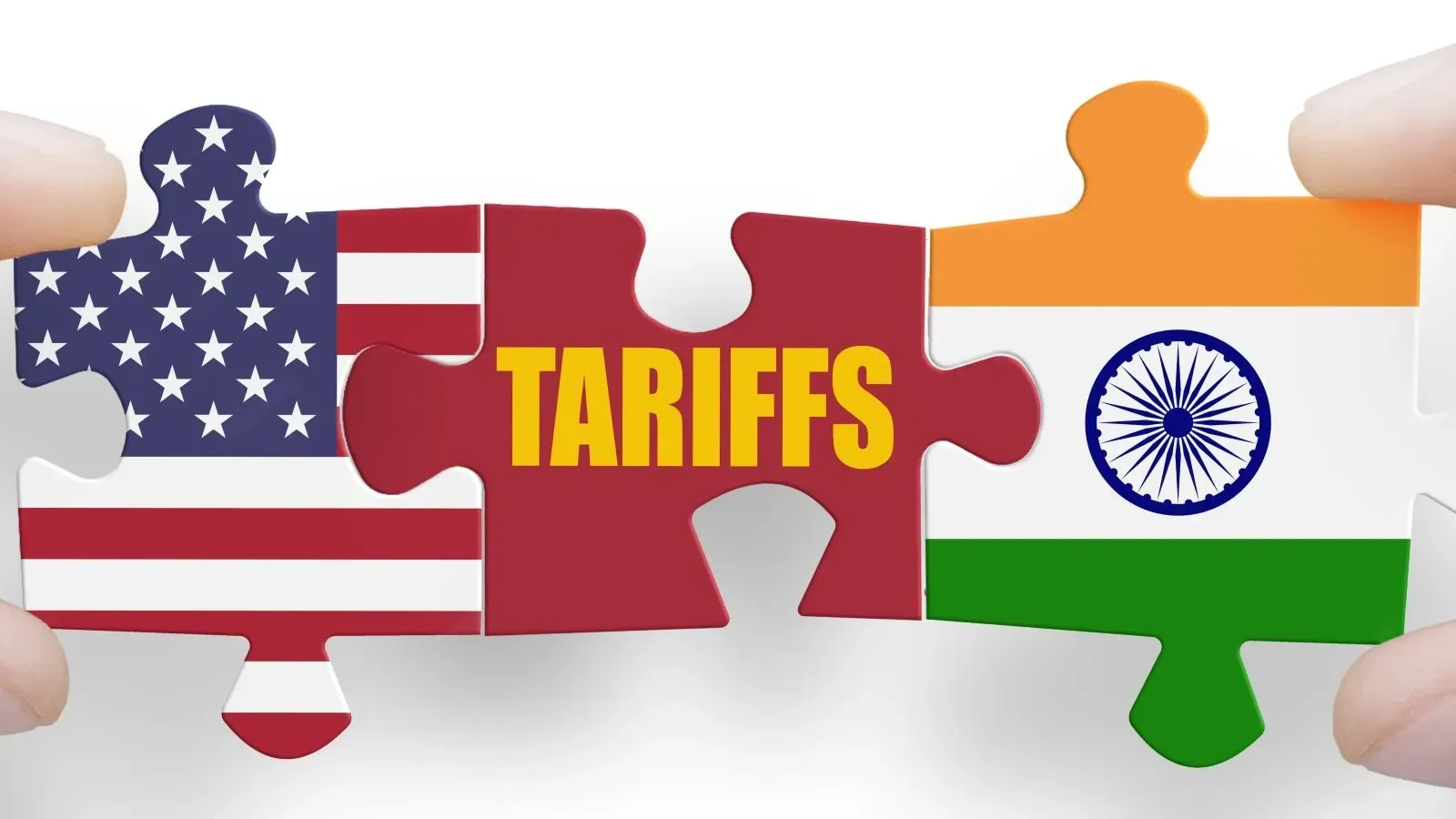
The Supreme Court’s landmark ruling on Trump’s “Liberation Day” tariffs has reshuffled the deck in Washington’s trade relationships with Beijing and New Delhi — but neither side is playing its hand just yet.
On the morning of February 20, 2026, President Donald Trump was in a closed-door White House meeting with state governors when a trade adviser slipped him a handwritten note. “So it’s a loss, then?” Trump reportedly said aloud. Within hours, the Supreme Court’s 6-3 ruling in Learning Resources, Inc. v. Trump had detonated across global trading floors from Mumbai to Shanghai — and the reverberations have yet to subside.
The court’s verdict, delivered by Chief Justice John Roberts and joined by an unusual coalition of conservative and liberal justices, was unambiguous: the International Emergency Economic Powers Act (IEEPA) does not authorize the president to impose tariffs. Gone, at a stroke, were the sweeping “Liberation Day” levies — duties that had ranged as high as 145% on Chinese goods and 26% on Indian exports in their peak form. As reported by the Tax Foundation, more than $160 billion in duties had been collected under the now-illegal framework, and the tariffs had been projected to generate $1.4 trillion over the next decade.
Trump moved fast, signing an executive order hours later imposing a temporary 10% global tariff under Section 122 of the Trade Act of 1974 — a rarely invoked provision that limits duties to 150 days without congressional approval. By Saturday, he had ratcheted the announced rate up to 15%. The whiplash, as one Citigroup economist noted, implied “little change in the effective tariff rate or inflation forecasts in the near term.” But the strategic calculus for Asia’s two largest economies shifted dramatically nonetheless.
The Tariff Landscape Before and After: What Actually Changed
To understand the opportunity — and the risk — for China and India, it helps to map the actual numerical terrain.
| Country | Peak IEEPA Tariff Rate | Current Effective Rate (Post-Ruling) | Net Change |
|---|---|---|---|
| China | ~35–50% (combined) | ~20–25% (Section 301 + 10% baseline) | -6.9 pp* |
| India | ~26% | ~15–18% (new baseline + deal terms) | -8 to -11 pp |
| Vietnam | ~46% | ~19% (deal rate preserved) | -27 pp |
| EU | ~20% | ~15% | -5 pp |
*Per Maybank IBG Research analysis
Bloomberg Economics calculated that Trump’s proposed 15% global rate would produce an average effective tariff of around 12% — the lowest since “Liberation Day” tariffs were released in April 2025. China, India, and Brazil emerged, in the words of the analysis, as “the biggest winners from the Supreme Court’s decision.”
Yet winning in absolute tariff terms is not the same as winning strategically. The picture is considerably more complicated.
China: A Tactical Windfall, Not a Strategic Reprieve
For Beijing, the ruling arrives at a diplomatically sensitive moment. Trump is scheduled to visit China from March 31 to April 2, 2026, for what will be the highest-stakes trade summit since his first term. The Supreme Court decision has altered the pre-meeting power dynamics in ways that Chinese negotiators will carefully — and quietly — exploit.
As the Council on Foreign Relations noted, the ruling “narrows unilateral presidential trade powers, constrains improvisational coercion, and shifts the terrain of U.S.-China competition away from executive brinkmanship to institutional process.” Trump enters Beijing with one fewer unilateral lever — and Chinese negotiators know it.
China’s public response has been characteristically calibrated. Beijing’s Commerce Ministry declared it was conducting a “comprehensive assessment” of the ruling’s impact, calling on Washington to “cancel its unilateral tariff measures on its trading partners” and warning that “there are no winners in a trade war.” That language — restrained, multilateralist, positioning China as the aggrieved rule-follower — is deliberate. Beijing is framing the ruling as validation of its long-standing critique that US trade policy violates both international norms and, as it turns out, US domestic law.
The arithmetic backs the posture. Crucially, the 10% flat tariff is meaningfully lower than the pre-ruling rate for Chinese goods. Analysts at one major bank noted that “the effective tariff rate will fall this year and that the world post-SCOTUS will see lower tariffs than the pre-SCOTUS world.” For Chinese exporters who had been dealing with cumulative duties far exceeding 30%, a 10–20% effective rate — before Section 301 levies on specific goods — represents real relief.
But the relief is partial and fragile. As The Associated Press reported, Section 301 of the 1974 Trade Act remains fully intact, and US Trade Representative Jamieson Greer announced Friday that the administration was “launching a series of 301 investigations” following its Supreme Court loss. Those “sticky tariffs,” as one trade lawyer put it, have been in place for eight years across two administrations, targeting Chinese technology, electric vehicles, and advanced manufacturing. The ruling did not touch them.
China’s countermeasures strategy is also evolving. With the reciprocal and fentanyl-related IEEPA tariffs on China suspended — they had reached a combined 24% — Beijing indicated a willingness to adjust its own retaliatory posture, signaling readiness for “candid consultations” before Trump’s arrival. That is diplomatic language for: we are willing to negotiate, but we hold more cards than we did last week.
India: Strategic Pause, or Strategic Hesitation?
India’s response has been more visibly disruptive. New Delhi became the first country to take a concrete step in response to the ruling, postponing its trade delegation’s planned trip to Washington to “finalise the legal text” of an interim trade deal that Trump had announced earlier in February. No new date has been set.
The deferral is understandable. India had negotiated a framework that pegged its tariff rate at 18% — a meaningful reduction from the previous 26% under IEEPA, and a result secured after considerable diplomatic effort by Prime Minister Narendra Modi’s government. Then, in a matter of days, the baseline for every country dropped to 10–15%, effectively eroding the competitive advantage India had worked to secure.
The situation is further complicated by the Trump administration’s decision, just four days after the Supreme Court ruling, to impose a 125.87% preliminary countervailing duty on solar cell imports from India under a separate trade investigation. As India Briefing reported, the targeted measure underscores how the ruling addresses emergency tariff authority, but leaves sectoral tools fully operative. For New Delhi, the tariff environment remains as volatile as ever.
Moody’s noted that “the Supreme Court’s intervention restricts Washington’s ability to deploy country-specific tariffs as a negotiation tool,” a constraint that “could reduce US leverage in bilateral trade talks.” That cuts both ways for India. Washington has less coercive power; but India also has less urgency to sign deals quickly.
India is also, quietly, revisiting its stance on Chinese investment. Reports indicate New Delhi is reviewing “Press Note 3,” the 2020 policy that placed strict scrutiny on foreign direct investment from countries sharing land borders — principally China. A tiered approval framework may emerge, reflecting India’s pragmatic recognition that it needs capital and technology inflows even as it manages strategic competition with Beijing.
The Geopolitical Chessboard: What Numbers Cannot Capture
Headline tariff rates are, as experienced trade negotiators know, only one variable in a far more complex equation. Energy security, technology supply chains, domestic political constituencies, and investment commitments all shape negotiations in ways that percentage points cannot fully represent.
For China, the structural competition with the US in semiconductors, artificial intelligence, and green technology remains fundamentally unchanged. The CFR’s Zongyuan Zoe Liu observed that “the structural factors driving U.S.-China strategic rivalry — technological competition, industrial policy clashes, and security tensions — remain unchanged.” What the ruling provides China is a modest tactical advantage: the moral authority of having been vindicated by America’s own highest court, and a negotiating room in which Trump arrives slightly disarmed.
For India, the geopolitical calculus is particularly delicate. New Delhi has spent years cultivating a “strategic autonomy” posture — deepening ties with Washington through initiatives like the Quad while maintaining its historical equidistance from great-power blocs. The tariff reshuffle tests that balance. A rushed deal with the US that locks India into trade commitments could constrain its flexibility with other partners. A prolonged delay, meanwhile, risks inviting retaliatory Section 301 investigations.
Fortune reported that Trump has warned countries they could face something “far worse” if they attempt to renegotiate existing deals — a reminder that the Section 122 tariff authority, though temporary (it expires in approximately 150 days, around mid-July), could be supplemented by Sections 232 and 301, which carry no such time limit.
The uncertainty, as Moody’s chief economist Mark Zandi told CNBC, has already begun to affect business behavior. “Businesses don’t know what’s going to happen next. They’re going to invest less, they’re going to hire less, they’re going to be less aggressive in their expansions.” That chilling effect applies equally to supply chain decisions across Asia.
The Road Ahead: Three Scenarios
Scenario 1 — Managed De-escalation. Trump’s China visit in late March produces a framework agreement. China adjusts its countermeasures, the US agrees to hold Section 301 rates steady (rather than expanding them), and a 90-day diplomatic truce takes hold. India finalizes its interim deal at a rate near or below 15%. Both countries gain breathing room. Probability: Moderate, contingent on domestic political conditions in Washington.
Scenario 2 — Procedural Escalation. The US uses Section 301 investigations to reconstruct country-specific pressure on China, and Section 232 national security reviews to target Indian steel, pharmaceuticals, and solar exports. The “new 10%” baseline becomes a floor, not a ceiling. India’s interim deal collapses. China digs in ahead of a midterm-election-minded Trump. Probability: Elevated, given the USTR’s stated intention to launch new investigations.
Scenario 3 — Legislative Reset. Congress, under pressure from businesses seeking tariff refunds and legal certainty, passes framework legislation granting the president conditional tariff authority with statutory guardrails. Both China and India face a more institutionally anchored — and therefore more predictable, if not necessarily lower — tariff regime. Timeline: 12–18 months at minimum.
Conclusion: The Numbers Are Not the Story
The Supreme Court’s February 20 ruling is less the end of America’s tariff wars than the end of their most arbitrary phase. As AP reported, the ruling means Trump “can’t conjure up new import taxes on a whim anymore” — but it does not mean tariff confrontation is over.
For Beijing, the ruling is a tactical gift deployed at a strategically opportune moment. For New Delhi, it is an unwelcome complication to a negotiation already dense with sectoral trade-offs and domestic sensitivities. Neither capital is rushing to the table. Both are recalculating.
What is clear is that the era of IEEPA-powered shock tariffs — unilateral, unlimited, and legally contested — has ended. What replaces it will be slower, more institutionally embedded, and therefore harder for trading partners to navigate through simple concession. That is a subtler kind of pressure, but it is pressure nonetheless.
Researchers and policymakers tracking the US-China-India trade triangle should watch three indicators closely over the coming weeks: the outcome of the Trump-Xi summit, whether India’s rescheduled trade delegation reaches Washington before Section 122 authority expires in mid-July, and the pace of new Section 301 investigation filings. The numbers on a tariff schedule are, in the end, just the opening bid. The real negotiation has barely begun.
Discover more from The Economy
Subscribe to get the latest posts sent to your email.



Key Takeaways
- Rolex’s secondary market rose approximately 7.9% year-over-year as of 2026 (per WatchCharts data) — trailing Patek Philippe (+16.2%) and Tudor (+11.4%) but still outperforming Audemars Piguet (+3.4%).
- Rolex raised U.S. retail prices 4–9% in January 2026 (steel models ~5.6%, gold models ~8.7%), narrowing the historical gap between retail and pre-owned pricing.
- Not every model appreciates: steel sports references (Submariner, GMT-Master II, Daytona) have held value far better than two-tone or widely available dress references like the standard Datejust.
- The Lady-Datejust posted the sharpest 2026 gain among tracked collections — up 22.73%, from roughly $9,269 to $11,376 — driven by demand for smaller, “everyday luxury” watches.
- Gold’s rise past $2,400/oz has directly lifted the investment case for Rolex’s precious-metal references (Day-Date, Sky-Dweller, Yacht-Master).
The Model-by-Model Picture
| Category | 2026 Trend |
|---|---|
| Lady-Datejust | +22.73% (strongest performer among tracked collections) |
| Steel sports models (Submariner, GMT-Master II) | Held value well; corrected from 2022 peak but stabilized above retail |
| Daytona | Corrected from highs above $50,000 to the mid-$30,000s; still among the most sought-after references |
| Two-tone/widely available Datejust | Flat to negative — “holds value” is an overstatement for this category |
| Gold references (Day-Date, Sky-Dweller) | Lifted by gold’s rise above $2,400/oz |
Why the “Rolex Always Appreciates” Myth Is Fading
The pandemic-era boom pushed some references — the Daytona above all — to speculative highs disconnected from historical norms. Since the March 2022 peak, steel sports models have compressed meaningfully, and dealers who bought inventory near the top have in some cases faced 20–40% markdowns on liquidation. The lesson for 2026 buyers: Rolex as a category is not a monolith. Value retention depends heavily on specific reference, condition, and whether the piece comes with box and papers (“full set”).
What’s Actually Driving 2026 Strength
- Retail price increases raise the floor. When a new Submariner retails at $10,050 (up from $9,500), a pre-owned example at $11,000–$12,000 suddenly represents a smaller premium — narrowing the gap without secondary prices actually moving.
- Supply discipline remains Rolex’s core lever. The brand has never confirmed production numbers, and secondary-market premiums remain entirely a function of Rolex’s own manufacturing decisions — a risk factor as much as a support.
- Certified Pre-Owned rollout. Rolex’s now fully rolled-out CPO program has changed how buyers transact in the used market, adding a layer of brand-verified legitimacy that supports pricing.
The Case for Rolex as a Portfolio Diversifier
Financial advisors increasingly frame luxury watches not as a replacement for equities or bonds, but as a tangible, historically low-correlation diversifier — one that carries its own risks (illiquidity, condition-dependent pricing, no yield) but has demonstrated multi-decade resilience for specific references.
Is Rolex a good investment in 2026?
It depends heavily on the specific reference. Steel sports models like the Submariner and Daytona have held or grown in value; two-tone and widely available dress models generally have not. Overall, Rolex’s secondary market rose about 7.9% year-over-year in 2026, trailing Patek Philippe but ahead of Audemars Piguet.
Discover more from The Economy
Subscribe to get the latest posts sent to your email.

Navigating Mortgage and Loan Refinancing in a High-Yield Environment
Global public debt crossing critical thresholds has kept central bank policies volatile, resulting in fluctuating US Treasury yields throughout 2026. For homeowners and commercial property holders burdened by previous high-interest borrowing cycles, finding optimal refinance windows has become a high-stakes financial puzzle. Stalled disinflation and stubborn employment numbers mean rate cuts are incremental, requiring borrowers to act with precision.
Timing your mortgage or commercial loan refinance in this environment requires a deep understanding of yield curve movements and lender risk appetites.
Decoding 2026 Refinance Dynamics
The 10-Year Treasury Yield Benchmark
Mortgage rates continue to track closely with the 10-year US Treasury yield. When macroeconomic anxiety spikes debt issuance, yields rise, tightening consumer borrowing capacity. Savvy borrowers monitor weekly Treasury auctions to lock in rates during brief dip windows.
Hybrid ARMs and Alternative Structures
With fixed rates remaining elevated, 7/1 and 10/1 adjustable-rate mortgages (ARMs) have surged in popularity. These products offer lower initial monthly payments, giving borrowers breathing room until central bank easing cycles fully materialize.
| Loan Product | Current Rate Range | Best For | Key Risk Factor |
| 30-Year Fixed Mortgage | 6.2% – 6.8% | Long-term predictability | Higher initial monthly outlay |
| 7/1 Hybrid ARM | 5.5% – 5.9% | Short-term ownership / flipping | Rate reset risk after year 7 |
| Commercial Refinance | 7.0% – 8.2% | Corporate asset restructuring | Strict DSCR lender covenants |
Actionable Steps for Successful Refinancing
To maximize your chances of securing favorable refinance terms in a volatile market, follow a disciplined preparation strategy.
Boost Your Credit Score Immediately: Lenders in 2026 are applying stringent credit tiering; a 20-point increase can drop your APR by a crucial quarter-point.
Shop Regional Credit Unions: Smaller financial institutions often offer portfolio loans with more flexible underwriting than major national banks.
Calculate the Break-Even Point: Ensure your total closing costs are recouped through monthly savings within 24 months of closing.
“Market Strategist View: Refinancing in 2026 is an exercise in opportunistic timing. Borrowers must maintain immaculate financial profiles ready to strike the moment Treasury yields dip.”
Mastering the complexities of today’s debt environment ensures you can successfully lower your debt service costs and protect your long-term financial stability.
Discover more from The Economy
Subscribe to get the latest posts sent to your email.

The days of pulling generic auto insurance quotes based purely on your zip code and age are officially over. In 2026, insurance comparison engines are powered entirely by generative AI and real-time telematics. These platforms digest thousands of live data points—ranging from your driving smoothness via connected vehicle sensors to real-time traffic congestion patterns—to generate hyper-personalized premiums instantly.
For consumers, this evolution represents both a massive opportunity for savings and a hidden trap for penalty pricing. Understanding how AI algorithms evaluate risk is essential for anyone looking to lower their monthly auto insurance premiums.
How AI Comparison Engines Evaluate Your Risk Profile
Behavioral Telematics and Connected Cars
Modern cars stream performance data directly to insurance aggregators. Generative AI models analyze braking sharpness, acceleration curves, cornering G-forces, and phone distraction metrics. Drivers who maintain smooth, defensive habits are rewarded with dynamic rate cuts of up to 40% compared to traditional rating tiers.
Predictive Traffic and Weather Modeling
AI tools now cross-reference your daily commute route with predictive weather and accident probability models. If your standard parking location or driving corridor has a statistically higher incidence of uninsured motorist claims, your quotes will reflect that hyper-local risk assessment.
| Comparison Factor | Traditional Rating Model | 2026 Generative AI Model | Impact on Premium |
| Mileage & Usage | Annual estimated odometer reading | GPS tracking & live trip duration | High (up to 35% savings) |
| Driving Behavior | MVR driving record & accidents | Real-time braking, speed, & G-force | Critical (determines tier) |
| Vehicle Tech | Make, model, and safety rating | ADAS calibration & repair cost data | Moderate |
Strategies to Lower Your AI-Driven Insurance Quote
To outsmart the algorithm and secure the lowest possible premium in 2026, drivers must proactively manage their digital footprint on insurance platforms.
Opt-In for Telematics Trial Periods: Many insurers offer immediate 15% discounts just for installing their driving app; let it track safe habits for 30 days to lock in permanent savings.
Scrub Unverified Public Records: Ensure your motor vehicle report is free of clerical errors that AI risk models misinterpret as reckless behavior.
Compare AI Aggregators: Use platforms that integrate multi-carrier API feeds rather than single-brand comparison sites to find the best risk-adjusted rate.
“Industry Note: AI-driven pricing rewards transparency and precision. Drivers who actively manage their telematics data consistently out-save those relying on legacy quote calculators.”
Embracing AI comparison tools allows savvy policyholders to customize coverage limits precisely to their driving habits, eliminating wasted premium spend while ensuring robust protection.
Discover more from The Economy
Subscribe to get the latest posts sent to your email.

The Global South: Debt, Climate Finance and Investment in 2026

Energy Security Is the New Economic Security

Can Global Tourism Survive Geopolitical Shocks?

Global Maritime Hegemony: How China Secured Over 81% of All New Shipbuilding Orders

The Coming Battle Over AI, Jobs and Wages

Why Developing Economies Face a Sharper Inflation Problem

The New Geography of Trade: Are Supply Chains Coming Home?

Is AI Saving Global Growth or Creating the Next Bubble?

Global Banking Trends 2026: Digital Banks, AI and Compliance

Gold vs US Dollar vs Bitcoin in 2026: Inflation Hedge Compared

How Global Interest Rates Affect Savings, Loans and Investments

How to Invest During High Inflation: A Global Guide

Best Global Stocks to Watch in 2026: Four Sectors to Research

Pakistan’s 2027 Growth Strategy: Exports, AI, Energy and Jobs

Crude Oil & Petroleum Market Analysis: OPEC+ Decisions and Price Forecasts

World’s Largest Economies: Ranking the Top Global Powers

Silver Price Today: Why the Xi-Trump AI Standoff Is Fueling a Safe-Haven Rally

Top US Convenience Store Chains: Store Counts, EV Charging, and Sales Trends

Algorithmic Dogfights: Why the U.S. and China Must Establish Rules of Engagement for Autonomous Air Power

Who Is Shivon Zilis? The Neuralink Executive at the Center of the Musk–OpenAI Trial

Business Insurance: What Coverage You Actually Need and What It Costs in 2026

Corporate America Faces a New Debt Test as US Borrowing Costs Surge

Global Economic Outlook 2026: 7 Forces Reshaping Markets, Trade and Business

Social Security Extra $90 Deposit: Who Qualifies for the October 2026 Medicare Rebate?

Gold Falls 3.7% as Yields Surge: Is Gold Still a Safe Haven in 2026?

US 10-Year Yield Hits 5.24%: What the Historic Bond Market Sell off Means for Mortgages and Investors

Stock Market Today: Dow, S&P 500, and Nasdaq Retreat as Treasury Yields

MAS Allocates S$1.45 Billion to Five Asset Managers in Third EQDP Batch: Total Deployment Reaches S$5.4 Billion
-

 Markets & Finance10 months ago
Top 15 Stocks for Investment in 2026 in PSX: Your Complete Guide to Pakistan’s Best Investment Opportunities
-

 Analysis8 months ago
Johor’s Investment Boom: The Hidden Costs Behind Malaysia’s Most Ambitious Economic Surge
-

 Analysis8 months ago
Top 10 Stocks for Investment in PSX for Quick Returns in 2026
-

 Banks9 months ago
Best Investments in Pakistan 2026: Top 10 Low-Price Shares and Long-Term Picks for the PSX
-

 Analysis9 months ago
Brazil’s Rare Earth Race: US, EU, and China Compete for Critical Minerals as Tensions Rise
-

 Investment10 months ago
Top 10 Mutual Fund Managers in Pakistan for Investment in 2026: A Comprehensive Guide for Optimal Returns
-

 Global Economy10 months ago
15 Most Lucrative Sectors for Investment in Pakistan: A 2025 Data-Driven Analysis
-

 Global Economy10 months ago
Pakistan’s Export Goldmine: 10 Game-Changing Markets Where Pakistani Businesses Are Winning Big in 2025