
Analysis
Robin Khuda’s $3 Billion Bet: Why AirTrunk’s Malaysia Expansion Signals Southeast Asia’s AI Infrastructure Boom

While Silicon Valley obsesses over the next iteration of large language models and generative algorithms, the true masters of the artificial intelligence universe are quietly moving earth, pouring concrete, and securing massive water rights in Southeast Asia. We are witnessing the industrialization of AI, and its epicenter is shifting rapidly toward the equatorial tropics.
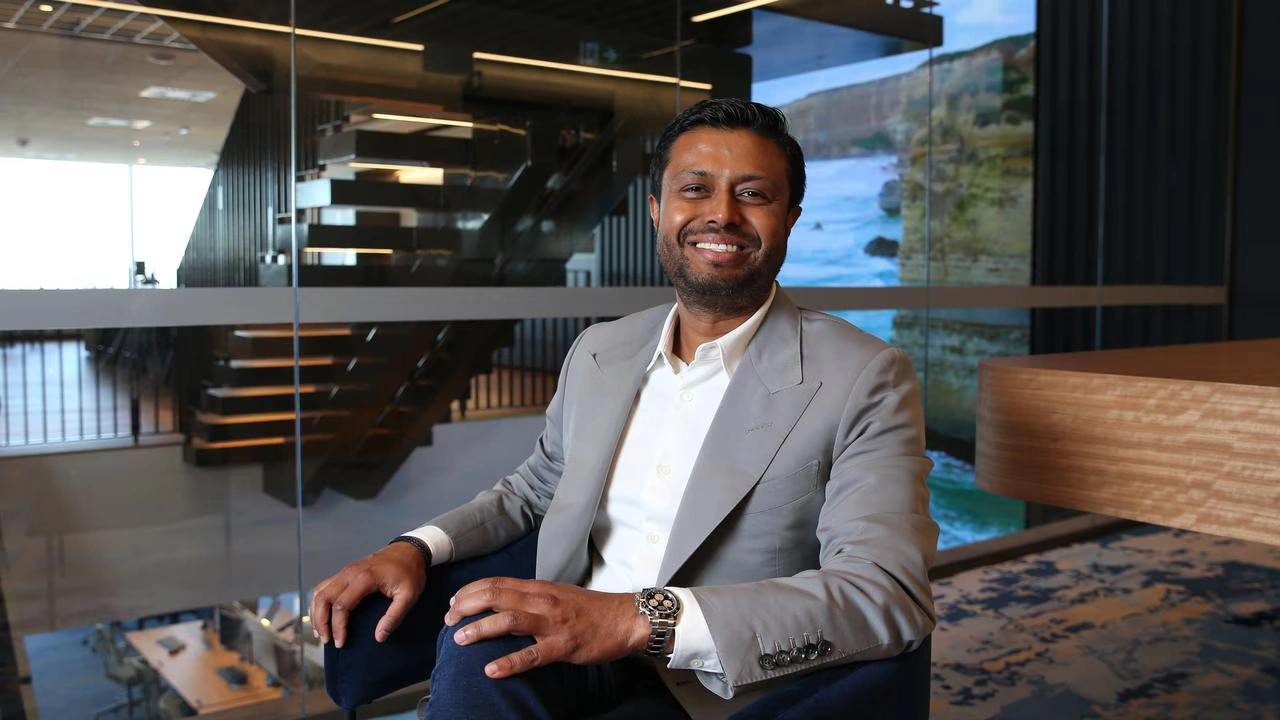
Few moves illustrate this geopolitical and economic pivot more vividly than the recent masterstroke by Australian billionaire Robin Khuda. Through AirTrunk, the hyperscale juggernaut he founded, Khuda is doubling down on the Malay Peninsula, committing a staggering MYR12 billion (approximately $3 billion) to develop two new hyperscale campuses—JHB3 and JHB4—in Johor, Malaysia.
This isn’t just another corporate real estate transaction. In my view, this Malaysia data center investment is a definitive bellwether. It signals a permanent rewiring of the global digital supply chain, cementing Malaysia’s role as the indispensable engine room for the Southeast Asian digital economy.
To understand why this matters—and why investors, policymakers, and tech executives should be paying close attention—we have to look beyond the server racks and examine the macroeconomic tectonic plates shifting beneath them.
The Anatomy of a $3 Billion Bet
Let’s unpack the sheer scale of the AirTrunk Malaysia data centers strategy. The new JHB3 and JHB4 facilities will add 280 megawatts (MW) of capacity to AirTrunk’s regional footprint. For context, 280MW is roughly the power consumption of a mid-sized industrial city—dedicated entirely to the relentless hum of high-performance computing.
When you add this to their existing operations, AirTrunk’s total commitment in Malaysia swells to around MYR27 billion (roughly $6.8 billion), encompassing four massive campuses with a combined capacity exceeding 700MW.
Robin Khuda has always been a man who plays the macro trends with surgical precision. A decade ago, he saw the enterprise cloud migration coming before many legacy telcos even understood the threat. Now, Robin Khuda’s billionaire data centers are pivoting to capture the artificial intelligence super-cycle. AI workloads are vastly different from traditional cloud computing; they run hotter, demand denser power arrays, and require specialized cooling infrastructure. Building for AI means building with a radically different architectural thesis.
AirTrunk’s MYR12 billion infusion isn’t speculative; hyperscale economics dictate that capacity is often significantly pre-leased to “anchor tenants”—the elite club of global tech titans like Microsoft, Google, AWS, and ByteDance. Khuda is building the toll roads for the AI era, and the traffic is already lining up.
The Johor Advantage: Singapore’s Digital Hinterland
Why Johor? Why now? The answer lies a few miles south, across the Causeway.
For years, Singapore has been the undisputed digital hub of Southeast Asia, boasting the densest concentration of submarine cables and data centers in the region. But Singapore has a fundamental geographic and physical limit: a severe lack of cheap land and available renewable power. The island nation’s multi-year moratorium on new data centers (which has only recently been cautiously lifted under stringent green constraints) forced the industry to look for a release valve.
Johor, the southernmost state of Malaysia, has eagerly positioned itself as that valve. It is the classic “spillover” play, reminiscent of how New Jersey absorbed the industrial overflow of New York City in the 20th century.
The Johor data center expansion offers hyperscalers the holy grail of infrastructure:
- Vast tracts of affordable land.
- Abundant and increasingly resilient power grids managed by Tenaga Nasional Berhad (TNB), which has established specialized “Green Lanes” to expedite power approvals for data centers.
- Geographic latency proximity that allows servers in Johor to effectively function as part of the Singaporean digital ecosystem, often with sub-millisecond latency.
Furthermore, the impending Johor-Singapore Special Economic Zone (JS-SEZ) will streamline cross-border data flows, talent mobility, and capital investment. AirTrunk’s aggressive land banking and capacity expansion in this corridor is a calculated bet that the Johor-Singapore nexus will function as a single, integrated megacity for digital compute.
Geopolitics and the Malaysia AI Data Center Boom in Johor
We cannot analyze the Malaysia digital economy data centers without acknowledging the geopolitical chessboard.
The U.S.-China technology war—characterized by semiconductor export controls, decoupling supply chains, and sovereign data localization laws—has created a deeply fragmented global tech ecosystem. Tech giants are desperately seeking “neutral” territories where they can safely deploy billions in capital without falling afoul of sudden tariffs or sanctions.
Malaysia has masterfully positioned itself as the “digital Switzerland” of Asia. The Anwar Ibrahim administration has rolled out the red carpet, pairing its National Energy Transition Roadmap (NETR) with proactive digital investment incentives. Malaysia happily hosts facilities for American giants like Google and Microsoft, while simultaneously welcoming Chinese titans like Alibaba, Tencent, and ByteDance.
By anchoring the Malaysia AI data center boom in Johor, AirTrunk is capitalizing on this geopolitical neutrality. When the world fragments, the premium on safe-haven infrastructure skyrockets. Robin Khuda recognizes that the physical location of data is now a matter of national security, and Malaysia offers a rare blend of political stability, geographic safety from natural disasters, and diplomatic non-alignment.
The Sustainability Imperative: Cooling the AI Beast
If there is a fundamental risk to the “AirTrunk $3 billion Malaysia” narrative, it is the environment.
Generative AI is remarkably thirsty and power-hungry. A single ChatGPT query consumes nearly 10 times the electricity of a standard Google search. The 280MW expansion by AirTrunk requires immense cooling capabilities, putting significant strain on local water resources and grid emissions. As a senior analyst, I’ve watched promising infrastructure booms stall when local populations push back against the monopolization of their water and power.
This is where Khuda’s strategic foresight is truly tested. AirTrunk has openly committed to deploying highly advanced cooling architectures in JHB3 and JHB4. The integration of direct-to-chip liquid cooling and the use of recycled water cooling systems is not just corporate greenwashing; it is an operational necessity.
Hyperscale clients like Microsoft and Google have aggressive, publicly stated carbon-negative and water-positive goals for 2030. They simply will not—and cannot—lease space in facilities that ruin their ESG scorecards. AirTrunk’s ability to pioneer closed-loop water systems and negotiate massive Power Purchase Agreements (PPAs) for solar and renewable energy in Malaysia will dictate the long-term viability of this investment.
The Malaysian government must also play its part. Upgrading the national grid to handle this 700MW+ load while simultaneously phasing out coal dependency is the defining public policy challenge for Putrajaya over the next decade. If Malaysia fails to deliver green electrons, the data center boom will capsize.
The Long View: Southeast Asia Hyperscale Data Centers 2026 and Beyond
As we look toward the horizon of Southeast Asia hyperscale data centers 2026, the competitive landscape is intensifying. Indonesia, with its massive domestic population of 270 million, and Vietnam, with its booming tech-manufacturing sector, are fiercely vying for the same capital that AirTrunk just deployed in Johor.
Yet, AirTrunk’s first-mover advantage and staggering scale in Malaysia create a formidable economic moat. Building a 280MW AI-ready data center requires complex supply chains—from securing high-voltage switchgear to sourcing specialized chillers and fiber-optic splicing talent. By continuously expanding on existing campuses, AirTrunk achieves economies of scale that smaller, newer entrants in Jakarta or Ho Chi Minh City cannot match.
What this move truly signals is the maturation of the ASEAN digital economy. We are moving past the era of mere consumer app adoption (ride-hailing, e-commerce) and entering the era of foundational, heavy-iron tech infrastructure. AirTrunk is betting that Southeast Asia will not just be a consumer of Western AI models, but a primary hub for training, inferencing, and deploying localized AI applications for a region of 600 million people.
Strategic Takeaways for Investors
- Infrastructure is the Ultimate AI Play: While investing in AI software is akin to wildcatting for oil, investing in hyperscale data centers is like owning the pipelines. The risk-adjusted returns on AI infrastructure will likely outpace software over the next decade.
- The “Singapore + 1” Strategy is Real: Companies must look at Southeast Asia regionally. Singapore retains the corporate headquarters and financial routing, but Johor will handle the heavy computational lifting. Real estate and logistics investments bridging these two nodes will see premium valuations.
- Green Energy is the Bottleneck: The limiting factor for AI growth is no longer silicon; it is electricity. Infrastructure funds that can successfully pair renewable energy generation with data center development will dominate the 2026-2030 cycle.
Conclusion
Robin Khuda didn’t become a billionaire by accident. His MYR12 billion bet on Johor is a masterclass in reading the macroeconomic tea leaves. It marries the explosive, power-hungry demands of the artificial intelligence revolution with the geopolitical necessity of neutral, scalable geography.
AirTrunk’s expansion ensures that as the global AI arms race accelerates, the most critical battles won’t just be fought in the laboratories of San Francisco or the boardrooms of Beijing. They will be won in the humming, water-cooled halls of Johor, where the physical reality of the digital future is currently being built in concrete and steel. Malaysia has been handed a golden ticket to the AI era; now, it just has to keep the lights on.
Frequently Asked Questions (FAQ)
Why is Robin Khuda investing $3 billion in Malaysia?
Robin Khuda, through his company AirTrunk, is investing heavily in Malaysia to capture the surging demand for artificial intelligence and cloud computing in Southeast Asia. The $3 billion (MYR12 billion) investment builds two new AI-ready data centers (JHB3 and JHB4) to serve hyperscale tech companies.
What is driving the Malaysia AI data center boom in Johor?
Johor is experiencing a data center boom primarily due to its proximity to Singapore (which has faced land and power constraints). Johor offers abundant land, reliable power via fast-tracked utility approvals, and excellent connectivity, making it the ideal “digital hinterland” for the region.
How does AirTrunk handle the sustainability of such large data centers?
AI data centers require massive power and cooling. AirTrunk focuses on sustainability by implementing highly efficient liquid cooling technologies, utilizing recycled water cooling to minimize local water stress, and working toward integrating renewable energy sources in alignment with Malaysia’s green energy transition.
What are the expectations for Southeast Asia hyperscale data centers by 2026?
By 2026, Southeast Asia is projected to be one of the fastest-growing regions globally for hyperscale infrastructure. Driven by digitalization, AI adoption, and geopolitical shifts seeking neutral ground, markets like Malaysia, Indonesia, and Thailand are expected to see billions in continued foreign direct investment.
How much total capacity does AirTrunk have in Malaysia?
With the recent expansion, AirTrunk’s total commitment in Malaysia represents over 700MW of IT capacity across four campuses, making it one of the largest independent data center operators in the country and a cornerstone of the nation’s digital economy.
Discover more from The Economy
Subscribe to get the latest posts sent to your email.


Thursday, August 6, 2026, is not an ordinary session for SpaceX shareholders. It is the day the company’s first post-IPO lockup period expires, freeing up to roughly 911.5 million insider-held shares — worth close to $123 billion at recent prices — for potential sale on the open market, according to The Motley Fool. To put that in perspective: SpaceX’s entire public float has stood below 280 million shares since its record-breaking June 12 IPO, meaning the unlock could roughly triple the number of tradable shares in a single day.
This is the story competitor outlets are covering as a single-day news event. Few are explaining why the structure of SpaceX’s lockup makes this particular date so unusual — or what it signals about how the company priced risk into its unprecedented listing.
Why this lockup is different from a typical IPO unlock
Most companies use a single 180-day lockup. SpaceX instead built a staggered, performance-linked release schedule tied to its earnings calendar. Insiders became eligible to sell an initial 20% tranche on the second full trading day after the company’s first quarterly earnings report as a public company — which landed on August 4, pushing the unlock date to August 6, per The Motley Fool’s original lockup breakdown.
A bonus 10% tranche would have unlocked early had SPCX traded at least 30% above its $135 IPO price for five of the ten sessions before earnings. That threshold — above $175 — was never reached; the stock has instead spent recent weeks trading near or below its offer price, having fallen more than 40% from the post-IPO high of $225.64 it touched four days after listing, according to StartupHub.ai.
Further pressure is scheduled, not speculative. Additional 7% employee tranches are due around August 21 and September 10, and analysts at 22V Research estimate insiders could collectively be free to sell as much as 44% of total shares by early September — an roughly ninefold increase in the tradable float from where it stood at listing, per Yahoo Finance.
The fundamentals behind the slide
The unlock is landing on a stock that was already under pressure for reasons beyond supply mechanics. SpaceX reported a $4.9 billion net loss for 2025 and lost a further $4.28 billion in the first quarter of 2026, a burn rate that has cooled post-IPO enthusiasm even among investors who back the long-term Starship and Starlink thesis, according to analysis from DayTradingToolkit. Despite posting stronger-than-expected earnings this week, SPCX shares tumbled roughly 14% as the market looked past the results and priced in the incoming supply, based on Bloomberg’s markets desk.
What history suggests happens next
Lockup expirations do not automatically trigger crashes — the actual price impact depends on how much of the newly eligible stock insiders choose to sell, and at what price they’re willing to part with it. Some analysts argue the reaction could be a useful signal in itself: if SPCX absorbs this wave of supply without breaking to fresh lows, that would suggest the market has already priced in the dilution risk, a view echoed by commentary from The Motley Fool’s investing desk. Others counsel patience, arguing the stock’s valuation looks stretched even before accounting for the added float.
For investors weighing an entry point, the practical takeaway is that August 6 is the first of several tests, not the last. The rolling 7% employee releases in late August and September mean supply pressure is likely to recur through the fourth quarter, with the float expected to expand roughly sixfold by late September and to around a third of total shares by Halloween, according to earlier lockup modelling reported by Investing.com.
Key takeaways
- SpaceX’s first lockup expiration frees up to 911.5 million shares (~$123 billion) for potential sale starting August 6, 2026.
- The bonus early-unlock trigger — a 30% share-price premium to the $135 IPO price — was not met, so this is the baseline release, not an accelerated one.
- SPCX has fallen over 40% from its post-IPO peak and briefly traded below its offer price.
- Further 7% tranches are scheduled for late August and mid-September, meaning supply-driven volatility is likely to continue into Q4 2026.
- The stock’s slide reflects both the lockup mechanics and underlying losses of roughly $4.28 billion in Q1 2026 alone.
FAQ
When does SpaceX’s stock lockup expire? The first tranche expired August 6, 2026, two trading days after SpaceX’s first quarterly earnings report as a public company. Additional tranches are scheduled through December 8, 2026.
How many SpaceX shares could be sold? Up to approximately 911.5 million shares — about 20% of eligible insider holdings — became sellable on August 6, against a public float that had been below 280 million shares.
Why did SpaceX stock fall despite strong earnings? Investors appear to be pricing in the incoming supply from the lockup expiration rather than reacting purely to quarterly results, alongside continued losses tied to Starship development costs.
Discover more from The Economy
Subscribe to get the latest posts sent to your email.
China’s global hunt for billions in unpaid taxes is rewriting the rules for its wealthy citizens.
Just after the Lunar New Year in 2026, a Shenzhen-based family office manager began fielding a new, unwelcome kind of call from his clients. Chinese tax authorities were asking them to settle liabilities on overseas capital gains—some dating back to 2017, others as far as 2000. He had no explanation for the arbitrary five-year window, only the stark reality of a new era: the era of Beijing’s global tax hunt.
Within weeks, the picture became clearer and more alarming for the country’s ultra-wealthy. Banks in mainland China had received instructions to freeze the accounts of wealthy depositors until they could prove taxes on foreign assets, trusts, and investments had been paid. As one banker put it, speaking to the Financial Times under the condition of anonymity: “These wealthy individuals now immediately need to pay penalties and taxes in cash to reactivate their accounts.” The policy response is unambiguous: the People’s Republic has launched a campaign to recover what it believes to be hundreds of billions of dollars in unpaid taxes.
It is, by any measure, a foundational shift in China’s fiscal policy, prompted by a grinding budget deficit and a genuine overhaul of its tax system to align more closely with the United States’ model of global taxation.
The Crunch and the Crackdown
The reason for the campaign’s urgency is a stark one: Beijing is running out of money. The traditional engines of state revenue have seized. Total government land sales, once a core source of funding for local governments, have collapsed from a peak of 8.7 trillion yuan ($1.3 trillion) in 2021 to just 4.15 trillion yuan after the spectacular unwinding of the property market .
This is not a short-term liquidity crisis. It is a structural fiscal realignment. Since the pandemic, overall budget revenue in China has largely stagnated, falling by 1.7% to 21.6 trillion yuan ($3.2 trillion) in 2025 . With the property sector no longer the reliable cash cow it once was, the state has been forced to look elsewhere, and it has set its sights on the billions of dollars in wealth held offshore by its citizens. The State Taxation Administration and the Ministry of Finance confirmed the new measures, formalising a pursuit that was already well underway .
This is the hard data behind the crackdown: a fiscal imperative. It signals that the government is willing to reach decades back into the past—some accounts are being scrutinised as far back as the year 2000—to plug the hole in the present.
The Core Development: A Data-Driven Manhunt
What makes this campaign different from previous sporadic efforts is its technological sophistication and its sheer scope. The hunt is not merely targeted; it is systematic and data-driven.
Chinese authorities are leveraging the full force of modern financial surveillance, utilising data obtained through the OECD’s Common Reporting Standard (CRS), which China has been an active participant in since 2018. As tax lawyer Ye Yongqing of Anli Partners noted, regulators are steadily strengthening the supervision of cross-border capital flows and foreign exchange transactions, narrowing the scope for wealthy Chinese to transfer assets offshore .
Private bankers and wealth managers are already seeing the impact. Singapore-based bankers who manage assets for Chinese families have confirmed that new rules on foreign trusts have “shocked” their clients . Last month, China introduced comprehensive tax rules on assets transferred to foreign trusts, closing a long-standing loophole. Under the new regime, income generated by overseas trusts will be taxed at 20% across multiple stages.
The specific assets under scrutiny are varied, including real estate, stocks, precious metals, and even cryptocurrencies . Financial institutions are being asked to verify whether income from these assets has been declared to Beijing. The retroactive nature of the campaign—in some cases extending more than 25 years—has been confirmed by multiple officials, bankers, and advisors .
Why are banks freezing accounts?
Chinese banks have been instructed to cooperate with tax authorities by freezing the accounts of wealthy depositors until they settle tax liabilities on their overseas assets. This includes gains from foreign stocks, real estate, trusts, and insurance policies. The freeze is only lifted when the individual pays the outstanding tax and penalties in cash, creating powerful leverage for the state to enforce compliance quickly.
An American Model, A Chinese Reality
The structural ambition of this campaign reaches well beyond a one-off tax grab. It represents a deliberate strategy to move China’s tax system closer to the US model.
Just as the US Internal Revenue Service taxes American citizens on their worldwide income regardless of where they reside, China is beginning to adopt a similar territorial approach. This is a significant escalation. For years, wealthy Chinese individuals have used offshore trusts and other complex structures to defer or eliminate tax liabilities on foreign earnings. These structures were often established during the heyday of Hong Kong IPOs, providing a “perfect income tax shield,” according to a Singapore-based banker . The new rules aim to dismantle those shields.
The implications are profound. When the taxman begins to treat offshore gains the same as domestic profits, the calculus of wealth management for high-net-worth individuals changes entirely. As Ye Yongqing noted, this “reduces the scope for wealthy Chinese to transfer their assets abroad or structure their tax affairs through offshore vehicles” .
Victor Shih, a professor of political economy at the University of California, San Diego, summed up the driving force simply: “The motive behind the new campaign is clearly fiscal” . That fiscal necessity is now reshaping the legal architecture of Chinese wealth.
The Second-Order Effects: Compliance and Capital Flight
Downstream consequences of this policy are already rippling through the economy and across borders.
For those in the cross-border trade business, the squeeze is tangible. Zhejiang-based exporter Henry Huang told the South China Morning Post that the heightened scrutiny of unreported overseas income is “taking a real bite out of profits,” forcing him to rethink cross-border operations with little room to pass on costs to price-sensitive US and European customers .
Chinese authorities are also ramping up the legal and psychological pressure. The public security ministry’s “Fox Hunt” campaign, which focuses on extraditing economic fugitives, has already captured over 880 overseas suspects, demonstrating a hardened stance on economic crime .
Yet the most significant risk might be a self-inflicted wound. There is a growing concern that such an aggressive enforcement posture, while potentially lucrative, could accelerate the very capital flight it is designed to reverse. If the wealthy feel they are being pursued relentlessly and facing punitive fines, they may seek to move not just their cash but their entire operations to jurisdictions they perceive as safer.
A Dissenting View: The Cost of Compliance
Of course, the narrative is not without its critics. Some experts warn that the crackdown could have unintended consequences that outweigh the potential revenue gains. The shift in policy, while designed to boost state coffers, might create an exodus of talent and capital.
Furthermore, the operational challenges for tax authorities are immense. While big data and the CRS give them a new level of visibility, they are still largely in the dark about the total quantum of overseas assets. A Bloomberg report from January noted that “even in Beijing’s tightly controlled society, the crackdown is proving spotty,” with local authorities largely unaware of the amount of wealth stashed abroad .
The risk is that a “one-size-fits-all” approach could drive the most mobile taxpayers away. A banker in Singapore managing Chinese wealth observed that many trust owners now face “one-off tax liabilities” and may be forced to sell assets to cover the bills . The campaign may ultimately shrink the tax base it is trying to capture, a classic Laffer Curve dilemma applied to capital.
The “global tax hunt” is, at its heart, a story of transformation. It illustrates a China trying to build a modern welfare state without the traditional safety net of property speculation. The era of the tax-free offshore account for Chinese citizens is ending, not with a whimper but with a series of account freezes and data-driven audits. The policy represents a historic pivot, a move to international norms that at once strengthens Beijing’s fiscal position and challenges the global mobility of its wealthiest citizens. The state’s appetite for its own citizens’ foreign wealth has only just begun, and it is ravenous.
Discover more from The Economy
Subscribe to get the latest posts sent to your email.
The Federal Reserve’s rate-setting committee held its benchmark borrowing rate steady on July 29, keeping it in a range of 3.5% to 3.75% — but the calm on the surface masked one of the most contested votes of the post-pandemic era. The Federal Open Market Committee split 9 to 3, with three members pushing to raise rates rather than hold, according to NPR’s coverage of the decision.
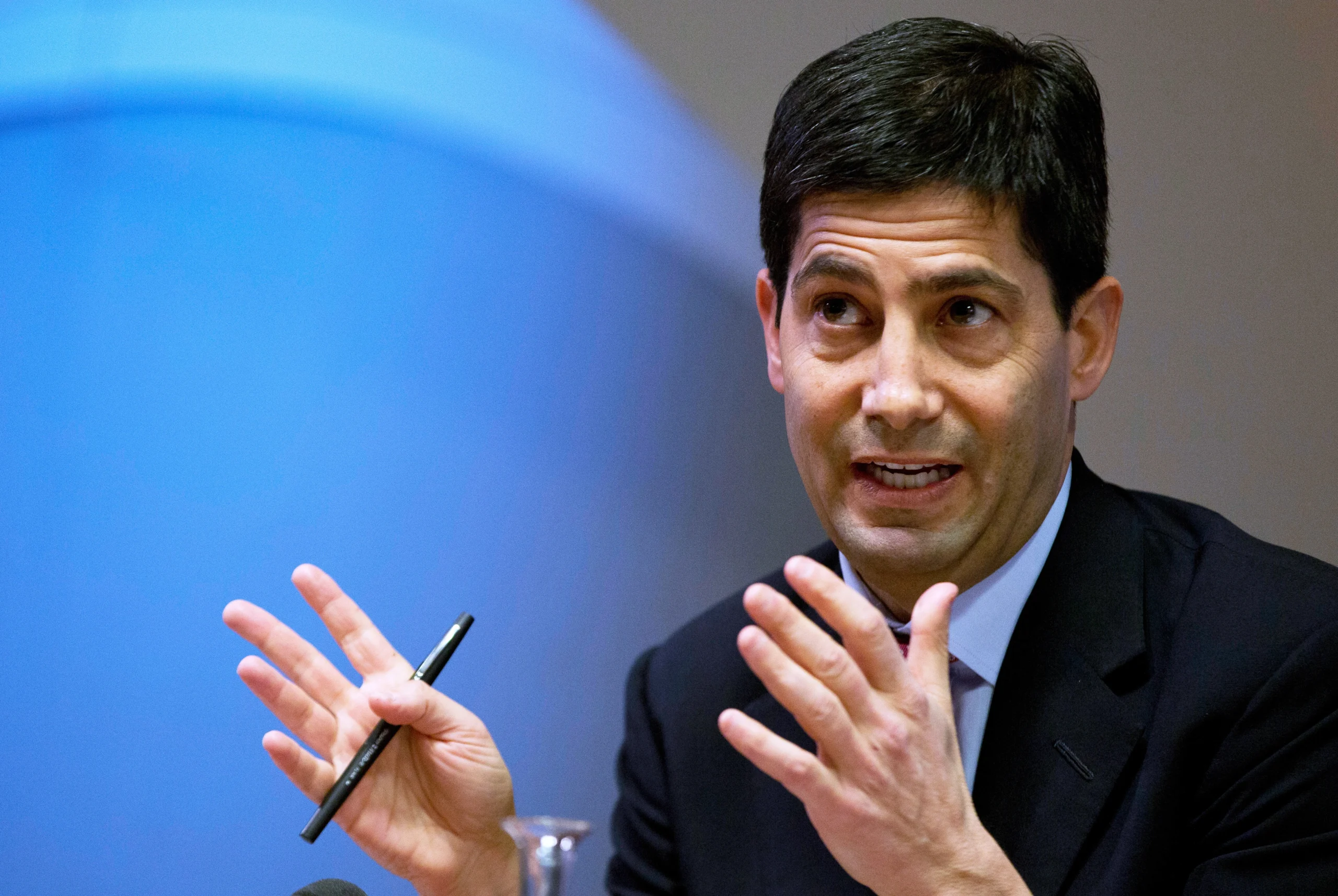
Chair Kevin Warsh, who took over the Eccles Building earlier this year after a nomination process that rattled bond markets, used his post-meeting press conference to make a point of not making a point. Rather than signal where rates are headed next, Warsh told reporters the Fed would judge market reaction “direct and unfiltered” instead of offering the rolling forecasts investors have come to expect, a stance detailed in CNBC’s meeting recap.
A rate hike was genuinely on the table
What made this meeting unusual wasn’t just the dissent — it was how close markets came to pricing in a hike rather than a cut. Fed funds futures tracked by CME Group put the odds of a rate increase at roughly 35% heading into the decision, up sharply from 26% a week earlier, according to CNBC’s markets analysis. That is a striking reversal from the rate-cutting cycle many investors had expected when Warsh’s nomination was first floated as a “productivity-led growth” pivot away from his predecessor’s caution.
The market reaction told its own story. The S&P 500 slid roughly 0.6% during Warsh’s press conference, the Dow shed more than 840 points intraday, and the 10-year Treasury yield rose to 4.657%, even as the Fed opted for a hold rather than a hike.
Why Warsh is playing it differently
Warsh’s approach reflects both economic and political calculus. Treasury yields have climbed since the Fed’s prior meeting despite the hold, a dynamic Warsh acknowledged directly. And unlike his predecessor, Warsh has been explicit that he intends to set policy independent of the White House’s preferences — even as he awaits a possible additional ally on the Board once a pending internal review concludes, according to CNBC’s analysis of the political backdrop.
Why this matters beyond Washington
A genuinely undecided Fed has knock-on effects well past US borrowers. Higher-for-longer Treasury yields pull global capital toward dollar assets, complicating rate paths in London, Ottawa, and emerging markets alike — a dynamic playing out in parallel with the UK’s own fiscal squeeze (see our companion report on the Autumn Budget) and China’s deflationary drag on global demand. For businesses and investors across the Gulf, Southeast Asia, and South Asia weighing dollar-denominated debt or dollar-pegged currencies, an unpredictable Fed chair is arguably a bigger variable than the rate level itself.
Discover more from The Economy
Subscribe to get the latest posts sent to your email.

Pakistan Economy 2026: Why GDP Growth Isn’t Reaching Ordinary Households

Strait of Hormuz Deal 2026: Iran-Oman Talks, Oil Price Impact & What Happens Next

SpaceX Stock Lockup Expiration Explained: Why $123B in Shares Could Hit the Market

The Taxman Cometh from Beijing

Pakistan IMF Program 2026: Inside the Push Toward an Interest-Free Economy

Russia Oil Revenue 2026: How Sanctions on Rosneft and Lukoil Are Draining the War Chest

Canada US Trade War 2026: Inside Carney’s Push to Cut Ties With Trump’s Tariffs

Rachel Reeves’s £25 Billion Problem: What the Autumn Budget Gap Means for Britain

Inside the Fed’s Most Divided Vote in Years: Why Warsh Held the Line on Rates

Pakistan Passed Its Third IMF Review

The Fed Is Fractured — And a New Chair Just Made It Louder, Not Quieter

The UK Economy in 2026 Is Neither Recession Nor Recovery :Stagflaton

Indonesia’s $121 Billion Nickel Bet Is Facing a Battery Chemistry

Why Ultra-Wealthy Families Are Splitting Between Singapore and Dubai inmarkets 2026

Russia Bans Diesel Exports 2026: Global Fuel Market Impact Explained

Gold Price Forecast 2026: Fed’s July 29 Decision and Record Central Bank Buying Explained

Strait of Hormuz Blockade 2026: Oil Prices Surge 9% as US-Iran Conflict Reignites

Strait of Hormuz 2026: Why Markets Still Don’t Trust It’s Open

China Politburo July 2026: Stimulus Signals Explained

Pakistan Economy 2026: GDP Grows 3.7% as IMF Completes EFF Review Amid Middle East Risk

Apple vs OpenAI Lawsuit: The Economic Story Behind the Headline

Down But Not Out: Inside the Slow Sinking of Russia’s War Economy

Gulf Capital Retreat From Pakistan 2026: UAE Loan Freeze & What It Means

Indonesia Russian Oil Imports 2026: Why Jakarta Is Diversifying Crude Supply

The Yuan Now Settles 67% of Russian Oil Payments — Quiet De-Dollarization in Action

AI Capex Bubble 2026: The Hidden $662B Debt Nobody Reports

Global Stock Market Selloff 2026: Stagflation Fears Return as Iran Conflict Reignites

Gulf Sovereign Wealth Funds Hit Record $53.9B in H1 2026 Despite Iran War
-

 Markets & Finance7 months ago
Top 15 Stocks for Investment in 2026 in PSX: Your Complete Guide to Pakistan’s Best Investment Opportunities
-

 Analysis5 months ago
Johor’s Investment Boom: The Hidden Costs Behind Malaysia’s Most Ambitious Economic Surge
-

 Analysis6 months ago
Top 10 Stocks for Investment in PSX for Quick Returns in 2026
-

 Analysis6 months ago
Brazil’s Rare Earth Race: US, EU, and China Compete for Critical Minerals as Tensions Rise
-

 Banks7 months ago
Best Investments in Pakistan 2026: Top 10 Low-Price Shares and Long-Term Picks for the PSX
-

 Investment7 months ago
Top 10 Mutual Fund Managers in Pakistan for Investment in 2026: A Comprehensive Guide for Optimal Returns
-

 Global Economy7 months ago
15 Most Lucrative Sectors for Investment in Pakistan: A 2025 Data-Driven Analysis
-

 Global Economy7 months ago
Pakistan’s Export Goldmine: 10 Game-Changing Markets Where Pakistani Businesses Are Winning Big in 2025