
Analysis
Pakistan’s 2026 Monsoon Floods Threaten Fragile Economic Recovery as Inflation Nears 9%

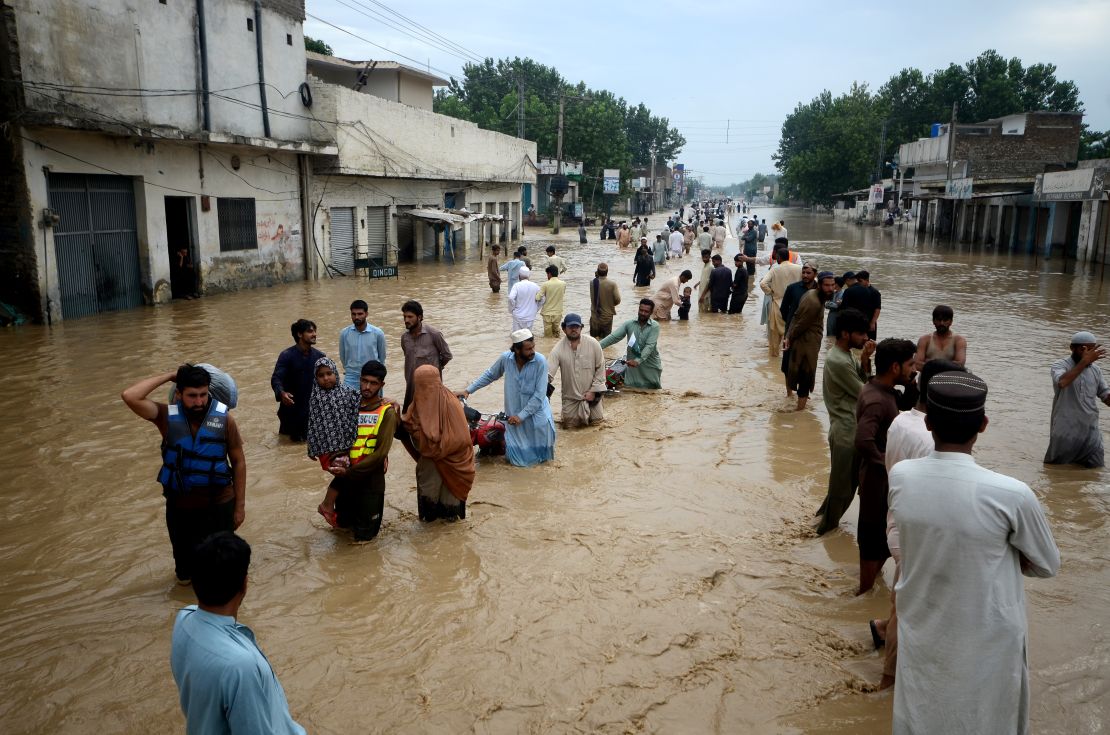
A punishing monsoon season has killed more than 100 people across Pakistan since late June and is now colliding with the country’s fragile post-IMF recovery, pushing food prices toward multi-year highs just as the State Bank prepares to defend a currency propped up by fresh inflows from allied governments.
Flood Toll Rises as Damage Assessment Begins
Flood-related incidents — drownings, house collapses, and flash floods across Punjab, Khyber Pakhtunkhwa, and Sindh — have killed 109 people in Pakistan since June 26, according to Business Recorder’s latest tracking of disaster management data. The toll is a fraction of the devastation wrought by the catastrophic 2022 floods, which caused roughly $30 billion in damages and losses, but officials and independent economists are already warning that this year’s disruption is arriving at a far more precarious moment for the economy.
Planning Minister Ahsan Iqbal has acknowledged the floods will “set back” GDP growth, with a fuller damage tally expected within weeks, according to reporting from Arab News. The State Bank of Pakistan has characterised the disruption as a temporary but significant supply shock, and has pencilled in growth near the bottom of its already-modest 3.25–4.25% range for the fiscal year.
Inflation Pressure Builds Ahead of Key IMF Review
Headline consumer price inflation is projected to climb above 9% year-on-year in July, according to Business Recorder, a sharp acceleration driven by jumps in the price of wheat, sugar, onions, and tomatoes as flood-hit farmland disrupts supply chains in Punjab and Sindh, historically the country’s rice, cotton, and maize belt.
The timing is delicate. The Asian Development Bank’s July 2026 outlook has already revised Pakistan’s inflation forecast upward to 7.2% for the fiscal year and 8.3% for FY2027, citing persistent spillover from the Middle East energy conflict that has kept oil and fertiliser costs elevated even before the floods hit. Real GDP growth, meanwhile, is projected at a modest 3.7% for FY2026, a figure now at risk of downward revision once flood losses are fully tallied.
Friendly Countries Roll Over $6 Billion as IMF Reviews Deepen
Even as flood losses mount, Pakistan has secured a measure of external breathing room. Allied governments have rolled over approximately $6 billion in bilateral deposits and financing in July 2026, providing an early cushion to the country’s foreign exchange reserves ahead of a scheduled review of the IMF’s Extended Fund Facility. That review will determine whether Islamabad’s FY2026 budget framework and emergency disaster provisions are adequate to absorb the shock without derailing the broader fiscal consolidation programme that has underpinned the rupee’s relative stability over the past two years.
The floods also complicate an already fragile agricultural outlook. Compounding this year’s disruption, foreign direct investment in Pakistan weakened further in FY2026, with little evidence yet of a durable recovery, leaving the government more reliant than usual on remittances and official rollovers to plug the external financing gap.
What It Means for Investors and Policymakers
For a country whose economic narrative had begun shifting from “crisis mode” to “consolidation,” as officials described it earlier this year, the floods are a reminder of how exposed Pakistan’s recovery remains to climate shocks. Analysts note that unlike 2022, the State Bank enters this disaster with stronger foreign exchange reserves and a lower policy rate — buffers that may cushion, but not eliminate, the growth hit. The coming weeks — encompassing the finalised damage assessment, the IMF’s EFF review outcome, and the State Bank’s next monetary policy statement — will be the clearest test yet of whether Pakistan’s hard-won macroeconomic stability can withstand a second consecutive year of severe monsoon disruption.
Discover more from The Economy
Subscribe to get the latest posts sent to your email.


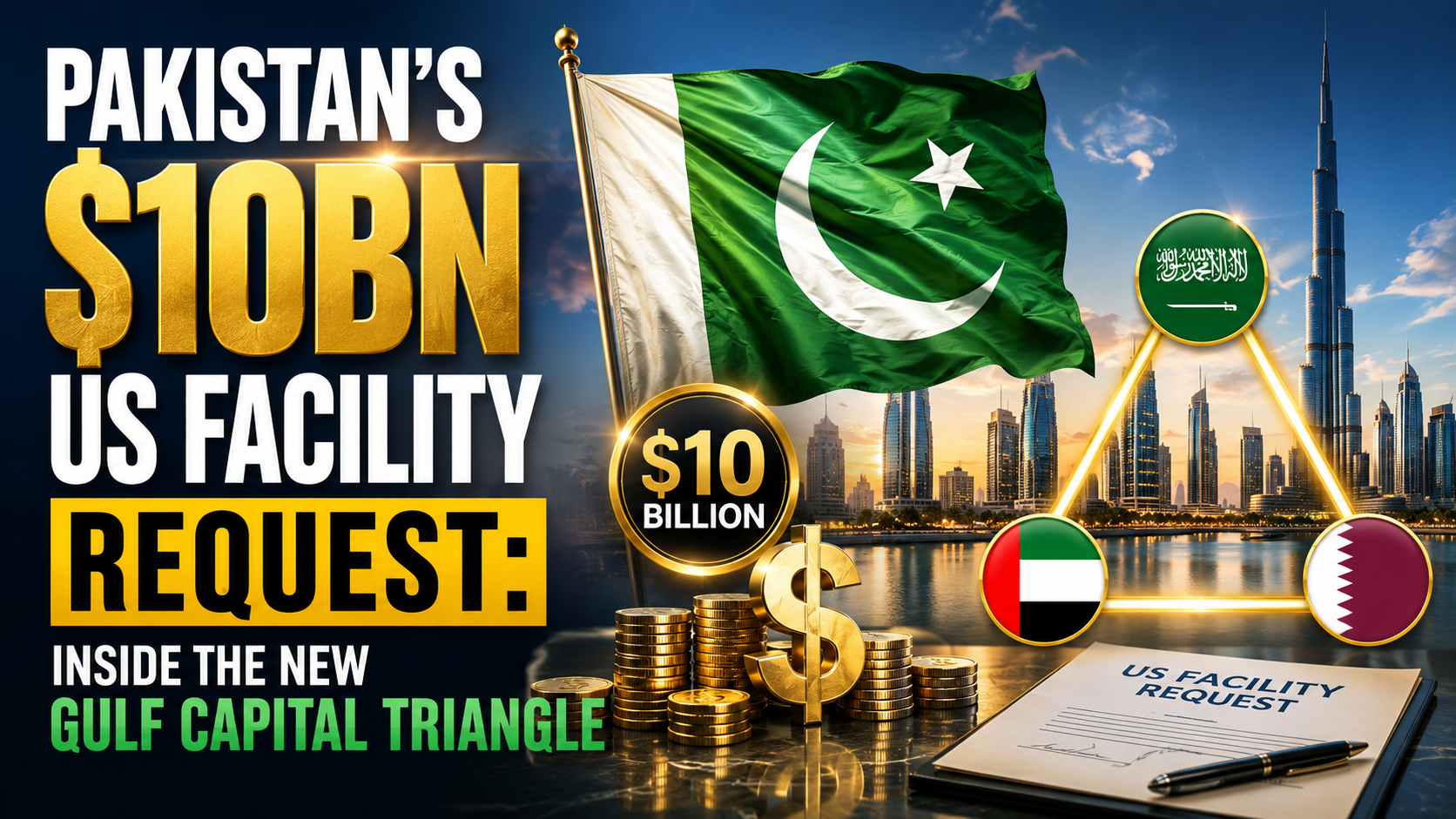
Pakistan’s finance minister spent the week of July 20 in Washington doing something Islamabad has rarely been able to do from a position of relative strength: asking for a safety net rather than a rescue. In meetings with US Treasury Secretary Scott Bessent, Muhammad Aurangzeb requested a $10 billion Exchange Stabilisation Support Facility, framing it as insurance for a currency and reserves position that, by his own account, has already stabilised without emergency help — improved fiscal and external balances, record remittances and stronger reserves.
The request is easy to read as routine diplomacy. It is more useful read as a symptom of a structural shift now visible across three of the markets in this briefing set — Pakistan, the UAE, and the United States — in how mid-sized emerging economies are financing themselves after two years of IMF-led stabilisation.
The numbers behind the ask
Pakistan’s economy grew 3.7% in FY26, the fastest pace in four years but still short of official targets, according to the government’s own economic survey. The same survey reported a KSE-100 rally of 18.4% in the July–March period, a current account deficit contained near zero, and public debt-to-GDP falling from a 2023 peak of 75% to 68.5%. The IMF’s own country data lists 2026 real GDP growth at 3.6% and consumer price inflation cooling to 7.2%, a marked drop from the double-digit prints of recent years.
None of that happened by accident. It followed the disbursement structure typical of Pakistan’s current IMF-EFF arrangement: $1.2 billion in EFF funding, plus $2.7 billion from multilateral partners, $1.1 billion in bilateral development financing and $2 billion via Naya Pakistan Certificates during the July–March window alone. A separate IMF staff report on the programme’s second review flagged that Pakistan met most quantitative benchmarks but missed a structural condition on sugar-import tax exemptions and delayed cabinet approval of sovereign wealth fund governance reforms — a reminder that “stabilised” and “reformed” are not the same thing in IMF language.
Why Washington, and why now
The $10 billion ask did not happen in isolation. Aurangzeb’s Washington trip also included direct engagement on the broader US tariff regime announced under the International Emergency Economic Powers Act, and a separate meeting with Honeywell Technologies about modernising Pakistan’s refinery sector. According to Pakistan’s finance ministry, both governments agreed to identify near-term investment transactions and finalise a strategic economic framework, expected to be signed on the sidelines of the UN General Assembly in September 2026.
That timeline matters. It places a formal US-Pakistan economic framework roughly two months after the current 60-day IMF review cycle and in the same window that Gulf sovereign investors — the UAE and Saudi Arabia chief among them — have been rolling over short-term deposits with the State Bank of Pakistan, a practice that has quietly become one of Islamabad’s most reliable bridge-financing tools. Business Recorder’s economy desk reported friendly countries rolling over roughly $6 billion in July 2026 alone, extending a pattern that predates this administration but has become more central to it.
The Gulf link most coverage misses
Coverage of Pakistan’s IMF programme tends to treat Washington, Riyadh, Abu Dhabi and the multilateral lenders as separate storylines. They are increasingly one story. The UAE’s own trade data shows non-oil foreign trade approaching AED 2 trillion in the first half of 2026, a record, with the emirate simultaneously deepening financial-sector ties across South Asia, Africa and now — via a newly concluded Comprehensive Economic Partnership Agreement — Canada. Pakistan sits inside that same Gulf capital web: its rupee stability, its remittance base (heavily Gulf-sourced), and its rollover financing all trace back to the same handful of Gulf treasuries that are simultaneously recycling petrodollars into Dubai property, Abu Dhabi sovereign funds, and now formal free-trade frameworks with Western economies.
An Exchange Stabilisation Facility from the US Treasury would not replace that Gulf financing — it would sit alongside it, giving Pakistan a dollar-denominated backstop that is politically distinct from both the IMF and its Gulf creditors. For a country whose FY26 external financing already blends multilateral, bilateral, Gulf and diaspora sources, that diversification is arguably as important as the headline number.
What could go wrong
Pakistan’s economic survey data cuts both ways. Poverty climbed to 28.9% in FY2024-25 even as headline growth accelerated, and April 2026 inflation ticked back up to 10.9% before easing. A $10 billion facility addresses reserve adequacy and currency confidence; it does nothing for the domestic demand and poverty dynamics that Pakistani economists increasingly flag as the programme’s unfinished business. Whether Washington grants the facility — and on what conditionality — will be one of the more consequential but underreported bilateral economic decisions of the autumn.
Discover more from The Economy
Subscribe to get the latest posts sent to your email.
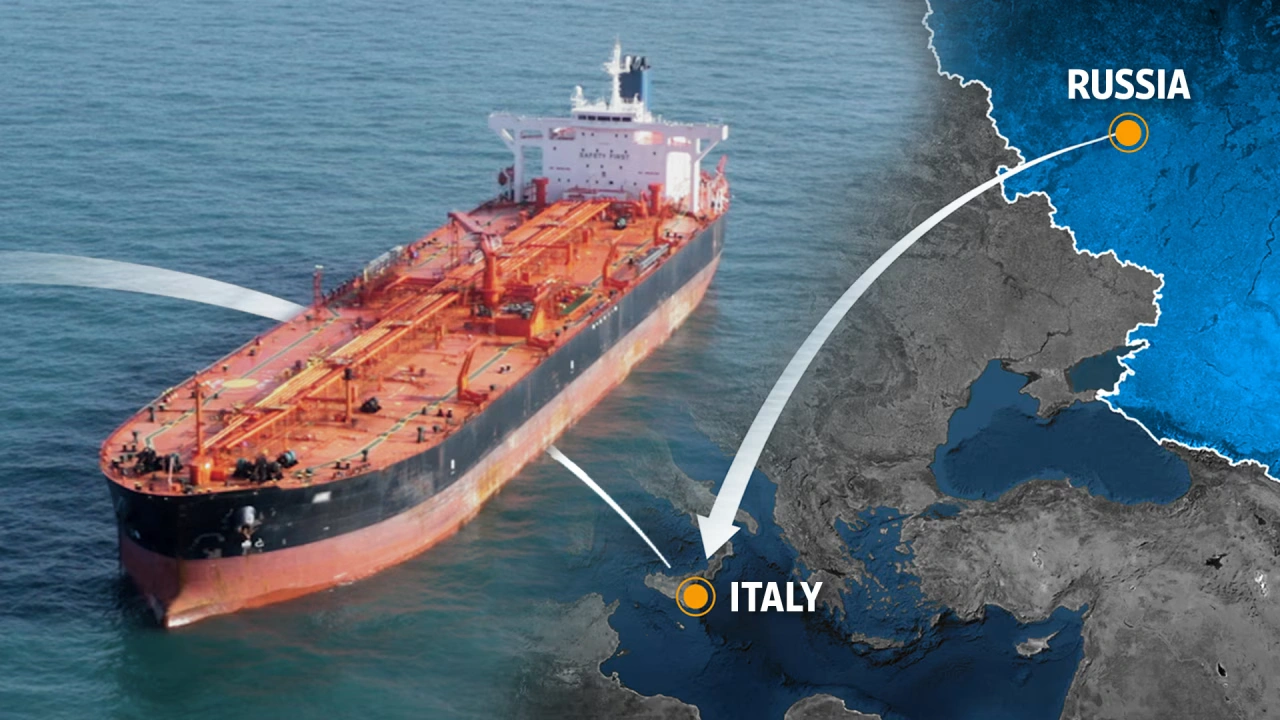
On July 15, 2026, during a routine Chinese foreign ministry press briefing, spokesperson comments took on unusual significance for global energy and trade watchers: Beijing strongly criticized recent US sanctions measures affecting Cuba and, more consequentially, proposed US legislation specifically targeting major purchasers of Russian energy, according to sanctions-tracking analysis from law firm Steptoe. The pairing of Cuba sanctions criticism with concern over Russian-energy-buyer legislation is not coincidental — both represent the kind of secondary sanctions architecture that could eventually be extended to reach China’s own energy trade.
Why China has reason to be worried
China has emerged as one of the largest buyers of discounted Russian crude since 2022, alongside India, as Moscow redirected exports away from European markets closed off by sanctions. That trading relationship has functioned largely outside direct US sanctions exposure because existing measures have focused on Russian entities, vessels, and price-cap compliance rather than directly penalizing the buying countries themselves. Proposed legislation targeting “major purchasers of Russian energy” would represent a meaningful escalation — shifting from supply-side sanctions on Russia to demand-side sanctions on Russia’s customers, a category in which China is unambiguously the largest player.
The broader sanctions context this fits into
This is not an isolated legislative proposal. The EU Council has separately been expanding its own sanctions lists to include entities active in Russia’s energy sector, specifically firms producing automated control systems for oil and gas infrastructure — a sector the EU explicitly identifies as a substantial source of Russian government revenue, with designated entities subject to asset freezes and travel bans. That EU action, combined with the US legislative proposal China is objecting to, suggests a coordinated Western push in mid-2026 toward tightening the demand side of Russian energy sanctions after several years of focusing primarily on supply-side measures — price caps, shipping insurance restrictions, and tanker interdiction — that CREA’s own monthly tracking has repeatedly shown to be only partially effective.
Why demand-side sanctions would be harder for China to absorb than supply-side measures
China’s exposure to a demand-side sanctions regime differs meaningfully from Russia’s own exposure to supply-side measures. Russia has adapted to supply-side sanctions through shadow-fleet shipping, price discounting, and using non-sanctioned intermediary buyers — mechanisms that work precisely because the penalty falls on specific vessels, entities, or transactions rather than on the buying country’s broader economy. A US measure targeting “major purchasers” as a category would be far harder for China to route around through the kind of intermediary and shadow-fleet workarounds Russia itself has relied on, since it would target China’s status as a buyer directly rather than any specific transaction or vessel.
The timing question: why July 2026 specifically
The proposed legislation surfaces at a moment when Russian oil revenues are themselves in flux — recovering somewhat due to the Iran-war-driven price spike after falling to some of their lowest levels since the 2022 invasion earlier in 2026. A US Congress moving to tighten sanctions on Russia’s energy customers at precisely the moment Iran-war-driven prices are already inflating Russian oil revenue suggests lawmakers are attempting to prevent Moscow’s accidental windfall from becoming a durable financing lifeline — a goal that requires closing the demand-side gap that has persisted throughout the supply-side sanctions era to date.
What China’s public criticism signals diplomatically
Beijing’s decision to criticize the proposal publicly, rather than simply lobbying against it through diplomatic channels, is itself a signal. Chinese foreign ministry statements on sanctions issues are typically measured and procedural; explicit public criticism paired with a separate objection to Cuba sanctions suggests Beijing is framing this as part of a broader pattern of what it characterizes as unilateral US extraterritorial sanctions overreach, a framing China has used consistently in disputes over technology export controls and is now extending to energy trade.
What comes next
The practical test will be whether the proposed legislation advances through Congress with enough bipartisan and administration support to become binding policy, or whether it remains a negotiating lever — a credible threat used to extract concessions from China on other fronts (trade, technology, Taiwan) without ever being formally enacted. Given the scale of China’s Russian energy imports and the diplomatic and economic disruption a genuine demand-side sanctions regime would cause, most sanctions analysts view near-term full enactment as unlikely, though the legislative threat itself already appears to be shaping Chinese diplomatic posture.
Discover more from The Economy
Subscribe to get the latest posts sent to your email.
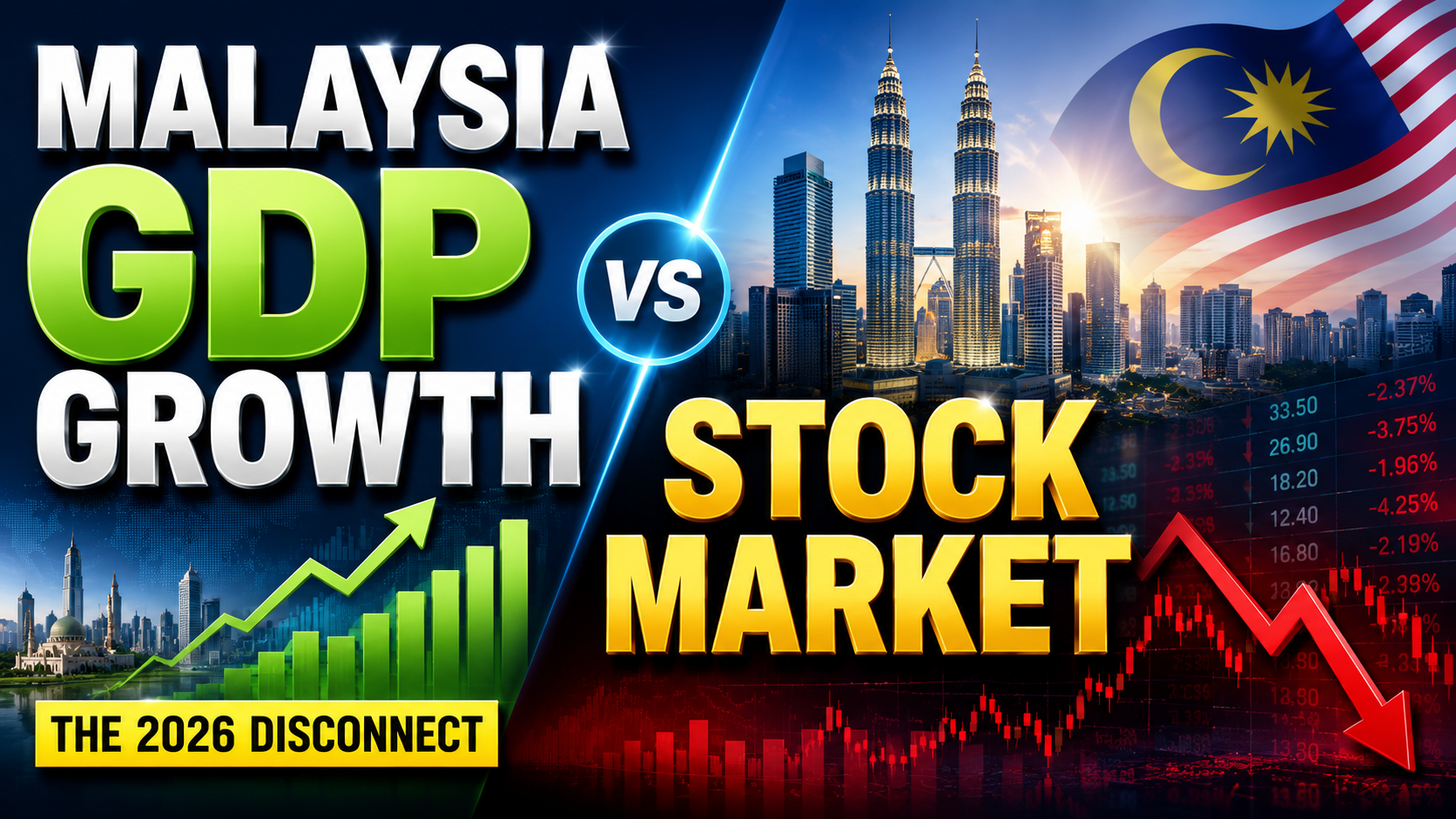
Malaysia posted its biggest trade surplus on record and second-quarter GDP growth of 5.8% in 2026, yet its stock market has stubbornly refused to rally — a disconnect that is puzzling investors even as the country climbs global competitiveness rankings and hosts record investor turnout at its largest retail investing event.
Record Growth Meets a Muted Market
Malaysia’s economy expanded 5.8% year-on-year in the second quarter of 2026, underpinning what former senior investment banker Ian Yoong Kah Yin describes as one of the most competitive economies globally, buoyed by the country’s largest-ever trade surplus, according to reporting in The Star. Yet with the exception of the semiconductor and plantation sectors, Yoong notes that many shares on Bursa Malaysia remain undervalued relative to that underlying strength — a gap he summarised memorably: “It’s like we held a party and no one came.”
The disconnect comes even as Hong Leong Investment Bank upgraded Malaysia’s full-year 2026 growth forecast to 4.7% from 4.5%, citing stronger-than-expected performance in the electrical and electronics sector alongside resilient domestic demand, according to BusinessToday. Household loans grew 5.2% year-on-year and credit card spending rose 10.2%, signalling that consumer demand remains a genuine pillar of growth rather than a statistical artefact of export strength alone.
A Competitiveness Ranking Jump — and a Retail Investing Boom
Malaysia’s underlying reform story has been validated externally. The country climbed eight places to rank 15th among 70 economies in the 2026 IMD World Competitiveness Ranking, its best showing in recent years, following an 11-place jump the year before, according to The Star. Economists attribute the climb to policy reforms improving government and business efficiency, streamlined investment approvals, accelerated digitalisation, and stronger fiscal management.
Retail investor enthusiasm, meanwhile, appears robust even if institutional capital has been slower to follow. INVEST Fair 2026, Malaysia’s largest retail investment event, drew an expected 20,000 visitors across more than 70 hours of programming at Kuala Lumpur’s Mid Valley Exhibition Centre in July, according to event coverage on TradingView. Separately, a survey of more than 3,500 active users by digital wealth platform Versa found that 70% of respondents would prioritise investing over debt repayment or emergency savings if they received a sudden windfall, according to The Star — evidence of a pronounced retail “investment reflex” even amid broader questions about household financial resilience.
Fixed Income Is Where the Real Money Is Flowing
While equities lag, Malaysia’s fixed income market tells a different story. Employees Provident Fund chief investment officer Mohamad Hafiz Kassim told the Sasana Symposium 2026 that Malaysia is “punching above its weight” on global fixed income indexes, drawing outsized capital allocation given interest rate and yield differentials between Malaysian Government Securities and US Treasuries — a dynamic occurring even as the ringgit has remained notably stable, according to The Star. Speakers at the same event pointed to the broader global shift toward passive investing as a structural tailwind Malaysia is well-positioned to capture with continued policy follow-through.
What Explains the Equity Gap
Analysts point to several possible explanations for the growth-market disconnect: persistent foreign investor caution tied to regional and Middle East-driven geopolitical risk, a valuation overhang from prior years, and sector concentration that leaves broad indices under-exposed to the semiconductor and technology names actually capturing AI-linked investment flows. Whatever the cause, the gap represents either an opportunity for value-focused investors or a warning sign that Malaysia’s headline growth figures are not yet translating into corporate earnings momentum broad enough to move the market.
What to Watch
The second half of 2026 will test whether Malaysia’s fixed income strength and competitiveness gains eventually pull equity valuations upward, or whether the stock market’s caution proves to be the more accurate signal about underlying corporate health. Continued data centre and semiconductor investment, alongside any further IMD-style competitiveness validation, will be key catalysts to track.
Discover more from The Economy
Subscribe to get the latest posts sent to your email.

Pakistan’s $10bn US Facility Request: Inside the New Gulf Capital Triangle

China Criticizes US Bill Targeting Russian Oil Buyers — Why It Matters

Nvidia’s H200 Chips Are Finally Reaching China — In Numbers Too Small to Matter Yet

Oil Prices Fall as Strait of Hormuz Reopens: 2026 Update

Malaysia GDP Growth vs Stock Market: The 2026 Disconnect

Singapore MAS Tightens Policy as GDP Growth Hits 5.7%

Fed Holds Rates Under Warsh as Trump Rolls Out New Tariffs

Indonesia Financial Hub 2026: Can It Rival Singapore, Dubai?

Russia Fuel Shortages 2026: Inside a Cracking War Economy

China Politburo July 2026: Stimulus Signals Explained

Andy Burnham, UK Gilts and Mortgages: July 2026 Explainer

Pakistan’s 2026 Monsoon Floods Threaten Fragile Economic Recovery as Inflation Nears 9%

Pakistan Gulf Investment Outflows 2026: Peace Deal Stakes Explained

Canada Trade Diversification 2026: China, Indonesia, UAE Deals Explained

Carry Trade Unwind 2026: How the Yen’s Snapback Triggered a Global Margin Call

AI Bubble Warning 2026: Why BIS, IMF and Bank of England Fear a Market Crash

The AI Super Bubble Is Ready to Burst

Russia Bans Diesel Exports 2026: Global Fuel Market Impact Explained

Gold Price Forecast 2026: Fed’s July 29 Decision and Record Central Bank Buying Explained

Strait of Hormuz Blockade 2026: Oil Prices Surge 9% as US-Iran Conflict Reignites

Private Credit Warning: Most BDCs Turn Unprofitable in 2026, Reuters Finds

Bitcoin $150k Milestone Achieved as US Sovereign Crypto Pivot Looms

IMF Cuts Pakistan Growth Forecast, Raises Inflation to 8.4%

Gulf Capital Retreat From Pakistan 2026: UAE Loan Freeze & What It Means

Strait of Hormuz 2026: Why Markets Still Don’t Trust It’s Open

Down But Not Out: Inside the Slow Sinking of Russia’s War Economy

Chipmakers Just Lost 6.7% in Two Days: Inside the Great AI Trade Rotation

$109 Trillion and Counting: How the World’s Sovereign Debt Crisis Is Being Built in Plain Sight
-

 Markets & Finance7 months ago
Top 15 Stocks for Investment in 2026 in PSX: Your Complete Guide to Pakistan’s Best Investment Opportunities
-

 Analysis5 months ago
Johor’s Investment Boom: The Hidden Costs Behind Malaysia’s Most Ambitious Economic Surge
-

 Analysis5 months ago
Top 10 Stocks for Investment in PSX for Quick Returns in 2026
-

 Analysis6 months ago
Brazil’s Rare Earth Race: US, EU, and China Compete for Critical Minerals as Tensions Rise
-

 Banks6 months ago
Best Investments in Pakistan 2026: Top 10 Low-Price Shares and Long-Term Picks for the PSX
-

 Investment7 months ago
Top 10 Mutual Fund Managers in Pakistan for Investment in 2026: A Comprehensive Guide for Optimal Returns
-

 Global Economy7 months ago
15 Most Lucrative Sectors for Investment in Pakistan: A 2025 Data-Driven Analysis
-

 Global Economy7 months ago
Pakistan’s Export Goldmine: 10 Game-Changing Markets Where Pakistani Businesses Are Winning Big in 2025