
AI
US Charges in Nvidia Export Control Scheme

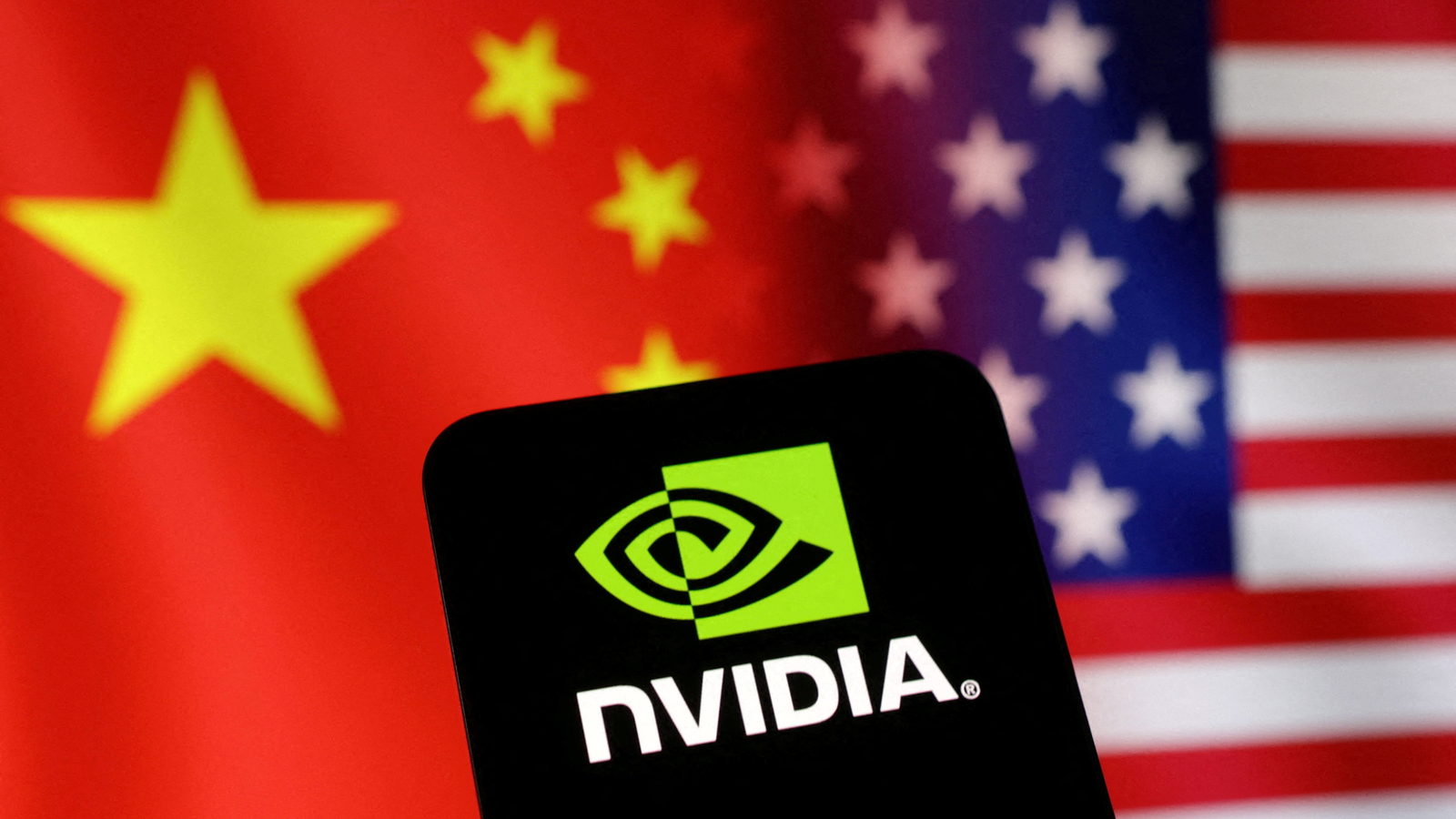
The US Justice Department has charged individuals tied to a scheme that routed roughly $2.5 billion worth of Nvidia-powered servers through Southeast Asian intermediaries to Chinese buyers, exposing how thoroughly export-control loopholes were exploited before a May 2026 Commerce Department guidance attempted to shut them down.
The Enforcement Crackdown
The Bureau of Industry and Security issued guidance on May 31, 2026, affirming that licensing requirements for advanced AI chip exports apply to any business headquartered in China or with a Chinese parent company, regardless of where that subsidiary is physically located, according to reporting from Al Jazeera. The move was designed to close a gap that former State Department official Chris McGuire said Chinese buyers had been exploiting “at scale” by routing purchases through holding companies in Singapore, Malaysia, and the UAE.
Separately, the Justice Department has charged three individuals linked to a U.S. technology supplier over a scheme in which an unnamed Southeast Asian firm allegedly bought around $2.5 billion in servers containing Nvidia chips, used dummy replicas to defeat physical audits, and repackaged the genuine hardware for shipment to Chinese brokers, according to analysis from Model Diplomat. That case follows an August 2025 indictment involving a company called ALX Solutions that allegedly shipped chips through Malaysia and Singapore to Hong Kong.
Why Nvidia’s China Strategy Keeps Shifting
The regulatory whiplash has been dramatic. New export rules in April 2026 forced Nvidia to halt sales of its China-specific H20 chip, before Trump personally authorized sales of the more advanced H200 chip in December, provided the U.S. government received a 25% cut of the revenue, according to CNBC. Then in late May 2026, new rules specifically targeted Nvidia’s Blackwell-series processors, requiring export licenses for any transfer to China- or Macau-headquartered entities, according to reporting aggregated by NaturalNews.
Despite the political green light for H200 sales, Nvidia has reportedly struggled to actually close deals in China amid security scrutiny on both sides, even as CEO Jensen Huang lobbied in Washington and traveled to Beijing. Nvidia’s market share in China’s AI chip sector has effectively collapsed — from roughly 95% in 2023 to near zero on new H200 shipments by mid-2026 — as domestic rivals like Huawei fill the gap, according to analysis published by Model Diplomat.
The Singapore-Malaysia-UAE Angle
For Singapore and Malaysia specifically, the episode is a reputational and regulatory challenge layered on top of genuine economic opportunity. Both countries are simultaneously trying to attract legitimate AI infrastructure investment — including data centers and chip design partnerships — while being named as transit points for illicit chip diversion. The UAE faces a related but distinct dynamic: the U.S. is now removing restrictions on the sale of advanced American technology to the Emirates, effectively placing the Gulf state on par with Washington’s closest allies for chip access, according to AGBI, a marked contrast with the enforcement crackdown aimed at diversion routes elsewhere in Asia.
What This Means for the Global AI Supply Chain
The episode illustrates a structural tension in U.S. policy: export controls tightened even as Nvidia’s addressable China market shrank, while enforcement has increasingly shifted from proactive licensing to after-the-fact prosecution. For governments across Southeast Asia and the Gulf competing for AI infrastructure investment, demonstrating robust compliance regimes is becoming as commercially important as offering tax incentives or data-center power capacity.
Discover more from The Economy
Subscribe to get the latest posts sent to your email.



Asian equity markets have delivered a reminder that the AI investment boom is not simply an American technology story. South Korean memory producers, Taiwanese chip manufacturers, Japanese equipment suppliers and regional exporters are connected to global capital spending on computing. That creates an opportunity when orders surge and a vulnerability when assumptions change.
A Reuters market report on October 13 described a sharp risk-off episode in technology-linked Asian shares. Subsequent Wall Street Journal coverage described a partial rebound. Those moves are best understood as a test of expectations, not as proof that regional growth has reversed.
The first link: US AI spending and Asian earnings
The global chip supply chain has multiple layers. Advanced logic semiconductors, high-bandwidth memory, equipment, materials and packaging each respond differently to investment cycles. An AI server ordered in the United States can create revenue for numerous Asian firms, while supplier earnings remain vulnerable to delays or changes in product mix.
This concentration means broad stock indices may react strongly to a relatively narrow group of companies. The movement of an index is not necessarily a reliable representation of household consumption or the local services economy. Readers should check the contribution of leading constituents before interpreting a headline percentage drop.
Korea, Taiwan and Japan have different exposures
Korea’s market has significant memory-chip exposure. Taiwan has a major role in contract semiconductor manufacturing and its suppliers. Japan combines technology-related manufacturers with banks, exporters and domestic sectors. Exchange rates can amplify or offset changes in export competitiveness and returns for foreign investors.
Currency matters especially when an investor buys shares denominated in won, Taiwan dollars or yen. Even if a local index is unchanged, the return measured in dollars can change because of foreign-exchange movements. A regional market roundup should therefore include both equity and currency context.
Interest rates and oil can overwhelm the chip narrative
The AI industry competes for capital with governments, housing and ordinary businesses. When bond yields climb, distant profits are discounted more heavily; heavily indebted firms face rising refinancing expenses. Meanwhile high energy prices can pressure importers and manufacturers even when some technology exporters remain strong.
The IMF’s October outlook highlights both AI-related opportunities and inflation, conflict and fiscal vulnerabilities. That mixed picture argues against a single “Asia is booming” or “Asia is crashing” explanation.
The danger of extrapolating one trading session
A large daily decline can reflect positioning, forced selling or an abrupt change in sentiment. A rebound can reflect bargain hunting or short covering without resolving the original valuation issue. Neither movement establishes a sustainable trend. Investors should connect price action to revisions in earnings guidance, orders and financing conditions.
Useful evidence includes export orders, manufacturing surveys, semiconductor inventories, central-bank signals and capital flows. Compare the same measures over several months and distinguish expectations from realized data.
How to follow Asian markets responsibly
Build a dashboard with major indices, local-currency performance, exchange rates, benchmark bond yields and relevant oil prices. Record dates and market closing times; an Asian close may precede major US news that influences futures later. Avoid combining prices from different sessions as though they represent the same moment.
For a long-term investor, diversification across sectors and countries matters more than guessing the next technology stock to rebound. For a news reader, the essential question is whether a market move reflects an earnings change, financing risk or only a revision to how much investors are willing to pay.
Market structure can magnify headline moves
Market-capitalization-weighted benchmarks allocate more influence to companies with high market value. As chip and platform businesses grow, their success can make an index more concentrated. During a drawdown, selling pressure in those same names may dominate the index even if the median constituent is relatively stable. Equal-weighted sector comparisons and the share of stocks advancing can help distinguish broad weakness from concentration effects. Investors should also review whether an exchange was closed for a holiday and whether a quoted movement refers to a futures contract or the cash session. Time alignment is essential when comparing Asian and US markets.
Frequently asked questions
Why do Asian markets fall when US AI stocks sell off?
Regional firms supply chips, memory and equipment to the same global investment cycle, and investors frequently adjust exposure across markets at once.
Is a rebound proof the AI bubble is over?
No. Price recoveries do not necessarily resolve doubts about future returns and financing.
Which numbers are worth monitoring?
Earnings expectations, memory prices, exports, bond yields, currencies and oil prices give a more balanced picture than an index close alone.
Discover more from The Economy
Subscribe to get the latest posts sent to your email.

The debate over an artificial intelligence bubble has moved beyond whether the technology is impressive. The more difficult question is whether spending on chips, buildings, electricity and financing can produce profits quickly enough to justify the expectations embedded in market prices. That is a question about valuation and cash flow—not a claim that AI has no future.
The distinction matters after a turbulent October for technology-linked markets. Reuters reported a sell-off across parts of the Asian technology trade, while the Financial Times examined delays, financing strains and doubts about proposed US data-center projects. Neither proves that an industrywide collapse has begun. Both illustrate how sensitive an investment story becomes when growth expectations are extreme.
1. Spending and revenue are different quantities
Technology companies can purchase computing equipment today on the expectation that clients will pay for AI services tomorrow. The investment is visible immediately; the revenue may be booked over several years, and profit after depreciation can take longer still. An investor examining the sector should compare capital expenditure with actual cash generated from customers, not simply with announcements about model capabilities or contracted capacity.
For the largest cloud providers, cash-rich businesses may absorb a disappointing investment cycle. For smaller infrastructure providers, the same mismatch can be more serious because expensive hardware is often financed with debt or leases. The relevant question is not merely how many graphics processors a company owns. It is how reliably those processors will be used, at what price, and for how long before they become less competitive.
2. Watch utilization, not ribbon-cuttings
A data center on a presentation slide is not a data center delivering paid computing hours. Projects face permits, electricity connections, land constraints, equipment lead times and local resistance. Even completed facilities may ramp slowly. That makes the gap between announced capacity, financed capacity, connected power and paying workloads an unusually important indicator.
A useful reporting method is to track the same projects quarterly and label each milestone. When a company says a campus will provide a given number of megawatts, ask whether the figure describes a planning target, utility agreement, construction underway or energized capacity. Those are not interchangeable states, and treating them as equivalents can magnify perceived growth.
3. Credit markets can reveal stresses before earnings
Much of the AI debate is framed around share prices. Yet debt costs, collateral requirements and refinancing schedules may matter more to highly leveraged operators. If lenders demand higher yields, a projected return can disappear even while physical demand remains strong. That is especially relevant when the hardware serving as collateral loses value as new generations arrive.
Look for changes in interest coverage, financing commitments, customer concentration and off-balance-sheet obligations. A contract signed by a large technology tenant reduces some risks, but it is still necessary to read cancellation terms and delivery conditions. Financial engineering can bring forward construction; it cannot guarantee future margins.
4. The global economy is benefiting—but unevenly
The IMF’s October 2026 World Economic Outlook forecasts global growth of 3.1% for 2026 and identifies stronger AI investment as a possible upside while warning about a reassessment of AI expectations. Those two observations can both be true. Investment spending supports near-term demand even when the eventual owners of the assets may not earn attractive returns.
The benefits also differ by geography. Chip and memory suppliers can enjoy export demand, while energy-importing economies outside the technology supply chain face high prices without the same investment boost. For investors, an AI-related earnings surprise in one market need not imply the same outcome everywhere.
5. A better bubble checklist
The warning signs are persistent negative free cash flow with no credible route to improvement, utilization below underwriting assumptions, dependence on refinancing, rapid deterioration in hardware resale values, and contracting demand from a small group of customers. Evidence against the bubble thesis would include sustained paid usage, falling unit costs, broader enterprise adoption and measurable productivity gains flowing through customer accounts.
The prudent conclusion is conditional. AI can be an important general-purpose technology and still be the subject of bad investments. The internet was transformative; that fact never meant every telecommunications asset built during its early boom was fairly priced.
What happens next?
Watch quarterly filings for cash flow rather than promotional statements, listen for changes in construction schedules, and compare project-level cost assumptions with market electricity and financing costs. Readers should also distinguish a broad equity correction from solvency problems at specific operators. The first can be temporary; the second can permanently impair capital.
How to compare two AI companies fairly
A careful comparison should separate a profitable software supplier from an asset-heavy infrastructure provider. The former may collect recurring subscription revenue while using relatively little borrowed capital; the latter must purchase equipment, secure power, serve clients and replace depreciating machines. Compare enterprise value to earnings only after considering lease obligations and customer concentration. A business with fast revenue growth may still destroy shareholder value if every extra dollar of sales requires even more new investment. Conversely, a slower-growing software company with durable customer relationships may produce stronger free cash flow. This is why the expression “the AI trade” conceals companies with very different risks. Investors should also demand definitions for contracted revenue and remaining performance obligations before converting those figures into future profit estimates.
Frequently asked questions
Does an AI bubble mean AI technology will fail?
No. A bubble describes a possible mismatch between financial expectations and realizable returns. Adoption can keep increasing even if some investors overpay for infrastructure or company shares.
Which indicator matters most?
There is no single decisive indicator. Paid utilization alongside free cash flow and debt maturities offers a more revealing combination than stock-price performance alone.
Is this a prediction of a crash?
No. It is a framework for evaluating competing outcomes as new information arrives.
Discover more from The Economy
Subscribe to get the latest posts sent to your email.

TSMC reported record third-quarter revenue of approximately NT$1.49 trillion, up about 50% year over year. The key editorial question is how much optimism was already priced into shares. Source. Historical material further below is contextual and must not be mistaken for a live quotation or price.
What changed since the original research cutoff
TSMC reported record third-quarter revenue of approximately NT$1.49 trillion, up about 50% year over year. The key editorial question is how much optimism was already priced into shares. The publication date and observation time are crucial: market prices, competition results and government announcements cannot be extrapolated from an earlier snapshot. A more useful reader question is what remains current today and what requires verification at the moment of a financial or travel decision. The new development should be checked against the primary or contemporary reference rather than assumed from an older headline.
What is happening and why readers are searching
The AI boom increasingly looks like an industrial investment cycle rather than a story about chatbots alone. Reuters’ October 12 preview described expectations for another very strong quarter at TSMC, reflecting demand for advanced chips and packaging. The nuance matters: a foundry’s sales, a GPU supplier’s orders and a cloud operator’s eventual return on investment occupy different points in the chain. Sources: Reuters chip demand report and IREN fiscal results.
The important context competitors can overlook
Investors should distinguish model training hardware from inference demand, production capacity from booked orders, and one-time buildouts from recurring utilization. Advanced packaging, memory, power availability and data-center cooling can become bottlenecks even when silicon demand is strong. A boom in infrastructure spending is not automatically proof that every new capacity project will produce attractive cash returns. For primary-source checks and current reporting, see Reuters chip demand report and Reuters bond market analysis. The key distinction is connect chipmaker profits to supply-chain constraints.
A practical way to use this information
An evidence-led article should compare announced capital spending with actual deployments, gross margin trends, customer concentration and power constraints. Avoid ranking chip companies solely on price appreciation; a more useful framework examines whether a business captures durable economics as the cost of AI computation changes. Revenue forecasts must be dated and clearly identified as estimates.
Follow the money along the AI supply chain
A cloud company budgets for compute; a chip designer sells accelerators; a foundry fabricates the designs; memory and packaging suppliers help assemble deployable systems; and a data-center operator supplies space, cooling and power. Delays at any stage can push revenue recognition into a different quarter. The October 12 Reuters TSMC preview is a useful piece of the story, but not proof that all participants share equally in the profits.
The strongest follow-up article would compare order backlogs, capital intensity and gross margins across these stages rather than extrapolating from one supplier’s exceptional growth.
What to verify before making a decision
The right next step is to identify the source, timestamp and applicable market or jurisdiction. Check whether a number is a historical observation, official announcement, target, forecast or scenario. If you intend to act financially, legally or commercially, use the relevant provider’s current terms and obtain professional advice where appropriate. The sources cited here establish context; they are not a substitute for live prices, individual eligibility checks or binding agreements.
Reader questions
Why is TSMC important to AI? It manufactures advanced semiconductors used by major technology companies.
Can rising AI demand still hurt some investors? Yes. Heavy capital spending, valuation risk and financing costs can offset revenue growth.
Follow the hardware from design to deployment
An AI accelerator does not arrive in a functioning data center simply because a chipmaker announces high demand. Designers such as Nvidia develop chips and systems; contract manufacturers such as TSMC fabricate advanced semiconductors; packaging providers integrate critical components; memory suppliers deliver high-bandwidth memory; network equipment and power infrastructure complete the installation. Bottlenecks at any stage can prevent a customer from using purchased capacity on schedule. Investors who focus only on the most visible brand miss the economics and constraints of the suppliers behind it.
The supply chain is also geographically distributed. Semiconductor fabrication and advanced packaging involve specialized equipment and long qualification processes. A customer cannot necessarily replace one advanced production facility with another at short notice. This supports supplier bargaining power in some circumstances but can increase geopolitical and operational concentration risk. The right editorial question is which constraint is binding now, supported by current evidence, rather than assuming every part of the chain faces identical shortages.
Four numbers reveal more than a chip-sales headline
First, look at revenue by segment and how rapidly each segment is changing. Second, inspect gross margin to see whether pricing power and production efficiency are translating into earnings. Third, review capital expenditure and capital intensity: growth that needs enormous new factories has a different funding profile from growth on existing capacity. Fourth, compare customer inventories and order visibility where those details are disclosed. Rising shipments into warehouses are not equivalent to a sustainable rise in end-user consumption.
Companies report different financial calendars and currencies. A Taiwanese foundry’s monthly sales announcement may not align neatly with a U.S. semiconductor designer’s fiscal quarter. Foreign-exchange translation can distort comparisons. When an article uses quarter-on-quarter or year-on-year growth, make the period explicit and avoid mixing projected sales with realized earnings. A comparison table should describe the business model of each company as well as its latest relevant metric.
Why packaging, memory and electricity can limit AI growth
Advanced packaging connects processors and memory in dense, high-performance systems. Manufacturing these components at scale requires engineering expertise and expensive equipment. Even when enough compute chips are available, a shortage of qualified packaging or memory can delay completed systems. At the deployment site, customers need reliable grid connections, transformers, cooling and networking. An equipment delivery that arrives before the building is ready does not immediately create usable computing capacity.
Power availability is not a purely technological footnote. Electricity contracts can influence operating costs for years; permitting and interconnection queues can delay planned facilities. Investors evaluating a data-center project should distinguish contracted megawatts, physically energized capacity and servers generating billable workloads. Headlines often conflate those milestones. The gap between ordering equipment and earning revenue is a critical part of the investment risk.
How AI investment could disappoint without a collapse
One scenario is that software adoption grows but not fast enough to justify every planned data-center investment. Another is that demand remains high, but competition lowers the price customers pay per unit of computing. A third is that hardware improves quickly, making recent generations less economically attractive before they are fully depreciated. None implies that AI is useless; they describe how a useful technology can produce uneven shareholder returns. Telecom investment cycles offer an instructive reminder that demand growth and attractive capital returns are not identical.
The upside scenario also deserves fair treatment. If enterprises discover reliable, high-value applications and capacity becomes heavily utilized, recurring compute revenue could support continued equipment demand. Evidence would include contracted usage, improved utilization, margins and identifiable business outcomes—not just press releases announcing larger model sizes. Investors should evaluate multiple possibilities rather than extrapolate the best recent quarter indefinitely.
An AI infrastructure due-diligence sheet
For chip designers: note product mix, customer concentration, gross margin and potential restrictions on sales. For foundries: monitor leading-edge capacity, packaging constraints, yield trends and capital expenditure. For memory suppliers: distinguish conventional memory from advanced HBM demand. For cloud operators: track compute utilization, capital cost, customer retention and cash generation. For data-center developers: verify grid power, physical construction, commissioning and signed customer commitments.
Use earnings materials and regulatory filings from each company, supported by market coverage that distinguishes analyst estimates from actual results. A strong AI chip article can capture the excitement of the investment cycle without implying that all parts of the supply chain will prosper equally.
Discover more from The Economy
Subscribe to get the latest posts sent to your email.

Why Pakistan’s Inflation Is Still Near 10% Despite Economic Stabilisation

Holiday Airfare 2026: Why Flights Cost More & Fares

California Prop 40 Explained: The 2026 Billionaire Wealth Tax Ballot Measure

US–Iran Conflict in October 2026: Hormuz, Oil Prices and Diplomacy

AIIB in 2026: Can Green Infrastructure Deliver Measurable Growth?

IMF and World Bank Outlook 2026: Growth, Debt and the Missing Investment

Singapore Stocks 2026: STI Outlook After a Record High

Asian Markets in October 2026: What the AI Sell-Off Means for Investors

Supermarket News 2026: Why Grocery Prices Could Rise Again

Wind Farm Economics in 2026: What Determines Whether a Project Pays?

Boomers vs Young Adults: Why the Net Worth Gap Is More Complicated Than It Looks

Is the AI Bubble Bursting in 2026? Five Tests Investors Should Watch

Germany–France ‘Made in Europe’ Deal Could Reshape China’s EV Ambitions

Treasury Yields and Inflation 2026: What Bond Moves Mean for Borrowers

World’s Largest Economies: Ranking the Top Global Powers

Crude Oil & Petroleum Market Analysis: OPEC+ Decisions and Price Forecasts

Pakistan Economy 2026: Inside the SBP’s Balancing Act

Bitcoin Price Forecast 2026–2027: Will the 4-Year Cycle Hold?

Asian Stock Markets 2026: Japan, China, Pakistan & More

Silver Price Today: Why the Xi-Trump AI Standoff Is Fueling a Safe-Haven Rally

SpaceX IPO 2026: History’s Biggest Stock Debut?

SpaceX IPO: How Aerospace Is Reshaping Tech Startup News

Oil Prices 2026: Inside the Hormuz Crisis That Won’t End

Algorithmic Dogfights: Why the U.S. and China Must Establish Rules of Engagement for Autonomous Air Power

IMF Reports 2026: What the Latest Data Means for the Global Economy

Top US Convenience Store Chains: Store Counts, EV Charging, and Sales Trends

Business Insurance: What Coverage You Actually Need and What It Costs in 2026

Corporate America Faces a New Debt Test as US Borrowing Costs Surge
-

 Markets & Finance10 months ago
Top 15 Stocks for Investment in 2026 in PSX: Your Complete Guide to Pakistan’s Best Investment Opportunities
-

 Analysis8 months ago
Johor’s Investment Boom: The Hidden Costs Behind Malaysia’s Most Ambitious Economic Surge
-

 Analysis8 months ago
Top 10 Stocks for Investment in PSX for Quick Returns in 2026
-

 Banks9 months ago
Best Investments in Pakistan 2026: Top 10 Low-Price Shares and Long-Term Picks for the PSX
-

 Analysis8 months ago
Brazil’s Rare Earth Race: US, EU, and China Compete for Critical Minerals as Tensions Rise
-

 Investment9 months ago
Top 10 Mutual Fund Managers in Pakistan for Investment in 2026: A Comprehensive Guide for Optimal Returns
-

 Global Economy10 months ago
15 Most Lucrative Sectors for Investment in Pakistan: A 2025 Data-Driven Analysis
-

 Global Economy10 months ago
Pakistan’s Export Goldmine: 10 Game-Changing Markets Where Pakistani Businesses Are Winning Big in 2025