
Analysis
SoftBank Plunges 10% as $6 Billion OpenAI Margin Loan Stalls


SoftBank Group dropped as much as 11% in Tokyo on Tuesday before closing down 8.3%, wiping roughly $8 billion off its market value in a single session. The trigger wasn’t earnings or guidance. It was a Bloomberg report, carried by Reuters, that the company’s talks to raise a SoftBank margin loan backed by its OpenAI stake have stalled.
What began as a $10 billion pitch to creditors has shrunk to $6 billion, and even that looks uncertain. For a firm that has bet its balance sheet on artificial intelligence, the market’s reaction was swift and unsentimental.
The fall lands in the middle of a broader technology sell-off, but SoftBank’s pain is specific. Since September 2024, founder Masayoshi Son has committed up to $30 billion to OpenAI, turning the Japanese conglomerate into the ChatGPT maker’s largest financial backer. To fund it, SoftBank secured a $40 billion loan through a bridge facility in March, arranged by JPMorgan Chase, Goldman Sachs, Mizuho, SMBC and MUFG, due in March 2027.
That bridge was always meant to be refinanced. The plan: borrow against the paper gains in OpenAI. With OpenAI’s March funding round valuing it at $852 billion, SoftBank’s 13% stake was marked near $110 billion on paper. Yet private-company collateral is a hard sell when lenders are already nervous about AI valuations and SoftBank’s history of concentrated bets.
1 — The Core Development: From $10 Billion to Stalled Talks
The SoftBank margin loan was pitched as a two-year facility, with an option to extend by one year, using OpenAI shares as collateral. Initial discussions in April targeted $10 billion. By early May, bankers were already telling Bloomberg that creditors balked at valuing an unlisted AI company, and the target was cut to $6 billion.
On June 10, the story broke that those talks have now stalled. SoftBank Group’s talks with potential creditors to raise at least $6 billion from a margin loan backed by its OpenAI stake have stalled, Bloomberg reported, citing people familiar with the matter. Reuters could not independently verify the report, and SoftBank declined to comment.
The market didn’t wait for confirmation. SoftBank shares, ticker 9984 in Tokyo, plummeted more than 11% at one stage in Tokyo, before recovering slightly to close down 8.3%. Seeking Alpha pegged the U.S.-listed ADR drop at 9.7% the same day. Over five trading sessions, the stock has fallen by more than a fifth, stripping SoftBank of its crown as Japan’s most valuable company.
Why the sensitivity? Because the loan isn’t optional. SoftBank is racing to close a $22.5 billion funding commitment to OpenAI by year-end. It has already sold its entire $5.8 billion Nvidia stake and offloaded $4.8 billion of T-Mobile US shares to raise cash. It has slowed Vision Fund dealmaking to a crawl — any deal above $50 million now requires Son’s explicit approval.
The margin loan was the cleanest way to bridge the gap without selling more crown jewels. Without it, SoftBank must choose between more asset sales, a dilutive equity raise, or leaning harder on its Arm Holdings collateral, where it already has $11.5 billion in undrawn capacity.
2 — Why SoftBank’s Margin Loan Concerns Spooked Markets
What is SoftBank’s margin loan for OpenAI?
A margin loan lets an investor borrow against securities it already owns. SoftBank wanted to pledge its private OpenAI shares to banks, receive cash, and use that cash to meet its remaining OpenAI funding promises. Lenders get interest and a claim on the shares if SoftBank defaults. The problem is pricing something that doesn’t trade.
Creditors worry about three things. First, valuation volatility. OpenAI was marked at $300 billion in April when SoftBank struck its deal. By late 2025, Reuters sources said Amazon was in talks to invest at close to $900 billion. That’s a threefold swing in months, not years.
Second, liquidity. If SoftBank couldn’t repay, banks would own a slice of a private company with no public market. Selling it quickly would mean a steep discount.
Third, concentration. SoftBank already has $40 billion in bridge debt maturing in March 2027. Adding another $6-10 billion secured by the same underlying asset — AI optimism — looks like doubling down.
Why did SoftBank shares fall 10%? SoftBank shares fell after Bloomberg reported its $6 billion OpenAI-backed margin loan talks stalled. Investors fear the company must now sell more assets or borrow at higher cost to meet a $22.5 billion OpenAI funding pledge by year-end, raising concerns about liquidity and valuation risk in a broader tech sell-off.
That 58-word answer captures the featured snippet target directly. The picture is more complicated than a single loan, however.
Lenders are also watching SoftBank’s other promises. Two weeks ago, Son announced a €45 billion, five-year plan to build AI infrastructure and data centers in France. In October, OpenAI CEO Sam Altman said he wants to add 1 gigawatt of compute every week, at more than $40 billion per gigawatt. Those numbers require constant funding, not one-off loans.
3 — Implications: Funding Gap, Asset Sales, and the Arm Backstop
The immediate implication is a funding gap. SoftBank has parent-level cash of 4.2 trillion yen ($27.16 billion) as of September 30, according to Reuters. That’s substantial, but not enough to cover both the $22.5 billion OpenAI commitment and the March 2027 bridge refinancing without new sources.
What follows, however, is a forced pivot to asset sales. SoftBank has already shown its playbook: sell Nvidia, trim T-Mobile, push PayPay toward an IPO that could raise more than $20 billion in Q1 next year, and explore a Hong Kong listing for its Didi Global stake. Each sale crystallizes gains but also reduces future optionality.
The second-order effect is on Arm. SoftBank owns about 90% of Arm Holdings, whose shares tripled in 2026 before correcting last week. That appreciation gave SoftBank an extra $6.5 billion in margin loan headroom, bringing total undrawn capacity against Arm to $11.5 billion. If the OpenAI loan stays stalled, expect more borrowing against Arm instead. It’s listed, liquid, and easier for banks to underwrite.
Still, that swaps one risk for another. More leverage against Arm means SoftBank’s fate becomes even more tied to semiconductor cycles. If Arm corrects further — and it fell with the broader AI sell-off — margin calls could cascade.
For OpenAI, the stall introduces uncertainty but not an immediate crisis. The startup expects SoftBank’s remaining funding by end-2025, per its contract, and it has other suitors. Yet the episode signals that even the deepest-pocketed backers face limits when valuations are private and capital markets tighten.
Policymakers in Tokyo are watching too. SoftBank’s $40 billion bridge was arranged with three Japanese megabanks. A failed refinancing would land back on their balance sheets just as the Bank of Japan debates rate normalization. The Financial Services Agency has previously warned about concentration risk in private credit.
4 — The Counterargument: Is This a Liquidity Hiccup or a Structural Warning?
Not everyone sees a crisis. SoftBank bulls point to the math: even after the 20% weekly drop, the stock is up 46% in 2026 and 219% over twelve months. The driver isn’t OpenAI, it’s Arm. SoftBank’s Arm stake was worth more than $400 billion at the peak, dwarfing the $6 billion loan in question.
From this view, the margin loan stall is a negotiating tactic, not a rejection. Creditors want better terms — higher spreads, tighter covenants, a lower loan-to-value — because they can. SoftBank can walk away, wait for OpenAI’s rumored IPO in September, and then borrow against listed shares at far better rates. MarketWatch noted OpenAI has confidentially filed and hired Morgan Stanley and Goldman Sachs to advise.
That said, the counterargument underestimates timing. SoftBank needs cash before an IPO, not after. Its $30 billion OpenAI commitment was split: $10 billion paid in April, the rest contingent on OpenAI’s conversion to a for-profit, which it completed in October. The remaining $20 billion-plus is due by year-end. Waiting for a September IPO that may slip is a gamble.
CreditSights, cited by Reuters in a bond-sale report, estimates SoftBank faces a $35.7 billion funding shortfall but notes “strong underlying asset value.” The tension between those two phrases — shortfall versus value — is exactly what the market is pricing.
CLOSING
SoftBank’s 10% plunge isn’t about a single loan. It’s about a business model built on borrowing against tomorrow’s winners to fund today’s bets. For a decade, that model worked when rates were zero and private valuations only rose. In 2026, with rates higher, AI competition fiercer — Google’s Gemini gaining, Anthropic heading for its own listing — and lenders demanding real collateral, the model creaks.
Masayoshi Son has navigated these moments before, from the dot-com crash to the WeWork implosion. He still has levers: Arm, PayPay, T-Mobile, and a $27 billion cash pile. Yet each lever pulled reduces his margin for error.
The market’s message on Tuesday was blunt. It will no longer take OpenAI’s paper valuation at face value when pricing SoftBank’s debt. Until creditors do, or until SoftBank finds cash elsewhere, the stock will trade not on AI dreams, but on funding risk.
Discover more from The Economy
Subscribe to get the latest posts sent to your email.


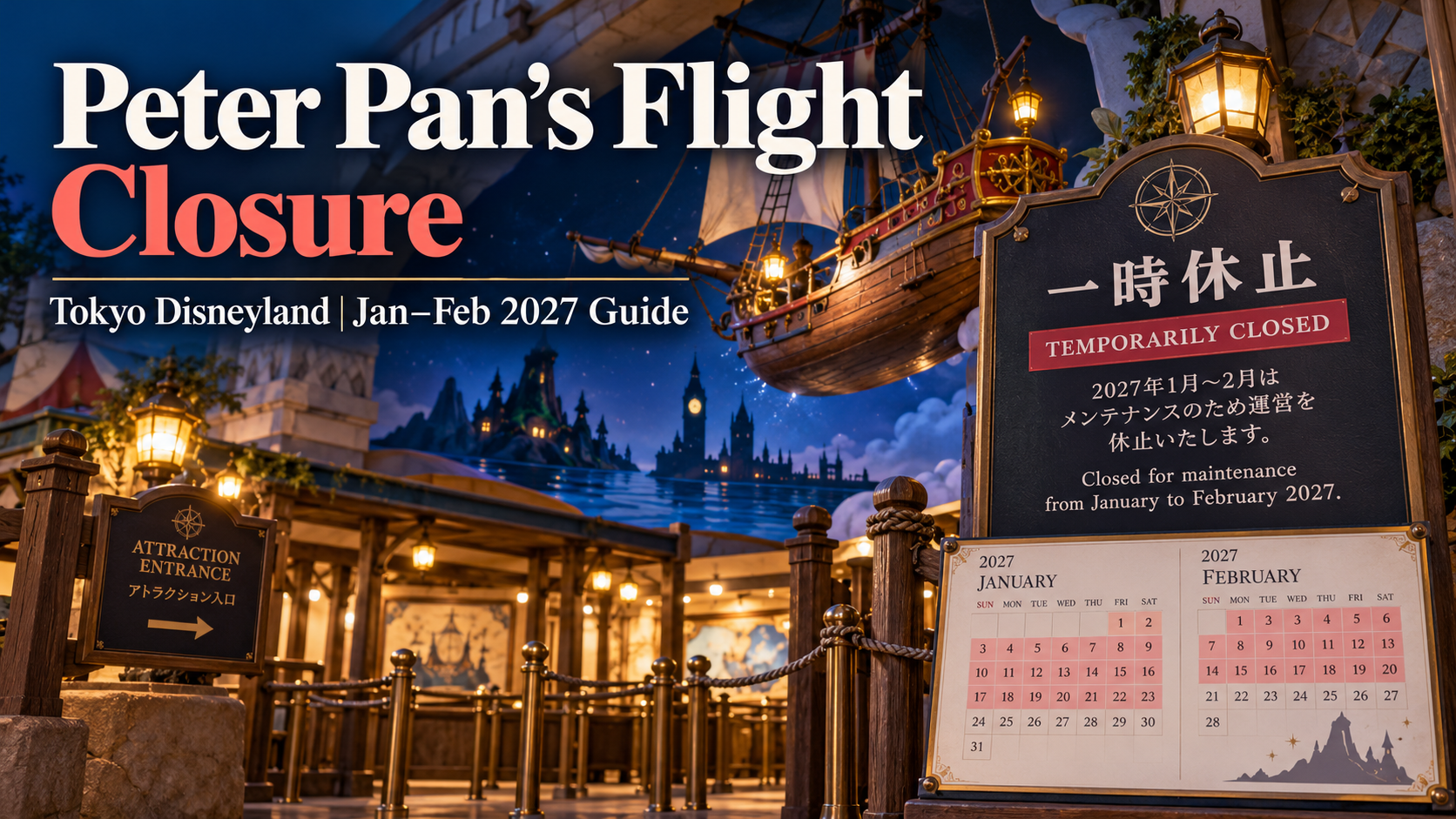
Guests planning a visit to Tokyo Disneyland in early 2027 should put one easily missed detail on their itinerary: Peter Pan’s Flight is scheduled to be temporarily closed from January 6 through February 2, 2027. The operator lists the dates both on its official attraction page and in the Tokyo Disneyland closure schedule. This is a scheduled interruption, not an announcement that the classic ride is being removed permanently. Travelers visiting on dates inside that window should assume the attraction will not be available unless Tokyo Disney Resort publishes a change.
The distinction matters because online references to “Peter Pan closing at Tokyo Disney” can confuse two different parks and two different experiences. Tokyo Disneyland’s Peter Pan’s Flight is a compact Fantasyland ride. Tokyo DisneySea has a separate, newer attraction called Peter Pan’s Never Land Adventure, with its own planned March 2027 maintenance period. The first planning step is making sure the information applies to the ticket you actually bought.
At a glance: what the operator currently says
| Planning question | Verified answer |
|---|---|
| Which attraction? | Peter Pan’s Flight |
| Which park? | Tokyo Disneyland, Fantasyland |
| Scheduled closure starts | January 6, 2027 |
| Scheduled closure ends | February 2, 2027 |
| Reopening expectation | After the listed closure window, subject to operator changes |
| Type of notice | Temporary closure; not announced as permanent |
| Where to recheck | Official attraction listing |
The dates are explicitly labeled as a temporary closure by Tokyo Disney Resort. Do not treat February 3 as an unconditional reopening guarantee: an operator may update maintenance information or temporarily suspend operations for other reasons. Check again shortly before travel and on the day you enter the park.
What is Peter Pan’s Flight?
Peter Pan’s Flight is a dark ride based on the familiar journey from London to Never Land. Guests sit in a flying pirate-ship vehicle that travels through a storybook environment. According to the operator’s ride information, it is in Fantasyland, lasts about two and a half minutes and carries two people per vehicle. It operates indoors and includes dark spaces. These details make it particularly appealing to families who want a gentle, classic Disney experience rather than a high-speed thrill ride.
There are restrictions worth noting even on operating days. The published guidance says a guest must be able to maintain a stable seated position independently and that children may not be held on an adult’s lap during the ride. If your group includes young children, anyone needing seating assistance or visitors uncomfortable with darkness, read the official description and accessibility guidance rather than assuming that the attraction suits everyone because it is short.
Short ride duration is not the same as short waiting time. Demand for well-known classics can vary with crowds, operating conditions and holiday schedules, so it is unwise to schedule a tight sequence of unrelated bookings around a predicted queue. The operator’s app and in-park staff can provide current operating information when the ride is available.
The dates around the closure are not interchangeable
A guest visiting January 5 has a fundamentally different planning position from someone arriving January 6. January 5 falls before the currently listed closure, while January 6 is its opening day. A February 2 visit falls on the final listed day of the maintenance window; February 3 is the earliest day after that window, not a contractual promise that the ride will run.
For a family staying at the resort for multiple days, the difference might be worth changing which day is assigned to Tokyo Disneyland. If one day is before January 6 and another is inside the closure, put Disneyland first if the classic Peter Pan ride is a must-do. But do not swap a park ticket or hotel reservation until you understand the applicable change and cancellation conditions. The economic cost of reshuffling an entire trip can exceed the benefit of experiencing one short ride.
A visitor traveling from overseas may be choosing between a single Disneyland day and a DisneySea day. In that case, consider the trip’s overall priorities. Someone who values vintage Fantasyland attractions may still prefer Disneyland even during the closure. Someone traveling expressly for an immersive Peter Pan adventure could be more interested in the DisneySea attraction—but must buy admission to that different park and verify its own operating schedule.
Other Tokyo Disneyland closures during the same period
The official park maintenance listing shows other attractions with early-2027 closure windows that may overlap your visit. At the time of this review, it lists Jungle Cruise: Wildlife Expeditions from January 6 through March 31, Splash Mountain from January 7 through February 4, and Haunted Mansion from January 8 through February 4. These are operator-published schedules, not independent predictions about refurbishment completion.
This makes the Peter Pan closure more significant for certain visitors than a single unavailable ride might suggest. A group that expected several classic experiences in one afternoon could find multiple priorities temporarily inaccessible. Conversely, the park contains many other attractions and entertainment offerings, and the attractions that remain open should be evaluated on their own current descriptions rather than guessed from historical schedules.
It is worth making a small “must ride / would enjoy / optional” list. Mark each attraction against the closure page. Then build flexibility around weather, performance calendars and queue variation. A plan with alternatives is more resilient than a rigid minute-by-minute schedule.
Better alternatives for different kinds of visitors
If the attraction’s appeal is gentle fantasy storytelling, explore other Fantasyland offerings listed in the official Tokyo Disneyland attraction directory. Filter for ride type and height or access restrictions, and read the current operating details. Do not assume that a neighboring attraction will be open merely because it is not listed in an older travel blog.
If the main attraction is Disney character immersion, devote time to character experiences, themed areas, shopping or scheduled entertainment that is actually available on your day. These can preserve the spirit of the trip without pretending they are substitutes for the ride itself. Some guests will prefer to spend the recovered time on a longer headliner; others may value an unhurried lunch and a park exploration that is less vulnerable to queues.
If the trip is built around Peter Pan specifically, Tokyo DisneySea’s Never Land Adventure may appear attractive. But it is not the same ride: it is a 3D boat-based experience in Fantasy Springs, with different restrictions and a different length. Tokyo Disney Resort’s DisneySea attraction page is the reliable way to compare them. Admission, access arrangements and the day’s capacity remain separate questions.
Parents should also avoid overstating the value of a replacement to children. “Another attraction has pirates” does not make it the planned Peter Pan experience. Setting expectations before entering the park is often more effective than negotiating disappointment in a crowded queue area.
Are refunds or ticket changes automatic?
The announcement of an attraction’s temporary closure does not itself demonstrate that every guest is entitled to a ticket refund or a date change. Theme-park tickets ordinarily grant admission subject to operating conditions, not a binding guarantee that every individual ride will operate. Actual ticket terms, package conditions and any operator-specific accommodation policy govern what can be changed.
Before buying or modifying a pass, review the official Tokyo Disney Resort ticket and reservations guidance and any reseller’s terms. A third-party package might combine transport, hotel rooms and tickets under separate cancellation rules. You should not rely on the statement “ride closed” as a universal reason for a penalty-free cancellation.
If your booking is complex, write down the name of the supplier, reservation reference, exact park date and type of admission. Seek a written answer before paying a change fee. This is particularly important if you plan to move only one day of a multi-day trip and keep the remainder unchanged.
Does Disney Premier Access help during the closure?
No paid queue-management product can make an attraction operate while it is closed. Disney Premier Access is a separate, paid tool for eligible operating experiences; eligibility and availability can change. The official Premier Access guide explains that places may sell out and that the price does not include park admission. It should not be marketed to families as a guaranteed workaround for a published maintenance closure.
The app can nevertheless be useful for other attractions and live operating information. If a ride is unavailable, remove it from the day’s queue-management plan and redirect attention to attractions genuinely offered that day. Check the current product terms before purchasing any additional access.
How to build a more reliable 2027 itinerary
Start with the official attraction closure list rather than the social-media version of it. Choose a date, read the list for the correct park, then check the pages for the two or three attractions most important to your group. If several favorites overlap with closures, compare another travel day, but preserve buffer time and cost limits.
Once you have a provisional itinerary, check whether your whole group can experience the alternatives. A family with a toddler and grandparents may have different needs from a group of teenagers. Ride seating rules, dark environments, height restrictions and walking distances deserve attention before buying optional upgrades.
A week before departure, look at the operator’s park calendar and attraction pages again. On the morning of your visit, follow current app information and staff instructions. Write down a backup plan that does not depend on a single ride reopening on the first conceivable day.
Quick visitor questions
Is Peter Pan’s Flight shutting permanently? The published notice says temporary closure January 6–February 2, 2027. It does not announce permanent removal.
Is it in Tokyo Disneyland or DisneySea? Peter Pan’s Flight is in Tokyo Disneyland’s Fantasyland. DisneySea has the separate Never Land Adventure.
Can I ride on February 2? The current listing includes February 2 in the closure window. Do not plan on riding that day.
Is February 3 the official reopening day? It is the first day after the presently announced closure period, assuming the dates are unchanged. Confirm the park’s live information rather than treating operation as guaranteed.
Should I change my trip? That depends on how important this specific ride is compared with hotel, flights, admission and other attractions. For most travelers, adjusting priorities within the same park is the lower-risk first option.
Final planning advice
This news is not a farewell to Peter Pan’s Flight. It is a defined, temporary gap in the operating calendar. The useful response is to check your exact visit date, compare the rides your family actually cares about and keep a realistic alternative ready. Tokyo Disneyland can still be an appealing destination during the listed closure; the difference between an enjoyable trip and a frustrating one may simply be accurate expectations.
Discover more from The Economy
Subscribe to get the latest posts sent to your email.

Key Takeaways
- Rolex’s secondary market rose approximately 7.9% year-over-year as of 2026 (per WatchCharts data) — trailing Patek Philippe (+16.2%) and Tudor (+11.4%) but still outperforming Audemars Piguet (+3.4%).
- Rolex raised U.S. retail prices 4–9% in January 2026 (steel models ~5.6%, gold models ~8.7%), narrowing the historical gap between retail and pre-owned pricing.
- Not every model appreciates: steel sports references (Submariner, GMT-Master II, Daytona) have held value far better than two-tone or widely available dress references like the standard Datejust.
- The Lady-Datejust posted the sharpest 2026 gain among tracked collections — up 22.73%, from roughly $9,269 to $11,376 — driven by demand for smaller, “everyday luxury” watches.
- Gold’s rise past $2,400/oz has directly lifted the investment case for Rolex’s precious-metal references (Day-Date, Sky-Dweller, Yacht-Master).
The Model-by-Model Picture
| Category | 2026 Trend |
|---|---|
| Lady-Datejust | +22.73% (strongest performer among tracked collections) |
| Steel sports models (Submariner, GMT-Master II) | Held value well; corrected from 2022 peak but stabilized above retail |
| Daytona | Corrected from highs above $50,000 to the mid-$30,000s; still among the most sought-after references |
| Two-tone/widely available Datejust | Flat to negative — “holds value” is an overstatement for this category |
| Gold references (Day-Date, Sky-Dweller) | Lifted by gold’s rise above $2,400/oz |
Why the “Rolex Always Appreciates” Myth Is Fading
The pandemic-era boom pushed some references — the Daytona above all — to speculative highs disconnected from historical norms. Since the March 2022 peak, steel sports models have compressed meaningfully, and dealers who bought inventory near the top have in some cases faced 20–40% markdowns on liquidation. The lesson for 2026 buyers: Rolex as a category is not a monolith. Value retention depends heavily on specific reference, condition, and whether the piece comes with box and papers (“full set”).
What’s Actually Driving 2026 Strength
- Retail price increases raise the floor. When a new Submariner retails at $10,050 (up from $9,500), a pre-owned example at $11,000–$12,000 suddenly represents a smaller premium — narrowing the gap without secondary prices actually moving.
- Supply discipline remains Rolex’s core lever. The brand has never confirmed production numbers, and secondary-market premiums remain entirely a function of Rolex’s own manufacturing decisions — a risk factor as much as a support.
- Certified Pre-Owned rollout. Rolex’s now fully rolled-out CPO program has changed how buyers transact in the used market, adding a layer of brand-verified legitimacy that supports pricing.
The Case for Rolex as a Portfolio Diversifier
Financial advisors increasingly frame luxury watches not as a replacement for equities or bonds, but as a tangible, historically low-correlation diversifier — one that carries its own risks (illiquidity, condition-dependent pricing, no yield) but has demonstrated multi-decade resilience for specific references.
Is Rolex a good investment in 2026?
It depends heavily on the specific reference. Steel sports models like the Submariner and Daytona have held or grown in value; two-tone and widely available dress models generally have not. Overall, Rolex’s secondary market rose about 7.9% year-over-year in 2026, trailing Patek Philippe but ahead of Audemars Piguet.
Discover more from The Economy
Subscribe to get the latest posts sent to your email.

Navigating Mortgage and Loan Refinancing in a High-Yield Environment
Global public debt crossing critical thresholds has kept central bank policies volatile, resulting in fluctuating US Treasury yields throughout 2026. For homeowners and commercial property holders burdened by previous high-interest borrowing cycles, finding optimal refinance windows has become a high-stakes financial puzzle. Stalled disinflation and stubborn employment numbers mean rate cuts are incremental, requiring borrowers to act with precision.
Timing your mortgage or commercial loan refinance in this environment requires a deep understanding of yield curve movements and lender risk appetites.
Decoding 2026 Refinance Dynamics
The 10-Year Treasury Yield Benchmark
Mortgage rates continue to track closely with the 10-year US Treasury yield. When macroeconomic anxiety spikes debt issuance, yields rise, tightening consumer borrowing capacity. Savvy borrowers monitor weekly Treasury auctions to lock in rates during brief dip windows.
Hybrid ARMs and Alternative Structures
With fixed rates remaining elevated, 7/1 and 10/1 adjustable-rate mortgages (ARMs) have surged in popularity. These products offer lower initial monthly payments, giving borrowers breathing room until central bank easing cycles fully materialize.
| Loan Product | Current Rate Range | Best For | Key Risk Factor |
| 30-Year Fixed Mortgage | 6.2% – 6.8% | Long-term predictability | Higher initial monthly outlay |
| 7/1 Hybrid ARM | 5.5% – 5.9% | Short-term ownership / flipping | Rate reset risk after year 7 |
| Commercial Refinance | 7.0% – 8.2% | Corporate asset restructuring | Strict DSCR lender covenants |
Actionable Steps for Successful Refinancing
To maximize your chances of securing favorable refinance terms in a volatile market, follow a disciplined preparation strategy.
Boost Your Credit Score Immediately: Lenders in 2026 are applying stringent credit tiering; a 20-point increase can drop your APR by a crucial quarter-point.
Shop Regional Credit Unions: Smaller financial institutions often offer portfolio loans with more flexible underwriting than major national banks.
Calculate the Break-Even Point: Ensure your total closing costs are recouped through monthly savings within 24 months of closing.
“Market Strategist View: Refinancing in 2026 is an exercise in opportunistic timing. Borrowers must maintain immaculate financial profiles ready to strike the moment Treasury yields dip.”
Mastering the complexities of today’s debt environment ensures you can successfully lower your debt service costs and protect your long-term financial stability.
Discover more from The Economy
Subscribe to get the latest posts sent to your email.

SBP Raises Policy Rate to 12%: What It Means for Your Loans, Savings and Business

IMF’s $1.2bn Staff-Level Deal: What Pakistan Promised on Surplus

Decoding the DBS–BCA Merger Rumour: Market Volatility, Strategic Realities

New Xbox Games October 26–30, 2026: Releases and Game Pass

Tokyo Disneyland Peter Pan’s Flight Closure: January–February 2027 Guide

Neocloud Economics in 2026: GPU Debt, Utilization and Power

What Is a Neocloud? How AI GPU Clouds Work and Compare

Lula Re-elected in 2026: What Changes for the Dollar, Brazilian Stocks, and Interest Rates?

Lula Wins Brazil’s 2026 Election: Five Economic Tests for 2027

SSI November 2026 Payment: Why Benefits Arrive October 30

Russia Sanctions Waiver: What Asian Oil Buyers Gain

Asia Markets Weekly: How Oil, US Yields and the Fed Reach Tokyo, Kuala Lumpur and Karachi

Gold Near $4,000: Buy, Hold or Wait? A Pakistan Tola Price Guide

US 10-Year Treasury Yield Near 5%: The Hidden Cost for Pakistani Investors

Crude Oil & Petroleum Market Analysis: OPEC+ Decisions and Price Forecasts

Top US Convenience Store Chains: Store Counts, EV Charging, and Sales Trends

Social Security Extra $90 Deposit: Who Qualifies for the October 2026 Medicare Rebate?

Algorithmic Dogfights: Why the U.S. and China Must Establish Rules of Engagement for Autonomous Air Power

Who Is Shivon Zilis? The Neuralink Executive at the Center of the Musk–OpenAI Trial

Gold Price Outlook 2026: The Forces Behind the Forecasts—and What Could Reverse Them

Corporate America Faces a New Debt Test as US Borrowing Costs Surge

Global Economic Outlook 2026: 7 Forces Reshaping Markets, Trade and Business

Gold Falls 3.7% as Yields Surge: Is Gold Still a Safe Haven in 2026?

Stock Market Crash in 2026? Warning Signs, Scenarios and a Calm Investor Checklist

Stock Market Today: Dow, S&P 500, and Nasdaq Retreat as Treasury Yields

Geopolitics and Your Portfolio: How International Affairs Move Global Markets

Anthropic Bans Sustained Abuse of Claude AI Under New Usage Policy Effective November 12, 2026

US–Iran Conflict in October 2026: Hormuz, Oil Prices and Diplomacy
-

 Markets & Finance10 months ago
Top 15 Stocks for Investment in 2026 in PSX: Your Complete Guide to Pakistan’s Best Investment Opportunities
-

 Analysis8 months ago
Johor’s Investment Boom: The Hidden Costs Behind Malaysia’s Most Ambitious Economic Surge
-

 Analysis8 months ago
Top 10 Stocks for Investment in PSX for Quick Returns in 2026
-

 Banks9 months ago
Best Investments in Pakistan 2026: Top 10 Low-Price Shares and Long-Term Picks for the PSX
-

 Analysis9 months ago
Brazil’s Rare Earth Race: US, EU, and China Compete for Critical Minerals as Tensions Rise
-

 Investment10 months ago
Top 10 Mutual Fund Managers in Pakistan for Investment in 2026: A Comprehensive Guide for Optimal Returns
-

 Global Economy10 months ago
15 Most Lucrative Sectors for Investment in Pakistan: A 2025 Data-Driven Analysis
-

 Global Economy10 months ago
Pakistan’s Export Goldmine: 10 Game-Changing Markets Where Pakistani Businesses Are Winning Big in 2025