Analysis
Kevin Warsh Takes the Fed’s Helm — and Walks Straight Into a Rate-Hike Storm
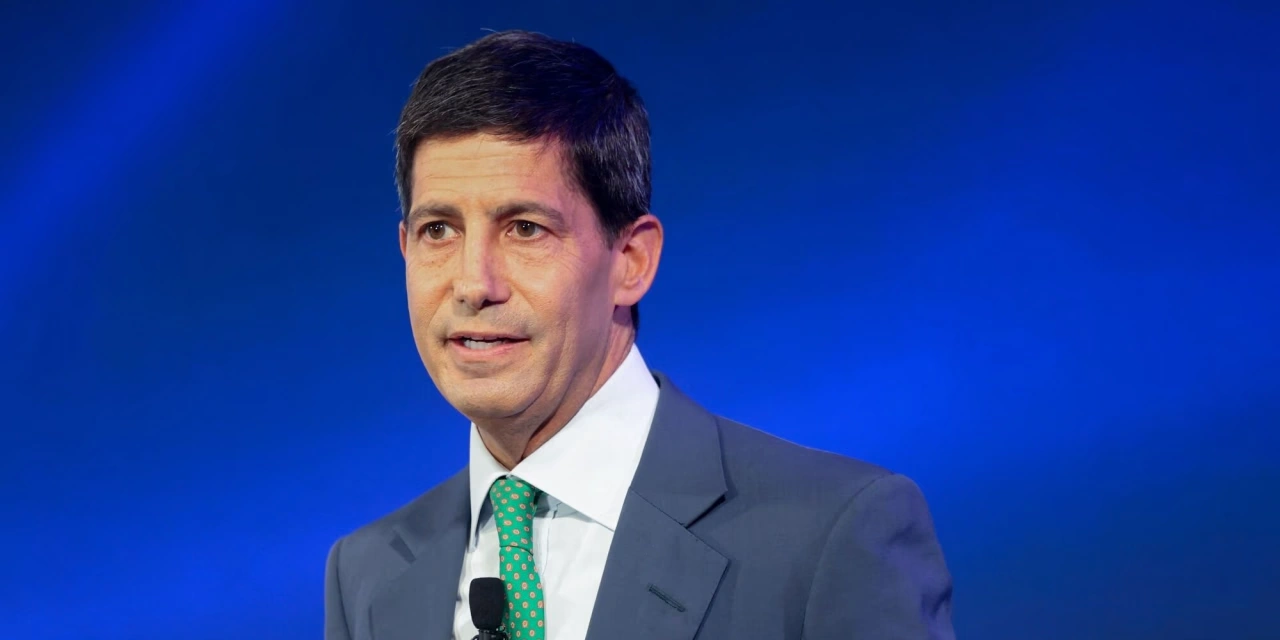
The swearing-in was choreographed for maximum symbolism. On Friday morning, May 22, 2026, Kevin Warsh stood in the East Room of the White House as Supreme Court Justice Clarence Thomas administered the oath that made him the 11th chair of the Federal Reserve in the modern banking era. Not since Alan Greenspan’s ceremony in 1987 had a Fed chair been sworn in at 1600 Pennsylvania Avenue. The setting said everything about what Donald Trump wanted from this appointment. What the bond market said back was rather different.
The Narrative That Broke on the Way to the Podium
For most of 2025 and into early 2026, Wall Street operated on a comfortable consensus: Warsh would replace Jerome Powell, ease financial conditions, and deliver the rate cuts a frustrated White House had been demanding for over a year. Investors debated whether the Fed would trim rates two or four times in 2026. The only real argument was about speed.
That consensus collapsed well before Warsh’s hand left the Bible.
April’s Consumer Price Index came in at 3.8% year over year — a three-year high, up from 3.3% in March and ahead of Wall Street’s forecast of 3.7%. The Producer Price Index for the same month showed wholesale prices rising 6.0% annually. Together, the two readings delivered a message bond markets processed without hesitation: the next move by the Kevin Warsh Federal Reserve might not be a cut at all. It might be a hike.
The Federal Reserve has held the benchmark federal funds rate at 3.5% to 3.75% since late 2025, itself a compromise position forged amid the competing pressures of an Iran war-driven oil shock, sticky services inflation, and a labour market that refused to crack. Oil surged above $115 per barrel at the height of the Middle East conflict, compressing the Fed’s already narrow room to manoeuvre. What had been a manageable inflation overshoot became something harder to dismiss.
1: The New Chair and the Inheritance He Didn’t Expect
Kevin Warsh, 56, arrives at the Marriner Eccles Building with an unusual duality on his résumé. During his confirmation hearing before the Senate Banking Committee on April 21, he positioned himself as a reformer — promising a “reform-oriented Federal Reserve,” tighter communication discipline, and an aggressive reduction of the central bank’s bloated balance sheet. He also argued, as recently as 2025, that advances in artificial intelligence would boost productivity, push down inflation, and create room for rate cuts. That was all before the Iran war changed the inflation arithmetic.
The Senate confirmed Warsh on May 13 in a 54-45 vote — the most divisive confirmation in Federal Reserve history — with Pennsylvania Democrat John Fetterman the only member of his party to cross the aisle. Jerome Powell, who served eight years and endured repeated personal criticism from Trump, will remain on the Fed’s Board of Governors until 2028.
What Warsh inherited was not a compliant committee. At the April FOMC meeting — Powell’s last as chair — four of the 12 voting members dissented against either the rate decision or the policy statement, the highest number of dissents since 1992. That kind of institutional fracture doesn’t resolve simply because someone new sits in the chair. Warsh will preside over his first FOMC meeting in June facing a committee that is, by historical standards, unusually fragmented.
And the data is moving against him fast. Monthly CPI has averaged 0.4% for each of the past six months. According to analysis by Bank of America Global Research and Bloomberg, if that pace continues, headline inflation could hit 5.2% by November’s midterm elections — even a moderation to 0.3% monthly would land at 4.4%, the highest since April 2023. Shelter inflation alone doubled in April. Energy costs, amplified by the Iran conflict, are pushing through supply chains and into consumer prices with a speed that earlier models underestimated.
Warsh said at his confirmation hearing that the Fed needs a different framework for assessing inflation — that the Personal Consumption Expenditures index “offers only a rough take, even when volatile food and energy prices are excluded.” That may be analytically defensible. It does not change the headline numbers that the bond market is reading every Thursday morning.
2: What Markets Are Actually Pricing — and Why It Matters
Will the Federal Reserve raise rates in 2026 under Kevin Warsh?
Based on current fed funds futures data, traders now assign a 57% probability to at least one rate hike by December 2026, according to the CME Group’s FedWatch tool. A December hike alone carries roughly 51% odds; the probability rises to 60% for January 2027 and above 70% for March 2027. Less than four weeks ago, traders assigned virtually no probability to hikes at all — they were debating the pace of cuts.
That repricing has been sharp and broad-based. The benchmark 10-year Treasury yield has climbed to hover around 4.67%. The 30-year yield topped 5.0% — its highest level since 2007. The 2-year yield, most sensitive to near-term Fed expectations, broke above 4% for the first time in 11 months, a signal that the market is pricing the policy rate staying elevated and potentially moving higher.
The picture is more complicated than a simple hawkish/dovish binary. Warsh enters with a genuine philosophical belief that the Fed’s balance sheet — still swollen from successive rounds of quantitative easing — is itself inflationary. His argument, developed in a 2025 op-ed and reiterated during confirmation, is that aggressive balance sheet reduction could allow rate cuts to happen sooner, because tightening financial conditions via asset sales would do some of the work currently done by the funds rate. J.P. Morgan strategists’ base case, as of mid-May, is that the Fed holds rates steady through the end of 2026, with the unemployment rate relatively stable and inflation still elevated.
Yet the FOMC hawks may not wait for Warsh’s balance sheet theory to play out. “The April CPI release underlines the challenge facing Warsh … and the distance the inflation data needs to travel back in favor of disinflation before the FOMC could consider reducing rates further,” Krishna Guha, head of economics and central banking strategy at Evercore ISI, wrote following the April data. “It also gives a little more ammo to the hawkish minority who think the next move is as likely to be up as down.”
That hawkish minority is no longer a fringe. The FOMC minutes from the April meeting, released on May 20, showed a growing number of policymakers warning that the central bank may need to raise rates if inflationary pressures don’t cool. The new chair may find himself chairing a committee more hawkish than he is.
3: The Second-Order Consequences
The implications extend well beyond the immediate question of whether rates rise 25 basis points in December. The repricing already underway carries real economic weight.
The 30-year Treasury yield at 5% has direct consequences for mortgage costs, which remain a pressure point for American households already stretched by five consecutive years of above-target inflation. A housing market that has been essentially frozen — high prices, elevated mortgage rates, minimal transaction volumes — would face further compression if long rates push higher still. Bank of America analysts, in early May, predicted the Fed will hold off on lowering rates until the second half of 2027. That forecast implies more than a year of no relief for variable-rate borrowers.
For corporate balance sheets, the impact is asymmetric. Companies that locked in cheap fixed-rate debt during 2020–2021 are insulated for now. But the refinancing wall looms: trillions of dollars of corporate bonds issued at sub-3% yields will mature over the next 18 months. If the funds rate stays at 3.5% to 3.75% — or rises above it — the rollover will crystallise at materially higher costs. Companies with pricing power and strong balance sheets will absorb this. Those without it won’t.
The political arithmetic matters too. Trump installed Warsh specifically to get lower rates ahead of the 2026 midterms. The irony is sharp: an incoming chair nominally aligned with the White House’s preferences may be driven by the data to do precisely the opposite of what the White House wanted. Monthly inflation at 0.4% is a number that prints in grocery store prices, energy bills, and insurance premiums — the kind of inflation voters feel viscerally and punish at the polls. A Fed that raises rates would slow the economy; a Fed that doesn’t and lets inflation accelerate would arguably hurt Trump’s midterm prospects more directly.
Warsh has already acknowledged a version of this bind. He told the Senate Banking Committee that the Fed “needs a different framework” — an admission, in diplomatic language, that the existing tools may not be well-calibrated to the current shock. Whether that means rate hikes, aggressive balance sheet reduction, or some novel combination is a question the first few FOMC meetings of his tenure will begin to answer.
4: The Case for Patience — and Why Some Analysts Aren’t Panicking
Not everyone agrees the Fed is headed for a rate-hike cycle.
The dissenting argument, made most forcefully by economists at Capital Economics, starts with the observation that much of the current inflation overshoot is energy-driven and therefore transitory in the precise sense the word implies: it will mean-revert when oil prices stabilise. The Iran conflict produced a spike to $115 per barrel; a ceasefire sent oil below $95 within hours. If the geopolitical shock fades, headline CPI could ease significantly by late 2026 without any policy action.
Stephen Brown, deputy chief North America economist at Capital Economics, described Warsh as “a relatively safe pick” for markets compared with other candidates who had been floated — precisely because his hawkish reputation on inflation would prevent a politically motivated easing cycle. That hawkishness, paradoxically, might allow him to hold steady rather than hike: credibility on inflation buys time that a dovish chair would not have.
There is also the growth argument. U.S. GDP has continued expanding at around 2% despite elevated rates, consumer spending has held firm, and S&P 500 corporate earnings have kept growing. A labour market that remains relatively resilient — neither accelerating nor cracking — removes some urgency from both cutting and hiking. Rate hikes require a clearer inflation-acceleration signal than the current data unambiguously provides.
The CME FedWatch probabilities themselves illustrate the uncertainty. Fifty-seven percent odds of a hike by December imply, equally, a 43% chance there is no hike. Markets are genuinely split. That is different from markets confidently pricing in a tightening cycle. Warsh has the institutional flexibility, if the inflation data cooperates even modestly, to hold and claim patience as strategy rather than paralysis. Whether that window stays open depends almost entirely on whether oil prices stabilise and whether April’s CPI reading proves a peak rather than a floor.
The Chair Who Arrived at the Wrong Moment
Warsh’s challenge is not primarily intellectual. He understands the policy trade-offs as well as anyone who has sat in the Eccles Building. His challenge is contextual: he was chosen to ease, installed to ease, and confirmed — narrowly — in a political environment that expected him to ease. The economy has not cooperated with that mandate.
The man who cited Alan Greenspan in his swearing-in remarks now faces a test Greenspan himself would recognise: the gap between what a new Fed chair promises and what the data demands. Greenspan learned in his first year that the economy sets the agenda, not the chair.
Bond markets figured that out on Friday. The rest of Washington is catching up.
Discover more from The Economy
Subscribe to get the latest posts sent to your email.
Analysis
HSBC Cuts China Retail Sales Forecast Nearly in Half — and the Real Problem Is Bigger Than One Bad Month
China’s shoppers were supposed to be the engine of recovery. April just showed how badly that engine is misfiring.
On May 22, 2026, HSBC slashed its forecast for China’s retail sales growth to 2.8% from 5.2% — a revision of nearly 46% — after April data came in at a barely-there 0.2% year-on-year, the weakest reading since December 2022 and well below economists’ consensus forecast of 2%. The revision wasn’t a routine trimming. It was a signal: Beijing’s bid to rebalance its economy toward domestic consumption is running into structural walls that no subsidy programme has yet managed to breach. MarketScreener
The timing matters. China’s first-quarter GDP expanded 5%, putting the full year on track for Beijing’s target. April suggested that pace may already be slipping.
The HSBC China Retail Sales Forecast Cut Explained
HSBC researchers Erin Xin and Taylor Wang, writing on May 22, didn’t mince their assessment. The April retail sales print was, in their words, “inconsistent with the recent calls for rebalancing growth towards domestic demand.” That’s diplomatic language for: the policy architecture isn’t delivering.
The bank cut its retail sales growth forecast to 2.8% from the 5.2% projected in March, after official April data came in below expectations at 0.2% year-on-year — the softest reading since late 2022 during the coronavirus pandemic. South China Morning Post
Three converging forces drove that downgrade, and each one is structural rather than cyclical.
First, the labour market. HSBC’s researchers noted that the purchasing managers’ index and other indicators pointed to weakness in the job market, while youth unemployment was “still elevated” amid growing concerns that AI could displace some jobs. China’s urban youth unemployment rate for 16- to 24-year-olds stood at 16.1% as recently as February 2026 — still among the highest readings since the National Bureau of Statistics revised its methodology in 2024, and far above the pre-pandemic baseline. Young workers don’t buy sofas, cars, or apartments when they’re uncertain about next month’s rent. South China Morning Posttradingeconomics
Second, the property sector. China’s property downturn began in 2021 and continues to pressure economic growth and consumer confidence. Housing traditionally served as both a place to live and a major store of household wealth. The wealth effect runs in reverse: falling home values make families more cautious, not less. Property investment contraction widened in April on an annual basis, extending a drag on growth that has persisted for several years, while fixed-asset investment contracted 1.6% in the first four months of 2026, reversing a 1.7% expansion in the January-March period. U.S. BankInvestinglive
Third — and perhaps most telling — the trade-in programme is losing its grip. Automobile sales dropped 15.3% in April from a year earlier, while home appliance sales declined 15.1% and building materials fell 13.8%. These are precisely the categories that Beijing’s trade-in subsidies were designed to protect. IndexBox
The collapse in durables spending is the most revealing data point in the April release. These are not luxuries. They are the categories that Beijing specifically targeted with its two-year-old trade-in programme — and their sharp declines suggest the programme’s demand-pulling effect has been largely exhausted.Why China’s Consumption Problem Won’t Be Fixed by Another Subsidy Round
Why did HSBC cut China’s retail sales forecast so sharply? The simplest answer is that April’s 0.2% growth rate revealed a consumption shortfall that March’s more flattering 1.7% reading had temporarily obscured. But the structural diagnosis goes deeper: China’s trade-in subsidies, however well designed, have a fundamental design flaw.
ING economists warned earlier this year that the trade-in policy “essentially front-loads consumption and has limited lasting power. While households may choose to buy a new car or washing machine when it comes with a nice discount, they likely won’t immediately buy another one next year, even if the discount remains.” After a surge in sales during the early stages of the trade-in policy, sales flatlined in subsequent years — a pattern now repeating with household appliances. ING THINK
Beijing appeared to recognise this dynamic. For 2026, the trade-in programme budget was scaled back from RMB 300 billion in 2025 to RMB 250 billion. That’s a significant signal: even the architects of the programme are acknowledging its diminishing returns. ING THINK
The deeper issue is the wealth-confidence-spending cycle. Household consumption accounts for roughly 39% of Chinese GDP — significantly lower than in most developed economies. In 2022, people aged 20 to 39 accounted for 26.7% of the population but contributed 29.1% of total consumption, making them the highest-spending demographic. This cohort is also among the most exposed to youth unemployment, falling home values, and AI-driven job anxiety. Their caution isn’t irrational; it’s a rational response to genuine wealth and income uncertainty. Asia Society
What follows from that is a structural trap: households won’t spend confidently until property stabilises and jobs feel secure; property won’t stabilise until demand recovers; and demand won’t recover until households feel confident enough to spend. Subsidies can interrupt this cycle temporarily — they did, through much of 2024 and early 2025 — but they can’t resolve it.
Implications: What a 2.8% Retail Sales Year Means for Markets, Policy, and the Growth Target
A 2.8% retail sales growth year isn’t a disaster in isolation. It is, however, a serious obstacle to the broader ambition of rebalancing China’s economy away from investment and exports and toward household consumption. The World Bank has noted that China faces headwinds including a protracted property sector downturn, subdued confidence, deflationary pressure from weak domestic demand, and heightened uncertainty from shifting global trade policies — and April’s print makes each of those headwinds feel more entrenched than Beijing’s official messaging would suggest. World Bank Group
For policymakers, the immediate pressure is on the People’s Bank of China. Rate cuts and reserve requirement ratio reductions remain the most obvious levers. As of late 2025, HSBC’s own private banking arm expected the PBoC to deliver 20 basis points of interest rate cuts and 50 basis points of RRR reductions through 2026. That expectation looks more urgent now. HSBC Private Bank
Yet monetary easing alone won’t fix a confidence problem. Cheaper credit doesn’t compel households to borrow if their biggest asset — their home — is still falling in value and their employer feels uncertain about the year ahead. The IMF, in its December 2025 Article IV consultation, was blunt: China needs to move toward a “more consumption-oriented, more services, job-rich” growth model. That requires structural reform, not just the rate cycle.
For markets, the implications are asymmetric. Consumer-facing sectors — retail, food services, household durables, auto — face a tougher earnings environment than the 2025 trade-in bounce implied. Yuhan Zhang, principal economist at the Conference Board’s China Center, noted that consumers are concentrating spending on “selective discretionary and upgrade categories rather than broad-based consumption.” The practical read: premiumisation stories may hold up; volume-dependent mass-market brands face real pressure. MarketScreener
The Counterargument: April May Be Noise, Not Signal
Not every analyst accepts the gloomy read. The more optimistic case deserves a fair hearing.
April was a genuinely unusual month. The Iran conflict shock sent energy costs higher and added a layer of uncertainty that compressed business sentiment globally, not just in China. Better-than-expected exports and domestic fuel price controls provided some insulation from the energy shock, and China’s Q1 GDP expansion of 5% was real, not manufactured. A single month’s retail print — particularly one distorted by an external shock — may not capture the underlying demand trajectory. Investinglive
The bulls point to several mitigating factors. Urban unemployment ticked down to 5.2% in April from 5.4% in March. Services consumption, specifically catering revenues, grew 2.2% even as goods sales dipped. And Beijing has consistently demonstrated its willingness to deploy fiscal tools when growth slips — the special government bond programme, infrastructure spending, and local government financing support are all still on the table.
As one analysis noted, Beijing has “plenty of policy tools left, including rate cuts, infrastructure spending, and easier credit for local governments. The question is whether it pulls the trigger fast enough to keep 2026 on track for its 5% growth target.” Briefs Finance
The counterargument is worth taking seriously. What it can’t fully explain, however, is why the HSBC downgrade — from 5.2% to 2.8% — was so large. Single-month volatility doesn’t typically produce a 46% forecast revision. That scale of adjustment implies the bank’s researchers believe they were previously underestimating something structural.
The Deeper Reckoning
There is a tension at the heart of China’s 2026 economic narrative that April’s data has made impossible to ignore. Beijing has staked its domestic growth story on consumption-led rebalancing — a pivot away from the investment and export model that powered three decades of expansion but now faces diminishing returns and global pushback. Yet the April retail data, and HSBC’s stark downgrade in response, shows that consumption isn’t simply waiting to be unlocked by the right policy mix.
The problem isn’t stimulus design. China’s trade-in programme was technically sophisticated and reasonably well targeted. The problem is that households saving in a falling property market, with elevated youth unemployment and creeping AI anxiety, don’t spend because the government asks them to. They spend when they feel financially secure.
That security will eventually return. Property markets bottom. Labour markets tighten. Confidence rebuilds. The question is whether Beijing’s policy toolkit can compress that timeline — or whether China’s consumers, like consumers across history, will simply wait until the fundamentals do the work themselves.
The April data suggests, uncomfortably, that the wait isn’t over yet.
Discover more from The Economy
Subscribe to get the latest posts sent to your email.
Analysis
China Property Developers Bet on Chips — and Markets Are Falling for It
On May 13, 2026, shares in Metro Land hit China’s 10 per cent daily trading limit. The catalyst was not a debt restructuring deal, a government rescue, or even a surprise profit. It was a single announcement: the loss-making Beijing developer would acquire a 20 per cent stake in Xian Qixin Optoelectronics Technology, a Shaanxi-based firm that uses laser signals to produce semiconductor components. By the close, Metro Land’s stock had risen 389 per cent from its year-end 2025 level. The company had posted a net loss of 1.2 billion yuan the previous year. It didn’t matter. For China’s mainland retail investors, “chip” is currently the most valuable word in the financial lexicon — and the country’s embattled property developers have noticed.
A Sector Searching for a Story
China’s real estate industry has spent five years in controlled demolition. Evergrande defaulted, was ordered into liquidation, and was delisted. Country Garden — once the country’s largest developer by sales — defaulted on dollar bonds and is restructuring offshore debt. More than 70 per cent of Chinese mainland-listed developers expected to report net losses for 2025, according to data compiled by Yicai, with China Fortune Land Development alone projecting a deficit of between 16 billion and 24 billion yuan. The area of new homes sold last year fell 12.6 per cent to 881 million square metres, the fourth consecutive annual contraction. Property, which once contributed roughly a quarter of China’s GDP when related industries were included, is no longer a story investors want to tell.
Semiconductors, by contrast, are exactly the story investors want to tell. China’s STAR 50 Index — home to chip designers including Cambricon, Moore Threads, and MetaX — rose approximately 35 per cent in 2025, supercharged by the geopolitical frenzy that followed DeepSeek-R1’s emergence in January of that year. When Shanghai Biren Technology listed in Hong Kong on January 2, 2026, retail investors oversubscribed the offering 2,347 times. Two sectors: one dying, one ascendant. The arbitrage was obvious — even to people who build apartment blocks.
Section 1: The Chip Pivot and Why Property Developers Are Chasing It
China property developers’ semiconductor investment has taken several forms, from strategic minority stakes to headline-grabbing acquisition announcements that analysts struggle to justify on commercial grounds. Metro Land’s deal is the most visible recent example, but it’s far from unique. The pattern is consistent: a developer announces a move into chipmaking or chip-adjacent technology; A-share retail investors respond with a buying frenzy; the stock surges to daily limit; regulators intervene with questions; the stock retreats. Then the cycle repeats with a different company.
The underlying economics of the deals are rarely flattering. Metro Land, which reported a net loss that widened 15.3 per cent to 1.2 billion yuan in 2025, is acquiring a minority stake in a small laser-optics company — not a foundry, not a chip designer, not a firm with meaningful manufacturing capacity. The Shanghai Stock Exchange issued an inquiry letter within days, demanding the developer clarify the deal’s terms and disclose its financial health in detail. The stock retreated 23.5 per cent. Yet the episode had already done its work: Metro Land’s shares remain dramatically elevated from where they began the year.
The mechanics are rooted in China’s specific retail-investor culture and the political weight now carried by “tech self-reliance” as a narrative. “Chip-themed stocks are the new darlings of individual investors since such stocks play a key role in China’s technological innovation and carry the hopes of the whole nation,” said Ding Haifeng, a consultant at Shanghai-based financial advisory firm Integrity. His warning, though, was pointed. “The fanfare surrounding these companies is just a rude reminder that exchanges on the mainland could become a speculators’ market if company fundamentals are ignored.”
That word — fundamentals — is doing a lot of heavy lifting. The typical property-developer-turned-chip-investor is not acquiring a fabrication facility. It’s buying a small equity position in a company that sounds semiconductor-adjacent, hoping the association is enough to move the market. In most recent cases, it has been — for a few days, at least.
The precedent for this kind of cross-sector grafting isn’t new. During China’s internet boom of the 2010s, textile and food companies rebranded as technology firms to capture speculative flows. During the electric-vehicle surge of 2020-21, traditional manufacturers rushed to announce EV subsidiaries. The chip pivot of 2026 follows the same playbook, dressed in a more urgent geopolitical costume.
2: What the Rally Reveals About China’s Capital Markets — and Its Chip Ambitions
Why are Chinese property developers investing in semiconductors? The direct answer is that they aren’t, not really. They’re investing in the perception of semiconductor exposure, which is an altogether different thing. The distinction matters because it illuminates a structural fault line running through China’s capital markets: the gap between Beijing’s strategic objectives and how those objectives get priced by retail investors chasing momentum.
China’s genuine chip ambitions are vast and state-backed. The country’s 15th Five-Year Plan, covering 2026 to 2030, is expected to prioritise advanced logic process nodes, memory industry expansion, and breakthroughs in lithography, according to analysis from Yole Group. SMIC’s N+2 and N+3 nodes are approaching 7nm/5nm capability. ChangXin Memory Technologies has ambitions for high-bandwidth memory production by the end of this year. These are serious industrial efforts, costing hundreds of billions of yuan and taking decades to compound.
The property developers’ “chip investments” belong to a different universe. They are, at best, peripheral — minority positions in small firms that operate on the edges of the semiconductor supply chain. At worst, they are market-manipulation vehicles that exploit regulatory attention gaps and retail-investor enthusiasm for a politically charged sector.
The featured-snippet question this raises is worth answering plainly: Are Chinese real estate companies’ chip investments commercially legitimate? Broadly, no. Most announced property-developer chip deals involve negligible capital allocation into companies with limited manufacturing capability, positioned to capture share price appreciation rather than semiconductor output. Regulators at the Shanghai and Shenzhen exchanges have responded with inquiry letters, demanding clarity. But enforcement has been slow relative to the speed at which new announcements emerge.
The deeper irony is that the companies doing this are, in many cases, a drag on the very capital pools that China’s genuine chip sector needs. Institutional money being sucked into speculative property-developer rebounds is money not flowing toward the foundry expansions, equipment manufacturers, and EDA software developers where China’s strategic priorities actually lie. Shen Meng at Chanson & Co. has argued that A-share valuations may be detaching from economic logic, with new listings serving as “political symbols more than proven market disruptors.”
3: Downstream Consequences — for Markets, Regulators, and the Chip Industry
The second-order effects of this pattern run in several directions, not all of them obvious.
For China’s securities regulators, the property-to-chip pivot presents a familiar dilemma: how to protect retail investors from speculative excess without suppressing the patriotic investor enthusiasm that Beijing has spent years cultivating. The semiconductor sector’s political valence makes heavy-handed intervention tricky. A regulator who crashes a chip-themed stock rally risks being framed as an obstacle to tech self-reliance. The Shanghai Stock Exchange’s use of inquiry letters — essentially a public demand for explanation — is the least disruptive tool available, but it’s a brake, not a stop sign.
For legitimate chipmakers, the noise created by property-developer announcements has a subtler cost. When every company that acquires a 15 per cent stake in an optics firm gets treated as a semiconductor play, the analytical frame for the entire sector degrades. Moore Threads Technology, which listed in Shanghai in early 2026, reported losses that narrowed by up to 41 per cent in 2025 as revenue rose 247 per cent — real operational progress. Grouping that kind of result with a Beijing developer buying into a laser company distorts how the market prices genuine progress.
For international investors watching China’s market structure, the episode signals something worth noting. China’s property crisis has not produced the clean capital reallocation that a textbook deleveraging cycle would suggest. Instead of distressed developers liquidating and releasing capital toward productive sectors, many are performing a kind of market magic: conjuring value through association, staying listed through narrative gymnastics, and deferring the reckoning that their balance sheets demand. The government’s preference for “soft landings” in the property sector — avoiding mass defaults to protect social stability — has inadvertently enabled this.
The Hang Seng Tech Index’s 23 per cent gain in 2025 reflects genuine enthusiasm for companies like Biren and Cambricon, whose revenues are growing and whose technology, while still trailing Nvidia’s by several years, is closing the gap in specific application domains. Conflating that trajectory with property developers playing dress-up does neither story justice.
4: The Counterargument — Perhaps the Market Knows Something
Not everyone is dismissive. There’s a case — steel-manned, not strawmanned — that property developers pivoting toward semiconductors is economically rational, however messy the execution.
The argument runs like this: China’s property sector will not recover to its previous scale. Urbanisation has slowed, demographic headwinds are structural, and Beijing has made clear that the era of treating housing as a speculative asset is over. Developers with listed shells, existing management teams, and some residual capital need to find a new reason to exist. The semiconductor industry, heavily subsidised and politically prioritised, is the obvious destination. Some of those minority stakes — even in small companies — may eventually connect developers to supply chains that matter.
Country Garden’s venture arm had, before the developer’s collapse into crisis, built a 1.68 per cent stake in ChangXin Memory Technologies, which was valued at close to 140 billion yuan as of March 2024. That position, held before the chip-investment craze fully took hold, was a genuine early-mover bet on a serious company. The fact that Country Garden was forced to sell it to repay debts says more about its liquidity crisis than about the quality of the underlying investment.
The counterargument also points to history. Japan’s postwar industrial policy saw shipbuilders and textile firms successfully transition into electronics. South Korea’s chaebols built semiconductor empires on foundations that had nothing to do with silicon. Diversification under duress is not always theatre; sometimes it plants seeds that grow.
Still, the conditions for that kind of transition — patient capital, long industrial planning horizons, genuine technological investment — are conspicuously absent in the current wave of property-developer chip deals. Buying a 20 per cent stake in a laser-optics company to escape a stock exchange inquiry is not industrial policy. It is, as Ding Haifeng put it, an invitation for the A-share market to become a speculators’ circus.
Closing: The Price of a Narrative
China’s semiconductor ambitions are real, costly, and gathering momentum. The state’s commitment to chip self-reliance — through the Big Fund, through the 15th Five-Year Plan, through the patient cultivation of firms like SMIC, YMTC, and CXMT — is not in question. What is in question is whether the capital markets that are supposed to support that ambition can distinguish between the genuine article and a real estate company in a borrowed lab coat.
Metro Land’s share price, now sitting at 15.96 yuan after its brief ascent to 20.85 yuan, tells you everything. The 389 per cent rally was not a market verdict on the company’s chipmaking capabilities. It was a verdict on how easily the word “semiconductor” can be weaponised in a market hungry for a national hero story. The retreat, prompted by a regulator’s letter, was the market correcting what it never should have priced in the first place.
Beijing’s policymakers face a choice they haven’t yet made cleanly: encourage the retail enthusiasm that keeps property-developer stocks alive and A-share sentiment elevated, or enforce the analytical rigour that China’s genuine semiconductor champions actually deserve.
You can’t do both. Not for long.
Discover more from The Economy
Subscribe to get the latest posts sent to your email.
Analysis
Oil Prices Rise as Investors Doubt Breakthrough in US-Iran Peace Talks
Brent crude climbed 2.3% to above $104 a barrel in early Friday trading — not because the news from the Gulf was good, but because it was once again bad. The previous three sessions had seen oil prices shed nearly six percent on statements from President Donald Trump that US-Iran negotiations were entering their “final stages.” Then Iran’s Supreme Leader issued an order that enriched uranium must not leave Iranian soil, Tehran announced a permanent toll framework for the Strait of Hormuz, and the market reversed course with something approaching relief. This is what passes for good news in May 2026: another deal that didn’t materialise, and another day the war continues.
The contradiction at the heart of these markets is not irrational. It is the product of a genuine structural crisis.
A War That Changed the Numbers
US and Israeli-led strikes against Iran began on February 28, 2026. By March 4, Iranian forces had declared the Strait of Hormuz “closed,” threatening and carrying out attacks on ships attempting to transit one of the world’s most critical chokepoints. The International Energy Agency has since described what followed as the most severe oil supply disruption in recorded history — removing more than 14 million barrels per day from global markets at a stroke. Congress.gov
The Strait of Hormuz borders Iran and Oman and accounts for roughly 27% of the world’s maritime trade in crude oil and petroleum products. Losing it, even partially, sends supply shocks rippling from Asian refineries to European petrol stations. The IEA’s emergency response — a coordinated release of 400 million barrels from member nations’ strategic reserves, the largest such action in the institution’s history — has served as a temporary bridge. It has not been a solution. Congress.gov
Oil prices that hovered near $65 a barrel before hostilities began have since reached $140 and now sit in a wide, volatile band near $100, roughly 50% above pre-war levels. Every week, traders ask the same question: is a deal close? Every week, the answer turns out to be more complicated than the previous day’s headlines suggested.
The Core Development: The Uranium Wall
The renewed oil price rise on May 22 followed a pattern that has become almost ritualistic for energy traders. On Wednesday, May 20, Trump’s remarks about “final stages” of negotiations sent West Texas Intermediate futures falling more than 5% to close at $98.26 per barrel, while Brent settled at $105.02 — traders aggressively pricing in the prospect of a swift resolution that would reopen the Strait and unleash suppressed Middle Eastern supply. CNBC
By Thursday they had reversed course. The catalyst was a Reuters report that Ayatollah Mojtaba Khamenei had directed that Iran’s near-weapons-grade enriched uranium must not be shipped abroad under any circumstances — a position that strikes directly at the core of America’s demands. The Trump administration has insisted from the outset that dismantling Iran’s nuclear programme, including the physical transfer of its uranium stockpile to a third country, is non-negotiable.
Iran simultaneously announced the creation of what it calls a “Persian Gulf Strait Authority,” framing permanent Iranian oversight of shipping through the Strait as a condition of reopening. US Secretary of State Marco Rubio told reporters that any deal would be “unfeasible” if Iran pursued measures to permanently control shipping through the Strait of Hormuz, adding: “No one in the world is in favor of a tolling system.” CNBC
The whiplash played out across two sessions. By Friday morning, Brent had recovered to $104.88 per barrel while WTI advanced to $97.93 — both benchmarks effectively pricing the same unresolved standoff they’ve been pricing for weeks. CNBC
Prediction markets have drawn their own conclusions. As of May 22, trading platform Polymarket put the probability of a US-Iran nuclear deal by May 31 at just 16%, reflecting what the platform described as trader consensus that “a comprehensive nuclear agreement is unlikely to materialise by the deadline.” The narrow window, the unresolved core disputes, and a pattern of suspended negotiating rounds have done their work on market sentiment.
The picture is more complicated than a simple impasse, however. Oil prices are not merely responding to diplomacy. They are responding to inventory maths — and that arithmetic is becoming alarming.
The Analytical Layer: Why Scepticism Has Become the Trade
Why do oil prices rise when US-Iran peace talks appear to stall?
When negotiations fail to produce concessions on the core issues — Iran’s enriched uranium and Hormuz shipping rights — markets price in the continuation of the supply crisis through the world’s most vital oil transit route. Iran’s refusal to accept US demands signals that constrained supply will persist, pushing crude higher as buyers compete for non-Middle Eastern barrels while the IEA’s emergency reserves draw down toward exhaustion.
That 40-to-60-word answer captures the mechanism. But the deeper story is about how completely investor psychology has been shaped by three months of repeated false dawns.
The pattern has repeated at least four times since April’s ceasefire. Trump signals openness; prices fall sharply as traders price in a deal. Tehran rejects the framework or advances a counter-demand; prices recover. Traders who shorted oil on Trump’s “final stages” comment on May 20 had already experienced the same whipsaw in March and April. The market, burned enough times, has become structurally sceptical of diplomatic headlines — and that scepticism itself has become a source of upward price pressure.
What sustains prices at these levels is not fear of an escalation nobody wants. It is the quiet recognition that the structural floor beneath oil is hardening. Energy executives surveyed by MUFG warned that full normalisation of Middle East oil supply may not occur until 2027, owing to the scale of damage to Gulf energy infrastructure, the time required to recommission idled production, and the security premium that will persist even if tankers are technically permitted to move.
There is also the question of what happens after the IEA’s emergency release runs out. The political signal of 400 million barrels being mobilised was powerful. The physical signal — that those reserves will be fully exhausted by early August — is now arriving on traders’ screens as a countdown.
The uranium deadlock, meanwhile, isn’t a negotiating posture in the conventional sense. Iran watched the 2015 nuclear deal get torn up by Trump himself in 2018, so even if Tehran signed something on enrichment, the credibility that the US would honour it through a future administration is close to zero. That history is embedded in every Iranian calculation at the table. Signing away the only leverage it has retained — nuclear capability and Strait control — would require a degree of trust in American institutional continuity that Tehran’s political class simply doesn’t possess. Invezz
Implications: The Red Zone Is a Date, Not a Metaphor
The clearest articulation of what comes next arrived on Thursday, May 21, not from a bank or a hedge fund, but from the head of the IEA. Speaking at London’s Chatham House, Fatih Birol warned that “we may be entering the red zone in July or August if we don’t see that there are some improvements in the situation.” Al Arabiya
Birol was precise about the arithmetic. The IEA’s coordinated strategic reserve release — the largest in the institution’s history — is now flowing to the market at a rate of about 2.5 million to 3 million barrels per day. At that pace, the initial release will be exhausted by the start of August, coinciding almost exactly with peak summer fuel demand. The IEA has previously said the global market is facing the most severe disruption in its history, despite having entered the crisis with a supply surplus that absorbed the initial shock. That surplus is now gone. Commercial stockdraws have taken its place. Al ArabiyaCNBC
Birol said the crisis in the Middle East has had a worse impact on oil than the two oil shocks of the 1970s combined, and that no country will be immune if it continues in this direction. He reserved particular concern for developing economies in Asia and Africa, which lack the strategic reserve depth of IEA members and face the full force of elevated delivered prices with little hedge capacity. PBS
The scenario modelling from consultancy Wood Mackenzie provides the sharpest version of the stakes. If a Hormuz deal is reached and the Strait reopens by June, Brent spot prices would ease toward around $80 a barrel by end-2026 — a reduction of roughly a quarter from current levels, with significant relief for global inflation, airline fuel costs, and emerging market current accounts. That scenario, however, requires a sequence of diplomatic concessions neither side has yet made.
For companies reliant on Gulf supply chains, the uncertainty has long since forced costly contingency planning. Asian importers are rerouting cargoes around the Cape of Good Hope, adding roughly two weeks to voyage times and embedding a freight premium into delivered crude prices that compounds every month the Strait stays effectively closed. Refiners are locking in hedges at elevated prices they’d rather not be paying. The war’s economic costs are being distributed far beyond the battlefield.
The Opposing Case: Why the Optimists Aren’t Entirely Wrong
It’s worth stating plainly what the constructive view holds, because it is not without foundation.
Rubio acknowledged “good signs” toward an agreement even as he ruled out the tolling proposal. Trump called off planned military strikes at least twice — in late March and again in mid-May — at the request of Gulf Arab allies seeking more diplomatic time. Oman’s sustained involvement as an intermediary adds a credible back-channel with a track record; Omani mediation kept the JCPOA negotiations alive through some of their most difficult phases. Iran’s foreign minister had, in earlier rounds of talks, described a diplomatic solution as something that could be reached rapidly.
There is a version of events in which both sides calculate that continued conflict is more costly than a workable compromise. For Tehran, the war has brought economic devastation, sustained strikes on military infrastructure, and the risk of nuclear facility destruction. For Washington, elevated energy prices, regional instability, and the political costs of a prolonged conflict are not negligible. The US-China trade deal reached in mid-May, after weeks of hostile public rhetoric, showed that two countries can move quickly from confrontation to agreement when incentives align.
Yet a tariff negotiation and a nuclear standoff are not structurally equivalent. Tehran’s refusal to export its enriched uranium isn’t principally a bargaining chip — it’s a conclusion drawn from lived experience. The country signed the JCPOA in 2015, received partial sanctions relief, and watched Washington withdraw from the agreement three years later without compensation. Giving up its nuclear deterrent a second time, without a legally binding guarantee of sanctions relief backed by institutional continuity the US political system doesn’t currently offer, is a calculation Iran’s leadership has little incentive to make. The 16% probability Polymarket assigns to a deal by May 31 is not zero. It is also not high enough to trade on.
A Probability-Weighted Price
There is a particular clarity to a market that has been through enough cycles of hope and disappointment to stop flinching. Energy traders in late May 2026 are not confused about the situation. They understand the deadlock with precision: a US demand for uranium transfer that Iran won’t accept, an Iranian demand for Hormuz tolls that Washington won’t accept, a Supreme Leader who has issued his position in writing, and a president whose verbal interventions have proven reliable mainly as triggers for short-term volatility.
Brent crude near $104 and WTI near $98 are not expressions of irrational fear. They are the market’s probability-weighted estimate of what a barrel of oil is worth across a distribution of outcomes in which the Strait of Hormuz opens by August in some scenarios, and doesn’t in others. The IEA’s strategic reserves will run out regardless. Summer demand will arrive regardless. And the diplomatic gap between Washington and Tehran, for all the positive signals from Muscat and Geneva, remains wider than any single week of talks has yet come close to bridging.
The cushion is thin. The risks are high. And July won’t wait for diplomacy.
Discover more from The Economy
Subscribe to get the latest posts sent to your email.
-
Markets & Finance5 months agoTop 15 Stocks for Investment in 2026 in PSX: Your Complete Guide to Pakistan’s Best Investment Opportunities
-
Analysis3 months agoTop 10 Stocks for Investment in PSX for Quick Returns in 2026
-
Analysis3 months agoBrazil’s Rare Earth Race: US, EU, and China Compete for Critical Minerals as Tensions Rise
-
Banks4 months agoBest Investments in Pakistan 2026: Top 10 Low-Price Shares and Long-Term Picks for the PSX
-
Investment4 months agoTop 10 Mutual Fund Managers in Pakistan for Investment in 2026: A Comprehensive Guide for Optimal Returns
-
Global Economy5 months ago15 Most Lucrative Sectors for Investment in Pakistan: A 2025 Data-Driven Analysis
-
Analysis3 months agoJohor’s Investment Boom: The Hidden Costs Behind Malaysia’s Most Ambitious Economic Surge
-
Global Economy5 months agoPakistan’s Export Goldmine: 10 Game-Changing Markets Where Pakistani Businesses Are Winning Big in 2025