
Analysis
Jeffrey Cheah Sunway Succession: How a Malaysian Billionaire Is Building a 10-Generation Dynasty

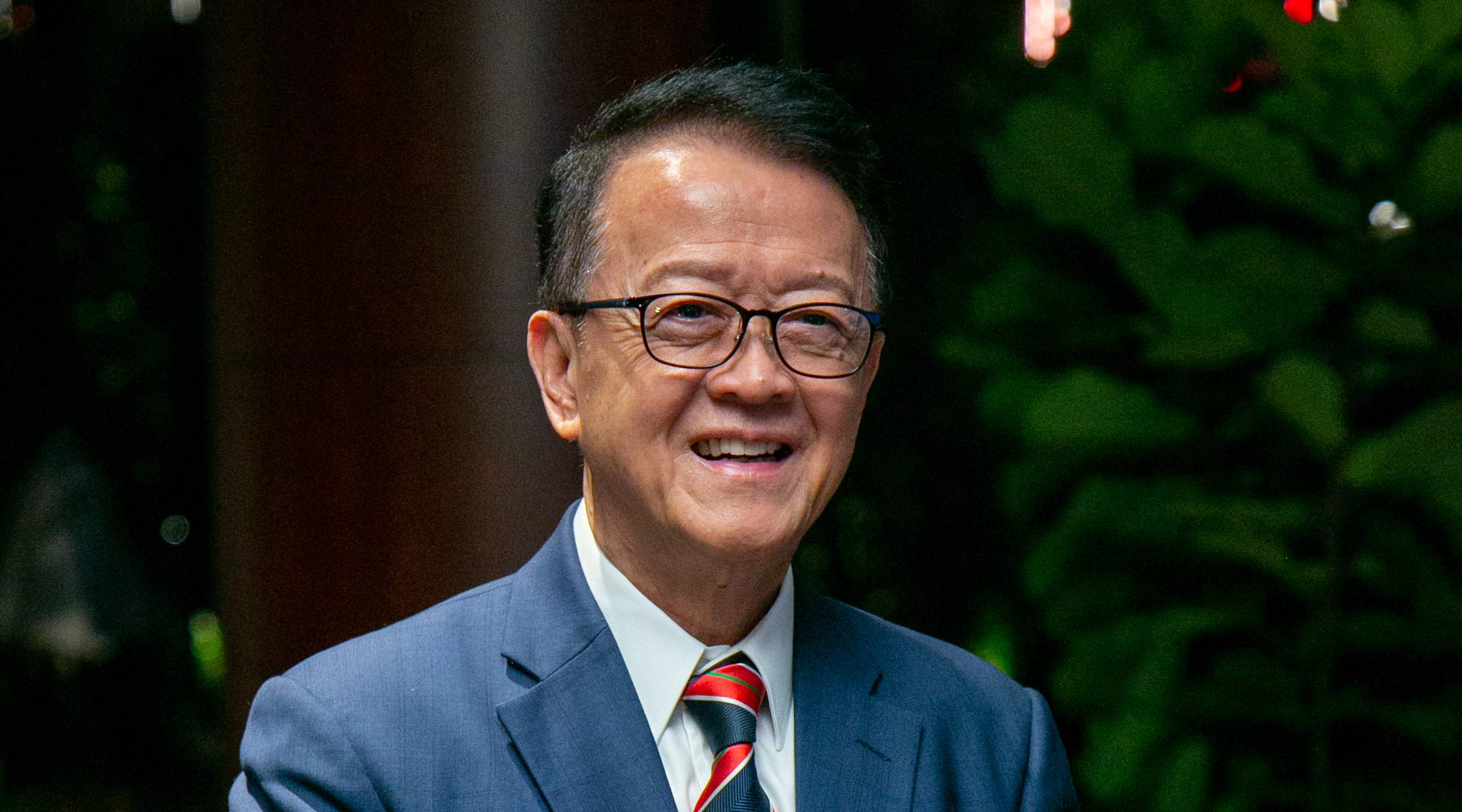
Discover how Jeffrey Cheah, founder of Sunway Group and Malaysia’s eighth-richest man, is using professional management, disciplined succession planning, and values-driven capitalism to build a conglomerate designed to outlast ten generations — and what it means for Asian family businesses globally.
The Moment a Fortune Almost Disappeared
In 1985, a young Malaysian entrepreneur stood at the edge of ruin. The regional economy had cratered. His fledgling construction and property business was buried under debt, client orders had evaporated, and the banks were circling. Jeffrey Cheah, not yet forty, had staked everything on a single audacious bet — that a desolate, waterlogged tin-mining wasteland on the outskirts of Kuala Lumpur could become something worth building.
He survived. Then, just over a decade later, the 1997-98 Asian Financial Crisis arrived with the force of a monsoon, again threatening to sweep the enterprise away. Cheah’s response both times was the same: refuse to panic, renegotiate terms, protect the balance sheet, and keep building.
That biographical arc — from RM100,000 startup capital in 1974 to a diversified conglomerate spanning twelve industries worth tens of billions of ringgit — is, in itself, a remarkable story of Southeast Asian capitalism. But what elevates the Jeffrey Cheah Sunway succession narrative above the standard billionaire biography is the ambition embedded within it: Cheah does not merely want to survive into the next decade. He wants Sunway Group to endure for ten generations.
In a region where family business succession is historically measured in decades rather than centuries, this is either visionary or eccentric. The evidence, examined carefully, suggests the former.
From Tin Mud to Glass Towers: The 50-Year Journey
Jeffrey Cheah Fook Ling was born in Pusing, a modest tin-mining town in Perak, Malaysia, sometime around 1945 or 1946. The town’s very character — defined by extractive industry, environmental degradation, and eventual decline — shaped the philosophy he would later apply to business. He pursued a commerce degree at what is now Victoria University in Melbourne, returned to Malaysia, briefly worked as an accountant in a motor assembly plant, and in 1974 struck out on his own with RM100,000 and a tin-mining licence.
What followed was not a straight line. Cheah acquired a piece of exhausted mining land in Selangor — a scarred, flooded landscape that most developers dismissed as worthless. Where others saw liability, he saw possibility. The 350-hectare site that would become Bandar Sunway, Malaysia’s first fully integrated green township, certified by the Green Building Index, began as an act of environmental imagination as much as commercial calculation.
The Sunway Group’s longevity owes much to how Cheah managed the crises that followed. During the mid-1980s recession, with extreme debt leverage threatening insolvency, he restructured without folding. When the 1997 Asian Financial Crisis crushed regional property values and sent debt-laden conglomerates into receivership, Sunway — chastened by its earlier near-death experience — had already begun reducing gearing. The lesson had been absorbed: in property and construction, balance sheet conservatism is not timidity, it is survival strategy.
Today, Sunway Group operates across property development, construction, healthcare, education, hospitality, retail, industrial, and financial services — twelve distinct verticals — with core revenue of approximately US$1.7 billion reported in 2024. Jeffrey Cheah’s personal fortune, according to the latest tracker data, stands at approximately US$4.9 billion, placing him firmly among Malaysia’s eight wealthiest individuals and confirming decades of patient, compounded wealth creation.
The Shirtsleeves Paradox: What the Data Says About Dynasty
There is a proverb that exists, with eerie consistency, across cultures separated by centuries and oceans. The English say “shirtsleeves to shirtsleeves in three generations.” The Chinese have a nearly identical saying: “wealth does not survive three generations.” The Japanese speak of “rice paddies to rice paddies in three generations.” Spanish-speaking families warn that “the father, a merchant; the son, a gentleman; the grandson, a beggar.”
These are not mere folk wisdom. Academic research on family business succession broadly corroborates the pattern. Studies by the Family Business Institute suggest that only about 30% of family businesses successfully transition to the second generation, roughly 12% to the third, and a mere 3% reach the fourth generation and beyond. Research published in journals like the Family Business Review consistently identifies succession planning failure, governance drift, and inter-generational conflict as primary culprits.
In Asia, the dynamic carries additional weight. Post-war wealth creation in Southeast Asia was concentrated in first-generation immigrant Chinese families — Malaysian-Chinese, Indonesian-Chinese, Thai-Chinese — who built empires through personal relationships, political access, and extraordinary risk tolerance. The question hanging over regional capitalism for decades has been: what happens when that founding generation departs?
The answer has not always been inspiring. The collapse of several Indonesian conglomerates after the 1998 crisis, partly attributable to governance failures and succession ambiguity, demonstrated the fragility of personality-dependent enterprises. Thailand’s own family business landscape has seen notable disintegrations alongside successes. Even in the West, the list of once-great family dynasties that dissipated within three generations would fill a long and sobering ledger.
Jeffrey Cheah, who has spoken explicitly about wanting Sunway to endure for a decade of generations, has essentially declared war on this statistical inevitability. The question is whether his architecture can back up his ambition.
The Professional Management Firewall
The most structurally significant decision in Jeffrey Cheah’s family business succession strategy is one that rarely gets the attention it deserves: the explicit separation of family ownership from professional executive management.
Sunway Group is not run by the founding family alone. Its group president is Tan Sri Dato’ Chew Chee Kin, a professional manager with decades of operational experience. Underneath him sits a corps of executives managing specific verticals. The family — Cheah himself as executive chairman, daughter Sarena as executive deputy chairman, son Evan as deputy president, and youngest child Adrian overseeing business development at Sunway REIT — occupies strategic governance roles rather than micromanaging operational divisions.
This is the institutional model that characterises the world’s most enduring family conglomerates, from Berkshire Hathaway’s governance philosophy to the operational structures of Sweden’s Wallenberg family, whose Investor AB has steered Swedish industrial capital across generations with remarkable discipline. In Asia, it echoes the governance evolution seen at companies like Hong Kong’s Swire Pacific and Singapore’s Fraser and Neave — firms that long ago recognised that family capital and professional management are complements, not substitutes.
The slow-burn succession model Cheah has constructed is worth examining in granular detail. His eldest daughter, Datin Paduka Sarena Cheah, 50, was redesignated as Executive Deputy Chairman with effect from January 2, 2025. She started her career within Sunway in 1995, progressed through corporate finance, internal audit, and business development, served as Managing Director of the Property Development Division from 2015, and earned her seniority through three decades of demonstrated contribution. She holds a Bachelor of Commerce from the University of Western Australia, an MBA from Melbourne Business School, and is a Fellow of the Australian Society of Certified Practising Accountants.
Her brother, Evan Cheah, 45, was simultaneously elevated to Deputy President on the same date. A Chartered Financial Analyst by profession, a member of the Malaysian Institute of Accountants, and a Monash University commerce graduate, Evan has spent more than a decade in roles ranging from CEO of Sunway’s China operations to Group CEO for Digital and Strategic Investments. As Deputy President, he is positioned to accelerate the group’s digital transformation agenda — increasingly critical as artificial intelligence and proptech reshape the industries Sunway inhabits.
The youngest sibling, Adrian Cheah, oversees business development at the listed Sunway REIT, extending the family’s strategic reach into capital markets and real estate investment.
What matters here is not merely that the founder’s children hold senior titles — this is common in family enterprises and often a source of governance weakness rather than strength. What matters is how long they worked their way up, the professional credentials they acquired independently, and the coexistence of an experienced external president who can provide institutional continuity if family dynamics shift.
This is Asian family business succession planning done with unusual rigor.
The Strategic Architecture: Healthcare, Property, Education — A Self-Reinforcing Ecosystem
Sunway’s durability also reflects a business model of distinctive organic coherence. Unlike conglomerates that accumulate unrelated divisions through financial engineering, Sunway’s diversification follows an ecosystem logic: property, education, healthcare, and hospitality are not discrete bets but mutually reinforcing components of an integrated urban proposition.
Bandar Sunway itself exemplifies this. Within a single township, residents live in Sunway-built homes, study at Sunway University (or at the Monash University Malaysia Campus which shares its grounds), receive medical treatment at Sunway Medical Centre, shop at Sunway Pyramid (one of Malaysia’s highest-traffic malls), and stay in Sunway Resort Hotel. The township model creates recurring, captive revenue streams across the entire consumer lifecycle — from education in early adulthood to healthcare in later years — while reducing the marketing and customer acquisition costs that typically afflict standalone businesses.
The Sunway Group healthcare IPO announced in 2025 crystallised this strategic logic into capital markets form. Sunway Healthcare Holdings, controlling one of Malaysia’s fastest-growing private hospital networks, prepared a share offering representing approximately 17% of the unit, with proceeds earmarked for a US$381 million expansion strategy positioning the group as a regional hub for medical tourism. By March 2026, the healthcare listing achieved a market capitalisation of RM16 billion — a substantial validation of the thesis that Southeast Asia’s ageing demographics and expanding middle class will generate decades of private healthcare demand.
Meanwhile, Sunway’s acquisition of MCL Land — Singapore’s homebuilder acquired from Hongkong Land for approximately US$578 million (S$738.7 million) — signalled explicit regional ambition. Singapore’s property market, defined by its rule of law, transparent regulatory environment, and gateway status to Southeast Asia, is a logical adjacency for a Malaysian developer with the balance sheet depth and governance credentials to operate across borders. The MCL Land deal is, in strategic terms, both a revenue diversification move and a brand elevation play.
The failed RM11 billion takeover bid for IJM Corporation, launched in January 2026 and withdrawn in April 2026 after Sunway secured only 33.4% acceptance against the required 50% threshold, deserves contextualisation rather than interpretation as a strategic setback. The bid was politically complex from the outset: IJM’s significant infrastructure concessions and substantial state-fund shareholding attracted nationalist commentary about Bumiputera equity concerns. Valuation disagreements were genuine — independent advisers assessed IJM shares significantly above Sunway’s offer price. The fact that 99.27% of Sunway’s own shareholders voted in favour of the transaction confirms that the strategic rationale was sound; the political and valuation friction was ultimately decisive. Sunway’s measured response — acknowledging the outcome with grace and reaffirming focus on existing strategy — was itself a governance signal worth noting.
The Philanthropy Strategy: Jeffrey Cheah Foundation as Long-Game Investment
There is a tendency in Western financial analysis to treat corporate philanthropy as reputational window-dressing — a tax-efficient public relations exercise. In the context of Jeffrey Cheah’s Sunway legacy, this interpretation misses something fundamental.
The Jeffrey Cheah Foundation, established in 2010, has distributed more than RM745 million in scholarships and educational support as of 2024, funding thousands of Malaysian students’ university education. Cheah has personally been recognised four times on Forbes Asia’s Heroes of Philanthropy list — a distinction only one other individual has matched. In 2023, the British Government awarded him an Honorary Knight Commander of the Order of the British Empire (KBE) for services to higher education, the National Health Service, and philanthropy.
This is not marginal activity. In an era when ESG credentials increasingly determine access to institutional capital and international partnerships, the Foundation serves as a long-term trust-building mechanism — with governments, with communities, with talent. It signals that Sunway’s interests are genuinely aligned with Malaysia’s national development trajectory, which matters enormously for a conglomerate whose property, infrastructure, and healthcare divisions depend heavily on regulatory relationships and public-private partnership frameworks.
Cheah is also a member of the United Nations Sustainable Development Solutions Network (UNSDSN), embedding Sunway within a global framework of sustainable development accountability. For a business building a multi-generational legacy, this positioning is strategically astute: the regulatory and social licence to operate will only become more contingent on demonstrable ESG performance in the decades ahead.
The Global Comparisons: What Enduring Dynasties Actually Have in Common
To evaluate whether Jeffrey Cheah’s ten-generation ambition is realistic, it is instructive to examine what the world’s most durable family enterprises actually share.
Walmart (Walton family, USA) has now passed through three generations with market capitalisation exceeding US$700 billion. Its secret is not sentimental family loyalty but ruthless professional management, governance structures that separate family ownership from operational control, and a relentless focus on the core competency of retail efficiency.
Ford Motor Company survived the explosive internal collapse of its founding family’s direct management only by embracing professional leadership in the 1940s under Ernest Breech and Ernie Ford’s subsequent stewardship. The Fords remain meaningful shareholders but long ago ceded operational authority.
In Asia, Ayala Corporation in the Philippines — dating to 1834 — stands as perhaps the most powerful rebuttal to the three-generation curse in Southeast Asian capitalism. The Zobel de Ayala family has maintained control across nearly two centuries by combining family strategic governance with professional management, a diverse business portfolio anchored in real estate and financial services, and a strong institutional identity tied to Philippine national development.
Indonesia’s Djarum Group and Thailand’s Charoen Pokphand offer more contemporary templates for how Asian family conglomerates can scale beyond the founder generation through disciplined portfolio management and talent meritocracy.
What all these cases share — and what distinguishes them from dynasties that crumbled — is exactly the architecture Cheah has spent the past decade constructing: strong governance frameworks, clear separation between ownership and management, conservative balance sheet discipline, and institutional purpose beyond profit maximisation. Sunway’s model maps onto these characteristics with unusual fidelity.
The Risks That Cannot Be Ignored
Intellectual honesty requires acknowledging the headwinds.
First, succession consensus is rarely durable. Sarena leads property, Evan leads digital and strategy, Adrian holds REIT oversight. This division may produce healthy specialisation or it may, under the wrong circumstances, produce competing fiefdoms. The literature on family business governance is littered with cautionary tales of founders whose carefully designed successions fractured in the third or fourth generation when shared identity dissolved and competing interests crystallised around specific business units.
Second, Malaysia’s political economy introduces uncertainties that no governance framework fully neutralises. The IJM experience demonstrated vividly how Bumiputera equity politics, institutional shareholder activism, and regulatory nationalism can constrain even the most strategically logical corporate moves. For a conglomerate of Sunway’s scale — operating in property, healthcare, and infrastructure — political risk management is a permanent fixture of strategic planning.
Third, the healthcare IPO and MCL Land acquisition represent meaningful capital deployment at a moment when interest rates remain elevated and Southeast Asian property markets face their own demand-supply recalibrations. The success of these moves will significantly influence whether the third generation of Cheahs inherits a platform for growth or a balance sheet requiring repair.
Fourth, and perhaps most philosophically interesting: ten generations is approximately 250 years. No business institution in Malaysia or most of Southeast Asia has survived that long in recognisable form. The ambition is less a forecast than a cultural declaration — a statement about how Cheah conceives of his enterprise’s purpose. That is not nothing. Purpose-driven businesses consistently outperform purely profit-driven competitors in long-run studies of corporate longevity. But the declaration must be operationalised through governance structures that outlast the declarant.
Why This Matters for Asia and the World
The story of Jeffrey Cheah and Sunway carries implications that extend well beyond the borders of Malaysia.
Southeast Asia is entering a generational inflection point. The founding cohort of post-independence Chinese-Malaysian, Chinese-Indonesian, and Chinese-Thai entrepreneurs — the people who built the modern private sectors of these economies from the 1960s onwards — is ageing out. What they leave behind will shape regional capitalism for decades. Some will hand over to children who repeat their parents’ success. Many will not.
The Jeffrey Cheah 10 generations model — with its emphasis on earned executive authority, professional management structures, ESG-anchored institutional legitimacy, and ecosystem business logic — offers a blueprint worth studying. It suggests that family capitalism in Asia need not be the brittle, personality-dependent phenomenon its critics describe. It can be architected for resilience.
For Malaysia family business crisis resilience more broadly, the Sunway case demonstrates that the most important decisions are often made during downturns rather than booms. Cheah’s willingness to restructure aggressively in 1985 and 1997 rather than protect short-term appearances was the foundation of every subsequent success. Balance sheet discipline in adversity is not merely financial prudence — it is the prerequisite for long-term optionality.
For global investors and governance scholars, Sunway’s journey also raises a quietly important question about the relationship between patriarchal intent and institutional design. Cheah’s personal reputation — his philanthropy, his international honours, his decades of relationship capital — is not transferable. What is transferable is the governance architecture, the corporate culture, and the strategic DNA he has spent fifty years embedding. Whether that embedding is deep enough to survive ten generations will be one of the most fascinating long-run experiments in Asian capitalism.
The View From Here
On a clear morning in Petaling Jaya, the skyline of Bandar Sunway tells the story more vividly than any financial disclosure. Where tin-mining operations once left flooded craters and barren earth, towers rise in a township that has won international awards for green urban design. A university educates tens of thousands of students. A hospital treats patients from across the region. A mall, a resort, an amphitheatre. An entire self-contained city built from the determined imagination of one man who started with RM100,000 and a refusal to accept that destroyed land couldn’t be restored.
Jeffrey Cheah is now in his eighties. His children hold the institutional framework he designed. His foundation has seeded a generation of Malaysian talent. His healthcare business is listed, his regional footprint is expanding, and even his failed bid for IJM — a bold, disciplined reach for scale that ultimately met political and valuation resistance — demonstrated that Sunway’s institutional confidence remains undiminished.
Ten generations is, of course, an aspiration. No human being alive today will know whether it succeeds. But in the architecture of that aspiration — the professional governance, the earned succession, the disciplined balance sheet, the ecosystem business model, the philanthropic legitimacy — we can already see the shape of something that could, credibly, outlast its founder by centuries.
In a world increasingly sceptical of concentrated family wealth and the dynasties it produces, Jeffrey Cheah’s Sunway offers a quieter, more principled counterargument: that family capitalism, governed with discipline and purpose, can be a vehicle not merely for private enrichment but for generational value creation. That the three-generation curse is not destiny — it is a governance failure in disguise.
The building continues.
Frequently Asked Questions
What is Jeffrey Cheah’s net worth in 2026?
Jeffrey Cheah’s net worth is estimated at approximately US$4.9 billion as of early 2026, based on tracker data, placing him among Malaysia’s eight wealthiest individuals. His wealth is primarily derived from his founding stake in Sunway Berhad, listed on Bursa Malaysia.
What is Sunway Group’s succession plan?
Sunway Group has implemented a staged, professional succession structure. Jeffrey Cheah’s daughter, Datin Paduka Sarena Cheah, was elevated to Executive Deputy Chairman in January 2025, while son Evan Cheah was appointed Deputy President in the same month. Both work alongside professional group president Tan Sri Dato’ Chew Chee Kin, reflecting a model that separates family governance from operational management.
What is the Jeffrey Cheah Foundation?
The Jeffrey Cheah Foundation, established in 2010, focuses on education and nation-building. As of 2024, it has provided more than RM745 million in scholarships to thousands of Malaysian students. It has also supported global sustainability initiatives through Cheah’s membership of the UN Sustainable Development Solutions Network.
What happened with Sunway’s IJM takeover bid?
Sunway launched a RM11 billion (approximately US$2.5 billion) voluntary takeover offer for IJM Corporation in January 2026, seeking to create Malaysia’s largest property and construction group. The bid lapsed on April 6, 2026, after Sunway secured only 33.43% of IJM shares, falling short of the 50% threshold required. Political sensitivities around Bumiputera equity concerns and disagreements over valuation were key factors in the bid’s failure.
Why does Jeffrey Cheah want Sunway to last 10 generations?
Cheah has spoken publicly about building an enterprise designed to outlast its founder — a commitment to institutional legacy over personal wealth preservation. This philosophy is operationalised through professional management structures, conservative financial discipline, philanthropic legitimacy, and a governance succession model intended to separate family identity from corporate continuity.
Discover more from The Economy
Subscribe to get the latest posts sent to your email.


Thursday, August 6, 2026, is not an ordinary session for SpaceX shareholders. It is the day the company’s first post-IPO lockup period expires, freeing up to roughly 911.5 million insider-held shares — worth close to $123 billion at recent prices — for potential sale on the open market, according to The Motley Fool. To put that in perspective: SpaceX’s entire public float has stood below 280 million shares since its record-breaking June 12 IPO, meaning the unlock could roughly triple the number of tradable shares in a single day.
This is the story competitor outlets are covering as a single-day news event. Few are explaining why the structure of SpaceX’s lockup makes this particular date so unusual — or what it signals about how the company priced risk into its unprecedented listing.
Why this lockup is different from a typical IPO unlock
Most companies use a single 180-day lockup. SpaceX instead built a staggered, performance-linked release schedule tied to its earnings calendar. Insiders became eligible to sell an initial 20% tranche on the second full trading day after the company’s first quarterly earnings report as a public company — which landed on August 4, pushing the unlock date to August 6, per The Motley Fool’s original lockup breakdown.
A bonus 10% tranche would have unlocked early had SPCX traded at least 30% above its $135 IPO price for five of the ten sessions before earnings. That threshold — above $175 — was never reached; the stock has instead spent recent weeks trading near or below its offer price, having fallen more than 40% from the post-IPO high of $225.64 it touched four days after listing, according to StartupHub.ai.
Further pressure is scheduled, not speculative. Additional 7% employee tranches are due around August 21 and September 10, and analysts at 22V Research estimate insiders could collectively be free to sell as much as 44% of total shares by early September — an roughly ninefold increase in the tradable float from where it stood at listing, per Yahoo Finance.
The fundamentals behind the slide
The unlock is landing on a stock that was already under pressure for reasons beyond supply mechanics. SpaceX reported a $4.9 billion net loss for 2025 and lost a further $4.28 billion in the first quarter of 2026, a burn rate that has cooled post-IPO enthusiasm even among investors who back the long-term Starship and Starlink thesis, according to analysis from DayTradingToolkit. Despite posting stronger-than-expected earnings this week, SPCX shares tumbled roughly 14% as the market looked past the results and priced in the incoming supply, based on Bloomberg’s markets desk.
What history suggests happens next
Lockup expirations do not automatically trigger crashes — the actual price impact depends on how much of the newly eligible stock insiders choose to sell, and at what price they’re willing to part with it. Some analysts argue the reaction could be a useful signal in itself: if SPCX absorbs this wave of supply without breaking to fresh lows, that would suggest the market has already priced in the dilution risk, a view echoed by commentary from The Motley Fool’s investing desk. Others counsel patience, arguing the stock’s valuation looks stretched even before accounting for the added float.
For investors weighing an entry point, the practical takeaway is that August 6 is the first of several tests, not the last. The rolling 7% employee releases in late August and September mean supply pressure is likely to recur through the fourth quarter, with the float expected to expand roughly sixfold by late September and to around a third of total shares by Halloween, according to earlier lockup modelling reported by Investing.com.
Key takeaways
- SpaceX’s first lockup expiration frees up to 911.5 million shares (~$123 billion) for potential sale starting August 6, 2026.
- The bonus early-unlock trigger — a 30% share-price premium to the $135 IPO price — was not met, so this is the baseline release, not an accelerated one.
- SPCX has fallen over 40% from its post-IPO peak and briefly traded below its offer price.
- Further 7% tranches are scheduled for late August and mid-September, meaning supply-driven volatility is likely to continue into Q4 2026.
- The stock’s slide reflects both the lockup mechanics and underlying losses of roughly $4.28 billion in Q1 2026 alone.
FAQ
When does SpaceX’s stock lockup expire? The first tranche expired August 6, 2026, two trading days after SpaceX’s first quarterly earnings report as a public company. Additional tranches are scheduled through December 8, 2026.
How many SpaceX shares could be sold? Up to approximately 911.5 million shares — about 20% of eligible insider holdings — became sellable on August 6, against a public float that had been below 280 million shares.
Why did SpaceX stock fall despite strong earnings? Investors appear to be pricing in the incoming supply from the lockup expiration rather than reacting purely to quarterly results, alongside continued losses tied to Starship development costs.
Discover more from The Economy
Subscribe to get the latest posts sent to your email.
China’s global hunt for billions in unpaid taxes is rewriting the rules for its wealthy citizens.
Just after the Lunar New Year in 2026, a Shenzhen-based family office manager began fielding a new, unwelcome kind of call from his clients. Chinese tax authorities were asking them to settle liabilities on overseas capital gains—some dating back to 2017, others as far as 2000. He had no explanation for the arbitrary five-year window, only the stark reality of a new era: the era of Beijing’s global tax hunt.
Within weeks, the picture became clearer and more alarming for the country’s ultra-wealthy. Banks in mainland China had received instructions to freeze the accounts of wealthy depositors until they could prove taxes on foreign assets, trusts, and investments had been paid. As one banker put it, speaking to the Financial Times under the condition of anonymity: “These wealthy individuals now immediately need to pay penalties and taxes in cash to reactivate their accounts.” The policy response is unambiguous: the People’s Republic has launched a campaign to recover what it believes to be hundreds of billions of dollars in unpaid taxes.
It is, by any measure, a foundational shift in China’s fiscal policy, prompted by a grinding budget deficit and a genuine overhaul of its tax system to align more closely with the United States’ model of global taxation.
The Crunch and the Crackdown
The reason for the campaign’s urgency is a stark one: Beijing is running out of money. The traditional engines of state revenue have seized. Total government land sales, once a core source of funding for local governments, have collapsed from a peak of 8.7 trillion yuan ($1.3 trillion) in 2021 to just 4.15 trillion yuan after the spectacular unwinding of the property market .
This is not a short-term liquidity crisis. It is a structural fiscal realignment. Since the pandemic, overall budget revenue in China has largely stagnated, falling by 1.7% to 21.6 trillion yuan ($3.2 trillion) in 2025 . With the property sector no longer the reliable cash cow it once was, the state has been forced to look elsewhere, and it has set its sights on the billions of dollars in wealth held offshore by its citizens. The State Taxation Administration and the Ministry of Finance confirmed the new measures, formalising a pursuit that was already well underway .
This is the hard data behind the crackdown: a fiscal imperative. It signals that the government is willing to reach decades back into the past—some accounts are being scrutinised as far back as the year 2000—to plug the hole in the present.
The Core Development: A Data-Driven Manhunt
What makes this campaign different from previous sporadic efforts is its technological sophistication and its sheer scope. The hunt is not merely targeted; it is systematic and data-driven.
Chinese authorities are leveraging the full force of modern financial surveillance, utilising data obtained through the OECD’s Common Reporting Standard (CRS), which China has been an active participant in since 2018. As tax lawyer Ye Yongqing of Anli Partners noted, regulators are steadily strengthening the supervision of cross-border capital flows and foreign exchange transactions, narrowing the scope for wealthy Chinese to transfer assets offshore .
Private bankers and wealth managers are already seeing the impact. Singapore-based bankers who manage assets for Chinese families have confirmed that new rules on foreign trusts have “shocked” their clients . Last month, China introduced comprehensive tax rules on assets transferred to foreign trusts, closing a long-standing loophole. Under the new regime, income generated by overseas trusts will be taxed at 20% across multiple stages.
The specific assets under scrutiny are varied, including real estate, stocks, precious metals, and even cryptocurrencies . Financial institutions are being asked to verify whether income from these assets has been declared to Beijing. The retroactive nature of the campaign—in some cases extending more than 25 years—has been confirmed by multiple officials, bankers, and advisors .
Why are banks freezing accounts?
Chinese banks have been instructed to cooperate with tax authorities by freezing the accounts of wealthy depositors until they settle tax liabilities on their overseas assets. This includes gains from foreign stocks, real estate, trusts, and insurance policies. The freeze is only lifted when the individual pays the outstanding tax and penalties in cash, creating powerful leverage for the state to enforce compliance quickly.
An American Model, A Chinese Reality
The structural ambition of this campaign reaches well beyond a one-off tax grab. It represents a deliberate strategy to move China’s tax system closer to the US model.
Just as the US Internal Revenue Service taxes American citizens on their worldwide income regardless of where they reside, China is beginning to adopt a similar territorial approach. This is a significant escalation. For years, wealthy Chinese individuals have used offshore trusts and other complex structures to defer or eliminate tax liabilities on foreign earnings. These structures were often established during the heyday of Hong Kong IPOs, providing a “perfect income tax shield,” according to a Singapore-based banker . The new rules aim to dismantle those shields.
The implications are profound. When the taxman begins to treat offshore gains the same as domestic profits, the calculus of wealth management for high-net-worth individuals changes entirely. As Ye Yongqing noted, this “reduces the scope for wealthy Chinese to transfer their assets abroad or structure their tax affairs through offshore vehicles” .
Victor Shih, a professor of political economy at the University of California, San Diego, summed up the driving force simply: “The motive behind the new campaign is clearly fiscal” . That fiscal necessity is now reshaping the legal architecture of Chinese wealth.
The Second-Order Effects: Compliance and Capital Flight
Downstream consequences of this policy are already rippling through the economy and across borders.
For those in the cross-border trade business, the squeeze is tangible. Zhejiang-based exporter Henry Huang told the South China Morning Post that the heightened scrutiny of unreported overseas income is “taking a real bite out of profits,” forcing him to rethink cross-border operations with little room to pass on costs to price-sensitive US and European customers .
Chinese authorities are also ramping up the legal and psychological pressure. The public security ministry’s “Fox Hunt” campaign, which focuses on extraditing economic fugitives, has already captured over 880 overseas suspects, demonstrating a hardened stance on economic crime .
Yet the most significant risk might be a self-inflicted wound. There is a growing concern that such an aggressive enforcement posture, while potentially lucrative, could accelerate the very capital flight it is designed to reverse. If the wealthy feel they are being pursued relentlessly and facing punitive fines, they may seek to move not just their cash but their entire operations to jurisdictions they perceive as safer.
A Dissenting View: The Cost of Compliance
Of course, the narrative is not without its critics. Some experts warn that the crackdown could have unintended consequences that outweigh the potential revenue gains. The shift in policy, while designed to boost state coffers, might create an exodus of talent and capital.
Furthermore, the operational challenges for tax authorities are immense. While big data and the CRS give them a new level of visibility, they are still largely in the dark about the total quantum of overseas assets. A Bloomberg report from January noted that “even in Beijing’s tightly controlled society, the crackdown is proving spotty,” with local authorities largely unaware of the amount of wealth stashed abroad .
The risk is that a “one-size-fits-all” approach could drive the most mobile taxpayers away. A banker in Singapore managing Chinese wealth observed that many trust owners now face “one-off tax liabilities” and may be forced to sell assets to cover the bills . The campaign may ultimately shrink the tax base it is trying to capture, a classic Laffer Curve dilemma applied to capital.
The “global tax hunt” is, at its heart, a story of transformation. It illustrates a China trying to build a modern welfare state without the traditional safety net of property speculation. The era of the tax-free offshore account for Chinese citizens is ending, not with a whimper but with a series of account freezes and data-driven audits. The policy represents a historic pivot, a move to international norms that at once strengthens Beijing’s fiscal position and challenges the global mobility of its wealthiest citizens. The state’s appetite for its own citizens’ foreign wealth has only just begun, and it is ravenous.
Discover more from The Economy
Subscribe to get the latest posts sent to your email.
The Federal Reserve’s rate-setting committee held its benchmark borrowing rate steady on July 29, keeping it in a range of 3.5% to 3.75% — but the calm on the surface masked one of the most contested votes of the post-pandemic era. The Federal Open Market Committee split 9 to 3, with three members pushing to raise rates rather than hold, according to NPR’s coverage of the decision.
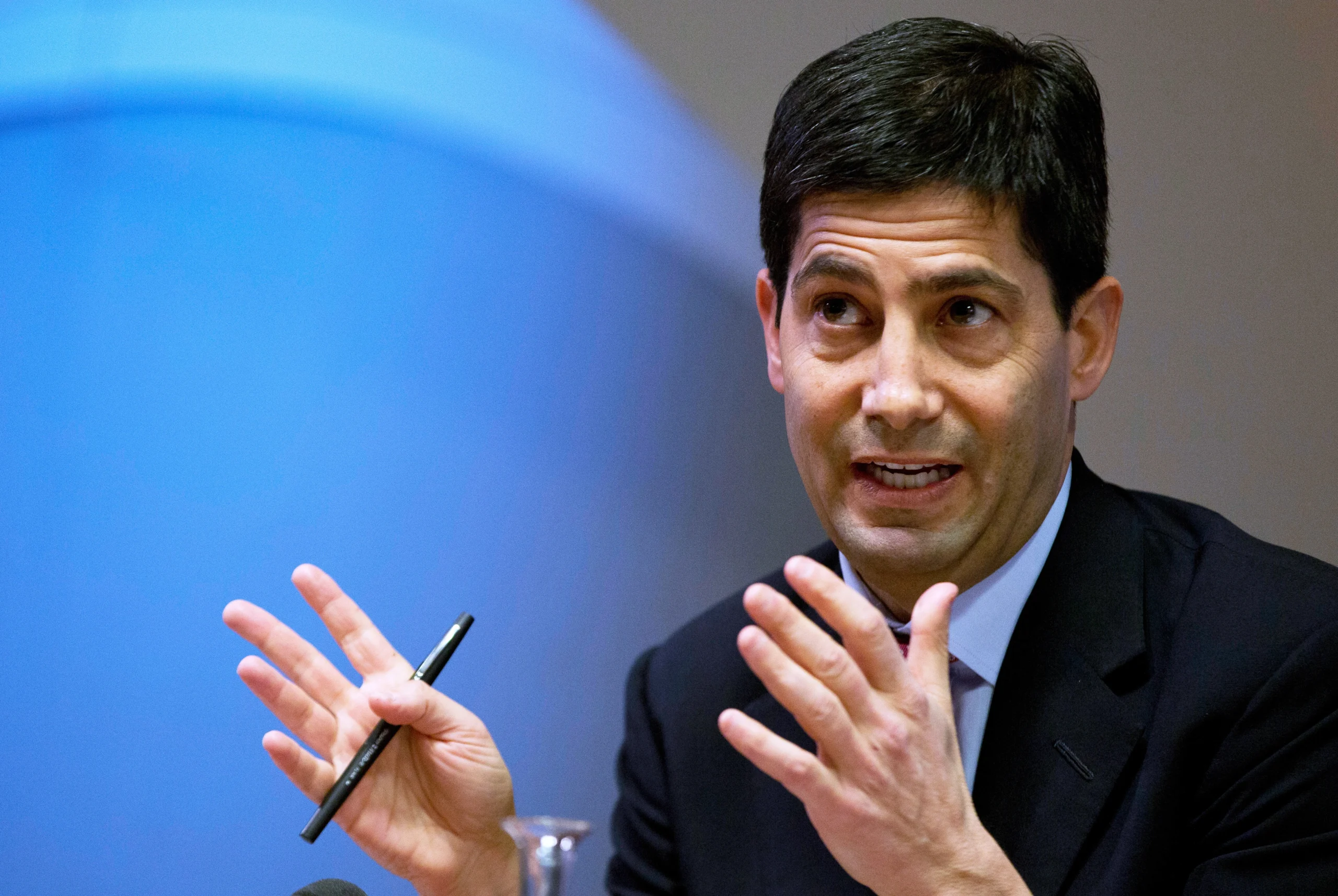
Chair Kevin Warsh, who took over the Eccles Building earlier this year after a nomination process that rattled bond markets, used his post-meeting press conference to make a point of not making a point. Rather than signal where rates are headed next, Warsh told reporters the Fed would judge market reaction “direct and unfiltered” instead of offering the rolling forecasts investors have come to expect, a stance detailed in CNBC’s meeting recap.
A rate hike was genuinely on the table
What made this meeting unusual wasn’t just the dissent — it was how close markets came to pricing in a hike rather than a cut. Fed funds futures tracked by CME Group put the odds of a rate increase at roughly 35% heading into the decision, up sharply from 26% a week earlier, according to CNBC’s markets analysis. That is a striking reversal from the rate-cutting cycle many investors had expected when Warsh’s nomination was first floated as a “productivity-led growth” pivot away from his predecessor’s caution.
The market reaction told its own story. The S&P 500 slid roughly 0.6% during Warsh’s press conference, the Dow shed more than 840 points intraday, and the 10-year Treasury yield rose to 4.657%, even as the Fed opted for a hold rather than a hike.
Why Warsh is playing it differently
Warsh’s approach reflects both economic and political calculus. Treasury yields have climbed since the Fed’s prior meeting despite the hold, a dynamic Warsh acknowledged directly. And unlike his predecessor, Warsh has been explicit that he intends to set policy independent of the White House’s preferences — even as he awaits a possible additional ally on the Board once a pending internal review concludes, according to CNBC’s analysis of the political backdrop.
Why this matters beyond Washington
A genuinely undecided Fed has knock-on effects well past US borrowers. Higher-for-longer Treasury yields pull global capital toward dollar assets, complicating rate paths in London, Ottawa, and emerging markets alike — a dynamic playing out in parallel with the UK’s own fiscal squeeze (see our companion report on the Autumn Budget) and China’s deflationary drag on global demand. For businesses and investors across the Gulf, Southeast Asia, and South Asia weighing dollar-denominated debt or dollar-pegged currencies, an unpredictable Fed chair is arguably a bigger variable than the rate level itself.
Discover more from The Economy
Subscribe to get the latest posts sent to your email.

Pakistan Economy 2026: Why GDP Growth Isn’t Reaching Ordinary Households

Strait of Hormuz Deal 2026: Iran-Oman Talks, Oil Price Impact & What Happens Next

SpaceX Stock Lockup Expiration Explained: Why $123B in Shares Could Hit the Market

The Taxman Cometh from Beijing

Pakistan IMF Program 2026: Inside the Push Toward an Interest-Free Economy

Russia Oil Revenue 2026: How Sanctions on Rosneft and Lukoil Are Draining the War Chest

Canada US Trade War 2026: Inside Carney’s Push to Cut Ties With Trump’s Tariffs

Rachel Reeves’s £25 Billion Problem: What the Autumn Budget Gap Means for Britain

Inside the Fed’s Most Divided Vote in Years: Why Warsh Held the Line on Rates

Pakistan Passed Its Third IMF Review

The Fed Is Fractured — And a New Chair Just Made It Louder, Not Quieter

The UK Economy in 2026 Is Neither Recession Nor Recovery :Stagflaton

Indonesia’s $121 Billion Nickel Bet Is Facing a Battery Chemistry

Why Ultra-Wealthy Families Are Splitting Between Singapore and Dubai inmarkets 2026

Russia Bans Diesel Exports 2026: Global Fuel Market Impact Explained

Gold Price Forecast 2026: Fed’s July 29 Decision and Record Central Bank Buying Explained

Strait of Hormuz Blockade 2026: Oil Prices Surge 9% as US-Iran Conflict Reignites

Strait of Hormuz 2026: Why Markets Still Don’t Trust It’s Open

China Politburo July 2026: Stimulus Signals Explained

Pakistan Economy 2026: GDP Grows 3.7% as IMF Completes EFF Review Amid Middle East Risk

Apple vs OpenAI Lawsuit: The Economic Story Behind the Headline

Down But Not Out: Inside the Slow Sinking of Russia’s War Economy

Gulf Capital Retreat From Pakistan 2026: UAE Loan Freeze & What It Means

Indonesia Russian Oil Imports 2026: Why Jakarta Is Diversifying Crude Supply

The Yuan Now Settles 67% of Russian Oil Payments — Quiet De-Dollarization in Action

AI Capex Bubble 2026: The Hidden $662B Debt Nobody Reports

Global Stock Market Selloff 2026: Stagflation Fears Return as Iran Conflict Reignites

Gulf Sovereign Wealth Funds Hit Record $53.9B in H1 2026 Despite Iran War
-

 Markets & Finance7 months ago
Top 15 Stocks for Investment in 2026 in PSX: Your Complete Guide to Pakistan’s Best Investment Opportunities
-

 Analysis5 months ago
Johor’s Investment Boom: The Hidden Costs Behind Malaysia’s Most Ambitious Economic Surge
-

 Analysis6 months ago
Top 10 Stocks for Investment in PSX for Quick Returns in 2026
-

 Analysis6 months ago
Brazil’s Rare Earth Race: US, EU, and China Compete for Critical Minerals as Tensions Rise
-

 Banks7 months ago
Best Investments in Pakistan 2026: Top 10 Low-Price Shares and Long-Term Picks for the PSX
-

 Investment7 months ago
Top 10 Mutual Fund Managers in Pakistan for Investment in 2026: A Comprehensive Guide for Optimal Returns
-

 Global Economy7 months ago
15 Most Lucrative Sectors for Investment in Pakistan: A 2025 Data-Driven Analysis
-

 Global Economy7 months ago
Pakistan’s Export Goldmine: 10 Game-Changing Markets Where Pakistani Businesses Are Winning Big in 2025