
Analysis
Indonesia Eyes Russian Crude as Hormuz Crisis Deepens Import Gap and Subsidy Strain

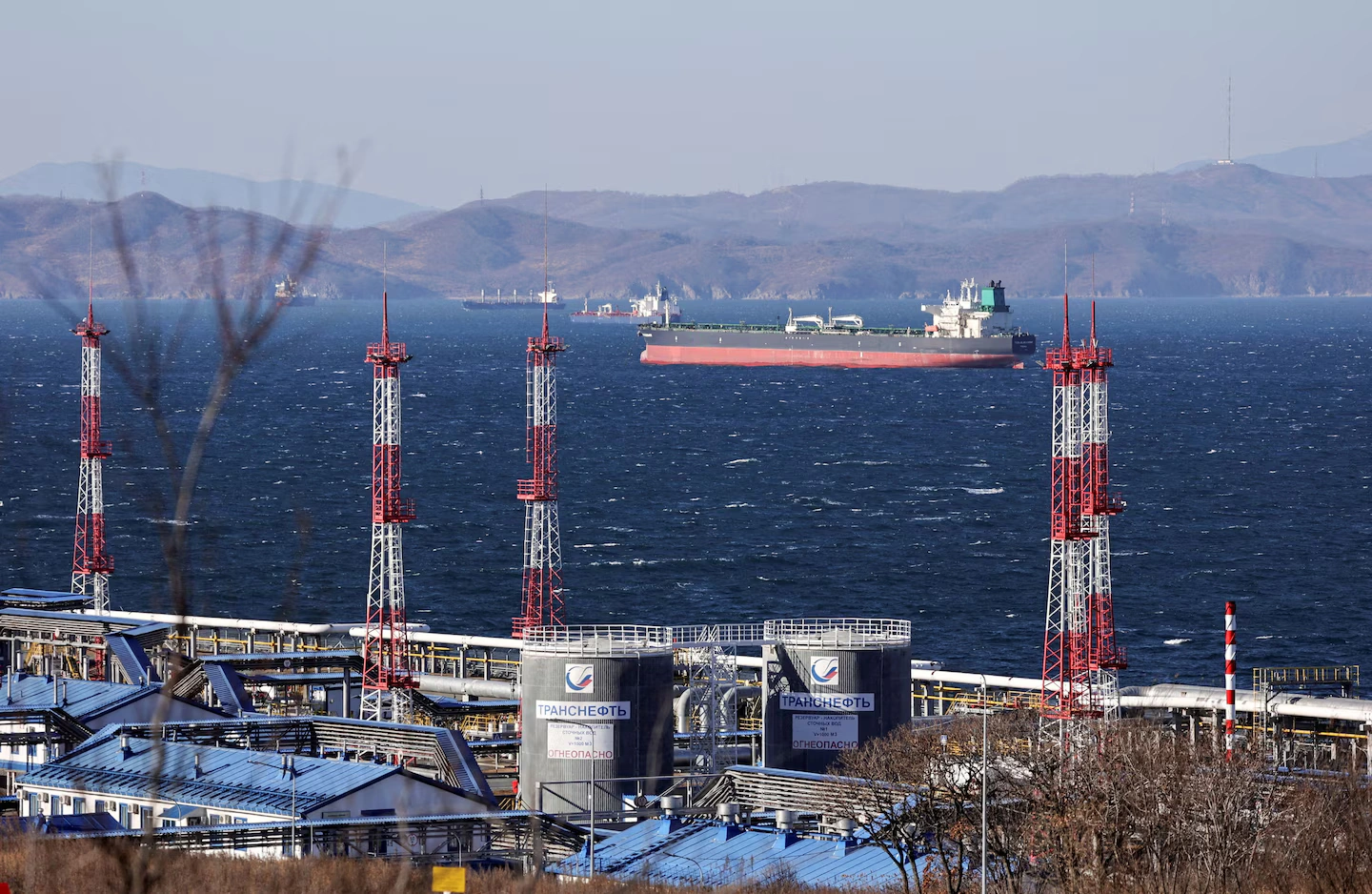
Jakarta’s pivot to discounted Russian barrels is shrewd realpolitik. But it walks a razor-thin tightrope between Washington and Moscow — and lays bare the fragility of Asia’s entire oil architecture.
On the morning of April 13, 2026, President Prabowo Subianto arrived at the Kremlin carrying something most world leaders have long stopped bringing to Moscow: genuine leverage. With the Strait of Hormuz still convulsing under the weight of Iranian drone strikes and the global oil benchmark hovering above $100 a barrel for the first time in four years, Indonesia’s head of state sat across from Vladimir Putin not as a supplicant but as a customer — and Russia, desperate for new buyers in an era of tightening Western sanctions, was very much open for business.
The meeting lasted several hours. By the time the readouts emerged, the outlines of a deal were visible to anyone watching: long-term crude oil and LPG supply arrangements, cooperation on refinery development, and an explicit Russian offer to “increase supplies of oil and LNG to the Indonesian market.” Within 48 hours, Pertamina’s corporate secretary confirmed publicly that the company’s refineries were fully capable of processing Russian crude. Jakarta’s strategic pivot was no longer subtext. It was policy.
What followed was a global shrug from the Western press and a quiet tremor in the energy security community. Indonesia, after all, is not India. It is not China. It is a G20 democracy with a functioning multiparty system, a long-standing tradition of non-alignment, and a freshly signed defence cooperation agreement with the United States — on the very same day as the Moscow summit. The dual manoeuvre was audacious, and characteristically Prabowo: plant one foot in each camp, and dare anyone to push you over.
A Thousand Barrel Problem, Per Minute
To understand why Jakarta is willing to absorb the diplomatic friction of a Russian crude deal, one has to understand the arithmetic of Indonesia’s energy predicament. It is severe, and it has been structural for over two decades.
Indonesia currently consumes approximately 1.6 million barrels of oil per day against a domestic production base that — declining steadily since the late 1990s — has contracted to roughly 572,000 barrels per day as of December 2025. The arithmetic is unforgiving: a million-barrel-per-day import dependency, in an era of weaponised chokepoints. For a country of 280 million people sprawled across 17,000 islands, this is not merely a balance-of-payments challenge. It is a civilisational vulnerability.
Indonesia Energy Gap — At A Glance (2026)
| Indicator | Figure | Source |
|---|---|---|
| Domestic crude production | ~572,000 bpd | Trading Economics / SKK Migas |
| Total oil consumption | ~1,600,000 bpd | Indonesia Investments / IEA |
| Net import gap | ~1,028,000 bpd | Derived |
| Share of fuel needs imported | ~60% | Arab News / Antara |
| Share previously sourced from Middle East | ~20–25% | Jakarta Post / Arab News |
| 2026 energy subsidy budget (Pertamina + PLN) | IDR 381.3 trn (~$22.5B) | Indonesian Ministry of Finance / Invezz |
| Additional fiscal exposure per $1 oil rise | ~$400M widened deficit | Indonesia Business Post |
| Urals discount to Brent (March 2026 avg.) | ~$6.4/bbl | CREA Monthly Tracker, April 2026 |
Sources: Indonesia Investments, Trading Economics, Arab News, Jakarta Post, Indonesian Ministry of Finance, Centre for Research on Energy and Clean Air (CREA). All figures April 2026.
Until February 2026, roughly 20 to 25 percent of Indonesia’s imported oil arrived through or from the Persian Gulf — a figure that had been declining as Jakarta diversified toward West African and North American crudes. Then the United States and Israel launched strikes on Iran, and everything changed at once.
Iran’s Revolutionary Guards declared the Strait of Hormuz effectively closed on March 4, 2026, following weeks of escalating attacks on commercial shipping. Tanker traffic through the world’s most consequential 33-kilometre waterway — through which some 25 percent of seaborne crude and 20 percent of global LNG normally transit — collapsed by more than 90 percent. The International Energy Agency’s Fatih Birol called it “the largest supply disruption in the history of the global oil market.” That is not a metaphor. It is a measurement.
For Indonesia, this was not an abstract geopolitical event. Two Pertamina tankers were immediately trapped in the Persian Gulf. Purchases from the Middle East — previously around a quarter of Indonesia’s crude import mix — were abruptly disrupted. Brent crude surpassed $100 per barrel on March 8 for the first time since 2022, and continued climbing. Against government budget assumptions of $70 per barrel, every dollar of incremental price increase widens Indonesia’s fiscal deficit by approximately $400 million. The government had already budgeted IDR 381.3 trillion — roughly $22.5 billion — for energy subsidies and compensation payments to Pertamina and PLN. That figure, built on a fragile $70 assumption, now looked dangerously inadequate.
“With the Middle East’s energy resources bottled up by the closure of the Strait of Hormuz, Indonesia is desperate to secure alternative supplies of crude oil — and Russia has plenty for sale.”
— Ian Storey, Principal Fellow, ISEAS-Yusof Ishak Institute, Singapore; quoted in the South China Morning Post, April 14, 2026
The Discount That Matters
Russia’s strategic offer arrives at a moment of unusual pricing opportunity. Urals crude averaged roughly $6.40 per barrel below Brent in March 2026, according to data from the Centre for Research on Energy and Clean Air — a discount that, while narrower than the $12.60 recorded in February and the vertiginous $30-plus discounts of early 2023, still represents material savings across a purchase programme of any scale. For a country importing upwards of a million barrels per day, even a $5-per-barrel discount translates to $1.8 billion annually. At $6 to $8, the savings approach $2.5 billion — fiscally meaningful in a year when Jakarta is already projecting a deficit approaching 2.9 percent of GDP.
There is also the question of ESPO Blend — Russia’s Pacific-facing export grade, loaded at Kozmino port and far better suited to Indonesian refineries given its lighter, sweeter profile relative to the sulphurous Urals. The transit route from Vladivostok to Indonesia’s refinery hubs at Balikpapan and Cilacap is comparatively direct, bypassing the Persian Gulf altogether. This is not a minor logistical footnote; it is the geological and geographic rationale that makes the entire proposition compelling. Russia’s east-of-Suez export infrastructure already serves China and South Korea. Indonesia is simply the next logical customer on the arc.
The precedent, moreover, is no longer theoretical. Ship-tracking data from Kpler and Vortexa indicated that two cargoes of Russian Sakhalin Blend crude — each approximately 700,000 barrels — were discharged at Balikpapan and Cilacap in December 2025 and January 2026, even as Pertamina publicly denied the imports. That corporate ambiguity has now dissolved: on April 15, a day after Prabowo’s return from Moscow, Pertamina’s corporate secretary stated plainly that “Pertamina’s refinery unit is capable of processing it into refined products” and that the company would “certainly support” any government directive to proceed.
The Subsidy Trap — and the Russian Exit Ramp
The most underappreciated dimension of this story is not geopolitical. It is fiscal. Indonesia’s fuel subsidy architecture is a system that was designed for a different era — one of cheap Gulf crude and stable rupiah — and it now functions as a fiscal trap that tightens with every dollar of oil price inflation.
In 2024, Indonesia spent $5.1 billion on its 3-kg LPG subsidy alone, $1.1 billion on transport fuel subsidies, and $7.3 billion in direct compensation payments to Pertamina and PLN — totalling over $13.5 billion in quantified oil and gas support. The 2026 budget earmarked even more: $22.5 billion, on the basis of $70 oil. Officials have now confirmed that subsidised fuel prices — Pertalite and Bio Solar — will remain frozen through end-2026, with the government absorbing the widening gap between international prices and domestic pump prices. As Coordinating Minister Airlangga Hartarto acknowledged in early April, this floor only holds “as long as oil prices do not exceed 97 on average.” With Brent well above that threshold, the government is already in territory where Pertamina is absorbing losses the state budget was not designed to cover.
Russian crude — cheaper at source and arriving through a sanctions-adjacent but not unnavigable commercial channel — offers a partial but genuine path toward narrowing that gap. Not a solution to the subsidy trap; but oxygen while Jakarta decides whether it has the political will to reform one of Southeast Asia’s most politically radioactive domestic programmes.
Three Scenarios: Russia’s Fiscal Impact on Indonesia
① Modest diversification (100–150k bpd Russian crude)
Annual saving of ~$220–$350M at a $6/bbl discount vs Brent alternatives. Buys political time. Limited sanctions exposure. Commercially viable via non-Western tankers.
② Substantial substitution (300–400k bpd)
Annual saving of ~$650M–$875M. Covers roughly 3–4% of the total energy subsidy bill. Meaningful fiscal relief. Raises EU/US diplomatic friction. Refinery upgrading required for Urals.
③ Strategic partnership (long-term G2G contract)
Includes Russian upstream investment in ageing Indonesian oil blocks, LPG supply, potential joint refinery development. Locks in supply certainty but deepens diplomatic exposure. Most significant fiscal and energy security upside; highest geopolitical cost.
The Tightrope Act — Washington, Sanctions, and the Non-Aligned Wager
No competent analysis of Indonesia’s Russian crude play can ignore the sanctions landscape. The G7 price cap on Russian oil — reduced to $44.10 per barrel effective February 2026 — ostensibly limits Western financial and maritime services to cargoes traded at or below that ceiling. In practice, roughly 48 percent of Russia’s seaborne crude is now transported by “shadow” tankers operating outside Western insurance and flagging systems, rendering the cap a leaky instrument at best. The EU briefly considered imposing sanctions on Indonesia’s Karimun transshipment hub in February 2026 after tracking data revealed Russian Sakhalin Blend being discharged at Pertamina ports. That threat has, for now, receded — partly because Jakarta simultaneously deepened its security ties with Washington.
The audacity of Prabowo’s April 13 positioning — signing a US defence cooperation agreement on the same calendar day as the Kremlin meeting — is not accidental naivety. It is doctrine. Since his election in 2024, Prabowo has pursued a foreign policy that Indonesia’s foreign ministry describes as “bebas aktif” — free and active. In practice: join BRICS, engage Trump’s Board of Peace, volunteer peacekeepers for Gaza, sign a defence pact with Australia, and buy oil from Russia. Indonesian Cabinet Secretary Teddy Indra Wijaya described the Moscow discussions as covering “long-term cooperation” in the oil and gas industries — language calibrated to signal seriousness without triggering immediate Western alarm.
For Jakarta’s economic planners, the calculus is clear-eyed: as Nailul Huda of the Centre of Economic and Law Studies in Jakarta put it, “these energy negotiations must cleverly avoid being controlled by US interests.” Indonesia needs bargaining chips to resist pricing pressure from any single supplier — including the United States, which would dearly love to sell LNG to Southeast Asia’s largest economy. Russian crude is less a geopolitical statement than a commercial hedge.
The Refinery Question — and the Infrastructure Clock
One structural constraint complicates the narrative of seamless diversification: Pertamina’s legacy refinery fleet. Indonesia’s major processing facilities — particularly the Cilacap complex and the Balikpapan refinery currently being expanded under the RDMP programme — were designed primarily for sweet, light domestic crude and Middle Eastern medium grades. Russian Urals is a medium-sour crude; ESPO is lighter and sweeter and considerably more compatible. Pertamina’s VP for Corporate Communication Muhammad Baron said the company would “examine crude specifications” and noted that ongoing refinery modernisation “is expected to give greater flexibility to process a wider range of crude types.”
This is not obfuscation. It is engineering reality. Crude substitution at scale requires desulphurisation upgrades, changes to coker configurations, and adjustments to hydrotreating units. The Balikpapan RDMP — which will bring that refinery’s capacity to 360,000 bpd — includes precisely such upgrades. But major capital works take years. In the near term, ESPO Blend is the practical option; full Urals compatibility is a medium-term proposition contingent on investment decisions being taken now. The stakes of delay are not trivial: Pertamina’s refinery chief confirmed as early as May 2025 that the company had “opened to imports from Russia since last May” — suggesting the technical groundwork, at least at the margins, is already underway.
Implications for Asia’s Oil Order
Zoom out, and what Indonesia is navigating in 2026 is a microcosm of a broader structural shift underway across the entire Indo-Pacific. The Strait of Hormuz crisis has crystallised something energy security analysts have argued for years: the architecture of Asian oil supply — built on Gulf crude, US-secured sea lanes, and Western-insured shipping — is not a given. It is a geopolitical construct, and constructs can fail.
India understood this first, pivoting aggressively to Russian crude after the 2022 Ukraine invasion. China had already built parallel supply chains. Now Indonesia, Thailand, Vietnam and even the Philippines are being forced into analogous calculations. The Philippines declared a national energy emergency; Thailand, Vietnam and Indonesia began encouraging remote work for civil servants to reduce fuel consumption. These are symptoms of a structural dependency that years of energy diversification policy quietly failed to address.
Russia, meanwhile, is the paradoxical beneficiary of a crisis its own earlier actions helped architect. Moscow is now earning an average of €510 million per day from oil and gas exports — roughly 14 percent higher than in February, even as G7 price caps nominally remain in force. The Hormuz closure has lifted Urals pricing just as Southeast Asian demand for alternative barrels surges. Putin, sitting in the Kremlin on April 13, needed no map to read the room: Indonesia was coming to him, not the other way around.
What emerges from this confluence is what might be called the new “non-aligned oil order” — a loose architecture in which price-sensitive developing-world importers, unconstrained by NATO obligations or EU membership, pragmatically route crude purchases toward whatever source is cheapest, most available, and least encumbered by chokepoint risk. India, China, Turkey, Indonesia: these are not ideological allies of Moscow. They are sovereign buyers making sovereign calculations. The G7’s price cap was supposed to close off this space. It hasn’t.
The Verdict: Smart Hedge, Structural Risk
Indonesia’s Russian crude pivot deserves neither the breathless alarm some Western commentators have attached to it nor the dismissal of those who treat it as purely transactional. It is both of those things at once — and something more: a window into the accelerating disintegration of the post-Cold War energy order that once gave Western-aligned institutions decisive leverage over the global oil market.
For Prabowo, the immediate arithmetic is compelling. Russian crude offers price relief, supply certainty, and a credible alternative to Middle Eastern dependence in a period when the Strait of Hormuz is a war zone. It gives Jakarta leverage in negotiations with American LNG sellers, Gulf producers, and West African exporters alike. It buys time — perhaps two to three years — for Indonesia to make the harder structural choices: subsidy reform, refinery upgrades, domestic upstream revival, and an energy transition that the government acknowledges it needs but has repeatedly postponed.
The risks are real and should not be minimised. Secondary sanctions exposure remains non-trivial; the EU’s willingness to sanction the Karimun hub signals that the line between tolerance and enforcement is thin and politically contingent. A Trump administration navigating a hot war with Iran is not a predictable partner, and Indonesia’s defence cooperation agreement is only as durable as the next presidential mood swing in Washington. Logistics and refinery compatibility, while manageable, are not trivial.
But the deeper risk is the one no one in Jakarta’s cabinet rooms is comfortable articulating publicly: that the Russian crude option, like so many emergency energy policies before it, becomes permanent. That what begins as pragmatic hedging calcifies into structural dependency — this time not on the Gulf, but on the Kremlin. Indonesia has navigated those shoals before. Whether it can do so again, in a world more fractured and less predictable than the one it inherited, is the question that will define its energy future long after the Strait of Hormuz reopens.
Discover more from The Economy
Subscribe to get the latest posts sent to your email.



Navigating Mortgage and Loan Refinancing in a High-Yield Environment
Global public debt crossing critical thresholds has kept central bank policies volatile, resulting in fluctuating US Treasury yields throughout 2026. For homeowners and commercial property holders burdened by previous high-interest borrowing cycles, finding optimal refinance windows has become a high-stakes financial puzzle. Stalled disinflation and stubborn employment numbers mean rate cuts are incremental, requiring borrowers to act with precision.
Timing your mortgage or commercial loan refinance in this environment requires a deep understanding of yield curve movements and lender risk appetites.
Decoding 2026 Refinance Dynamics
The 10-Year Treasury Yield Benchmark
Mortgage rates continue to track closely with the 10-year US Treasury yield. When macroeconomic anxiety spikes debt issuance, yields rise, tightening consumer borrowing capacity. Savvy borrowers monitor weekly Treasury auctions to lock in rates during brief dip windows.
Hybrid ARMs and Alternative Structures
With fixed rates remaining elevated, 7/1 and 10/1 adjustable-rate mortgages (ARMs) have surged in popularity. These products offer lower initial monthly payments, giving borrowers breathing room until central bank easing cycles fully materialize.
| Loan Product | Current Rate Range | Best For | Key Risk Factor |
| 30-Year Fixed Mortgage | 6.2% – 6.8% | Long-term predictability | Higher initial monthly outlay |
| 7/1 Hybrid ARM | 5.5% – 5.9% | Short-term ownership / flipping | Rate reset risk after year 7 |
| Commercial Refinance | 7.0% – 8.2% | Corporate asset restructuring | Strict DSCR lender covenants |
Actionable Steps for Successful Refinancing
To maximize your chances of securing favorable refinance terms in a volatile market, follow a disciplined preparation strategy.
Boost Your Credit Score Immediately: Lenders in 2026 are applying stringent credit tiering; a 20-point increase can drop your APR by a crucial quarter-point.
Shop Regional Credit Unions: Smaller financial institutions often offer portfolio loans with more flexible underwriting than major national banks.
Calculate the Break-Even Point: Ensure your total closing costs are recouped through monthly savings within 24 months of closing.
“Market Strategist View: Refinancing in 2026 is an exercise in opportunistic timing. Borrowers must maintain immaculate financial profiles ready to strike the moment Treasury yields dip.”
Mastering the complexities of today’s debt environment ensures you can successfully lower your debt service costs and protect your long-term financial stability.
Discover more from The Economy
Subscribe to get the latest posts sent to your email.

The days of pulling generic auto insurance quotes based purely on your zip code and age are officially over. In 2026, insurance comparison engines are powered entirely by generative AI and real-time telematics. These platforms digest thousands of live data points—ranging from your driving smoothness via connected vehicle sensors to real-time traffic congestion patterns—to generate hyper-personalized premiums instantly.
For consumers, this evolution represents both a massive opportunity for savings and a hidden trap for penalty pricing. Understanding how AI algorithms evaluate risk is essential for anyone looking to lower their monthly auto insurance premiums.
How AI Comparison Engines Evaluate Your Risk Profile
Behavioral Telematics and Connected Cars
Modern cars stream performance data directly to insurance aggregators. Generative AI models analyze braking sharpness, acceleration curves, cornering G-forces, and phone distraction metrics. Drivers who maintain smooth, defensive habits are rewarded with dynamic rate cuts of up to 40% compared to traditional rating tiers.
Predictive Traffic and Weather Modeling
AI tools now cross-reference your daily commute route with predictive weather and accident probability models. If your standard parking location or driving corridor has a statistically higher incidence of uninsured motorist claims, your quotes will reflect that hyper-local risk assessment.
| Comparison Factor | Traditional Rating Model | 2026 Generative AI Model | Impact on Premium |
| Mileage & Usage | Annual estimated odometer reading | GPS tracking & live trip duration | High (up to 35% savings) |
| Driving Behavior | MVR driving record & accidents | Real-time braking, speed, & G-force | Critical (determines tier) |
| Vehicle Tech | Make, model, and safety rating | ADAS calibration & repair cost data | Moderate |
Strategies to Lower Your AI-Driven Insurance Quote
To outsmart the algorithm and secure the lowest possible premium in 2026, drivers must proactively manage their digital footprint on insurance platforms.
Opt-In for Telematics Trial Periods: Many insurers offer immediate 15% discounts just for installing their driving app; let it track safe habits for 30 days to lock in permanent savings.
Scrub Unverified Public Records: Ensure your motor vehicle report is free of clerical errors that AI risk models misinterpret as reckless behavior.
Compare AI Aggregators: Use platforms that integrate multi-carrier API feeds rather than single-brand comparison sites to find the best risk-adjusted rate.
“Industry Note: AI-driven pricing rewards transparency and precision. Drivers who actively manage their telematics data consistently out-save those relying on legacy quote calculators.”
Embracing AI comparison tools allows savvy policyholders to customize coverage limits precisely to their driving habits, eliminating wasted premium spend while ensuring robust protection.
Discover more from The Economy
Subscribe to get the latest posts sent to your email.

Despite decades of bans and strict handling mandates, asbestos remains a silent killer across legacy manufacturing plants, shipyards, and modern green-energy infrastructure retrofits. In 2026, regulatory changes by the EPA and tightened occupational health standards have triggered a fresh wave of mesothelioma litigation. Manufacturers attempting to fast-track industrial transitions are encountering catastrophic oversight, exposing workers to legacy toxins and opening corporate parent companies to unprecedented liability.
Navigating a mesothelioma claim in 2026 requires understanding how modern industrial supply chains intersect with historical exposure. Trusts established decades ago are being audited under stricter transparency laws, altering payout ratios and accelerating fast-track settlements for terminally ill plaintiffs.
Modern Industrial Exposure Hotspots
Green Retrofitting and Renewable Energy Infrastructure
A primary source of 2026 asbestos exposure occurs during the decommissioning and retrofitting of older industrial facilities for renewable energy production. Workers insulating electrical grids, modernizing HVAC systems, or upgrading manufacturing floors frequently disturb encapsulated asbestos materials that were improperly documented or ignored during facility audits.
Automotive and Aerospace Supply Chains
With advanced manufacturing booming, workers handling specialized friction materials, gaskets, and heat shields face ongoing risks. Supply chain tracing has become more sophisticated, allowing legal teams to pinpoint exact corporate entities responsible for raw material distribution across multinational borders.
| Industry Sector | Primary Exposure Risk | Legal Venue / Trust | Avg. Claim Value Range |
| Green Energy Retrofit | Disturbed insulation, pipe lagging | Federal Tort / Manufacturer Trust | $1.2M – $3.5M |
| Shipbuilding & Marine | Boiler insulation, structural seals | Asbestos Bankruptcy Trusts | $800K – $2.4M |
| Automotive Manufacturing | Brake components, high-heat gaskets | Third-Party Product Liability | $600K – $1.8M |
Securing Maximum Compensation: Steps for Plaintiffs
Time is of the essence in mesothelioma cases. Plaintiffs and their families must act decisively to secure financial recovery before statutes of limitations expire.
Retain Specialized Counsel: Work exclusively with national mesothelioma law firms possessing deep historical databases of asbestos-containing products.
Audit Employment History: Document every job site, supervisor name, and equipment brand encountered throughout your career.
Expedite Medical Filings: Secure a formal pathological diagnosis quickly to qualify for expedited trust fund distribution and priority trial settings.
“Expert Insight: Modern asbestos litigation is no longer just about historical tracking; it is about holding modern corporations accountable for failing to conduct rigorous environmental safety audits before initiating industrial retrofits.”
By combining meticulous work history reconstruction with aggressive multi-trust filings, victims can secure substantial financial relief to cover specialized immunotherapy and family support.
Discover more from The Economy
Subscribe to get the latest posts sent to your email.

Balance of Payments (BOP)

The Falkland Islands Dispute: Sovereign Wealth, Offshore Drilling, and Market Impacts

Gross Domestic Product (GDP): Nominal vs. Real

What is Inflation and the Consumer Price Index (CPI)?

US-China Trade Competition 2026: Supply Chain Relocation Guide

Oil Prices Break $100 in 2026: Middle East Conflict & Energy Markets

South-South Trade Expansion: Digital Integration and Emerging Market Growth

$166B Tariff Refund Tapering Fast: Is Your Business Missing Out?

Stock Market Today: Dow Climbs 500 Points as Markets Shake Off Inflation Jitters

14th WTO Conference 2026: Tariffs & Global Supply Chain Impact

Swish Secures $24M Funding to Disrupt India’s $100B Food Market

Physical AI and Driverless Tech: The Next Trillion-Dollar Industrial Revolution

Enterprise AI Platforms Disrupting B2B SaaS in 2026: Full Analysis

Crypto vs. Safe Haven Assets 2026: Where Institutions Are Hedging

State Farm’s $5B Dividend 2026: Who Qualifies & Payout Dates

US-China Relations in Q3 2026: Trade Tariffs and Supply Chain Risks

Gold’s Wild 2026: From a Record $5,600 Peak to a 24% Crash and Back Toward $4,500

Oil Surges as Strait of Hormuz Traffic Collapses Again

The Rocket That Won’t Quit: Inside SpaceX’s Falcon 9 Launch Machine

Bank of England Set to Hold Rates Through Year-End, Reuters Poll Shows

SpaceX Starship Flight 14: First Orbital Attempt & Starlink V3 Launch Explained

The 2026 Crypto Regulatory Shift: What It Means for Institutional Investors

AI Chip Stocks 2026: The Best Semiconductor Investments Beyond Marvell

Retail Earnings Week: What Home Depot, Target & Walmart Reveal

AI-Powered Training: The Next Multi-Billion Dollar Ecosystem in Fitness

Russia’s Black Sea Oil Exports Fall for a Fifth Straight Week

Top 30 Stocks for Investment in PSX for Massive ROI in 2026

Global Chip Selloff Deepens: What’s Driving the Aug. 19 Semiconductor Rout
-

 Markets & Finance8 months ago
Top 15 Stocks for Investment in 2026 in PSX: Your Complete Guide to Pakistan’s Best Investment Opportunities
-

 Analysis7 months ago
Johor’s Investment Boom: The Hidden Costs Behind Malaysia’s Most Ambitious Economic Surge
-

 Analysis7 months ago
Top 10 Stocks for Investment in PSX for Quick Returns in 2026
-

 Analysis7 months ago
Brazil’s Rare Earth Race: US, EU, and China Compete for Critical Minerals as Tensions Rise
-

 Banks8 months ago
Best Investments in Pakistan 2026: Top 10 Low-Price Shares and Long-Term Picks for the PSX
-

 Investment8 months ago
Top 10 Mutual Fund Managers in Pakistan for Investment in 2026: A Comprehensive Guide for Optimal Returns
-

 Global Economy9 months ago
15 Most Lucrative Sectors for Investment in Pakistan: A 2025 Data-Driven Analysis
-

 Global Economy9 months ago
Pakistan’s Export Goldmine: 10 Game-Changing Markets Where Pakistani Businesses Are Winning Big in 2025